Quotulatiousness

May 1, 2023

“And I, for one, welcome our new CRTC internet overlords”

Filed under: Bureaucracy, Cancon, Government, Media — Tags: , , , , , , — Nicholas @ 06:00

In this week’s Dispatch from The Line, among other maple-flavoured items is the discussion of how the newly passed Bill C-11 will impact Canadians’ everyday online experience:

We at The Line have spent a lot more time trashing Bill C-18 than its cousin, C-11; the reason for that is fairly simple, if unflattering. Both bills are unwieldy little monsters, rife with competing agendas and we only have so much time and energy to spare. Of the two, though, C-18 affects us and our business more directly as it attempts to force Big Tech companies into secret negotiations to prop up dying legacy media outlets.

C-11, which passed this week, is the Liberals’ attempt to overhaul the Broadcasting Act to bring major streaming services like YouTube and Netflix under the heel of the CRTC. This is generally a pretty bad idea — and we’ll get into that in a second. But the passing of the first major overhaul of the act since the ’90s will, we expect, be heralded by the usual suspects of CanCon leeches who see in the legislation an opportunity to siphon evil Big Tech profit while forcing major platforms to force-feed Canadians into consuming more home-grown shite.

Anyway, part of the bill, it is hoped, will force online streamers to feature more Canadian content for Canadian users, particularly content that highlights the usual progressive checkboxes. And while this does make us roll our eyes a bit — just make good stuff and let people choose what they want for themselves! — we admit that this provision is the less objectionable aspect of C-11.

After this, matters get much more dicey. The attempts to force tech companies to pay for more CanCon will almost certainly backfire in the long run: companies like YouTube have already promised that they will comply with legislation by creating pass-through fees for their creators. In other words, if the government forces YouTube to pay a percentage of its profits into a CanCon fund, YouTube will generate that revenue the only way it can — by skimming more cash from its content creators and re-directing some to the creation of Canadian shows that are then commercialized by major broadcasting networks like Rogers. Seems fair!

Where the bill goes off the rails is over years-long battle over user-generated content protections. Upon hitting the upper chamber, the senate actually advocated for amendments that would ensure that Joe Blow YouTuber wasn’t going to fall under the auspices of CRTC regulation — changes that were rejected by the House. How the CRTC defines a content generator worthy of its regulation, or uses any of its new powers, is now up for consideration by the CRTC itself.

Obviously, we at The Line are concerned about how a regulator is going to employ poorly defined and vaguely stipulated legislative powers to control how Canadians are presented which content, and by whom. We are open to the hopeful possibility that the CRTC is so completely in over their heads that all of the concerns about the bill prove fruitless and overblown. But as a rule, we don’t like to rely on the incompetence of our betters to assure our protections and freedoms.

And that brings us to the major philosophical problems with C-11; the first is that legislation should generally not generate more confusion and uncertainty. As a rule, we think that our laws should be written in such a way that an ordinarily intelligent person with a standard education should be able to understand the laws that govern them. By this measure, the Broadcasting Act — like many others — fail a very basic test. C-11 is written so poorly that even experts seem to disagree about the scope of the bill and how our media landscape will be affected by it in the years to come.

[…]

There is, arguably, no reason for the CRTC, nor for the Broadcasting Act in its current form, to exist anymore. Digital space isn’t finite. Canadians can easily find news and entertainment that is relevant to them. We don’t need the government to ensure that Canadian content is produced and funded. Or, if some government intervention is deemed necessary, it need not amount to anything more complicated than a simple tax, with revenues diverted to one of this country’s myriad granting agencies to aid production. Instead, we have a government that seems hellbent on extending the power of a regulator at the very moment in history that this regulator is most redundant.

Given that we’re being led by an increasingly insular government that equates all criticism to disingenuous misinformation, and seems to want to stamp out the evils of wrong opinions on the Internet in the coming Online Harms bill, well, let’s just say we’re increasingly concerned and perturbed.

Britain’s first embassy to India

Filed under: Britain, Business, History, India — Tags: , , , , , — Nicholas @ 05:00

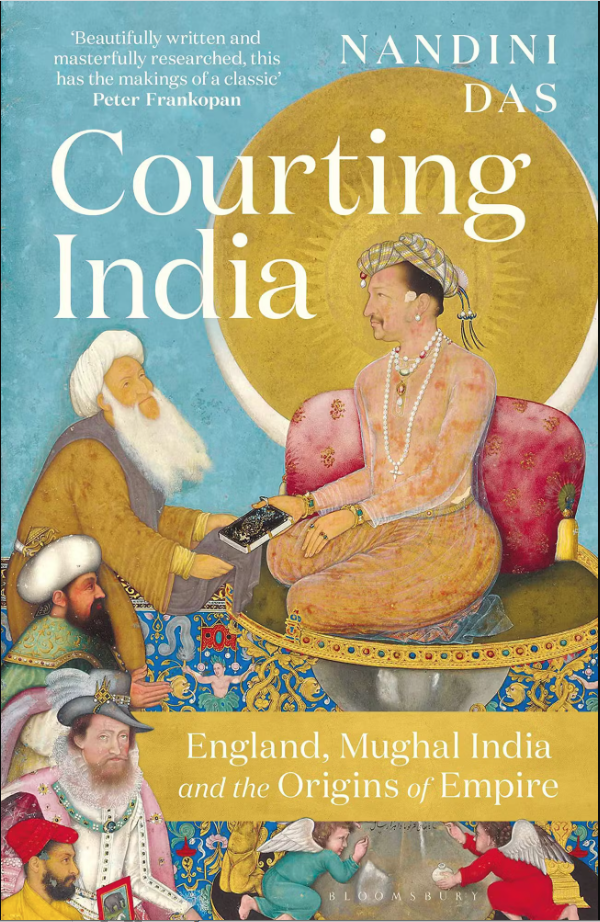
In The Critic, C.C. Corn reviews Courting India: England, Mughal India and the Origins of Empire by Nandini Das, a look at the first, halting steps of the East India Company at the court of the Mughal Emperor Jahangir early in the seventeenth century:

The late Sir Christopher Meyer, the closest thing modern British diplomacy has produced to a public figure, enjoyed comparing his trade to prostitution. Both are ancient trades, and neither enjoys a wholly favourable reputation. Any modern diplomat will discreetly confirm that the profession is far from the anodyne, flag-emoji civility and coyly embarrassed glamour they project on Twitter.

Whilst none of our modern representatives are working in quite the same conditions as their predecessor Sir Thomas Roe, they may well find uncanny parallels with his unfortunate mission.

The fledgling and precarious East India Company, founded in 1600, had sent representatives to the Mughal court before, but they were mere merchants and messengers. The stern rebuff they received called for a formal representative of the King.

After the company persuaded James I of the necessity, Thomas Roe (a well-connected MP, friend to John Donne and Ben Jonson, and already an experienced traveller after an attempt to reach the legendary El Dorado) was dispatched to the court of Mughal Emperor Jahangir in 1615. He remained there until 1619, in an embassy that the cultural historian, Nandini Das, describes in Courting India as “infuriatingly unproductive”.

The company kept rigorous records, and Roe meticulously kept a daily diary. Professor Das uses these and the reports of other English travellers to narrate Roe’s journey, as well as contemporary literature and, more importantly, their Indian equivalents. It is not so much the diplomatic success that fascinates Das about Roe’s embassy, but the mindset of the early modern encounter between England and India.

In a boom time for histories of British colonialism, this is an intelligent and gripping book with a thoughtful awareness of human relationships and frailties, and a model approach to early modern cross-cultural encounters.

The privations suffered by Roe’s embassy are striking. Only three in ten people had a chance of coming home alive from the voyage to India. Das’s recreation of the journey out is as intense and claustrophobic as Das Boot, with rotten medicine, cruel maritime punishments and untrained boys acting as surgeons. Dead bodies onboard would have their toes gnawed off by rats within hours.

In India, the English sailors excelled themselves as uncouth Brits abroad: drinking, fighting and baiting local customs, such as killing a calf. A chaplain was notorious for “drunkenly dodging brothel-keepers and engaging in half-naked brawls”. For most of his time, Roe — seeking to keep costs down — lived with merchants and factors already in India, in a cramped, filthy, dangerous house.

The Presidential re-match nobody wants

Filed under: Media, Politics, USA — Tags: , , , , — Nicholas @ 04:00

At Oxford Sour, Christopher Gage contemplates the potential re-match of Joe Biden and Donald Trump in the 2024 election … and shudders:

Perhaps for good reason, any American with their eyes on the White House must be at least 35 years of age when assuming office. Mercifully, this rule prevents anyone with a TikTok account from being taken too seriously.

Apparently, Americans apply this rule to its very extreme.

This week, President Joe Biden announced his bid for re-election, promising in a video announcement to “finish the job”. Quite what job he refers to is anyone’s guess. Though in better shape than Great Britain (a bar so low it’s a carpet) America is not having the best of days, weeks, months, years, decades, or twenty-first centuries.

Biden wasted no time. His sales pitch? He’s not Donald Trump. Evidently, the Biden team assumes Trump will steamroller over Ron DeSantis en route to the Republican party nomination. It’s 2020 again.

I don’t know about you, dear reader, but every time I see “2020” written down, or the mere words “twenty-twenty” seep into my eardrums, my heart flutters, my brain jangles, and a panic attack seizes control of my body with all the charm and consideration of a central African coup d’état.

Americans seem to agree. Seventy percent of Americans don’t think the 80-year-old Biden should run for re-election. Even 51 percent of Democrats nod their heads. Meanwhile, sixty percent, including one-third of Republicans say Trump, 76, should not run for president.

President Biden is not the most spring of chickens. Half of those who think he should sit this one out say Biden’s age is a “major” reason behind their thinking.

To put it mildly, this decade hasn’t quite gone the way of the “Roaring Twenties”. In 2019, I told anyone with ears that this decade would be the decade of decades. Reader, the jury is out. By “out” I don’t mean they’re busy making their considerations. By “out” I mean the jury is riddled with hollow-point bullets.

Perhaps that’s why a 38 percent plurality told pollsters they felt “exhausted” over the very idea of a Biden versus Trump rematch. Twenty-nine percent said they felt “fear” whilst just under a quarter felt both “sadness and fear”.

Which brings me to vice president Kamala Harris. This week, we learned of Biden’s intention to rehabilitate Harris’ image. Harris hasn’t had the most illustrious of tenures. Why? Well, let’s just say VP Harris is suited to other modes of employment. Ideally, Harris would find her feet in jobs which don’t require speaking in coherent, plain sentences and jobs which place a premium upon one’s ability to laugh at the most inappropriate of times. Reader, I’m about as socially attuned as a headbutt. Unlike Harris, I’m not literally one stopped heart away from the presidency.

It cannot be that a country of 330 million people, one which correctly claims to be the greatest country on earth, must limit itself to re-running the worst year in recent history.

And yet, there’s quite some time to go before the serious business of campaigning kicks into gear. If this horrendous decade has taught me anything, it’s that conventional wisdom isn’t worth the paper it’s printed on.

Balm for a golfer’s soul

Filed under: Books, Britain, Humour, Sports — Tags: , — Nicholas @ 03:00

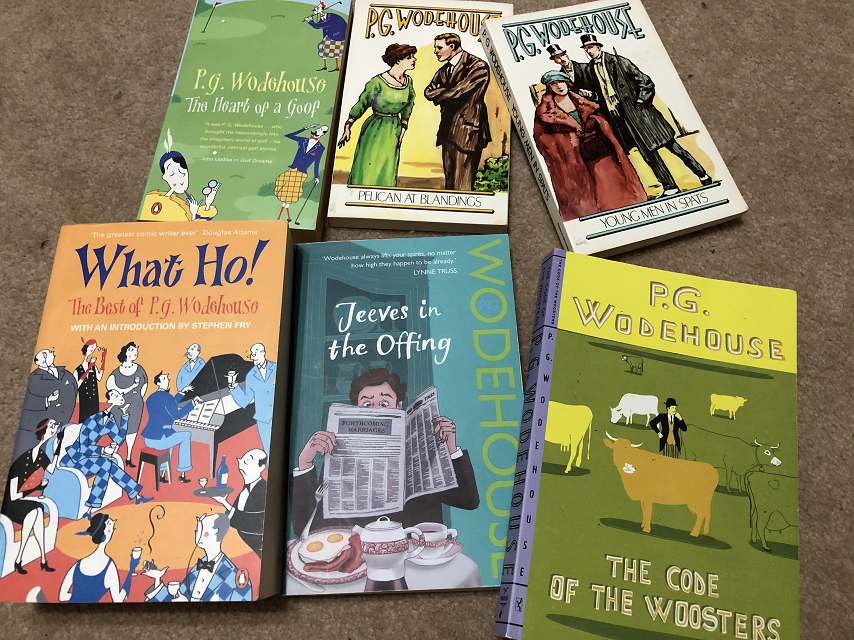
Alan Ashworth wants to persuade you to read the works of P.G. Wodehouse. In this installment, he appeals to the golfers in the audience:

When Pelham Grenville Wodehouse was at Dulwich College between 1894 and 1900, he was blissfully happy with school life and developed an enduring love of cricket and rugger – he went off boxing because the other blighters kept hitting him. The two sports were central to his early novels and he followed Dulwich’s results throughout his long life.

Yet when Plum began to enjoy success in the US he realised that to mine the rich comic seam of sporting obsession he had to come up with a new ball game.

During a lengthy spell in America, where he had become a big noise in musical theatre, he began to play golf at the Sound View club in Long Island with comic actors including Ed Wynn and Ernest Truex. “The golf course was awfully nice,” he recalled many years later. “However, I wasn’t any good at golf. I suppose I ought to have taken lessons instead of playing. I didn’t mind losing, because it was such good exercise walking around the holes. If only I’d taken up golf immediately after I left school instead of playing cricket.”

He never did get very good at the game. Over the years he won a single trophy, a striped umbrella, at a hotel tournament “where, hitting them squarely on the meat for once, I went through a field of some of the fattest retired businessmen in America like a devouring flame”.

However, golf was to provide the material for some of Wodehouse’s finest short stories, written mainly in the 1920s, which helped to make him a very rich man.

As one of his biographers, Richard Usborne, observed in his marvellous Wodehouse at Work to the End, “in the 1920s and 30s there were many illustrated magazines on both sides of the Atlantic paying high for good humorous short stories, five- to eight-thousand-word episodes, complete with sunny plot, a beginning, middle and end, and the young couple happily paired off in the fade-out. Wodehouse wrote for this profitable market. He became one of the golden boys of the magazines and, not necessarily the same thing, a master of his craft.”

Doctor Sketchy and the Strange Case of the Syndrome of Doom

Filed under: Britain, Humour, Media — Tags: , , , — Nicholas @ 02:00

Lindybeige
Published 24 Jan 2023

I teamed up with the highly-skilled Alasdair Beckett-King and together we threw together this sketch. Can you tell that he went to film school?
(more…)

QotD: The Netherlands under Nazi occupation

Filed under: Europe, Germany, History, Quotations, WW2 — Tags: , , , — Nicholas @ 01:00

Not that the Netherlands is completely at ease with its record under the Nazi occupation. Seven thousand Dutchmen volunteered for the SS, and a higher proportion of Dutch Jews died in the Holocaust — three-quarters of them, more than twice the proportion in Belgium, for example, and three times more than in France — than in any other occupied country of Western Europe. Whatever the reasons for this disproportion — the relatively unpropitious Dutch landscape for a life of clandestinity is surely one — unease about it is inevitable. According to one historian of the Holocaust in the Netherlands, Marnix Croes:

    On the whole, the Dutch reacted to the German occupation, including the persecution of the Jews, with a high degree of cooperation, following their reputed tradition of deference to authority. This did not change when the deportations started, and it lasted until the beginning of 1943. … [T]here was for a long time little doubt that the bureaucracy would not sabotage German-imposed measures, and in fact these were thoroughly implemented.

As Croes observed, “the Dutch bureaucracy assisted the Germans, primarily through population registration; the Dutch police helped, and Dutch bounty hunters, lured by blood money, tracked down Jews in hiding”.

Theodore Dalrymple, “The Cheapest Insult: The reductio ad Hitlerum: a refuge of tired minds”, City Journal, 2017-06-19.

April 30, 2023

David Howarth’s history of the East India Company

Filed under: Books, Britain, Europe, History, India — Tags: , , , , , , — Nicholas @ 05:00

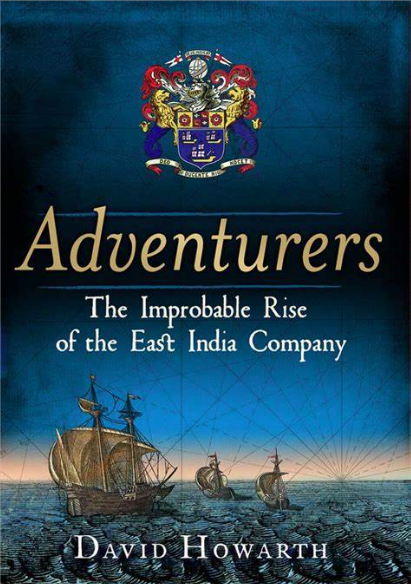
Robert Lyman reviews David Howarth’s recent work Adventurers: The Improbable Rise of the East India Company:

It is the human detail of the EIC and the ultimate triumph of its trading endeavours despite the best efforts of Portugal, the Dutch Republic and of the vicissitudes of Neptune that holds great fascination for me, and which is the triumph of Howarth’s intimate and intricate portrayal of the EIC in the first century of its existence. His great achievement is both to bring the dusty tomes of the Company back to life, not just to humanise one of the greatest trading ventures of all of human history, but to interpret the early years of the Company (his book spans 1600 to 1688, though most of the narrative is pre-1650) as a peculiarly human rather than an institutional endeavour. Is this important? Yes. Humans have agency; institutions consume or act upon the determining agency of human beings, not the other way around. Too much of modern (post 1880) history is based upon determining the perspective of organisations and movements (as interpreted by later historians, many with their own ideological baggage) rather than of actual, real live people making decisions for themselves in the peculiar and particular context of their lives and times.

The means through which Howarth paints his story is by the decisions, actions and activities of actual people, some influential decision-makers and many others who were not, all of which makes up a remarkably vivid tapestry of human intercourse. Each chapter, for instance, is constructed around a person or group of people. One powerfully tells the story of the men of the Peppercorn, an EIC East Indiaman, as it seeks out the riches of a world on the extreme periphery of the consciousness of most Europeans. The ultimate triumph of European expansion into Asia is not difficult to comprehend. Europe was pursuing an adventure, aggressively, relentlessly and determinedly, to bring the riches of the world back to its own shores. At no time did the Chinese, Japanese, Indians or inhabitants of the Spice Islands return the favour. The energetic persistence of Sir Thomas Roe, for instance, the Company’s ambassador to the Mughal court (1615-1619), is easily compared to the intellectual (and alcoholic) indolence of the Great Mughal with whom Roe was attempting to interact. Roe was there, in India: Europeans were interested in the “East” and with travelling to the other side of the world for purposes of human engagement, adventure, patriotism and, yes, greed and selfish self-interest. The Great Mughal, by contrast, was also driven by greed and self-interest, but he just wasn’t interested in exploring. He certainly wasn’t interested in Europe. He was already, in his view, at the top of the human tree and had no need for either the ideas or the money of the red-haired barbarians who came from across the sea, a sea that incidentally few Mughal emperors had (amazingly) ever even seen. Fascinatingly, the Mughal shared with King James I an abhorrence with “trade”, though James knew he needed grubby merchants like Sir John Lyman [the reviewer’s ancestor] as they gave him coin. It wasn’t just about the merchants: Kings and governments needed the money that the merchants delivered by the bucket load because they couldn’t create it themselves. Howarth astutely observes that the “EIC belonged to the globe of politics as much as it did to the sphere of commerce”. Indeed, something of a symbiosis between the two in Tudor and Stewart England created a sense of nationhood – in the face of the resistance of others, in Europe and further afield – for the first time. The Mughal Empire was ultimately swallowed up as a result of a dynamism by European politicians and merchants working in unison which it never bothered to replicate by undergoing the reverse journey.

And power? No. Howarth is remarkably clear that the primary task of the EIC was to make money, not to accrue territory, create power in foreign territories or aggrandise native populations. The role of the executive arm of the EIC (its ships, sailors and factors) was to make money for its investors, many of whom were the very merchant adventurers in the little ships travelling east over vast oceans. The great game of mercantile expansion took place because those who had most to lose were also sailing the ships, negotiating with foreign emissaries, fighting the Portuguese and the Dutch and placing their lives on the line. Amazingly, in 1570 England had only 58,000 tons of marine tonnage compared with Spain’s 300,000, and was very definitely the minnow in the rush to conquer the seas. The men who built and sailed its boats came from a long way behind, and yet in time were to build a seagoing commercial empire which more than rivalled all its competition. Its early growth was fuelled by the wealth provided by spice rather than slaves and, in contradistinction to what some modern historical moralists are keen to tell us, by a “reluctance to use violence and vigilance to avoid land commitments”. Indeed, unlike that of the Dutch, and despite what one might assume if we were to read the British national anthem back into history, “expansion in England happened with no appeal whatever to national glory”.

The amazing thing about the EIC was just how chaotic and disorganised it was. There was nothing inevitable about its rise as a monolithic mercantile overlord destined for instance, in the due course of time, to rule India. Second guessing history is only possible for historians able to look backwards and identify trends and features, convictions that didn’t exist for those when history was happening trying to make their way through the fog of an uncertain and troublesome future. The EIC proved simply to be better organised than the Portuguese, and not distracted as the Dutch were in their long war against Spain. Luck and serendipity played as much a role on the eventual survival of the EIC as did its ability to raise massive amounts of money from venturers in England (every raise or round of financing was heavily over-subscribed) for its adventures and to recruit adventurers to take its ships to sea. The EIC was phenomenally successful in raising voluntary capital to fund its ventures relative to other European states. By comparison, “although Iberian barns might have looked well built and better stocked, once they were given a good kick the rusted hinges flew off”.

Germany’s Existential Crisis – WW2 – Week 244 – April 29, 1944

World War Two
Published 29 Apr 2023

The fighting at Kohima is up close, personal, and vicious, as it is at Imphal. The Allies consolidate their gains at Hollandia, the Japanese are advancing in Central China, and it seems like the Chinese Nationalist Army has lost the support of the civilian population. This might not surprise you when we take a closer look.
(more…)

Sarah Hoyt – “I told you so”

At According to Hoyt, Sarah reminds us that she was right and won’t apologize for being right … and will say “I told you so” as often as necessary:

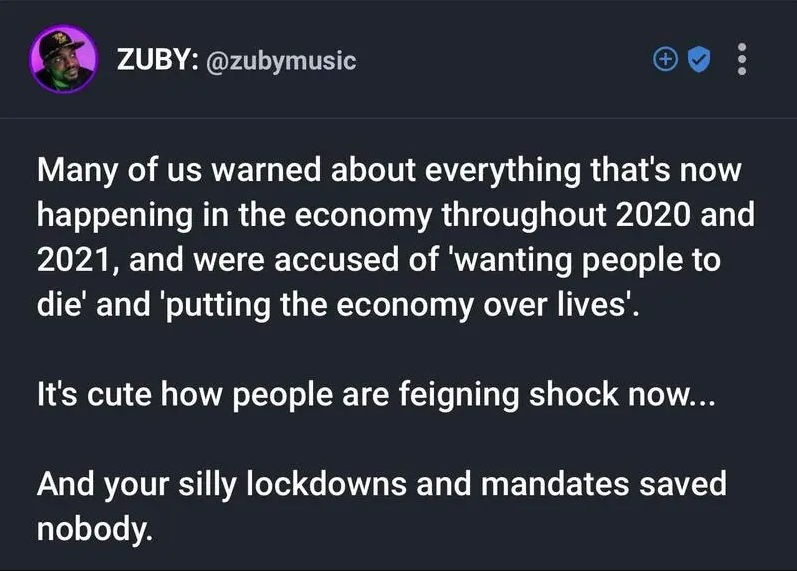
Only infants and the mentally incompetent could look at locking up the vast majority of the population and think it would have NO effect on the economic well being of this country. Worse, only infants, the mentally incompetent and indoctrinated Marxists (BIRM) could think — after the numbers from the Diamond Princess were out there for everyone to read — that either COVID-19 was the end of the world, or that we should put the entire population under house arrest to prevent people dying of it. As though it wouldn’t become endemic anyway.

And it took a particular level of bizarre insanity to believe that COVID-19 would kill you at your favorite restaurant or church but not in Walmart.

We won’t even get into the specialness that caused a bunch of you to tell me that it was okay for the homeless to be congregating in every street corner (and in Denver in proliferating encampments EVERYWHERE with all the shared needles, trash, etc. of such encampments) WITHOUT dropping like flies, because they lived outdoors and were “particularly hardy”. Dudes, if you ever work in any emergency room, you’ll learn that not only aren’t the homeless “particularly hardy” but that they have the most bizarre medieval diseases. Yes, there are jokes about “tooth to tattoo ratio” and that low/high means they live forever, but in truth if you see before and after pictures, you know homeless people tend to die early and hard and not just because most of them are crazy and drug addicted (though that’s a contributing factor.) IF THIS HAD BEEN A REALLY DANGEROUS PANDEMIC, the kind those videos from China — some of which were manifestly fakes, like where people put out their hands to break the fall when they “drop dead” in the street — suggested, the homeless would have first been very sick, then dead.

Also, note the same people then said it was very important to wear masks OUTSIDE WHILE JOGGING because this virus was some kind of magical and could hang suspended in the air outside in a “cloud” so that if you walked through it hours later, you could catch the dread disease.

AND let’s not forget treating us like lunatics when we explained that the masks did nothing, and that yes, they’re used in operating rooms — where they’re changed every few minutes, btw — to PREVENT THE SURGEON from coughing on an open wound.

And I want to award no prizes, and may G-d have mercy on your souls to those that told me that the Diamond Princess‘s numbers were as low as they seemed to be because “They have the best of care in cruise ships”. This when cruise ships are known as floating illness barges and the population aboard is the oldest of any gathering in the nation.

Oh, oh, oh, and a special mention goes to everyone who ran around with their heads on fire because “the ER is at 95% capacity” when it is at 100% capacity every flu season, AND also all the “special wards” built for “overflow” patients saw not ONE patient. All these facts were available and easily looked up.

North Korean Type 70 Pistol

Filed under: Asia, History, Military, Weapons — Tags: , , , — Nicholas @ 02:00

Forgotten Weapons
Published 8 Apr 2015

The “Hermit Kingdom” of North Korea has a number of somewhat unusual military firearms that are not quite direct copies of anything else, but we very rarely get to see examples of them up close. The Type 70 was intended for high-ranking officers, replacing the Type 64 (which was a copy of the Browning 1900). The Type 70 shows features from the PPK and Makarov, as well as other elements not taken directly from existing designs. The hammer is an exposed single-action type, and the muzzle profile is very reminiscent of the Makarov. The action is simple blowback (in .32 ACP, despite the 7.62mm marking on the slide), but the barrel is set in the side and easily removed, instead of being fixed to the frame as is typical of blowback pistols. The safety is a cross-bolt button which doubles as the block holding the barrel in place. The Type 70 is quite comfortable in the hand, and probably nice to shoot given its .32ACP chambering.

(more…)

QotD: Propaganda, dezinformatsiya, and maskirovka in the Current Year

Filed under: Books, History, Media, Quotations, Russia, USA — Tags: , , , , — Nicholas @ 01:00

… I don’t speak Russian, but as an amateur Sovietologist I’m aware of the KGB’s rich lexicon of “information warfare”. Disinformation is, of course, either a loan word or a calque, depending on how you want to look at it — dezinformatsiya. (A loan word comes over directly, like “concerto”; a calque is a literal translation of a foreign term, like “flea market”). And then there’s the maskirovka, a whole class of specifically military deceptions. No nation poured more resources into this stuff than the Soviets. A KGB defector named Golitsyn wrote a study, New Lies for Old, that’s interesting. A general in the Securitate, the Romanian secret police, named Ion Mihail Pacepa wrote another, called Disinformation. Good stuff.

Looking at the “news” these days is a fraternal socialist experience, comrades. Of course, we must be careful to distinguish between disinformation and propaganda. As we know from Theodore Dalrymple, propaganda is designed to humiliate you. All the “Biden won” stories, obviously, are pure propaganda — we know they’re not true, they know they’re not true, but by shoving them down our throats, they emphasize the almost total power differential between them and us. This is obvious, therefore uninteresting.

The dezinformatsiya, though, that’s fun. You know it’s a lie — is it in the Media? then it’s a lie — but the purpose of the lie is often opaque. For instance, this new variant of COVID supposedly making the rounds in England. You don’t have to wear a tinfoil hat to find the timing of that pretty damn suspicious. After all, we’re all supposed to have our “warp speed” mandatory goop shots here in a month, which means no more masks, no more lockdowns, no more of the führer-iffic fun our Glorious Leaders are jonesing for. We can’t be having that, and so hey, whaddaya know, just in time for Christmas, a new pox …

[…]

The problem with any disinfo op, of course, is that you have to pitch it at not just how smart the enemy actually is, but how smart he thinks he is. The KGB used to use two-stage deceptions all the time. There was a clumsy, obvious ploy that was designed to fail. The counterintelligence people would sniff it out, then congratulate themselves for seeing through those goofy commies and their hilarious misunderstandings of the free world. Meanwhile, the second caper sailed right through, because the counterintel boys stopped looking after busting the first one.

Severian, “Stojak”, Rotten Chestnuts, 2020-12-22.

April 29, 2023

Justin can’t let Joe steal his thunder on this critical issue!

Justin Trudeau’s love of the vastly expensive and utterly useless virtue signal is almost unmatched among western leaders, but as Bruce Gudmundsson relates here, some of Joe Biden’s lower-echelon cronies in the Pentagram Pentagon have put up a virtue signal that will be very hard for Justin to top:

In the United States, the president enjoys the privilege of appointing 4,000 of his supporters to positions within the Executive Branch. When the president is a Democrat, the best connected of these invariably prefer perches in the vast social service bureaucracy, there to reign (but rarely rule) over like-minded civil servants.* Those with the fewest friends, alas, end up in the Pentagon.

I’m honestly surprised that the number of direct appointees is so low … I’d have guessed at least ten times that number. I was vaguely aware that the formal “spoils” system was broken up late in the 19th century, but the US federal government and its various arms-length agencies are several orders of magnitude larger than they were back then.

The appointees who suffer the latter fate know nothing of the work they supposedly supervise. Indeed, having been raised in homes in which there were “no war toys for Christmas”, they cannot distinguish a sailor from an airman, let alone explain the difference between a soldier and a Marine. What is worse, like impoverished Regency belles, obliged to spend the Season wearing last year’s frocks, Defense Department Democrats live in constant fear of losing caste.

With this in mind, it is not surprising that the aforementioned appointees embrace, with great enthusiasm, projects of the sort they can discuss at Georgetown cocktail parties. During the Obama years (2009-2017), many of these bore the brand of “green energy”. (No doubt, the appointees in question made much of the double entendre.) As might be expected, many of these programs went into hibernation during the presidency of Donald Trump (2017-2021), only to spring back to life after the inauguration (in 2021) of Joseph Biden.

In a recent post on his Substack, the indispensable Igor Chudov lays bare the folly of one of these initiatives. Part of the Climate Strategy unveiled by the US Army in 2022, this plan calls for the progressive replacement, over the course of twenty-eight years, of petroleum dependent cars, trucks, and tanks with their battery-powered counterparts.

I mean, on the plus side, it would mean that wars could only take place on sunny days (for solar-powered tanks) or windy days (for wind-powered tanks). The sheer stupidity of the notion would be laughable, except they really seem to be serious about military combat vehicles running on batteries recharged with solar cells, windmills, or unicorn farts. I’d call it peak Clown World, but it’s a safe bet that they can get even crazier without working up a sweat.

Searching for an appropriate graphic to go with this article, I found this gem at Iowa Climate Change from back in 2021:


    * Lest you think, Gentle Reader, that this post serves a partisan political purpose, I will mention that am convinced that the one Republican political appointee with whom I am well-acquainted is a knucklehead of the first order. Indeed, if I ever manage to locate the proper forms, I intend to nominate him for a place of particular honor in the Knucklehead Hall of Fame.

What Was the Deadliest Day of the First World War?

The Great War
Published 28 Apr 2023

What was the deadliest day of any nation in WW1? There are multiple candidates for that, but why should we even care? Well, the answer to this question highlights a challenge with popular memory that is often focused on the biggest battles of the war like the Somme or Verdun.
(more…)

Bad advice for Robert Kennedy Jr.

C.J. Hopkins proffers advice to the declared candidate for the Democratic presidential nomination:

Robert F. Kennedy, Jr. speaking in Urbana, Illinois on October 14, 2007.
Photo by Daniel Schwen via Wikimedia Commons.

Robert Kennedy, Jr. is running for president. I could not possibly be more excited. So, I’m going to give Bobby some unsolicited advice, which, if he knows what’s good for him, he will not take.

I feel OK about doing this because, even if Bobby, in the wee hours of the night, when the mind is vulnerable to dangerous ideas, were to seriously consider taking my advice, I am sure he has people — i.e., PR people, campaign strategists, pollsters, and so on — that would not hesitate to take him aside and disabuse him of any inclination to do that.

OK, before I give Bobby this terrible advice, I have to do the “full disclosure” thing. I’m a pretty big fan of RFK, Jr. I don’t generally get involved in electoral politics, but, if I were a Democrat, I would definitely vote for him. Also, he was kind enough to blurb my book (which isn’t going to make his PR people happy) and invite me onto his podcast, RFK, Jr. The Defender, to talk about “New Normal” totalitarianism. So, I am fairly biased in favor of Bobby Kennedy. I think he is an admirable, honorable human being. I would love to see him in the Oval Office.

That isn’t going to happen, of course. The global-capitalist ruling classes are never going to let him near the Oval Office. They learned their lesson back in 2016. There are not going to be any more unauthorized presidents. The folks at GloboCap are done playing grab-ass, and they want us to know that they are done playing grab-ass. That’s what the last six years have been about.

As I put it in a column in January, 2021

    … This, basically, is what we’ve just experienced. The global capitalist ruling classes have just reminded us who is really in charge, who the US military answers to, and how quickly they can strip away the facade of democracy and the rule of law. They have reminded us of this for the last ten months, by putting us under house arrest, beating and arresting us for not following orders, for not wearing masks, for taking walks without permission, for having the audacity to protest their decrees, for challenging their official propaganda, about the virus, the election results, etc. They are reminding us currently by censoring dissent, and deplatforming anyone they deem a threat to their official narratives and ideology … GloboCap is teaching us a lesson. I don’t know how much clearer they could make it. They just installed a new puppet president, who can’t even simulate mental acuity, in a locked-down, military-guarded ceremony which no one was allowed to attend, except a few members of the ruling classes. They got some epigone of Albert Speer to convert the Mall (where the public normally gathers) into a “field of flags” symbolizing “unity”. They even did the Nazi “Lichtdom” thing. To hammer the point home, they got Lady Gaga to dress up as a Hunger Games character with a “Mockingjay” brooch and sing the National Anthem. They broadcast this spectacle to the entire world.

Does that sound like the behavior of an unaccountable, supranational power apparatus that is prepared to stand by and let Bobby Kennedy, Jr., or Donald Trump, or any other unauthorized person, become the next president of the United States?

So, here’s my bad advice for Bobby.

Fuck them. They’re not going to let you win, anyway. They are going to smear you, slime you, demonize you, distort every other thing you say, and just generally lie about who you are and what you believe in and what you stand for. They are going to paint you as a bull-goose-loony, formerly smack-addled, conspiracy-theorizing, anti-vax fanatic no matter what you do. If you tone down your act and try to “heal the divide” and “end the division,” they are going to have you for lunch, and then sit around picking their teeth with your bones. You know, and I know, and the American people know, that the things you say you want to do as president — which I know you sincerely want to do as president and are crazy enough to actually try to do, i.e., “to end the corrupt merger of state and corporate power that is threatening now to impose a new kind of corporate feudalism in our country” — are things … well, as Michael Corleone once put it, that they would “use all their power to keep from happening”.

So, fuck it, and fuck them. Tell the truth.

Not the ready-for-prime-time truth. Not the toned-down-for-mainstream-consumption truth. The truth. The ugly, unvarnished truth. The scary, crazy-sounding truth. The angry, divisive, uncensored truth.

Yes, there is a “divide”. A great divide. A chasm. A schism. A gulf. An abyss. A gaping, yawning, unbridgeable fissure. A Grand Canyon-sized fault in the foundation of society. A rupture in the very fabric of reality.

H/T to Robert Swanson for the link.

Of course, not everyone is as fond of RFK, Jr. — and for good reason, as Matt Welch points out:

Ever since the 69-year-old conspiratorial activist Robert F. Kennedy Jr. declared his candidacy for the Democratic presidential nomination last week, a curious new category has appeared among the commentariat—libertarians and/or right-of-center journalists expressing strange new respect for a Hugo Chavez–admiring scion of the Establishment who has serially fantasized about throwing his political opponents in jail.

“I’m quite certain that I’ve never heard a more erudite speech in any political context,” enthused Brownstone Institute President Jeffrey Tucker after attending Kennedy’s announcement rally. “As [a] Democrat he must be bad on all sorts of things,” tweeted Antiwar.com’s Scott Horton, “But not the ones that matter the most.” The Libertarian Party of Colorado tweeted (and then deleted) “Bravo and godspeed hero.” Tablet, a publication not usually known for boosting overheated analogies to murderous 20th-century totalitarians, gave RFK Jr. an 18,000-word valentine with such soft-toss “questions” about his previous controversial statements (like terming the impact from childhood vaccines “a holocaust”) as: “You activated an automated outrage machine that was looking for a gotcha.”

The newly Kennedy-curious are intrigued by the rabble-rouser’s potential to disrupt an otherwise rubber-stamped Democratic primary, sure, but also by him having the right enemies — the media, the military-industrial complex, and, most of all, a political class that backed COVID-19 lockdowns and mandates.

“Just as Donald Trump … retrieved political themes from the deep past of the Republican Party,” National Review‘s Michael Brendan Dougherty mused, “so it must be that a Democrat should come along and try to revive left-leaning skepticism of government and corporate power, to denounce crony capitalism, censorship, and the CIA to boot.”

Recasting RFK Jr. as a foe of censorship and potential tamer of government requires ignoring what he has been and imagining things he’ll never be. Among a lifetime of eyebrow-raising public activities, Bobby Kennedy’s son has repeatedly egged on government to punish those who disagree with his idiosyncratic understandings of science.

[…]

Yet in 2023, Kennedy can plausibly claim (to those with short memories) the mantle of anti-censorship, for having been on the receiving end of Big Social Media’s often government-pressured pandemic speech-policing. He was banned from Instagram in February 2021 “for repeatedly sharing debunked claims about the coronavirus or vaccines”, and his anti-vaccine-mandate nonprofit Children’s Health Defense was similarly booted by both Instagram and Facebook in August 2022. He published a book last year called A Letter to Liberals: Censorship and COVID: An Attack on Science and American Ideals. As Tablet‘s David Samuels wrote, in one of that piece’s many eye-popping passages, “At this point, the fact that Robert F. Kennedy is the country’s leading ‘conspiracy theorist’ alone qualifies him to be president.”

So is the enemy of your enemy your friend? Depends on your tolerance for unlikely conspiracy theories, and your comfort level in Kennedy’s proposed punishments for alleged perpetrators. Where Jeffrey Tucker sees an orator with a “command of facts, history, and issues,” motivated both by “truth-telling in an age of nonstop lies” and a genuine urge to “heal” the political divide, I see someone whose presentation of facts — including grave accusations of criminality — have been repeatedly and persuasively found lacking.

Okinawa 1945: Planning Operation ICEBERG

Filed under: Britain, History, Japan, Military, Pacific, USA, WW2 — Tags: , , , — Nicholas @ 02:00

Army University Press
Published 7 Dec 2021

On 1 April 1945, U.S. forces invaded the Japanese home island of Okinawa. It was the largest joint amphibious assault mounted during World War II in the Pacific Theater. The invasion of Okinawa was the culmination of three years of operations in the Pacific against Imperial Japan. The film explores the planning and preparation for Operation ICEBERG from September 1944 to 1 April 1945.

“Okinawa 1945: Planning Operation ICEBERG” examines the U.S. Army operations process as well as planning by echelon from field army, corps, and division with special emphasis on current Joint doctrine. This film is the first in a two-part series covering Operation ICEBERG and the U.S. Tenth Army’s securing of Okinawa.
(more…)

« Newer PostsOlder Posts »

Powered by WordPress