
World War Two
Published 12 Jan 2023While the Soviet Union declared they will annex parts of Poland, the Western Allies fear that the broken French Resistance may ruin the plans for D-Day.
(more…)
January 13, 2023
Is the French Resistance Defeated by 1944? – War Against Humanity 095
Comments Off on Is the French Resistance Defeated by 1944? – War Against Humanity 095
January 8, 2023
“Russians 27 miles from Poland!” – Ep 228 – January 7, 1944
World War Two
Published 7 Jan 2023That’s what the headlines say as the Red Army continues its advance in Ukraine. There are also plans afoot for a northern offensive to end the siege of Leningrad. There are also plans afoot for an Allied amphibious attack in Italy at Anzio. Both of these are set to go off within a couple weeks, so January promises to be full of active conflict.
(more…)
Comments Off on “Russians 27 miles from Poland!” – Ep 228 – January 7, 1944
January 7, 2023
January 6, 2023
Will Stalin Liberate or Occupy Poland? – War Against Humanity 094
World War Two
Published 5 Jan 2023The last week of 1943 is a busy one. Stalin deports the Kalmyk minority from Kalmykia, the escapees from Fort IX get away, and the US President moves to found the post-war UN.
(more…)
Comments Off on Will Stalin Liberate or Occupy Poland? – War Against Humanity 094
January 5, 2023
Tank Chats #162 | Springer | The Tank Museum
The Tank Museum
Published 2 Sep 2022Join Curator David Willey in his latest Tank Chat as he delves into the Springer, a German demolition vehicle.
(more…)
Comments Off on Tank Chats #162 | Springer | The Tank Museum
January 3, 2023
1943 in Numbers – WW2 Special
World War Two
Published 1 Jan 2023This war is massive. Our chronological coverage helps give us an understanding of it, but sometimes statistics help us understand the bigger picture.
(more…)
Comments Off on 1943 in Numbers – WW2 Special
January 1, 2023
Canadians Take Little Stalingrad – WW2 – 227 – December 31, 1943
World War Two
Published 31 Dec 20221943 reaches its end with no end in sight for the war. In Italy, the Canadians take Ortona after bloody close fighting, the US Marines advance on New Britain, and a new Soviet offensive makes huge gains in the USSR. This isn’t enough for the Allies, though, who have a big shake up in their European Command to help prepare for future attacks.
(more…)
Comments Off on Canadians Take Little Stalingrad – WW2 – 227 – December 31, 1943
December 30, 2022
Stalin Deports An Entire Ethnicity – War Against Humanity 093
World War Two
Published 29 Dec 2022The last week of 1943 is a busy one. Stalin deports the Kalmyk minority from Kalmykia, the escapees from Fort IX get away, and the US President moves to found the post-war UN.
(more…)
Comments Off on Stalin Deports An Entire Ethnicity – War Against Humanity 093
My Top 10 Favorite Avalon Hill Games
Legendary Tactics
Published 1 Apr 2021Avalon Hill has such a rich history as a board game company, and has contributed so much to our hobby, our sense of history, and our lives. I sat down to reminisce about my top 10 favorite Avalon Hill games of all time. Are these the best games of all time? What games would make your list? Let us know in the comment section below.
(more…)
Comments Off on My Top 10 Favorite Avalon Hill Games
December 29, 2022
Anti-Tank Chats #5 | PIAT | The Tank Museum
The Tank Museum
Published 26 Aug 2022Bring up the PIAT! Join Stuart Wheeler as he takes a look at the iconic WW2 British anti-tank weapon — the PIAT. With thanks to @The Armourer’s Bench and @History in Firearms
(more…)
Comments Off on Anti-Tank Chats #5 | PIAT | The Tank Museum
December 28, 2022
The Myth of the Nazi Police State – WW2 Documentary Special
World War Two
Published 27 Dec 2022The popular image of the Gestapo is as black leather-jacketed fiends whose spies keep the nation under constant surveillance. They are so powerful that the terrified population has no choice but to sell out its family and friends. But how true is this? Are all Germans living in fear of the Gestapo all the time?
(more…)
Comments Off on The Myth of the Nazi Police State – WW2 Documentary Special
December 26, 2022
The Battle of Ortona with Jayson Geroux
OTD Canadian Military History
Published 21 Dec 2022Join me as I welcome Jayson Geroux to the OTD channel to discuss the Battle of Ortona. We will be discussing the urban combat that took place in Ortona in December 1943. [The discussion of the actual battle begins around the 6 minute mark.]
(more…)
Comments Off on The Battle of Ortona with Jayson Geroux
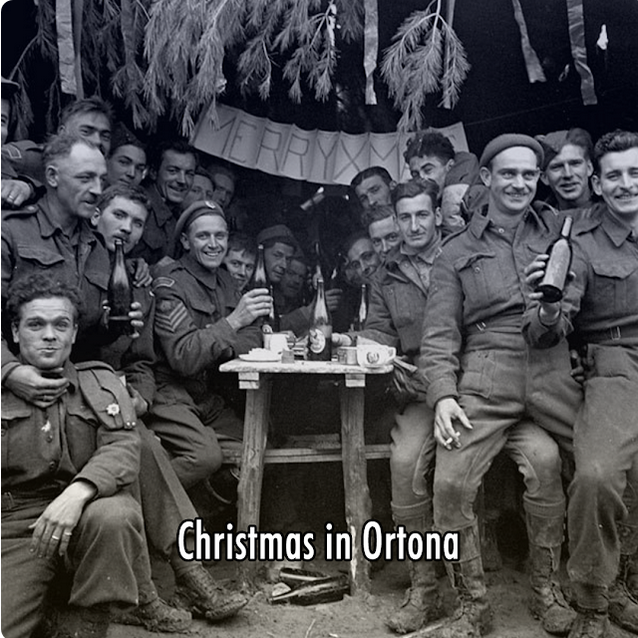
2nd Canadian Infantry Brigade Christmas celebrations in Ortona, 1943
The folks at the World War Two channel on YouTube posted this to their community page on Christmas Day:
On Christmas Day, 25 December 1943, the 1st Canadian Infantry Division is still engaged in brutal urban combat against the 1. Fallschirmjäger-Division for control over the town of Ortona. But among the rubble of the “Italian Stalingrad”, soldiers of the Seaforth Highlanders of Canada, along with other units [of the 2nd Canadian Infantry Brigade], manage to keep the Christmas spirit alive.
Colonel S. W. Thomson will recount this most unusual Christmas celebration many years later:
“I knew that we would be fully engaged with the enemy on Christmas day. However our most enterprising Quartermaster, Captain Bordon Cameron, was anxious to provide something special for the men at Christmas. Three companies were in the line with one in reserve, often the norm. We decided to feed the reserve company first and feed the remaining companies in relays. as one company finished it would go forward some 300 or 400 yards and relieve the next. Tables, linen, chinaware and candles were scrounged by the reserve company. The tables were set up in rows in our great church Santa Maria with four foot thick walls and my rear H.Q. What a picture, what an appropriate setting for a Christmas dinner on Dec. 25.
“Soup, roast pork, vegetables and Christmas pudding along with a bottle of beer for each of the tattered, scruffy, war weary soldiers was served by HQ and B echelon staff. The Q.M. boys excelled themselves, the impossible had happened. There was a spirit of good-fellowship throughout the church. The signals officer Lieutenant Wilf Gildersleeve played the organ, and our much loved padre Roy Durford led the carol singing. Pipe Major Esson played his pipes several times during the meals drowning out the odd enemy shell burst outside.
“Christmas in Ortona, the meal, yes, but the spirit of the occasion, the look on the faces of those exhausted, gutsy men on entering the church is with me to-day and will live forever.”
To all our followers, readers, and viewers: We wish you a Merry Christmas!
From: Canadian Military History, Vol. 2 (1993)
Picture: Canadian soldiers celebrate Christmas in Ortona, Italy
Source: Canadian Armed Forces
Comments Off on 2nd Canadian Infantry Brigade Christmas celebrations in Ortona, 1943
December 25, 2022
Stalin’s Christmas Surprise – Major Offensives to Come – WW2 – 226 – December 24, 1943
World War Two
Published 24 Dec 2022Twas the night before Christmas and the war was grinding on. The Moro River Campaign continues in Italy with Canadian infantry pushing past the Gully and into “Little Stalingrad”. Generally, the Allied advance to Rome is turning into a stalemate though, but Winston Churchill still believes an amphibious landing is the way to break this. Joseph Stalin also has some pretty big plans to bring the USSR back to its pre-Barbarossa borders. In the Pacific, there is attrition over Rabaul and stalemate on Bougainville.
(more…)
Comments Off on Stalin’s Christmas Surprise – Major Offensives to Come – WW2 – 226 – December 24, 1943
December 23, 2022
A Jungle Miracle – War Against Humanity 092
World War Two
Published 22 Dec 2022Two escapes, one from the Nazis in Kovno (Kaunas) Lithuania, from the prison at Fort IX, and one from Japanese terror on Panay in the Philippines this week, will help to document the crimes of the Axis powers.
(more…)
Comments Off on A Jungle Miracle – War Against Humanity 092


