Quotulatiousness

September 21, 2020

The Iconic “Burp Gun” – Shooting the PPSh-41

Filed under: History, Military, Russia, Weapons, WW2 — Tags: , , , — Nicholas @ 02:00

Forgotten Weapons
Published 16 Dec 2017

http://www.patreon.com/ForgottenWeapons

Cool Forgotten Weapons merch! http://shop.bbtv.com/collections/forg…

The Soviet PPSh-41 submachine gun is most distinctive for its very high rate of fire — approximately 1250 rounds/minute — and large drum magazine. What may come as a surprise to those who have not tried it is how this very high rate of fire does not actually make the weapon difficult to control or hold on target. In fact, the PPSh-41 is an easier SMG to shoot effectively than the later PPS-43, at least in my opinion.

The Soviets and the Germans made quite different choices in magazines and rate of fire with the PPSh and the MP40, but both turned out to be very good submachine guns. The glaring weak point of the PPSh are its magazines, and the difficulty in finding a drum that would run reliably in this particular example is why today’s shooting session is done with one of the 35-round stick magazines instead.

Thanks to Marstar for letting me examine and shoot their PPSh-41!

If you enjoy Forgotten Weapons, check out its sister channel, InRangeTV! http://www.youtube.com/InRangeTVShow

September 18, 2020

Germany’s Not-So-Light 5cm LeGrW 36 Light Mortar

Filed under: Germany, History, Military, Weapons, WW2 — Tags: , , , — Nicholas @ 02:00

Forgotten Weapons
Published 2 Sep 2018

Sold for $18,400

http://www.patreon.com/ForgottenWeapons

Cool Forgotten Weapons merch! http://shop.bbtv.com/collections/forg…

The 5cm 5CM Leichter Granatwerfer 36 was the standard German light infantry mortar going into World War Two. It was designed by Rheinmetall-Borsig in the mid 1930s and adopted in 1936. It fired a 0.9kg / 2 pound mortar bomb with a range of up to 550 meters. In theory, it occupied the same role as the French Mle 1937 50mm light mortar — except it was far heavier than was practical, and substantially more complex to use. The LeGrW 36 weighed in at a hefty 31 pounds (14kg) – nearly four times as much as its French counterpart.

It was a striker fired design, with a trigger lever and thus did not fire immediately upon a round being loaded. It used adjustments in angle to determine range, with a constant projectile velocity (as opposed to venting a varying amount of propellent gas to adjust range). By the middle of the war, it was being pulled out of front-line use, as its weight and relative complexity made it impractical for its intended role.

If you enjoy Forgotten Weapons, check out its sister channel, InRangeTV! http://www.youtube.com/InRangeTVShow

September 16, 2020

Tanks of the Red Army in 1941: Medium and Heavy Tanks, by the Chieftain – WW2 Special

Filed under: History, Military, Railways, Russia, Weapons, WW2 — Tags: , , , — Nicholas @ 06:00

World War Two
Published 15 Sep 2020

Chieftain’s channel: https://www.youtube.com/user/TheChief…

Chieftain returns to the World War Two channel this week for Part 2 of his deep-dive into the Soviet armour in the first months of war on the Eastern Front. This week, the focus is on medium and heavy tanks.

You can see Part 1 which covers armoured cars and light tanks here: https://www.youtube.com/watch?v=a2FkF…

Chieftain’s previous video on Soviet doctrine: https://youtu.be/s7nr83CYQ9Q
For Indy’s introduction to armour on both sides: https://youtu.be/gh7mt2OS770

Join us on Patreon: https://www.patreon.com/TimeGhostHistory
Or join The TimeGhost Army directly at: https://timeghost.tv

Follow WW2 day by day on Instagram @ww2_day_by_day – https://www.instagram.com/ww2_day_by_day
Between 2 Wars: https://www.youtube.com/playlist?list…
Source list: http://bit.ly/WW2sources

Written and Hosted by: The Chieftain
Director: Astrid Deinhard
Producers: Astrid Deinhard and Spartacus Olsson
Executive Producers: Astrid Deinhard, Indy Neidell, Spartacus Olsson, Bodo Rittenauer
Creative Producer: Joram Appel
Post-Production Director: Wieke Kapteijns
Research by: The Chieftain
Edited by: Miki Cackowski
Sound design: Marek Kamiński
Map animations: Eastory (https://www.youtube.com/c/eastory)

Sources:
Bundesarchiv
RIA Novosti archive, image #613694
Narodowe Archiwum Cyfrowe
Picture of K2, courtesy Ein persoon from Wikimedia Commons https://commons.wikimedia.org/wiki/Fi…
Picture of MBV-2 at Patriot Museum, Kubinka, courtesy Alan Wilson https://flic.kr/p/ZhtG6k
From the Noun Project: Shield by Nikita Kozin, Weight by Vadim Solomakhin, company soldiers by Andrei Yushchenko

Soundtracks from the Epidemic Sound:
Rannar Sillard – “March Of The Brave 4”
Johannes Bornlof – “The Inspector 4”
Fabien Tell – “Last Point of Safe Return”
Reynard Seidel – “Deflection”
Johannes Bornlof – “Deviation In Time”
Phoenix Tail – “At the Front”
Max Anson – “Ancient Saga”
Fabien Tell – “Other Sides of Glory”

Archive by Screenocean/Reuters https://www.screenocean.com.

A TimeGhost chronological documentary produced by OnLion Entertainment GmbH.

The Canadian echo chamber on American political issues

Filed under: Cancon, Media, Politics, USA, Weapons — Tags: , , , , , — Nicholas @ 05:00

Ben Woodfinden’s latest for The Dominion looks at the weird effects political passions in the United States have on political stances in Canada:

Restricted and prohibited weapons seized by Toronto police in a 2012 operation. None of the people from whom these weapons were taken was legally allowed to possess them.
Screen capture from a CTV News report.

Participatory media increasingly defines and shapes our discourse. It submerges us in a broader reality but only does so by filtering it into a digital reality that offers a distorted reflection rather than picture of the real world. This has been going on for at least a decade now, but the pandemic has accelerated this transformation of our discourse and politics. By locking us in our homes the pandemic forces us to view the world through a digital lens even more than we already did, and in a world where we’re all viewing everything through our screens that digital reality becomes closer and closer to our primary reality.

One of the specific, and most pernicious effects of this, as I lamented in The Critic is that it turns us all into online Americans participating in their politics through the digital medium, rendering us virtual participants and not just foreign observers. I won’t repeat myself too much, I’d recommend just reading the piece [link], but the online realm is American, and what digital politics does is make politics everywhere more American. We participate in it as a game and a form of entertainment. This bleeds back into our own politics.

Americanized Discourse

Gun politics is one particular political issue where Americanized discourse is most pronounced. It captures perfectly how Americanization plays out. Every time there is some sort of tragic shooting or discussion of gun violence in Canada the debates play out in depressingly predictable ways. Progressives and Liberals paint a picture in which Canada suffers from the kind of rampant gun violence and mass proliferation of firearms as in America. This is the framing used to justify often highly symbolic or ineffective new gun laws and restrictions that, while often not all that effective, make the Liberals and progressives seem like the party for gun control in the face of this rampant violence. But only if you pretend we live in America.

And it’s not just the Liberals and progressives who play this game. Listen to some of the more vocal advocates of “gun rights” in Canada and you’d think we have a second amendment in the Charter. One side wants to make it seem like Canadians are walking around with and easily able to acquire assault weapons, the other side wishes it were so! The reality of course lies somewhere in between. Gun possession is heavily regulated, but lawful citizens can still buy firearms if they want to, and there is no explicit right in the Charter that prevents the government from regulating and restricting firearms. Talking about gun “rights” in Canada is itself quite a foreign and imported concept. At the same time we don’t have an epidemic of gun violence, and while we have experienced some horrific mass shootings, like the recent Nova Scotia tragedy, gun violence in Canada pales in comparison to the United States.

But because both sides are essentially happy to help paint a phantasmic picture of gun violence and/or gun regulations in Canada, we end up with a surreal politics around guns. Sensible debates around guns are made harder by this because debates take place on top of a framing and narrative that draws explicitly on American political culture more than it does Canada’s. Both sides want to take on American roles and are happy to contribute to this framing.

Gun politics is just one example, and there are so many others. Our discourse is so often built around framings that make it seem as if the issues and political cleavages here are indistinguishable from American ones, but it only happens because we import American framing and narratives into our own discourse and then build are arguments around these phantasms. We, like many other countries around the world, are in the middle of a moment of racial reckoning, or whatever you want to call it, because of something that happened in Minneapolis, not in Canada.

Racism is a real thing in Canada, no honest person should deny this, because there is racism in absolutely every country and society. But in the wake of George Floyd’s killing we ended up having a conversation about racism that reflected the particular ways racism works in America.

QotD: Firearms apocrypha

Filed under: Business, History, Quotations, USA, Weapons — Tags: , , — Nicholas @ 01:00

Certain models of Smith & Wesson have bits of apocryphal lore that become permanently entwined with them. You can’t see a top-break .44 Russian without someone telling you that the weird hook on the trigger guard was to parry saber slashes.

People like to repeat the myth that the tiny M-frame .22 “Ladysmith” was discontinued because a puritanical D.B. Wesson heard that it was popular with “ladies of the night”, because that’s sexier than the fact that it was selling poorly, expensive to make, and constantly broke when people ran the then-new .22 Long Rifle cartridges through the fragile little guns.

Similarly, there’s a legend involving Mr. Wesson that’s attached to the final iteration of the .38 Double Action […] In this case, the story goes, D.B. heard the tale of a police officer who, while arresting a miscreant, had the offender reach over and pop the latch on his top-break Smith, dumping the rounds on the ground, like Jet Li with the slide of a movie prop Beretta. The officer, goes the legend as it was told to yours truly, was killed in the ensuing struggle.

Moved by the fate of the dead officer, the apocryphal tale has Mr. Wesson designing the Perfected Model top-break. This model features a Hand-Ejector style cylinder latch that must be operated in conjunction with the more normal “T”-shaped barrel toggle in order to break the revolver open.

This origin myth is almost certainly, to use the technical term, a load of hooey.

Tamara Keel, “Sunday Smith #60: .38 Double Action Perfected Model”, The Arms Room, 2020-06-14.

September 15, 2020

France’s Super-Light 50mm Modele 37 Grenade Launcher

Filed under: France, History, Military, Weapons, WW2 — Tags: , , , , — Nicholas @ 02:00

Forgotten Weapons
Published 1 Sep 2018

Sold for $1,725

http://www.patreon.com/ForgottenWeapons

Cool Forgotten Weapons merch! http://shop.bbtv.com/collections/forg…

A new very light and portable mortar to replace the V-B rifle grenade was one of the facets of the French plan for rearmament and modernization after World War I. The concept for the weapons that would become the L.Gr. Mle 37 was first requested in 1924 — but like so almost all the other parts of that arms program, it was crippled by delays through the 1920s and 1930s. Only in the late 1930s when war was looking imminent did the program finally move forward.

The design, created by Captain Nahan of the Chatellerault arsenal, was adopted in 1937 and a whopping 21,950 were ordered in January of 1938 — and the order was quickly revised up to 50,000. However, only 2900 had been produced by the time of the armistice in June 1940. Production resumed in 1944, and the launcher did see use in Indochina. In addition, its 50mm grenade was the basis for the postwar French rifle grenades, as used on the MAS-36 LG 48, the MAS-44, and MAS-49 rifles. As fired from the mortar, the projectile weighed about one pound (0.4kg) and had a range of 80 to 460 meters, with an effective rate of fire up to 20 rounds per minute.

If you enjoy Forgotten Weapons, check out its sister channel, InRangeTV! http://www.youtube.com/InRangeTVShow

September 13, 2020

Tank Chats #79 Cruiser Mark II A10 | The Tank Museum

Filed under: Britain, History, Military, Weapons, WW2 — Tags: , , , , , — Nicholas @ 02:00

The Tank Museum
Published 29 Jun 2019

The Cruiser Mark II A10 was developed alongside the A9 and was intended to be a heavier version of the tank.

Support the work of The Tank Museum on Patreon: ► https://www.patreon.com/tankmuseum

Visit The Tank Museum SHOP: ► https://tankmuseumshop.org/

Twitter: ► https://twitter.com/TankMuseum
Instagram: ► https://www.instagram.com/tankmuseum/
Tiger Tank Blog: ► http://blog.tiger-tank.com/
Tank 100 First World War Centenary Blog: ► http://tank100.com/ #tankmuseum #tanks

September 12, 2020

Shooting the ZB-26: A Jewel of an Interwar Light Machine Gun

Forgotten Weapons
Published 27 Oct 2017

Sold for $34,500 (transferrable).

Today we have a chance to do some shooting with a ZB-26, a German-occupation 8mm light machine gun made at Brno in Czechoslovakia. The ZB-26 does not get nearly as much attention as LMGs made by the better known powers during the war, but it is an excellent weapon. In addition to being adopted by the Czech military, the gun was sold to about two dozen other countries and used in significant numbers by the Waffen SS.

As one would expect form its reputation, the ZB was smooth, reliable, and very controllable. For all the reasons discussed in yesterday’s history and disassembly video [here], it is a top notch firearm.

http://www.patreon.com/ForgottenWeapons

Cool Forgotten Weapons merch! http://shop.bbtv.com/collections/forg…

If you enjoy Forgotten Weapons, check out its sister channel, InRangeTV! http://www.youtube.com/InRangeTVShow

September 10, 2020

Could a Tankgewehr Really Take Out a British MkIV Tank?

Filed under: Germany, History, Military, Weapons, WW1 — Tags: , , — Nicholas @ 02:00

Forgotten Weapons
Published 6 May 2017

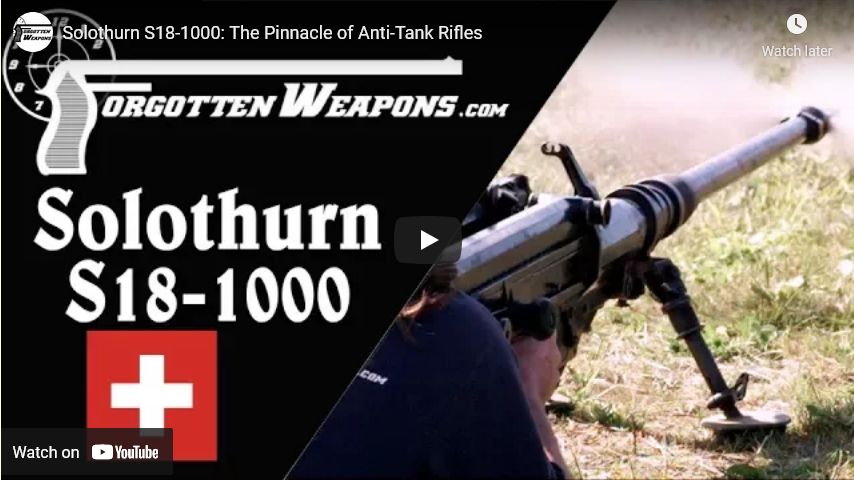
The Tankgewehr antitank rifle was developed by the Mauser company and adopted by the Imperial German military as an emergency measure to counter the introduction of tanks to the WW1 battlefield. The question is, did they really work? Could a 13.2mm AP bullet from a Tankgewehr really perforate the armor of a British tank? Well today we find out!

The armor on a British tank was steel plate of 6mm, 8mm, and 12mm thickness, through-hardened to Brinell 440-480. We have replicated this with a plate of AR450 (ie, Brinell 450) armor, which we will be shooting at a distance of 50 yards. The ammunition we are using is original 1918 production German AP, and the rifle is a Tankgewehr captured by Allied troops late in the war and brought home as a souvenir.

This video was only made possible with help from three very helpful folks:

MOA Targets provided the steel (and on short notice!): https://www.moatargets.com

Mike Carrick of Arms Heritage Magazine provided use of the T-Gewehr: https://armsheritagemagazine.com

Hayes Otoupalik provided the original ammunition: http://www.hayesotoupalik.com

Cool Forgotten Weapons merchandise! http://shop.bbtv.com/collections/forg…

http://www.patreon.com/ForgottenWeapons

If you enjoy Forgotten Weapons, check out its sister channel, InRangeTV! http://www.youtube.com/InRangeTVShow

September 9, 2020

Tanks of the Red Army in 1941: Armoured Cars and Light Tanks, by the Chieftain – WW2 Special

Filed under: History, Military, Russia, Weapons, WW2 — Tags: , , — Nicholas @ 06:00

World War Two
Published 8 Sep 2020

Chieftain is back on the World War Two channel with a deep-dive into the Soviet armour in the first months of war on the Eastern Front. Remember that this is only Part 1 and covers armoured cars and light tanks. Part 2 comes out next week and focuses on medium and heavy tanks.

Join us on Patreon: https://www.patreon.com/TimeGhostHistory
Or join The TimeGhost Army directly at: https://timeghost.tv

Follow WW2 day by day on Instagram @ww2_day_by_day – https://www.instagram.com/ww2_day_by_day
Between 2 Wars: https://www.youtube.com/playlist?list…
Source list: http://bit.ly/WW2sources

Written and Hosted by: The Chieftain https://www.youtube.com/user/TheChief…
Director: Astrid Deinhard
Producers: Astrid Deinhard and Spartacus Olsson
Executive Producers: Astrid Deinhard, Indy Neidell, Spartacus Olsson, Bodo Rittenauer
Creative Producer: Joram Appel
Post-Production Director: Wieke Kapteijns
Research by: The Chieftain
Edited by: Miki Cackowski
Sound design: Marek Kamiński
Map animations: Eastory (https://www.youtube.com/c/eastory)

Sources:
Bundesarchiv
Narodowe Archiwum Cyfrowe
waralbum.ru
From the Noun Project: Shield by Nikita Kozin, Game by Ecem Afacan, Weight by Vadim Solomakhin, oil barrel by BomSymbols, Radio by Pravin Unagar

Soundtracks from the Epidemic Sound:
Hakan Eriksson – “Epic Adventure Theme 3”
Reynard Seidel – “Deflection”
Johannes Bornlof – “Deviation In Time”
Johannes Bornlof – “The Inspector 4”
Max Anson – “Ancient Saga”
Bonnie Grace – “Imperious”
Rannar Sillard – “March Of The Brave 4”
Phoenix Tail – “At the Front”

Archive by Screenocean/Reuters https://www.screenocean.com.

A TimeGhost chronological documentary produced by OnLion Entertainment GmbH.

September 6, 2020

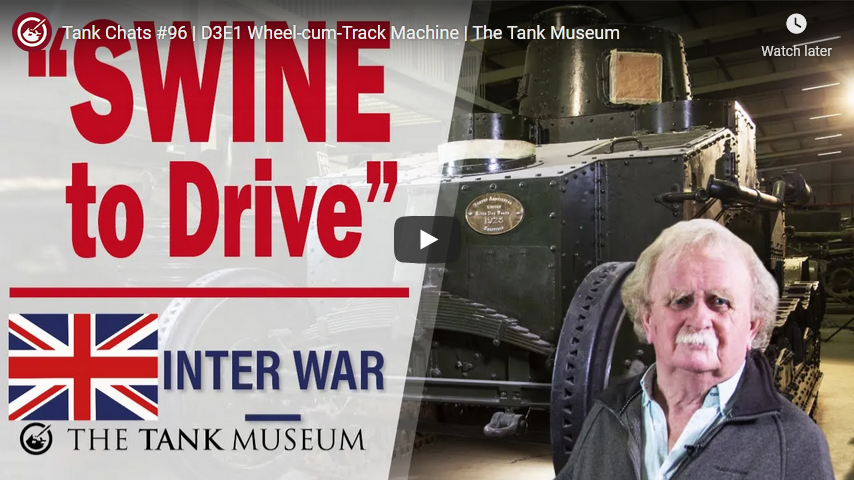
Tank Chats #78 Cruiser Mark I A9 | The Tank Museum

Filed under: Britain, History, Military, Weapons, WW2 — Tags: , , , , — Nicholas @ 02:00

The Tank Museum
Published 21 Jun 2019

The Tank Cruiser Mark I A9 is an interwar British tank. Tank Historian David Fletcher talks through the very first cruiser tank to go into service.

Support the work of The Tank Museum on Patreon: ► https://www.patreon.com/tankmuseum

Visit The Tank Museum SHOP: ► https://tankmuseumshop.org/

Twitter: ► https://twitter.com/TankMuseum
Instagram: ► https://www.instagram.com/tankmuseum/
Tiger Tank Blog: ► http://blog.tiger-tank.com/
Tank 100 First World War Centenary Blog: ► http://tank100.com/ #tankmuseum #tanks #tankchats

September 5, 2020

Chinese 7.62mm Sten Gun

Filed under: Cancon, China, History, Military, Weapons, WW2 — Tags: , , , , — Nicholas @ 02:00

Forgotten Weapons
Published 13 May 2020

http://www.patreon.com/ForgottenWeapons

https://www.floatplane.com/channel/Fo…

Cool Forgotten Weapons merch! http://shop.bbtv.com/collections/forg…

During World War Two, Canada supplied some 73,000 Sten guns (made by the Long Branch arsenal) to Chinese Nationalist forces in an effort to help them fight the Japanese. These Stens were standard MkII pattern guns, chambered for the 9x19mm Parabellum cartridge. However, many of these were eventually converted to 7.62mm Tokarev ammunition, especially after the victory of the Communist forces over the Nationalists. The conversion involved a new barrel and new magazine and magazine well. The 7.62mm barrels were typically longer than the original ones, and the magazine of choice was that of the PPS-43. Some were done by installed a magazine adapter into the original magazine well, and some (like this one) were done by cutting off the original magazine well and replacing it with a new one. In addition, some Sten guns were made domestically in China, both in 9mm and 7.62mm. The 7.62mm Tokarev cartridge was popular both from Russian pistols and submachine guns and also from China’s long military use of the dimensionally-identical 7.63mm Mauser cartridge in C96 pistols.

Many thanks to the Royal Armouries for allowing me to film and disassemble this interesting submachine gun! The NFC collection there — perhaps the best military small arms collection in Western Europe — is available by appointment to researchers:

https://royalarmouries.org/research/n…

You can browse the various Armouries collections online here:

https://royalarmouries.org/collection/

Contact:
Forgotten Weapons
6281 N. Oracle #36270
Tucson, AZ 85740

September 3, 2020

Forging a sword: part five – completion

Filed under: Technology, Tools, Weapons — Tags: , , , , — Nicholas @ 02:00

Lindybeige
Published 5 Dec 2019

I make the pommel and the grip, assemble the hilt, and polish it to a shine. Behold: ARNANDER!

Support me on Patreon: https://www.patreon.com/Lindybeige

Many thanks to The Cut And Thrust Collective for inviting me to Glastonbury to have a go at forging a sword.

My tutor: Thom Leworthy.

Music used in this video: “Siegfried’s Funeral March” by Wagner.

Buy the music – the music played at the end of my videos is now available here: https://lindybeige.bandcamp.com/track…

Buy tat (merch):
https://outloudmerch.com/collections/…

Lindybeige: a channel of archaeology, ancient and medieval warfare, rants, swing dance, travelogues, evolution, and whatever else occurs to me to make.

▼ Follow me…

Twitter: https://twitter.com/Lindybeige I may have some drivel to contribute to the Twittersphere, plus you get notice of uploads.

My website:
http://www.LloydianAspects.co.uk

September 2, 2020

Luger Model 1902 Carbine

Filed under: Germany, History, Weapons — Tags: , , — Nicholas @ 02:00

Forgotten Weapons
Published 2 Sep 2016

Failed to sell at auction.

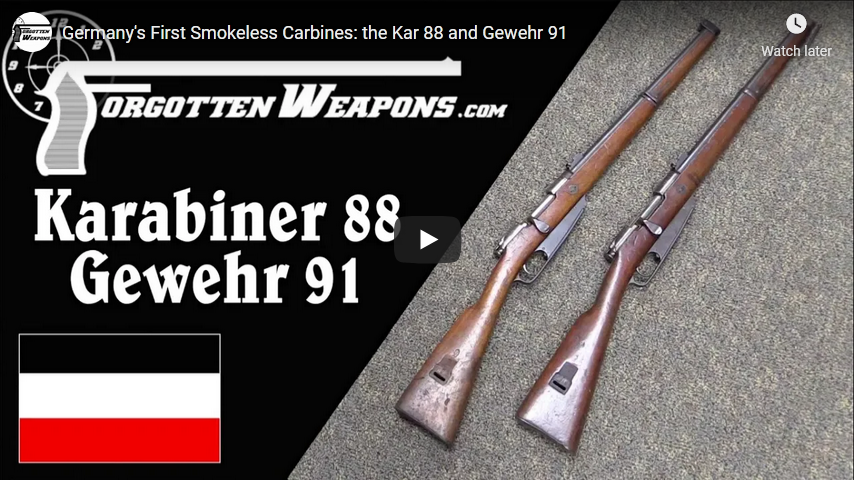
With the advent of successful self-loading pistols, one of the additional markets that many companies tried to appeal to was the compact carbine. Self-loading rifles in proper rifle cartridges would not be developed as quickly as the pistols because their much greater chamber pressures represented a more difficult engineering problem. However by simply attaching a stock and long barrel to a pistol, many ambitious manufacturers hoped to sell a weapon as a sporting carbine. These were done by DWM with the Luger, as well as Mauser’s C96, Mannlicher 1894 pistol, and many others.

Model 1902 was the designation of the major batch of commercially made Luger carbines, although there were several small batches of prototypes prior. Only a couple thousand were made, and they ultimately took quite a long time to all sell — it turned out this type of firearm was simply not very popular for its cost. The same story was true with the other contemporary pistol-carbines — none would be very successful. DWM did make another group of carbines in the 1920s, although those were made from various leftover parts and are both not as nice as the original 1902 guns (which were mostly made in 1904 and 1905) and widely faked.

http://www.patreon.com/ForgottenWeapons

August 31, 2020

Military Equipment of the Anglo Saxons and Vikings

Filed under: Britain, Europe, History, Military, Weapons — Tags: , , , , , , — Nicholas @ 06:00

Invicta
Published 19 Apr 2018

Today we dive into the world of Early Medieval England to analyze the military equipment available to the warring Anglo Saxons and Vikings!

Support future documentaries: https://www.patreon.com/InvictaHistory
Twitter: https://twitter.com/InvictaHistory

Documentary Credits:
Research: Invicta
Script: Invicta
Artwork: Osprey Publishing
Game: Total War Saga: Thrones of Britannia
Editing: Invicta
Music: Total War: Attila and Total War Battles: Kingdoms Soundtrack

Literary Sources
Anglo-Saxon Thegn by Mark Harrison (Osprey Publishing)
Viking Hersir 793–1066 AD by Mark Harrison (Osprey Publishing)
Saxon, Viking and Norman by Terence Wise (Osprey Publishing)

« Newer PostsOlder Posts »

Powered by WordPress