Quotulatiousness

December 11, 2021

Suppressed OSS M3 Grease Gun and Bushmaster Booby Trap Trigger

Filed under: History, Military, USA, Weapons, WW2 — Tags: , , , , — Nicholas @ 02:00

Forgotten Weapons
Published 9 May 2017

Today, we have a chance to take a look at a suppressed M3 “Grease Gun”, as purchased and issued by the Office of Strategic Services (the OSS; predecessor to the CIA). Thanks to its readily removable barrel, the M3 (and M3A1) submachine gun was an easy gun to adapt to use with a suppressor (or as it was called at the time, a silencer). During World War 2, such a unit was developed for clandestine use by OSS and British SOE agents in occupied Europe, and they would see use for many decades in all manner of conflicts.

The suppressor itself is quite different than modern designs, being a two-part device using tight wire mesh instead of baffles. The barrel itself is heavily perforated, and extends only through the large diameter section of the suppressor. Around it is wrapped a large roll of wire mesh, which acts as an expansion chamber to slow down the exit of gas from the muzzle. The smaller front section of the unit is filled with small discs of the same wire mesh, similar to wipes but made of mesh.

Allegedly, the suppressor was effective enough to reduce the noise of the gunshots below the level of the action cycling, which is all that one can reasonable want from a suppressor. This particular example has an excellent provenance, having been provided by OSS to a European resistance fighter for a specific mission right at the end of WW2.

In addition, we also have a piece of the OSS sneaky tricks catalog to see. Specifically, a “Bushmaster” remote trigger mechanism to allow the M3 (silenced or otherwise) to be made into an autonomous booby trap in conjunction with a time delay, tripwire, or other triggering device.

Many thanks to the anonymous collector who let me take a look at this piece and bring you a video on it!

Cool Forgotten Weapons merchandise! http://shop.bbtv.com/collections/forg…

http://www.patreon.com/ForgottenWeapons

If you enjoy Forgotten Weapons, check out its sister channel, InRangeTV! http://www.youtube.com/InRangeTVShow

December 9, 2021

Tank Chat #135 | Marder | The Tank Museum

Filed under: Germany, History, Military, Weapons — Tags: , , , , , , — Nicholas @ 02:00

The Tank Museum
Published 27 Aug 2021

In this latest episode of Tank Chats, Curator David Willey details the German Marder. A post-war Infantry Fighting vehicle.
(more…)

December 8, 2021

SA80 History: The Pre-Production XL85 and XL86

Filed under: Britain, History, Military, Weapons — Tags: , , , , , , — Nicholas @ 02:00

Forgotten Weapons
Published 17 May 2017

Armament Research Services (ARES) is a specialist technical intelligence consultancy, offering expertise and analysis to a range of government and non-government entities in the arms and munitions field. For detailed photos of the guns in this video, don’t miss the ARES companion blog post:

http://armamentresearch.com/british-e…

The SA80 saga continues today with the final pre-production versions of the L85A1 and L86A1, although at this point they still both carry XL designations, as they were not yet formally adopted weapons. In these weapons we can see a couple last distinctive mechanical changes, but perhaps more importantly by this time the worker morale at RSAF Enfield was thoroughly in the tank. It had become well known that the factory complex was going to be taken public or sold outright, and it was widely expected that Enfield would be shut down as a result. A new facility would be built in Nottingham, but none of the rank and file staff expected to transfer. They would be laid off, and they knew it. Not surprisingly, quality control suffered as a result.

As for the guns themselves, the first distinctive visible improvement was in the magazine well. In the XL70 weapons, the bottom half of the magazine well had been simple welded onto the bottom of the lower receiver, in order to retain the easy stamping of that element. On these guns, that have been replaced by a separate box which encompassed the magazine and was spot welded into the lower receiver. This change in construction method allow the magazine well to be much more precisely located in the receiver, and then fixed in place without the risk of warping the thin sheet metal of the lower receiver – while still retaining the simple stamping of that lower.

The other visible change was to the Light Support Weapon, and it consisted of a long “girder” support added below the barrel. This was intended to mount the bipod onto, in the hopes of resolving the long-running problem of split groups in the LSW. This was a problem in which the first round of a burst would hit substantially low and left relative to the rest of the burst. While the LSW was a quite accurate weapon in semiautomatic mode, this split group problem was a substantial detriment to its effectiveness as a proper support weapon.

http://www.patreon.com/ForgottenWeapons

Cool Forgotten Weapons merch! http://shop.bbtv.com/collections/forg…

If you enjoy Forgotten Weapons, check out its sister channel, InRangeTV! http://www.youtube.com/InRangeTVShow

December 5, 2021

MAS 44: The French Adopt a Semiauto Rifle

Filed under: France, History, Military, Weapons — Tags: , — Nicholas @ 02:00

Forgotten Weapons
Published 17 May 2019

The French Army had been planning a semiauto infantry rifle since 1921, but indecisiveness and bureaucracy delayed its development. A major trial was held in 1931, and elements of two experimental rifles were chosen to be combined into what would eventually become the MAS 1944. It was put through field trials in late 1939, and passed with flying colors — but too late to get into production before the 1940 armistice with Germany. The project was hidden from the Germans at St. Etienne, and would be revived upon the factory’s liberation in the fall of 1944. By late 1945, rifles were coming off the production line.

The MAS 44 was a direct gas impingement operating system with a tilting bolt, and was a remarkably rugged, dependable, and simple rifle. It was initially adopted by the French Navy, and only 6200 were made before a number of improvements were made and a new model was designated; the MAS 1949. When those 6200 rifles were ultimately surplussed in the 1980s, the vast majority of the surviving examples came to the United States, where their scarcity is not well appreciated.

http://www.patreon.com/ForgottenWeapons

Cool Forgotten Weapons merch! http://shop.bbtv.com/collections/forg…

Contact:
Forgotten Weapons
PO Box 87647
Tucson, AZ 85754

December 2, 2021

XM-148: Colt’s Vietnam Grenade Launcher

Filed under: Asia, History, Military, USA, Weapons — Tags: , , , — Nicholas @ 02:00

Forgotten Weapons
Published 11 Dec 2019

http://www.patreon.com/ForgottenWeapons

Cool Forgotten Weapons merch! http://shop.bbtv.com/collections/forg…

While the Special Purpose Infantry Weapon (SPIW) program failed to produce any successful rifles, it did become clear that the area-effect aspect of its requirements did have merit. This was spun off as its own program to develop a 40mm under-barrel grenade launcher for the M16 rifle. Of the initial entrants, (Philco/Ford, AAI, and Colt), Colt’s CGL-4 was the most promising. It was moved quickly through development and 10,500 were ordered in January 1966 as the XM-148. Field reports quickly turned sour, though, and in May of 1967 the XM-148 was ordered out of combat use, to be replaced with the M79 grenade launcher. The idea was sound, but the execution needed improvement — which would come in the form of the M203 launcher instead.

Many thanks to Movie Armaments Group in Toronto for the opportunity to showcase this grenade launcher for you! Check them out on Instagram to see many of the guns in their extensive collection:

https://instagram.com/moviearmamentsg…

http://www.moviearms.com

Contact:
Forgotten Weapons
6281 N. Oracle #36270
Tucson, AZ 85704

December 1, 2021

Tank Chats #134 | Centurion | The Tank Museum

Filed under: Britain, History, Military, Weapons — Tags: , , , — Nicholas @ 02:00

The Tank Museum
Published 20 Aug 2021

David Fletcher is back with another Tank Chat on one of the most successful post-war tank designs, Centurion. It was the primary British Army main battle tank of the post-World War II period.
(more…)

November 29, 2021

Why was the Roman Legionary’s equipment so good?

Filed under: Europe, History, Military, Weapons — Tags: , , , — Nicholas @ 02:00

Epimetheus
Published 3 Nov 2019

Arms & Armor of the Imperial Roman Legionary

The Ancient Roman legionary’s clothing, arms, armor, and equipment (Top 10 items) mini-documentary
#Legionary #documentary #Rome

This video is sponsored by my patrons on Patreon
https://www.patreon.com/Epimetheus1776

From the comments:

Epimetheus
1 year ago (edited)

Check Out my video on Republican Roman Infantry:
https://youtu.be/APuh6rokd_w

Additional info/and sources
Rounded metric Conversion for units mentioned:
Typical March: 20-30 miles(32-48 km) in a day
Training march distance and load: 22 miles = 35 km, 45 pounds = 20 kg
Full campaign max carried load per Legionary: 65-100 lbs = 27-45 kgs

One thing I wrote in the script, recorded and edited out by accident was that … when a Roman Legionary was dishonorably discharged (thrown out of the legion for bad behavior) his belt was confiscated by the legion which did not want him to be associated with the Roman State.

Sources:
Roman Military Clothing by Graham Sumner
Greece and Rome at War by Peter Connolly
Roman Legionary by Ross Cowan
The Legionary by Peter Connolly
The Gladius (The Roman short sword) by MC Bishop
Warfare in the Classical World by John Warry
Caesar’s Legions by Sekunda, Northwood and Simkins

Misspelled Inches as inces and Cohort as Chohort

November 28, 2021

A bit of perspective on the loss of the British F-35 from HMS Queen Elizabeth

Filed under: Britain, History, Military, Weapons — Tags: , , , , — Nicholas @ 05:00

At the Thin Pinstriped Line, Sir Humphrey offers a bit of historical perspective on peacetime aircraft losses:

Royal Navy aircraft carrier HMS Queen Elizabeth (R08) underway in the Atlantic on 17 October 2019, participating in exercise “WESTLANT 19”.
Photo by Mass Communication Specialist 3rd Class Nathan T. Beard, US Navy, via Wikimedia Commons.

If you look at historical data, then it shows that for decades, flying fast jets was an exceptionally dangerous occupation. In 1956 the RAF lost six Hawker Hunter aircraft in the space of just 45 minutes. These were just six of no less than 380 British military aircraft and helicopters lost in 1956, which averages out at more than one aircraft lost every day of the year – and this was not an unusual year.

Fast jet flying is and always has been an extremely dangerous business, which requires the highest levels of safety, standards and training to carry out. Over the intervening decades there has been a general decline in losses due to changes in equipment, reliability of machinery and different ways of operating, particularly with new technology, but there is still an element of risk. In particular the Martin Baker ejection seat is worth mentioning – this incident reminds us of the many lives this British company is responsible for saving over many decades.

Carrier aviation in particular remains an extremely dangerous occupation, even if crash rates have dropped. It is important to understand that the combination of fast jets, large warships and complex operating conditions can, and do, sometimes go wrong. We must not assume that aircraft will not crash anymore.

The Wikipedia page covering military aviation accidents for the period 2010-2019 is a good read to understand how risky military aviation is, and how many aircraft have been lost globally during this period.

That said, the current crop of modern British fast jets like the F35 and Typhoon have a phenomenal safety record, being operated in hugely demanding conditions around the globe for many years, and with only a handful lost. It is very telling that the loss of an aircraft is something that has gone from the utterly routine and barely newsworthy, to something that can dominate the media cycle for several days and generate huge national media coverage.

The theme on social media has been peculiar — there have been many posters talking about how embarrassing it is for the UK, or that its somehow a national disgrace that the aircraft crashed, particularly with the US embarked as well. This is utter nonsense – there is no embarrassment in a pilot taking a decision to eject in order to save his life. That is absolutely the right thing to do, and anyone who thinks otherwise has clearly never been faced with the decision on whether to eject or not.

There has been some coverage suggesting that the F35 programme is troubled in some way and that this is a setback for it. Again, this is nonsense – the aircraft first flew 15 years ago, and well over 700 have now been produced flying over 400,000 flying hours. In this time, a total of 5 aircraft (3 American, 1 Japanese and 1 British) have been lost – this is an under 1% loss rate, or one aircraft lost for every 80,000 hours in the sky.

By way of contrast, the Sea Vixen, a British jet used for carrier operations was in service from 1959-1971. Of the 145 aircraft built and operated, no less than 55 were lost in accidents in this period – a loss rate of around 38% of the whole force in just 12 years.

SA80 History: XL70 Series Final Prototypes (Individual Weapon and LSW)

Filed under: Britain, History, Military, Weapons — Tags: , , , , — Nicholas @ 02:00

Forgotten Weapons
Published 13 May 2017

Armament Research Services (ARES) is a specialist technical intelligence consultancy, offering expertise and analysis to a range of government and non-government entities in the arms and munitions field. For detailed photos of the guns in this video, don’t miss the ARES companion blog post:

http://armamentresearch.com/british-e…

By 1980, the scheduled deadline for adopting the L85 and L86 was rapidly approaching, and the weapons should have been in the last stages of fine-tuning before production began. This was not the case, however — testing was still uncovering critical problems in the guns.

The goal for these weapons was 8000 MRBF (Mean Rounds Between Failure) for the LSW and 2500 MRBF for the IW. As real testing began, the numbers were actually 100-300 MRBF. In many cases, the guns could not run three magazines in a row without a malfunction, and this was literally an order of magnitude below the requirements. But what truly led to the massive problems with the L85/86 was that RSAF Enfield did not fix these problems. Instead, they moved the goalposts. With so many problems, it was decided to only count malfunctions that occurred in the endurance testing (ie, when the guns were not put under any environmental stress at all) and to only count “critical” malfunctions in the tally. A “critical” failure was one which could not be resolved by the shooter, such as a split barrel. Simple feed or ejection failures were not counted, nor were malfunctions that required gun disassembly to correct. Even under this new paradigm, MRBF over 3000 could not be achieved.

In addition, the LSW was showing a problem that would become endemic; split groups. The weapon shot very good groups in semiautomatic, but in full auto fire it would produce two discreet groups. The first shot in each burst would land about 6 minutes of angle low and right compared to the remaining rounds in the group. This would be the subject of significant work, and was never fully rectified.

http://www.patreon.com/ForgottenWeapons

Cool Forgotten Weapons merch! http://shop.bbtv.com/collections/forg…

If you enjoy Forgotten Weapons, check out its sister channel, InRangeTV! http://www.youtube.com/InRangeTVShow

November 27, 2021

Armored Vehicles of Operation Torch Pt. 2: America and Britain (and France) – by the Chieftain

Filed under: Africa, Britain, France, History, Military, USA, Weapons, WW2 — Tags: , , , , — Nicholas @ 04:00

World War Two
Published 26 Nov 2021

Part two of Chieftain’s return to the North African campaign. Here he looks at the armored fighting vehicles of the British and Americans with a small bit on the French as well. We see the introduction of the iconic Sherman and the varied fortunes of British designs.
(more…)

November 26, 2021

The modern carrier debate

Filed under: China, History, Military, Technology, USA, Weapons — Tags: , , , , — Nicholas @ 05:00

I recently started reading A Collection of Unmitigated Pedantry, a fascinating historical blog run by Dr. Bret Devereaux. You can expect to see plenty of QotD entries from his blog in future months, as I’ve been delighted to find that he not only has deep knowledge of several historical areas I find interesting, but that he also writes well and clearly. This post from last year is a bit outside his normal bailliwick, being modern and somewhat speculative rather than dealing with the ancient world, classic-era Greece, Republican and Imperial Rome, or the Middle Ages in Europe and the Mediterranean basin:

The Nimitz-class aircraft carrier USS Theodore Roosevelt (CVN 71) underway in the Persian Gulf, 3 December 2005.
U.S. Navy photo by Photographer’s Mate 2nd Class Matthew Bash via Wikimedia Commons.

Let’s talk about aircraft carriers for a moment […] There is currently a long-raging debate about the future of the aircraft carrier as a platform, particularly for the US Navy (by far the largest operator of aircraft carriers in the world), to the point that I suspect most national security publications could open companion websites exclusively for the endless whinging on aircraft carriers and their supposed obsolescence or non-obsolescence. And yet, new aircraft carriers continue to be built.

As an aside, this is one of those debates that has been going on so long and so continuously that it becomes misleading for regular people. Most writing on the topic, since the battle lines in the debate are so well-drawn, consists of all-or-nothing arguments made in the strongest terms in part because everyone assumes that everyone else has already read the other side; there’s no point in excessively caveating your War on the Rocks aircraft carrier article, because anyone who reads WotR has read twenty already and so knows all of those caveats already. Except, of course, the new reader does not and is going to read that article and assume it represents the current state of the debate and wonder why, if the evidence is so strong, the debate is not resolved. This isn’t exclusive to aircraft carriers, mind you – the various hoplite debates (date of origin, othismos, uniformity of the phalanx) have reached this point as well; a reader of any number of “heterodox” works on the topic (a position most closely associated with Hans van Wees) could well be excused for assuming they were the last word, when it still seems to me that they represent a significant but probably still minority position in the field (though perhaps quite close to parity now). This is a common phenomenon for longstanding specialist debates and thus something to be wary of when moving into a new field; when in doubt, buy a specialist a drink and ask about the “state of the debate” (not “who is right” but “who argues what”; be aware that it is generally the heterodox position in these debates that is loudest, even as the minority).

Very briefly, the argument about carriers revolves around their cost, vulnerability and utility. Carrier skeptics point out that carriers are massive, expensive platforms that are increasingly vulnerable to anti-ship missiles and that the steadily growing range of those missiles would force carriers to operate further and further from their objectives, potentially forcing them to choose between exposing themselves or being pushed out of the battlespace altogether (this, as an aside, is what is meant by A2/AD – “Anti-Access/Area-Denial” – weapons). The fear advanced is of swarms of hypersonic long-range anti-ship missiles defeating or overwhelming the point-defense capability of a carrier strike group and striking or even sinking the prize asset aircraft carrier – an asset too expensive to lose.

Carrier advocates will then point out all of the missions for which carriers are still necessary: power projection, ground action support, sea control, humanitarian operations and so on. They argue that no platform other than an aircraft carrier appears able to do these missions, that these missions remain essential and that smaller aircraft carriers appear to be substantially less effective at these missions, which limits the value of dispersing assets among a greater number of less expensive platforms. They also dispute the degree to which current or future weapon-systems endanger the carrier platform.

I am not here to resolve the carrier debate, of course. The people writing these articles know a lot more about modern naval strategy and carrier operations than I do.

Instead I bring up the carrier debate to note one facet of it […]: the carrier debate operates under conditions of fearsome technological uncertainty. This is one of those things that – as I mentioned above – can be missed by just reading a little of the debate. Almost none of the weapon systems involved here have seen extensive combat usage in a ship-to-ship or land-to-ship context. Naval thinkers are trying to puzzle out what will happen when carriers with untested stealth technology, defended by untested anti-missile defenses are engaged by untested high-speed anti-ship missiles which are guided by untested satellite systems which are under attack by untested anti-satellite systems in a conflict where even the humans in at least one of these fighting forces are also untested in combat (I should note I mean “untested” here not in the sense that these systems haven’t been through test runs, but in the sense that they haven’t ever been used in anger in this kind of near-peer conflict environment; they have all been shown to work under test conditions). Oh, and the interlinked computer systems that all of these components require will likely be under unprecedented levels of cyber-attack.

No one is actually certain how these technologies will interact under battlefield conditions. No one can be really sure if these technologies will even work as advertised under battlefield conditions; ask the designers of the M16 – works in a lab and works in the field are not always the same thing. You can see this in a lot of the bet-hedging that’s currently happening: the People’s Republic of China has famously bet big on A2/AD and prohibiting (American) carriers from operating near China, but now has also initiated an ambitious aircraft carrier building program, apparently investing in the technology they spent so much time and energy rendering – if one believes the carrier skeptics – “obsolete”. Meanwhile, the United States Navy – the largest operator of aircraft carriers in the world – is pushing development on multiple anti-ship missiles of the very sort that supposedly render the Navy’s own fleet “obsolete”, while also moving forward building the newest model of super-carrier. If either side was confident in the obsolescence (or non-obsolescence) of the aircraft carrier in the face of A2/AD weapons, they’d focus on one or the other; the bet hedging is a product of uncertainty – or perhaps more correctly a product of the calculation that uncertainty and less-than-perfect performance will create a space for both sets of weapon-systems to coexist in the battlespace as neither quite lives up to its best billing.

(I should note that for this brief summary, I am treating everyone’s development and ship procurement systems as rational and strategic. Which, to be clear, they are not – personalities, institutional culture and objectives, politics all play a huge role. But for now this is a useful simplifying assumption – for the most part, the people procuring these weapons do imagine that they are still useful.)

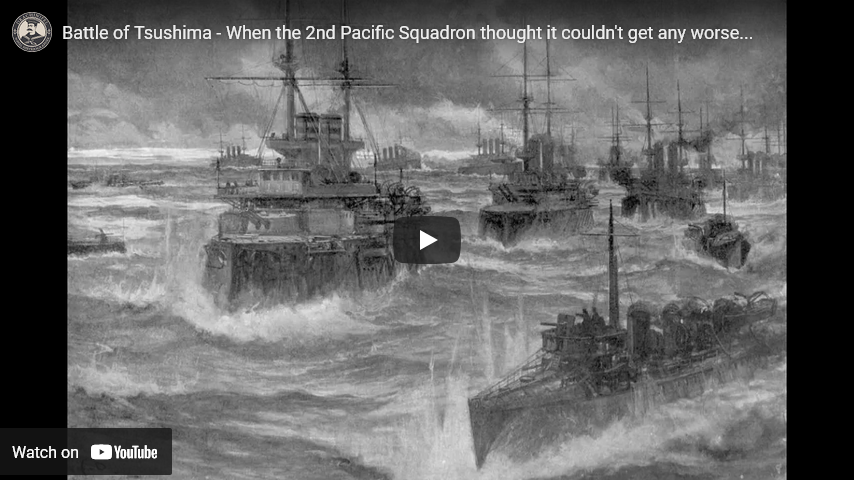
In many ways, the current aircraft carrier debate resembles a fast moving version of the naval developments of the late 1800s and early 1900s. Naval designers of the period were faced with fearsome unknowns – would battleships function alone or in groups? Would they be screened against fast moving torpedo boats or forced to defend themselves? How lethal might a torpedo attack be and how could it be defended against? Would they be exposed to short-range direct heavy gunfire or long-range plunging gunfire (which radically changes how you arm and armor these ships)? With technologies evolving in parallel in the absence of battlefield tests, these remained unknowns. The eventual “correct solution” emerged in 1903 with the suggestion of the all-big-gun battleship, but the first of these (HMS Dreadnought), while begun in 1904 was finished only after the Battle of Tsushima (May 27-8, 1905) had provided apparently startling clarity on the question.

November 25, 2021

Why The Most Expensive US Martial Pistol Exploded A Lot

Filed under: History, Military, Technology, USA, Weapons — Tags: , , , , , — Nicholas @ 02:00

Forgotten Weapons
Published 12 Aug 2021

http://www.patreon.com/ForgottenWeapons

https://www.floatplane.com/channel/Fo…

Cool Forgotten Weapons merch! http://shop.forgottenweapons.com

The Colt Model 1847 Walker is one of the most valuable of all US military handguns in the collecting community, with examples sometimes breaking seven figures. However, the Walker was in many ways a remarkable failure as a service sidearm, mostly because it tended to explode. By today’s standards, it exploded quite a lot.

Why?

Basically, a combination of several factors:

– The Walker was made of wrought iron, and not always the best quality wrought iron. Cylinders had internal flaws that became weak points and failed upon firing.
– The Walker had a huge powder capacity in its chambers, between 50 and 60 grains depending on the projectile used. This was basically rifle size, and it left the cylinder design with a very small margin of safety.
– Powder composition and grain size was less standardized in the 1840s than it is today, making overpressure loads more likely than today.
– The Walker was designed for a conical “Pickett” bullet that was tricky to load correctly (point forward). Loading it backward could increase the powder volume in a chamber.

Of nearly 400 Walkers issued for the Mexican-American War, only 191 were returned after a year’s service, and only 82 of those were serviceable. Some of those missing guns were lost and stolen, but a substantial number — generally accepted to be 20%-30% — suffered burst barrels, burst cylinders, and broken cylinder arbors. Whoops!

Contact:
Forgotten Weapons
6281 N. Oracle 36270
Tucson, AZ 85740

November 24, 2021

Tank Chats #133 | Renault UE Chenillette | The Tank Museum

Filed under: France, Germany, History, Italy, Military, Weapons, WW2 — Tags: , , , , — Nicholas @ 02:00

The Tank Museum
Published 6 Aug 2021

In this weeks Tank Chat, Curator David Willey talks about the Renault UE Chenillette. A light tracked armoured carrier produced by France between 1932 and 1940.
(more…)

November 21, 2021

SA80 History: XL60 Series in 4.85mm

Filed under: Britain, History, Military, Weapons — Tags: , , , , , , — Nicholas @ 02:00

Forgotten Weapons
Published 10 May 2017

Armament Research Services (ARES) is a specialist technical intelligence consultancy, offering expertise and analysis to a range of government and non-government entities in the arms and munitions field. For detailed photos of the guns in this video, don’t miss the ARES companion blog post:

http://armamentresearch.com/british-e…

Once the basic configuration of the new British rifle was determined, the next step was to build a series of prototypes. The design that took form was basically a bullpup copy of the Armalite AR-18. The design team at Enfield were mostly senior draftsmen, with virtually no firearms experience among them. To make things worse, most of the design team was regularly rotated onto other projects, preventing them from developing any project experience on the rifle.

Several prototype batches were made (typically of a dozen guns each, both IWs and LSWs), all in the unique British 4.85x49mm cartridge, with a variety of different feature sets. Through the different patterns, configurations would change on the safety (push button vs lever) fire selector (push button vs lever), and magazine catch (straight-in side lever vs rock-in side lever vs rock-in rear paddle). At this time, plans still existed to make both left- and right-handed versions of the final gun, so prototypes of both were manufactured.

Because cost-cutting measures had not yet been forced on the project, these XL-60 series guns were generally reliable, at least in normal conditions. They are quite comfortable to fire, with a cartridge very similar to the 5.56mm NATO in practical terms. There is nothing particularly wrong with that cartridge, but it would be dropped when it lost NATO trials to the Belgian SS109 … but we will address that in the next episode of the SA80 history.

http://www.patreon.com/ForgottenWeapons

Cool Forgotten Weapons merch! http://shop.bbtv.com/collections/forg…

If you enjoy Forgotten Weapons, check out its sister channel, InRangeTV! http://www.youtube.com/InRangeTVShow

November 18, 2021

When artillery became powerful enough to literally destroy castles

Filed under: Britain, France, History, Military, Weapons — Tags: , , , — Nicholas @ 03:00

In Quillette, Paul Lockhart recounts one of the early artillery successes in European siege warfare, the reduction of the English-held fortifications at Odruik:

Portrtait of Philip the Bold (Philip II, Duke of Burgundy), 1342-1404.
Unknown painter of the Flemish School via Wikimedia Commons.

Philip the Bold, duke of Burgundy, was a warrior’s warrior. Hawk-nosed, ambitious, and brash, Philip had been a soldier since childhood. He was still a smooth-faced boy of 14 when he fought alongside his father, King John II of France, in the battle of Poitiers in 1356. Like King John, he was taken prisoner by the English when Edward, the Black Prince of Wales, vanquished the French on the field at Poitiers. A decade later, the duke, always looking for an advantage over the Englishmen who had invaded his country, embraced a novel technology: gunpowder.

This mysterious Asian invention had been known in Europe for more than a century, and for nearly that long European armies had used it as a weapon of war — or, more precisely, as the substance that made another recent innovation, the cannon, work. So far, gunpowder artillery had not shown great promise. Cannon had been used as siege engines in European warfare at least as early as the 1320s. But for all the trouble and effort they demanded, they had not proven themselves to be much more effective than conventional siege weapons such as catapults and trebuchets, machines that used mechanical energy to hurl projectiles at castle walls. Certainly, the early cannon did not appear to be effective enough to justify their cost, which was substantial.

But Philip the Bold saw promise in the new weapons, especially the huge siege guns that came to be known as bombards, and in 1369 he began to invest heavily in them. France and England were then locked in the on-again, off-again series of dynastic conflicts known today as the Hundred Years’ War (1337–1453). In 1377, when Duke Philip’s brother and sovereign, King Charles V of France, ordered him to attack the English in the Calais region, the duke answered the call, bringing with him more than 100 new cannon, including one monster of a gun that fired a stone cannonball weighing some 450 livres (around 485 pounds).

One of the duke’s intended targets was the English-held castle at Odruik, built with stout masonry walls and surrounded by a thick layer of outworks. Odruik would be a tough nut to crack. Its defenders seemed to think so, too, and were confident that they could hold out against Duke Philip’s army, even as the duke’s men began to put their huge siege cannon into position in full view of the castle walls.

The first few shots from Philip’s siege-battery hammered Odruik’s outer walls into dust. Soon, the stone cannonballs were sailing through the walls as if they weren’t there; soon after that, the outer walls actually weren’t there. After Philip’s guns had fired a grand total of about 200 rounds, much of Odruik’s once-proud walls lay in ruin, and before the duke could send his men through the breach and into the castle, Odruik’s defenders capitulated.

Philip the Bold’s triumph at Odruik in 1377 was a harbinger of things to come, a revealer of unsettling truths. Gunpowder artillery had been used in sieges before, but Odruik was its first overwhelming and clear-cut victory over a castle. The siege of Odruik demonstrated that — when the guns were big enough, and when there were enough of them — cannon were more powerful than any siege engine yet invented, and could knock down castles in a matter of hours. What happened at Odruik would be repeated over and over again at castles throughout continental Europe and the British Isles through the remainder of the Middle Ages and beyond.

It was one of the accepted “rules” of war that a besieged town that surrendered before the beseiging army conducted an infantry assault would be spared from sack … the theory being that once the fortifications had been overcome, the final outcome was not in doubt and the defenders lost no honour from the surrender. You can certainly understand why the citizens of the defended town would be eager to avoid the plunder and rapine of an assaulting army once the walls were breached.

« Newer PostsOlder Posts »

Powered by WordPress