
The Tank Museum
Published 7 May 2021David Fletcher takes a look at the mighty M74 Armoured Recovery Vehicle (ARV), built on a Sherman M4A3 chassis.
(more…)
September 23, 2021
Tank Chats #125 | Sherman M74 ARV | The Tank Museum
Comments Off on Tank Chats #125 | Sherman M74 ARV | The Tank Museum
September 22, 2021
Speaking of highly sus votes … here’s an example from California’s recall election
At Samizdata, Niall Kilmartin recounts what he heard from a Californian friend after their recent election on recalling the sitting governor:
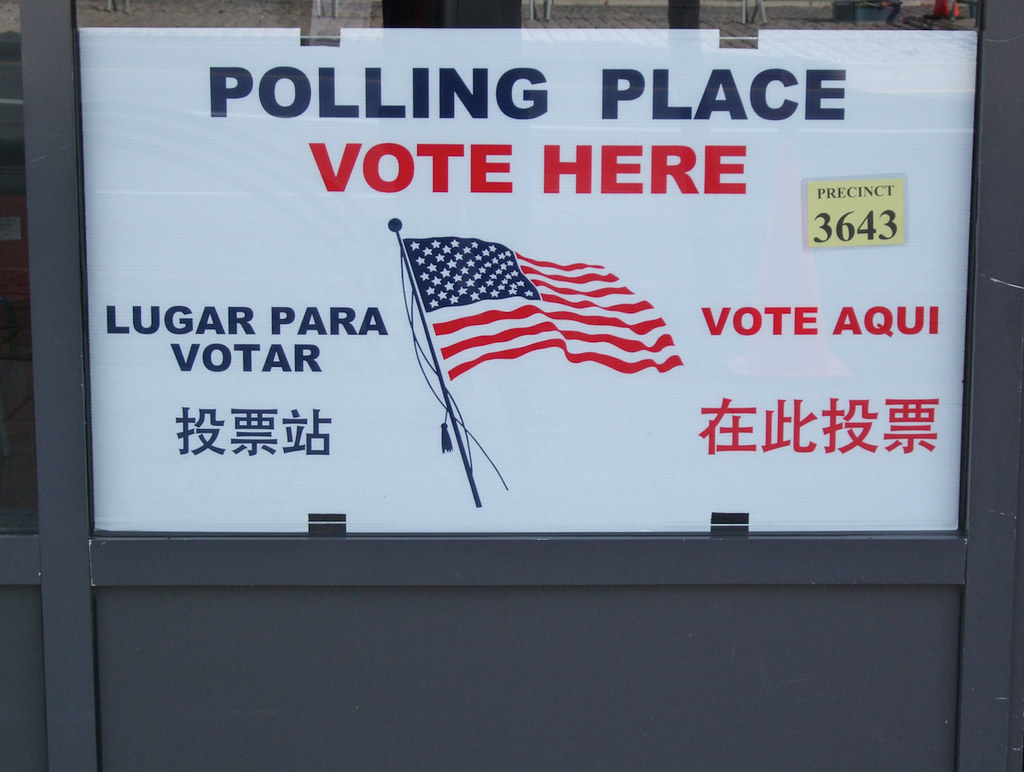
“Polling Place Vote Here” by Scott Beale is licensed under CC BY-NC-ND 2.0


He was sent a postal ballot – a ballot and an envelope to return it in. He had not asked for it and did not want it but got it anyway. His wife was also sent one and what I say below applies to her as well.
Both envelope and ballot had serial numbers printed on them – and they were sequential: the return envelope’s serial number differed by one from its ballot’s serial number. (His wife’s likewise, so it seemed to be a pattern.) This gave him some concerns.
- As the state had posted the serial-numbered ballot specifically to him, it sure looked like, after the election, the authorities would be able to tell how he’d voted. In a state where expressing a heterodox thought can be career-ending, this was a little worrying. Of course, he could have chosen to trust the Governor’s assurance that the state would never dream of recording the serial-to-address data, let alone exploiting it afterwards (if the Governor had given that specific assurance, but he did not recall whether Newsom had clearly promised that as such).
- As the envelope and ballot serials had this simple sequential relationship, it sure looked like anyone who saw the returned envelope (which had to have his name and address on it), would be able to deduce the serial of his ballot. In a state where the operation of the law can make defying antifa more dangerous to you than to them, this was a little worrying. Of course, he could have chosen to trust the Governor’s assurance that no such person would later be able to get access to the ballots or their scanned data to relate his name and address to his vote (if the Governor had given that specific assurance, but he did not recall whether Newsom had clearly promised that as such).
- As there was no secrecy sleeve, it sure looked like whoever ripped the envelope open to get the ballot during the count would have a hard time not seeing his name, address and vote all at once anyway. In a state where supporting the wrong party can lead to unequal application of the law, this was a little worrying. Of course, he could have chosen to trust the Governor’s assurance that the electoral staff would be unable to record or memorise such information (if the Governor had given that specific assurance, but he did not recall whether Newsom had clearly promised that as such).
After thinking about this, he went to the local polling station on election day to try and get a ballot from them and put it in the ballot box the old-fashioned way. Wisely, he took the postal ballot with him, knowing they should – and in this case probably would – want to see it destroyed. Unwisely, he filled it in beforehand in case they refused to let him vote the old fashioned way (so that, in that case, he could at least put the postal ballot straight into the box, thus cutting some intermediaries out of the insecure loop, without making a second visit). He gave me a vivid word-picture of the crossed-arms, blocking-the-way lady in change of the polling place when he made his request. They did not absolutely refuse, but it was made clear to him that the first thing to happen would be his postal vote being torn open and carefully examined before its destruction. Cursing himself for the “forethought” of filling it in “in case”, he decided that that would destroy the point of the exercise, which was to cast a secret ballot – though he did wonder by then whether, despite his studiously-meek demeanour, the lady felt any more doubt of whom he was voting for than he felt of whom she was voting for. So in the end he used it as the state intended he should.
Comments Off on Speaking of highly sus votes … here’s an example from California’s recall election
QotD: Urban bohemians
[C]onsider the inchoate American gang identified as “Bohemian” in New York Times rock critic Ann Powers’ new book, Weird Like Me: My Bohemian America. Powers casually links rock music with her version of bohemia, that world of young and not-so-young hipsters living and behaving in nontraditional ways. Rock, she writes, “inspires fans to dye their hair green and wear thigh-high leather boots; to defy their parents, skip school, and tell off the boss; or even, sometimes, to take a new turn and change their lives completely.” Her bohemia is inexorably linked with progressive politics, not holding down a decent job, being kind to gays and minorities, and all else that’s “cool.”
Powers fails to recognize that her bohemia is predicated upon a market liberalism that throws off so much wealth that you can live like a Pharaoh just by scavenging what other people throw out — as she and her slacker buddies did in San Francisco in the ’80s and early ’90s. Her bohemian lifestyle is part of the same system that underwrites free markets, consumerism, and tolerance for all sorts of offensive speech and alternative lifestyles. In other words, the liberty to be bohemian is a glorious result of the very capitalist reality that Powers says a real bohemian must be against.
Brian Doherty, “Rage On: The strange politics of millionaire rock stars”, Reason Online, 2000-10.
Update: Broken link fixed, thanks to “somercet1” for the heads-up.
Comments Off on QotD: Urban bohemians
September 21, 2021
A little New York City tale
Jim Treacher found the twists and turns in this NYC local story to be disturbing his sleep:
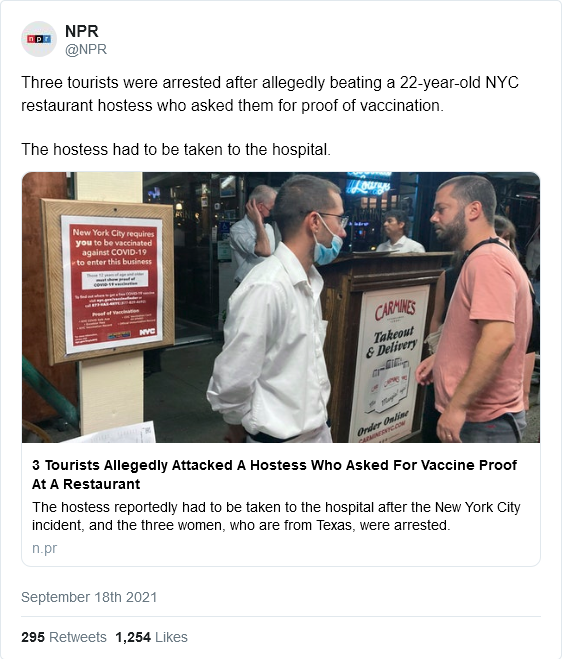
An odd little news story got stuck in my brain over the weekend, so I tried to figure out why. Last week, three Texas women attacked a hostess at a restaurant in New York City because the hostess asked them for proof that they’re vaccinated:
Seems like an overreaction, no? It’s not like a restaurant hostess is responsible for state and local laws. She was just doing her job.
In the initial NPR story I read, the women were described only as being “from Texas”. Which immediately tells a certain audience, NPR’s audience, everything they need to hear. Everyone knows what those Texans are like, right? Yeeeeeee-haw! Them inbred redneck anti-vax science-denyin’ hayseeds prob’ly voted for Trump, didn’t they? Yer darn tootin’!
It just goes to show how evil those dirty Republicans really are. They’d rather beat up a woman in public than surrender a little bit of their freedom for the greater good. I’ll bet they weren’t even wearing masks. Tsk, tsk, tsk. And another tsk for good measure!
But when you read past the headline, you learn a bit more about these three lovely ladies:
Police arrested three women — 21-year-old Tyonnie Keshay Rankin, 44-year-old Kaeita Nkeenge Rankin and 49-year-old Sally Rechelle Lewis — and they have since been charged with misdemeanor assault and criminal mischief …
Now, at the risk of being branded a racist — the most damning yet ubiquitous accusation in the modern world — I saw those names and I assumed those women are African-American.
I know. I know! I’m not proud of it, but that’s just how deeply my white privilege has taken root in my soul.
The headline doesn’t mention their race (“3 Tourists Allegedly Attacked A Hostess Who Asked For Vaccine Proof At A Restaurant”). There’s no mention of race in the story at all, so according to National Public Radio, race had nothing to do with it.
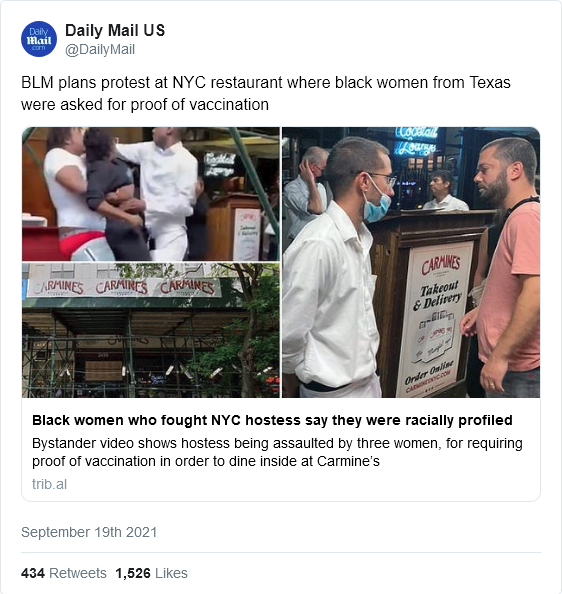
Well, race is about to have something to do with it:
Presto! In the blink of an eye, this story just magically transformed from “Stupid Anti-Vax Texans Literally Punch Science in the Face” to “Black Women in NYC Restaurant Latest Victims of Racial Profiling.” (Remember that Starbucks incident? Remember how the whole company shut down for an entire afternoon to do “anti-racial bias” training?)
And if those dueling narratives aren’t confusing enough for the average liberal mind, it gets even better: The hostess is Asian. So, here’s yet another victim of the anti-Asian violence we’ve been hearing about for the past 18 months. #StopAsianHate, anyone?
Anyone? Hello?
No, that’s not the narrative this time. Which is what this is all about: narratives, not facts.
Comments Off on A little New York City tale
September 20, 2021
Canada was given advance notice of the AUKUS deal … about five minutes notice
When the news broke about a new western alliance involving Australia, the United Kingdom and the United States, the official line — belatedly — was that our allies had kept Canadian officials “in the loop”, about the negotiations. Now that everyone’s attention is on the vote-counting, it can be safely acknowledged that the Canadian government got a heads-up just a few minutes before the formal announcement, as Ted Campbell discusses:
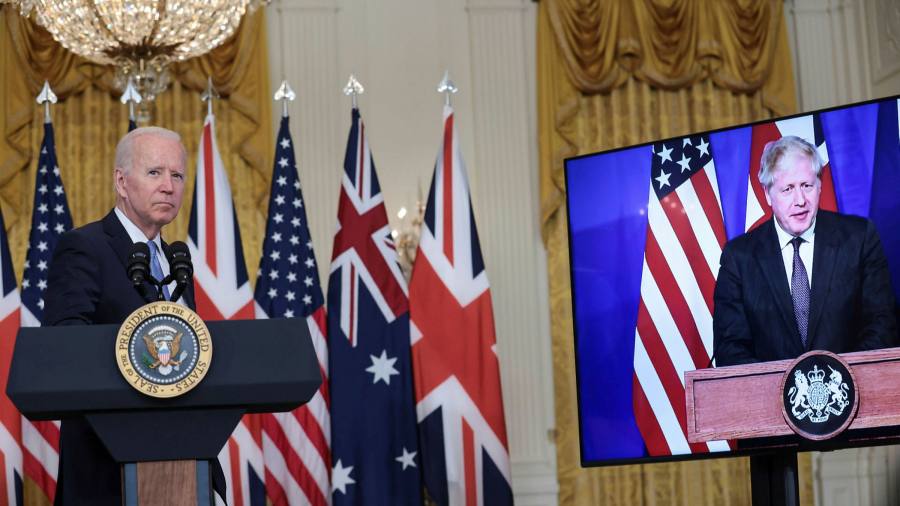
US President Joe Biden with British Prime Minister Boris Johnson (onscreen) during the AUKUS announcement.
Image from businesstelegraph.co.uk.
So, Steven Chase and Robert Fife say, in the Globe and Mail, that “The Canadian government was surprised this week by the announcement of a new security pact between the United States, Britain and Australia, one that excluded Canada and is aimed at confronting China’s growing military and political influence in the Indo-Pacific region, according to senior government officials [and] Three officials, representing Canada’s foreign affairs, intelligence and defence departments, told The Globe and Mail that Ottawa was not consulted about the pact, and had no idea the trilateral security announcement was coming until it was made on Wednesday by U.S. President Joe Biden, British Prime Minister Boris Johnson and Australian Prime Minister Scott Morrison.”
Not only did our oldest and closest friends and allies kick Canada out of the “inner circle”, they didn’t even bother to tell us that the political and diplomatic kick in the arse was coming, although, the Globe journalists say, the Australian and British defence ministers gave Harjit Sajjan a brief “heads up” just minutes before the announcement. Mr Sajjan’s spokesman said that Canada “had been kept in the loop”, I call BS.
Vice Admiral Mark Norman, someone who knows a lot about what happens at the highest echelons of government in Ottawa said that “if Mr. Trudeau was fully briefed” [on this new AUKUS pact, then] “he doesn’t understand what is going on internationally and he doesn’t understand what the significance of an arrangement like this is as it relates to international security.” I don’t think he had heard a word about this until Minister Sajjan’s senior aids called the PCO and PMO on Wednesday afternoon.
One can easily imagine the conversations on Wednesday and Thursday in some of the corridors of power in Ottawa: “
Biden us!” said one senior official. “No,” said another, even more senior, “this has been coming for a long time. It’s a shock, but it really shouldn’t be a surprise.” “They screwed us,” said a third, “we’ve done nothing to deserve this. It’s just because we aren’t spending as much as Biden and Morrison want on the military and it’s because we’re not sending more ships to Asia, more often.” “No,” the second person said, “it’s because we decided, all of us, you and me, too, to not do whatever it took to arrest the changes in our national strategic outlook.” “How can you say that?” the first speaker said, “We all protested, I wrote a long brief explaining why we needed to step up …” “We’re still here,” the more senior official said. “We didn’t resign and go public as soon as we saw how things were shaping up. Almost no one did.” “No one listens when senior officials or admirals or generals resign,” said the third official, “it wouldn’t have done any good.” “You’re right,” the most senior official answered, “resignations are, normally, not news and they rarely change politicians’ minds … not, anyway, when they’re done one at a time. Back in 2016, when many us started to see, clearly, how things were going we should have resigned en masse ~ and not just we three, but dozens of us from PCO, from Foreign Affairs and from DND and the military. If the senior public service had rebelled, as it should when the government makes destructive policy choice against our advice, then there would have been enormous, even irresistible political pressure. But we didn’t, did we? We all stayed on and wrote a couple of arse-covering briefing notes and went about our business. We are as much to blame for this as are those dimwits in Trudeau’s cabinet and inner circle. We failed Canada.” Vice Admiral Norman, the article explains, “said the agreement goes far beyond access to U.S. submarine technology [which is Mr Trudeau’s lame excuse for why Canada was kicked out of the inner circle] This is about accessing both current and emerging technologies, from cyber and artificial intelligence, to acoustics and underwater warfare – a whole range of very important strategic capabilities.” Further, “Mr. Norman said Canada has many national interests in the Indo-Pacific – including trade, promoting the rule of law and democracy, and countering China’s aggressive behaviour and posturing – but he suspects close allies do not take Canadian defence commitments seriously [and he added] I don’t think our allies think we are serious when it comes to defence. I think they have concerns not just about our defence expenditures, but also the extent to which our [international] commitments are both lasting and meaningful.” This has been evident since 2015. Justin Trudeau effectively campaigned on doing less in the world. Everyone knew this was coming ~ especially those who voted for the Liberal Party … it is what they wanted. It’s what Canada got.
Comments Off on Canada was given advance notice of the AUKUS deal … about five minutes notice
September 19, 2021
Stalingrad Falls? – WW2 – 160 – September 18, 1942
World War Two
Published 18 Sep 2021It’s a big week, but by now they all are. The fighting in Stalingrad is intense, the fighting on Guadalcanal is intense, and the US loses a carrier in the Pacific. And the German quest for oil in the Caucasus … how’s that going again?
(more…)
Comments Off on Stalingrad Falls? – WW2 – 160 – September 18, 1942
September 17, 2021
Australia, the UK, and the US join in a military alliance … Canada of course is nowhere in sight
News broke the other day about a new three-nation military arrangement clearly aimed at containing Chinese ambitions in the Pacific, involving Australia, Britain, and the United States, to be known as AUKUS (or AUUKUS, depending on the reporting source). These three countries are already tightly linked in the “Five Eyes” intelligence sharing network which also includes Canada and New Zealand. As more than one wit noted on Twitter after the announcement, it’s a good thing Canada doesn’t have a Pacific coast or any economic interests in that ocean…
Ted Campbell, who recently emerged from a blogging hiatus to comment on the ongoing federal election, felt this new pact cemented the idea that Canada is “no longer a serious country” in military terms:
It is now abundantly clear that the USA, inter alia, puts Justin Trudeau’s Canada in the same league as (anti-nuclear) New Zealand. Canada is no longer one of the most trusted allies … Australia is; Britain is: India is; Japan is … Canada is NOT.
Prime Minister Justin Trudeau has, in six short years, moved Canada from one of America’s best friends to, de facto, a Chinese puppet state. He has done this with his own (and his many advisors’) eyes wide open. Canada, Justin Trudeau’s Canada is no longer a serious nation … perhaps we don’t really deserve to be. After all, we (almost 40% of the almost 70% who bothered to vote at all) elected him … then we did it again. Maybe the world is just concluding that we are not serious people who can be relied upon when the going gets tough.
He followed this up with a bit more concern on the sinking Canadian international profile:
Just take a look at those technologies ~ AI, quantum computing, cyber warfare ~ those are all areas vital to Canada’s security and prosperity and what are we focused on? Climate change and Québec’s latest attempts to make Canada into an illiberal state. China spews out more carbon in a week than Canada does in a year. China is aiming to displace America as the global guarantor of peace, security and trade. Do any of the dimwits in the Liberal government understand that? Why in hell is Prime Minister Trudeau attacking Alberta’s (relatively clean) oil industry rather than, for example, concentrating on making Canadian nuclear energy work for us?
A few days ago I said that Canada needs nuclear powered submarines to assert and protect our sovereignty in the waters we claim as our own. No one contradicted me. No one ever raises any serious, well-founded objections to nuclear submarines for Canada. It’s a no brainer. But, look at the last line in the quote above. Who is getting nuclear submarines? Australia … because it is a serious country with adult political leadership.
Prime Minister Justin Trudeau’s regime has sidelines Canada. Our strongest, most traditional allies have abandoned us. We have been sold out … to China.
I use that term “sold out”, intentionally. I do NOT believe that Justin Trudeau is a traitor … for heaven’s sake, he’s not smart enough to betray anything. He’s barely able to memorize his lines. But a lot of people have invested a lot in China ~ the Desmarais family (of Power Corporation fame) and former Prime Minister Jean Chrétien and Bob Rae, Canada’s Ambassador to the UN, for example, are all closely tied together and even more closely tied to the Canada-China trade file. I assert that the “China lobby” in Canada is very, very powerful, very, very rich and extraordinarily well connected to Canada’s political leadership ~ Liberal and Conservative, alike. I further assert that it, not Justin Trudeau and Marc Garneau and the mandarins in Ottawa, drives Canada’s foreign, trade and fiscal policies. Prime Minister Justin Trudeau is NOT a traitor … but he is puppet and people whose vital interests are centred on China, not Canada, pull the strings.
Why is Canada excluded from the AUKUS pact?
One reason Canada isn’t involved is certainly the distraction of the federal election, and there would have been no way that Justin Trudeau would have wanted to answer questions on the campaign trail about anything geostrategic or military, and he especially doesn’t want Canadians looking closely at his servile deference to the Chinese government. Of course, given that he’s literally bribed the major newspaper chains and TV networks with “subsidies” right before the election was called, he might well have been safe from any hint of an awkward question from his unofficial PR branches in Montreal, Toronto, and Vancouver.
Over at the Thin Pinstriped Line, Sir Humphrey looks at the military and technical implications of the new alliance:
The Royal Australian Navy is likely to become the next nation to join the nuclear submarine operators club. This is the key headline emerging from the surprise tri-lateral announcement on Wed 15 September by the Prime Ministers of Australia and the UK, and the President of the United States.
The move, forming a new “three eyes” club known as AUKUS is a genuinely significant development intended to provide a significant uplift in capability in the Indo-Pacific region. For the first time in nearly 70 years, the US has agreed to share some of its most sensitive technology with a third party, to help Australia become a “naval power underway on nuclear power”.
There are several ramifications of this decision, that will be felt for many years to come. The first is that from an American perspective, this is a good opportunity to take steps to increase burden sharing in the Pacific.
[…]
From a wider diplomatic perspective, there are three distinct groupings to consider. Firstly, the remaining 5-EYES members (Canada and New Zealand). Its unlikely that this will do much damage to 5-EYES – for example New Zealand would never have been approached as the acquisition of a nuclear submarine would be vastly beyond the budget, or needs, of the small but incredibly professional Royal New Zealand Navy.
Canada may be feeling slightly raw about this – particularly those with long memories who recall the 1980s and the doomed plan to acquire nuclear submarines for the RCN. But who knows, in terms of timelines these vessels may be entering service in the same timeframe as Canada seeks to replace the Upholder/Victoria class – it is not beyond the realm of possibility that they may seek to join in later on.
Given 5-EYES is more than just an Indo-Pacific focus, it would be wrong to read much into this as a statement on the future of that Alliance. Rather it is better to see this as a subgrouping of a very successful international alliance.
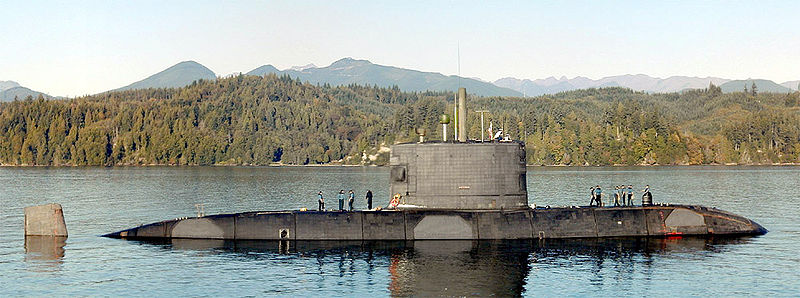
HMCS Victoria
Image via Wikimedia Commons.
Comments Off on Australia, the UK, and the US join in a military alliance … Canada of course is nowhere in sight
September 14, 2021
“If life is a status game … The logic of the status game dictates that humiliation must be uniquely catastrophic”
In Quillette, Will Storr recounts some harrowing early life experiences for three young men ‐ that read like setups for bad horror novels — and how those early humiliations led to tragedy:
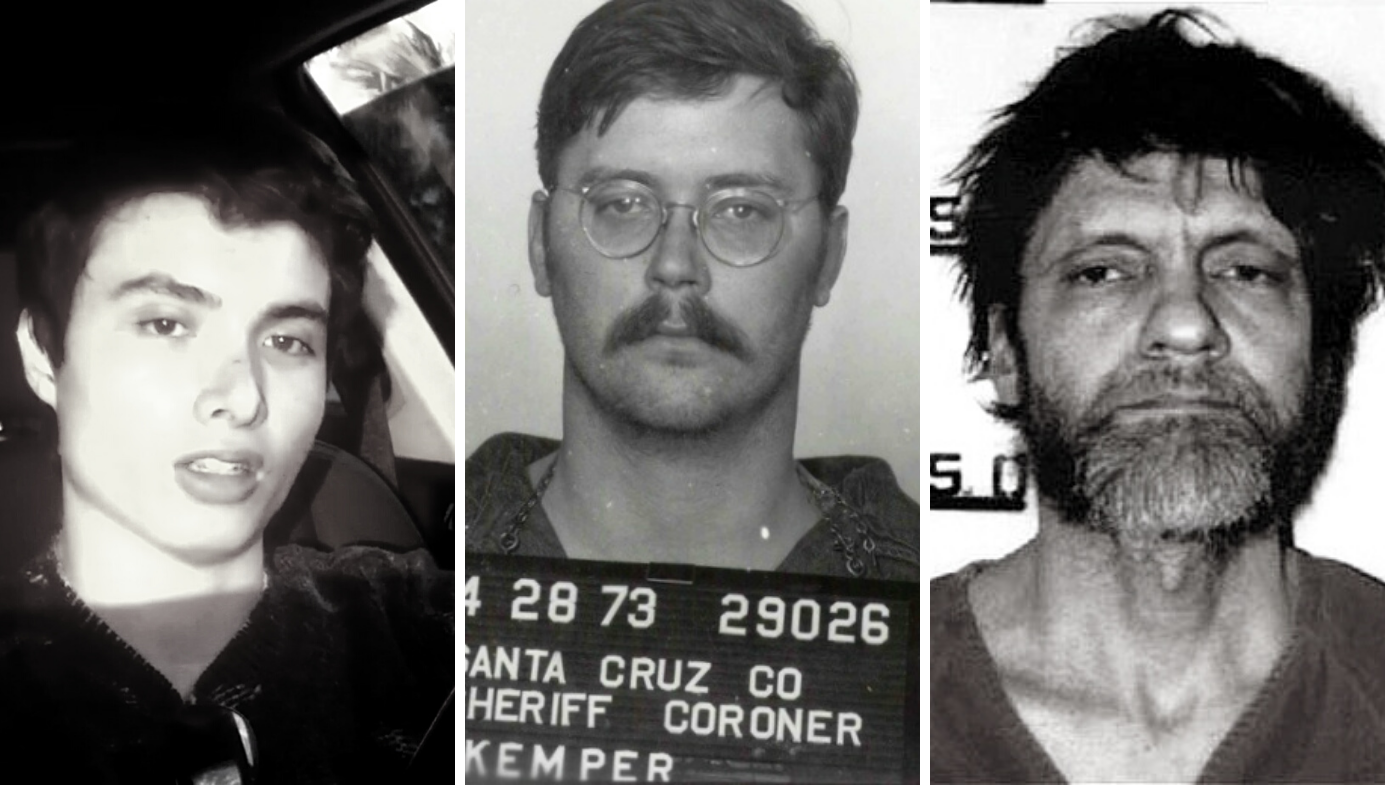
Elliot Rodger, Ed Kemper and Ted Kaczynski.
Photos from Quillette.
If life is a status game, what happens when all our status is taken from us? What happens when we’re made to feel like nothing, again and again and again? Humiliation can be seen as the opposite of status, the hell to its heaven. Like status, humiliation comes from other people. Like status, it involves their judgement of our place in the social rankings. Like status, the higher they sit in the rankings, and the more of them there are, the more powerful their judgement. And, like status, it matters. Humiliation has been described by researchers as “the nuclear bomb of the emotions” and has been shown to cause major depressions, suicidal states, psychosis, extreme rage, and severe anxiety, “including ones characteristic of post traumatic stress disorder.” Criminal violence expert Professor James Gilligan describes the experience of humiliation as an “annihilation of the self.” His decades of research in prisons and prison hospitals, seeking the causes of violence, led him to “a psychological truth exemplified by the fact that one after another of the most violent men I have worked with over the years have described to me how they had been humiliated repeatedly throughout their childhoods.”
The logic of the status game dictates that humiliation must be uniquely catastrophic. For psychologists Professor Raymond Bergner and Dr Walter Torres humiliation is an absolute purging of status and the ability to claim it. They propose four preconditions for an episode to count as humiliating. Firstly, we should believe, as most of us do, that we’re deserving of status. Secondly, humiliating incidents are public. Thirdly, the person doing the degrading must themselves have some modicum of status. And finally, the stinger: the “rejection of the status to claim status.” Or, from our perspective, rejection from the status game entirely.
In severe states of humiliation, we tumble so spectacularly down the rankings that we’re no longer considered a useful co-player. So we’re gone, exiled, cancelled. Connection to our kin is severed. “The critical nature of this element is hard to overstate,” they write. “When humiliation annuls the status of individuals to claim status, they are in essence denied eligibility to recover the status they have lost.” If humans are players, programmed to seek connection and status, humiliation insults both our deepest needs. And there’s nothing we can do about it. “They have effectively lost the voice to make claims within the relevant community and especially to make counterclaims on their own behalf to remove their humiliation.” The only way to recover is to find a new game even if that means rebuilding an entire life and self. “Many humiliated individuals find it necessary to move to another community to recover their status, or more broadly, to reconstruct their lives.”
But there is one other option. An African proverb says, “the child who is not embraced by the village will burn it down to feel its warmth.” If the game rejects you, you can return in dominance as a vengeful god, using deadly violence to force the game to attend to you in humility. The life’s work of Professor Gilligan led him to conclude the fundamental cause of most human violence is the “wish to ward off or eliminate the feeling of shame and humiliation and replace it with its opposite, the feeling of pride.”
Of course, it would be naive to claim Ed, Ted, and Elliot were triggered solely as a response to humiliation. If the cauterisation of status was a simple mass killing switch, such crimes would be common. Various further contributory factors are possible. All three were men, which dramatically increases the likelihood they’d seek to restore their lost status with violence. Elliot Rodger was said to be on the autism spectrum, which might’ve impacted his ability to make friends and girlfriends; a court psychiatrist claimed Ed Kemper had paranoid schizophrenia (although this remains contested); and Kaczynski’s brother said Ted once “showed indications of schizophrenia.” But none of these conditions are answers in themselves, because the vast majority of those that have them don’t burn down their villages.
The ordeal endured by Kaczynski as a teen at Harvard beggars the imagination and could easily provide conspiracy theorists with copious confirmations of their fears: “What Ted didn’t know was that Murray had a history of working on behalf of secretive government agencies. This would be a study of harsh interrogation techniques, specifically the ‘effects of emotional and psychological trauma on unwitting human subjects.’ Once he’d detailed his secrets and philosophies, Ted was led into a brightly lit room, had wires and probes attached to him, and was sat in front of a one way mirror. There began a series of what Murray called ‘vehement, sweeping, and personally abusive’ attacks on his personal history and the rules and symbols by which he lived and hoped to live. ‘Every week for three years, someone met with him to verbally abuse him and humiliate him,’ Ted’s brother said. ‘He never told us about the experiments, but we noticed how he changed.’ Ted himself described the humiliation experiments as ‘the worst experience of my life.'”
Comments Off on “If life is a status game … The logic of the status game dictates that humiliation must be uniquely catastrophic”
September 12, 2021
Small signs of positive change in the culture wars?
Andrew Sullivan is hopeful that the small signs he mentions here are not just straws in the wind, but the beginning of a real reaction against “the Successor Ideology” among the ultra-woke cultural elite:
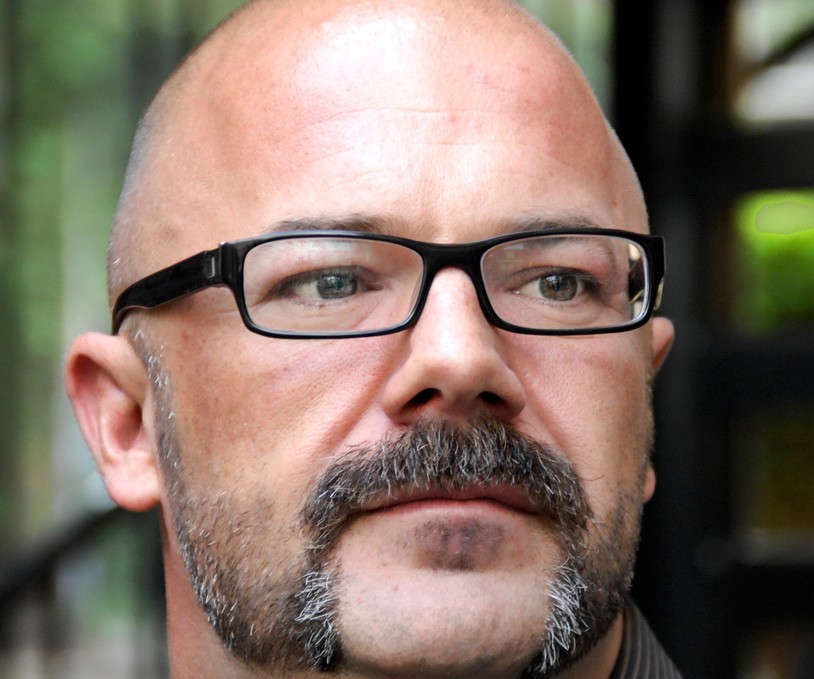
… both The Atlantic and The New Yorker have just published long essays that push back against woke authoritarianism and cruelty. Since both magazines have long capitulated to rank illiberalism, this is encouraging. And since critical theory is an entirely elite-imposed orthodoxy, it matters when the ranks of the elite crack a little.
Anne Applebaum links the woke phenomenon to previous moral panics and mob persecutions, which is where it belongs. She too begins to notice the obliteration of due process, individual rights, and mercy among her crusader peers:
Even if you have not been suspended, punished, or found guilty of anything, you cannot function in your profession. If you are a professor, no one wants you as a teacher or mentor (“The graduate students made it obvious to me that I was a nonperson and could not possibly be tolerated”). You cannot publish in professional journals. You cannot quit your job, because no one else will hire you. If you are a journalist, then you might find that you cannot publish at all.
Applebaum’s Atlantic piece is a good sign from a magazine that hired and quickly purged a writer for wrong think, and once held a town meeting auto-da-fé to decide which writers they would permanently anathematize as moral lepers.
Similarly, it was quite a shock to read in The New Yorker a fair and empathetic profile of an academic geneticist, Kathryn Paige Harden, who acknowledges a role for genetics in social outcomes. It helps that Harden is, like Freddie DeBoer, on the left; and the piece is strewn with insinuations that other writers on genetics, like Charles Murray, deny that the environment plays a part in outcomes as well (when it is clear to anyone who can read that this is grotesquely untrue). But if the readers of The New Yorker need to be fed distortions about some on the right in order for them to consider the unavoidable emergence of “polygenic scores” for humans, with their vast political and ethical implications, then that’s a step forward.
The profile also puts the following woke heresy into the minds of the Upper West Side: “Building a commitment to egalitarianism on our genetic uniformity is building a house on sand.” And this: “Genetic diversity is mankind’s most precious resource, not a regrettable deviation from an ideal state of monotonous sameness.” The New Yorker is also telling its readers that there are around “thirteen hundred sites on the genome that are correlated with success in school. Though each might have an infinitesimally small statistical relationship with the outcome, together they can be summed to produce a score that has predictive validity: those in the group with the highest scores were approximately five times more likely to graduate from college than those with the lowest scores.”
All of this is empirically true. But if this is empirically true, critical theory, which insists that absolutely nothing but white supremacist society leads to inequalities, is dead in the water. Refuted. Proven false by reality. Finished — even as it continues to be the premise of other countless pieces The New Yorker has run in the past few years. At some point, this will require a measure of rethinking, a moderation of the left’s absolutist blank-slatism just as the evidence is finally disproving it once and for all. The Successor Ideology, remember, holds that genetics play no role in human society, and that all inequalities are a function of the environment. Take that absolute claim away — which is to say to subject it to empirical testing — and it crumbles. And The New Yorker just took it away.
And then, in the better-late-than-never category, The Economist, the bible for the corporate elite, has just come out unapologetically against the Successor Ideology, and in favor of liberalism. This matters, it seems to me, because among the most zealous of the new Puritans are the boards and HR departments of major corporations, which are dedicated right now to enforcing the largest intentional program of systemic race and sex discrimination in living memory. Money quote: “Progressives replace the liberal emphasis on tolerance and choice with a focus on compulsion and power. Classical liberals conceded that your freedom to swing your fist stops where my nose begins. Today’s progressives argue that your freedom to express your opinions stops where my feelings begin.”
The Economist also pinpoints the core tenets of CRT in language easy to understand: “a belief that any disparities between racial groups are evidence of structural racism; that the norms of free speech, individualism and universalism which pretend to be progressive are really camouflage for this discrimination; and that injustice will persist until systems of language and privilege are dismantled.” These “systems of language and privilege” are — surprise! — freedom of speech and economic liberty. If major corporations begin to understand that, they may reconsider their adoption of a half-baked racialized Marxism as good management. Maybe that might persuade Google not to mandate indoctrination in ideas such as the notion being silent on questions of race is “covert white supremacy”, a few notches below lynching.
Comments Off on Small signs of positive change in the culture wars?
Hitler Finally Fed Up with his Army – WW2 – 159 – September 11, 1942
World War Two
Published 11 Sep 2021Adolf Hitler sacks Wilhelm List, Army Group Commander in the Caucasus. His replacement does not have military command experience. The fighting there is still successful this week, though, as is the advance through the suburbs of Stalingrad. The Japanese are advancing along the Kokoda Trail and on Guadalcanal, but the Axis attacks in North Africa have failed badly.
(more…)
Comments Off on Hitler Finally Fed Up with his Army – WW2 – 159 – September 11, 1942
QotD: The US Supreme Court’s Dred Scott decision of 1857
The Scott decision is now considered an important contributing cause of the U.S. Civil War, which began four years later. It proved, beyond anyone’s doubt, President Abraham Lincoln’s maxim that a sovereign nation could not survive half-slave and half-free. Northern states might be capable of abolishing slavery locally, but this “abolition” would never apply to imported slaves from elsewhere considered as property. One cannot fully understand U.S. history, never mind the progress of its law, without studying and appreciating Taney’s cruel language.
And, indeed, for the world at large, Dred Scott is an unsurpassed reminder of the distinction between law and justice, and of the limitations of a highly reverenced written constitution. Taney not only accepted the (irrefutable) argument that the constitution explicitly countenanced slavery: he wrote fawningly of the Founding Fathers as great men, “high in their sense of honour,” who could never have upheld absolute equality before the law on one hand while hypocritically denying it to Blacks in practice. The Declaration of Independence’s claim that “all men are created equal,” the ex-slaveowner Taney wrote, was never understood by anyone to include inferior races.
Abolitionists of the time saw the innate hypocrisy: the contemporary newspaper editor William Lloyd Garrison risked his life by calling the constitution “a league with hell.” But [University of Buffalo law professor Matthew] Steilen thinks it is better not to expose Black students to the details of that debate. Reading Taney’s “gratuitously insulting and demeaning” words and arguments, he tweeted, is likely to, and there is no other way to put this, injure their feelings. To inquire too deeply into the detail of slavery, and of the law that shielded it, would require Black students to “relive the humiliation” of Dred Scott.
Colby Cosh, “Another Day in a Feelings-First World”, NP Platformed, 2021-06-09.
Comments Off on QotD: The US Supreme Court’s Dred Scott decision of 1857
September 11, 2021
Twenty years on
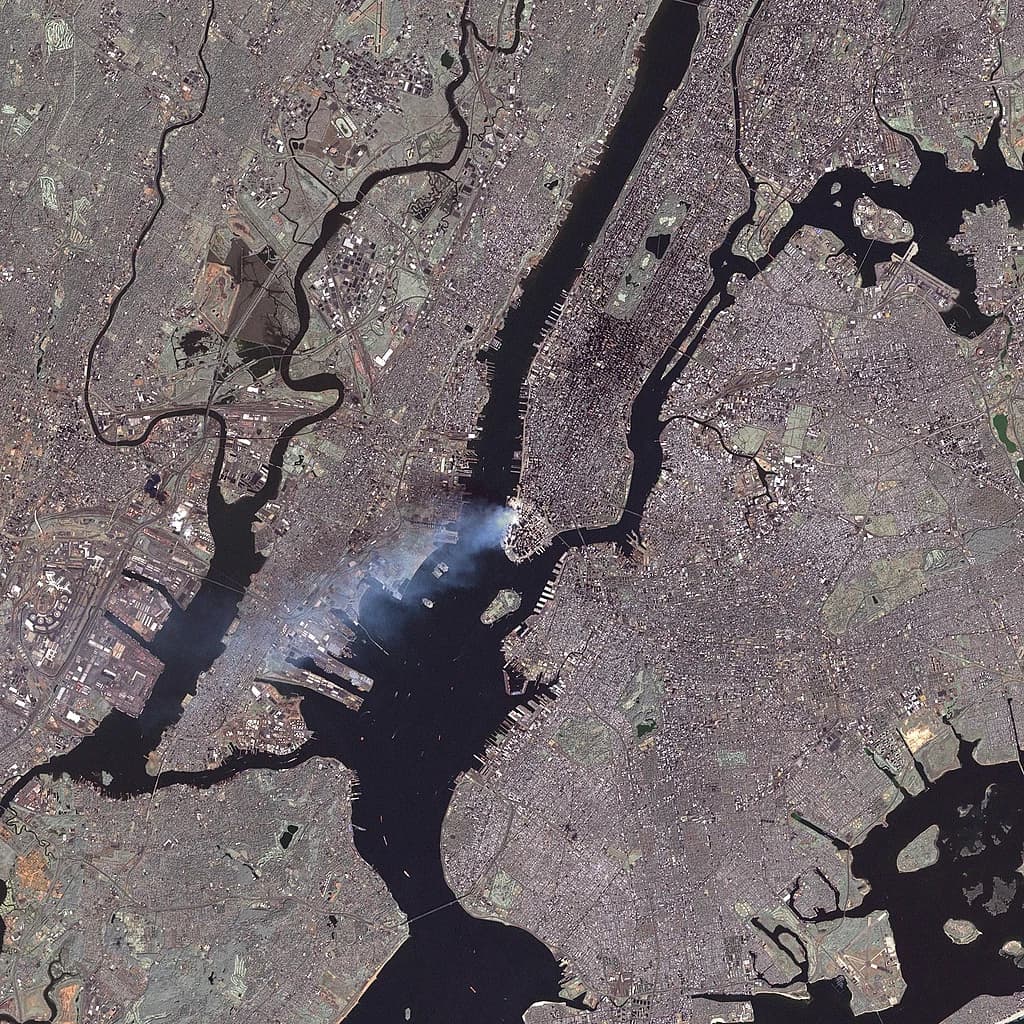
Mark Steyn‘s observations:
We shall not resume our anniversary observances today. The war is lost, at home and abroad. On the domestic front, we doubled the rate of Muslim immigration to the west and began assimilating ourselves with Islam’s strictures on freedom of expression and the like. The decade-and-a-half since the Danish Mohammed cartoons has been one long remorseless surrender on core western liberties. When a school teacher gets beheaded in the street, there is no outrage at the act, just a mild regret that he should have been foolish enough to provoke his own fate. Even the milder jests from the immediate post-9/11 era — the cartoon of the woman trying on new burqas in the changing room and wondering, “Does my bomb look big in this?” — would not be published today.
In the broader society, our rulers quickly determined that it was easier to punish us than our enemies. The post-9/11 security state surely helped soften up western populations for the Chi-Com-19 lockdowns, in which entire nations have been reduced to TSA-administered airports.
As for the war overseas, it ended with a military that can do everything except win handing the keys to Afghanistan back to the guys who pulled off 9/11 — and apologizing for the two-decade inconvenience by gifting the mullahs with some of the most expensive infrastructure on the planet plus an air force, approximately five assault rifles for every Taliban fighter, and express check-in for the forty-seven per cent of the Afghan population that apparently served as US translators.
The position of the United States is far weaker than it was twenty years ago. Around the planet, the assumption of friends and enemies alike is that the American moment is over and the future belongs elsewhere. They are making their dispositions accordingly. It is not a question of wishing “the post-American world”, but of accepting the known facts.
David Warren reposted his thoughts from the fifteenth anniversary:
A generation or more is necessary to see any large event in some historical perspective. That the fall of the Berlin Wall was a “large event” we could see immediately, but not what it portended. The political world would be transformed, but the New World Order that George Bush Senior foresaw was a mirage. Ditto with events since 9/11.
Several thousand were killed on that day in 2001 — the anniversary of the Ottoman defeat at the Gates of Vienna. This was a comparatively small number, by modern standards. The rich symbolism of this Islamist operation was lost on the West, which no longer cares for history or legend. A brilliant assault of “asymmetric warfare”, it fulfilled all of its objectives. The torch has since been passed from the more moderate al-Qaeda to the more fanatic Daesh, and will be passed again in due course. Osama bin-Laden personally lost face by being hunted down and killed like a rat, but his vision of a restored Islamic Caliphate survives him. It inspires still the young in heart and mind.
The immediate intention was to humiliate the “Great Satan”; to awaken the sleeping giant and make him blindly thrash; to goad him into self-destructive behaviour as he struck against an enemy he could neither locate nor understand. Beyond this: to expose him as a paper tiger, tilting a balance of power, and transferring initiative from the mightily-armed “Crusader” to the nimble “Jihadi”. Within the Muslim world: to show that only the radical Salafist faction could get results, could change the direction of history and, as it were, “make Arabia great again”.
As I suggested above, we are still too close to this event to grasp its full significance; but after fifteen years we in the West are in a much worse position than we were on the 10th of September, 2001. We showed, as the Islamists predicted, that we did not have the stamina to prevail, even against weak adversaries; that America and allies could only fight “Vietnams”. Our will is shaken, and to Salafist delight, we have by now expressed contrition for fourteen centuries of Christian defence against Islamic aggression. We bow respectfully, as our culture is insulted, and as versions of Shariah are imposed. In disregard of our own security, we have thrown our borders open to massive Muslim immigration. We follow, at every junction, the course of sentimentality, and adapt to the certainty of defeat. After each hit we call for grief counsellors.
On MeWe, Byron Clark reposted a transcript of the call Todd Beamer made from United Airlines flight 93 that morning:
Todd: Hello … Operator … listen to me … I can’t speak very loud. – This is an emergency. I’m a passenger on a United flight to San Francisco. We have a situation here … Our plane has been hijacked … can you understand me?
Lisa: (exhaling a deep breath to herself) I understand … Can the hijackers see you talking on the phone?
Todd: No
Lisa: Can you tell me how many hijackers are on the plane?
Todd: There are three that we know of.
Lisa: Can you see any weapons? What kind of weapons do they have?
Todd: Yes … they don’t have guns … they have knives – they took over the plane with knives.
Lisa: Do you mean … like steak knives?
Todd: No, these are razor knives … like box cutters.
Lisa: Can you tell what country these people are from?
Todd: No … I don’t know. They sound like they’re from the mid-east.
Lisa: Have they said what they want?
Todd: Someone announced from the cockpit that there was a bomb on board. He said he was the captain and to stay in our seats and stay quiet.
He said that they were meeting these men’s demands and returning to the airport… It was very broken English, and… I’m telling you…it sounded fake!
Lisa: Ok sir, please give me your name.
Todd: My name is Todd Beamer.
Lisa: Ok Todd … my name is Lisa … Do you know your flight number? If you can’t remember, it’s on your ticket.
Todd: It’s United Flight 93.
Lisa: Now Todd, can you try to tell me exactly what happened?
Todd: Two of the hijackers were sitting in first class near the cockpit. A third one was sitting near the back of the coach section. The two up front got into the cockpit somehow; there was shouting. The third hijacker said he had a bomb. It looks like a bomb. He’s got it tied to his waist with a red belt of some kind.
Lisa: So is the door to the cockpit open?
Todd: No, the hijackers shut it behind them.
Lisa: Has anyone been injured?
Todd: Yes, they … they killed one passenger sitting in first class. There’s been lots of shouting. We don’t know if the pilots are dead or alive. A flight attendant told me that the pilot and copilot had been forced from the cockpit and may have been wounded.
Lisa: Where is the 3rd hijacker now Todd?
Todd: He’s near the back of the plane. They forced most of the passengers into first class. There are fourteen of us here in the back. Five are flight attendants. He hasn’t noticed that I slipped into this pantry to get the phone. The guy with the bomb ordered us to sit on the floor in the rear of the plane … oh Jesus. Help!
Lisa: Todd … are you ok? Tell me what’s happening!
Todd: Hello … We’re going down … I think we’re going to crash … Wait – wait a minute. No, we’re leveling off … we’re ok. I think we may be turning around … That’s it – we changed directions. Do you hear me … we’re flying east again.
Lisa: Ok Todd … What’s going on with the other passengers?
Todd: Everyone is … really scared. A few passengers with cell phones have made calls to relatives. A guy, Jeremy, was talking to his wife just before the hijacking started. She told him that hijackers had crashed two planes into the World Trade Center … Lisa is that true??
Lisa: Todd … I have to tell you the truth … it’s very bad. The World Trade Center is gone. Both of the towers have been destroyed.
Todd: Oh God — help us!
Lisa: A third plane was taken over by terrorists. It crashed into the Pentagon in Washington DC. Our country is under attack … and I’m afraid that your plane may be part of their plan.
Todd: Oh dear God. Dear God … Lisa, will you do something for me?
Lisa: I’ll try … if I can … Yes.
Todd: I want you to call my wife and my kids for me and tell them what’s happened. Promise me you’ll call.
Lisa: I promise – I’ll call.
Todd: Our home number is 201 353-1073 … You have the same name as my wife … Lisa … We’ve been married for 10 years. She’s pregnant with our 3rd child. Tell her that I love her … (choking up) … I’ll always love her … (clearing throat) We have two boys … David, he’s 3 and Andrew, he’s 1 … Tell them … (choking) tell them that their daddy loves them and that he is so proud of them. (clearing throat again) Our baby is due January 12th … I saw an ultra sound … it was great … we still don’t know if it’s a girl or a boy … Lisa?
Lisa: (barely able to speak) I’ll tell them, I promise Todd.
Todd: I’m going back to the group — if I can get back I will …
Lisa: Todd, leave this line open … are you still there?
Lisa: (dials the phone) Hello, FBI, my name is Lisa Jefferson, I’m a telephone supervisor for GTE. I need to report a terrorist hijacking of a United Airlines Flight 93 … Yes I’ll hold.
Goodwin: Hello, this is Agent Goodwin … I understand you have a hijacking situation?
Lisa: Yes sir, I’ve been talking with a passenger, a Todd Beamer, on Flight 93 who managed to get to an air phone unnoticed.
Goodwin: Where did this flight originate, and what was its destination?
Lisa: The flight left Newark New Jersey at 8 A.M. departing for San Francisco. The hijackers took over the plane shortly after takeoff, and several minutes later the plane changed course – it is now flying east.
Goodwin: Ms. Jefferson … I need to talk to someone aboard that plane. Can you get me thru to the planes phone?
Lisa: I still have that line open sir, I can patch you through on a conference call … hold a mo …
Todd: Hello Lisa, Lisa are you there?
Lisa: Yes, I’m here. Todd, I made a call to the FBI, Agent Goodwin is on the line and will be talking to you as well.
Todd: The others all know that this isn’t your normal hijacking. Jeremy called his wife again on his cell phone. She told him more about the World Trade Center and all.
Goodwin: Hello Todd. This is Agent Goodwin with the FBI. We have been monitoring your flight. Your plane is on a course for Washington, DC. These terrorists sent two planes into the World Trade Center and one plane into the Pentagon. Our best guess is that they plan to fly your plane into either the White House or the United States Capital Building.
Todd: I understand … hold on … I’ll … I’ll be back …
Lisa: Mr. Goodwin, how much time do they have before they get to Washington?
Goodwin: Not long ma’am. They changed course over Cleveland; they’re approaching Pittsburgh now. Washington may be twenty minutes away.
Todd: (breathing a little heavier) The plane seems to be changing directions just a little. It’s getting pretty rough up here. The plane is flying real erratic … We’re not going to make it out of here. Listen to me … I want you to hear this … I have talked with the others … we have decided we would not be pawns in these hijackers suicidal plot.
Lisa: Todd, what are you going to do?
Todd: We’ve hatched a plan. Four of us are going to rush the hijacker with the bomb. After we take him out, we’ll break into the cockpit. A stewardess is getting some boiling water to throw on the hijackers at the controls. We’ll get them … and we’ll take them out. Lisa … will you do one last thing for me?
Lisa: Yes … What is it?
Todd: Would you pray with me?
They pray: Our father which art in Heaven
Hallowed be thy name,
Thy kingdom come, thy will be done
on earth as it is in heaven.
Give us this day our daily bread,
And forgive us our trespasses
As we forgive our trespassers,
And lead us not into temptation
But deliver us from evil
For thine is the kingdom, and the power, and the glory
Forever … Amen
The Lord is my shepherd, I shall not want …
He makes me to lie down in green pastures
He leads me beside the still waters
He restores my soul
He leads me in paths of righteousness
for His name’s sake
Yea, though I walk through the valley of the shadow of death
I will fear no evil, for thou art with me …
Todd: (softer) God help me … Jesus help me … (clears throat and louder)
Are you guys ready? …
Let’s Roll …
Comments Off on Twenty years on
QotD: Racism, anti-racism, and cognitive dissonance
Okay – but any public discussion that both reviles the idea that black people are less intelligent than others while also lustily demanding that it’s “racist” to submit black people to cognitive challenges is hopelessly incoherent. We disparage rape culture, diet culture – this exemption culture is premised on a basic assumption that it’s unsavory to require serious challenge of black students Because Racism.
No. You don’t get past racism by creating new forms of it. Scrapping traditional challenges should only be on the table after black kids have mastered the challenge anyway. Zora Neale Hurston gets the final word:
It seems to me that if I say a whole system must be upset for me to win, I am saying that I cannot sit in the game, and that safer rules must be made to give me a chance. I repudiate that. If others are in there, deal me a hand and let me see what I can make of it, even though I know some in there are dealing from the bottom and cheating like hell in other ways.
The current “woke” consensus is that Hurston was wrong on this, that she was expecting too much. I would just love to see one of today’s Elect in a room with Hurston trying to tell her where she was going wrong.
John McWhorter, “Revisiting Classics at Princeton”, It Bears Mentioning, 2021-06-09.
Comments Off on QotD: Racism, anti-racism, and cognitive dissonance
September 10, 2021
Why even highly gifted young quarterbacks rarely succeed as they move toward the NFL
Severian at Rotten Chestnuts looks at the early career life-cycle of football quarterbacks:
At all levels of American football below pro, the “option” is a major facet of the game. This is an offensive play where the quarterback can either run the ball himself, pitch it to another player, or throw it downfield, as he thinks best. It certainly helps if the quarterback is a strong-armed, accurate passer, but the key criterion here is speed. If you get defenders cheating up in order to stop the run, you don’t have to be as strong or accurate with your throws. What matters is that the QB can pass — meaning, he can throw it X yards downfield, within a few yards’ radius of a given spot — not how often he does so. The closer he can get it to the spot, and the further downfield that spot is, the better, but so long as he’s in the vicinity the option system works well.
This starts very, very early in a player’s career. The lower down the skill ladder you go, the more prominent the “option” offense. In “Pop Warner” leagues — kids below age 12, basically — the option pretty much IS the offense, since few kids can throw the ball very far, much less with accuracy. Throwing a football with both velocity and accuracy is extremely difficult, and it doesn’t help that sound throwing mechanics feel brutally unnatural — you know you’re doing it right when it feels like your shoulder is going to pop out of its socket at the very instant your elbow ligaments snap and hit you in the face … which, unfortunately, is exactly what it feels like when you’re doing it wrong, and your shoulder IS about to pop out at the same moment your elbow ligaments snap.
What happens, then, is that kids generally learn how to throw with very poor form … but coaches generally aren’t going to correct them, either because they don’t know the proper mechanics themselves, or because they are focused exclusively on winning games. Who cares if little Kayden, Brayden, or Jayden is going to blow his arm out hucking it like that when he hits high school? That’s Coach Smith’s problem. All that matters now is that he can get it to X spot with radius Y.
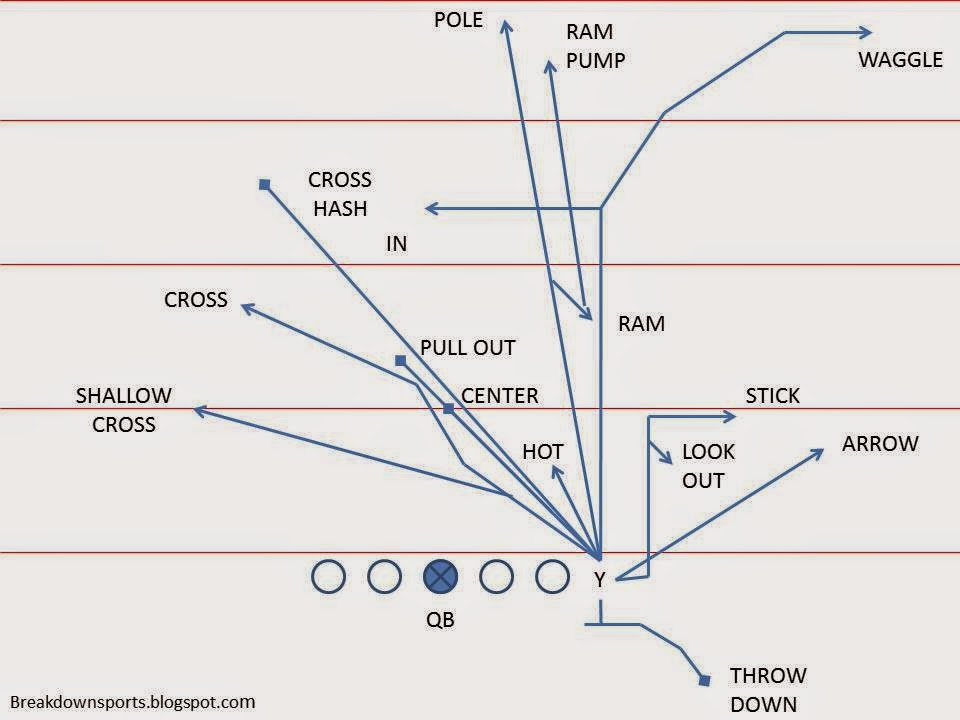
Thus the possible career path of any kid who can throw a football reasonably well quickly diverges. If he’s too slow to run the option effectively, his coaches will try to turn him into an “air raid” style quarterback, which means he throws on every play, mechanics be damned, because we need to win now, and what the hell, he can get it there, can’t he? But even the “air raid” style of play is enormously more difficult to coach, because that means you need to be able to coach a whole corps of wide receivers to run a whole bunch of increasingly complex routes. Here, look:
That’s what’s known as a “route tree”, and all of your receivers — five guys, usually, on every play, plus their backups — need to know how to run every one of them, every time. Which means your playbook is going to be huge, because you (theoretically, anyway) need a play for each one of those routes, for each receiver on the field. And obviously your quarterback has to have something going on upstairs, because he needs to memorize five different guys’ routes for every single play, plus audibles and checkdowns (changing any given player’s route, or even the entire play, on the fly), and so on.
I’m sure y’all see where I’m going with this, but it’s important to note that the key selection — whether a given kid shall be an “option” quarterback, or an “air raid” quarterback — has been made by someone else, much lower on the skill ladder. It would be great if one and the same kid could do both to a high degree of skill, but since human neurons apparently don’t work like that, it’s natural for everyone involved to take the path of least resistance.
And again, I’m not blaming coaches for this. Forget things like “getting fired for losing too many games”, and just consider the sheer amount of work. Stipulating for the sake of argument that you’ve got 50 man-hours in a week to get ready for a game, how do you best allocate them? Getting your QB to throw with proper mechanics alone probably takes a significant chunk of that time, and even though he’ll have to do a lot of it on his own — throwing passes at a tire in the backyard until his arm feels ready to fall off — you’re still spending a LOT of time on something that will make no appreciable difference to the game’s outcome this Friday night. And then throw in the other stuff — how much time does it take just to “install” (as the term d’art is) a game plan that has all those routes in it, much less coaching all the receivers up to where they can run them all?
Nah, brah. Just hand Jonquarious the ball and let him run it, and if he has to huck it downfield every now and again, let him do it his way. Again, this will make no difference at all to the outcome of this week’s game — he’ll either run it or he won’t; make the throw or not — but it frees up a lot of man hours to do all the other stuff a coach has to do that we haven’t talked about yet, such as defense.
Comments Off on Why even highly gifted young quarterbacks rarely succeed as they move toward the NFL
September 9, 2021
Did Freudian Psychology Create Modern Art? | B2W: ZEITGEIST! I E.25 Harvest 1924
TimeGhost History
Published 8 Sep 2021The Surrealist Movement is born this season with unsurprising eccentric drama. Salvador Dali will one day be a part of it, but for now he is still in art school and has actually only just come out of prison. Also this season, a crime which sees police chasing America’s first ever “Public Enemy No. 1”
(more…)
Comments Off on Did Freudian Psychology Create Modern Art? | B2W: ZEITGEIST! I E.25 Harvest 1924


