If it is possible to kowtow to a sacred cow, that is exactly what Boris Johnson did on leaving St Thomas’ Hospital after he had been treated there for Covid-19. The NHS, he said, was “Britain’s greatest national asset”, as if, had he fallen ill in any country other than Britain, he would not have been treated so well or simply left to die.
This was an unintended insult to the doctors and nurses of other countries, as if in their benighted lands without the NHS they did not work with skill or devotion. The NHS is neither necessary nor sufficient for medical and nursing staff to show devotion. The parents of a well-taught schoolchild do not thank the Ministry of Education.
No doubt the prime minister’s praise of the NHS was politically shrewd — one casts no doubt on the perfection of the Koran in Mecca — but in the long run such praise does no service to the nation, which at some time or other ought to face up to the fact that its healthcare system is at best mediocre by comparison with that of other countries at a similar level of economic development, and that being ill and seeking treatment is a more unpleasant experience in Britain than in it is many civilised countries.
Untold numbers of people receive excellent care under the NHS. One must neither exaggerate nor catastrophise. But there is another side to the coin as well, and it is surely not a coincidence that no one in Europe would choose Britain as their country of medical care, rather the reverse. If a German were to say, “For God’s sake, get me to the NHS!”, a psychiatrist would be called.
Theodore Dalrymple, “Empire of conformists”, The Critic, 2020-04-29.
August 29, 2020
August 22, 2020
Debra Soh’s new book is “a cancel-culture grenade”
Jen Gerson knows that any positive mention of Debra Soh’s The End of Gender: Debunking Myths About Sex and Identity has a strong resemblance to square-dancing in a minefield. Cancellations may fall like raindrops on the career of anyone so unenlightened as to even acknowledge the existence of such a work:
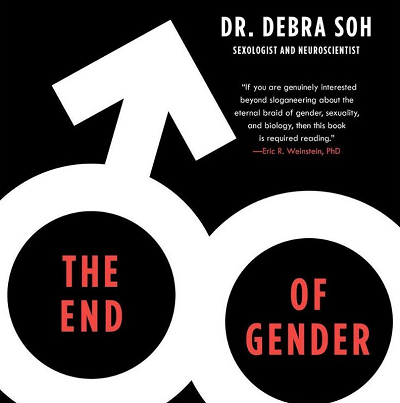
For that, at its heart, is what Soh’s book is: a lucid discussion of the best science we have to date on the nature of gender and sex, written for a lay audience. What gives the title its sizzle is not the content, but rather the cultural climate in which it is being published.
It maps the depth, scope and scale of current Culture War trenches in this particular theatre of battle. The End of Gender stomps on tripwires like the gender binary, whether transgender women are women, autogynephilia, Rapid Onset Gender Dysphoria, bathroom bans, and more.
It’s a cancel-culture grenade.
That’s not because these subjects ought to be contentious. Soh’s approach and tone are largely neutral. Rather, the controversy the book will inevitably incite is a reflection of a culture that has been warped into a state of existential terror by the very notion that these ideas can be responsibly discussed.
Soh begins by defining her terms.
So much of the debate around the most difficult topics of sex and gender stem from the simple fact that we are misusing the basic language. For example, sex and gender are not interchangeable concepts, even though they are often treated as such.
Sex is a term of biology. One’s sex, Soh argues, is determined by his or her gametes. With the exception of rare intersex disorders, 99 per cent of the population has a clearly defined biological sex that slots into one of two dimorphic categories: male or female.
Gender is more complicated. It’s now popular to state that there are more than two genders, but Soh disputes this. She argues that gender — or the set of characteristics that signal one’s sex to society — is also dimorphic. For 99 per cent of the population, gender correlates with sex. Further, even when expressions of gender are at odds with one’s biological sex, this, too, is mediated by biology. Whether one presents as gender typical or gender atypical is the result of prenatal testosterone exposure.
Soh notes that claiming to be gender non-binary, or gender fluid — or any one of a thousand variations that transcend the limiting concepts of male and female — is increasingly trendy, especially among teenagers and young adults. It seems to be the latest form of identity experimentation.
There are two reasons for this trend.
The first is that seeing the world through an intersectional framework encourages progressives to reverse the traditional hierarchies of race, sex and power. Therefore, claiming a marginalized identity — like genderqueer non-binary unicorn — accrues status within progressive peer circles.
The second is that the culture has undergone a massive awakening to transgender rights over the past decade. This has contributed expressive categories and vocabularies for people who otherwise might have struggled to find the language to explore their most authentic selves. As the cues, like cosmetics and dress, that we used to signal our gender are socially constructed, gender expression is limited only by our creativity.
QotD: Sex-differentiated status hierarchies
Girls can win by winning in their own hierarchy — by being good at what girls value, as girls. They can add to this victory by winning in the boys’ hierarchy. Boys, however, can only win by winning in the male hierarchy. They will lose status, among girls and boys, by being good at what girls value. It costs them in reputation among the boys, and in attractiveness among the girls. Girls aren’t attracted to boys who are their friends, even though they might like them, whatever that means. They are attracted to boys who win status contests with other boys.
“whatever that means”. Heh. Shivvy way to say, “which means nothing”.
When JP discusses sex differences, he could be reading CH posts. Whatever one thinks of the criticisms leveled against him (some are valid), he does have a decent grasp of the sexual market and how men and women navigate divergent routes through an ocean of mate prospects to get what they want.
However, this is one of the rare instances when I disagree with his premise. He’s generally correct that, at least within the bounds of our current cultural arrangement, women have two status hierarchies available to them while men only have one. Our gynarcho-tyranny not only encourages but aggressively impresses upon women the urgency and even moral duty of succeeding in male domains (leaning in), while simultaneously encouraging men to sacrifice their status within their own male domains to make way for more women (and consequently rendering themselves less sexually attractive to women who are now their equal or higher in social status).
Women who do succeed in the man’s world can expect to ascend the intrafemale status ladder (more precisely, the intra-feminist status ladder), but where JP is wrong is assuming these women don’t also suffer an SMV status loss the near-equivalent of the SMV status loss suffered by men who succeed at girlie games of one-uppance.
Just as girls aren’t attracted to effeminate males, and other men are repulsed by nancyboys, the inverse is as true: men aren’t attracted to masculine, status-striving girls, and other women don’t subconsciously look up to mouthy careerist shrikes with the same mix of envy and admiration that they look up to physically beautiful women.
CH, “Sex-Based Status”, Chateau Heartiste, 2018-06-04.
August 21, 2020
QotD: Our overprotective culture
There’s a rule of thumb for dealing with elderly people in old age homes: Never do anything for anyone that they can do for themselves. It sounds cruel, but it’s not cruel.
This is one of the pathologies of our culture. A major pathology, and this is associated with a kind of immaturity and a kind of fear and this Oedipal mother problem, which is, “I don’t want you to suffer any distress right now.” Fine, but what about tomorrow and next week and next month? You might have to suffer a lot of distress right now so that you’re better next week and next month.
Jordan Peterson, “Christie Blatchford Sits Down With ‘Warrior For Common Sense’ Jordan Peterson”, National Post, 2018-02-07.
August 18, 2020
Don’t worry your pretty little heads, normies, the enlightened ones are planning “The Great Reset” for 2021
Mark Steyn on how the great and the good of the world are figuring out the road ahead of us:
… most of the chaps who matter in this world are people you’ve never heard of — by which I mean they are other than the omnipresent pygmies of the political scene: In a settled democratic society such as Canada, for example, if you wind up with an electoral contest between a woke mammy singer with a banana in his pants and a hollow husk less lifelike than his CBC election-night hologram whose only core belief is that he has no core beliefs other than that party donations should pay for his kids’ schooling, you can take it as read that the real action must be elsewhere.
A lot of those chaps you’ve never heard of turn up in this video from the “World Economic Forum” — ie, the Davos set. After five months of Covid lockdown, you’ll be happy to hear that all the experts have decided that 2021 will be the year of “The Great Reset”:
I see my chums at the Heartland Institute headline this the “World Leaders’ ‘Great Reset’ Plan“. But, if by “leader” you mean an elected head of government accountable to the people, there is a total dearth. Indeed, it’s a melancholy reflection on the state of “world leadership” that the nearest to anyone accountable to the people in this video is HRH The Prince of Wales, in whom one day in the hopefully extremely far distant future the executive authority of the United Kingdom, Canada, Australia, etc will be nominally vested but which cannot be exercised without the consent of the people’s representatives. Yet even that token accountability is, as noted, in the future. So right now he’s just another guy who’s a “world leader” because he gets invited to Davos and you don’t — and, even if you were minded to show up anyway, you’d need a private jet because all the scheduled flights have been Covid-canceled and the world’s airports are ghost towns.
As is the custom among our big thinkers, the blather is very generalized. “Now is the time to think about what history would say about this crisis,” says the head of the IMF. If you say so. Personally, I was thinking that now is the time to eat a meal in a restaurant, if they weren’t closed.
But, why is it history’s job to say something about this crisis? Why, don’t you “world leaders” of the here and now say anything about it? “It is imperative that we reimagine, rebuild, redesign, re-invigorate and re-balance our world,” declares the UN Secretary-General.
That’s almost a full set, but he forgot “redefined”. “Possibilities are being redefined each and every day,” says the chief exec of British Petroleum, who as is his wont sounds like he’s in any business other than petroleum.
There is, of course, an inscrutable Oriental, who is chairman of something called the “China Green Finance Committee”. He’s there as a not so subtle reminder not even to bring up the subject of China, whose lies amplified by their sock puppet at the WHO are the sole cause of the present crisis – and whose death-grip on our future is the thing that most urgently needs to be reimagined, rebuilt, re-balanced and redefined. As I’ve mentioned many times over the spring and summer, twenty years ago we were told to forget about manufacturing — from widgets to “These Colors Don’t Run” T-shirts, that’s never coming back; from now on, we’re going to be “the knowledge economy”. Yet mysteriously, with the 5G and the Huawei and all the rest, China seems to have snaffled all that, too.

August 16, 2020
This is a “hockey stick” graph you can believe
Brian Micklethwait says this graph, unlike the more famous (debunked) “hockey stick”, shows one of the most important moments in human history:
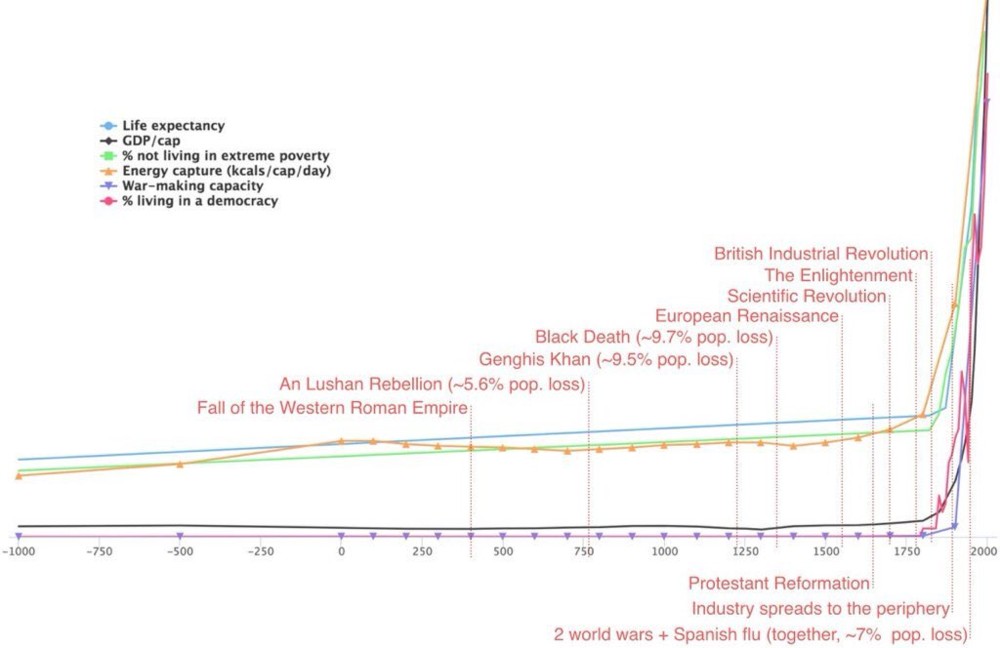
If that graph, or another like it, is not entirely familiar to you, then it damn well should be. It pinpoints the moment when our own species started seriously looking after its own creature comforts. This was, you might say, the moment when most of us stopped being treated no better than farm animals, and we began turning ourselves into each others’ pets.
Patrick Crozier and I will be speaking about this amazing moment in the history of the human animal in our next recorded conversation. That will, if the conversation happens as we hope and the recording works as we hope, find its way to here.
I’m not usually one for podcasts, in the same way that I’m not an audiobook user: I find I’m unable to do other things while listening to the spoken word, and it’s always far faster to read a text than to have it read to you. In this particular case, I might try to make an exception, and give up hope of doing anything else productive while I listen.
August 13, 2020
QotD: The discovery of anaesthesia and antisepsis
Joseph Lister first used carbolic acid (phenol) to perform sterile surgery at the Glasgow Royal Infirmary, in August, 1865. This would have the effect of vastly increasing the survival rate from these now commonplace surgical operations. But the news took years to circulate, and by the twentieth century surgeons were still working with infected equipment in filthy environments. Indeed, I have read accounts of the horrors of battlefield medicine in the First World War: men with survivable injuries, lost by the hundred thousands from ignorant, unnecessarily unhygienic medical procedures.
As Dr Gawande points out — in passing — both advances made life easier on patients. But the second saved lives on a — vastly — greater scale. The first was unique, in making life easier for doctors, who no longer had to operate on screaming, writhing customers. This also, incidentally, hugely increased their trade, and thus their income. Washing up, effectively, only added nuisance.
I already knew this history — my mommy was a ward matron, after all — but until the comparison was spelt out, the full significance was lost on me. I had read the “official” versions in several standard medical histories. They assume the slow spread of antisepsis was a problem of communications. Gentle reader will note that this is a lie. Methods of communication did not slow in the generation between the two inventions.
David Warren, “Heaven, Hell, & Alder Hey”, Essays in idleness, 2018-05-09.
August 4, 2020
Ontario’s COVID Alert app
Michael Geist explains why he has installed the Canadian government’s COVID App on his phone, despite the privacy concerns such government tracking apps present:

The Canadian COVID Alert app is ultimately as notable for what it doesn’t do as for what it does. The voluntary app does not collect personal information nor provide the government (or anyone else) with location information. The app merely runs in the background on an Apple or Android phone using bluetooth technology to identify other devices that come within 2 metres for a period of 15 minutes or more. Obviously, the distance and timing are viewed as the minimum for a potential transmission risk. If this occurs, a unique, random identifier is stored on each person’s device for a period of 14 days. After the 14 day period, the identifier is deleted from the device.
The identifier does not identify a specific person or location information, and is not sent to any centralized database. If a person tests positive for the virus, they are given a key code to input into the app. Once the key code is inputted, anyone that was identified as being potentially exposed over the prior 14 days receives a notification that this has occurred and they should consider testing and/or self-isolating.
From a privacy perspective, this is very low risk. Indeed, the government’s position – confirmed in the Privacy Commissioner of Canada’s analysis – is that there is no collection of any personal information and therefore the Privacy Act does not apply. The Privacy Commissioner rightly points out this raises some concerns about the state of the law (arguing it should be sufficiently robust to allow for reviews of this kind), however, the use of random identifiers ensures that identification of individual is very unlikely. Moreover, the Privacy Commissioner’s review concludes that “there are very strong safeguards in place” with security of the data, commitments limiting use, independent oversight, and a pledge to de-commission the app (including deletion of all data) within 30 days of the Chief Public Health Officer of Canada declaring the pandemic over.
The Ontario Information and Privacy Commissioner was also engaged in the review process. Her recommendation letter points to commitments for potential ongoing issues, including ensuring that the app is effective, that there is monitoring of third party components such as the Google-Apple Exposure Notification System, and public transparency associated with the app and its use.
While the app passes legal muster, its introduction reinforces the problems with social inequities that COVID-19 has laid clear. Much like the connection between socio-economic status and infection risk, the app itself is only accessible to those who can afford newer Apple and Android devices. That obviously means that those with older phones or no wireless access at all are unable to use it. While I don’t think that is reason to abandon the initiative, the government should be exploring alternatives to allow all citizens to implement these safeguards.
August 1, 2020
Masking stupidity
In The Critic, Patrick Fagan talks about the dehumanizing aspect of mandatory facemask orders:

“Utrecht: Facemask Store” by harry_nl is licensed under CC BY-NC-SA 2.0


In Joost Meerloo’s analysis of false confessions and totalitarian regimes, The Rape of the Mind, he coins a phrase for the “dumbing down” of critical resistance – menticide. “In the totalitarian regime,” he wrote, “the doubting, inquisitive, and imaginative mind has to be suppressed. The totalitarian slave is only allowed to memorise, to salivate when the bell rings.”
[…]
Face masks can now be added to the list of mandates that make you stupid. As if Piers Morgan feverishly promoting them weren’t evidence enough, here are the facts on why you absolutely, categorically should not wear a face mask. They make you suggestible; they make you more likely to follow someone else’s direction and do things you wouldn’t otherwise do. In short, they switch off your executive function – your conscience.
A great example comes from a study by Mathes and Guest (1976), who asked participants how willing they would be, and how much they would have to be paid, to carry a sign around the university cafeteria reading “masturbation is fun” (this being 1976, doing such a thing would be considered embarrassing; these days it will probably earn you a course credit!). The results showed that when people wore a mask, they were more likely to carry the sign and required less money to do so ($30 compared to $48, on average).
Meanwhile, Miller and Rowold (1979) presented Halloween trick-or-treaters with a bowl of chocolates and told them they were allowed to take only two each. When the children thought they weren’t being watched, they helped themselves. Children without a mask broke the rule, taking more chocolates, 37% of the time, compared to 62% for masked children. The authors concluded that masks “lead to lower restraints on behaviour”.
The effect has similarly been found online: the online disinhibition effect refers to the tendency for people to act antisocially when anonymous online (Suler, 2004). There is even an infamous trolling movement calling itself Anonymous and using a mask as its symbol.
The disinhibiting effects of wearing a mask are described by psychologists in terms of a suspension of the superego’s control mechanisms, allowing subconscious impulses to take over. Saigre (1989) wrote that masks “short-cut” conscious defence systems and encourage “massive regression” to a more primitive state; Castle (1986) wrote that eighteenth century masquerades allowed mask-wearers to release their repressed hedonistic and sexual impulses; and Caillois (1962) similarly wrote about European masked carnivals involving libidinal activities including “indecencies, jostling, provocative laughter, exposed breasts, mimicking buffoonery, a permanent incitement to riot, feasting and excessive talk, noise and movement”. In the 12th Century, Pope Innocent III banned masks as part of his fight against immorality; and in 1845, New York State made it illegal for more than two people to wear masks in public, after farmers wore masks to attack their landlords.
From a neuroimaging perspective, masks are known to inhibit identity and impulse control – both associated with executive function in the prefrontal cortex (e.g., Glannon, 2005; Tacikowski, Berger & Ehrsson, 2017). In other words, masks silence the Jiminy Cricket in the brain.
July 31, 2020
Xi Jinping and the “Chinese dream”
Zineb Riboua outlines possible ways for the West to counter ongoing Chinese economic espionage:
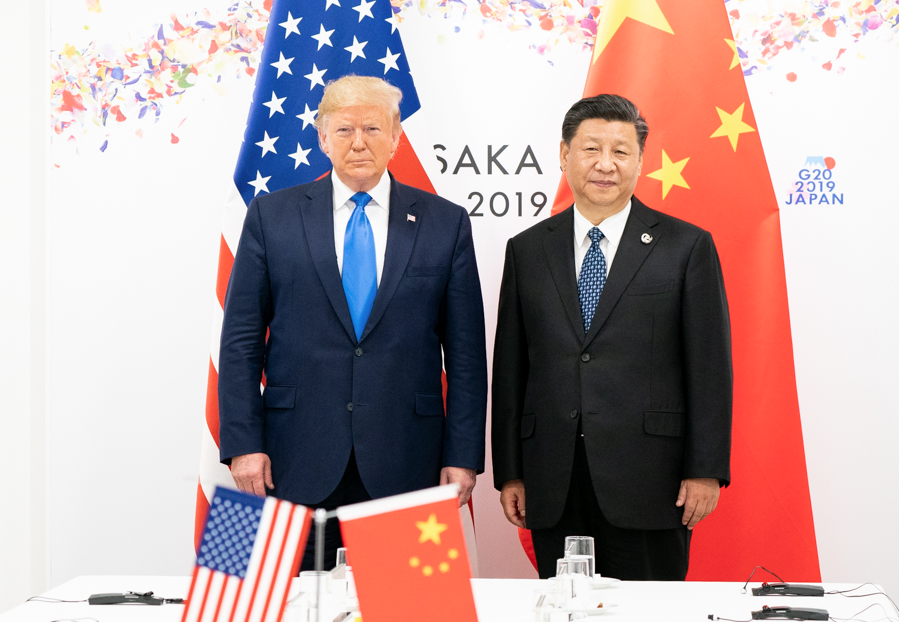
President Donald Trump and PRC President Xi Jinping at the G20 Japan Summit in Osaka, 29 June, 2019.
Cropped from an official White House photo by Shealah Craighead via Wikimedia Commons.
Since 2012, Chinese President Xi Jinping’s favourite catchphrase has been “the Chinese dream”. In stark contrast to the evil, capitalistic American dream, Xi’s alternative vision of progress teaches that the only route to prosperity is through rigid adherence to collectivist ideology.
The Chinese state embodies a very particular ideology. Over the last few decades, it has aggressively ramped up its economic and political capital through business and enterprise, inextricably tying itself to the economic fortunes of both developed and developing countries. It is now seeking to use the economic capital it has accumulated to force its political agenda into reality.
That is why the role of private companies in China is unparalleled. Milton Friedman defined corporate social responsibility in terms of private companies’ sole duty to make a profit, and then increase that profit. Chinese companies appear to be exempt from this rule because they interact with the state in a unique and troubling way.
The current state of the Chinese political and economic landscape is no accident. When Deng Xiaoping spoke in the 1980s of building a “socialism with Chinese characteristics”, this is probably exactly what he had in mind. The Chinese Communist party has succeeded in weaponising local market forces in such a way that it now holds all the cards in its nation’s dealings with the outside world, both political and economic, because the line between the public and the private is non-existent.
This strategy has not gone unnoticed. Thanks to the Chinese Communist party’s recent conduct – unprecedented aggression in Hong Kong, the appalling genocide of the Uyghur people and a costly unwillingness to share information relating to the coronavirus outbreak – the state of its internal affairs has come into sharp focus on the international stage.
Unsurprisingly, the hawkish US has placed itself at the forefront of counter-Chinese rhetoric. Secretary of state Mike Pompeo said recently: “We gave the Chinese Communist party and the regime itself special economic treatment, only to see the CCP insist on silence over its human rights abuses as the price of admission for Western companies entering China.”
July 30, 2020
“Muzzling” scientists only ever happens under Conservative governments…
… so even though the circumstances might look remarkably similar to the layman’s eyes, Justin Trudeau can’t possibly be accused of doing the same thing as that evil, anti-science Stephen Harper:
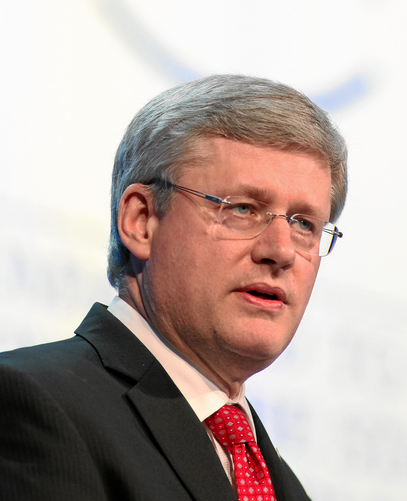
Prime Minister Stephen Harper speaking at the Annual Meeting 2012 of the World Economic Forum at the congress centre in Davos, Switzerland, January 26, 2012.
World Economic Forum photo via Wikimedia Commons.
In fact, Grant Robertson reports, the Trudeau regime effectively shuttered a small, cheap (less than $3 Million dollars ~ petty cash in Canada’s government) research and early warning team called the Global Public Health Intelligence Network (GPHIN) which
was among Canada’s contributions to the World Health Organization, and it operated as a kind of medical Amber Alert system. Its job was to gather intelligence and spot pandemics early, before they began, giving the government and other countries a head start to respond and – hopefully – prevent a catastrophe. And the results often spoke for themselves.
Unfortunately, by the time the COVID-19 pandemic was getting started, just when the GPHIN should have provided “early warning,” it had been told, by the Trudeau regime, to focus on domestic issues. But global pandemics don’t often start in Canada, do they? The GPHIN sifted through data from around the world, often from places like China, Iran and Russia which hide or manipulate medical information, conducting something akin to military reconnaissance so that Canadian (and global (WHO)) officials could “see” what might be headed our way.
Did Justin Trudeau give the order to “muzzle” the GPHIN scientists? No, of course not … no more than Stephen Harper gave the order to “muzzle” scientists in Environment Canada. The decision to “refocus” the GPHIN on useless, domestic busywork was likely made by an Assistant Deputy Minister who was acting on yet another demand from the Treasury Board Secretariat to justify every programme dollar … again.
You should be glad that the Treasury Board Secretariat casts a sceptical eye on every single government programme and is a constant thorn in the side of operational people (like I was when I was serving and like the GPHIN folks were, too). They, skilled, hard-working civil servants, are just trying to ensure that your tax dollars are not being wasted. They are good people doing good work. But sometimes the wheat gets tossed away with the chaff. That appears to have been the case with the GPHIN. In retrospect, it seems almost criminally stupid to have deprived Canada of a valuable medical reconnaissance agency just because there had not been an “attack” recently. But that appears to have been the bureaucratic justification ~ it’s like me saying that since my house hasn’t burned down recently we should disband the fire department.
Did Justin Trudeau muzzle scientists? No.
Did Justin Trudeau’s government disable a valuable (and cheap) “early warning” system just to make its own wild spending look a little less careless? Yes, that’s what the Globe and Mail‘s investigation says ~ and we have paid a horrendous price in lives for that decision.
This story, it seems to me, is very much like the “Harper muzzles scientists” stories from a few years ago … but minus the massive media attention. It appears very evident, from Mr Robertson’s investigations that bureaucrats, acting on their own, internal priorities, emasculated the GPHIN just when we needed it most. That, bureaucratic action, was I believe what was, mainly, behind the “Harper muzzles scientists” stories, too. But in the 2010s much of the mainstream media was in a sort of undeclared war against Stephen Harper and so the claims of climate activists became “news” and opinions were treated as facts.
July 29, 2020
QotD: Grog in the Royal Navy
Actually, we do, at least as a floor: we know the quantity of the Royal Navy’s spirit ration, which until 1823 was based on half a pint of rum (284 millilitres in foreign) per man per day. We also know its minimum strength, since it was tested by trying to ignite gunpowder soaked in it: it had to be over 57% alcohol by volume (“proof strength”) to pass. That’s sixteen units of alcohol – not per week, but per day – or north of a hundred units a week, just for the issued ration before sailors bought any extra from the purser. (No wonder Jack Tar was jolly back in those days!)
But clearly, we would expect a body of men consuming such suicidally destructive quantities of booze to be physical wrecks, raddled by cirrhosis and disease? As Dr James Lind (he of the discovery that citrus fruits were a sovereign remedy for scurvy) put it,
It is an observation, I think, worthy of record that fourteen thousand persons, pent up in ships, should continue, for six or seven months, to enjoy a better state of health upon the watery element, than it can well be imagined so great a number of people would enjoy, on the most healthful spot of ground in the world.
(For context, around this point the Navy won the battle of Quiberon Bay, with twenty ships – who had less than one man sick per ship).
The ration was halved in 1823, and again in 1850, but for a hundred and twenty years until Black Tot Day in 1970, the Navy still issued nearly thirty units of alcohol a week to everyone on the lower deck (junior rates got theirs diluted, seniors got neat rum). Either folk were hardier back then, or Britannia managed to rule the waves and keep her sailors reasonably healthy despite being a pack of hopelessly addicted alcoholics.
Jason Lynch, “How Much Is ‘Too Much’?”, Continental Telegraph, 2018-05-08.
July 25, 2020
QotD: The real life implications of “positive” rights
[…] the moment all your necessities are furnished by someone else, someone else gets to make all the decisions for you. I mean, if your health is paid for by the taxes of your fellow citizens, and the government aka the nation looks after your every need: should they pay for your health if you insist on smoking or drinking? Or should those resources be husbanded for people who take better care of themselves? Okay, Sarah, but isn’t there a point to individual responsibility? Why shouldn’t you be required to take minimal care of yourself, so you get the benefits of the government’s care, which as you say someone else pays for.
Ah, but there’s the rub. See, ultimately, there’s always something some of us say or do that can be used to justify denying care or giving only palliative care. For instance, I’m overweight, which seems to be one of the remaining sins in the current lexicon. Sure, I gained tons of weight over 20 years of untreated hypothyroidism, even though I was starving myself for a long portion of those. But hey, I allowed myself to be overweight. So my prognosis is poor. Why spend money on me, when someone else could have better results?
Hell, even when it comes to my autoimmune. I’m a poor prospect, so why give me top of the line care?
If the government controlled other things, it would be exactly the same. Food? Sure, I break out in eczema all over when I eat a diet rich in carbs. But hey, flour and rice are cheap, and why should I get a specialized diet, since I’m only a writer who isn’t even a leftist or a supporter of the state, and besides my prospects of survival are poor?
College? Sure you want to be an economist, but your teachers say you’re cheeky and talk back, and the state doesn’t need that. What we need right now are pipe fitters. Here, you can take this six week course.
When the state is paying the bill, the state gets to decide what is better for you. The European constitution gives you the right to “death with dignity” because death with dignity is much cheaper than expensive treatments with a low chance of survival. After all this money is for everyone, you know?
And like the NHS, in Britain, they won’t even let you seek treatment outside their tender mercies. Why should they? They pay for you. That means in the end they decide what to spend on you. They own you. And if you went outside their system and your kid got cured? It would look pretty bad for them, wouldn’t it? Why should they allow you to do that? And besides, peasant, you have a bad attitude.
Sarah Hoyt, “Slouching Into Shackles”, According to Hoyt, 2018-04-27.
July 21, 2020
QotD: Burritos
This last item is probably why the Burrito (AKA “Tomorrow’s Turd Today”) remains popular with liberal medheads hooked on keeping human ethnic pets on their progressive political plantations. After all, if you can only afford to eat or to feed people once a day, the Burrito is your huckleberry. And if you can also reduce food scraps that would otherwise go straight to the landfill into human waste, you also have a food object that “walks lightly on the planet.”
Gerard VanderLeun, “GRINGO DE MAYO!: A Counter-Celebration for May 7”, American Digest, 2018-05-04.
July 20, 2020
History Hijinks: Plague
Overly Sarcastic Productions
Published 17 Jul 2020Escape the worries of our modern world by visiting the high middle ages and learning about something esoteric and irrelevant: Plague!
In this video, I attempt to actually teach you something about how the medieval world worked and how it responded to this existential threat, rather than dredging up 3rd grade plague facts for easy views. Oops, did I say that out loud?
SOURCES & Further Reading: The Black Death: The World’s Most Devastating Plague via The Great Courses by Dorsey Armstrong, “From Plague Doctor to PPE” by Bernadette Banner (https://youtu.be/ZniriC-jTHg), “Biological Warfare at the Siege of Caffa” from the CDC (https://wwwnc.cdc.gov/eid/article/8/9…)
This video was edited by Sophia Ricciardi AKA “Indigo”. https://www.sophiakricci.com/
Our content is intended for teenage audiences and up.
DISCORD: https://discord.gg/kguuvvq
PATREON: https://www.Patreon.com/OSP
MERCH LINKS: https://www.redbubble.com/people/OSPY…
OUR WEBSITE: https://www.OverlySarcasticProductions.com
Find us on Twitter https://www.Twitter.com/OSPYouTube
Find us on Reddit https://www.Reddit.com/r/OSP/