Quotulatiousness

September 4, 2025

Net Zero targets and Britain’s ever-declining car industry

Filed under: Britain, Business, China, Environment, Government, USA — Tags: , , , , , — Nicholas @ 03:00

At the Foundation for Economic Education, Jake Scott charts the decline of the British auto manufacturing centres and the government’s allegiance to its Net Zero programs:

Custom image by FEE

Britain was once a giant of car manufacturing. In the 1950s, we were the second-largest producer in the world and the biggest exporter. Coventry, Birmingham, and Oxford built not just cars, but the reputation of an industrial nation; to this day, it is a source of great pride that Jaguar–Land Rover, a global automotive icon, still stands between Coventry and Birmingham. By the 1970s, we were producing more than 1.6 million vehicles a year.

Today? We have fallen back to 1950s levels. Last year, Britain built fewer than half our peak output—800,000 cars, and the lowest outside the pandemic since 1954. Half a year later, by mid-2025, production has slumped a further 12%. The country that once led the automotive revolution is now struggling to stay afloat, and fighting to remain relevant.

This is why the news that BMW will end car production at Oxford’s Mini plant, shifting work to China, is so damning, bringing this decline into sharp focus. The Mini is not only a classic British car; Alec Issigonis’s original design made it an international icon. For decades, the Mini has been the bridge between British design flair and foreign investment. Its departure leaves 1,500 jobs at risk at a time when the government is desperate to fuel growth and convince a wavering consumer market that there is no tension between industrial production and Net Zero goals.

It’s a bitter reminder that we in Britain have been here before: letting an industrial crown jewel slip away.

The usual explanations will be offered: global competition, exchange rates, supply chains. All true, in the midst of a global trade war that is heating up and damaging major British exports. But such a diagnosis is incomplete. The truth is that Britain’s car industry is being squeezed by a mix of geopolitical realignment and government missteps.

The car industry has become the frontline of a new trade war. Washington has already moved aggressively to shield its own firms: the Inflation Reduction Act offers vast subsidies for US-made EVs and batteries, an unapologetic attempt to onshore production, and something that became a flashpoint of tension in Trump’s negotiation with the EU in the latest trade deal. On the production side, the Act has poured billions into US manufacturing: investment in EV and battery plants hit around $11 billion per quarter in 2024.

Ripples have been sent across the world in the US’s wake: Europe, faced with a flood of cheap Chinese EVs, has imposed tariffs of up to 35% after an anti-subsidy investigation. Talks have even turned to a system of minimum import prices instead of tariffs. Unsurprisingly, China has threatened retaliation against European luxury marques, while experts warn the tariffs may slow the EU’s green transition by raising prices.

This is no longer a free market: cars are treated as strategic assets, the 21st-century equivalent of shipbuilding or steel. Whoever controls the supply chains, particularly for EV batteries and the mining of lithium, controls not only the future of the industry but an important lever of national power.

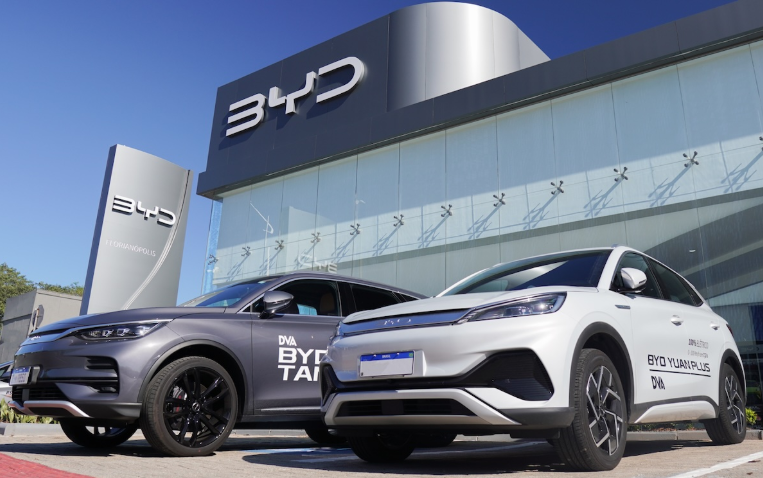
The results are visible. In July 2025, Tesla’s UK sales collapsed nearly 60%, while Chinese giant BYD’s deliveries quadrupled. Europe responded by talking up new tariffs. Britain did nothing. In this asymmetric contest, our market risks becoming a showroom for foreign producers — subsidizing both sides of the trade war without defending our own.

August 6, 2025

Actual data demolishes the “climate catastrophe” narrative

Filed under: Environment, Government, Media, Politics, USA — Tags: , , , — Nicholas @ 05:00

At The Conservative Woman, Paul Homewood summarizes the findings of a new report for the US Department of Energy:

A report by five independent, eminent scientists has blown apart the myth of catastrophic climate change, destroying the case for Net Zero in the process.

Judith Curry, Roy Spencer, Ross McKitrick, John Christy and Steve Koonin are all highly respected leaders in their respective fields. Their report was commissioned by the US Department of Energy (DOE) but written with no editorial oversight by the DOE and with no political influence whatsoever. Although it specifically covers the US, its findings have worldwide ramifications.

The 151-page report, A Critical Review of Impacts of Greenhouse Gas Emissions on the US Climate, reviews scientific certainties and uncertainties in how anthropogenic carbon dioxide (CO2) and other greenhouse gas emissions have affected, or will affect, the nation’s climate, extreme weather events, and selected metrics of societal well-being.

Maybe the most relevant part concerns extreme weather. According to the report: ‘Most extreme weather events in the US do not show long-term trends. Claims of increased frequency or intensity of hurricanes, tornadoes, floods, and droughts are not supported by US historical data. Additionally, forest management practices are often overlooked in assessing changes in wildfire activity. Global sea level has risen approximately 8 inches since 1900, but there are significant regional variations driven primarily by local land subsidence; US tide gauge measurements in aggregate show no obvious acceleration in sea level rise beyond the historical average rate.

A few graphs from the report tell the story, and you can see them at the end of this article.

  1. US landfalling hurricanes show no long-term trends, either in frequency or intensity;
  2. Heatwaves were much worse than now before the 1960s;
  3. Temperature extremes are reducing, as a greater number of extremely hot days is more than offset by fewer extremely cold ones;
  4. There has been a marked decline in the number of the strongest tornadoes, EF3 to EF5, since the 1970s. The increased numbers of weaker tornadoes is the result of better observation methods, including Doppler radar, not an actual increase;
  5. US droughts were much more severe for most of the historical record going back to 1895;
  6. While wildfire activity has marginally increased since the 1980s, it was considerably worse up to the Second World War. Most of these long-term changes are caused by fire management practices, not climate changes;
  7. Tide gauges all around the US show the same story – a slow and steady sea level rise beginning in the mid 19thC. The rate of rise can vary considerably from station to station because of local factors. New York and the rest of the Atlantic Coast, for example, has been subsiding since the Ice Age; Galveston is sinking as a direct result of groundwater withdrawals.

The scientists pour scorn on weather attribution computer models, which have become the media’s go-to source for climate apocalypse stories. These attribution models routinely claim that extreme weather events have been made more likely because of global warming. They are dismissed in the report, which highlights the lack of high-quality data and reliance on deficient climate models. Other scientists have not been so kind!

May 24, 2025

Forget it, Fraser Institute: as Trudeau explained, there’s no business case for Canadian LNG

Filed under: Asia, Cancon, Economics, Environment — Tags: , , — Nicholas @ 03:00

In the National Post, Tristin Hopper reports on a recent Fraser Institute study on the benefits of expanding the production of Canadian liquid natural gas, but as the meme might put it, the feds don’t want benefits, they want to eliminate Canadian LNG production:

A new report says that if Canada really wanted to save the climate, the most effective thing it could do would be to sell as much natural gas to Asia as humanly possible.

The 46-page study, published on Thursday by the right-leaning Fraser Institute, is premised on the notion that Canadian natural gas exports could singlehandedly reduce Asian dependence on coal.

If Canada could double its LNG production, write the authors, it would divert enough coal from Asian power plants to stop 630 million tonnes of greenhouse gases per year from entering the Earth’s atmosphere.

For context, that nearly represents Canada’s entire carbon footprint. According to the most recent figures from Environment and Climate Change Canada, the country was responsible for 694 million tonnes of carbon emissions in 2023.

“Instead of focusing on reducing domestic GHG emissions in Canada by implementing various policies that hinder economic growth, governments must shift their focus toward global GHG reductions and help the country cut emissions worldwide,” the report says.

The Fraser Institute’s calculation is based on the simple fact that natural gas is an easy substitute for coal, and can produce the same amount of energy with far lower emissions.

The U.S. Energy Information Administration maintains a ranking of fossil fuels by the quantity of emissions they produce for every one million BTUs (British Thermal Units) — roughly the amount of power needed to heat a standard house for several days.

Generating one million BTUs by burning coal will produce between 93 and 103 kilograms of carbon dioxide. Doing the same with natural gas will produce just 53 kilograms.

Canada currently produces about 17.9 billion cubic feet per day of natural gas. Most of this is consumed domestically, while 39 per cent is exported, mostly to the United States via pipeline.

The Fraser Institute calculated that if Canada could double production and “send the surplus … to Asia”, it could potentially supplant more than 200 million tonnes of coal every year.

May 19, 2025

The Roman Empire and climate change

Sebastian Wang considers “what we all know” about the rise and fall of the Roman Empire in the light of more recent research (not all of it politically motivated) into climate change:

The approximate extent of the Roman empire circa 395AD.

Before we get into climate, and for those who tend to the wholly ignorant spectrum of my readers, we need a quick sketch of Roman history. The Empire officially began in 27 BC, when Octavian — better known as Augustus — became the first emperor. It ended in the west in AD 476, when the last western emperor was kicked out. As said, the eastern half, based in Constantinople, carried on for another thousand years.

Broadly, we can divide Roman history as follows:

  • 27 BC – AD 180: The golden age. Augustus and his successors took over and further expanded a huge empire. There was peace (mostly), trade flourished, and cities grew. People call it the “Pax Romana“.
  • AD 180 – 284: Everything starts to fall apart. This is called the Crisis of the Third Century. Civil wars, foreign invasions, plagues, and economic collapse all hit at once.
  • AD 284 – 395: The empire pulls itself together. Emperors like Diocletian and Constantine bring in reforms. But the empire is now divided for administrative convenience — east and west.
  • AD 395 – 476: The west goes under. It’s invaded. It’s conquered and broken up. Very quickly, it disappears. Though, once again, a parochial view of history, we call this the Fall of the Roman Empire.

The standard histories still blame bad rulers or too many wars. That’s fair enough. There were some very bad rulers, and the wars without number. But if you look at the climate data — tree rings, ice cores, sediment levels — you start to see another pattern underneath what may be called the political and economic superstructure of Roman history.

When Rome came to greatness, the climate was unusually good. From around 200 BC to AD 150, there was a long phase of stable, warm, and mostly wet conditions. Scientists call this the Roman Climate Optimum. In Egypt, the Nile flooded regularly and well. That meant lots of grain. In the Alps, glaciers shrank. In northern Europe, people were growing grapes in places too cold for vineyards today. In the Middle East, the Dead Sea stayed high, showing good rainfall.

This kind of weather made everything easier. Crops were reliable. Surpluses could be taxed. Cities could be fed. Roads and aqueducts could be built and maintained. And because the army was well supplied, the Empire was protected, and could even continue a modest expansion. But, as McCormick and his team point out, the high phase of Nile flooding correlates exactly with the high point of Roman prosperity — and once those floods became less predictable, problems followed.

The good times came to an end. By the mid-second century, a wave of volcanic eruptions thew great masses of dust into the atmosphere, blocking sunlight. Solar activity dropped. The climate became less stable. Then came the Antonine Plague in AD 166. It probably started in the east and spread quickly. Some think it was smallpox. Whatever it was in terms of microbiology, it was almost certainly brought on by changes in the climate. It may have killed a third of the Empire’s population.

Worse was coming. By AD 200, climate records show more erratic rainfall and cooling. In Gaul and the Balkans, harvests became less predictable. Glaciers began to advance again. Speleothem data from Austrian caves shows sharp shifts in rainfall patterns.

At the same time, the empire started to shake. Between 235 and 284, Rome had over twenty emperors. Most were generals who seized power, then got killed. Civil wars broke out. Trade declined. Foreign tribes pushed harder at the frontiers. Coin hoards — money buried for safety — increased in number. That’s usually a sign of fear and instability. Cities shrank. The economy shrivelled.

Was this all because of climate? No — not wholly. A good definition of historical crank is someone who tries to explain everything in terms of one cause or set of causes. But as McCormick et al. argue, bad weather made everything worse. It weakened agriculture, strained supplies, and made people more likely to panic or rebel. In a world without modern logistics, you couldn’t afford bad harvests two or three years in a row.

The empire buckled in the third century, but didn’t collapse. And its survival probably was an effect of human agency. A line of competent Emperors rose from the army and stabilised the frontiers. This line culminated in the reigns of Diocletian and Constantine, who restructured the Empire. They fixed taxes. They reorganised the army. Constantine built his new capital in the east. His successors found Constantinople safer and more strategically useful than Rome.

This being said, around AD 290, climate records suggest a small rebound. Warmer temperatures and better rainfall returned — especially in the east. That helped the eastern provinces recover faster. They had stronger governments and better infrastructure. But climate helped. Dead Sea levels remained relatively high, which meant steady rain in the Levant.

The west wasn’t so lucky. Italy and parts of Gaul stayed unstable. In Britain, pollen records show that farmland was being abandoned. The archaeology matches this, with fewer building projects and shrinking urban centres. The killing shock for the west came in the fifth century. In Central Asia, a long drought began around AD 370. Steppe tribes like the Huns were hit hard. They migrated west, pushing other tribes like the Goths ahead of them. In AD 376, the Goths crossed the Danube into Roman territory. Two years later, they crushed a Roman army at Adrianople. This all happened in the eastern half. But greater wealth and better leadership allowed the government in Constantinople to push the barbarians west. Over the next century, the western empire was hit again and again.

Meanwhile, the weather got worse. Europe cooled. Rainfall patterns shifted. Flooding and crop failures increased. Volcanic sulphur levels spike in the ice core record from Greenland.

Rome was sacked in AD 410. Again in 455. Finally, in 476, the last western emperor was deposed. That was it. The western Roman Empire was gone.

The east survived. But was hardly untroubled. In AD 536, a huge volcanic eruption darkened skies around the world. The sun barely shone. Crops failed. Famines spread.

A few years later, the Plague of Justinian broke out. It probably started in Egypt and spread through trade routes. Some say it killed half the population in affected areas.

Climate and disease worked together. Hunger weakened people. Infection finished them off. As McCormick et al. put it, the event of 536 and the plague that followed created one of the worst demographic shocks in recorded history.

April 8, 2025

Mark Carney explained how he viewed the world in his book Values

It’s worth considering what Mark Carney wrote about his beliefs before becoming prime minister and how he’s campaigning right now:

For those who haven’t had the misfortune of parsing through Mark Carney’s Values, it reads like a sermon from a high priest of globalism — polished, preachy, and packed with ideas that should send shivers down the spine of anyone who cares about Canada’s economy, especially Western energy producers.

Writing as the former Bank of Canada governor and a darling of the Liberal elite, Carney pitches a vision of “sustainable finance”, net-zero absolutism, and heavy-handed regulation. To the National Citizens Coalition, it’s clear: this isn’t a roadmap to prosperity, it’s a wrecking ball aimed at the heart of Canada’s resource sector and the West’s economic lifeline.

Start with Carney’s obsession with “revaluing value”. In Values, he argues markets should prioritize climate goals over profit, pushing financial institutions to choke funding for oil and gas.

For Alberta and Saskatchewan, where energy employs tens of thousands and pumps billions into the economy, this is a death knell dressed up as virtue.

Western producers aren’t just businesses; they’re the backbone of communities, powering schools, hospitals, and homes. Carney’s disdain for fossil fuels ignores their role in keeping Canada competitive while our allies and adversaries keep drilling. His plan? Starve the sector, stranding assets and jobs, all to appease international green lobbyists in European nations with nationalized economies on the road to being as disastrous as Canada’s.

Then there’s his love affair with regulation. Values champions policies just like Bill C-69 — the “No More Pipelines Bill” — which Carney has refused to repeal. He sees it as a tool to enforce his net-zero utopia, but for the West, it’s a padlock on progress. Pipelines that could carry Canadian oil to global markets sit stalled, leaving producers at the mercy of low prices, foreign competitors, and now, tariff threats.

Carney’s mental framework both then and now doesn’t just stop projects, it signals to investors that Canada’s energy sector is a no-go zone. The result? Capital flees, jobs vanish, and the West pays the price for the lofty ideals of a London and Manhattan banker, who spends only part of his time in Canada — specifically, Ontario and Quebec.

Dan Knight on Carney’s swing through some British Columbia ridings this week:

A mock campaign sign for the Liberals spotted on social media.

Mark Carney rolled into Victoria this week with the swagger of a man who’s never missed a wine-and-cheese reception in his life and delivered what the Liberal brain trust likely considers a “bold vision” for Canada. But peel back the banker buzzwords and Churchill cosplay, and what you really got was a cringeworthy display of delusion, detachment, and recycled globalist dogma.

He opened his mouth and immediately signaled his marching orders: “clean energy”. Not once. Not twice. It was practically every other sentence. Because when you’re out of ideas, just say “green transition” on repeat and hope nobody checks the receipts.

He’s not just pushing the same failed Liberal climate ideology — he’s doubling down on it.

Carney promised to turn Canada into a “clean energy superpower” — without explaining how, exactly, we get there when his party has spent years shutting down oil and gas, blocking pipelines, and handing our resource wealth to the Americans.

This wasn’t new policy. It was the same Liberal fantasy that has already gutted Alberta, choked investment, and driven electricity prices through the roof — just ask Europe how that’s going. And when it comes to reopening auto plants or restoring manufacturing jobs? Nothing. Not a plan, not a word, not a clue.

And don’t worry — when Trump’s tariffs hit our industries, Carney says we’ll respond with “retaliatory tariffs”. Sounds tough, until you remember who actually pays those. Working Canadians. Line workers. Parts manufacturers. People trying to keep the lights on while Ottawa plays global economic chicken.

Carney’s big idea for recovery? Just keep handing money to the Liberal-connected elite.

He promised to “give back” — and by that, he means pouring another $180 million into the CBC, the same taxpayer-funded mouthpiece that’s been running interference for the Liberals for nearly a decade. This comes after ArriveCAN, the $60 million QR code boondoggle funneled through Liberal contractors, and countless other slush funds masquerading as “public service”.

While the working class is bracing for a made-in-Ottawa recession, Carney’s pledging more green slogans, more centralized control, and more taxpayer money to keep the illusion alive.

March 27, 2025

QotD: Did humans domesticate plants, or was it the other way around?

Filed under: Books, Environment, History, Quotations — Tags: , , — Nicholas @ 01:00

In Sapiens: A brief history of humankind, Yuval Noah Harari locates the agricultural revolution to a period roughly some 10,000 years ago when humankind, having survived as a hunter and forager for over two million years, began to domesticate various plants and animals, thus to have a better control over its food supply. Harari calls this revolution “history’s biggest fraud” because he believes that what actually happened here is that plants, like wheat, domesticated human beings rather than the other way round, crops turning people into its willing slaves. Humans ended up doing back-breaking work in the fields so that crops like wheat could spread themselves over every corner of the planet.

Of course, the cultivation of crops enabled human beings to produce far more calories per unit of territory than foraging ever could. And this enabled the human population to expand exponentially, thus putting even more pressure on the food supply, thus necessitating an even greater emphasis on agriculture. Alongside this deepening spiral there were other unintended consequences as well. As Harari puts it: “Nor did the farmers foresee that in good years their bulging granaries would tempt thieves and enemies, compelling them to start building walls and doing guard duty”.

Giles Fraser, The Magnificent Seven is a post-liberal idyll”, UnHerd, 2020-04-01.

March 18, 2025

“[T]he Liberals have no principles because it works

Filed under: Cancon, Environment, Government, Media, Politics — Tags: , , — Nicholas @ 04:00

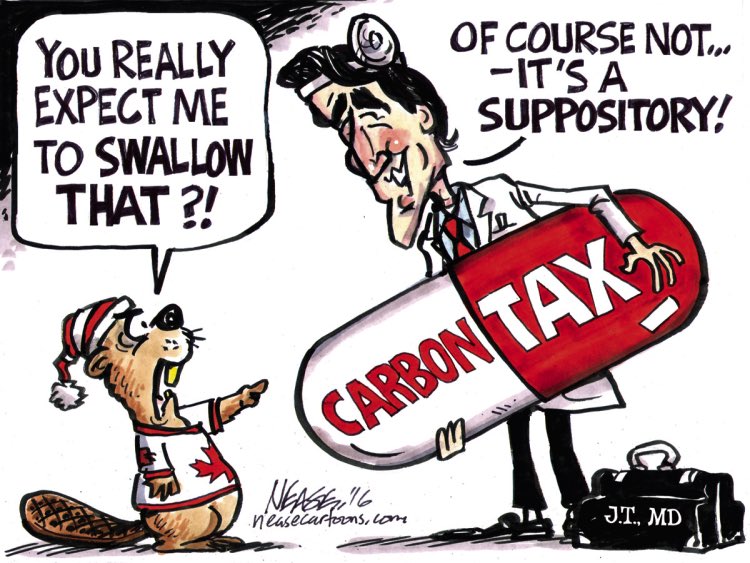
The first act of our unelected prime minister was to performatively sign a piece of paper that supposedly eliminated the hated carbon tax. Well, part of the carbon tax. And not really eliminated eliminated, it just set the rate to zero percent. The carbon tax that the Liberals had proclaimed was essential to saving the entire planet from global warming. If this seems odd, buckle up, because this is just how the Liberal Party operates:

Obviously, I don’t believe Mark Carney nor the Liberal Party of Canada want to destroy the world.

Nor do I believe they could destroy the world, even if a supervillain gave them an unlimited budget in which to do so. After ten years when the supervillain checked up on the Liberals to see how the world-destruction plan was coming along, he’d find out that the world destruction equity subcommittee was waiting for a report from a sub-subcommittee responsible for convening a task force to authorize a panel to determine how to destroy the world in way which minimally impacted disadvantaged communities, but they’re having trouble finding francophone Saskatchewanians for the breakout sessions.

But I am somewhat startled to see how quickly Carney’s Liberal Party abandoned a signature policy it assured us was necessary to fight the existential threat posed by climate change:

This is like the National Socialist German Workers Party tweeting a meme cheering on Adolf Hitler for killing Hitler. (Given the state of Twitter these days, I wouldn’t be surprised if there actually is an official NSDAP account, but never mind.)

We’re left with two possibilities regarding the carbon tax policy promoted by the last Liberal Prime Minister and now abolished (or is it?!?) by the new Liberal Prime Minister:

  • it never would have made much difference in the fight against climate change anyway, in which case it was always a waste of time and effort; or,
  • it would have made a big difference in the fight against climate change, in which case Carney has decided it’s more important to win the impending federal election and take away his opponents’ talking points than to actually do something about a potential ecological crisis.

I’m not naive about politicians, even those I support, being hypocrites and flip-floppers. There may be some truly principled, ideologically consistent political parties out there, but they can hold their annual conventions in a Ford Club Wagon.

March 17, 2025

German politicians are willing to literally bankrupt the country to keep the AfD out of power

Filed under: Economics, Environment, Germany, Government, Media, Politics — Tags: , , , , , — Nicholas @ 03:00

eugyppius is clearly no fan of Friedrich Merz, the CDU leader and presumptive next Chancellor of Germany, but even he seems boggled at how much Merz is willing to concede to his ideological enemies to get himself into that position:

Let us summarise, briefly, what has happened so far:

  • The CDU are the party of fiscal responsibility. His Triviality the Pigeon Chancellor Friedrich Merz presented himself throughout the campaign as an unusual fan of Germany’s constitutionally-anchored debt brake. He told everybody that he could not imagine ever borrowing in excess of 0.35% of annual GDP, so interested was he in limiting the tax burden of future generations.
  • All of the while, Merz and his advisers were scheming in secret about how they might overhaul the debt brake, firstly because they could not give the slightest shit about the tax burdens of future generations, and secondly because they spent the months since November 2023 observing what happens when a government that has no ideas is also deprived of money. “I have no ideas,” Merz said to himself during this time. “What happens if like Olaf Scholz I also end up with no money?”
  • Exactly two weeks ago, U.S. President Donald J. Trump and Ukrainian President Vladimir Zelensky had a verbal spat in the Oval Office. This spat put the fear of God into the Eurocrat establishment, for whom the Ukraine war has become a sacred and essentially religious cause. Merz capitalised on the panic to unveil his massive debt spending plan. He and his would-be coalition partners, the Social Democrats, announced that they wished to spend 500 billion Euros of debt on “infrastructure” and untold hundreds of billions of debt on defence. This would entail adjustments to the debt brake, in the same way setting your house on fire would entail adjustments to your living arrangements.
  • This massive spending package will require a constitutional amendment, which can only be achieved with a two-thirds vote of the Bundestag. In the newly elected Bundestag, Die Linke and AfD will be in a position to block this amendment and Merz will be stuck with the debt brake. Thus Merz wants to break the debt brake in the final days of the old Bundestag – a strategy that has put him in the amazing position of groveling before the election’s biggest losers. Specifically, Merz has spent the past few days feverishly negotiating with the Green Party, who will not even have any role in his government, just to get them to sign off on his insane spending plans.

I wrote a lot here and on Twitter about the election nightmare scenario I called the “Kenyapocalypse” – a hypothetical in which the Greens and the Social Democrats would each be too weak to give the Union parties a majority on their own, such that Friedrich Merz would be forced to negotiate a coalition deal with both of them at once. In the end, Kenyapocalypse did not happen; the CDU avoided it by a razor’s breadth. Merz, however, turns out to be such a monumental retard that he has managed to recreate a simulacrum of Kenyapocalypse for himself. The man has been on his knees kissing not only Social Democrat but also Green ass for days. He has been begging the Greens to sign onto his debt plan, and the Greens have finally agreed, in return for the following concessions:

  1. The “defence” funding that will be exempt from the debt brake is to be defined as widely as possible. All kinds of things will count as debt brake-exempt “defence” spending now, probably including various climate nonsense.
  2. The 500 billion-Euro “infrastructure” debt is to include 100 billion Euros specifically earmarked for the “Climate and Transformation Fund” – the central financial instrument of the energy transition. This is basically infinity windmill money, you might as well set it on fire. Beyond this specific allocation, any projects that contribute to making Germany “climate neutral by 2045” will also be eligible for the 500 billion-Euro exception. This whole thing will be a massive wad of debt for Green nonsense and I would like to take this moment to laugh at everyone who told me how happy I should be that Merz was trying to fix Germany’s bridges with this debt bullshit. Nothing of the sort is going to happen.
  3. You will note that the explicit goal of achieving “climate neutrality” by 2045 is slated to be among the very few positive political points anchored in the German constitution. “Climate neutrality” is a more expansive concept than mere “carbon neutrality”, or net zero. It describes a utopian state of affairs in which human actions have no influence on the climate whatsoever.

These are prizes the Greens could not achieve even at the height of their influence, in the 2021 elections. Strictly speaking, the entire traffic light coalition fell apart over a matter of 3 billion Euros. Now the Greens are getting 100 billion Euros for free, all because Merz is determined to become Chancellor whatever the cost.

March 3, 2025

Is DOGE merely uncovering what used to be called “honest” graft?

Filed under: Bureaucracy, Environment, Government, History, USA — Tags: , , , , , — Nicholas @ 05:00

Jon Miltimore explains where the expression “honest graft” came from and gives examples of what the DOGE investigations have turned up so far:

In 1905, George Washington Plunkitt made arguably the most famous defense of political graft in American history.

“Everybody is talkin’ these days about Tammany men growin’ rich on graft,” the New York state senator and Tammany Hall member wrote, “but nobody thinks of drawin’ the distinction between honest graft and dishonest graft”.

Plunkitt was responding to The Shame of the Cities, a book by journalist Lincoln Steffens that exposed sweeping political corruption in U.S. cities.

The ward boss’s shameless defense of “honest graft”, which is still assigned to undergraduates a century after Plunkitt’s death, comes to mind when looking at the fraud, waste, and abuse Elon Musk’s Department of Government Efficiency and others are uncovering.

To take but one example, consider the billions of dollars in taxpayer funds the Environmental Protection Agency awarded last year to Power Forward Communities. If you’ve never heard of the nonprofit group, you’re forgiven. Almost nobody has — because it didn’t exist until late 2023.

Power Forward Communities had no footprint, online or otherwise, until October 2023, when it was announced as part of the Rewiring America program, an organization linked to former Georgia Democratic gubernatorial candidate Stacey Abrams, which says its mission is “all about Rewiring America’s values, people, and culture.”

Less than a year after its creation, Power Forward Communities was awarded $2 billion via the EPA’s National Clean Investment Fund — even though it reported just $100 in revenue during its first three months of operation.

The payment, which is slated to continue through June 2031, caught the attention of Lee Zeldin, the new EPA administrator.

“It’s extremely concerning that an organization that reported just $100 in revenue in 2023 was chosen to receive $2 billion,” Zeldin said.

Indeed. It’s graft on a scale the Tammany Hall charlatans couldn’t have imagined.

Historical sources say 19th-century politician Boss Tweed and his ring of cronies took in at least $50 million in corrupt money in backroom deals, kickbacks, and skimming before Tweed was convicted of larceny and forgery in 1873 and fled to Cuba, and later Spain. In 2025 dollars, that’s about $1.3 billion — considerably less than the single payoff former President Joe Biden’s EPA awarded Power Forward Communities.

January 30, 2025

Proposed California legislation to allow “Big Oil” to be sued for “climate change damage … regardless of cause”

Filed under: Business, Environment, Government, Law, USA — Tags: , — Nicholas @ 05:00

California is a lovely place. I’ve only ever been there once, back in January 1991 but it was a wonderful (business) trip. California’s political “leaders” on the other hand are clearly in need of immediate re-institutionalization:

First, the madness of the California state legislature is richly displayed in Senator Scott Wiener’s remarkable new bill that would allow people to sue the oil industry because climate change damaged their property, via “natural catastrophe, including a hurricane, tornado, storm, high water, wind-driven water, tidal wave, tsunami, earthquake, volcanic eruption, landslide, mudslide, snowstorm, or drought, or, regardless of cause, a fire, flood, or explosion”.

I hope you caught that “regardless of cause” thing, there at the end. If this bill passes — it won’t, being mostly a theatrical performance, but let’s pretend — Californians will supposedly be able to sue Chevron or ExxonMobil (and so on) because a flood or fire damages their property, which implicates fossil fuel-induced climate change, regardless of the cause of the flood or fire.

  1. I threw matches on your couch
  2. Climate change
  3. Big Oil burned your couch

On the hook: anyone who sold “fossil fuels” in California “since the year 1965”, although a lawsuit has to be brought within three years of the discovery of the damage caused by the fossil fuel’s effect on the climate.

Favorite part, and look at item #2 (click to enlarge):

I’m not a lawyer, but I have doubts about declaring in a law that you can’t question the constitutionality of the law. We had similar legal doctrines on the playground in elementary school, despite which some members of the first-grade community controversially persisted in utilizing the disallowed tag-back.

Wiener’s press release on the bill is … very special. California government knows why the recent fires were so harmful, and none of it involves California government. Sample quote from, please help me, the state senator who represents my district:

    “The Eaton Fire destroyed over 9,000 structures in my District, wiping out almost the entire town of Altadena, leaving thousands of my residents calling for justice and accountability,” said Sen. Sasha Renée Pérez (D-Pasadena). “Our communities have never seen anything like this in urban Los Angeles. The reality is that climate change is here and will continue impacting communities everywhere. What makes this worse is decades ago, Big Oil knew this would be our future, but prioritized lining their own pockets at the expense of our environment and the health of our communities. The Affordable Insurance and Climate Recovery Act will hold the oil industry responsible for the damage it has inflicted, and provide relief for future communities impacted by climate disasters.”

Decades ago, Big Oil knew Altadena would burn, but they did it anyway. Case closed.

I’m also quite fond of the senator’s use of “my residents”, which sounds like she’s buying up dead souls to expand her vassalage. I pay her in grain, of course.

January 19, 2025

California’s wildfire plight

Theophilus Chilton on the end of California dreamin’:

Southern California has had a REALLY rough week. Wildfires, started by arsonists and driven by the Santa Ana winds, have burned thousands of acres in the city and county of Los Angeles and destroyed over $150 billion worth of property (and counting). As I write this, the fires still burn and largely remain uncontained, even as new blazes break out. It is a disaster of epic proportions, striking one of the richest and most economically and culturally relevant portions of the country.

Never ones to let a crisis go to waste, the Left responded to this disaster by … focusing on climate change. Not empty fire hydrants, not drained reservoirs, not incompetent leadership, but climate change. These fires, we have been breathlessly assured, are the result of ever-worsening climatic conditions in the region, drying it out and making it susceptible to this kind of affliction. Never mind that observers since Spanish times consistently noted the same kind of weather conditions and hazards that we see today, which suggests that maybe things aren’t actually changing all that much. Of course, those who are blaming climate change fail to recognise the fundamentally chaotic, nonlinear nature of the Earth’s biosphere and the interactions of its constituent parts, something governed by complexity (in the chaos/complexity theory sense of the term). As a result, it’s somewhat foolish to try to draw a direct, causal link between two variables (such as atmospheric CO2 content and temperature) which depend upon nonlinear interactions with hundreds of other factors. Thankfully, they don’t seem to be getting much traction with this.

So what did create the conditions that burned down Los Angeles?

First of all, there was the implementation of a number of policies driven by the state’s radical environmentalist lobby. Thanks to the fanatics, common sense policies that would help to mitigate the region’s inherent fire hazard went undone. Regular controlled burns of underbrush are a standard conservation technique in dry areas that help to thin out brush and prevent wildfires from getting out of control. Building a sufficient number of desalination plants is a good way for coastal desert areas to provide themselves with abundant fresh water for things like drinking, watering crops, filling reservoirs, and fighting fires. In fact, filling reservoirs for future needs would make a lot of sense. But all of these things are “unnatural” and might have “negative impacts” on local wildlife and whatnot.

Another contributory issue is the state’s policies towards the chronically homeless and its de facto sanctuary status for illegal aliens. The Reagan-era deinstitutionalisation of the homeless has been a nationwide disaster for years and California’s particular policies have made the situation in their state even worse. For decades, California has regularly seen wildfires caused by untended campfires started by homeless junkies getting out of control, which the state’s liberal approach to its indigent population has only made more prevalent. Likewise, California’s harbouring of illegal aliens has created a situation in which the state is flooded with masses of hostile foreign elements, some of whom have been caught starting fires all around the LA basin and creating the current catastrophe.

Then there is the fact that California has systematically implemented a set of DEI policies for its governmental workers, including its firefighters. As a result, the state’s leadership in the relevant departments is very good at “promoting inclusion,” but not so good at dealing competently with emergencies when they take place. Indeed, Los Angeles’ mayor Karen Bass and LAFD Chief Kristen Crowley presided over budget cuts for the city’s firefighting capabilities while adding layers of “diversity and inclusion” bureaucracy aimed at systematically de-white-maleing the department and depriving it of the demographic most prone to self-sacrifice and overall technical competence. That reflects trends across the board in which the state and the city have regularly spent more on gay choirs and social justice artwork than they have on necessary functions of government.

(more…)

December 17, 2024

The rejection-in-advance of Bovaer as a “climate-friendly” “solution” to the “problem” of climate change

At Watts Up With That?, Charles Rotter documents yet another imposed-from-above bright idea that consumers are already eager to reject:

When global elites and bureaucrats decide they must “fix” the world, the results often speak for themselves. Take the latest technocratic debacle: Bovaer, a feed additive designed to reduce methane emissions from cows, marketed as a “climate-friendly” solution. It’s now being shelved by Norwegian dairy producer Q-Meieriene after consumers flatly rejected its so-called “climate milk”.

This is more than a simple story of market rejection. It’s a cautionary tale of what happens when governments, corporations, and globalists push policies and products that tamper with the food supply to address a problem that may not even exist.

The Quest to Solve a “Crisis”

Bovaer, developed by DSM-Firmenich, has been touted as a game-changer in the fight against methane emissions — a major target of climate policies. The additive is said to suppress a key enzyme in the cow’s digestive process, reducing methane emissions by up to 30%. Regulatory bodies in over 68 countries, including the EU, Australia, and the U.S., have approved its use.

But let’s step back for a moment. Why are we targeting cow burps and farts in the first place? Methane is indeed a greenhouse gas, but it’s also a short-lived one that breaks down in the atmosphere within about a decade. Moreover, cows and bison have been emitting methane for millennia without triggering apocalyptic climate shifts. Yet suddenly, livestock emissions are treated as a planetary emergency demanding immediate action.

This myopic focus on cow methane is a prime example of how climate zealotry warps priorities. Rather than addressing real and immediate issues — like the energy crises their own policies create — governments and globalists have decided to micromanage how your milk is produced, all to reduce emissions by an imperceptible fraction of a percentage point.

Consumer Rebellion

The backlash against Bovaer has been swift and fierce. In Norway, Q-Meieriene began using the additive in 2023, branding the resulting product as “climate milk”. The response? Consumers overwhelmingly rejected it, leaving supermarket shelves stocked with unsold cartons while Bovaer-free milk flew off the shelves.

Facing dismal sales, Q-Meieriene recently announced it would discontinue the use of Bovaer, stating:

This is not merely a marketing failure. It reflects a broader consumer revolt against the technocratic imposition of “solutions” no one asked for. People are increasingly skeptical of being told that their daily choices — what they eat, how they travel, how they heat their homes — must be sacrificed on the altar of climate orthodoxy.

November 6, 2024

Running out of minerals means we’re all going to dieeeeeeeeee!!

Filed under: Economics, Environment, Media, Technology — Tags: , , — Nicholas @ 03:00

Tim Worstall responds to another pants-wetting panic attack that we’re running out of atoms and that means we’re all going to die unless we do this thing I wanted you to do anyway:

“Artisanal cobalt miners in the Democratic Republic of Congo” by The International Institute for Environment and Development is licensed under CC BY 2.5 .

There’s a guy working up in Finland who keeps trying to tell us that we’re all about to run out of lovely metals. Therefore — as with the Club of Rome beforehand, Blueprint for Survival and all those guys — we’re all gonna die.

Aiee, eh?

Now it is possible to work through all his assumptions and nip at them in detail. For example, he assumes we need about 20 million tonnes of lithium in order to replace the global internal combustion engine fleet with battery powered. Not a bad assumption. The Tesla Master Plan 3 comes to the same answer. But if we want to have weeks and weeks of battery power for the whole of society we’re going to need much more than that. Which is a problem, mineral resources are only around 90 million tonnes, so, we’re stuffed.

And, well. Here’s the problem. We’re all — including Michaux — using United States Geological Survey Numbers. In 2023 lithium:

    Owing to continuing exploration, identified lithium resources have increased substantially worldwide and total about 98 million tons.

In 2024:

    Owing to continuing exploration, measured and indicated lithium resources have increased substantially worldwide and total about 105 million tons.

Wait, what? We can get more mineral resources if we go looking for them? Well, if that’s true then the size of mineral resources cannot be the limitation on how much is out there, right?

This then brings us to the basic mistake that has been made here. We’ve been through this here a number of times.

It’s this:

    Figures 28 & 29 shows the needed quantity of metal to phase out fossil fuels (assuming all four power storage buffer capacities) is compared against the total metal content in the whole planetary environment, including the deep ocean polymetallic nodules under sea resources (Hein et al. 2020). So, Figure 28 shows reported mineral reserves plus estimated mineral resources on land plus estimated undersea mineral resources. This is the summation of mineral reserves, resources, on land and under the sea, in the planetary environment. Even with this extreme summation of conventional and unconventional sources, there was not enough copper, nickel, lithium, cobalt, or vanadium to manufacture even just the first generation of renewable technology to replace the existing fossil fuel industrial system.

That’s on page 240 and yes, I had to read (OK, speed read/skim) to get to his simple statement of his mistake. You owe me guys, 239 pages worth.

He’s right that mineral resources can be converted into mineral reserves by the application of time and effort — capital, really. But he thinks that mineral resources are the definition of the mineral deposits that exist. Which just ain’t true — mineral resources are mineral deposits that people have applied time and effort — capital really — to defining. That’s how mineral resources, as defined by our common source at USGS, can increase year on year.

November 1, 2024

“[H]er plan will mean the obliteration of your savings, the end of banks and even the destruction of ‘money as we know it'”

It’s astonishing how many highly placed bureaucrats, NGO functionaries, and the very, very wealthy are super gung-ho for reducing the rest of us to the status (and living conditions) of medieval serfs:

“German flag” by fdecomite is licensed under CC BY 2.0 .

This week, VW announced plans to cut tens of thousands of jobs and to close three factories. That is a very big deal, because they have never closed a single German factory before. I try to avoid economic topics, but this story is so much bigger than economics. As Daniel Gräber wrote in Cicero last month, “the VW crisis has become a symbol for the decline of our entire country“.

The Green leftoid establishment are eagerly blaming management for these failures, which is on the one hand not entirely wrong, but on the other hand not nearly an absolution. The German state of Lower Saxony holds a 20% stake in Volkswagen, and so they also manage the company. Recently, in a fit of virtue, they placed a Green politician – Julia Willie Hamburg – on its supervisory board. Hamburg does not even own a car and has used her position to argue that Volkswagen should regard itself not as an automobile manufacturer but as a “mobility services provider” and shift its focus away from “individual transport”.

The absurdly named Julia Willie Hamburg is merely symptomatic of a broader phenomenon. Germany has succumbed to political forces that have nothing but indifference and disdain for the industries that have made us prosperous. Our sitting Economics Minister, Robert Habeck, gave an interview to taz in 2011 in which he said that “fewer cars will not lead to less economic growth, but to new industries”, and attacked “the old growth theory, based on gross domestic product“. And behind Green politicians like Habeck are even more radical forces, like Ulrike Herrmann, the editor of taz, for many years a member of the Green Party and also an open advocate of wide-scale deindustrialisation. Because I am going to quote Herrmann saying some very crazy things, you need to know that she is in no way a fringe figure. She appears regularly on all the respectable evening talkshows and every politically informed person in the Federal Republic knows who she is.

Herrmann has outlined her political views in various books like The End of Capitalism: Why Growth and Climate Protection Are Not Compatible – and How We Will Live in the Future. From these monographs, we learn that Herrmann sees climatism as a means of imposing a centrally planned economy in which we will own nothing and be happy. Happily, Herrmann also talks a lot, and in her various speeches and interviews she states her vision for decarbonising Germany in very radical terms. I am grateful to this twitter user for highlighting typical remarks that Herrmann delivered in April of this year before a sympathetic audience of climate lunatics.

There, Herrmann elaborated on her vision for a future economy in which all major goods would have to be rationed:

    Talking about rationing: It’s clear that if we shrink economically, we won’t have to be as poor as the British were in 1939; rather, we’d have to be as rich as the West Germans were in 1978. That is a huge difference, because we can take advantage of all the growth of the post-war period and the entire economic miracle.

    The central elements of the economy would have to be rationed. First of all, living space, because cement emits endless amounts of CO2. Actually, new construction would have to be banned outright and living space rationed to 50 square metres per capita. That should actually be enough for everyone. Then meat would have to be rationed, because meat production emits enormous amounts of CO2. You don’t have to become a vegetarian, but you’ll have to eat a lot less meat.

    Then train travel has to be rationed. So this idea, which many people also have – “so okay then I don’t have a car but then I always travel on the Intercity Express trains” – that won’t work either, because of course air resistance increases with speed. Yes, it’s all totally insane. Trains won’t be allowed to travel faster than 100 kilometres per hour, but you can still travel around locally quite a lot. This is all in my book, okay? But I didn’t expand on it there because I didn’t want to scare all the readers.

At this point Herrmann begins to cackle manically, ecstatic at the thought that millions of Germans will be stuck riding rationed kilometres on slow local public transit.

October 5, 2024

Scary words of 2024 – “Luckily, FEMA is on the case”

As I recounted a few days back, I was relieved to hear from my friend in the Asheville NC area after the region absorbed the damage from Hurricane Helene. Tom Knighton had a similar experience:

A friend of mine lives at the edge of where Helene did her worst. He just got power back on yesterday and was finally able to let me know he was OK. I was worried for obvious reasons.

In the deepest, worst parts of where the storm ripped things to shreds, they’re trying to just make it to the next day. They’re struggling to find clean drinking water, food, shelter, the works.

Luckily, FEMA is on the case.

They took to social media yesterday and posted this crap.

That’s right. People who don’t have internet, phone service, or electricity should call, download an app, or log onto the FEMA website.

I won’t ask how stupid can the federal government be, but I’m worried they’d take it as a challenge.

Back in the day, FEMA would roll into a disaster area with paper applications and facilitate all of that right there. While the internet and smartphones are glorious things, this is a prime example of when they’re a terrible option for people.

Right now, American citizens are struggling. They’re thankful to be alive and are working their butts off to keep themselves alive. They’ve paid taxes their entire lives, and now that they need some of theirs back, their federal government is telling them to do what is physically impossible for many of them.

I can’t help but see this and think that their claims of having enough money in spite of spending hundreds of billions on illegal immigrants ring a tad hollow.

If they have the money, why not put boots on the ground getting people signed up for any assistance they may be entitled to?

Honestly, while I’ve commented before about the gross incompetence of the government in disaster response — and I’ll agree that maliciousness is most definitely a possibility, if not a probability in these instances — this is just weapons-grade … whatever, be it stupidity, meanness, or a combination of both.

Heads should roll.

Update: David Warren notes that it’s not merely FEMA incompetence, it’s active deterrence for private relief efforts by all federal agencies.

From the Internet (for instance updates from Elon Musk), we note that non-governmental charitable efforts are not merely “discouraged”. The government is seizing and impounding desperately-needed local goods and services. The rest of the federal bureaucracy is also “chipping in”, to stifle relief efforts. The FAA, for instance, is restricting private aircraft with supplies, and making it almost impossible to fly drones, demanding that flights be individually approved by their slothful trolls. Those who wish to bring help to the survivors have both the wreckage of the storm, and government agents to block them.

This is how things work in this world, and have worked, since the Reformation, when the state took over welfare, hospitals, schools, and all other eleemosynary institutions. Rather than allow inspiring expressions of Christian charity, they became the means for cynical political posturing and control. And with “democracy”, we have detailed laws and policies, to prevent the people from helping themselves — as they would do, by laws of nature.

« Newer PostsOlder Posts »

Powered by WordPress