
The new party’s website is here.
September 15, 2018
Maxime Bernier announces the name of his new federal party: the People’s Party of Canada/Parti Populaire
Comments Off on Maxime Bernier announces the name of his new federal party: the People’s Party of Canada/Parti Populaire
September 14, 2018
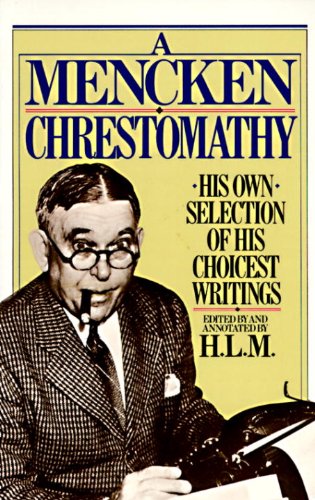
The Mencken Society versus the alt-right “Mencken Club”
In the current issue of Reason, Mencken biographer Marion Elizabeth Rodgers explains why the great essayist would not welcome the adulation of the alt-right “Mencken Club”:
Libertarians and conservatives have always admired H. L. Mencken, the 20th century journalist and satirist famous for his literary and political commentary. Now the Baltimore author and editor, whose heydey lasted from the 1920s to the late 1940s, has become a hero to the alt-right, who have cherry-picked his views to support their white supremacist vision. For white nationalist leader Richard Spencer and fellow enthusiasts, Mencken embodies “worthy ideals,” namely, a questioning of “the egalitarian creed, democratic crusades, and welfare statism” that American democracy has become since the New Deal. Such is the essence of humor: It is hard to believe that Mencken would have ever given his worshippers the time of day.
[…]Unlike the Mencken Society — a scholarly organization founded in 1976 in Baltimore that hosts talks on Mencken’s life and works by such luminaries as the late Christopher Hitchens, Arnold Rampersad, and Alfred Kazin — the Mencken Club holds pseudo-academic conferences ranging in themes as “The West: Is It Dead Yet?” or “The Right Revisited.” In 2016, the club focused on the populism of Donald Trump and the preservation of white Christian heritage through anti-immigration policies. White House speechwriter Darren Beattie spoke to members alongside Peter Brimelow, white nationalist and founder of the anti-immigrant website Vdare.com — a gig that ultimately cost Beattie his job.
Speakers rarely mention Mencken’s name at their meetings, except for random recitals from Chrestomathy or his earliest works: The Philosophy of Friedrich Nietzsche (1908), whom the alt-right see as a great visionary, and from Men Versus the Man: A Correspondence between Rives La Monte, Socialist, and H. L. Mencken, Individualist (1910), an epistolary debate where Mencken explores Social Darwinism, eugenics, heredity, and race. In the most offensive passage, Mencken defines “the American negro” as “a low-caste man,” and that the “superior white race will be fifty generations ahead of him.” In its podcast, club members touted Men Versus the Man as “a fun book” and asserted “race realists, anti-globalists, educational reductionists and immigration restrictionists can draw nourishment from Mencken … and his disdain for the low-caste man.”
In reality, Mencken would have shunned the white identity politics of the alt-right. To Mencken, Nietzsche’s “superior man” was the enlightened individual of honor and courage, regardless of race, creed, or social background. Soon after 1910, Mencken reversed his views of white superiority and began calling for civil rights for African Americans. Despite the fact that his Diary contains racial slurs and ethnic slang, Mencken rebelled against “the Aryan imbecilities of Hitler” and stated: “To me personally, race prejudice is one of the most preposterous of all the imbecilities of mankind. There are so few people on earth worth knowing that I hate to think of any man I like as a German or a Frenchman, a gentile or a Jew, Negro or a white man.”
He was especially contemptuous of white Anglo-Saxon Southerners, describing them as “shiftless [and] stupid,” and extolled African Americans as “superior to the whites against whom they are commonly pitted.” Unique for the mid-1900s and into the ’20s and ’30s, he collaborated with black intellectuals and was the first white editor to publish their work in his magazine, The American Mercury, and energetically promoted their writings in his books and columns and to his publisher Alfred Knopf. He was relentless in his campaigns against the Ku Klux Klan, and he joined forces with the NAACP to testify against lynching before the U.S. Congress. He repeatedly wrote against segregation; behind the scenes he discussed strategies with African-American leaders to promote civil rights.
Comments Off on The Mencken Society versus the alt-right “Mencken Club”
QotD: Free market capitalism
What is free-market capitalism? Allan Meltzer, an economist at Carnegie Mellon, a Hoover Institution scholar, and onetime advisor to President Ronald Reagan, offers a classic definition. “As long as you engage in actions where your actions don’t impinge upon other people, you’re free to buy and sell anything you want,” he says, adding that free-market capitalism protects private property. Thomas Coleman, a hedge-fund veteran heading up an economic-policy shop at the University of Chicago, adds another key element: free-market capitalism functions best when people and companies can trade “without systemic distortion of prices.” Deirdre McCloskey, until last year a professor at the University of Illinois, and author of the recent book Bourgeois Equality, says, “I don’t like calling it capitalism, anyway, which was a word invented by our enemies. … I call it instead market-tested betterment, innov-ism. … That’s what’s made us rich.” McCloskey says that the heart of “betterment” is Adam Smith’s ideal of “every man to pursue his own interest in his own way” — and that “doesn’t mean a large government sector,” she emphasizes.
Free-market capitalism isn’t the same thing as radical libertarianism. Stan Veuger, an American Enterprise Institute scholar and economics lecturer at Harvard, dismisses what he calls “the anarcho-capitalist ideal”: an economy with no regulations and zero taxation. “There are places like Somalia that score well” on such purist definitions of free markets, he points out. To work well, capitalism needs “an environment where people can concentrate on being productive,” rather than, say, having private armies to assure personal safety. Free-market capitalism requires laws and rules, more than ever, now that more people live in close proximity in dense cities than ever before. Human activity leads to disputes, and disputes can be solved, or at least moderated, by resolutions that govern behavior. We often forget that markets don’t make broad public-policy decisions; governments do. Markets allocate resources under a particular policy regime, and they can provide feedback on whether policies are working. If a city, say, restricts building height to preserve sunlight in a public park, free-market actors will take the restricted supply into account, raising building prices. This doesn’t mean that the city made the wrong decision; it means that the city’s voters will risk higher housing prices in order to preserve access to sunlight. By contrast, a city that restricts housing supply and restricts prices via rent regulation is thwarting market signals — it takes an action and then suppresses the direct consequences of that action.
Nicole Gelinas, “Fake Capitalism: It’s not free markets that have failed us but government distortion of them”, City Journal, 2016-11-06.
Comments Off on QotD: Free market capitalism
September 11, 2018
September 10, 2018
Speculation on an early federal election
Ted Campbell on the recent musings in the official party organ Toronto Star on the pros and cons of the Prime Minister going to the polls this fall rather than next year:
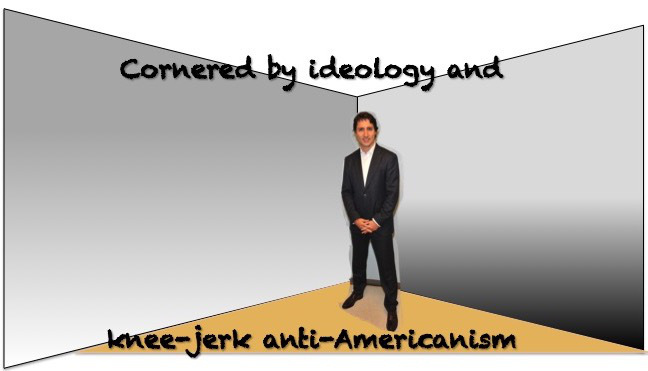
The Star, a pretty Liberal friendly journal, says, in an article by Robin Sears, a former NDP insider (in fact he was national director of the NDP for seven years), that “Liberal hawks, like those of a generation earlier, are heatedly debating a snap election call. Not entirely surprising, since [we] have not seen a decade since the ’50s when a government has not been forced by events, or decided to seize a strategic advantage, and called an early election … [and] … The Liberal hawks’ arguments are getting stronger. Neither of their opponents is ready, and each will likely be stronger a year from now. The Federal Court and Donald Trump have both just stuck a finger in the Prime Minister’s eye. This is an opportunity to return the favour with a much harder counterpunch, a strong new political mandate.“
[…]
I agree with Robin Sears … going [to] the polls sooner, in the fall of 2017, and running against Donald Trump (and the ghost of Stephen Harper) makes good political sense because it seems, to me, highly unlikely that Justin Trudeau and his gang that cannot shoot straight are going to get any better in the next year or so. In fact the Trudeau regime’s record, to date, suggests that a year from now the country might be in ruins.
Right now the NDP appears to be in shambles; Jagmeet Singh’s leadership is being questioned at pretty high levels, and the Conservatives are still reeling from Maxime’s Bernier’s defection. Waiting until October 2018 risks giving both the Conservatives and the NDP time to reorganize and present new, attractive programmes and, perhaps even new, more attractive leaders, too.
Will he go to the polls in 2017? Who knows? Parliament is due to reconvene, after the long summer recess, in a week ~ on 17 September. Many people were expecting a new Throne Speech outlining a pre-election platform filled with promises that will, most likely, never be kept, but Robin Sears makes a good case for Prime Minister Trudeau to go to the Governor General, next week, and to tell her that the situation is such that Canada’s government needs a new mandate.
Comments Off on Speculation on an early federal election
September 9, 2018
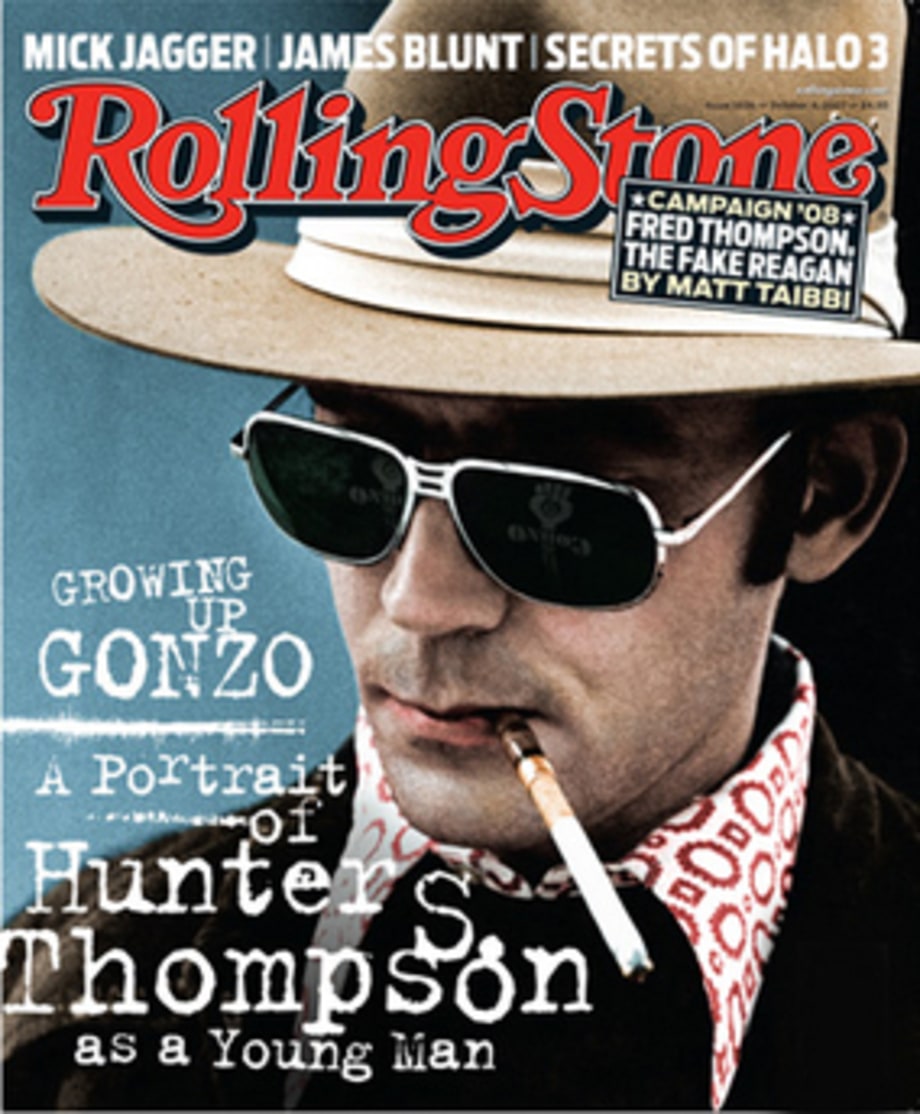
Hunter S. Thompson, Jann Wenner and Rolling Stone
Darcy Gerow on the sudden rise and long, long decline of Rolling Stone:
The suffocating media bias of the 1960s was difficult to escape. A lethargic gray specter of middle-class America was distributed with cunning sterility through the generic, bogus smiles of cable news networks and traditional print. Despite the election and assassination of Kennedy and the signing of the Civil Rights Act, if you had turned on a T.V. this was still Eisenhower’s America: regimented, religious, conservative. And the cultural vacuum created by the Eisenhower years had began to suck even harder with Lyndon Baines Johnson at the helm.
American media was out of touch with this new generation. Elitist authoritarians were preaching their moral superiority stamped with stars and stripes to a generation of cynics. These kids didn’t have a fucking clue what they wanted, but they wanted no part of what they were being given. So rose Rolling Stone, a counterculture bible for babyboomers, co-founded by Jann Wenner.[…]
Things were different in the 1960s. The anti-war movement and the civil rights movement were a just cause. The catalyst for a just movement of equal rights for women and gays and minorities was free speech, of which Jann Wenner was a huge proponent. When students at U.C. Berkley marched in the streets in the 1960s, it was an attack on the elitist, authoritarians and an establishment hellbent on keeping opposing viewpoints and the ideas of personal liberty stifled. The gang of “cruel faggots” kept the official narrative running but no one under 30 was listening.
The whole goddamn world had had enough of the travesty of war in Southeast Asia. There was no ignoring the ineptitude of American politics. The only reasonable thing to do in 1969 was to drive out to Altamont for the weekend, load up on heinous chemicals, hunker down and rethink your approach to the political process.
Thompson, the then-young, liberal anti-hero, could often be found gobbling LSD and firing his guns (he was a lifetime member of the NRA) at propane bottles for a crowd of jeering burnouts or Bay area bikers at his fortified compound, Owl Farm, in Woody Creek Colorado.
It was Jann Wenner’s idea to put Hunter, with all of his fear and loathing, on to the campaign trail in 1972. Why not get the guy who wrote Hell’s Angels? Hunter was someone with a penchant for dealing with vicious thugs and sick freaks gone crazy on power, someone who could draw a parallel between Richard Nixon and Sonny Barger.
Thompson’s openly-biased, subjective and wild account of the 1972 presidential election was the red Chevy convertible of campaign coverage. ‘Sympathy for the Devil’ on repeat and at full volume, barrelling across the country at 110 miles an hour or so and in search of an honest politician. In Hunter’s eyes, the only one that even came close was George McGovern, the senator from South Dakota.
McGovern’s non-interventionist platform focused on a complete withdrawal from Vietnam, amnesty for draft evaders and a Milton Freidman-inspired, negative income tax meant to replace the bureaucratic burden of social welfare programs and a complicated tax code. Thompson’s version of events is the story of an idealistic underdog fighting against the odds only to be crushed by postmodern Americanism and the establishment incumbent, “Tricky Dick Nixon.” McGovern might have owed a White House win, in part, to Thompson’s and Rolling Stone’s relentless support had he not owed his White House loss to the mental distress of his vice-presidential pick, Thomas Eagleton.
There’s no way to properly explain how great Rolling Stone was in those early years. How well the magazine represented the anti-establishment culture, individual liberty and equality for everyone. It can’t be compared to anything else because there was nothing else, only the traditional mainstream garbage and Rolling Stone.
Comments Off on Hunter S. Thompson, Jann Wenner and Rolling Stone
September 8, 2018
A key statistic in the debate over gun violence in Toronto … turns out to be an invention
Matt Gurney on an important claim in the controversy about guns and crime in Toronto — that will probably not get anything like as much coverage because it doesn’t support the prohibitionists’ narrative:

Earlier this summer — a summer that has seen Toronto wracked by gun violence — a report came out that suggested lawful Canadian gun owners were to blame for at least some of the violence. The article was originally published by the Canadian Press, and was widely republished elsewhere, including at the CBC, the National Post, a dozen local newspapers, CTV News, and, yes, here at Global News. Since then, it has been widely cited in other news stories covering the issue, including in The Toronto Star and The Globe and Mail. The report was everywhere.
Here’s the problem. Newly released stats show clearly that it was wrong.
The article was based around an interview with a Toronto Police Services detective, Rob Di Danieli. Det. Di Danieli told the Canadian Press that Canadians who were lawfully licensed to purchase and possess firearms were increasingly a public safety issue. “They go get their licence for the purpose of becoming a firearms trafficker,” Di Danieli told the CP. “A lot of people are so ready to blame the big bad Americans, but we had our own little problem here.”
The CP article hangs on this revelation from the detective. It notes, in various places, “The number of guns obtained legally in Canada but are then sold to people who use them for criminal purposes has surged dramatically in recent years compared to firearms smuggled from the United States, Toronto police say,” and, “In recent years [investigators say they] have noticed a stark shift in where guns used to commit crimes are coming from,” and, “Legal Canadian gun owners are selling their weapons illegally, Di Danieli said, noting that police have seen more than 40 such cases in recent years.”
[…]
At the time the CP story first ran, there were no publicly available stats to support (or contradict) what di Danieli had told them. But now, those numbers are publicly available, thanks to Dennis R. Young, an Alberta-based researcher who filed a Freedom of Information request with the Toronto police and published their reply on his website. And these stats tell a very different story.
September 7, 2018
September 6, 2018
Trans-partisan planning
At Coyote Blog, Warren Meyer offers a plan to address man-made climate change, pitched to avoid being dismissed as “typical” of one or the other side:

While I am not deeply worried about man-made climate change, I am appalled at all the absolutely stupid, counter-productive things the government has implemented in the name of climate change, all of which have costly distorting effects on the economy while doing extremely little to affect man-made greenhouse gas production. For example:
- Corn ethanol mandates and subsidies, which study after study have shown to have zero net effect on CO2 emissions, and which likely still exist only because the first Presidential primary is in Iowa. Even Koch Industries, who is one of the largest beneficiaries of this corporate welfare, has called for their abolition
- Electric car subsidies, 90% of which go to the wealthy to help subsidize their virtue signalling, and which require more fossil fuels to power than an unsubsidized Prius or even than a SUV.
- Wind subsidies, which are promoting the stupidist form for power ever, whose unpredictabilty means fossil fuel plants still have to be kept running on hot backup and whose blades are the single largest threat to endangered bird species.
- Bad government technology bets like the massive public subsidies of failed Solyndra
Even when government programs do likely have an impact of CO2, they are seldom managed intelligently. For example, the government subsidizes solar panel installations, presumably to reduce their cost to consumers, but then imposes duties on imported panels to raise their price (indicating that the program has become more of a crony subsidy for US solar panel makers, which is typical of these types of government interventions). Obama’s coal power plan, also known as his war on coal, will certainly reduce some CO2 from electricity generation but at a very high cost to consumers and industries. Steps like this are taken without any idea of whether this is the lowest cost approach to reducing CO2 production — likely it is not given the arbitrary aspects of the program.
These policy mess is also an opportunity — it affords us the ability to substantially reduce CO2 production at almost no cost.
Comments Off on Trans-partisan planning
September 5, 2018
The continuing paranoid style in American politics
John Gray discusses the mass psychosis that gripped the left in November 2016 and still has not slackened that grip:
Visiting New York a few weeks after Trump’s victory in the presidential election, I found myself immersed in a mass psychosis. The city’s intelligentsia was possessed by visions of conspiracy. No one showed any interest in the reasons Trump supporters may have had for voting as they did. Quite a few cited the low intelligence, poor education and retrograde values of the nearly 63 million Americans who voted for him. What was most striking was how many of those with whom I talked flatly rejected the result. The election, they were convinced, had been engineered by a hostile power. It was this malignant influence, not any default of American society, that had upended the political order.
Conspiracy theory has long been associated with the irrational extremes of politics.
The notion that political events can be explained by the workings of hidden forces has always been seen by liberals as a sign of delusional thinking. A celebrated study by the political scientist Richard Hofstadter, The Paranoid Style in American Politics (1964), linked the idea with the far Right. Yet in New York in December 2016, many of the brightest liberal minds exhibited the same derangement. Nearly two years later, they continue to reach to conspiracy theory as an explanation for their defeat.
The former lead book reviewer at the New York Times, Michiko Kakutani, devotes several pages to Hofsfadter’s work in her short polemic, The Death of Truth. Citing him approvingly, she notes that “the modern right wing” has “tended to be mobilised by a sense of grievance and dispossession”. As Hofstadter put it, they feel that “America has been largely taken away from them.” The charm of this citation is the lack of self-awareness it reveals. It would be difficult to find a better description of the anguish of liberals such as Kakutani, who feel they have been robbed of their historically appointed role as the moral and intellectual leaders of society.
For those who embrace it, a paranoid style of liberalism has some advantages. Relieved from any responsibility for the debacles they have presided over, the liberal elites that have been in power in many western countries for much of the past 30 years can enjoy the sensation of being victims of forces beyond their control. Conspiracy theory implies there is nothing fundamentally wrong with liberal societies, and places the causes of their disorder outside them. No one can reasonably doubt that the Russian state has been intervening in western politics. Yet only minds unhinged from reality can imagine that the decline of liberalism is being masterminded by Vladimir Putin. The principal causes of disorder in liberal societies are in those societies themselves.
Comments Off on The continuing paranoid style in American politics
September 4, 2018
“So now we know what ‘the resistance’ really is. It’s the establishment”
Brendan O’Neill on the funeral of “maverick” Republican senator John McCain:
So now we know what ‘the resistance’ really is. It’s the establishment. It’s the old political order. It’s that late 20th-century political set, those out-of-touch managerial elites, who still cannot believe the electorate rejected them. That is the take-home message of the bizarre political spectacle that was the burial of John McCain, where this neocon in life has been transformed into a resistance leader in death: that while the anti-Trump movement might doll itself up as rebellious, and even borrow its name from those who resisted fascism in Europe in the mid 20th-century, in truth it is primarily about restoring the apparently cool, expert-driven rule of the old elites over what is viewed as the chaos of the populist Trump / Brexit era.
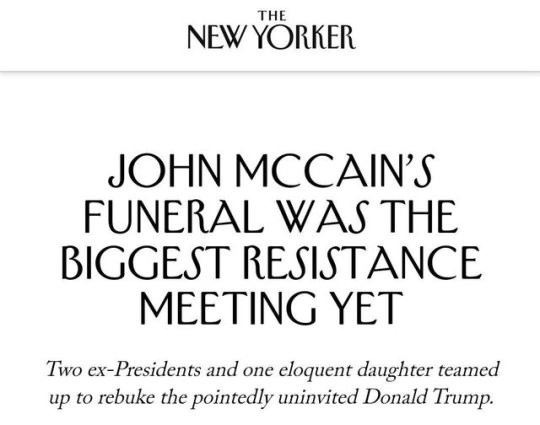
The response to McCain’s death has bordered on the surreal. The strangest aspect has been the self-conscious rebranding of McCain as a searing rebel. In death, this key establishment figure in the Republican Party, this military officer, senator, presidential candidate and enthusiastic backer of the exercise of US military power overseas, has been reimagined as a plucky battler for all that is good against a wicked, overbearing political machine. ‘John McCain’s funeral was the biggest resistance meeting yet’, said a headline in the New Yorker, alongside a photo of George W Bush, Bill Clinton, Hillary Clinton, Al Gore, and soldiers from the US Army, the most powerful military machine on Earth. This is ‘the resistance’ now: the former holders of extraordinary power, the invaders of foreign nations, the Washington establishment.
The New Yorker piece, like so much of the McCain commentary, praises to the heavens the anti-Trump theme of McCain’s funeral. McCain famously said Trump couldn’t attend his funeral. And that in itself was enough to win him the posthumous love of a liberal commentariat that now views everything through the binary moral framework of pro-Trump (evil, ill-informed, occasionally fascistic) and anti-Trump (decent, moral, on a par with the warriors against Nazism). Even better, though, was the fact that orators at the funeral, including McCain’s daughter Meghan and both Bush and Obama, used the church service to slam Trumpism, without explicitly mentioning it, and in the process to big-up what came before Trumpism, which of course was their rule, their politics, their establishment. The Washington political and media set might seem bitterly bipartisan, said the New Yorker writer, but it is also ‘more united’ in one important sense – ‘in its hatred of Donald Trump’.
[…]
The religious allusions, the talk of vengeance against Trump, the misremembering of McCain’s life so that it becomes a moral exemplar against the alleged crimes of Trumpism, exposes the infantile moralism of the so-called resistance. Albert Burneko, assessing some of the madder McCain commentary, says there is now a ‘condition’ that he calls ‘Resistance Brain’, where people display an ‘urge to grab and cling on to anything that seems, even a little bit, like it might be the thing that Finally Defeats Donald Trump’. Even if the thing they’re grabbing on to is actually a bad thing. Like a seemingly endless FBI investigation into the elected presidency. Or George W Bush, whose moral rehabilitation on the back of Anti-Trumpism has been extraordinary. Or neoconservatism: this was the scourge of liberal activists a decade ago, yet now its architects are praised because they subscribe to the religion of Anti-Trumpism. Being against Trump washes away all sins.
Comments Off on “So now we know what ‘the resistance’ really is. It’s the establishment”
September 2, 2018
QotD: Coyote’s first rule of government authority
Never support any government power you would not want your ideological enemy wielding.
Warren Meyer, “Regulatory Deception”, Coyote Blog, 2014-11-12.
Comments Off on QotD: Coyote’s first rule of government authority
September 1, 2018
August 31, 2018
Farewell, buck-a-beer publicity stunt, we hardly knew ye
Chris Selley on the all-too-brief publicity stunt of cheaper beer for Ontario:
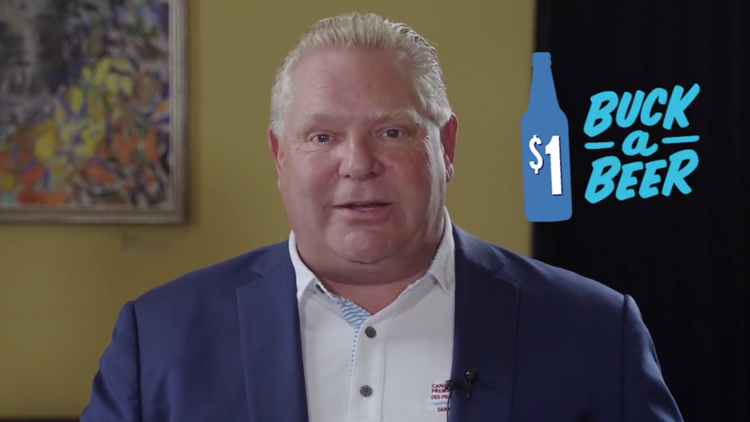
President’s Choice is ending its buck-a-beer promotion on Sept. 3, just days after it started: We get one week, one long weekend and then out of the pool, party’s over, back to class. PC-branded beer will rocket back up to $1.38 a bottle when you buy 24 at The Beer Store or $1.65 when you buy 12, which highlights just how steep — and presumably unsustainable — the discount really was. We shall see how long the two other participating breweries’ offers last, but they made it quite clear, as did PC, that this was a limited-time offer prompted by Doug Ford’s most shamelessly blunt populist pledge.
My goodness, though, what a commotion it will leave in its wake. Some brewers quite understandably took the opportunity to note the impact of aluminum tariffs on their bottom lines, to complain that Ford’s government was playing favourites by giving away expensive product placement in LCBO stores for $1 beer, and to note the government is actually raising taxes on beer.
Others, however, waxed utterly scandalized. “How about buck a pound of steak? Who would eat that?” asked one Toronto brewer who had perhaps not entirely thought through his rhetorical question. “We haven’t even given two thoughts about this,” Great Lakes Brewery’s communications manager, Troy Burtch, told the Toronto Star. “Why would anyone do this?” Burtch and Great Lakes have signalled their total uninterest by tweeting incessantly about it.
The Canadian Taxpayers’ Federation went after some of the affronted craft brewers for accepting taxpayer subsidies for their higher-end products. People on social media lined up for and against buck-a-beer, vowing to boycott the participants or those complaining about the program.
The whole thing was a dumb Ford Nation stunt, no question. But good grief. You can hardly blame the breweries, either for participating or for not: they were just trying to wring as much publicity as they could from the situation. No one is really any worse off, or at least not much. What we were really seeing among the chattering classes was a rerun-by-proxy of the June 6 election: to drink Ford’s swill was to vote Ford Nation; to boycott it was to stand bravely against their entire agenda.
Comments Off on Farewell, buck-a-beer publicity stunt, we hardly knew ye
August 30, 2018
QotD: Beliefs
In religion and politics people’s beliefs and convictions are in almost every case gotten at second-hand, and without examination, from authorities who have not themselves examined the questions at issue but have taken them at second-hand from other non-examiners, whose opinions about them were not worth a brass farthing.
Mark Twain, Autobiography of Mark Twain, 1906.
Comments Off on QotD: Beliefs


