There’s a piece of graffiti that sums up the woke left’s view of ordinary people. It says: “When the British working class stop reading right-wing news, we will see progressive change.” There it is. In black and white. Scrawled on a wall somewhere but frequently shared on social media by supposed progressives. One sentence that captures why so many modern left-wingers, and in particular the Corbynistas, are so obsessed with the press – because they think it has hypnotised the fickle masses and polluted the plebs’ brains with horrible right-wing ideas. Make no mistake: when the left rages against the media, it is really raging against the masses.
Media-bashing has resurfaced with a vengeance over the past couple of weeks. It isn’t hard to see why. The polls don’t look good for Labour. Some are predicting a wipeout, especially in Labour’s traditional working-class strongholds. And as has been the case for a good 30 years now, when political events don’t go the left’s way – or rather, when the dim public lets the left down – the knives come out for the media.
Corbynista commentators are railing against the “billionaire media”. “Billionaires control the media, and it’s undermining democracy”, say the middle-class left-wingers of Novara Media. How? Because these billionaires are “tell[ing] you what to think”. You, the gullible, ill-educated throng, that is; not us, the well-educated, PhD-owning media leftists at Novara who can see through the lies peddled by evil billionaires.
Brendan O’Neill, “The woke elitism behind the left’s media-bashing”, Spiked, 2019-11-25.
November 29, 2019
QotD: The progressive belief in the mind-controlling power of the press (and Facebook)
November 28, 2019
“The chickens are coming home to roost … but they are, actually, Pierre Trudeau’s chickens”
Ted Campbell looks at Justin Trudeau’s plight — needing to focus on policies that will increase his party’s chances of winning more seats in Quebec — with increasing demands from south of the border to get the Canadian commitment to higher military spending moved from “aspirational goal” to actual policy:
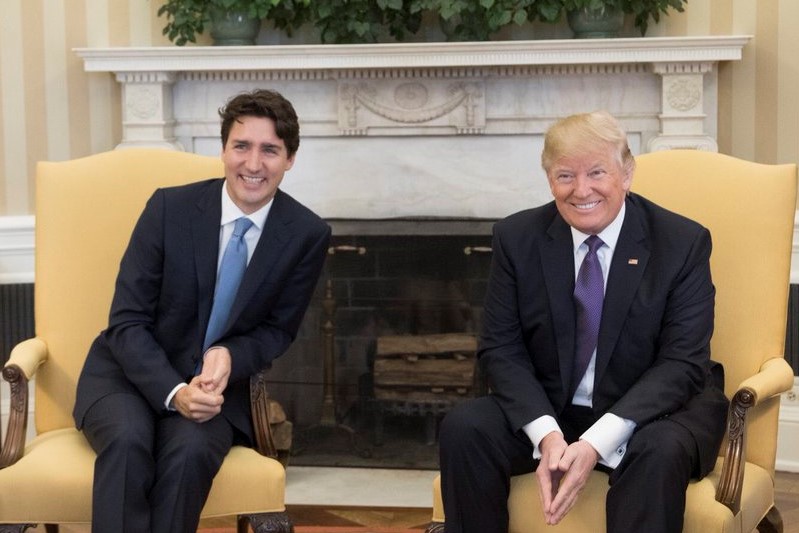
Justin Trudeau meets with President Donald Trump at the White House, 13 February, 2017.
Photo from the Office of the President of the United States via Wikimedia Commons.
Many in the media are saying, and I agree, that Justin Trudeau’s agenda for the next couple of years is about 99.9% domestic and focused, mainly, gaining seats in on Québec and holding on, at least, in Atlantic Canada and in urban and suburban Ontario and British Columbia. The overarching aim ~ the ONLY aim ~ of this government is to be re-elected with a majority.
As I mentioned a week or so ago, Donald J Trump is about to rain all over Justin Trudeau’s parade.
As Murray Brewster reports, for CBC News,
The Liberal government is facing renewed political pressure from the administration of U.S. President Donald Trump to increase defence spending to meet the benchmark established by NATO [… and …] Robert O’Brien, the new U.S. national security adviser, said it is an “urgent priority” to get allies across the board to set aside military budgets that are equal to two per cent of the individual country’s gross domestic product [… while …] Speaking with journalists at the Halifax International Security Forum on Saturday, O’Brien rattled off a list of the world’s flashpoints, including Iran and Venezuela, as well as traditional adversaries such as Russia and China [… saying …] “There are very serious threats to our freedom and our security [… and adding that …] Canada made a pledge at [the 2014 NATO Summit in] Wales to spend two per cent. We expect our friends and our colleagues to live up to their commitments, and Canada is an honourable country; it’s a great country.”
Note the choice of words by Mr O’Brien, who is “a lawyer and former U.S. State Department hostage negotiator.” He doesn’t say that President Trump and the USA “asks” Canada to keep its word (although the Harper government said that spending 2% of GDP on defence was an “aspirational goal,” rather than a firm commitment) nor did he say something like “the US hopes Canada will change its ways and spend more on defence.” He said that Donald Trump’s America “expects” Canada to live up to its “pledge.” As I mentioned before, when President Trump negotiates with friends and allies he usually has both fists in the air and his knuckles are often reinforced with unfair trade tariffs and the like. Right now he is, for example, asking Japan and South Korea to pay much, much more to support American forces in their countries because, in his mind, he (America) is providing a “service” which is all for the Asians and is not, in any way, in America’s self-interest and, therefore, he wants to be reimbursed. It’s a very Trumpian notion. I am sure he sees NATO and NORAD in very much the same light.
[…]
The issue that worries some analysts is that while Canada is, in the final analysis, protected by the US because it is in America’s best interests to protect us, NATO provides a useful counter-balance and, in effect, helps us to at least pretend to be a little less than just another American colony. And that, having the status of being little better than a US colony, is what Pierre Trudeau willed upon Canada in the late 1960s and early 1970s when he wanted to leave NATO, entirely and saddled Canada with his, juvenile, nonsensical, neo-isolationist “Foreign Policy For Canadians” white paper in 1970. Although Brian Mulroney wanted Canada to be independent – think standing up to President Reagan and Prime Minister Thatcher on South Africa – and Stephen Harper did, too, the cumulative impact of Trudeau-Chrétien-Trudeau for 30 of the last 50 years has been too much to change. When our political leaders don’t care about Canada being a leader amongst the nations and don’t, in fact, even care about Canada being a truly sovereign state then we will sink, inevitably, into the status of an American colony.
November 27, 2019
The “Gentrification” debate
In Quillette, Coleman Hughes explains the furor over gentrification in many big American cities:
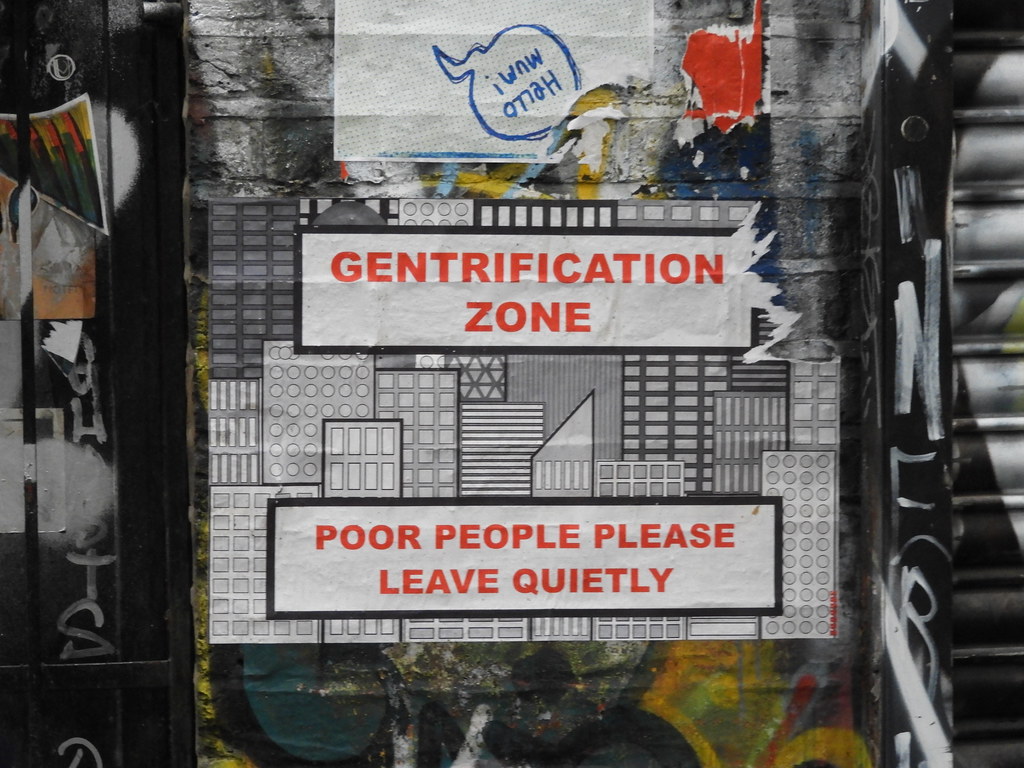
“Shoreditch Graffiti” by Kit-Kat is licensed under CC BY-NC-SA 2.0


The word “gentrification” was coined in 1964 to describe the influx of wealthy newcomers into low-income inner-city neighborhoods, resulting in rising property values, changes in neighborhood culture, and displacement of original residents. Though gentrification predates the modern era, it has only become the target of criticism in recent decades, as cities like Washington, D.C., Atlanta, and Boston have witnessed rapid transformations. Opponents of gentrification have ranged from residents directly affected by it to wealthy college students directly responsible for it, as well as prominent Democrats such as Bernie Sanders, Cory Booker, and Alexandria Ocasio-Cortez.
Critics of gentrification give two main reasons for their opposition: (1) wealthy newcomers drive up monthly rents, thereby displacing original residents; and (2) rapid change to neighborhood culture represents an injustice to original residents. Both critiques are magnified by the presumed skin color of the gentrifiers and the gentrified, who tend to be white and black or Hispanic, respectively.
Though such critiques may seem reasonable at first glance, neither of them survive scrutiny. Not only is gentrification harmless, it’s actually beneficial. Indeed, for reasons I will lay out, it’s exactly the kind of thing that progressives should support.
Let’s begin with the charge that gentrification displaces original residents. Two economists used data from the 2000 U.S. Census and the 2010-2014 American Community Survey to track individual outcomes for all residents of “gentrifiable” — or low-income inner-city — neighborhoods in America’s one hundred largest metropolitan areas. The largest study of its kind, it divided residents of gentrifiable neighborhoods into two categories based on educational attainment. Their findings refute the displacement narrative conclusively.
[…]
On the whole, progressives ought to love gentrification. It makes black inner-city homeowners wealthier. Among less-educated homeowners — who are majority non-white and comprise over a quarter of the total population in gentrifiable neighborhoods — those who remained in gentrified neighborhoods saw a $15,000 increase in the value of their homes due to gentrification. Among more-educated homeowners — who are also majority non-white — those who remained saw a $20,000 increase in property value.
What’s more, gentrification breaks up concentrated poverty and reduces residential segregation. Progressives have frequently observed that poor blacks are more likely to live in concentrated poverty than poor whites. As a result, they lose out on the advantages that come with living in a mixed-income neighborhood. Gentrification helps solve this problem. Moreover, progressives often observe that residential segregation remains pervasive half a century after the 1968 Fair Housing Act. Gentrification helps solve that problem too.
The Deep State versus the President
David P. Goldman reviews a new book by Andrew McCarthy on the ongoing conflict between the elected President of the United States and the permanent bureaucracy:

Donald Trump addresses a rally in Nashville, TN in March 2017.
Photo released by the Office of the President of the United States via Wikimedia Commons.
America’s Central Intelligence Agency in concert with foreign intelligence services manufactured the myth of Donald Trump’s alleged collusion with Russia, argues Andrew McCarthy, a distinguished federal prosecutor turned public intellectual.
A contributor to Fox News and a prolific writer for The National Review and other conservative media, McCarthy well knows how to build a case and argue it before a jury. His latest book Ball of Collusion should be read carefully by everyone with an interest in American politics. It is exhaustively documented and brilliantly argued, and brings a wealth of evidence to bear on behalf of his thesis that an insular, self-perpetuating Establishment conspired to sandbag an outsider who threatened its perspectives and perquisites.
From my vantage point as an American, the constitutional issue is paramount: The American people elected Donald Trump, and it is horrifying to consider the possibility that a cabal of unelected civil servants supported by the mainstream media might nullify a presidential election. That is why I support the president unequivocally and without hesitation against his detractors.
But this sordid business has deep implications for America’s allies as well as her rivals. Trump is not a popular president overseas, except in Poland, Hungary, and Israel. In the eyes of polite opinion, McCarthy writes, “Donald Trump was anathema: a know-nothing narcissist – as uncouth as Queens – riding a populist-nationalist wave of fellow yahoos that threatened their tidy, multilateral post-World War II order.” China (and not only China) views Trump as a bully who presses American advantage at the risk of disruption to the global economy.
Donald Trump has one quality for which the rest of the world should be grateful: He really does not care how China, Russia, or any other country manages its affairs. By “America First,” he simply means that he cares about what happens in America, and is incurious about what happens outside America unless it affects his country directly. That stands in sharp contrast to view of all the wings of America’s political Establishment – progressive, “realist” and neoconservative – who believe that America should bring about the millenarian End of History by bringing democracy to Iraq and Afghanistan, by expanding NATO into a giant social-engineering project, by pressing China to transform itself into a Western-style democracy, and so forth.
McCarthy reports in persuasive detail how the spooks set up the president. There is more to be said, though, about why they did it. I will summarize McCarthy’s findings, and afterward discuss the motivation.
November 24, 2019
Next stage in religious observance for those participating in the “Great Environmental Awakening”
Mark Steyn discusses the obvious next step for those newly converted to the Environmentalist religion:
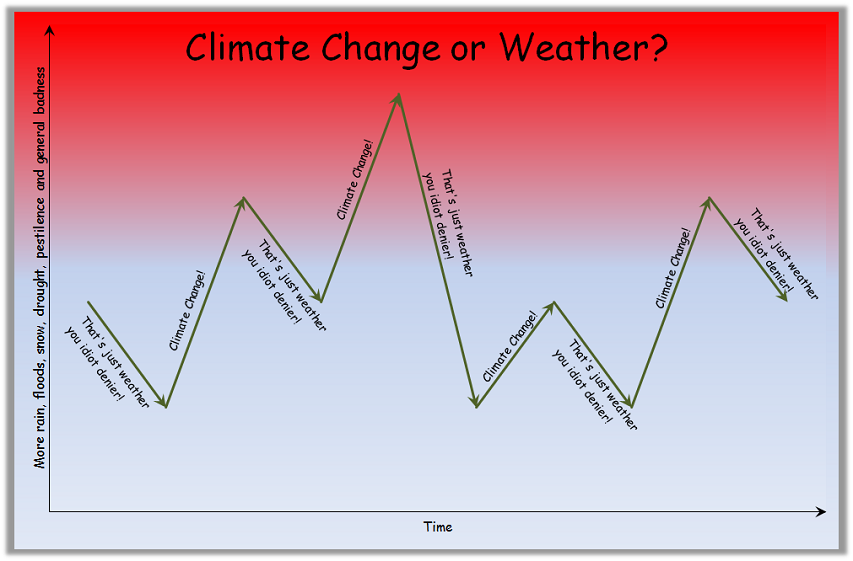
To quote a line from America Alone: “The future belongs to those who show up.” And, while eugenics is universally condemned as morally repugnant, self-eugenics is an idea we can all get behind. Step forward the “Indefinitely Wild” columnist of Outside magazine, Wes Siler:
I Got a Vasectomy Because of Climate Change
Getting one was, by far, the most powerful personal action I could take for our planetMr Siler claims to be 38 years old, notwithstanding the prose style of an overwrought pre-pubescent. And he cannot stand idly by procreating while the planet burns. Greater love hath no man than to lay down his sperm for the remnants of Malibu […]
In fact, “the absolute biggest difference” you could make would be to kill yourself right now — rather than merely tossing your unborn children into the infernos of California. Alas, the self-extinction movement has not yet reached that stage of despair, although we should certainly encourage them to follow the necessary logic of their epocalyptic torments. For the moment (and, again, as I wrote in America Alone) contemporary progressivism has “adopted a twenty-first-century variation on the strategy of the Shakers, who were forbidden from reproducing and thus could increase their numbers only by conversion”.
As you might have noticed, there aren’t a lot of Shakers around today. Will there be a lot of anguished environmentalists around once every Wes Siler reader has had his scrotum anesthetized?
No. But at least they’ll have saved the planet, right?
Doubtful. Mr Siler notes that every little baby Siler comes with a price tag of 58 tons of carbon emissions per year. But that’s because he’s American. Mr and Mrs Siler could move to Somalia and have thirty kids for the carbon footprint of one Yank moppet. So why are the same people who lecture us that we only have twelve years to save the planet in favor of every Somali moving to Maine or Minnesota and acquiring a western-sized carbon payload?
QotD: The persistence of culture
Societies don’t work that way. Culture doesn’t work that way. In fact culture is so persistent, so stubborn, it leads people to think it’s genetic. (It’s not. A baby taken at birth to another culture will not behave as his culture of origin.) It changes, sure, through invasions and take overs, but so slowly that bits of older cultures and ideas stay embedded in the new culture. It has been noted that the communist rulers of Russia partook a good bit of the Tsarist regime, because the culture of the people was the same and that came through. (They just dialed up the atrocities and lowered the functionality because their ideology was dysfunctional. They blame their failure on Russia itself, but considering how communism does around the world, I’ll say to the extent countries survive it’s because of the underlying culture.)
Sarah Hoyt, “A Generation With No Past”, According to Hoyt, 2017-10-19.
November 23, 2019
QotD: Populism and democracy
I was not so precocious: it took me twenty more years to sort out what I might mean by the word “Tory.” But the view itself began in Hobbesian fear, that day, with my discovery that “the people” stink. They are mindless animals, and put some wrath in them, they will lose their bashfulness. And of course, not only in West Pakistan; for gradually one makes the further discovery that “the people are the people are the people” everywhere. They need to be tamed, cautioned, repressed, sometimes caged. My response to misty-eyed rhetoric for “democracy” is unfavourable. “Populism” is, in my sight, unambiguously evil — even when its cause be, for the moment, just. Given more time, and the inevitable failure to achieve immediate goals, the cause itself will turn rancid.
David Warren, “Crowds & powers”, Essays in Idleness, 2016-11-08.
November 22, 2019
To think we used to joke about environmentalism as a substitute religion…
… it’s long since stopped being a joke and become all but the state religion, as Barbara Kay notes on the tenth anniversary of “climategate”:
Rayne pointed out that a cursory perusal of the Environment Canada Adjusted and Homogenized Canadian Climate Data database would illustrate that the daily summer maximum temperatures in Toronto showed no upward trend whatsoever. She further noted that a database for the WMO-certified Pearson Airport site demonstrated there was “absolutely no temporal correlation” for extreme July or August maximum temperatures between 1938 (when the database was initiated) and 2012.
In fact, there was no source in Canada then — and still isn’t — from which CAP could have plucked that ludicrous figure. University of Guelph economics professor Ross McKitrick had at that time just created his invaluable site, yourenvironment.ca, which sets out a complete temporal record of officially recorded air and pollution levels everywhere in Canada. The data for the site is culled from provincial environment and natural resources ministries, or from Environment Canada. Over many decades, no matter where you look in Canada, the graph trends remain resolutely horizontal with tiny upward and downward spikes indicating extreme weather blips.
Every layperson who identifies as an alarmism skeptic has his or her own pivotal moment, and that idiotic “news” story in the Globe was mine. When reporters and editors act like deer in the headlights in the reception and dissemination of demonstrably impossible “information,” it’s clear evidence that they have been gripped by a socially contagious virus. These are the people who in the 19th century would have believed tulip bulb prices were never going to peak, even if every single family on the planet had enough tulip bulbs to fill a half-acre garden.
The late writer Michael Crichton, author of the best-selling 2004 techno-thriller, State of Alarm, was one of the first independent students of environmentalism to define environmentalism as a “religion,” and to observe that its principal characteristic was to cater to the state of alarm he believed is an inherent human need. Its dogmatists act as though they have been appointed Morals Police. And they do not take kindly to dissent.
Al Gore, whose 2006 documentary film An Inconvenient Truth was received with uncritical awe, (one of my friends, normally very brainy, described it as a “religious experience”) was later found by a UK court to contain “nine key scientific errors.” It was deemed rife with “serious scientific inaccuracies, political propaganda and sentimental mush” and the judge ruled that the “apocalyptic vision” presented made it not an impartial scientific analysis, but a “political film.” He continues to hector the world as though that never happened from the depths of a home whose electricity kilowatt hours exceed twenty times the national average.
In 2007, environmental guru David Suzuki stormed out of a Toronto radio station interview when the host suggested global warming was not yet a “totally settled issue.” The incident revealed the mindset of the enviro-ayatollahs. (We see its 16-year-old version in little Pied Piper leader of the Children’s Crusade Greta “how-dare-you” Thunberg.) Suzuki perceived the radio host as a blasphemer, unworthy of his rational rebuttal. Suzuki actually felt enviro-infidels should be literally suppressed, and even opined that politicians who aren’t on board with his views should go to prison. You’d think a guy that far down the rabbit hole would be minding his own enviro P’s and Q’s, but like Al Gore, his real estate portfolio is humongous and his carbon footprint immense.
QotD: Politicians, like scorpions, cannot change their nature
Don Boudreaux, “Dogs Bark!”, Café Hayek, 2017-11-02.
November 21, 2019
“Gosh I miss the good old days” … when the CIA and the FBI were the bad guys, according to all good progressives
Severian on the amazing change in popularity of the bad old US cloak-and-dagger set among Democrats, Democratic Socialists, Progressives, and other well-intentioned folks:

For anyone who grew up during the Cold War, reading the news these days is like your first time getting stoned. Everything’s fine, nothing’s happening, and then … what the hell? Wait wait wait … the cloak-and-dagger goons are the good guys now?
For the benefit of younger readers: Back when the USSR was a going concern, the Left spent a great deal of time excusing Commies’ behavior Scooby Doo-style — they would’ve gotten away with it, were it not for those meddling kids! The Reds’ hearts were in the right place, of course, but gosh darn it, the CIA insisted on interfering with spontaneous sovereign people’s movements, and that’s why the Marxist guerrillas invariably had to massacre all those peasants. It was pretty much an entrance exam for NGOs back in the days — if you couldn’t find a way to blame the excesses of, say, Kim Il Sung’s torturers on Ronald Reagan, you couldn’t get a job at Amnesty International.
Naturally, then, all correct-thinking people hated the CIA and their domestic Mini-Me, the FBI. Those two organizations used to show up at college job fairs, and a good way to meet easy girls was to drop in on the inevitable protests. Slap on a Che t-shirt (available at the campus bookstore, natch), do a Ricardo Montalban impression while saying “Sandinista,” and let the magic happen. Don’t forget to stop by the Emma Goldman clinic for some free rubbers on your way back to her dorm room!
Gosh I miss the good old days, but whatever, the point is, watching groovy antiques like Nancy, Bernie, and Hillary telling me to trust the black helicopter guys is like watching Bruce Jenner in drag — you’re embarrassed for him, and scared of his enablers. Listening to them screech about Russia like the most paranoid Reaganaut is so weird, I can’t even come up with an analogy. Yo, guys, THIS was your idea, wasn’t it? Just like it was you guys calling the FBI the American Gestapo all those years? Hello? COINTELPRO? Remember that? Hello? Is this thing even on?

There’s nothing “confusing” about Labour’s Brexit policy
As Brendan O’Neill explains, the Labour Party knows exactly what it wants as far as Brexit is concerned:

I wish people would stop saying Labour’s Brexit policy is confusing. It is actually incredibly straightforward. Labour will kill Brexit. It will block the enactment of the largest democratic vote in UK history and ensure that we do not leave the EU in any meaningful way. It could not be clearer: Labour will betray millions of its working-class voters, its own history of Euroscepticism, and the values of Jeremy Corbyn’s own hero Tony Benn, by subverting British democracy and keeping us in the EU against the people’s will.
Anyone who doubts this – or anyone who is still, inexplicably, confused about Labour Brexit’s policy – only needed to listen to Crobyn’s comments at the Confederation of British Industry (CBI) on Monday. Corbyn first assured the assembled capitalists that he is not anti-business. Then he assured them that if he were prime minister, no harm would come to their beloved neoliberal institution, the European Union. Corbyn essentially promised the gathered bosses that he would override the stupid plebs’ democratic wishes and keep Britain entangled in the EU.
He said Labour’s policy is to get a good Brexit deal with the EU and then put it to the people in a confirmatory vote – otherwise known as a second referendum. This referendum would, in his words, be a choice between the “sensible deal” struck by Labour and fully remaining in the EU. That “sensible deal”, by the way, would include “a customs union, close Single Market relationship, and guarantees of rights, standards and protections”. So we’d have a choice between remaining and … remaining. A customs union, Single Market links, and EU-guaranteed rights and standards – that is, immovable EU regulations – do not not add up to Leave. By any stretch of the imagination. With complete contempt for the democratic will, and the basic principle of democratic choice, a Labour government would say to us: “You can stay in the EU or you can stay in the EU. It’s your choice.”
This is not confusing. Labour would pursue a backroom coup against Brexit. It would not only renege on the democratic vote to leave – it would then remove the option of leaving entirely from the ballot paper in a second referendum. It would deprive the British people of the thing that the largest number of us in the democratic history of this country called for: a break from the EU. Labour MPs, activists and bureaucrats would engage in a bloodless coup against the people’s will.
November 20, 2019
“Europe is committing suicide. Or at least its leaders have decided to commit suicide.”
Barbara Kay on the works of Douglas Murray, a “clubbable conservative” (I’m so far out of the loop, I’m not sure if this reference is British (he’s welcome in our exclusive club) or Canadian (like a baby harp seal) … although that may be a binary answer depending if you’re on the left or right of the traditional political spectrum):
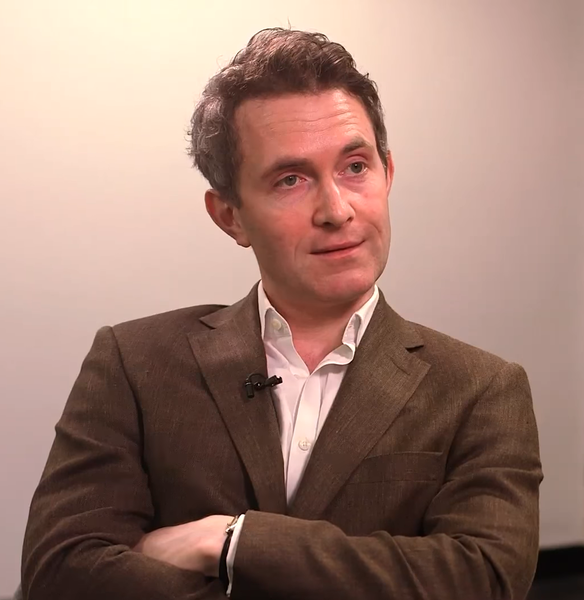
London-based public intellectual Douglas Murray is in Montreal this week to promote his new book. I was afforded the luxury of a rambling conversation over coffee with him about The Madness of Crowds: Gender, Race and Identity.
Douglas Murray being interviewed in 2018.
Photo by Rebel Wisdom via Wikimedia Commons.A “clubbable conservative,” as one reviewer accurately describes him, Murray hit his intellectual stride early, publishing his first book at 18, which attracted the attention and mentorship of polemical giants Christopher Hitchens and Roger Scruton. Quite different in personality from Jordan Peterson (less intensity, more suavity), he’s equally erudite and similarly crowd-pleasing (they’ve done joint appearances in the U.K., attracting massive audiences).
Murray shot to international celebrity with his powerful, if depressing 2017 book, The Strange Death of Europe, which opens with the words, “Europe is committing suicide. Or at least its leaders have decided to commit suicide.” Joining frontline reports from unpleasant way stations in the 2015 migrant crisis to insightful analysis of the West’s present malaise, Murray painted a gloomy picture of continental passivity in the face of momentous cultural change.
In The Madness of Crowds, also inspired by the West’s loss of a “grand narrative,” Murray applies his formidable exegetical skills to the proliferation of identity politics “tripwires” that corrode civic life and wreak havoc with individual lives.
Murray writes: “The interpretation of the world through the lens of ‘social justice,’ ‘identity group politics’ and ‘intersectionalism’ is probably the most audacious and comprehensive effort since the Cold War at creating a new ideology.” Christianity has been spurned, but the religious impulse is inherent and abhors a vacuum. The “religion” of social justice, Murray observes, poured itself into the handy campus vessel of Marxism with remarkable speed.
One of the hallmarks of Marxism – not a bug, but a feature – is its ruthlessness. I was particularly struck by Murray’s quite poignant chapter, “On Forgiveness.” Normal religions offer redemption to sinners. But there is no forgiveness or statute of limitations for thoughtcrimes in the religion of social justice. A mural of Rudyard Kipling’s “If” – voted Britain’s favourite poem – was painted over at the University of Manchester in retroactive punishment for Kipling’s now politically incorrect views on empire. The past, Murray says, is “hostage — like everything else — to any archeologist with a vendetta.”
November 19, 2019
No matter who you vote for the (permanent) government always gets in
Arthur Chrenkoff on the differences between the theoretical role of civil servants and what they actually do:
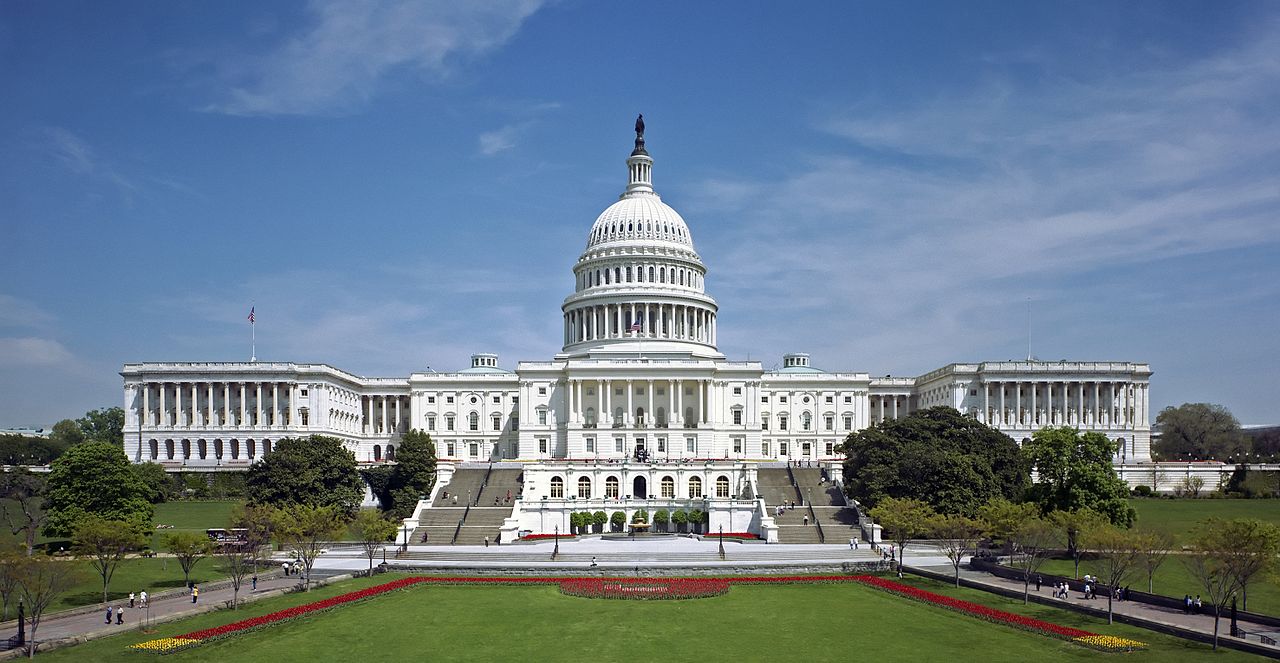
The western front of the United States Capitol. The Neoclassical style building is located in Washington, D.C., on top of Capitol Hill at the east end of the National Mall. The Capitol was designated a National Historic Landmark in 1960.
Photo via Wikimedia Commons.
Public servants consider themselves more intelligent and expert in their areas of competence than politicians. In many cases they are right. This only adds to the frustration. Because it’s not the job of public servants to make policy but to give advice to elected officials and to implement their decisions. And it certainly is not their job, if elected officials choose not to accept and act on that advice, to sabotage their efforts or even try to engineer the downfall of their political masters.
If you are a public servants who disagrees with the direction the politicians are taking, you have a simple, binary choice: you can clench your teeth, stay in your job and implement the politicians’ will or you can resign – at which stage you have every right as a concerned citizen to publicly campaign against people and policies you disagree with. There are more legitimate avenues of dissent and opposition outside than inside the system.
The ideal of the public service is a completely apolitical and impartial workforce, which faithfully assists government of the day in implementing its agenda, whatever that agenda might be. The reality is that while many bureaucrats are able to separate their personal beliefs from their professional duty, some can’t and won’t. For the reasons that are both obvious and unnecessary to go into detail here, public sector attracts those on the left, the way private sector attracts those on the right. Thus, left wing governments rarely encounter the problem of bureaucratic dissent, unless they really act out of the traditional left-wing box. The right wing governments, by contrast, face at best dutiful but unenthusiastic and sullen cooperation. There are no vast and organised conspiracies; this is a systemic phenomenon where organisations are required to do things that go against the conventional institutional wisdom and against the individual beliefs of the majority of members who shape the informal internal culture. This is the Shallow State. Bureaucracy will always cheer on the expansion of its numbers and powers and shriek at the prospect of shrinking the state. It will embrace and run with the policies it approves and stumble with the policies it doesn’t.
Forgetting the rank and file of the public service, which is unmovable and unchangeable, the reason why new governments enjoy the power of key appointments, including diplomatic ones, is not simply the patronage of rewarding supporters and the faithful but more importantly ensuring that the key administrative positions in bureaucracy are occupied by people who share their vision and can therefore be counted on to enthusiastically pursue the government’s agenda within the particular organisation. This, of course, only kicks the basic problem down the line, in that the top government appointees then have to struggle with the “permanent” employees on the levels below. The lower ranks might still succeed in frustrating their superiors, or worse, in “capturing” the political appointees by converting them to the institutional consensus. But for the government, having its own people in top positions is better than having no support at all. In an ideal world, of course, none of this would be necessary and happening because the impartial public service would be working well with whoever is in power. This is not an ideal world; certainly not for right wing governments. The Shallow State is always the reality. The Deep State is nothing more and nothing less than the Shallow State going well beyond the usual sullen uncooperativeness and taking a particularly strong stance against the government they disagree with. It’s a difference between passive resistance and active resistance.
It is not the job of bureaucracy to resist the government. Hence the current vogue for insubordination and sabotage is necessitating a rather radical redefinition of public service. Recently, we seem to have finally crossed the threshold from years of obfuscation (“The Deep State is a right wing conspiracy theory”) to acknowledging the reality (“The Deep State are patriots trying to protect America and the American people from the president”). But for all the talk about the supposed collusion, treason, crimes and corruption of the Trump administration, which could thus justify the resistance, the only thing that the endless agitation and investigation has succeeded in showing over the past three years is policy differences. Quite simply, the public service is vehemently opposed to the president’s views on a whole range of matters, and they are outraged that he has not followed their conventional wisdom.
QotD: [Trump | Obama | Bush | Clinton] Derangement Syndrome
Arthur Chrenkoff, “Denying the sky is blue because Orange Man Bad”, The Daily Chrenk, 2019-10-18.
November 18, 2019
QotD: H.L. Mencken on “moral crusades”
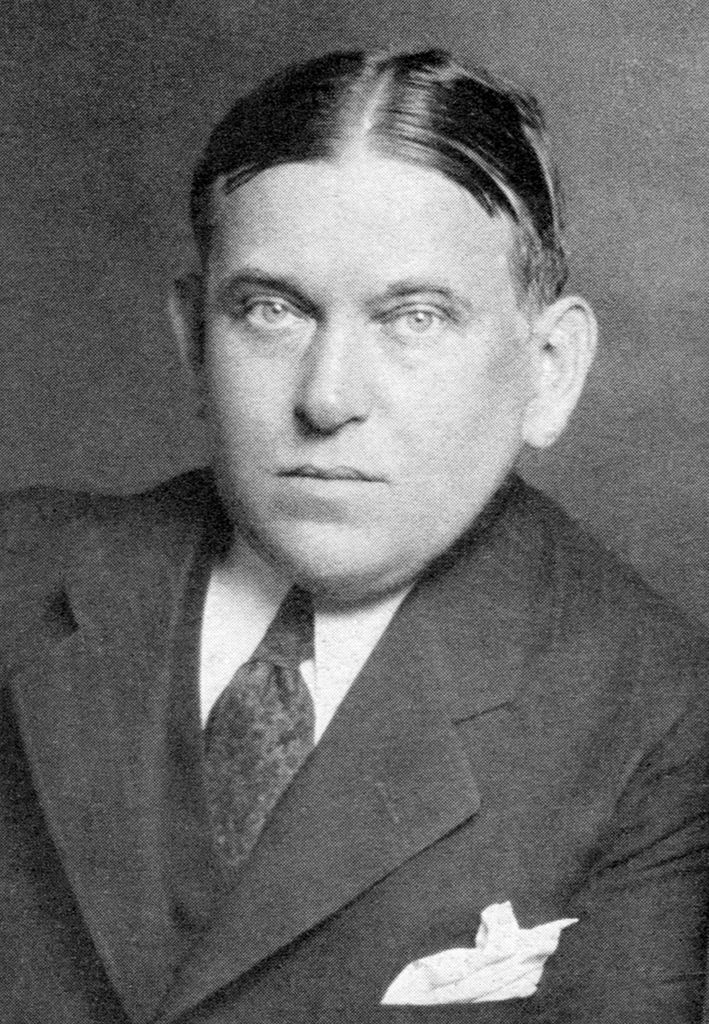
H.L. Mencken in 1928.
Photo by Ben Pinchot for Theatre Magazine, August 1928.
The loud, preposterous moral crusades that so endlessly rock the republic – against the rum demon, against Sunday baseball, against Sunday moving-pictures, against dancing, against fornication, against the cigarette, against all things sinful and charming – these astounding Methodist jehads offer fat clinical material to the student of mobocracy. In the long run, nearly all of them must succeed, for the mob is eternally virtuous, and the only thing necessary to get it in favor of some new and super-oppressive law is to convince it that that law will be distasteful to the minority that it envies and hates.H.L. Mencken, “Moral Indignation”, Damn! A book of calumny, 1918.