Quotulatiousness

September 27, 2020

QotD: The persuasive power of the newspapers

Filed under: Britain, Media, Politics, Quotations — Tags: , , , — Nicholas @ 01:00

It is a standard part of the mythology that newspapers tell their readers what to believe — and the readers believe them. This is why the left keeps shrieking about the barons controlling the press, it could only be that poisoning of the minds of the proletariat which keeps said left from sweeping all before it in politics. The actual study — you know, science — of how this works is that newspapers follow the prejudices of their readers. The Sun is not socially conservative and rightish in its views because Rupert Murdoch is so but because a large portion of the British working class is so.

Or, as we might put it, the reason the left doesn’t sweep the board with the votes of the proletariat is because large numbers of the proletariat think the left either don’t represent them, or are aware that the left are nuts.

Tim Worstall, “This Will Be An Interesting Test – Geordie Greig To Daily Mail Editor”, Continental Telegraph, 2018-06-08.

September 26, 2020

“… debate is an imperialist capitalist white supremacist cis heteropatriarchal technique that transforms a potential exchange of knowledge into a tool of exclusion & oppression”

Filed under: Media, Politics, USA — Tags: , , , , , — Nicholas @ 03:00

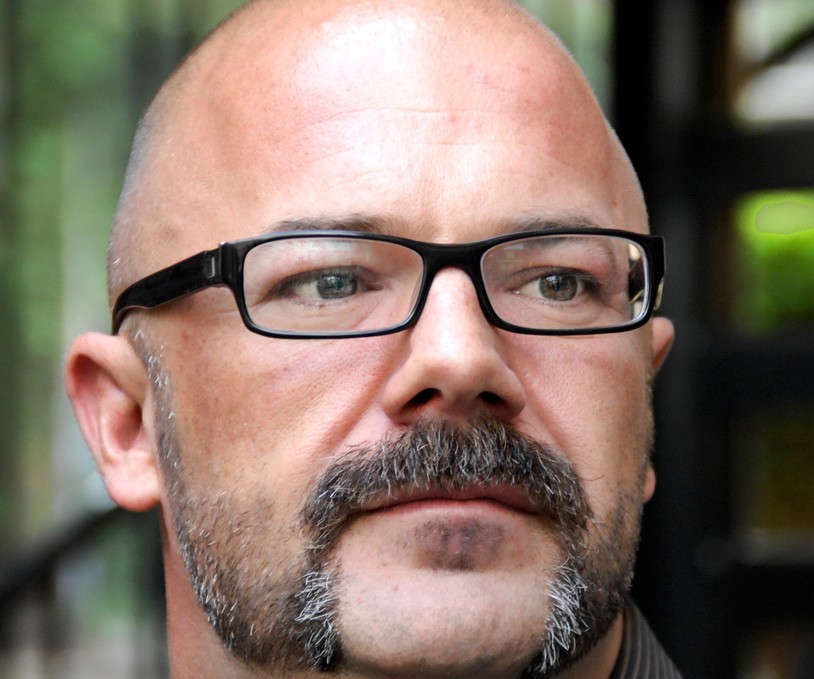
Andrew Sullivan‘s latest look at the ultrawoke:

If you’ve ever wondered why critical theorists and their popularizers never seem to actually expose themselves to direct criticism, this quote might help:

    I get regular invites to debate on various platforms. I always say no. Because debate is an imperialist capitalist white supremacist cis heteropatriarchal technique that transforms a potential exchange of knowledge into a tool of exclusion & oppression.

And also perhaps because debate is one of the most effective tools in rooting out ideological bullshit. Speaking of which, here’s an interview with Judith Butler, the patron saint of wokeness, in which she can actually say, with a straight face: “I am not aware that terf is used as a slur.” “Terf” is short for “Trans-Exclusionary Radical Feminist.” It’s yelled routinely at any dissenter from critical queer and gender theory. Of course it’s used as a slur.

Meanwhile, the 1619 Project has begun finally to implode. Its core argument – that America’s true founding was in 1619 not 1776, because America is in its DNA a slavocracy built on “white supremacy” and not a democracy rooted in the unrealized principle of human equality — has been withdrawn by the editor. Here’s the best summary of the rank dishonesty of the entire thing, from the preternaturally reasonable Conor Friedersdorf. He attempted to engage Nikole Hannah-Jones in good faith, a concept she simply doesn’t comprehend.

I think it’s clear by now that a completely defensible — even important — airing of new scholarship about the evil of slavery, and its profound impact on America, became hijacked at the NYT by the ideology that insists that the United States is inherently white supremacist, that this explains everything about the country, that this has never changed, that no white people were involved in perfecting the union, and that liberal democracy is a front for racism and should be dismantled. Given the extremist politics and unethical behavior of Nikole Hannah-Jones, this is unsurprising. But that this confused, half-baked rant won a Pulitzer and is being used to indoctrinate school kids in critical race theory is a staggering indictment of how corrupted by left-racism American elite journalism now is. In my view, the Pulitzer Board needs to rescind its prize. Fat chance, of course.

But there is hope. There are still reporters at the NYT interested in the truth about woke culture and politics. Nellie Bowles’ dispatch from Portland is a must-read. It’s a glimpse into the totalitarian impulses behind so many on the far left. Chilling.

September 24, 2020

I thought we were supposed to speak well of the (politically) dead

Filed under: Books, Britain, Government, Media, Politics — Tags: , , — Nicholas @ 03:00

In The Critic, Nigel Jones examines the soon-to-be-published “political tittle-tattle” of the wife of an MP and junior cabinet minister during David “Dave” Cameron’s premiership:

For anyone who has been holidaying under a rock for the past fortnight and may have missed the furore, I should explain that Lady Swire, daughter of Mrs Thatcher’s former Defence Secretary Sir John Nott, is the wife of ex-Tory MP Sir Hugo Swire, an Old Etonian chum of David Cameron, who somehow failed to be promoted beyond the ranks of junior ministers during his pal’s Premiership, but remained a close confidante and boon holiday companion to the PM. Lady Swire herself is half-Slovenian, and though brought up in the bosom of the Tory establishment, may not be entirely attuned to the evasions, hypocrisy and double standards that make up British political life, which makes her book all the more enjoyable.

Throughout Dave’s inglorious time in office, Lady Swire kept a secret diary detailing intimacies of conversation, banter and badinage, and revealing insights that give – shall we say – a not wholly flattering picture of the ruling Tory clique at play during their most unguarded moments. The bad behaviour, petty jealousies and embarrassing remarks of Dave, George, Boris and Michael and their wives are set down in all their toe-curling cringeworthiness.

The diaries are to be published next week but have been serialised in The Times and reviewed and widely commented on in the rest of the media. The two main targets – the duopoly of Cameron and Osborne – have already expressed their displeasure at the revelations. But all the tut-tutting disapproval of Lady Swire’s profitable indiscretions misses the main point: there is nothing that the British public relishes and enjoys more than an exposé of their leaders with their dignity gone and their metaphorical trousers down.

Moreover, gossip and tittle tattle as set down in diaries often tells us more about the true nature of politics and the motivations and personalities of politicians than a thousand self-serving pompous political memoirs or dull works of dry political analysis. What we really want is gossip – the gamier the better – and all the inconvenient truths our rulers rather we didn’t know.

Very often what we learn from particular epochs of history are the telling anecdotes and juicy titbits revealed by diarists rather than the respectability that the statesmen themselves wish to present and be remembered for. Our picture of the Restoration of the monarchy in 1660, for example, and the very merry court of Charles II, along with the apocalyptic disasters of fire and plague that followed comes largely from the indiscreet journals of Samuel Pepys, Daniel Defoe, and John Evelyn.

September 23, 2020

Federal minister admits the Libranos’ plan is a shakedown to “get money from web giants”

Filed under: Cancon, Government, Media, Politics, Technology — Tags: , , , , — Nicholas @ 03:00

Michael Geist on a rare moment of honesty from Canadian Heritage Minister Steven Guilbeault on the federal government’s atrocity of an internet regulation plan:

Canadian Heritage Minister Steven Guilbeault, 3 February 2020.
Screencapture from CPAC video.

As Canadian Heritage Minister Steven Guilbeault prepares an Internet regulation plan that features the prospect of licences for linking, undermining net neutrality, and trade sanctions, he has typically argued that “it’s about fairness”, suggesting that foreign companies unfairly benefit from the Canadian market at the expense of domestic companies. Yet when Guilbeault appeared at a production sector town hall last week, he was far more candid. Guilbeault told the sector that in a minority government situation, his department had to choose between a massive bill changing “everything under the sun” or to slice it up into smaller pieces. Having chosen the piecemeal approach, Guilbeault pointed to his top priority: get money from the foreign Internet companies (his exact words at 47:58 were “the most pressing thing we needed to do was to get oxygen into the system, which is money. And go and get that money where that money is. Which is web giants.”)

In certain respects, the acknowledgement that this amounts to little more than a shakedown makes sense. CRTC Chair Ian Scott has said that Netflix is now probably the largest contributor to film and television production in Canada and the sector enjoyed record production numbers pre-COVID-19, so the data simply does not support claims that the streamers are hurting the industry. As for the news sector, the Minister has failed to deliver millions in promised tax credits and seemingly now wants an alternative that involves creating a licensing regime for linking to content.

Yet if the goal is simply a matter of wanting more money from Internet companies that can be used to support Canadian cultural policies, it is not clear why this is a matter for the Heritage Minister. Everyone wants more money from the Internet companies and countries around the world have a credible argument that the huge global Internet revenues should be more equitably apportioned among them. In other words, the way to “get money from web giants” is for Finance Minister Chrystia Freeland to tax them on their revenues. Those tax revenues would go into general tax revenues and can be spent in an transparent manner without the need for specialized subsidy programs. This isn’t easy. The U.S. unsurprisingly objects to a potential reduction in its tax revenues, which means that Canada must find allies with other countries in seeking global solutions on tax. Further, Guilbeault candidly recently told a publisher town hall that changes to the tax code is far more difficult than direct program spending.

The problem with Guilbeault’s preference for direct program spending subsidized by Internet companies is that it raises a host of complications and negative effects. For example, mandated Canadian content spending for companies such as Netflix could require the companies to pay into a fund that supports Canadian content production. However, the current rules make it challenging for those same companies to access those funds for their own productions. That leads to either a trade challenge (and the possibility of tariffs against key Canadian sectors such as dairy and steel) for being forced to pay into a system that is inaccessible to foreign providers or a reform to the system that would open things up to foreign providers and in the process undermine the competitiveness of domestic producers and broadcasters who are more reliant on tax credits and funding programs.

QotD: Don’t blame the Boomers for the “Summer of Love” … most of ’em were too young to participate

I’ve written a lot here about how the most dangerous types in peacetime are the ones who juuuuust missed participating in some vast social upheaval. The Nazis are an obvious example. The Nazi-est Nazis of them all — Himmler, Heydrich, Eichmann, etc. — were old enough to have seen and understood the great national cataclysm that was World War I, but weren’t quite old enough to participate in it directly. Thus, when their turn came, they had to go double-or-nothing to prove to their older kin and classmates that they had what it takes. In America, guys like Teddy Roosevelt don’t make much sense until you realize that they grew up hearing their fathers and older brothers reminisce about the Civil War. And so on.

Now, I’m all for bashing the goddamn Boomers, but let’s be fair (since it matters for historical analysis). There’s a common misconception about the Baby Boom. Here, see if you can spot it:

Did you see it? Look closer, and you’ll see that while 1947(-ish) appears to be the peak year in terms of total births, the vast majority of what we call “Boomers” were born after 1950. Let’s do some simple math. The very oldest Boomers were born in 1946. The Summer of Love was 1967. Even if we assume the Summer of Love came out of nowhere — which is impossible, of course, any movement that large had antecedents going back years, probably decades, but let’s assume — that means that any “Boomers” participating were, at most, barely 22 years old. They were just barely 24 when Woodstock came around. Granted that the youngest are the dumbest, and thus can have outsize influence, they still can’t have been largely, let alone solely, responsible for the idiocy of the hippies.

That’s all on the older crowd, the so-called “Silent Generation” — the ones who were old enough to be aware of World War II, but unable to participate directly.

It’s easy to verify. The Port Huron Statement, the founding document of the New Left, was penned by coddled college kids in 1962 — meaning, by kids born, at latest, in about 1942 (its principal author, Tom Hayden, was born in 1939). Here are the Chicago Seven and their dates of birth: Abbie Hoffman (1936), Jerry Rubin (1938), David Dellinger (1915!), Hayden, Rennie Davis (1941),John Froines (1939), and Lee Weiner (1939).

Hoffman, especially, bears scrutiny. Though he’s best remembered as a Yippie — that is, the founder of an ostentatiously youth-oriented movement — he was 31 at its founding. Don’t trust anyone over thirty, right?

1936 to 1946 is only a decade, but it’s crucial. A kid born in 1936 would have vivid memories of World War II and its immediate aftermath — fathers, uncles, and older brothers (and, in more than a few cases, aunts and older sisters) coming home from the service. A kid born in 1946 would have a completely different experience — ask any combat veteran about the first year or two back in the world, versus being home for a decade. Those guys — the kids who saw firsthand the angry young strangers they were supposed to call “Dad” — were the ones who did the real damage in The Sixties(TM), just as it was the almost-but-not-quite frontsoldaten who did the real damage in the Third Reich.

With me? Now hang on to your hats, because here’s where it gets pretty meta: It was the “Silent Generation,” not the Boomers, who did the real damage in The Sixties(TM). That is, the guys who juuuust missed the giant social upheaval that was World War II. The Boomers have done all the damage since The Sixties(TM).

That — The Sixties(TM), which is why I’m using that obnoxious (TM) — is the great social upheaval they juuuust missed. [These people] aren’t old fossils from the flower power years, though many of those fossils are still alive and kicking (including four of the Chicago Seven: Hayden, Davis, Froines, and Weiner). Has anyone heard from Billy Ayers lately? How about Noam Chomsky (born 1928)? I’m sure they have plenty to say … but nobody cares.

It’s not retreads from The Sixties(TM) out there doing this stuff. It’s the people who wish they’d been around for the Summer of Love that are doing it. It’s the people who just know they would’ve ended the Vietnam War, if only they hadn’t been in junior high at the time. This is their Woodstock, not least because they only heard about the original when they arrived for freshman orientation in 1976.

Severian, “Talkin’ ’bout My Generation!”, Rotten Chestnuts, 2020-06-11.

September 22, 2020

QotD: City dwellers and the state

Filed under: Politics, Quotations, USA — Tags: , , , — Nicholas @ 01:00

If one wants to understand why city dwellers have a peculiarly statist politics, spend time in a big city subway system. For the people in the city, government services are essential for living. They depend on the subway, the trash collection and the police department. The city depends upon this organic relationship between the state and the citizens. That does not exist in the suburbs or the country. There’s a comfort that comes from the daily interaction with the state. Anyone who questions that relationship is suspect.

The Z Man, “Never Newark Nights”, The Z Blog, 2018-06-06.

September 21, 2020

Ruth Bader Ginsburg, RIP

Filed under: Law, Politics, USA — Tags: , — Nicholas @ 03:00

David Warren notes the passing of US Supreme Court Justice Ruth Bader Ginsburg at a particularly fraught moment in US political history:

US Supreme Court Justices Ruth Bader Ginsburg and Antonin Scalia.
Screencap from a report by CBS News.

The death of the prominent American jurisprude, Ruth Bader Ginsburg, will be this morning’s example. I noticed that a favoured rightwing blog said, “Breaking news. Try to show some respect for the dead.” This comes more easily to a human being, if he is at least superficially decent. Self-discipline may make it possible for others.

Mrs Ginsburg was toward the left side of the Supreme Court in Washington, in her rulings and often articulate dissents, but I loved her anyway. So did the late Antonin Scalia, who when he died inspired real grief to exponents of the other side. They were notorious buddies, Ginsburg and Scalia. They were more than willing to hear each other out; neither was a hothead. Both were deeply informed about Yankee law, and human law generally, unlike most judges. They could discuss its principles at a high level; and at a low, with a sense of humour. Their mutual respect set an example in their vicinity, claquers who included other Court members. They were both utterly worth having at their stations.

One wonders if those days are gone, for the foreseeable future, when some degree of civilization was possible in legal and political debate. When I look instead at electoral campaigns, in which knowing, malicious lies are repeated by both sides, and both are trying to raise the temperature (I won’t say “equally”), I see something larger than the current political issues. We cannot have public order if this continues; only tyranny can be imposed by one side. Mistakes are being made by “my side,” when we forget that daily life requires negotiation. Or rather it doesn’t, if one prefers civil war.

QotD: Prohibition and the Temperance movement

Filed under: History, Politics, Quotations, Religion, USA — Tags: , , , , — Nicholas @ 01:00

Prohibition was the culmination of nearly a century’s worth of propaganda, and repeated failed attempts to get such laws to work at the local and state level. Read J.C. Furnas’ The Life and Times of the Late Demon Rum for an overview of the pre-1919 Temperance/Prohibition movement.

… [T]he original Temperance movement started out with the very best of intentions, and was trying to deal with a real problem. In colonial and early-19th-century America, people (men, women and OH HORRORS even children!) drank enough that by modern standards we’d call them alcoholics. Modern Russians drink more, but if they were transported back to that time and place, they’d fit right on in. Part of it was because water was often not safe to drink (tea and coffee were often expensive and hard to get, while beer and other alcoholic drinks were made just about everywhere), part of it was snobbery (only really poor people drank water!) and part of it was because people back then believed that alcohol strengthened and warmed the body.

Two of the good side effects of the Temperance/Prohibition movement were the provision of safe, clean drinking water in American cities and towns, and the modern fruit-juice industry (as a lot of churches went hot-Prohibition, they got uneasy about serving wine at Communion, so they went to work and came up with non-alcoholic substitutes.) Welch’s Grape Juice was started by a pastor who wanted non-alcoholic “wine” for Communion, and caught on, real big.

Eric Oppen, posting to the Lois McMaster Bujold mailing list, 2020-06-18.

September 20, 2020

Andrew Sullivan on the politically deranging effects of social media addiction

Filed under: Media, Politics, Technology, USA — Tags: , , , , , — Nicholas @ 03:00

In his latest Weekly Dish installment, Andrew Sullivan decries the extreme polarization of the US electorate and points an accusing finger at social media for making things much worse:

An Electoral College victory for Trump, if he loses the popular vote again, would, in this new elite consensus, prove beyond doubt the centuries’ long grip of “white supremacy”. Some are already calling such a victory illegitimate, even though it would be completely constitutional, under the rules everyone has agreed to. The sickening street violence that the far left has downplayed, and permitted to run riot in major cities could be a mere taste of what is to come — along with ever-stronger white nationalist gangs instigating or responding in kind. (Trump’s toleration of this dangerous right-extremism in the past four years is as unforgivable as the left’s excuses for murderous violence.) But the upshot is the same: we will be lucky if the country doesn’t erupt in large-scale civil violence by the end of all this.

And the reason this dystopian scenario is so credible is not just the fault of these political actors. It’s ours too — thanks to the impact of social media. I think we’ve under-estimated just how deep the psychological damage has been in the Trump era — rewiring the minds of everyone, including your faithful correspondent, in ways that make democratic discourse harder and harder and harder to model. The new Netflix documentary, The Social Dilemma, is, for that reason, a true must-watch. It doesn’t say anything shockingly new, but it persuasively weaves together a whole bunch of points to reveal just how deeply and thoroughly fucked we are. Seriously, take a look.

The doc effectively shows how the information system necessary for democratic deliberation has, in effect, been jerry-rigged in the last decade to prevent any reasoning at all. It’s all about the feels, and the irrationality, and the moment, which is why Trump is so perfectly attuned to his time. And what’s smart about the documentary is that it shows no evil genius behind this unspooling, no sinister plot deliberately to destroy our system of government. One of the more basic motives in American life — making money — is all you now need, the documentary shows, to detonate American democracy at its foundation.

For Facebook and Google and Instagram and Twitter, the business goal quickly became maximizing and monetizing human attention via addictive dopamine hits. Attention, they meticulously found, is correlated with emotional intensity, outrage, shock and provocation. Give artificial intelligence this simple knowledge about what distracts and compels humans, let the algorithms do their work, and the profits snowball. The cumulative effect — and it’s always in the same incendiary direction — is mass detachment from reality, and immersion in tribal fever.

With each passing second online, news stories, graphic videos, incendiary quotes, and outrages demonstrate their stunning utility to advertisers as attention seizers, are endlessly tweaked and finessed by AI to be even more effective, and thereby prime our brains for more of the same. They literally restructure our minds. They pickle us in propaganda. They use sophisticated psychological models to trap, beguile, outrage, and prompt us to seek more of the same.

[…]

And online is increasingly where people live. My average screen time this past week was close to ten hours a day. Yes, a lot of that is work-related. But the idea that I have any real conscious life outside this virtual portal is delusional. And if you live in such a madhouse all the time, you will become mad. You don’t go down a rabbit-hole; your mind increasingly is the rabbit hole — rewired that way by algorithmic practice. And you cannot get out, unless you fight the algorithms to a draw, or manage to exert superhuman discipline and end social media use altogether.

But the thing about algorithms and artificial intelligence is that they don’t rest, they have no human flaws, they exploit every weakness we have, and have already taken over. This is not a future dystopia in which some kind of AI robot takes power and kills us all. It is a dystopia already here — burrowed into our minds, literally disabling the basic mental tools required for democracy to work at all.

If you watch video after video of excessive police force against suspects, for example, and your viewing habits are then reinforced by algorithms so you see no countervailing examples, your view about the prevalence of such excessive force will change, regardless of objective reality. A new study shows how this happens. Watching the videos, even more than reading text about them, raises the percentage of white liberals who believe the cops frequently or always use excessive force by around 20 percentage points. The actual data are irrelevant. The BLM movement this summer was less a racial reckoning, as we’re constantly lectured, than a moment of web-induced mass hysteria.

The Lost Cause Myth in the 21st Century

Filed under: History, Politics, USA — Tags: , , , , , — Nicholas @ 02:00

Atun-Shei Films
Published 23 Feb 2019

A former Gettysburg tour guide talks about how the American Civil War is remembered today.

Support Atun-Shei Films on Patreon ► https://www.patreon.com/atunsheifilms

#CivilWar #Confederacy #AmericanHistory

Watch our film ALIEN, BABY! free with Prime ► http://a.co/d/3QjqOWv
Reddit ► https://www.reddit.com/r/atunsheifilms
Twitter ► https://twitter.com/alienbabymovie
Instagram ► https://www.instagram.com/atunsheifilms
Merch ► https://atun-sheifilms.bandcamp.com

September 19, 2020

Andrew Heaton attempts to talk to people about politics

Filed under: Humour, Media, Politics, USA — Tags: , , — Nicholas @ 05:00

In his latest missive from deeply singed California, Andrew Heaton expresses some concerns about the American body politic in the late stages of utter emotional breakdown (that is, the last couple of months of the election):

I’m going to go out on a limb here and say that the political climate is going to “heat up.” Although the heat comes from a different fault line than you might think. The real division in America isn’t between conservatives and progressives. It’s between people who read stuff, and people who TYPE IN ALL CAPS ON TWITTER.

I’m pretty firmly in the “read stuff” camp. Which makes me poorly situated for our current period, as I am a quarter Vulcan on my father’s side, and it’s overwhelmingly in vogue to be emotionally incontinent. Emotionally incontinent people don’t care for us pseudo-Vulcans. Perhaps you can relate?

This is a normal conversation for me:

    Friend: Trump is an evil fascist meat goblin!

    Me: Yeah, I can’t stand that guy. I’m not a big Biden fan, but I definitely prefer him over Trump.

    Friend: But Trump is a racist lunatic!

    Me: Sure. I certainly don’t think he has an ideological core or respect for constitutional rule of law. I have serious misgivings about his leadership. Also he’s horrible on trade.

    Friend: HE’S LOCKING CHILDREN IN CAGES! THE WORLD IS ON FIRE!!! DON’T YOU SEE THAT TRUMP IS THE DEATH OF THIS AND ALL WORLDS!?!?

If you read the above conversation carefully, you might notice that I’m not actually disagreeing with my hysterical friend. In fact we’re broadly in agreement, at least on the 2020 election outcome. So why are they flipping out, like the electoral version of Kermit the Frog flailing his arms in a Muppets sketch?

Here’s why: in political conversations the People Who Read Stuff are interested in exchanging ideas and policies. The ALL CAPS ON TWITTER crowd wants to exchange feelings.

If your hysterical conservative friend is laying eggs about Antifa ushering in the Night of the Long Knives, or your progressive friend is freaking out about Trump ushering in The Night of the Long Knives, what you say or think is immaterial — they are looking for you to match their emotional state. If you don’t, it means you’re probably making a buck selling knives.

This is a problem in my social life. I have learned that my feelings are fickle and easy to manipulate, and so distrust them. I take pride in my Vulcan heritage. When confronted with a big, scary problem, I believe the best response is to get calm and thoughtful. In Vulcan culture we call this “acting like an adult.”

Unfortunately equanimity is not popular on this planet. It’s trendy to experience feelings so hard that neurochemicals seep out of your pores, the way alcoholics sweat vodka.

You can subscribe to the newsletter here.

QotD: Dictatorship of the Cancel Culture proletariat

Filed under: Cancon, Media, Politics, Quotations, Sports, USA — Tags: , , , , — Nicholas @ 01:00

This sort of thing is, to put it mildly, not good. There are at least three major problems with cancel culture. First, almost anyone could be cancelled, on the basis of the (claimed) standards prevalent on the modern “social justice” left. Secondly, cancellation tends in practice to be a non-random process targeted at political and ideological opponents, rather than a genuine attempt at a new moral standard. Finally, and most importantly, the declaration by wokesters that many conversations are now simply off-limits prevents the communication of important information that would make it possible for citizens better to judge the arguments of movements like Black Lives Matter.

While not the most important, the first of these points is the most relevant on a day-to-day basis. Without endorsing these behaviours, the plain fact is that the huge majority of people have probably at some point told an ethnic or regional joke, sent a pornographic or un-PC snap, had sex while intoxicated, used a slur tied to sexual orientation / race / gender online or in the lockerroom, worn a St Paddy’s Day or Cinco de Mayo outfit they would really prefer a mulligan on, or committed other Cardinal Sins against Wokeness. As a result of this, many young people are intently aware that Twitter and Facebook wars involving the unearthing of old content generally end with egg on the face of everyone involved. Caucasian NBA point guard Donte DeVincenzo was humiliated in late 2018 by the revelation that – at age 14 – he had described his hoops handle as “ballin’ on these nig*as like I’m Derrick Rose”. He ended up deleting his entire social-media presence. The point of monitoring this sort of thing, for the many people and organisations that do so, is not punishing the tiny minority of real racists and abusers out there so much as keeping normal citizens too terrified by the potential unearthing of past indiscretions to comment lustily on the issues of the day.

The fact that virtually anyone could in fact “legitimately” be cancelled leads into extreme partisan hypocrisy. While anyone who attended church as a lad might correctly suspect that the hard right is capable of similar behaviour, cancellers today are overwhelmingly concentrated on the “social justice” left – and they are, at least occasionally, reluctant to eat their own. This often results in remarkable and hilarious double standards. In February 2018, for example, liberal Virginia governor Ralph Northam – nicknamed “Coonman” – escaped any serious censure after he was revealed to have apparently appeared in a mid-1980s high-school yearbook photo wearing shoe-polish blackface.

To be fully fair to Northam, the same photo included a student dressed in full white robes as a Ku Klux Klansman, and CNN has noted that Northam has never actually said “whether he was wearing the Ku Klux Klan outfit or [the] blackface”. Oh, fair enough. At any rate, he serves as governor of Virginia today. Not to be outdone by any of his neighbors to the south, Canadian prime minister Justin Trudeau was revealed that same year to have worn black- and brown-face several times, and as late as 2001, once apparently painting his entire body to appear in costume as Aladdin at an Arabian Nights revue! He, too, remains solidly entrenched in office today.

Wilfred Reilly, “They can’t cancel all of us”, Spiked, 2020-06-17.

September 17, 2020

Book burning’s back on the menu, boys!

Filed under: Books, Britain, Politics — Tags: , , , , , , — Nicholas @ 05:00

Brendan O’Neill on the latest fad for the ultrawoke celebrities — book burning.

J.K. Rowling

So it turns out that Jedward, with their quiffed Aryan hair and strangely intense mannerisms, don’t only look like a couple of members of Hitler Youth who’ve been on a shopping spree at TK Maxx. They sound like it too. Yesterday, ever keen to jump on a bandwagon, even if it’s a bandwagon of misogynistic hate, the Shining twins of Irish pop suggested to their Twitter followers that they should burn JK Rowling’s next novel when it is published. “Does anyone need firewood this winter!”, they tweeted. “JK’s new book is perfect to burn next to a Romantic fire. Aww get all cozy and comfy can’t wait.”

Let’s leave to one side the industrial levels of gall it must require for two blokes who don’t know the difference between an exclamation mark and a question mark to have a pop at the most successful British author of all time. The more striking thing about Jedward’s tweet is that it suggests book-burning is back. Their tween-fascist cry for the burning of Rowling’s forthcoming novel was retweeted and liked thousands of times, by armies of so-called trans allies who now look upon Rowling as a real-life Voldemort: a despicable, evil figure whose works should be tossed on to raging bonfires as the woke mob yelps with delight.

The hatred for JK Rowling is out of control. It goes far beyond the everyday attempted cancellations and screeching Twittermob assaults on anyone who dares to deviate from the correct-think of the PC elites. The hatred for Rowling is far more raw, far more intense, far more irrational.

Her intellectual sin, her speechcrime, is of course that she believes in biological sex. She thinks there are differences between men and women. She thinks biological males should bugger off out of women’s changing rooms, sporting tournaments, prisons, rape-crisis centres, and so on. Many of us agree with her. And for this, she is frequently bombarded with rape threats and death threats. “Suck my cock!”, sexist pigs tweet at her. They invite her to die in a fire. They send her explicit pornography. This week #RIPJKRowling trended on Twitter. These people are insane. When your “activism” involves tirelessly insulting and sexually harassing a woman for having a thought that is different to your own, you need to have a serious word with yourself.

The deranged Rowling hate intensified this week after it was reported that her next Strike novel – the detective series she writes under the name Robert Galbraith – will involve a backstory about a man who dresses as a woman and then goes around murdering women. “Transphobia!”, the woke Twitterati predictably yelled. Not for the first time the sexist fury with Rowling for having the temerity to be a woman who thinks for herself was in large part inflamed by Pink News, the online gay magazine that has done more than most to depict women who are sceptical of certain aspects of transgenderism as “TERFs” – that is, witches, bitches, uppity broads who really ought to do what the editors at Pink News tell them to.

September 16, 2020

The Canadian echo chamber on American political issues

Filed under: Cancon, Media, Politics, USA, Weapons — Tags: , , , , , — Nicholas @ 05:00

Ben Woodfinden’s latest for The Dominion looks at the weird effects political passions in the United States have on political stances in Canada:

Restricted and prohibited weapons seized by Toronto police in a 2012 operation. None of the people from whom these weapons were taken was legally allowed to possess them.
Screen capture from a CTV News report.

Participatory media increasingly defines and shapes our discourse. It submerges us in a broader reality but only does so by filtering it into a digital reality that offers a distorted reflection rather than picture of the real world. This has been going on for at least a decade now, but the pandemic has accelerated this transformation of our discourse and politics. By locking us in our homes the pandemic forces us to view the world through a digital lens even more than we already did, and in a world where we’re all viewing everything through our screens that digital reality becomes closer and closer to our primary reality.

One of the specific, and most pernicious effects of this, as I lamented in The Critic is that it turns us all into online Americans participating in their politics through the digital medium, rendering us virtual participants and not just foreign observers. I won’t repeat myself too much, I’d recommend just reading the piece [link], but the online realm is American, and what digital politics does is make politics everywhere more American. We participate in it as a game and a form of entertainment. This bleeds back into our own politics.

Americanized Discourse

Gun politics is one particular political issue where Americanized discourse is most pronounced. It captures perfectly how Americanization plays out. Every time there is some sort of tragic shooting or discussion of gun violence in Canada the debates play out in depressingly predictable ways. Progressives and Liberals paint a picture in which Canada suffers from the kind of rampant gun violence and mass proliferation of firearms as in America. This is the framing used to justify often highly symbolic or ineffective new gun laws and restrictions that, while often not all that effective, make the Liberals and progressives seem like the party for gun control in the face of this rampant violence. But only if you pretend we live in America.

And it’s not just the Liberals and progressives who play this game. Listen to some of the more vocal advocates of “gun rights” in Canada and you’d think we have a second amendment in the Charter. One side wants to make it seem like Canadians are walking around with and easily able to acquire assault weapons, the other side wishes it were so! The reality of course lies somewhere in between. Gun possession is heavily regulated, but lawful citizens can still buy firearms if they want to, and there is no explicit right in the Charter that prevents the government from regulating and restricting firearms. Talking about gun “rights” in Canada is itself quite a foreign and imported concept. At the same time we don’t have an epidemic of gun violence, and while we have experienced some horrific mass shootings, like the recent Nova Scotia tragedy, gun violence in Canada pales in comparison to the United States.

But because both sides are essentially happy to help paint a phantasmic picture of gun violence and/or gun regulations in Canada, we end up with a surreal politics around guns. Sensible debates around guns are made harder by this because debates take place on top of a framing and narrative that draws explicitly on American political culture more than it does Canada’s. Both sides want to take on American roles and are happy to contribute to this framing.

Gun politics is just one example, and there are so many others. Our discourse is so often built around framings that make it seem as if the issues and political cleavages here are indistinguishable from American ones, but it only happens because we import American framing and narratives into our own discourse and then build are arguments around these phantasms. We, like many other countries around the world, are in the middle of a moment of racial reckoning, or whatever you want to call it, because of something that happened in Minneapolis, not in Canada.

Racism is a real thing in Canada, no honest person should deny this, because there is racism in absolutely every country and society. But in the wake of George Floyd’s killing we ended up having a conversation about racism that reflected the particular ways racism works in America.

Lockdown justification theories

In the most recent Libertarian Enterprise, Sean Gabb reports on a demonstration last month in London organized by Piers Corbyn which resulted in Corbyn being almost instantly fined £10,000 despite other, larger and more violent demonstrations not drawing any kind of judicial sanctions:

David Icke about to speak at Piers Corbyn’s 20 August anti-masking demonstration in Trafalgar Square.
Screencap from YouTube video – https://www.youtube.com/watch?v=DOZQ58uTWdw

The consensus at the demonstration appears to have been that the Coronavirus is some kind of fraud, and that the laws to stop its spread are really intended to carry us into a nightmarish New World Order tyranny. I disagree with this view. I believe instead that, looking back from one or two years, the Coronavirus Panic will be seen as a disaster for at least the British ruling class, and as somewhere between a blessing and nothing very bad for the majority of everyone else.

For the avoidance of doubt, I have no belief in the goodness of our ruling class. The Labour Party represents a new and hegemonic Establishment. The project of this Establishment is to bring about changes that are meant to be fatal to the traditional peoples of my country, and that will not be to the advantage of the groups they are supposed to raise up. Whether this project is evil or deluded is beside my present point, though it is probably something of both. There are two possible views of the Conservative Party. It may be worth supporting because, though willing to see it roll forward of its own momentum, the leaders do not want to hurry the project forward, but are mainly interested in personal enrichment. Or it may be a Potemkin opposition — gathering votes from the discontented, while self-consciously making sure those votes are wasted. Again, the exact truth is beside my present point. What does matter is that we go into every election less free and less at home in our country than at the previous election.

This being admitted, there is a loose connection between me and the speakers and attendees at Mr Corbyn’s demonstration. At the same time, there is a difference between cynicism and paranoia. As a cynic, I do not believe that everything untoward that happens is there to hurry the project of change. I do not believe that our ruling class is in charge of everything. I do not believe that it understands everything. Whatever its origin, the Coronavirus appears to have driven our various rulers into a genuine panic. Yes, Boris Johnson is a fool, and there is an army of the powerful who wanted an excuse to stop our final departure from the European Union. Yes, the Democrats were looking to upstage Donald Trump in time for the next American election. But this has not been a panic in just two countries. The Japanese cancelled their Olympic Games — losing them for the second time in eighty years. The Chinese brought four decades of economic growth to an end. The Indians and South Africans panicked. So did most of the Europeans. The panic was joined by ruling classes with no visible interest in putting the dreams of the Frankfurt School into practice.

Focussing on my own country, what ruling class institution has benefitted from the Coronavirus Panic? Look beyond the propaganda, and it is plain that the response of the National Health Service was a disgrace. Myriads of diagnoses and treatments were cancelled without good reason. We still have no dentistry. The public sector as a whole went on paid leave for six months. The schools closed and the teachers vanished — no great loss there, of course. Even if none goes bankrupt, dozens of universities will need to downsize — no loss there either. The police behaved throughout like fascist goons. Every institution set up or adapted to advance the project of change has emerged from the past six months revealed as broken and covered in ridicule. What sort of a planned crisis is it that ends in magnified cynicism and in paranoia that can fill Trafalgar Square on a Bank Holiday weekend? The general mood in this country is approaching what you see at the end of a lost war.

Or what associated commercial interests have benefitted? The politicised entertainment media is flat on its back. The commercial property sector is entering a melt-down. House prices in all the nice parts of London are going into a downward spiral. Public finances will be squeezed for years to come; and, given a choice between projects of change and a liveable dole, the electors are likely to make their wishes undeniable. Globalised patterns of trade have been disrupted, raising question marks over all the presiding global institutions. The last thing financial services needed was another big shock. As for the commercial beneficiaries, these are libertarian by default. For all that can be said against them, Jeff Bezos and Mark Zuckerberg have opened the media to anyone who knows how to use a computer keyboard. Their turn to corporate censorship has, at every step, been a response to outside pressure. Every one of these turns has been half-hearted and driven by a natural, if not always creditable, desire to continue growing richer. There is no particular benefit for the American and British ruling classes if Mr Bezos becomes a trillionaire and Richard Branson ceases to be a billionaire.

On a related note, Jay Currie points out that the media’s current laser-intense focus on reporting Wuhan Coronavirus cases allows the narrative to continue relatively undisturbed and which might be totally overthrown if they reported instead on deaths from the Chinese Batflu (H/T to David Warren for that useful epithet):

In the UK, France, Ontario and various other jurisdictions COVID case counts have risen at an alarming rate in the past few weeks. Unfortunately, mandatory masking and strict lockdowns seem to be the only tools governments feel they have in the face of case count surges.

It can be argued that the increasing case counts may be an artifact of more testing. Or a product of the sensitivity of the tests themselves; but the actual case numbers keep going up.

Our media, God bless them, at a national level seem to be entirely focused on case counts to the point where, in this CBC story on Ontario’s numbers, there is simply no mention of the “death count”.

Why could this be? Well, take a look at these two graphs from Ontario:

If you look at the top graph the sky is falling and masks, social distance, lockdowns, school closures and “stay at home” all make a lot of sense. If you look at the bottom graph, COVID is over.

In Montreal over this last weekend up to 100,000 people marched against mandatory masks. The mainstream media downplayed the turnout and suggested that there were all sorts of conspiracy theorists, Qanon believers, far right and Trump supporters marching. There probably were. But I suspect the vast majority of the marchers were responding to the disproportionate response of the Quebec government to graphs which look very much like Ontario’s.

People are more than willing to go along with governmental measures they can see the point of. “14 days to flatten the curve and prevent hospitals from being overwhelmed” made sense back in April. And the measures taken then may well have worked. But it is mid-September and the hospitals and their ICUs are not even slightly overtaxed.

« Newer PostsOlder Posts »

Powered by WordPress