Quotulatiousness

November 1, 2021

If it wasn’t Black Magic, perhaps it was … Orange Magic!

Filed under: Books, Humour, Media, Politics, USA — Tags: , , — Nicholas @ 03:00

In the weekly book post at Ace of Spades H.Q., OregonMuse reports on the case of poor Gary Lachman who is still apparently suffering the aftereffects of the Trump Years:
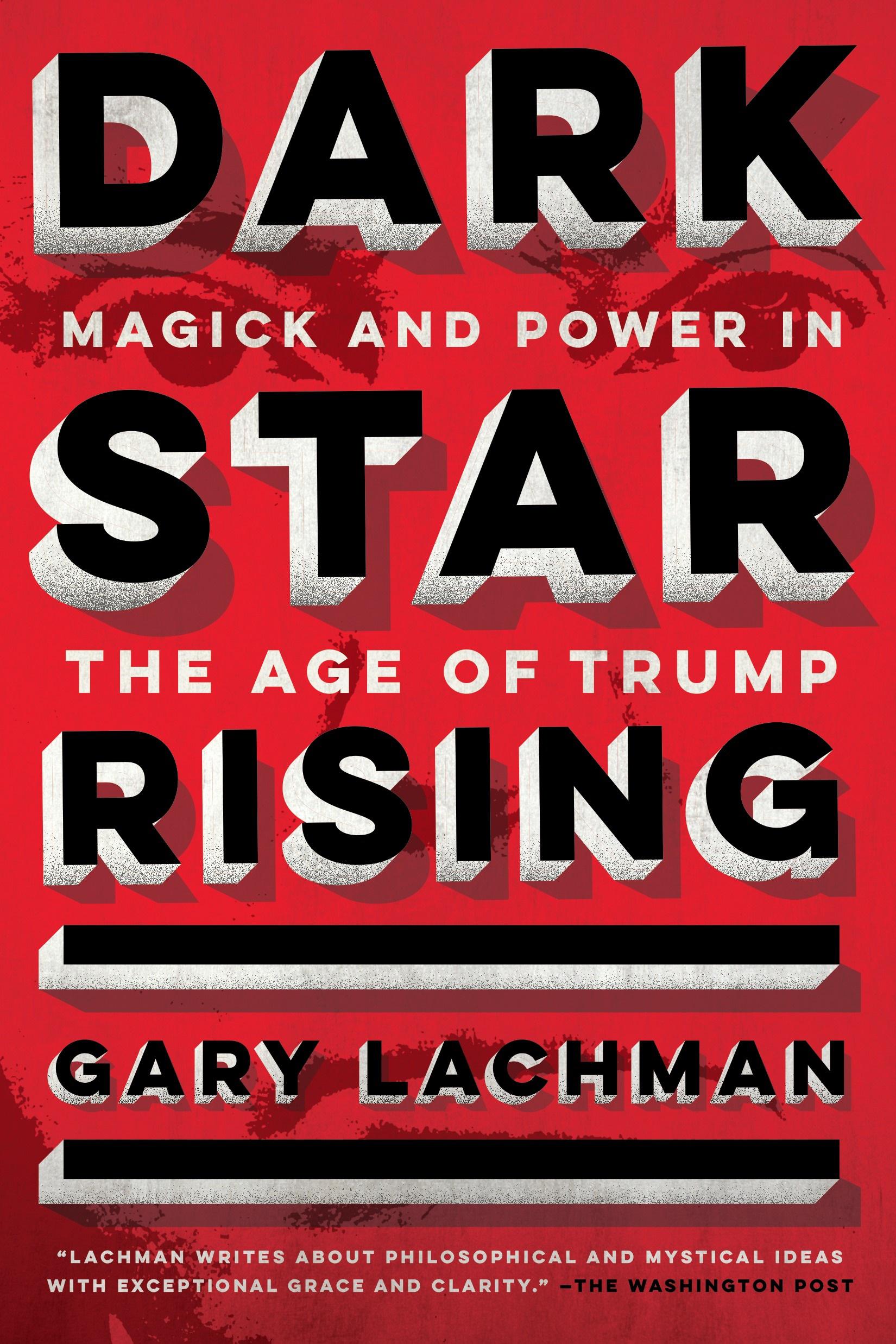
Author Gary Lachman is a man whom Donald Trump evidently broke very, very badly. Trying to process the reasons why the Bad Orange Man is living rent-free in his head 24/7, he came up with Dark Star Rising: Magick and Power in the Age of Trump, a book wherein he argues that there can be only one explanation for Trump’s astonishing election victory in 2016 and his domination of the political landscape: dark magic.

Get a load of this:

    Within the concentric circles of Trump’s regime lies an unseen culture of occultists, power-seekers, and mind-magicians whose influence is on the rise. In this unparalleled account, historian Gary Lachman examines the influence of occult and esoteric philosophy on the unexpected rise of the alt-right.

AHAHAHAHAHAHAHAHA!!! You know this is going to be good:

    Did positive thinking and mental science help put Donald Trump in the White House? And are there any other hidden powers of the mind and thought at work in today’s world politics? In Dark Star Rising: Magick and Power in the Age of Trump, historian and cultural critic Gary Lachman takes a close look at the various magical and esoteric ideas that are impacting political events across the globe. From New Thought and Chaos Magick to the far-right esotericism of Julius Evola and the Traditionalists, Lachman follows a trail of mystic clues that involve, among others, Norman Vincent Peale, domineering gurus and demagogues, Ayn Rand, Pepe the Frog, Rene Schwaller de Lubicz, synarchy, the Alt-Right, meme magic, and Vladimir Putin and his postmodern Rasputin.

As I said, Trump really, really broke this guy. And including Pepe the Frog in the same rogues’ gallery as Norman Vincent Peale is particularly choice.

There is only one way to fight the magic of the Bad Orange Man and his Evil Legions of Darkness: with magic of your own. Fortunately, there is a book that tells you how to do just that. I’m talking about Magic for the Resistance: Rituals and Spells for Change by Michael Hughes:

    The resistance is growing, and it needs your help. This book provides spells and rituals designed to help you put your magical will to work to create a more just and equitable world … Magic for the Resistance offers a toolkit for magical people or first-time spellcasters who want to manifest social justice, equality, and peace.

    Includes spells for: Racial justice, women’s rights, LGBTQ+ rights, antifascism, environmentalism, immigration, refugee support, nonviolence.

Apparently not included are spells for: setting fire to federal buildings, destroying small businesses, throwing Molotov cocktails at cops, beating up old men in wheelchairs, and shouting down public speakers who are saying things you don’t like.

Although, I guess they don’t really need magic to do those things.

Hughes is the creator of the internationally viral Mass Spell to Bind Donald Trump and All Those Who Abet Him, the largest and longest-running magical working in history.

We laugh at this, but considering the trajectory of the 2020 election, who knows, maybe it worked.

October 30, 2021

“Pretendians” … members of the Wannabe tribe … people who fake First Nations ancestry for personal gain

Filed under: Cancon, Education, Government, Health, Politics — Tags: , , , , , — Nicholas @ 03:00

I missed Thursday’s NP Platformed newsletter when it first came out, where Colby Cosh praised a CBC “longread” which dug into the oft-trumpeted heritage of a prominent Saskatchewan university official and did a thorough job of demolishing her claims to First Nations ancestry. This might have seemed unwarranted cruelty, except that those false claims had materially aided her rise to her current position with the university and the federal government:

Carrie Bourassa with media.
Lead photo in Geoff Leo’s article for the CBC – https://www.cbc.ca/newsinteractives/features/carrie-bourassa-indigenous

The result is not only astonishingly well-written and funny — it’s unanswerable. Bourassa has been caught telling utterly insupportable stories about her own past, making lurid claims of racial abuse and colonial trauma in a fanciful Indigenous household bearing no resemblance to the wealthy white one in which she actually grew up. When she got wind that the CBC was working on a story, Bourassa used the resources of the institute to organize a PR defence and arrange for an “open letter”, whose signatories are surprised and offended to find their names attached.

And if the story’s soundness is doubted, one need only refer to the rebuttal that Bourassa published yesterday. Read it and hear the scratching of ticked-off boxes. “I refuse to be victimized by this man who calls himself a journalist. This entire smear campaign stems from lateral violence … nothing less than tabloid journalism … it is apparent that I must adhere to western ideologies.”

But Bourassa’s response, while slinging the jargon generously, does nothing to refute Leo’s reporting. The Saskatchewan scholar lashes herself to the mast of a late-life Métis adoption, which does nothing to explain her tales of making mukluks and beadwork with her “half-breed” “gramps” at age seven.

No prior news item about Aboriginal stolen identity has ever been as strong and complete as this one — and that is why it is worthy of our attention, and of the resources dedicated to it. Bourassa has earned fantastic sums as a researcher and administrator of public funds. Most of this would have been utterly unavailable to her as an ordinary white social worker from the vodka-drinking parts of Saskatchewan. She is in a paramount position of importance in a national bureaucracy dedicated to Indigenous well-being and cultural preservation: her endless nose-stretchers about Aboriginal identity make her position completely untenable.

So will anything be done about it? If the federal government and the University of Saskatchewan are willing to overlook the case made here by the CBC, they will overlook absolutely anything. Falsely claiming Aboriginal descent is one sinful thing; lying floridly and repeatedly to audiences about your personal history of suffering racist treatment is another. (Can one “adopt” experiences? We suppose one can, with a little imagination!) Bourassa seems determined to fight, and to exploit her position to do it. So the institutions to which she has attached herself may have to act — or suffer a disastrous blow to their credibility among First Nations and settlers alike.

October 29, 2021

The “third wave of anti-racist activism”

Filed under: Books, Politics, USA — Tags: , , , — Nicholas @ 05:00

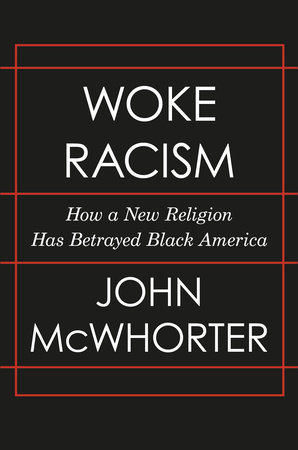
In Quillette, Jared Marcel Pollen reviews John McWhorter’s new book Woke Racism: How a New Religion Has Betrayed Black America:

McWhorter identifies three waves of anti-racist activism in the United States, the first of which was the fight against slavery and legalized segregation. The second was the struggle against racist attitudes, which sought to instill the idea that racial prejudice was a moral defect. The current strain of anti-racist activism constitutes a “third wave”, and like any movement in an advanced stage, it is characteristically decadent. The Elect’s ideology, like so much contemporary social justice, is a grotesque contest of elite moral exhibitionism, inordinately preoccupied with policing speech and regulating behavior. It is fundamentally performative and, above all, pretentious, in both the etymological sense of the word (to pretend) and in its common usage (attempting to impress).

This approach to battling racism tends to appeal to well-educated white people afflicted by a guilty conscience. The only remedy for them — the load-bearing pillar of white America’s new moral responsibility — is a declaration of one’s own “privilege”. This, McWhorter assures us, is not progress or even compassion, it is a form of self-help. “The issue,” he writes, “is not whether I or anyone else thinks white privilege is real, but what we consider the proper response to it.” [Italics in original.] Privilege is indeed real, and making oneself aware of it is morally important, but when employed as a cudgel, it becomes a monstrous prop.

Encouraging black people to see themselves as perpetual victims, while assigning to white people the task of becoming enlightened enough to recognize their own inherent and irredeemable racism creates a culture of soft-bigotry, furnished by polite lies and low expectations. “White people calling themselves our saviors,” McWhorter writes, “make black people look like the dumbest, weakest, most self-indulgent human beings in the history of our species, and teach black people to revel in that status and cherish it as making us special.”

This endless condescension is writ large in DiAngelo’s work, and we can see it in the training seminars now required by many companies, in which things like “logic” and “punctuality” are ascribed to “Whiteness”. Do the people running these seminars really believe that black people can’t be rational and on time? Do they think that science and math are things that only white kids are good at? And, McWhorter asks, if black students perform poorly on standardized tests, is it fair to assume that the test is racist, and should therefore be discontinued, as the Elect now propose? Would it not be better to ensure that those students have access to resources and tutoring? Far from helping anyone, these distortions of essence and aptitude actually hurt the advancement of what is now commonly referred to as “racial equity”.

The goal of third wave anti-racism is ostensibly concerned with “dismantling” racist “structures”, but it is actually an attempt to narrow the discourse and limit the range of honest thought in pursuit of a phony consensus. This is achieved through a ruthless evangelism, which McWhorter manages to condense as follows:

    Battling power relations and their discriminatory effects must be the central focus of all human endeavor, be it intellectual, moral, civic, or artistic. Those who resist this focus, or even evidence insufficient adherence to it, must be sharply condemned, deprived of influence, and ostracized.

For support, McWhorter offers a spate of scandals and PR nightmares that would signal, to an alien observer, a kind of collective insanity or Salem-esque panic. One of the salient and most stupefying examples is the case of Alison Roman, a (now-former) food critic at the New York Times. Roman ran into trouble when she criticized two of her contemporaries — model and food writer Chrissy Teigen, and life coach Marie Kondo — for their hypocritical commercialism. Despite coming from different ethnic backgrounds and cultural milieux (Teigen is half-white and half-Thai and was born in America; Kondo was born and raised in Japan), both are assimilable as “people of color” according to the progressive Weltanschauung, so Roman’s criticism placed her under suspicion. What reason could a white New York Times journalist have for criticizing two non-white celebrities, other than sublimated bigotry?

A few days later, singer Lana Del Rey responded to criticisms of her music’s use of sexual themes by pointing out that plenty of other artists, including Nicki Minaj and Beyoncé, also sing about sex. Del Rey was immediately attacked by social media mobs, who denounced her in an endorphin-rush of self-righteousness. These two cases make the Elect’s devotion to rooting out racial bias seem like a protean neurosis, which sees racism even when it isn’t there.

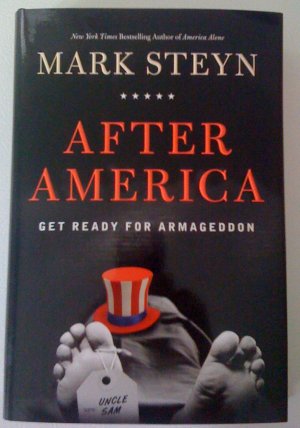
Ten years after After America, how are Mark Steyn’s predictions going?

Filed under: Books, Economics, Politics, USA — Tags: , , , — Nicholas @ 03:00

Mark Steyn published his book After America ten years ago:

Speaking of which, we are marking the tenth anniversary of my bestselling book After America. The observances are muted because, from the underpass at Del Rio to the school board meetings of Loudoun County, it has proved too accurate. Nonetheless, I remind you of the book’s opening chapter:

    Look around you. From now on, it gets worse. In ten years’ time, there will be no American Dream, any more than there’s a Greek or Portuguese Dream. In twenty, you’ll be living the American Nightmare, with large tracts of the country reduced to the favelas of Latin America, the rich fleeing for Bermuda or New Zealand or wherever on the planet they can buy a little time, and the rest trapped in the impoverished, violent, diseased ruins of utopian vanity.

    ‘After America’? Yes. It will linger awhile in a twilight existence, arthritic and ineffectual, declining into a kind of societal dementia, unable to keep pace with what’s happening and with an ever more tenuous grip on its own past. For a while, there may still be an entity called ‘the United States’, but it will have fewer stars in the flag, there will be nothing to ‘unite’ it, and it will bear no relation to the republic of limited government the first generation of Americans fought for. And life, liberty and the pursuit of happiness will be conspicuous by their absence.

    On the other hand:

    The United States is still different. In the wake of the economic meltdown, the decadent youth of France rioted over the most modest of proposals to increase the retirement age. Elderly ‘students’ in Britain attacked the heir to the throne’s car over footling attempts to constrain bloated, wasteful and pointless ‘university’ costs. Everywhere from Iceland to Bulgaria angry mobs besieged their parliaments demanding the same thing: Why didn’t you the government do more for me? America was the only nation in the developed world where millions of people took to the streets to tell the state: I can do just fine if you control-freak statists would shove your non-stimulating stimulus, your jobless jobs bill and your multi-trillion-dollar porkathons, and just stay the hell out of my life, and my pocket.

On the world stage, Joe Biden is the literal embodiment of America’s “twilight existence, arthritic and ineffectual, declining into a kind of societal dementia”. The favelas are here in many American cities, and I see that the citizens of what only a quarter-century ago alleged conservative David Brooks hailed as the future — Burlington, Vermont, the chichi post-political latte town of do-gooder liberalism – is now getting used to routine stabbings on Main Street.

I miss the Tea Party because their grievances were mainly economic. Today’s dissatisfactions are more profound and primal: We are not arguing about socialized health care, but about the agreed meaning of America, and whether it will come to more blood than it’s already coming to.

October 27, 2021

The psychological attraction of conspiracy theories

Filed under: Media, Politics, USA — Tags: , — Nicholas @ 03:00

Scott Alexander considers why people are attracted to various conspiracy theories:

QAnon alleged clues about the NYC bombing, 10 December 2017.
Wikimedia Commons.

Viral game designer Adrian Hon wrote an article about What Alternate Reality Games Can Teach Us About QAnon.

It argues that people fall for QAnon because it gives them an interesting mystery. It’s a place where new discoveries are always around the corner, where a few hours of research by an amateur like you can fill in one of the missing links between Joe Biden and the Lizard Pope. The thrill of QAnon isn’t just learning that all your political opponents are secretly Satanists or Illuminati or whatever. It’s the feeling that you have something to contribute to the great project of figuring out the secret structure of the world, and that other people in a shared community of knowledge-seeking will appreciate you for it.

One place you could go from here is to talk about how QAnoners are the sort of people who are excluded from existing systems of knowledge production. They are never going to be Professors of Biology, and they know it. Their only hopes of being taken seriously as an Expert — a position our culture treats as the height of dignity — is to create a complete alternate system of knowledge, ungrounded in any previous system, where they can end up as an expert on the Lizard Papacy.

[…]

This isn’t meant in any way as a criticism of Hon. I’m transparently doing the same thing he is here — claiming to have an interesting insight, then contributing it to a shared community of knowledge-seekers. My point isn’t that Hon is similar to QAnon and therefore bad. My point is we’re all engaged in this kind of desperate project of trying to feel like we’re having new important insights, in a world full of people who are much smarter than we are.

Partly this is all for the greater good. If we don’t know about the Lizard Papacy, we won’t be able to resist them; if we don’t know what secretly drives QAnon, we won’t be able to fight it. But another part of it seems to be — a critic might say “intellectual masturbation” but I would argue “intellectual exercise” is a better term. Exercise is sort of about building strength and skill that you might use later, but it’s also guiltlessly joyful, done for nothing’s sake but its own.

Athletes understand that not everyone can be Babe Ruth. That’s why you have local baseball leagues, or Little League, or the Minor Leagues, so that everybody can satisfy their sports competition drive whether they’re a superstar or not. But what’s the intellectual equivalent of the minor leagues? The place where, even if you’re not a superstar, you can have the experience of generating new insights which get appreciated by a community of like-minded knowledge-seekers?

My stock position on any given conspiracy theory is that the bigger and more important the alleged conspiracy, the less likely it is to be true: most people can’t keep a secret for more than a day before wanting to blab to someone else to show off.

October 26, 2021

“…watching The Media spin for Brandon; it’s just so Pravda-licious”

Severian manages to find entertainment in the full-blown propagandization of “The Media”, especially during the course of the Wuhan Coronavirus pandemic:

Wuhan Institute of Virology.
Wikimedia Commons.

Back when the Kung Flu nonsense first started, I took it quasi-seriously. Let me clarify: Like America’s greatest philosopher, I assume that everything in the newspaper is 90% bullshit, and I read it because it entertains me. Nonetheless, the bullshit operates on several levels, and it’s important to distinguish between them if you want to extract more than entertainment from it. In the case of Covid, back in the earliest days, I assumed that the bullshit was more top tier — that is, that it was mostly ignorance.

Media people are stupid. We all know that, but unless you’ve been around them (or their inbred, banjo-picking cousins, academics) recently, you probably don’t realize just how stupid they actually are. Remember Michael Crichton’s bit about “Gell-Mann Amnesia“? He said that The Media are so dumb, they routinely get important things not just wrong, but completely backwards: The headline would read the equivalent of “Wet Streets Cause Rain”.

And to be fair to The Media — I know, I know, but again, if you want anything more than a chuckle from the propaganda, you must try — it really did seem to be more ignorance than anything. I’m the kind of guy who needs to pull off a sock every time he has to count past ten, but compared to everyone in The Media I’m Euclid himself. I could see right away that the numbers they were spouting would make Kung Flu exponentially more lethal than even the Black Plague, which would, you know, tend to show up on satellite reconnaissance. And since there’s this thing called “Google Earth” …

But even though I knew right away you’d need to scale back their projections by a factor of about eleventy billion, that wasn’t the end of it, because even doing the necessary mental math to scale it down by eleventy billion — take the cosine, carry the one, divide by zero — it still looked pretty bad. But not “pretty bad” in a factual way. Rather, pretty bad in a second-level bullshit way, the mere propaganda way.

Those were the days, you might recall, when — out of the blue, on a dime — the Official Story changed from “China categorically denies there’s any such thing as germs, much less this particular strain of flu” to “OMG, the Chinese are welding apartment doors shut as people keel over in the streets.” Accompanied, in some cases — and good luck finding those video clips now — with grainy little movies of obvious actors keeling over so hammily, Al Pacino himself would tell them to tone it down. Pravda et al would never have been so crude, but those guys were pros, and as bad as the USSR was, affront-to-basic-intelligence-wise, this is Clown World.

Sure enough, the stories soon came out that China had cornered the market on PPE gear. It was an obvious short con, but remember: Clown World.

This — the CCP cornering the PPE market — soon prompted the third level of Media bullshit, the ideological level. Not content to merely take orders from their Chinese paymasters, the Media, being ideology-addled prize graduates of American “higher” “education”, started taking it upon themselves to lecture us for our own good. Masks, which were once bad, were now good, and if one mask was good, then two were even better! Thus the flood of stories like the one covered at the old RC, where the woman went on about swabbing her eyelids with disinfectant and whatnot. They got their chance to hector us for our own good, and they will never turn that down.

October 24, 2021

Andrew Sullivan – “They are the Dana Carvey church ladies of our time, except instead of saying ‘Could it be Satan?!’ when confronting some cultural or moral transgression, they turn to the camera, clutch their pearls, and say ‘Could it be whiteness?!'”

Filed under: Media, Politics, USA — Tags: , , , , , , — Nicholas @ 03:00

Andrew Sullivan on what he titles “The Betrayal Of Our Gay Inheritance”:

It was, as it turned out, a bit of a non-event. The walkout by transgender Netflix employees and their supporters to demand that the company take down and apologize for the latest Chappelle special attracted “dozens”, despite media hype.

But the scenes were nonetheless revealing. A self-promoting jokester showed up with a placard with the words “We Like Jokes” and “We Like Dave” to represent an opposing view. He was swiftly accosted by a man who ripped the poster apart, leaving the dude with just a stick, prompting the assailant to shout “He’s got a weapon!” Pushed back by other protestors, he was then confronted by a woman right in front of him — shaking a tambourine — and yelling repeatedly into his face: “Repent, motherfucker! Repent! Repent!”

This is the state of what’s left of the gay rights movement in America. Judgmental, absolutist, intolerant, and hysterical, it looks to shut down speech it dislikes, drive its foes out of the public square, compile enemies’ lists of dangerous writers, artists, and politicians, and cancel and protest anything that does not comport with every tiny aspect of their increasingly deranged ideology.

The generation that now leads the movement does not seem to know the actual history of the gay rights movement, or the centrality of free expression to gay identity. They also seem to have no idea of the history of the movement against gay rights. Because if they did, they might be shocked at the ironies involved.

Anti-gay forces, hegemonic for centuries, were just like these trans activists. They were just as intent on suppressing and stigmatizing magazines, shows, and movies they believed were harmful. They too targeted individual artists and writers for personal destruction. They too believed that movies and comedy needed to be reined in order to prevent social harm. They protested in front of movie theaters. They tried to get shows canceled. And if you’d marched in any gay demo or Pride in the 1990s, you’d always be prepared to confront a grimacing Christianist yelling “Repent! Repent!” in your face.

In fact, it’s hard not to see the trans far left as a farcical replay of the Religious Right of the past. They are the Dana Carvey church ladies of our time, except instead of saying “Could it be Satan?!” when confronting some cultural or moral transgression, they turn to the camera, clutch their pearls, and say “Could it be whiteness?!”

This was never, ever the spirit of the gay rights movement in the past. In fact, it was America’s guarantee of free expression and free association that made the gay rights movement possible. It was the First Amendment, and the spirit of the First Amendment, that was easily the most important right for gays for decades. From the fledgling Society for Human Rights, formed in Chicago in 1924, and its pioneering magazine, Friendship and Freedom, to the struggles against censorship in the 1950s, with One Magazine, and erotic Physique pamphlets under siege, it was the First Amendment that, especially under Oliver Wendell Holmes, allowed gay people to find each other, to develop arguments for their own dignity and self-worth, and to sustain free associations when the entire society viewed them as perverts and undesirables and child molesters.

October 22, 2021

Explaining why British police clearly favour road-blocking protestors over the rights of ordinary Britons

Filed under: Britain, Law, Liberty, Politics — Tags: , , , — Nicholas @ 03:00

In The Critic, Andrew Tettenborn believes it can be traced back to a change in the oath that new police constables take and the changed emphasis in police training to support that change:

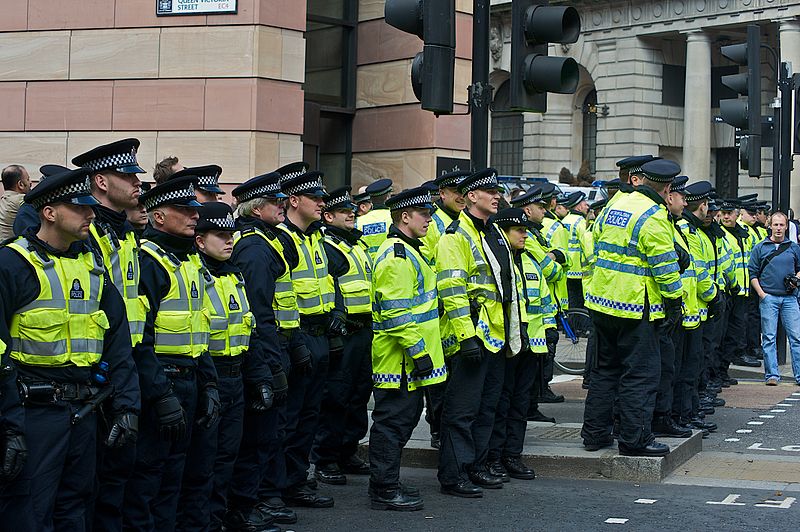
Metropolitan Police at G20 protests in London, 2009-04-01
Photo via Wikimedia Commons

Last week Insulate Britain magnanimously announced it would suspend its forcible road-blocking campaign. Apart from noting the impudence of this announcement (remember the IRA sanctimoniously calling its Christmas ceasefires, as if this were something we should be grateful for?), commentators on Twitter, the tabloid press and indeed many of the general public, have found another question troubling. Why, in the face of deliberate criminality aimed at discommoding ordinary people (most of whom will have been less well-off than many of the protesters), did the police hold back, at times apparently chatting with the obstructionists and threatening with arrest any exasperated driver who tried to take steps to remove them? We aren’t told, but we can make some educated guesses.

[…]

Nearly twenty years ago in 2002, there was a subtle, little-reported but very symbolic change in the oath sworn by all constables on appointment. Instead of the 19th century undertaking to serve the Queen “without fear or favour, malice or ill-will” in the course of keeping the peace and preventing crime, there is now a much more tendentious promise preceding the duty to keep the peace: namely, to act with “fairness, integrity, diligence and impartiality, upholding fundamental human rights and according equal respect to all people”. This requirement, thoroughly reflected as it is in police training today and imbued in policing culture, has two effects.

One is that all officers must keep at the front of their minds not only the law of the land but also two other guidelines: considerations of fairness and equality (whatever those mean), and human rights laws — something peculiarly complex and frequently opaque, even to lawyers. Human rights laws involve a subtlety well beyond the average constable called out to police a tense situation. Put yourself in the position of a policeman, faced with a choice whether to intervene in a case involving illegality and an intent to inconvenience people, but where no-one is actually engaging in violence — exactly the situation with Insulate Britain or Extinction Rebellion. You might well think that, if you wish to avoid future trouble and possible complaints of discrimination or unfairness, discretion and inaction would be the better part of valour.

Thanks to the pervasiveness of human rights culture, the constable’s traditional function of upholding the law ceases to be a black-and-white matter, and becomes a potential mire of conflicting duties. Even if the letter of the law says you should arrest a middle-aged protester or at least drag them off the M25 to prevent them obstructing it, there is always a possibility that someone somewhere will hold that this was contrary to their human rights. Once again, a cautious police officer intent on avoiding disciplinary hearings and a possible black mark, may well conclude that it is better to let sleeping dogs lie (at least for the moment), condone the illegality and avoid possible violence.

The police constable on the scene is extremely well advised to avoid doing anything that might possibly be construed as infringing on the human rights of everyone at the scene, for fear of becoming the scapegoat if clever lawyers convince a judge or jury that the police acted contrary to their revised oath.

October 20, 2021

Alberta and Quebec, the dark twins of Confederation

Filed under: Cancon, Government, Politics — Tags: , , , — Nicholas @ 03:00

In The Line, Jen Gerson explains why the Alberta government is consciously taking some of its strategies for dealing with the feds and other provinces from the generations-long success that has been Quebec’s planbook:

Quebec — as the single largest recipient of equalization cash — is often a target of anger in these parts, but I’d encourage any readers from thereabouts not to read too much into this fact. Both Alberta and Quebec suffer from a culture of political grievance that feed off one another. Alberta resents the fiscal balances, often casting Quebec as an ungrateful recipient of the very oil wealth that the latter regards with contempt. And I can only imagine how Quebec must read this; as a signal of its own isolation from Anglo culture more broadly. On both sides, I see politicians who have made a generational art of milking these respective grievances.

So sometimes it’s worthwhile to point this out.

Alberta doesn’t hate Quebec.

The provinces exist on flip sides of the very same coin; they are each others’ dark twins, and Alberta seeks mostly to emulate its French sibling.

Kenney made this point entirely explicitly in the days leading up to the referendum.

“We’re using this to get leverage to basically take a page out of Quebec’s playbook in having successfully dominated the political attention of the federation for the last 40 or 50 years.”

What playbook was he referencing, here?

The answer is obvious; the separation referenda of 1980 and 1995. In fact, the whole logic of Alberta’s referenda last night was predicated on a novel reading of the Quebec Secession Reference, in which a clear majority on a clear question must force the federal government to the negotiating table in good faith. The fact that this reference spoke to a secession question — and not a longstanding quibble over an item within the constitution — is a material difference from a legal point of view, but not a psychological one.

The hope is that this referenda will give us somethin akin to the “leverage” Quebec has enjoyed vs. Ottawa since its failed separation referenda; and the disproportionate financial and cultural incentives that followed in the following decades. Essentially, Alberta is asking for the leverage of a true separatist movement without suffering the risk of actually separating. We are play-acting a little Potemkin secession referendum, here. If it falls to me to point out the show is a little childish and even a touch pathetic, well, so be it.

October 19, 2021

The Wertham effect “… produces evidence-free moral panics and demands for government crackdowns”

In City Journal, John Tierney evaluates the evidence for the claims of psychological damage inflicted on young women through social media (specifically Instagram):

Contrary to what you’ve heard from the press and Congress, the internal documents leaked by former Facebook product manager Frances Haugen do not prove that that the company’s Instagram platform is psychologically scarring teenagers. But the current furor does clearly demonstrate another psychological phenomenon: the Fredric Wertham effect, named for a New York psychiatrist who, like Haugen, starred at a nationally televised Senate hearing about a toxic new media menace to America’s youth.

Wertham testified in 1954 about his book, Seduction of the Innocent, which he described as the result of “painstaking, laborious clinical study.” After reciting his scientific credentials, Wertham declared: “It is my opinion, without any reasonable doubt and without any reservation, that comic books are an important contributing factor in many cases of juvenile delinquency.”

The hearing made the front page of the New York Times, one of many publications (including The New Yorker) to give Wertham’s book a glowing review. Others featured his warnings under headlines like “Depravity for Children” and “Horror in the Nursery”. During the great comic book scare, as the historian David Hajdu calls it, churches and the American Legion organized events across the country where schoolchildren tossed comics into bonfires. Wertham’s recommendation “to legislate these books off the newsstands and out of the candy stores” inspired dozens of state and municipal laws banning or regulating comic books, and many people in the industry lost their jobs.

There was never any good evidence that comic books hurt children. Wertham’s work was a jumble of anecdotes about troubled youths and unsupported conjectures about comic books inspiring violent crimes. He fretted, as today’s Instagram critics do, that the unrealistic images of curvaceous bodies were psychologically damaging girls and claimed that superheroes were promoting everything from homosexuality (Batman and Robin, Wonder Woman) to fascism (Superman). Contemporaries like the sociologist Frederic Thrasher lambasted Wertham’s work as “prejudiced and worthless”, and it was later exposed as fraudulent.

As we’ve learned repeatedly, scientific rigor doesn’t matter to journalists and politicians eager to blame children’s problems on any new trend in media or entertainment, whether it’s television, rock and roll, Dungeons and Dragons, heavy metal music, cell phones, rap lyrics, or video games. That’s the Fredric Wertham effect, which produces evidence-free moral panics and demands for government crackdowns.

The villain du jour is Facebook, which is being compared with Big Tobacco because its own confidential research supposedly proves how dangerous its product is. The research was revealed in a Wall Street Journal article, “Facebook Knows Instagram Is Toxic for Many Teen Girls, Company Documents Show,” which cited a survey finding that 32 percent of teenage girls who were experiencing body-image issues said that Instagram made them feel worse about their problem. But most of the girls surveyed said that Instagram either had no effect (46 percent) or made them feel better (22 percent). And the issue of body image was the subject of just one of the survey’s 12 questions. On the other 11 (covering problems like loneliness, anxiety, sadness, and social comparison), the girls who said Instagram made them feel better outnumbered those who said it made them feel worse. The teenage boys in the survey skewed heavily positive on all the questions.

Sarah Hoyt on getting #teamheadsonpikes to trend

Filed under: Government, Politics, USA — Tags: , , , , — Nicholas @ 03:00

In the latest Libertarian Enterprise, Sarah Hoyt considers the people who are still desperately hoping that if they just vote harder, the next election will fix everything:

Normalcy bias is YUGE in America. It is a testament to the founders’ vision that after a century of attempts to wrench us away from a constitutional republic, after a massive, in the open election steal, people are still counting on elections to right this mess.

They’re right and wrong.

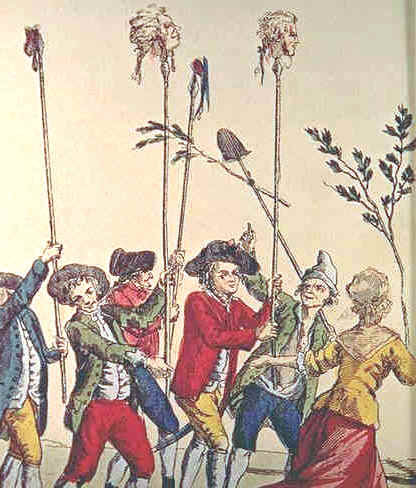
Look, I’m holding up my lighter with tears in my eyes, and whispering hopefully “Team heads on pikes”. Because I think a brief, brutal convulsion is our best hope to come back to ourselves as ourselves.

In the end we win, they lose, but the gradual road is in the end more costly. Perhaps the butcher’s bill will be hidden. You won’t see heads on pikes and bodies on overpasses. But the squid farms on Mars, the unborn babies, the uninvented conveniences, the–more costly. Because socialism kills, either fast or slow, and the longer we play footsy with it, the more lives will be lost. In that case, probably lives that don’t exist.

And frankly, though #teamheadsonpikes might not eventuate, I still see a brief and violent convulsion in our future. Understand “violent” here does not refer to the butcher’s bill. I mean, I wouldn’t want to be the Junta and their toadies, as I think there will be a few Romanian Christmas Gift events, but MOSTLY? MOSTLY there will be a lot of retirements, if we’re lucky a few prison sentences, almost for sure a lot of people taking themselves overseas for retirement (I’m hoping the Obama posse and their cronies are dumb enough to run to China. (Looks heavenward. Lord, if I’m a very good girl for the rest of my life …) our institutions will turn over so fast you’d think they were on wheels. They might retain the name but that will be the last resemblance. People will lose all faith in government (we’re mostly there) and this bizarre idea of scientific governance will be finally put to bed with a shovel. About 100 years after it should have been, but hey.

Why do I think that? Why do I expect an uprising at all? Americans are supine and taking it and reeeeeeeee.

Will someone PLEASE get me my eyes? The cats aren’t here, but the floor is covered in dust and paint chips. That can’t be good.

Two things: Normalcy bias. As I said, most people who aren’t political animals (Party like it’s 1776, yo) are still waiting for the elections to fix everything. Hell, I’ve seen people who are political animals waiting for it. And the left is lying to itself very hard and half believes their wins are legitimate. (AH!)

And: IF there is a rebellion and the news doesn’t report it, would you know about it?

Hell, the world has been in more or less open rebellion for 5 years, and our news sits on it, like it’s their favorite thumb. And most people don’t see it, except for things like Brexit, or Trump’s election. Ask them about German farmers driving their tractors to city hall and they’ll look at you like you’re nuts.

So now?

October 17, 2021

QotD: Like Justin Trudeau, too many western politicians admire China’s “basic dictatorship”

The Chinese model, such as it is, has a hypnotic appeal to many (too many) among our technocrats, bureaucrats and the political class. These are our betters, after all, and certainly the people who think they are smarter than everyone else, yet they are constantly constrained by the outmoded mechanisms of representative democracy, rule of law, and liberal state. How envious are they of the Chinese authorities (the Party and the government being largely the same, certainly the same for all practical purposes), which are not restrained by any considerations of accountability or public opinion. The Party can do whatever it wants – build a fast train network, carry out massive infrastructure projects, regulate emissions, direct economic resources, and so on – while the Western governments and administrations get bogged down in petty politics. The Chinese Communist Party is also a meritocracy of sorts, which promotes skill and talent (and of course loyalty, ideological reliability, and personal connections), while too many self-described smart people in our democracies are at the mercy of fickle voters. There is no stability and continuity, no long-term planning, no concern for the “national interest”; ah to be a mandarin instead!

Then there is the Chinese government’s ability to surveil and control their people – for their own good, of course. How many over here would love a Social Credit System, where they can reward and punish people according to government’s priorities, from environmentally-conscious behaviour to public health considerations. In democracies, the people rate their leaders; in China the leaders rate their people. Just imagine how much more effectively our governments and health authorities would be able to to deal with all of us during the current pandemic if they could “see” and “nudge” every individual at every moment and in every situation. The most dangerous virus to come from China recently is not COVID, it’s “socialism with Chinese characteristics” with its siren call of unrestrained power for large sections of our political and economic elites.

Arthur Chrenkoff, “World hearts commies”, The Daily Chrenk, 2021-07-01.

October 15, 2021

“… a preliminary Conservative estimate is that the PPC rise cost them between four and nine seats”

Filed under: Cancon, Media, Politics — Tags: , , , , — Nicholas @ 03:00

Matt Gurney looks at the federal Conservatives’ efforts in the September election and tries to assess how much the rise of the People’s Party of Canada impacted Conservative fortunes:

O’Toole planned to shift the CPC slightly toward the moderate centre on the assumption that the party’s traditionally lopsided wins in western Canada meant that it could lose a little on the right to flip some close seats in the east. This didn’t work. The Tories did shed support on the right, which might explain some measure of the PPC’s rise, but the CPC didn’t make up enough ground in eastern ridings to flip seats.

However, the election-night results are somewhat deceiving. O’Toole’s strategy was more effective than the final outcome suggests. In Ontario, in particular, the Conservatives materially cut into the Liberals’ advantage in the popular vote, effectively halving it, relative to 2019. This meant that the Liberals were extremely reliant on vote efficiency: a one-per cent swing of voters from the LPC to the CPC could have flipped dozens of seats, setting up a scenario where O’Toole could have been prime minister today. (These flips would not have come from the Greater Toronto Area, interestingly, where the Liberals continue to run up some lopsided victories of their own, but from other parts of Ontario and random seats all across the country. The election was closer than people realize.)

But back to the PPC. Did giving them room to grow on the right end up costing the CPC seats? If so, while that wouldn’t necessarily discredit the notion of moving the CPC toward the centre, it absolutely complicates it. If the Conservatives can’t take their right flank for granted, their lives get a lot more difficult. In a recent feature in the Toronto Star, Althia Raj, who apparently spoke to every insider on the planet, wrote that a preliminary Conservative estimate is that the PPC rise cost them between four and nine seats.

That sounds about right, and it doesn’t sound like much. Indeed, if anything, there’s reason to believe that that is overly generous to the PPC.

[…]

In aggregate terms, the author found that while you could conclude that a handful of ridings were possibly but not certainly lost due to a PPC surge, you couldn’t definitively conclude that any were lost because the Conservatives gave up ground on the right. This gets us to the low-end figure cited by Raj, but looking at this report, I don’t know where the rest could possibly have come from.

Every additional seat would have been good news for O’Toole. And the rise in the PPC vote share is worth studying on its own merits — The Line continues to work with John Wright to firm up our understanding of the PPC, both as a political and social movement.

But as an electoral force that hurt O’Toole in the last election, while we can certainly say it didn’t help, it also didn’t seem to hurt much.

Having met dozens of eager PPC supporters over the last two election campaigns, I have to believe that at most one third of them are former Tory voters … a lot of the people I met were not habitual voters for any party before the PPC came along. At one meeting I attended in 2019, there were more former Libertarian voters than Conservative voters around the table, but neither group was a majority. A lot of them were fans of Maxime Bernier personally — and note that this meeting was literally in the heart of Erin O’Toole’s own riding, a couple of blocks away from his constituency office.

October 11, 2021

The Line responds to charges that their reporting on China is “anti-Asian racism”

Filed under: Cancon, China, Media, Politics — Tags: , , , , — Nicholas @ 03:00

As an impoverished cheapskate, I can’t afford to subscribe to The Line‘s full service, but they do allow a sub-set of their work to appear to non-paying subscribers, like this response to a former subscriber who accused them of “anti-Asian racism” in their posts involving the People’s Republic of China:

China’s emergence as a global power is going to be one of the defining stories of the first half of the 21st century. We probably aren’t reading and writing about it enough. Late this week, however, we received a note from a now-former reader, who said that the pieces we had run, and the overall focus on China, reflected anti-Asian racism, and they would not be supporting us going forward.

Look, it’s your money, folks. We want more and more of you to subscribe all the time. But we certainly respect your right to decline, or to unsubscribe if you don’t like the offerings. However, we do have a word of reply to those who would suggest that publishing articles about China is racist: get bent.

There is indeed anti-Asian racism out there. We have seen a lot of disturbing signs of it during the COVID-19 pandemic, when Asians of any description have been subjected to harassment and even random acts of violence. In the United States, some of the more fiery anti-Chinese rhetoric favoured by the former president also undoubtedly contributed to that wave, and that has spilled over here. Further, the problem of anti-Asian racism of course isn’t new. We have a long history of anti-Asian discrimination in North America. This must be acknowledged. Anti-Asian hate was real before Trump and COVID, and it’ll remain long after both are finished.

But writing critically about the People’s Republic of China, the Chinese Communist Party, the Chinese armed forces, the policies of the Chinese government, the actions of the Chinese government, and the increasingly overt meddling in the affairs of other nations by Chinese intelligence operations, does not reflect any discredit upon Asian-Canadians, or any Asian in general. The policies of the Chinese government are exactly that: policies of a government. Criticizing policies and governments is not just acceptable, it’s absolutely necessary.

Indeed, we noted with grim amusement during a recent conversation with a colleague, who is comfortably nestled within the left-leaning progressive side of Canada’s political spectrum, that progressives in particular ought to be 100 per cent comfortable criticizing Chinese government policy. After all, progressives have been loudly and correctly noting for generations that there is a difference between rank antisemitism and warranted criticism of Israeli government policy. We find it fascinating that some of the very same people who would be horrified to be accused of antisemitism for criticizing Israel get tongue-tied when the Chinese government starts throwing religious minority women into rape camps.

We suspect some of it is simply rooted in the rampant identitarian obsessions of Western political discourse. People who criticize white supremacist Western imperialism a dozen times before breakfast might find it intellectually discombobulating to acknowledge that Western liberal democracies are not the only big baddies on the global stage. We’ve witnessed the many mental gymnastics that have been deployed to minimize or wish away credible reports of genocide and concentration camps, as if they were merely a Western fantasy being used to concoct a pretext for war. This is an ahistoric argument, by the way. The West has not been angling for war with one of its most lucrative suppliers and customers, quite the opposite. Until recently, we’ve operated under a Fukuyama delusion: the ironclad belief that China would moderate and liberalize as it grew more prosperous. This was predicated on the arrogant assumption that the liberal democratic West was the end state of history and that China would eventually meet us here, thus allowing peace and profit for all. That optimism hasn’t panned out, and many Western countries — Canada among them — have spent the last few years trying to reconcile our economic interdependence with our collective “oh shit” epiphany.

October 8, 2021

Critical Race Studies go international — “what was once considered an American eccentricity has gone global, and Britain’s curriculum engineers are doing their utmost to make up for lost time”

Filed under: Books, Britain, Education, Politics, USA — Tags: , , , , — Nicholas @ 05:00

In The Critic, Frank Furedi looks at how quickly American elite fascination with the various incarnations of Critical Theory has spread beyond the US:

“My child has been told in a series of assemblies that she ‘has white privilege’, that she ‘subconsciously perpetuates it’, may even ‘consciously enjoy it’ and that she ought to be ‘starting to address it’. She has been shown slides of white BLM protesters holding placards that say ‘I will never understand’, told she needs to listen and educate herself and that intersectional theory shows that ‘whiteness will always insulate and protect her from racism’.”

Ten years ago, this mother’s story would likely be considered a joke; a parody of the culture wars that were starting to simmer across the Atlantic. But a lot can happen in a decade: the child whose mother recently reported the above attends an academy in London. Indeed, what was once considered an American eccentricity has gone global, and Britain’s curriculum engineers are doing their utmost to make up for lost time.

In the UK, curriculum engineers have embraced the approach of their American colleagues and are now busy targeting what they describe as outdated views and ideals. The term “outdated” serves as a euphemism for describing ideas and sentiments that do not accord with their project of distancing children from the traditions and way of life of their parents and grandparents. Under the banner of “relevance”, they wish to cancel the classics of literature and replace them with stories written by contemporary writers. Even the works of Shakespeare have been denounced for their outdated racist, antisemitic and misogynist views.

One of the most important and unremarked feature of recent developments in British classrooms is the uncritical and slavish manner with which curriculum experts imitate the cultural crusade of their American colleagues. Earlier this year it was reported that numerous American schools (including the prestigious $45,000-a-year Brentwood School in Los Angeles) were scrapping the apparently outdated To Kill a Mockingbird.

Evidently, some British curriculum leaders swiftly got the message. For example, the James Gillespie High School in Edinburgh decided that it no longer wants to teach classics like Of Mice and Men or to To Kill A Mockingbird in its English classes. The school claims that the “dated” approach to race of these wonderful novels disqualifies them from a place in the English literature curriculum.

Advocates of the project of decolonising schools target what they perceive as outdated views on issues as diverse as gender, trans culture, race and what it means to be British. School subjects as diverse as history, literature, geography and religious education are now used as vehicles for countering what they describe as “white privilege”. They encourage pupils to acknowledge their whiteness and perceive Britain as a society defined by its systemic racism.

« Newer PostsOlder Posts »

Powered by WordPress