What is the use of Parliament if it is not the place where true statements can be brought before the people? What is the use of sending Members to the House of Commons who say just the popular things of the moment, and merely endeavour to give satisfaction to the Government Whips by cheering loudly every Ministerial platitude, and by walking through the Lobbies oblivious of the criticisms they hear? People talk about our Parliamentary institutions and Parliamentary democracy; but if these are to survive, it will not be because the Constituencies return tame, docile, subservient Members, and try to stamp out every form of independent judgment.
Winston S. Churchill, speech around the time of the Munich crisis, 1938.
May 15, 2022
QotD: Parliament
May 13, 2022
Womp-womp – “Probably you didn’t watch the debate. Probably you read that last paragraph and thought, well, Wells has finally lost his mind, it had to happen eventually.”
Paul Wells watched the most recent Conservative leadership debate so none of the rest of us had to. Let’s take a bit of time to appreciate the sacrifice Mr. Wells made on our undeserving behalf:
Well, that was a national disgrace.
What is it about the last two years that made the Conservative Party of Canada’s Leadership Election Organizing Committee decide Canadians are yearning for shorter conversations about sillier questions?
Who came out of last week’s thoughtful debate at the Canada Strong and Free conference — at least, the questions and the format permitted thoughtfulness, although candidates varied in their ability or willingness to deliver it — thinking there weren’t enough questions about TV viewing habits?
Who surveyed the issue landscape that will face Justin Trudeau on Thursday and would face his successor — war in Europe, inflation, labour shortages, stark conflict between climate targets and natural-resource export imperatives, long-cheated and still-difficult Indigenous reconciliation, exiting from COVID — and thought, “Keep the answers short. We want time to hear them out on what’s on their playlists”?
As a mechanism for allowing Canadians to weigh the judgment of six people, one of whom might, after all, be the next prime minister, the evening was a write-off. We learned that Leslyn Lewis likes “Coltrane” and was eager not to be asked to name a second musician, that Jean Charest likes Charles Aznavour and doesn’t know how to pronounce Pat Metheny, that moderator Tom Clark isn’t sure how to pronounce Roman Baber, and that Charest and Scott Aitchison were reckless enough to trigger the dreaded sad-trombone sound effect for the sin of mentioning the prime minister of Canada by name during a political debate.
Probably you didn’t watch the debate. Probably you read that last paragraph and thought, well, Wells has finally lost his mind, it had to happen eventually. But no, this is a faithful record of … of … of whatever that was that just happened in Edmonton. Sorry, I’m stuck with the material. There is no way I could make this stuff up. If I were making something up, it would be funnier.
Clearly the organizers fell prey to two of the most fashionable current temptations in debate design: “Keep it snappy” and “Let’s get to know these candidates as people.” As though the decline of modern government were caused by excessive reflection and insufficient attention to our leaders’ public image.
“How do they resist the logic of O’Sullivan’s Law?”
In The Critic, Ben Sixsmith considers the oddities of organizations explicitly founded to advance certain goals who steadily morph out of recognition to the point they appear to be working against their original mission:
In 1989, John O’Sullivan of National Review coined O’Sullivan’s Law: “all organisations that are not actually right-wing will over time become left-wing.” Countless examples spring into the mind like toast. Is the Church of England a religious institution or a Lib Dem think tank with some eccentric uniforms? Of course religion and politics are going to intersect, but when archbishops start opining on Brexit you have to wonder. Is the Amnesty International which is now so heavily concerned with trans rights and abortion rights the same Amnesty International that used to defend political prisoners, or a kind of imitator? Both, I guess.
But how inevitable is O’Sullivan’s Law? In recent times, some institutions have avoided drifting leftwards. Substack, a platform for writers and podcasters, have raised progressive hackles by refusing to exclude alleged transphobes. “As we face growing pressure to censor content published on Substack that to some seems dubious or objectionable,” its founders have boldly said, “our answer remains the same: we make decisions based on principles not PR, we will defend free expression, and we will stick to our hands-off approach to content moderation.” Elsewhere, Elon Musk has attempted to purchase Twitter in explicit opposition to its censorious policies.
Clearly, and understandably, neither institution aims to be “right-wing” (except inasmuch as anything which is not explicitly progressive earns the label). Nor do many others. How do they resist the logic of O’Sullivan’s Law?
As a grubby hack I have no more experience running large organisations than I do making rockets and curing heart disease, but I have a couple of modest suggestions. First, the leaders of an institution should ensure that its values are not open-ended but contextually specific. You can be “inclusive” in the concrete sense that anyone can be included among applicants, for example. But if “inclusivity” is just a vague ideal, then the demands made in its name are liable to expand until your institution is no more than an excuse for an HR department.
Second, such leaders should surround themselves with people who admire the essential ethos of the institution. Conquest’s Second Law (named after Robert, the historian) states, “The behaviour of an organisation can best be predicted by assuming it to be controlled by a secret cabal of its enemies.” (Conquest pointed out that this can be literally true, such as when a bunch of smart young lads from good families graduated from Cambridge to the Secret Intelligence Services and started feeding information to the Soviets.) You can disagree on 99 out of 100 things but you have to share core premises. If I start a panda preservation society, for example, it makes no sense to give a management position to someone who thinks conserving endangered species is a waste of money and pandas are faintly ridiculous creatures. Their qualifications and experience are immaterial.
Third, an institution should not seek scale at the expense of integrity. This is especially the case with non-profit institutions. Expansion — and all the jolly business of fundraising and management that comes with it — can emphasise the means of its existence over its ends. This then makes it vulnerable to redirection.
Fourthly, and finally, any leader of an institution (especially a business) should avoid the temptation to use progressive cultural causes as a means of “woke-washing” themselves. You know what I mean. It seems like an easier way of getting moral status than, say, treating workers well. But (and I will phrase this in cynical terms because self-interest means more to us than ethics) we would do well to remember that demands can escalate. Workers can be satisfied. Professional activists? Not so much.
May 11, 2022
City governments that can’t even set a budget want to spend, spend, spend to fix global problems
It’s one of my standard quips that the more government tries to do, the less well it does everything, but Chris Bray‘s city government shows that I’m being far too Pollyanna-ish:
We’ve built political systems that are astoundingly disconnected; they go where they go, and you can’t turn them, or even try to communicate with them. I just spent weeks trying to get basic information about the operation of the criminal justice system in Los Angeles County, where I live — a problem I started writing about here. Just as I was getting really frustrated that I couldn’t get anyone in county government to tell me anything about anything, I saw an interview with Sheriff Alex Villanueva, who says that he’s never met our district attorney, and has only managed to speak to him on the phone once. Then a staff member in the office of our county supervisor finally responded to my repeated questions about local criminal justice statistics with a quick message letting me know that, as Supervisor Barger’s criminal justice staff assistant, she doesn’t have local criminal justice statistics. So, no, you’re probably not going to communicate with your government; it doesn’t even communicate with itself. The sheriff has never met the DA. That’s the world we’re living in.
I live in a tiny suburban city, a little over three square miles. As I’ve written before, the city is a relentless shambles, constantly fumbling its simplest tasks while holding city council meetings to offer bold pronouncements on the city’s direct role in managing the climate of the planet. We went the better part of the last fiscal year without a budget, because the fifth finance director in two years screwed up the budget proposal so badly that the council couldn’t vote on the worthless thing.
Cities are supposed to regularly adopt an updated general plan that makes educated guesses about business and residential growth, so they can prepare for change around questions like do we have enough fire stations for the population we expect to have in five years? Our current general plan was adopted in 1998; the city is now in its sixth year of a fumbling effort to write a new plan, with no sign that it’s moving toward success. Meanwhile, our small-town city council is focused on getting electric patrol cars for the police department — to control the climate of the planet — and banning the sale of tobacco products, to take the fight to Big Tobacco. (Three square miles.)
I can’t get my city government to fix a bunch of basic and obvious problems, in a city where I pass members of my city council in the supermarket. I send out email messages to them, but nothing comes back from them in response. They go where they feel like going, endlessly pursuing lawn sign politics in a city government that struggles to complete budgets and basic planning documents; currently they’re signaling that their next interest is in developing a local mandate for residential greywater systems, and they won’t be talked out of it in favor of completing their endlessly incomplete basic tasks.
Now: Put your hands on the levers to stop the madness of the United States of America sending tens of billions of dollars to Ukraine. Right?
May 9, 2022
Canada has no abortion law on the books: this is extremely convenient for the federal Liberals
In the free-to-cheapskate-freeloading readers portion of The Line‘s weekly dispatch, the editors explain why we should expect exactly zero change to Canadian law on the abortion issue regardless of what happens in the United States in the wake of a leaked US Supreme Court draft decision that has agitated and carbonated the debate there all over again:
… given the extent to which Canadian media and politics has become thoroughly Americanized in the past few years, it was inevitable that the draft ruling immediately took over the front pages of our national papers and became the dominant topic of debate in the House of Commons. And while we are loath to contribute to what we see as a very unhelpful trend, there are some Canada-relevant aspects of this that at least one of your editors thinks are worth discussing.
The first is the obvious glee with which the Liberal party greeted the leak. Of course they all acted appalled, with a parade of cabinet ministers taking to Twitter to talk about the “concerning” news out of the U.S. and to make it clear that they would never allow anything like this to happen in Canada.
But for all their bluster, the Liberals long ago perfected a curious little two-step here. On the one hand, they never tire of asserting that the debate over abortion is “settled”, and that the pro-choice position is and will always be the law of the land. Yet on the other hand, Liberals are constantly acting as if we’re just one private member’s bill away from Canada becoming the Republic of Gilead. But as Chris Selley pointed out in a recent column, if abortion rights are so fragile and tenuous, why haven’t the Liberals done anything about it? Perhaps the imminent overthrow of Roe v. Wade in the U.S. might provide the government with the perfect occasion to finally put abortion rights on Canada on a proper legislative footing. Or, at the very least, define and defend the status quo.
That will never happen, for two reasons.
The first reason the Liberals won’t move to do something has to do with a philosophical equivocation at the heart of Canada’s pro-choice movement. In some guises, the pro-choice position is framed as a harm reduction policy, not completely dissimilar to needle exchange programs or safe injection sites for drug users. That is, while we may legitimately debate and disagree over the moral worth of the activity itself, there is no question that it is something that is going to happen regardless. Given that, the best thing for the state to do is make sure that the circumstances under which it takes place are as safe and accessible as possible, while withholding moral judgment.
But there’s another position, which holds that abortion is akin to a victimless crime: the fetus simply deserves no moral standing, so getting an abortion is no more morally controversial than getting your appendix removed.
The advantage to the status quo is that it allows the government, as well as pro-choice supporters, to remain formally agnostic on this question. There is no law, so the law needs to take no position. But any attempt to put a legal framework around abortion would probably require that the fetus be given some status at some point in development. And that opens a huge can of worms, not least for someone like Justin Trudeau who, at times, has claimed to be personally opposed to abortion but a pro-choice practicing Catholic. Why would he be against abortion personally, unless he believed that it was, at some level, wrong?
This brings us to our second point. In his column, Selley called on Trudeau to “grow up” and defend the status quo on its principles. But why would he do that? The Liberals benefit enormously from the status quo, including the lack of clarity around it. Abortion is legal (in the sense that there is nothing in the criminal code forbidding it), and reasonably accessible, depending on which part of the country you live in. But it’s also tenuous, which means the Liberals get to spend a good part of every election campaign wedging the ever-loving crap out of the Conservatives, whose benches are chock full of people who are anti-abortion, or at least, anti-the-status-quo on abortion.
Given how successful this strategy has been, there is no reason for the Liberals to change it, since for them the tenuous status of abortion is a feature of the current regime, not a bug.
May 8, 2022
May 7, 2022
“Urban conservative” has become a modern oxymoron
Ed West on the increasingly rare creature known as the city or urban conservative (he’s primarily talking about the UK, but it applies equally well in Canada and the United States):

20 Fenchurch Street in London has been nicknamed the “Walkie-Talkie” due to its distinctive design.
Image by Toa Heftiba via Wikimedia Commons.
It’s largely forgotten now, but political polarisation is written into the very fabric of London. In the 18th century, when rivalries between Whigs and Tories were at their most intense, different West End squares were built so that the two groups could live among their own kind.
Hanover Square in Mayfair was built for Whigs to live cosily while, further south, St James’s Square was a home for Tories. This was close to the Cocoa Tree coffee house in Pall Mall, their unofficial meeting place, where in the 20th century workmen found a bolt hole so that they could make a quick escape if the authorities turned up.
At the time the Whigs were the party of London merchants, and the Tories that of the country, where they enjoyed widespread support from the rural population. They had once been seen as dangerously close to the old Jacobite dynasty, hence their fear of being arrested, but as that issue receded their popularity in the country at large become stronger. The Whigs were an out-of-touch metropolitan elite, sipping on their fancy “coffee”, but this didn’t stop them ruling the country for decades, nor shaping its political and historical narrative.
Two or three political realignments later, we have arrived to where we started again. As of today the City of Westminster, home of those fashionable West End squares as well as the seat of government itself, is no longer controlled by the Conservatives, as seismic an event in the great realignment as the loss of Kensington was in the 2017 election.
In fact the whole of London is emptying of Conservatives, the party losing Wandsworth and holding onto just three boroughs. It’s not just London: the Tories have no councillors in most large cities now.
As with many social patterns, in this we are following the United States, where Bill Bishop coined the phrase “The Big Sort” to describe how Americans were becoming more polarised by geography, and which Will Wilkinson described as the formation of “communities of psychologically/ideologically similar people”.
This has resulted in cities becoming one-party enclaves, as progressive values become the norm, and conservative-minded people leave. My own parliamentary constituency, in north London, was from its formation in 1983 a suburban Tory seat but shifted between three different parties during the 80s and 90s; at the last election Labour had a 20,000 majority. Labour has now run my borough, Haringey, for 51 years, and the last time the Tories won it, back in 1968, they also took Hackney, Lambeth, Lewisham and in total 28 of London’s 32 boroughs. Truly a different world. Today they do not even fully-field candidates in some wards.
May 5, 2022
Paul Wells reviews Davos Man by Peter S. Goodman
Paul Wells — now on Substack — considers an unusual-from-a-Canadian-perspective critical book on the World Economic Forum and the people who attend their exclusive shindigs in Davos, Switzerland:
I’ve been reading Peter S. Goodman’s Davos Man, a tough, angry — not entirely persuasive — critique of the sort of people who get top-level access to the World Economic Forum in Davos, Switzerland. Because Goodman’s vantage point is left-by-centre-left, his book provides fascinating counterpoint to a polemic about the WEF that is, in Canada, the almost exclusive preserve of the right.
[…]
Politicians who make a show of having a problem with Davos should explain what the problem is; why they didn’t raise their concerns when cabinet colleagues were lining up to go; and what solutions, if any, they propose. Otherwise they might seem to be faking their indignation to lure a few votes.
Second, it’s easy to see why Davos catastrophism has taken root in some corners of the electorate. We are coming off a COVID pandemic, after all. Very early, only weeks into this historic disaster, the WEF was quick to start discussing visions of a green egalitarian future with prominent roles for green progressive governments and Davos regulars. This was the “Great Reset”, which I discussed here in a magazine. Soon Trudeau was on video calls saying, “This pandemic has provided an opportunity for a reset. This is our chance to accelerate our pre-pandemic efforts to reimagine economic systems.” Which was jarring. Still is. Soon people were digging up old video of Klaus Schwab, the WEF founder, bragging about “penetrating the cabinets” of Western countries with “Young Global Leaders of the World Economic Forum”.
People who didn’t like everything that’s happened since — vaccines, lockdowns, restrictions — started reading great significance into all kinds of perceived Davos connections. Often Trudeau has seemed eager to help. Replacing his finance minister with the only member of his cabinet who sits on the WEF Board of Trustees, while yet again blathering on about how “we can choose to embrace bold new solutions to the challenges we face and refuse to be held back by old ways of thinking” was … loopy, sure, but it probably only accidentally resembled the second act of a Bond movie.
Bringing an element of novelty to all this is Peter S. Goodman, the Global Economics Correspondent of the New York Times. Even if he were Canadian, nobody should expect Goodman to support Poilievre for Conservative leader. Davos Man is a furious diatribe, not against the WEF as an institution but against many of Davos’s richest regulars — and it’s written from a consistently social-democratic perspective.
From its subtitle, “How the Billionaires Devoured the World”, Davos Man relentlessly skewers some of the most glamorous Davos habitués — Amazon gillionaire Jeff Bezos, Blackstone founder Stephen Schwarzman, BlackRock CEO Larry Fink, banker Jamie Dimon, Salesforce guy Marc Benioff. And their, you know, ilk.
“Over recent decades, the billionaire class has ransacked governments by shirking taxes, leaving societies deprived of the resources needed to combat trouble,” Goodman writes. Davos Man — Goodman has borrowed the term from Samuel Huntington — “is a rare and remarkable creature, a predator who attacks without restraint … expanding his territory and seizing the nourishment of others.” Goodman’s language is consistently violent. The billionaires “eviscerate financial regulations”, “defenestrated antitrust authorities”, “squashed the power of labor movements”.
QotD: Critical Race Theory, the “successor ideology”
The reason “critical race theory” is a decent approximation for this new orthodoxy is that it was precisely this exasperation with liberalism’s seeming inability to end racial inequality in a generation that prompted Derrick Bell et al. to come up with the term in the first place, and Kimberlé Crenshaw to subsequently universalize it beyond race to every other possible dimension of human identity (“intersectionality”).
A specter of invisible and unfalsifiable “systems” and “structures” and “internal biases” arrived to hover over the world. Some of this critique was specific and helpful: the legacy of redlining, the depth of the wealth gap. But much was tendentious post-modern theorizing. The popular breakthrough was Ta-Nehisi Coates’ essay on reparations in the Atlantic and his subsequent, gut-wrenching memoir, Between The World And Me. He combined the worldview and vocabulary of CRT with the vivid lived experience of his own biography. He is a beautifully gifted writer, and I am not surprised he had such an emotional impact, even if, in my view, the power of his prose blinded many to the radical implications of the ideology he surrendered to, in what many of his blog readers called his “blue period”.
The movement is much broader than race — as anyone who is dealing with matters of sex and gender will tell you. The best moniker I’ve read to describe this mishmash of postmodern thought and therapy culture ascendant among liberal white elites is Wesley Yang’s coinage: “the successor ideology”. The “structural oppression” is white supremacy, but that can also be expressed more broadly, along Crenshaw lines: to describe a hegemony that is saturated with “anti-Blackness”, misogyny, and transphobia, in a miasma of social “cis-heteronormative patriarchal white supremacy”. And the term “successor ideology” works because it centers the fact that this ideology wishes, first and foremost, to repeal and succeed a liberal society and democracy.
In the successor ideology, there is no escape, no refuge, from the ongoing nightmare of oppression and violence — and you are either fighting this and “on the right side of history”, or you are against it and abetting evil. There is no neutrality. No space for skepticism. No room for debate. No space even for staying silent. (Silence, remember, is violence — perhaps the most profoundly anti-liberal slogan ever invented.)
And that tells you about the will to power behind it. Liberalism leaves you alone. The successor ideology will never let go of you. Liberalism is only concerned with your actions. The successor ideology is concerned with your mind, your psyche, and the deepest recesses of your soul. Liberalism will let you do your job, and let you keep your politics private. S.I. will force you into a struggle session as a condition for employment.
Andrew Sullivan, “What Happened To You?”, The Weekly Dish, 2021-07-09.
May 2, 2022
Free speech is different from those days when people wore tricorn hats and buckles on their shoes
At least, those who have a strong aversion to Elon Musk allowing free speech on Twitter believe things were very different back in the olden days and we can’t allow just anyone to say whatever they want in the current year, else chaos descend:
Recently, Max Boot said that social media has to be handled differently than media did in the past, because in the 1980s we only had three TV networks and we mostly communicated ideas by chiseling pictures into rocks and firing them at neighboring towns with a trebuchet. Or, I don’t know, something like that, which I talked about here.
Now a Time magazine correspondent named Charlotte Alter — more about her in a moment — says the same thing, but with different periodization:
But “free speech” in the 21st century means something very different than it did in the 18th, when the Founders enshrined it in the Constitution. The right to say what you want without being imprisoned is not the same as the right to broadcast disinformation to millions of people on a corporate platform. This nuance seems to be lost on some techno-wizards who see any restriction as the enemy of innovation.
That’s all she says about speech in the 18th century, so it beats the shit out of me what this comparison is supposed to mean, and I kind of suspect that it beats the shit out of her, too. But again, Alter’s it was different back then is no better than the last one that got on my nerves. The idea that the conflict over information now is wholly different than the conflict over information then is just the usual nonsense.
First, the Founders had just fought a revolutionary war that was born from print culture, from an explosion of written sources that were widely shared and widely contested. Someone like the Massachusetts colonial official Thomas Hutchinson absolutely thought, and said very clearly, that he was engaged in a contest with idiots who were spreading disinformation in print. I’ve already written about this, too.
Again, here’s how the historian Bernard Bailyn sums up Hutchinson’s view of the idiots and demagogues (like John Adams) that he was arguing with in the decade before the Revolution, and tell me if it sounds the slightest bit different than the current “misinformation” discourse from our own Thomas Hutchinsons: “The common run of the people, lacking the necessary education, leisure, and economic independence to make an impartial assessment of public problems, were mercurial playthings of leaders who could profit by exciting their fears.” I’m not sure if Hutchinson was Max Boot living in a past life or David French living in a past life, but I take this as clear evidence that at least one of them did, in fact, have past lives, and that they’ve been the same elitist whiner every time the wheel of existence has turned.
Second, all of the things the Founders enshrined in the Constitution were the products of a fierce and sustained rhetorical contest in print, as Federalists and Anti-Federalists — writing pseudonymously, like some asshole on Twitter — fought over the likely practical effects of their ideological differences. Brutus and Cato thought Publius was spreading disinformation, and Publius returned the favor. Newspapers all over the country reprinted their exchanges; 18th century political discourse was wide open, it was broadly disseminated, and it ran hot. If you want to argue that “free speech” in the 21st century means something different than it meant in the 18th, you have to say how. People argued then. In print. And then the arguments went out all over the place. I Swear.
Cancel Karl Marx? That’s definitely a bridge too far for the woke
In the free portion of his Weekly Dish, Andrew Sullivan considers how other philosophers and statesmen from the age of enlightenment are quickly thrown aside by modern day Progressives, yet one political philosopher remains sacrosanct:
Discrediting a thinker’s broad worldview or legacy by discovering some statement from the distant past revealing him or her to be a bigot by today’s standards is a depressing degeneration in our intellectual life. It speaks of a compulsion to moralize rather than to understand, to shut down rather than expand debate.
Picasso was morally monstrous; but his painting is transcendent. And if you cannot disentangle the two, you are attacking a key liberal principle: that ideas and works of art should be considered on their merits, and not on the virtue or vice of their proponents.
But what makes this illiberalism even more repellent is how selective it is. For a few generations now, critical race theorists have attempted to cancel one Enlightenment thinker after another, excoriating Thomas Jefferson as a bigot and hypocrite, David Hume as a vicious racist, Immanuel Kant of all people for white supremacism. The Age of Reason has been recast as the Era of Hate.
In his new book, The War on the West, Douglas Murray quotes Black Studies professor Kehinde Andrews explaining the rationale for this: “A defense of liberalism is the worst possible thing you want to do. Because liberalism is the problem. It is the Enlightenment values which really cement racial prejudice.” The notion here is that human beings had no tribal, racial prejudices until the Age of Reason dawned. Racial hatred was invented by and is the exclusive property of white people in the last few hundred years. Seriously, that’s what the woke believe.
The attacks on Hume, Jefferson and Kant, moreover, refer to single sentences or asides that represent some of the lazy bigotries of the past. (The entire works of Aristotle and Plato are also on the chopping block because of their retrograde views on slavery, among other things.) And so one wonders if the same standard would apply to every philosopher in the past — way beyond the Enlightenment.
Well, one doesn’t wonder very much … because the bad faith of so much critical theory is a feature and not a bug. The goal is not to see the truth, but to gain power in order to impose their truth. And to accuse you of hate if you dare to demur.
Few examples demonstrate this better than Karl Marx, one of the most repellent anti-Semites and racists of the 19th century. Murray’s treatment is devastating. Let’s cite some of the greatest hits:
The Jewish nigger Lassalle who, I’m glad to say, is leaving at the end of this week, has happily lost another 5,000 talers in an ill-judged speculation … It is now quite plain to me — as the shape of his head and the way his hair grows also testify — that he is descended from the negroes who accompanied Moses’ flight from Egypt (unless his mother or paternal grandmother interbred with a nigger). Now, this blend of Jewishness and Germanness, on the one hand, and basic negroid stock, on the other, must inevitably give rise to a peculiar product. The fellow’s importunity is also nigger-like.
Classic “race science” — yet the left pass it by. The following passage could come from Mein Kampf:
What is the worldly religion of the Jew? Huckstering. What is his worldly God? Money. … Money is the jealous god of Israel, in face of which no other god may exist. Money degrades all the gods of man — and turns them into commodities. … The bill of exchange is the real god of the Jew. His god is only an illusory bill of exchange. … The chimerical nationality of the Jew is the nationality of the merchant, of the man of money in general.
And this is not just a personal aside or footnote or private correspondence. It’s in a published essay, “On The Jewish Question”, from 1843.
What did Marx think of a multicultural society? Roughly what Richard Spencer believes today. In 1853, Marx wrote of the Balkans that the region had “the misfortune to be inhabited by a conglomerate of different races and nationalities, of which it is hard to say which is the least fit for progress and civilization.”
May 1, 2022
QotD: How Thomas Sowell abandoned Marxism
The brilliant Thomas Sowell, when in college, considered himself a Marxist. Asked what changed him, Sowell said, “Evidence.”
After completing undergrad at Harvard and obtaining a master’s in economics, Sowell landed a summer internship with the Department of Labor. While there, he researched the impact of minimum wage law on employment. Sowell learned two things, both of which he found startling. First, minimum wage laws create job loss by pricing the unskilled out of the labor force. Second, Sowell discovered that “the people in the labor department really were not interested in that, because the administration of the minimum wage was supplying one-third of the money that was keeping the labor department going. … I realized that institutions have their own agendas and their own incentives.” In short, Sowell found that the Department of Labor did not care about the real-world effects of the minimum wage law. He credits this experience, this search for evidence, with having the “biggest” impact on his thinking.
Larry Elder, “If $15 Minimum Wage Is Such a Good Idea, Why Did AOC’s Bar Close Down?”, TownHall.com, 2019-03-21.
April 26, 2022
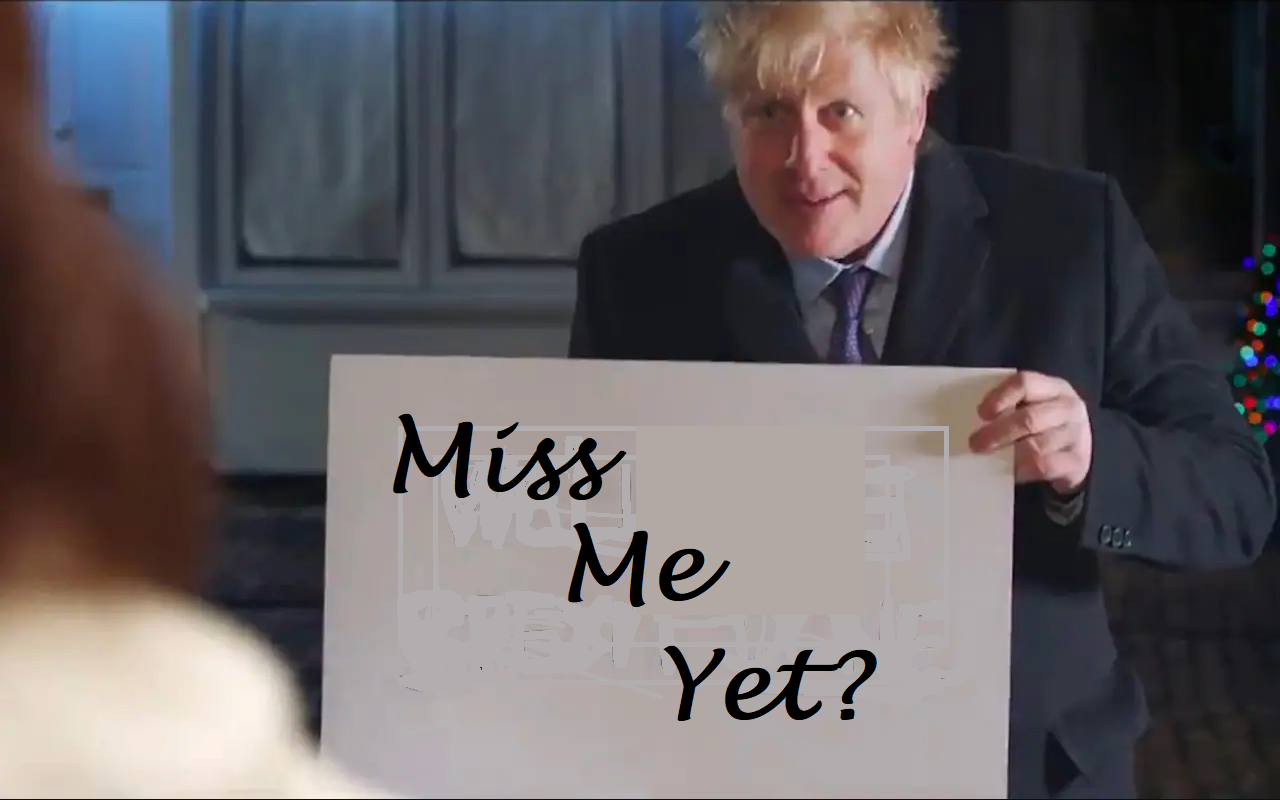
QotD: “Boris Lloyd George”
Since Lloyd George’s admirers are usually found at the liberal end of the spectrum, I imagine many of them will be displeased by the comparison. It’s true that Lloyd George — born in 1863, brought up speaking Welsh, steeped in the Baptist faith of his native land — came from a relatively humble background, never went to Eton, was a brilliantly fluent speaker and had an extraordinary appetite for hard work. And in his early days he exhibited an admirable commitment to all kinds of unfashionable causes — that is, until he sold out.
But more than any other twentieth-century PM, the last Liberal premier embodied the ambition, promiscuity and shameless indifference to rules and conventions that have driven Boris Johnson’s critics mad. Boris might be a mountebank, but Lloyd George was the mountebank’s mountebank.
Had he been prime minister during the Covid pandemic, would he have held parties at Number 10? The answer is obvious. He wouldn’t just have invited you to a party, he’d have sold you a peerage and made a move on your wife while you were still hanging up your coat.
Lloyd George was brilliantly funny. He was patriotic. He had the common touch. He was also, to quote Max Hastings on his modern-day successor, a “cavorting charlatan”, a “bully”, a “rogue” and a “scoundrel”, who “would not recognise truth, whether about his private or political life, if confronted by it in an identity parade”. And like Boris, he never hid it; quite the reverse. “My supreme idea is to get on,” he wrote to his future wife, Maggie Owen, during their courtship. “I am prepared to thrust even love itself under the wheels of my Juggernaut if it obstructs the way.” He meant every word.
According to one of his own aides, Lloyd George was “mental on matters of sex. In his view, a man and a woman could not possibly be friends without sexual intercourse.” That sounds familiar. Like Boris, he could never be entirely sure how many children he had. Within months of his marriage to the stolid and long-suffering Maggie, he had already strayed, impregnating a Liberal activist known only as Mrs J.
Not content with also impregnating his wife’s cousin Kitty, he also had affairs with “Mrs Tim” who was married to his friend Timothy Davies, as well as Julia Henry, another Liberal MP’s wife. He also carried on for decades with his secretary, Frances Stevenson, whom he forced to have at least two abortions. And there were many more — so many that nobody has ever produced a definitive count.
At the time, people joked that Lloyd George had a child in every town in Britain. The story goes that one day his son Dick went into a pub and fell into conversation with a stranger who looked just like him. The stranger eventually confessed that Lloyd George was indeed his father, and was secretly paying him £400 a year. To cap it all, some biographers suggest that Lloyd George also slept with Dick’s troubled wife, Roberta — and this when he was well into his sixties! By these standards, even Boris seems a paragon of fidelity.
Dominic Sandbrook, “How to bring down a Prime Minister”, UnHerd, 2022-01-14.
April 25, 2022
“We live in such a degraded information environment that we can’t get to discussions of principle”
Chris Bray on the increasing inability or deliberate choice of most legacy media outlets to avoid presenting basic facts in favour of pitching a scenario with the preferred outcome prepackaged and largely predigested for the consumer to accept uncritically:
Over and over again, journalism doesn’t begin to accurately describe; consuming it, we don’t get to the starting line of a functioning political discourse, which is just knowing what’s happening, more or less. We’re buried in fakery, in representations of reality that have no connection to reality. […]
I wrote last week about the disappearance of basic information on the criminal justice system in Los Angeles County, where I live. We have an ongoing debate over our Woke DA’s policy choices — but the more I look at the debate, the more I’m sure it’s a debate about nothing, because the slogans used to represent the DA’s policy choices really don’t seem to begin to reflect the reality of the DA’s actual policy choices. The slogans look from here like cover words, chaff fired as a rhetorical countermeasure to cloud the air. I’ve been trying to get clear information from people in Los Angeles County government, which has been … interesting, so stay tuned on that question. But what are we debating if we’re exchanging our thoughts on the empty fakery the DA is deploying to prevent us from noticing what he’s doing?
Back in 2016, the vapid mayor of a tiny city in Los Angeles County boldly announced that she had banned Donald Trump from her community, ordering city staff to burn the witch. Journalists reported it straight: TRUMP BANNED FROM LOCAL CITY.
It was left to lawyers with a media presence to seriously examine all of the problems with the remarkable claim that a part-time small-town mayor owns a personal fiefdom and can ban people from it. A not-especially-gifted politician with ambitions for higher office made up some nonsense to get herself in the news, and it worked. But the news was about nothing, because she had no authority to do the thing she announced in the press release.
This is more than half of the news: Noise with nothing it, a press release from an idiot typed up by idiots. What debate over questions of principle can proceed on the foundation of an informational void? (“I’m for empty hole!” “Oh yeah, well I’m against empty hole!”)
We’re beginning to solve some big pieces of that problem with alternative media, which is why you’re hearing so much complaining about misinformation. “Our democracy,” that hilarious phrase that doesn’t mean what it says, relies on the screen of fakery. Nothing happens until we punch enough holes in that screen.