As my regular readers know, as far as I’m concerned, they represent two not-terribly-different wings of exactly the same political party: the Boot on Your Neck Party. If it isn’t George Bush with his boot on your neck after 2008 — if George isn’t there any more to steal half of everything you make, and enslave your kids for military and other purposes, and dog your steps, and lowjack your phone, and read your mail, and ransack your medical records, and censor your radio and television, and search your home, and probe your bunghole — it’ll be Hillary.
Or somebody just like her.
Neither of these phony antagonists will offer not to do any of those evil things. Instead, they’re competing on the basis of who can deprive us all of more of our rights faster. Standing on the shoulders of would-be tyrants like Lincoln, Wilson, Roosevelt, and Johnson, Bill Clinton did his damnable best to make the state stronger and more unaccountable to the people. George Bush stands on Clinton’s shoulders today.
Any “progress” made by Republicans in converting America into a dictatorship will be absorbed by the next Democratic administration before they go on to make “progress” of their own. The “no-fly” list will become the “no-ride” list, then the “no-drive” list, then the “no-walk” list, and finally the “no-breathe” list. Why anybody should think that it matters which wing of the Boot on Your Neck Party is doing it to us at any given moment is — and always has been — beyond me.
L. Neil Smith, “Time for a Boynout”, Libertarian Enterprise, 2006-02-19.
January 20, 2022
QotD: The Boot-On-Your-Neck parties
January 18, 2022
January 17, 2022
“We need to address the corrosive influence of behavioural science on public life”
Frank Furedi on the British government’s use (and over-use) of “nudge” polices to influence the behaviour of the British public:

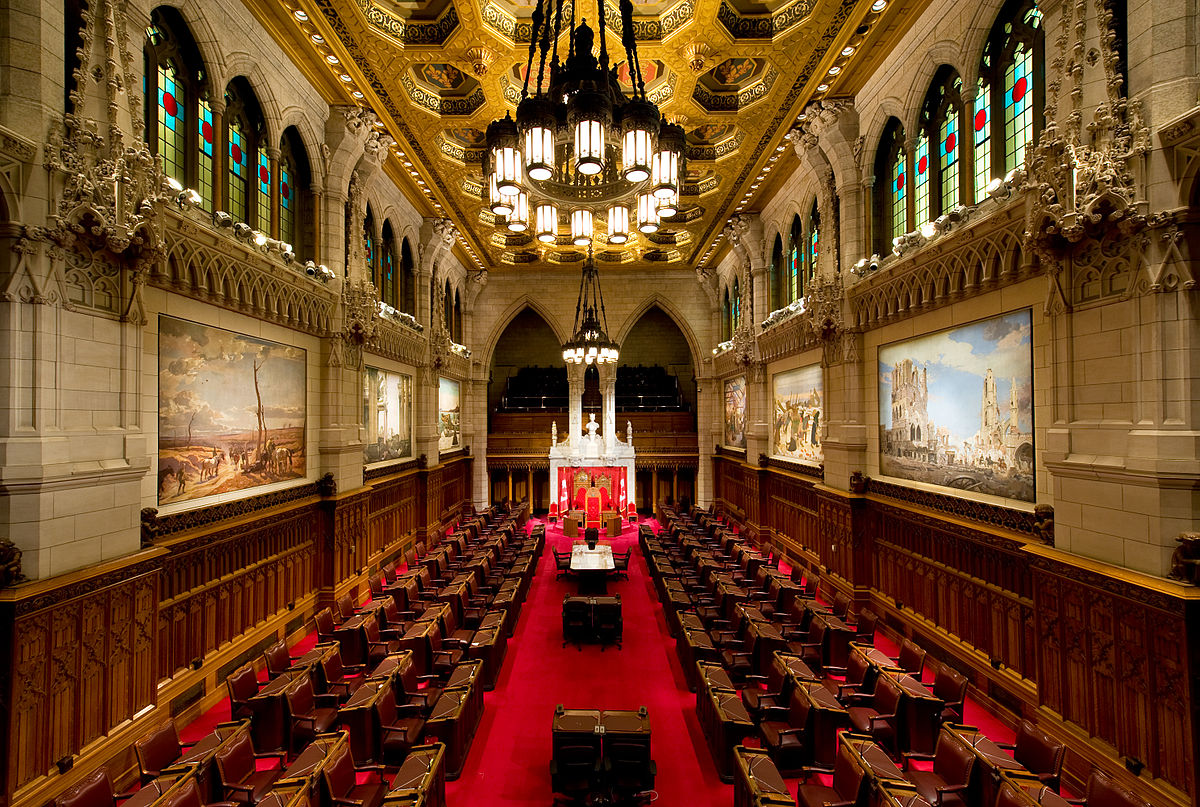
“Palace of Westminster”by michaelhenley is licensed under CC BY-NC-SA 2.0
Behavioural science, aka “nudging”, has been used by the government during the pandemic to scare people into doing the “right” thing. This insidious development has even been acknowledged by Simon Ruda, one of the co-founders of the Behavioural Insights Team, aka the Nudge Unit, which is part-owned by the UK government. He wrote that the “most egregious and far-reaching mistake made in responding to the pandemic has been the level of fear willingly conveyed [to] the public”.
Though he said that the propagation of fear had more to do “with government communicators and the incentives of news broadcasters” than with behavioural scientists themselves, Ruda’s admission is still striking. He even expressed concern about the state’s willingness “to use its heft to influence our lives without the accountability of legislative and parliamentary scrutiny”.
Ruda is not the only behavioural scientist concerned about officialdom’s systematic scaremongering. On 22 March 2020, a paper written by the Scientific Pandemic Influenza Behaviour Advisory Committee (SPI-B) for the government’s Scientific Advisory Group for Emergencies (SAGE) complained that the public was too relaxed about the pandemic. “A substantial number of people still do not feel sufficiently personally threatened”, it stated, adding that too many “are reassured by the low death rate in their demographic group”. It then urged the government to increase “the perceived level of personal threat… among those who are complacent, using hard-hitting emotional messaging”.
Some members of SAGE have since reported feeling “embarrassed” by the nature of SPI-B’s advice. As one regular SAGE attendee put it last year: “The British people have been subjected to an unevaluated psychological experiment without being told that is what’s happening.”
It is to be welcomed that at least some behavioural scientists are now questioning the political use of their discipline. But the problem goes deeper than fear-mongering during the pandemic. We need to address the corrosive influence of behavioural science on public life in general.
January 16, 2022
Is the narrative about the Trans Movement about to change?
In the latest Weekly Dish, Andrew Sullivan marks a perhaps significant change in how mainstream media outlets are discussing the Trans Movement:
An unusual thing happened in the conversation about transgender identity in America this week. The New York Times conceded that there is, indeed, a debate among medical professionals, transgender people, gays and lesbians and others about medical intervention for pre-pubescent minors who have gender dysphoria. The story pulled some factual punches, but any mildly-fair airing of this debate in the US MSM is a breakthrough of a kind.
Here’s the truth that the NYT was finally forced to acknowledge: “Clinicians are divided” over the role of mental health counseling before making irreversible changes to a child’s body. Among those who are urging more counseling and caution for kids are ground-breaking transgender surgeons. This very public divide was first aired by Abigail Shrier a few months ago on Bari’s Substack, of course, where a trans pioneer in sex-change surgery opined: “It is my considered opinion that due to some of the … I’ll call it just ‘sloppy’, sloppy healthcare work, that we’re going to have more young adults who will regret having gone through this process.” Oof.
The NYT piece also concedes another key fact: that puberty blockers are neither harmless nor totally reversible. Money quote:
Some of the drug regimens bring long-term risks, such as irreversible fertility loss. And in some cases, thought to be quite rare, transgender people later “detransition” to the gender they were assigned at birth. Given these risks, as well as the increasing number of adolescents seeking these treatments, some clinicians say that teens need more psychological assessment than adults do.
I would think that, just as a general rule, minors making permanent, life-changing decisions should receive more psychological treatment than adults. How on earth is this not the default? In what other field of medicine do patients diagnose themselves, and that alone is justification for dramatic, irreversible medication?
The NYT doesn’t give you the data for the “increasing number” of transitions because it’s hard to find in the US. In the UK, however, the data show a 3,200 percent rise in adolescents seeking transition over a decade — 70 percent of whom are girls seeking to become boys, a break from historical norms where boys/men were much more likely to seek transition. Nor does the NYT give any data for “detransitioners”. But any brief look online suggests they are not exactly “quite rare”. They are, in fact, becoming a small but recognizable and tenacious part of the trans landscape. And among the risks of puberty blockers that the NYT does not mention are neurological damage, bone-density loss, and a permanent inability to experience sexual pleasure. And in almost every case (98 percent in one report), puberty blockers are never reversed.
January 15, 2022
January 14, 2022
People who tell “noble lies” are still liars who should not be trusted
In Spiked, Matt Ridley considers why so many scientists went along with the disinformation campaign to obscure or discredit the lab-leak theory on the origins of the Wuhan Coronavirus:
In August 2007 there was an outbreak of foot-and-mouth virus on a farm in Surrey. It was a few miles from the world’s leading reference laboratory for identifying outbreaks of foot and mouth. Nobody thought this was a coincidence and sure enough a leaking pipe at the laboratory was soon found to be the source: a drainage contractor had worked at the lab and then at the farm.
In December 2019 there was an outbreak in China of a novel bat-borne SARS-like coronavirus a few miles from the world’s leading laboratory for collecting, studying and manipulating novel bat-borne SARS-like coronaviruses. We were assured by leading scientists in China, the US and the UK that this really was a coincidence, even when the nine closest relatives of the new virus turned up in the freezer of the laboratory in question, at the Wuhan Institute of Virology.Now we know what those leading scientists really thought. Emails exchanged between them after a conference call on 1 February 2020, and only now forced into the public domain by Republicans in the US Congress, show that they not only thought the virus might have leaked from a lab, but they also went much further in private. They thought the genome sequence of the new virus showed a strong likelihood of having been deliberately manipulated or accidentally mutated in the lab. Yet later they drafted an article for a scientific journal arguing that the suggestion not just of a manipulated virus, but even of an accidental spill, could be confidently dismissed and was a crackpot conspiracy theory.
Jeremy Farrar – who organised the call on 1 February with Patrick Vallance, Francis Collins, Anthony Fauci and a Who’s Who of virology – had already spilled a few of the beans in his book, Spike, published last year. He wrote that at the start of February 2020 he thought there was a 50 per cent chance the virus was engineered, while Kristian Andersen of the Scripps Research Institute was at 60-70 per cent and Eddie Holmes of Sydney University put it at 80 per cent. But some time after the call they all changed their mind. Why? They have never troubled us with an answer.
Now, however, we have an email from Farrar, sent on Sunday 2 February to Francis Collins, head of the National Institutes of Health, and Anthony Fauci, head of the National Institute of Allergy and Infectious Diseases. It recounts the overnight thoughts of two other virologists Farrar had consulted, Robert Garry of Tulane University and Michael Farzan of the Scripps Research Institute, as well as Farrar’s own thoughts. Even after the call, their concern centred on a feature of the SARS-CoV-2 genome that had never been seen in any other SARS-like coronavirus before: the insertion (compared with the closest related virus in bats) of a 12-letter genetic sequence that creates a thing called a furin cleavage site, which makes the virus much more infectious.
Industry with 1% profit margins accused of earning “record profits”
Joe Lancaster on Senator Elizabeth Warren’s renewed assault on the top-hatted, monocle-wearing robber barons of the grocery business:

“Piggly Wiggly” by afiler is licensed under CC BY-SA 2.0
… Warren could hardly have picked a worse industry to use as an example: Grocery stores consistently have among the lowest profit margins of any economic sector. According to data compiled this month by New York University finance professor Aswath Damodaran, the entire retail grocery industry currently averages barely more than 1 percent in net profit. In its most recent quarter, Kroger reported a profit margin of 0.75 percent, during a time in which Warren claims that the chain was “expanding profits” due to its “market dominance.”
In actuality, for much of the last year, grocery stores have seen enormous boosts in revenue, but not increased profitability, for the simple reason that everything has been costing more: not just products, but transportation, employee compensation, and all the extra logistical steps needed to adapt to shopping during a pandemic. Couple that with persistent inflation — which Warren also recently blamed on “price gouging” — and it is no wonder that things seem a bit out of balance.
Warren has had an itchy trigger finger for antitrust laws for some time. In 2019, as part of her presidential platform, she called for using the laws to forbid retailers from selling their own products. This would affect industry leaders like Amazon and Walmart, but ironically, it would have a devastating impact on grocery stores as well: Grocers increasingly rely on their own proprietary goods to stock cheaper alternatives alongside name brands. This provides not only less expensive options for consumers, but lower costs to the stores themselves. Store brands also help fill gaps created by external supply shortages.
January 11, 2022
Mailer, cancelled. Question mark?
In the most recent SHuSH newsletter, Ken Whyte outlines the “cancellation” of the late Norman Mailer by his Random Penguin editors … maybe … but probably not really:

American writers John Updike, Norman Mailer, and E. L. Doctorow at the PEN Congress, January 1986.
Photo by Bernard Gotfryd via Wikimedia Commons.
You have to feel for Norman Mailer, the late author of some forty books and a two-time winner of the Pulitzer Prize. There he lay, resting in well-deserved peace in the winter quiet of Provincetown Cemetery after a lifetime of fighting mankind’s greatest causes — civil rights, an end to war, the Great American Novel, his urgent libido — when out of nowhere comes a report that he has been canceled by his long-time publisher, Random House.
“With slow-mo hammer-dropping predictability,” wrote Michael Wolff in the newsletter, The Ankler, “Norman Mailer’s long-time publisher has recently informed the Mailer family that it has canceled plans to publish a collection of his political writings to mark the centennial of his birth in 2023, confirms the film producer Michael Mailer, the author’s oldest son.”
The reasons for the cancelation, according to Wolff, are “a junior staffer’s objection to the title of Mailer’s 1957 essay, ‘The White Negro’, a psycho-sexual-druggie precursor and model for much of the psycho-sexual-druggie literature that became popular in the 1960s. A Random House source also cites the objections of feminist and cultural gadfly Roxane Gay.”
Wolff’s scoop was promptly picked up and carried at face value all over North America, throughout Italy by La Repubblica, England by the Daily Mail, Chile by El Periodisto, and so on. It was the biggest cultural story going for several days, never mind that questions as to its veracity were raised almost the minute it broke.
Well, before it broke, in fact. Wolff himself scarcely seems convinced of his story. Yes, his headline is unequivocal: “Michael Wolff on Random House’s Cancelation of Norman Mailer”. But he admits in the newsletter that he couldn’t get anyone at Random House to confirm the news. Also that the Mailer estate didn’t actually have a contract for a book of political non-fiction with Random House for the publisher to cancel.
Wolff further allows that his one source at Random House steered him into a ditch, claiming that in addition to the anonymous junior staffer, Roxane Gay was involved. Wolff followed up with Gay, who told him she knew nothing of the controversy and had never read Mailer.
January 7, 2022
Mark Steyn on the Potemkin Congress and the compliant media that enable the farce
With Mark doing a lot more screen time for GB News recently, he doesn’t have as much opportunity to set his thoughts down in written form, so this little paean to the Potemkin parliament at the heart of Washington DC is a rare treat:

The western front of the United States Capitol. The Neoclassical style building is located in Washington, D.C., on top of Capitol Hill at the east end of the National Mall. The Capitol was designated a National Historic Landmark in 1960.
Photo via Wikimedia Commons.
As I said earlier, I find myself at odds with virtually the entire politico-media class in my reaction to the “storming” of the US Capitol … I was surprised that even politicians and pundits could utter all that eyewash about “the citadel of democracy” and “a light to the world” with a straight face. It’s a citadel of crap, and the lights went out long ago: ask anyone who needs that $600 “relief”.
I despise the United States Congress, and not merely for the weeks I had to spend there during the Clinton impeachment trial: My contempt pre-dates that circus. It dates to the moment I first realized, as a recent arrival to this land, that when Dick Durbin or some such is giving some overwrought speech on a burning issue he is speaking to an entirely empty chamber — because there are no debates, because most of these over-entouraged Emirs of Incumbistan are entirely incapable of debate: See, inter alia, Ed Markey.
But the fact that they might as well be orating in front of the bathroom mirror isn’t why I despise it. It’s that the American media go along with the racket, and there’s only the one pool camera with the fixed tight shot so that you can’t see the joint is deserted and the guy is talking to himself. The wanker press is so protective of its politicians that it’s happy to give the impression that a boob like Markey is Cromwell in the Long Parliament …
That leads easily to the next stage of decay — for why would a Potemkin parliament not degenerate further into a pseudo-legislature? The Covid “relief” bill is 5,593 pages. There is no such thing as a 5,593-page “law” — because no legislator could read it and grasp it. For purposes of comparison, the Government of India Act, which in 1935 was the longest piece of legislation ever drafted in British law and which provided for the government of what are now India, Pakistan and Burma, is 326 pages.
Oh, I’m sure paragons of republican virtue will object that no Indian or Burmese citizen-representatives were involved in that piece of imperial imposition. Well, no American citizen-representatives were involved in the Covid “relief” bill. The legislation was drafted not by legislators, nor by civil servants, nor even by staffers or interns. Instead, a zillion lobbyists wrote their particular carve-outs, and then it got stitched together by some clerk playing the role of Baron von Frankenstein. The “legislators” voted it into law unread, and indeed even unseen, as the Congressional photocopier proved unable to print it: It was a bill without corporeal form, but the yes-men yessed it into law anyway.
Whatever that is, it’s not a republic. As beacons to the world go, stick it where the beacon don’t shine … Whatever Sudan and Chad and Waziristan need, it’s not the US Congress.
January 6, 2022
The war on “ultra-processed food”
Our self-imagined “elites” have a new crusade to prosecute — the crusade against “ultra-processed food”:
In “public health”, the name of the game is to interfere with people’s lives without having your own choices meddled with. This is straightforward with smoking since the philosopher kings of the nanny state don’t smoke. Alcohol is more tricky since most of them drink, but minimum pricing — which was introduced in Ireland yesterday — offers the perfect way to penalise ordinary people while leaving fine wine and craft beer unaffected.
The war on food poses the trickiest problem since its pretext — obesity — is the result of over-consumption and physical inactivity rather than the consumption of any specific type of food. “Junk food” is too narrow since most people interpret it to mean “fast food” from a handful of restaurant chains. And so, in the absence of an obvious dietary culprit, the “public health” lobby is shifting towards a crusade against “ultra-processed food”.
Most people don’t know what this means, but it sounds bad if you have an instinctive objection to industry and modernity. Perhaps it evokes thoughts of “chemicals” and “E numbers”. Certainly, it sounds like the opposite of the “natural”, “organic” and “home made” food so beloved of those who think they are superior to other people. It is, however, a classic “public health” bait and switch. Just as people didn’t realise that a ban on “junk food” advertising would result in adverts for cheese and butter being banned, people won’t realise what a war on ultra-processed food means for them until it is too late.
In a deranged op-ed in BMJ Global Health, some of Mike Bloomberg’s minions from Vital Strategies call for tobacco-style regulation of “ultra-processed food”, starting with warning labels.
Simply put, ultra-processed foods are foods that can’t be made in your home kitchen because they have been chemically or physically transformed using industrial processes. They are recognisable on the supermarket shelf as packaged foods that are ready-to-eat, contain more than five ingredients and have a long shelf-life. The industrial processing, as well as the cocktail of additives, flavours, emulsifiers and colours they contain to give flavour and texture, make the final product hyper-palatable or more appealing and potentially addictive, which in turn leads to poor dietary patterns.
With more than half the total calories consumed in high-income countries coming from ultra-processed foods and rapid increases in low- and middle-income countries, these products are exposing billions of people to a higher risk of type 2 diabetes, heart disease, stroke, depression and death.
Scary stuff, eh? Alas, they don’t give any examples of ultra-processed foods so let us instead turn to a recently published study about them …
Baked goods, including cakes, pastries, industrial breads, and soft drinks ranked among the top contributors to sales of UPFDs [ultra-processed food and drinks]
According to the the British Heart Foundation, ultra-processed foods include …
Ice cream, ham, sausages, crisps, mass-produced bread, breakfast cereals, biscuits, carbonated drinks, fruit-flavoured yogurts, instant soups, and some alcoholic drinks including whisky, gin, and rum.
I’m not sure how hard liquor made the cut, but I suppose if you’re going be a fun sponge you might as well go all the way.
“When speaking to a contemptible idiot who is kind of evil, don’t call them a contemptible idiot who is kind of evil! Many contemptible idiots find that language insulting”
Tom Chivers reviews a recent book from Lee McIntyre, How to Talk to a Science Denier: Conversations with Flat Earthers, Climate Deniers, and Others Who Defy Reason:
Imagine you bought a book with the title How to Talk to A Contemptible Idiot Who Is Kind of Evil. You open the book, and read the author earnestly telling you how important it is that you listen, and show empathy, and acknowledge why the people you’re talking to might believe the things they believe. If you want to persuade them, he says, you need to treat them with respect! But all the way through the book, the author continues to refer to the people he wants to persuade as “contemptible idiots who are kind of evil”.
At one stage he even says: “When speaking to a contemptible idiot who is kind of evil, don’t call them a contemptible idiot who is kind of evil! Many contemptible idiots find that language insulting.” But he continues to do it, and frequently segues into lengthy digressions about how stupid and harmful the idiots’ beliefs are. Presumably you would not feel that the author had really taken his own advice on board
This is very much how I feel about How to Talk to A Science Denier, by the Harvard philosopher Lee McIntyre.
McIntyre wants to help us change people’s minds. Specifically, to help us change the minds of these strange, incomprehensible people called “science deniers”. He addresses five main groups of “deniers”: flat earthers; climate deniers; anti-vaxxers; GMO sceptics; and Covid deniers.
This is, on the face of it, an important project. It’s a truism that the world is polarised, and our sense of shared reality is under attack. If there is some way of learning how to talk across difference, and to persuade without attacking, that might go a long way to bridging our various divides, not just the five he discusses.
The framing is that McIntyre goes and meets representatives of these groups and tries to persuade them out of their wrong beliefs. He goes armed with social-psychology research about how best to persuade people. His big trick (which I think is a good, if limited, one) is asking: what evidence would it take to make you change your mind?
But the whole book is premised on one idea: McIntyre is right, and the people he is “talking to” are wrong.
[…]
McIntyre constantly wants to make a clean distinction between “science deniers” and non-deniers. So, for instance, he says that there are five “common reasoning errors made by all science deniers” [my emphasis]. They are: cherrypicking, a belief in conspiracy theories, a reliance on fake experts, illogical reasoning and an insistence that science must be perfect. If you don’t make all five of those errors, you’re not an official McIntyre-accredited science denier.
Hang on, though. A “belief in conspiracy theories”? McIntyre spends a lot of time talking about the tobacco firms who manufactured doubt in the smoking/lung cancer link, and the oil firms who did the same with the fossil fuel/climate change link. He says that the spread of Covid denialism through the US government was driven by Republican desire to keep the economy open and win the election. Aren’t these conspiracy theories?
Ah, but for McIntyre these aren’t conspiracy theories, they’re conspiracies. The distinction is “between actual conspiracies (for which there should be some evidence) and conspiracy theories (which customarily have no credible evidence).”
QotD: The centre cannot hold … because there’s barely any “centre” remaining
… check out Kevin Drum’s analysis of asymmetric polarization these past few decades. He shows relentlessly that over the past few decades, it’s Democrats who have veered most decisively to the extremes on policy on cultural issues since the 1990s. Not Republicans. Democrats.
On immigration, Republicans have moved around five points to the right; the Democrats 35 points to the left. On abortion, Republicans who advocate a total ban have increased their numbers a couple of points since 1994; Democrats who favor legality in every instance has risen 20 points. On guns, the GOP has moved ten points right; Dems 20 points left.
It is also no accident that, as Drum notes and as David Shor has shown: “white academic theories of racism — and probably the whole woke movement in general — have turned off many moderate Black and Hispanic voters.” This is why even a huge economic boom may not be enough to keep the Democrats in power next year.
We are going through the greatest radicalization of the elites since the 1960s. This isn’t coming from the ground up. It’s being imposed ruthlessly from above, marshaled with a fusillade of constant MSM propaganda, and its victims are often the poor and the black and the brown.
Andrew Sullivan, “What Happened To You?”, The Weekly Dish, 2021-07-09.
January 4, 2022
QotD: Status signalling
The second thing they have wrong, and what I urge you to realize as soon as you can: They are not the “oppressed.” No, I don’t mean by that that there is no oppression in our society. Any human society has people with more power than others. It’s just that the groups and ideas that the left and their violent lap-wolves Antifa have cast as victims aren’t the victims.
In fact, their philosophy — the Marxist ideology they propound and the craziness behind it — has been in control of society, on top, since at least the seventies.
Being a leftist is a mark of being “good” and also well educated. The same way that in Elizabethan England poor mad Christopher Marlowe wrote his stage directions in Latin, to show that he had had an excellent education and deserved respect, so too the leftists of today pepper their works, from movies to TV to books to art, with odes to the oppressed and paeans to the coming revolution. It’s how you show you’re high-class and exquisitely educated.
All the old families, all the rich, all the captains of industry and power brokers signal left as hard as they can, because that’s where the power is — and in my field, the awards, the professorships, and the acclaim. Heck, remember what Trump signaled just to be allowed to do business.
And that’s why I’ve been watching in amusement the left going through the motions of kabuki theater revolution against a society … they control.
Sarah Hoyt, “We’re Seeing the Death Rattle of the Revolution, Not Its Birth”, PJ Media, 2020-07-28.