David Fletcher on the last in the Stuart series. Known unofficially as “Honeys”, the M5A1 Stuart was an improved version of the American’s M3 light tank. They were used by British armoured regiments and by most other Allied armies during WW2. They were fast, reliable and popular with their crews, but outclassed by the German tanks of 1944.
When the German armed forces invade the USSR, they come with an order to exterminate from Hitler. Now the defending Soviet armed forces receive similar orders from Stalin. The bloodshed that follows defies human imagination.
Soundtracks from the Epidemic Sound:
Skrya – “First Responders”
Philip Ayers – “Trapped in a Maze”
Farrell Wooten – “Mystery Minutes”
Cobby Costa – “From the Past”
Cobby Costa – “Flight Path”
Gunnar Johnsen – “Not Safe Yet”
Farrell Wooten – “Blunt Object”
Fluow – “Endlessness”
Jon Bjork – “Icicles”
Jon Bjork – “For the Many”
A TimeGhost chronological documentary produced by OnLion Entertainment GmbH.
From the comments:
World War Two
8 hours ago (edited)
However hard it is to watch this horror, it’s important that we document it, and learn from it. Each and everyone of us can, and we must for the sake of ourselves and our fellow human beings do so. The steps that led the people involved in these atrocities to this point were small, sometimes innocent, or at least uninformed decisions that took many years to reach this level of inhumanity. It starts with denying facts, imagining conspiracies as the root of your own problems, and demonizing your imagined enemies. In this void you are already on a slippery slope that may lead into the abyss. On that note, the events depicted here are based on solid research, and verified sources that are irrefutable. Wherever there is uncertainty, we have mentioned it. The purpose of this documentation is neither to scapegoat any one side, nor exonerate anyone from blame. These are the facts. This is what happened. Think about that, because the perpetrators here were like us, they didn’t come out of their mother’s womb with the intent to torture and murder anyone. And the victims were also like all of us, ordinary people just trying to get on with their lives according to their best ability. They had dreams and goals in life, some of them political perhaps, but mostly they just got on with their everyday life, banal and difficult as that might be, until they ended up in the hands of someone who had learnt to hate them without even knowing them. Remember that – this could have been anyone of us, on both sides of the events. To have that humility is the beginning of a journey to do good.
Spartacus
PS. and if you wonder how we put up with making this kind of content; it’s difficult. I cried bitterly after recording this, and tears still well up when I think about it. While we write it’s easier to turn off, switch on the coping mechanisms, pretend that its just absurd facts and numbers. But when you act out the words… that what defies imagination is suddenly horribly real.
Comments Off on Barbarossa, Hitler’s and Stalin’s Hell on Earth – War Against Humanity 014 – July 1941, Part 01
On October 23 , 1962 as the blockade on Cuba is being prepared, US President John F. Kennedy and USSR Chairman Nikita Khrushchev question their own actions realising that they might have gone a step too far.
Hosted by: Indy Neidell
Written by: Spartacus Olsson
Director: Astrid Deinhard
Producers: Astrid Deinhard and Spartacus Olsson
Executive Producers: Astrid Deinhard, Indy Neidell, Spartacus Olsson, Bodo Rittenauer
Creative Producer: Joram Appel
Post-Production Director: Wieke Kapteijns
Research by: Spartacus Olsson
Edited by: Jonas Klein & Karolina Dołęga
Sound design: Marek Kamiński
On October 22, in the world’s first televised announcement of an international military crisis, US President John F. Kennedy sets off panic and sudden fear of a third world war, with nuclear arms involved.
Armament Research Services (ARES) is a specialist technical intelligence consultancy, offering expertise and analysis to a range of government and non-government entities in the arms and munitions field. For detailed photos of the guns in this video, don’t miss the ARES companion blog post:
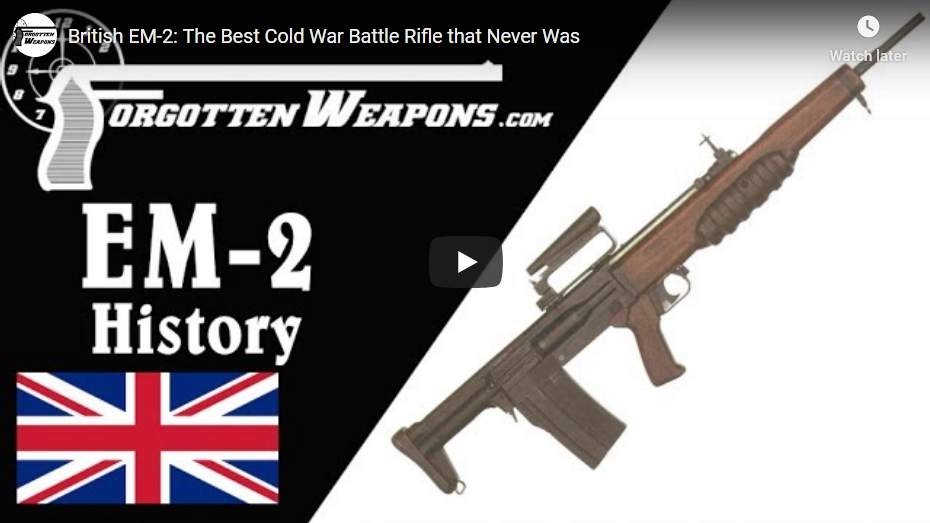
The EM-2 was the rifle that the British pushed for NATO trials in 1950. It was a rifle well ahead of its time in several areas — as a select-fire bullpup rifle, it was intended to replace both the infantry rifle and the submachine gun. Its .280 caliber cartridge was designed with combat ranges of 600 yards and less, acknowledging the reality that engagements beyond even 300 yards were extremely rare, and not important enough to base rifle design on. It was also designed to use primarily optical sights, long before this concept would be embraced elsewhere. Unfortunately, the potential of the EM-2 was lost to the political decision that compatibility with American ordnance choices was a more significant benefit than an improved infantry rifle.
Mechanically, the EM-2 is heavily based on the German G43 flapper-locking system. It uses a long stroke gas piston in place of the G43’s short stroke one, though. To help account for the slower handling of a bullpup configuration, the EM-2 would both lock open when its magazine was empty and also automatically close the bolt and chamber a round when a fresh magazine was inserted. The safety was much like that of the M1 Garand, and the selector lever was of the push-through type like on the German Sturmgewehr.
The optic on the EM-2 is quite tiny, and offers no magnification. Its purpose is to reduce the two-element sight picture of traditional iron sights to a single plane that can be more quickly and easily placed on the target.
In total, only 55 EM-2 rifles were manufactured, including the paratrooper model in this video and a number of 7.62mm NATO examples made as a last ditch effort to remain competitive in NATO trials. Where most failed prototype rifles were rejected for very legitimate technical shortcomings, the EM-2 is (I believe) a prime example of an outstanding weapon that fell victim to politics unrelated to its actually qualities.
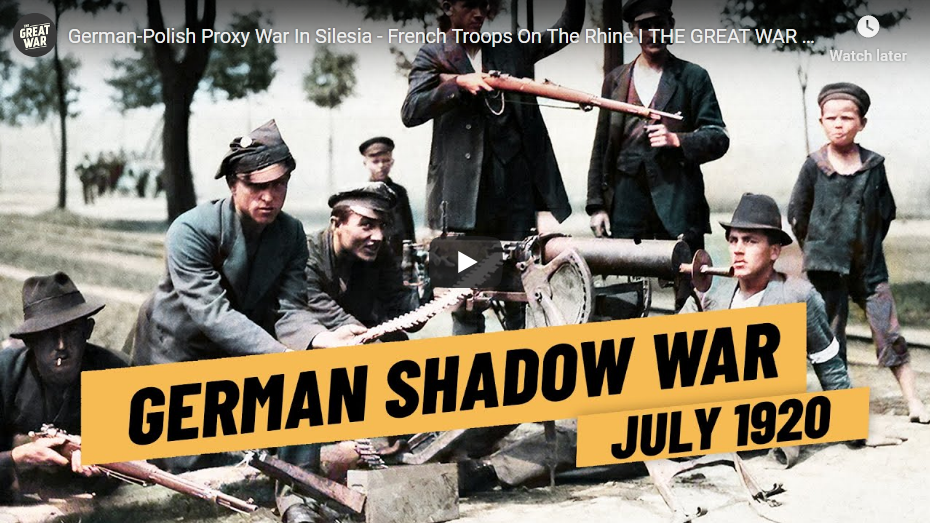
The summer of 1920 was marked by escalating tensions on the borders of the German Reich. In the Rhineland, a neutral zone per the Versailles Treaty, the revolutionary uprising after the failed Kapp Putsch was put down with the help of the army and the Freikorps. In Upper Silesia, the conflict between Poland and Germany was escalating into a proxy war. And all that while the German government was negotiating the payments of reparations at the Spa Conference.
» BUY OUR SOURCES IN OUR AMAZON STORES https://realtimehistory.net/amazon *
*Buying via this link supports The Great War (Affiliate-Link)
» SOURCES
Buat, Edmond. 8 (Perrin, 2015)
Beaupré, Nicolas. Occuper l’Allemagne après 1918 (Revue historique des armées, 2009)
Böhler, Jochen. Civil War in Central Europe, 1918-1921 (Oxford University Press, 2019)
Gietinger, Klaus. Kapp-Putsch (Stuttgart: Schmetterling, 2020)
le Naour, Jean Yves. La Honte Noire (Hachette, 2004) Le Figaro, numéro du 8 avril 1920 (via Gallica)
Stengers, Jean. L’accord militaire franco-belge de 1920 et le Luxembourg (Revue belge de de Philologie et d’Histoire, 2004) https://www.dhm.de/lemo/jahreschronik…
Pöppinghege, Rainer: Republik im Bürgerkrieg. Kapp-Putsch und Gegenbewegung an Ruhr und Lippe 1919/1920 (2019)
van Galen Last, Dick. Des soldats noirs dans une guerre de blancs (1914-1922): une histoire mondiale (Editions de l’Université de Bruxelles, 2015)
»CREDITS
Presented by: Jesse Alexander
Written by: Jesse Alexander
Director: Toni Steller & Florian Wittig
Director of Photography: Toni Steller
Sound: Toni Steller
Editing: Toni Steller
Motion Design: Philipp Appelt
Mixing, Mastering & Sound Design: http://above-zero.com
Maps: Daniel Kogosov (https://www.patreon.com/Zalezsky)
Research by: Jesse Alexander
Fact checking: Florian Wittig
Channel Design: Alexander Clark
Original Logo: David van Stephold
Contains licensed material by getty images
All rights reserved – Real Time History GmbH 2020
Comments Off on German-Polish Proxy War In Silesia – French Troops On The Rhine I THE GREAT WAR 1920
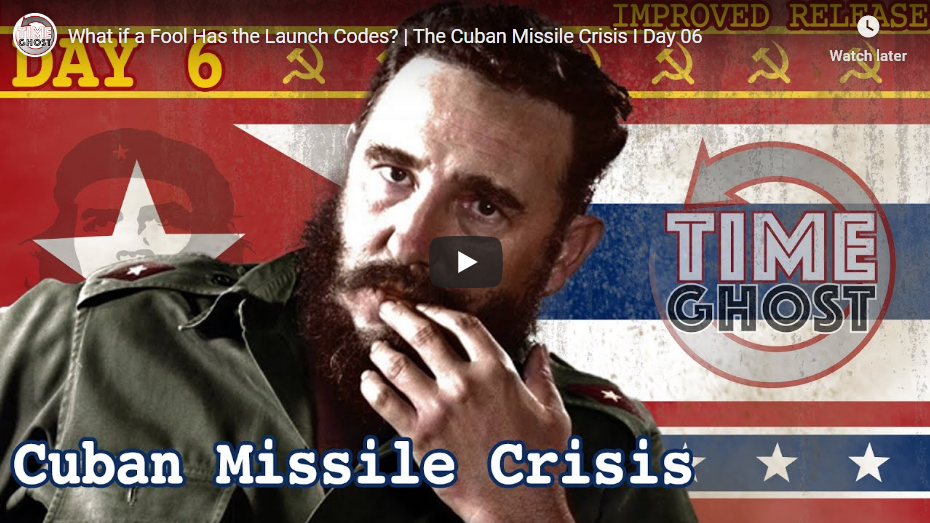
On October 21 1962, politicians and military in both the US and in the USSR seem to have contradictory views on what to do next. Should the Soviet local commanders on Cuba get to play with the little nukes as they like, or rather wait for permission?
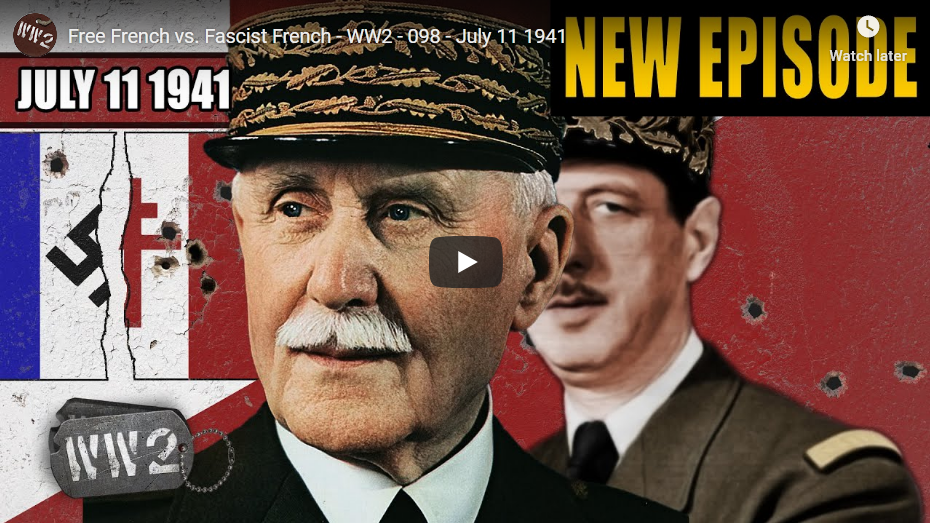
Germany keeps advancing on the eastern front, and yet by now, transport and supply problems are seriously undermining the capability of the German spearheads, even as they pull further away from the infantry. The Syria-Lebanon campaign is coming to an end, though, and an armistice is proposed which would give the Allies victory if accepted.
On Saturday October 20th, 1962, US President John F Kennedy moves to side more with the hawks advising a forceful response to the Cuban Missile Crisis.
The career of Duško Popov is probably more exciting than any work of fiction. A glamorous and brave spy who plays a central role in the underground intelligence war of the time.
Hosted by: Indy Neidell
Written by: Francis van Berkel
Director: Astrid Deinhard
Producers: Astrid Deinhard and Spartacus Olsson
Executive Producers: Astrid Deinhard, Indy Neidell, Spartacus Olsson, Bodo Rittenauer
Creative Producer: Joram Appel
Post-Production Director: Wieke Kapteijns
Research by: Scott Grimwood
Edited by: Karolina Dołęga
Sound design: Marek Kamiński
Map animations: Eastory (https://www.youtube.com/c/eastory)
Music:
“Try and Catch Us Now” – David Celeste
“Too Close for Comfort” – Jon Bjork
“Epic Adventure Theme 4” – Håkan Eriksson
“Moving to Disturbia” – Experia
“Other Sides of Glory” – Fabien Tell
“Underlying Truth” – Howard Harper-Barnes
“Spy Game” – Jon Sumner
Visual Sources:
National Archives NARA
Library of Congress
Imperial War Museum: CH1461
US Holocaust Memorial Museum
Alexander Altenhof https://commons.wikimedia.org/wiki/Fi…
Icons from The Noun Project: Marco Livolsi, faisal, Smalllike, Adrien Coquet, Fiona OM, Businessman with Suitcase by Fiona, Nick Novell, Luis Prado, Samy Menai, Nithinan, designer468, Marco Livolsi, ProSymbols, Milinda Courey,Icons Producer, Halfazebra, Leona Grande, Vectors Point, Arthur Dias,MRK, Becris, iconcheese, Likous, Markus, ProSymbols, Michael Fischer, priyanka, Adnen Kadri, Baboon designs and Laymik
Archive by Screenocean/Reuters https://www.screenocean.com.
A TimeGhost chronological documentary produced by OnLion Entertainment GmbH.
Comments Off on The Real James Bond was Balkan – Duško Popov – WW2 Biography Special
President John F. Kennedy faces off with the Joint Chiefs of Staff, including General Curtis LeMay (his arch-enemy), who demand more freedom for military action.
Sources:
Photos from Bejucal, Cuba: History and Festivities – Havana Times
Andy Garcia – Mireille Ampilhac
Photo from chernobylguide.com – Chernobyl Mutations in Humans and Animals
PX 65-105:179 from LOOK Magazine 8405-1-26
Photo from WDR – 23. Juni 1963 – John F. Kennedy kommt in Deutschland an
Soundtracks from Epidemic Sound:
– “Cold Eyes” – Elliot Holmes
– “Scope” – Got Happy
– “Juvenile Delinquent” – Elliot Holmes
– “Moving to Disturbia” – Experia
– “From the Depths” – Walt Adams
– “Symphony of the Cold-Blooded” – Christian Andersen
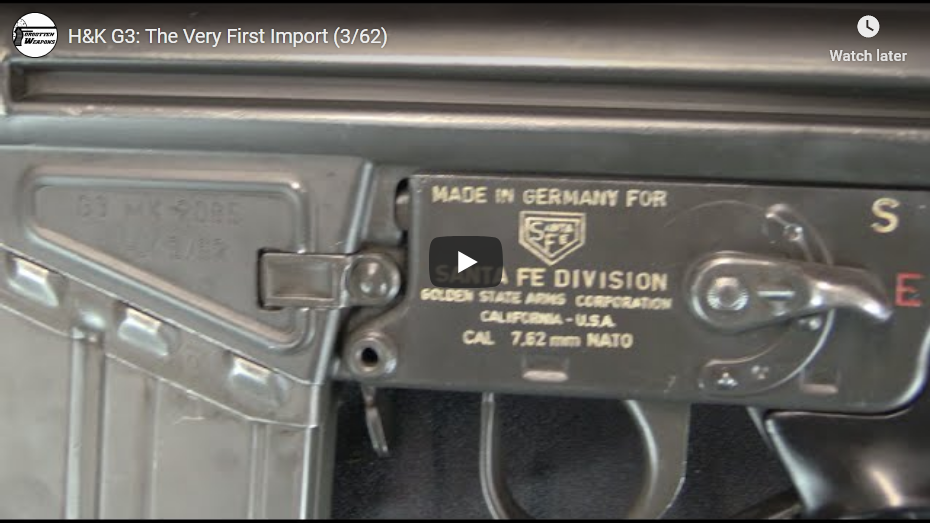
We have all seen plenty of sporter CETME rifles and civilian HK-91s, but when the G3 was new to the Germany military, there was already an interest in bringing semiauto versions into the US. The Golden State Arms Corporation was the first to do so, with three batches of imports in 1962 (just 3 years after the G3 was adopted). The first of these came into the US in March, and was basically identical to the military G3 except with a two-position semiauto-only fire control pack.
Later imports had to be made more and more distinct from the military G3s, which leaves these 3/62 guns as the closest thing to the real G3 available to the non-NFA US shooter.
Video on the development of the roller-delayed blowback system:
On D-Day, 6th June 1944, Operation Overlord began. The Western Allies unleashed their gigantic amphibious landing on the coast of Normandy. Preluded by a nightly airborne attack and supported by a massive armada of bombers and fleet artillery, their landing-craft reached the fortified beaches. Against a hail of machine-gun bullets, the Allied soldiers stormed the beaches and overran the German bunkers and trenches. A new front was opened and the battle for France began.
Hosted by: Indy Neidell
Written by: Markus Linke and Indy Neidell
Directed by: Astrid Deinhard and Wieke Kapteijns
Produced by: Pär Sundström, Astrid Deinhard and Spartacus Olsson
Creative Producer: Joram Appel
Community Manager: Maria Kyhle
Executive Producers: Pär Sundström, Joakim Broden, Tomas Sunmo, Indy Neidell, Astrid Deinhard, and Spartacus Olsson
Post-Production Director: Wieke Kapteijns
Edited by: Karolina Dołęga
Sound Editing by: Marek Kaminski
Maps by: Eastory – https://www.youtube.com/c/eastory
Archive by: Reuters/Screenocean – https://www.screenocean.com
Colorizations by: Julius Jääskeläinen – https://www.facebook.com/JJcolorization/
Music by: Sabaton
Sources:
National Archives NARA
Bundesarchiv
US Holocaust Memorial Museum
Imperial War Museums: IWM H 39183, H38244 IWM, 1944_B5234, 944_TR1631, IWM A70 31-1, IWM A70 31-2,EA25734, B 5218, 1944_MH9509, IWM A70 29-1-2, B5225, B5089
Icons from The Noun Project by zidney and Norbert de Graaff
An OnLion Entertainment GmbH and Raging Beaver Publishing AB co-Production.
On October 18 1962, President Kennedy meets with USSR Foreign Minister Andrei Gromyko, one of the architects of placement of missiles on Cuba. While the two beat around the bush, Khrushchev and Gromyko’s execution of the Soviet military and nuclear build up on Cuba continues.