
Real Time History
Published 16 Dec 2022After Napoleon’s defeat in Russia in 1812, the situation on the European continent is rapidly shifting. Prussia and Austria are leaving their unhappy alliance with the French. Prussian general Yorck even pledges his support to the Russian Army which is on the move towards Berlin. At Lützen and Bautzen Napoleon still manages to beat the new coalition, but his losses from Russia put him on the backfoot.
(more…)
December 19, 2022
Napoleon’s Downfall: German Wars of Liberation 1813
Comments Off on Napoleon’s Downfall: German Wars of Liberation 1813
December 18, 2022
A Super Bomber to Break Japan – WW2 – 225 – December 17, 1943
World War Two
Published 17 Dec 2022This war has now lasted as long as the Great War did, but there’s no signs of it slowing. The Soviets have three offensives going on on the Eastern Front, in Italy the Allies are attacking at San Pietro and over the Moro River, in the Pacific there are Allied landings on New Britain, but in Pacific Command, the big talk is all about a new super bomber.
(more…)
Comments Off on A Super Bomber to Break Japan – WW2 – 225 – December 17, 1943
Belgian GP-35: Pre-War Browning High Power Complete Rig
Forgotten Weapons
Published 17 Aug 2022The Browning High Power (“Grande Puissance“, aka GP-35) was developed by Fabrique National in Belgium, designed primarily by John Browning’s apprentice Dieudonné Saive. It began in the very early 1920s as a pistol designed for a new French Army requirement, but eventually split into two separate development tracks. By the early 1930s the French procurement process was still ongoing, but FN felt that the current iteration of their pistol (the Grand Rendement) was sufficiently mature to be a viable military sidearm. They began offering it for sale, and the Belgian Army quickly took an interest. One thousand were purchased for Belgian field trials in 1933, and with a few minor changes it was adopted by Belgium as the GP-35 in 1935.
The first guns are delivered in May of 1935, and the first troops to receive them were troops like machine gun crews, tank crews, messengers and other men who needed a weapon, but not a full-length rifle. By 1938 enough have been delivered that the specialty troops and NCOs have been fully equipped, and guns begin to go to officers, replacing things like the FN Model 1900. By the time of the German invasion in May 1940, some 30,000 — 35,000 High Powers had been delivered to the Belgian Army. In addition to this, several other military contracts were made by FN, selling the pistol to Estonia, Lithuania, Paraguay, China, and Finland. However, the Belgian orders account for the significant majority of all pre-war made High Powers.
Note that in the US, original pre-war High Powers with original stocks, 500-meter tangent sights, and serial numbers below 47,000 (no prefix) are exempted from the NFA, and are not legally considered short-barreled rifles.
(more…)
Comments Off on Belgian GP-35: Pre-War Browning High Power Complete Rig
December 17, 2022
Canada’s consciously anemic foreign and military policies
In The Line, Matt Gurney explains why Canada consistently fails to “punch above their weight” in foreign and military matters and that it’s not at all accidental:
Canadian politicians have an inputs problem. Maybe that’s actually the wrong way to describe it — the problem is with the outputs. But it’s the inputs they love talking about.
If that all sounds a little vague, maybe this sounds familiar: “Hey there, citizen. Alarmed about Troubling Issue X? Well, don’t worry. We’re pledging $300 million over the next six years to Troubling Issue X. Oh, and Annoying Irritant Y? We’re announcing a task force to report back on that.”
Does Troubling Issue X get solved? Does Annoying Irritant Y get less annoying and irritating? Eh. We probably don’t collect enough stats to even know. The purpose of the announcement isn’t to solve the problem. It’s to announce something and hope people stop paying attention.
Canadian politicians — especially the current federal government — are notorious for announcing the same “new thing” in as many ways and in as many different contexts as they can. They get several hundred dollars of positive press coverage for every actual dollar spent on whatever the announced spending is supposed to be devoted toward. If they can recycle announcements from months past into a new set of announcements, you’re pretty much guaranteed they’ll do it. Announcing spending is, one must assume, what gets people to cast their votes for the party announcing the spending.
A lot of what looks like policy failure in Canadian foreign and military affairs only looks like a failure when you forget that accomplishing something wasn’t the point. Being photographed and videotaped saying you’ll accomplish something was the point. And the announcement itself accomplishes that!
This was true even before the Trudeau government started handing out bushel baskets of money to various Canadian newspapers, TV networks, magazines, and other legacy media entities. What was once merely praise is now bought sychophancy from the (literally) paid media.
On the military side of things, the Canadian Armed Forces are an organization the government grudgingly funds, but only enough to look good for the self-same media:
It’s not that Canada accomplishes nothing on the world stage. We accomplish things. Sometimes we even play an outsized role — Canada did, for instance, perform well and above expectations in Kandahar. The odd exception aside, though, when it comes to foreign policy generally and especially with defence policy, successive Canadian governments have set a very clear target: we will do, technically, more than nothing. We won’t often do much more than that. But we’ll do enough to not get kicked out of the club of allied nations.
Why do we want to be in the club? Not because we feel any sense of duty or obligation to lead and take on any real burden. But because being in the club makes us safer, and it would, after all, be embarrassing to get kicked out.
It’s important to remember that Canada is, by any standard, a rich country. We could be an actual force for good and stability on the world stage if we wanted to. We could build a bigger fleet and patrol more places, more often — we’d be welcome! We could have a bigger army and lead more peacekeeping missions, or contribute more to NATO. A bigger air force, likewise, could contribute more to our allies, especially in Europe in these unsettled times. In a parallel universe where we did these things, we’d then be able to say with a straight face that the purpose of Canada’s navy was contributing to the safety and security of the seas, the purpose of our army was to assist allies and provide peacekeepers to help end international crises, and the purpose of our air force was to project power and bring support to threatened allies.
In the world we actually live in, though, the purpose of the navy is to technically have a navy that technically does things, the purpose of the army is to technically have an army that technically does things, and the purpose of the air force … you see where this is going, right?
Our navy does things! It shows up places, and patrols areas. But only as much as necessary to technically tick that box. The army is in much the same condition; with a growing number of domestic commitments sapping its strength and budget, even its ability to assist with disasters at home is largely maxed out, but we send a few hundred soldiers here and there, thereby allowing ourselves to proclaim that we’ve … sent soldiers somewhere. The air force, as was just reported this week, can’t even really do even that much this year. The exhausted force is skipping the very modest — a half-dozen fighter jets — annual mission to Europe. The air force is just too burnt out to sustain even that tiny mission.
This is a big and growing problem. Canada, again, is rich enough to make a difference in global security affairs, if we chose to make different choices with how we spend our money. We have made the opposite choice. We field just enough of a military to be able to make just enough difference to avoid being accused of being total deadbeats, and no more.
Can it fight? Eh, maybe a bit. Can it make a difference? Depends how you define “difference”, I guess. Does it make the world and our allies safer? In a way? Can it keep Canadians safe at home? Sort of.
This isn’t a failure of our policy. This is our policy. We show up with as little as possible for as brief a time as possible, but gosh, do we ever talk about the showing up.
Comments Off on Canada’s consciously anemic foreign and military policies
The RAF’s Worst Day of the War – War Against Humanity 091
World War Two
Published 15 Dec 2022The United Nations Allies has some success bombing the Nazi German Reich, but it comes at a heavy price. In the village Kalavryta in Greece, the Wehrmacht massacre hundreds of men and boys.
(more…)
Comments Off on The RAF’s Worst Day of the War – War Against Humanity 091
December 16, 2022
Tank Chat #161 Samaritan and Sultan | The Tank Museum
The Tank Museum
Published 19 Aug 2022Do you know why the Museum’s Samaritan has a red cross painted on it? Join Historian David Fletcher and discover this and more for the latest Tank Chat on Samaritan and Sultan.
(more…)
Comments Off on Tank Chat #161 Samaritan and Sultan | The Tank Museum
December 15, 2022
Christmas in the WWI Trenches – Xmas Rations
Tasting History with Max Miller
Published 13 Dec 2022
Comments Off on Christmas in the WWI Trenches – Xmas Rations
Kraut Space Magic: the H&K G11
Forgotten Weapons
Published 25 Dec 2018I have been waiting for a long time to have a chance to make this video — the Heckler & Koch G11! Specifically, a G11K2, the final version approved for use by the West German Bundeswehr, before being cancelled for political and economic reasons.
The G11 was a combined effort by H&K and Dynamit Nobel to produce a new rifle for the German military with truly new technology. The core of the system was the use of a caseless cartridge developed in the late 60s and early 70s by Dynamit Nobel, which then allowed H&K to design a magnificently complex action which could fire three rounds in a hyper-fast (~2000 rpm) burst and have all three bullets leave the barrel before the weapon moved in recoil.
Remarkably, the idea went through enough development to pass German trials and actually be accepted for service in the late 1980s (after a funding shutdown when it proved incapable of winning NATO cartridge selection trials a decade earlier). However, the reunification with East Germany presented a reduced strategic threat, a new surplus of East German combat rifles (AK74s), and a huge new economic burden to the combined nations and this led to the cancellation of the program. The US Advanced Combat Rifle program gave the G11 one last grasp at a future, but it was not deemed a sufficient improvement in practical use over the M16 platform to justify a replacement of all US weapons in service.
The G11 lives on, however, as an icon of German engineering prowess often referred to as “Kraut Space Magic” (in an entirely complimentary take on the old pejorative). That it could be so complex and yet still run reliably in legitimate military trials is a tremendous feat by H&K’s design engineers, and yet one must consider that the Bundeswehr may just have dodged a bullet when it ended up not actually adopting the rifle.
Many thanks to H&K USA for giving me access to the G11 rifles in their Grey Room for this video!
(more…)
Comments Off on Kraut Space Magic: the H&K G11
December 14, 2022
The Polish Armed Forces in Exile
World War Two
Published 13 Dec 2022The Polish state was the first to fall in this war, yet across the globe Polish soldiers are fighting on land, air, and sea as part of the United Nations alliance. The story of the tens of thousands of men and women fighting for Polish liberation is equal parts hope and hardship as they battle the enemy and even sometimes their own allies.
(more…)
Comments Off on The Polish Armed Forces in Exile
QotD: The “tooth-to-tail ratio” in armies
The first issue is what in military parlance is called the “tooth to tail” ratio. This is the ratio of the number of actual combat troops (the “tooth”) to logistics and support personnel (the “tail”) in a fighting force. Note that these are individuals in the fighting force – the question of the supporting civilian economy is separate. The thing is, the tooth to tail ratio has tended to shift towards a longer tail over time, particular as warfare has become increasingly industrialized and technical.
The Roman legion, for instance, was essentially all tooth. While there was a designation for support troops, the immunes, so named because they were immune from having to do certain duties in camp, these fellows were still in the battle line when the legion fought. The immunes included engineers, catapult-operators, musicians, craftsmen, and other specialists. Of course legions were also followed around by civilian non-combatants – camp-followers, sutlers, etc. – but in the actual ranks, the “tail” was minimal.
You can see much the same in the organization of medieval “lances” – units formed around a single knight. The Burgundian “lance” of the late 1400s was composed of nine men, eight of which were combatants (the knight, a second horsemen, the coustillier, and then six support soldiers, three mounted and three on foot) and one, the page, was fully a non-combatant. A tooth-to-tail ratio of 8:1. That sort of “tooth-heavy” setup is common in pre-industrial armies.
The industrial revolution changes a lot, as warfare begins to revolve as much around mobilizing firepower, typically in the form of mass artillery firepower as in mobilizing men. We rarely in our fiction focus on artillery, but modern warfare – that is warfare since around 1900 – is dominated by artillery and other forms of [indirect] fires. Artillery, not tanks or machine guns, after all was the leading cause of combat death in both World Wars. Suddenly, instead of having each soldier carry perhaps 30-40kg of equipment and eat perhaps 1.5kg of food per day, the logistics concern is moving a 9-ton heavy field gun that might throw something like 14,000kg of shell per day during a barrage, for multiple days on end. Suddenly, you need a lot more personnel moving shells than you need firing artillery.
As armies motorized after WWI and especially after WWII, this got even worse, as a unit of motorized or mechanized infantry needed a small army of mechanics and logistics personnel handling spare parts in order to stay motorized. Consequently, tooth-to-tail ratios plummeted, inverted and then kept going. In the US Army in WWI, the ratio was 1:2.6 (note that we’ve flipped the pre-industrial ratio, that’s 2.6 non-combat troops for every front line combat solider), by WWII it was 1:4.3 and by 2005 it was 1:8.1. Now I should note there’s also a lot of variance here too, particularly during the Cold War, but the general trend has been for this figure to continue increasing as more complex, expensive and high-tech weaponry is added to warfare, because all of that new kit demands technicians and mechanics to maintain and supply it.
[NR: Early in WW2, British Prime Minister Winston Churchill frequently harassed his various North African generals for the disparity between the “ration strength” of their commands and the much-smaller number of combat troops deployed. If General Wavell had 250,000 drawing rations, Churchill (who last commanded troops in the field in mid-WW1) assumed that this meant close to 200,000 combat troops available to fight the Italians and (later) the Germans. This almost certainly contributed to the high wastage rate of British generals in the Western Desert.]
Bret Devereaux, “Fireside Friday, April 22, 2022”, A Collection of Unmitigated Pedantry, 2022-04-22.
Comments Off on QotD: The “tooth-to-tail ratio” in armies
December 13, 2022
Egypt’s postwar Nazi military advisors
In The Critic, James Barr reviews a book on the roles of former Nazi military and political figures in the Egyptian forces, Nazis on the Nile: The German Military Advisers in Egypt 1949-1967 by Vyvyan Kinross:
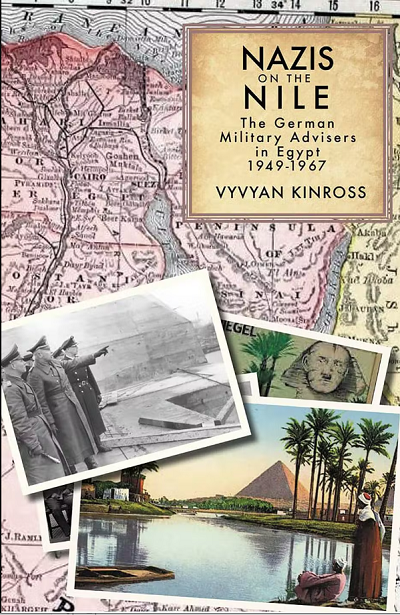
One of the paradoxes of the early postwar era is that, after Germany’s defeat, the Nazis were vilified at the same time that their expertise was sought after by both Cold War superpowers. Germans played key roles in both sides’ space programmes. Less infamous is the part they also went on to play in the Egyptian rocket programme, one of the subjects in this fascinating and disturbing book.
After suffering a humiliating defeat in the war that followed the establishment of Israel, the Egyptians wanted revenge. As the British had refused to help them — despite maintaining a deeply unpopular and large presence astride the Suez Canal — Egypt’s sybaritic King Farouq turned to his enemy’s enemy instead. In 1949 he commissioned an Afrika Korps general, Artur Schmitt, to review the Egyptian army.
Having checked in to a Cairo hotel under the name “Herr Goldstein”, Schmitt inspected Egyptian units and went on to Syria to survey Israel from the Golan Heights. The Egyptians’ failure to combine tanks, artillery and infantry effectively, he decided, explained their “inability to take advantage of the early stages of fighting to wipe the State of Israel off the map”.
Schmitt’s forthright conclusions were unwelcome, and he did not stay long. But some younger Egyptian army officers shared his views and, after they had overthrown Farouq in 1952, they picked up where the king had left off. Within days they offered Fritz Voss, the former head of the Skoda arms factory in Pilsen, the job of masterminding the retraining of the army and the establishment of a military industrial base that could produce jet aircraft and missiles.
Voss in turn invited old contacts to join him, including Wilhelm Beisner, an SS officer who had been part of Einsatzkommando Egypt, which would have spearheaded the Holocaust in Palestine had Rommel won at El Alamein. The Germans found Egyptian working conditions challenging. “Here one has to act much more slowly than in Prussia,” complained a German instructor who found “Oriental sloppiness” irritating. Of forty tanks lined up for a parade to celebrate the first anniversary of the coup, just twelve made it past the junta’s rostrum.
The author, Vyvyan Kinross, is a consultant by profession. He has advised Arab governments and clearly understands the fundamental problems. “The battle” for the Germans, he writes, “was always to reconcile finance, resourcing and the expertise required to execute a sophisticated manufacturing process with the challenging conditions and logistics that prevailed in a country that was late to industrialise and financially underpowered.”
Comments Off on Egypt’s postwar Nazi military advisors
December 12, 2022
Before the High Power was the FN Grand Rendement
Forgotten Weapons
Published 8 Aug 2022The Browning High Power story begins with a French 1921 request for a new military pistol. FN engineer Dieudonné Saive developed a double stack, single feed magazine and John Browning adapted a Browning 1903 pistol to use it, and this was sent to France for consideration. This pistol worked well enough, but the French trials board requested changes … and they would continue requesting changes and more trials for the next decade.
By 1931, FN felt that the current iteration of the pistol — while still not meeting all the French requirements — was good enough to stand on its own as a service pistol for the Belgian Army and other clients. They named it the “Grand Rendement” (High Efficiency) and began marketing it. The Belgian Army showed a definite interest, and bought 1,000 pistols for field trials, based on the prototype example we have in today’s video. These would become the Grande Puissance, aka the High Power.
For more details on this and other FN Browning pistols, I highly recommend Anthony Vanderlinden’s FN Browning Pistols, soon to be released in its third edition:
Comments Off on Before the High Power was the FN Grand Rendement
December 11, 2022
An Amphibious Landing to take Rome? – 224 – December 10, 1943
World War Two
Published 10 Dec 2022There are plans afoot to hit the enemy from behind in Italy. Allied leaders are meeting again in Cairo to go over other plans, notably what to do about China and Burma. There is active fighting on two fronts in Italy too, though this week it doesn’t go particularly well for the Allies. Attacks in the USSR are unsuccessful for the Soviets, but do go well for the Germans, and there are Allied attacks by air in the Marshall Islands and over France.
(more…)
Comments Off on An Amphibious Landing to take Rome? – 224 – December 10, 1943
December 10, 2022
United States Empire – The Spanish-American War
The Great War
Published 9 Dec 2022The Spanish-American War (fought in Cuba and the Philippines) kickstarted US global ambitions and expanded their influence far beyond the borders of the United States. At the same time the war marked the endpoint of the decline of Spain as a global power.
(more…)
Comments Off on United States Empire – The Spanish-American War
December 9, 2022
Canada’s “historic” shift toward the Indo-Pacific is … more marketing than strategy
In The Line, retired Canadian Lieutenant General Mike Day distills down all the airy phrases to see just what the Canadian government is actually going to do in the Indo-Pacific as opposed to merely talking about it:
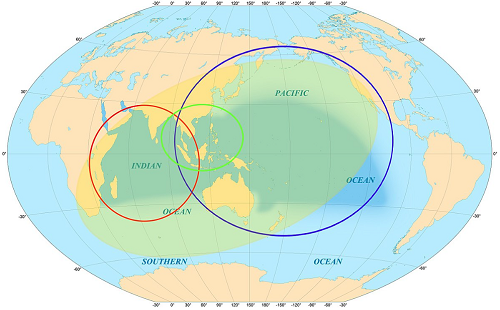
“Red circle/oval roughly depicts the Indian Ocean region. Blue circle/oval covers the Pacific region. Green oval covers ASEAN. Yellow overlay covers the Indo Pacific.”
Map annotation by Eric Gaba via Wikimedia Commons.
A formal public-policy statement from the Government of Canada is a rare thing. It is even rarer when it is not just a speech but a published written document. The rarest of these is undoubtedly when such a document focuses on foreign policy. When Foreign Affairs Minister Mélanie Joly recently pitched her “once-in-a-generation shift” toward the Indo-Pacific, much was made of why Canada was doing it and what it would achieve. No fewer than four cabinet ministers took part in the announcement. Canada will, they announced, step up naval patrols of the region, continue to expand trade with China while also tightening our protections of intellectual property and ownership rules for strategic industries, and use “Team Canada” trade missions to boost commercial links with other growing regional economic powers, including India. We seek also to expand our intelligence and cybersecurity links with allies and partners in the region.
Now that the dust on the rhetoric has settled, closer examination reveals that this might simply be an exercise of branding separate activities into a marketing-friendly bundle, as opposed to a coherent plan focused on achieving specific outcomes.
In examining the document two approaches are equally useful in assessing value: whether the content has some substance and whether the policy framework is sufficiently robust to hang various activities and plans on its body.
Three hints are provided as to why the new plan might not be the cornerstone of Canada’s foreign policy that it portends to be. Firstly, operating in the “National Interest”, a phrase used six separate times over the 26 pages, is given neither form nor function and lacks any definition. It is reminiscent of the Cheshire Cat talking to Alice asking her “where do you want to get to”. When Alice replies that “I don’t much care …” the Cheshire Cat wisely suggests that “Then it doesn’t matter which way you go.” With no definition of national interests pretty much anything can be hand waved as to being necessary and required, or not, for its achievement.
This leads in turn to the second hint that the plan might be more posturing than substance. Lacking the single aimpoint of operating in the national interest, the “objectives” supposedly fill that gap by providing a set of specific achievements which in combination would be a sufficiently clear aimpoint. But normally objectives can, and should, be thought of as something specific and measurable, allowing plans to be developed to achieve them. “Save 100 dollars this month” or perhaps, in more relevant terms, “Increase our trade in the Indo-Pacific region by 100 per cent over the five years of this policy enactment.” Plans can then be developed to achieve those objectives. But reviewing those objectives reveals that they are themselves actions, not end-states. It appears that the policy is based on “doing, not achieving”. I am reminded of my sons many years ago. When asked if their rooms were clean, they would reply, “I’m cleaning it.” The process was enduring but we most certainly disagreed on the value of the activity as opposed to achieving a measurable result. Under this construct the government can claim that as long as Canada is doing stuff the policy should be considered a success.
Comments Off on Canada’s “historic” shift toward the Indo-Pacific is … more marketing than strategy


