
Navy Lookout
Published 31 Dec 2022The Type 26 frigates being built for the Royal Navy [and Royal Canadian and Royal Australian navies] are specialist submarine hunters but with a range of other capabilities. This video provides a primer on the overall warship design, its weapons, sensors and decoys.
(more…)
January 2, 2023
An in-depth look at the Type 26 frigate design
Comments Off on An in-depth look at the Type 26 frigate design
How much of the media coverage of the Bosnian War was fake news?
Kate at Small Dead Animals linked to this rather disturbing collection of intelligence cables from the Canadian peacekeeping force in Bosnia to NDHQ in Ottawa during the conflict, which contradicts the media narrative of the time:
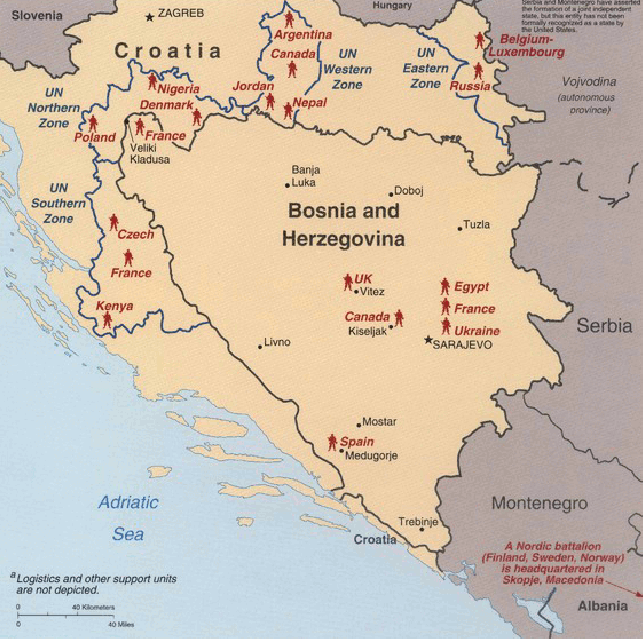
Map of deployment of National Battalions in UN Forces in Croatia and Bosnia and Herzegovina – Early 1993 (Balkan Battlegrounds Map I)
Balkan Battlegrounds: A Military History of the Yugoslav Conflict, 1990-1995 author credit: Central Intelligence Agency.
A trove of intelligence files sent by Canadian peacekeepers expose CIA black ops, illegal weapon shipments, imported jihadist fighters, potential false flags, and stage-managed atrocities.
The established mythos of the Bosnian War is that Serb separatists, encouraged and directed by Slobodan Milošević and his acolytes in Belgrade, sought to forcibly seize Croat and Bosniak territory in service of creating an irredentist “Greater Serbia”. Every step of the way, they purged indigenous Muslims in a concerted, deliberate genocide, while refusing to engage in constructive peace talks.
This narrative was aggressively perpetuated by the mainstream media at the time, and further legitimized by the UN-created International Criminal Tribunal for the former Yugoslavia (ICTY) once the conflict ended. It has become axiomatic and unquestionable in Western consciousness ever since, enforcing the sense that negotiation invariably amounts to appeasement, a mentality that has enabled NATO war hawks to justify multiple military interventions over subsequent years.
However, a vast trove of intelligence cables sent by Canadian peacekeeping troops in Bosnia to Ottawa’s National Defence Headquarters, first published by Canada Declassified at the start of 2022, exposes this narrative as cynical farce.
The documents offer an unparalleled, first-hand, real-time view of the war as it developed, with the prospect of peace rapidly degrading into grinding bloodshed that ultimately caused the painful death of the multi-faith, multi-ethnic Yugoslavia.
The Canadian soldiers were part of a wider UN Protection Force (UNPROFOR) dispatched to former Yugoslavia in 1992, in the vain hope tensions wouldn’t escalate to all-out-war, and an amicable settlement could be reached by all sides. They stayed until the bitter end, long past the point their mission was reduced to miserable, life-threatening failure.
The peacekeepers’ increasingly bleak analysis of the reality on the ground provides a candid perspective of the war’s history that has been largely concealed from the public. It is a story of CIA black ops, literally explosive provocations, illegal weapon shipments, imported jihadist fighters, potential false flags, and stage-managed atrocities.
Read the complete Canadian UNPROFOR cables here.
See key excerpts of the files referred to in this article here.
Comments Off on How much of the media coverage of the Bosnian War was fake news?
January 1, 2023
Canadians Take Little Stalingrad – WW2 – 227 – December 31, 1943
World War Two
Published 31 Dec 20221943 reaches its end with no end in sight for the war. In Italy, the Canadians take Ortona after bloody close fighting, the US Marines advance on New Britain, and a new Soviet offensive makes huge gains in the USSR. This isn’t enough for the Allies, though, who have a big shake up in their European Command to help prepare for future attacks.
(more…)
Comments Off on Canadians Take Little Stalingrad – WW2 – 227 – December 31, 1943
December 30, 2022
Stalin Deports An Entire Ethnicity – War Against Humanity 093
World War Two
Published 29 Dec 2022The last week of 1943 is a busy one. Stalin deports the Kalmyk minority from Kalmykia, the escapees from Fort IX get away, and the US President moves to found the post-war UN.
(more…)
Comments Off on Stalin Deports An Entire Ethnicity – War Against Humanity 093
My Top 10 Favorite Avalon Hill Games
Legendary Tactics
Published 1 Apr 2021Avalon Hill has such a rich history as a board game company, and has contributed so much to our hobby, our sense of history, and our lives. I sat down to reminisce about my top 10 favorite Avalon Hill games of all time. Are these the best games of all time? What games would make your list? Let us know in the comment section below.
(more…)
Comments Off on My Top 10 Favorite Avalon Hill Games
December 29, 2022
Anti-Tank Chats #5 | PIAT | The Tank Museum
The Tank Museum
Published 26 Aug 2022Bring up the PIAT! Join Stuart Wheeler as he takes a look at the iconic WW2 British anti-tank weapon — the PIAT. With thanks to @The Armourer’s Bench and @History in Firearms
(more…)
Comments Off on Anti-Tank Chats #5 | PIAT | The Tank Museum
December 28, 2022
The Myth of the Nazi Police State – WW2 Documentary Special
World War Two
Published 27 Dec 2022The popular image of the Gestapo is as black leather-jacketed fiends whose spies keep the nation under constant surveillance. They are so powerful that the terrified population has no choice but to sell out its family and friends. But how true is this? Are all Germans living in fear of the Gestapo all the time?
(more…)
Comments Off on The Myth of the Nazi Police State – WW2 Documentary Special
December 27, 2022
Marcus Licinius Crassus, the richest man in Rome
In The Critic, Bijan Omrani reviews Crassus: The First Tycoon by Peter Stothard:
If you are feeling despondent about the dismal quality of the current generation of politicians, it may be some comfort to remember that even in the golden age of Rome such complaints were legion.
The poet Horace wrote at length about how the ruling class had gone downhill. Once, there had been paragons of virtue such as Cincinnatus, who after saving Rome as dictator laid down his power without demur and returned to live on his humble farm; or the consul Regulus, who refused to make any concessions after being captured by the Carthaginians, although he knew they would torture him to death. Instead of these titans, the modern age had brought forth a base generation. Marcus Licinius Crassus, the richest man in Rome and subject of this new biography, was foremost among them.
The formidable influence wielded by Crassus in the final years of the Roman Republic — he was an ally, and rival, of Julius Caesar and Pompey the Great — came not by way of old-fashioned heroics and victories on the battlefield. His methods were recognisably modern. Peter Stothard characterises him as a “disrupter of old rules, fixer and puller of the puppet strings of power”. His tools were money and the economy of favours. He employed them with a coldness, ruthlessness and level of calculation that makes him unappetising, but deeply compelling. Stothard’s description of him as “The First Tycoon” is apt. He is the sort of character one might expect to find wearing red braces in a New York boardroom, rather than a brocaded toga in the Roman Forum.
By origin, Crassus was a member of one of Rome’s blue-blooded families. His pursuit of political influence by means of business rather than military prowess would seem at first sight unexpected, given the traditional prohibition against the senatorial aristocracy engaging in trade. Yet, the turmoil of Crassus’s formative years overturned these niceties. The last sight he had of his father, who had served as a consul, was of his head on a spike in the Forum.
He was a victim of the perennial strife that plagued Rome at the beginning of the 1st century BC, caused by imbalances in wealth and tensions between Rome and wider Italy, not to mention discord over land, military and constitutional reforms. With the death of his father and two of his brothers, Crassus had to flee Rome and hide in a cave for eight months in Spain, where his family still had allies. It is doubtless these upheavals — similar to those of Julius Caesar, who lost his father young and had to go into hiding during this chaos — led Crassus to seek an inviolable security, regardless of whether he trampled on old Roman conventions and upset others to do so.
When the aristocratic faction seized power in the late 80s BC, Crassus was able to return to Rome. There, he pursued every commercial method, no matter how disreputable, to accumulate wealth. It satisfied not only his needs for security but, as Stothard argues, it was also a way of seeking revenge for the death of his father. He bought up the properties of those families allied to the earlier populist regime which had just been displaced.
These came at a knock-down price, as the families had been outlawed, with some executed and others sent into exile. Crassus appears to have been on a committee which determined the loyalty of citizens to the new government and appears not to have scrupled to condemn those whose property he coveted. His other prime method for enlarging his portfolio was to buy up cheaply buildings that were on fire, or else in the path of a fire. He organised his slaves along military lines, using them with relentless efficiency to acquire, rebuild and sell on property for a huge profit.
Comments Off on Marcus Licinius Crassus, the richest man in Rome
December 26, 2022
The Battle of Ortona with Jayson Geroux
OTD Canadian Military History
Published 21 Dec 2022Join me as I welcome Jayson Geroux to the OTD channel to discuss the Battle of Ortona. We will be discussing the urban combat that took place in Ortona in December 1943. [The discussion of the actual battle begins around the 6 minute mark.]
(more…)
Comments Off on The Battle of Ortona with Jayson Geroux
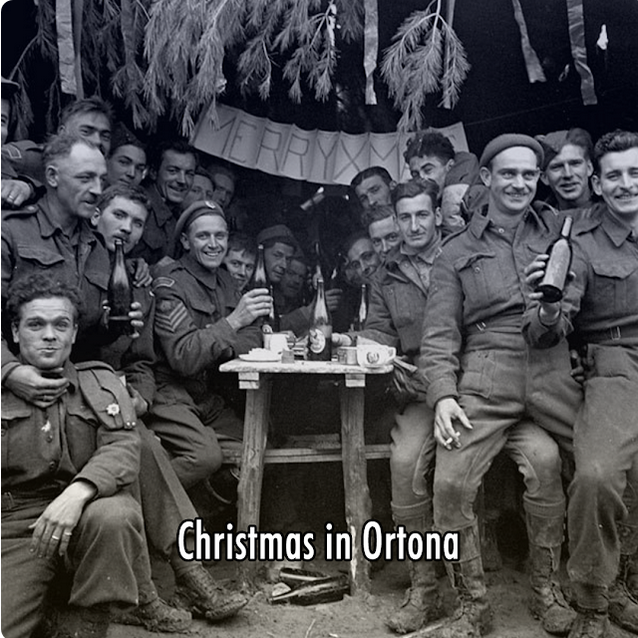
2nd Canadian Infantry Brigade Christmas celebrations in Ortona, 1943
The folks at the World War Two channel on YouTube posted this to their community page on Christmas Day:
On Christmas Day, 25 December 1943, the 1st Canadian Infantry Division is still engaged in brutal urban combat against the 1. Fallschirmjäger-Division for control over the town of Ortona. But among the rubble of the “Italian Stalingrad”, soldiers of the Seaforth Highlanders of Canada, along with other units [of the 2nd Canadian Infantry Brigade], manage to keep the Christmas spirit alive.
Colonel S. W. Thomson will recount this most unusual Christmas celebration many years later:
“I knew that we would be fully engaged with the enemy on Christmas day. However our most enterprising Quartermaster, Captain Bordon Cameron, was anxious to provide something special for the men at Christmas. Three companies were in the line with one in reserve, often the norm. We decided to feed the reserve company first and feed the remaining companies in relays. as one company finished it would go forward some 300 or 400 yards and relieve the next. Tables, linen, chinaware and candles were scrounged by the reserve company. The tables were set up in rows in our great church Santa Maria with four foot thick walls and my rear H.Q. What a picture, what an appropriate setting for a Christmas dinner on Dec. 25.
“Soup, roast pork, vegetables and Christmas pudding along with a bottle of beer for each of the tattered, scruffy, war weary soldiers was served by HQ and B echelon staff. The Q.M. boys excelled themselves, the impossible had happened. There was a spirit of good-fellowship throughout the church. The signals officer Lieutenant Wilf Gildersleeve played the organ, and our much loved padre Roy Durford led the carol singing. Pipe Major Esson played his pipes several times during the meals drowning out the odd enemy shell burst outside.
“Christmas in Ortona, the meal, yes, but the spirit of the occasion, the look on the faces of those exhausted, gutsy men on entering the church is with me to-day and will live forever.”
To all our followers, readers, and viewers: We wish you a Merry Christmas!
From: Canadian Military History, Vol. 2 (1993)
Picture: Canadian soldiers celebrate Christmas in Ortona, Italy
Source: Canadian Armed Forces
Comments Off on 2nd Canadian Infantry Brigade Christmas celebrations in Ortona, 1943
December 25, 2022
Stalin’s Christmas Surprise – Major Offensives to Come – WW2 – 226 – December 24, 1943
World War Two
Published 24 Dec 2022Twas the night before Christmas and the war was grinding on. The Moro River Campaign continues in Italy with Canadian infantry pushing past the Gully and into “Little Stalingrad”. Generally, the Allied advance to Rome is turning into a stalemate though, but Winston Churchill still believes an amphibious landing is the way to break this. Joseph Stalin also has some pretty big plans to bring the USSR back to its pre-Barbarossa borders. In the Pacific, there is attrition over Rabaul and stalemate on Bougainville.
(more…)
Comments Off on Stalin’s Christmas Surprise – Major Offensives to Come – WW2 – 226 – December 24, 1943
December 23, 2022
A Jungle Miracle – War Against Humanity 092
World War Two
Published 22 Dec 2022Two escapes, one from the Nazis in Kovno (Kaunas) Lithuania, from the prison at Fort IX, and one from Japanese terror on Panay in the Philippines this week, will help to document the crimes of the Axis powers.
(more…)
Comments Off on A Jungle Miracle – War Against Humanity 092
December 22, 2022
It may have taken most of the year, but Canada finally figured out its Ukraine position
In The Line, Andrew Potter theorizes that the Canadian government finally “got it right” on Ukraine, but only after having exhausted all the other possibilities:
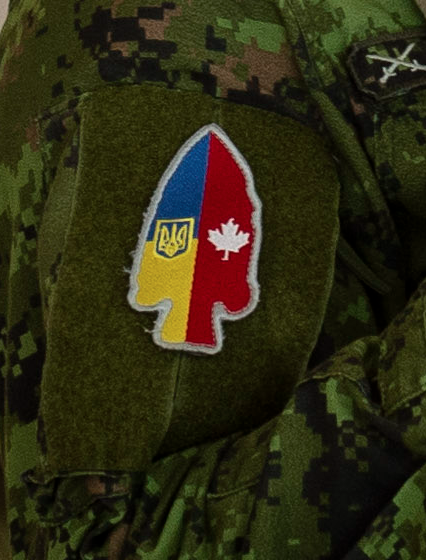
Operation Unifier shoulder patch for Canadian troops in Ukraine.
Detail from a photo in the Operation Unifier image gallery.
When Russia started massing troops on the border in Ukraine this time last year, Canada was one of the first Western countries to close its embassy in Kyiv, moving everyone to Lviv on February 12. Hours after Russia launched its illegal, insane, nihilistic, genocidal full invasion of Ukraine on February 24, all non-Ukrainian employees of our embassy scooted across the border into Poland.
For months after the invasion, that highly risk-averse attitude infected every aspect of Canada’s approach to helping Ukraine. Whether it was diplomacy (hesitant), military aid (slow and limited), financial support (inadequate) or straight-up moral fortitude (lacking), the Trudeau government made it clear that it would do the least amount necessary, while taking the most credit possible, in supporting Ukraine.
[…]
The weird thing about Canada’s foot-draggy-as-she-goes approach to helping Ukraine is how little sense it made politically, for both domestic and international audiences. Canada has one of the largest Ukrainian diaspora populations in the world. We were the first Western country to recognize Ukrainian independence in 1991. The deputy prime minister of Canada is half Ukrainian and has been a loud supporter of the country for years. Privately and publicly, our allies were pleading for us to do more.
Who knows what it was that finally shook some sense into the Trudeau government. Maybe it was Freeland, maybe it was a call from Uncle Joe Biden, maybe it was just a sense in the PMO that, having exhausted all other options, the only thing left to do was the right thing. Whatever it was, over the last three or four months, Canada is finally punching its weight on the global stage on the Ukraine file. In particular, we seem to have finally figured out that the best way to help is to provide the sorts of support that draws on our strengths.
So for example, while the handful of M777 howitzers we sent were certainly useful (and the ammunition we’re continuing to supply will be well spent) we’re never going to compete with the Americans or Brits when it comes to heavy arms supplies. That’s why, back in October, it was probably more helpful for us to send 400,000 pieces of winter gear and to provide a few million dollars worth of satellite communications to the Ukrainians through Telesat. And it was great to see Canada re-engage with its training commitments to the Ukrainian armed forces through the deployment of 40 combat engineers to train Ukrainian sappers in Poland, to complement our ongoing training of recruits in the U.K.
Comments Off on It may have taken most of the year, but Canada finally figured out its Ukraine position
QotD: Sparta as the pre-eminent foe of tyranny
One of the ways that Sparta positioned itself was as the state which championed the freedom of the Greeks. Sparta had fought the Persian tyrant, had helped to oust tyrants in Athens and had later framed Athens itself as a “tyrant city”. Sparta itself had never had a tyrant (until Cleomenes III seized sole power in the 220s). On the flip side, Spartan hegemony was, apparently, little better than Athenian hegemony, given how Sparta’s own allies consistently reacted to it and Sparta would, in the end, do absolutely nothing to stop Philip II of Macedon from consolidating sole rule over Greece. When the call went out to once again resist a foreign invader in 338, Sparta was conspicuous in its absence.
It also matters exactly how tyranny is understood here. For the ancient Greeks, tyranny was a technical term, meaning a specific kind of one-man rule – a lot like how we use the word dictatorship to mean monarchies that are not kingdoms (though in Greece this word didn’t have quite so strong a negative connotation). Sparta was pretty reliable in opposing one-man rule, but that doesn’t mean it supported “free” governments. For instance, after the Peloponnesian War, Sparta foisted a brutal oligarchy – what the Athenians came to call “The Thirty Tyrants” – on Athens; their rule was so bad and harsh that it only lasted eight months (another feat of awful Spartan statecraft). Such a government was tyrannical, but not a tyranny in the technical sense.
But the Spartan reputation for fighting against tyrannies – both in the minds of the Greeks and in the popular consciousness – is predicted on fighting one very specific monarchy: the Achaemenids of Persia. […] This is the thing for which Sparta is given the most credit in popular culture, but Sparta’s record in this regard is awful. Sparta (along with Athens) leads the Greek coalition in the second Persian war and – as discussed – much of the Spartan reputation was built out of that. But Sparta had largely been a no-show during the first Persian war, and in the subsequent decades, Sparta’s commitment to opposing Persia was opportunistic at best.
During the late stages of the Peloponnesian War, Sparta essentially allied with Persia, taking funding and ships first from the Persian satrap Tissaphernes and later from Cyrus the Younger (a Persian prince and satrap). Sparta, after all, lacked the economic foundation to finance their own navy and the Spartans had – belatedly – realized that they needed a navy to defeat Athens. And of course the Persians – and any Spartan paying attention – knew that the Athenian navy was the one thing keeping Persia out of Greek affairs. So Sparta accepted Persian money to build up the fleets necessary to bring down the Athenian navy, with the consequence that the Ionian Greeks once again became subjects to the Persian Empire.
Subsequent Spartan diplomatic incompetence would lead to the Corinthian War (395-387), which turned into a nasty stalemate – due in part to the limitations of Spartan siege and naval capabilities. Unable to end the conflict on their own, the Spartans turned to Persia – again – to help them out, and the Persians brokered a pro-Spartan peace by threatening the Corinthians with Persian intervention in favor of Sparta. The subequent treaty – the “King’s Peace” (since it was imposed by the Persian Great King, Artaxerxes II) was highly favorable to Persia. All of Ionian, Cyprus, Aeolia and Carnia fell under Persian control and the treaty barred the Greeks from forming defensive leagues – meaning that it prevented the formation of any Greek coalition large enough to resist Persian influence. The treaty essentially made Sparta into Persia’s local enforcer in Greece, a role it would hold until its defeat in 371.
If Sparta held the objective of excluding Persian influence or tyranny from Greece, it failed completely and abjectly. Sparta opened not only the windows but also the doors to Persian influence in Greece – between 410 and 370, Sparta probably did more than any Greek state had ever or would ever do to push Greece into the Persian sphere of influence. Sparta would also refuse to participate in Alexander’s invasion of Persia – a point Alexander mocked them for by dedicating the spoils of his victories “from all of the Greeks, except the Spartans” (Arr. Anab. 1.16.7); for their part, the Spartans instead tried to use it as an opportunity to seize Crete and petitioned the Persians for aid in their war against Alexander, before being crushed by Alexander’s local commander, Antipater, in what Alexander termed “a clash of mice”.
Bret Devereaux, “Collections: This. Isn’t. Sparta. Part VII: Spartan Ends”, A Collection of Unmitigated Pedantry, 2019-09-27.
Comments Off on QotD: Sparta as the pre-eminent foe of tyranny
December 21, 2022
The Nazi Quest for Thor’s Hammer – WW2 Documentary Special
World War Two
Published 20 Dec 2022Books, films, and comics are filled with Nazi scientists and explorers travelling the globe to get their hands on ancient artifacts or summoning daemons with black magic. But how much of it is grounded in reality? Well, some of it. In the neo-pagan religion invented by Reichsführer-SS Heinrich Himmler, the world can only be explained through the occult.
(more…)
Comments Off on The Nazi Quest for Thor’s Hammer – WW2 Documentary Special


