Quotulatiousness

February 11, 2025

Many young white men are choosing to “own the insult” when accused of being a fascist

Filed under: Media, Politics, USA — Tags: , , , , , — Nicholas @ 05:00

Lorenzo Warby points out that some — even many — young white men are reacting to repeatedly being called “Nazi” or “fascist” by embracing the slur:

Still from Pink Floyd: The Wall

For the fuel of the contemporary networked authoritarians are angry young men. Angry young men who have a great deal to be angry about.

In so many modern schools, universities, and much of social media, if you are a low melanin count, heterosexual male you are absolutely at the bottom of the “woke” oppression-bingo hierarchy. You will be implicitly, or explicitly, held to be somehow tarred with every bad thing any person “like” you has done in history, no matter how long — even how many generations — before you were born that it happened, nor how dubious an historical characterisation it might be. There is no identity open to you that you can celebrate, or feel positively attached to, without potential or actual denigration.

If you do any reading, you can quickly work out that this is a ludicrously one-sided — and deeply unfair — way to look at history. Even in its own terms, it is nonsense, as “folk like you” — i.e., low melanin count heterosexual males — voted for every single legal advance any of the celebrated-as-oppressed groups made. “Folk like you” built the Scientific Revolution, Parliamentary Government, mass prosperity.

Of course, this was a matter of culture, institutions, the happenstance of history, not melanin content. The trouble with the racialisation of history and identity is that it is, indeed, the racialisation of history and identity. As Jews are currently (re)discovering.

Nor can many of these angry young men take much refuge in the good life, work or entertainment. Online dating has turned into a hypergamous nightmare that excludes most guys, in-person connections are fraying and migration-plus-restrictive-land-regulation has shot rents up and made home-owning unattainable.

In entertainment, masculine heroes are being replaced and degraded. Online games are being systematically “wokified”. There are systematic attacks on their heritage. Sport and advertising is also being wokified, is “bending the knee”. Where to go?

If folk systematically tar or denigrate someone’s identity, a natural response is to say “no, my identity is great, it is wonderful”. There will be certainly a market for such a response. The natural response to systematic denigration is some form of “fuck you!” and the politics of “fuck you!“.

In the contemporary world, what is the most dramatic way of saying “fuck you!“? To take the racist!, fascist! abuse and go “right on!“. Even more so if you take the ideas they invoke and turn them back against them.

Of course, if you just reverse what left-progressivism — in its “woke” iteration — stands for, you are still dancing to their tune. But rage can easily work like that.

So, these angry young men look at the folk who treat them with such continual, institutionalised, contempt — who stack everything they can against them — and decide “we hate you”. If you are going to abuse us anyway no matter what we do — the seductive logic goes — then why not simply embrace the identity you impose on us if we put our heads up? There is, after all, no more in-your-face way to shriek their anger and rejection back at those who are abusing, denigrating and excluding them than to embrace racism and fascism.

They look at ordinary conservatives, at ordinary liberals, they look at Boomers, and think “you did not stop it, you did nothing to protect people like me”, so they — and their politics — get no respect.

Instead, they go to the politics of using the operational tactics used against them — the operational politics of “wokery” — in support of politics that most completely expresses their rage. This is the updated version of what happened with 1920s Fascism in Italy and 1930s Nazism in Germany. Like the original versions, they are using — and so helping to legitimate — the operational methods of the left-progressivism.

Not that left-progressives, the “woke”, will see it. They are way too full of the stupidity of arrogance, of the blindness of moral narcissism, to pick what is happening, still less take any responsibility for it. They utterly fail to see themselves; to understand how much they come across as smug, arrogant, condescending, self-righteous, shits whose politics again and again ends up favouring people like them and whose recurrent response to disagreement is to de-legitimise, denounce and censor. Their entire view of themselves is they are the oh-so-clever, oh-so-moral people. Nothing they do is ever seriously counter-productive or fundamentally mistaken.

Faced with the rise of actual racism and actual fascism, they will shriek racist! and fascist! even harder. But they are in the situation of the boy who cried wolf! Except worse, as the boy in the story neither created, nor trained, the wolf.

They have so debased that currency, so debased historical analogy, that fascism has lost its rhetorical, or even its warning, power.

Besides, how many people will say: these folk against whom you are shrieking the same terms of abuse you have shrieked at people for decades. Are they making excuses for the mass sexual predation on young girls by migrants we did not want? Are they supporting the hormonal and surgical mutilation and sterilisation of minors? Are they teaching folk to despise their own countries and heritage? Are they pushing the narrative lies of the moment? Have they proved to be incompetent at elementary things, such as fighting crime and managing fire risk?

No? Then they sound good to me.

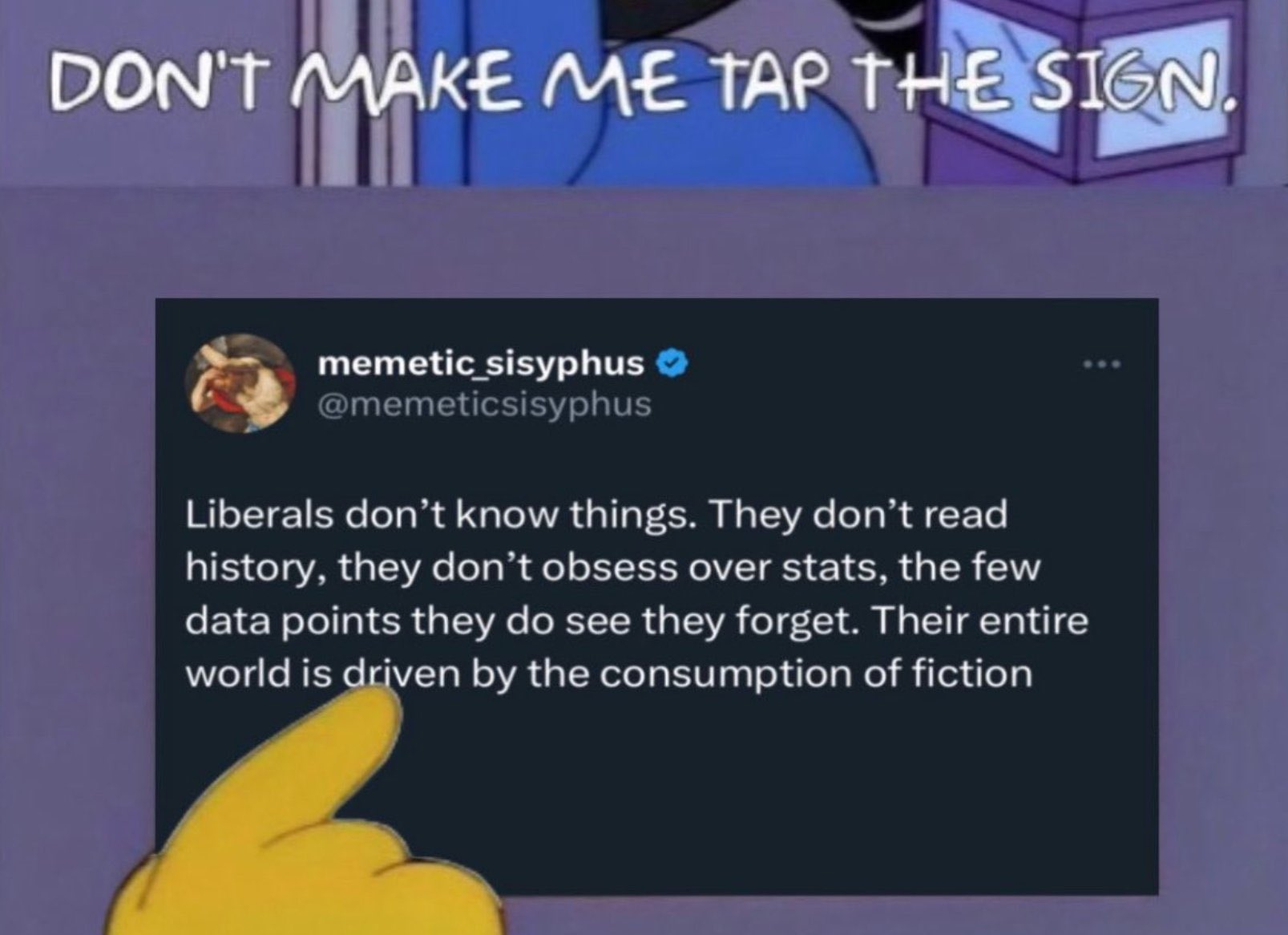
Left-progressives: so good at finding new ways to make the same mistakes. It is almost as if they have a pathological relationship with information. Oh, wait, they do.

“As it turns out, you can just cut things”

Filed under: Bureaucracy, Government, Media, Politics, USA — Tags: , , , , — Nicholas @ 03:00

John Carter outlines the left’s long march through the institutions and explains why a conservative counter-operation of the same kind would utterly fail. Instead, Donald Trump (of all people) launched a political blitzkrieg that used none of the strategies of the long march — because the establishment knew intimately how those worked, as they’d used them for generations to become the establishment:

Alexander Cutting the Gordian Knot
Fedele Fischetti, 18th century.

But a counter-revolutionary long march through the institutions was always a doomed project.

The left understands the method quite well, having perfected it themselves, and its defences against counter-infiltration were well advanced. It was never enough merely to say the right things, and not say the wrong things – the left knows how easily such signals are faked, as these are mere words, and words have no meaning to an egregore which sees in discourse nothing but the currents and tokens of power. Much of the seeming insanity of the Cancelled Years is best understood as the imposition of elaborate, difficult to fake displays of loyalty: offering your child’s genitals to the hungry gender gorgon, opening your veins for the gene therapy injection. Then of course there is DEI, whose explicit intent was to simply deny opportunity to those most likely, on a demographic basis, to oppose the left. There is very little point, as a young white man, in keeping your mouth shut if you will be locked out simply because you are white, no matter what you say.

The psychological demands of stealthy infiltration are spiritually toxic. Anyone attempting this path finds himself embedded in a social context in which all of his friends and colleagues adhere to values which he privately despises, and moreover, he knows that the instant they discover his true beliefs he will be not only fired, but ostracized and isolated. Worse, he’s constantly placed in the position of betraying his own convictions, of going along with and even actively supporting things he knows are wrong, because failing to do so would be immediately suspicious. Since the left is a hive mind, he must “pretend” to give up his agency … and insofar as you are what you do, there is very little difference between pretending to give up your agency, and actually doing giving it up. Living like this is miserable. It requires iron discipline, and there is very little reward. Some of you doubtless have direct experience of this.

The most important reason that a long march was never viable, however, was that there was not enough time.

The West is in crisis. Public debt has broken up through the exosphere, its rise ever more vertical as the deficits fuelling it continue to expand, and we can all see in its meteoric rise that its inevitable descent will hit the land like rods from God. Third world invaders pour into our countries by their millions at the open invitation of seditious governments whose open aim is to reduce native white populations to second-class minorities in their own homelands within the space of a generation. These two crises of the Great Inflation and the Great Replacement could never be solved by the tactics the left used to bring them about. Even if such a long march could have succeeded in the face of the barriers the left so astutely erected, by the time it came to fruition the victors would preside over wreckage.

The left’s tactics were those of a chronic disease, gradually wasting the patient, leaching the strength from his limbs. You cannot cure a patient by becoming an opportunistic infection in your own right.

So what to do? Many, despairing, looked to civil war. A coup d’état, likely followed by blue states separating from the Union. Battle lines would be drawn, brother would be set against brother, cities would be ruined, vast pits would be excavated and filled with the stinking dead. Such a war would never have been limited to continental United States. It would have dissolved the Pax Americana, with brushfire wars springing up across the globe as great powers sought to expand their territories by grabbing resources or strategic trade corridors. Those powers would have gotten involved in the Civil War themselves, backing one side or another, prolonging the conflict in order to ensure the Union remained shattered forever.

On J6, the American government teetered on a precipice. Had Trump applied so much as the gentlest pressure with his baby finger, it would have toppled over. The other side would then have screamed that he was a tyrant who had seized power by force; his own supporters would have rallied to the cause that the election had been stolen; America, and the world, would have been bathed in blood. So Trump pulled back, allowed the heroes of J6 to be imprisoned, and permitted the sclerocracy to impose four years of malevolent mismanagement on the American people.

Many were furious with Trump. He’d lost his nerve; he was a coward.

As it turned out, they were all wrong. It was a strategic withdrawal.

And now, instead of a Long March, we are getting a blitzkrieg.

I’ve been silent for the last month partly for personal reasons that deprived me of the time and energy to write, which I won’t elaborate upon here save to note that it’s nothing anyone has to worry about. But I’ve also been silent because I haven’t been sure what to say. The last weeks have been one of those ‘weeks when decades happen’ periods, and that pace of change doesn’t appear to be letting up. Executive Orders flying off of the big man’s desk, birthright citizenship being struck down, entire government departments getting defunded, the J6 heroes being pardoned, trade wars starting and then stopping before they start, the military heading to the border, DOGE siccing broccoli-headed zoomers armed with large language models to rip through the sprawling financial records of acronym agencies like a cyclone of destruction.

As it turns out, you can just cut things.

These are all great, wonderful things. We are winning, and the pace of winning is dizzying. It’s like we’ve spent the last several years slamming again and again against a seemingly immovable wall, bashing our brains out upon it like an enraged tiger, only for that wall to suddenly turn to sand upon our final desperate push, leaving us sprawled and disoriented on the ground.

That is at least what it has felt like to me. The people on the inside of the Trump administration are not disoriented. Far from it. They are executing a detailed, thorough plan. They’ve identified the enemy nerve centres and are neutralizing them precisely, rapidly, and ruthlessly. Handpicked squads of very competent young men have been turned loose inside the Beltway. It is clear that they are not being micromanaged, but are being left to develop their own action plans on the fly as the tactical situation evolves. This is manoeuvre warfare, with small, nimble, lethal teams dropped into the heart of enemy territory and being given maximum latitude to pursue the campaign’s strategic objectives.

February 8, 2025

A Love Supreme after 60 years

Filed under: History, Media, USA — Tags: , , , , — Nicholas @ 04:00

John Coltrane’s A Love Supreme was one of the first four jazz albums I ever bought. It quickly became my favourite and led me to listening to a lot more of Coltrane’s work. Some I loved nearly as much (Giant Steps, Blue Train, The Complete Africa/Brass Sessions) while others I just bounced off (Sun Ship, Interstellar Space, Stellar Regions), but most became fixtures of my various jazz playlists.

Ted Gioia notes the moment as A Love Supreme hits 60 years after release:

Ivy League theoretical physicist Stephon Alexander will even tell you that John Coltrane has a lot in common with Albert Einstein. People still consult the saxophonist’s mathematical analysis — the so-called Coltrane Circle — as if it were a source of esoteric wisdom.

But in 1964, John Coltrane was also a father. John Coltrane Jr. was born on August 26, 1964 — the first of his three children. Ravi Coltrane arrived in 1965, and Oran in 1967.

You wouldn’t think that Coltrane could find time for anything else at the close of the Summer of 1964. But he did.

At that juncture, he disappeared into an upstairs guest room at his home. And spent day after day with just a pen, some paper, and his horn.

He emerged five days later. “It was like Moses coming down from the mountain,” Alice later recalled. “It was so beautiful. He walked down and there was that joy, that peace in his face, tranquility.”

“This is the first time that I have received all of the music for what I want to record,” he told her.

Note that word: Received. He didn’t say composed. He didn’t say created. It was a gift from something larger than himself.

This was the music John Coltrane would perform in the studio three months later. It’s know today as A Love Supreme.

Coltrane said that his music was his gift back to the Divine.

He made that clear in his liner notes, which opened with an invocation in capital letters: DEAR LISTENER: ALL PRAISE BE TO GOD TO WHOM ALL PRAISE IS DUE…

But if there were still any doubt, Coltrane also included a devotional poem — which began:

    I will do all I can to be worthy of Thee O Lord.
    It all has to do with it.
    Thank you God.
    Peace …

Needless to say, this was not typical for jazz liner notes in the mid-1960s. Or at any time, for that matter.

Not your typical liner notes.
Photo by Ted Gioia

And it almost certainly would limit sales — or so the conventional wisdom went back then. A few months later, Capitol Records execs had a meltdown when Brian Wilson wanted to give the name “God Only Knows” to a song. But that was nothing compared to the full-blown ritual that Coltrane was now unleashing on the hip jazz audience.

I use the word ritual advisedly here. I’ve heard other people describe A Love Supreme as a suite, but they’re missing the whole point. I have no doubt that Coltrane intended this ritualistic effect.

He even starts chanting toward the end of the opening track.

This was first time Coltrane’s voice had ever been featured on a studio recording. And he didn’t sing a love song or belt out a blues. Instead he was chanting:

    A love supreme
    A love supreme
    A love supreme
    A love supreme
    A love supreme …

He chants that phrase nineteen times in a row.

QotD: American gun rights

Filed under: Government, Liberty, Media, Politics, Quotations, USA, Weapons — Tags: , , , , , — Nicholas @ 01:00

I was asked last night why, when I talk about politics, I focus on gun rights so much. Surely, said querent, there are lots of other important things for a libertarian like you to weigh in on. Censorship. DEI. AGW hysteria. The list goes on …

Fair question. It’s because many years ago L. Neil Smith, a libertarian SF writer sadly no longer with us, persuaded me of something important.

A politician’s attitude about firearms rights is a very reliable index for his actual attitude about individual freedom and agency.

Never mind what they say about other issues. A politician standing up for the right of ordinary citizens to be armed is sending a very reliable signal that he values their ability to assert their freedom, and trusts them to generally make correct choices about the use of violence even it might be directed against himself.

Conversely, a politician who is against gun rights is telling on himself. He fears the wrath of the people and wants them disempowered. He does not trust them to employ violence only when necessary.

And that’s actually the best case. In far too many cases, anti-gun politicians clearly dream of being the jackboot that stomps on human faces forever, and view the disarmament of the general population as a step towards that end.

If I must have politicians meddling in my affairs, I demand at the very least that they respect my freedom and my agency. That’s why I demand that they respect my right to keep and bear arms.

Gun rights may look like a narrow single issue. It isn’t. It’s an even better index of a politician’s attitude about liberty than questions about free speech and censorship, because it pushes the stakes higher. Because words can’t kill you, but arms wielded by enraged citizens can.

No matter what soothing words drop from his lips, no matter what promises he makes, the politician who tries to disarm you is always, always, always your enemy. Never forget that.

ESR, Twitter, 2024-11-06.

February 7, 2025

Justice for WW2?! – W2W News 1945

TimeGhost History
Published 6 Feb 2025

Join SPARTACUS and INDY on the War2War 1945 Newscast as we explore a world tumbling from war to war. European colonies face fresh conflicts and groundbreaking polymer innovations spark industrial revolutions. All the while Nazi war criminals are brought to justice at the Nuremberg Trials.
(more…)

QotD: The Chump Ratio

Filed under: Business, Media, Quotations, USA — Tags: , , , — Nicholas @ 01:00

P.T. Barnum gets a lot of quotes about gullibility attributed to him, because, well, he’d know, wouldn’t he? There’s a sucker born every minute, you’ll never go broke overestimating the public’s stupidity, and so on. One I particularly like is: One in Five.

That’s what you might call the Chump Ratio. In any given crowd, Barnum (or whomever) said, one person in five is a born chump. He’s ready, willing, and able to believe anything you put in front of him, and so long as it’s not skull-fornicatingly obvious fakery — an extremely low bar, as you might imagine — he’s all in. The best part is, chumps don’t know they’re chumps, and they never, ever wise up (poker players have a similar adage: “After a half hour at the table, if you can’t spot the sucker, then you’re the sucker”; it has the same impact on behavior, namely: none whatsoever). You don’t have to do anything to sell the chumps; they’re practically begging you to take their money.

Barnum didn’t say much about these guys, but there’s another ratio that applies to a given crowd, also about one in five: The born skeptic, the killjoy, call them what you will. This is the guy completely unaffected by the lights, the music, the smells of popcorn and cotton candy, the children’s laughter … all he can see at the carny is the tattooed meth head who put everything together overnight with an Allen wrench. He might well show up at your carny — the wife and kids wanted to go — but you’ll never make a dime off him. No show in the world is ever going to sell him, so you don’t need to worry about him.

It’s those other three guys in any given crowd that make you some serious money … or bring the whole thing crashing down on your head. They’re who the show is really for.

It’s pretty easy to sell these folks. After all, they want to be sold. They’re at the carnival, aren’t they? And yet, it’s also pretty easy to screw it up. They’re willing to suspend disbelief — they want to — but the line between “necessary suspension of disbelief” and “an insult to one’s intelligence” is thinner than you think, and lethally easy to cross.

Severian, “Carny World”, Founding Questions, 2021-09-24.

February 6, 2025

Trump tariff diary, day 5

Filed under: Cancon, Government, Media, Politics, USA — Tags: , , , , — Nicholas @ 03:00

The attention shifted away from the BOM kicking the Little Potato around as BOM floated the idea of annexing the Gaza Strip (as Eastern New Jersey?) on social media. There goes at least 24 hours of media hysteria …

Justin Trudeau’s vision of Canada

As I’ve pointed out a few times, the situation didn’t blow up out of nowhere (we’re back to the Trump tariffs, not the Gaza Strip), as Trump had given ample warning that this was an important issue for him. However, as Roxanne Halverson points out, Trudeau’s government paid it not the slightest bit of attention until Trump forced them:

This means Ontario Premier Doug Ford who threatened to cancel a $100 million dollar Starlink contract with Elon Musk to provide high-speed internet to northern and rural Ontario communities because of Musk’s strong ties to Trump. And perhaps BC Premier David Eby shouldn’t have threatened to take alcohol products from “red states” in the US off the shelves of BC liquor stores. And perhaps Team Trudeau shouldn’t been trying to play the mouse that roared by threatening to slap retaliatory tariffs on American products coming into Canada, given that it means Canadians will pay more for products like fruits and vegetables that we simply can’t get here in the winter. And that goes for all the provincial premiers, with the exception of Alberta Premier Danielle Smith.

And for all Canadians — particularly those who voted for Trudeau — who are so angry at Trump that they are blowing up the internet with memes, threatening never to vacation in the States, and booing the singing of the American anthem at hockey games — grow up and smarten up and rethink who your anger should be directed at.

Everyone needs to recognize the fact that Trump made it pretty clear about the tariffs when he was campaigning for the US presidency, after he won the presidency — but had yet been officially sworn in — and as soon as he entered the Oval Office. And yet everyone seemed so shocked when he did it — including Prime Minister Trudeau.

Trump also made it pretty clear what he was after — fix Canada’s porous border and fix the drug trafficking problem — and the fentanyl problem in particular. And thanks to the dithering of the Trudeau government — vacillating between “negotiating and diplomacy” and talking “tough”, as well as using the issue as a campaign tool, this is what it came to. Because, it would seem, Trump didn’t think his request was being taken seriously so he made it serious. One thing Trump recognizes is weakness, and it is something he is willing to take advantage of it. And in Canada he saw weakness — weak leadership and an weak economy. Another thing Trump is very good at, and that is rattling people and he did that in spades on Saturday — and by Sunday he got results.

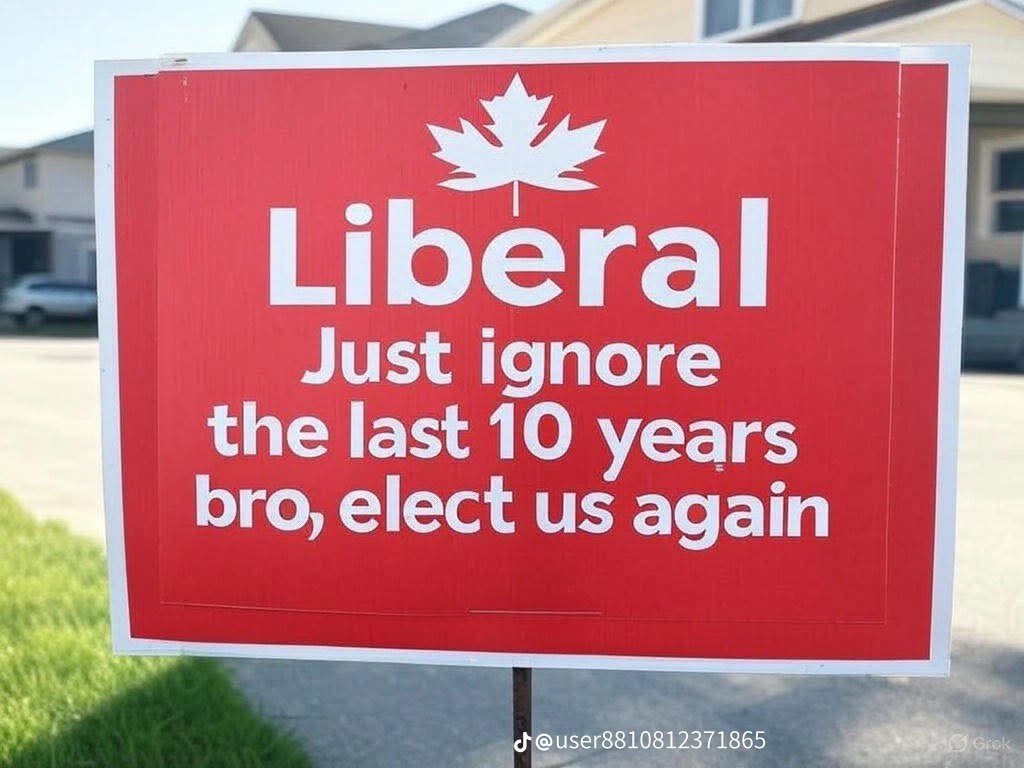
For all the Canadians who are mad at Trump for starting these tariff wars, particularly those who voted for Trudeau. Remember this … if Canada had a strong economy that hadn’t been driven into the ground by ten years of Liberal economic, monetary, social engineering and “green” policies we wouldn’t be so vulnerable to Trump’s tariffs.

Trump didn’t halt the building of pipelines that could have taken our oil products to both eastern and western coasts to be shipped to markets overseas. This would have expanded markets for Canadian oil, meaning we wouldn’t be selling sell the bulk of it to the Americans at bargain prices. It wasn’t Trump who drove billions, if not trillions of dollars in investments out of the country by overtaxing businesses with ever increasing carbon taxes and various other in sundry operating costs, or stifling business growth with endless crippling green energy policies and regulations, or extinguishing any chance of expanding our natural gas production to sell to overseas markets by claiming “no business case” for it.

The business investment picture in Canada shows a clear decline dating almost exactly to the start of Trudeau’s time in office:

The Canadian government’s (and several provincial governments’) hostility to economic development and infrastructure expansion is clearly illustrated, I think.

QotD: Wokeness as substitute religion

Filed under: Media, Politics, Quotations, Religion — Tags: , , — Nicholas @ 01:00

[In Tom Holland’s Dominion, he] makes that point that in the absence of Christianity, there’s something instinctive about finding these belief systems. And it does have the same hallmarks: it has the aspect of original sin, the Augustinian concept of original sin which now comes in through whiteness, or being heterosexual — having these immutable characteristics that make you a sinner. And then you’ve got the heresy concept, the idea that anyone who doesn’t think the right things is a heretic who needs to be cancelled, and then you get the metaphor of cancel culture, which is a lot like witch hunting, and burning people at the stake as the Inquisition might have done.

And of course so much of the theorizing behind woke ideas is based on entirely unsubstantiated, faith-based positions. They believe in unconscious bias, and institutional power structures — things that you can’t quantify or put your finger on that just sort of exist in the ether like spirits. And to ask them to prove any of these positions is to simply get the response that well, they do exist because we know they do. Which is what a religious zealot would say.

So I think that certainly the best way to understand the social justice movement is to see it as a cult. Because then it all makes sense, and it also makes sense why they’re able to behave so barbarically toward those who don’t subscribe to their belief system. Because the hallmark of many religions is tolerance to a degree. And then where things start going wrong, where witches start getting burned at the stake and heretics start getting executed is where that tolerance runs out. And I think that’s what happened here: the social justice movement is a fundamentally intolerant movement. And fundamentally illiberal. There’s nothing liberal about it.

Andrew Doyle, talking to Spencer Klavan, “Titania McGrath and the Politics of Wokeness: An Interview with Andrew Doyle”, The American Mind, 2020-01-30.

February 5, 2025

Trump tariff diary, day 4

Filed under: Cancon, Government, Media, Politics, USA — Tags: , , , , , , , — Nicholas @ 03:00

The Big Orange Meanie and the Little Potato had a phone call, after which the BOM announced a 30-day delay to the imposition of tariffs. In Canada, all of “peoplekind” were relieved to hear that they won’t have to give up their American-made binkies quite yet. Some appropriate snark from The Free Press:

It was actually a phone call between the BOM and the Little Potato, but we can imagine this is what it would have looked like in person.

Mexican president Claudia Sheinbaum Speedy Gonzales’d her way to a deal with Trump yesterday, promising to deploy 10,000 Mexican troops to the border to stop the flow of illegal immigrants and drugs. In return, Trump agreed to pause his 25 percent tariff on goods coming from south of the border. Soon after, he struck a seemingly identical deal with Justin Trudeau, who said he’d appoint a “fentanyl czar” and promised to send 10,000 Canadian troops to the northern border. Who knew they even had that many?! Tariffs will still be levied against Chinese goods starting today, but Trump says he plans to talk with President Xi Jinping as soon as this week.

The FP isn’t wrong … the Canadian Army doesn’t have 10,000 spare troops just hanging around their barracks who could be sent to the border, so it’s much more likely to be a combination of Canadian Border Services Agency (CBSA) agents, RCMP officers, provincial police (if the respective provinces are willing), and whatever the army can spare. (Trudeau refers only to “nearly 10,000 frontline personnel”, not “troops” as a lot of US reports state … that seems a lot more achievable.)

You may be wondering how the US President has such disruptive and antagonistic tools at his disposal. It’s yet another hangover from the Carter years, as Congress delegated these powers to the president in 1977:

Donald Trump as Napoleon the 47th.
Image generated by Grok.

The emerging on-off-on-off trade war between Canada and the United States has everyone asking “How should we fight?” — understandably enough — but we should not move too quickly beyond the question “How is this literal nonsense at all possible?” How did the U.S. Congress’s clearly specified constitutional power to regulate the country’s commerce with foreign nations fall into naked and unapologetic decrepitude? Why is every new American president now a Napoleon, and why isn’t this at all a political issue in the U.S.?

The American Constitution, it seems, has no political party apart from a handful of cranky, tireless libertarians like Gene Healy, Clyde W. Crews or Ilya Somin, who has a new article spitballing possible litigation approaches for Americans who lie in the path of the tariffs now being wishcasted into existence by Napoleon the 47th. Somin explains that President Donald Trump is using an openly contrived “national emergency” to invoke powers delegated to the White House by Congress in 1977, powers that are to be invoked only in the face of “unusual and extraordinary threats” to the Republic.

Since the president apparently has plenary power to define an emergency, and to do so without offering anything resembling a rational explanation, this act of Congress now appears to be less of a delegation and more of a surrender — a total abandonment of constitutional principle and the classical separation of powers. I pause to observe that the cheeks every Canadian should redden with slight shame at the spectacle of frivolous recourse to the law of emergencies causing obvious and sickening injury to the rule of law in the U.S. (Oh, no, that could never happen here!)

February 4, 2025

Trump tariff diary, days 2 and 3

Filed under: Cancon, Economics, Government, Media, Politics, USA — Tags: , , , — Nicholas @ 03:00

Posted to social media yesterday:

To celebrate Groundhog Day, Governor Trudeau wore commemorative Groundhog-themed socks. Governor Trudeau’s announced counter-tariffs seem to have made no difference to the Big Orange Meany, so the Great State of Canada proceeds with plans to annex Guam and American Samoa. China has indicated interest in purchasing Vancouver Island or leasing the naval base in Esquimault. The National Post‘s Tristin Hopper suggested “Spend 10 years relentlessly kneecapping the Canadian economy for no reason to show Trump we’re not scared of him”, but we’ve already done that.

Today’s tariff diary entry was going to be:

Reports indicate that the Mexican government is folding to Trumpian pressure. Governor Trudeau insists he won’t budge, regardless of the economic damage to Canadian consumers … what a hero! A few of us may lose our jobs, our businesses, and our economic futures, but he’s willing to take that risk. Update: Trudeau folded like the cheap suit he so resembles. Tariff war on hold for 30 days as Trudeau looks for a way to sign the terms of surrender without any blame attaching to him or his party … he’ll probably blame the provincial governments and the federal NDP (who’ll still support him in Parliament, regardless).

… But the “pause” in tariff enforcement may be enough to let Trudeau and the Liberals — with the active connivance of the bought-and-paid-for Canadian legacy media propagandists — portray this as a great national victory and attempt to turn it into votes for Liberal candidates in the next federal election. I’d love to be proven too cynical here, but the Liberal track record isn’t good.

February 2, 2025

Captain Trumpmerica versus the Post-national Maple Protectionists

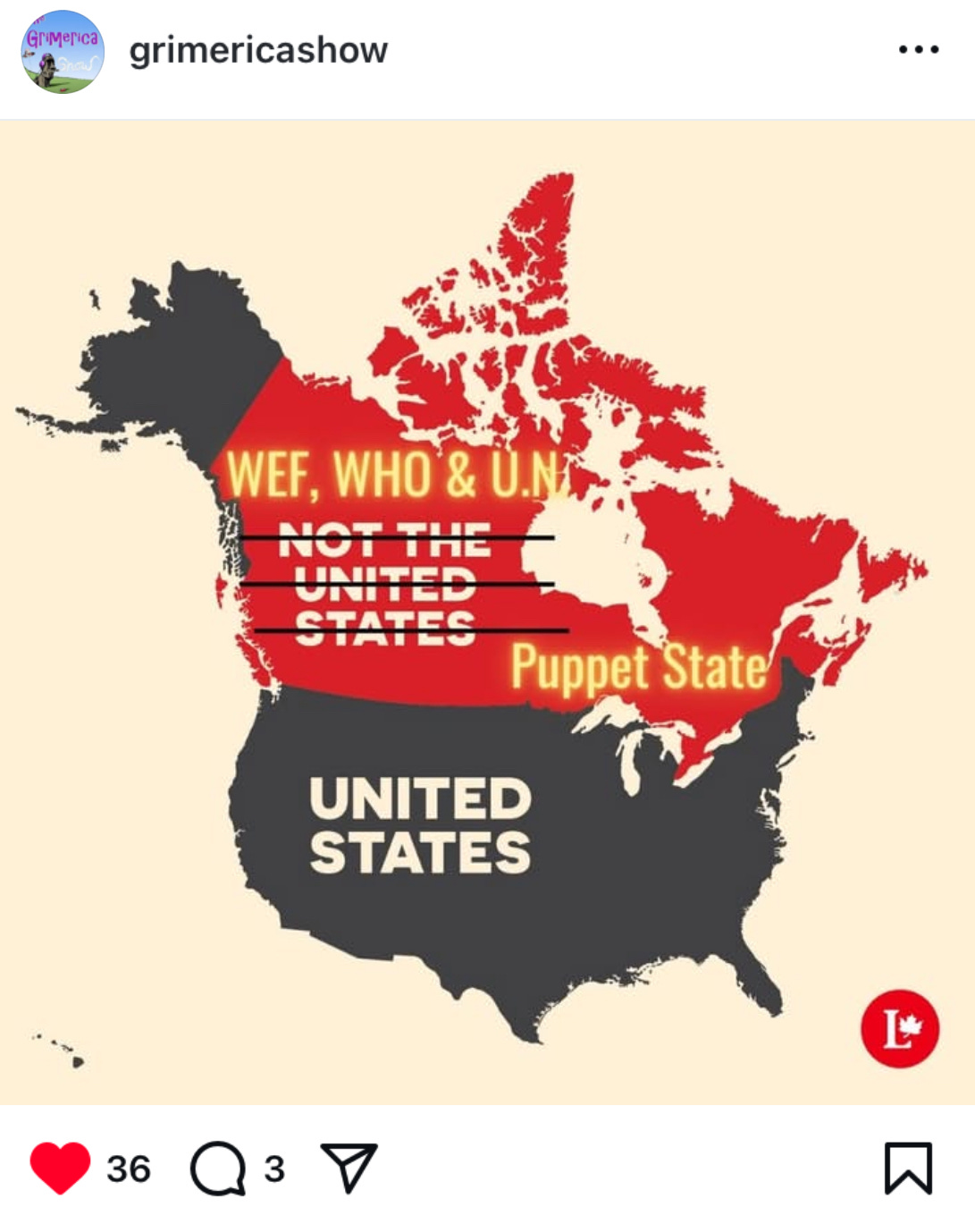
Donald Trump has made picking fights with the corrupt oligarchs of Mexico and Canada a key part of his appeal to American voters. Canada used to be a proud nation, but after years of deliberate mismanagement and stubborn opposition to innovation and growth, we’ve become — as Justin Trudeau so smugly put it — the first “post-national state” that has “no core identity [and] no mainstream”, because we’re a plaything for the WEF and other transnational organizations. Elizabeth Nickson calls us a “failed state” and that swapping in globalist WEF’er Mark Carney for globalist WEF’er Justin Trudeau will make no positive difference:

25% tariffs will ruin us. The tariffs mean one million small businesses — all which sell to the U.S. — will contract and many will close their doors. And then Trump, as he promised the unions, will pull “our” auto industry. Then we’re done.

Who is to blame for this?

The following is going to be crude because Canada is so boring (that’s deliberate) that no one cares. There are a thousand ultra-complex rationales on why Canada is failing and all they do is obfuscate. I’m not pulling punches, softening rhetoric — it is bad. It is urgent. This is the death of something that 75 years ago was shining, sunlit, exciting. That country? That country was killed by the Laurentian elite, weak, cosplaying Marxism to stay in power, themselves outwitted by investment bankers who plan to steal everything not nailed down. In so doing new elements were forcibly injected into the population: envy, resentment of the successful, sloth, the refusal to grow up, be strong and independent. We effectively sit on top of the U.S., seething with envy, in wet diapers.

We are a broken country. Everyone who understands the world knows this. The only people who don’t are deluded Canadian socialists, which is to say our entire elite and all our “knowledge class”. Dissent is ignored. Or jailed.

Central banker Mark Carney, WEFer paramount, is being parachuted into the Liberal party in order to sell us off to the investment banks who will harvest us for our resources. Our people? Future serfs in Special Enterprise Zones. We already have the regulation in place. No taxes, no worker rights, no enviro controls, no self-determination, no agency, no freedom. Time frame? Ten years, twenty at the outside. The inevitable end of hard-core socialism.

That is what Carney did to Canada in the ‘08 crisis, a crisis entirely created by larcenous government and investment bankers: he loaded us up with so much debt that the moment the economy turned, the working class — and Canada is now 75% working class — paid for it through interest rates so high they crippled and broke every middle class family with a mortgage. Then, he moved to England and did it to the English. His name there? Mark Carnage. During the ’08 crisis, he in Canada and the UK and Obama in the US transferred trillions in public wealth to the investment banks to keep them going after the worst crisis since ’29. A crisis they caused. That was the people’s money, not theirs.

However, as Peter Menzies points out, our Laurentian Elite are still 100% protecting us from the baleful influence of American culture … well, the commercial bits anyway:

Next Sunday, the federal agency responsible for the flourishing of national culture and identity will be swamped with complaints. The grumbling will emanate from Canadians enraged they can’t get more American culture. Yes, America may be in the process of humiliating Canada as its lamest of lame duck leaders, Prime Minister Justin Trudeau, waddles into the sunset. And, for sure, most of us are mortified that U.S. President Donald Trump has chosen to make an example of us as he launches his mission to bring the globe to heel and Make America Great Again.

But the bitching directed in the days to come at the Canadian Radio-television and Telecommunications (CRTC) headquarters in Gatineau will originate from Canadians angry they can’t watch American Super Bowl TV ads along with the game. A perennial contender to be the most watched TV event in Canada, the Super Bowl also has traditionally been the most controversial event on the CRTC’s calendar.

The USA can slap us silly with tariffs. It can send hundreds of thousands of us into unemployment and despair. It can mock our disinterest in maintaining the essentials of nationhood and drive us into unsustainable debt. Trump can brutalize our national esteem and taunt us for our cavalier attitudes towards the defence of our sovereignty. And he can lick his big beautiful lips while pondering our potential as the 51st state.

But what will really light us up Feb. 9 will be being unable to watch Meg Ryan and Billy Crystal reinvent their famous restaurant scene from When Harry Met Sally or Michelob Ultra’s production starring Willem Dafoe and Catherine O’Hara as a couple of pickleball hustlers. Or Matthew McConaughey channeling legendary Chicago Bears coach Mike Ditka for Uber Eats. And the Clydesdales. Everyone loves those Budweiser Clydesdales, particularly the cute little foal making a debut.

It doesn’t matter that the ads cost $7 million U.S. (which will convert into heaven only knows how many bazillion loonies in the months ahead) for a 30-second spot. Or that for more than a decade many of the commercials have been available on YouTube. Canadians don’t want to watch a Super Bowl adorned with Government of Ontario and Maple Leaf Foods ads. They want to watch the game like real Americans and relish the full, unfettered American experience.

At the National Post, a sad recounting of just how badly we’ve been let down by our politicians — and not just recently … this is a decades-long list of conscious self-harm for short-term domestic political advantage:

Bold counter-attacks against the U.S. can’t work, because all the ideas Canada could have put into action to make such a response viable are collecting dust on the cellar shelf. Drop interprovincial trade barriers that amount to a $200-billion penalty on the national economy every year? That only became a serious conversation in the last month. It should have been a serious conversation 10 years ago, if not more.

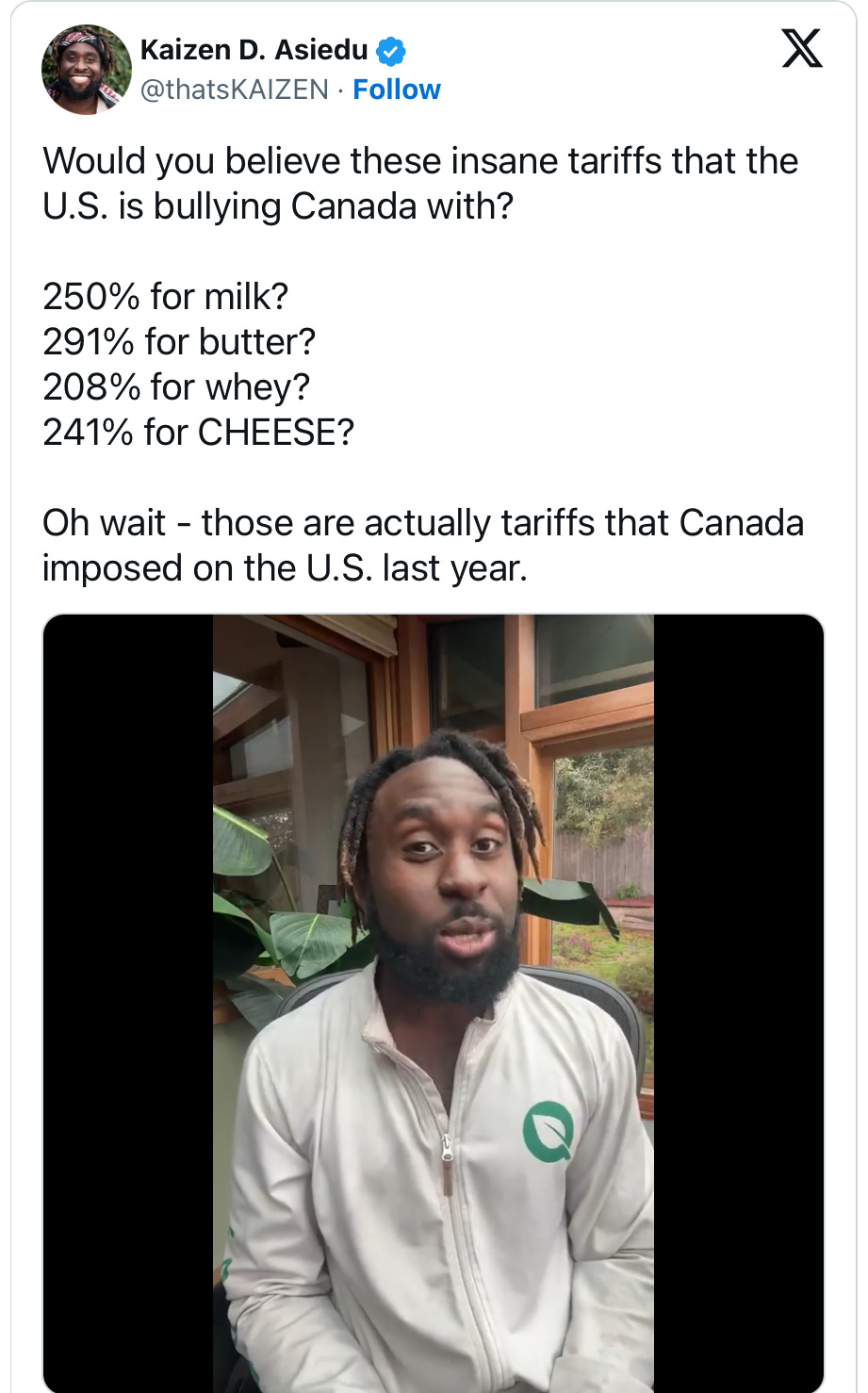
End supply management? Out of the question — think of the Quebec votes such a move would cost. The Big Milk lobby is a strong one.

How about resource development? Because Canada is ultimately a resource-exporting economy? No; we’ve been cancelling energy projects at the slightest objection and building more legislation to stand in their way. Industries like mining and fishing, already mired in growth-choking regulations, are increasingly refashioned by governments into welfare and “reconciliation” initiatives, repelling private investment that would have brought prosperity to the country as a whole.

Diversify away from the Americans? We’ve only done the opposite: since 2017, Canadian trade has become more focused on the U.S.

Canada should be a prosperous, growth-oriented economy, but instead, its government — and the people who continuously vote for economy-stagnating policy — settle for subsistence and redistribution of a shrinking pie of wealth. Their choices for the past decade have left us without enough fat to get through a cold trade winter.

Prompt retaliatory counter-tariffs are hence unwise. Such a move would put Canadians in the path of two separate blows, one from the front, the other from the back. And while immediate counter-tariffs could affect Americans whose support the president depends on — as was the case in the 1930s, when Canadian counter-tariffs prolonged the American Great Depression (while inflicting domestic pain) — those Americans have much bigger economic fat stores. In a trade war of attrition, expect Canada to lose.

That leaves us, unfortunately, with the less-glamourous immediate option: play this by the book. The United States-Canada-Mexico free trade agreement, which will be violated by any across-the-board tariff Trump applies, needs to be challenged with the mechanisms agreed upon by party states. During the process, Canada must remind Trump that it’s just following the agreement that he made.

January 31, 2025

“… and 10% for the Big Guy”

Filed under: Books, Government, Media, Politics, USA — Tags: , , , — Nicholas @ 03:00

In the New English Review, Bruce Bawer reviews Miranda Devine’s new book, The Big Guy: How a President and His Son Sold Out America:

Even now, roughly half of Americans seem to believe that all the attention that’s been paid to Hunter Biden and his laptop has to do with his love of prostitutes and drugs rather than with high crimes and misdemeanors committed by him on behalf of his dad and other members of the clan. Even now, many Americans seem to be blithely unaware of the mountains of evidence showing that Hunter has long been fleecing foreign firms on Daddy’s behalf. For some reason those clueless Americans, even if capable of accepting that Hunter was up to no good, simply can’t believe that his pop – good old Lunchpail Joe – has ever been guilty of anything. (These same people, of course, are convinced that Donald Trump is the most corrupt politician ever to come down the pike.)

This blindness to facts – or stubborn refusal to pay attention to them – is immensely frustrating. And it must be especially frustrating for Miranda Devine, the Australian-American New York Post journalist who, in Laptop from Hell: Hunter Biden, Big Tech, and the Dirty Secrets the President Tried to Hide (2021), detailed the contents (by turns sordid and criminal) of Hunter’s celebrated computer, the story of which her newspaper broke 20 days before the 2020 presidential election, and who in her new book, The Big Guy: How a President and His Son Sold Out America, focuses on the cover-up.

To say that Devine tells her story in impressive detail would be an understatement. Like War and Peace, The Big Guy opens with a long list of the main players, just in case you lose track of who’s who. And you will. Reading this book isn’t just like reading War and Peace – it’s like reading War and Peace at the same time as One Hundred Years of Solitude. You have to remember a slew of foreign-sounding names, many of which sound very much alike, all the while following an exceedingly labyrinthine narrative.

To be sure, this tale also involves plenty of Americans, some of them public officials who, when they scented the heady whiff of corruption in the Biden circle, actually did their jobs by digging into the facts and gathering evidence. Others, alas, are people who also held positions of authority but who did their damnedest to put up “roadblocks” or “obstructions” or “delays” or “logjams” – to use some of the many synonyms that Devine uses to describe efforts to keep the public in the dark.

And boy, was there a lot to cover up. Among the expenses that Hunter tried to write off on his taxes – not that he was quick to pay them, mind you – were disbursements to prostitutes and drug dealers and memberships in sex clubs. During one “crack and hooker bender” in 2018, he spent $8,000 on a single sex worker, $140,000 on a stay in Las Vegas, and $34,000 on a sojourn at the Chateau Marmont in L.A. The Chateau Marmont is legendary for playing host to celebrities on drug binges, but Hunter caused so much damage to his room that he was banned from the place thereafter, which even he suspected was a first.

Part of the reason why Hunter was able to go through a small fortune so quickly was that he had a “sugar daddy” by the name of Kevin Morris, who for reasons that still remain a mystery chose to give him millions of dollars over the years to save him from financial crises (such as the ones posed by the relatively modest monetary demands of Hunter’s baby mama in Arkansas). A 2019 book contract with Simon & Schuster also netted Hunter a $750,000 advance, even though the book (surprise!) ended up selling so few copies that it made back only a tiny fraction of that sum. Then there were his paintings, which brought in at least $1.5 million. People laughed when Hunter first revealed his artworks to the world in 2020, but I didn’t: they’re no worse than a hell of a lot of contemporary art – and, after all, the art market these days is as much about laundering money than it is about aesthetics.

But Hunter’s main sources of mazuma were foreign companies. One of them was Barisma in Ukraine. Another, in Russia, was run by a man named Zlochevsky who said that Hunter, whom Joe Biden had called the smartest man he knew, was in fact stupider than Zlochevsky’s dog. A third was the Chinese energy company CEFC, a leading promoter of China’s Belt and Road Initiative. CEFC put Hunter on its board – and paid him millions – in exchange for his promise to use his father’s name to “open … doors around the world” for the firm.

Collecting loot from all these sources and funneling some of it to family members involved a complex network of bank accounts and shell companies that was designed to make the moolah tough to trace. To illustrate the process, Devine follows the path of a single $5 million payment by a CEFC affiliate to one of Hunter’s firms, HWIII. Over time, Hunter transferred most of that $5 million to another firm of his, Owasco; in addition, he wired some of it to his uncle Jim’s company, after which Jim’s wife, Sara, withdrew a fraction of that sum and deposited it in the couple’s personal account and dispatched a $40,000 check to Joe Biden.

QotD: “Did you know the government faked the moon landings?”

Filed under: Media, Politics, Quotations — Tags: , , , , — Nicholas @ 01:00

This is a deeply stupid thing to believe, and if you believed it in the 20th century I had nothing but mockery for you.

Today I am compelled to much more sympathy with people who have come to believe that. It’s still objectively stupid, but I understand how they got there. It’s an interaction between a low-trust, polluted information environment and the cheater-detection module wired into human brains.

If you pose people a logic problem phrased in two different ways, one of which is “spot the cheater” and one of which is not, they’ll do substantially better on the first version. We are social animals who survived by forming trust networks, and for millions of years spotting the cheater was a life or death matter.

Now put yourself in the shoes of a person of average intelligence — not very good at following complex arguments or extracting generative patterns from large masses of evidence. This person has gradually become aware over the last quarter century that public information sources are saturated with lies. The media is corrupt and partisan, corporations deceive to boost their profits, education is ideologically captured, and governments constantly peddle vast falsehoods to gain compliance.

In this environment, and given the capacity limitations of the average human, the cheater-detection module goes into overdrive. The least bad strategy is to try to spot the worst liars and then believe the opposite of everything they say.

“The moon landings were faked” has to be understood as a symptom not of individual insanity, but of governing institutions and elite classes who have repeatedly burned up their long-term credibility for short-term gains.

This trend had been building for a long time, but undoubtedly culminated with the series of colossal lies, blunders, and “we’ve always been at war with Eastasia” reversals around COVID.

I wish I knew a way back from this. I’m not sure anything less than the abolition of secrecy could do it.

ESR, Twitter, 2024-10-27.

January 30, 2025

The MAGA movement as “America’s Thermidorian Reaction”

Filed under: Cancon, Media, Politics, USA — Tags: , , , , — Nicholas @ 03:00

Fortissax lays out the case for Canada remaining separate from the United States, in what he says is the longest single article he’s written. It is indeed a long piece, from which I’ve selected a small portion that helps identify the US MAGA movement as something other than just pro-Trump activism:

“Canada’s national identity is rooted in Order, as expressed in its national motto, Peace, Order, and Good Government, conceived by Sir John A. Macdonald. This stands in contrast to the United States, whose core value is Liberty, reflecting its liberal and individualist foundations in the pursuit of life, liberty, and the pursuit of happiness.”

The MAGA movement, as explored in my colleague and fellow Canadian Endeavour’s article, can be understood not as a counter-revolutionary or genuinely reactionary force, but as America’s Thermidorian Reaction — a movement within the post-WWII liberal order to purge its own radical excesses. Endeavour draws parallels to the French Revolution, where the Thermidorian Reaction was not a restoration of the monarchy but a moderation of the Reign of Terror’s extremism, and to the Soviet Union’s Destalinization, which sought to distance the regime from Stalin’s radical policies without abandoning communism.

Similarly, MAGA does not aim to dismantle the liberal framework established during the cultural revolution of the 1960s, marked by the Civil Rights Act and Hart-Celler Act, but instead seeks to address the instability caused by the radicalization of this framework during the “Great Awokening” of the 2010s. Its faith in “colourblind meritocracy” is rock solid. Just as the Thermidorians and Khrushchev’s regime sought to preserve their respective systems by eliminating destabilizing elements, MAGA represents an attempt to recalibrate the liberal order by challenging excessive ideological commitments like open borders, identity politics, and globalist policies.

While MAGA appeals to traditionalist sentiments, it ultimately operates within the boundaries of the same liberal system it critiques, lacking the philosophical depth to present a true alternative. Trump’s 2016 campaign was fueled by widespread dissatisfaction with the establishment and a sense of cultural alienation among, working-class European-Americans. As an outsider candidate, Trump faced opposition from both political parties and the media but managed to channel populist anger into an unexpected victory. However, his presidency revealed that he posed less of a threat to the system than many anticipated. Trump’s administration implemented some reforms but fell short of disrupting the liberal order, leading many elites to reframe him as a tolerable alternative to the increasing instability caused by radical left-wing movements. The 2024 campaign differs significantly from Trump’s earlier runs because he has garnered support from influential elite factions. Figures in Big Tech, such as Elon Musk and Peter Thiel, and segments of the Zionist lobby, see Trump as a tool to stabilize the system without fundamentally altering it. While Trump continues to appeal to his populist base, his elite backers are likely to exert more influence over his presidency than grassroots supporters.

The Four Agendas of America’s Elite

Endeavour outlines four major agendas driving the U.S. political landscape, which often overlap but also compete for dominance:

  1. The Anti-White Agenda (Wokeism)
  2. This agenda promotes diversity, equity, and inclusion (DEI) as core principles, advocating for identity politics, demographic transformation, and the demonization of traditional Western cultural norms. Organizations like the NAACP, SPLC, and Open Society Foundations champion this cause.

  3. Managerialism
  4. Focused on centralized control, managerialism, coined by James Burnham, expands bureaucratic oversight in both public and private sectors. The COVID-19 pandemic epitomized managerial overreach, as policies enforced compliance on an unprecedented scale. Key proponents include BlackRock, the World Economic Forum (WEF), and the Bill & Melinda Gates Foundation.

  5. The Zionist Lobby
  6. Primarily concerned with ensuring unwavering U.S. support for Israel, the Zionist agenda overlaps with wokeism in promoting leftist social causes but diverges when these causes conflict with Israeli interests. Organizations like AIPAC and the ADL straddle this divide.

  7. Big Tech
  8. Initially aligned with wokeism, Big Tech has begun to push back against its most radical elements due to its impact on innovation and competence. Elon Musk’s purchase of Twitter (now X) symbolizes this shift, as does growing discontent with DEI mandates within the tech sector.

While these agendas are not inherently unified, they collectively uphold the liberal framework established in the 1960s, even as they compete for dominance within it. I’ve defined these forces in the past as left-liberalism vs right-liberalism, which I covered here: MAGA & Wokism

Parallels to Historical Thermidorian Reactions

MAGA’s role is likened to historical Thermidorian Reactions, where moderates sought to rein in revolutionary excesses to stabilize their regimes. For example:

  • The Thermidorians ended Robespierre’s radical Reign of Terror, easing persecution and executions while maintaining the republic.
  • Khrushchev’s Destalinization moderated Stalin’s authoritarian rule but preserved the communist system.

Similarly, MAGA seeks to temper the radicalism of woke managerialism without challenging the core tenets of the liberal order. The “Great Awokening,” characterized by intensified DEI policies, identity politics, and cancel culture, parallels the Reign of Terror and Stalinist purges in its ideological zeal. Trump’s 2024 campaign represents an attempt to dial back these excesses and restore a degree of moderation.

Challenges Facing the Thermidorians

Despite its goals, MAGA faces significant hurdles in moderating the system:

  • Demographic Shifts: The growing influence of progressive, non-white voting blocs entrenches leftist policies.
  • Institutional Entrenchment: Managerial bureaucracies are staffed with ideologues deeply committed to woke principles, making reform difficult.
  • Superficial Reforms: Even if MAGA eases censorship and curbs DEI mandates, it is unlikely to reverse structural changes such as demographic transformation or the Civil Rights Act.

Endeavour contends that MAGA’s moderation of woke managerialism may improve short-term conditions but will not address deeper contradictions in the liberal order. For example:

  • The Zionist lobby’s support for both Israeli ethno-nationalism and woke policies in the U.S. creates unsustainable contradictions.
  • Universalist egalitarianism remains fundamentally flawed, and attempts to reform it, like Gorbachev’s Perestroika in the USSR, may inadvertently accelerate systemic collapse.

While MAGA may temporarily stabilize the United States, it will not fundamentally alter the trajectory set in motion during the cultural revolution of the 1960s. The deeper issues of demographic change, cultural alienation, and institutional decay remain unresolved. Trump’s vision—and likely that of most within the MAGA movement—is rooted in nostalgia for the 1980s and 1990s, a romanticized era cherished by many baby boomers. This idealized vision imagines a time when race was purportedly invisible, the black middle class thrived, and patriotism unified Americans across racial lines. This narrative conveniently ignores the darker realities of that period, including the L.A. race riots and the rise of militant groups like the Black Panther Party. At the same time, this Thermidorian Reaction is being leveraged to solidify control over America’s imperial vassals, with the Anglosphere serving as its primary appendages and European nation-states as key dependencies. Populist movements across Europe echo rhetoric nearly identical to that of MAGA, with many receiving direct or indirect support from individuals and entities affiliated with the movement. Figures like Elon Musk have actively amplified some of these efforts, like promoting the Alternative für Deutschland party and bolstering independent actors aligned with MAGA’s agenda, thereby expanding its influence across the Western world. Not ideal, but a means to an end for sure.

QotD: Michael Moore

Filed under: Media, Politics, Quotations, USA — Tags: , , , — Nicholas @ 01:00

Bowling for Columbine is the latest documentary from Michael Moore, the leftwing multi-millionaire provocateur in his usual cunning disguise as an all-American lardbutt loser — baseball cap, unkempt hair, untucked shirt. This time, the nominal subject is American violence, but, by now, connoisseurs of Roger and Me and Moore’s TV work know that, whatever the subject, the routine never varies: he turns up at company headquarters unannounced and demands to see the chairman. The receptionist says he’s not available, and Moore merrily films the stand-off before moving on to some other target. If he showed up to see me without making an appointment, I’d tell him to piss off and then fire a warning shot. If I showed up to see him unannounced and accompanied by a camera crew, his people would do the same to me.

But most folks are nicer than that.

And so you can’t help noticing that, for a champion of the little guy, he goes to an awful lot of time and effort to make the little guy look like a chump. Moore has no interest in digging deep into his subjects when all the fun’s to be had on the surface of American life — the squeaky receptionists, the bored security guards, the bland PR women, the squaresville company guy in the suit, the State Police trooper with the infelicitous phrasing, the bozo in the pool hall … His vision of America as a wasteland of gun kooks, conspiracy theorists and perky brain-fried mall clerks will doubtless have them rolling in the aisles in Paris this weekend. In my corner of New Hampshire, there were only four other moviegoers in the theater. But Moore, a great favorite with the BBC, now does his shtick with an eye to the non-American market.

Mark Steyn, “Bowling for Columbine”, Steyn Online, 2002-11-30.

« Newer PostsOlder Posts »

Powered by WordPress