That’s because, as I’ve been trying to scream at you people for the past three years, the corporate mass-media news industry sucks. More specifically, the once proud fourth branch of our government has been reduced to screaming-head opinionators formulating commentary on the basis of politicized ratings. In other words, Wikipedia and the news are in two different businesses: one is about facts and the other is about shock and spin. Argue with me all you like, you know it’s true.
But perhaps even more importantly, the general public trusts crowd-sourced Wikipedia articles more than the news because an argument is always more trust-worthy than a lecture. That’s the real difference. If you want to know how good a teacher in a school is, you gather up the best student, the worst student, the principal and the teacher and then analyze what they all say together. You don’t ask the school’s PR director. Wikipedia, even when it comes to contested or hotly-debated articles, does this extremely well, even concerning itself. The linked article above discussed a number of articles about how reliable Wikipedia is, some of which disagreed with others, and all were found on the Wikipedia page for itself.
Regardless the disputes over individual studies and their methodologies, how I found them is almost as telling as their results. I came across them because Wikipedia provided external references, allowing me to corroborate the information. This is one of the site’s great merits: the aggregation of multiple sources, correctly linked, to build a more complete picture. As the results of the Yougov poll perhaps suggest, this surely seems more reliable than getting the coverage of an event from one newspaper.
The truest answer to a question can rarely be told by a single source, which is what makes the sources section of a Wikipedia page so valuable. What is the corollary in a news broadcast? Perhaps a single expert? Maybe once in a while they’ll have two sides of a debate spend five minutes with one another? They’re not even close. The argument itself can be instructive, but that argument never happens on most news shows.
This doesn’t mean you blindly read Wiki articles without questioning them. But a properly sourced article is simply more trustworthy than a talking head telling you how to think.
Timothy Geigner, “Why Do People Trust Wikipedia? Because An Argument Is Better Than A Lecture”, Techdirt, 2014-08-18.
July 9, 2015
QotD: People trust Wikipedia “Because An Argument Is Better Than A Lecture”
July 8, 2015
QotD: The “voice of command”
Heinlein had, over the years, developed his own version of Captain — Admiral — King’s “voice of command”:
The “voice of command” somehow carries with it to the hearer the subconscious knowledge that its owner is used to being obeyed, has the power to require obedience, expects to be obeyed, and does not encompass any possibility of not being obeyed.
With Heinlein it was something more inward, which George Scithers characterized as “quiet persistence and presence of command”. Scithers related an incident he saw at a lunch counter, possibly at this very convention. Heinlein sat down nearby, and there was a paper at the other end he wanted; the waitress didn’t seem inclined to put herself out to get it, but by the time Heinlein was finished with the contest of wills, she got the paper for him — and he tipped her accordingly. It was more attitude than technique, something that came from inside. There was something primal about Heinlein that the fans wanted from him — they came to warm themselves at his fire.
Robert A. Heinlein, letter to Theodore Cogswell 1959-12-04, quoted in William H. Patterson Jr., Robert A. Heinlein, In Dialogue with His Century Volume 2: The Man Who Learned Better, 2014).
July 7, 2015
Lois McMaster Bujold’s latest novella, Penric’s Demon
You can read a sample from the work here.

July 5, 2015
Geddy Lee and Alex Lifeson
From the recent Rolling Stone profile of Rush:
Lee has been friends with Alex Lifeson since they were nerdy teens in the Sixties; the guitarist set Lee up with Young, whom he married in 1976. Clearly, Lee has no issues with commitment, though touring strained his relationship with his family until Rush cut out European dates in the Eighties. “The worst thing you can do in marriage is to look at your partner as your wife or your husband,” says Lee. “We decided to treat each other as if we were still boyfriend and girlfriend. That subtle bit of semantics helps a lot, I think.”
Lee, born Gary Lee Weinrib, is the child of Holocaust survivors, and he traces some of his drive to his parents’ legacy. They met in a Nazi work camp in occupied Poland in around 1941, and had fallen in love by the time they were both imprisoned in Auschwitz. “They were, like, 13 years old,” Lee says over a late-night beer in a sleepy Tulsa bar, “so it was kind of surreal preteen shit. He would bribe guards to bring shoes to my mom.” As the war went on, his mother was transferred to Bergen-Belsen, and his father to Dachau.
When the Allies liberated the camps, his father set out in search of his mom. He found her at Bergen-Belsen, which had become a displaced-persons camp. They married there, and immigrated to Canada. But years of forced labor had damaged Lee’s father’s heart, and he died at age 45, when Lee was 12. Lee’s mother had to go to work, leaving her three kids in the care of their overwhelmed, elderly grandmother. “Had my dad survived,” says Lee, “I might not be sitting here talking to you — because he was a tough guy, and if he didn’t want me to do something, I may not have done it. It was a terrible blow that I lost him, but the course of my life changed because my mother couldn’t control us.”
[…]
Close to midnight, with Rush’s tour kickoff less than 24 hours away, Alex Lifeson is kneeling on a relocated couch pillow by the open window of his hotel room, exhaling pungent weed smoke into the humid Tulsa air. (If you’re in Rush and you want to get high, you do so considerately.) He breaks into a violent coughing fit. “Well, that’s the thing with this pot these days,” he says, passing the joint. “It’s so expansive in your lungs.” The streets below us are post-apocalyptically empty. “It’s busy in town tonight,” Lifeson says.
Earlier that night, over a pleasantly boozy dinner, I ask Lifeson if weed has helped him write Rush’s music. “Maybe just 80 percent of the time,” he says, roaring. “I find that smoking pot can be a really great creative agent.” (Lee quit pot in the early Eighties; Peart says, “I like marijuana, but I’m not going to be the poster child for it.”) “But when you’re in the studio and you’re playing, it’s sloppy,” Lifeson continues. “And cocaine is the worst, for everything. If you want to feel your heart pounding on your mattress at 7:00 in the morning when the birds are chirping, it’s perfect. It’s awesome. What do kids do now for drugs?”
Lifeson was a fan of Ecstasy in the early Nineties, and hadn’t heard that it’s called Molly now. “I’m glad you told me, just in case,” he jokes. “My wife is a totally nondrug person, but for some reason I talked her into it. We cranked the music and we were dancing, and then we talked for hours about deep personal stuff for what seemed like the first time, even though we’d been married for years. We were going through a bit of a difficult time in our relationship, and that opened up a lot of doors.”
The real lessons of The Good Life
While I don’t think I ever saw an episode of the British sitcom The Good Life, I’ve read a fair bit about it in passing, as it is one of the mass media touchstones used by Dominic Sandbrook in his series of hefty tomes about British life from the 60s onwards. In short, a middle-aged couple bail on their middle-class lives and try to set up a self-sufficient lifestyle on their (fully paid-off) house in the suburbs. The interaction between the couple and their still-living-the-middle-class-life next-door neighbours provides much of the humour for the show. Based on that, I must heartily agree with David Thompson’s explanation of the show:
… Tom and Barbara’s experiment in “self-sufficiency” wasn’t particularly self-sufficient. They don’t prevail in the end, not on their own terms or in accord with their stated principles, and their inability to do so is the primary source of story lines. Practically every week the couple’s survival is dependent on the neighbours’ car, the neighbours’ chequebook, the neighbours’ unpaid labour, a convoluted favour of some kind. And of course they’re dependent on the “petty” bourgeois social infrastructure maintained by all those people who haven’t adopted a similarly perilous ‘ecological’ lifestyle. The Goods’ “non-greedy alternative” to bourgeois life is only remotely possible because of their own previous bourgeois habits — a paid-off mortgage, a comfortable low-crime neighbourhood with lots of nearby greenery, and well-heeled neighbours who are forever on tap when crises loom, i.e., weekly.
To seize on The Good Life as an affirmation of eco-noodling and a “non-greedy alternative” to modern life is therefore unconvincing, to say the least. The Goods only survive, and then just barely, because of their genuinely self-supporting neighbours — the use of Jerry’s car and chequebook being a running gag throughout. And insofar as the series has a feel-good tone, it has little to do with championing ‘green’ lifestyles or “self-sufficiency.” It’s much more about the fact that, despite Tom and Barbara’s dramas, bad choices and continual mooching, and despite Margo’s imperious snobbery, on which so much of the comedy hinges, the neighbours remain friends. If anything, the terribly bourgeois Margo and Jerry are the more plausible moral heroes, given all that they have to put up with and how often they, not Tom’s principles, save the day.
July 4, 2015
Please support the “Some Asshole” initiative!
By way of American Digest, let’s all get behind the “some asshole” initiative:

July 1, 2015
Remembering Patrick Macnee … I mean, of course, John Steed
Mark Steyn on the (not-technically) original Avengers star:
But for a while Americans liked The Avengers, and it lingered in the memory so warmly that, three decades later, Hollywood opted to do a big-screen, big-budget remake. Patrick Macnee, the original John Steed, sportingly agreed to do the usual cameo — in this case, as a ministry bureaucrat rendered invisible in some research mishap and now consigned to a cramped office in a Whitehall basement. As I say, he was invisible, so we heard Macnee’s affable drawl (he had a smile in his voice, even when beating up the bad guys), but the audience never saw him, which was probably just as well — because, if they did, they’d remember the sheer affability of Macnee’s Steed. He was never a conventionally handsome leading man — he had a bit of a dumplingy face — but he brought a bonhomous ease to the role of the unflappable secret agent: the bowler, the brollies, the buttonholes and the Bollinger seemed like natural extensions of his charm; you can understand why groovy birds like Honor Blackman, Diana Rigg and Linda Thorson would dig such an ostensibly squaresville cat.
He wasn’t supposed to be the star. The Avengers began in 1961 with Ian Hendry as a mystery-solving doctor David Keel. Macnee returned to England from an indifferent theatrical career in Canada to play the role of Dr Keel’s assistant “John Steed”. But then the star departed, and Steed found himself carrying the show with a succession of glamorous gal sidekicks — Honor Blackman as Cathy Gale, Diana Rigg as Emma Peel, Linda Thorson as Tara King. They were very literal sidekicks in that they kicked to the side, being masters — or mistresses — of martial arts, doing most of the heavy lifting while Steed occasionally boinked someone over the head with his bowler. Many years ago, Dame Diana told me “Emma Peel” came from “M Appeal”, as in “Man Appeal”. But Steed always called her “Mrs Peel”, just as he called her predecessor “Mrs Gale”, because he was a gentleman. And the ladies always called him “Steed” because they were one of the boys, as in that English public-school thing whereby grown-up chaps who know each other well address each other by their surnames (“I say, Holmes!” “Yes, Watson…”).
The Avengers was created by Sydney Newman, the greatest of all Canadian TV producers (he also inaugurated Dr Who), but hit its high-water mark under Brian Clemens and Albert Fennell. In the early days, they didn’t have a lot of money, but they spent it wisely. The difference between the two principals was defined in what they wore and what they drove: Steed favored a vintage Rolls or Bentley, the ladies the latest convertible sports car. After seeing Mrs Peel drive one, my dad bought a Lotus Elan — a beautiful ride with a fiberglass body that crumpled to dust when a truck brushed us ever so lightly on the Route National 7 in France. The ladies wore fab gear from Carnaby Street, while Macnee, ditching the trenchcoats he’d worn in the first series, opted for a slightly heightened version of an English gent’s get-up that he designed with help from Pierre Cardin. Laurie Johnson wrote one of the best telly-spy theme-tunes and the opening titles are pure style: Mrs Peel shooting the cork off the champagne bottle, Steed’s unsheathed sword-stick swiping a carnation and sending it flying through the air for Mrs Peel to put in his buttonhole.
QotD: The CRTC, Canada’s most fascistic government body
The CRTC is an even more odious organization. Back in 1920s both the Canadian and American governments declared the broadcast spectrum to be public property. So a technology pioneered and commercialized by the private sector, in both countries, was essentially nationalized by the state. Since it was a new industry it lacked the ability to effectively lobby Washington and Ottawa. The result has been that a large and important sector of our modern economy now lives and dies at the whim of an unelected government agency: The CRTC.
Of all the organs of Canadian government the CRTC has always struck me as the most fascistic. You could rationalize socialize health care, public education and government financed infrastructure as doing useful things in a terribly statist way. The CRTC is at an exercise in make work at best. At worse it’s an attempt to impose indirect censorship on the Canadian people. Beneath the reams of government drafted euphemisms the blunt truth behind the CRTC is that we mere Canadians are not clever enough, not patriotic enough or sufficiently sensible to watch and listen to the right things in the right way.
The existence of the CRTC explains much of the timorousness of Canadian broadcasting. The Americans did away with the Fairness Doctrine in 1987, thereby triggering the explosion in talk radio in the early 1990s. While Canada never had an exact equivalent, the regulations surrounding who could and could not receive or retain a license were sufficiently vague to make such a rule unnecessary. A nod and a wink from the right people at the right time was enough to indicate what type of broadcasting would or would not be acceptable.
The result was an insufferable group think that could no more be defined than challenged. There were unwritten rules of etiquette that forbade serious discussion from talking place on a whole host of issues: Abortion, capital punishment, race relations, linguistic issues and any frank discussions of our socialized health care system. It wasn’t that these discussions didn’t take place in a public forum, the newspapers and magazines were largely unregulated, but broadcasting was the late twentieth century’s pre-eminent mass media. It’s where ordinary people got their news and opinions.
Richard Anderson, “And All Must Have Prizes”, The Gods of the Copybook Headings, 2014-09-24.
June 30, 2015
Indiana Jones and the Giant Metal Snake – Outtakes I THE GREAT WAR
Published on 29 Jun 2015
We made it! 100.000 subscribers and all thanks to you and your support. We couldn’t have done this without you so for this great milestone and in a series of surprises we have prepared for our upcoming first birthday, we present to you: Our first outtakes videos. You might have noticed that Indy is a bit insane sometimes, but if you want to know what happens when he thinks the camera is not running, check out our video.
June 28, 2015
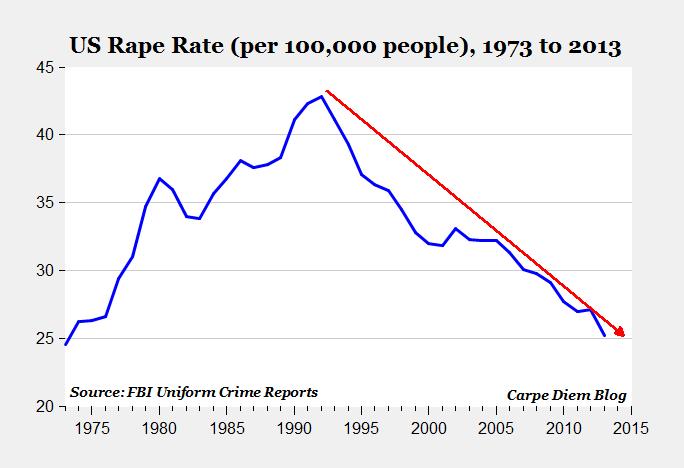
The obsession with “rape culture”
At sp!ked, Ella Whelan talks about Canadian reporter Lauren Southern’s public dissent from one of the main talking points of the feminist movement:
Southern had previously sparked debate by posting a picture online of her holding up a sign that explained why she didn’t ‘need feminism’ – a response to a popular feminist selfie campaign. Following this up a year later with a video entitled ‘Why I am not a feminist’, she called out feminism as a ‘faux form of equality under a gender-biased word’. In Southern’s report on the Vancouver SlutWalk, she explained that she had attended the rally to ‘challenge the fearmongering feminist narrative about men, women and violence’. It is this ‘rape culture’ narrative, she tells me, which is really trivialising rape. ‘Women are going to equate things that aren’t rape with rape because they interpret guys whistling at them as rape culture’, she says. ‘The misuse of the word [rape] is very dangerous because it allows for false accusations.’
Southern sees feminists’ obsession with ‘rape culture’ as a languishing in female weakness. ‘I’ve always thought that the main feminist issue was empowering women, in real terms; telling women to go out there, get the job, do what you want, not run around screaming “trigger warning” and crying.’ Her assessment of contemporary feminism is astute. Following her visit to the rally in Vancouver, Southern received a barrage of messages from self-proclaimed radical feminists who told her ‘they were vomiting all night because they were so triggered’ by what she had done. That’s right, these women felt physically sick just because someone disagreed with them.
This bizarre prizing of weakness on the part of contemporary feminists is, Southern explains, down to their refusal to engage in debate on a regular basis. ‘It’s not hard what they do. They go on to a street where everyone agrees with them, wearing their underwear, and get to show off for a day… They don’t surround themselves with people who disagree with them.’ This refusal to engage in debate was evident at the protest itself, with Southern having to climb up on to a plinth to avoid her sign being covered up by angry protesters.
So where does this desire to portray weakness as a strength come from? Southern puts it down to an institutionalised victim culture in Western universities: ‘Academia is obsessed with feminism. You’ve got a protective narrative which screams “rape culture” at the slightest thing and students just eat it up. Whether that’s because they want good grades or not, this stuff doesn’t get challenged.’ As a result, she says, sexism becomes a ‘self-fulfilling prophecy’. ‘If you’re told that you’re a victim as you grow up, you’re going to have a confirmation bias when you’re not hired for a job but a man is. You’ll hear sexism in your head’, she says.
June 26, 2015
Bob Dylan at 60
Mark Steyn dug up an old column from 2001 (also anthologized in his recent book The [Un]documented Mark Steyn) where he describes the re-appearance of Bob Dylan on the mass media:
I first noticed a sudden uptick in Bob Dylan articles maybe a couple of months ago, when instead of Pamela Anderson’s breasts or J-Lo’s bottom bursting through the National Post masthead there appeared to be a shriveled penis that had spent way too long in the bath. On closer inspection, this turned out to be Bob Dylan’s head. He was, it seems, getting ready to celebrate his birthday. For today he turns 60.
Sixty? I think the last time I saw him on TV was the 80th birthday tribute to Sinatra six years ago, and, to judge from their respective states, if Frank was 80, Bob had to be at least 130. He mumbled his way through “Restless Farewell”, though neither words nor tune were discernible, and then shyly offered, “Happy Birthday, Mister Frank.” Frank sat through the number with a stunned look, no doubt thinking, “Geez, that’s what I could look like in another 20, 25 years if I don’t ease up on the late nights.”
Still, Bob’s made it to 60, and for that we should be grateful. After all, for the grizzled old hippies, folkies and peaceniks who spent the Sixties bellowing along with “How does it feeeeeel?” these have been worrying times. A couple of years ago, Bob’s management were canceling his tours and the only people demanding to know “How does it feeeeeel?” were Dylan’s doctors, treating him in New York for histoplasmosis, a fungal infection that in rare cases can lead to potentially fatal swelling in the pericardial sac. If the first question on your lips is “How is histoplasmosis spread?” well, it’s caused by fungal spores which invade the lungs through airborne bat droppings. In other words, the answer, my friend, is blowin’ in the wind.
He has, of course, looked famously unhealthy for years, even by the impressive standards of Sixties survivors. He was at the Vatican not so long ago and, although we do not know for certain what the Pope said as the leathery, wizened, stooped figure with gnarled hands and worn garb was ushered into the holy presence, it was probably something along the lines of, “Mother Teresa! But they told me you were dead!” “No, no, your Holiness,” an aide would have hastily explained. “This is Bob Dylan, the voice of a disaffected generation.”
June 25, 2015
A different kind of crowd-funding
Christopher Taylor starts off by praising to the skies a movie I’ve never seen … but he goes on to discuss a variant of crowdfunding that might be a significant change to how movies are made:
… the big studios are corporations that answer to a board of stockholders. And the stockholders aren’t interested in great film making, they are interested in making money off their stocks.
So the Broken Lizards guys went to crowdfunding to raise money for their film, and have done quite well. They did so well that they don’t need a big bunch of studio dollars and interference to make the movie.
But here’s where it gets really interesting. See, crowdfunding sites raise money by offering goodies and the joy of helping a product succeed. They are not investment sites so much as a chance to be a patron of something you want to see on the market as well as a chance to get something from the company. Free copies, a mention in the book, a token in the game named after you, and so on.
Well that’s all about to change in a big way.Jay Chandrasekhar writes:
At our meeting, I vented to Slava about my perception of crowdfunding. I told him I wished people could invest in the movie and then own an equity piece of the backend. He said, “I totally agree.” That’s when we hit it off. He said that there is legislation in Washington, as we speak, that if signed, will make equity-based crowdfunding a reality. Think about that.
I’m with Jay here. Think about that. Its very likely that soon you will be able to donate to a crowdfunded project and get money back from its sales. In other words, it will actually be an investment, not just patronizing.
This is a huge key in changing the way that media gets made. All those projects the studios and TV channels pass on because it isn’t hot or doesn’t make sense to them? If this happens, they can have a chance.
June 24, 2015
Terry McKenna plays the lute at Fluxible 2013
Published on 3 Nov 2013
Terry McKenna is a gifted musician who plays many members of the plucked string family, both old and new. His performance at Fluxible 2013 is music from around the year 1500, played on his six-course Renaissance lute
Terry can be found on the web at:
Terry performed at Fluxible 2013, the UX party disguised as a conference. Attendees enjoyed dual admission to the Festival of Interstitial Music, which took place concurrently in space and time with Fluxible.
H/T to Brendan McKenna for the link.
June 23, 2015
Richard Blake reviews ten films set in the Roman empire
Wandering a bit off his usual (Byzantine empire) era, Richard Blake looks at how Hollywood has portrayed Rome in film:
My purpose in this article is to describe and compare and judge ten films set in the Roman Empire. I will apply two criteria. The first, and most obvious, is how these films stand as works of art in their own right — narrative structure, acting, general production values and so forth. The second, and for me almost equally important, is how well they show that the Ancients lived in a moral universe fundamentally different from our own.
Now, for the avoidance of doubt, I will say at once that I have no time for any of the neo-Marxist claims about Antiquity. Karl Polanyi and Moses Finlay were wrong in their belief that the laws of supply and demand have only operated since the eighteenth century. Michel Foucault was more than usually wrong when he denied that the Ancients had any notion of the individual. In all times and places, human nature is the same. All people are motivated by some combination of sex, money, status, power and the fear of death. The laws of Economics apply just as well in Ancient Rome as they do in Modern England.
What I do mean, however, is that these basic motivations showed themselves in often radically different ways. The Ancients were not Christians. They were not universalists. They had no concept of human equality. The establishment of chattel slavery among them normalised attitudes and behaviour that would have been thought outrageous in Ancien Régime Europe, and that every religious denomination would have been mobilised to denounce in the ante bellum American South.
The Ancients lacked technologies and scientific and moral concepts that we have taken for granted for five or six or even eight centuries. A modern secularist has more in common with a twelfth century theologian than with a Greek rationalist. He probably has more in common with a sixth century Bishop than with a pagan philosopher.
One of the main, though seldom noticed, differences between virtually everyone in the past and us is that they lived under the continual shadow of death. I have reached the age of fifty five. I might fall dead tomorrow, but the insurance tables tell me I have a long way yet to go before I need to start thinking hard about the inevitable end of things. I put off begetting children until I was in my forties. I only took up a serious study of the piano last year. Catullus was dead at thirty, Horace and Vergil in their fifties. Constantine the Great was an old and dying man when he was younger than I am now. Shorter time horizons must have an effect on almost every approach to life.
Any fictional recreation must show these differences, and show them without vexing readers or viewers with endless asides. I try to show them in my series of thrillers set in seventh century Byzantium. Without more elaboration, let me see how well they are shown in the ten films I have selected.