
Incidentally, I am thoroughly convinced that a majority of self-described incels are men who could find meaningful and fulfilling sexual and romantic success, both short-term and long, but who have developed such a wildly unrealistic idea about what actual human women look like that their standards are laughably high. And it’s easy to make fun of that, but I also think that the conditioning inherent to constantly looking at filtered and photoshopped pictures is powerful.
Freddie deBoer, “Some Reasons Why Smartphones Might Make Adolescents Anxious and Depressed”, Freddie deBoer, 2023-03-07.
June 15, 2023
June 14, 2023
Wednesday web-droppings
A few items that I didn’t feel required a full post of their own, but might be of interest:
- “Teacher, leave them kids alone!” – Middle schoolers staged a revolt on the day they were told to wear rainbow colors to celebrate pride. They wore red, white, and blue, and said their pronouns were “U.S.A.” Woke faculty is freaking out.
- Sir Humphrey answers the question “Is the Royal Navy still a truly ‘blue water navy’?“
- Brendan O’Neill is nostalgic for a long-distant past before everyone started sounding like off-brand Unabomber disciples.
- Tim Harford on “Giffen goods“
- Random meme of the day:

Comments Off on Wednesday web-droppings
“‘Misogyny’ is overtaking ‘fascist’ in the ‘I Don’t Own a Dictionary’ championships”
Christopher Gage suspects that George Orwell lived in vain:
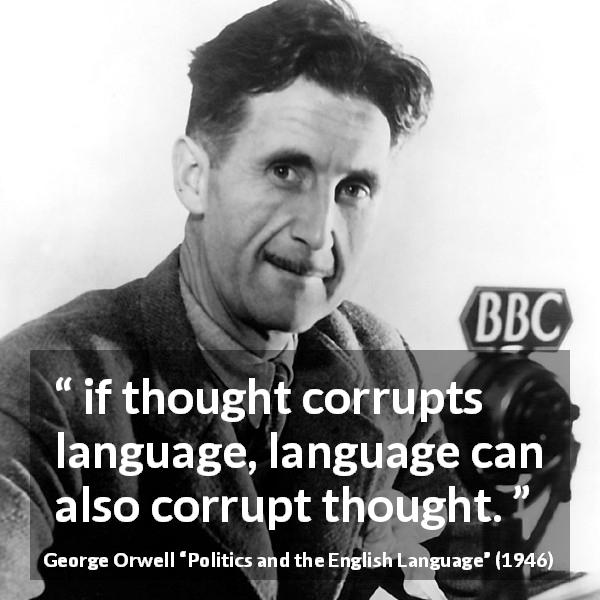
In his essay, “Politics and the English Language”, George Orwell lamented the decline in the standards of his mother tongue.
For Orwell, all around him lay the evidence of decay. Orwell argued sloppy language came from and led to sloppy thinking:
A man may take to drink because he feels himself to be a failure, and then fail all the more completely because he drinks. It is rather the same thing that is happening to the English language […] It becomes ugly and inaccurate because our thoughts are foolish, but the slovenliness of our language makes it easier for us to have foolish thoughts.
With his effortless knack for saying in plain English the resonant and enduring, Orwell’s dictum is obvious as soon as uttered.
Orwell wrote that back in 1946. What would the author of Animal Farm and 1984 make of today’s standards?
“Misogyny” is overtaking “fascist” in the “I Don’t Own a Dictionary” championships.
Spend five minutes online, and you’ll encounter words defined in their starkest definitions. Words like “misogyny”, “misandry”, and “narcissist”, once possessed specific meanings. Now they mean whatever the speaker claims they mean.
The beauty of the English language lies in its precision. Sadly, those who populate the land which spawned the English language wield the language with all the grace and precision of a meat hook.
According to The Guardian, the recent Finnish election was suppurated with misogyny and fascism.
In that election, the one debased in misogyny and fascism, the losing incumbent Sanna Marin, a woman, won more seats in parliament than in 2019. The three candidates with the most votes — Riikka Purra, Sanna Marin and Elina Valtonen — were all women. Women lead seven of the nine parties returned to parliament — including the “far-right” Finns Party.
The Guardian didn’t permit reality to spoil a good headline.
As Orwell had it, “Fascism” is a hollow word. In the essay mentioned above, he said: “The word Fascism has now no meaning except in so far as it signifies ‘something not desirable’.” In modern parlance, the same applies to “misogyny”. “misandry”, “narcissism”, “gaslighting”, and just about every other buzzword shoehorned into a HuffPost headline.
June 13, 2023
Liberal woman frustrated she can’t find non-conservative but traditionally masculine men
Tom Knighton responds to a progressive woman’s lament:

Originally found on fark.com about 15 years ago, artist unknown.
She is at a loss because she wants to be with a masculine man but doesn’t want to compromise her morals and values. She asks her followers if she is asking for too much when she requests a man she can be “equal” with while he still provides for her.
What she doesn’t seem to get is that it was women like her that basically destroyed manhood to the point that there’s little chance she’ll find a liberal guy with traditional values.
See, liberal men are basically obligated to take the subservient role. They’re required by their ideology to accept that the woman is just as capable — and obligated — to be at least an equal in providing for the family, if not the provider herself.
Failure to act according to this, at least in their minds, is to undermine the feminist values the left claims to hold so dear.
It didn’t have to be this way. It was always possible to empower women without trying to tear masculinity down, which is what has been happening.
Opening doors for women, for example, is one of those things guys used to do all the time. It wasn’t that women were somehow incapable of operating a doorknob. It was because it was just something a gentleman did.
Now, if a man opens the door for a woman, he’s taking a chance. Will she appreciate it or will she launch into a feminist diatribe about the patriarchy?
Leftist men already know which they expect, so they do no such thing. Guys with more of a traditional lean, however, can and will open that door because they’re not impressed with feminist screeching.
The surprisingly authoritarian reflexes of the “true” anti-authoritarian
Chris Bray surveys the “anti-authoritarian” stances and actions of Professor Ruth Ben-Ghiat, a dedicated opponent of all things Trump:
I’ve called the NYU professor Ruth Ben-Ghiat, an “expert” on authoritarianism, an inversion blender, a narrative-producing machine with an astonishing gift for turning meaning upside-down. Your decision to drive north is ironclad proof that you intend to travel to the south! You’re spraying water on that fire to make it bigger! You gave me a sandwich because you want me to starve to death!
Currently, Ben-Ghiat’s frantic production of anti-authoritarian messaging on Twitter, the preferred platform of true intellectuals, is tightly focused on the dangerous authoritarianism of the megafascist Donald Trump, who is doing what all true authoritarians do: questioning and criticizing the government. Go stroll through Ruth Ben-Ghiat’s Twitter posts. It’s like having lunch with Felix Dzerzhinsky. Only the guilty and the fascist elements resist the cleansing power of the state and its gloriously pure-hearted investigative apparatus!
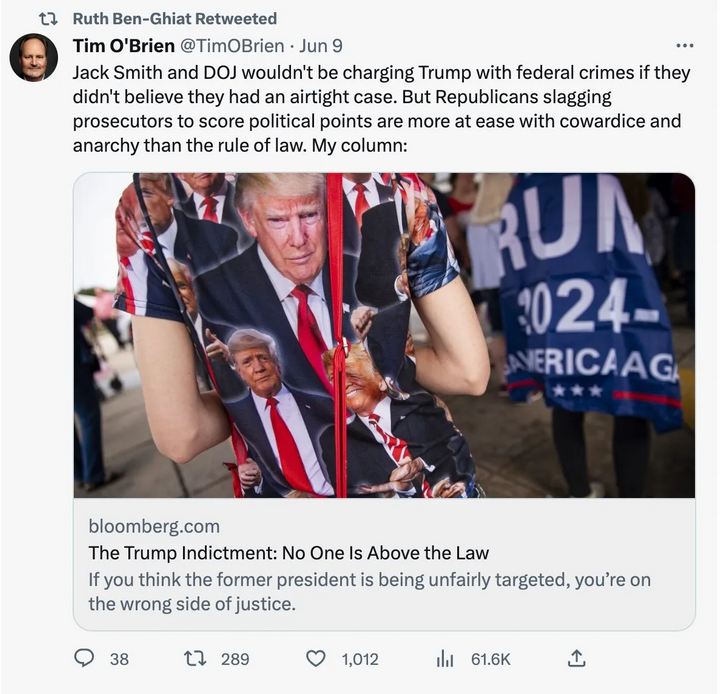
A suggestion up front from the maître d’hotel: What you’re about to consume is the filet mignon of dimwitted propaganda. Chew it slowly. Savor. Let’s start with a light appetizer, a mere retweet, to tease the ironic gustation:
Archie Bunker and Meathead have become one, united by the power of the Trump. If a prosecutor charges you, the case is airtight, full stop. Government never charges innocent people with crimes. To criticize a prosecutor is to oppose the rule of law, which can only be defended by the immediate presumption of guilt. Here, let’s try it out:
Prosecutors wouldn’t be charging Rick Perry with crimes if they didn’t believe they had an airtight case.
Prosecutors wouldn’t be charging Kyle Rittenhouse with crimes if they didn’t believe they had an airtight case.
Prosecutors wouldn’t be charging Tom Robinson with crimes if they didn’t believe they had an airtight case. Atticus Finch is an authoritarian!
This is why criminal defense lawyers are all so infamously right-wing, by the way. Especially public defenders.
[…]
Nothing says progressive anti-authoritarian like the sacralization of national security as a preeminent value. If government says that something has been done in the name of national security, you must accept it and support it without question. Or else you’re an authoritarian, doubting the state security apparatus. Fascists always do that.
There is, of course, a long and deeply established tradition on the American political left of criticism directed at the FBI and DOJ — and at federal law enforcement in general, and at law enforcement in general, and the “carceral state” — as hegemonic instruments. Historians and activists on the left have long viewed the FBI with political suspicion, and with reason.
Until pretty much right this instant, because Trump.
Comments Off on The surprisingly authoritarian reflexes of the “true” anti-authoritarian
Why The Far Side is a masterclass in storytelling
The Gaze
Published 26 Dec 2019The Far Side by Gary Larson is one of the best and most praised cartoons in history. But what makes The Far Side so good? What is the legacy of Gary Larson? And most importantly: what can we learn from The Far Side?
0:00 Pixar and Storytelling
1:22 How Gary Larson tells a story
2:42 The Far Side facts and figures
3:22 The level of detail in The Far Side
4:04 Telling a story with one image and a punchline
5:09 What is The Far Side about?
7:11 Gary Larson and naturalism
7:40 Controversy over The Far Side
8:10 The legacy of The Far Side
9:00 Conclusion
(more…)
June 12, 2023
It’s an insult to Chuck Barris and The Gong Show to compare it to the Justin Trudeau Show
In the weekly dispatch from The Line, the editors defend the honour of the original Gong Show and say that it’s not fair or right to compare that relatively staid and dignified TV show to the Canadian government’s performance art on the foreign interference file:
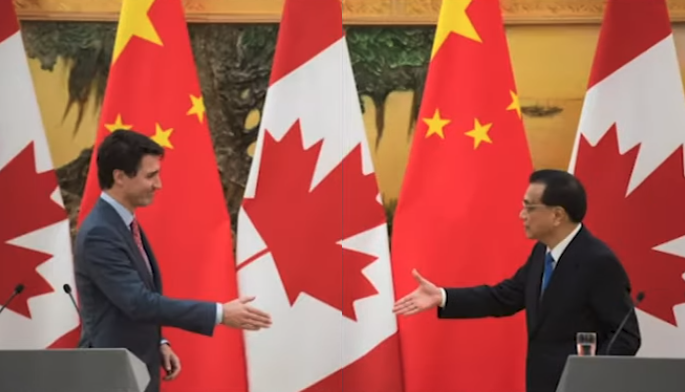
When the news broke late Friday afternoon that David Johnston was resigning from his position as special rapporteur on Chinese interference, the general reaction across the chattering class was a variable admixture of amusement and scorn. There’s probably a German word for it, but the security and intelligence expert Wesley Wark captured the tone of it with the headline on his Substack post, which said, simply: “Gong Show“.
We’re somewhat inclined to concur with Wark, except the three-ring train wreck that has marked Johnston’s time as Justin Trudeau’s moral merkin has been so disastrous that we think apologies are due to Chuck Barris, in light of the relative sobriety of his famous game show.
Reporters at the Globe and Mail and Global News started breaking stories about Chinese interference in Canadian elections a few months back, based largely on leaks from inside the Canadian intelligence apparatus. Almost immediately it was clear that the Liberals had a major problem on their hands, one that was going to require levels of transparency, good judgment and political even-handedness that this government has manifestly failed to achieve during its almost eight years in power.
Yet when Trudeau announced that he was going to appoint an “eminent Canadian” as “special rapporteur” to do an investigation and report back to the government with recommendations for how it should tackle the issue, we gave a collective groan here at The Line. Given the endless similar tasking of retired Supremes passim, it was clear that the pool from which Trudeau was going to fish his eminent personage was very shallow, and pretty well-drained. Indeed, at least one of us here was willing to bet large sums that it would be David Johnston.
What do we make of all this? Here’s the situation as we see it, in bullet form for brevity’s sake:
- Johnston should never have been offered the position of special rapporteur
- Having been offered the job of special rapporteur, Johnston should never have accepted it
And that is basically it. But given that Trudeau had the poor judgment to ask him, and Johnston had the poor judgment to accept, we think everything that has happened since was pretty much inevitable. We couldn’t have guessed at all the details of how this would have played out, especially the delicious elements beginning with the decision to hire Navigator to provide strategic advice (to manage what, exactly?), the revelation that Navigator had also provided strategic advice to Han Dong (who, recall, Johnston more or less exonerated), the firing of Navigator and the involvement of Don Guy and Brian Topp … this is really just gongs piled upon gongs piled upon gongs.
But the overall trajectory of Johnston’s time as special rapporteur? If you had told us ahead of time that this was more or less how things would go, we wouldn’t have been much surprised. Why? Because we live in Canada. And this is how Canada’s governing class behaves. It is a small, incestuous, highly conflicted and enormously self-satisfied group of people that is so isolated from the rest of the country they don’t even realize how isolated they are.
Honestly. What in heaven’s name gave Trudeau the idea that it would be smart to ask a former governor general to help launder his government’s reputation? And why on Earth did Johnston think it was a good idea to accept? Forget the Navigator stuff, this turkey was never going to fly. Johnston’s report was not accepted as the wise counsel of a wise man; instead it was seen as a partisan favour by a conflicted confidant. Sure, Johnston was subject to some pretty unfair attacks from the opposition, but what did he think was going to happen? Has he paid any attention over the last decade? But pride is a form of stubborness, and even after parliament voted for him to go, Johnston insisted he would stay on to finish his work. Until, on Friday afternoon, he decided he would not.
We’re not going to speculate about why Johnston finally pulled the chute. We’d like to think that the former GG in him thought it best to obey the will of the House of Commons. We rather hope it had nothing to do with some pointed (and unanswered) questions put to Johnston’s office by the Globe and Mail, asking whether Navigator had been given a heads-up on Johnston’s conclusions on the Dong file.
Maybe it doesn’t matter. As Paul Wells put it in a recent column, Trudeau sought to “outsource his credibility by subcontracting his judgment,” where credibility was supposed to flow from Johnston to Trudeau. Instead, and we would say, inevitably, the flow went in the opposite direction. If the prime minister had any credibility to lead the country on this issue, he wouldn’t need a special rapporteur in the first place. The fact that Trudeau felt the need to appoint one is a tacit admission that he knows he doesn’t have the trust of the people.
And that is the real problem here. The Johnston saga has ended where it was always going to, with a once-honorable man’s reputation in tatters and the problem he was brought in to address still unresolved. David Johnston has resigned, as he must have. In our view, that’s one resignation too few.
Comments Off on It’s an insult to Chuck Barris and The Gong Show to compare it to the Justin Trudeau Show
Why Modern Movies Suck – The Strong Female Character
The Critical Drinker
Published 10 Jun 2023One of the most tiresome tropes of the past ten years in moviemaking is the “Strong Female Character”. Not women who are smart, capable, well written and complex, but bland, boring, superficially “strong” characters designed to pander to simplistic ideals of female empowerment.
(more…)
Comments Off on Why Modern Movies Suck – The Strong Female Character
QotD: Cities in the pre-modern era
I find myself interested in pre-modern economies and militaries in roughly equal measure (in part because both are such crucial elements of state or societal success or failure). One of the reasons is that they are so interconnected: how military force is raised, supplied, maintained and projected is deeply dependent on how the underlying economy (which supplies the men, food, weapons and money) is structured and organized. And military institution and activities often play an important role in shaping economic structures in turn. So even if you are just here for the clashing of swords, remember: every sword must be forged, and every swordsman must be fed.
(Additional aside: I am assuming a west-of-the-Indus set of cereals: grain, barley and millet chiefly. Specifically, I am not going to bring in rice cultivation – the irrigation demands and density of rice farming changes a lot (the same is also true, in the opposite direction, to agriculture based around sorghum or yams). Most (western) fantasy and historic dramas are not set in rice-planting regions (and many East Asian works seem to have a much better grasp on where rice fields go and need no correction), so I’m going to leave rice out for now. I’m honestly not qualified to speak on it anyway – it is too different from my own area of research focus, which is on a Mediterranean agricultural mix (wheat, barely, olives, grapes), and I haven’t had the chance to read up on it sufficiently).
Lonely Cities
There’s a certain look that castles and cities in either historical dramas or fantasy settings set in the ancient or medieval world seem to have: the great walls of the city or castle rise up, majestically, from a vast, empty sea of grassland. […] These “lonely cities” are everywhere in fantasy and historical drama. I think we all know something is off here: cities and other large population centers do not simply pop up in the middle of open fields of grass, generally speaking. So if this shouldn’t all be grassland, what should be here? Who should be here?
What is a City For?
I think we need to start by thinking about why pre-modern towns and cities exist and what their economic role is. I’ll keep this relatively brief for now, because this is a topic I’m sure we’ll return to in the future. As modern people, we are used to the main roles cities play in the modern world, some of which are shared by pre-modern cities, and some of which are not. Modern cities are huge production centers, containing in them both the majority of the labor and the majority of the productive power of a society; this is very much not true of pre-modern cities – most people and most production still takes place in the countryside, because most people are farmers and most production is agricultural. Production happens in pre-modern cities, but it comes nowhere close to dominating the economy.
The role of infrastructure is also different. We are also used to cities as the center-point lynch-pins of infrastructure networks – roads, rail, sea routes, fiber-optic cable, etc. That isn’t false when applied to pre-modern cities, but it is much less true, if just because modern infrastructure is so much more powerful than its pre-modern precursors. Modern infrastructure is also a lot more exclusive: a man with a cart might visit a village where the road does not go, but a train or a truck cannot. The Phoenician traders of the early iron age could pull their trade ships up on the beach in places where there was no port; do not try this with a modern container ship. Infrastructure is largely a result of cities, not their original purpose or cause.
So what are the core functions of a pre-modern city? I see five key functions:
- Administrative Center. This is probably the oldest purpose cities have served: as a focal point for political and religious authorities. With limited communications technology, it makes sense to keep that leadership in one place, creating a hub of people who control a disproportionate amount of resources, which leads to
- Defensive/Military Center. Once you have all of those important people and resources (read: stockpiled food) in one place, it makes sense to focus defenses on that point. It also makes sense to keep – or form up – the army where most of the resources and leaders are. People, in turn, tend to want to live close to the defenses, which leads to
- Market Center. Putting a lot of people and resources in one place makes the city a natural point for trade – the more buyers and sellers in one place, the more likely you are to find the buyer or seller you want. As a market, the city experiences “network” effects: each person living there makes the city more attractive for others. Still, it is important to note: the town is a market hub for the countryside, where most people still live. Which only now leads to
- Production Center. But not big industrial production like modern cities. Instead it is the small, niche production – the sort of things you only buy once-in-a-while or only the rich buy – that get focused into cities. Blacksmiths making tools, producers of fine-ware and goods for export, that sort of thing. These products and producers need big markets or deep pockets to make end meet. The majority of the core needs of most people (things like food, shelter and clothes) are still produced by the peasants, for the peasants, where they live, in the country. Still, you want to produce goods made for sale rather than personal use near the market, and maybe sell them abroad, which leads to
- Infrastructure Center. With so much goods and communications moving to and from the city, it starts making sense for the state to build dedicated transit infrastructure (roads, ports, artificial harbors). This infrastructure almost always begins as administrative/military infrastructure, but still gets used to economic ends. Nevertheless, this comes relatively late – things like the Persian Royal Road (6th/5th century BC) and the earliest Roman roads (late 4th century BC) come late in most urban development.
Of course, all of these functions depend, in part, on the city as a concentration of people. but what I want to stress – before we move on to our main topic – is that in all of these functions the pre-modern city effectively serves the countryside, because that is still where most people are and where most production (and the most important production – food) is. The administration in the city is administering the countryside – usually by gathering and redistributing surplus agricultural production (from the countryside!). The defenses in the city are meant to defend the production of the countryside and the people of the countryside (when they flee to it). The people using the market – at least until the city grows very large – are mostly coming in from the country (this is why most medieval and ancient markets are only open on certain days – for the Romans, this was the “ninth day”, the Nundinae – customers have to transit into town, so you want everyone there on the same day).
(An aside: I have framed this as the city serving the economic needs of the countryside, but it is equally valid to see the city as the exploiter of the countryside. The narrative above can easily be read as one in which the religious, political and military elite use their power to violently extract surplus agricultural production, which in turn gives rise to a city that is essentially a parasite (this is Max Weber’s model for a “consumer city”) that contributes little but siphons off the production of the countryside. The study of ancient and medieval cities is still very much embroiled in a debate between those who see cities as filling a valuable economic function and those who see them as fundamentally exploitative and rent-seeking; I fall among the former, but the latter do have some very valid points about how harshly and exploitatively cities (and city elites) could treat their hinterlands.)
Consequently, the place and role of almost every kind of population center (city, town or castle-town) is dictated by how it relates to the countryside around it (the city’s hinterland; the Greeks called this the city’s khora (χώρα)).
Bret Devereaux, “Collections: The Lonely City, Part I: The Ideal City”, A Collection of Unmitigated Pedantry, 2019-07-12.
Comments Off on QotD: Cities in the pre-modern era
June 11, 2023
QotD: The revolt against “meritocracy”
When we say “merit” and “meritocracy” they think we’re using “code words” to say “white males”. There are reasons for this, besides the fact that the left is heavily into Manichaean thought systems that go something like: identify problem — find a person who MIGHT be responsible for/benefits from the system as it exists — assume that if that person were removed, the problem would be gone. See, French Revolution.
The initial confusion on the left arises from the fact that they might never, in fact, have witnessed meritocracy in their dealings or those of people around them.
This is because, as part of the long march, and to secure absolute control of all fields and institutions, the left has a mythology (the Manichaean thing again) that anyone who disagrees with them is evil. And of course, you don’t hire evil people.
The problem with that type of hiring is that you’re NOT hiring the best. And most people know they’re not the best. And hire someone less bright than they are. This in four generations takes you to the level of management/operation that takes monarchies twenty generations of inbreeding to achieve.
Right now, in everything but the hard sciences and STEM (and they’ve gotten into some of those, and can’t always be routed around.) the people in power would consider pouring piss out of a boot with the instructions written on the sole a feat of unachievable genius.
Most of them are so vacuous they don’t even know they’re incompetent. Or, like Michelle Obama in her essay on why everyone was mean to her at Harvard, they assume everyone else is just as incompetent.
The reason they get hired, stay hired and continue to get push/accolades/power is that they have the “right picture in head” by which you should understand “the left picture in head”. They view the world exactly as they were taught to view it by their Marxist teachers and professors. Reality is Manichean, and if there is any issue at all, you find the person who might be causing it (hint, usually you find the person who is a heretic to the left, even if in a minor thing) and you attack that person. If the person is not immediately obvious, you look for deviationism or examples of hidden thought crime.
It’s appalling, and in a society with no protection for the individual, it fills mass graves, but it is the way their minds — for lack of a better term — operate. They’ve been trained to operate that way. Not to look at human nature, or the conditions in the world, or even the limits of engineering and materials (what’s holding us back on batteries, for instance. They prefer to think oil executives, personally, are holding back the all-electric solar cars we should already have.) No. “Find the culprit” “Eliminate him/her” “Everything is beautiful in the garden”. Seen in this light, the Green Nude Heel makes “perfect sense”. And is a genius work in scope. Which is why she got all upset at criticism and thought that it only meant people wanted her to find all the little subculprits and work out all the details of the pogroms necessary to make it work. Not getting that people were saying “Not in this world, not with these humans, not in this REALITY”.
Sarah Hoyt, “Just Deserts”, According to Hoyt, 2019-06-06.
Comments Off on QotD: The revolt against “meritocracy”
June 10, 2023
Remember the Freedom Convoy of 2022?
The media worked very hard to demonize the grassroots protests that coalesced into the Canadian Freedom Convoy in early 2022, and they’ve continued to push the notion that either the movement was an utter failure or that it was a maple-flavoured January 6 “insurrection” righteously suppressed by our beloved Dear Leader and his stormtroops. Someone using the handle “Kulak” wants to remind you that the convoy wasn’t a failure and in fact was the catalyst for great changes both in Canada and around the world:

A screenshot from a YouTube video showing the protest in front of Parliament in Ottawa on 30 January, 2022.
Photo via Wikimedia Commons.
I keep encountering this misconception from people who don’t follow Canadian politics …
That somehow the Trucker convoy was defeated.
The Freedom Convoy was the most wildly immediately successful protest in Canadian history, maybe WORLD history.
People remember Trudeau’s crackdown, old ladies having their skulls cracked with batons, Disabled indigenous grandmothers trampled by police horses, Bank accounts frozen and public employees investigated for mere donations …
And there’s a big reason people remember this … It was dramatic, and the media and the regime certainly wanted you to think resistance was futile …
What people don’t remember is what happened in the immediate aftermath: The government caved on absolutely everything within a week for the most important things, and then a month or so for the rest.
First off there was the massive political shift that happened as the convoy was occurring:
Jason Kenny, the pro-lockdown Premiere of Alberta (Canada’s most conservative province) was forced to announce his resignation, and Alberta immediately lifted all its lockdown impositions.
Erin O’Toole the pro-lockdown leader of the Conservative Party was likewise forced to resign, his temporary replacement Candice Bergen (not to be mistaken with the actress) being a longtime rival opposed to lockdowns, and his main rival who replaced her after intra-party elections was Pierre Poilievre, the politician after Maxime Bernier who was quickest to embrace the Truckers and their cry for freedom.
As the convoy was ongoing Trudeau invoked the Emergencies Act (the Act which replaced the War Measures Act for invoking Martial Law) … Now these grant the government almost unlimited powers, famously the War Measures Act was invoked by Trudeau’s Father to detain Quebeckers and raid hundreds of homes without warrants during the FLQ separatist crisis of 1972 … the catch is that while the follow on Emergencies Act can be invoked by a Prime Minister Parliament has to sign off on the act’s continued use within one week.
Well skulls were cracked, accounts frozen, and as the week passed things came down to the deadline … On the very last night … Trudeau managed to get sign-off (without the Conservative opposition) from the House of Commons, but it had to go to the Upper House, the Canadian Senate.
NOW. The Canadian Senate is a shameful institution.
It’s like the British House of Lords but without the nobility.
A Senate seat is a lifetime appointment, by the Prime Minister … and that’s it. Little to no review, no democratic input, and this is supposed to be equivalent or superior to our elected House of Commons …
Naturally the go-to use of the Senate is as a spoils system for cronies. Do some shameful favour for a Prime Minister, raise a lot of money for the party, be politically connected to a provincial gov the PM wants to buy off … get a Senate seat.
One of the longest-standing political agreements in Canada is how badly the Senate needs to be abolished … but can’t be because Quebec is nominally overrepresented in the Senate, and abolishing it would cause a constitutional crisis.
H/T to Donna Laframboise for the link.
Comments Off on Remember the Freedom Convoy of 2022?
June 9, 2023
Putting an end to “stakeholder” capitalism
The Streetwise Professor explains what “stakeholder capitalism” is and why it needs to be staked through the heart to save western economies:
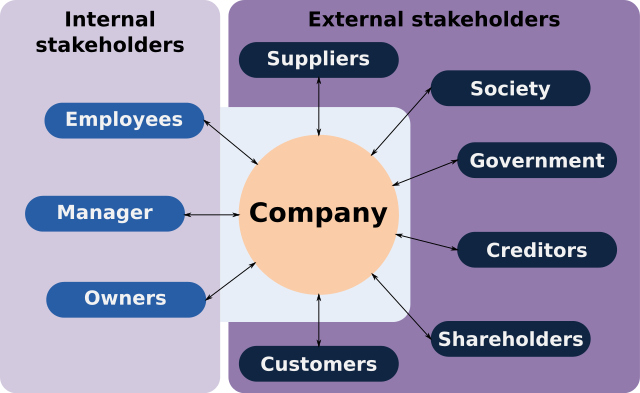
A graphic from Wikipedia showing typical internal and external stakeholders.
At its root, stakeholder capitalism represents a rejection – and usually an explicit one – of shareholder wealth maximization as the sole objective and duty of a corporation’s management. Instead, managers are empowered and encouraged to pursue a variety of agendas that do not promote and are usually inimical to maximizing value to shareholders. These agendas are usually broadly social in nature intended to benefit various non-shareholder groups, some of which may be very narrow (transsexuals) or others which may be all encompassing (all inhabitants of planet earth, human and non-human).
This system, such as it is, founders on two very fundamental problems: the Knowledge Problem and Agency problems.
The Knowledge Problem is that no single agent possesses the information required to achieve any goal – even if universally accepted. For example, even if reducing the risk of global temperature increases was broadly agreed upon as a goal, the information required to determine how to do so efficiently is vast as to be unknowable. What are the benefits of a reduction in global temperature by X degrees? The whole panic about global warming stems from its alleged impact on every aspect of life on earth – who can possibly understand anything so complex? And there are trade-offs: reducing temperature involves cost. The cost varies by the mix of measures adopted – the number of components of the mix is also vast, and evaluating costs is again beyond the capabilities of any human, no matter how smart, how informed, and how lavishly equipped with computational power. (Daron Acemoğlu, take heed).
[…]
Agency problems exist when due to information asymmetries or other considerations, agents may act in their own interests and to the detriment of the interests of their principals. In a simple example, the owner of a QuickieMart may not be able to monitor whether his late-shift employee is sufficiently diligent in preventing shoplifting, or exerts appropriate effort in cleaning the restrooms and so on. In the corporate world, the agency problem is one of incentives. The executives of a corporation with myriad shareholders may have considerable freedom to pursue their own interests using the shareholders’ money because any individual shareholder has little incentive to monitor and police the manager: other shareholders benefit from, and thus can free ride on, any individual’s efforts. So managers can, and often do, get away with extravagant waste of the resources owned by others placed in their control.
This agency problem is one of the costs of public corporations with diffuse ownership: this form of organization survives because the benefits of diversification (i.e., better allocation of risk) outweigh these costs. But agency costs exist, and increasing the scope of managerial discretion to, say, saving the world or achieving social justice inevitably increases these costs: with such increased scope, executives have more ways to waste shareholder wealth – and may even get rewarded for it through, say, glowing publicity and other non-pecuniary rewards (like ego gratification – “Look! I’m saving the world! Aren’t I wonderful?”)
H/T to Tim Worstall for the link.
Comments Off on Putting an end to “stakeholder” capitalism
Rush – The Making of “YYZ”
marvincandle815
Published 17 Apr 2011From the Classic Albums: 2112 & Moving Pictures special. Made some minor cuts to avoid repetition and to keep it under 10 minutes.
Comments Off on Rush – The Making of “YYZ”
QotD: The Fundamental Paradox of Internet Liberalism
- If you were smart enough to understand what I’m saying, you’d be a liberal, too
- You aren’t smart enough to understand it, because you’re not a liberal
- And yet here I am, arguing with you anyway.
So who, exactly, is the dumb one?
Severian, “Alienation II”, Rotten Chestnuts, 2020-10-30.
Comments Off on QotD: The Fundamental Paradox of Internet Liberalism
June 5, 2023
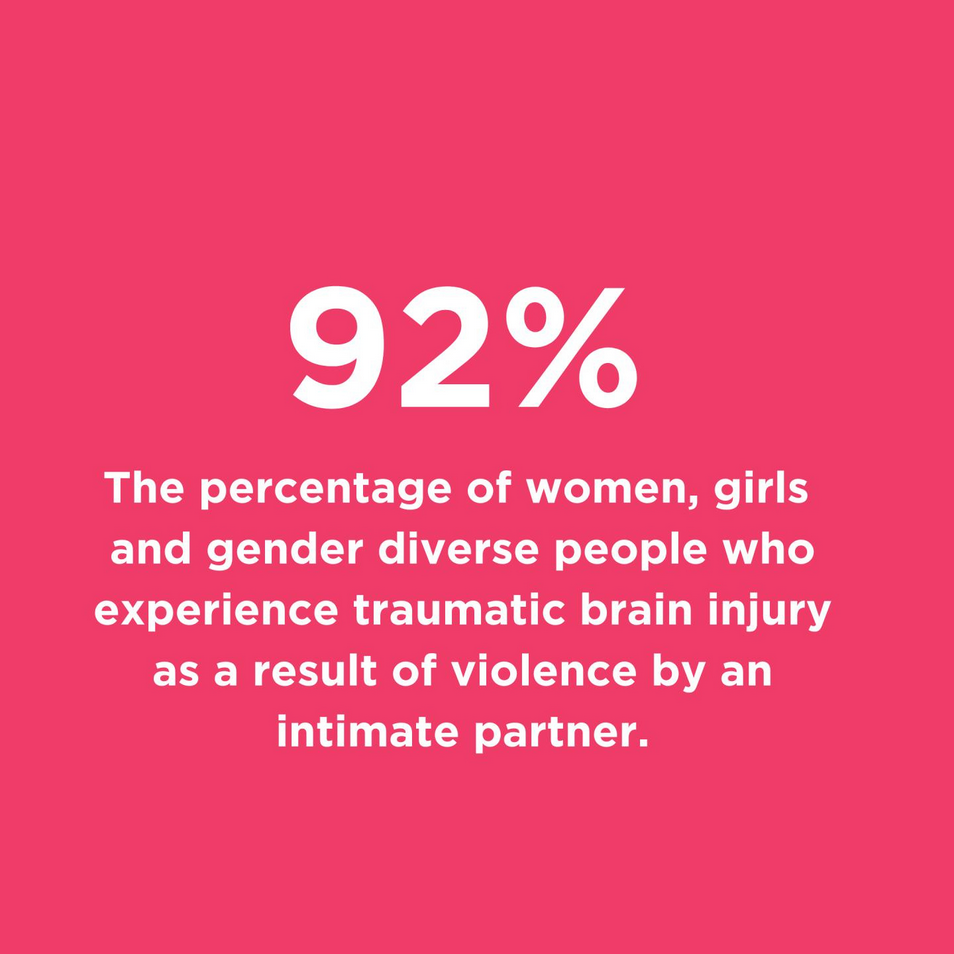
Claim: 92% of Canadian women will suffer traumatic brain injury from an intimate partner
Did that headline grab your attention? Certainly the graphic from which it was drawn grabbed my attention. But, as Janice Fiamengo explains, it’s a vast exaggeration in pursuit of a political goal:
Linden called on men and boys to educate themselves on violence and to call out one another for perpetrating or dismissing abusive behavior of any kind.
It’s not hard to understand why National Hockey League personality Trevor Linden, former captain of the Vancouver Canucks, has lent his star power to a YWCA campaign about women’s injuries from domestic violence. Hockey players have long been targets of feminist accusation for their association with a sport that allegedly promotes misogyny, racism, and violence against women. Even a beloved icon of the sport must continually strive to prove how much he despises his fellow men.
In this case, the campaign of vilification targets the purported frequency with which female victims of intimate partner violence (IPV) experience traumatic brain injury, and demands “increased support for diagnosis and treatment”. To do so, the campaign asserts some of the most dramatic numbers I’ve ever seen.
No stranger to concussions, Linden is said in a CBC report to have been “stunned” to learn that female victims are injured at a much higher rate than professional hockey players. “For every concussion incurred by an NHL player,” the report states, “approximately 7,000 women and girls in Canada are concussed because of intimate partner and domestic violence, according to a new estimate from YWCA Metro Vancouver and researchers at the University of British Columbia.”
Linden’s shock is understandable. We’ve all seen the hits meted out to professional hockey players. The thought of thousands upon thousands of Canadian women every year being treated in like manner — and suffering the consequences in traumatic brain injury (TBI) — is disturbing even to those of us who have learned to be skeptical of feminist research and inflammatory reports by Canada’s state-funded news agency.
The key paragraph in the story that justifies the staggering numbers tells us that
Approximately four in 10 women and girls in Canada will face violence from a current or former partner, according to a 2021 report by Statistics Canada, or about 290,000 every year. As many as 92 per cent of them will suffer a traumatic brain injury due to blows to their head or strangulation.
That sounds as if more than 3 in 10 women and girls in Canada (92% of 4 in 10) will at some point in their lives suffer brain injury from battering.
The statement might just qualify as the most outstanding exaggeration of violence against women ever made by a feminist organization. The good news for women and girls in Canada — and the bad news for the ever-declining credibility of feminist advocates and reporters — is that the numbers being promoted are flat-out false. They’re false even if we take note of the operative word “approximately” in the above statement. They’re false even if we accept the extraordinarily elastic definition of violence employed by the feminists who work for Statistics Canada. And they’re false even if we accept that a small study of black female victims of extreme violence can be generalized to all girls and women in Canada.
The numbers are false, ultimately, because the literature review from which the 92% number was extracted does not actually claim that 92 per cent of all IPV victims experience brain injury. A fundamental misreading and misrepresentation of data is at the heart of the campaign’s extraordinary claim.
Let’s trace, as much as possible, how the numbers have been manipulated and fudged. At the center of the hoopla is a report from Statistics Canada (“Intimate partner violence in Canada, 2018: An overview”) based on a large survey conducted by online questionnaire and telephone interview. This government-funded survey sought to measure the experience and frequency of intimate-partner violence as reported by victims — both men and women — over the previous year and over the lifetime of each victim. The sample size was large (43,296) but the response rate was low, at 43.1% overall in the Canadian provinces. (It is worth noting that response rates lower than 60% are considered by some researchers to produce unreliable and invalid results.)
Comments Off on Claim: 92% of Canadian women will suffer traumatic brain injury from an intimate partner


