
The law of servitude in marriage is a monstrous contradiction to all the principles of the modern world, and to all the experience through which those principles have been slowly and painfully worked out. It is the sole case, now that negro slavery has been abolished, in which a human being in the plenitude of every faculty is delivered up to the tender mercies of another human being, in the hope forsooth that this other will use the power solely for the good of the person subjected to it. Marriage is the only actual bondage known to our law. There remain no legal slaves, except the mistress of every house.
John Stuart Mill, The Subjection of Women, 1869.
February 18, 2022
QotD: Historical legal context of marriage
Comments Off on QotD: Historical legal context of marriage
February 15, 2022
“Freedom”. You proles keep using that word. The CBC doesn’t think it means what you think it means
In Monday’s NP Platformed newsletter, Colby Cosh considers what this mysterious and esoteric word “freedom” seems to mean to the CBC:

A screenshot from a YouTube video showing the protest in front of Parliament in Ottawa on 30 January, 2022.
Photo via Wikimedia Commons.
You may have heard that truck-driving protesters have taken over downtown Ottawa and several important border crossings here in Canada. These festive but obstructive people often claim, it is said, to be seeking some esoteric substance known as “freedom”. NP Platformed, unable to locate this “freedom” in the conventional periodic table, consulted a range of chemists in search of expert advice.
One suggested that the word was plainly a misspelling of “friedium”, implying the existence of an element or other matter known only to the Germans. Several hypothesized a molecular relationship with the abolished industrial refrigerant “freon”, raising questions about whether the Montreal Protocol has been subverted. Firm conclusions eluded our quest, but we are sure that a royal commission of inquiry will eventually be convened to get to the bottom of it all.
CBC News, confronted with the same information, did not appeal to the good old exact sciences for help. Instead, its reporters rang up every “hate” expert in their Rolodex of left-wing academics. This yielded tidbits of wisdom, such as this one: freedom “is a term that has resonated … You can define it and understand it and sort of manipulate it in a way that makes sense to you and is useful to you, depending on your perspective.” We’re pretty sure our chemical theories are less stupid than whatever this is supposed to be, but it does bear the imprimatur of Ontario Tech University, the renowned (checks notes) Oshawa-based home of the (checks notes again) Ridgebacks.
The CBC’s obtuse explanation of how the word “freedom” has been used in the past by fascist nasties, and absolutely nobody else in the annals of history, is rightly coming in for plenty of heckling. NP Platformed couldn’t resist joining in, but we would observe that this news copy bears signs of an actual journalistic crisis. If you are paying attention, you have heard about, or even seen video of, the torrents of abuse received by CTV and Global news reporters visiting the “Freedom Convoy” in Ottawa. One can only imagine the fear and frustration of CBC News employees, who know that they are much more attractive targets for misbehaviour — being a recognized part of the Ottawa blob that hinterland protesters are in town specifically to torment and terrorize.
Most of them are no doubt staying well clear of the protests, and for the public broadcaster to develop good sources within an amorphous CBC-hating right-wing movement is a plain impossibility. What’s left is Rolodex journalism. We did a lot of it back in the day, at the late, legendary Alberta Report — which, in our time, was vigorously hated by somewhere between half and two-thirds of the population of Alberta.
Comments Off on “Freedom”. You proles keep using that word. The CBC doesn’t think it means what you think it means
February 13, 2022
Update on that “small fringe minority … holding unacceptable views”
First up, David Warren has a few “little truths” to share:
A screenshot from a YouTube video showing the protest in front of Parliament in Ottawa on 30 January, 2022.
Photo via Wikimedia Commons.
My mind is in Ottawa, and all other places in Canada and abroad where people are struggling to get their lives back — now, before they die. These people are overwhelmingly the self-employed, and workers in small businesses: such as truck drivers, who bought their own rigs. They have consistently been made to pay in many ways for government lockdown measures, and are generally despised by the “laptop class”, who cannot lose their jobs, and work from home.
Few people in the Big City (which includes Toronto and Ottawa) have ever met a trucker, or would think of chatting with him. They may patronize small “boutique” operations, for conspicuous consumption. But Amazon drivers deliver their regular goods, and their services, too, are mostly dialled up.
True, the Batflu has sometimes interfered with their holiday bookings, so I must add, boo hoo.
A Rasmussen report on public opinion recently showed that in America, three-quarters of Democrats supported vaccine mandates, more than half thought those who refuse should be fined, and almost half would give them gaol sentences. Nearly a third thought the “vaccine hesitant” should have their children taken away. As Californicators, and the inhabitants of most urban constituencies, seldom have children, this can be received with rolling eyeballs. For luckily, there are Republicans in the more rural places, whose votes are sometimes counted.
Ottawa (outside “the Valley”) offers a caricature of this point of view. I recall my days as a columnist, published in the Ottawa Citizen. (Eventually, I was deleted.) To walk downtown was to invite verbal assaults by those who recognized my mug in the paper. Some were actually friendly, and said hiya. But I was often called a fascist, or something else obscene, by people who didn’t notice I was human. “Are you David Warren?” the grim inquiry would come. I tried to counter it with some jest. (“It depends: do you like David Warren?”) This might cause my assailant great pain. (Humour is violence, as every Leftist knows.) But it was tiresome for both of us.
One may check election results from the middle of that town, to learn that a large majority of its inhabitants vote Liberal, in the manner of zombies. One thinks of The Invasion of the Body Snatchers.
Rex Murphy (paywalled, unfortunately, so no link) suggests that things are desperate within the imperial capital thanks to the ravaging barbarians beseiging Caesar Justin:
How deep is the terror in our once cozy capital? I am told there are certain fine bakeries in Ottawa where it is no longer possible to get a fresh croissant. There are advisories warning about heading out alone to go to yoga classes. And there are rumours that DoorDash delivery from the better Italian restaurants can take over an hour. It is a horror, a scene too grim for the human mind to grasp, or the human heart to bear. In occupied Ottawa, you may, unasked, be offered soup. Where is the United Nations? Is the Security Council asleep?
Not to despair completely, however, as Canadians know that when the politicians fail, the police stand idle and the military are still, they have the Ottawa press gallery.
It is they who alerted us to the Confederate flag guy. The tribunes of the CBC have been all over him. There’s hardly been a report without the mention of a Confederate flag at the protest. Mention of the wildly more numerous Canadian flags have been wisely subdued.
The national press have been unmatched in getting the word out on what the brigands and racists and misogynists and white supremacists and yobs and Islamophobes and louts have inflicted on our national capital. With strong earplugs and stouter hearts, they have braved the chaos, enduring “taunts”. They shuffled past parked transport trucks, some of them with Alberta drivers in the cabs!
But the real glory belongs further up. The fact that Canada is, for the moment at least, still functioning as a country is a miracle due to the steel will and captivating oratory of our resolute prime minister. Much like England in those tenebrous days of 1939, our country has found its Churchillian voice.
In the free exerpt from his Weekly Dish newsletter, Andrew Sullivan admits that despite acquiring deep knowledge and understanding of Canadian culture from the invaluable South Park, he did not see the truckers’ protest coming:
To be honest, I didn’t quite see the Canadian truckers coming. I’ve watched a lot of Canada coverage over the years (mainly via South Park, I concede) and the whole anti-vaxxer, campfire-burning, horn-tooting, macho revolt among our gentle neighbors to the north nonetheless took me by surprise.
Rob Ford was a harbinger, I guess. It’s as if the ancient, manly, lumberjacky Canadian id was finally roused from its cultural slumber by a soy-boy prime minister, forcing truckers to take a jab or forfeit their livelihood. And some reports suggest that the vaccine issue seems just the proximate trigger for the rage, and not the real source — a rage which has been steadily building for some time, especially in the pandemic, in the most progressive-left country on the planet.
And there’s something very blue-collar male about this populist anger. Trump, of course, identified the testosterone tribe he helped define and rally:
I can tell you I have the support of the police, the support of the military, the support of the Bikers for Trump — I have the tough people, but they don’t play it tough — until they go to a certain point, and then it would be very bad, very bad.
You can see similar “tough people” fault-lines in the other recent Covid contretemps involving Joe Rogan. The millions of men (71 percent male, and evenly split between high school and college grads) who listen to Rogan’s legendary podcast have rallied to him, even as the media establishment has been waging a fully-flexed campaign against him and some of his Covid coverage. There’s something about masking — chin-diapers — and mandating vaccines, and vaccines themselves, that some men seem to find feminizing.
In full: Rowan Atkinson on free speech
Defend Free Speech
Published 15 Aug 2018The forerunner of the Defend Free Speech campaign was called “Reform Section 5”. This speech by Rowan Atkinson at the launch event in Parliament in 2012 should be heard by every politician, journalist and campaigner before they start calling for laws to silence those they regard as “extremists”.

Comments Off on In full: Rowan Atkinson on free speech
February 12, 2022
QotD: One of those pre-9/11 things we’ve lost … personal dignity
It was like a 1950s women’s prison movie. I got to be the girl from the streets who made a big mistake; she was the guard doing intake. “Name’s Veronica, but they call me Ron. Want a smoke?” Beeps and boops, her pointer and middle fingers patting for explosives under the back of my brassiere; the wand on and over my body, more beeps, more pats. The she walked wordlessly away. I looked around, slowly put down my arms, rearranged my body. For a moment I thought I might plaintively call out, “No kiss goodbye? No, ‘I’ll call’?” But they might not have been amused. And actually I wasn’t either.
I experienced the search not only as an invasion of privacy, which it was, but as a denial or lowering of that delicate thing, dignity. The dignity of a woman, of a lady, of a person with a right not to be manhandled or to be, or to feel, molested.
Peggy Noonan, “Embarassing the Angels”, Wall Street Journal, 2006-03-02.
Comments Off on QotD: One of those pre-9/11 things we’ve lost … personal dignity
February 11, 2022
QotD: “By their proposals, shall ye know them”
That is why the proposal that the IRS should have access to the data of all bank accounts from which or into which more than $600 a year are paid (hardly a king’s ransom) is so important, despite the fact that it has not been enacted. The very fact that someone wanted to enact it, and thought it right that it should be enacted, is highly significant — and sinister — in itself, for the proposal demonstrates a totalitarian mindset.
The ostensible purpose of the proposal, of course, is the elimination of tax evasion. (Incidentally, I have noticed recently an increasing tendency, in the press and elsewhere, for the term tax avoidance to be used interchangeably with that of tax evasion, as if the difference between legality and illegality were of no real importance. This conflation is itself indicative of a totalitarian attitude, according to which a governmental end may be reached without the necessity for any law.)
The people who proposed that, in effect, every bank account should be routinely available for examination by the IRS, without any specific warrant for such an examination, thereby revealed that they thought that the gathering of tax so important that it superseded all other considerations.
Psalm 24 begins: “The earth is the Lord’s, and the fulness thereof, the world and they that dwell therein. For he hath founded it upon the seas, and established it upon the floods.”
A better version, according to the proposers, would be: Money is the government’s, and the fulness thereof, money and they that have any. For it hath founded it upon the printing press, and established it as legal tender.
I do not go as far as some economists of my acquaintance, who believe that tax evasion is a citizen’s civic duty: at least it is not in the circumstances prevailing in any western country, however unsatisfactory they may be. In my own case, I do not evade taxes and even my attempts to avoid them are rather feeble, for unfortunately there is so little at stake.
But I reject completely the idea that, morally, the first call on anyone’s money is the government’s, which in effect has the right to leave you pocket money by its grace and favor after you have paid your taxes at any rate that it likes. This is the very tyranny that the founders of America feared in majoritarian democracy, untempered by inalienable rights — inalienable even, or especially, by or to the government.
Theodore Dalrymple, “Monitoring Bank Accounts Would Make the People of the Government, Not the Government of the People”, The Iconoclast, 2021-11-01.
Comments Off on QotD: “By their proposals, shall ye know them”
February 9, 2022
“The nominal mayor of Ottawa, who apparently serves under the police chief, is another thoroughgoing jackass”
On Tuesday morning, David Warren had some suggestions for reconstructing Ottawa since the truckers seemed to be doing a lot of useful civic work voluntarily:
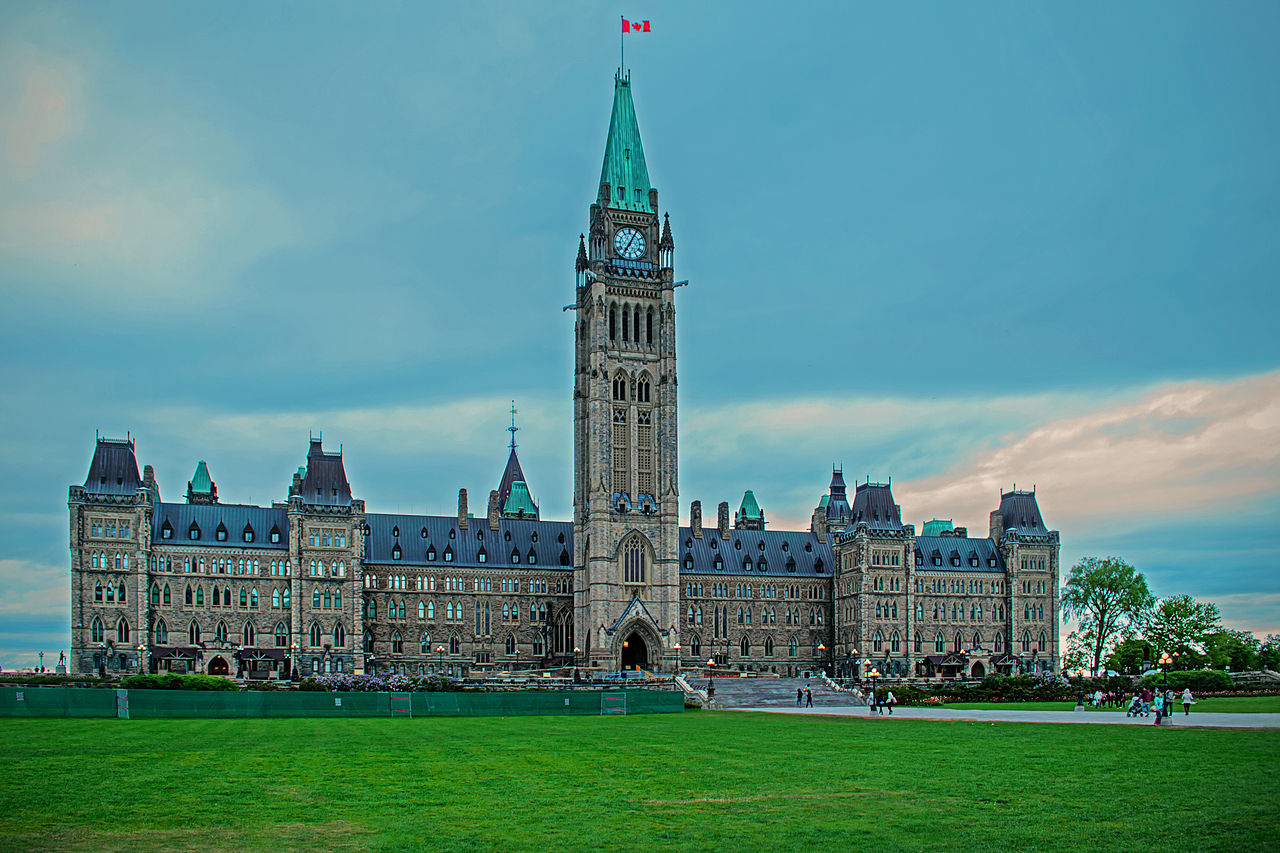
Parliament Hill in Ottawa.
Photo by S Nameirakpam via Wikimedia Commons.
The Ottawa police chief is an embarrassment, but he seems to validly represent the more tight-assed ratepayers, who have objected to the honking of the big trucks; and the ratepayers are an embarrassment, too. (I’ve tried to warn my readers against the perils of democracy.) The chief cop’s theatrical effort to impound some fraction of the Freedom Convoy’s fuel supply, to demolish their food kitchens, and hand out tickets for things like not having licences on their garbage-collecting carts, is now on display. The nominal mayor of Ottawa, who apparently serves under the police chief, is another thoroughgoing jackass.
I once worked out of Ottawa myself; it is our national capital, I was told. And it is where I acquired my notion of the profound corruption that is brought to that town by the Liberal Party — who dominate its bureaucracies whether they are in or out of power. The arrogance, of the gliberal hot-shots, as well as their extravagant waste and incompetence, has left marks on all the Ottawa institutions, and a good place to begin a clean-up would be by “cancelling” the civil service. (They could be taught to load trucks, instead.)
Too, we should defund the municipal police, or more precisely, replace them. A new police force might possibly be funded just by selling off the spiffy vehicles of the old force (after the cost of repainting them), and their dapper “Zomo” gear might fetch a pretty penny in the costume shops.
The truckers have been polishing the streets, removing even cigarette butts and gum wrappers. They have been guarding the Terry Fox statue on Parliament Hill, and could be asked to mind those of all the other defunct worthies, and slaveholders. (There weren’t any up here, as slavery was outlawed in Upper Canada from the start of the Loyalist settlement, but we can pretend.) Sir John A. Macdonald, our hard-drinking and politically incorrigible founding prime minister, may need special protection.
Among the beneficial effects of the truckers’ protest was to catalyze the ouster of “conservative” “leader” Erin O’Toole:
In the last few months, support for O’Toole from different wings of the party seems to have quietly eroded. A fight over legislation banning conversion therapy was one part of this, particularly the way that senior leadership reportedly sprang a surprise unanimous consent motion in parliament to quickly rush it through, much to the surprise of most of the caucus and especially to an important former supporter of O’Toole and important social conservative within the party, Garnett Genuis, who happened to be (conveniently for party leadership) out of the country on party business at the time. Genius was one of the key supporters of O’Toole who got him elected, but was one of many who appears to have flipped away from O’Toole towards the end.
In the last week of O’Toole’s leadership, a truck convoy opposing Covid measures that has essentially set up camp in parts of downtown Ottawa around Parliament Hill has divided the caucus, with O’Toole constantly shifting positions on it to the satisfaction of absolutely no one. This inability to clearly define and stake out a position was ultimately probably what ended his leadership. As I wrote last week in the National Post, “It has become harder and harder to defend O’Toole because it is increasingly hard to know what you’re defending when you do so. O’Toole seems unable, or unwilling, to clearly articulate positions and even when he does he often ends up backtracking a few days later.”
With O’Toole out, the Conservatives have selected a Manitoba MP and the deputy leader of the party, Candice Bergen, as the interim leader. The race to replace O’Toole is, as of right now, up in the air, with rules and candidates all still to be announced. The presumptive frontrunner is the shadow finance minister, Pierre Poilievre. He is extremely popular amongst the Tory base, unapologetic, and easily the party’s most gifted and talented communicator. He has strong name recognition already, and if he runs will be the clear favourite. Other names being thrown around are previous candidates Peter MacKay and Leslyn Lewis, current MPs Michelle Rempel-Garner and Michael Chong, and the mayor of Brampton Patrick Brown.
A Liberal backbencher has broken ranks with Justin Trudeau to call for an end to the Wuhan Coronavirus restrictions and a return to normal life for Canadians:
The federal government needs to quickly offer a road map for the lifting of COVID-19 restrictions, according to Quebec Liberal MP Joël Lightbound, citing mental health concerns from pediatricians and the parents of depressed children, and the inability of many to earn a living from a “MacBook at their cottage.”
Lightbound, MP for Louis-Hébert, chair of the industry committee and the Quebec Liberal caucus, and a former parliamentary secretary to the finance minister, said the Liberal government has changed in policy and in tone since last year’s election campaign and appears unwilling to adapt to the evolution of the pandemic.
“Now the approach stigmatizes people and divides people,” he told reporters this morning, pointing to the loosening of restrictions in European countries with lower vaccination rates than Canada.
Lightbound said he raised his concerns in caucus to Prime Minister Justin Trudeau, but owes it to constituents to publicly voice his concerns and is ready for potential political consequences for speaking out.
But, he added, other Liberal MPs share his concerns and the party has historically been “open for dissent and different opinions.”
Matt Gurney‘s second day report from the streets of Ottawa isn’t as upbeat as yesterday’s installment:
My second report (of three planned) from Ottawa will be a grimmer read than the first. But we might as well start with a moment or two levity, of a kind.
On Tuesday afternoon, I returned to the site of the main protest, on Wellington Street, right along the southern side of Parliament Hill. The crowd was, in a general sense, the same as described in my first dispatch. The barbecues were going, the coffees were being poured, and the speeches were being made off the back of a flatbed truck, with a large Canadian flag, suspended from the chain of a large mobile crane hanging over it. The crowd had been entertained for some time by some singing, mostly of upbeat recent-ish pop hits. The singer was enthusiastic, positive, cheerful and, alas, not very good. She got plenty of applause anyway, especially each time she did a shout out to “Freedom!”
And then things got weirder.
One of the main responses to my first dispatch was skepticism that a tall white dude who easily blends in with the protest crowd was getting a “representative” view at the protest site. I shared that concern! And I was really explicitly clear about that in the first piece. You can take my reporting with all the lumps of salt you want. I am indeed a white dude, and so is almost everyone else at the protest site. It’s not universally white, but it’s overwhelmingly white. People wanted to know if my experience would have been different if I were a woman, or a person of colour, or wearing a mask, or any combination of those. I am also curious about that. I just don’t know, and can’t know. But I did make a point today of watching how anyone who was wearing a mask, or a person of colour, or a woman fared in the crowd. In my two hours on site today, I observed no problems. I don’t draw any conclusions from that, nor do I deny that it might take some bravery to walk through that crowd as a masked woman of colour. But in terms of what I saw, that’s all I can honestly tell you.
[…]
It’s a different place at night. Not in a good way. I got there around 8 p.m. or so on Monday. The streets had almost emptied out. Most of the office workers had gone home by then, I guess. The cheerful revellers had cleared out, too. The music had stopped, the folding tables mostly cleared and put away, and the encampment was quiet. The roving police patrols I’d noticed keeping such an overt presence during the day were gone as well. Instead, the officers had pulled back, way back, and taken positions on the streets and at intersections around the protest site. I saw one foot patrol go in, but just one, and not very far.
By 9:30 p.m., as I continued my walk through the area, there was a very clear difference between the vibe on either side of the police positions. Outside, the city was quiet — the horns had stopped, and there were no fireworks, and it felt like a pretty normal Canadian city. People milled about walking their dogs or picking up food. The nicotine addicts puffed away outside doorways of condo towers and office buildings.
Inside those cordons, though, things were not so good.
Comments Off on “The nominal mayor of Ottawa, who apparently serves under the police chief, is another thoroughgoing jackass”
February 8, 2022
Neil Young and the rebellion of “the Grumpy Old Woke Bros”
Julie Burchill on the (one hopes) last opportunity for elderly, wrinkly 60s and 70s rock stars to virtue signal their protests to a rapidly diminishing body of fans:

For a while now the generation gap has been making a comeback in politics in a way not seen since the youthquake of the 1960s. “Don’t trust anyone over 30” has become “OK Boomer”. Oldsters have been demonised for everything from Brexit to Covid. Personally, at 62, looking at the lives today’s teenagers can expect, I thank my lucky stars that I was young in the 1970s and 80s, when you could say what you liked and go where you wanted. But this dwindling of fun and freedom has as much to do with the stifling nature of woke culture as it does with the other virus.
So I wouldn’t blame teenagers if they were cross. But those doing the most to promote the alienation of young and old aren’t hot-blooded bright young things. They are old men who appear to identify as young, despite sharing the same unsavoury grey whiskers. Of course, if someone with a penis can be a woman, a greybeard can be a teenager. They’re the Grumpy Old Woke Bros.
We can trace this unhappy breed from the then 68-years-young Ian McEwan spluttering at an anti-Brexit rally in 2017: “A gang of angry old men, irritable even in victory, are shaping the future of the country against the inclinations of its youth. By 2019 the country could be in a receptive mood: 2.5million over-18-year-olds, freshly franchised and mostly Remainers; 1.5 million oldsters, mostly Brexiters, freshly in their graves.” Since then the likes of Alexei Sayle, Billy Bragg and Stewart Lee have joined in from the monstrous regiment of woke entertainers, adding Damon Albarn (a youthful 53 – and an OBE, the rebel!) to their rankled ranks last week when he said of Taylor Swift “She doesn’t write her own songs”. (This isn’t the first time Albarn has had beef with young female pop stars. He said of Adele in 2015: “She’s very insecure”, to which she replied “It ended up being one of those ‘Don’t meet your idol’ moments … I was such a big Blur fan growing up. But it was sad, and I regret hanging out with him.”)
Though we think of grumpiness as being an English trait, let’s not forget Neil Young (76) who spat his dummy out last week over sharing Spotify with Joe Rogan. Young is a latecomer to the wonderful world of wokeness, whose welcome to the spotless ranks was somewhat marred by the emergence of a 1985 interview in which he backed Ronald Reagan’s gun control policy and added for good measure, AIDS having recently been discovered, “You go to a supermarket and you see a faggot behind the cash register – you don’t want him to handle your potatoes”.
Comments Off on Neil Young and the rebellion of “the Grumpy Old Woke Bros”
“… across the developed world the elite rise up against the masses: it’s like an anti-1848, prefiguring the post-democratic era that the 2020s will usher in”
A round-up at SteynOnline of various “elites” in Canada and elsewhere rising up against the sexist, hate-speechin’, Islamophobic, transphobic, Putin-controlled white supremacists who are demanding an end to rule-by-decree:
In Ottawa, attempts by agents provocateurs to provoke violence at the Freedom Rally have gone nowhere. So last night, “anti-hate” buffoon Bernie Farber, friend to censors everywhere, was reduced to hate-hoaxing for Justin by circulating “anti-semitic flyers” sent to him by a “friend” “in Ottawa”. Inevitably, within moments, they were revealed to be from something entirely different in Florida some weeks ago. So Bernie explained that his imaginary friend in Ottawa had seen actual hate flyers in Ottawa but had accidentally emailed him a similar flyer from America or something … These days Farber disgraces even himself.
Meanwhile, the Ottawa police have begun arresting citizens trying to deliver food to the truckers. There is no basis in Canadian law for the actions these goon coppers are taking, but the attitude of their dreadful police chief is: hey, the law is whatever I say it is. So he has ordered the arrest of citizens for “mischief”. By mischief, he means bringing sustenance or heat to protesters passing the night in temperatures of twenty below.
~Many parts of the western world are in a very dark place right now, but none more so than Canada. Its unseen prime minister, who came into office promising “sunny ways”, can no longer appear in public and sweepingly, tweetingly declares that he doesn’t need to because the sort of chaps you run into out there are rubes who don’t even know they’re Islamophobes, transphobes, thisaphobes, thataphobes, too dumb even to be aware they’re working for Putin.
As Tucker and I used to joke five years back, across the developed world the elite rise up against the masses: it’s like an anti-1848, prefiguring the post-democratic era that the 2020s will usher in. The present showdown between the Bollywood Bridesmaid and the truckers who deliver his quinoa has made it about as explicit as you can get. The good humour in the face of elite contempt is impressive. Here are a couple of typical “angry” “hate-filled” “white supremacists”:
Who are the real “Sunny Ways” guys? A serial blackface fetishist is calling the masses racist and the court eunuchs of Canada’s state-funded media dutifully tag along.
~The truckers are rallying against “vaccine mandates”, which have no justification in science: The Prime Minister, who is as vaxxed, jabbed and boostered as any mammy singer on the planet, is supposedly hors de combat because he’s down with a second dose of the Covid.
Oh, but don’t worry! To be sure, the common understanding of the word “vaccine” is that you won’t catch what you’re being vaccinated against. But what we really mean is that, if you do get it, it won’t be serious, you won’t be in the ICU, and you certainly won’t die of it.
And by “certainly” we mean, well, probably. Israel, en route to be the world’s first entirely fourth-jabbed nation, currently has a daily death toll higher than before it started giving anyone the first jab. There is no public-health justification for making liberty conditional on compliance with the developed world’s failed strategy of coerced vaccines and constant testing.
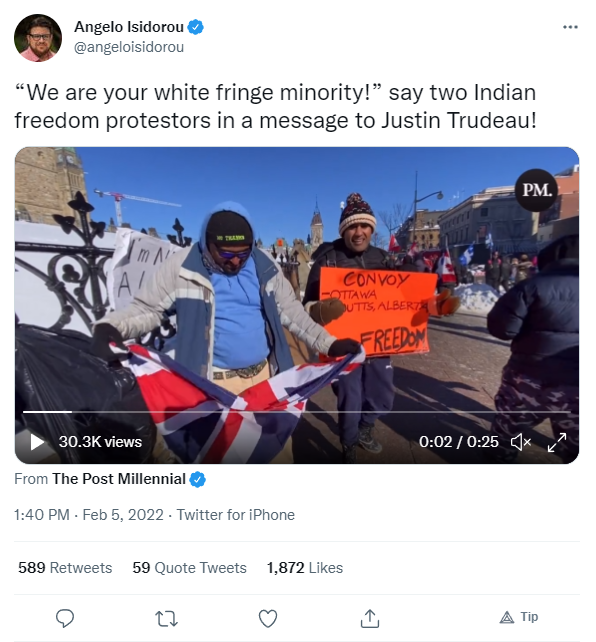
At SDA, Francisco provided some quick notes on the situation on the streets in Ottawa over the last couple of days:
Looks like the cops got a couple of slip tanks and some jerry cans. A couple of pickup trucks got towed for having slip tanks on them. Nothing major. The new rule is if you have the paperwork to prove you’re a trucker you can transport fuel to your own vehicle but not to someone else’s. A campaign has started to get everyone on the hill to carry an empty jerry can with them at all times. Let the cops figure out which ones have fuel.
There was a show of force by police. Estimate was up to 100 officers in one group. They got their photo-op for the corporate press. Looks great on TV but it had no real impact. Everyone is still there.
Word on the street is that the goal for the police is to get everyone out of there today, clean things up tomorrow and have parliament resume on Wednesday. To which I say good luck.
Morale amongst the protesters is high.
Again take everything I just wrote here with a grain of salt. It’s a fluid situation and good intel is hard to come by in the heat of the moment.
I am not a lawyer, but I’m deeply puzzled at what part of the Criminal Code the Ottawa police are depending on for these imposed restrictions on fuel, food, and other supplies being provided to the truckers by ordinary Canadians. I don’t recall any provision in the law allowing police to confiscate the legal goods of ordinary people on a whim.
Brendan O’Neill on the shitshow that was the original fundraising campaign to help the truckers on their way to Ottawa:
We need to talk about GoFundMe’s withholding of millions of dollars from the Canadian truckers protesting against vaccine mandates. This is union-busting 21st-century style. This is a multimillion-dollar company using its corporate clout to starve working-class activists of funds. This is a signal from Silicon Valley, clear and loud, that it will wield its power to crush any form of political agitation from “the lower orders” that pushes too hard against the political consensus. Anyone who thinks this clash between a profit-making fundraising website and drivers pissed off at being pushed around by Covid authoritarians is just another weird online spat needs to think again. This is far more than that. It is a scoping out of the battlelines over freedom and power that are likely to define the internet era.
GoFundMe’s deprivation of funds to the truckers protesting against Canada’s vaccine rules is, to my mind, one of the most egregious and anti-democratic acts yet carried out by the California-based elites who oversee the World Wide Web. These truckers, such essential workers, are revolting against Canadian PM Justin Trudeau’s introduction of a new rule earlier this month stipulating that truckers who cross the Canada-US border will need to be vaccinated or else go into quarantine after every trip. This is a mad demand. It would severely undermine some truckers’ ability to earn a living. So truckers have risen up. They drove their vast rigs across Canada in what came to be known as the Freedom Convoy before stopping in the capital Ottawa where they have been blocking roads and causing fainting fits among middle-class liberals who cannot understand why these oiks won’t just carry on dropping off sacks of kale to the local Whole Foods and stop going on about their pesky rights.
There has been an outpouring of support for the truckers. Canadians and Americans tired of corona-authoritarianism are cheering the truckers for honking a huge collective horn at the elite consensus on Covid. Despite the best efforts of woke politicians and columnists to depict the truckers as QAnon on wheels, as a motorised version of Mussolini’s March on Rome, many people know that in truth they are decent working people who simply object to the state making their lives that bit harder. People also know that the woke set’s attempts to delegitimise the Freedom Convoy by flagging up “far-right” comments made by a tiny handful of the truckers is a tactic as old as capitalism itself. Elite opponents of working-class organisation have always used smear and innuendo to try to nullify the throng. Seeing this smear campaign for what it is, lots of folk decided to give the truckers a few bucks. But GoFundMe had other ideas.
GoFundMe says the 10million Canadian dollars raised via its website, on a page titled “Freedom Convoy 2022”, will not be given to the truckers after all. It cited police reports about “violence” in the convoy. What violence? Where? Thousands and thousands of people have joined the truckers’ protest and yet there have only been three arrests. One person was arrested for being in possession of a weapon, one for causing “mischief”, and one for making a threatening comment on social media. As far as mass protests go, this is a staggeringly low level of allegedly criminal behaviour. I once visited the Occupy camp at St Paul’s in London and witnessed at least three misdemeanours in the one hour I was there (public urination, threatening speech, and a disturbing of the peace by a man on smack who kept shouting “GET TAE FUCK”). For a mass, angry, revolting movement, Freedom Convoy is uncommonly peaceful. GoFundMe’s “violence” blather is clearly a jumped-up pretext for its political decision to punish the truckers.
On Friday, GoFundMe issued a statement saying that Freedom Convoy was a peaceful movement when it first started but it has since “become an occupation”. And so, “no further funds will be directly distributed to the Freedom Convoy organisers”. Instead, the $9million that remains in GoFundMe’s coffers will be distributed to “credible” charities or refunded to the people who donated if they fill in a form. As if to make it super clear that this is all very political, Facebook has now removed a page promoting a Freedom Convoy in Washington, DC and deleted the personal account of the trucker who set it up. “It’s censorship at its finest”, he said, and he’s not wrong. This looks like a cut-and-dried case of the new capitalist oligarchies siding with the political establishment – in this case, Justin Trudeau – to shrink and silence the consensus-threatening cries of ordinary people.
I didn’t donate to the original crowdfunding campaign for the truckers on GoFundMe, but after that company attempted to quite literally steal $10 million away from the truckers and donate the money instead to causes they approved of, I scraped up a few bucks to add to the replacement fundraising efforts with GiveSendGo and I will actively avoid ever sending GoFraudMe a penny.
Matt Gurney has driven in from Toronto to see for himself what the protest looks like:
Depending on which person you’re using as your explainer of the local vibe, you could reasonably walk away convinced that most of what was happening in Ottawa was a pretty big party, or a hostile invasion by thugs and harassers. I wanted to find out which one it was, so on Sunday, I drove in from Toronto, arriving early Monday morning. I spent hours wandering the city, particularly the area immediately around Parliament Hill, trying to answer that question. Is this a huge group of friendly people? Is this a mob of unruly, dangerous types?
The answer is yes.
The following is my view of the situation in Ottawa, and should be seen entirely in that light. I should also note that I’m a tall, unsmiling white dude with a buzzed head who wandered the area in a gigantic and delightfully warm NFL hoodie, and it’s very possible that my experience was skewed by the fact that I blended in. There are other protest sites at other parts of the city, as well, and I’ll be heading out to some of them later. The observations below are what I saw around Parliament, and within perhaps a 10-minute walk of it.
The first thing you should know is that the protest is, in the main, friendly, at least to someone like me. The photos you’d have seen do it justice. Large transport trucks and smaller personal vehicles are packed tightly together along major streets around Parliament, and the road space and surrounding sidewalks have been colonized by the occupants. Booths and folding tables are everywhere, some selling trinkets, others for supplies or flyers and leaflets. I suspect this will anger locals tired of the protest, but I have to call it as I see it: the overall vibe was quite friendly. I spent about two hours wandering the largest sites, and was struck by the amount of direct eye contact. There’s none of the usual practiced disinterest in those around you that you internalize when you live in a big city (Ottawa is big enough, in that respect). The protesters are eager to make eye contact and to chat, about everything — the weather (warmer!), the Superbowl, and, oh, how Trudeau has to go and the pandemic is a lie. And how about those Maple Leafs?!
[…]
For all the friendly chatter, there is another element in the group. I haven’t owned any bars, but I’ve spent some very pleasant evenings in them, plus an entire career observing people, and I have passable danger-spotting skills. (My success rate at avoiding getting suddenly sucker-punched at dive watering holes hovers at very near 100 per cent!) There is a harder, nastier edge to this group, what my bar-owning friend would have called “the hard men.” It’s not large, at least not in the area immediately around Parliament during daylight — there are other areas I’ll be checking out later today, and the vibe may well change. The group around Parliament is overwhelmingly quite pleasant and, as noted, unusually friendly and eager to chat. But anyone who denies there’s another element there, though, is blind to it, wilfully or otherwise.
Again, I’m a big white guy, and I blend in by default, but more than once I felt myself being calmly but directly observed by exactly the type my bar-owning friend spoke of. There are hard people there, often in small groups, talking quietly by themselves, or standing silently, watching the comers and goers. If you know what to look for, and not all of us do, they’re easy to spot. The more friendly, chatty types give them a wide berth. I spent a few interesting moments standing by a folding table stacked high with hygiene supplies, observing three stone-faced men participating in a kind of staredown with one of the roving police units. The police simply stopped and stood in place. No one said a thing. After maybe a minute, the hard men left. The police marched off. A woman behind the table with the toilet paper and tooth paste tubes looked at me with relief.
Comments Off on “… across the developed world the elite rise up against the masses: it’s like an anti-1848, prefiguring the post-democratic era that the 2020s will usher in”
February 6, 2022
QotD: Marcus Tullius Cicero
Cicero was a key politician in the Late Republic, but it was his misfortune that his life was spent in an era where words meant less than weapons. He sided with Pompey against Caesar, but was granted clemency after Pompey’s defeat. He was not involved in Caesar’s assassination – he was still too much an outsider for some of the stuck-up Roman elitists who made up the conspiracy (though he correctly pointed out at the time that leaving Antony alive would be a fatal mistake). In the aftermath of the assassination, he identified (correctly) Antony as the key threat to the Republic and worked to discredit him politically in a devastating series of speeches named the Philippics (in honor of a similar set of speeches made by the Athenian Demosthenes against Philip II of Macedon, father of Alexander). Cicero’s political assault on Antony succeeded – his reputation was ruined and his popularity in Rome never recovered – but it cost Cicero his life when Antony, in league with Octavian, moved into the capital and had Cicero murdered. Cicero’s literary legacy survived him, however, in part because it was useful for Augustus’ own political ends (e.g. Plut. Cic. 49.5-6).
Cicero’s position as the most eloquent orator of the Latin language – and probably its best prose stylist – is largely uncontested. It was his speaking skills – honed in the courts – that made him so politically successful. He was also a prolific writer and a tremendous amount of his writings survive, including both legal and political speeches, private letters, handbooks on oratory, and a set of philosophical works. As anyone who has read Cicero can tell you, he also has a deserved reputation for pride and self-aggrandizement. While many of Cicero’s contemporaries and readers down to the modern era have been impressed by Cicero’s thinking and eloquence, I feel confident in asserting no one – alive or dead – will ever be more impressed by Cicero than Cicero was impressed by himself.
Bret Devereaux, “Collections: A Trip Through Cicero (Natural Law)”, A Collection of Unmitigated Pedantry, 2019-12-12.
Comments Off on QotD: Marcus Tullius Cicero
January 29, 2022
Viewing with alarm — Substack is a place where “misinformation is allowed to flourish”
Matt Taibbi posts, appropriately, on Substack about demands by others to force Substack to censor writers and their content:

Substack is home to tens of thousands of writers and over a million paying subscribers, quadruple last year’s total of 250,000. The sites range from newsletters for comics enthusiasts to crypto news to recipe ideas. Like the Internet as a whole, it’s basically a catalogue of everything.
Still, panic campaigns in legacy press consistently focus on handfuls of sites, and with impressive dishonesty describe them as representative. I was particularly struck by a recent Mashable article that talked about a supposed “backlash” against Substack’s “growing collection of anti-trans writers”, which seemed to refer to Jesse Singal (who is no such thing) and Graham Linehan and — that’s it. Substack is actually home to more trans writers than any other outlet, but to the Scolding Class, that’s not the point. The company’s real crime is that it refuses to submit to pressure campaigns and strike off Wrongthinkers.
Substack is designed to be difficult to censor. Because content is sent by email, it’s not easy to pressure platforms to zap offending material. It doesn’t depend on advertisers, so you can’t lean on them, either. The only real pressure points are company executives like Hamish McKenzie and Chris Best, who are now regular targets of these ham-fisted campaigns demanding they discipline writers.
The latest presents Substack as a place where, as Mashable put it, “COVID misinformation is allowed to flourish”. The objections mainly center around Joseph Mercola, Alex Berenson, and Robert Malone. There are issues with the specific critiques of each, but those aren’t the point. Every one of these campaigns revolves around the same larger problem: would-be censors misunderstanding the basic calculus of the freedom of speech.
Even in a society with fairly robust protections, as ours once was, the most dangerous misinformation is always, without exception, official.
As the old joke from the Cold War had it, never believe any rumour until it’s been officially denied.
Censors have a fantasy that if they get rid of all the Berensons and Mercolas and Malones, and rein in people like Joe Rogan, that all the holdouts will suddenly rush to get vaccinated. The opposite is true. If you wipe out critics, people will immediately default to higher levels of suspicion. They will now be sure there’s something wrong with the vaccine. If you want to convince audiences, you have to allow everyone to talk, even the ones you disagree with. You have to make a better case. The Substack people, thank God, still get this, but the censor’s disease of thinking there are shortcuts to trust is spreading.
Comments Off on Viewing with alarm — Substack is a place where “misinformation is allowed to flourish”
January 19, 2022
QotD: Pandemics
Brian Micklethwait, “Not a good time to be a chicken”, Samizdata, 2006-02-21.
Comments Off on QotD: Pandemics
January 13, 2022
QotD: A libertarian view of government
Jonathan David Morris, “The Non-Aggression Principle”, The Libertarian Enterprise, 2005-06-05.
Comments Off on QotD: A libertarian view of government
January 4, 2022
J.K. Rowling’s subversive tale of a government “controlled by and for the benefit of the self-interested bureaucrat”
No, it’s not a new work by Rowling … it’s a deeply embedded thread of her best-known books in the Harry Potter series (as related in a 2005 article by Benjamin H. Barton for the Michigan Law Review):
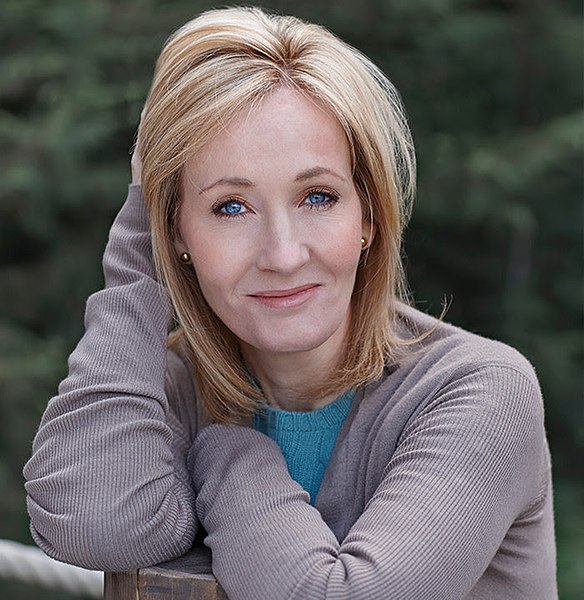
J.K. Rowling’s Harry Potter books include a very strong anti-authoritarian thread.
This Essay examines what the Harry Potter series (and particularly the most recent book, The Half-Blood Prince) tells us about government and bureaucracy. There are two short answers. The first is that Rowling presents a government (The Ministry of Magic) that is 100% bureaucracy. There is no discernable executive or legislative branch, and no elections. There is a modified judicial function, but it appears to be completely dominated by the bureaucracy, and certainly does not serve as an independent check on governmental excess.
Second, government is controlled by and for the benefit of the self-interested bureaucrat. The most cold-blooded public choice theorist could not present a bleaker portrait of a government captured by special interests and motivated solely by a desire to increase bureaucratic power and influence. Consider this partial list of government activities: a) torturing children for lying; b) utilizing a prison designed and staffed specifically to suck all life and hope out of the inmates; c) placing citizens in that prison without a hearing; d) allows the death penalty without a trial; e) allowing the powerful, rich or famous to control policy and practice; f) selective prosecution (the powerful go unpunished and the unpopular face trumped-up charges); g) conducting criminal trials without independent defense counsel; h) using truth serum to force confessions; i) maintaining constant surveillance over all citizens; j) allowing no elections whatsoever and no democratic lawmaking process; k) controlling the press.
This partial list of activities brings home just how bleak Rowling’s portrait of government is. The critique is even more devastating because the governmental actors and actions in the book look and feel so authentic and familiar. Cornelius Fudge, the original Minister of Magic, perfectly fits our notion of a bumbling politician just trying to hang onto his job. Delores Umbridge is the classic small-minded bureaucrat who only cares about rules, discipline, and her own power. Rufus Scrimgeour is a George Bush-like war leader, inspiring confidence through his steely resolve. The Ministry itself is made up of various sub-ministries with goofy names (e.g., The Goblin Liaison Office or the Ludicrous Patents Office) enforcing silly sounding regulations (e.g., The Decree for the Treatment of Non-Wizard Part-Humans or The Decree for the Reasonable Restriction of Underage Sorcery). These descriptions of government jibe with our own sarcastic views of bureaucracy and bureaucrats: bureaucrats tend to be amusing characters that propagate and enforce laws of limited utility with unwieldy names. When you combine the light-hearted satire with the above list of government activities, however, Rowling’s critique of government becomes substantially darker and more powerful. Furthermore, Rowling eliminates many of the progressive defenses of bureaucracy. The most obvious omission is the elimination of the democratic defense. The first line of attack against public choice theory is always that bureaucrats must answer to elected officials, who must in turn answer to the voters. Rowling eliminates this defense by presenting a wholly unelected government.
H/T to Glenn “Instapundit” Reynolds for the link.
Comments Off on J.K. Rowling’s subversive tale of a government “controlled by and for the benefit of the self-interested bureaucrat”
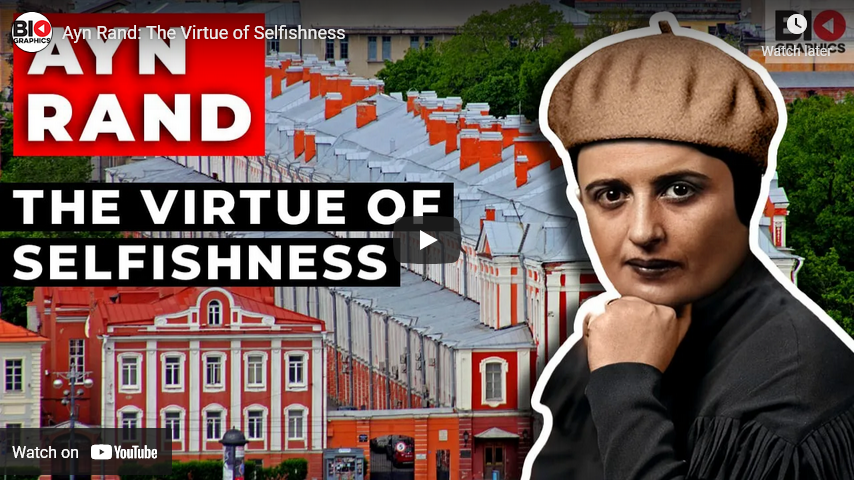
Ayn Rand: The Virtue of Selfishness
Biographics
Published 21 Jan 2021Pretty excited for our first weird comment section of 2021.
Simon’s Social Media:
Twitter: https://twitter.com/SimonWhistler
Instagram: https://www.instagram.com/simonwhistler/Source/Further reading:
Britannica biography: https://www.britannica.com/biography/…
Biography: https://www.biography.com/writer/ayn-…
American National Biography: https://www.anb.org/view/10.1093/anb/…
Biography via the Ayn Rand Institute: http://aynrandlexicon.com/about-ayn-r…
Claremont Review of Books, two biographies of Ayn Rand: https://claremontreviewofbooks.com/wh…
NY Mag: https://nymag.com/arts/books/features…
Slate, the liberal view, but some good details on her childhood: https://slate.com/culture/2009/11/two…
Rand and religion: https://www.wsj.com/articles/can-you-…
Rand and social security: https://www.snopes.com/fact-check/ayn…
Sex in The Fountainhead: https://medium.com/curious/discussing…
February Revolution in Russia: https://www.iwm.org.uk/history/what-w…
October Revolution in Russia: https://www.history.com/topics/russia…
Comments Off on Ayn Rand: The Virtue of Selfishness


