
Americans have never really understood ideological warfare. Our gut-level assumption is that everybody in the world really wants the same comfortable material success we have. We use “extremist” as a negative epithet. Even the few fanatics and revolutionary idealists we have, whatever their political flavor, expect everybody else to behave like a bourgeois.
We don’t expect ideas to matter — or, when they do, we expect them to matter only because people have been flipped into a vulnerable mode by repression or poverty. Thus all our divagation about the “root causes” of Islamic terrorism, as if the terrorists’ very clear and very ideological account of their own theory and motivations is somehow not to be believed.
By contrast, ideological and memetic warfare has been a favored tactic for all of America’s three great adversaries of the last hundred years — Nazis, Communists, and Islamists. All three put substantial effort into cultivating American proxies to influence U.S. domestic policy and foreign policy in favorable directions. Yes, the Nazis did this, through organizations like the “German-American Bund” that was outlawed when World War II went hot. Today, the Islamists are having some success at manipulating our politics through fairly transparent front organizations like the Council on American-Islamic Relations.
But it was the Soviet Union, in its day, that was the master of this game. They made dezinformatsiya (disinformation) a central weapon of their war against “the main adversary”, the U.S. They conducted memetic subversion against the U.S. on many levels at a scale that is only now becoming clear as historians burrow through their archives and ex-KGB officers sell their memoirs.
The Soviets had an entire “active measures” department devoted to churning out anti-American dezinformatsiya. A classic example is the rumor that AIDS was the result of research aimed at building a ‘race bomb’ that would selectively kill black people.
On a different level, in the 1930s members of CPUSA (the Communist Party of the USA) got instructions from Moscow to promote non-representational art so that the US’s public spaces would become arid and ugly.
Americans hearing that last one tend to laugh. But the Soviets, following the lead of Marxist theoreticians like Antonio Gramsci, took very seriously the idea that by blighting the U.S.’s intellectual and esthetic life, they could sap Americans’ will to resist Communist ideology and an eventual Communist takeover. The explicit goal was to erode the confidence of America’s ruling class and create an ideological vacuum to be filled by Marxism-Leninism.
Eric S. Raymond, “Gramscian damage”, Armed and Dangerous, 2006-02-11.
August 28, 2017
QotD: Gramscian damage
August 27, 2017
August 26, 2017
Inside A British Mark IV WW1 Tank I THE GREAT WAR Special
Uploaded on 25 Aug 2017
Check out The Tank Museum on YouTube: http://youtube.com/thetankmuseum
Indy and Tank Museum curator David Willey take a look at the British Mark IV tank. Over 1000 of these tanks were built and they are an iconic symbol of early tank warfare during World War 1. We discuss crew conditions and other important details in this episode.
QotD: The American Constitution
All things considered, this New Republic piece on Randy Barnett and the libertarian constitutional movement is really pretty good. But I thought this part was revealing:
Barnett believes the Constitution exists to secure inalienable property and contract rights for individuals. This may sound like a bland and inconsequential opinion, but if widely adopted by our courts and political systems it would prohibit or call into question basic governmental protections — minimum wages, food-safety regulations, child-labor laws — that most of us take for granted. For nearly a century now, a legal counterculture has insisted that the whole New Deal project was a big, unconstitutional error, and Barnett is a big part of that movement today.
If your entire program is called into question by the notion that individuals have property and contract rights, maybe the problem is with your program.
And to the extent that, as believed by many, the Supreme Court’s eventual accommodation to the New Deal was the product of duress in the form of FDR’s court-packing scheme, then isn’t that accommodation, in fact, illegitimate?
Glenn Reynolds, Instapundit, 2015-08-31.
August 25, 2017
The 2nd Battle Of Verdun – Lost Opportunities On The Isonzo River I THE GREAT WAR Week 161
Published on 24 Aug 2017
The 11th Battle of the Isonzo river continued this week and the Italians manage to break through parts of the Austro-Hungarian lines, they hesitate to exploit the breakthrough though and the opportunity is lost. Meanwhile the French break through the German lines at Verdun and Herbert Plumer comes up with a plan to defeat the German Hindenburg Line.
Great Northern War – I: When Sweden Ruled the World – Extra History
Published on 19 Aug 2017
A young boy king had inherited the crown of the Swedish Empire, and his neighbors saw an opportunity to attack. To their surprise, young Charles XII of Sweden turned out to be a fearsome opponent who quickly repelled their assaults – and then sought revenge.
Solving the mystery of the fate of H.L. Hunley‘s crew
When the Confederate submarine H.L. Hunley was found, the bodies of the crew were still in their duty positions within the vessel, as if they’d been unaware or unable to do anything to save the situation. Sarah Knapton reports on what is now believed to have killed the crew almost instantaneously:
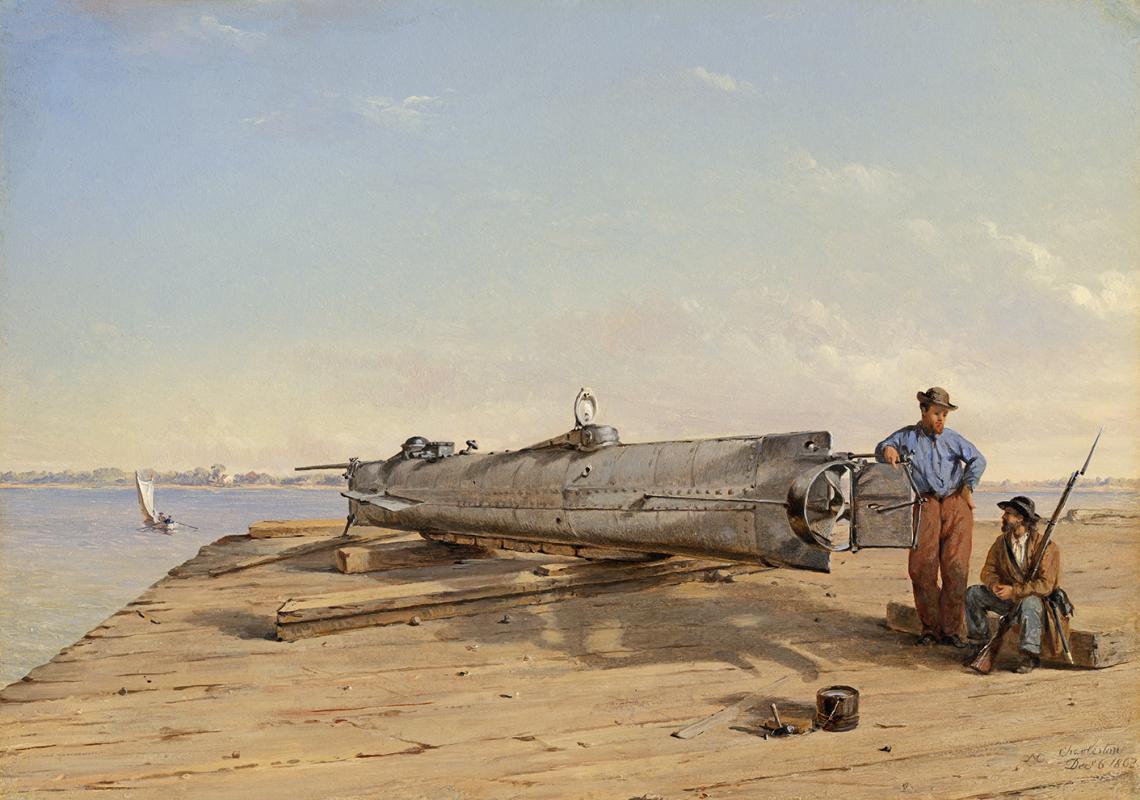
“Submarine Torpedo Boat H.L. Hunley, Dec. 6, 1863″ by Conrad Wise Chapman.
“The inventor of this boat, a man named Hunley, can be seen; also a sentinel. This boat, it was at first thought would be very effective; twice it went out on its mission of destruction, but on both occasions returned with all the crew dead. After this had happened the second time, someone painted on it the word ‘coffin.’ There was just room enough in it for eight men, one in front of the other, with no possibility of anyone sitting straight. The third time it started out, it never came back, nor was anything ever heard from it, but as one of the United States men-of-war in the harbor (USS Housatonic) was sunk at about the same time, the supposition was that they both went to the bottom together. Other objects to be seen in the picture are, Sullivan’s Island, and a Dispatch boat.” – Conrad Wise Chapman, 1898 (via Wikimedia)
The mystery of how the crew of one of the world’s first submarines died has finally been solved – they accidentally killed themselves.
The H.L. Hunley sank on February 17 1864 after torpedoing the USS Housatonic outside Charleston Harbour, South Carolina, during American Civil War.
She was one of the first submarines ever to be used in conflict, and the first to sink a battleship [Housatonic was actually a sloop-of-war, not a battleship].
It was assumed the blast had ruptured the sub, drowning its occupants, but when the Hunley was raised in 2000, salvage experts were amazed to find the eight-man crew poised as if they had been caught completely unawares by the tragedy. All were still sitting in their posts and there was no evidence that they had attempted to flee the foundering vessel.
Now researchers at Duke University believe they have the answer. Three years of experiments on a mini-test sub have shown that the torpedo blast would have created a shockwave great enough to instantly rupture the blood vessels in the lungs and brains of the submariners.
“This is the characteristic trauma of blast victims, they call it ‘blast lung,'” Dr Rachel Lance.
“You have an instant fatality that leaves no marks on the skeletal remains. Unfortunately, the soft tissues that would show us what happened have decomposed in the past hundred years.”
The Hunley‘s torpedo was not a self-propelled bomb, but a copper keg of 135 pounds of gunpowder held ahead and slightly below the Hunley‘s bow on a 16-foot pole called a spar
The sub rammed this spar into the enemy ship’s hull and the bomb exploded. The furthest any of the crew was from the blast was about 42 feet. The shockwave of the blast travelled about 1500 meters per second in water, and 340 m/sec in air, the researchers calculate.
The End of the Bronze Age
Published on 28 Sep 2015
Around 1200 BC, the countries of the Eastern Mediterranean went into major cultural decline: The Late Bronze Age came to a sudden end.
Kingdoms that had wielded immense power completely disappeared. For several centuries after this, agriculture was people’s only means of subsistence. These were pivotal changes in history. Explaining them remains one of the big challenges in Mediterranean archaeology.
In this video, the foundation Luwian Studies presents a comprehensive and plausible scenario of what might have happened.
August 24, 2017
Teaching history in the South – the “Lost Cause” school of historiography
Warren Meyer gives some background on how most people in the Southern US were taught the history of the “War Between the States”:
The Lost Cause School: I want to provide some help for those not from the South to understand the southern side of the statue thing. In particular, how can good people who believe themselves not to be racist support these statues? You have to recognize that most folks of my generation in the South were raised on the lost cause school of Civil War historiography. I went to one of the great private high schools in the South and realized later I had been steeped in Lost Cause. All the public schools taught it. Here is the Wikipedia summary:
The Lost Cause of the Confederacy, or simply Lost Cause, is a set of revisionist beliefs that describes the Confederate cause as a heroic one against great odds despite its defeat. The beliefs endorse the virtues of the antebellum South, viewing the American Civil War as an honorable struggle for the Southern way of life, while minimizing or denying the central role of slavery. While it was not taught in the North, aspects of it did win acceptance there and helped the process of reunifying American whites.
The Lost Cause belief system synthesized numerous ideas into a coherent package. Lost Cause supporters argue that slavery was not the main cause of the Civil War, and claim that few scholars saw it as such before the 1950s. In order to reach this conclusion, they often deny or minimize the writings and speeches of Confederate leaders of the time in favor of later-written revisionist documents. Supporters often stressed the idea of secession as a defense against a Northern threat to their way of life and say that threat violated the states’ rights guaranteed by the Union. They believed any state had the right to secede, a point strongly denied by the North. The Lost Cause portrayed the South as more profoundly Christian than the greedy North. It portrayed the slavery system as more benevolent than cruel, emphasizing that it taught Christianity and civilization. In explaining Confederate defeat, the Lost Cause said the main factor was not qualitative inferiority in leadership or fighting ability but the massive quantitative superiority of the Yankee industrial machine.
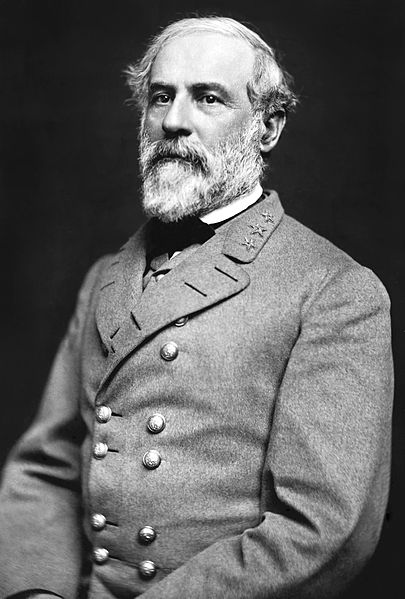
Confederate General Robert E. Lee, commander of the Army of Northern Virginia (via Wikimedia)
Obviously this was promoted by the white supremacists after the war, but in the 20th century many well-meaning people in the South who are not racist and by no means want to see a return of slavery or Jim Crow still retain elements of this story, particularly the vision of the Confederacy as a scrappy underdog. But everything in these two paragraphs including the downplaying of slavery in the causes of the Civil War was being taught when I grew up. It wasn’t until a civil war course in college (from James McPherson no less, boy was I a lucky dog there) that I read source material from the time and was deprogrammed.
The comparisons of the current statue removal to Protestant reformation iconoclasm seem particularly apt to me. You see, growing up in the South, Confederate generals were our saints. And the word “generals” is important. No one I knew growing up would think to revere, say, Jefferson Davis. Only the hard-core white supremacists revered Jefferson Davis. Real lost cause non-racist southerners revered Robert E. Lee. He was our Jesus (see: Dukes of Hazard). Every town in the south still has a Robert E Lee High School. Had I not gone to private school, I would have gone to Houston’s Lee High (I had a friend who went to college at Lehigh in New Jersey. Whenever he told folks in the South he went there, they would inevitably answer “yes, but where did you go to college.”) So Lee was by far and away at the top of the pantheon. Then you had folks like Stonewall Jackson and J.E.B. Stuart who were probably our Peter and Paul. Then all the rest of the generals trailing off through the equivalents of St. Bartholomew or whoever. We even had a Judas, General James Longstreet, who for a variety of reasons was reviled by the Lost Cause school and was blamed for many of Lee’s, and the South’s, losses.
If you want to see the Southern generals the way much of the South sees them, watch the movie Gettysburg, which I like quite a bit (based on the book Killer Angels, I believe, also a good read). The Southern Generals are good, talented men trying to make the best of a losing cause. Slavery is, in this movie, irrelevant to them. They are fighting for their beloved homes in the South, not for slavery. The movie even has Longstreet saying something like “we should have freed the slaves and then fired on Fort Sumter”.
The movie Gettysburg is excellent, but if you don’t know much about the actual battle, you might end up thinking the entire conflict revolved around the 20th Maine …
The Story of Western Philosophy
Published on 26 May 2017
Relevant mystery link: https://youtu.be/myc7eHGg5y4
If you notice any factual errors in this week’s video, please just bear in mind that life is ultimately meaningless in the first place.
August 23, 2017
One definite success from the Dieppe raid
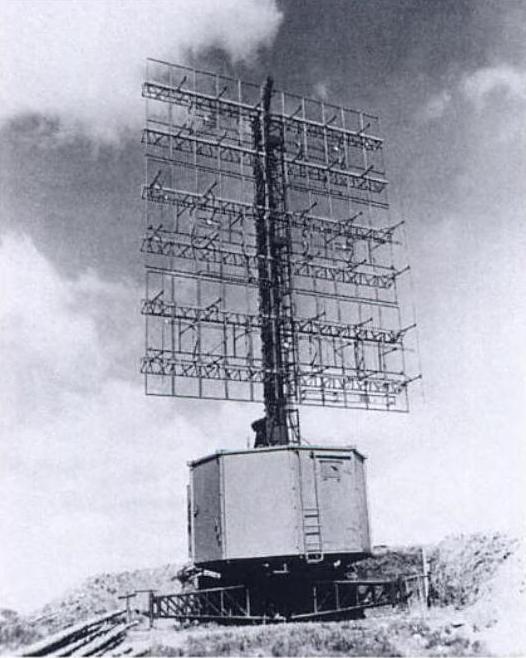
The allied attack on Dieppe in August, 1942 was an operational failure: nearly 60% of the raiding force were killed, wounded or captured and the tactical objectives in the harbour area were not achieved. I’ve mentioned the speculations on an Enigma side-operation (which does not seem to be given credence by most historians), using the main Canadian attack as cover for an attempt to snatch the latest German encryption device from one or more high-security locations within the target area. A second side-mission was also conducted to capture one of the newest German radar stations at Pourville, just down the coast from Dieppe:
Aerial reconnaissance photos indicated that one of these new Freya radar sets had been installed at Pourville-sur-Mer, near Dieppe. A military raid on Dieppe, to test British and Canadian plans for an amphibious invasion, was already being planned. Senior officers immediately added a sub-plan to the Dieppe raid: a small force would be detached to attack the Pourville radar station. There, a radar expert would dismantle the station’s vital equipment and transport it back to the UK for analysis.
Nissenthall, a Jewish cockney who had a lifelong fascination with electronics and radio technology, had joined the Air Force as an apprentice in 1936. By the outbreak of the war in 1939 he was assigned to RAF radio direction finding stations (RDF, the short-lived original term for radar) and rapidly built up a reputation as a competent and technically skilled operator. Before the war he had also worked directly with Robert Watson-Watt, widely regarded today as the father of radar.A German FuMG 401 “Freya LZ” radar station of the type installed at Pourville. (US National Archives and Records Administration image, via Wikimedia)
[…]
More than 5,000 soldiers of the First Canadian Division set off from the south coast of England in the early hours of 19 August 1942. Embedded with A Company of the South Saskatchewan Regiment, Nissenthall’s 11-man bodyguard landed on French soil – but on the wrong side of the Scie River from the radar station.
After finding their way to their intended starting point, the team ran into stiff German resistance. Casualties soon mounted up as they probed the area, looking for a way into the radar station.
Thanks to the Bruneval raid six months previously, the Germans had beefed up their defences around coastal radar stations. This, combined with the naivete of the Allied planners back in Britain, had left the Canadians exposed and vulnerable. Though Nissenthall’s team had just about reached the radar station, there was no hope they would be able to get inside it, much less examine it, dismantle it and take away the most valuable parts of the Freya set inside.
August 22, 2017
Romanian Guns of WW1 I THE GREAT WAR Special feat. C&Rsenal
Published on 21 Aug 2017
Othais’ episode about the Romanian Mannlicher: https://www.youtube.com/watch?v=MhuuFnaCMOw
In this special episode, Indy and Othais talk about the Romanian rifles and pistols of WW1, namely the Mannlicher M1893 and a very odd Spanish revolver that still puzzles Othais.
The Bronze Age Collapse – Lies – Extra History
Published on 12 Aug 2017
How did the Bronze Age Collapse affect civilizations other than the four discussed in our series? When trade fell apart, why didn’t those who relied on bronze switch to forging with other metals? James and Soraya look back on these questions on Lies!
How to Pronounce German Ship Names – World of Warships & Historical Background
Published on 8 Aug 2017
Pronunciation of German ship names from World of Warships with some background information on the person and location.
Military History Visualized provides a series of short narrative and visual presentations like documentaries based on academic literature or sometimes primary sources. Videos are intended as introduction to military history, but also contain a lot of details for history buffs. Since the aim is to keep the episodes short and comprehensive some details are often cut.


