
History Of Wars
Published on 6 Sep 2016With their menacing dark silhouettes belching fire and smoke, the Ironclad warships of the mid 19th century burst onto the naval scene like hulking metal monsters. Combining iron plating, steam propulsion and the biggest and most powerful guns afloat, the Ironclads represented a radical advance over all previous warships.
November 12, 2017
The Great Ships Ironclads Documentary
Comments Off on The Great Ships Ironclads Documentary
November 11, 2017
Mark Knopfler – “Remembrance Day”
Bob Oldfield
Published on 3 Nov 2011A Remembrance Day slideshow using Mark Knopfler’s wonderful “Remembrance Day” song from the album Get Lucky (2009). The early part of the song conveys many British images, but I have added some very Canadian images also which fit with many of the lyrics. The theme and message is universal… ‘we will remember them’.
Comments Off on Mark Knopfler – “Remembrance Day”
In memoriam
A simple recognition of some of our family members who served in the First and Second World Wars:
The Great War
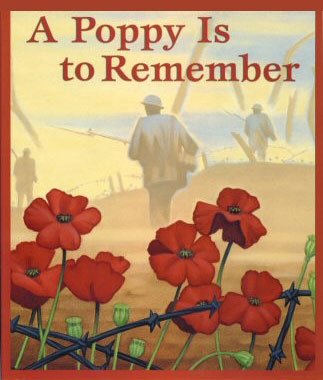 Private William Penman, Scots Guards, died 16 May, 1915 at Le Touret, age 25
(Elizabeth’s great uncle)- Private Archibald Turner Mulholland, Argyll & Sutherland Highlanders, mortally wounded 25 September, 1915 at Loos, age 27
(Elizabeth’s great uncle) - Private David Buller, Highland Light Infantry, died 21 October, 1915 at Loos, age 35
(Elizabeth’s great grandfather) - Private Harold Edgar Brand, East Yorkshire Regiment. died 4 June, 1917 at Tournai.
(My first cousin, three times removed) - Private Walter Porteous, Durham Light Infantry, died 4 October, 1917 at Passchendaele, age 18
(my great uncle) - Corporal John Mulholland, Argyll & Sutherland Highlanders, wounded 2 September, 1914 (shortly before the First Battle of the Aisne), wounded again 29 June, 1918, lived through the war.
(Elizabeth’s great uncle)
The Second World War
- Flying Officer Richard Porteous, RAF, survived the defeat in Malaya and lived through the war
(my great uncle) - Able Seaman John Penman, RN, served in the Defensively Equipped Merchant fleet on the Murmansk Run (and other convoy routes), lived through the war
(Elizabeth’s father) - Private Archie Black (commissioned after the war and retired as a Major), Gordon Highlanders, captured at Singapore (aged 15) and survived a Japanese POW camp
(Elizabeth’s uncle) - Elizabeth Buller, “Lumberjill” in the Women’s Land Army in Scotland through the war.
(Elizabeth’s mother) - Trooper Leslie Taplan Russon, 3rd Royal Tank Regiment, died at Tobruk, 19 December, 1942 (aged 23).
A recently discovered relative. Leslie was my father’s first cousin, once removed (and therefore my first cousin, twice removed).
For the curious, the Commonwealth War Graves Commission and the Royal British Legion provide search engines you can use to look up your family name. The RBL’s Every One Remembered site shows you everyone who died in the Great War in British or Empire service (Canadians, Australians, New Zealanders, South Africans and other Imperial countries). The CWGC site also includes those who died in the Second World War.
In Flanders fields the poppies blow
Between the crosses row on row,
That mark our place; and in the sky
The larks, still bravely singing, fly
Scarce heard amid the guns below.We are the Dead. Short days ago
We lived, felt dawn, saw sunset glow,
Loved and were loved, and now we lie
In Flanders fields.Take up our quarrel with the foe:
To you from failing hands we throw
The torch; be yours to hold it high.
If ye break faith with us who die
We shall not sleep, though poppies grow
In Flanders fields.Lieutenant Colonel John McCrae, MD Canadian Army Medical Corps (1872-1918)
Comments Off on In memoriam
Vimy Ridge Heaven to Hell – Full Documentary
Bobmarliist
Published on 8 Feb 2013
Comments Off on Vimy Ridge Heaven to Hell – Full Documentary
QotD: Wearing the Red Poppy
One hundred years is a short period in history but a long one in human lives and memories. It marks a point when perspective is gained on tragic events: for one, thing no-one who participated in them is still alive. Perspective changes meaning and alters commemoration. It took, for example, white Southerners that long to stop voting Democrat because Abraham Lincoln had been a Republican. Today in Spain we see the quiet rise of memorials for the losses of the Spanish Civil War. Time takes its toll of grievances and opens new avenues of generous remembrance.
Perhaps that’s it. The very length of time since the original Armistice – the eleventh minute of the eleventh hour of the eleventh day of the eleventh month in 1918 – is the reason we still wear red poppies. The conflicting emotions that originally surrounded remembrance – the grief, the survivors’ guilt, the sense of waste and futility, the bitterness of victory – have all washed away. That leaves us with an awareness of a loss we cannot fully feel, and will thankfully never have to. But it’s a loss we can and must acknowledge.
It is a very British thing, the red poppy: a non-militaristic and utterly unexultant commemoration of the need for military force despite the costs. And it has a typically British origin in being multinational; its current form came into being when Earl Haig adopted a French woman’s design that copied an original red silk poppy created by an American woman inspired by a Canadian war poet’s elegy “Flanders Field”.
The poppy has in it the stoicism of the Londoners facing the Blitz – “London can take it”. We wear it to renew our individual and collective belief that Britain can take it.
John McTernan, “Does Jeremy Corbyn have any idea what Poppy Day is about?”, The Telegraph, 2015-10-22.
Comments Off on QotD: Wearing the Red Poppy
November 10, 2017
The Russian October Revolution 1917 I THE GREAT WAR Week 172
The Great War
Published on 9 Nov 2017After the turmoil of the past weeks in Petrograd, the Soviets and the Red Guards seize the opportunity and topple the provisional government under Alexander Kerensky. Their first goal is to pull out of the war. The Italians were still in full retreat during the Battle of Caporetto and the British Army was still advancing in Palestine.
Comments Off on The Russian October Revolution 1917 I THE GREAT WAR Week 172
November 9, 2017
Frankenstein: The New Romantics – Extra Sci Fi – #2
Extra Credits
Published on 7 Nov 2017Industrialization and the Age of Reason benefitted society in many ways, but also created an atmosphere of dehumanizing mass production. The Romantic literary movement rose up to assert the value of emotion in a modern world, and praised science as a marvel whose discoveries bounded on magic made real.
Comments Off on Frankenstein: The New Romantics – Extra Sci Fi – #2
QotD: The reputation of Che Guevara proves “the triumph of marketing over truth and reality”
The Irish Post Office has issued a stamp to commemorate the fiftieth anniversary of the death of Ernesto Guevara. This is, presumably, because he was both very famous and had some distant Irish ancestry. It is, however, a rather sinister philosophy that the worth of a man’s work or ideas, or his influence on the world, is much affected, either for the better or the worse, by his distant ancestry.
Guevara’s reputation is, of course, the triumph of marketing over truth and reality. There is probably no resort of mass tourism in the world where Guevara kitsch is not on sale and, one must presume, bought; and in an odd way this is only appropriate, for mass tourism makes lemmings seem like unreconstructed individualists, and Guevara was nothing if not an ardent promoter of mass conformity and unthinking obedience. Like many an adolescent psychopath, as he remained all his life, he dreamed of making mankind anew — not in his own image, exactly, for he thought of himself as a leader rather than a follower, but according to his own far-from-profound ideas of what mankind should be. The triumph of marketing is to have made this apostle of the most complete servitude into an apostle of the most complete freedom.
The triumph of marketing over truth and reality is nothing new, however. To expect people who are trying to sell you something also to tell you the truth, the whole truth, and nothing but the truth is to expect what never did happen and what never will happen. The buyer will always have to beware, no matter what legal protections are put in place for the unwary; the necessity is inscribed, as it were, in human nature itself.
Theodore Dalrymple, “The Way of Che”, Taki’s Magazine, 2017-10-28.
Comments Off on QotD: The reputation of Che Guevara proves “the triumph of marketing over truth and reality”
November 8, 2017
Why Don’t Country Flags Use The Color Purple?
After Skool
Published on 17 Oct 2017For centuries purple dye was worth more than gold. The dye used to produce purple fabric came from a sea snail that only lived off the shores of modern day Lebanon. Because it was so rare, purple became associated with royalty. This is the reason you don’t see purple on country flags. It was just too expensive to produce.
Sometimes the simplest questions have extraordinary answers.
Comments Off on Why Don’t Country Flags Use The Color Purple?
November 7, 2017
Zionism during World War 1 I THE GREAT WAR Special
The Great War
Published on 6 Nov 2017Zionism, the movement for the establishment of a Jewish homeland, got new momentum during World War 1. Zionists, like Chaim Weizmann rallied for support in their respective home countries, others wanted to actively advance the zionist idea by taking part in the war and fought with the Jewish Legions. The Balfour Declaration of 1917 was another step towards fulfilling the idea of a home for the Jewish people.
Comments Off on Zionism during World War 1 I THE GREAT WAR Special
Le Corbusier
Theodore Dalrymple could never be called a fan of Le Corbusier’s architecture:
The French fascist architect Charles-Édouard Jeanneret, better known as Le Corbusier, was another of this charmless ilk, though cleaner than Brecht (a Marxist, the latter’s decision not to wash was his tribute, albeit not a very flattering one, to the proletariat). Jeanneret’s inhumanity, his rage against humans, is evident in his architecture and in his writings. He felt the level of affection and concern for them that most people feel for cockroaches.
Like Hitler, Jeanneret wanted to be an artist, and, as with Hitler, the world would have been a better place if he had achieved his ambition. Had he been merely an artist, one could have avoided his productions if one so wished; but the buildings that he and his myriad acolytes have built unavoidably scour the retina of the viewer and cause a decline in the pleasure of his existence.
One of Jeanneret’s buildings can devastate a landscape or destroy an ancient townscape once and for all, with a finality that is quite without appeal; as for his city planning, it was of a childish inhumanity and rank amateurism that would have been mildly amusing had it remained purely theoretical and had no one taken it seriously.
A book has just been published — Le Corbusier: The Dishonest Architect, by Malcolm Millais — that reads like the indictment of a serial killer who can offer no defense (except, possibly, a psychiatric one). The author shares with me an aesthetic detestation of Jeanneret, and also of his casual but deeply vicious totalitarianism; but, unlike me, the author both has a scholarly knowledge of his subject’s life and writings, of which the perusal of only a few has more than sufficed for me, and is a highly qualified structural engineer. Mr. Millais is able to prove not only that Jeanneret was a liar, cheat, thief, and plagiarist in the most literal sense of the words, a criminal as well as being personally unpleasant on many occasions, but that he was technically grossly ignorant and incompetent, indeed laughably so. His roofs leaked, his materials deteriorated. He never grasped the elementary principles of engineering. All his ideas were gimcrack at best, and often far worse than merely bad. To commission a building from Jeanneret was to tie a ball and chain around one’s own ankle, committing oneself to endless, Sisyphean bills for alteration and maintenance, as well as to a dishonest estimate of what the building would cost to build in the first place. A house by Jeanneret was not so much a machine for living in (to quote the most famous of his many fatuous dicta) as a machine for generating costs and for moving out of. In the name of functionality, Jeanneret built what did not work; in the name of mass production, everything he used had to be individually fashioned. Having no human qualities himself, and lacking all imagination, he did not even understand that shade in a hot climate was desirable, indeed essential.
Comments Off on Le Corbusier
November 6, 2017
Otto von Bismarck – IV: The Iron Chancellor – Extra History
Extra Credits
Published on 4 Nov 2017Bismarck turned up the heat on his long-term plan to unite the German Confederation under Prussian leadership. He allied with Austria to seize a piece of disputed land, then maneuvered them into a war that he decisively won. Even an assassination attempt could not stop him.
Comments Off on Otto von Bismarck – IV: The Iron Chancellor – Extra History
The end of the battle of Passchendaele, 1917
The Canadian Corps under Lieutenant General Arthur Currie began the final phase of the battle on 6 November, 1917:
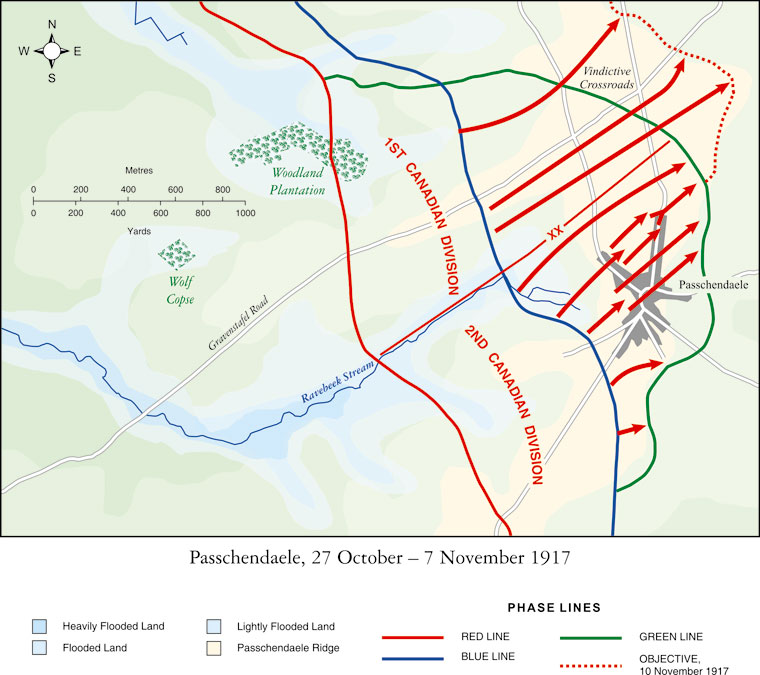
By 6 November, the Canadians were prepared to advance upon the Green Line. The final objective was to capture the high ground north of the town and to secure positions on the eastern side of Passchendaele Ridge. Again, according to Major Robert Massie: “The third attack … was the day when the First and Second Divisions took Passchendaele itself. On this occasion, the attack went off the most smoothly of any of the three. They had fair ground to go over, and especially those that went into Passchendaele itself had pretty fair going, and the objectives were reached on time.”
After early hand-to-hand fighting, the 2nd Division easily occupied Passchendaele just three hours after commencement of the attack at 0600 hours. The 1st Division, however, found itself in some trouble when one company of the 3rd Battalion became cut off and was stranded in a bog. When this situation eventually righted itself, the 1st Division continued toward its objectives. Well-camouflaged tunnels at Moseelmarkt provided an opportunity for the enemy to counterattack, but they were fended off by the Canadians. By the end of the day, the Canadian Corps was firmly in control of both Passchendaele and the ridge.
The final Canadian action at Passchendaele commenced at 0605 hours on 10 November 1917. Sir Arthur Currie used the opportunity to make adjustments to the line, strengthening his defensive positions. Robert Massie summed up the thoughts of many participating Canadians as follows: “What those men did at Passchendaele was beyond praise. There was no protection in that land. They could not get into the trenches which were full of mud, and you would see two or three of them huddled together during the night, lying on ground that was pure mud, without protection of any kind, and then going forward the next morning and cleaning up their job.”
[…]
The Canadians had done the impossible. After just 14 days of combat, they had driven the German army out of Passchendaele and off the ridge. There was almost nothing left of the village to hold. Altogether, the Canadian Corps had fired a total of 1,453,056 shells, containing 40,908 tons of high explosive. Aerial photography verified approximately one million shell holes in a one square mile area. The human cost was even greater. Casualties on the British side totalled over 310,000, including approximately 36,500 Australians and 3596 New Zealanders. German casualties totalled 260,000 troops.
For the Canadians, Currie’s words were prophetic. He had told Haig it would cost Canada 16,000 casualties to take Passchendaele – and, in truth, the final total was 15,654, many of whom were killed. One thousand Canadian bodies were never recovered, trapped forever in the mud of Flanders. Nine Canadians won the Victoria Cross during the battles for Passchendaele. While the human cost had been terrible: “Nevertheless, the competence, confidence, and maturity began in 1915 at Ypres a short distance away, and at Vimy Ridge earlier that spring, again confirmed the reputation of the Canadian Corps as the finest fighting formation on the Western Front.” So wrote esteemed Professor of History Doctor Ronald Haycock at the Royal Military College of Canada for The Oxford Companion to Canadian History in 2004.
Haig proved to be true to his word. By 14 November 1917, the Canadians had been returned to the relative quiet of the Vimy sector. They had not been asked to hold what it had cost them so much to take. However, by March 1918, all the gains made by Canada at Passchendaele would be lost in the German spring offensive known as Operation Michael.
General Sir David Watson praised the Canadian effort: “It need hardly be a matter of surprise that the Canadians by this time had the reputation of being the best shock troops in the Allied Armies. They had been pitted against the select guards and shock troops of Germany and the Canadian superiority was proven beyond question. They had the physique, the stamina, the initiative, the confidence between officers and men (so frequently of equal standing in civilian life) and happened to have the opportunity.”
British Prime Minister David Lloyd George was even clearer when it came to the Canadians: “Whenever the Germans found the Canadian Corps coming into the line they prepared for the worst.”
Chainmail – some points about
Lindybeige
Published on 16 May 2009In which I ramble for a bit making a series of near-random points about chainmail, or mail, or whatever you prefer to call it.
There is much on mail on my website. Please check there first before writing to me asking questions on this topic.
Comments Off on Chainmail – some points about
November 5, 2017
Breakthroughs and Setbacks – Fall 1917 I THE GREAT WAR Summary Part 11
The Great War
Published on 4 Nov 2017The Battle of Passchendaele begins on the Western Front, whilst the climate grows steadily more unstable in Russia, where General Kornilov hopes to seize power. Operation Albion is launched by Germany in the Northeast, and the French enjoy some successes, including at Malmaison. The tide is turned in the Battle of Caporetto. The death toll climbs ever higher, in yet another dark period of the Great War. We cover all this and more in our recap of Fall 1917.
Comments Off on Breakthroughs and Setbacks – Fall 1917 I THE GREAT WAR Summary Part 11


