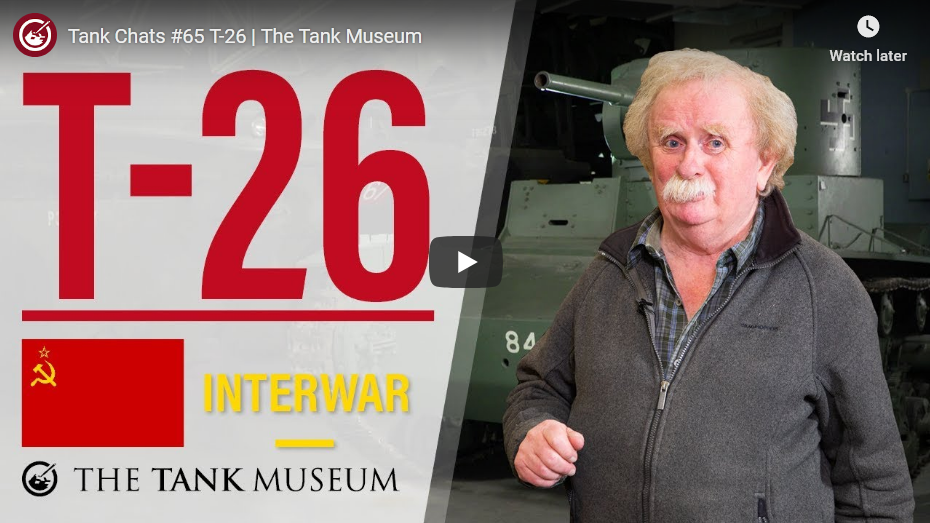
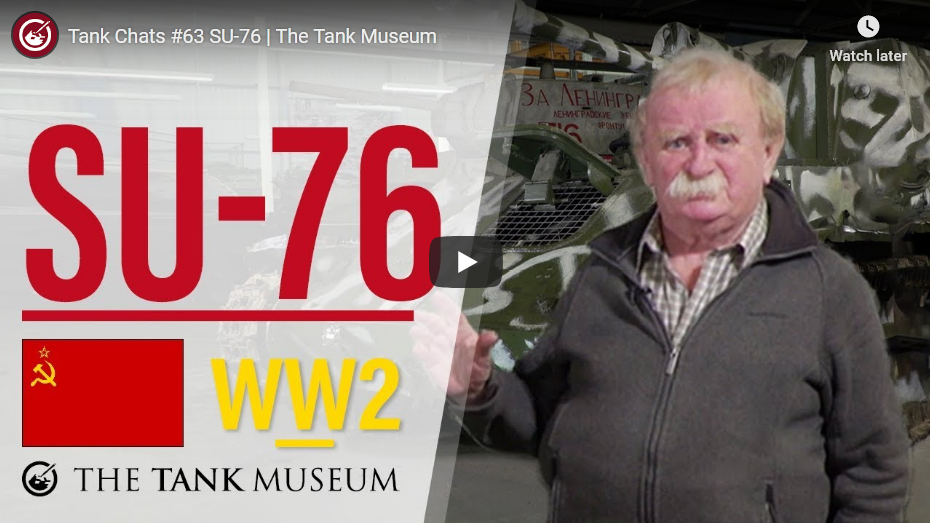
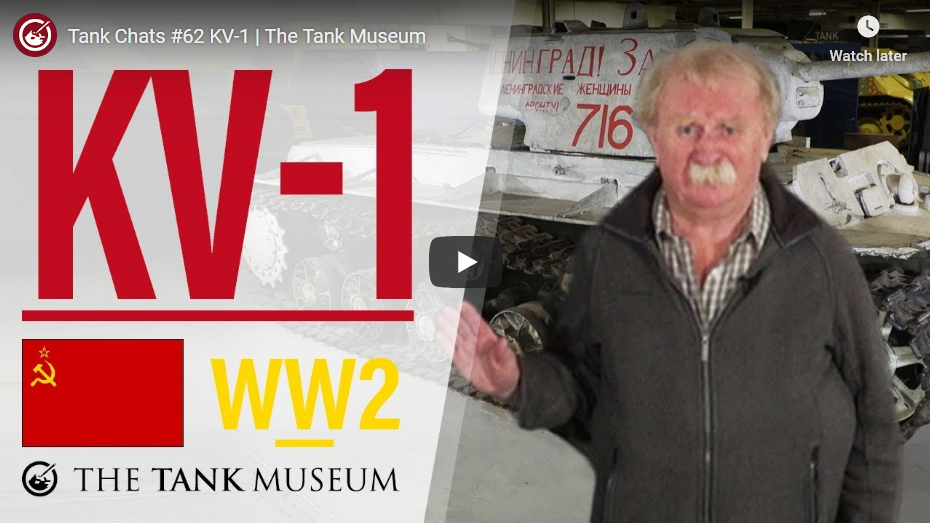
This particular T-26 tank, at The Tank Museum, was a T-26A and, after capture by the Finns, modified to T-26B configuration. It was used by Soviet forces in the war against Finland in the winter of 1940/41. It was captured and used by the Finnish Army, in whose markings it is seen.
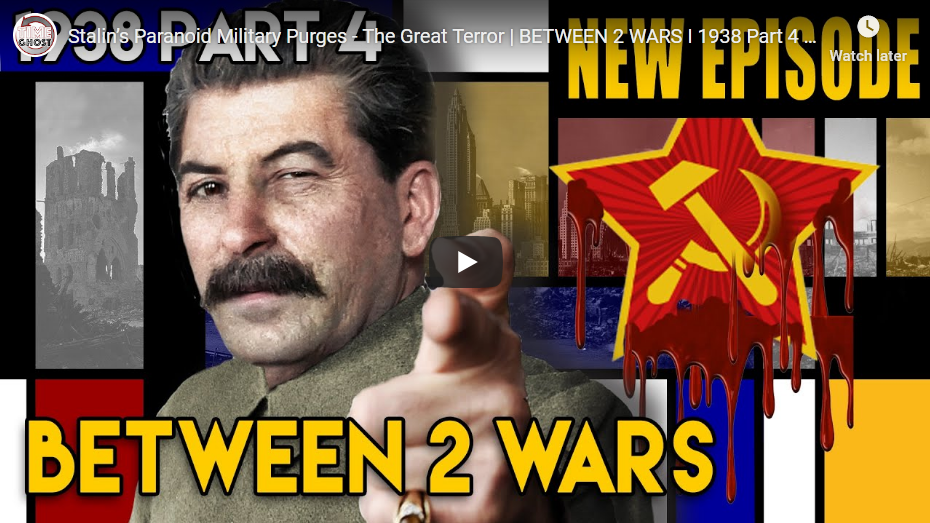
In 1938, Stalin has his military leadership purged, and has thousands of his comrades killed or locked up. The reasons as to why he did it are still open for debate.
Hosted by: Indy Neidell
Written by: Joram Appel
Directed by: Spartacus Olsson and Astrid Deinhard
Executive Producers: Bodo Rittenauer, Astrid Deinhard, Indy Neidell, Spartacus Olsson
Creative Producer: Joram Appel
Post-Production Director: Wieke Kapteijns
Research by: Joram Appel
Edited by: Daniel Weiss
Sound design: Marek Kamiński
Colorizations by:
– Daniel Weiss
Sources:
From the Noun Project:
– Saluting Veteran by Eric Lamar Pearine
– Russian_soldier_1553396 (Edited) by Wonmo Kang
– Prison by FORMGUT
– Law_585610 by Delwar Hossain
Photos from Color by Klimbim
Soundtracks from Epidemic Sound:
– “Split Decision” – Rannar Sillard
– “Last Point of Safe Return” – Fabien Tell
– “Watchman” – Yi Nantiro
– “Disciples of Sun Tzu” – Christian Andersen
– “The Inspector 4” – Johannes Bornlöf
– “Not Safe Yet” – Gunnar Johnsen
– “Death And Glory 1” – Johannes Bornlöf
– “Dark Beginning” – Johan Hynynen
– “First Responders” – Skrya
– “The Charleston 3” – Håkan Eriksson
A TimeGhost chronological documentary produced by OnLion Entertainment GmbH.
From the comments:
TimeGhost History
1 day ago
This episode was hard to write, mainly because of the ambiguity that this topic is still clouded in today. There are no conclusive answers as to why Stalin did what he did, and why he stopped doing what he was doing in 1938. This episode features some of the explanations of the purges and the Great Terror. This certainly is a remarkable piece of Soviet History, and one that would dramatically influence the performance of the Red Army in 1939 and beyond. Those who followed our World War Two series know that already in December ’39, the direct consequences of the purges in ’37 and ’38 are gigantic. I would also like to note here that we would like the comment section to stick to factual debate.
cheers, Joram
Comments Off on Stalin’s Paranoid Military Purges – The Great Terror | BETWEEN 2 WARS I 1938 Part 4 of 4
There is a Leonard Cohen song that came out in the nineties. I want to say early nineties, but for much of that decade I had small children, so it all runs together. Also, I’m uncaffeinated and late and too lazy to look.
Anyway, the song is called “Everybody knows” and it’s a marvel of double-meaning.
What the song says explicitly is a bunch of stuff people like my brother — look, European, left — believed at the time. Stuff like “Everybody knows the war is over/everybody knows the good guys lost.”
Bizarrely, before they went into hysterical denial of communism being the regime in the USSR and starting to call those seeking to re-establish it “right wingers” the left kept insisting the good guys had lost the cold war. Apparently we just look richer and more concerned for the right of the individual, but the evil Kapitalism of Amerika (it’s much more scary written with a K) kills more people than the Gulag and destroys everyone’s soul in the process. We’re just sneaky about it. So sneaky, in fact, that we don’t need to prevent people from leaving, we need to prevent people from coming here. That’s how sneaky we are.
Stop laughing. There’s a good chance your college student believes this. There’s also a good chance your college student is stupid enough to buy Bernie’s line that bread lines are preferable to our over abundance of food, because at least “everyone is equal.” Someone should ask comrade Bernie about the State stores for very important functionaries that crop up everywhere that has tried the communist slimming diet (It is to die for) and which has goods comparable with what the low middle class in America can afford, sprinkled with a few gold geegaws which is the communists idea of classy.
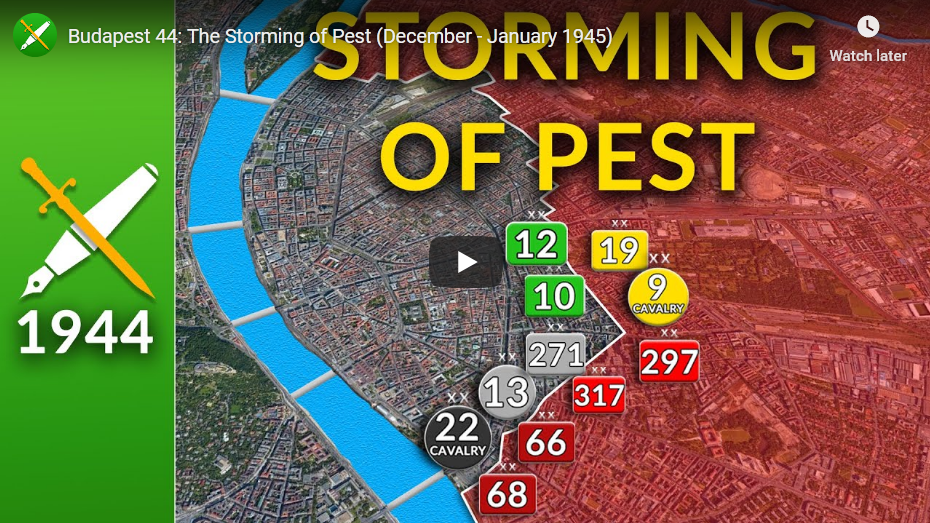
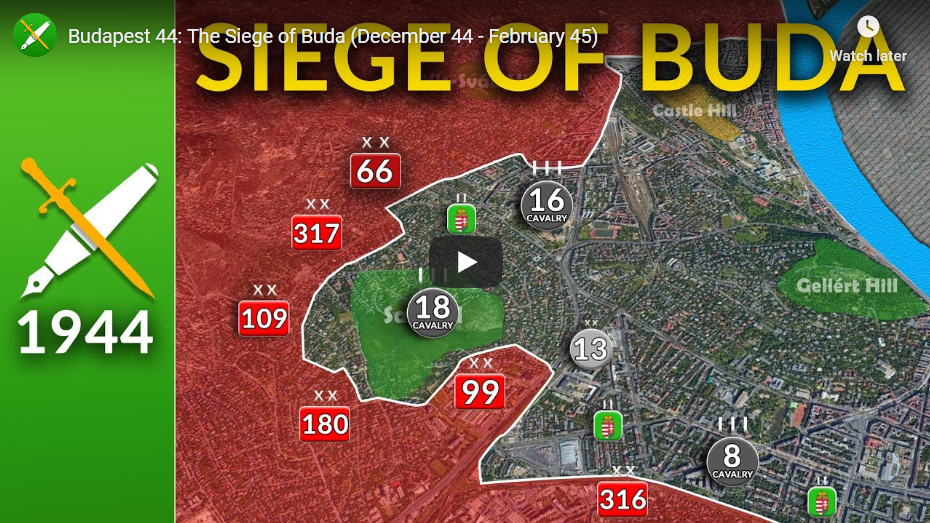
The Siege of Budapest and the battles that led to it have had precious little written about them (in English!), so the bulk of this video comes from one book:
Krisztián Ungváry, Battle for Budapest: 100 Days in World War 2
This is by far the most detailed account of the battle that I could find.
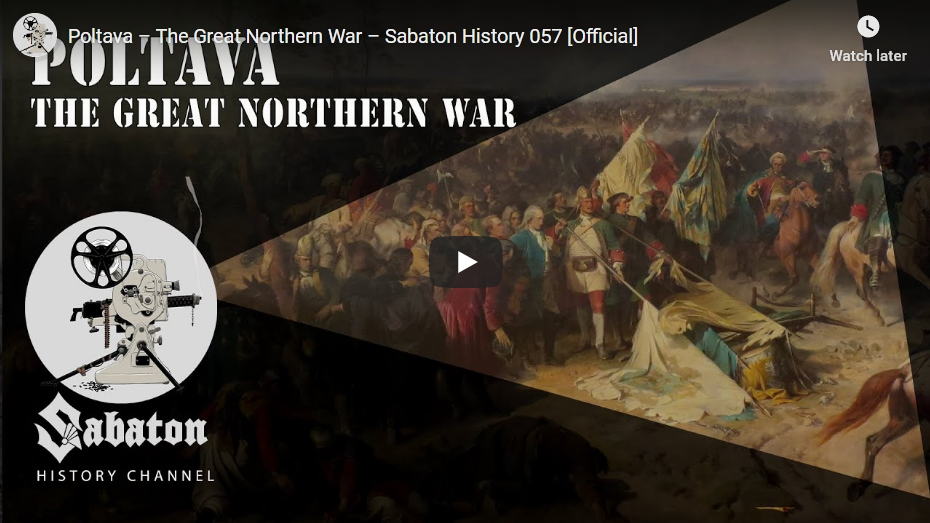
Bullets break the silent air, a wasted battleplan! It was a long and harsh march through the lands in the east, where the Swedish army of Charles XII sought to bring the Russian Empire to its knees. The Swedish king had the vision of a great victory, in which he captured Moscow and destroyed Tsar Peter I’s ambitions once and for all. However, as in late June 1709, the exhausted and hungry Swedish troops finally met the Tsar in open battle near the fortress of Poltava, it all seemed impossible. A relentless and fateful battle would commence. A battle after which only one empire would continue to rise while the other would fall.
Sabaton History
2 hours ago
Just a quick correction: St. Petersburg was not named after Peter I himself, but after his patron saint St. Peter. Although the Russian Tsar made sure that he himself would be immortalized by founding St. Petersburg, Russia’s window to Europe.
Comments Off on “Poltava” – The Great Northern War – Sabaton History 057 [Official]
Bob Kunz, Steven Snow, John Buchan, Nevin Spoljaric, Donal Botkin, Phil Gardner, Chris Chapin, Richard Jenkins, Martin, Steven Grimm, سليمان العقل, Colin Millions, Michael Mrozek, Saki Comandao, Jason Lewandowski, Andrea Di Biagio, David F Watson, rictic, Ben Schwab, Marco Arment, Elliot Lepley, Shantanu Raj, emptymachine, Bobby, Chris Amaris, George Lin, Mikko, Derek Bonner, Derek Jackson, Orbit_Junkie, Ron Bowes, Tómas Árni Jónasson, Henry Ng, Jordan Earls, Joshua Jamison, Nick Fish, Nick Gibson, Robert Webb, Jeffrey Podis, Thunda Plum, Awoo, David Tyler, Fuesu, iulus, Kevin Costello, Michael Reilly, Tyler Bryant, Kermit Norlund, chrysilis, David Palomares, Erik Parasiuk, ken mcfarlane, Leon, Tristan Watts-Willis, Veronica Peshterianu, Bear, Emi, Esteban Santana Santana, Freddi Hørlyck, John Rogers, Maarten van der Blij, Peter Lomax, Rhys Parry, ShiroiYami, Dag Viggo Lokøen, John Lee, Maxime Zielony, Elizabeth Keathley, Frederick The Great, Luxe Gifts, Rebecca Wortham, Bryan McLemore
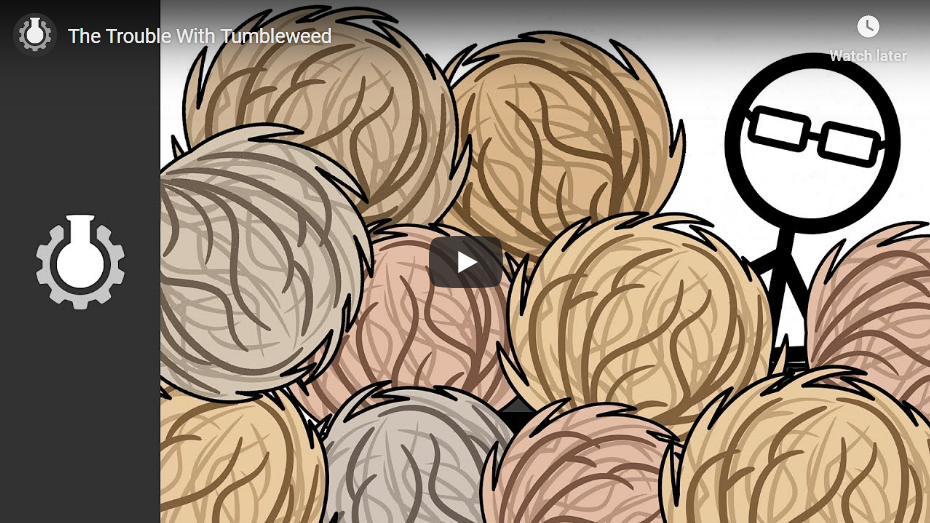
A tumbleweed is a structural part of the above-ground anatomy of a number of species of plants, a diaspore that, once it is mature and dry, detaches from its root or stem, and rolls due to the force of the wind. In most such species, the tumbleweed is in effect the entire plant apart from the root system, but in other plants, a hollow fruit or an inflorescence might serve the function. Tumbleweed species occur most commonly in steppe and arid ecosystems, where frequent wind and the open environment permit rolling without prohibitive obstruction.
Apart from its primary vascular system and roots, the tissues of the tumbleweed structure are dead; their death is functional because it is necessary for the structure to degrade gradually and fall apart so that its seeds or spores can escape during the tumbling, or germinate after the tumbleweed has come to rest in a wet location. In the latter case, many species of tumbleweed open mechanically, releasing their seeds as they swell when they absorb water.
The tumbleweed diaspore disperses seeds, but the tumbleweed strategy is not limited to the seed plants; some species of spore-bearing cryptogams — such as Selaginella — form tumbleweeds, and some fungi that resemble puffballs dry out, break free of their attachments and are similarly tumbled by the wind, dispersing spores as they go.
[…]
In the family Amaranthaceae (i.e. broadly defined to include Chenopodiaceae), several annual species of the genus Kali are tumbleweeds. They are thought to be native to Eurasia, but when their seeds entered North America in shipments of agricultural seeds, they became naturalized in large areas. In the cinema genre of Westerns, they have long been symbols of frontier areas. Kali tragus is the so-called “Russian thistle”. It is an annual plant that breaks off at the stem base when it dies, and forms a tumbleweed, dispersing its seeds as the wind rolls it along. It is said to have arrived in the United States in shipments of flax seeds to South Dakota, perhaps about 1870. It now is a noxious weed throughout North America, dominating disturbed habitats such as roadsides, cultivated fields, eroded slopes, and arid regions with sparse vegetation. Though it is a troublesome weed, Kali tragus also provides useful livestock forage on arid rangelands.
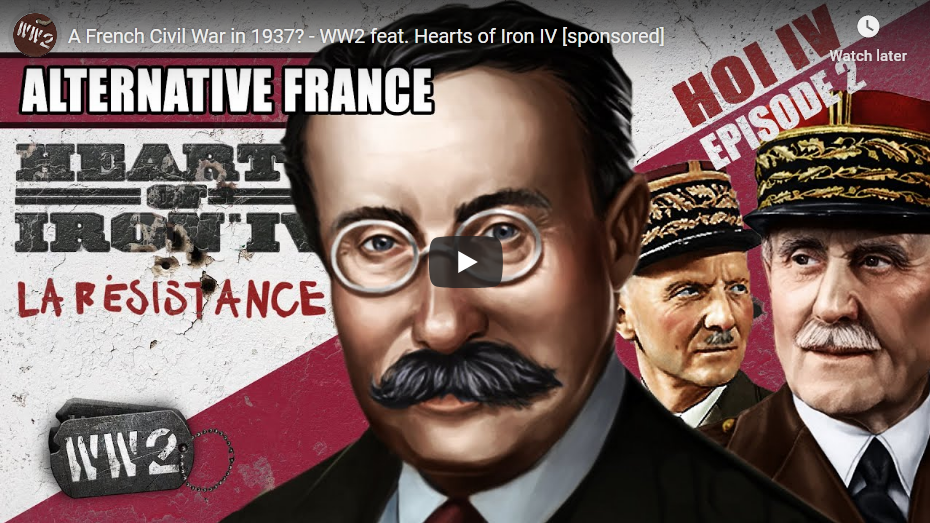
This video is sponsored by Paradox Interactive. Indy shares his thoughts on what he thinks would have happened if the French would have decided to meddle in the Spanish Civil War – triggering a Civil War.
Hearts of Iron IV: La Résistance is now available! You can play Hearts of Iron IV for free until next Sunday, the 1st of March! Discover it here: https://pdxint.at/39Re5ld
From the History Channel DVD series Great Blunders of WWII.
This is of interest for many reasons, but particularly because my late father-in-law served in the Royal Navy on the Arctic convoys and spent a full winter in the Soviet Union when his convoy couldn’t return before the ice closed the convoy route.
Comments Off on Great Blunders of WWII: The Scattering of Convoy PQ17
At Rotten Chestnuts, Severian explains why the Soviet Union’s Moscow Trials were so important well outside the borders of the USSR:
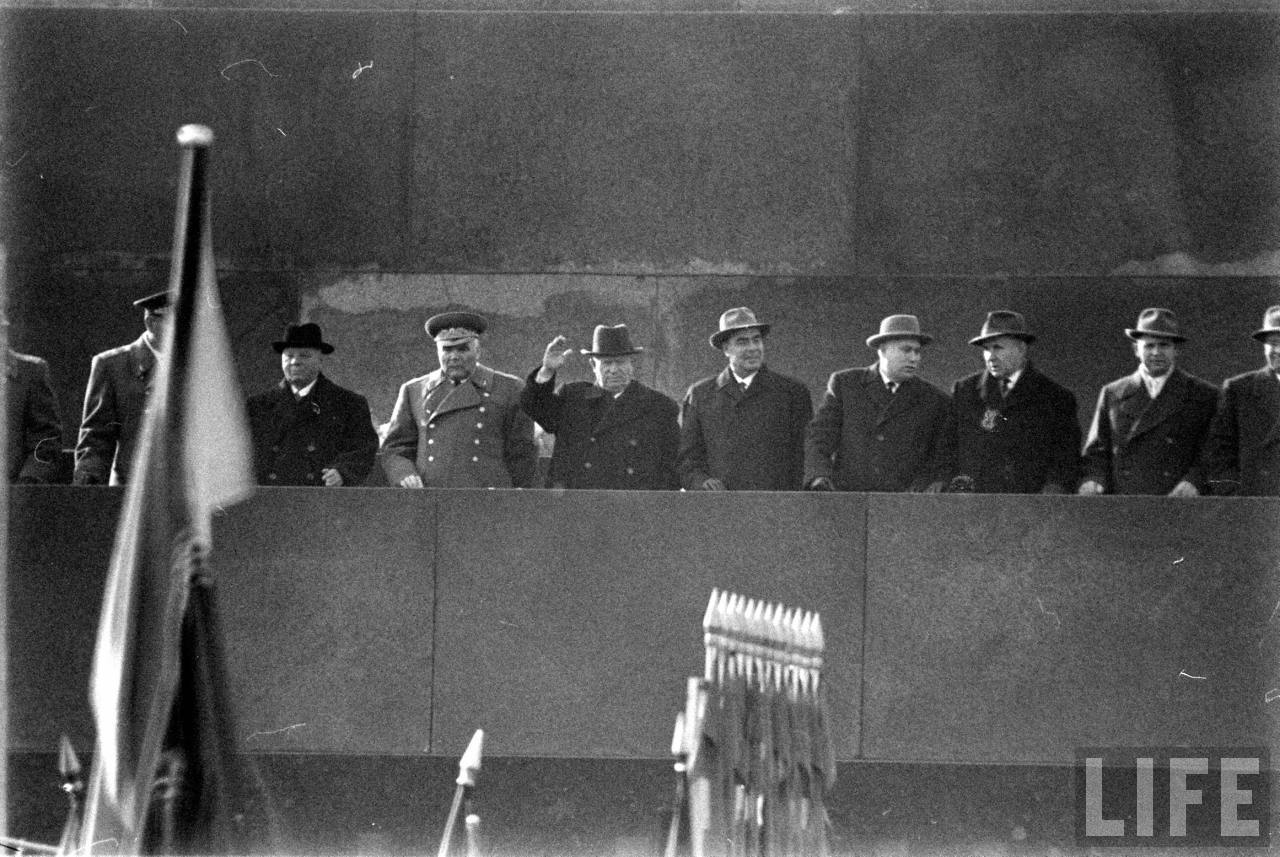
Krushchev, Brezhnev and other Soviet leaders review the Revolution parade in Red Square, 1962. LIFE magazine photo by Stan Wayman.
It’s not much of an exaggeration to say that the Moscow Trials set the course of 20th century history. If you want to be a dictator in peacetime, this is pretty much how you have to do it — see e.g. every other Communist regime ever. The downside, though, is that you cost yourself a lot of irreplaceable technical expertise. I’m not saying Hitler would’ve called Barbarossa off if Stalin hadn’t purged all his generals — Hitler was, of course, crazy — but he surely would’ve thought twice about it, the plan relying as it did on the utter incompetence of the now-leaderless Red Army.
The show trials also gave birth to “Kremlinology”, the art and science of reading Soviet tea leaves to find out who’s really in charge. Stalin didn’t invent “elimination by promotion”, but he was a master of it. In Stalin’s USSR, being “promoted” to some big, important-sounding position was an all-but-guarantee that you’re going to get shot. Seemingly minor functionaries, on the other hand, really ran things in the countryside. E.g. Khrushchev, a Red Army commissar — not an unimportant position by any means, but hardly a glory post either. Stalin’s generals knew who he was, but few outside the Red Army’s high command did. And since Stalin liked to signal major policy shifts with articles in obscure publications — he once wrote an article on lingustics that previewed some huge change — you had to be very wired in to figure out who was really a comer.
Let’s imagine, then, that somehow the Moscow Show Trials failed. That Zinoviev, say, was acquitted, because (take your pick) he’d obviously been tortured, the charges were ludicrous, there was zero hard evidence against him, or any combination of the above. Stalin staked his entire position on the outcome of the Trials. What if he’d lost? How long do you think the Boss would’ve remained Boss? A few weeks? A few days? Hours, maybe?
Nancy Pelosi is no Stalin, of course, but whoever survives November’s electoral bloodbath had better start working on Secret Speech 2.0 the very second the last vote is counted. I was doubtful about the 2020 presidential election until they actually decided to show-trial Donald Trump. Since there’s no way in hell they’re going to get a 2/3 majority to vote to convict, the whole thing looks like not just a witch hunt, but a botched witch hunt. No one, not even Koba the Dread, is politically strong enough to survive one of those.
Comments Off on Modern day Kremlinology and show trials
This episode is about the “Attack of the Dead Men”. During the third battle for Osowiec Fortress in July 1915 during the Great War, German artillery was bombarding the defending Russian soldiers with a new deadly weapon: Poison Gas. The fatal mixture of chlorine and bromine descended like a green fog over the Russian trenches. Without adequate gas-masks to protect themselves, the defenders were believed to all have died in agony. However, as the German infantry advanced, they did not only march right into a Russian counterattack but also encountered the dead, seemingly rising from their graves.
Not so long after World War 2, the Cold War had its first very hot conflict. After the separation of Korea into a communist north and a pro-western south, the stage was set for war. A war that escalated quickly and brought new innovations to the front that were only in a testing phase a few years earlier. The conflict cooled down into an armistice and created the DMZ that we still know today.
» SOURCES
Videos: British Pathé (https://www.youtube.com/user/britishp…)
Pictures: mainly Picture Alliance
Content:
Mulholland, Andrew: The Korean War: History in an Hour, William Collins, 2013
Malkasian, Carter: The Korean War, Osprey Publishing, 2014
Hastings, Max: The Korean War, Pan, 1987
» ABOUT US
IT’S HISTORY is a ride through history – Join us discovering the world’s most important eras in IN TIME, BIOGRAPHIES of the GREATEST MINDS and the most important INVENTIONS.
» HOW CAN I SUPPORT YOUR CHANNEL?
You can support us by sharing our videos with your friends and spreading the word about our work.
» CAN I EMBED YOUR VIDEOS ON MY WEBSITE?
Of course, you can embed our videos on your website. We are happy if you show our channel to your friends, fellow students, classmates, professors, teachers or neighbors. Or just share our videos on Twitter, Reddit etc. Subscribe to our channel and like our videos with a thumbs up.
» CAN I SHOW YOUR VIDEOS IN CLASS?
Of course! Tell your teachers or professors about our channel and our videos. We’re happy if we can contribute with our videos.
» CREDITS
Presented by: Indy Neidell
Based on the script by: Daniel Hungerford
Directed By: Daniel Czepelczauer
Director of Photography: Markus Kretzschmar
Music: Markus Kretzschmar and Daniel Czepelczauer
Sound Design: Bojan Novic
Editing: Franz Jänich
A Mediakraft Networks original channel
Based on a concept by Florian Wittig and Daniel Czepelczauer
Executive Producers: Astrid Deinhard-Olsson, Spartacus Olsson
Producer: Daniel Czepelczauer
Social Media Manager: Florian Wittig and Laura Pagan
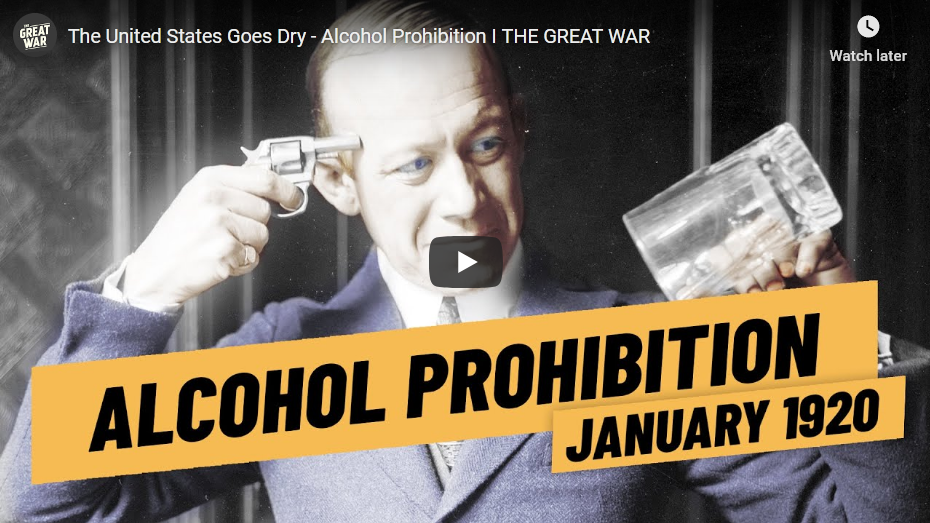
In January 1920, after one year of preparation, the 18th Amendment to the US Constitution went into effect. From now on alcohol prohibition was the law.
» SOURCES
Ehmer, K. and Hindermann, B. (2015). The School of Sophisticated Drinking. New York: Greystone Books.
Miron and Zwiebel, “Alcohol Consumption During Prohibition”. In the American Economic Review, Vol. 81, No. 2, pp. 242-247, (May 1991).
Darrow, Clarence, and John Haynes Holmes. Debate On Prohibition. Haldeman-Julius Co., 1924.
Iorizzo, Luciano J. Al Capone. Greenwood Press, 2003.
Nemtsov, Aleksandr. A Contemporary History of Alcohol in Russia. Stockholm, 2011.
Sullivan, Edward D. Rattling the Cup on Chicago Crime. New York: The Vangaurd Press, 1929.
United States Government, “Codification of Internal Revenue Laws, … Published Pursuant to Section 1203(c) Revenue Act of 1926”.
18th Amendment to the Constitution of the United States. https://www.loc.gov/rr/program/bib/ou…
United States Department of Agriculture. “Crop Production Historical Track Records, 2018”. https://www.nass.usda.gov/Publication…
Kamieński, Łukasz: “Drugs”, in: 1914-1918-online. International Encyclopedia of the First World War, ed. by Ute Daniel, Peter Gatrell, Oliver Janz, Heather Jones, Jennifer Keene, Alan Kramer, and Bill Nasson, issued by Freie Universität Berlin, Berlin 2019-03-07
Blocker, Jack S Jr. “Did prohibition really work? Alcohol prohibition as a public health innovation.” American Journal of Public Health vol. 96,2 (2006): 233-43.
»CREDITS
Presented by: Jesse Alexander
Written by: Mark Newton
Director: Toni Steller & Florian Wittig
Director of Photography: Toni Steller
Sound: Toni Steller
Editing: Toni Steller
Mixing, Mastering & Sound Design: http://above-zero.com
Maps: Daniel Kogosov (https://www.patreon.com/Zalezsky)
Research by: Jesse Alexander
Fact checking: Florian Wittig
Channel Design: Alexander Clark
Original Logo: David van Stephold
A Mediakraft Networks Original Channel
Contains licensed material by getty images
All rights reserved – Real Time History GmbH 2020
Comments Off on The United States Goes Dry – Alcohol Prohibition I THE GREAT WAR