
World War Two
Published 4 Dec 2021The Soviets have launched offensives on the entire eastern front and by now hundreds of thousands of men are surrounded at Stalingrad. The Japanese win a battle at sea, but are losing a war of attrition.
(more…)
December 5, 2021
Axis Armies Facing Starvation – WW2 – 171 – December 4, 1942
Comments Off on Axis Armies Facing Starvation – WW2 – 171 – December 4, 1942
MAS 44: The French Adopt a Semiauto Rifle
Forgotten Weapons
Published 17 May 2019The French Army had been planning a semiauto infantry rifle since 1921, but indecisiveness and bureaucracy delayed its development. A major trial was held in 1931, and elements of two experimental rifles were chosen to be combined into what would eventually become the MAS 1944. It was put through field trials in late 1939, and passed with flying colors — but too late to get into production before the 1940 armistice with Germany. The project was hidden from the Germans at St. Etienne, and would be revived upon the factory’s liberation in the fall of 1944. By late 1945, rifles were coming off the production line.
The MAS 44 was a direct gas impingement operating system with a tilting bolt, and was a remarkably rugged, dependable, and simple rifle. It was initially adopted by the French Navy, and only 6200 were made before a number of improvements were made and a new model was designated; the MAS 1949. When those 6200 rifles were ultimately surplussed in the 1980s, the vast majority of the surviving examples came to the United States, where their scarcity is not well appreciated.
http://www.patreon.com/ForgottenWeapons
Cool Forgotten Weapons merch! http://shop.bbtv.com/collections/forg…
Contact:
Forgotten Weapons
PO Box 87647
Tucson, AZ 85754

Comments Off on MAS 44: The French Adopt a Semiauto Rifle
December 4, 2021
Pope Fights — Frederick II: History Summarized
Overly Sarcastic Productions
Published 3 Dec 2021GET YOUR PINS HERE: crowdmade.com/osp
pope fight. Pope Fight. POPE FIGHT. P O P E F I I I I I G H T!!!!
In this episode, Holy Roman Frederick II wants to hang out in Sicily, but gets dragged kicking and screaming into The Plot. Despite his palpable disinterest in playing diplomatic footsie with the Vatican, he becomes one of the most dangerous opponents the Papacy ever faced.SOURCES & Further Reading: Sicily: An Island at the Center of History by John Julius Norwich, Great Courses Lecture “Emperor Frederick II” from The High Middle Ages by Philip Daileader.
This video topic was requested by our patron Dr Angela J Black. Thank you Angela!
Our content is intended for teenage audiences and up.
PATREON: https://www.Patreon.com/OSP
PODCAST: https://overlysarcasticpodcast.transi…
DISCORD: https://discord.gg/osp
MERCH LINKS: http://rdbl.co/osp
OUR WEBSITE: https://www.OverlySarcasticProductions.com
Find us on Twitter: https://www.Twitter.com/OSPYouTube
Find us on Reddit: https://www.Reddit.com/r/OSP/
From the comments:
Overly Sarcastic Productions
2 hours ago
1:15 Wow emperor Henry sure did live for a long time, I had no idea. I could have sworn he actually died in 1197, but nope, the man lived right up through German Reunification. Wild.
-B
Comments Off on Pope Fights — Frederick II: History Summarized
When King James VI became King James I and VI
In his latest Age of Invention newsletter, Anton Howes discusses how the King of Scotland succeeded to the English throne as well:
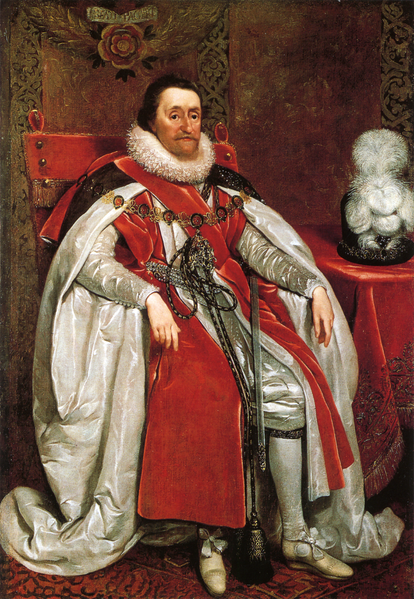
King James I (of England) and VI (of Scotland)
Portrait by Daniel Myrtens, 1621 from the National Portrait Gallery via Wikimedia Commons.
It’s late March 1603, and an exhausted messenger arrives in Edinburgh bearing a sapphire ring. He has ridden for over two days straight, over hundreds of miles, and his hair and clothes are matted with blood — on the way he had fallen from his horse, a hoof striking him directly in the head. It’s a miracle he’s alive, but he knows it has been worth it. He is the very first to tell you that your childless first cousin twice removed — the killer of your mother, whom you never knew — is finally dead. You, King James VI of Scotland, are James I of England as well.
[…]
James’s accession was a frenzy. From the very moment of Elizabeth’s death, her entire patronage network was turned on its head. Her chief ministers, the Privy Council, were relatively safe. Some of them had been corresponding with James for years. But they could only look on, anxiously, as a rush of would-be cronies went north to meet their new king. The exhausted messenger with the sapphire ring, Sir Robert Carey, was just the first. Carey had been related to Elizabeth I on her mother’s side — he was her first cousin once removed. (Carey’s grandmother was the “other Boleyn girl”, played by Scarlett Johansson in the 2008 film — although there’s no solid evidence, it’s not totally impossible that Carey was actually related to Elizabeth on her father’s side instead …) But that family connection meant nothing now that the queen was dead.
The sudden reset of the source of all patronage meant that the earlier the access to the new king’s person, the greater the chance of gaining his favour. Carey may have angered the Privy Council by riding ahead of their formal letters to James, but his exertion won him an on-the-spot appointment as a gentleman of the bedchamber, and his wife became a lady in waiting to James’s queen. The Careys were soon charged with the care of the royal couple’s younger sickly child, and when that child eventually became Charles I, Carey was made Earl of Monmouth. Not a bad result for a head wound and a two days’ ride, though I’m sure the horses would disagree. An old proverb about England was that it was “a paradise for women, a purgatory for servants, and a hell for horses” — something that James’s accession really put to the test. One teenage noblewoman reported how she and her mother killed three horses in a single day, pushing them hard despite the heat, in their rush to meet the new queen.
Just as courtiers flocked to James, however, the king wanted to win friends and allies too. So he handed out favours like confetti. Before he had even reigned a single year, he had created 934 knighthoods — already more than the 878 that Elizabeth I, her generals, and her lord deputies in Ireland had created over the course of her entire 45-year reign. One morning, during his journey down to London, James knighted more people than Elizabeth had in her first five years — all before he’d even had his breakfast. The sheer volume of new knighthoods prompted Francis Bacon — one of about 300 to be knighted in London ahead of the coronation — to call it a “divulged and almost prostitute title”.
The same went for peerages. Elizabeth, over her long reign of almost half a century, had created only 18 new titles. James, before he had even been crowned, had already created 12 — mostly turning knights into lords, and raising some lords into earls. Along with the honours came grants of land, annual pensions, and one-off gifts — not only to James’s new English courtiers, but to his old Scottish favourites too. James’s arrival was an explosion of largesse. (Not all were happy about the relative loss of favour, of course […] at least one pro-invention courtier got involved in a treasonous plot against the new king and ended up losing his head.)
James’s largesse even extended to policy. As he triumphantly marched into London, he issued a proclamation to immediately suspend all of Elizabeth’s patent monopolies, to be re-granted pending review. (This did not apply to patents for trading corporations or guilds.) Rather than leaving the validity of patents to be tested in the common-law courts, at great legal cost to those affected, he would have his Privy Council systematically examine them first, only allowing them if they were in the public interest. He characterised it as a continuation — even a “perfecting” — of Elizabeth’s partial measures a couple of years earlier, which we discussed in Part II. With his proclamation also condemning various other unpopular things, like high court fees, his new subjects were overjoyed.
But the honeymoon was not to last.
Comments Off on When King James VI became King James I and VI
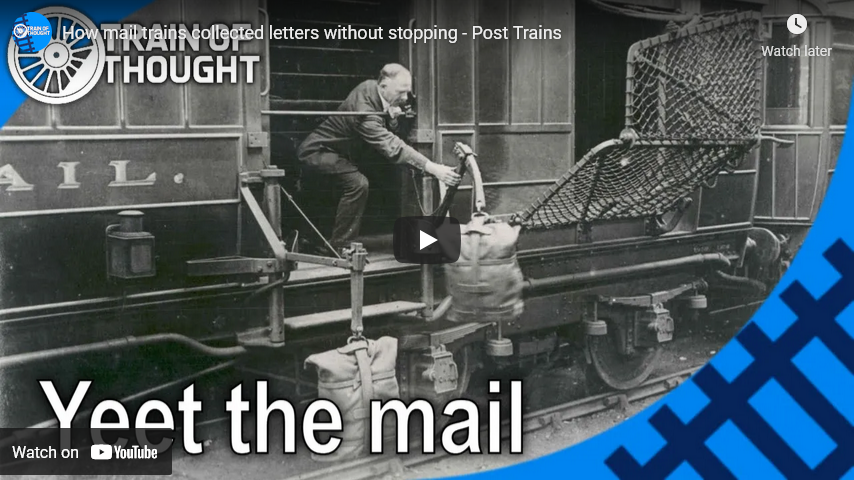
How mail trains collected letters without stopping – Post Trains
Train of Thought
Published 3 Dec 2021In this video, we take a look at how post trains would collect and deliver mail without the need to stop, mostly by yeeting the post out of the train
This video falls under the fair use act of 1976.
Comments Off on How mail trains collected letters without stopping – Post Trains
December 3, 2021
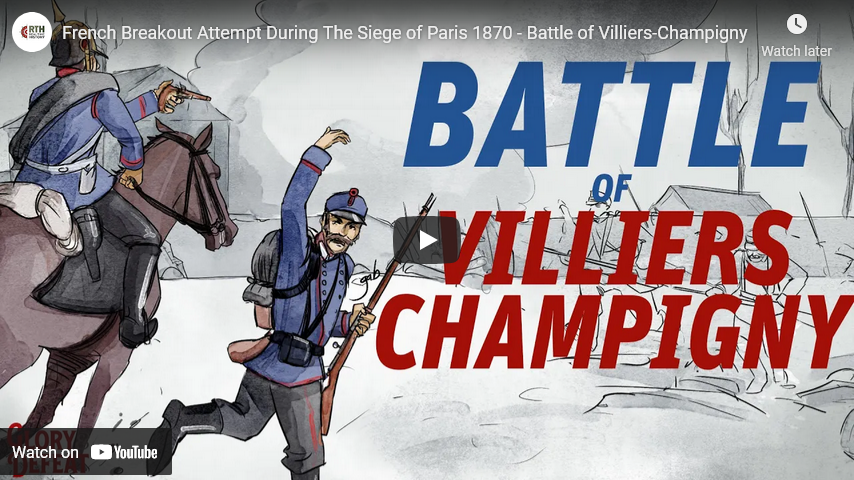
French Breakout Attempt During The Siege of Paris 1870 – Battle of Villiers-Champigny
Real Time History
Published 2 Dec 2021Sign up for Curiosity Stream and get Nebula bundled in and SAVE 26%: https://curiositystream.com/realtimeh…
The Siege of Paris has been going on for months in November 1870 and the population is starving. The French Army has previously tried and failed to break out but this week they are starting their biggest attempt yet — not knowing that it has been doomed from the start.
» THANK YOU TO OUR CO-PRODUCERS
John Ozment
James Darcangelo
Jacob Carter Landt
Thomas Brendan
James Giliberto
Kurt Gillies
Albert B. Knapp MD
Tobias Wildenblanck
Richard L Benkin
Scott Deederly
John Belland
Adam Smith
Taylor Allen
Jim F Barlow
Rustem Sharipov» OUR PODCAST
https://realtimehistory.net/podcast – interviews with historians and background info for the show.» LITERATURE
Arand, Tobias: 1870/71. Der Deutsch-Französische Krieg erzählt in Einzelschicksalen. Hamburg 2018Ders.: “Rogerowski oder Rasumowsky? Überlegungen zur nationalen ‘Meistererzählung’ in Fontanes ‘Kriegsgefangen’“, in: Fontane-Blätter 105 (2018). S. 61-86
Ders.: “‘… dazu find ich keine Worte’ – Der Blick auf den Krieg von 1870/71 in Erinnerungsbüchern deutscher Veteranen“, in: Nation im Siegesrausch. Württemberg und die Gründung des Deutschen Reichs 1870/71, hrsg. u. bearb. von W. Mährle. Stuttgart 2020. S. 85-98
Bourguinat, Nicolas and Gilles Vogt: La guerre franco-allemande de 1870. Une histoire globale. 2020
Gouttman, Alain: La grande défaite. 1870-1871. Paris 2015
Lecaillon, Jean-François: Les Femmes et la Guerre de 1870/71. Histoire d’un engagement occulté. Paris 2020
» SOURCES
Hérisson, Maurice d’: Journal d’un officier d’ordonnance. Paris 1885De Trailles, Paul et Henry: Les femmes de France pendant la guerre et les deux sièges de Paris. Paris 1872
Fontane, Theodor: Der Krieg gegen Frankreich. Bd. 3. Berlin 1874
Fontane, Theodor: Kriegsgefangen. Erlebtes 1870. Briefe 1870/71. Berlin (Ost) 1984
Kühnhauser, Florian: Kriegs-Erinnerungen eines Soldaten des königlich bayerischen Infanterie Leibregiments. Partenkirchen 1898
N. N. (Hrsg.): Bismarcks Briefe an seine Gattin aus dem Kriege 1870/71. Stuttgart, Berlin 1903
Schikorsky, Isa (Hrsg.): “Wenn doch dies Elend ein Ende hätte”, Ein Briefwechsel aus dem Deutsch-Französischen Krieg 1870/71. Köln, Weimar, Wien 1999
Wöllwarth, Julie von: Unter den Verwundeten von 1870/71. Aufzeichnungen aus einer großen Zeit. o.O, o.J. (1890)
Zola, Émile: La Débacle. Paris 1892
» OUR STORE
Website: https://realtimehistory.net»CREDITS
Presented by: Jesse Alexander
Written by: Cathérine Pfauth, Prof. Dr. Tobias Arand, Jesse Alexander
Director: Toni Steller & Florian Wittig
Director of Photography: Toni Steller
Sound: Above Zero
Editing: Toni Steller
Motion Design: Philipp Appelt
Mixing, Mastering & Sound Design: http://above-zero.com
Maps: Battlefield Design
Research by: Cathérine Pfauth, Prof. Dr. Tobias Arand
Fact checking: Cathérine Pfauth, Prof. Dr. Tobias ArandChannel Design: Battlefield Design
Contains licensed material by getty images
All rights reserved – Real Time History GmbH 2021
Comments Off on French Breakout Attempt During The Siege of Paris 1870 – Battle of Villiers-Champigny
A bureaucratic mandate for never-ending intervention — induced offensensitivity
Theodore Dalrymple notes the increasing reach of the bureaucracy in policing everyday language in a supposed attempt to protect the easily offended feelings of minority groups, but really in yet another way to increase the role of bureaucrats (and their staffing and budget allocations):
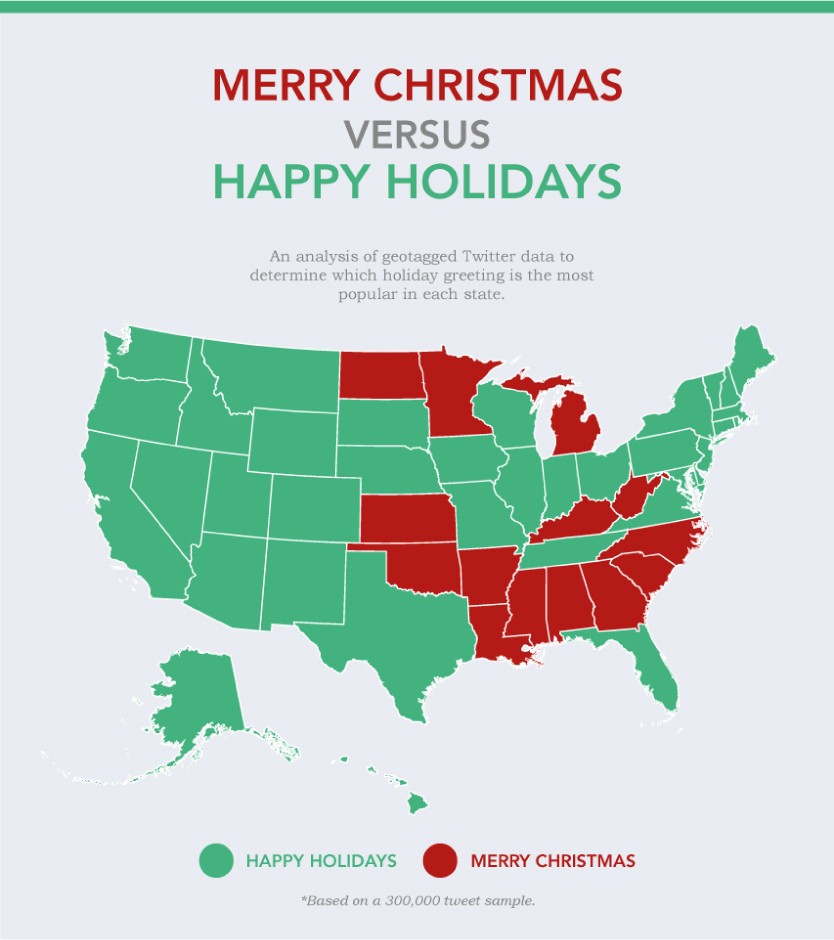
Original infographic from Treetopia – https://www.treetopia.com/Merry-Christmas-vs-Happy-Holidays-a/304.htm
Underlying the bureaucratic desire to reform language are two assumptions: first that it is the duty of bureaucrats to prevent offense to people occasioned by the use of certain words, and second that they know what words will give offence to people.
Of course, there are only certain categories of people who needed to be protected from taking offence: that is because, in the estimate of their would-be and self-appointed protectors, they are very delicate and can easily be tipped into depression or states of mind even worse than depression.
Whether it is flattering, condescending or downright insulting to consider people so delicate that they cannot hear certain words that were hitherto considered innocuous, I leave to readers to decide. For myself, I think that to regard people as psychological eggshells is demeaning to them, but other may think differently.
But the question still arises as to whether the people supposedly in need of bureaucratic intervention actually do take offence at the allegedly offensive words, such as Christmas, when they are uttered.
This is not as straightforward a question as might at first appear, for people can be taught or encouraged to be easily offended, especially if they will derive certain advantages, political, social or even financial, from being, or claiming to be, offended. If you pay someone to be ill, he will be ill; if you pay someone to be offended, he will be offended.
It is in the interests of bureaucracies that the population should become hypersensitive, for then it will run to the bureaucrats for so-called protection from offensiveness.
A hypersensitive population creates endless work for the bureaucrat to do: he will have constantly to adjudicate between the claims of those who have taken, and those who have allegedly given, offence. Conflict and stoked-up anger are to him what fertilizer is to corn.
For much of the population, hypersensitivity becomes a duty, a pleasure and a sign of superiority of mind and moral awareness. In addition, it is an instrument of power. And, of course, habit becomes character. What may have started out as play-acting becomes, with repetition, deadly sincerity.
People who have had to be taught what microaggressions are because they have not noticed them eventually come to believe in their reality and that that they have been subjected to them. Then they start to magnify them in their minds until they seem to them very serious: they become self-proclaimed victims.
There are two things that victims seek in our law-saturated world: revenge and compensation. Neither of these things can be achieved without the aid of a large apparatus of bureaucrats (civil-litigation lawyers are bureaucrats of superior intelligence who are usually endowed also with a modicum of imagination).
Comments Off on A bureaucratic mandate for never-ending intervention — induced offensensitivity
Australian-American War of 1942 – The Battle of Brisbane
World War Two
Published 2 Dec 2021America shares a language and large parts of its culture with Britain and Australia. But when tens of thousands of US troops arrive in 1942, things will be far from smooth. While the alliance remains firm, their soldiers will spend almost as much time fighting each other as they do the Axis.
(more…)
Comments Off on Australian-American War of 1942 – The Battle of Brisbane
“Power corrupts and absolute power …” is something governments are not eager to give up, post-pandemic
Miguel Castaneda quotes Lord Acton’s famous aphorism (which I truncated in my headline) and warns of the consequences of giving governments too much power:

“Power corrupts and absolute power corrupts absolutely”. The words of Lord Acton, a fierce opponent of state power, are sadly no less relevant today than they were at his time of writing.
Over the past 20 months, the authoritarian approach of Western leaders has been justified by our representatives as a necessary response to a global emergency. Whether that’s true or not is up for discussion, however, one thing remains clear: such attitudes have handed governments a level of power that, left unchecked, severely curtails individual rights.
This path is not unique to the UK, nor is it unique to Europe. We’re seeing a near global normalisation of state overreach. Lockdowns in many liberal democracies have been brought in suddenly and without thorough scrutiny.
In this country, at no point were other methods to address the pandemic tested. They were barely even suggested. And with little counter from the mainstream media, the UK and others have normalised shutting down the country for the purpose of virus control.
It was only a few months ago that Australia locked over 5 million people after identifying a single case. A severe overreaction which likely contributed to the dramatic fall in Australian Prime Minister Scott Morrisson’s approval ratings of the handling of the pandemic, which fell from 85 per cent at the start of the pandemic to 47 per cent in the latest poll in August.
A commonly overlooked consequence of these authoritarian practices is the precedence it sets for how governments can and should act when faced with novel challenges. It has been predicted that future pandemics will become more frequent, and perhaps more deadly. Are we going to react again by shutting entire populations in their homes?
Looking to the continent, the ease at which governments are bringing in authoritarian measures should be an international scandal. Take Austria, where a national lockdown has just been extended until at least December 11th. Or Germany, which has announced today a de facto lockdown for the unvaccinated, and is debating bringing in a policy of mandatory vaccinations.
This extreme way of thinking is a new virus spreading across the Western world. Spain, France, Italy, Greece and Australia have all seen similar policies introduced.
Comments Off on “Power corrupts and absolute power …” is something governments are not eager to give up, post-pandemic
The Battle of the Trebia River (218 B.C.E.)
Historia Civilis
Published 12 Jun 2015Patreon | http://historiacivilis.com/patreon
Donate | http://historiacivilis.com/donate
Merch | http://historiacivilis.com/merch
Twitter | http://historiacivilis.com/twitter
Website | http://historiacivilis.comMusic is Beethoven’s “Sonata No. 11 in B Flat Major Op. 22” – I. Allegro con brio. Performed by Daniel Veesey

Comments Off on The Battle of the Trebia River (218 B.C.E.)
December 1, 2021
The Titanic Struggle for Reunion Island – WW2 Special
World War Two
Published 30 Nov 2021It might only be tangentially relevant to the war as a whole, but the Battle for Reunion Island is not only interesting in and of itself, it serves as a microcosm for the war for the French in general. Check it out!
(more…)
Comments Off on The Titanic Struggle for Reunion Island – WW2 Special
Polling bias in a time of pandemic
At The Daily Sceptic, Mike Hearn looks at the often incredible poll results turned up by YouGov that seem to indicate that well over half the population of Britain are budding medical fascists who want nothing more than a full-on pandemic tyranny from now to the end of time:

Recently YouGov announced that 64% of the British public would support mandatory booster vaccinations and another polling firm claimed that 45% would support indefinite home detention for the unvaccinated (i.e., forced vaccination of the entire population). The extreme nature of these claims immediately attracted attention, and not for the first time raised questions about how accurate polling on Covid mandates actually is. In this essay I’m going to explore some of the biases that can affect these types of poll, and in particular pro-social, mode and volunteering biases, which might be leading to inaccurately large pro-mandate responses.
There’s evidence that polling bias on COVID topics can be enormous. In January researchers in Kenya compared results from an opinion poll asking whether people wore masks to actual observations. They discovered that while 88% of people told the pollsters that they wore masks outside, in reality only 10% of people actually did. Suspicions about mandate polls and YouGov specifically are heightened by the fact that they very explicitly took a position on what people “should” be doing in 2020, using language like “Britons still won’t wear masks”, “this could prove a particular problem”, “we are far behind our neighbours” and most concerning of all – “our partnership with Imperial College”. Given widespread awareness of how easy it is to do so-called push polling, it’s especially damaging to public trust when a polling firm takes such strong positions on what the public should be thinking and especially in contradiction of evidence that mask mandates don’t work. Thus it makes sense to explore polling bias more deeply.
[…]
Given the frequency with which large institutions say things about COVID that just don’t add up, it’s not entirely surprising that people are suspicious of claims that most of their friends and neighbours are secretly nursing the desire to tear up the Nuremberg Code. But while we can debate whether the chat-oriented user interface is really ideal for presenting multi-path survey results, and it’s especially debatable whether YouGov should be running totally different kinds of polls under the same brand name, it’s probably not an attempt to manipulate people. Or if it is, it’s not a very competent one.
When I was much younger, I’d very occasionally get a call on our land line from a polling firm. I’d sometimes take part in the poll, although I don’t recall every seeing any of the polls I took part in being published later. After a few years, I stopped taking part and now I hang up as soon as it’s clear that the call is from a polling company. Apparently I’m far from alone in this learned aversion to dealing with polls:
Online panel polling solves the problem of low phone response rates but introduces a new problem: the sort of people who answer surveys aren’t normal. People who answer an endless stream of surveys for tiny pocket-money sized rewards are especially not normal, and thus aren’t representative of the general public. All online panel surveys face this problem and thus pollsters compete on how well they adjust the resulting answers to match what the “real” public would say. One reason elections and referendums are useful for polling agencies is they provide a form of ground truth against which their models can be calibrated. Those calibrations are then used to correct other types of survey response too.
A major source of problems is what’s known as “volunteering bias”, and the closely related “pro-social bias”. Not surprisingly, the sort of people who volunteer to answer polls are much more likely to say they volunteer for other things too than the average member of the general population. This effect is especially pronounced for anything that might be described as a “civic duty”. While these are classically considered positive traits, it’s easy to see how an unusually strong belief in civic duty and the value of community volunteering could lead to a strong dislike for people who do not volunteer to do their “civic duty”, e.g. by refusing to get vaccinated, disagreeing with community-oriented narratives, and so on.
In 2009 Abraham et al showed that Gallup poll questions about whether you volunteer in your local community had implausibly risen from 26% in 1977 to a whopping 46% in 1991. This rate varied drastically from the rates reported by the U.S. census agency: in 2002 the census reported that 28% of American adults volunteered.
Comments Off on Polling bias in a time of pandemic
Tank Chats #134 | Centurion | The Tank Museum
The Tank Museum
Published 20 Aug 2021David Fletcher is back with another Tank Chat on one of the most successful post-war tank designs, Centurion. It was the primary British Army main battle tank of the post-World War II period.
(more…)
Comments Off on Tank Chats #134 | Centurion | The Tank Museum
November 30, 2021
Dynamite Luke Dillon and the Welland Canal
The History Guy: History Deserves to Be Remembered
Published 29 Nov 2021Around 7 in the evening on April 21, 1900 two large explosions rocked the hamlet of Thorold, Ontario. It was an act of terrorism, an attempt to breach the locks of the Welland canal — a ship canal connecting Lake Ontario to Lake Erie, allowing ships to bypass Niagara Falls. Three men were arrested, but who were these “dynamitards”? It would be two years before the identity of their notorious leader would be revealed.
This is original content based on research by The History Guy. Images in the Public Domain are carefully selected and provide illustration. As very few images of the actual event are available in the Public Domain, images of similar objects and events are used for illustration.
You can purchase the bow tie worn in this episode at The Tie Bar:
https://www.thetiebar.com/?utm_campai…All events are portrayed in historical context and for educational purposes. No images or content are primarily intended to shock and disgust. Those who do not learn from history are doomed to repeat it. Non censuram.
Find The History Guy at:
Patreon: https://www.patreon.com/TheHistoryGuy
Please send suggestions for future episodes: Suggestions@TheHistoryGuy.netThe History Guy: History Deserves to Be Remembered is the place to find short snippets of forgotten history from five to fifteen minutes long. If you like history too, this is the channel for you.
Awesome The History Guy merchandise is available at:
https://teespring.com/stores/the-hist…Script by THG
#history #thehistoryguy #Canada
Comments Off on Dynamite Luke Dillon and the Welland Canal
The Elgin Marbles
In The Critic, Zachary Hardman outlines the history of the Elgin Marbles and why the Greek government is re-opening the campaign to retrieve them from the British Museum:
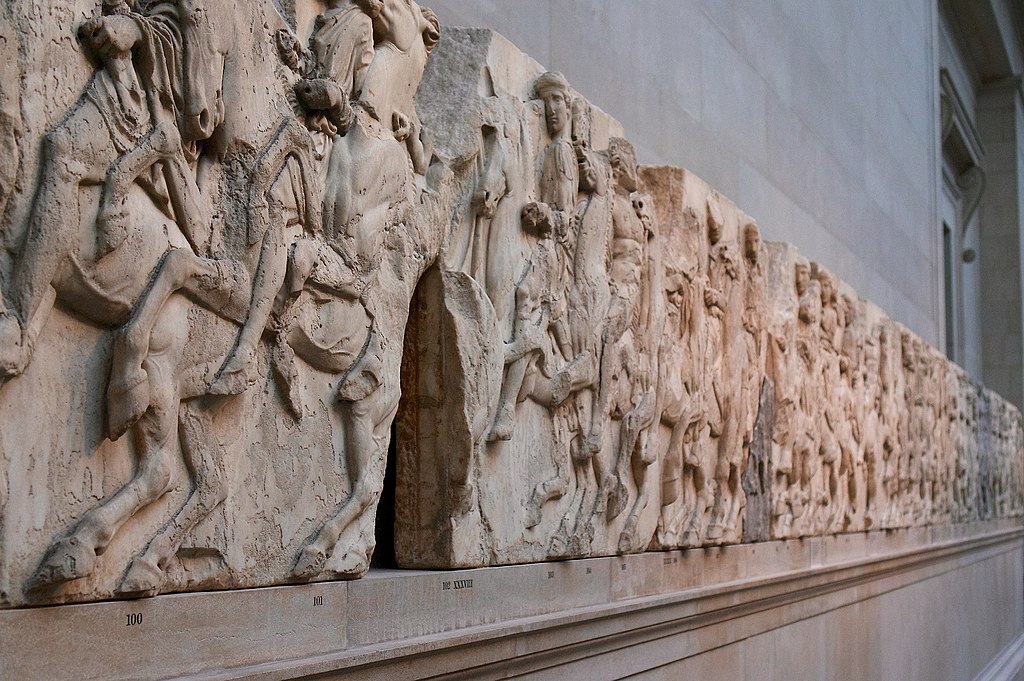
Some of the sculptures in the Elgin Marbles collection on display in the Duveen Gallery of the British Museum.
Photo by Paul Hudson via Wikimedia Commons.
Last week, the Greek Prime Minister, Kyriakos Mitsotakis was in London, with only one thing on his mind: the return of the so-called “Elgin Marbles” to Athens. 2021 is the two-hundredth anniversary of Greek independence, when the country liberated itself from the yoke of the Ottoman Empire and, for Athens, there would be no better birthday present than the restitution of the lost marbles.
The dispute about their rightful ownership is as old as the modern Greek state. In the early 19th century, the British Ambassador Lord Elgin was granted permission by Athens’ Ottoman rulers to remove half the remaining marble sculptures from a frieze on the Parthenon, the ruined ancient temple, which still adorns the Acropolis, the rocky outcrop overlooking the city.
Elgin had the marbles shipped to Britain. The journey, though, proved difficult. They were transported via Malta where, following a shipwreck, they spent a brief sojourn at the bottom of the Mediterranean Sea. The rescue mission was ruinously expensive. Elgin intended to furnish his ancestral Scottish home with the marbles. On second thoughts, though, he cut his losses and sold them to the British Museum.
Public opinion was divided. Lord Byron wrote two poems denouncing Elgin. His supporters, meanwhile, claimed the marbles were saved from further damage at the hands of warring Greeks and Turks, who didn’t appreciate them anyway. The Greeks, understandably, took a dim view of this. Since the 1980s they have waged a sustained PR offensive for the return of the marbles. An impasse, though, remains.
To break it, Mitsotakis would do well to consider the insights of the ancient rhetoricians. Athens, of course, was the birthplace of not only democracy, but rhetoric: the art of persuasion. The philosopher Aristotle, who wrote the original guidebook on the subject, said it was about identifying “the means of persuasion in any given case”. It is the task of modern Athens to work out who it must persuade and what of.
The fresh campaign began with the Government. In Downing Street, after all, lives a man Mitsotakis regards a “true philhellene”. The return of the marbles, the Greek Prime Minister said, after a meeting with Johnson, would be a “coup” for “global Britannia”. Flattery, however, has its limits. The British Government is unwavering in its support for the Museum. Mitsotakis, however, was undeterred.
Comments Off on The Elgin Marbles


