
Why, though, did Germans feel such a special affinity with “die Königin“? The most obvious reason is that the Royal Family is, to a great extent, of German extraction. The connections go back more than a thousand years to the Anglo-Saxons, but in modern times they begin with George I and the House of Hanover. This reverse takeover of the British monarchy by the Germans transformed the institution in countless ways. They may be summarised in four words: music, the military, the constitution and Christmas.
Music was a language that united the English and the Germans. The key figure was, of course, Handel — the first and pre-eminent but by no means the last Anglo-German composer. Born in Halle, Georg Friedrich Händel had briefly been George I’s Kapellmeister in Hanover yet had already established himself in England before the Prince Elector of Hanover inherited the British throne in 1714.
In London — then in the process of overtaking Paris and Amsterdam to become the commercial capital of Europe — he discovered hitherto undreamt-of possibilities. There he founded three opera companies, for which he supplied more than 40 operas, and adapted a baroque Italian art form, the oratorio, to suit English Protestant tastes.
His coronation music, such as the anthem, “Zadok the Priest”, imbued the Hanoverian dynasty with a new and splendid kind of sacral majesty. But he also added to its lustre by providing the musical accompaniment for new kinds of public entertainment, such as his Music for the Royal Fireworks: 12,000 people came to the first performance.
Along with music, the Germans brought a focus on military life. Whereas for the British Isles, the Civil War and the subsequent conflicts in Scotland and Ireland had been something of an aberration, war was second nature to German princes. Among them, George II was not unusual in leading his men into battle, although he was the last British monarch to do so.
Still, the legacy of such Teutonic martial prowess was visible in the late Queen’s obsequies: uniforms and decorations, pomp and circumstance, accompanied by funeral marches composed by a German, Ludwig van Beethoven. Ironically, the German state now avoids any public spectacle that could be construed as militaristic, yet most Germans harbour boundless admiration for the way that the British monarchy enlists the ceremonial genius of the armed services.
Even more important was the German contribution to the uniquely British creation of constitutional monarchy.
Each successive dynasty has left its mark on the monarchy’s evolution: from the Anglo-Saxons and Normans (the common law) to the Plantagenets (Magna Carta and Parliament) and Tudors (the Reformation). Only the Stuarts failed this test, at least until 1688. Even after the Glorious Revolution, the Bill of Rights and other laws that conferred statutory control over the royal prerogative, the constitutional settlement still hung in the balance when Queen Anne, the last Stuart ruler, died in 1714.
Coming from a region dominated by the theory and practice of absolute monarchy, the Hanoverians had no choice but to adapt immediately and seamlessly to the realities of politics in Britain, where their role was strictly limited. Robert Walpole and the long Whig ascendancy, during which the doctrine of parliamentary sovereignty embedded itself irrevocably, could not have taken place without the acquiescence and active support of the new dynasty.
George III has been accused of attempting to reverse this process. The charge is unjust. Rather, as Andrew Roberts demonstrates in his new biography, he was “a monarch who understood his extensive rights and duties under the constitution”. He still had the right to refuse royal assent to parliamentary bills, but in half a century he never once exercised his veto (the last monarch to do so was the Stuart, Queen Anne in 1708).
At a time when enlightened despotism was de rigueur on the Continent, the Hanoverians were content to participate in an unprecedented constitutional experiment in their newly acquired United Kingdom. It was neither the first Brexit, nor the last, but it happened courtesy of a Royal Family that was still very German.
Daniel Johnson, “Why Germany mourned our Queen”, The Critic, 2022-10-30.
December 29, 2023
QotD: The Hanoverian “reverse takeover of the British monarchy by the Germans”
December 28, 2023
War-winning expertise of 1918, completely forgotten by 1939
Dr. Robert Lyman writes about the shocking contrasts between the British Army (including the Canadian and Australian Corps) during the Hundred Days campaign of 1918 and the British Expeditionary Force that was driven from the continent at Dunkirk:
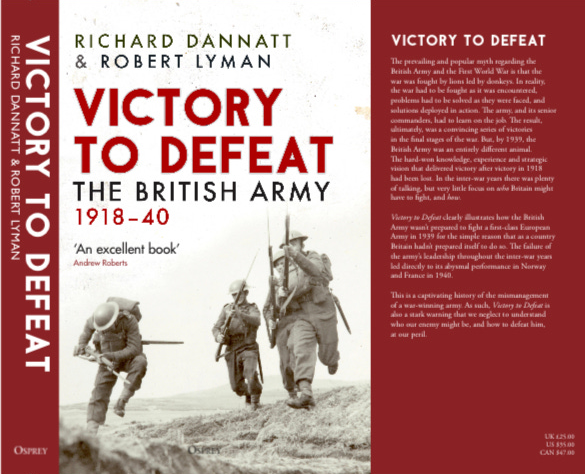
There was a fleeting moment during the One Hundred Days battles that ended the First World War in France in which successful all-arms manoeuvre by the British and Commonwealth armies, able to overturn the deadlock of previous years of trench stalemate, was glimpsed. But the moment, for the British Army at least, was not understood for what it was. With hindsight we can see that it was the birth of modern warfare, in which armour, infantry, artillery and air power are welded together able successfully to fight and win a campaign against a similarly-equipped enemy. Unfortunately in the intervening two decades the British Army simply forgot how to fight a peer adversary in intensive combat. It did not recognise 1918 for what it was; a defining moment in the development of warfare that needed capturing and translating into a doctrine on which the future of the British Army could be built. The tragedy of the inter-war years therefore was that much of what had been learned at such high cost in blood and treasure between 1914 and 1918 was simply forgotten. It provides a warning for our modern Army that once it goes, the ability to fight intensively at campaign level is incredibly hard to recover. The book that General Lord Dannatt and I have written traces the catastrophic loss of fighting knowledge after the end of the war, and explains the reasons for it. Knowledge so expensively learned vanished very quickly as the Army quickly adjusted back to its pre-war raison d’etre: imperial policing. Unsurprisingly, it was what many military men wanted: a return to the certainties of 1914. It was certainly what the government wanted: no more wartime extravagance of taxpayer’s scarce resources. The Great War was seen by nearly everyone to be a never-to-be-repeated aberration.
The British and Commonwealth armies were dramatically successful in 1918 and defeated the German Armies on the battlefield. Far from the “stab in the back” myth assiduously by the Nazis and others, the Allies fatally stabbed the German Army in the chest in 1918. The memoirs of those who experienced action are helpful in demonstrating just how far the British and Commonwealth armies had moved since the black days of 1 July 1916. The 27-year old Second Lieutenant Duff Cooper, of the 3rd Battalion The Grenadier Guards, waited with the men of 10 platoon at Saulty on the Somme for the opening phase of the advance to the much-vaunted Hindenburg Line. His diaries show that his experience was as far distant from those of the Somme in 1916 as night is from day. There is no sense in Cooper’s diaries that either he or his men felt anything but equal to the task. They were expecting a hard fight, but not a slaughter. Why? Because they had confidence in the training, their tactics of forward infiltration, their platoon weapons and a palpable sense that the army was operating as one. They were confident that their enemy could be beaten.
[…]
It would take the next war for dynamic warfare to be fully developed. It would be mastered in the first place by the losers in 1918 – the German Army. The moment the war ended the ideas and approaches that had been developed at great expense were discarded as irrelevant to the peace. They weren’t written down to be used as the basis for training the post-war army. Flanders was seen as a horrific aberration in the history of warfare, which no-right thinking individual would ever attempt to repeat. Combined with a sudden raft of new operational commitments – in the remnants of the Ottoman Empire, Russia and Ireland – the British Army quickly reverted to its pre-1914 role as imperial policemen. No attempt was made to capture the lessons of the First World War until 1932 and where warfighting was considered it tended to be about the role of the tank on the future battlefield. This debate took place in the public arena by advocates writing newspaper articles to advance their arguments. These ideas were half-heartedly taken up by the Army in the later half of the 1920s but quietly dropped in the early 1930s. The debates about the tank and the nature of future war were bizarrely not regarded as existential to the Army and they were left to die away on the periphery of military life.
The 1920s and 1903s were a low point in national considerations about the purpose of the British Army. The British Army quickly forgot what it had so painfully learnt and it was this, more than anything else, that led to a failure to appreciate what the Wehrmacht was doing in France in 1940 and North Africa in 1941-42.
December 27, 2023
The never-settled “Pétain question”
Theodore Dalrymple reviews a new book on the trial of Marshal Pétain after the liberation of France in WW2:
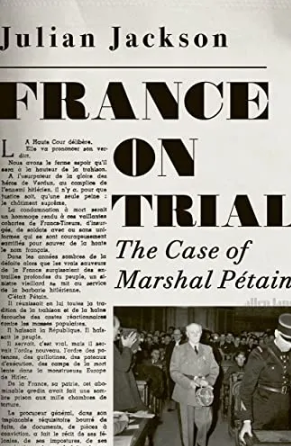
François Mauriac, the left-leaning, Nobel Prize–winning, Catholic novelist, said of the trial of Marshal Pétain that it would never be over: a sentiment more or less echoed by General de Gaulle. And certainly, the figure of Pétain continues to divide opinion in France, at least among those with opinions on such matters. Was he a traitor to France, or its savior, or perhaps something in between the two?
Professor Julian Jackson has written a superb book about Pétain’s trial, its circumstances, and its aftermath. I would like to say that I read it in one sitting, but it was too long for that; but I looked forward impatiently to picking it up again, all else being but a regrettable interruption.
The continued salience of what might be called the “Pétain question” is illustrated by the fact that one of the candidates in the last French presidential election, Éric Zemmour, claimed that Pétain was the savior of the French Jews. This was all the more startling because Zemmour himself is Jewish (his parents emigrated from Algeria to France not long before independence), and because, if Pétain is exonerated in the matter of the deportation of seventy-five thousand Jews during the war to Germany, there to be murdered, his reputation is all but saved: for it is in this matter that his record is most excoriated.
As Jackson reminds us, this was not always so. In the immediate post-war period, and during his trial for treason, the fate of the Jews of France was not much emphasized. According to Éric Conan and Henry Rousso, in their book Vichy, un passé qui ne passe pas (Vichy, a past that does not pass), the Jews of France themselves were not anxious that their treatment by Vichy should be emphasized, for they had had more than enough of being treated as a population apart. They wanted their suffering to be subsumed under that of the nation as a whole, and it was only later, by the subsequent generation, that the deportation assumed its great historiographical importance. It is not that nothing about the deportation was known before, it was merely that less emphasis was placed on it. There is an analogy with the historiography of the Soviet Union. Solzhenitsyn revealed nothing that was not, or could not have been, known before, with all its human and moral significance; the difference was that the world was now ready or willing to believe it.
But what of Zemmour’s claim, which is precisely that which Pétain’s defenders, when they are not outright anti-Semites, make on the Marshal’s behalf? It is certainly true that a far higher percentage of French Jews survived than, say, of Belgian or Dutch Jews (the figures are seventy-five, fifty, and twenty-five percent, respectively). But how much of the difference was attributable to the alleged relative decency, and cunning, of Vichy and its marshal?
Allow me a personal anecdote. Above my mother-in-law’s flat in Paris lived an old Jewish lady whose brother had been deported on the last convoy of Jews from Paris before the end of the occupation. She, however, had been saved by having been sent out of Paris to the care of nuns, who disguised her identity. Hence, she survived.
One day my mother-in-law was traveling on a bus and started to talk to an old lady next to her, who asked her where she lived. She gave the street, then the number, then the number of the flat, whereupon the lady next to her, who was Jewish, burst into tears. This was the very flat in which she had been hidden by family friends during the four years of the occupation, being careful never to appear at the window because opposite was the German Kommandantur, formerly and afterwards a police station. Four years of claustrophobic terror during adolescence: it was like something from a novel by Patrick Modiano.
The survival of these two old ladies owed nothing to Vichy or Marshal Pétain, but this does not settle the historical question. What percentage of the survivors owed their survival to the bravery of individuals, and what to policy decisions? We shall probably never know with any certainty. If one compares the survival rates of France and the Netherlands, what part did the relative geographies of the two countries play? France is much larger and less densely populated, and has many landscapes more conducive to concealment than the Netherlands.
Again, what of the pétainiste claim, repeated by Zemmour, that Vichy sacrificed Jews of non-French origin in order to save those of French origin? The former, however, were more conspicuous, with much smaller networks of potential defenders, than the latter. This might explain the large difference in the survival rates between the French-born and foreign-born Jews, an explanation which would hardly redound to the regime’s credit.
December 26, 2023
The awe-inducing power of volcanoes
Ed West considers just how much human history has been shaped by vulcanology, including one near-extinction event for the human race:

A huge volcano has erupted in Iceland and it looks fairly awesome, both in the traditional and American teenager senses of the word.
Many will remember their holidays being ruined 13 years ago by the explosion of another Icelandic volcano with the epic Norse name Eyjafjallajökull. While this one will apparently not be so disruptive, volcano eruptions are an under-appreciated factor in human history and their indirect consequences are often huge.
Around 75,000 years ago an eruption on Toba was so catastrophic as to reduce the global human population to just 4,000, with 500 women of childbearing age, according to Niall Ferguson. Kyle Harper put the number at 10,000, following an event that brought a “millennium of winter” and a bottleneck in the human population.
In his brilliant but rather depressing The Fate of Rome, Harper looked at the role of volcanoes in hastening the end of antiquity, reflecting that “With good reason, the ancients revered the fearsome goddess Fortuna, out of a sense that the sovereign powers of this world were ultimately capricious”.
Rome’s peak coincided with a period of especially clement climatic conditions in the Mediterranean, in part because of the lack of volcanic activity. Of the 20 largest volcanic eruptions of the last 2,500 years, “none fall between the death of Julius Caesar and the year AD 169”, although the most famous, the eruption of Vesuvius in AD 79, did. (Even today it continues to reveal knowledge about the ancient world, including a potential treasure of information.)
However, the later years of Antiquity were marked by “a spasm” of eruptions and as Harper wrote, “The AD 530s and 540s stand out against the entire late Holocene as a moment of unparalleled volcanic violence”.
In the Chinese chronicle Nan Shi (“The History of the Southern Dynasties”) it was reported in February 535 that “there twice was the sound of thunder” heard. Most likely this was a gigantic volcanic explosion in the faraway South Pacific, an event which had an immense impact around the world.
Vast numbers died following the volcanic winter that followed, with the year 536 the coldest of the last two millennia. Average summer temperature in Europe fell by 2.5 degrees, and the decade that followed was intensely cold, with the period of frigid weather lasting until the 680s.
The Byzantine historian Procopius wrote how “during the whole year the sun gave forth its light without brightness … It seemed exceedingly like the sun in eclipse, for the beams it shed were not clear”. Statesman Flavius Cassiodorus wrote how: “We marvel to see now shadow on our bodies at noon, to feel the mighty vigour of the sun’s heat wasted into feebleness”.
A second great volcanic eruption followed in 540 and (perhaps) a third in 547. This led to famine in Europe and China, the possible destruction of a city in Central America, and the migration of Mongolian tribes west. Then, just to top off what was already turning out to be a bad decade, the bubonic plague arrived, hitting Constantinople in 542, spreading west and reaching Britain by 544.
Combined with the Justinian Plague, the long winter hugely weakened the eastern Roman Empire, the combination of climatic disaster and plague leading to a spiritual and demographic crisis that paved the way for the rise of Islam. In the west the results were catastrophic, and urban centres vanished across the once heavily settled region of southern Gaul. Like in the Near East, the fall of civilisation opened the way for former barbarians to build anew, and “in the Frankish north, the seeds of a medieval order germinated. It was here that a new civilization started to grow, one not haunted by the incubus of plague”.
Arson as a Christmas Tradition: The Gävle Goat
Tom Scott
Published 28 Nov 2016In Gävle, Sweden, every year they build Gävlebocken, an enormous traditional Swedish Christmas straw goat. And every year, someone tries to burn it down. Here’s to holiday traditions.
(more…)
QotD: The economic lessons of A Christmas Carol
After all, Tiny Tim and the street children of London don’t run Scrooge out of town like a pariah. Nor does Scrooge abandon his business to dedicate his life to eastern philosophy. Rather, he learns to voluntarily spread his wealth around, not so differently than Bill Gates or MacKenzie Scott might do today.
One could draw the conclusion, therefore, that a businessman who has accumulated vast wealth can do many great things through charity. Today, the “Giving Pledge” signed by Warren Buffet and others, as well as elements of the “Effective Altruism” movement, adopt a model of this sort, which essentially says the best way to do good is to make a lot of money. Scrooge’s belated charitability never would have been possible if London had been home to communist breadlines.
The idea goes beyond charity. In The Constitution of Liberty, the great economist Friedrich Hayek argued that it’s socially beneficial to have a leisure class of wealthy individuals pursuing their idiosyncratic passions or even vanities. Today, Jeff Bezos and Elon Musk plan to take us to the stars with SpaceX and Blue Origin. Will they make it to Mars or beyond? They might not beat the odds, but it can’t happen if they don’t try.
One might apply the same logic to cryptocurrencies. Like Scrooge’s wealth, they make some people uncomfortable, and at the moment they can resemble online gambling. But that doesn’t mean they should be banned or replaced by a boring, government-run alternative. Like Musk and Bezos’s space aspirations, there’s potential for the technology to revolutionize an aspect of life — in this case, financial transactions on the internet. That potential is just as-of-yet unfulfilled.
James Broughel, “The Hidden Economic Lesson in A Christmas Carol“, Foundation for Economic Education, 2021-12-24.
December 25, 2023
Repost – “Fairytale of New York”
Time:
“Fairytale of New York” by The Pogues featuring Kirsty MacColl
This song came into being after Elvis Costello bet The Pogues’ lead singer Shane MacGowan that he couldn’t write a decent Christmas duet. The outcome: a call-and-response between a bickering couple that’s just as sweet as it is salty.
QotD: Washington Irving and American Christmas traditions
An even larger number may be unaware of how much they’re honoring Mr Irving in their Christmas jubilations. He it was who, in the 1812 edition of his History of New York, threw in a whimsical vignette in which St Nicholas flies over the treetops in a wagon while puffing on his pipe. No reindeer, but all the other elements of the American Santa are there.
Washington Irving loved the great village revelries of the old English Christmas, which the Puritans had left far behind them when they landed at Plimouth Plantation. The parlor games and community feasting and the notion of the Saviour’s birth as a cause of merriment all appealed to him. In his famous and bestselling Sketch Book of 1819-1820 five chapters are devoted to lovingly detailed scenes from an English family Christmas as observed by a young visitor, and they proved so popular that half-a-century later (by which time almost all the elements had been imported into American life) they were published as a stand-alone book.
Mark Steyn, “Dangling Hares and Rosy-Cheeked Schoolboys”, SteynOnline, 2021-12-20.
December 24, 2023
The Siege of Bastogne Begins – WW2 – Week 278 – December 23, 1944
World War Two
Published 23 Dec 2023The German Ardennes Offensive, called by the Allies the Battle of the Bulge, is in full swing in Luxembourg and Belgium this week, and the Germans have the key junction town of Bastogne under siege. On the Allied side there comes a large American surrender, plans for counterattacks, and tension growing between British and American Commands. The fight in both Italy and the Philippines continues, and in Hungary the Soviets have nearly surrounded Budapest.
00:26 Intro
01:06 The Battle of the Bulge
03:54 The Malmedy Massacre
06:25 Bastogne
10:00 American Surrender on Schnee Eifel
12:06 Patton plans a counterattack
15:44 Bernard Montgomery and Omar Bradley
18:12 The Red Army advances around Budapest
21:39 Fighting in Italy and Greece
22:45 Leyte and Mindoro
25:07 Conclusion
(more…)
December 22, 2023
Camouflage
World War Two
Published Dec 19, 2023Camouflage comes in many forms, shapes, disguises, and even processes, for there are indeed many ways to hide your soldiers, guns, tanks, and even ships at sea. Today we take a wee look at camouflage during the war.
(more…)
December 21, 2023
The Battle of Ortona
Army University Press
Published 20 Dec 2023Between 20 and 28 December 1943, the idyllic Adriatic resort town of Ortona, Italy was the scene of some of the most intense urban combat in the Mediterranean Theater. Soldiers of the First Canadian Infantry Division fought German Falschirmjager for control of the city, the eastern anchor of the Gustav Line. The Army University Films Team is proud to present, The Battle of Ortona, as told by Major Jayson Geroux of the Canadian Armed Forces.
December 20, 2023
Eat Like a Medieval Nun – Hildegard of Bingen’s Cookies of Joy
Tasting History with Max Miller
Published 5 Sept 2023
(more…)
December 19, 2023
Henry Dundas, cancelled because he didn’t do even more, sooner to abolish slavery in the British Empire
Toronto’s usual progressive suspects are still eager to rename Dundas Street because (they claim) Henry Dundas was involved in the slave trade. Which is true, if you torture the words enough. His involvement was to ensure the passage of the first successful abolitionist motion through Parliament by working out a compromise between the hard abolitionists (who wanted slavery ended immediately) and the anti-abolitionists. This is enough, in the views of the very, very progressive activists of today to merit our modern version of damnatio memoriae:
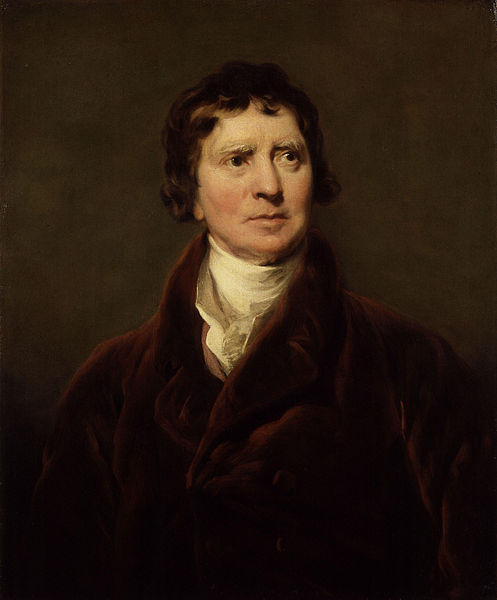
Henry Dundas, 1st Viscount Melville.
Portrait by Sir Thomas Lawrence. National Portrait Gallery via Wikimedia Commons.
Henry Dundas never travelled to British North America and likely spent very little of his 69 years ever thinking about it. He was an influential Scottish career politician whose name adorns the street purely because he happened to be British Home Secretary when it was surveyed in 1793.
But after 230 years, activists led an ultimately successful a push for the Dundas name to be excised from the 23-kilometre street. As Toronto Mayor Olivia Chow said in deliberations over the name change, Dundas’s actions in relation to the Atlantic slave trade were “horrific“.
Was Dundas a slaveholder? Did he profit from the slave trade? Did he use his influence to advance or exacerbate the business of slavery?
No; Dundas was a key figure in the push to abolish slavery across the British Empire. The reason activists want his name stripped from Dundas Street is because he didn’t do it fast enough.
[…]
The petition was piggybacking off a similar anti-Dundas movement in the U.K. – which itself seems to have been inspired by Dundas’s portrayal as a villain in the 2006 film Amazing Grace, a fictionalized portrayal of the British anti-slavery movement.
Dundas was responsible for inserting the word “gradually” into an iconic 1792 Parliamentary motion calling for the end of the Atlantic slave trade. A legislated end to the trade wouldn’t come until 1807, followed by an 1833 bill mandating the total abolition of slavery across the British Empire.
The accusation is that – if not for Dundas – the unamended motion would have passed and the British slave trade would have ended 15 years earlier.
But according to the 18th century historians who have been brought out of the woodwork by the Cancel Dundas movement, Henry Dundas was a man working within the political realities of a Britain that wasn’t yet altogether convinced that slavery was a bad thing.
The year before Dundas’ “gradual” amendment secured passage for the motion, the House of Commons had rejected a similar motion for immediate abolition.
“Dundas’s amendment at least got an anti-slavery statement adopted — the first,” wrote Lynn McDonald, a fellow of the Royal Historical Society, in August. McDonald added that, in any case, it was just a non-binding motion; any actual law wouldn’t have gotten past the House of Lords.
The parliamentary record from this time survives, and Dundas was open about the fact that he “entertained the same opinion” on slavery as the famed abolitionist William Wilberforce, but favoured a more practical means of stamping it out.
“Allegations … that abolition would have been achieved sooner than 1807 without his opposition, are fundamentally mistaken,” reads one lengthy Dundas defence in the journal Scottish Affairs.
“Historical realities were much more nuanced and complex in the slave trade abolition debates of the 1790s and early 1800s than a focus on the role and significance of one politician suggests,” wrote the paper, adding that although Wilberforce opposed Dundas’ insertion of the word “gradually,” the iconic anti-slavery figure “later admitted that abolition had no chance of gaining approval in the House of Lords and that Dundas’s gradual insertion had no effect on the voting outcome.”
Meanwhile, the British abolition of slavery actually has some indirect ties to the road that bears Dundas’s name.
The road’s construction was overseen by John Graves Simcoe, the British Army general that Dundas had picked to be Lieutenant Governor of the colony of Upper Canada.
The same year he started building Dundas Street, Simcoe signed into law an act banning the importation of slaves to Upper Canada – and setting out a timeline for the emancipation of the colony’s existing slaves. It was the first anti-slavery legislation in the British Empire, and it was partially intended as a middle finger to the Americans’ first Fugitive Slave Act, passed that same year.
Overthinking Thomas the Tank Engine: What Actually Is Thomas?
Jago Hazzard
Published 13 Aug 2023Peep peep!
(more…)
QotD: The art of the Millennial celebrity memoir
I have a cactus-like indifference to celebrity, to Danny Cipriani, to anyone over whom the kaffeeklatsch gushes. Danny was a gifted athlete who drained his Superman abilities in pursuit of celebrity. Little is more tragic than wasted talent.
The Romans thought celebrities were mentally deranged, and to be avoided. To this day, we’re yet to discover the secret behind their vastly superior self-healing concrete. The Romans had a point.
Anyway, Danny’s sex life, as documented in his book, would blush the cheeks of a Roman senator.
Danny has bedded scores of beautiful women. This happens when one is Hollywood handsome, rugged, cocky, and a known shagger. At the height of his bedhopping campaign, Danny featured permanently in the tabloid press, each week a new beauty attached to his arm.
In short, Danny could indulge himself senselessly and did so with the atomic energy of a nymphomaniac in the waiting room at Dignitas.
Reader, that’s it. That’s the story. A young man blessed with opportunities to shag beautiful women indulged those opportunities to shag beautiful women.
[…]
This book could have been a tweet.
Christopher Gage, “Spare a Thought: The inexorable rise of pitybragging”, Oxford Sour, 2023-09-12.


