Stalin emerged from the second world war as its most successful warlord, head of a nation whose contribution to the destruction of Nazism had won worldwide admiration. Although the leaders of the western states quickly understood the threat posed by the new Soviet Empire to freedom and democracy, many of their citizens did not.
Between 1941 and 1945 so much praise had been heaped upon Uncle Joe, the defenders of Stalingrad, heroic factory workers of the Volga and suchlike, that thereafter it proved a hard task to disabuse many people of their illusions about Mother Russia. They were not wrong in believing that hundreds of thousands of young British and American men were alive in 1945 because Red soldiers had done more than their rightful share of dying.
Any examination of the Bolshevik revolution and its legacy must linger on the Great Patriotic War, because that victory remains the only indisputable and durable achievement the rulers of Russia can boast since 1917, save the invention of some remarkable weapons systems and spacecraft.
Max Hastings, “The centenary of the Russian revolution should be mourned, not celebrated”, The Spectator, 2016-12-10.
October 22, 2019
QotD: The Soviet contribution to defeating Hitler
October 21, 2019
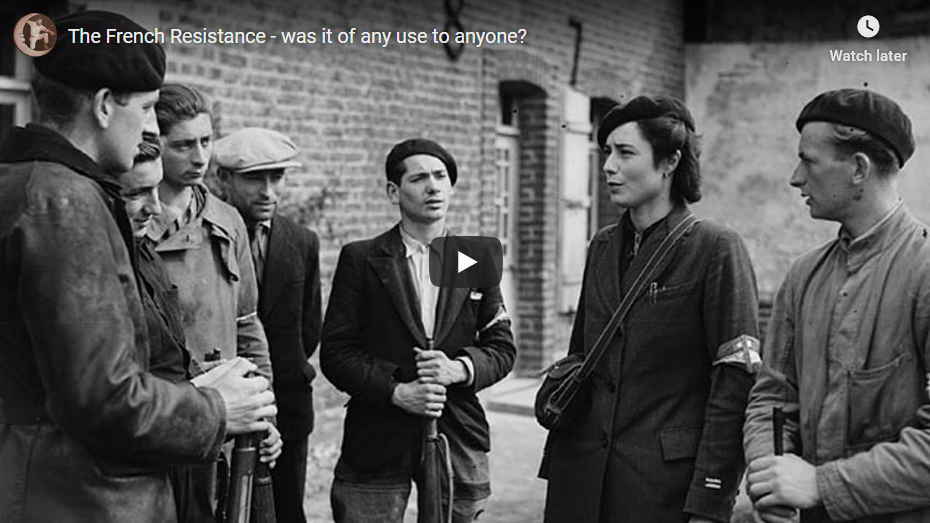
The French Resistance – was it of any use to anyone?
Lindybeige
Published on 19 October 2016Who organised the French Resistance? Did it ever do much?
Support me on Patreon: https://www.patreon.com/LindybeigeI had planned to say a lot more, but this should be long enough. In take one, which I had to ditch because my sound recorder packed in half-way through it (but I didn’t notice, so carried on), I talked quite a bit about Wing Commander F.F.E. Yeo-Thomas AKA “The White Rabbit” who did a lot of organising the French Resistance, and I was also planning to talk about “R.A.F. blackmail sabotage” but perhaps that will come out in another video another day. Probably not, though. Never mind – sixteen minutes should be long enough for anyone.
Many of the figures I quote were fresh in my mind because I had just read them in Dadland by Keggie Carew. Another influential book on this video was The White Rabbit about Wing Commander FFE Yeo-Thomas.
Lindybeige: a channel of archaeology, ancient and medieval warfare, rants, swing dance, travelogues, evolution, and whatever else occurs to me to make.
▼ Follow me…
Twitter: https://twitter.com/Lindybeige I may have some drivel to contribute to the Twittersphere, plus you get notice of uploads.
website: http://www.LloydianAspects.co.uk
October 20, 2019
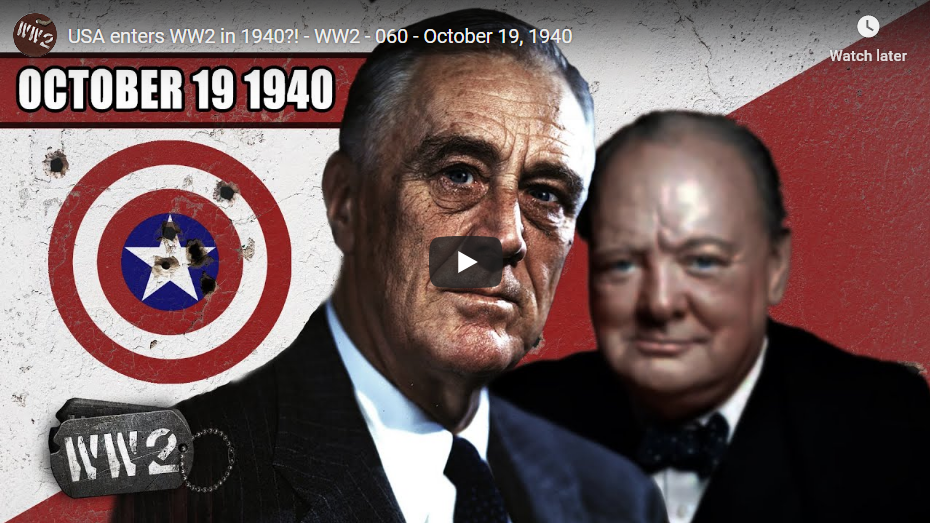
USA enters WW2 in 1940?! – WW2 – 060 – October 19, 1940
World War Two
Published 19 Oct 2019The World War seems to get bigger and bigger as Italy plans to invade Greece and the USA takes a stance.
Join us on Patreon: https://www.patreon.com/TimeGhostHistory
Or join The TimeGhost Army directly at: https://timeghost.tvFollow WW2 day by day on Instagram @World_war_two_realtime https://www.instagram.com/world_war_t…
Join our Discord Server: https://discord.gg/D6D2aYN.
Between 2 Wars: https://www.youtube.com/playlist?list…
Source list: http://bit.ly/WW2sourcesWritten and Hosted by: Indy Neidell
Produced and Directed by: Spartacus Olsson and Astrid Deinhard
Executive Producers: Bodo Rittenauer, Astrid Deinhard, Indy Neidell, Spartacus Olsson
Creative Producer: Joram Appel
Post-Production Director: Wieke Kapteijns
Research by: Indy Neidell
Edited by: Iryna Dulka
Map animations: EastoryColorisations by Norman Stewart and Julius Jääskeläinen https://www.facebook.com/JJcolorization/
Eastory’s channel: https://www.youtube.com/channel/UCEly…
Archive by Screenocean/Reuters https://www.screenocean.com.A TimeGhost chronological documentary produced by OnLion Entertainment GmbH.
October 18, 2019
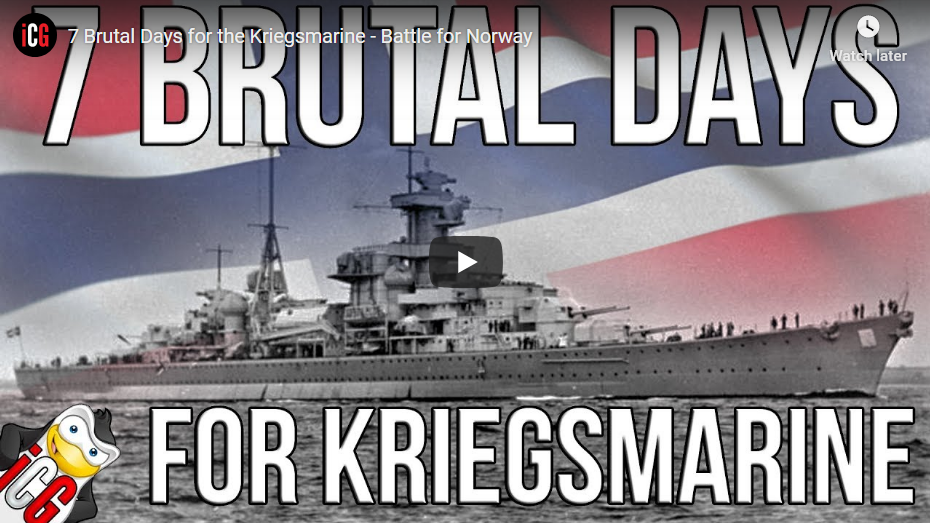
7 Brutal Days for the Kriegsmarine – Battle for Norway
iChaseGaming
Published on 9 Sep 2019The first few days of Operation Weserübung, the invasion of Norway, cost the Kriegsmarine‘s surface fleet dearly. While the invasion and occupation was successful the German Navy would be hampered for the remainder of the war.
♥ Connect with me ♥
Discord: https://discord.gg/ichasegaming
Twitch: http://www.twitch.tv/ichasegaming
Twitter: https://twitter.com/iChaseGaming♦ Become my Patron at https://www.patreon.com/iChaseGaming ♦
To contact me via e-mail send it to chasegamingtv@gmail.com
October 17, 2019
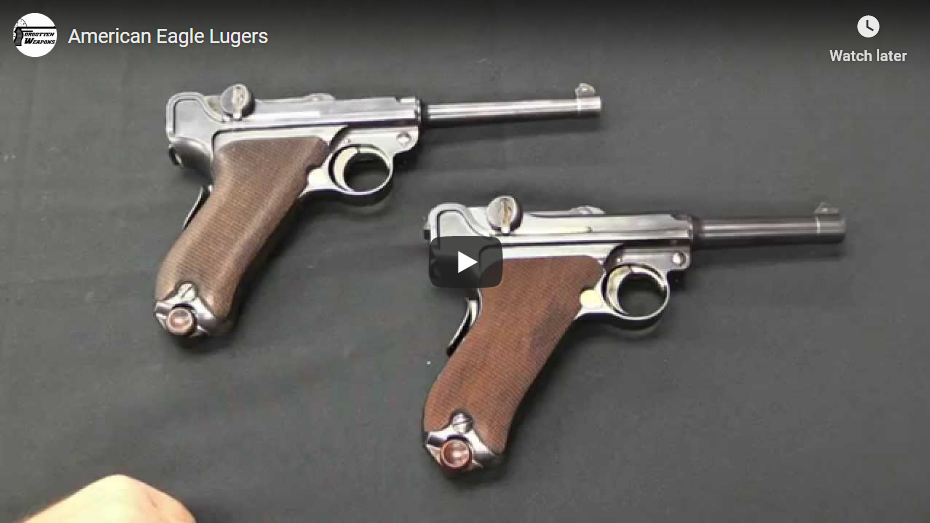
American Eagle Lugers
Forgotten Weapons
Published on 1 Dec 2014
Dissent This
Sold for $14,950 (9mm fat barrel) and $9,775 (7.65mm test trials).Many people are aware of the .45 caliber Lugers made for US military field trials — but far fewer people realize that Lugers were both tested by the US military and sold commercially several years prior to the .45 tests.
In 1900, the US military put several hundred 7.65mm Luger pistols into field trials with both infantry and cavalry units. These pistols were marked with a large and elaborate American eagle crest, in an attempt by DWM to enhance the gun’s appeal to Americans. A similar tactic was used in production of Lugers for Swiss sale, with a large Swiss cross (and it worked well).
After complaints about the small caliber of the early 1900 Lugers, DWM developed the 9mm Parabellum cartridge, and attempted to sell them commercially in the US (and elsewhere). A small batch were also purchased for further military testing.
http://www.forgottenweapons.com
Theme music by Dylan Benson – http://dbproductioncompany.webs.com
October 14, 2019
Cavalry Combat & Tactics during the Napoleonic Era
Military History Visualized
Published 20 Jan 2018This video gives insights in cavalry combat and tactics during the era of Napoleon. This includes cavalry types, forms of combat, formations, organization, principles and many more.
Link to History Gaming Verified: https://www.youtube.com/channel/UCoeY…
»» SUPPORT MHV ««
» patreon – https://www.patreon.com/mhv
» paypal donation – https://www.paypal.com/cgi-bin/webscr…Military History Visualized provides a series of short narrative and visual presentations like documentaries based on academic literature or sometimes primary sources. Videos are intended as introduction to military history, but also contain a lot of details for history buffs. Since the aim is to keep the episodes short and comprehensive some details are often cut.
» SOURCES «
Rothenberg Gunther E.: The Art of Warfare in the Age of NapoleonNosworthy, Brent: Battle Tactics of Napoleon and his Enemies
Bruce, Robert B.; Dickie, Iain; Kiley, Kevin; Pavkovic, Michael F.; Schneid, Frederick C.: Fighting Techniques of the Napoleonic Age 1792 – 1815: Equipment, Combat Skills, and Tactics
Ortenburg, Georg: Waffen der Revolutionskriege 1792-1848
Planert, Ute: “Die Kriege der Französischen Revoluation und Napoleons. Beginn einer neuen Ära der europäischen Kriegsgeschichte oder Weiterwirken der Vergangenheit?” In: Beyrau, Dietrich; Hochgeschwender, Michael; Langewiesche, Dieter (Hrsg.): Formen des Krieges. Von der Antike bis zur Gegenwart, S. 149-162
Rogers, H.C.B.: Napoleon und seine Armee / Napoleon’s Army
Browing, Peter: The Changing Nature of Warfare. The Development of Land Warfare from 1792 to 1945
Citino, Robert M.: The German Way of War
Chandler, David: The Art of Warfare in the Age of Marlborough
Philip J. Haythornthwaite: Weapons & Equipment Of The Napoleonic Wars
Hughes, B. P.: Firepower – Weapon Effectiveness on the Battlefield, 1630-1850
Lind, William S.: “Maneuver”; in: Margiotta, Franklin (ed): Brassey’s Encyclopedia of Land Forces and Warfare, p. 661-667
AskHistorians: How does a commander screen his army?
https://www.reddit.com/r/AskHistorian…Russell, Jill R.: With rifle and bibliography: General Mattis on professional reading
http://www.strifeblog.org/2013/05/07/…» DISCLAIMER «
Amazon Associates Program: “Bernhard Kast is a participant in the Amazon Services LLC Associates Program, an affiliate advertising program designed to provide a means for sites to earn advertising fees by advertising and linking to amazon.com.”Bernhard Kast ist Teilnehmer des Partnerprogramms von Amazon Europe S.à.r.l. und Partner des Werbeprogramms, das zur Bereitstellung eines Mediums für Websites konzipiert wurde, mittels dessen durch die Platzierung von Werbeanzeigen und Links zu amazon.de Werbekostenerstattung verdient werden können.
» TOOL CHAIN «
PowerPoint 2016, Word, Excel, Tile Mill, QGIS, Processing 3, Adobe Illustrator, Adobe Premiere, Adobe Audition, Adobe Photoshop, Adobe After Effects, Adobe Animate.

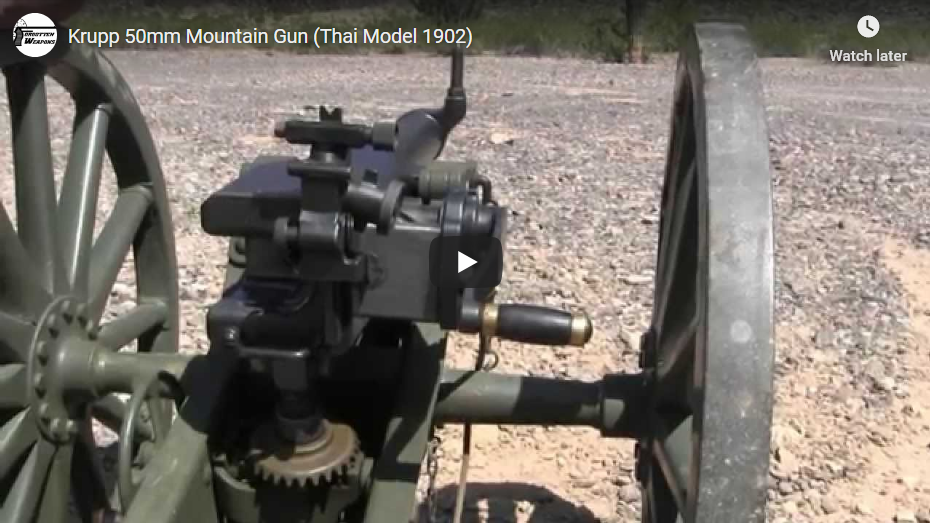
Krupp 50mm Mountain Gun (Thai Model 1902)
Forgotten Weapons
Published on 27 Jul 2014http://www.forgottenweapons.com
Theme music by Dylan Benson – http://dbproductioncompany.webs.com
Taking a look at another artillery piece today, a 50mm mountain gun made for Siam (now Thailand) by the German Krupp company. It is a relatively simple (and thus relatively inexpensive at the time) design, with no recoil mechanism or adjustable traverse.
October 13, 2019
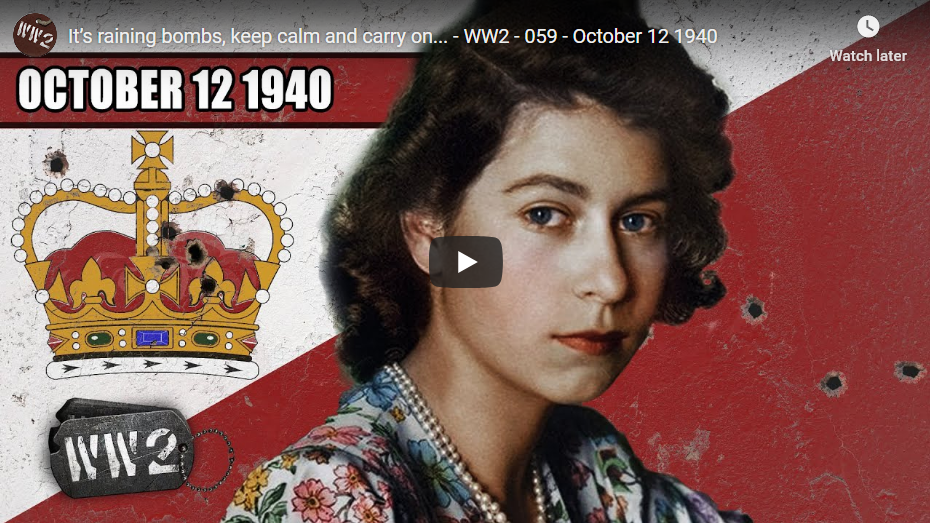
It’s raining bombs, keep calm and carry on… – WW2 – 059 – October 12 1940
World War Two
Published 12 Oct 2019The Blitz continues while Chinese Communists are fighting Chinese Nationalist in China. But the mass bombing of civilian targets does not really do what it is supposed to.
Join us on Patreon: https://www.patreon.com/TimeGhostHistory
Or join The TimeGhost Army directly at: https://timeghost.tvFollow WW2 day by day on Instagram @World_war_two_realtime https://www.instagram.com/world_war_two_realtime/
Join our Discord Server: https://discord.gg/D6D2aYN.
Between 2 Wars: https://www.youtube.com/playlist?list…
Source list: http://bit.ly/WW2sourcesWritten and Hosted by: Indy Neidell
Produced and Directed by: Spartacus Olsson and Astrid Deinhard
Executive Producers: Bodo Rittenauer, Astrid Deinhard, Indy Neidell, Spartacus Olsson
Creative Producer: Joram Appel
Post-Production Director: Wieke Kapteijns
Research by: Indy Neidell
Edited by: Iryna Dulka
Map animations: Eastory
Sound design: Marek KaminskiColorisations by Norman Stewart and Julius Jääskeläinen https://www.facebook.com/JJcolorization/
Eastory’s channel: https://www.youtube.com/channel/UCEly…
Archive by Screenocean/Reuters https://www.screenocean.com.A TimeGhost chronological documentary produced by OnLion Entertainment GmbH.
From the comments:
World War Two
2 days ago
Indy mentioned our Instagram page, where we make a daily post about what happened in the war on that day. This might be something completely different from what’s covered in these videos, or might add some more details. You can follow it by searching @world_war_two_realtime or by clicking here: https://www.instagram.com/world_war_two_realtime/. See you there!
Cheers,
Joram
October 12, 2019
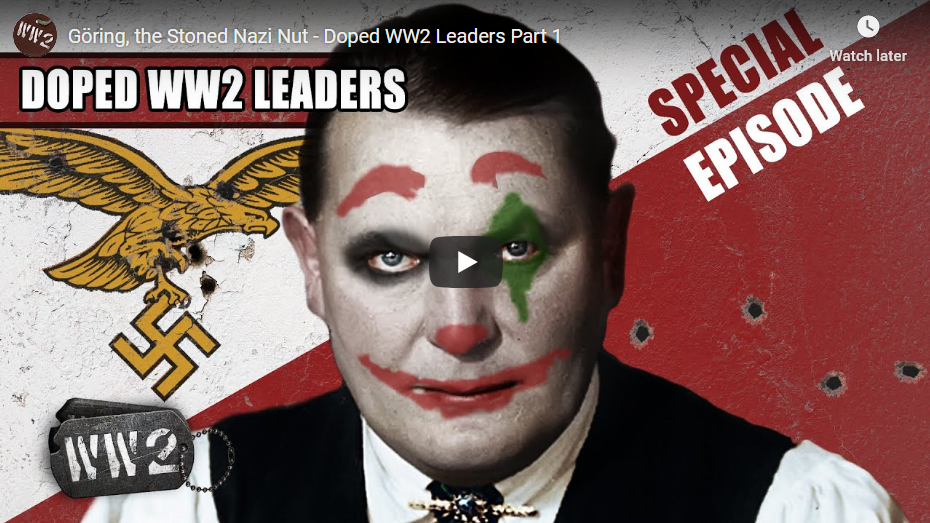
Göring, the Stoned Nazi Nut – Doped WW2 Leaders Part 1
World War Two
Published 10 Oct 2019Hermann Göring was one of the most powerful leaders of the Third Reich. He was also a drug addict with some serious problems and a remarkable lifestyle.
Join us on Patreon: https://www.patreon.com/TimeGhostHistory
Or join The TimeGhost Army directly at: https://timeghost.tvFollow WW2 day by day on Instagram @World_war_two_realtime https://www.instagram.com/world_war_t…
Join our Discord Server: https://discord.gg/D6D2aYN.
Between 2 Wars: https://www.youtube.com/playlist?list…
Source list: http://bit.ly/WW2sourcesHosted by: Indy Neidell
Written by: Joram Appel
Produced and Directed by: Spartacus Olsson and Astrid Deinhard
Executive Producers: Bodo Rittenauer, Astrid Deinhard, Indy Neidell, Spartacus Olsson
Creative Producer: Joram Appel
Research by: Joram Appel
Edited by: Iryna Dulka
Map animations: EastoryColorisations by Norman Stewart and Julius Jääskeläinen https://www.facebook.com/JJcolorization/
Eastory’s channel: https://www.youtube.com/channel/UCEly…
Archive by Screenocean/Reuters https://www.screenocean.com.Sources:
Klimbim Colorizations – https://klimbim2014.wordpress.com/A TimeGhost chronological documentary produced by OnLion Entertainment GmbH.
From the comments:
World War Two
31 minutes ago (edited)
Though this episode is mostly about the lifestyle of Hermann Göring, we will certainly get back to his more serious impact on the Nazi party, Germany and World War Two. For those of you who are new here, we are following World War Two Week by Week, in which we do pay a lot of attention to all those smaller but still significant events. If you would like to watch the series, make sure to subscribe and to click here to start watching from episode one: https://www.youtube.com/watch?v=3-A1gVm9T0A&list=PLsIk0qF0R1j4Y2QxGw33vYu3t70CAPV7XCheers,
The TimeGhost team.
October 11, 2019
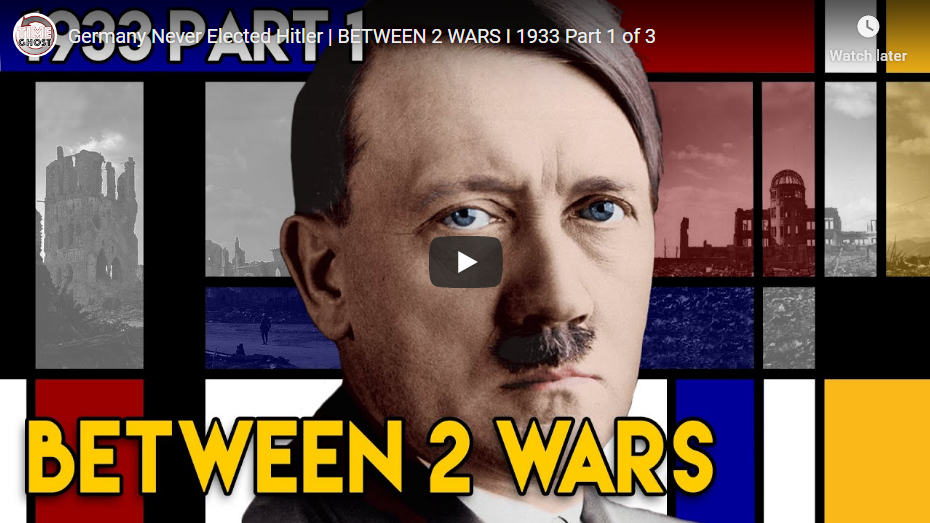
Germany Never Elected Hitler | BETWEEN 2 WARS I 1933 Part 1 of 3
TimeGhost History
Published 10 Oct 2019Hitlers rise to power, also known as the Machtergreifung, was riddled with physical and mental manipulation, political games and an exploitation of the Democratic system. This episode follows the events leading up to the Nazi takeover of Germany.
Join us on Patreon: https://www.patreon.com/TimeGhostHistory
Hosted by: Indy Neidell
Written by: Spartacus Olsson
Directed by: Spartacus Olsson and Astrid Deinhard
Executive Producers: Bodo Rittenauer, Astrid Deinhard, Indy Neidell, Spartacus Olsson
Creative Producer: Joram Appel
Post-Production Director: Wieke Kapteijns
Research by: Spartacus Olsson
Edited by: Daniel Weiss
Sound design: Iryna Dulkaimage source:
Deutsche BundesarchivA TimeGhost chronological documentary produced by OnLion Entertainment GmbH.
From the comments:
Spartacus Olsson
18 minutes ago
Hi, for those of you that don’t know me yet, I’m the lead author of this series and the author of this episode. Now, as you will, or have just seen, this episode covers an event of earth-shattering magnitude in human history. An event that is often misunderstood and glossed over. The reason for that is not that there is anything controversial, or stupendously new with what we’re documenting here. The simple fact is that its just too detailed and too complicated to cover in general history studies, especially in secondary school. The level we get into here is usually only covered in specialized lectures at college or university level. Tons and tons of books have been written on the topic and yet, many misconceptions remain. It was my goal to dispel some of the many misunderstandings that abound about how Hitler finally seized power. One of the chief myths is that Hitler was elected. As the video shows, that is not what happened. So you might ask yourself; how come the vast majority of Germans finally rallied behind him? Because they did, there’s no question. But you see, that happens after he seizes power and it will be the topic of our next episode on Germany that covers the Nazi consolidation of power.It was also my goal to cast some more light on a topic that has been weaponized in political debate in recent years: the level of Socialism in the German National Socialist Worker’s Party. I hope that I have laid the latter one to rest, but I fear that the comment section will still be full of politically biased nonsense on this topic. It’s quite tiring for our community managers to answer that misrepresenting alt-right trope over and over again. And we won’t stop you from posting it, even if it’s nonsense. Instead we will try to patiently answer, but think fifteen times about posting ‘Nazis were Socialists, duh!’ or “Dude, Nazis are left-wing, duh!’ out of respect for us. What we will not tolerate is that you post links to any of the clown videos by non-historians that try to perpetuate that myth. We are a team of actual historians. We have no interest in ‘pinning’ Naziism on anyone. We also have no interest in ‘pinning’ Socialism on anyone. Nor should you, if you have any interest whatsoever in understanding history. Revolutionary Socialism, Communism, Fascism and Nazism have all brought down a lot of suffering on humanity – if we are supporters of freedom and democracy we need to learn from that. Throwing them all in one bucket and dumping it on our perceived political opponents is not learning, it’s obfuscation, confusion, and destruction of education. So respect humanity, respect history and don’t take part in that kind of nonsense.
October 6, 2019
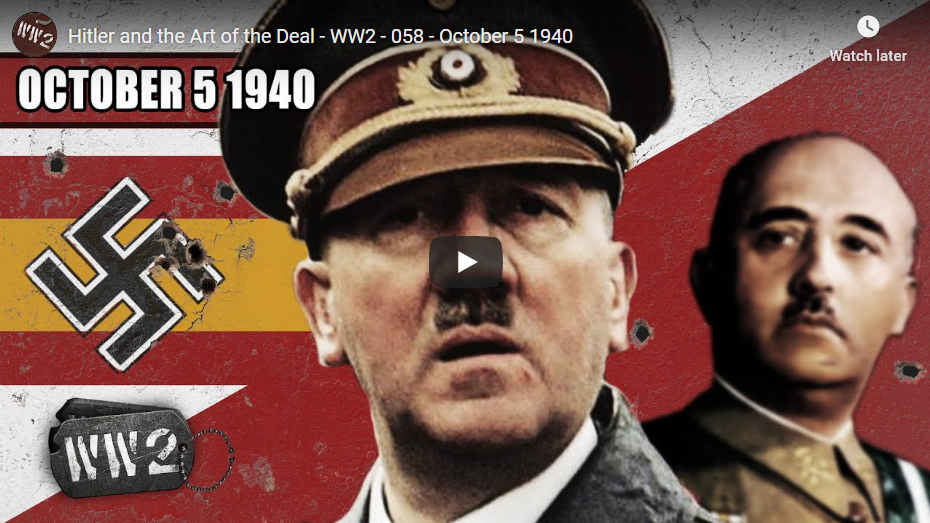
Hitler and the Art of the Deal – WW2 – 058 – October 5 1940
World War Two
Published 5 Oct 2019Hitler is trying to get new Axis Powers on board in his fight against Britain, promising them all huge territorial gains.
Join us on Patreon: https://www.patreon.com/TimeGhostHistory
Or join The TimeGhost Army directly at: https://timeghost.tvFollow WW2 day by day on Instagram @World_war_two_realtime https://www.instagram.com/world_war_t…
Join our Discord Server: https://discord.gg/D6D2aYN.
Between 2 Wars: https://www.youtube.com/playlist?list…
Source list: http://bit.ly/WW2sourcesWritten and Hosted by: Indy Neidell
Produced and Directed by: Spartacus Olsson and Astrid Deinhard
Executive Producers: Bodo Rittenauer, Astrid Deinhard, Indy Neidell, Spartacus Olsson
Creative Producer: Joram Appel
Post-Production Director: Wieke Kapteijns
Research by: Indy Neidell
Edited by: Iryna Dulka
Map animations: EastoryColorisations by Norman Stewart and Julius Jääskeläinen https://www.facebook.com/JJcolorization/
Eastory’s channel: https://www.youtube.com/channel/UCEly…
Archive by Screenocean/Reuters https://www.screenocean.com.Sources:
– IWM: A 220
– Photos of Herbert Morrison and John Anderson by Yousuf Karsh, Dutch National Archives
– National Library of Australia
– Narodowe Archiwum Cyfrowe
– Colorized portrait of Mao Zedong by Olga Shirnina, aka Klimbim
– Flag of Spain by SanchoPanzaXXI on Wikimedia CommonsA TimeGhost chronological documentary produced by OnLion Entertainment GmbH.
October 5, 2019
Dreyse Model 1835 Needlefire Breechloading Pistol
Forgotten Weapons
Published on 19 Aug 2019RIA on YouTube: https://www.youtube.com/user/RockIsla…
RIA on Instagram: https://www.instagram.com/rockislanda…Johann Nicolaus Dreyse, later promoted to the aristocracy as Nicolaus von Dreyse, designed the first mainstream military breechloading rifle. His rifle was adopted by Prussia and changed military history, but this was not his only work. Dreyse also endeavored to sell guns commercially, both rifles and handguns. This is an example of one of his first, the Model 1835. It is a single shot breechloader, with the chamber consisting of a rotating tumbler. The firing mechanism is identical in concept to that of his Model 1841 rifle, just scaled down for the smaller pistol. The piece uses a power charge of just 6 grains, but its breechloading action was quite advanced for the 1830s!
http://www.patreon.com/ForgottenWeapons
Cool Forgotten Weapons merch! http://shop.bbtv.com/collections/forg…
Contact:
Forgotten Weapons
PO Box 87647
Tucson, AZ 85754

October 4, 2019
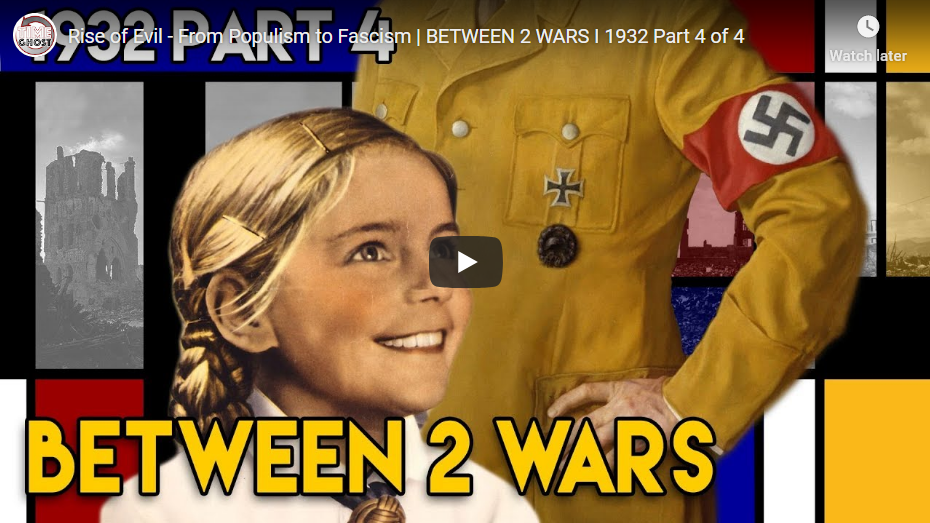
Rise of Evil – From Populism to Fascism | BETWEEN 2 WARS I 1932 Part 4 of 4
TimeGhost History
Published 3 Oct 2019Democracy finds itself in a crisis as the 1930s take off. On a global scale, Fascist or otherwise authoritarian and repressive movements and governments seek to destroy the pillars of liberal society.
Join us on Patreon: https://www.patreon.com/TimeGhostHistory
Subscribe to our World War Two series: https://www.youtube.com/c/worldwartwo…
Hosted by: Indy Neidell
Written by: Spartacus Olsson and Joram Appel
Directed by: Spartacus Olsson and Astrid Deinhard
Executive Producers: Bodo Rittenauer, Astrid Deinhard, Indy Neidell, Spartacus Olsson
Creative Producer: Joram Appel
Post-Production Director: Wieke Kapteijns
Research by: Joram Appel and Spartacus Olsson
Edited by: Wieke Kapteijns
Sound design: Marek KamińskiSources icons: Graphic Enginer, Luis Prado
Colorizations: Daniel Weiss, Cassowary Colorizations, KlimbimA TimeGhost chronological documentary produced by OnLion Entertainment GmbH.
From the comments:
TimeGhost History
1 hour ago (edited)
This episode might be a little more academic than our other episodes, but we wanted to cover the global Fascist surge AND that it’s just too simple to refer to all totalitarian states and authoritarian and repressive movements as “Fascist”. Fascism is a very complicated concept that is still today being debated by political scientists and historians, as well as politicians and journalists. We try to give some insight to what Fascism is, what it isn’t and what all those movements and countries were, if not Fascist. We appreciate that you might have a different opinion as to what Fascism was or is, and we’re interested to hear your opinion. Just keep it civil and try to stay away from modern political debates, as that is not what we’re here for. EDIT: As for comments claiming that Fascism was left-wing/socialist, watch the video again. Don’t bother commenting if you can’t bring a proper argument to the table.
Cheers,
Joram
October 2, 2019
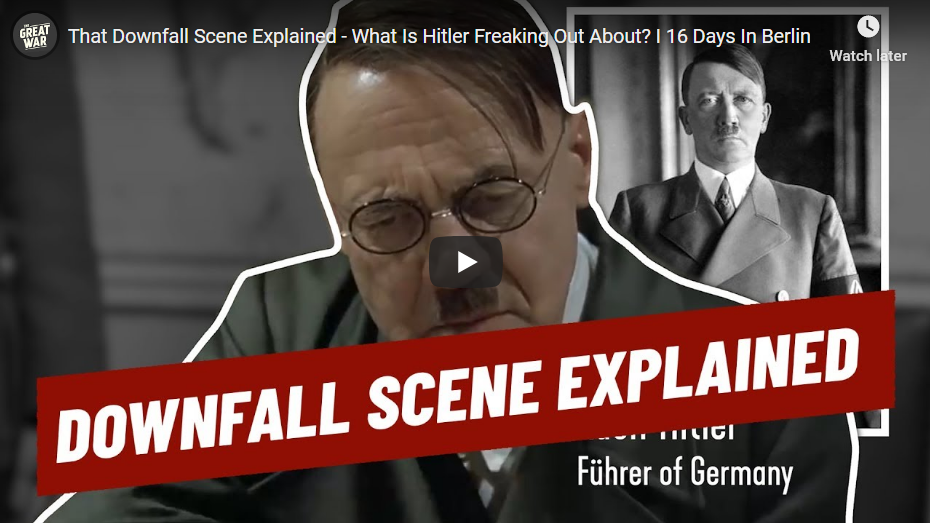
That Downfall Scene Explained – What Is Hitler Freaking Out About? I 16 Days In Berlin
The Great War
Published on 1 Oct 2019Thank you for your support for 16 Days in Berlin: https://realtimehistory.net/indiegogo
» SUPPORT THE CHANNEL
Patreon: https://www.patreon.com/thegreatwar
Merchandise: https://shop.spreadshirt.de/thegreatwar/»CREDITS
Presented by: Jesse Alexander
Written by: Jesse Alexander
Director: Toni Steller & Florian Wittig
Director of Photography: Toni Steller
Sound: Toni Steller
Editing: Toni Steller
Mixing, Mastering & Sound Design: http://above-zero.com
Maps: Daniel Kogosov (https://www.patreon.com/Zalezsky)
Research by: Jesse Alexander
Fact checking: Florian WittigChannel Design: Alexander Clark
Original Logo: David van StepholdA Mediakraft Networks Original Channel
Contains licensed material by getty images
All rights reserved – Real Time History GmbH 2019
October 1, 2019
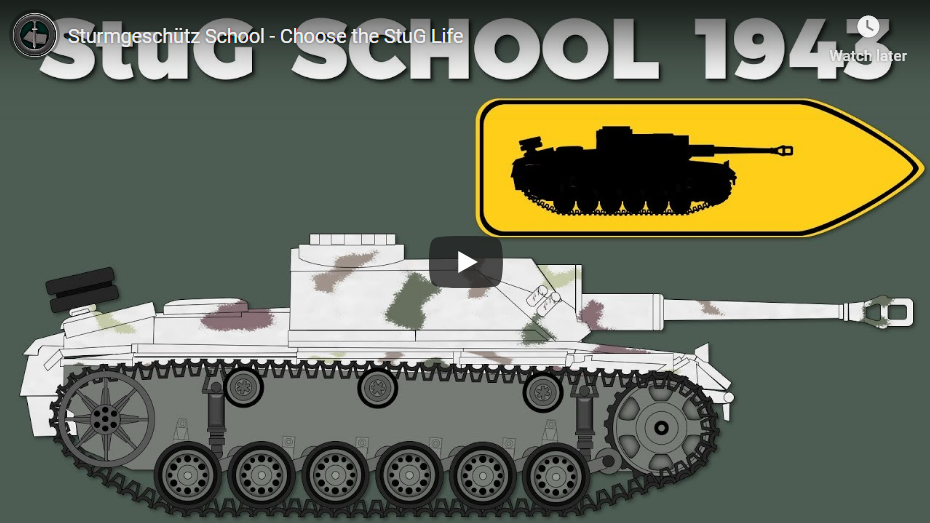
Sturmgeschütz School – Choose the StuG Life
Military History Visualized
Published on 20 Aug 2019I got my hands-on information for you. Namely from the “Sturmgeschütz School Teaching Staff” (Sturmgeschütz Schule Lehrstab), which in October 1943 published a leaflet (“Merkblatt“) for the crews of the Sturmgeschütze. I looked at it and selected some crucial and interesting aspects for you.
StuG footage recorded at Militracks 2019 at the Overloon War Museum: https://www.militracks.nl – https://www.oorlogsmuseum.nl/en/home/
» SOURCES «
Wettstein, Adrian: Sturmartillerie Geschichte einer Waffengattung
http://portal-militaergeschichte.de/s…Condell, Bruce (ed.); Zabecki, David T. (ed.): On the German Art of War. TRuppenführung. Stackpole Books: Mechanicsburg, PA, USA, 2009 (2001)
amazon.com (affiliate link): https://amzn.to/2yTSjmI
amazon.de (affiliate link): https://amzn.to/2MOicwJCAMO: F. 500, Op. 12480, D. 137: Sturmgeschütz-Schule Lehrstab: Merkblatt – Die Geschützbedienung, Burg b. M., Oktober 1943.
Spielberger, Walter; Doyle, Hilary Lous: Sturmgeschütze: Entwicklung und Fertigung der sPak. Motorbuch Verlag: 2014.
amazon.de (affiliate): https://amzn.to/2HUvXJ1
Spielberger, Walter: Sturmgeschütz & Its Variants: (Spielberger German Armor & Military Vehicles Series, Vol 2)
amazon.com (affiliate): https://amzn.to/2HY2utAFleischer, Wolfgang: Die deutschen Sturmgeschütze 1935-1945. Podzun-Pallas, 1996.
amazon.com (affiliate link): https://amzn.to/2UgyeDv
amazon.de (affiliate link): https://amzn.to/2HLc8DqBuchner, Alex: Das Handbuch der deutschen Infanterie 1939-1945; Gliederung – Uniformen, Bewaffnung – Ausrüstung, Einsätze. Podzun-Pallas: Friedberg in Hessen, Germany, 1987
amazon.de (affiliate link): https://amzn.to/2O0TENR
ENGLISH VERSION: Buchner, Alex: The German Infantry Handbook 1939-1945.
amazon.com (affiliate): http://amzn.to/1l4ABU0Pöhlmann, Markus: Der Panzer und die Mechanisierung des Krieges: Eine deutsche Geschichte 1890 bis 1945. Ferdinand Schöningh: Paderborn, 2016.
amazon.de (affiliate): http://amzn.to/2ELyDX1» DISCLAIMER «
As an Amazon Associate I earn from qualifying purchases.Als Amazon-Partner verdiene ich an qualifizierten Käufen.