
The Tank Museum
Published on 10 Feb 2018Welcome to the first in the Tank Chat Funnies mini-series!
In Tank Chats #45 David begins a series on one of his personal interests, the Funnies of the 79th Armoured Division. However the 79th and its Funnies would have been nothing without its inspirational leader Major General Percy Hobart, so David starts with the man and we promise will follow very shortly with his machines.
Support the work of The Tank Museum on Patreon: ► https://www.patreon.com/tankmuseum
Or donate http://tankmuseum.org/support-us/donateVisit The Tank Museum SHOP: ►https://tankmuseumshop.org/
Press the little bell above to enable NOTIFICATIONS so you don’t miss the latest Tank Museum videos.
Twitter: ► https://twitter.com/TankMuseum
Tiger Tank Blog: ► http://blog.tiger-tank.com/
Tank 100 First World War Centenary Blog: ► http://tank100.com/ #tankmuseum #tanks
April 3, 2019
Tank Chats #45 Major General Sir Percy Hobart | The Funnies | The Tank Museum
April 1, 2019
Sean Gabb on the Brexit crisis
In his latest email newsletter, Sean Gabb discusses the Brexit situation:

The consensus in the media appears to be that Parliament is out of control, and is attempting to stop our exit from the European Union – even if this means tearing up every settled constitutional norm. I disagree. No doubt, the House of Commons is filled with some very trashy people, and I have little doubt most of them would like to stay in the European Union. Even so, they are acting collectively with strict constitutional propriety. For the first time in my life, they are earning their inflated salaries and expenses and bribe allowances.
Three years ago, we vote to leave the European Union. The margin was respectable, though not substantial. The Government was therefore given one reasonably difficult job. This was to detach us from the institutions of the European Union, while respecting the wish of a large majority for continued good relations with the European Union. This was difficult, but hardly in the same class as trying to win a war against the greatest military power in the world, or dismantle an Empire, or even reform the structures and financing of local government. The most obvious compromise was to rejoin EFTA and remain in the Single Market, while negotiating a longer term set of arrangements. Most people, I think, would have accepted such a compromise. I would, and I may have written about it at the time.
Instead of doing this, however, Theresa May loaded us with endless vague promises, while negotiating in secret with the European Commission. At the end of two years and six months, she presented us with a draft Withdrawal Agreement that was universally unacceptable. I will not rehearse why it was unacceptable. Everyone has read it for himself, or read a fair summary and critique. When this was presented to the House of Commons, it was overwhelmingly rejected. Why the Labour Party and the various open Remainers voted against it is less important than that they did vote against it. This is why we have a Parliament. It is there to stop the Executive from acting against the public good. It is there to make the voice of the people heard.
Our present set of crises blew up when it emerged that Theresa May had allowed no one to think about any alternative to her Agreement. Her only solution to losing the first vote was to arrange for another, and then for another. Each time, her Agreement was rejected – and rejected, I repeat, for good reasons. But, thanks to her wickedness or stupidity, there were only three options available to Parliament. One was to swallow her Agreement. Another was to leave without any deal. The other was to give up on leaving – to cancel the Referendum result.
[…]
It may be that the plan was to unveil a fraudulent leaving agreement, and to whip this through Parliament, leaving the rest of us to grumble about it for the next generation, though unable to do anything about it. If so, the plan has failed. The problem is not that our ruling class does not want to be bound by the will of the people – this is hardly a novel discovery. The problem is the crude inflexibility of our rulers. The EFTA compromise I and most other people would have accepted three years ago would have allowed any number of quiet understandings in London that let things as they matter to our rulers go on much as before. Instead, they wanted complete victory on their terms, and they planned for no other outcome. No competent strategist or negotiation behaves like this. The Tory ultras did not behave like this in 1832 or 1911. Labour did not behave like this after 1983. On the whole, we are lucky that we have asked these people only to arrange a departure in good order from a customs
union. They might instead have messed up something really important.These crises have been a useful learning experience. Theresa May and the interests she has been chosen to front are both wicked and stupid. Speaking for myself, I think our Members of Parliament – wretched creatures if these may be in themselves – for doing their job and lifting the stone to show the pale and stinking bugs in full light of day. Sooner or later, we shall leave the European Union. This will be a messier and more acrimonious departure than it needed to be. But I suspect that the debate between Leavers and Remainers is turning to a shared demand for our will to be obeyed by the Executive. This is a much wider matter than our membership of the European Union. Leaving is now a symbol of who has the final say in this country. The longer our decadent rulers try to hold firm, the more radical the demands will grow for a reconstruction of the system.
I have no idea what will happen in the next few weeks. But I am glad we have the Parliament that we have.
Alex Noble feels the situation is going pretty much exactly how the EU wanted it to go from the start:
For a few months now I have written about how the EU’s plan is increasingly transparent, and it is becoming possible to anticipate their every move.
I believe we are now so close to the outcome they wargamed a year ago, that the final week is now almost completely predictable.
For what it’s worth, here we go.
[…]
So this coming week, the EU will water down or remove the backstop they never cared about, and the British people will be betrayed into vassalage by their Vichy Parliament.
That’s right – another “breakthrough” is imminent, although I suspect the EU will once again trot out the gap-toothed Belgian bumpkin Verhofstadt to pretend to find the whole affair insulting, so we remember to be properly grateful to his paymasters.
All other options now are just scare tactics – No Brexit, No Deal, long extensions, a general election, a loss of drinking water, or pet food, or medicine – these are all just the Bad Cop act designed to get us to gratefully turn to the Good Cop.
Namely the EU’s Withdrawal Agreement, which as I’ve pointed out is like the Withdrawal Technique in that despite the promises made, it usually involves no actual withdrawal.
We have been herded for nearly a year like scared children towards the EU’s treaty, which imprisons us forever in the EU – it is what they wanted all along, and they have used our government, our MPs (with a few dozen honourable souls still resisting as I write), our media, and the craven statists embedded in our institutions to convince us that the EU’s Withdrawal Agreement represents freedom.
In this coming week, all but a few dozen stalwarts will crumble, and then the only question is whether enough Labour europhiles will cross the House to pass this grotesque betrayal and inflict it on the British people.
At that stage, I wonder whether our cries of fury and anguish will fade into silence, or swell into carnage?
March 31, 2019
Irish Potato Famine – Lies – Extra History
Extra Credits
Published on 30 Mar 2019Writer Rob Rath talks about all the cool stories and facts we didn’t get to cover in the Irish Potato Famine series.
Join us on Patreon! http://bit.ly/EHPatreon
From the comments:
Extra Credits
1 day agoRecommended reading:
The Great Hunger, by Cecil Woodham-Smith
The Graves Are Walking: The Great Famine and the Saga of the Irish People, by John Kelly
Podcast: Irish History PodcastSay hi to Rob’s newest family member!
4:43 – what exactly was the blight?
7:35 – flags, flags, flags
9:20 – difference between “British” and “English”
10:26 – the psychology behind low-balling numbers
18:52 – we couldn’t do an episode on the Battle of Mrs. McCormick’s Cabbage Patch 🙁
22:57 – what’s next on Extra History!
23:27 – Walpole fact!
Allies Plan to Hit the Nazis Where it Hurts – WW2 – 031 – March 30 1940
World War Two
Published on 30 Mar 2019Newly appointed French Prime Minister Paul Reynaud and his British counterpart Neville Chamberlain spend the week looking for ways to harm the Germans. Not just by targeting their direct opponent directly, but also by exploring the idea of expanding the war into much bigger territory. In the meantime, the French prepare for the expected invasion and the Allies are laying the foundations of what might one time become a weapon of mass destruction.
Join us on Patreon: https://www.patreon.com/TimeGhostHistory
Or join The TimeGhost Army directly at: https://timeghost.tvFollow WW2 day by day on Instagram @World_war_two_realtime https://www.instagram.com/world_war_t…
Between 2 Wars: https://www.youtube.com/playlist?list…
Source list: http://bit.ly/WW2sourcesWritten and Hosted by: Indy Neidell
Produced and Directed by: Spartacus Olsson and Astrid Deinhard
Executive Producers: Bodo Rittenauer, Astrid Deinhard, Indy Neidell, Spartacus Olsson
Creative Producer: Joram Appel
Research by: Indy Neidell
Edited by: Iryna Dulka
Map animations: EastoryColorisations by Norman Stewart
Eastory’s channel: https://www.youtube.com/channel/UCEly…
Archive by Screenocean/Reuters https://www.screenocean.comA TimeGhost chronological documentary produced by OnLion Entertainment GmbH.
From the comments:
World War Two
9 hours ago (edited)
If the Allies and the Germans follow through with all their plans, the phoney war will surely soon come to a close. But who knows what will happen. If one thing is certain, it is that they all have made plans before that never made it into reality.A community member of ours set up a new Discord Channel. Come over to discuss the war, say hi to the community or share some memes. You can join right here: https://discord.gg/D6D2aYN
March 28, 2019
Parker Hale M85: Traditional Sniper in a Modern World
Forgotten Weapons
Published on 27 Feb 2019http://www.patreon.com/ForgottenWeapons
Cool Forgotten Weapons merch! http://shop.bbtv.com/collections/forg…
The 1985 competition to pick a new sniper rifle for the British military came down to a closely fought contest between the Accuracy International PM and the Parker Hale M85. The M85 was a fantastically accurate rifle, every bit the equal of the AI submission and to this day there are still people who were involved in the trials who insist that the M85 should have been selected. Ultimately, the decision came down to the logistical issues surrounding the rifle, where AI’s chassis system was superior to Parker-Hale’s traditional construction. Despite being defeated, Parker Hale sold some 800 M85 rifles – nearly as many as the military contract would have procured (and in fact, a few M85s were purchased by several military units).
If you are interested in learning more, I highly recommend checking out Steve Houghton’s newly released book, The British Sniper: A Century of Evolution. It can be found at:
https://www.swiftandboldpublishing.co…
Contact:
Forgotten Weapons
PO Box 87647
Tucson, AZ 85754
March 26, 2019
Food Rationing – How to Make Woolton Pie – WW2 Homefront 001 – April 1940
World War Two
Published on 24 Mar 2019Rationing of goods in Europe started immediately when the war broke out. Lord Woolton, British Minister of Food came up with one of the first substitute dishes… a vegetable pie that was promptly named after him. Our team chef Joram shows you how to do it. To find out how it tasted go here: https://youtu.be/quB0yH8Qhlo
Recipe can be found here: https://the1940sexperiment.com/2016/0…
Join us on Patreon: https://www.patreon.com/TimeGhostHistory
Or join The TimeGhost Army directly at: https://timeghost.tvHosted by Joram Appel and created by Wieke Kapteijns
Archive by Screenocean/Reuters https://www.screenocean.com
A TimeGhost chronological documentary produced by OnLion Entertainment GmbH
In about a month’s time (yes, I have my 1:00am and 2:00am posts lined up that far in advance), there’s an eight-part video series from Ian at InRangeTV on British rationing in WW2 that includes a slightly different Woolton Pie recipe.
March 25, 2019
The Boston Massacre – Snow and Gunpowder – Extra History
Extra Credits
Published on 23 Mar 2019Boston, 1770. A frigid winter night. A British sentry strikes a local citizen. Civilians begins to gather. Reinforcements arrive to back up the young sentry. Insults and snowballs escalate. Then out of the darkness comes a shout: “FIRE!”
The Boston Massacre didn’t come out of nowhere — resentment between the early US colonies and the British army had been brewing for some time over the Stamp Act. A propaganda war ensued between the loyalists and the radicals. John Adams would get his revolutionary start as he worked to resolve this injustice…
Join us on Patreon! http://bit.ly/EHPatreon
March 24, 2019
Major Fosbery’s Automatic Revolver: History and Mechanics
Forgotten Weapons
Published on 9 Aug 2017http://www.patreon.com/ForgottenWeapons
George Fosbery, V.C., was a decorated British officer with substantial combat experience in India when he decided to design a better sidearm in 1895. True semiautomatic handguns were in their very early stages of development at that time, and Fosbery thought that one could have a more durable, more powerful, and simpler weapon by using a revolver as a foundation. He began experimenting with a Colt SAA, but soon moved to using Webley revolvers when he found the Colt internals insufficiently durable for his conversion.
What Fosbery did was to relocate the barrel and cylinder into an upper assembly which could move independently of the grip and trigger of the gun. Upon firing, the energy of recoil would push the upper assembly rearwards, re-cocking the hammer and indexing the cylinder to the next chamber. This gave the shooter the rapid fire of a double action revolver with the excellent trigger pull of a single action revolver.
The gun was introduced at the Bisley shooting matches, where it proved quite popular as a target gun. By the time production began in the early years of the 20th century, however, semi-auto handguns had improved significantly, and the opportunity for the Webley-Fosbery to be a big seller had already passed. Still, British officers were required to provide sidearms chambered for the .455 service cartridge, and more than a few opted to purchase Webley-Fosberys.
Thanks to Mike Carrick of Arms Heritage magazine for providing this Webley-Fosbery for this video! See his regular column here: https://armsheritagemagazine.com
If you enjoy Forgotten Weapons, check out its sister channel, InRangeTV! http://www.youtube.com/InRangeTVShow
March 23, 2019
“[T]he Withdrawal Agreement … resembles the surrender terms that might be offered to a vanquished enemy”
Alex Noble isn’t a fan of the surrender document Withdrawal Agreement:
Let’s be clear – The Withdrawal Agreement is poorly-named.
It does not involve withdrawing from the EU in any meaningful sense, but instead commits us to Remaining within the EU and strips the UK of any future self-determination. It removes from the UK control of any future departure from the EU, and places it in the hands of those who reside in the building in Brussels with the statute of Europa outside – a woman riding a bull, keen students of the Book of Revelation may notice.
To this extent, the Withdrawal Agreement is actually a treaty for staying in the EU – it resembles quite closely the surrender terms that might be offered to a vanquished enemy, or the document that might be initially given to a small country wishing to join the EU.
Like say, Scotland.
One wonders if the EU wrote it in the run-up to the independence vote of 2014, threw it on a shelf when the Scots voted to stay in the UK, and then Angela Merkel simply tossed it across the desk at her puppet Theresa May at their meeting the day before it was announced at Chequers?
If the EU was a lending institution, this would not be a lengthy mortgage offered at a very low fixed rate, to a woman of considerable status, means and integrity (as might be expected of a deal offered to the fifth-largest economy in the world, the second-largest in Europe and the EU’s biggest customer), but is instead deeply punitive, almost insulting, perhaps comparable to a payday loan.
The Withdrawal Agreement is actually The Wonga Agreement.
And this is to be expected of course, because while Britain leaving the EU would be a disaster, Britain leaving the EU and thriving would mean the end of the generational attempt at reviving communism at the heart of Europe – many other countries (and the richer ones at that) would all suddenly be demanding the same terms and the EUSSR would fracture irreparably.
And at that point, all the ex-communists currently gorging at the trough in Brussels would have to accept the death of their dream.
If Britain left and thrived.
So the EUSSR can only survive Britain’s departure if it is made into a disaster for the UK.
Which meant they simply could not offer us a good deal, even if they had wanted to.
17 Million F*ck Offs – A Song About Brexit
Dominic Frisby
Published on Mar 5, 2019Please help take this song to number one by buying a copy of the single at iTunes/Amazon etc
Amazon – https://www.amazon.co.uk/17-Million-F… ITunes (ignore Apple Music and go to the iTunes store) – https://itunes.apple.com/gb/album/17-…I’ll put in other links as and when they come in.
Written and performed by Dominic Frisby
Music composed and played by Martin Wheatley (based on a traditional Devon folk song)
Video directed by anon
Audio mixed and recorded by Wayne McIntyre
Assistant director Mark “Yeti” CribbsLyrics
On the 23rd of June, 2016
The people of the United Kingdom – and Gibraltar – went to vote
On an issue that for some had been burning for years
The question in full – and unaltered – was – I quoteShould the United Kingdom remain a member of the European Union
or leave the European Union?It was the greatest democratic turnout in British history, I do not scoff
And when the time came to speak the British said f*ck off.
F*ck off.Campaigning had gone on for many a month
With debate and discussion on many a front
They’d argued they’d fought they’d smeared and pulled stunts
There was David Cameron. Theresa May. George Osborne.
Tony Blair. John Major. The BBC.
The British told them to f*ck off. The British told them to f*ck off.If you vote to leave, you’ll lose your job
Vote to leave, you’ll lose your home.
The ensuing recession will last for years
Said David Cameron. Theresa May. George Osborne.
And the Treasury. Tony Blair. John Major. The BBC.
The Bank of England. Mark Carney. The EU. The IMF. The US president. Saint Obama. Back of the queue. Loads of celebrities. Gary Lineker. JK Rowling. Benedict Cumbertwat. Lord Adonis. Who the fuck’s he anyway?
The British told them to f*ck off. Seventeen million f*ck offs.They wheeled in the experts to tell us what’s right
They gave us the benefit of their foresight
To leave is calamitous, that’s definite.
Food shortages. No medicine. Planes grounded. House price crash. ½ a million jobs lost. Cost of £4,300 to every home. Stock market collapse. Riots. No sandwiches.
There’d be an outbreak of super gonorrhea. They seriously said that. Donald Tusk at the EU said it would be the end of Western civilization as we know it. I’m not joking. And one more thing. If you vote to leave, that makes you racist.
The British told them to f*ck off. Seventeen million f*ck offs.The vote is final, there’s no going back
Although now they want to go back and re-vote
I think we know what the answer will be
To Gary Lineker. Alastair Campbell. Dominic Grieve. Chuka Umana. Keir Starma. Vince Cable. Anna Soubry (not a Nazi). Rory Bremner. Armando Ianucci. Delia Smith. Steve Coogan. David Lammy. Lord Adonis. Who the fuck’s he anyway?
The British will tell them f*ck off. 17 million f*cks offs.ISRC#: TCAED1904492
The NHS, Britain’s “national treasure”, gets panned by other EU patients who’ve experienced non-NHS care
In The Conversation, Chris Moreh, Athina Vlachantoni, and Derek McGhee report that — contrary to British myth-making — the National Health Service isn’t the envy of the civilized world:
Britain’s National Health Service is often described as a “national treasure”. And it is a sentiment those on the left and the right of the political divide agree on. The British public are so proud of the NHS, they made it the central theme of the opening ceremony of the 2012 London Olympic Games.
But this pride has also been coupled with fears that the universal healthcare provided by the NHS might be taken advantage of by patients from outside the UK. A few months after the Olympics, the then health secretary, Jeremy Hunt, felt the need to clarify that “we are a national health service, not an international health service”. The 2015 election-winning manifesto of the Conservative party made this point even clearer when it pledged to “tackle health tourism” and “recover up to £500m from migrants who use the NHS”.
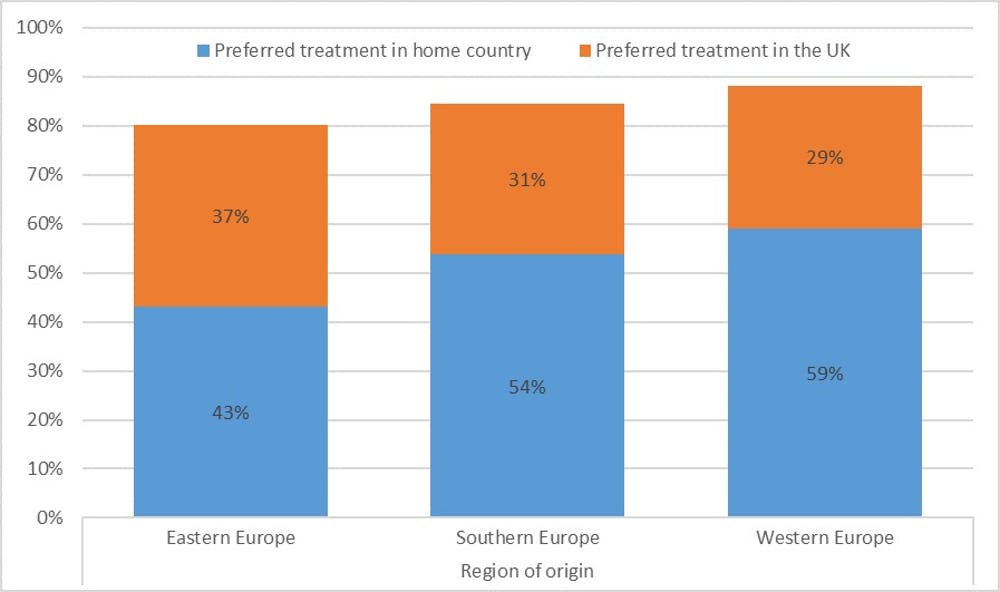
But our research shows that while the NHS may be a national treasure to British people, EU migrants would rather be treated in their countries of origin. As a 38-year-old woman from Germany put it: “Sorry, NHS? No thanks.” And the reasons for rejecting the NHS? A 25-year-old man from the Netherlands says it’s because the “NHS is slow and the medical care mediocre”. Or, at least, it “is rather poor compared to healthcare in my country,” says a 45-year-old woman from Germany.
But why should British people worry about what EU migrants think of their health service? What EU migrants think and choose is important because they are familiar with at least two European healthcare systems. They have the information and personal experience that most British citizens do not. There is a lot to be learnt from them.
March 21, 2019
Theodore Dalrymple reviews a new Jeremy Corbyn biography
It certainly doesn’t paint a pleasant picture of the man:

Jeremy Corbyn, Leader of the Labour Party speaking at a Rally in Hayfield, Peak District, UK on 25th July 2018 in support of Ruth George MP.
Photo by Sophie Brown via Wikimedia Commons.
In normal circumstances, no one would dream of writing a biography of so dreary a man as Jeremy Corbyn; but political correctness has so eviscerated the exercise of wit that dreariness is no obstacle to political advancement and may even be of advantage to it. The dreary, alas, are inheriting the earth.
Tom Bower is a biographer of eminent living persons whose books tend to emphasise the discreditable — of which he usually finds more than enough to satisfy most people’s taste for salacity. His books are not well-written but they are readable; one sometimes dislikes oneself for enjoying them. So Bower’s latest book Dangerous Hero: Corbyn’s Ruthless Plot for Power, is a bit of a surprise.
Jeremy Corbyn is not a natural subject for Bower because he, Corbyn, is not at all flamboyant and has even managed to make his private life, which has been far from straightforward, uninteresting. Corbyn, indeed, could make murder dull; his voice is flat and his diction poor, he possesses no eloquence, he dresses badly, he has no wit or even humour, he cannot think on his feet, and in general has negative charisma. His main assets are his tolerable good looks, attractiveness to women, and an ability to hold his temper, though he seems to be growing somewhat more irritable with age.
Bower has written a book that is very much a case for the prosecution. If he has discovered in Corbyn no great propensity to vice as it is normally understood, neither has he discovered any great propensity to virtue as it is normally understood, for example personal kindness. His concern for others has a strongly, even chillingly abstract or ideological flavour to it; he is the Mrs. Jellyby de nos jours, but with the granite hardness of the ideologue added to Mrs. Jellyby’s insouciance and incompetence.
[…]
His probity, cruelty or stupidity, might appeal to monomaniacs, but it presages terrible suffering for millions if ever he were to achieve real power: for no merely empirical evidence, no quantity of suffering, would ever be able to persuade him that a policy was wrong or misguided if it were in accord with his abstract principle. This explains his continued loyalty to the memory of Hugo Chavez and to his successor. What happens to Venezuelans in practice is of no interest to him whatsoever, any more than the fate of Mrs. Jellyby’s children were of no interest to her. For Corbyn, the purity of his ideals are all-in-all and their consequences of no consequence.
From a relatively privileged background, he formed his opinions early and has never allowed any personal experience or historical reading to affect them. On any case, according to Bower, he reads not at all: in this respect, he is a kind of Trump of the left. He has remained what he was from an early age, a late 1960s and 70s student radical of the third rank.
His outlook on life is narrow, joyless and dreary. He is the kind of man who looks at beauty and sees injustice. He has no interests other than politics: not in art, literature, science, music, the theatre, cinema — not even in food or drink. For him, indeed, food is but fuel: the fuel necessary to keep him going while he endlessly attends Cuban, Venezuelan, or Palestinian solidarity meetings. He is one of those who thinks that, because he is virtuous, there shall be no more cakes and ale.
Tank Chats #44 T14 and A33 (Excelsior) Assault Tanks | The Tank Museum
The Tank Museum
Published on 13 Jan 2018The Second World War American T14 and British A33 (Excelsior) Assault tanks were made to the same specification as one another, neither ever went in to service and only one of each were made. They both survive at The Tank Museum.
Support the work of The Tank Museum on Patreon: ► https://www.patreon.com/tankmuseum
Or donate http://tankmuseum.org/support-us/donateVisit The Tank Museum SHOP: ►https://tankmuseumshop.org/
Twitter: ► https://twitter.com/TankMuseum
Tiger Tank Blog: ► http://blog.tiger-tank.com/
Tank 100 First World War Centenary Blog: ► http://tank100.com/ #tankmuseum #tanks
QotD: Pie language
Even in their early days, pies served different purposes for the rich and poor: as show-off delicacies for the former and portable food for the latter. So while wealthy feasts might include pies containing anything from game birds to mussels, the less well-off used simpler pies as a way to have food while doing outdoor work or travelling – the crust both carried and preserved the tasty filling.
Take, for example, the Bedfordshire Clanger: a British classic which cleverly combines main course and dessert, with savoury ingredients like pork at one end and sweet ingredients like pear at the other. The name comes from a local slang word, “clang”, which means to eat voraciously. However, cramming two courses into a pie makes a clanger rather unwieldy – and all too easy to drop, inspiring the English phrase “dropping a clanger” for a careless mistake.
Pies have been adding rich flavour to the English language for centuries. Even Shakespeare got in on the act, writing in his 1613 play Henry VIII that “No man’s pie is freed from his ambitious finger”, giving English the phrase “a finger in every pie”.
Meanwhile, the description of a drunken state as “pie-eyed” likely takes its cue from someone who, thanks to having over-imbibed, has eyes as wide and blank as the top of a pie. “As easy as pie” – first recorded as “like eating pie” in the horse-racing newspaper Sporting Life in 1886 – springs from pies’ historical role as convenience food.
“Eating humble pie”, meanwhile, comes from medieval deer hunting, when meat from a successful hunt was shared out on the basis of social status. While the finest cuts of venison went to the rich and powerful, the lower orders made do with the “nombles“: a Norman French word for deer offal. Anglicisation saw “nombles” pie become “humble” pie.
Norman Miller, “How a pocket-sized snack changed the English language”, BBC Travel, 2017-03-29.
March 18, 2019
The Phoney War: Actually Not Phoney
Historigraph
Published on 16 Mar 2019Join us in #WarThunder for free using this link and get a premium tank or aircraft and three days of premium time as a bonus: http://v2.xyz/WarThunderWithHistorigraph
If you enjoyed this video and want to see more made, consider supporting my efforts on Patreon: https://www.patreon.com/historigraph


