The Tank Museum
Published 18 Aug 2018Another episode in the Tank Chats Funnies Specials, with David Fletcher looking at the weird and wonderful vehicles of 79th Armoured Division led by Major General Percy Hobart, known as “Hobart’s Funnies”.
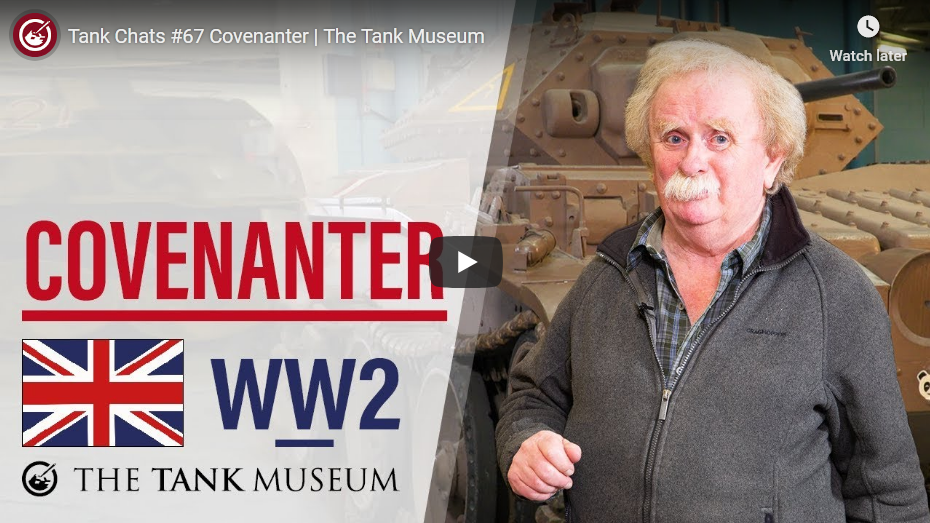
The Churchill Crocodile was a British flamethrower tank and a variant of the Churchill Mark VII tank. The Crocodile was developed in time for the D-Day landings and used during the Allied invasion of North-West Europe.
Support the work of The Tank Museum on Patreon: ► https://www.patreon.com/tankmuseum
Or donate http://tankmuseum.org/support-us/donateVisit The Tank Museum SHOP: ► https://tankmuseumshop.org/
Twitter: ► https://twitter.com/TankMuseum
Tiger Tank Blog: ► http://blog.tiger-tank.com/
Tank 100 First World War Centenary Blog: ► http://tank100.com/ #tankmuseum #tanks #tankchats
November 26, 2019
Tank Chats #55 Churchill Crocodile | The Funnies | The Tank Museum
QotD: The “Glorious Revolution” of 1688
William of Orange masterminds a coup d’état known here as the “Glorious Revolution” (1688), and installs himself as King of England. My teachers made it sound as if the English elite suddenly decided one day that they wanted a different king, found William of Orange in a mail order catalogue, liked the look of him and had him delivered the next day, in a state of great amazement and gratitude. In fact, William bossed the entire operation, albeit with plenty of English support. It is worth noting that William achieved a successful cross-Channel invasion of England, so all that stuff about England not having been invaded since 1066 is quite wrong.
Brian Micklethwait, “Navigating individuals”, Samizdata, 2004-10-04.
November 24, 2019
Cracks in the Soviet-Nazi Alliance – WW2 – 065 – November 23, 1940
World War Two
Published 23 Nov 2019As the Greek campaign continues, Hitler points his attention eastwards. While he can’t invade the Soviet Union just yet, his dependence on it is making him nervous.
Join us on Patreon: https://www.patreon.com/TimeGhostHistory
Or join The TimeGhost Army directly at: https://timeghost.tvFollow WW2 day by day on Instagram @World_war_two_realtime https://www.instagram.com/world_war_t…
Join our Discord Server: https://discord.gg/D6D2aYN.
Between 2 Wars: https://www.youtube.com/playlist?list…
Source list: http://bit.ly/WW2sourcesWritten and Hosted by: Indy Neidell
Produced and Directed by: Spartacus Olsson and Astrid Deinhard
Executive Producers: Bodo Rittenauer, Astrid Deinhard, Indy Neidell, Spartacus Olsson
Creative Producer: Joram Appel
Post-Production Director: Wieke Kapteijns
Research by: Indy Neidell
Edited by: Iryna Dulka
Map animations: Eastory (https://www.youtube.com/c/eastory)Colorisations by:
– Julius Jääskeläinen (https://www.facebook.com/JJcolorization/)
– Adrien Fillon (https://www.instagram.com/adrien.colo…)
– Dememorabilia (https://www.instagram.com/dememorabilia/)Eastory’s channel: https://www.youtube.com/channel/UCEly…
Archive by Screenocean/Reuters https://www.screenocean.com.Sources:
– Coal energy by supalerk laipawat, wheat Grain Bag by Symbolon, oil barrel by BomSymbols from the Noun Project
– Portrait of Sir John Salmond courtessy of National Portrait Gallery, London
– Lord Beaverbrook photographed by Yousuf Karash
– IWM: HU 94169, D 1640, D 1556, D 1507, D 1589, D 1513, D 1567, H 12224
– Narodowe Archiwum CyfroweA TimeGhost chronological documentary produced by OnLion Entertainment GmbH.
From the comments:
World War Two
2 days ago (edited)
We have been shooting a bunch of new episodes this week. Besides the World War Two and Between Two Wars episodes, which by the way includes some pretty amazing history, we have also been working on some much requested episodes of our War Against Humanity series. We have shot three of those, so you will see the first of those coming in the next few weeks. Additionally, we have shot a very special mini-series that we will be airing during the holidays on the TimeGhost History Channel (https://www.youtube.com/channel/UCLfMmOriSyPbd5JhHpnj4Ng). We will disclose more about that soon, but it’s going to be pretty cool. So all in all, enough to look forward to!
Cheers, Joram
November 23, 2019
Sir Charles Trevelyan, head of the Irish relief efforts during the potato famine, and creator of the modern civil service
By happenstance, after posting the OSP video on the history of Ireland, a post at Samizdata covered one of the questions I had from OSP’s summary, specifically that the famine was worsened by British “laissez-faire mercantilism”. Mercantilism is rather different from any kind of laissez-faire system, so it was puzzling to hear Blue link them together as though they were the same thing. Of course, I live in a province currently governed by the Progressive Conservative party, so it’s not like I’m unable to process oxymorons as they go by…
Anyway, this post by Paul Marks looks at the man in charge of the relief efforts:
Part of the story of Sir Charles Trevelyan is fairly well known and accurately told. Charles Trevelyan was head of the relief efforts in Ireland under Russell’s government in the late 1840s – on his watch about a million Irish people died and millions more fled the country. But rather than being punished, or even dismissed in disgrace, Trevelyan was granted honours, made a Knight Commander of the Order of the Bath (KCB) and later made a Baronet, not bad for the son of the Cornishman clergyman. He went on to the create the modern British Civil Service – which dominates modern life in in the United Kingdom.
Charles Edward Trevelyan (contemporary lithograph). This appeared in one of the volumes of “The drawing-room portrait gallery of eminent personages principally from photographs by Mayall, many in Her Majesty’s private collection, and from the studios of the most celebrated photographers in the Kingdom / engraved on steel, under the direction of D.J. Pound; with memoirs by the most able authors”. Many libraries own copies.
Public domain, via Wikimedia.With Sir Edwin Chadwick (the early 19th century follower of Jeremy Bentham who wrote many reports on local and national problems in Britain – with the recommended solution always being more local or central government officials, spending and regulations), Sir Charles Trevelyan could well be described as one of the key creators of modern government. If, for example, one wonders why General Douglas Haig was not dismissed in disgrace after July 1st 1916, the first day of the Battle of the Somme when twenty thousand British soldiers were killed and thirty thousand wounded for no real gain (the only officers being sent home in disgrace being those officers who had saved some of them men by ordering them stop attacking – against the orders of General Haig), then the case of Sir Charles Trevelyan is key – the results of his decisions were awful, but his paperwork was always perfect (as was the paperwork of Haig and his staff). The United Kingdom had ceased to be a society that always judged someone on their success or failure in their task – it had become, at least partly, a bureaucratic society where people were judged on their words and their paperwork. A General, in order to be great, did not need to win battles or capture important cities – what they needed to do was write official reports in the correct administrative manner, and a famine relief administrator did not have to actually save the population he was in charge of saving – what he had to do was follow (and, in the case of Sir Charles, actually invent) the correct administrative procedures.
But here is where the story gets strange – every source I have ever seen in my life, has described Sir Charles Trevelyan as a supporter of “Laissez Faire” (French for, basically, “leave alone”) “non-interventionist” “minimal government” and his policies are described in like manner. […]
Which probably explains why Blue used the term in the previous video. Then these “laissez-faire” policies are summarized, which leads to this:
None of the above is anything to do with “laissez faire” it is, basically, the opposite. Reality is being inverted by the claim that a laissez faire policy was followed in Ireland. A possible counter argument to all this would go as follows – “Sir Charles Trevelyan was a supporter of laissez faire – he did not follow laissez faire in the case of Ireland, but because he was so famous for rolling back the state elsewhere (whilst spawning the modern Civil Service) – it was assumed that he must have done so in the case of Ireland“, but does even that argument stand up? I do not believe it does. Certainly Sir Charles Trevelyan could talk in a pro free market way (just as General Haig could talk about military tactics – and sound every inch the “educated soldier”), but what did he actually do when he was NOT in Ireland?
I cannot think of any aspect of government in the bigger island of the then UK (Britain) that Sir Charles Trevelyan rolled back. And in India (no surprise – the man was part of “the Raj”) he is most associated with government road building (although at least the roads went to actual places in India – they were not “from nowhere to nowhere”) and other government “infrastructure”, and also with the spread of government schools in India. Trevelyan was passionately devoted to the spread of government schools in India – this may be a noble aim, but it is not exactly a roll-back-the-state aim. Still less a “radical”, “fanatical” devotion to “laissez faire“.
History Summarized: Ireland
Overly Sarcastic Productions
Published 22 Nov 2019Get 3 months of Audible for just $6.95 a month — that’s more than half off the regular price. Choose 1 audiobook and 2 Audible Originals absolutely free. Visit http://www.audible.com/overlysarcastic or text “
overlysarcastic” to 500 500.While the rest of Europe was flailing aimlessly through the Dark Ages, Ireland was both preserving the ancient world and setting the stage for the Medieval Period. Then England showed up.
Sources & Further Reading:
How the Irish Saved Civilization: https://www.audible.com/pd/How-the-Ir…
Modern Ireland: 1600 — 1972 by R.F. FosterMusic from https://filmmusic.io
“Marked”, “Traveler”, “God Rest Ye Merry Celtishmen” by Kevin MacLeod (https://incompetech.com)
License: CC BY (http://creativecommons.org/licenses/b…)Our content is intended for teenage audiences and up.
DISCORD: https://discord.gg/sS5K4R3
PATREON: https://www.Patreon.com/OSP
MERCH LINKS: https://www.redbubble.com/people/OSPY…
OUR WEBSITE: https://www.OverlySarcasticProductions.com
Find us on Twitter https://www.Twitter.com/OSPYouTube
Find us on Reddit https://www.Reddit.com/r/OSP/
Quick Look at a 37mm Maxim “Pompom” Automatic Cannon
Forgotten Weapons
Published 21 Sep 2019http://www.patreon.com/ForgottenWeapons
Cool Forgotten Weapons merch! http://shop.bbtv.com/collections/forg…
This Vickers, Sons & Maxim 37mm MkIII “Pompom” is on display at the Canadian War Museum in Ottawa. The MkIII pattern is quite scarce, with less than one hundred ever made. It is built around the 37 x 124mm cartridge, firing a 1.25 pound explosive or armor piercing projectile. This one (or one of the same model) was mounted on the CGS Canada, a coastal patrol vessel built by VSM in 1904 for the Canadian Fisheries service. Firing fully automatically at 300 rounds/minute, the “pompom” (so named for the sound of its firing) was capable of tremendous firepower, although few ever saw much use in combat. Only the Boers made much use of them as land artillery, and by WW1 most were relegated to antiaircraft use.
Contact:
Forgotten Weapons
6281 N. Oracle #36270
Tucson, AZ 85704
November 21, 2019
There’s nothing “confusing” about Labour’s Brexit policy
As Brendan O’Neill explains, the Labour Party knows exactly what it wants as far as Brexit is concerned:
I wish people would stop saying Labour’s Brexit policy is confusing. It is actually incredibly straightforward. Labour will kill Brexit. It will block the enactment of the largest democratic vote in UK history and ensure that we do not leave the EU in any meaningful way. It could not be clearer: Labour will betray millions of its working-class voters, its own history of Euroscepticism, and the values of Jeremy Corbyn’s own hero Tony Benn, by subverting British democracy and keeping us in the EU against the people’s will.
Anyone who doubts this – or anyone who is still, inexplicably, confused about Labour Brexit’s policy – only needed to listen to Crobyn’s comments at the Confederation of British Industry (CBI) on Monday. Corbyn first assured the assembled capitalists that he is not anti-business. Then he assured them that if he were prime minister, no harm would come to their beloved neoliberal institution, the European Union. Corbyn essentially promised the gathered bosses that he would override the stupid plebs’ democratic wishes and keep Britain entangled in the EU.
He said Labour’s policy is to get a good Brexit deal with the EU and then put it to the people in a confirmatory vote – otherwise known as a second referendum. This referendum would, in his words, be a choice between the “sensible deal” struck by Labour and fully remaining in the EU. That “sensible deal”, by the way, would include “a customs union, close Single Market relationship, and guarantees of rights, standards and protections”. So we’d have a choice between remaining and … remaining. A customs union, Single Market links, and EU-guaranteed rights and standards – that is, immovable EU regulations – do not not add up to Leave. By any stretch of the imagination. With complete contempt for the democratic will, and the basic principle of democratic choice, a Labour government would say to us: “You can stay in the EU or you can stay in the EU. It’s your choice.”
This is not confusing. Labour would pursue a backroom coup against Brexit. It would not only renege on the democratic vote to leave – it would then remove the option of leaving entirely from the ballot paper in a second referendum. It would deprive the British people of the thing that the largest number of us in the democratic history of this country called for: a break from the EU. Labour MPs, activists and bureaucrats would engage in a bloodless coup against the people’s will.
November 20, 2019
The Sinking of the Royal Oak
Eoin MacFreeman
Published 19 Sep 2014STV and History channel documentary to coincide with the 70th anniversary of the sinking of HMS Royal Oak at Scapa Flow in Scotland. With harrowing eye witness accounts from survivors. Narrated by oor Alex Norton. We will remember them.
On 14 October 1939, Royal Oak was anchored at Scapa Flow in the Orkney Islands, Scotland, when she was torpedoed by the German submarine U-47. Of Royal Oak‘s complement of 1,234 men and boys, 833 were killed that night or died later of their wounds. The loss of the old ship – the first of the five Royal Navy battleships and battlecruisers sunk in the Second World War – did little to affect the numerical superiority enjoyed by the British navy and its allies, but the sinking had considerable effect on wartime morale. The raid made an immediate celebrity and war hero out of the U-boat commander, Günther Prien, who became the first German submarine officer to be awarded the Knight’s Cross of the Iron Cross. Before the sinking of Royal Oak, the Royal Navy had considered the naval base at Scapa Flow impregnable to submarine attack, and U-47‘s raid demonstrated that the German navy was capable of bringing the war to British home waters. The shock resulted in rapid changes to dockland security and the construction of the Churchill Barriers around Scapa Flow.
November 19, 2019
The “Carbuncle Cup” is good, but we need mandatory demolition because name-and-shame hasn’t worked
I like the cut of Peter Franklin‘s jib:

Centre Georges-Pompidou (no, this isn’t an under construction image … it’s from 2017)
Gerd Eichmann photo via Wikimedia Commons.
The Nobels, the Oscars, Pipe Smoker of the Year: glittering prizes all, but I prefer the Carbuncle Cup, which is awarded annually to the “the ugliest building in the United Kingdom completed in the last 12 months”.
Organised by the magazine Building Design, it has (in my aesthetic judgement) produced a worthy shortlist and a worthy winner every year since its inception in 2006.
But there’s a big problem with the prize — not its subjectivity, but the fact that the winning buildings still exist. Indeed, buildings like them are still being built. Name-and-shame is not working.
There’s an argument to be made that things are getting worse. We’ve swapped the horrendous, but interesting, brutalism of the post-war period for the offensively bland spreadsheet architecture of the 21st century. In an age in which Jane Jacobs has won the intellectual battle against Robert Moses, we really ought to know better. Yet we continue to fill up our towns and cities with inhumane, alienating architecture.
It might seem paradoxical, but to end the cycle of destruction, we need to accelerate it. Every year, there should be a public vote to choose the worst new building in the land. The winner wouldn’t get a cup, but a wrecking ball. Yes, that’s right, it would be physically demolished — immediately and without compensation. Indeed, the owner would be required to foot the bill for the building’s de-construction (though they would have the option of suing the architect and the planning authority).
This would concentrate minds wonderfully. Instead of competing among themselves to épater les bourgeois, starchitects would need to design with due regard to the common good. Meanwhile, developers whose sole objective is to squeeze as much profitable square footage into any site they can get their hands on, would have to contend with the possibility of financial (as well as literal) ruin. The planners would come under immense pressure to do a better job too. At the cost of sacrificing one new building, development across the land would be greatly improved.

Cumbernauld Shopping Centre, voted as Britain’s most hated building.
Photo by Ed Webster via Wikimedia Commons.
H/T to Colby Cosh for the link.
November 18, 2019
The Opium War – Lost in Compensation l HISTORY OF CHINA
IT’S HISTORY
Published 22 Aug 2015The Opium War started as a dispute over trading rights between China and Great Britain. Regular trade between Europe and the Chinese had been ongoing for centuries. But China’s trading restrictions frustrated the British who were eager to supply the Chinese people with the increasingly popular narcotic opium. Circumventing the government’s attempts to ban opium trade by smuggling and bribery, China declared the death sentence on Opium smuggling and refused to compensate British tradesmen for any losses. Furiously, the Brits sent out a fleet to demand compensation and end the Cohong trading monopoly. Fierce battles and attacks on the Chinese coast were followed. Find out all about the First Opium War from Indy in our new episode of Battlefields!
» SOURCES
Videos: British Pathé (https://www.youtube.com/user/britishp…)
Pictures: mainly Picture Alliance
Content:
Lovell, Julia: The Opium War: Drugs, Dreams and the Making of China
Wei, Yuan: Chinese Account of the Opium War
McPherson, Duncan: The First Opium War – The Chinese Expedition 1840-1842
Merwin, Samuel: Drugging a Nation – The Story of China and the Opium Curse
Bernard, William Dallas; Hall, Sir William Hutcheon: Narrative of the Voyages and Services of the Nemesis, from 1840 to 1843.
Isabel Hilton (The Guardian): “The Opium War by Julia Lovell – review”
Perdue, Peter C. (MIT): The First Opium War http://ocw.mit.edu/ans7870/21f/21f.02…» ABOUT US
IT’S HISTORY is a ride through history – Join us discovering the world’s most important eras in IN TIME, BIOGRAPHIES of the GREATEST MINDS and the most important INVENTIONS.» HOW CAN I SUPPORT YOUR CHANNEL?
You can support us by sharing our videos with your friends and spreading the word about our work.» CAN I EMBED YOUR VIDEOS ON MY WEBSITE?
Of course, you can embed our videos on your website. We are happy if you show our channel to your friends, fellow students, classmates, professors, teachers or neighbors. Or just share our videos on Facebook, Twitter, Reddit etc. Subscribe to our channel and like our videos with a thumbs up.» CAN I SHOW YOUR VIDEOS IN CLASS?
Of course! Tell your teachers or professors about our channel and our videos. We’re happy if we can contribute with our videos.» CREDITS
Presented by: Guy Kiddey
Script by: Dan Hungerford
Directed by: Daniel Czepelczauer
Director of Photography: Markus Kretzschmar
Music: Markus Kretzschmar
Sound Design: Bojan Novic
Editing: Markus KretzschmarA Mediakraft Networks original channel
Based on a concept by Florian Wittig and Daniel Czepelczauer
Executive Producers: Astrid Deinhard-Olsson, Spartacus Olsson
Head of Production: Michael Wendt
Producer: Daniel Czepelczauer
Social Media Manager: Laura Pagan and Florian WittigContains material licensed from British Pathé
All rights reserved – © Mediakraft Networks GmbH, 2015
November 17, 2019
Britain shows Japan how to Attack Pearl Harbor – WW2 – 064 – November 16, 1940
World War Two
Published 16 Nov 2019Japan has two wins this week, and one might turn out to be very consequential for the rest of the war. In the meantime, the British RAF fights the Luftwaffe and Italy struggles in their offensive against Greece.
Join us on Patreon: https://www.patreon.com/TimeGhostHistory
Or join The TimeGhost Army directly at: https://timeghost.tvFollow WW2 day by day on Instagram @World_war_two_realtime https://www.instagram.com/world_war_t…
Join our Discord Server: https://discord.gg/D6D2aYN.
Between 2 Wars: https://www.youtube.com/playlist?list…
Source list: http://bit.ly/WW2sourcesWritten and Hosted by: Indy Neidell
Produced and Directed by: Spartacus Olsson and Astrid Deinhard
Executive Producers: Bodo Rittenauer, Astrid Deinhard, Indy Neidell, Spartacus Olsson
Creative Producer: Joram Appel
Post-Production Director: Wieke Kapteijns
Research by: Indy Neidell
Edited by: Iryna Dulka
Map animations: EastoryColorisations by: Julius Jääskeläinen, https://www.facebook.com/JJcolorization/
Eastory’s channel: https://www.youtube.com/channel/UCEly…
Archive by Screenocean/Reuters https://www.screenocean.com.Sources:
– Narodowe Archiwum Cyfrowe
– IWM: CM 164, C 1244
– Destroyed house icon by Gan Khoon Lay, people icon by Gregor Cresnar from the Noun ProjectA TimeGhost chronological documentary produced by OnLion Entertainment GmbH.
From the comments:
World War Two
2 days ago
Do you want more World War Two in realtime? We have a great Instagram page, where we make a daily post about what happened in the war on that day. This might be something completely different from what’s covered in these videos, or might add some more details. You can follow it by searching @world_war_two_realtime or by clicking here: https://www.instagram.com/world_war_two_realtime/. See you there!
Cheers, Joram
The three cycles of a naval ship’s career
Last month, there was some concern over the state of the Royal Navy’s current fleet, based on things the Secretary of State for Defence had said to the Commons Defence Select Committee:
While discussing the size of the navy, and the minister made a valid point that it is hard to go to the Treasury and argue for more new warships when the RN is unable to make full use of the vessels already in service. “If I had more of our current fleet working, then I would have much more freedom to deploy to meet some of our ambitions and tasks. I’ve made it very clear to the First Sea Lord one of my priorities is to get what we’ve got working” he said.
Unfortunately the Minister then rather confused the issue by stating that the RN has “only” 57 of its 76 surface ships available. This statement is technically true but it needs a great deal of context. It is only possible to reach the 76 figure by counting absolutely everything in commission that floats including the MCMVs, OPVs, Royal Fleet Auxiliary vessels, the hydrographic ships and the two small boats of the Gibraltar Squadron. 16 small unarmed P2000 patrol/training boats and inshore survey boat HMS Magpie are also included in this total. These vessels all have important roles to play but major surface combat vessels number just 23, even if both aircraft carriers and both LPDs are counted. Of that 23, about 10 are active at the time of writing. (HMS Queen Elizabeth (not yet fully operational) Albion, Defender, Dragon, Montrose, Kent, Argyll, Sutherland, Northumberland and Westminster)
In fact, 57 vessels “available” from a fleet of 76 would be very impressive. Any navy that has 75% of its ships ready for operations would be doing exceptionally well. But it rather depends on your definition of “available” as ships are in constant cycle at differing levels of readiness. A more normal approximate ‘rule of thirds’ would apply for most serious navies; a third on operations, a third preparing for operations, in transit, training or maintenance and a third at very low readiness in deep refit. This cycle is simply unavoidable, warships are highly complex pieces of engineering that are exposed to the harsh marine environment and must be maintained.
What Ben Wallace was really talking about is improving the readiness of the frigates and destroyers. As we have reported before, delays to the frigate LIFEX refits are contributing to lower than usual numbers of ships available. Currently, more than half of the frigate fleet are all either awaiting refit or undergoing refit at Devonport.

A view of Royal Navy ships at Devonport, 19th October 2019. (Top) HMS Monmouth out of routine and awaiting refit. (Middle) The depressing sight of the decommissioned nuclear submarine “flotilla” awaiting disposal, comprising more boats than are currently active. In the basin are (top) HMS Richmond, first of the frigates to receive new engines and (bottom) HMS St. Albans. HMS Portland, Somerset and Iron Duke are inside the covered refit complex to the right. (Left) alongside at No.1 Wharf is HMS Lancaster.
Photo by Andy Amor, originally posted at Save The Royal Navy, 2019-10-25.
November 16, 2019
The British army’s “Tractable” shows the continued importance of logistics
Sir Humphrey discusses the ongoing commitment of nearly a thousand British soldiers to Estonia, and how the logistics to get them and their equipment there illustrates a rarely discussed but critical military capability:
One of the most significant exercise commitments this year has been the British Army and “Tractable” (sometimes referred to as either “Op” or “Exercise” but without a title on the British Army website. This major undertaking has been running for some weeks now and has highlighted how the British Army continues to excel at undertaking large scale movements of units in order to be ready to conduct operations as required.
The genesis of Tractable was the need to rotate assets out of Estonia and send new vehicles from the UK in their place. It is often overlooked that the UK now has over 900 British Army personnel permanently stationed in Estonia as part of wider NATO work to help send a strong signal to deter aggression from nations like Russia – which given its recent history of attacking and invading other countries and acting in a remarkably uncivilised manner is certainly required.
[…]
This may sound an obvious and straightforward thing to say, but investment in logistical tail is rarely something that features in many peoples “fantasy Army ORBAT” threads that litter the internet. Most people focus on combat power, looking at how many tanks or self propelled guns an Army has and then considering what this means for its combat power from there.
For the British Army, the investment in heavy armour, APCs and artillery is important, but equally so is the important in assets like logistics enablers – the ability to lift by train or sealift in order to actually get the Army where it needs to be, and not stuck somewhere irrelevant. The purpose of Tractable has as much been to test that the Army can still do this well, and that the various enablers work as intended to deliver a force that can fight.
In practical terms this has meant a focus on areas that often get relatively little attention. For example the skills required to pull vehicles out of storage, conduct road and rail moves across Europe and then deliver them to Estonia are complex and perishable. There is a lot of work required to ensure that a train can be safely loaded with the right armoured vehicles and then sent through the Channel Tunnel for onwards travel.
This work often puts significant responsibility in the hands of very junior soldiers who are responsible for ensuring that millions of pounds of equipment is safely handled and put in place properly. One slip up could have huge consequences and potentially cost lives as well. It is only by practising this activity regularly that it can be done safely and effectively for real though.
In the case of Tractable what it has demonstrated is the critical importance of the Royal Logistics Corp to the wider British Army. While logistics may not be a supremely “sexy” subject to many people, being able to ensure that the Army has the right equipment, people and training to be able to do this sort of work is essential – without it, things would rapidly grind to a halt.
Similarly, Tractable has helped focus attention on other critical capabilities like strategic sealift. The use of the “POINT” class strat ro-ro ferry force to help move vehicles across the channel and into Emden (and then onto Estonia) has helped show how key these vessels are to British Army capability. Without them it would be much harder to do the complex business of deploying overseas. Here too we are also reminded of the critical importance of units like 17 Port and Maritime Regiment, one of the most unusual (and vital) units in the Army today, responsible for co-ordinating the sealift and deployment of vehicles around the globe.
Funny English Idioms – and why we say them!
Joolz Guides – London History Walks – Travel Films
Published 7 Jan 2018Funny English Idioms – and why we say them!
English people use some funny idioms and expressions. We love them, especially if they are about going to the toilet!
Subscribe on Youtube ➜ https://www.youtube.com/joolzguides
Joolz Guides website to book a private tour ➜ http://joolzguides.com/
Julian McDonnell, that’s me, runs a London vlog and youtube channel where he talks about all things to do with London which you may not have known. This includes language and the way English people speak. Amongst many other funny idioms for going to the toilet one of the oldest ones is “To Spend a Penny”. This came about because it used to cost one penny to go to the public lavatories when they first appeared on the streets in 1851!
Hopefully this video will help you to understand the origins of these funny English idioms and expressions and help you to learn English or they may even be helpful if you are an ESL teacher or TEFL.
Another funny English idiom is when we say “He was sent to Coventry”. This indicates somebody who has been ostrasized and no one wants to talk to. Watch the video to find out how this came about.
Did you ever hear someone use the idiom “To hear a pin drop”? This actually originates from the tea auctions where you were only allowed to bid for a certain amount of time. They put a pin into a candle and let it burn down. When the pin fell out if there were no more bids you could hear a pin drop!
Our fourth funny idiom is a baker’s dozen. Anyone will tell you that a dozen is 12 but a baker’s dozen is 13! This is because in 1266 there was a law that would penalise bakers if they sold less than they said they were selling! So to make sure they weren’t short of their weight they would add a thirteenth loaf just to make sure.
Then comes our final idiom – To be on the wagon.
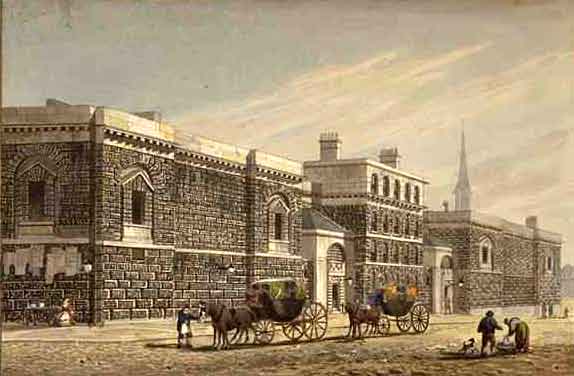
This means that someone is not drinking alcohol and it originates from the days when criminals would be hanged. They would stop at the Resurrection Gate pub and be bought one last drink but after that drink they had to get back onto the wagon and couldn’t drink any more. Then the wagon would take them to the gallows.
To make it more fun I have tried to show some of the locations which would have been affected by these expressions as well as point out some interesting historical facts which are related to them.
I go to Twinings in The Strand, The Royal Exchange, Pudding Lane and St Giles in the Fields
SUPPORT MY CHANNEL ON PATREON ➜ https://www.patreon.com/joolzguides
DONATE TO MY CHANNEL WITH PAYPAL ➜ https://www.paypal.me/julianmcdonnell