
If it is possible to kowtow to a sacred cow, that is exactly what Boris Johnson did on leaving St Thomas’ Hospital after he had been treated there for Covid-19. The NHS, he said, was “Britain’s greatest national asset”, as if, had he fallen ill in any country other than Britain, he would not have been treated so well or simply left to die.
This was an unintended insult to the doctors and nurses of other countries, as if in their benighted lands without the NHS they did not work with skill or devotion. The NHS is neither necessary nor sufficient for medical and nursing staff to show devotion. The parents of a well-taught schoolchild do not thank the Ministry of Education.
No doubt the prime minister’s praise of the NHS was politically shrewd — one casts no doubt on the perfection of the Koran in Mecca — but in the long run such praise does no service to the nation, which at some time or other ought to face up to the fact that its healthcare system is at best mediocre by comparison with that of other countries at a similar level of economic development, and that being ill and seeking treatment is a more unpleasant experience in Britain than in it is many civilised countries.
Untold numbers of people receive excellent care under the NHS. One must neither exaggerate nor catastrophise. But there is another side to the coin as well, and it is surely not a coincidence that no one in Europe would choose Britain as their country of medical care, rather the reverse. If a German were to say, “For God’s sake, get me to the NHS!”, a psychiatrist would be called.
Theodore Dalrymple, “Empire of conformists”, The Critic, 2020-04-29.
August 29, 2020
August 28, 2020
George Stephenson: The Father of the Railways
Biographics
Published 6 Feb 2020Check out Squarespace: http://squarespace.com/biographics for 10% off on your first purchase.
This video is #sponsored by Squarespace.
TopTenz Properties
Our companion website for more: http://biographics.orgCredits:
Host – Simon Whistler
Author – Radu Alexander
Producer – Jennifer Da Silva
Executive Producer – Shell HarrisBusiness inquiries to biographics.email@gmail.com

Britain’s National Trust decides to go in a radically different direction
If you’ve ever visited the UK, you’ll almost certainly have seen some National Trust historic properties in your travels. Despite the name, it’s not a government-affiliated organization, so the Trust has its mission set by its own leadership … and the current leadership are apparently turning their back on the tradional role of the Trust “due to the pandemic”:
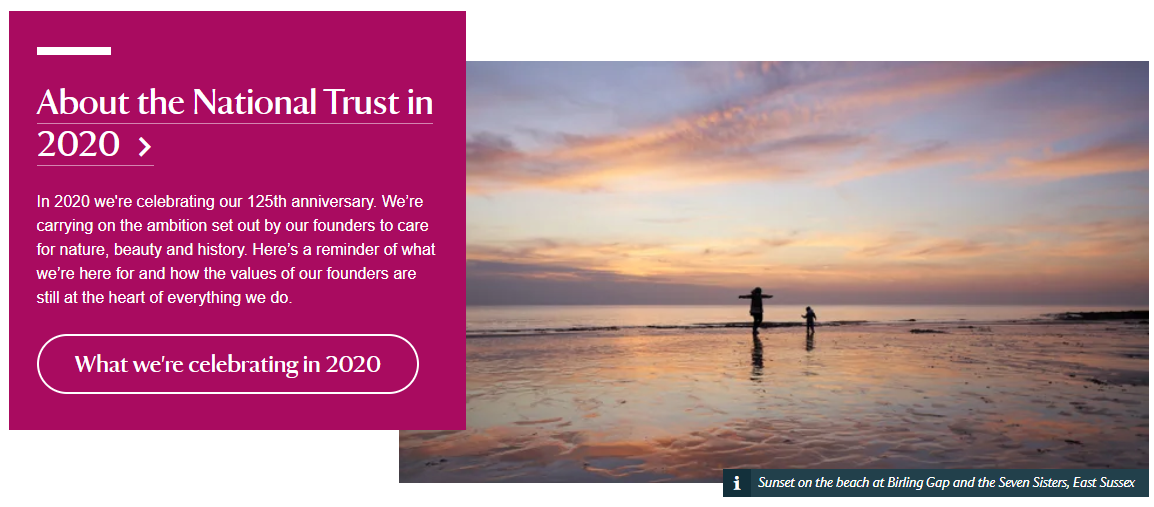
From its establishment in 1895 by Octavia Hill, Sir Robert Hunter and Hardwick Rawnsley “to promote the permanent preservation for the benefit of the Nation of lands and tenements (including buildings) of beauty or historic interest”, it has become the pre-eminent haunt of the tasteful middle classes, and is as much part of national life as that other much-lauded institution, the NHS. I have fond memories from my own childhood, and beyond, of walking round grand houses and of playing in their lavish and beautifully appointed grounds. Even their names produce a kind of Proustian rush in me – Felbrigg, Blickling, Stourhead, Dyrham Park, Kingston Lacy. In an uncertain and constantly changing world, the National Trust seemed to be almost a secular church, a rather well-appointed and comfortable Rock of Ages in its own right.
Yet we live in a time when a grubby little pandemic has turned all certainties upside down, and so even the National Trust has had to rethink its plans for the future. Unfortunately, its method of so doing seems to be both destructive and ill-considered. Some might call it woke, if it weren’t for the fact that its actions do not seem to be dictated by panicked social change, but instead by the reported £200 million loss that the coronavirus outbreak has occasioned. Despite having an endowment of over a billion pounds, and still retaining the annual memberships of over five million people, elements within the organisation that long for disruption seem now to have grasped the initiative, with potentially disastrous consequences for both the Trust and the country at large.
An internal briefing document that was leaked to the Times by a no doubt furious insider represents a chilling account of a cull of both heritage and expertise. It describes the status quo as “an outdated mansion experience”, and one that exists only to serve “a loyal but dwindling audience.” It plans to deal with this old-fashioned situation by firing dozens of its curators, placing large amounts of art and antiquities in storage, and by closing most of the properties to the public, instead letting them be hired by corporate entities and the well-heeled for private events, or “new sources of experience-based income”. As the document put it, the Trust wishes to “flex our mansion offer to create more active, fun and useful experiences.” Flex. Mansion Offer. We are, it seems, at the end of days.
I briefly considered, before writing this article, attempting to hold a séance to try and obtain James Lees-Milne’s views from beyond the grave, but eventually decided against interrupting his eternal rest to inform him of the disappointing and frightening news. Yet this situation does not need the phantoms of long-dead architectural historians to fan the flames. There are plenty of living people who are equally, and vocally, appalled, ranging from those who cancelled their memberships to the Trust when the institutional ties were no longer available in their gift shops to the curators, historians and architectural consultants who stand to lose both income and professional standing if these ill-considered and short-sighted reforms are brought about.
The art historian and broadcaster Bendor Grosvenor has been especially exercised by the revelation of the Trust’s plans. He has described their restructuring ideas in The Art Newspaper as “one of the most damaging assaults on art historical expertise ever seen in the UK.” Grosvenor has since been assiduously passing scathing commentary on the various public statements, of varying degrees of disingenuity, made by various high-up executives at the National Trust, none of which have denied that historic properties will be “repurposed”, that the specialist curator posts will be “closed” and the expert curators fired, nor, perhaps most chillingly of all, that the Trust will be seeking to “dial down” its status as a “major national cultural institution”.
About thirty years ago, when we could afford to travel more often, we had a family membership in the National Trust even though we’d only get to visit National Trust properties for two-to-three weeks in a given year. I’m very disappointed to hear about this planned change to the organization, but the chances of me visiting the UK anytime in the next few years are quite low, so I may not have to worry about it personally.
August 27, 2020
Scots wa huh?
An amusing story in The Register from Kieren McCarthy:
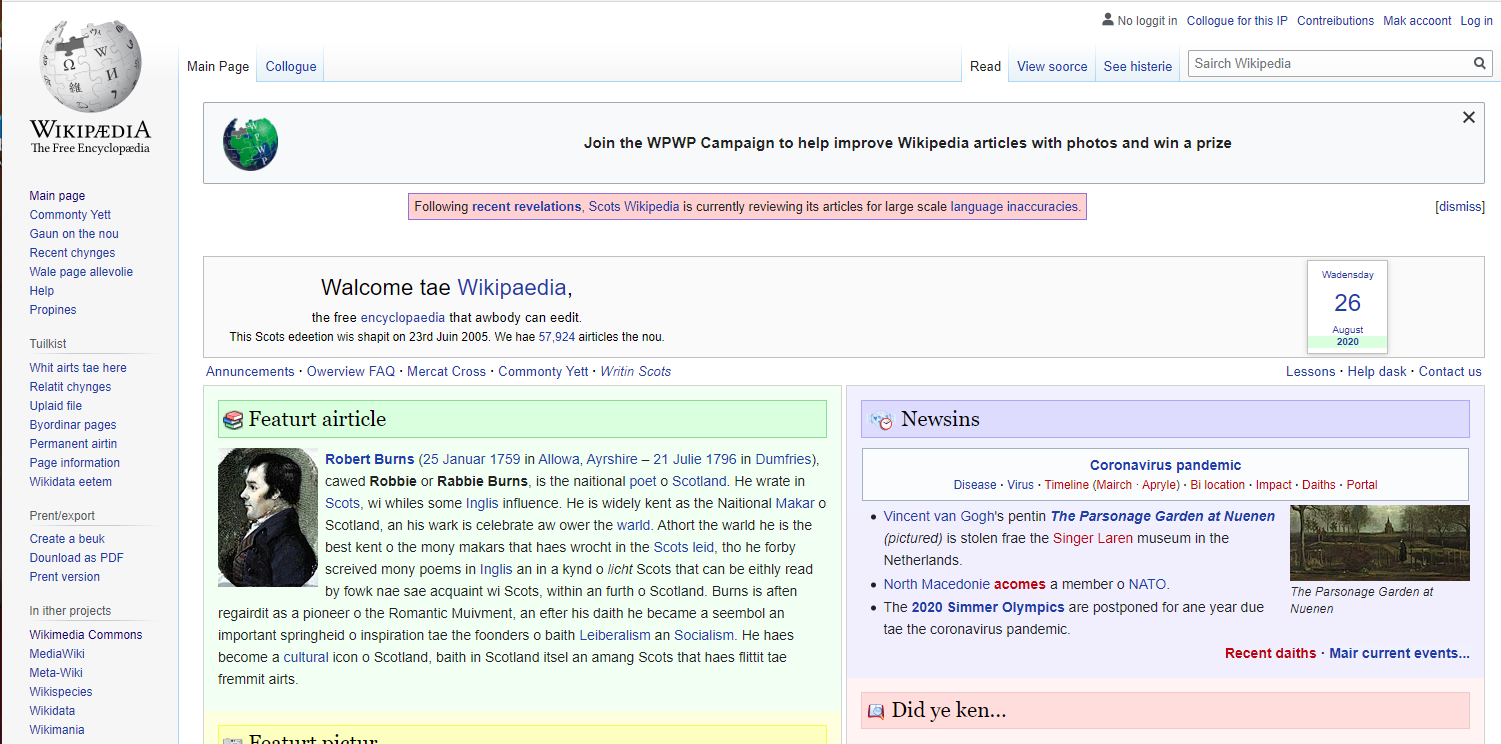
In an extraordinary and somewhat devastating discovery, it turns out virtually the entire Scots version of Wikipedia, comprising more than 57,000 articles, was written, edited or overseen by a netizen who clearly had nae the slightest idea about the language.
The user is not only a prolific contributor, they are an administrator of sco.wikipedia.org, having created, modified or guided the vast majority of its pages in more than 200,000 edits. The result is tens of thousands of articles in English with occasional, and often ridiculous, letter changes – such as replacing a “y” with “ee.”
That’s right, someone doing a bad impression of a Scottish accent and then writing it down phonetically is the chief maintainer of the online encyclopedia’s Scots edition. And although this has been carrying on for the best part of a decade, the world was mostly oblivious to it all – until today, when one Redditor finally had enough of reading terrible Scots and decided to look behind the curtain.
“People embroiled in linguistic debates about Scots often use it as evidence that Scots isn’t a language, and if it was an accurate representation, they’d probably be right,” noted the Reddit sleuth, Ultach. “It uses almost no Scots vocabulary, what little it does use is usually incorrect, and the grammar always conforms to standard English, not Scots.”
While very nearly all Scottish people speak English, the Scots language was apparently still spoken, read, or otherwise understood by nearly 30 per cent of Scotland’s population according to those responding to a 2011 census. The language got a memorable boost, too, when Scots-writing novelist Irvine Welsh’s Trainspotting became a silver-screen sensation.
Israel Faces U.S. Sanctions – The Second Arab-Israeli War Begins | The Suez Crisis | Part 1
TimeGhost History
Published 26 Aug 2020Israel launches its invasion of Egypt, much to the surprise of America who reacts furiously to the act of aggression. It quickly becomes apparent to America that Israel is not acting alone when Britain and France deliver an ultimatum to Egypt. However, could Anglo-French war plans hit the buffers if the expected American backing does not materialize?
Join us on Patreon: https://www.patreon.com/TimeGhostHistory
Hosted by: Indy Neidell
Written by: Francis van Berkel and Joram Appel
Director: Astrid Deinhard
Producers: Astrid Deinhard and Spartacus Olsson
Executive Producers: Astrid Deinhard, Indy Neidell, Spartacus Olsson, Bodo Rittenauer
Creative Producer: Joram Appel
Post-Production Director: Wieke Kapteijns
Research by: Francis van Berkel and Joram Appel
Image Research: Shaun Harrison & Daniel Weiss
Edited by: Daniel Weiss
Sound design: Marek Kamiński
Maps: Ryan WeatherbyColorizations:
– Mikolaj Uchman
– Daniel Weiss
– Carlos Ortega Pereira (BlauColorizations) – https://www.instagram.com/blaucoloriz…
– Norman Stewart – https://oldtimesincolor.blogspot.com/Sources:
National Archives NARA
Library of Congress Geography and Maps Department
Photo From the IAF website, https://www.iaf.org.ilFrom the Noun Project:
– telegraph – Luke Anthony Firth, GB
– soldier – Wonmo KangSoundtracks from Epidemic Sound:
– “Devil’s Disgrace” – Deskant
– “Searching Through Sand” – Deskant
– “As the Rivers Collapse” – Deskant
– “Crying Winds” – Deskant
– “Where Kings Walk” – Jon Sumner
– “Dreamless Nights” – The New Fools
– “Call of Muezzin” – Sight of Wonders
– “Dunes of Despair” – DeskantArchive by Screenocean/Reuters https://www.screenocean.com.
A TimeGhost chronological documentary produced by OnLion Entertainment GmbH.
From the comments:
TimeGhost History
2 days ago
Some of the military history buffs out there no doubt know about B.H. Liddell Hart and his contribution to interwar strategic theory. Well, he reportedly referred to the Israeli invasion here, code-named Operation Kadesh, as one of the finest applications of the strategy of the indirect approach he developed. This is reason enough to watch this episode, but the opening of hostilities in Sinai is interesting for reasons beyond purely theoretical concerns.From the get-go, military plans are inherently tied to political maneuvering. From the secrecy and deception of the IDF’s movements to the delaying of the Anglo-French bombing campaign; politics determine the course of this war. However, it’s easy in limited conflicts like this that are almost academic in their application, to forget that it’s destroying the lives of ordinary people. Not only the soldiers fighting, but also the civilians whose homes and lives are under threat.
Average Egyptian and Palestinians suffered disproportionately in this short campaign. You’ll learn in a later episode about at least one massacre in a Palestinian town, and there was a blatant disregard for civilian life on all sides. You probably all have different opinions on which side deserves to win here and who is at fault. But let’s not forget the real people who suffered as a result of international politics.

Margaret Murray’s highly influential The Witch-Cult in Western Europe
In First Things, Francis Young discusses the impact Murray’s work had when it was published in the 1920s:
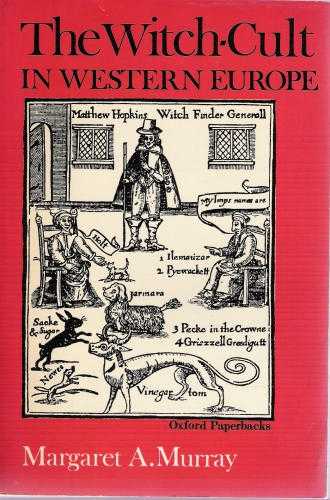
Just under a century ago, in 1921, one of the strangest books ever to be published by Oxford University Press appeared in print: The Witch-Cult in Western Europe by Margaret Alice Murray. By today’s academic standards — in fact, even by the standards of the 1920s — Murray’s book was filled with transparent flaws in methodology and research. Furthermore, the book’s author (a leading Egyptologist) was not qualified to write it. The few scholars then working on the history of European witchcraft dismissed Murray’s contribution. Yet in spite of this, The Witch-Cult in Western Europe became an instant hit and captured the imaginations of readers. Within three decades, the book had not only profoundly influenced cultural understandings of witchcraft, but also directly led to the rise of neopaganism and the foundation of a new religion, Wicca, that today has millions of adherents throughout the world.
Margaret Alice Murray (1863–1963) was born and brought up in British India — an upbringing that, as with so many Anglo-Indians of the nineteenth century, may have opened her mind to interests beyond Victorian culture. Determined to pursue a career of her own at a time when opportunities for women were limited, Murray tried out both nursing and social work before entering the progressive University College London in 1894, where she studied Egyptology under W. Flinders Petrie. Murray rapidly rose through the academic ranks, and by 1914, she was effectively running the Egyptology department. Her impressive achievements in advancing knowledge of ancient Egypt and higher education for women have, however, been largely overshadowed by her decision to take a detour into writing about European witchcraft.
In The Witch-Cult in Western Europe, Murray seized on some unusual testimonies in 16th-century Scottish witch trials to elaborate a radical theory: She claimed that what medieval and early modern people called witchcraft was, in fact, the last traces of a pagan fertility cult that originated in the Neolithic period. The witch trials of the 15th–17th centuries represented Christianity’s last attempt to stamp out this cult, which was practiced in secret covens (groups of thirteen people) who worshipped a horned god (who was mistaken for the devil). Knowledge of this cult was passed through families or, occasionally, to new initiates, but kept secret from the outside world.
Murray’s use of a single set of problematic sources from one country (Scotland) to argue that a previously unnoticed religion had existed since prehistory failed to meet basic historiographical and anthropological standards of research. She was given to making huge conceptual leaps on the basis of contentious interpretations of meager evidence. Using a small range of hostile trial records designed to discredit women accused of witchcraft (along with testimonies extracted under torture), Murray reconstructed what she believed were real religious practices lurking behind the demonological construct of the Witches’ Sabbath. In so doing, she brought together traditions of interpretation honed by the anthropologist Sir James Frazer (1854–1941), the author of The Golden Bough, and the French historian Jules Michelet (1798-1874). Murray followed Michelet in arguing that those accused of witchcraft were not the innocent victims of trumped-up charges, but were in fact adherents of a subversive cult; and she followed Frazer in her belief that prehistoric religious beliefs, associated with fertility, had survived into recent times.
August 26, 2020
For British liberals, it’s somehow different when it happens in another country
At Spiked, Brendan O’Neill emphasizes the hypocrisy of some of the people lionizing the Belarussian democrats who also spent the last few years demonizing the democratic process that led to Brexit:

Protest in Minsk against Belarussian President Lukashenko, 23 August 2020.
Photo by Homoatrox via Wikimedia Commons.
British liberals are cheering on the tens of thousands of brave Belarusians who have taken to the streets to demand the enactment of their democratic vote. Which is odd, to say the least, given that the last time British liberals themselves marched in the streets, often in their tens of thousands, it was to demand the crushing of a democratic vote. It was to call upon the state to refuse to enact the democratic wishes of 17.4 million people, the largest democratic bloc in the history of the UK. The hypocrisy is staggering: the British chattering classes celebrate democracy abroad and wage war on it at home.
Belarusians are fighting tooth and nail for their democratic rights. They are marching in the streets in vast numbers – in defiance of the government’s authoritarian clampdown on public gatherings – and workers are going on strike. They are furious with the rigged outcome of the election two weeks ago, which gave their authoritarian president, Alexander Lukashenko, who has been in power for 26 years, yet another term. Lukashenko’s regime claims he won more than 80 per cent of the vote in the election on 9 August while the opposition won around 10 per cent. No one believes this. And they are right not to believe it: Lukashenko has a history of anti-democratic, tyrannical behaviour.
The Belarusians rising up against Lukashenko and demanding the meaningful right to determine who governs their country are an inspiration to democrats everywhere. They are taking enormous risks. They are breaking illiberal laws by taking to the streets of Minsk. At least four people have been killed in the protests. Some demonstrators claim they were tortured by security forces after being arrested. It is testament to people’s yearning for democratic power, for a real say in the future of their country, that so many are flooding the streets of Belarus or downing their tools at work in order to force the regime to listen to their voices. This is democracy in action.
And yet, there is something nauseating in the British chattering classes’ attempt to cosy up to the Belarusian uprising for democracy. For these are the same people who spent the past four years trying to do in the UK what Lukashenko is currently doing in Belarus – that is, silence people’s democratic cry and write off their democratic votes. Lukashenko does it with batons and torture, while our far more polite elites tried to do it with court cases, parliamentary intrigue and a relentless campaign of Project Fear. But the motive was the same: to prevent the supposedly problematic little people from having their say and screwing up political life.
[…]
The British columnists and politicos celebrating the Belarusian uprising have to face up to this fact: they have nothing in common with these brave warriors for democracy. On the contrary, their marches over the past four years were singularly devoted to stopping democracy. Who can forget those huge “People’s Vote” gatherings in which armies of middle-class Remainers would gather in London to sneer at ordinary voters, plead with the government to ignore their votes, and demand that big constitutional questions be taken out of the hands of the dangerous, reckless “low-information” masses. Guess who probably feels similarly to this? Yes, Alexander Lukashenko.
Sir Anthony Blunt, the “Fourth Man”
In The Critic, David Herman reviews a new book on the unmasking of Soviet spy … and close associate of the Royal family, Sir Anthony Blunt by Prime Minister Margaret Thatcher in 1979:

Anthony Blunt (1907-1983), was the “Fourth Man” in the Cambridge spy ring that supplied the Soviets with secret documents from within Britain’s WW2 intelligence services.
In November 1979, the newly elected Prime Minister, Margaret Thatcher, named Professor Sir Anthony Blunt, one of the most distinguished art historians in post-war Britain, as the “Fourth Man”, one of the traitors known as the “Cambridge Spies”, a group of spies working for the Soviet Union from the 1930s to at least the early 1950s. Mrs. Thatcher did not pull her punches. She regarded Blunt’s behaviour as “contemptible and repugnant”, and she was appalled by the evidence of treason and treachery at the heart of the British establishment.
What set Blunt apart from the others – Guy Burgess, Donald Maclean and Kim Philby – was his distinguished academic career. Blunt was professor of art history at the University of London, director of the Courtauld Institute of Art and Surveyor of the Queen’s Pictures. He was related to the Queen Mother. His students included such famous figures as Anita Brookner, Sir Nicholas Serota, Sir Neil Macgregor and Sir Alan Bowness. He also passed 1,771 documents to his Soviet spymasters during the war while working for MI5. For some of this time, the Soviet Union was a foreign enemy, allied to Nazi Germany.
The mix of homosexuality, 1930s Cambridge and treason, the scholar and the spy, made a compelling story and Blunt has been the subject of a famous essay in The New Yorker by George Steiner (“The Cleric of Treason”, 8 December, 1980), plays by Dennis Potter (Blade on the Feather, 1980), Alan Bennett (A Question of Attribution, 1988) and a novel by John Banville (The Untouchable, 1997). More recently, he has turned up in the third season of The Crown (2019), played by Samuel West. Had Alex Jennings not already played the Duke of Windsor in earlier series of The Crown, he would have been perfect casting.
After Mrs. Thatcher’s revelations in the House of Commons, Blunt was immediately stripped of his knighthood and he was subsequently forced to resign his Honorary Fellowship at Trinity College, Cambridge. The University of London, however, did not take away his Emeritus Professorship and the French government did not strip him of his Legion of Honour. There could be no criminal proceedings against Blunt because in 1964 he had only admitted his guilt in exchange for guaranteed immunity for any subsequent prosecution for the rest of his life.
The question then arose how should the British Academy respond? Blunt had been a Fellow for almost twenty years. He had served as a Vice-President and was talked of as a possible future President.
Almost immediately lines were drawn and leading figures like the historians John H. Plumb and A.J.P. Taylor threatened to resign from the Academy. It was a spectacular bunfight and the press had a wonderful time.
London-Made Lorenzonis Repeating Flintlocks
Forgotten Weapons
Published 26 Aug 2016Sold for $28,750 (for the pair).
A 7-shot repeating handgun before cartridges had been invented? Yep, long before. These two pistols are London-made examples of the Lorenzoni system, in which a gun was made with internal magazines of powder and projectiles and a rotating central loading spindle like a modern reloading powder throw. By rotating a lever on the left side of pistol 180 degrees and back, a shooter could load a ball into the chamber, load powder behind it, recock the action, prime the pan, and close the frizzen all in one automated sequence.
This system originated with a German gunsmith named Kalthoff in the mid 1600s, but it was an Italian by the name of Lorenzoni who made it more practical and began building pistols of the type. Lorenzoni is the name that has been generally applied to the system as a result. These two were made by a gunsmith named Glass in London in the mid 1700s — in those days of hand-made firearms, ideas and systems like this would slowly spread and be adopted by craftsmen who were capable of producing them and thought they could find an interested market for them.
The Lorenzoni system offered unmatched repeating firepower for its time, but was hampered by its complexity. Only a very skilled gunsmith could build a reliable and safe pistol of the type, and this made them very expensive.

August 25, 2020
How we used to “dine out” (and someday might be able to again)
In The Critic, Alexander Larman reviews The Restaurant: A history of eating out by William Sitwell:

The recent enforced lockdown closure was a potential death blow to the entire [restaurant] industry. Which makes William Sitwell’s luxurious book both a celebration and an unintentional requiem for what may be a bygone time.
His central thesis is clear: the history of dining out is also a social history of evolving cultures and tastes. This means that the subjects he writes about range from ancient Pompeii to the growth of the sushi conveyor belt restaurant, encompassing everything from medieval taverns and the French Revolution to the rise of Anglo-Indian cuisine.
It is a broad and impressive spectrum, but perhaps Sitwell has, like some of the less fortunate people he describes, bitten off more than he can chew. His opening chapter about Pompeii is rich in surprising detail (graffiti uncovered outside one tavern when it was excavated ranged from the poetic — “Lovers are like bees in that they lead a honeyed life” — to the crude — “I screwed the barmaid”) and an insightful evocation of the dining culture in Ancient Rome.
He is then, unfortunately, faced with the insurmountable difficulty that the restaurant, as we know it today, did not exist until the late eighteenth century, meaning that his definition of “eating out” has to do some extremely heavy lifting.
There is as much padding in the early chapters as there is around some of his subjects’ waistlines. Much of what he writes is very interesting and often amusing, such as the way in which coffee, first drunk in London around the time of the Restoration, became associated both with health-giving properties and reportedly making men impotent, withered “cock-sparrows”. Yet there are also lengthy sections that have little or nothing to do with restaurants, such as a potted history of the Industrial Revolution.
Nevertheless, when Sitwell finally gets into his stride and begins to write about eateries proper, his authority and enthusiasm are palpable. He describes the dawn of fine dining in Paris in the nineteenth century evocatively. London lagged behind, although gentlemen’s clubs such as the Athenaeum and Reform offered some delights for the wealthy thanks to chefs (French, naturally) such as Alexis Soyer who implemented what one biographer called “the most famous and influential working kitchen in Europe” in 1841, complete with gas-fired stoves, butcher’s rooms and a fireplace devoted to the roasting of game and poultry.
August 24, 2020
Why the British Army was so effective in 1914 – Learning lessons from the Boer War
History West Midlands
Published 10 Oct 2014When Britain despatched an Expeditionary Force (the BEF) to the Continent in August 1914, the German Kaiser issued an order of the day to his generals to “walk over General French’s contemptible little army”.
But despite being heavily outnumbered, this small force, including many men from the West Midlands, played a vital role in stopping the seemingly overwhelming German advance across Belgium and into France.
Small in size compared with the much larger armies of France and Germany, the BEF was highly effective. This was in stark contrast to the disasters that the British Army had experienced a few years earlier at the start of the Second Boer War (1899-1902) in South Africa.
August 23, 2020
The right of asylum
Tim Worstall is writing here about the situation in the United Kingdom, with would-be asylum claimants risking their lives to cross the English Channel so they can legally claim asylum in Britain, but exactly the same situation should apply with claimants entering Canada from the United States:

An asylum seeker, crossing the US-Canadian border illegally from the end of Roxham Road in Champlain, NY, is directed to the nearby processing center by a Mountie on 14 August, 2017.
Photo by Daniel Case via Wikimedia Commons.
Everyone at even risk – let alone reality – of substantial discrimination in their home country has the right, the right, to asylum. This is one of those international things that we should indeed agree with too. Few of us have anything but contempt for those who wouldn’t let Holocaust fleeing Jews (and or gypsies, gays, whatever, it’s just that we have substantial documented evidence about Jews who were turned away) tarnish their national doormats. Few of us think those who abused such limitations are anything but heroes. I even know of one monk who married Jewesses multiple times to bring them out by train. Umm, married multiple people, not one many times. People working within the too restrictive rules even gave us one of the finest moments of TV ever.
So, asylum, good thing.
And here’s the next thing. That right is restricted. To claiming it in the first safe place you get to. This has some oddities, if you leave Sudan by plane and step off at Heathrow then the UK is where you can – righteously – claim asylum. If you come by land then you have passed through many safe places before reaching the UK. You don’t have the right to asylum in the UK and, to be strict about it, don’t even have the right to apply.
So, people drowning in the Channel because they have to make their asylum application once in the UK? This could be true of those who are being oppressed in France. It’s not true of anyone not being oppressed in France. So there is not that need to take the open boat the 26 miles.
Sure, there’s the desire, we all understand that. But that’s a desire, not a right to asylum.
Here in Canada, we had this arrangement with the American government under the Canada-United States Safe Third Country Agreement, which our Federal Court struck down last month — incorrectly, in my opinion — as being in violation of section 7 of the Canadian Charter of Rights and Freedoms. The court allowed six months for the federal government to act, but as we all know, the federal government is unlikely to do anything as politically radioactive as passing legislation that could — and would — be seen as anti-refugee.
Variations of the .455 Webley Fosbery Automatic Revolver
Forgotten Weapons
Published 17 Apr 2020https://www.instagram.com/rockislanda…
https://www.youtube.com/user/RockIsla…
These are lots #558, 559, 1585, 1586, 3535, and 3536 in the upcoming RIA Premier Auction. It was scheduled for April, but has been postponed — check their web site for upcoming Online Only auctions every month, though!
Today we are taking a look at the different variations in .455 caliber Webley-Fosbery automatic revolvers. The two main types are the Model 1901 and Model 1903 (the Model 1902 was the very rare .38 caliber version). The main change between the two is the change from a coil mainspring to a V mainspring, to improve reliability when dirty; done in response to British military testing. In addition the 1903 has an improved fire control mechanism, a lower hammer profile and a new cylinder removal system.
Within the Model 1903, there is also a change from a standard frame and cylinder to shortened versions of both. These changes occurred at about serial number 3350, in 1912. The shortened cylinder was made to fit the new Webley MkII ammunition, which was notably shorter than the MkI type — and a shorter cylinder reduced weight.
http://www.patreon.com/ForgottenWeapons
https://www.floatplane.com/channel/Fo…
Cool Forgotten Weapons merch! http://shop.bbtv.com/collections/forg…
Contact:
Forgotten Weapons
6281 N. Oracle #36270
Tucson, AZ 85740

QotD: Herbert Hoover and the American tourists
The US Consulate in London didn’t know how to solve these problems either. But Herbert Hoover, still high on his decision to pivot to philanthropy and public service, calls them up and asks if he can help. They say yes, definitely. Hoover gets in touch with his rich friends, passes around the collection plate, and organizes a Committee For The Assistance Of American Travelers. Then he gets to work, the way only he can:
Within 24 hours, Hoover’s committee had its own stationery, and within forty-eight it was operating a booth in the ballroom of the Savoy Hotel as well as three other London locations. Through his business connections, Hoover managed to bypass restrictions on telegraph service and open a transatlantic line to allow Americans to wire money to stranded friends and relatives. In a city suddenly flooded with refugees, he reserved for American travelers some two thousand rooms in hotels or boardinghouses. He issued a press release proclaiming that his Residents’ Committee was assuming charge of all American relief work in the city, and that in doing so it had the blessings of its honorary chairman, Walter Hines Page, the US ambassador to London.
… which is totally false. Hoover is starting to display a pattern that will stick with him his whole life – that of crushing competing charities. He begins a lobbying effort to get the US Embassy to ban all non-Hoover relief work, focusing on the inefficiency of having multiple groups working on the same problem. When the US Assistant Secretary Of War arrives in London to coordinate a response, he is met on the dock by Hoover employees, who demand he consult with Hoover before interfering in the US tourist issue. Eventually the Embassy, equally exasperated by Hoover’s pestering and impressed with his results, agrees to give him official control of the relief effort.
After two months of work, Hoover and his Committee have repatriated all 120,000 US tourists, supporting them in style until it could find them boat tickets. All of its loans and operating costs have been repaid by grateful tourists, and its budget is in the black. The rescued travelers are universal in their praise for Hoover, partly because Hoover has threatened to ruin any of them who get too critical:
Other complainants were received with less patience, including a hotheaded professor of history from the University of Michigan, who wrote to accuse the Residents’ Committee of mistreatment. Hoover refuted his charges indignantly and comprehensively, copying his response to the president of the university and its board of regents. After a meeting with his employer, the professor returned Hoover an abject retraction and apology.
Scott Alexander, “Book Review: Hoover”, Slate Star Codex, 2020-03-17.
August 22, 2020
John Cabot’s patent monopoly grant and the rise of the modern corporation
In the latest Age of Invention newsletter, Anton Howes traces the line of descent of modern corporate structures from the patent granted to John Cabot to explore (and exploit) a trade route to China:

The replica of John Cabot’s ship Matthew in Bristol harbour, adjacent to the SS Great Britain.
Photo by Chris McKenna via Wikimedia Commons.
I discussed last time [linked here] how the use of patent monopolies came to England in the sixteenth century. Since then, however, I’ve developed a strong hunch that the introduction of patent monopolies may also have played a crucial role in the birth of the business corporation. I happened to be reading Ron Harris’s new book, Going the Distance, in which he stresses the unprecedented constitutions of the Dutch and English East India Companies — both of which began to emerge in the closing years of the sixteenth century. Yet the first joint-stock corporation, albeit experimental, was actually founded decades earlier, in the 1550s. Harris mentions it as a sort of obscure precursor, and it wasn’t terribly successful, but it stood out to me because its founder and first governor was also one of the key introducers of patent monopolies to England: the explorer Sebastian Cabot.
As I mentioned last time, Cabot was named on one of England’s very first patents for invention — though we’d now say it was for “discovery” — in 1496. An Italian who spent much of his career serving Spain, he was coaxed back to England in the late 1540s to pursue new voyages of exploration. Indeed, he reappeared in England at the exact time that patent monopolies for invention began to re-emerge, after a hiatus of about half a century. In 1550, Cabot obtained a certified copy of his original 1496 patent and within a couple of years English policymakers began regularly granting other patents for invention. It started as just a trickle, with one 1552 patent granted to to some enterprising merchant for introducing Norman glass-making techniques, and a 1554 patent to the German alchemist Burchard Kranich, and in the 1560s had developed into a steady stream.
Yet Cabot’s re-certification of his patent is never included in this narrative. It’s a scarcely-noted detail, perhaps because he appears not to have exploited it. Or did he? I think the fact of his re-certification — a bit of trivia that’s usually overlooked — helps explain the origins of the world’s first joint-stock corporation.
Corporations themselves, of course, were nothing new. Corporate organisations had existed for centuries in England, and indeed throughout Europe and the rest of the world: officially-recognised legal “persons” that might outlive each and any member, and which might act as a unit in terms of buying, selling, owning, and contracting. Cities, guilds, charities, universities, and various religious organisations were usually corporations. But they were not joint-stock business corporations, in the sense of their members purchasing shares and delegating commercial decision-making to a centralised management to conduct trade on their behalves. Instead, the vast majority of trade and industry was conducted by partnerships of individuals who pooled their capital without forming any legally distinct corporation. Shares might be bought in a physical ship, or even in particular trading voyages, but not in a legal entity that was both ongoing and intangible. There were many joint-stock associations, but they were not corporations.
And to the extent that some corporations in England were related to trade, such as the Company of Merchant Adventurers of London, or the Company of Merchants of the Staple, they were not joint-stock businesses at all. They were instead regulatory bodies. These corporations were granted monopolies over the trade with certain areas, or in certain commodities, to which their members then bought licenses to trade on their own account. Membership fees went towards supporting regulatory or charitable functions — resolving disputes between members, perhaps supporting members who had fallen on hard times, and representing the interests of members as a lobby group both at home and abroad — but not towards pooling capital for commercial ventures. The regulated companies were thus more akin to guilds, or to modern trade unions or professional associations, rather than firms. Members were not shareholders, but licensees who used their own capital and were subject to their own profits and losses.
Before the 1550s, then, there had been plenty of unincorporated business associations that were joint-stock, and even more unincorporated associations that were not joint-stock. There had also been a few trade-related corporations that were not joint-stock. Sebastian Cabot’s innovation was thus to fill the last quadrant of that matrix: he created a corporation that would be joint-stock, in which a wide range of shareholders could invest, entrusting their capital to managers who would conduct repeated voyages of exploration and trade on their behalves.


