
From the Hundred Year War to the Crimea
With a lance and a musket and a Roman spear
To all of the men who have stood with no fear
In the service of the King“The Card Cheat” by The Clash (written by Topper Headon, Mick Jones, Joe Strummer, and Paul Simonon)
September 12, 2020
QotD: A toast, of sorts
Comments Off on QotD: A toast, of sorts
September 10, 2020
Is The War Ending? – Oil Crisis and UN Intervention | The Suez Crisis | Part 3
TimeGhost History
Published 9 Sep 2020As Israel nears victory in Operation Kadesh, Britain and France are fighting a losing war of their own on the frontlines of the global political scene. The UN are staunchly against Britain and France’s involvement, and if the duo aren’t careful, another superpower may soon enter the fray, one with the intention of a war of more than just words.
Join us on Patreon: https://www.patreon.com/TimeGhostHistory
Hosted by: Indy Neidell
Written by: Francis van Berkel
Director: Astrid Deinhard
Producers: Astrid Deinhard and Spartacus Olsson
Executive Producers: Astrid Deinhard, Indy Neidell, Spartacus Olsson, Bodo Rittenauer
Creative Producer: Joram Appel
Post-Production Director: Wieke Kapteijns
Research by: Francis van Berkel
Image Research: Shaun Harrison & Daniel Weiss
Edited by: Daniel Weiss
Sound design: Marek Kamiński
Maps: Ryan WeatherbyColorizations:
– Mikolaj Uchman
– Daniel Weiss – https://www.facebook.com/The-Yankee-C…
– Carlos Ortega Pereira (BlauColorizations) – https://www.instagram.com/blaucolorizations
– Norman Stewart – https://oldtimesincolor.blogspot.com/
– Jaris Almazani (Artistic Man) – https://instagram.com/artistic.manSources:
National Archives NARA
Images from the UN News and Media
1960s Soviet Film “Egypt our Arab Ally”From the Noun Project:
– Letter by Bonegolem
– soldier by Wonmo Kang
– Oil Tank by MangsaabguruSoundtracks from Epidemic Sound:
– “Devil’s Disgrace” – Deskant
– “As the Rivers Collapse” – Deskant
– “Invocation” – Deskant
– “Call of Muezzin” – Sight of Wonders
– “Crying Winds” – Deskant
– “On the Edge of Change” – Brightarm Orchestra
– “Where Kings Walk” – Jon Sumner
– “Divine Serpent” – Deskant
– “Synchrotron” – Guy Copeland
– “Dunes of Despair” – DeskantArchive by Screenocean/Reuters https://www.screenocean.com.
A TimeGhost chronological documentary produced by OnLion Entertainment GmbH.
From the comments:
TimeGhost History
2 days ago
We took a long time to settle on a title for this episode because so much happens. Nasser promises a people’s war; the entirety of Western Europe faces an oil crisis; America looks like it might sanction its allies; Israel almost calls the whole thing off; the first-ever international Peacekeeping Force is proposed at the UN; the list goes on. Complicated stuff but this is why our realtime format is so important. Something as crazy as the Suez Crisis can only be adequately understood if you go through it step-by-step. Otherwise, it just becomes an incomprehensible mass of information.Want to ensure we can carry on doing stuff like this? Join the TimeGhost Army https://www.patreon.com/TimeGhostHistory

Comments Off on Is The War Ending? – Oil Crisis and UN Intervention | The Suez Crisis | Part 3
September 8, 2020
British Cabin Pressure Flare Pistols (Quite Unusual)
Forgotten Weapons
Published 8 Oct 2018https://www.forgottenweapons.com/brit…
http://www.patreon.com/ForgottenWeapons
Cool Forgotten Weapons merch! http://shop.bbtv.com/collections/forg…
Signal flares were an important communications tool for aircraft during World War Two, and a multitude of flare pistol types exist with mounting brackets for aerial use. The introduction of pressurized fuselages made this a much more difficult proposition, however. These two flare pistols were designed by the British to maintain the pressurized seal of an aircraft body while still allowing firing and reloading through a pivoting mount and system of seals. I bet you haven’t seen something quite like these before!
Contact:
Forgotten Weapons
PO Box 87647
Tucson, AZ 85754If you enjoy Forgotten Weapons, check out its sister channel, InRangeTV! http://www.youtube.com/InRangeTVShow

Comments Off on British Cabin Pressure Flare Pistols (Quite Unusual)
QotD: Creative hand-work
But for the younger generation it is different. They were born into the state of affairs where entertainment, like everything else, was made easy. And some of our Youth Leaders are now finding it difficult to get boys really doing things — boys in their teens with no particular hobbies, no particular interests, who simply want to be entertained, and that at a time when a boy should be so full of interests that no day is long enough to cram them all in. “I do not complain of growing old,” says John Buchan, “but I like to keep my faith that at one stage in our mortal existence nothing is impossible.” We feel that that should be so in youth, and yet here is the problem in our midst. “It gives you absolutely nothing to work on,” said one of their Leaders to me recently, a man who numbers photography, book-binding, carpentry and music among his own hobbies, and does them all extremely well. “They’ve no conception of taking the initiative themselves or doing a spot of work for the pleasure of it.”
What are we going to do about it? The gospel of “work for the pleasure of it” isn’t an easy gospel to preach to the young. You have got somehow to kindle the spark of enthusiasm in their minds first, that enthusiasm which can make everything seem well worth doing, even the hard bits, for the sake of the end in view. And it is the enthusiasm of the Youth Leaders from which the boys have got to catch their own tiny spark which, once alight, may well kindle into a flame. And it will be worth it. For they can learn more from intelligently working at a hobby than from almost anything else. It develops patience, ingenuity, alertness, self-mastery, helps them to discover their own hidden powers, teaches them the satisfaction of a good job done, widens their knowledge in a thoroughly practical way.
But we have no business to leave it all to the Youth Leaders. There is no easy time ahead for the boys of this generation and it is every man’s job to lend a hand where he can. The best place is in the home. If you are a keen woodworker, then try to interest your boy as well. Don’t just hustle him out of the way because you are in the middle of a job and don’t want to be interrupted, or are afraid he will meddle with your tools. Teach him how to use them; help him with some little constructive job of his own, if it is only to make a “safe” — as a small boy of my acquaintance did recently — to keep his secrets in! Small boys are usually keen enough. It is the older ones who grow apathetic. And who knows if the blame can be put entirely on the pictures? Mayn’t it be that we have hustled them out of our way rather too often? Dared them to touch our tools when they were simply longing to try them? The impulse to do and to make things is there right enough. But these are days when it needs to be fostered.
Charles H. Hayward, “Work and Pleasure”, The Woodworker, 1942.
Comments Off on QotD: Creative hand-work
September 6, 2020
Tank Chats #78 Cruiser Mark I A9 | The Tank Museum
The Tank Museum
Published 21 Jun 2019The Tank Cruiser Mark I A9 is an interwar British tank. Tank Historian David Fletcher talks through the very first cruiser tank to go into service.
Support the work of The Tank Museum on Patreon: ► https://www.patreon.com/tankmuseum
Visit The Tank Museum SHOP: ► https://tankmuseumshop.org/
Twitter: ► https://twitter.com/TankMuseum
Instagram: ► https://www.instagram.com/tankmuseum/
Tiger Tank Blog: ► http://blog.tiger-tank.com/
Tank 100 First World War Centenary Blog: ► http://tank100.com/ #tankmuseum #tanks #tankchats

Comments Off on Tank Chats #78 Cruiser Mark I A9 | The Tank Museum
September 5, 2020
History Summarized: The Viking Age
Overly Sarcastic Productions
Published 4 Sep 2020The Vikings are enjoying a new wave of enthusiasm in popular culture, but these seafaring Norsemen are still quite clearly a misunderstood force in medieval European history. So let’s take a wide look at the European world during The Viking Age!
Check out Yellow’s livestreams over at https://Twitch.tv/LudoHistory
SOURCES & Further Reading: The Vikings by Walaker Nordeide and Edwards, Vikings: A Very Short Introduction by Richards, Age of the Vikings and The Conversion of Scandinavia by Winroth, The Vikings By Harl via The Great Courses, The Viking World by Graham-Campbell, The Viking Way by Price.
This video was edited by Sophia Ricciardi AKA “Indigo”. https://www.sophiakricci.com/
Our content is intended for teenage audiences and up.
DISCORD: https://discord.gg/kguuvvq
PATREON: https://www.Patreon.com/OSP
MERCH LINKS: https://www.redbubble.com/people/OSPY…
OUR WEBSITE: https://www.OverlySarcasticProductions.com
Find us on Twitter https://www.Twitter.com/OSPYouTube
Find us on Reddit https://www.Reddit.com/r/OSP/
From the comments:
Ludohistory
23 hours ago (edited)
Thanks so much for having me on and letting me help out! It was a lot of fun (even if I talked a little too fast sometimes)! To clarify a piece that I know I did cover too briefly — missionary trips to Scandinavia occurred in Denmark around 823, on the orders of Louis the Pious, and in Sweden in 829, when Ansgar, a Frankish monk, traveled to the town of Birka, where he found a very small Christian community, probably mostly enslaved or formerly enslaved people, and converted a couple of Norse people, including the town prefect. (The graveyard for that town, incidentally, is where the 10th century “female warrior” that made waves a few years ago was buried).There’s a lot we didn’t get a chance to talk about about the diaspora and its ending, so if there’s anything you all are curious on or find unclear, let me know here or on twitter 🙂
Finally, if you liked this, all the VODs for my personal streams (where I try to ramble about history in games) can be found by clicking on my name, and tomorrow I’ll be streaming CKIII on twitch (link in the description)!
Comments Off on History Summarized: The Viking Age
Beginning the transition from personal rule to the modern bureaucratic state
Anton Howes discusses some of the issues late Medieval rulers had which in some ways began the ascendency of our modern nation state with omnipresent bureaucratic oversight of everyone and everything:
… the bureaucratic state of today, with its officials involving themselves with every aspect of modern life, is a relatively recent invention. In a world without bureaucracy, when state capacity was relatively lacking, it’s difficult to see what other options monarchs would have had. Suppose yourself transported to the throne of England in 1500, and crowned monarch. Once you bored of the novelty and luxuries of being head of state, you might become concerned about the lot of the common man and woman. Yet even if you wanted to create a healthcare system, or make education free and universal to all children, or even create a police force (London didn’t get one until 1829, and the rest of the country not til much later), there is absolutely no way you could succeed.
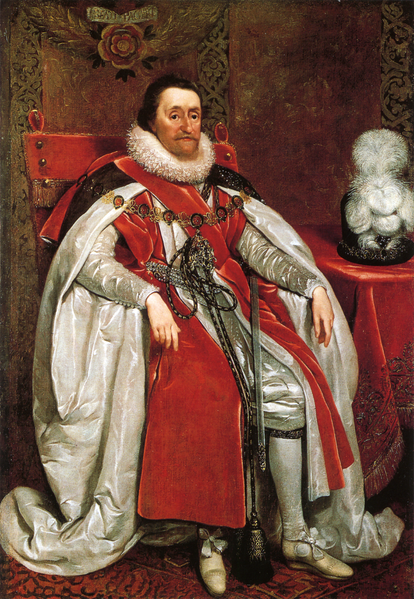
King James I (of England) and VI (of Scotland)
Portrait by Daniel Myrtens, 1621 from the National Portrait Gallery via Wikimedia Commons.For a start, you would struggle to maintain your hold on power. Fund schools you say? Somebody will have to pay. The nobles? Well, try to tax them — in many European states they were exempt from taxation — and you might quickly lose both your throne and your head. And supposing you do manage to tax them, after miraculously stamping out an insurrection without their support, how would you even begin to go about collecting it? There was simply no central government agency capable of raising it. Working out how much people should pay, chasing up non-payers, and even the physical act of collection, not to mention protecting that treasure once collected, all takes substantial manpower. Not to mention the fact that the collecting agents will likely siphon most of it off to line their own pockets.
[…]
It was not until 1689, when there was a coup, that an incoming ruler allowed the English parliament to sit whenever it pleased. Before that, it was convened only at the whim of the ruler, and dispersed even at the slightest provocation. In 1621, for example, when James I was planning to marry his heir to a Spanish princess, Parliament sent him a petition asserting their right to debate the matter. Upon hearing of it, he called for the official record of parliamentary proceedings, personally ripped out the page with the offending vote, and promptly dissolved the Parliament. The downside, of course, was that James could not then acquire any parliamentary subsidies.
Ruling was thus an intensely personal affair, of making deals and finding ways to circumvent deals you had inherited. Increasing your capabilities as a ruler – state capacity – was thus no easy task, as the typical ruler was stuck in an essentially medieval equilibrium. Imposing a policy costs money, but raising money involves imposing policy. Breaking out of this chicken-and-egg problem took centuries of canny leadership. The rulers who achieved it most would today seem hopelessly corrupt.
To gain extra cash without interference from Parliament, successive monarchs first asserted and then abused their ancient prerogative rights to grant monopolies over trades and industries. They eventually granted them to whomever was willing to pay, establishing monopolies over industries like gambling cards or alehouses under the guise of regulating unsavoury activities. They also sold off knighthoods and titles, and in 1670 Charles II even made a secret deal with the French that he would convert to Catholicism and attack the Protestant Dutch, all in exchange for cash. Anything to not have to call a potentially pesky Parliament. At times, the most effective rulers even resembled mob bosses. Take Elizabeth I’s anger when a cloth-laden merchant fleet bound for an Antwerp fair in 1559 was allowed to depart. Her order to stop them had not arrived in time, thus preventing her from extracting “loans” from the merchants while she still had their goods within her power.
Comments Off on Beginning the transition from personal rule to the modern bureaucratic state
September 4, 2020
How England used to vote
Learnhistory3
Published 1 May 2011Rowan Atkinson as Edmund BlackAdder in a sketch on the voting situation before 1832. Rotten boroughs and pocket boroughs etc
Script excerpt from BlackAdder Scripts:
At Mrs. Miggins’ home
E: Well, Mrs. Miggins, at last we can return to sanity. The hustings are
over, the bunting is down, the mad hysteria is at an end. After the
chaos of a general election, we can return to normal.M: Oh, has there been a general election, then, Mr. BlackAdder?
E: Indeed there has, Mrs. Miggins.
M: Oh, well, I never heard about it.
E: Well of course you didn’t; you’re not eligible to vote.
M: Well, why not?
E: Because virtually no-one is: women, peasants, (looks at Baldrick)
chimpanzees (Baldrick looks behind himself, trying to see the animal),
lunatics, Lords…B: That’s not true — Lord Nelson’s got a vote!
E: He’s got a boat, Baldrick. Marvelous thing, democracy. Look at
Manchester: population, 60,000; electoral roll, 3.M: Well, I may have the brain the size of a sultana…
E: Correct…
M: …but it hardly seems fair to me.
E: Of course it’s not fair — and a damn good thing too. Give the like of
Baldrick the vote and we’ll be back to cavorting druids, death by
stoning, and dung for dinner.B: Oh, I’m having dung for dinner tonight.
M: So, who are they electing when they have these elections?
E: Ah, the same old shower: fat tory landowners who get made MPs when
they reach a certain weight; raving revolutionaries who think that just
because they do a day’s work that somehow gives them the right to get
paid… Basically, it’s a right old mess. Toffs at the top, plebs at the
bottom, and me in the middle making a fat pile of cash out of both of them.M: Oh, you’d better watch out, Mr. BlackAdder; things are bound to change.
E: Not while Pitt the Elder’s Prime Minister they aren’t. He’s about as
effective as a catflap in an elephant house. As long as his feet are warm
and he gets a nice cup of milky tea in the sun before his morning nap,
he doesn’t bother anyone until his potty needs emptying.
Comments Off on How England used to vote
September 3, 2020
Britain and France vs. The World | The Suez Crisis | Part 2
TimeGhost History
Published 2 Sep 2020After much delay, Britain and France finally keep to their side of the bargain with Israel and begin their bombing campaign of Egypt. But the condemnation from America and the UN calls into question how long the invaders can keep this up.
Join us on Patreon: https://www.patreon.com/TimeGhostHistory
Hosted by: Indy Neidell
Written by: Francis van Berkel and Joram Appel
Director: Astrid Deinhard
Producers: Astrid Deinhard and Spartacus Olsson
Executive Producers: Astrid Deinhard, Indy Neidell, Spartacus Olsson, Bodo Rittenauer
Creative Producer: Joram Appel
Post-Production Director: Wieke Kapteijns
Research by: Francis van Berkel and Joram Appel
Image research by: Shaun Harrison & Karolina Dołęga
Edited by: Karolina Dołęga
Sound design by: Marek KamińskiColorizations by:
Mikołaj Uchman
Daniel Weiss
Norman Stewart – https://oldtimesincolor.blogspot.com/Visual Sources:
Israeli Defense Forces
National Photo Collection of Israel
Universal Studios
Tony Clarke Collection – David Whitworth from Wikimedia Commons
Abubiju from Wikimedia Commons
Fortepan Donor
Government Press Office (Israel)
National Archives NARA
Icons from The Noun Project by: Gilberto, Komkrit Noenpoempisut, Alice Design, SmalllikeMusic:
“As the Rivers Collapse” – Deskant
“Moving to Disturbia” – Experia
“March Of The Brave 10” – Rannar Sillard – Test
“Weapon of Choice” – Fabien Tell
“Disciples of Sun Tzu” – Christian Andersen
“London” – Howard Harper-Barnes
“Maze Heist” – Max Anson
“Descending Mount Everest” – Trailer WorxArchive by Screenocean/Reuters https://www.screenocean.com.
A TimeGhost chronological documentary produced by OnLion Entertainment GmbH.
From the comments:
TimeGhost History
2 days ago (edited)
This episode is pretty much the same as the last, only turned up to 11. Israel continues making gains in Sinai, but they are now aided by British and French air forces that have finally arrived.Meanwhile, Britain and France continue lying through their teeth about any collusion with Israel. The British Foreign Minister will lie to his own Parliament about military collaboration while French ships are supporting an Israeli offensive against the settlement of Rafah.
The economic costs of this also become very apparent in this episode. Nasser successfully closes the Canal, and with America in no mood to help, the whole of Europe faces oil shortages.
In short, the whole thing is a mess. Don’t worry though, Indy will guide you through it.

Comments Off on Britain and France vs. The World | The Suez Crisis | Part 2
September 1, 2020
King Philip’s War: The Most Important American War You’ve Never Heard Of
[Update, 29 Dec 2022 – Andy has uploaded a new video to correct some of the errors he made in this presentation.]
Atun-Shei Films
Published 9 Jan 2019A generation after the first Thanksgiving, the sachem of the Wampanoag led a coalition of Native American tribes to battle against the ever-encroaching European colonists of New England.
(more…)
Comments Off on King Philip’s War: The Most Important American War You’ve Never Heard Of
QotD: The “envy of the world”, Britain’s NHS
One morning, for example, I received an e-mail advertisement from a chain of bookstores (a near-monopoly in the British bookstore trade) of which I am an occasional customer, for an anthology of stories specially written in praise of the NHS titled Dear NHS: 100 Stories to Say Thank You. An anthology of poetry, These Are the Hands: Poems from the Heart of the NHS has also just been published. I will pass over in silence the emotional kitschiness of all this.
These books, of course, deliberately confound the NHS itself with the devotion and skill of the people working within it. They are not the same thing — very far from it — and it might well be that good results are often achieved despite the system rather than because of it.
The propaganda in favour of the NHS has been more or less continuous since its foundation in 1948, though it has become ever shriller, as propaganda tends to do, as it departs further and further from reality. Indeed, one might surmise that the purpose of propaganda in general is to forestall any proper examination of reality in favour of simplistic slogans convenient to political power.
I grew up, for example, in the inculcated belief that the National Health Service was, according to the slogan of the time, “the envy of the world.” Millions of people believed this, and indeed it was an assertion heard for many years whenever the subject of health care came up. The slogan was last wheeled out in any force in 2008 for the 60th anniversary of its founding.
Theodore Dalrymple, “Worshipping the NHS”, Law & Liberty, 2020-05-04.
Comments Off on QotD: The “envy of the world”, Britain’s NHS
August 31, 2020
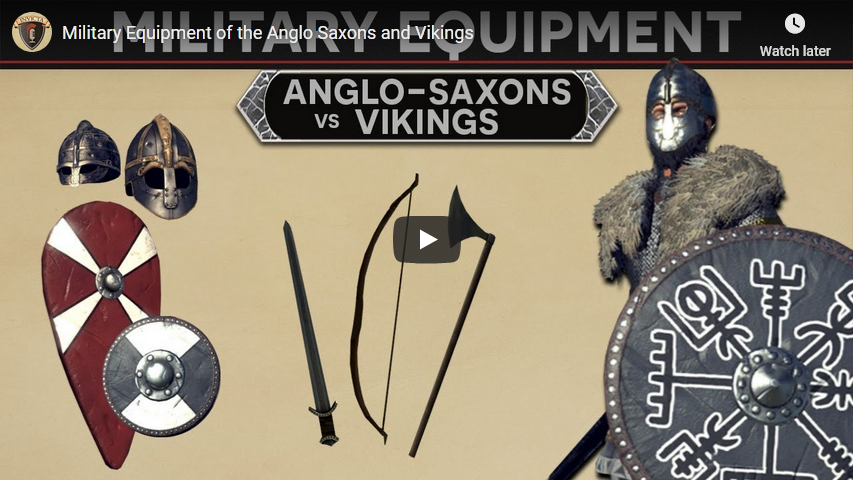
Military Equipment of the Anglo Saxons and Vikings
Invicta
Published 19 Apr 2018Today we dive into the world of Early Medieval England to analyze the military equipment available to the warring Anglo Saxons and Vikings!
Support future documentaries: https://www.patreon.com/InvictaHistory
Twitter: https://twitter.com/InvictaHistoryDocumentary Credits:
Research: Invicta
Script: Invicta
Artwork: Osprey Publishing
Game: Total War Saga: Thrones of Britannia
Editing: Invicta
Music: Total War: Attila and Total War Battles: Kingdoms SoundtrackLiterary Sources
–Anglo-Saxon Thegn by Mark Harrison (Osprey Publishing)
–Viking Hersir 793–1066 AD by Mark Harrison (Osprey Publishing)
–Saxon, Viking and Norman by Terence Wise (Osprey Publishing)
Comments Off on Military Equipment of the Anglo Saxons and Vikings
“The ‘Scots’ that wis uised in this airticle wis written bi a body that’s mither tongue isna Scots. Please impruive this airticle gin ye can.”
Natalie Solent has some sympathy for the recently revealed teen who is the main “author” of the Scots version of Wikipedia:
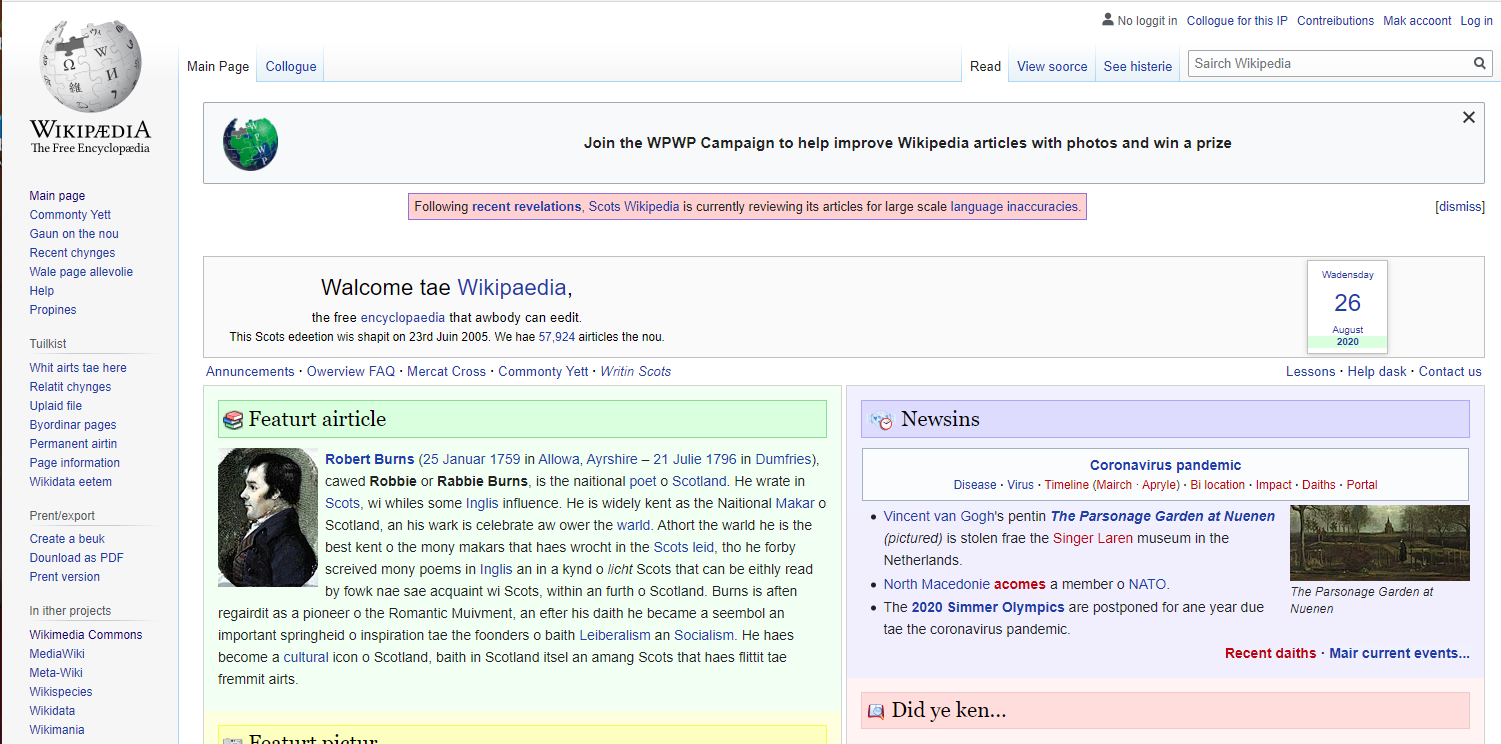
If you are wondering how a nineteen year old managed to be responsible for creating or editing tens of thousands of articles, the answer is simple:
He wrote: “I was only a 12-year-old kid when I started, and sometimes when you start something young, you can’t see that the habit you’ve developed is unhealthy and unhelpful as you get older.”
Naming no names except my own, that sounds like a few of us here. Ten edits a day, most days, for two and a half thousand days. The work of half his life. The thing that made him special. And now they revile him for it. Believe me, I am not laughing when I call this a sad story.
Believe me, too, when I say I do not want to mock Scots. The Samizdata “Languages” category includes many other posts by me about endangered tongues. I want them to survive and grow. A world where everyone spoke only one language would be a grey place, and one more likely to fall to tyranny. For many a soul living under oppression their knowledge of something other than the majority language has been the one window to freer times or places that the censors could not brick up. Less portentously, I like the vigorous style of Scots. The fact that it is mostly mutually intelligible with English English has been the source of endless arguments about whether it is a dialect of English or a language in its own right. It is a pity that this question has been politicised. My own opinion, for what it is worth, is that although Scots was a separate language in the Middle Ages, enough linguistic convergence has occurred to say that nowadays it is a dialect of English. There is nothing wrong with that. It would be equally valid to say Standard English and Scots are both dialects on the continuum of English (and that the group as a whole is called “English” is just a matter of historically familiar terminology, not an attribution of superiority. Brits should remember that if numbers of speakers were the criterion that decided the name of this language we would be speaking American.)
It is a sad reflection on the state of Scots that nobody stopped “AmaryllisGardner” for five years. Scarcely anyone seems to have questioned him. I cannot help thinking this fiasco would never have happened if linguists and the penumbra of people who are “into” languages had not been so down on prescriptivism. After all, if there truly is no correct or incorrect way to use language, our laddie’s version of Scots has as much claim to be right as the one they speak in Glasgow.
Comments Off on “The ‘Scots’ that wis uised in this airticle wis written bi a body that’s mither tongue isna Scots. Please impruive this airticle gin ye can.”
August 29, 2020
Recreating British Railways?
Adrian Quine looks at the long-term results of the partial privatization of British Railways, and the current British government’s options to address some of the problems:
Wikimedia caption – “This is the Bring Back British Rail, a reverse image of the old BR logo, (now used by the TOC’s) to show we are heading the wrong way with Rail in the UK”
If there is one thing free marketeers and large state socialists agree on, it would be the terrible state/private hybrid ownership structure of our railways currently supported by the government. While large state socialists won’t be happy until the private sector is squeezed out of the system, market liberals view the Conservative government’s actions as creeping renationalisation.
The private-sector entrepreneurs that built many of Britain’s railways in the 19th century had – through a process of market discovery – settled on vertical integration, with the same firm owning the track and operating the trains. But, when railways were returned to private sector in the late 1990s, the government created one national infrastructure company (Railtrack), 25 train-operating companies (TOCs), 3 freight operating companies, 3 rolling-stock leasing companies, 13 infrastructure service companies and other support organisations. The Office of Passenger Rail Franchising was tasked with selling franchises to the TOCs, while the Office of the Rail Regulator (ORR) regulated the infrastructure. This artificial and fragmented structure was designed to give the impression of competition.
Despite these constraints, in the early days of John Major’s flawed privatisation some of the more enterprising private train operators managed to bring innovation to the sector, including improved marketing and very low-cost “yield managed” advance fares. Where allowed, competition between different operators brought improved customer service, additional direct trains and lower ticket prices. However, the flaws in the initial privatisation soon became apparent with failed franchises leading to increased government intervention and renationalisation by subsequent governments.
While attempts were made to downplay the significance of July’s decision by the Office of National Statistics to put train operators on the public balance sheet, it is in fact only the latest in a worrying string of signals about the direction in which the railway and Boris Johnson’s government are headed. In June, the transport secretary Grant Shapps announced to a parliamentary select committee plans to introduce concessions across the rail network. Private operators will simply be paid a set fee to provide a basic service – another nail in the coffin for commercial investment or innovation.
Attention is now turning to what the government will do when the current “Emergency Measures Agreements” – hastily put in place to ensure trains kept running when passenger numbers nosedived by 95% as lockdown began – comes to an end in September.
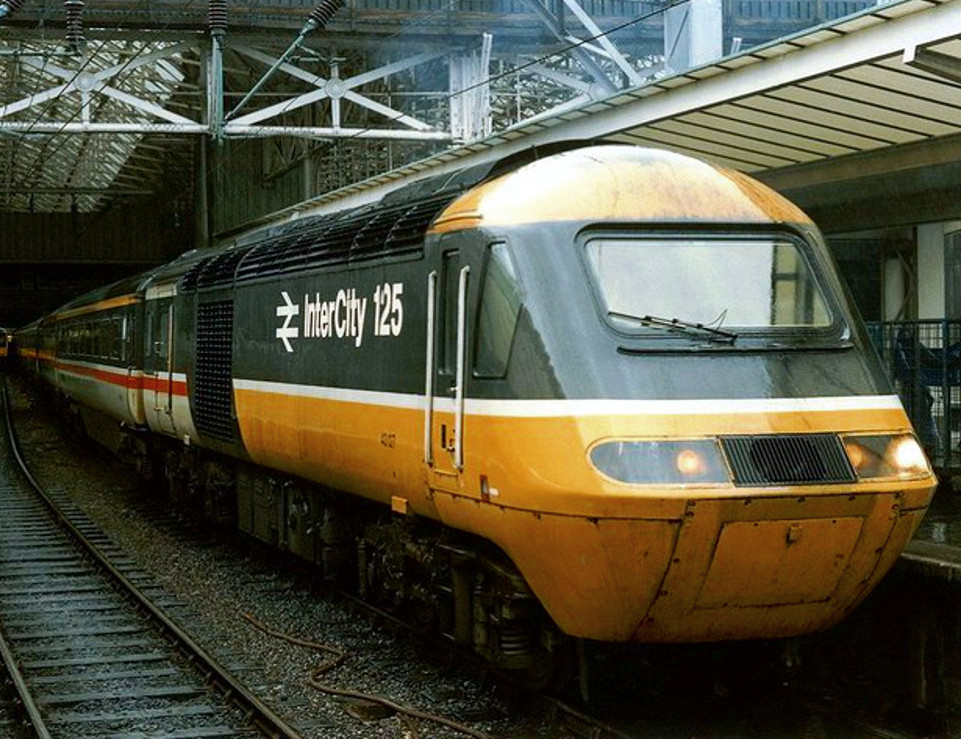
An InterCity 125 power car in British Rail livery at Manchester Piccadilly in October 1976.
Photo by Dave Hitchborne via Wikimedia Commons.
Comments Off on Recreating British Railways?
Durs Egg Ferguson – The Rifle That Didn’t Shoot George Washington
Forgotten Weapons
Published 27 Oct 2018http://www.patreon.com/ForgottenWeapons
Cool Forgotten Weapons merch! http://shop.bbtv.com/collections/forg…
Captain Patrick Ferguson was a British officer who designed and patented a breechloading rifle in 1776, which would actually see service in the American Revolution at the Battle of Brandywine. Ferguson presented two rifles to the British military for consideration, one of them being this specific gun. In a shooting demonstration on a windy, rainy day he convinced the Board of Ordnance of the viability of his rifle, and a field trials was set in motion. One hundred Ferguson rifles were made for the Crown, and Ferguson was detached from his regiment to be given command of a company of specially trained elite riflemen. His men were drilled in accurate shooting as well as use of the bayonet, they were organized in small groups to make use of cover and concealment, and they were fitted with green uniforms to blend into the terrain. This unit deployed to the American colonies in 1777, and saw action in the Battle of Brandywine.
Unfortunately for Ferguson and his ideas, the unit didn’t make any particularly notable impact on the battle, although not by any fault of their own. Worse, Ferguson was wounded, and because the unit was so heavily dependent on him it was disbanded while he recuperated. He did see service again at the Battle of King’s Mountain, where he was killed in action. This particular Ferguson rifle was made by the noted London gunsmith Durs Egg, and is one of the two guns presented to the Board of Ordnance that began the whole series of events.
Contact:
Forgotten Weapons
PO Box 87647
Tucson, AZ 85754If you enjoy Forgotten Weapons, check out its sister channel, InRangeTV! http://www.youtube.com/InRangeTVShow

Comments Off on Durs Egg Ferguson – The Rifle That Didn’t Shoot George Washington


