
I remember when Christians used to actually believe in Christianity. Those were the days. (Some still do, but their numbers are shrinking.)
Back then, you could still visit an average (Protestant) church and hear a pastor actually teach real doctrine and share authentic insights. You could hear his thoughts on how to live an upright Christian life, or on why bad things might happen to good people, or how Christian marriages might be improved. And you could hear it all supported by actual Bible passages.
After the sermon, you could hear the congregation sing hymns affirming the importance of obedience, humility, faith, courage, or some other Christian virtue. They were something, the old hymns: bold, clear, impactful, sometimes even militant, like “Onward, Christian Soldiers” or “God of Our Fathers, Whose Almighty Hand”, or particularly thoughtful, like “How Great Thou Art”.
Things are different now. Wander into a typical Christian church these days, and, far from hearing a sermon challenging you to live an upright life, you’re more likely to hear an unsuccessful attempt at a Jeff Foxworthy-style stand-up comedy routine, Hallmark-style stories of dubious veracity, and utterly vacuous “praise songs” which all sound like U2 album rejects from 1986. (They even feature the thumping eighth-note bass parts, echo-drenched guitar, and melodramatic vocal performances.)
Oh, and I forgot: At some point, you’re also going to see the pastor dutifully hand the mic over to his overly-assertive, overly-eager, overly-made-up wife (presumably on pain of divorce, or possibly even death), who will then speak loudly and rapturously — all about herself — for the next half hour.
Not all Christian churches are like this, of course. The problem is, too many are. As the years roll by, contemporary Christian churches increasingly abnegate their scripturally-prescribed role as fortified beacons of divine truth, and instead transform themselves into vehicles for a social justice pseudo-gospel completely incompatible with Christian (or Jewish, for that matter) scriptural teachings.
Tal Bachman, “Christians, Come Back”, Steyn Online, 2020-09-03.
December 25, 2020
December 21, 2020
Boris “Ebenezer” Johnson cancels Christmas
What is it with British PMs and political U-turns?

So Christmas is cancelled. The neo-Cromwellian edict has been issued. The thing that Boris Johnson said would be “inhuman” just a few days ago has now been done. For the first time in centuries people in vast swathes of England – London and the South East – will be forbidden by law from celebrating Christmas together. The government’s promise of five days’ relief from the stifling, atomising, soul-destroying lockdown of everyday life has been snatched away from us. It’s too risky, the experts say; the disease will spread and cause great harm. You know what else will cause great harm? This cruel, disproportionate cancellation of Christmas; this decree against family festivities and human engagement.
This evening Boris Johnson executed the most disturbing u-turn of his premiership: he scrapped the planned relaxation of lockdown rules for Christmas. He commanded that London and the South East will be propelled into Tier 4, yet another Kafkaesque category of authoritarianism dreamt up by our increasingly technocratic rulers. This means no household mixing, including on Christmas Day. That’s millions of planned get-togethers, family celebrations, cancelled with the swipe of a bureaucrat’s pen. Other areas outside of London are luckier: Boris has graciously granted them one day off from the lockdown rules, on Christmas Day, when they may mix with people from other households. They will no doubt give praise to their benevolent protectors for such festive if fleeting charity.
There is much that is disturbing about Boris’s decree. It is being justified on the basis that a new strain of Covid-19 is spreading in the South East and seems more contagious than earlier strains. That is certainly something we should be aware of. But Boris also declared that there is no evidence that this new strain has led to “increased mortality”. So what is going on here? Surely before enacting the drastic, almost unprecedented measure of preventing millions of people from celebrating Christmas together the government should offer up clearer evidence of the significant social harms that would allegedly spring from such celebrations? The political and media elites go on and on about “evidence-based policy”, except when it comes to locking people down. Then it’s all “Yeh, go ahead, better safe than sorry”.
Lee Metford MkI: Great Britain’s First Magazine Rifle
Forgotten Weapons
Published 14 Sep 2020http://www.patreon.com/ForgottenWeapons
https://www.floatplane.com/channel/Fo…
Cool Forgotten Weapons merch! http://shop.bbtv.com/collections/forg…
The British went into the 1880s with plans to adopt the Enfield-Martini as its new rifle, a single shot Martini-action rifle with essentially a sidesaddle of ready-access cartridges on the side of the receiver. It would be chambered for a new .402 caliber black powder cartridge. However, the Small Arms Committee begin looking into the possibility of a magazine rifle instead, and trials of 40+ different systems found three worth considering: a Lee rifle with a box magazine, a Lee rifle with a Bethel Burton magazine, and the Owen Jones rifle. As these trials were concluding, the discovery of smokeless powder threw a wrench in the plans.
After study of the Swiss 7.5×53.5mm cartridge, the British opted to develop a small bore .30 caliber round themselves, which would be the .303 British. This round, originally loaded with compressed black powder before the use of cordite, rendered the plans for the .402 caliber Enfield Martini obsolete. What would have been a justifiable territorial and reserve rifle alongside a .402 magazine rifle was now an orphan. With the new rifle in .303 caliber, a .402 single shot Martini was just an added logistical overhead. Instead, existing Martini rifles would eventually be converted to .303 British.
At any rate, the Lee rifle and magazine were chosen as ideal, and in 1888 a batch was made for field trials across the British Empire. Widely positive reports led to its formal adoption and the beginning of production in 1889 as the Magazine Rifle MkI – later retroactively renamed the Lee Metford MkI and colloquially known as the Long Lee. The example we have today has two very rare original features; an intact manual safety and Lewes pattern sights. Both of these would be quickly removed or replaced in service, and a Mk I* and MkII pattern followed shortly after the adoption of the MkI.
Contact:
Forgotten Weapons
6281 N. Oracle #36270
Tucson, AZ 85740

December 20, 2020
The Japanese are unstoppable everywhere – WW2 – 121 – December 19, 1941
World War Two
Published 19 Dec 2020The Japanese make gains in Malaya, Burma, Hong Kong, Borneo, and the Philippines. The Allies also have trouble in the Atlantic and the Mediterranean, where they are beginning to seriously suffer from a lack of capital ships. The Soviet Red Army is advancing, though, and Stalin takes personal control of planning for the upcoming counteroffensive, while Adolf Hitler takes personal control of the German Army.
Join us on Patreon: https://www.patreon.com/TimeGhostHistory
Or join The TimeGhost Army directly at: https://timeghost.tvFollow WW2 day by day on Instagram @ww2_day_by_day – https://www.instagram.com/ww2_day_by_day
Between 2 Wars: https://www.youtube.com/playlist?list…
Source list: http://bit.ly/WW2sourcesWritten and Hosted by: Indy Neidell
Director: Astrid Deinhard
Producers: Astrid Deinhard and Spartacus Olsson
Executive Producers: Astrid Deinhard, Indy Neidell, Spartacus Olsson, Bodo Rittenauer
Creative Producer: Maria Kyhle
Post-Production Director: Wieke Kapteijns
Research by: Indy Neidell
Edited by: Miki Cackowski
Sound design: Marek Kamiński
Map animations: Eastory (https://www.youtube.com/c/eastory)Colorizations by:
Norman Stewart – https://oldtimesincolor.blogspot.com/
Dememorabilia – https://www.instagram.com/dememorabilia/
Julius Jääskeläinen – https://www.facebook.com/JJcolorization/
Carlos Ortega Pereira, BlauColorizations, https://www.instagram.com/blaucolorizations
Spartacus Olsson
Daniel Weiss
Mikołaj UchmanSources:
Bundesarchiv
IWM MH 26392, WPN 298, K 2204, FL 20432, A 12126, A 9257, FL 1203, E 3469E
Mil.ru
Narodowe Archiwum Cyfrowe
Picture of Mark Young, courtesy of National Portrait GallerySoundtracks from the Epidemic Sound:
Phoenix Tail – “At the Front”
Reynard Seidel – “Deflection”
Skrya – “First Responders”
Hakan Eriksson – “Epic Adventure Theme 4”
Philip Ayers – “The Unexplored”
Max Anson – “Ancient Saga”
Rannar Sillard – “March Of The Brave 9”
Johannes Bornlof – “Death And Glory 2”
Johan Hynynen – “Dark Beginning”
Fabien Tell – “Last Point of Safe Return”Archive by Screenocean/Reuters https://www.screenocean.com.
A TimeGhost chronological documentary produced by OnLion Entertainment GmbH.

December 18, 2020
The Warlords of the United Nations – WW2 Special
World War Two
Published 17 Dec 2020Following the German declaration of war on America on the 11th of December 1941, Britain gained an invaluable ally. Securing a joint military command between the new partnership will be central to its success, the question is, how can this be achieved?
Join us on Patreon: https://www.patreon.com/TimeGhostHistory
Or join The TimeGhost Army directly at: https://timeghost.tvFollow WW2 day by day on Instagram @ww2_day_by_day – https://www.instagram.com/ww2_day_by_day
Between 2 Wars: https://www.youtube.com/playlist?list…
Source list: http://bit.ly/WW2sourcesHosted by: Indy Neidell
Written by: Markus Linke and Indy Neidell
Director: Astrid Deinhard
Producers: Astrid Deinhard and Spartacus Olsson
Executive Producers: Astrid Deinhard, Indy Neidell, Spartacus Olsson, Bodo Rittenauer
Creative Producer: Maria Kyhle
Post-Production Director: Wieke Kapteijns
Research by: Markus Linke
Edited by: Miki Cackowski
Sound design: Marek Kamiński
Map animations: Eastory (https://www.youtube.com/c/eastory)Colorizations by:
Norman Stewart – https://oldtimesincolor.blogspot.com/
Daniel Weiss
Adrien Fillon – https://www.instagram.com/adrien.colo…
Mikołaj UchmanSources:
IWM A 14040, TR153, H 10306, ME(RAF) 5052, A 16709Soundtracks from Epidemic Sound:
Max Anson – “Ancient Saga”
Johannes Bornlof – “Magnificent March 3”
Howard Harper-Barnes – “London”
Rannar Sillard – “March Of The Brave 4”
Johannes Bornlof – “The Inspector 4”
Phoenix Tail – “At the Front”Archive by Screenocean/Reuters https://www.screenocean.com.
A TimeGhost chronological documentary produced by OnLion Entertainment GmbH.

“Firestorm” – Strategic or Terror Bombing? – Sabaton History 098 [Official]
Sabaton History
Published 17 Dec 2020At the end of July 1943, Hamburg burned. A fleet of British heavy bombers had dropped thousands of incendiaries over the city, turning it into a hearth of unprecedented dimensions. Numerous major fires merged together into a single storm of fire. Structures combusted under the immense heat, as strong winds drove the inferno through the streets at rapid speed. Craving for more oxygen, the firestorm sucked human bodies into the flames and immediately incinerated or mummified them. Thousands of others died slowly of carbon monoxide poisoning in their shelters. By the end of the raid, 60% of Hamburg had been burned out and more than 35,000 of its inhabitants were dead. But while the Germans were shocked to disbelief, for the British the firestorm has worked as intended. And this was just the beginning.
Support Sabaton History on Patreon:
https://www.patreon.com/sabatonhistoryListen to “Firestorm” on the album The Art of War: https://music.sabaton.net/TheArtOfWar
Listen to Sabaton on Spotify: http://smarturl.it/SabatonSpotify
Official Sabaton Merchandise Shop: http://bit.ly/SabatonOfficialShopHosted by: Indy Neidell
Written by: Markus Linke and Indy Neidell
Directed by: Astrid Deinhard and Wieke Kapteijns
Produced by: Pär Sundström, Astrid Deinhard and Spartacus Olsson
Creative Producer: Maria Kyhle
Executive Producers: Pär Sundström, Joakim Brodén, Tomas Sunmo, Indy Neidell, Astrid Deinhard, and Spartacus Olsson
Community Manager: Maria Kyhle
Post-Production Director: Wieke Kapteijns
Editor: Karolina Dołęga
Sound Editor: Marek Kamiński
Maps by: Eastory – https://www.youtube.com/c/eastory
Archive: Reuters/Screenocean – https://www.screenocean.comColorized by:
Norman Stewart – https://oldtimesincolor.blogspot.com/Sources:
Imperial War Museums: C3677,HU 63075, HU 63089, MH 27517, CL3400, MH 24747,CL3395, MH 24764, CH 6386, CH 6386, CH 6275, CH 15879, C 3371, CH 18371, C 3918, C2367, HU44269, C 4748, PST 14359, C 4973,
Bundesarchiv
National Archives NARA
Icons from the Noun Project: Arrow by 4B Icons, Bomb by P Thanga Vignesh, fire building by dDara, Skull by Muhamad UlumAll music by: Sabaton
An OnLion Entertainment GmbH and Raging Beaver Publishing AB co-Production.
© Raging Beaver Publishing AB, 2019 – all rights reserved.

December 15, 2020
Port wine
In The Critic, Henry Jeffreys considers how Port became so popular in Britain:
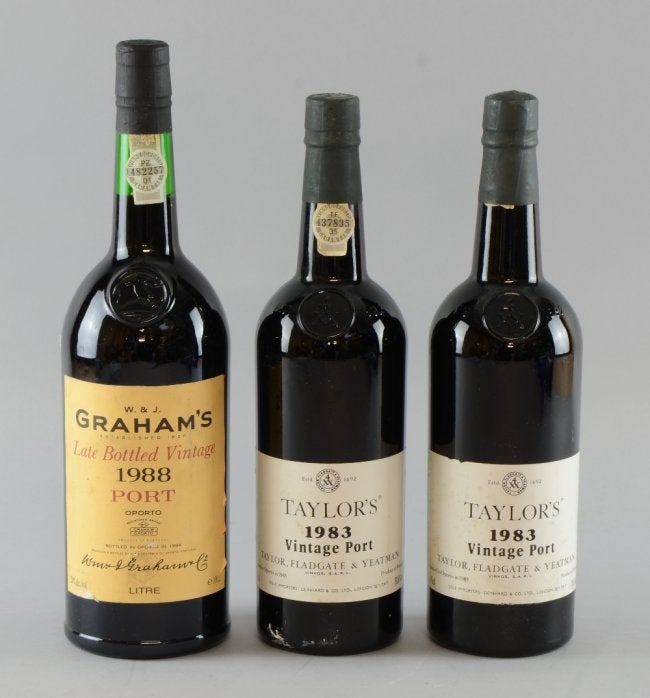
Before there were package holidays, there was port. This was the way British people shivering on their cold wet island could get a bit of sunshine. It’s a miracle drink, preserving the heat of the Douro valley in liquid form for decades ready to be uncorked and spread cheer. And don’t we need cheer more than ever at the moment? According to Adrian Bridge, CEO of Taylor’s, British port sales were booming during lockdown.
Our love affair with port goes back a long way but the funny thing is that when wines from Portugal began to arrive in large quantities in the 17th century, people hated it. Port was a necessity because Bordeaux, the traditional wine of choice, had become expensive due to the high duty put on it from Cromwell’s time onwards. Early port was a rough sort of wine, often transported down to the city of Oporto in pig skins and adulterated with brandy and elderberries. A poem from 1693 by Richard Ames captures the mood of the times: “But fetch us a pint of any sort, Navarre, Galicia, anything but Port.” The Scots in particular were not impressed. After the Act of Union, wine drinking took on political connotations with Jacobites drinking claret and Hanoverians port. This antipathy to port still persists: a few years back, I sat next to a Scottish woman at dinner who complained that the English only drank port to thumb their noses at Napoleon.
It took a long time before port became the sweet smooth consistent wine that we know and love today. In fact, until 1820 it would usually have been dry. The vintage that year was so hot that the grapes contained more sugar than the yeasts could deal with, so brandy was added while the wines were still fermenting. It was such a success in Britain that this became the model for how port was made in future. Not everyone was keen, however. Baron Forrester, the man who first mapped the course of the Douro river, was still complaining about the new-fangled sweet port right into the 1850s. The current winemaker at Taylor’s, David Guimaraens, reckoned this year’s heatwave had more than a little in common with the 1820 vintage.
Port really is perfectly designed to deal with this heat. Even with modern temperature-controlled fermentation it can be difficult making balanced dry wine with such ripe grapes whereas adding brandy during the fermentation preserves the fresh fruit flavour. Furthermore, heavier wines can be blended with lighter vintages to make tawny ports which are aged for years in wood with oxygen contact. Tawnies were traditionally enjoyed more by the Portuguese but they’re becoming increasingly popular over here. They’re mellow, pale and nutty from oxygen contact, quite different to vintage wines. The great thing is they are ready to drink, no ageing or decanting needed, and an open bottle will last for months. In fact, wood-aged ports are practically indestructible, I’ve had examples from 1937 and 1863 that were both fresh and vigorous.
Grapes with the right balance can go into vintage releases, though a declared vintage from 2020 does look unlikely. The discovery of how well port aged in bottles was probably an accident. A well-off individual would buy a pipe of port (around 500 litres) and have it bottled and corked. It was discovered that after years in bottle, something sublime happened to the fiery tannic wine. A vintage from a declared year will need at least 20 years. Happily, for the impatient among us, ready to drink vintage ports aren’t terribly expensive when you compare with the price of say, mature Bordeaux or Burgundy.
QotD: TedX
sanctimoniousubiquitous Ted Talks programme, is more inclusive than official Ted because they have added a random letter ‘X’ into the word. On an unrelated note, TedX London have decided to start using the totally real and not at all just made-up word “Womxn” when they talk about members of the female persuasion, chapettes, fillies, gels, y’know, charming, delightful, non-men – them. They told anormal personbigot on Twitter who asked why they were using the word “womxn”: “No, that’s not a typo: ‘womxn’ is a spelling of ‘women’ that’s more inclusive and progressive. The term sheds light on the prejudice, discrimination, and institutional barriers womxn have faced, and explicitly includes non-cisgender women.” But are TedX really the inclusive group they claim to be? Trans Media Watch, a pro-trans lobby group told the BBC it would never use the word Womxn: “because we feel it’s important for people to recognise that trans women are women. Trans women aren’t a special, separate category.” So it turns out “women” is the most inclusive term after all. If TedX London hasn’t been cancelled by the end of the week then Twitter’s not what it was.David Scullion, “UN-Believable”, The Critic, 2020-09-09.
December 11, 2020
Shooting the Webley-Fosbery Automatic Revolver – Including Safety PSA
Forgotten Weapons
Published 10 Aug 2017Following up yesterday’s look at the history and mechanics of the Webley-Fosbery self-cocking revolvers [posted here], today we are out at the range to do some shooting with one.
In terms of handling, it is a comfortable gun to shoot, albeit with some exaggerated recoil because of the very high bore axis relative to the hand. It has an interesting two-part recoil sensation, because the upper assembly takes quite a long time to return forward into battery.
Most importantly, we discovered that this particular Webley-Fosbery has a worn hammer engagement, which results in the firing pin coming into contact with cartridge primers even when it is in the safety notch. In other words, it can — and will — sometimes fire when the action is closed and without any manipulation of the trigger. This is a condition that could happen to any Fosbery revolver, so owners should handle them with this possibility in mind! This is also a great example of why gun safety rules are redundant — occasionally guns do have mechanical failures, so don’t point them at anything you don’t want to shoot!
Thanks to Mike Carrick of Arms Heritage magazine for providing this Webley-Fosbery for this video! See his regular column here: https://armsheritagemagazine.com
Cool Forgotten Weapons merchandise! http://shop.bbtv.com/collections/forg…
http://www.patreon.com/ForgottenWeapons
If you enjoy Forgotten Weapons, check out its sister channel, InRangeTV! http://www.youtube.com/InRangeTVShow

December 10, 2020
Tank Chats #88 | Valentine Archer | The Tank Museum
The Tank Museum
Published 15 Nov 2019David Fletcher looks at the Valentine Archer, a British self-propelled gun based on a Valentine tank chassis and fitted with a 17-pounder gun.
Support the work of The Tank Museum on Patreon: ► https://www.patreon.com/tankmuseum
Visit The Tank Museum SHOP: ► https://tankmuseumshop.org/
Twitter: ► https://twitter.com/TankMuseum
Instagram: ► https://www.instagram.com/tankmuseum/
Tiger Tank Blog: ► http://blog.tiger-tank.com/
Tank 100 First World War Centenary Blog: ► http://tank100.com/
#tankmuseum #tanks

December 7, 2020
Churchill and the Bengal Famine of 1943
In The Critic, Zareer Masani debunks a recent book’s claim that British PM Winston Churchill was responsible for the Bengal famine during the Second World War:
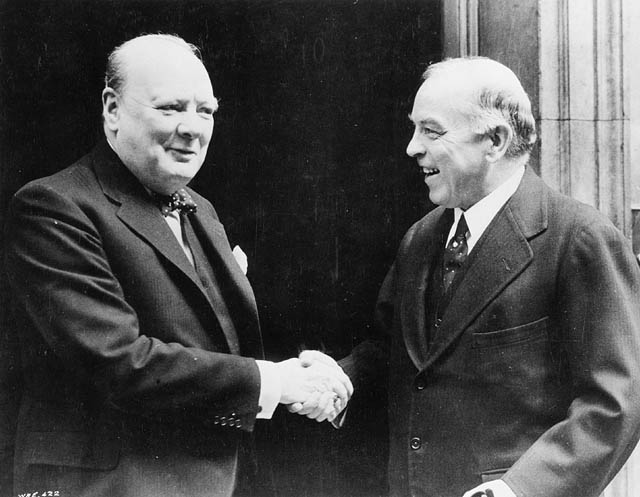
Prime Minister Winston Churchill greets Canadian PM William Lyon Mackenzie King, 1941.
Photo from Library and Archives Canada (reference number C-047565) via Wikimedia Commons.
A favourite trope of the current Black Lives Madness and its left-liberal white apologists has been the alleged infamy of Britain’s most cherished hero, Winston Churchill, charged with everything from mere racism to actual genocide. The worst accusation is that of deliberately starving four million Bengalis to death in the famine of 1943.
The famine took place at the height of World War Two, with the Japanese already occupying Burma and invading the British Indian province of Bengal, bombing its capital, Calcutta, and patrolling its coast with submarines.
The famine raged for about six months, from the summer of 1943 until the end of that year, and estimates of its victims range from half a million upwards, depending on whether one includes its indirect and long-term effects. Most famine experts agree that famines can be caused by both nature and human agency, but never by any single individual. So how has a 67-year-old British prime minister in poor health, 5,000 miles away, fighting near-annihilation in a world war, come to be charged with causing such a cataclysmic disaster?
The attempt to lay this at Churchill’s door stems from a sensationalist book by a Bengali-American journalist called Madhusree Mukerjee. As its title, Churchill’s Secret War, indicates, it was a largely conspiracist attempt to pin responsibility on distant Churchill for undoubted mistakes on the ground in Bengal.
The actual evidence shows that Churchill believed, based on the information he had been getting, that there was no food supply shortage in Bengal, but a demand problem caused by local mismanagement of the distribution system. Ironically, his view found unexpected support in a 2010 exchange between Mukerjee and the Nobel Prize-winning economist Amartya Sen, the world’s foremost expert on famine in India.
Commenting in the New York Times, Sen said of Mukerjee, that “she seems satisfied with little information” and that her data came from only two rice research stations, and those in only two out of 27 districts in Bengal. “The analysis I made,” countered Sen, “using data from all districts … indicated that food availability in 1943 (the famine year) was significantly higher than in 1941 (when there was no famine) … There was indeed a substantial shortfall compared with demand, hugely enhanced in a war economy … but that is quite different from a shortfall of supply compared with supply in previous years … Mukerjee seems to miss this crucial distinction, and in her single-minded … attempt to nail down Churchill, she ends up absolving British imperial policy of confusion and callousness.”
December 5, 2020
The “new normal” will, by definition not be “normal”
At Spiked, Brendan O’Neill cries “Down with the New Normal!”

“Covid 19 Masks” by baldeaglebluff is licensed under CC BY-SA 2.0


Few phrases inspire more horror in me than “the new normal”. It is falling from the lips of public-health experts and lockdown-loving commentators everywhere. Forget the “old normal” of going maskless into the streets, or ramming yourself into a crowd of thirsty punters at the bar in a pub, or taking a lover without constantly worrying that he or she might make you ill with his or her breath. Such reckless libertinism was for the old world, apparently, the era BC (Before Covid). We are all now heading into the New Normal, a brave new world of forever social-distancing being built for us by a benevolent bureaucracy that simply wants to protect us from disease.
Everywhere you turn there is talk of the new normal. Out will go bare faces, hand-shaking, hugs and sweaty crowds, and in will come masks, elbow-bumping, and sitting six feet away from everyone else at concerts and shows. Bye bye, mosh pits. Yes, even when the vaccine comes, which is when many of us hoped we would see our freedoms restored, the uber-cautious habits we have developed during the Covid crisis should continue, experts say. Jonathan Van-Tam, England’s deputy chief medical officer, said this week that these “habits”, including face-covering, should continue for “many years”. Better safe than sorry, eh?
Van-Tam isn’t alone. Many experts and commentators are predicting, and even welcoming, a decline in social engagement and physical contact as we head into the new normal. “The Coronavirus killed the handshake and the hug — what will replace them?”, asks Time magazine, blissfully unaware of how mad it sounds. “Hugs, high fives, fist bumps, back pats [and] shoulder squeezes” could all disappear after 2020, Time predicts. And it talked to one of many experts who thinks that’s no bad thing. Dr Mark Sklansky, an American cardiologist, told Time he has always hated hand-shaking. “Hands are warm, they’re wet, and we know that they transmit disease very well”, he said. But where “being anti-handshake was fringe thinking” in the past — !! — it is now increasingly common to be handshakephobic, says the wise doctor. Put your wet, diseased paws away, everyone.
And the new normalists are not letting the imminent rolling-out of the vaccine puncture their dreams of a world without clammy handshakes and other forms of sickness-spreading human contact. People expecting to be “back to normal by spring” are “expecting too much” of the vaccine, said a British microbiologist a couple of weeks ago. Even with a vaccine, “we will not be returning to the old normal”, decrees the Lancet. No, apparently “physical distancing and hand hygiene must continue indefinitely”. Maybe these doom-mongers are keen on physical distancing because they know a lot of people would probably like to give them a clout for their miserabilism?
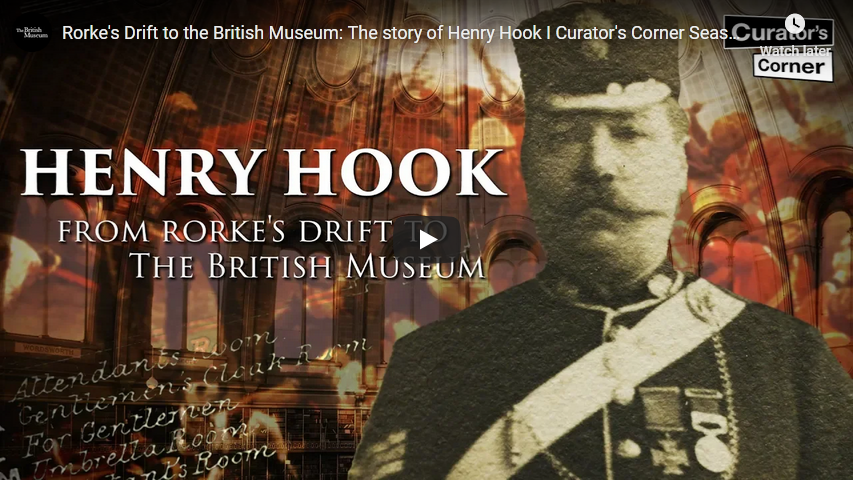
Rorke’s Drift to the British Museum: The story of Henry Hook I Curator’s Corner Season 4 episode 5
The British Museum
Published 12 Nov 2018Henry Flynn recounts the story of Alfred Henry Hook VC, a private in B Company of the 2nd Battalion, 24th Regiment of Foot who served at the battle of Rorke’s Drift before becoming an employee of the British Museum.
From the comments:
shoutinghorse
1 year ago
When the movie Zulu was premiered in 1964 in London descendants of some of the characters were invited to attend including Henry Hook’s two daughters, (5:53) they were elderly ladies by then and were so horrified at the portrayal of their father as a malingering drunken thief that they walked out in disgust. In real life Hook was an honest soldier and a teetotaller. The producers of the film later issued an a apology to the Hook family.
December 4, 2020
QotD: In praise of the “Old Contemptibles”
Ian Hay (Major John Hay Beith), The First Hundred Thousand: Being the Unofficial Chronicle of a Unit of “K(1)”, 1916.
December 3, 2020
Tank Chats #87 | Locust | The Tank Museum
The Tank Museum
Published 25 Oct 2019David Fletcher looks at the M22, dubbed the ‘Locust’ by the British during WW2. The M22 saw service with the British Airborne during the Rhine Crossing in 1945.
Support the work of The Tank Museum on Patreon: ► https://www.patreon.com/tankmuseum
Visit The Tank Museum SHOP: ► https://tankmuseumshop.org/
Twitter: ► https://twitter.com/TankMuseum
Instagram: ► https://www.instagram.com/tankmuseum/
Tiger Tank Blog: ► http://blog.tiger-tank.com/
Tank 100 First World War Centenary Blog: ► http://tank100.com/
#tankmuseum #tanks



