Quotulatiousness

May 25, 2019

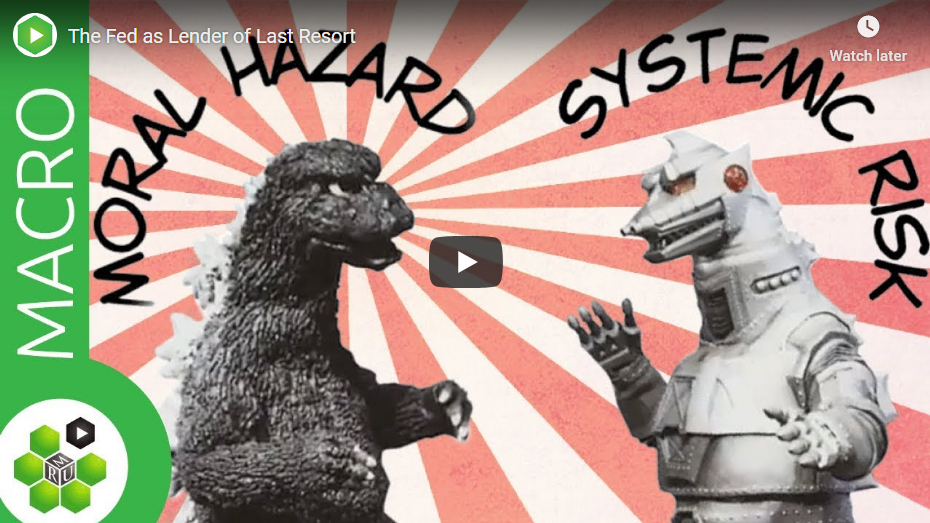
History Summarized: Late Dynastic China

Filed under: Britain, China, Economics, History, Humour — Tags: , , , — Nicholas @ 06:00

Overly Sarcastic Productions
Published on 24 May 2019

Signup for your FREE trial to The Great Courses Plus here: http://ow.ly/diiG30oC0Lk

In a shocking twist of fate, China stays in one piece for a majority of this video. The unfortunate side-effect is that when it does collapse, it collapses HARD. Find out how in this tour through the Yuan, Ming, and Qing dynasties!

Further Reading: China, A History by John Keay

PATREON: https://www.Patreon.com/OSP

The Great Courses Plus is currently available to watch through a web browser to almost anyone in the world and optimized for the US, UK and Australian market. The Great Courses Plus is currently working to both optimize the product globally and accept credit card payments globally.

India’s “Modi generation”

Filed under: China, Economics, India, Politics — Tags: , , , — Nicholas @ 05:00

Mihir Swarup Sharma discusses the demographic, political, and social impact of India’s most influential generation:

Israeli President Reuven Rivlin and IDF Chief of General Staff Gadi Eizenkot meet with Indian Prime Minister Narendra Modi, in Jerusalem, July 5, 2017.
Photo by Mark Neyman / GPO via Wikimedia Commons.

The Modi generation, which is and will be India’s most influential ever, will reshape this country the way that other demographic bulges — think of the US’ Baby Boomers — have done so elsewhere. Their India will be substantively different, in terms of domestic and global politics, than that which has come before.

What might this India look like? First, it will be impatient. Young people are less willing to wait for national glory. In the People’s Republic of China, the rule for the country, set by Deng Xiaoping, was to “bide your time and hide your strength”. Xi Jinping’s China, where the agenda is being set to appease a generation of young single men, has abandoned Deng’s maxim. This will be even more true for India, which is after all a democracy that must respond to the most powerful voting bloc in its history. It will be impatient about economics as well. Young Indians expect a better life soon. Today they are willing to give Modi some more time to achieve it. But, in the years to come, that patience will run out.

Second, it will be aggressive. India can no longer “hide its strength”. That was the lesson we must take from the political salience in this election of Balakot, of the promise by the ruling party to enter their houses and kill India’s enemies. A national machismo is the natural consequence of a bulge of young, unemployed and unemployable men. India is perhaps less able to sustain this aggressiveness than, say, China. But the times in which India would be able to absorb terrorist attacks, for example, without a major pushback have passed.

Third, it will be a risk-taker. Young people have a belief in their own invincibility, and Indian policy will be forced to reflect this. Others might argue demonetisation was a foolish mistake; but what matters to many voters is that Modi took a risk, and according to them in a good cause. The Balakot air strike on Pakistan may not have achieved a fundamental strategic transformation of the India-Pakistan relationship (though some experts disagree) but it played well politically because it was not just a demonstration of strength as a nation, but an example of a tolerance to risk. In this sense, the notion of Indian leadership has become one of risk-taking; Manmohan Singh was pilloried for caution and “silence”, Modi is considered an epochal leader because he takes risks.

Game of Theories: Real Business Cycle

Filed under: Economics — Tags: — Nicholas @ 02:00

Marginal Revolution University
Published on 21 Nov 2017

Many economic downturns throughout human history can be explained by real business cycle (RBC) theory. So what makes this theory “real” and what are its drawbacks? We’ll cover both in this five-minute tour of RBC.

QotD: Orwell reviews Hayek

Filed under: Books, Britain, Economics, Politics, Quotations — Tags: , , , — Nicholas @ 01:00

Taken together, these two books give grounds for dismay. The first of them is an eloquent defence of laissez-faire capitalism, the other is an even more vehement denunciation of it. They cover to some extent the same ground, they frequently quote the same authorities, and they even start out with the same premise, since each of them assumes that Western civilization depends on the sanctity of the individual. Yet each writer is convinced that the other’s policy leads directly to slavery, and the alarming thing is that they may both be right.

Of the two, Professor Hayek’s book is perhaps the more valuable, because the views it puts forward are less fashionable at the moment than those of Mr Zilliacus. Shortly, Professor Hayek’s thesis is that Socialism inevitably leads to despotism, and that in Germany the Nazis were able to succeed because the Socialists had already done most of their work for them, especially the intellectual work of weakening the desire for liberty. By bringing the whole of life under the control of the State, Socialism necessarily gives power to an inner ring of bureaucrats, who in almost every case will be men who want power for its own sake and will stick at nothing in order to retain it. Britain, he says, is now going the same road as Germany, with the left-wing intelligentsia in the van and the Tory Party a good second. The only salvation lies in returning to an unplanned economy, free competition, and emphasis on liberty rather than on security.In the negative part of Professor Hayek’s thesis there is a great deal of truth. It cannot be said too often – at any rate, it is not being said nearly often enough – that collectivism is not inherently democratic, but, on the contrary, gives to a tyrannical minority such powers as the Spanish Inquisitors never dreamed of.

George Orwell, “The Road to Serfdom by F.A. Hayek / The Mirror of the Past by K. Zilliacus”, Observer, 1944-04-09.

May 24, 2019

Game of Theories: The Monetarists

Filed under: Economics — Tags: , , — Nicholas @ 02:00

Marginal Revolution University
Published on 14 Nov 2017

Meet the monetarists! This business cycle theory emphasizes the effect of the money supply and the central bank on the economy. Formulated by Nobel Laureate Milton Friedman, it’s a “goldilocks” theory that argues for a steady rate of fairly low inflation to keep the economy on track.

May 23, 2019

Game of Theories: The Keynesians

Filed under: Economics — Tags: , , , — Nicholas @ 02:00

Marginal Revolution University
Published on 7 Nov 2017

When the economy is going through a recession, what should be done to ease the pain? And why do recessions happen in the first place? We’ll take a look at one of four major economic theories to find possible answers – and show why no theory provides a silver bullet.

May 22, 2019

Climate change, no, climate crisis, no, climate catastrophe, no, we mean climate APOCALYPSE!!!

Filed under: Cancon, Economics, Environment, Politics — Tags: , , , — Nicholas @ 03:00

The official marching orders for journalists now insist that the language to use around what was formerly “global warming” or “climate change” will now be described in starker, more frightening terms. Canada’s Liberal Party, under Justin Trudeau, has been virtue signalling for pretty much its entire term in office on the climate issue and with a fall election coming into view, the rhetoric will become more extreme and shrill. Jay Currie discusses climate change and the Canadian election:

I suspect this divide between people who think “doing something” about climate change (no matter how futile) and people who do not accept the urgency of dealing with something they really don’t believe in will inform politics in the West for the next few years. Most particularly, it will inform the next Canadian federal election.

The Liberal Party of Canada has been going all in on its “tax on carbon pollution” (a fine bit of wordsmithing managing to attach “carbon” to “pollution”). Led by the remarkably scolding Catherine McKenna, the Libs seem to think that purporting to “do something” about climate change is a vote winner. So McKenna tours the country speaking to uncritical school children and assorted environmentalists about how important having a “carbon tax” is. The Liberals tax will save the planet, ensure sea level rise stops (easy because sea level is not actually rising), save the Arctic ice cap (already saving itself, thank you), keep polar bears from extinction (also easy because virtually all polar bear populations are growing) and reduce or eliminate climate change “caused” weather events. Plus, Canada will honour its Paris Accord commitments (we won’t) and serve as a beacon to lesser nations like China and India in their efforts to combat climate change (as if).

The Liberals think that the fact that a carbon dioxide tax in Canada will have a rounding error effect on worldwide emissions and no detectable effect on world temperature does not matter politically. What matters politically is that the Liberals believe that there is a large constituency out there which urgently wants to “do something”.

The NDP is fully on board and, of course, the Greens have been banging the climate change drum forever. Andrew Scheer’s Conservatives seem to be on the fence. Like the Coalition in Australia, the Conservatives endorse the “climate change is a problem” line and very few are willing to challenge the underlying science or economics for fear of being branded uncool “climate change deniers”. But the Conservatives seem to be, prudently in my view, dragging their feet on “doing something” about CO2.

Political virtue signalling on the climate file is the easy part. All that is really required is the abandonment of any sort of scientific judgement (easy when you are told that all the scientists agree that climate change is real and primarily human caused) and policy skepticism (we don’t need a cost benefit analysis, this is an emergency!). The hard part occurs when you try to “do something”. Because doing something means that people are going to see their expenses rise without actually seeing (in any tangible way) any actual benefit. In fact, as Ontario’s wonderfully disastrous adventure in wind energy demonstrated, tax dollars can be wasted and consumer prices increased all without making any difference at all to the climate.

May 20, 2019

A “cutting-edge mediaeval Catholic” view of the modern economy

Filed under: Business, Economics, Liberty — Tags: , , , — Nicholas @ 03:00

David Warren explains some of his disquietude about our modern world:

Gentle reader may object that none of these entities is a government department, except insofar as it is the subject of taxes and regulations, and as it grows larger, an ever more formidable force in lobbying for subsidies and legislation favourable to itself. Objection sustained. Verily, this is just my point.

Each entity made its way until the gobbling by means of mass consumer advertising, in which morally illegitimate methods of persuasion — principally hype, actual lies, irrelevant claims and endorsements — are instrumental to sales success. Honest advertising (e.g. catalogues with exact descriptions) is theoretically possible but practically extinct; campaigns are based on the tawdry manipulation of human “perceptions” — behaviourist psychology at the level of Ivan Petrovich Pavlov, but elaborately quantified, with financial and pricing arrangements factored in.

Indeed, one may link most disastrous marketing decisions to the decline of intuitive reasoning, as statistical reasoning takes its place. The manager who knows in his gut, from experience, what might work and what won’t, or can’t, is displaced by the young analyst with computer modelling skills and all the jargon of “science” to express the platitudes he was drip-fed in school.

But here, too, “private” and “public” enterprise are fully integrated. Both are adapted to the “planning” paradigm, and each is utterly dependent on the other, in what is misleadingly called “the mixed economy.” The critics of abstract Capitalism, on the one side, and abstract Socialism, on the other, draw a false contrast between two administrative orders, when they are both bureaucratic in nature, inhumanly oversized, and habitually dedicated to the pursuit of monopoly.

Several of the readers with whom I correspond are under the immovable impression that I am against making money, or improvements in technology, per se. In fact my outlook is cutting-edge mediaeval Catholic. The moral questions are instead such as, How is the money made? And, for what are the improvements to be used? As I must remind e.g. my Chief Texas Correspondent, I am not against electricity or indoor plumbing. But I am against worshipping such things, or making them the criteria for high civilization.

May 19, 2019

Malcom McLean’s container shipping revolution

Filed under: Business, Economics, History, Railways, USA — Tags: , — Nicholas @ 03:00

At the Foundation for Economic Education, Alexander Hammond recounts the tale of a former truck driver who was instrumental in revolutionizing the way we ship products around the world:

Deep-sea containers from China at Ely, Cambridgeshire
Via Wikimedia Commons.

In 1937, McLean made a routine delivery of cotton bales to a port in North Carolina for shipment to New Jersey. As McLean couldn’t leave until his cargo had been loaded onto the ship, he sat for hours watching dozens of dockhands load thousands of small packages onto the ship. McLean realized that the current loading process wasted enormous amounts of time and money, and he began to wonder if there could be a more productive alternative.

In 1952, McLean thought of loading entire trucks onboard a ship to be transported along the American Atlantic coast (i.e., from North Carolina to New York). Although this idea would dramatically reduce loading times, he soon realized that these “trailer ships” would not be very efficient due to the large amount of wasted cargo space.

Mclean modified his original design so that just the containers—and not the trucks’ chassis—were loaded onto the ship. He also developed a way for the containers to be stacked on top of one another. That was the origin of the modern-day shipping container.

In 1956, McLean secured a bank loan for $22 million. He used the money to buy two World War II tanker ships and convert them to carry his containers. Later that year, one of his two ships, the SS Ideal-X, was loaded with 58 containers and sailed from New Jersey to Houston, Texas. At the time, McLean’s shipping company offered transport prices that were 25 percent lower than those of his competitor as well as the ability to lock the containers in order to prevent cargo theft, which also appealed to many new customers.

By 1966, McLean launched his first transatlantic service and three years later, McLean had started a transpacific shipping line. As the advantages of McLean’s container system became clear, bigger ships, more sophisticated containers, and larger cranes to load cargo were developed.

Update 21 May: Here’s a breathtaking example of just how much McLean’s containers changed the world:

QotD: The purpose of the corporation

Filed under: Business, Economics, Quotations — Tags: — Nicholas @ 01:00

The key is that the purpose of the firm is set by the folk who created it and those who own it. If it meets customers’ needs it will thrive, and if it doesn’t, it goes out of business. If you and I, dear reader, found a business to sell chocolate ice cream, at what point do we suddenly become “responsible” in some sense to “society” or “the environment” or “God” in how we run things unless we have expressly chosen to make those considerations part of our business mission?

It is crucial to be clear on this point. If a group of individuals band together to create a corporation that expressly states that it shall distribute 30 per cent of profits to a specific charity/cause, or that it will source its supplies from a particular group on ethical grounds, or hire as equal a balance of men and women as possible, regardless of other considerations, then anyone who becomes, say, a shareholder in that business cannot complain if things go wrong. And in fact there are more and more cases of firms that go out of their way to brandish their ethical principles, with varying levels of credibility or cant. Also it turns out that firms which are run by honest people, publish transparent accounts and don’t treat staff like crap tend, according to some metrics, to outperform their peers over the long term (see a study claiming this here). As Adam Smith might have noted, if people pursue their rational self-interest it tends to be the case that dealing with decent, honest people tends to work out better than dealing with shysters.

Johnathan Pearce, “Corporate social responsibility – is it socialism by the back door?”, Samizdata, 2019-04-18.

May 18, 2019

Tim Worstall lists the benefits of a hard Brexit

Filed under: Britain, Economics, Europe — Tags: , , , , — Nicholas @ 05:00

In the Continental Telegraph, Tim Worstall responds to a demand for a list of the benefits of a hard Brexit:

1) How will you protect UK business from dumping?

We won’t. The aim, purpose and intention of trade is to gain access to those things which Johnny Foreigner makes better, cheaper, faster – pick any two of three – than our own domestic producers do. Given that the aim of an economy is to make the people, consumers, as well off as the constraints of the real world allow, we wouldn’t protect domestic producers from anything. Shape up or go bust.

As even the Treasury’s briefing on the costs and benefits of Brexit said, competition from trade is exactly what incentivises domestic producers to become more productive.

So, we don’t protect from dumping and the people of Britain become richer. The problem with this is?

2) What will you do for those who lose their jobs because the businesses that employ them are undermined by WTO rules?

Exactly the same as we do for anyone else who loses their job for any other reason. The economy destroys some 10% of all jobs every year – some 3 million – and another 10% are generated newly as well. That’s just what labour market churn is. We have a welfare system for the interim and people who lose jobs because of Brexit or WTO do exactly as everyone else, get another job with the welfare state as the backstop.

And it’s important to note how new job creation works. It isn’t that we must plan what those jobs are before the old disappear. It’s the availability of the newly employable labour which generates the testing of what should be done next.

3) What will you do on the Northern Ireland border?

Lie.

We have pointed this out before:

Our answer should be “Yes.” We agree that we are leaving, that we have put in place that hard border. Then we do absolutely nothing above what we already do. People come and go as they wish, carrying what goods they can, and we do nothing. Except, as we already do, we keep an eye on those moving things on an industrial scale and have our little customs and tax chats with them away from that line on the map.

What other people wish to do on their side of that line is entirely up to them. We will do, as we’ve always done when in our right minds, what is useful and beneficial to us. It’s somewhat unfashionable these days to talk of the empire but it’s still true that we had it. Often because we’re rather good at this lying, cheating and dissembling. We should carry on. So, there’s the border, as it is today. And?

QotD: “Revenue neutral” tax cuts

Filed under: Economics, Politics, Quotations, USA — Tags: , — Nicholas @ 01:00

Real men (as well as pull-no-punches women) cut taxes. The lesser mortals that tend to inhabit Washington wring their hands and get all weak in the knees when it comes to cutting taxes. Rumors are President Trump will propose a real tax cut. I certainly hope so.

Once upon a time, most Republicans believed in tax cuts. Somewhere along the way, inside the beltway especially, Republicans forgot about the benefits of cutting taxes. Republicans became more concerned with government keeping “its” revenue than letting the people keep their money.

Too many Republican have become timid about tax cuts, often spouting the milquetoast line of “revenue neutral tax cuts.”

Let me translate that little bit of Washington-speak for you. “Revenue neutral” tax cuts aren’t really tax cuts. It’s more like tax shifting. Some will pay more. Some will pay less. And the net effect will be that government will collect the same amount of taxes.

If revenue neutral tax shifting is what Republicans stand for, maybe it’s time we re-evaluated what we really stand for.

What will “revenue neutral” tax cut mean to your business? Well, that may depend on how expensive your lobbyist is. Which side of the “revenue-neutral” ledger you wind up on may depend on how well the skids are greased, hardly, a pleasant scenario to anticipate.

I believe as John F. Kennedy and Ronald Reagan did, that the best way to stimulate our economy, promote job growth, and give our ailing middle class a raise is to cut taxes for all.

Rand Paul, “Real Men Cut Taxes”, Breitbart.com, 2016-04-25.

May 17, 2019

The EU’s trade distortions harm African farmers in many ways

Filed under: Africa, Economics, Europe — Tags: , , , — Nicholas @ 05:00

One of the unifying themes of the European Union is its dedication to farm subsidies, which are very popular among some European farmers. EU farming subsidies and trade policies also do significant measurable harm to African farmers:

spiked: How does the EU harm African economies?

Sam Akaki: Thanks to the EU’s Common Agricultural Policy, which heavily subsidises EU farmers, Africa’s markets are flooded with their cheap excess produce. If you go to any African market, you can buy all kinds of European produce sold at very, very cheap prices. This is driving African farmers out of the market. At the same time, the EU imposes strict limitations on what African countries can export to the European market. In particular, African farmers cannot export value-added goods. So if a farmer in Ghana is producing cocoa, or a farmer in Kenya is producing coffee, they can perhaps get less than a dollar for their product as they have to export it raw. Only a fraction of the money you pay for a jar of coffee goes to an African farmer. The value-added goods, such as processed coffee, are then produced in Europe. Germany, especially, has been doing a lot of harm.

EU lobby groups and NGOs are not working in the interests of Africa and are opposed to African attempts to get themselves out of poverty. For instance, many African farmers work with genetically modified (GM) crops. One of the big issues about GM food is that Western companies sell GM seeds that don’t produce new seeds for the next season. Farmers have to go back to companies like Monsanto every year. In Uganda, at the Kawanda Agricultural Research Institute, scientists have been working on their own way of producing local GM seeds that will be reusable each year. Europe is against this and tries to stop it.

[…]

spiked: How have EU sanctions affected Africa?

Akaki: The clearest examples are Zimbabwe and Eritrea. Of course, these countries have human-rights issues. But human rights are a question of development. Countries go through developmental stages. There would have been enormous human-rights abuses in Europe 100 years ago. The UK and the EU use their influence selectively to impose economic and diplomatic sanctions on African countries. We should follow a consistent policy. We impose sanctions on African countries but we are happy to trade with other human-rights abusers like Saudi Arabia. One danger is that these sanctions are driving African countries closer and closer into the arms of the Chinese. This is a real own goal.

Sanctions are a blunt instrument. The leaders responsible for human-rights abuses are protected. They still have access to the best lifestyles money can buy. Their money is stashed away in British and other foreign banks. Sanctions don’t touch them at all. Instead, they hit the poorest hardest. Sanctions are directly contributing to poverty and mass migration. We should promote human rights, certainly, but we shouldn’t use human rights to punish the very poorest.

May 7, 2019

Arthur Chrenkoff relates his own economic “a-ha!” moment

Filed under: Australia, Economics, Europe, Italy — Tags: , , , , — Nicholas @ 03:00

He says he’s never had a religious or spiritual revelation, but he did have one that was pure economics:

By way of background, you have to remember that I grew up under declining communism. As someone has once wryly remarked, in a planned economy everything is planned except for the economy. In Poland of my childhood and early teenage years virtually everyone was employed by the state and so virtually all the income was derived from the state, except, of course, for the rampant black market. Shops were few and generally poorly stocked. Some goods were unobtainable, others required queuing and a lot of luck (or connections) to get, and either way most were of inferior quality to that in the West. Even if you have managed to save enough money, you had to get onto a waiting list to acquire an apartment, car, or household goods. The wait could take decades. Life’s necessities were more widely available but quite haphazard in their distribution. During the crisis years of the 1980s, most food items required ration cards. People literally had to scheme and plot to get their hands on toilet paper. Sure, the Eastern European socialism for most part managed to provide everyone with a bare minimum of subsistence so that no one starved anymore, but beyond that the economic system was shambles, never managing to produce the sufficient quantity and quality of what people needed and wanted. We all knew that the West, by comparison, was a kingdom of plenty, thanks the workings of that scary capitalism, but as a kid I wouldn’t be able to explain to you how, by contracts to our socialism, it somehow managed to produce in abundance all those cars, toys and oranges and bananas. We were told by the authorities that it was all a sham, built on exploitation of workers and resulting in widespread poverty. But we knew enough to know that everything is relative. When the Jaruzelski regime in the early 80s trumpeted in the government-run media (there were no other legal ones) its charity initiative to send sleeping bags to the homeless of New York, an anonymous wag somehow managed to place and ad in one of the papers “Will swap a two bedroom apartment in Warsaw for a sleeping bag in New York”.

I was 15 when I left, unbeknownst to me two years before the fall of the Wall, and spent 16 months in Italy before finally arriving to start a new life in Australia. For a kid from Eastern Europe, Italy was a revelation; I didn’t know enough about anything then to realise that the country we thought was a paradise has always in reality been somewhat of a hot mess. Australia at the end of the decade of wide-ranging economic reforms, which really opened the country to the world and unleashed its creative potential, was even more of contrast to the drabness, shortages and absurdity of the “real socialism” I grew up under.

The story of my economic experience is very brief: one day, not long after settling in Australia, I was in a car, being driven somewhat off the beaten path, through what can be described as a light industrial area. Then, all of a sudden, among all the rather anonymous sheds and buildings I saw a large, free standing store. I can’t remember its name but I remember it was selling carpets. And that’s all. I grew up with few shops around, which, no doubt in part because European cities tend to be a lot more condensed, occupied the same space as the living. But here, here was a whole store, a very large store that specialised in one product only – floor coverings – and it was, relatively speaking, sitting in the middle of nowhere. That it was in business, that it somehow managed to operate, indicated to me that people, many people, actually drove over here, from some distances away, for no other purpose than just to buy one thing – a carpet. So strange. So peculiar. This was my revelation, my economic epiphany in a back seat: this whole capitalist system must truly be incredibly complex and magnificent – and superior to all the alternatives – if it means a shop like this can thrive selling one particular type of product to people who don’t live anywhere near it.

May 5, 2019

QotD: A growing French industry

Filed under: Books, Economics, Europe, France, Humour, Quotations — Tags: , — Nicholas @ 01:00

The French, I think, must be world champions in the production of books lamenting the state of their economy (they are also good at taking antidepressants). Occasionally, it is true, someone writes a book to the effect that things are not so very bad in France, in fact that they are really quite good, at least by comparison with everywhere else; but this is so contrary to the majority of what is written that it has the quality of whistling in the wind. If the French economy had grown at the rate at which books are published predicting its imminent collapse, it would be flourishing indeed.

Theodore Dalrymple, “Beneath Paris”, Taki’s Magazine, 2017-01-07.

« Newer PostsOlder Posts »

Powered by WordPress