Quotulatiousness

August 30, 2011

The Canadian economic recovery

Filed under: Cancon, Economics — Tags: , , — Nicholas @ 07:06

David Lee compares the Canadian experience in the most recent recession with that of other nations:

As Republicans and Democrats pushed America further and further to the left and Europe approached ever closer to its socialist ideals, Canada’s political discussion turned from which party could offer the greatest subsidies to the greatest number, to which party’s program of tax cuts would be of more benefit to the economy. For a country where an openly avowed socialist party regularly polls in the top three in provincial and federal elections, this is no small feat. For perhaps the first time in its history, Canada finds itself at the most pro-market limit of the political spectrum among the world’s industrialized nations.

It is not only in this regard that Canada has become an island unto its own. Equally unique to the country is its economic performance subsequent to the financial crisis of 2007 and throughout the ensuing alternations between recession and stagnation that has characterized the experience of the greater part of the developed world since. As the world teeters from crisis to crisis, Canada has proven remarkably resilient in spite of its heavy economic dependence on international trade. Whether there is any significance to the coincidence of these two anomalies will be examined in what is to follow.

By no means is this piece to be taken as an unqualified endorsement of the policies undertaken by the incumbent administration. Despite the overall tenor of the article, this piece could have just as easily been scathing indictment as commendation. The appraisal to be made varies directly with the choice of benchmark. Measured against examples that more closely approximate the free-market ideal such as 1980s-era Hong Kong and Jacksonian America, Canada falls hopelessly short.

August 29, 2011

Kaus: Ten things Obama should have done differently

Filed under: Economics, Government, Politics, USA — Tags: , , , , — Nicholas @ 12:09

Mickey Kaus thinks the President would have been much better off (and the US economy too) if he’d done several things differently:

Excessively well-sourced Obama boosters are now channeling, not just White House spin but White House self-pity. Both Ezra Klein and Jonathan Alter wonder aloud why our intelligent, conscientious, well-meaning, data-driven President is taking a “pummeling.” ”What could Obama have done?” (Klein) “What, specifically, has he done wrong .. .?” (Alter)

They’re kidding, right? There are plenty of things Obama could have done differently. Most of these mistakes were called out at the time. Here, off the top of my head, are ten things Obama could have done:

[. . .]

3. Made the UAW take a pay cut. Whoever else is to blame, the UAW’s demands for pay and work rules clearly contributed to the need for a taxpayer-subsidized auto bailout. To make sure that future unions were deterred from driving their industries into bankruptcy, Obama demanded cuts in basic pay of … exactly zero. UAW workers gave up their Easter holiday but didn’t suffer any reduction in their $28/hour base wage. Wouldn’t a lot of taxpayers like $28 hour jobs? Even $24 an hour jobs?

[. . .]

5. Not pursued a zombie agenda of “card check” and “comprehensive immigration reform”–two misguided pieces of legislation that Obama must have known had no chance of passage but that he had to pretend to care about to keep key Democratic constituencies on board. What was the harm? The harm was that these issues a) sucked up space in the liberal media, b) made Obama look feckless at best, delusional at worst, when they went nowhere; c) made him look even weaker because it was clear he was willing to suffer consequence (b) in order to keep big Democratic constituencies (labor, Latinos) on board.

6. Dispelled legitimate fears of “corporatism” — that is, fears that he was creating a more Putin-style economy in which big businesses depend on the government for favors (and are granted semi-permanent status if they go along with the program). I don’t think Obama is a corporatist, but he hasn’t done a lot to puncture the accusations. What did electric carmaker Tesla have to promise to get its Dept. of Energy subsidies? Why raid GOP-donor Gibson’s guitars and not Martin guitars? We don’t know. At this point, you have to think the president kind of likes the ambiguity–the vague, implicit macho threat that if you want to play ball in this economy, you’re better off on Team Obama. That’s a good way to guarantee Team Obama will be gone in 2013.

Oh, and for a bonus bit of unwelcome news for President Obama, his uncle has just been arrested for drunk driving. His illegal alien uncle, who now faces deportation.

TED talk: Tim Harford on trial, error and the God complex

Filed under: Economics, History, Technology — Tags: , , — Nicholas @ 09:37

August 27, 2011

World collapse explained in three minutes

Filed under: Economics, Europe, Government — Tags: , — Nicholas @ 13:39

Fulford: NDP offers “alternative to reality” to supporters

Filed under: Cancon, Economics, Politics — Tags: , , , — Nicholas @ 13:11

Robert Fulford will win no friends on the left with this article:

Jack Layton led the NDP more successfully than anyone else but what he led was as much a fantasy as a political party. Over five decades, under half a dozen different leaders, the NDP has evolved into a dream, a means of escape from ordinary life for those who feel the need of it. Layton’s successor will be required to embrace an elaborate and much-loved fiction.

The way it’s worked out, the central function of the NDP is to help members and supporters pretend that they are not living in a society built on capitalism. Democratic socialism is a fairy tale that they tell themselves as consolation for having to exist in a distressingly grubby, money-driven world. New Democrats don’t like business, even if they happen to work for corporations. They know and have always known that the profit motive is not a good thing. Many of them are prosperous, many take pride in their expensive houses, exotic vacations and pensions administered on Bay Street. Some have inherited large sums of money. Even so, they don’t care to be reminded that corporations make the comfort and convenience of their lives possible. They love their electronic devices but they don’t wish to dwell on the fact that computers and iPads exist (and reach us at low prices) because of the burning desire to maximize profit. The Co-operative Commonwealth Federation (CCF), out of which the NDP grew in 1961, stated its principles as the Regina Manifesto of 1933. It advocated many ideas still dear to Canadians but made one point absolutely explicit: “No CCF Government will rest content until it has eradicated capitalism.”

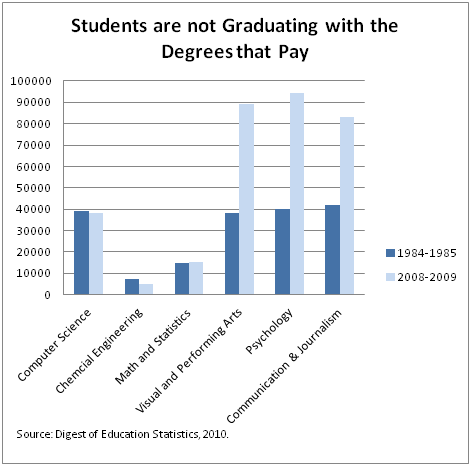
The value of education may actually just be a signalling mechanism

Filed under: Economics, Education — Tags: — Nicholas @ 11:38

Bryan Caplan looks briefly at the micro (to the person) and macro (to the society) benefits of higher education, but comes up with a more interesting view of the real value of education:

All this is well and good. But there’s an even deeper level of education to examine: What students actually study, learn and retain. I think of this as the “picoeconomic approach”* because it focuses on details too small for the “microeconomic approach” to see. The microeconomic approach tells us how much the market rewards education. But in the end, it doesn’t tell us why. To discover why education matters, we must descend to the picoeconomic level.

Key example: the main reason I’m think signaling is big deal has nothing to do with either Micro-Mincerian or Macro-Mincerian estimates of the return to education. The main reason I think signaling is a big deal is that (a) students study a ton of material that almost no job uses; (b) the Transfer of Learning literature shows that learning is highly specific — you don’t build general purpose mental muscles by learning Latin; (c) students quickly — and happily — forget most of what they learn, anyway. And yet employers amply reward education! The signaling model instantly looks like the best way to explain all the key facts.

[. . .]

* I know that the term “picoeconomics” is already used to describe the study of self-control problems, motivation, and so on. But why not think of self-control problems as one picoeconomic topic, and mine as another? We can treat picoeconomics as a blanket term that covers everything too small for microeconomists to notice.

August 26, 2011

Unexpectedly over-used

Filed under: Economics, Government, Media, USA — Tags: , , , , — Nicholas @ 09:05

Jim Geraghty explains why the word “unexpectedly” has become a punchline:

For about three years now, conservative bloggers have chuckled at how frequently the unveiling of bad economic news comes with the adverb “unexpectedly” in media reports. As Instapundit’s Glenn Reynolds, Michael Barone, and others have often asked, unexpected to whom?

“I think it’s a combination of cognitive dissonance, the terra nova nature of the post-bubble economy, and a healthy dose of partisanship,” suggests Ed Morrissey, who has blogged about the ubiquitous adverb regularly at HotAir.com.

Perhaps the perpetual surprise reflects a media desire to focus on pockets of growth or prosperity — at least with a Democrat in the White House. In a widely diversified $14 trillion economy, one can almost always find some areas of economic improvement.

Certainly, a media that wanted to paint a more dire portrait of the economy would have no shortage of material to work with. There’s considerable evidence that America’s problems in job creation are much worse than the most widely cited numbers would indicate.

For example, President Obama spent much of the past year touting the number of consecutive months of private-sector job growth that the country had enjoyed. But that boast comes with some asterisks. Traditionally, the population of American workers grows each month, and while economists differ a bit on precisely how many new jobs are needed each month just to keep the unemployment rate stable, it’s often more than the figure Obama cites. The Heritage Foundation puts the figure at 100,000 to 125,000; some argue that any serious reduction of the unemployment rate will require adding 200,000 jobs per month. Only four months out of the past 17 have seen at least 200,000 jobs added; some months of growth have been minimal, such as January 2010, when the economy added 16,000 private-sector jobs,. Nonetheless, like a bloop single keeping a batter’s hitting streak going in baseball, meager months of job growth permit Obama to keep bragging about how many consecutive months he has presided over private-sector job growth.

August 25, 2011

Look at what they actually do, not what they say

Filed under: Economics, Europe, France, Government — Tags: , , — Nicholas @ 09:36

Tim Worstall peers behind the curtain of those noble, generous French fat-cats who wrote the letter to the French government, insisting that they be taxed more. It’s not a pretty picture:

All very jolly and public-spirited you might think, but applying a little bit of economic theory reveals that they’re somewhere along the “speaking with forked tongues” to “lying toads” continuum.

That bit of economics is the concept of “revealed preferences”: translated out of the jargon it just means don’t look at what people say, look at what they do. For example, Liliane Bettencourt, the L’Oreal heiress, is one signatory calling for higher taxes on herself: it’s also been widely reported that she has received tax refunds under French “fiscal shield” provisions intended to limit taxes on the wealthy to 50 per cent. Madame, if you really want to pay higher taxes, just don’t cash those cheques.

We see the same sort of call everywhere of course. All sorts of people call for higher taxes: it’s just that very few actually pay higher amounts of money. We can see this in both the UK and US.

The US has an account, “Gifts to the United States”, specifically for charitable-minded citizens. Send them a cheque, they’ll cash it and spend the money on government. Last time I checked, the figures they received were $2,671,628.40. Roughly speaking, 1 cent per head of population. OK, so, yes, taxes were too low in the US that year. By exactly that amount.

The UK numbers aren’t even that good. In the same year only five Brits sent in cheques to the Treasury and four of those people were deceased. No, the fifth was not Polly Toynbee, despite the impression one might get from her columns (well, I don’t know it wasn’t her but I’m sure she would have urged the rest of us to do the same if it were).

An FOI request revealed that from 2002 to 2009 actual living people contributed £7,349.90 to the Treasury, over and above their legally due taxation. No, not each or per year… but in total.

There’s literally nothing stopping people from paying more taxes than they actually owe: every jurisdiction appears to allow people to give more money voluntarily. The US government even allows it to be done electronically. So, if you feel you’re not paying “your rightful share”, go right ahead and give it to the government. If you don’t, you’re demonstrating that you really don’t feel under-taxed after all.

August 24, 2011

What the US economy really needs

Filed under: Economics, Government, USA — Tags: , , , , , — Nicholas @ 09:22

What it really needs is less interference from the government, which is why Michael Tanner is asking them to stay on vacation:

As the economy continues to teeter on the precipice of a double-dip recession, there is a growing demand for the president and Congress to rush back from their vacations and do something. But why?

What is it that we really think the president can do?

While the president’s latest economic plan remains a deeply held secret until after his vacation, pretty much everyone in Washington expects him to call for . . . drumroll please . . . a stimulus plan.

Now why haven’t we thought of that before? Oh, that’s right. We have.

In fact, we have now had at least five — or is it six? — stimulus plans since this recession started.

August 23, 2011

Markets hate uncertainty

Filed under: Economics, Government, History — Tags: , , , — Nicholas @ 13:34

I’ve often remarked that the economy won’t — can’t — recover as long as governments (the US government in particular) keep messing around with the rules of the game. Amity Shlaes explains why:

One product makes clear exactly how unusual this year’s slide has been, and offers a clue as to why 2011 broke the rules. It’s called the Congressional Effect Fund. Founded by Wall Streeter Eric Singer in 2008, the fund is premised on the idea that equity markets dislike a hostile Washington, tolerate a friendly Washington, but prefer an inactive Washington above all.

It follows that stock-market rallies would come most often when Congress is idled — in recess, at home, in the districts. From 1965 until early this summer, the Standard & Poor’s 500 Index, Singer’s proxy for stocks, rose 17 percent while Congress was out of session versus only 0.9 percent while Congress was working in Washington.

In one study, four scholars took a step back to look at a century of returns — from 1897, just after the Dow Jones Industrial Average was founded, to 1997 — and found that average daily returns when Congress was out of session were almost 13 times higher than when it was in. Their explanation: “Perhaps the market enjoys the temporary certainty exhibited by the absence of Congressional decisions.”

Singer is blunter. About Washington’s impact on the economy, he says simply: “Congress subtracts value.”

The regulators are still on the job, but the legislators appear to be the ones causing the greater degree of uncertainty — and thereby limiting market opportunities. Nice work, government.

August 22, 2011

Jeffrey Miron: Myths about capitalism

Filed under: Economics, Government, Liberty — Tags: , , — Nicholas @ 14:43

August 14, 2011

Mark Steyn wants to thank Londoners for re-enacting chapter 5 of his new book

Filed under: Books, Britain, Economics, Liberty, Media, USA — Tags: , , — Nicholas @ 18:33

In a column at the Orange County Register, he shows how well-timed certain recent news items have been for illustrating parts of his latest book, After America:

The trick in this business is not to be right too early. A week ago I released my new book — the usual doom ‘n’ gloom stuff — and, just as the sensible prudent moderate chaps were about to dismiss it as hysterical and alarmist, Standard & Poor’s went and downgraded the United States from its AAA rating for the first time in history. Obligingly enough they downgraded it to AA+, which happens to be the initials of my book: After America. Okay, there’s not a lot of “+” in that, but you can’t have everything.

But the news cycle moves on, and a day or two later, the news shows were filled with scenes of London ablaze, as gangs of feral youths trashed and looted their own neighborhoods. Several readers wrote to taunt me for not having anything to say on the London riots. As it happens, Chapter Five of my book is called “The New Britannia: The Depraved City.” You have to get up pretty early in the morning to beat me to Western Civilization’s descent into barbarism. Anyone who’s read it will fully understand what’s happening on the streets of London. The downgrade and the riots are part of the same story: Big Government debauches not only a nation’s finances but its human capital, too.

August 13, 2011

Colby Cosh digs up the story about the discarded contributions for Slave Lake

Filed under: Cancon, Economics — Tags: , , — Nicholas @ 11:59

After an amusing look at the economics of Christmas (in short: it’s just a modern version of Potlatch), he finds out how those charitable contributions ended up in a landfill:

The containers were labelled with the name of energy company Total E&P, whose employees had gathered clothing and toys for the victims of the fire. “Employees had held a month-long drive to collect donations for Slave Lake victims,” notes the CBC. “They carefully packed up the collection and addressed it to the Red Cross, and called their internal courier to take it away. The Red Cross, though, does not accept items for donation, only cash…”.

So while the packing was “careful”, the research…? Not so much. Someone located another Calgarian with good intentions, Melissa Gunning, who was gathering material to be sent to Slave Lake fire victims. Unfortunately, she didn’t have the means to get all the nice things she accepted to the scene of the fire, and by that time, the brave people of Slave Lake hadn’t the slightest use for any of it.

[. . .]

I fear Paul Nielsen, the appalled discoverer of the items in the landfill, unwittingly saw straight to the heart of the matter. Someone went to a clothing store, bought a bunch of cute outfits for somebody’s else’s children, and “had the foresight to throw something in for the mother”, without the much less impressive foresight required to ask “Hey, will the Red Cross actually take this crap?” This is a “someone” who probably thought herself very clever in finding a absolutely bulletproof excuse for a shopping excursion, perhaps even on company time. The value of her “aid” turned out to be significantly less than zero, but that was surely beside the point to begin with. If it weren’t, the incessant entreaties of professional charitable organizations everywhere — “Please stop showing up with bundles of blankets and cans, and just give us cash already” — would actually have had some effect by now.

August 12, 2011

Gunter: Government is the problem

Filed under: Economics, Government, Politics — Tags: , , — Nicholas @ 12:18

Not much to disagree with Lorne Gunter here, at least in the main outline:

What do Obamacare, the London riots and a possible French debt crisis have in common? They are all proof that Western governments have grown beyond all reasonable, sensible limits. All these examples, and many more, demonstrate that we have grown utterly dependent on a ubiquitous state. Without one, we are at a loss about what to do.

[. . .]

And I am not talking solely of lifelong welfare recipient or habitual EI claimants. I am talking about middle-class voters who screech at the mere suggestion that they pay a portion of their “free” health care, education or pensions. I’m referring to cause-pleaders who run to government commissions claiming infringement of their rights every time fate deals them a less-than-ideal hand. Even people who think there is a social good in bicycle paths or parks or waterfront boardwalks, and therefore a common obligation to fund them through tax dollars.

And I also mean executives who want the state to use its coercive power to limit competition or to tax money away from working people to fund massive business-stimulus programs. A CEO demanding a bailout to mitigate bad business decisions they’ve made is every bit as guilty of this as a welfare advocate who claims it is the state’s duty to provide everyone with cable television, high-speed Internet, sports for their kids and hobby supplies so no one feels isolated from mainstream society.

Governments can do some things (relatively) well — courts, policing, national defence — but the more they attempt to do, the less well they do any of the tasks they’ve taken on. Western governments have vastly extended the range of human activities they now attempt to control, regulate, or foster. As with any organization that tries to do too much, it increases the chance of failure over a larger area.

Why Obama is being attacked from the left

Filed under: Economics, Media, Politics, USA — Tags: , , , , , — Nicholas @ 12:12

Victor Davis Hanson outlines the reasons for increasing attacks on President Obama and his administration from his erstwhile allies on the left:

Politics, of course. The combination of sinking polls to the near 40% range, the stock market nosedive, the Standard and Poor’s downgrade, the tragedy in Afghanistan, the confusion over Libya, the embarrassing golf outings and First Family insensitive preferences for the aristocratic Martha’s Vineyard, Vail, and Costa del Sol have contributed to a general unease on the Left about Obama’s judgment, perhaps to the extent that he might well take the Left down in 2012, both in the House and Senate, whether he wins reelection or not.

But the argument remains incoherent: Obama is being blamed for not being liberal enough — after federalizing much of the health care delivery system, expanding government faster than at any time since 1933, borrowing more money in two and a half years than any president in history, absorbing companies, jawboning the wealthy, going after Boeing, reversing the order of the Chrysler creditors, adding vast new financial and environmental regulations, appointing progressives like a Van Jones or Cass Sunstein, and institutionalizing liberal protocols across the cabinet and bureaucracy, from the EPA to the Attorney General’s Office.

In other words, there is now an elite liberal effort to disentangle Obama from liberalism itself, and to suggest that his sagging polls are not a reflection of Obama’s breakneck efforts to take the country leftward — but either his inability or unwillingness to do so!

Partly, the disappointment is understandably emotional. Just three years ago Obama was acclaimed as a once-in-a-lifetime prophet of liberalism, whose own personal history, charisma, teleprompted eloquence and iconic identity might move a clearly center-right country hard leftward where it otherwise rarely wished to go.

Partly, the anger is quite savvy: if one suddenly blames Obama the man, rather than Obama the ideologue, then his unpopularity is his own, not liberalism’s. There is a clever effort to raise the dichotomy of the inept Carter and the politically savvy Clinton, but in the most improbable fashion: Clinton supposedly was a success not because he was personable, sometimes compromising, and often centrist, and Carter was a failure not because he was sanctimoniously and stubbornly ideological, but just the opposite: Clinton is now reinvented as the true liberal who succeeded because of his principled leftwing politics; Carter like Obama was a bumbling compromiser and waffler.

« Newer PostsOlder Posts »

Powered by WordPress