Quotulatiousness

April 5, 2018

The Forgotten Foundations Part 2 – The History of Sci Fi – Extra Sci Fi – #5

Filed under: Books, History — Tags: , — Nicholas @ 04:00

Extra Credits
Published on 3 Apr 2018

We’re gonna dive into the TRULY wacky and wild stories of early science fiction, including a Czech play that invented the word “robot.”

March 31, 2018

If anybody could be described as Machiavellian, it’d surely be Machiavelli, right?

Filed under: Books, Europe, History, Italy — Tags: , , , , — Nicholas @ 03:00

At the Foundation for Economic Education, Paul Meany tries to rescue the reputation of Niccolò Machiavelli:

Portrait of Niccolò Machiavelli by Santi di Tito (1536-1603)
Via Wikimedia Commons.

If you have ever studied Shakespeare, you might have heard your teacher use the word “Machiavellian” to describe amoral characters such as Iago from Othello or Edmund from King Lear. “Machiavellian” denotes a person or action that disregards morality and is wholly self-serving. The origin of the word derives from the famous Florentine politician and writer Niccoló Machiavelli.

[…]

Published posthumously, The Prince left Machiavelli with an infamous reputation as an amoral, atheistic, and cynical writer. In 1559, the Catholic Church put Machiavelli’s works on the Index of Prohibited Books. In the play The Jew of Malta by Christopher Marlowe, written in 1589, Machiavelli appears in the prologue, boldly exclaiming, “I count religion but a childish toy, and hold there is no sin but ignorance.”

Machiavelli came to be associated with an Elizabethan term, “Old Nick,” used to denote the devil. There is a subject of modern psychology, known as the “dark triad,” which focuses on three malevolent personality traits: narcissism, psychopathy, and Machiavellianism.

However, this deeply negative image of Machiavelli did not always exist. In the 17th and 18th centuries, a more positive view of Machiavelli emerged, with authors such as the Republican James Harrington referring to Machiavelli as “the prince of politicians.” During the Italian Renaissance, humanist Giovanni Battista Busini fondly described Machiavelli as “a most extraordinary lover of liberty.”

This praise might seem confusing; after all, the word “Machiavellian” denotes someone who is cunning and unscrupulous. How could a man so devious and pragmatic be called a lover of liberty? The answer lies with Machiavelli’s other book, known as Discourses on Livy, which presents a very different image of his political beliefs.

[…]

The stark differences between Machiavelli’s Discourses on Livy and The Prince come from the nature of the aims of each book. The Prince aims to refine the conduct of a single prince, while Discourses on Livy offers guidance for the entire citizen body. The Prince was written to address a unique political opportunity that quickly evaporated, whereas Discourses on Livy was written to articulate the principles required by republics that sought longevity, liberty, and prosperity.

To this day, there still remains a huge debate over the intricacies and contradictions that characterize Machiavelli’s writings. Machiavelli was an extremely nuanced and original thinker whose reputation should not exclusively be that of an evil schemer. He argued for a republic whose liberty is safeguarded by the common person, in which free, unhindered debate provides the best course of action, and where compromises between opposing groups create harmony. Discourses on Livy reveals another side of Machiavelli, a man committed to the ideals of freedom through the means of representative government.

March 29, 2018

The Forgotten Foundations Part 1 – The History of Sci Fi – Extra Sci Fi – #4

Filed under: Books, History — Tags: — Nicholas @ 04:00

Extra Credits
Published on 27 Mar 2018

This week, we explore the obscure authors from the turn of the 20th century whose weird and wacky stories impacted our modern-day sci fi consciousness and inspired works from authors like H.P. Lovecraft and Terry Pratchett.

Update: Fixed broken link. No idea why YouTube changed it.

March 27, 2018

Metrics are merely a tool. Like any tool they can be misused.

Filed under: Books, Business, Health, History, Science — Tags: , , — Nicholas @ 03:00

A big problem with depending on metrics is finding things to count that are actually useful measurements of whatever you’re tracking. A lot of bad management decisions can be traced to poorly chosen metrics. As a general rule, just because something can be measured doesn’t automatically mean that measurement will be useful. Tim Harford reviews a recent book on metrics:

Jerry Z Muller’s latest book is 220 pages long, not including the front matter. The average chapter is 10.18 pages long and contains 17.76 endnotes. There are four cover endorsements and the book weighs 421 grammes. These numbers tell us nothing, of course. If you want to understand the strengths and weaknesses of The Tyranny of Metrics you will need to read it — or trust the opinion of someone who has.

Professor Muller’s argument is that we keep forgetting this obvious point. Rather than rely on the informed judgment of people familiar with the situation, we gather meaningless numbers at great cost. We then use them to guide our actions, predictably causing unintended damage.

A famous example is the obsession, during the Vietnam war, with the “body count” metric embraced by US defence secretary Robert McNamara. The more of the enemy you kill, reasoned McNamara, the closer you are to winning. This was always a dubious idea, but the body count quickly became an informal metric for ranking units and handing out promotions, and was therefore often exaggerated. Counting bodies became a risky military objective in itself.

This episode symbolises the mindless, fruitless drive to count things. But it also shows us why metrics are so often used: McNamara was trying to understand and control a distant situation using the skills of a generalist, not a general. Muller shows that metrics are often used as a substitute for relevant experience, by managers with generic rather than specific expertise.

Muller does not claim that metrics are always useless, but that we expect too much from them as a tool of management. For example, if a group of doctors collect and analyse data on clinical outcomes, they are likely to learn something together. If bonuses and promotions are tied to the numbers, the exercise will teach nobody anything and may end up killing patients. Several studies have found evidence of cardiac surgeons refusing to operate on the sickest patients for fear of lowering their reported success rates.

March 26, 2018

Rick McGinnis on Jordan Peterson’s 12 Rules For Life: An Antidote to Chaos

Filed under: Books, Education, Religion — Tags: , , , , , — Nicholas @ 03:00

Peterson’s book and lecture series has been much in the news lately, so Rick McGinnis shares his thoughts, particularly about the message and intended audience for 12 Rules for Life:

It was probably inevitable that this sudden notoriety would create a demand for a book-length statement of principles from Peterson, and he obliged earlier this year with 12 Rules For Life: An Antidote to Chaos. Deceptively packaged as a self-help tome, the book expands on a series of postings Peterson made on Quora, a crowdsourcing website that, instead of asking for money, invites its readers to contribute answers to questions posed by other readers.

The book’s structure is straightforward; after sketching in the origin of the dozen precepts, he states them at the outset of each chapter, explains them in varying degrees of complexity with examples from his practice as a clinical psychologist, anecdotes from his own life or – and this is proving to be most tantalizing – ruminations on quotes from history, philosophy, mythology or (most often of all) the Bible.

On the surface, Peterson’s edicts for a good life are self-evident: Stand straight; Obey the Golden Rule; Choose your friends wisely; Set yourself reasonable expectations; Raise your children well; Don’t be a hypocrite; Cherish meaning; Don’t lie; Listen before you speak; Choose your words carefully; Let children fail so they learn to succeed; Be kind to animals.

But lest you think that short paragraph should save anyone the price of the book, it has to be understood that we are at least a generation, perhaps several, from the point where these commonsensical statements were known, understood or accepted by any sane adult. We are, at the end of a century of phenomenal technological advances and cataclysmic history, sorely in need of a book-length exposition on phrases that you’d once expect to find on needlework samplers.

Early on and quite often, Peterson comes across with butt-clenching dread as the smartest-man-in-the-room, laying out the stories behind the facts, culled from his years of reading and research, with the force and volume of a firehose. He relies heavily on evolutionary biology to explain our hardwired need to create and find our place in hierarchies, with examples that distill our endlessly troubling social responses to bluff, authority, and even violence down to chemical and neurological mechanisms set in place way back in time with far less complex creatures (a scenario that’s easily satirized as “we are all lobsters”).

It’s been observed – and confirmed by Peterson – that the ideal audience for his book is young people in general and young men in particular. As a former young man, I can attest that being told by a wise older man, clearly on your side but unwilling to sugar coat the facts, that the bully and the big-man-on-campus are better armed than you are to jockey for status and fulfillment – the alpha lobsters, waving their claws around to appreciable effect – is very much less than comforting. Peterson’s ideal audience will have to endure the climb up a very steep hill of biological determinism to reach the far more hospitable plateau beyond.

I’m not saying Peterson is wrong. From the perspective of an older man, I’ve seen this lobster battle played out too many times to deny its plausibility. But I’d be remiss if I didn’t suggest that the ideologies that he decries, imagining that there is no biological determinism – not even the binary division of gender – or even a landscape governed by measurable standards or objective truth, is far more appealing to young people raised to believe in an ever-expanding entitlement of “rights” and a pursuit of “justice” that needs to triumph above history or biology.

It’s when Peterson tries to explain the philosophical and even theological roots of our cultural systems that things might be rewarding, for both young and older readers. He has a core group of texts that he relies upon, with particular emphasis on Dostoyevsky and Solzhenitsyn on the modern side, and while he will evoke ancient mythology – the gods of Egypt make several appearances, though even he can’t overcome the essential strangeness of their myths – he reaps more rewardingly from the Bible, especially in one passage where he analyzes the difference between the Old and New Testament God.

March 21, 2018

The History of Science Fiction – Pseudo-Science – Extra Sci Fi – #3

Filed under: Books, History — Tags: , , — Nicholas @ 04:00

Extra Credits
Published on 20 Mar 2018

The turn of the 20th century brought a lot of new ideas and inventions to the world. Suddenly, nature’s laws were not quite what they seemed. Thus, many folks drifted into explorations of the occult, which directly influenced 19th and 20th century science fiction.

March 14, 2018

The History of Sci Fi – H.G. Wells – Extra Sci Fi – #2

Filed under: Books, Britain, Gaming, History — Tags: , , , — Nicholas @ 04:00

Extra Credits
Published on 13 Mar 2018

H.G. Wells brought his socialist perspective to science fiction, creating great works that really ask us to look at where the human condition will take us hundreds of years from now.

March 10, 2018

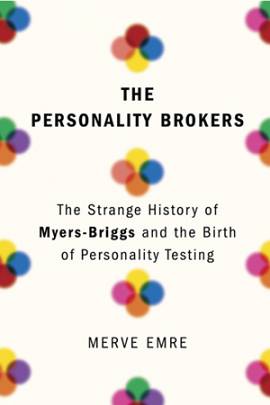
Carl Jung, “the Madame Blavatsky of psychotherapy”

Filed under: Books, Health, History — Tags: , , , , , — Nicholas @ 03:00

A few notes on Carl Jung, by Anthony Daniels (more often known by his pen name, Theodore Dalrymple), commenting on a biography from several years ago:

What exactly were [Jung’s] achievements? Oddly enough, although this biography is more than 800 pages long (649 of them are text, each of them so closely printed that they are the equivalent of two normal pages), by the time you finish it you will nevertheless be hard put to say. You will know a lot about the petty quarrels and squabbles in which Jung repeatedly engaged, and about the details of his domestic life, but relatively little about why any of these things matter in the first place. The author therefore assumes not only a familiarity with Jung’s ideas, and a sympathy towards them, but that the reader also assumes that Jung is worthy of such a lengthy biography. This is not an assumption I share, and though the book is written in serviceable prose, it contains not a single humorous remark. From very early on, therefore, I picked it up with some words that Macaulay wrote in a review of a two-volume biography of Lord Burleigh echoing through my mind like the insistent snatch of a tune (I quote from memory): Compared with the labour of reading these volumes, all other labour, the labour of thieves on the treadmill, the labour of children in the mines, the labour of slaves on the plantation, is but a pleasant recreation. That Miss Bair has been diligent is indisputably true; that her diligence has been wisely applied, unfortunately, is a more open question.

Some men are born charlatans, some achieve charlatanry, and some have charlatanry thrust upon them. Jung was decidedly not born a charlatan — or at least, he was not one throughout the whole of his career. True, he grew up in a family with a more than average number of table-rappers, which no doubt inclined him later to the study of the esoteric (for it certainly never occurred to him to wonder why the esoteric was, in fact, esoteric), and was subjected in his youth to that Teutonic windiness which comes so easily, though no means inevitably, to those who think and write in the German language. There is nothing quite like esoteric windiness for creating a penumbra of profundity, to which bored society ladies are drawn like flies to dung: and this no doubt explains how he became the Madame Blavatsky of psychotherapy. At the same time, however, he received a thorough grounding in classics as well as in science, spoke four languages fluently, could read Latin as if it were his native tongue, was not bad at Greek, and contributed several expressions to our daily discourse — complex, collective unconscious, archetypes, animus and anima, persona, introvert and extrovert — which by itself is far more than most of us will ever achieve. This is not the same as saying, however, that he contributed to human knowledge: for it is perfectly possible to give names to non-existent entities.

[…]

One of his patients, who has gone down in history as the solar-phallus man, thought (among many other strange things) that there was a phallus that emerged from the sun, and that by causing this solar appendage to move, he controlled the weather, particularly the wind. Jung subsequently discovered, in his reading about ancient myths, that there was a Persian Mithraic belief of exactly the same kind as his patient’s. Now his patient was not a well-educated or widely read man, so it seemed to Jung impossible that he had learnt of the Mithraic myth from external sources. He therefore concluded that the form of myths was almost — as we should now put it — hard-wired into the human psyche, and he called these forms archetypes. The collective unconscious was full of such archetypes.

Jung was a preternaturally unclear writer and thinker: he would never say anything clearly when obfuscation would do. Whether this was from lack of talent or an unconscious appreciation that clarity led to the possibility of contradiction and even refutation, no one can say, but the precise nature of archetypes, their ontological status as it were, has remained unclear ever since. At any rate, the solar-phallus man’s delusion, which he quoted for the rest of his long life, was the rock on which his theory was built: a somewhat inadequate basis for an entire, far-reaching theory about the mental life of all of humanity. But Jung’s theorizing was always like an inverted pyramid: a mountain of speculation resting on a pin-prick of fact.

There were obvious problems with the theory of archetypes. The theory suggested itself to Jung because of the exact, or very close, correspondence between the madman’s delusion and the original Mithraic myth: but how close did correspondences have to be before they were manifestations of archetypes, which were more platonic forms than actual contents of the mind? Only an analyst can say, of course, and there is no public criterion other than the analyst’s authority.

March 7, 2018

The History of Sci Fi – Jules Verne – Extra Sci Fi – #1

Filed under: Books, History, Media — Tags: , — Nicholas @ 06:00

Extra Credits
Published on Mar 6, 2018

Let’s start our journey to the center of hard science fiction: the works of Jules Verne, who imagined the technological wonders humanity could — and would — create in the twentieth century.

March 5, 2018

The economic failure of Iain Banks’s Culture stories

Filed under: Books, Economics — Tags: , , , , , — Nicholas @ 03:00

ESR points out the weak spot in the Culture series of novels:

There’s a lot of buzz about Iain Banks’s Culture universe lately, what with Elon Musk naming his drone ships in Banksian style and a TV series in the works.

I enjoyed the Culture books too, but they were a guilty pleasure for me because in a fundamental way they are bad SF.

They’re bad SF because the Culture’s economics is impossible. That ship hits a rock called “Hayek’s Calculation Problem” and sinks – even superintelligent Minds can’t make central planning work, because without price signals and elicited preferences you can’t know where to allocate resources. What you get is accelerating malinvestment to collapse.

This is what happened to the Soviet Union in the late 1980s. Hayek predicted it fifty years in advance. Huge factories in Siberia destroyed wealth by producing trucks nobody needed from resources that would have been better spent on other things – but nobody could know that because there weren’t any price signals. Eventually the SU wore out its pre-Communist infrastructure, fell down, went boom.

The problem is epistemic and fundamental – can’t be solved by good intentions or piling on computational capacity. An SF writer is every bit as obligated to know what won’t work in economics as he is not to make elementary blunders about chemistry and physics. The concept of “deadweight loss” matters as much as “entropy”.

Banks’s lifelong friend and fellow Trotskyite Ken McLeod actually managed not to flunk this. In a long and revealing interview about the genesis of one of his early series (the “October Revolution” books IIRC) he once revealed that for years he read free-market economics on the know-your-enemy principle, then woke up one day realizing he couldn’t refute them. Subsequently his books took a decidedly libertarian turn. This demonstrates that Marxists can clean up their shit; alas, Banks never made it that far.

March 3, 2018

Arguments against having students read To Kill a Mockingbird

Filed under: Books, Education — Tags: , , — Nicholas @ 03:00

I’m very much anti-censorship, so in the vast majority of cases where “pressure groups” are demanding that a book be removed from a school reading list, I’m usually against the idea. Recently, a demand to pull Harper Lee’s To Kill a Mockingbird was denied, but Ann Althouse explains why, unlike so many other efforts, in her opinion this one deserves a fair hearing:

I think the argument against selecting this book — of all books — as the go-to reading about race discrimination is, in fact, very strong. I understand that schools defend their own choices and are dug in here, but the Kameetas made an excellent argument (as far as I can tell from this summary). The black characters are basically “spectators and bystanders.” I think the book is also a problem because:

1. It’s a rape story where the woman lies about rape. Why should the first thing children learn about rape be about the woman lying?

2. Rape is a complex subject, difficult for 9th graders to understand, and yet this rape story is cartoonish, in which the man is absolutely, unquestionably innocent. Why present a book as literature when it deals with this important subject in a completely unsubtle way, completely subordinated to another subject the author is bent on telling (the outrageous accusation against an innocent man)?

3. Racial discrimination is also a complex subject, especially as it persists today, but the racial injustice shown in the book is so exaggerated that it allows a present-day reader to feel smugly distanced. Nobody we know is that over-the-top racist, so weren’t those people back then terrible? That’s not how high-quality literature is supposed to work on readers. They should need to question their own simplistic preconceptions.

4. It’s not a subtle telling of the story of how courts work and might carry forward racial prejudice. The evidence of the man’s innocence is so completely obvious that you have a complete breakdown of justice. That doesn’t begin to enlighten students about how there could be racial disparities in the justice system today. It invites them to sit back and think people in the past were crazy.

5. There is blatant stereotyping of the poor white family, and their problems are not treated as perhaps a consequence of poverty. They’re treated as genetically deficient. They are truly the irredeemable deplorables.

6. There is great sentimentality about this book in the older generation. Having reread this book very carefully and written about it (in the Michigan Law Review, here), I hold the informed opinion that it is not a very good book and the practice of imposing on the younger generations — with endless pressure to regard it as a great classic — deserves serious, vigorous questioning.

February 23, 2018

Timothy Sandefur’s Frederick Douglass: Self-Made Man

Filed under: Books, History, Liberty, USA — Tags: , , , , — Nicholas @ 05:00

Jonathan Bean responds to a negative review of Sandefur’s new biography in the New York Times:

Frederick Douglass, whose bicentennial birthday fell on Valentine’s Day, is one of the great figures in American history, a hero whose legacy is celebrated even by those who might otherwise contest his actual ideas.

Illustrating this truth, the New York Times marked the occasion by publishing a largely negative review of Timothy Sandefur’s new biography, Frederick Douglass: Self-Made Man — a book that depicts the African-American ex-slave and social reformer as a classical liberal who championed individual liberty based upon natural rights, self-reliance, and Rule of Law.

The book reviewer, Yale University historian David W. Blight, criticizes Sandefur and other “conservatives” for “co-opting” Douglass. (Sandefur is a self-described libertarian, but in Blight’s mind, ‘libertarian’ and ‘conservative’ are distinctions without a difference.) In making this complaint, Blight demonstrates his confusion as to the meaning of “the Right” and classical liberalism.

Blight concedes that Douglass was a “radical thinker and a proponent of classic 19th-century political liberalism” who “loved the Declaration of Independence” and “the natural-rights tradition.” On these issues, Blight’s view is consistent with Sandefur’s libertarian interpretation of Douglass.

Yet, Blight goes on to protest that the libertarians (or conservatives — he conflates the two groups) are wrong to co-opt Douglass because the great abolitionist “believed that freedom was safe only with the state and under law.”

But this view of freedom’s security is not one that libertarians would dispute. To say otherwise is to make a classic straw man argument.

[…]

Blight’s review gets two things about political classification especially wrong. First, classical liberalism is neither Left nor Right. Throughout history, classical liberals have extolled “unalienable Rights,” individual freedom from government control, the U.S. Constitution as a guarantor of freedom, color-blind law, and capitalism. These values distinguish classical liberalism from left-wing liberalism, with its emphasis on group rights, equality of outcomes, and hostility to free-market capitalism. They also put classical liberals squarely in opposition to nativists and white supremacists who used the law as a weapon to exclude “undesirable” immigrants or separate the races in the American South.

Second, “libertarianism” — the modern descendant of classical liberalism — is not and never has been a “do-nothing” philosophy. Classic liberals (or libertarians) were activists for abolishing slavery, eradicating segregation, defending immigrants’ rights, passing anti-lynching measures, and much more. Indeed, although they recognized the role that law played in protecting the exercise of liberty, it was the law that so often violated the inalienable rights of Americans. Classical liberals fought slavery, segregation, pernicious immigration quotas, internment, and “affirmative action” because these government measures denied individuals equal protection of the law.

Blight’s conceptual errors may account for why he sometimes badly misreads his subject. He claims, for example, that Douglass loved “the reinvented Constitution — the one rewritten in Washington during Reconstruction, not the one created in Philadelphia in 1789.” This is a gross mischaracterization of Douglass’s views.

February 19, 2018

Graphing good news

Filed under: Books, Economics, History — Tags: , , , — Nicholas @ 05:00

In the Times Literary Supplement, David Wootton reviews Enlightenment Now: A manifesto for science, reason, humanism and progress by Steven Pinker:

This book consists essentially of seventy-two graphs – and, despite that, it is gripping, provocative and (many will find) infuriating. The graphs all have time on the horizontal axis, and on the vertical axis something important that can be measured against it – life expectancy, for example, or suicide rates, or income. In some graphs the line, or lines (often the graphs compare trends in several countries) fall as they go from left to right; in others they rise. In every single one, the overall picture (with the inevitable blips and bounces) is of life getting better and better. Suicide rates fall, homicides fall, incomes rise, life expectancies rise, literacy rates rise and so on and on through seventy-two variations. Most of these graphs are not new: some simply update graphs which appeared in Pinker’s earlier The Better Angels of Our Nature (2011); others come from recognized purveyors of statistical information. The graphs that weren’t in Better Angels extend the argument of that book, that war and homicide are on the decline across the globe, to assert that life has been getting better and better in all sorts of other respects. The claim isn’t new: a shorter version is to be found in Johan Norberg’s Progress (2017). But the range and scope of the evidence adduced is new. The only major claim not supported by a graph (or indeed much evidence of any kind) is the assertion that all this progress has something to do with the Enlightenment.

Since the argument of the book is almost entirely contained in the graphs, those who want to attack the argument are going to attack the figures on which the graphs are based. Good luck to them: arguments based on statistics, like all interesting arguments, should be tested and tested again. Better Angels caused a vitriolic dispute between Pinker and Nassim Nicholas Taleb as to whether major wars are becoming less frequent. In Taleb’s view the question is a bit like asking whether major earthquakes are getting less frequent or not: they happen so rarely, and so randomly, that you would need records going back over a vast stretch of time to reach any meaningful conclusion; a graph showing falling death rates in wars over the past seventy years won’t do the job. But it certainly will tell you that lots of generalizations about modern war are wrong. Much, indeed most, of Pinker’s argument survived Taleb’s attack, which in any case was directed at only one graph among many.

A more radical line of criticism of Better Angels came from John Gray. How can one find a common standard of measurement for the suffering of a concentration camp victim, of a soldier who died in the trenches, and of someone killed in the firebombing of Dresden? To turn to economics, how can one find a common standard of measurement for books and washing machines, oranges and steak pies? Money, you might think, provides that standard, but what happens if many of the goods being measured – electric lighting, cars, televisions, computers – get cheaper and cheaper as time goes on, so that a rising standard of living is concealed by falling prices? For Gray, to place one’s faith in statistics, which claim to be measuring the unmeasurable, is no different from believing in conversations with angels or in the efficacy of Buddhist prayer wheels. Quantification is our religion.

February 18, 2018

Nitay Arbel on Jordan Peterson’s 12 Rules for Life

Filed under: Books, Religion — Tags: , , , , — Nicholas @ 05:00

A guest post at According to Hoyt:

Those looking for an ‘alt-right’ manifesto will be sorely disappointed. Peterson actually says explicitly that on some economic issues (e.g., income disparity) he leans somewhat left, and elsewhere in the book laments that the cultural demonization of anything masculine is (as he describes it) causing a backlash, in terms of a resurgence in popularity of European parties he calls ‘far right’ or even ‘fascist’. (For Trump, to be clear, he uses the term ‘populist’, which undeniably fits.)

Nor will you find a camouflaged Christian revivalist tract here, as some claim. To be sure, Peterson heavily draws on the Bible and particularly on the Christian New Testament for quotes, but there are plenty of references to Eastern religious philosophies as well, particularly Taoism (‘yang vs. yin’, which here becomes ‘order vs. chaos’) and classical Buddhism (the concept that life is suffering). Among Christian theologians, Kierkegaard’s “act of faith” comes up repeatedly. During an interview, he was asked point-blank “Are you a Christian, and do you believe in G-d?” His intriguing answer: “I think the proper response to that is No, but I’m afraid He might exist.”

Nor is it some sort of “EST”-type (quasi-)cult manual, with Peterson setting himself up as a guru.

Moreover, it does not purport to be a reasoned scholarly tome of conservative philosophy. This is where Peter Hitchens (brother of the late Christopher) gets a little dyspeptic in his review in The Spectator, as he found it wanting there. http://archive.is/4eQIE (h/t: masgramondou)

David Solway, in his much more sympathetic article on PJMedia, hits the nail on the head, I believe. https://pjmedia.com/trending/jordan-peterson-phenomenon/ Like Solway, I find it hard to identify a single new idea in the book — pretty much everything Peterson says would be familiar to those of us who have been reared on Scripture and the Great Books.

But we have reached the level of intellectual corruption where, as George Orwell put it, the first duty of any thinking person is the restatement of the obvious. And that, Peterson does very well indeed. The book is a coherent whole, an engaging read, yea even a compelling ‘recap’ to the well-read. Peterson makes his discourse more engaging through extensive illustrations from psychological research, his own clinical practice, neuroscience, and his own life experience. Most importantly, it will bring wisdom of the ages (and of rational-empirical thinking) to a millennial generation drowning in derp and denial of objective reality. To those who, if you will pardon me the phrase, “know not the gods of the copybook headings”.

I just finished reading the book myself, and I largely agree with this summary.

February 15, 2018

The Martian Chronicles – The New Martians – Extra Sci Fi – #13

Filed under: Books — Tags: , — Nicholas @ 04:00

Extra Credits
Published on 13 Feb 2018

Ray Bradbury’s last Martian story, “The Million Year Picnic,” offers a much more optimistic look at humanity. We have proven ourselves very capable destroyers, but we also have the capacity to improve and learn from our mistakes.

« Newer PostsOlder Posts »

Powered by WordPress