Quotulatiousness

February 5, 2013

Japan lodges formal protest after Chinese ship targets Japanese ship near Senkaku/Diaoyu islands

Filed under: China, Japan, Military — Tags: , , — Nicholas @ 09:13

The BBC has the details:

“On 30 January, something like fire-control radar was directed at a Japan Self-Defence Maritime escort ship in the East China Sea,” Mr Onodera told reporters on Tuesday.

The minister said Japan’s Yuudachi vessel and the Chinese frigate were about 3km (one mile) [ed: conversion error here, 3km is about 2 miles] apart at the time, Japan’s Kyodo News reports.

Asked about the delay in filing the protest, Mr Onodera said it took the ministry until Tuesday to determine that a fire-control radar had indeed locked on the Japanese ship.

He added that a Japanese military helicopter was also targeted with a similar type of radar by another Chinese frigate on 19 January.

“Directing such radar is very abnormal. We recognise it would create a very dangerous situation if a single misstep occurred,” he said.

Senkaku/Diaoyu Islands

I was getting hungry after reading the first two paragraphs…

Filed under: Asia, Food, History, India — Tags: — Nicholas @ 00:01

What is curry and where did it come from?

What is curry? Today, the word describes a bewildering number of spicy vegetable and meat stews from places as far-flung as the Indian subcontinent, the South Pacific, and the Caribbean Islands. There is little agreement about what actually constitutes a curry. And, until recently, how and when curry first appeared was a culinary mystery as well.

The term likely derives from kari, the word for sauce in Tamil, a South-Indian language. Perplexed by that region’s wide variety of savory dishes, 17th-century British traders lumped them all under the term curry. A curry, as the Brits defined it, might be a mélange of onion, ginger, turmeric, garlic, pepper, chilies, coriander, cumin, and other spices cooked with shellfish, meat, or vegetables.

Those curries, like the curries we know today, were the byproduct of more than a millennium of trade between the Indian subcontinent and other parts of Asia, which provided new ingredients to spice up traditional Indian stews. After the year 1000, Muslims brought their own cooking traditions from the west, including heavy use of meat, while Indian traders carried home new and exotic spices like cloves from Southeast Asia. And when the Portuguese built up their trading centers on the west coast of India in the 16th century, they threw chilies from the New World into the pot. (Your spicy vindaloo may sound like Hindi, but actually the word derives from the Portuguese terms for its original central ingredients: wine and garlic.)

But the original curry predates Europeans’ presence in India by about 4,000 years. Villagers living at the height of the Indus civilization used three key curry ingredients — ginger, garlic, and turmeric — in their cooking. This proto-curry, in fact, was eaten long before Arab, Chinese, Indian, and European traders plied the oceans in the past thousand years.

January 28, 2013

Japanese finance minister: “elderly are an unnecessary drain on the country’s finances”

Filed under: Government, Health, Japan — Tags: , , , — Nicholas @ 11:32

The Guardian reports on recent comments by the new finance minister in Japan:

Japan’s new government is barely a month old, and already one of its most senior members has insulted tens of millions of voters by suggesting that the elderly are an unnecessary drain on the country’s finances.

Taro Aso, the finance minister, said on Monday that the elderly should be allowed to “hurry up and die” to relieve pressure on the state to pay for their medical care.

“Heaven forbid if you are forced to live on when you want to die. I would wake up feeling increasingly bad knowing that [treatment] was all being paid for by the government,” he said during a meeting of the national council on social security reforms. “The problem won’t be solved unless you let them hurry up and die.”

Aso’s comments are likely to cause offence in Japan, where almost a quarter of the 128 million population is aged over 60. The proportion is forecast to rise to 40% over the next 50 years.

[. . .]

To compound the insult, he referred to elderly patients who are no longer able to feed themselves as “tube people”. The health and welfare ministry, he added, was “well aware that it costs several tens of millions of yen” a month to treat a single patient in the final stages of life.

Cost aside, caring for the elderly is a major challenge for Japan’s stretched social services. According to a report this week, the number of households receiving welfare, which include family members aged 65 or over, stood at more than 678,000, or about 40% of the total. The country is also tackling a rise in the number of people who die alone, most of whom are elderly. In 2010, 4.6 million elderly people lived alone, and the number who died at home soared 61% between 2003 and 2010, from 1,364 to 2,194, according to the bureau of social welfare and public health in Tokyo.

The government is planning to reduce welfare expenditure in its next budget, due to go into force this April, with details of the cuts expected within days.

Sadly, expect more of this kind of comment from hard-pressed governments as the baby boomers move out of work and into retirement.

India’s Chinese border to be reinforced

Filed under: China, Economics, India, Military — Tags: , , — Nicholas @ 09:43

Strategy Page on the Indian government’s planned upgrades along the shared border with China:

The Indian Army wants $3.5 billion in order to create three more brigades (two infantry and one armored) to defend the Chinese border. Actually, this new force is in addition to the new mountain corps (of 80,000 troops) nearing approval (at a cost of $11.5 billion). The mountain corps is to be complete in four years. The three proposed brigades would be ready in 4-5 years. By the end of the decade India will have spent nearly five billion dollars on new roads, rail lines and air fields near the 4,057 kilometer long Chinese border.

The Indian Army currently has 37 Divisions including; 4 RAPID (Reorganised Army Plains Infantry Divisions) Action Divisions, 18 Infantry Divisions, 10 Mountain Divisions, 3 Armored Divisions and 2 Artillery Divisions. There are also 12 independent combat brigades (five armor and seven mechanized infantry). Most of the army has been organized and trained to fight the Pakistani army in flat terrain. The Chinese border is largely mountainous.

Three years ago India quietly built and put into service an airfield for transports in the north (Uttarakhand) near their border with China. While the airfield can also be used to bring in urgently needed supplies for local civilians during those months when snow blocks the few roads, it is mainly there for military purposes in case China invades again. Uttarakhand is near Kashmir, and a 38,000 square kilometer chunk of land that China seized after a brief war with India in 1962. This airfield and several similar projects along the Chinese border are all about growing fears of continued Chinese claims on Indian territory. India is alarmed at increasing strident Chinese insistence that is owns northeastern Indian state of Arunachal Pradesh. This has led to an increased movement of Indian military forces to that remote area.

India quickly discovered that a buildup in these remote areas is easier said than done. Moreover, the Indians found that they were far behind Chinese efforts. When they took a closer look three years ago, Indian staff officers discovered that China had improved its road network along most of their 4,000 kilometer common border. Indian military planners calculated that, as a result of this network, Chinese military units could move 400 kilometers a day on hard surfaced roads, while Indian units could only move half as fast, while suffering more vehicle damage because of the many unpaved roads.

January 13, 2013

The “successes” of the drone war can only be measured in body counts

Filed under: Africa, Asia, Military, USA — Tags: , , , , , , — Nicholas @ 12:48

In the Guardian, Simon Jenkins discusses the negative aspects of the drone war:

The greatest threat to world peace is not from nuclear weapons and their possible proliferation. It is from drones and their certain proliferation. Nuclear bombs are useless weapons, playthings for the powerful or those aspiring to power. Drones are now sweeping the global arms market. There are some 10,000 said to be in service, of which a thousand are armed and mostly American. Some reports say they have killed more non-combatant civilians than died in 9/11.

I have not read one independent study of the current drone wars in Afghanistan, Pakistan and the horn of Africa that suggests these weapons serve any strategic purpose. Their “success” is expressed solely in body count, the number of so-called “al-Qaida-linked commanders” killed. If body count were victory, the Germans would have won Stalingrad and the Americans Vietnam.

Neither the legality nor the ethics of drone attacks bear examination. Last year’s exhaustive report by lawyers from Stanford and New York universities concluded that they were in many cases illegal, killed civilians, and were militarily counter-productive. Among the deaths were an estimated 176 children. Such slaughter would have an infantry unit court-martialled. Air forces enjoy such prestige that civilian deaths are excused as a price worth paying for not jeopardising pilots’ lives.

[. . .]

Since the drone war began in earnest in 2008, there has been no decline in Taliban or al-Qaida performance attributable to it. Any let-up in recruitment is merely awaiting Nato’s departure. The Afghan president, Hamid Karzai, has called the attacks “in no way justifiable”. The Pakistan government, at whose territory they are increasingly directed, has withdrawn all permission.

The young Yemeni writer Ibrahim Mothana protested in the New York Times of the carnage drones are wreaking on the politics of his country, erasing “years of progress and trust-building with tribes”. Yemenis now face al-Qaida recruiters waving pictures of drone-butchered women and children in their faces. Notional membership of al-Qaida in Yemen is reported to have grown by three times since 2009.

January 4, 2013

North Korea adopts maskirovka to conceal rocket preparations

Filed under: Asia, Military, Pacific — Tags: , , , , — Nicholas @ 10:09

Strategy Page on the most recent North Korean hoodwinking of western intelligence agencies:

Western intelligence agencies are a bit embarrassed that they were not able to predict the exact day that North Korea recently launched a long-range rocket. Even though North Korean announced the two week period during which the launch would take place last December, and several nations had photo satellites flying over the launch site regularly, the actual launch came as a surprise. The North Koreans apparently took advantage of the regular schedules of these spy satellites to move equipment around the launch site at the right time to conceal just how close the rocket was to takeoff. Many intel analysts had not seen this sort of thing at all (if they were young) and the older ones had not seen it done to this degree since the 1980s, when the Soviet Union was still around and using their maskirovka (“masking”) agency to carry out large scale deceptions of photo satellites. The Russians taught the North Koreans many things, and maskirovka was apparently part of the curriculum.

In addition to concealing weapons, their performance and movements, the Soviets also used satellite deception to mislead the west on how their troops would operate in the field. Several times a year, the Soviets would hold large scale maneuvers. Each of these exercises would involve many divisions, plus hundreds of aircraft and helicopters. Satellite photos of these maneuvers were thought to reveal tactics the Soviets were going to use in future wars. But the Soviets knew when American satellites were coming over and sometimes arranged displays of tactics they had no intention of using. Naturally, this made it more difficult for the Western intelligence analysts to figure out exactly what the Soviets were planning. This, of course, was the sort of confusion the Soviets wanted to create with these little deceptions.

January 2, 2013

Potential hotspots for 2013

Filed under: Africa, Asia, China, India — Tags: , , , , , — Nicholas @ 09:37

Strategy Page has the advance listing of places around the world where peacekeeping or peace-making may be required this year:

Planning for peacekeeping works a lot better if you have a good idea of where the next crises will occur. For 2013 there are several potential hotspots where diplomats can’t handle the mess and armed peacekeepers may be needed. In some cases, there might also be a call for more peacekeepers in an existing hotspot. That might happen in the eastern Congo, where the largest force of UN peacekeepers has been trying to calm things down for nearly a decade, but the violence just keeps going. There’s increasing hostility between Sudan and newly created South Sudan. There are some peacekeepers there, but, like Darfur (western Sudan) the violence never seems to stop.

There’s always been the possibility of large scale fighting between Afghanistan and Pakistan. There’s been more and more small scale violence on the border and growing threats from both countries. There is still a lot of tension between Pakistan and India, over Pakistani support for Islamic terrorists making attacks in India. Pakistan denies any responsibility, despite a growing mountain of evidence. Neither country would be very hospitable to peacekeepers.

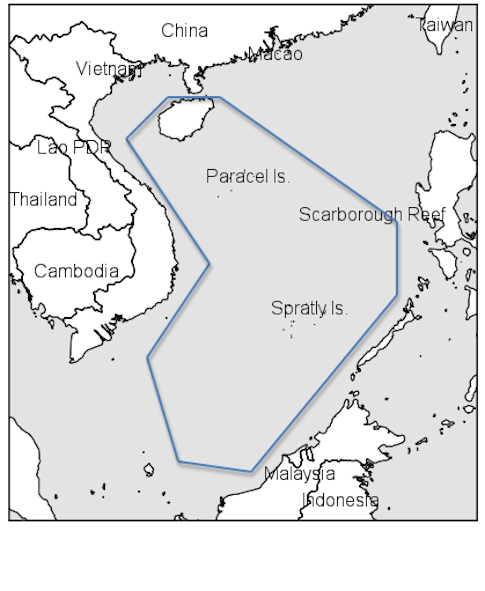
And then there the developing mess in the Western Pacific off China, where Chinese claims to a lot of uninhabited rocks and reefs is causing a growing outrage from the neighbors. China keeps pushing and with all those armed ships and aircraft facing off, an accidently, or deliberate, shot is possible. China will also be a major player if North Korea finally does its political collapse. The North Korean economy has already tanked as has morale and living standards. If the government loses control China and South Korea have both made claims on responsibility for taking over and dealing with the mess.

December 30, 2012

The Gross National Happiness hoax

Filed under: Asia, Economics, Government, Media — Tags: , , , , , — Nicholas @ 12:14

Remember the brief flicker of media interest in replacing the Gross National Product measurement with something called Gross National Happiness? It didn’t seem to catch on, which is fortunate, because the poster child for GNH is Bhutan:

Mainstream economists and almost all national bureaucracies around the world use measures such as Gross Domestic Product (GDP) or Gross National Product (GNP) to measure and track economic activity. These measurements are evidence-based. Hard data is aggregated and analyzed to come up with a picture of a national economy that is accurate and reliable. Based on such data, sound economic and development policies can be formulated. Not so for the Kingdom of Bhutan — a country ruled with an iron fist by its northern-based Buddhist Drukpa monarchy and elite with a transparent façade of democracy designed to obscure the true state of affairs in that country.

Having engaged in a massive ethnic cleansing campaign against its Lhotsampa minority of Nepalese origin from the mid 1980’s to the early 1990’s, Bhutan’s leadership prefers to use the amorphous and malleable measure of Gross National Happiness (GNH) to claim that their citizens — at least the ones that were not forcibly evicted from the country — are among the “happiest” in the world. Being a wholly subjective measure that utilizes no quantifiable data, GNH has been creatively utilized as a propaganda tool by the Drukpa leadership to project an image of Bhutan as a country of smiling Buddha’s. Little do most outside observers know the dark underbelly of this seemingly innocuous portrayal. It willfully ignores the history of ethnic cleansing and institutionalized racial intolerance against Lhotsampas inside Bhutan that continue unabated to this day.

[. . .]

With its record of ethnic cleansing and intolerance, it is morbidly amusing to hear propaganda that Bhutan is some sort of mythic “last Shangri-La,” a land of harmony and peace. Nothing could be more removed from the truth. The charade of ushering in a constitutional monarchy in the last few years and the ascension of the charismatic 31-year-old Oxford-educated King Jigme Khesar Namgyal Wangchuk has led to a fresh burst of official Bhutanese propaganda expounding the unique nature of their happy people and of Gross National Happiness in general.

December 23, 2012

China’s rare earth monopoly bid goes smash

Filed under: Business, China, Economics, Technology — Tags: , , — Nicholas @ 11:20

Remember the headlines from a few years back, when China was the source of a disproportional amount of the rare earth required for many of our modern electronic toys like iPhones and hard drives and such? China’s ham-handed attempt to constrain supply and jack up the prices has signally failed:

For I’ve been saying for years now that this “China will control all the rare earths” thing is nonsense and so it has turned out to be: nonsense.

Not that it hasn’t tried to control it all, mind, it’s just that it has failed. Failed for the reason we’d expect from communist state: its officials don’t understand free market economics. Specifically, it’s possible to successfully exercise monopoly power only if that monopoly is not contestable.

[. . .]

We were also continually reminded that China has 30 per cent of the world’s reserves: which simply shows that people don’t know what a reserve is. It’s not, as just about everyone assumes, the amount of something that’s available. It’s an amount whose exact location is known, which we’ve measured, drilled, sampled and baked a fluffy cake from – and which we can mine with current techniques AND with which we make a profit at current prices. Miss any of those steps (except maybe the cake) and it is not a reserve: it’s a resource. And resources of rare earths are vast: several are individually more common than copper for example. China has 30 per cent of the proven fluffiness, not 30 per cent of all that is available.

I will admit to a certain suspicion that the stories we heard were rather more a well-organised PR campaign to allow a couple of companies to suck subsidies out of the US taxpayer. Or perhaps even, given the conversation I had with a lobbyist about how to try to get on that gravy train, a plot to enrich lobbyists via companies paying to try to suck subsidies out of the US taxpayer.

So, now that I have finished puffing out my chest to “We Will Rock You”, on to what to economists is the blindingly obvious point of this story and what it means for the tech business. You might well have a monopoly: but it ain’t going to do you much good if, when you try to exercise your monopoly power, people come along and successfully contest your monopoly. We thus need to divide monopolies into two classes: those that are contestable and those that are not.

Back in 2010, I commented on Tim’s original debunking of the story:

So, if they have a monopoly on 95% of the world supply, why won’t it hold up? Because in spite of the name, they’re not as rare as all that … and there are substitutions that can be made for some or all of the current application needs. By restricting the supply and/or driving up the price, China will spur new competitors to enter the field and new sources of rare earths to be developed. In the short term, it will definitely create price increases (which, of course, will be passed on to the consumer), but in the medium-to-long term they will create a vibrant competitive marketplace which will almost inevitably drive the prices down below current levels.

Isn’t economics fascinating?

December 17, 2012

Kim Jong-Un is Time man of the year (with help from 4chan)

Filed under: Asia, Humour, Media — Tags: , , , , — Nicholas @ 11:03

Tim Cushing on 4chan’s latest use of Time as a comedic sidekick:

4chan has returned to the limelight once again to torment reluctant sidekick TIME by voting early and often in its own particular idiom (read: bots, prolly) for Person of the Year. And the winner is none other than North Korean dictator and poster boy for evil, nepotism and ill-fitting grey smocks, Kim Jong-un. Here’s a portion of Time‘s statement on the poll results, which is good naturedly resigned, much in the way parents raising child 7+ are more concerned with keeping the cleaning products, bandages and fire extinguisher close at hand than preventing the feat of daredevilry that is currently being performed using Sharpies, a purloined Zippo and the second floor bannister.

    Kim Jong Un is having a good year. After taking over the leadership of North Korea from his late father Kim Jong Il, at the end of 2011, he’s solidified his control over the country, appeared on TIME‘s cover and he was even named “Sexiest Man Alive.” (OK, that honor was actually bestowed as a spoof in the satirical newspaper, The Onion, but a Chinese news service mistook the Onion piece for real news and the story went global.)

    Now, he’s gotten the most votes in TIME‘s completely unscientific reader Person of the Year Poll with 5.6 million votes. Not bad for a man who didn’t make an official public appearance until 2010.

December 7, 2012

Revisiting Pearl Harbour

Filed under: History, Japan, Military, Pacific, USA, WW2 — Tags: , , , , — Nicholas @ 10:38

In a History Today article from 2001, Dan van der Vat looks at the actual history rather than the film treatments of the Japanese attack on Pearl Harbour in 1941:

To recount what actually happened blow by blow, as in the exhaustive Tora, Tora, Tora!, is one thing; to use the event as the backdrop to an avowed fiction, as in From Here to Eternity, is equally legitimate. But to play fast and loose with history by presenting fiction as fact is at best confusing and at worse dangerous — especially when the event is still within living memory, affects current policy and needs to be understood by the young if the lessons of history are to be truly learned.

On Roosevelt’s ‘date that will live in infamy’, six Japanese carriers launched 350 aircraft to immobilise the US battlefleet at the very moment talks were due to resume in Washington. The Americans knew Japan’s propensity for surprise attack (Korea in 1895, the Russians’ Chinese enclave at Port Arthur in 1904, Manchuria in 1931, China in 1937). They were forewarned by their Tokyo embassy of the inclusion of Pearl Harbor in Japan’s war-plans, and they intercepted signals exposing its intentions. Yet the Japanese achieved strategic surprise. But their strategic blunder in not bombing repair facilities and fuel dumps spared the US Navy the crippling embarrassment of having to withdraw 2,200 miles eastward to the continental West Coast.

[. . .]

Initial American reaction to Pearl Harbor included not only rage at Japanese duplicity but also incredulity based on racism. Many witnesses insisted they had seen swastikas on the bombers; surely the Germans must have been behind such a sophisticated stroke. Inability to cope with the reality of America’s most spectacular lost battle led to a flourishing conspiracy industry which sprang up within hours of the bombing.

Even today, extreme revisionists claim that British frogmen came in on the midget Japanese submarines that almost gave the game away by trying to attack before the bombers. That at least one batch of intelligence intercepts from 1941 has not yet been released is taken as proof that they must conceal the ‘smoking gun’ the revisionists so stubbornly seek to this day.

Update: MHQ has the story of the most effective Japanese spy who reported on the comings and goings of US Navy ships at Pearl Harbour:

At 1:20 a.m. on December 7, 1941, on the darkened bridge of the Japanese aircraft carrier Akagi, Vice Admiral Chui­chi Nagumo was handed the following message: “Vessels moored in harbor: 9 battleships; 3 class B cruisers; 3 seaplane tenders, 17 destroyers. Entering harbor are 4 class B cruisers; 3 destroyers. All aircraft carriers and heavy cruisers have departed harbor….No indication of any changes in U.S. Fleet or anything unusual.”

[. . .]

Astonishingly, such critical intelligence was not the work of a brilliant Japanese superspy who had worked his way into the heart of the fleet’s installation. Rather, Takeo Yoshikawa, a naval officer attached to the consulate and known to the Americans, had simply watched the comings and goings of the fleet from afar, with no more access than a tourist. He made little effort to cloak his mission, and almost certainly would have been uncovered if American intelligence had been more on the ball, or if America’s lawmakers had recognized the mortal threat Japan presented. Instead, he raised little suspicion, and his observations helped the Japanese piece together an extraordinarily detailed attack plan, ensuring its success.

December 5, 2012

Finland’s excellent education system can’t be exported

Filed under: Asia, Education, Europe — Tags: , , , , , — Nicholas @ 09:46

Finland frequently comes in at or near the top of the rankings for quality of education, and some countries are tempted to replicate the Finnish model to improve their own domestic school systems. Unfortunately, as Eero Iloniemi points out, the model is actually more cultural than educational:

One such similarity is orthography. Both languages are written almost exactly as they are pronounced. Therefore, a child who can spell one word will be able to spell every word, even when they hear it for the first time. An eight-year-old Finn will have no trouble identifying every letter when he hears the word ‘kertakäyttösyömäpuikkoteollisuus’. So while native English speakers practise spelling well into their teens, Finnish and Korean kids are busy brushing up on other subjects.

Another thing Finland and Korea share is a fairly homogeneous culture. Ethnic minority groups are small and immigration to both countries is conspicuously low. As Horst Entof and Nicole Miniou of Darmstadt University of Technology noted in their 2004 study, PISA results are higher in countries which have strict and/or highly selective immigration policies than they are in countries with more liberal immigration policies. The name of the study says it all: PISA Results: What a Difference Immigration Law Makes.

This point is underlined by the fact that Finland performs significantly better in PISA studies than neighbouring Sweden. Why? Sweden has an immigrant population that is 10 times bigger. When these socially and economically similar countries are compared, omitting first and second generation immigrant children from sample groups, the results become almost identical.

Update: Oh, and it’s also a myth that the Finns pay their teachers at the same level they pay their doctors.

November 28, 2012

Chinese aviators start carrier landing practice

Filed under: China, Military, Technology — Tags: , , , — Nicholas @ 09:52

Strategy Page updates us on the development of China’s aircraft carrier capabilities:

A Chinese aviator, flying a Chinese made J-15 fighter, made the first landing and takeoff from a Chinese aircraft carrier just two months after the ship was commissioned (on September 25th). The first Chinese aircraft carrier, the Liaoning is a 65,000 ton, 305 meter (999 feet) long ship that had spent over a year on sea trials. During that time Liaoning was at sea for about four months. This was all in preparation for flight operations. Last year China confirmed that the Liaoning will primarily be a training carrier. The Chinese apparently plan to station up to 24 jet fighters and 26 helicopters on the Liaoning and use the ship to train pilots and other specialists for four or more additional carriers.

Five years ago the Chinese Navy Air Force began training carrier fighter pilots (or “aviators” as they are known in the navy). In the past Chinese navy fighter pilots went to Chinese Air Force fighter training schools, and then transferred to navy flight training schools to learn how to perform their specialized (over open water) missions. Now, operating from carriers, and performing landings and take-offs at sea, has been added to the navy fighter pilot curriculum. The first class of carrier aviators has finished a four year training course at the Dalian Naval Academy. This included learning how to operate off a carrier, using a carrier deck mock-up on land. Landing on a moving ship at sea is another matter. The Russians warned China that it may take them a decade or more to develop the knowledge and skills needed to efficiently run an aircraft carrier. The Chinese are game and are slogging forward. The first landing and takeoff was apparently carried out in calm seas. It is a lot more difficult in rough weather (when the carrier is moving up and down and sideways a lot) and at night. The latter, called “night traps” is considered the most difficult task any aviator can carry out, especially in rough weather.

They also point out that the US Navy’s experiments with naval UAVs continue and are putting technological pressure on both Russia and China to do the same:

Over the last few years, the U.S. Department of Defense decided that the air force and navy be allowed to develop combat UAVs to suit their particular needs. The X-45 was meant mainly for those really dangerous bombing and SEAD missions. But the Pentagon finally got hip to the fact that the UCAV developers were coming up with an aircraft that could replace all current fighter-bombers. This was partly because of the success of the X-45 in rapidly reaching its development goals, and the real-world success of the Predator (in finding, and attacking, targets) and Global Hawk (in finding stuff after flying half way around the world by itself.)

The U.S. Navy expects UAVs to replace most manned aircraft on carriers and the Chinese are aware of that. So the age of manned aircraft operating from Chinese carriers may be a short one. Chinese engineers are well aware of automatic pilot software and how it works. Now they will have feedback from Chinese carrier pilots and be able to do what the Americans have done.

The usual caveats about UAVs in combat should be noted.

November 25, 2012

21st century navies to watch: China and India

Filed under: China, India, Military, Pacific — Tags: , , , , , — Nicholas @ 12:07

The Economist provides some background on a growing naval rivalry between the two biggest powers in Asia:

Samudra Manthan is the title of a new book on this topic by C. Raja Mohan, an Indian writer on strategic affairs, for whom the myth is a metaphor for the two countries’ competition at sea. This contest remains far more tentative and low-key than the 50-year stand-off over their disputed Himalayan border, where China humiliated India in a brief, bloody war in 1962. But the book raises alarming questions about the risks of future maritime confrontation.

[. . .]

China’s naval plans receive more attention. By 2020 its navy is expected to have 73 “principal combatants” (big warships) and 78 submarines, 12 of them nuclear-powered. Last year its first aircraft-carrier, bought from Ukraine, began sea trials; indigenous carriers are under construction. Proving it can now operate far from its own shores, China’s navy has joined anti-piracy operations in the Gulf of Aden. Of course this evolution is not aimed at India, so much as at building a force commensurate with China’s new economic might, securing its sea lines of communication and, eventually perhaps, challenging American dominance in the western Pacific, with a view to enforcing China’s view of its national sovereignty in Taiwan and elsewhere.

Indian strategists, however, tend towards paranoia where China is concerned. China’s close strategic relations with India’s neighbours, notably Pakistan, have given rise to the perception that China is intent on throttling India with a “string of pearls” — naval facilities around the Indian Ocean. These include ports China has built at Gwadar in Pakistan; at Hambantota in Sri Lanka; at Kyaukphyu in Myanmar; and at Chittagong in Bangladesh.

[. . .]

India’s naval advances are less dramatic. But it has operated two aircraft-carriers since the 1960s, and aims to have three carrier groups operational by 2020, as part of a fleet that by 2022 would have around 160 ships and 400 aircraft, making it one of the world’s five biggest navies. Like China, it also hopes to acquire a full “nuclear triad” — by adding sea-based missiles to its nuclear deterrent. While China has been testing the waters to its south and south-west, India’s navy has been looking east, partly to follow India’s trade links. India fears Chinese “strategic encirclement”. Similarly, China looks askance at India’s expanding defence ties with America, South-East Asia, Japan and South Korea.

November 24, 2012

Japan’s demographic time-bomb has detonated

Filed under: Economics, History, Japan — Tags: , , — Nicholas @ 11:58

Remember the Japan of the 1970s and 1980s? The world-spanning colossus of economic might? The nation that had Wall Street wetting its collective pants with every bold move?

That was then. This is now:

Less than a quarter-century ago, Japan was the economic envy of the world. In 1989, Tokyo-listed shares represented nearly half the planet’s equity value, while the land beneath the city’s royal palace was worth more than all of California. American nightly news anchors practically misted up when they had to report that Rockefeller Center was turning Japanese.

Two lost decades and massive property- and stock-bubble explosions later, Japan is a one-word cautionary tale. Caught in economic and demographic atrophy — and stewarded by countless false-start prime ministers — the country has become a hub for zombie banks, a generation of disenchanted youth, and fading brands such as Sony, Sharp, and Panasonic.

Last year, for the first time, sales of adult diapers in Japan exceeded those for babies.

« Newer PostsOlder Posts »

Powered by WordPress