
The Korean War by Indy Neidell
Published 4 Mar 2025This week is really a week of planning, as Matt Ridgway unveils the plans for Operation Ripper — to follow the somewhat disappointing Operation Killer, but there are South Korean spies involved, the blockade of Wonsan, and the continuing escalation of tensions between Douglas MacArthur and Harry Truman, with people in American High Command concerned that MacArthur is bent on starting World War 3.
Chapters
00:00 Intro
00:25 Recap
00:44 Killer and Ripper
04:14 Intel and Distractions
06:57 South Korean Spies
08:06 Truman and MacArthur (Again)
(more…)
March 5, 2025
The Korean War 037 – Matt the Ripper! – March 4, 1951
Comments Off on The Korean War 037 – Matt the Ripper! – March 4, 1951
Trump’s next target – Europe
Andrew Doyle thinks that the next step of Donald Trump’s culture war will be highlighted by a struggle over freedom of speech with the UK and the regulators of the European Union:
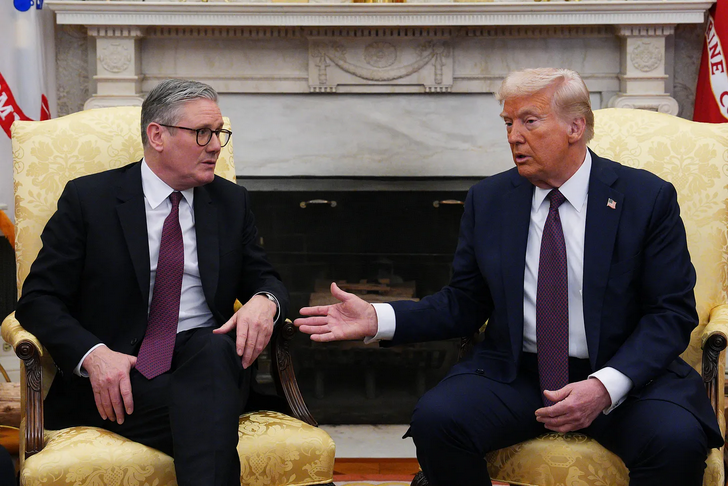
British PM Keir Starmer talks with US President Donald Trump in the White House.
New battle lines are forming in the culture war. While the woke movement appears to be in retreat, the forces of authoritarianism are regrouping for a fresh assault. Rather than maintaining a straightforward conflict between right and left, the next phase of the culture war will most probably be waged between Europe and the United States. It has all the qualities of a novel by Henry James for the digital age, with the distinctions between the old world and the new brought once again into sharp focus.
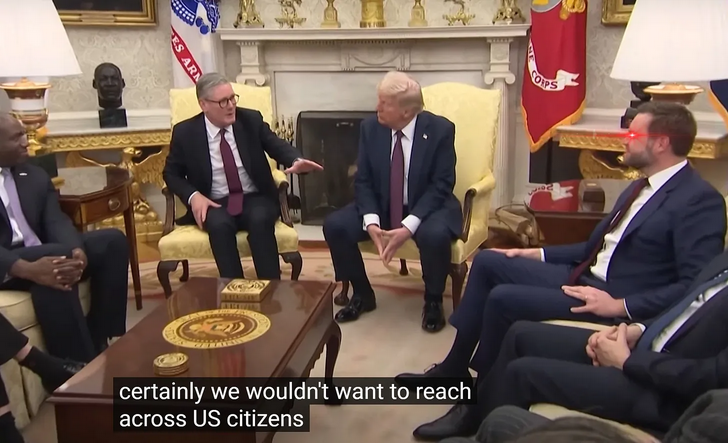
Free speech will be the key issue. Most of us will have seen the footage of vice-president J. D. Vance last week in the Oval Office taking Keir Starmer to task for the “infringements on free speech that actually affect not just the British” but also “American technology companies and by extension, American citizens”. Starmer pushed back, saying “in relation to free speech in the UK, I’m very proud of our history there”. It’s a bit like Hannibal Lecter boasting about his ongoing commitment to vegetarianism.
The word “history” was apt, given that Starmer’s government is seemingly determined to ensure that free speech is consigned to the past. One of its first acts after seizing power was to ditch the Higher Education (Freedom of Speech) Act. In February, Angela Rayner revealed her plans for the establishment of a sixteen-member council on “Islamophobia” which could see the criticism of religion criminalised. Meanwhile, Yvette Cooper has been staunchly defending the police for recording “non-crime”, while the chairman of the College of Policing, Lord Herbert, has suggested that the best approach to tackling the controversy is to simply rename “non-crime hate incidents” as something more palatable. Apparently Lord Herbert believes that the problem is the nomenclature, not the fact that citizens are being investigated by the armed wing of the state for lawful behaviour.
All of this is before we get to Starmer applying pressure to the judiciary to mete out draconian sentences for offensive posts and memes on social media, and the government’s determination to crack down on online “disinformation”. Ours is an authoritarian government, and Starmer’s Orwellian denial of the truth of his position in the Oval Office is to be expected. Autocrats throughout history have enacted censorship “for the public good”. Today, they target “disinformation”, a term so vague that it can be applied to anyone who questions the narrative of the ruling class.
And so, as I say, the new front of the culture war will most likely be transatlantic. The US government will simply not tolerate the widespread censorship of its citizens by laws passed overseas. Jim Jordan, chairman of the Committee on the Judiciary of the House of Representatives, has already issued subpoenas to eight US tech companies to divulge all communications they have had with the UK government regarding “content moderation” (i.e., censorship). Jordan is particularly concerned about the Labour government’s intention to empower OfCom to regulate social media, and he has specifically mentioned UK officials who “have already threatened to use UK laws to police American speech”.
N.S. Lyons suggested in the latest post at The Upheaval that Vice President J.D. Vance’s real message to the European leaders can be rephrased as “Give Up the Information War and GTFO”:
The political elite of Europe and the Anglosphere appeared shocked by J.D. Vance’s wonderfully blunt speech in Munich last month. The U.S. Vice President declared Washington’s top security concern to be “the threat from within” the NATO alliance and castigated assembled leaders for their increasingly brazen assaults on “democratic values”, including censoring speech, suppressing popular opposition parties, and canceling elections. But if this shock isn’t feigned then it is rather remarkable, given that these elites were in their own way already effectively at war with the United States. All Vance did was point out the nature of this hidden conflict.
Vance delivered multiple messages with his speech, the broadest and most historic of which was that the era of “post-national” globalist liberalism is over. The United States, he indicated, now has a core interest in seeing a Western world that is collectively strong because its sovereign nations are strong, with the self-confidence to independently defend themselves physically, culturally, and spiritually. His emphasis on promoting free speech and democratic legitimacy tied into this message, but was about far more than the importance of “shared values” or even Washington’s new friendliness to nationalist parties. Practically, it was an implied warning that the role Europe has been playing as a proxy actor in the political and ideological conflicts raging in the United States will no longer be tolerated. More specifically, it was a declaration that ongoing transatlantic institutional, technological, and legal support for America’s embattled left-wing deep state must end – or else.
After Donald Trump’s election in 2016, America’s panicked establishment elites reacted by attempting to construct a system for managing public opinion through strict control of information, especially online information. The idea was that growing public support for populism was fueled by “low-information voters” and their consumption of “misinformation” and “disinformation”, including from foreign actors, and that if their “information diet” could just be controlled then they would stop voting wrong. The underlying assumption here was of course that the elite’s own increasingly radical policy preferences were the only rational path, opposable only by the stupid and easily manipulated. As Trump’s defeated opponent Hillary Clinton would later put it, social media platforms had fundamentally changed the information environment and “if they don’t moderate and monitor the content, we lose total control”.
This intended system of thought-control would later grow into the censorship industrial complex that was partially revealed following Elon Musk’s acquisition of Twitter. But a big obstacle initially stood in the way: the U.S. Constitution and its protection of free speech. The public might be receiving the “wrong” information on the internet, but “our First Amendment stands as a major block to be able to just, you know, hammer it out of existence”, as John Kerry lamented in a speech to the World Economic Forum.
Under the Biden administration, this legal problem was partially solved by simply ignoring it, the federal government directly colluding with technology companies and a network of “independent” (state-funded) “fact-checking” organizations to impose mass censorship on American citizens. The result was, as one federal judge later described it, effectively “the most massive attack against free speech in United States’ history”.
A more subtle and sustainable work-around was also discovered, however. This was to circumvent the U.S. Constitution by outsourcing the policing of the internet and populist movements to other countries around the world. This could be done because the internet is global and so the whole network is affected by government regulations on any local market of sufficient size. Leaders on both sides of the Atlantic immediately grasped that legal and regulatory structures imposed by the European Union, with the leverage of its huge unified market, could for example force internet companies the world over – including U.S. companies – to change their behavior in order to comply and avoid losing access (this imperialistic regulatory strong-arming was dubbed the “Brussels Effect”, becoming Europe’s only significant innovation this century).
Comments Off on Trump’s next target – Europe
Colt Boa: Rarest of the Snake Revolvers
Forgotten Weapons
Published 13 Nov 2024Of the seven revolvers Colt named after snakes, the rarest is the Colt Boa. Only a single production run of these were made totaling just 1,200 guns. They were made in 1985 as a custom order for the Lew Horton distribution company, which wanted something unique to offer its buyers. The Boa was an intermediary between the standard Colt MkV and the high-end Python. It was a 6-shot .357 Magnum with a full underlay and ventilated shroud. The only variation was in barrel length, as half were made with 4” barrels and half with 6” barrels. The serial numbers were “BOAxxxx”, with the 4” guns having odd numbers and the 6” ones getting even numbers. Five hundred of each were sold individually, but the first 100 of each length were packaged together into sequentially-numbered pairs in fancy cases.
The Boas all sold in 1985, and they are now the hardest to find for the Colt Snake collector. This particular pair is a gorgeous example of an original cased set, numbers 43 and 44.
(more…)
Comments Off on Colt Boa: Rarest of the Snake Revolvers
QotD: British and French Enlightenments
In 2005, [Gertrude Himmelfarb] published The Roads to Modernity: The British, French, and American Enlightenments. It is a provocative revision of the typical story of the intellectual era of the late eighteenth century that made the modern world. In particular, it explains the source of the fundamental division that still doggedly grips Western political life: that between Left and Right, or progressives and conservatives. From the outset, each side had its own philosophical assumptions and its own view of the human condition. Roads to Modernity shows why one of these sides has generated a steady progeny of historical successes while its rival has consistently lurched from one disaster to the next.
By the time she wrote, a number of historians had accepted that the Enlightenment, once characterized as the “Age of Reason”, came in two versions, the radical and the skeptical. The former was identified with France, the latter with Scotland. Historians of the period also acknowledged that the anti-clericalism that obsessed the French philosophes was not reciprocated in Britain or America. Indeed, in both the latter countries many Enlightenment concepts — human rights, liberty, equality, tolerance, science, progress — complemented rather than opposed church thinking.
Himmelfarb joined this revisionist process and accelerated its pace dramatically. She argued that, central though many Scots were to the movement, there were also so many original English contributors that a more accurate name than the “Scottish Enlightenment” would be the “British Enlightenment”.
Moreover, unlike the French who elevated reason to a primary role in human affairs, British thinkers gave reason a secondary, instrumental role. In Britain it was virtue that trumped all other qualities. This was not personal virtue but the “social virtues” — compassion, benevolence, sympathy — which British philosophers believed naturally, instinctively, and habitually bound people to one another. This amounted to a moral reformation.
In making her case, Himmelfarb included people in the British Enlightenment who until then had been assumed to be part of the Counter-Enlightenment, especially John Wesley and Edmund Burke. She assigned prominent roles to the social movements of Methodism and Evangelical philanthropy. Despite the fact that the American colonists rebelled from Britain to found a republic, Himmelfarb demonstrated how very close they were to the British Enlightenment and how distant from French republicans.
In France, the ideology of reason challenged not only religion and the church, but also all the institutions dependent upon them. Reason was inherently subversive. But British moral philosophy was reformist rather than radical, respectful of both the past and present, even while looking forward to a more enlightened future. It was optimistic and had no quarrel with religion, which was why in both Britain and the United States, the church itself could become a principal source for the spread of enlightened ideas.
In Britain, the elevation of the social virtues derived from both academic philosophy and religious practice. In the eighteenth century, Adam Smith, the professor of moral philosophy at Glasgow University, was more celebrated for his Theory of Moral Sentiments (1759) than for his later thesis about the wealth of nations. He argued that sympathy and benevolence were moral virtues that sprang directly from the human condition. In being virtuous, especially towards those who could not help themselves, man rewarded himself by fulfilling his human nature.
Edmund Burke began public life as a disciple of Smith. He wrote an early pamphlet on scarcity which endorsed Smith’s laissez-faire approach as the best way to serve not only economic activity in general but the lower orders in particular. His Counter-Enlightenment status is usually assigned for his critique of the French Revolution, but Burke was at the same time a supporter of American independence. While his own government was pursuing its military campaign in America, Burke was urging it to respect the liberty of both Americans and Englishmen.
Some historians have been led by this apparent paradox to claim that at different stages of his life there were two different Edmund Burkes, one liberal and the other conservative. Himmelfarb disagreed. She argued that his views were always consistent with the ideas about moral virtue that permeated the whole of the British Enlightenment. Indeed, Burke took this philosophy a step further by making the “sentiments, manners, and moral opinion” of the people the basis not only of social relations but also of politics.
Keith Windschuttle, “Gertrude Himmelfarb and the Enlightenment”, New Criterion, 2020-02.
Comments Off on QotD: British and French Enlightenments
March 4, 2025
Canada’s nasty authoritarian streak shows up in the “deprive Musk of his citizenship” online mob
In The Line, Leonid Sirota explains why we can’t just arbitrarily deprive a Canadian of his citizenship rights just because Charlie Angus has riled up a social media mob to demand it:
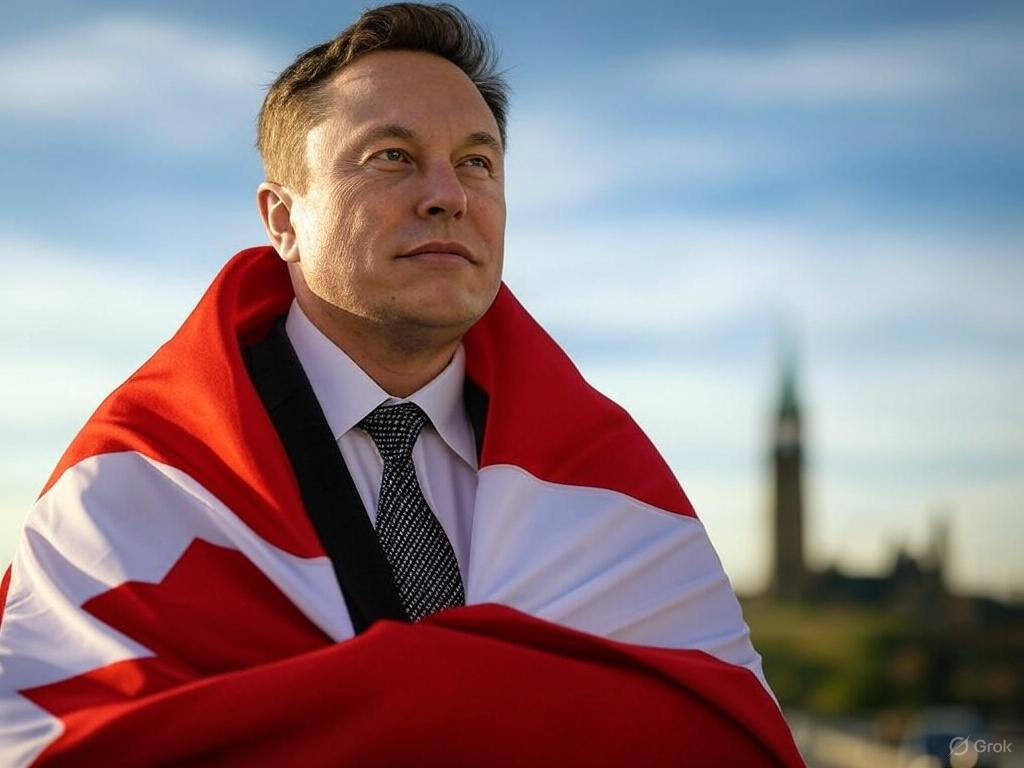
Elon Musk wrapped in the Canadian flag – created with Grok.
One other incontrovertible fact about Mr. Musk is that he is a Canadian citizen. His mother was born in Canada — which made her a citizen — as are her children, even though they were born abroad.
A large number of Mr. Musk’s and my fellow Canadians find the coexistence of these facts to be obnoxious. Whether out of anger or embarrassment, they are lining up to sign a petition to Parliament to demand that he be deprived of his Canadian citizenship. As of this writing, the petition has been signed by about 300,000 people. (In theory, these are Canadian citizens or residents, though on the Internet, nobody knows you didn’t actually watch the McDavid goal 97 times on loop.) At least one member of Parliament, the NDP’s Charlie Angus, is supportive.
This is appalling. The reasons given for depriving Mr. Musk of his Canadian citizenship are fundamentally authoritarian, as is the contempt for both the substantive and the procedural legal requirements involved in deprivation of citizenship that the petition manifests. That a member of Parliament is supporting this abomination is especially disturbing (and one reason this whole mess is worth caring about).
To start with the substantive point, the idea that a Canadian could be deprived of his citizenship for political reasons ought to be beyond the pale of polite discussion. It is the sort of thing the Soviets did to Mstislav Rostropovich, Aleksandr Solzhenitsyn, and others. Is Mr. Musk a Solzhenitsyn? Well, no. But so what? The principles at stake here are universal. They do not depend on whether one is a martyr or a millionaire, a genius or a jerk. (Solzhenitsyn, at any rate, was both jerk and genius. So is Mr. Musk. Not that it matters.)
More to the point, do you want the Canadian government to have the power to deprive people of their citizenship for their political beliefs, statements, or activities? If you are okay with a government led by a Justin Trudeau or a Mark Carney having this power, do you agree that one led by Pierre Poilievre should? (Or, of course, vice versa.)
And yes, no matter how patriotic and indignant the people who sign the petition, or support it, may feel, the demand to take away Mr. Musk’s citizenship is political. The first recital of the petition accuses him of having “engaged in activities that go against the national interest of Canada”. I think the accusation is well-founded. But it is a political accusation: the national interest is a political concept. The petition then claims Mr. Musk “has used his wealth and power to influence our elections”. If he has, that is political action that Canadian citizens are entitled to take, subject to applicable laws, which the petition isn’t even alleging Mr. Musk broke. Finally, the petition claims that Mr. Musk “has now become a member of a foreign government that is attempting to erase Canadian sovereignty”. Stipulated. But the actions of this foreign government, no matter how dishonourable, distasteful, and dangerous for Canada, have so far stayed within the realm of politics.
FDR – behind closed doors – was as bad as Trump while the Dunkirk evacuation was going on
Winston Churchill became prime minister of Britain the same day the Germans launched their attack against France and the Low Countries in May, 1940. The situation went from bad to appalling in very short order as the vaunted French army’s high command crumbled under the stress (even if the soldiers fought bravely in most cases). The British Expeditionary Force retreated with the French mobile forces toward the English Channel, eventually evacuating as many troops as they could from the port of Dunkirk. During this time, Churchill was appealing to the American President Franklin D. Roosevelt for whatever aid he could send.
Postwar histories tended to portray FDR as both benevolent and helpful toward Churchill in this stressful period, but behind closed doors FDR was far less a future ally, as Andreas Koureas explained on Twitter:
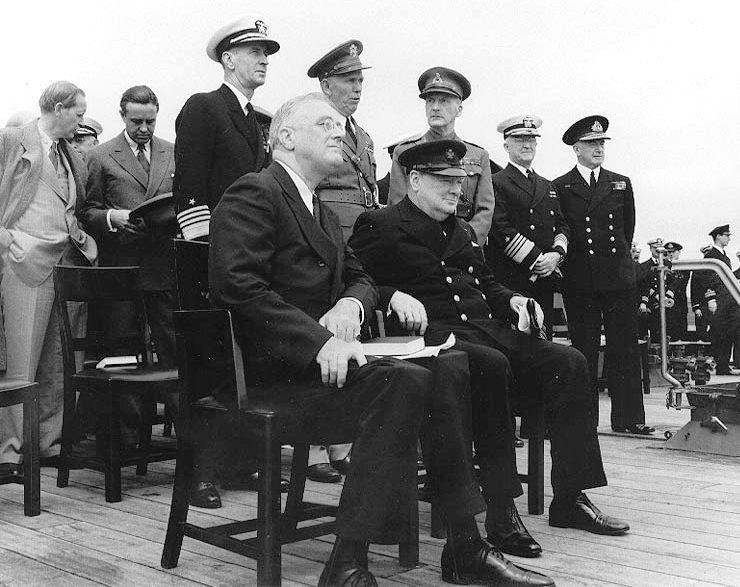
More than a year after FDR’s attempt to pry Canada and the Royal Navy away from a “dying” Britain, he and Churchill met onboard HMS Prince of Wales, in Placentia Bay, Newfoundland, during the Atlantic Charter Conference. President Franklin D. Roosevelt (left) and Prime Minister Winston Churchill are seated in the foreground. Standing directly behind them are Admiral Ernest J. King, USN; General George C. Marshall, U.S. Army; General Sir John Dill, British Army; Admiral Harold R. Stark, USN; and Admiral Sir Dudley Pound, RN. At far left is Harry Hopkins, talking with W. Averell Harriman.
US Naval Historical Center Photograph #: NH 67209 via Wikimedia Commons.
Ironically, the truth is that in 1940, Roosevelt — behind closed doors — behaved worse than Trump.
On the 20th May 1940, after multiple failed pleas for aid, Churchill wrote to Roosevelt that:
“If members of the present administration were finished and others came in to parley amid the ruins, you must not be blind to the fact that the sole remaining bargaining counter with Germany would be the fleet, and if this country was left by the United States to its fate no one would have the right to blame those then responsible if they made the best terms they could for the surviving inhabitants. Excuse me, Mr. President, putting this nightmare bluntly.”
Roosevelt’s refusal for aid was understandable given the political situation in America. As he told Churchill earlier that month, it wasn’t “wise for that suggestion to be made to the Congress at this moment”.
However, what he did after the 20th May telegram wasn’t.
Not bothering to even reply to Churchill’s warnings, Roosevelt instead sought to get Canada to give up on Britain.
As Roosevelt thought that Britain would likely collapse, and Churchill could not be trusted to maintain the struggle, he summoned a delegation for Canada.
The aim was to get Canada to pester Britain to have the Royal Navy sent across the Atlantic, before Britain’s seemingly-inevitable collapse.
Furthermore, to ensure this, the Americans wanted Canada to encourage the other British Dominions to get on board such a plan, and likewise gang up against Britain.
You can see Mackenzie King’s (PM of Canada) disbelief and horror in his diary,
“The United States was seeking to save itself at the expense of Britain. That it was an appeal to the selfishness of the Dominions at the expense of the British Isles. […] I instinctively revolted against such a thought. My reaction was that I would rather die than do aught to save ourselves or any part of this continent at the expense of Britain.”
King telegrammed Churchill on the 30th May that this was the closed-door political situation across the Atlantic.
Bear in mind, Roosevelt was trying to instigate this during the Dunkirk evacuations.
How Churchill didn’t break knowing the one ally he needed in his darkest hour thought he’d fail, I have no idea.
On the 5th June 1940, Churchill wrote back to Mackenzie King,
“We must be careful not to let the Americans view too complacently prospect of a British collapse, out of which they would get the British Fleet and the guardianship of the British Empire, minus Great Britain. […] Although President [Roosevelt] is our best friend, no practical help has been forthcoming from the United States as yet.”
(The first key mover that swung Roosevelt into entrusting Churchill to continue the struggle — and as such aid would not be wasted on Britain — was when Churchill ordered the Royal Navy’s Force H to open fire and destroy the French Fleet at Mers-el-Kébir — after Admiral Gensoul had refused the very reasonable offers from Britain, despite Germany and Italy demanding the transference of the French Fleet as part of the armistices.)
Comments Off on FDR – behind closed doors – was as bad as Trump while the Dunkirk evacuation was going on
“Rare metals” are not really rare at all
On the social media platform formerly known as Twitter, John Ringo explains why the US doesn’t exploit its own vast reserves of “rare metals”:

I love every single time someone goes ‘CHINA HAS A LOCK ON RARE METALS! WE NEED TO ALLY WITH COUNTRY X TO GET RARE METALS! WE NEED RARE METALS!’
The US has huge deposits of pretty much everything we need. Lithium? Got it. Neodymium? Got it. Silver? Spades. Montana’s practically made of it.
The reason we don’t mine it here is the stupid ways our laws are written and allowing the Chinese to play us.
There’s an area in TX that has as much neodymium as the Chinese deposits that supply 98% of the world’s neodymium. (Critical material in rare earth magnets which are in turn critical in … so many things. Drones. Electric cars. Etc.)
There’s even a registered mine. Which was open.
Why is it closed?
The Chinese drop the prices below production cost (dumping) every time they open. Then jack the price and play political games with it when it closes.
There’s a silver mine in Montana (critical in modern solar) which has been trying to open for FIFTEEN YEARS.
Why can’t it open?
Tied up in environmental lawsuits because Congress won’t amend the EPA act that allows anyone to sue for any reason whatsoever and damn having mining or manufacturing WE DON’T NEED THAT WE NEED TO SAVE THE WORLD!
AND SLAVA UKRAINE YOU MAGA BASTARDS! TRUMP IS PUTIN’S COCK HOLSTER! WE NEED TO MANUFACTURE MORE WEAPONS TO SEND TO UKRAINE BUT ONLY IN A PERFECTLY ENVIRONMENTAL FASHION!
‘Environmental’ emphasis on the ‘mental’.
Autarchy is the idea of a country neither importing nor exporting. Just keep everything in the country. Ourselves alone.
A few have tried it from time to time. India did at one point.
Nobody can do it. There’s ‘something’ that you need from outside.
Except the US. We more or less need some tropical stuff. Like coffee, tea, sugar. Palm oil. (Super important in soap.)
But we can, in reality, even dispense with tree rubber. We can make it all from artificial.
Which comes from oil.
And we have enough oil. Thank a fracker. We’ve got enough oil in Southwest Texas to supply the WORLD for a thousand years.
(Touch expensive compared to Persian Gulf. But the price is constantly coming down.)
All we need to do is change laws, and we can almost go it without any other country. Without import or export.
I’m not suggesting we do.
But I am suggesting we dedicate some serious attention to things like China manipulating trade to ensure they have a lock on rare metals.
That we prioritize internal production.
That we decouple critical issues from other countries.
Cause the way the world is going, we’re reaching a point we’re gonna have to go it alone and if we have allies and trade partners, I’d suggest they be in the Western Hemisphere.
Cause those fuckers cross the pond be crazy.
Fifteen years ago, Tim Worstall explained why China’s rare earth monopoly won’t stand up in the long run.
Comments Off on “Rare metals” are not really rare at all
The Titanic Survivors Arrive in New York – Hamilton Pudding
Tasting History with Max Miller
Published 18 Oct 2024A tart with apricot jam topped with a vanilla cookie-like filling, and toasted meringue
City/Region: Carpathia | United Kingdom | United States of America
Time Period: 1903 | 1912The menu from the last meal aboard RMS Carpathia before it docked in New York, carrying the survivors of the Titanic, lists Pouding Hamilton as one of the dessert options. After a fruitless search of my late 19th- and early 20th-century cookbooks, I finally found one recipe for it in a newspaper from 1903.
Honestly, I don’t know why there isn’t more mention of this tart. It’s delicious. The texture has kind of a wonderful crumbly shortcrust quality to it, and it’s not too sweet. It’s reminiscent of a vanilla cookie with jam, and you could really swap out the apricot jam for any flavor you like. I could see this being a great dessert for the holidays.
Hamilton Pudding –
Line a pie dish with a good short crust and cover the bottom with a layer of apricot jam; then fill up with the following mixture: Cream three ounces of butter with the same quantity of caster sugar, then add the yolks of two well beaten eggs and the white of one. Sift in by degrees three ounces of flour and flavor with a few drops of vanilla essence. Bake in a moderate oven and when nearly cooked beat the remaining white of egg to a stiff froth and lay it on top in tough lumps. Return the pudding to the oven till it is slightly browned.
— The Gazette, York, Pennsylvania, Sunday, August 9, 1903.
Comments Off on The Titanic Survivors Arrive in New York – Hamilton Pudding
QotD: Twitter-thought and the basic university student
Alas, Twitter is still a thing that exists, so even though I tried it for about five minutes and promptly forgot all about it, my students didn’t … which explains, like nothing else can, their bizarre approach to classwork. For every quiz I gave, no matter how straightforward the question, I’d have at least one barracks lawyer coming to me afterwards, trying to weasel her (always her, mentally if not biologically) way back into some points, with some elaborate rationale why her picking the wrong answer was really my fault, because in class I said “The Russians won the Battle of Stalingrad” and the question on the quiz was “Who lost the Battle of Stalingrad?” and how is she supposed to be expected to recognize that “lost” is the opposite of “won” when it comes to battles and blah blah blah (thanks, Greta!).
Or the other depressingly common thing, which was when that same kid, who went to the fucking mattresses for one point on one quiz — which amounts to something like 0.01% of her final semester grade — just didn’t turn in the term paper. This happened at all academic levels, from community college (where you often lose half a class or more by the end of a semester) all the way up through the SPLACs, which cost something in the neighborhood of $70K a year all in. I never could figure this out — I mean, how can they not know that the term paper is 30% of your final grade, while all the quizzes put together amount to 10%? — but then it hit me: Twitter.
Everything on social media has, of necessity, equal weight, in that whatever’s in your feed at the present time is the only thing that exists. So when Snowflake was in “schoolwork” mode and missed that one question on that one quiz, it was the only thing that mattered in her world. My quiz was at the top of her Twitter feed, so she had to put all her energy into battling me for it. By the end of the semester, though, she was in “sorority” mode, or “getting ready for that kickass ski vacation” mode, or “beefing with that basic bitch Becky” mode, so my term paper barely registered — if she bothered to turn anything in at all, it was copy-pasted straight from wikipedia, because who cares, when Becky is out there on Twitter, h8ing?
Severian, “Also Sprach Froggy”, Founding Questions, 2021-09-30.
Comments Off on QotD: Twitter-thought and the basic university student
March 3, 2025
Is DOGE merely uncovering what used to be called “honest” graft?
Jon Miltimore explains where the expression “honest graft” came from and gives examples of what the DOGE investigations have turned up so far:

In 1905, George Washington Plunkitt made arguably the most famous defense of political graft in American history.
“Everybody is talkin’ these days about Tammany men growin’ rich on graft,” the New York state senator and Tammany Hall member wrote, “but nobody thinks of drawin’ the distinction between honest graft and dishonest graft”.
Plunkitt was responding to The Shame of the Cities, a book by journalist Lincoln Steffens that exposed sweeping political corruption in U.S. cities.
The ward boss’s shameless defense of “honest graft”, which is still assigned to undergraduates a century after Plunkitt’s death, comes to mind when looking at the fraud, waste, and abuse Elon Musk’s Department of Government Efficiency and others are uncovering.
To take but one example, consider the billions of dollars in taxpayer funds the Environmental Protection Agency awarded last year to Power Forward Communities. If you’ve never heard of the nonprofit group, you’re forgiven. Almost nobody has — because it didn’t exist until late 2023.
Power Forward Communities had no footprint, online or otherwise, until October 2023, when it was announced as part of the Rewiring America program, an organization linked to former Georgia Democratic gubernatorial candidate Stacey Abrams, which says its mission is “all about Rewiring America’s values, people, and culture.”
Less than a year after its creation, Power Forward Communities was awarded $2 billion via the EPA’s National Clean Investment Fund — even though it reported just $100 in revenue during its first three months of operation.
The payment, which is slated to continue through June 2031, caught the attention of Lee Zeldin, the new EPA administrator.
“It’s extremely concerning that an organization that reported just $100 in revenue in 2023 was chosen to receive $2 billion,” Zeldin said.
Indeed. It’s graft on a scale the Tammany Hall charlatans couldn’t have imagined.
Historical sources say 19th-century politician Boss Tweed and his ring of cronies took in at least $50 million in corrupt money in backroom deals, kickbacks, and skimming before Tweed was convicted of larceny and forgery in 1873 and fled to Cuba, and later Spain. In 2025 dollars, that’s about $1.3 billion — considerably less than the single payoff former President Joe Biden’s EPA awarded Power Forward Communities.
Europe’s Imperial Giants: On the Brink of Collapse? – W2W 09 Q4 1946
TimeGhost History
Published 2 Mar 2025In 1946, Britain, France, and the Netherlands fight to regain control over shattered colonies — from Indonesia’s revolt to Vietnam’s war with France. Meanwhile, the U.S. and USSR maneuver to shape these emerging nations for their own global interests. Will independence spark true liberation, or will it simply swap one master for another?
(more…)
Comments Off on Europe’s Imperial Giants: On the Brink of Collapse? – W2W 09 Q4 1946
Trump and Zelensky in “the most amazing bilateral meeting and press conference of all time”
In the free-to-cheapskates portion of his latest post, eugyppius considers the most newsworthy press conference in living memory between US President Donald Trump and Ukrainian President Vladimir Zelensky that went theatrically wrong:
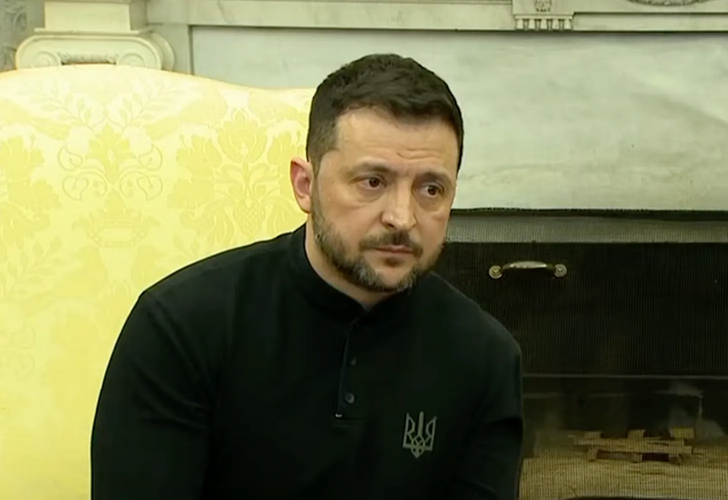
tfw you have no cards.
Since 2022, the Ukrainian President Vladimir Zelensky has been running about the globe in his weird focus-grouped jumpers and combat boots, lecturing all of our parliaments on the unity and mutual interests of Europe, the goodness of democracy, the genocidal evils of Vladimir Putin and the importance of ever more weapons deliveries to his country’s armed forces. In the process, he has become one of the more obnoxious political phenomena in recent memory, and I hope I would be able to see this even if I were firmly convinced that German interests aligned perfectly with Ukrainian interests and that we should do nothing but give the AFU all of our tanks and all of our Taurus missiles and possibly even all of our soldiers to defend our shiny wonderful and deeply liberal European democracy, where we are so free that riot police will bash your head in for protesting Covid restrictions and if you call the wrong cabinet minister a moron the speech crimes battalion will raid your house.
Here in Europe, our political leaders have treated the shouting, remonstrating Zelensky with nothing but egregious reverence, and the man has grown accustomed to his noxious political celebrity. Nothing else can explain the amazing press conference Zelensky and Trump held yesterday, ahead of afternoon plans to sign an agreement concerning Ukraine’s rare-earth minerals. We got to witness nothing less than the near-total meltdown of American and Ukrainian relations, live and in colour. Historians of the Ukraine war will be writing about this press conference for years and decades to come.
The meeting almost didn’t happen at all. Zelensky has been publicly irritated that Trump reversed the American policy of isolating Russia, after the American president opened talks with Vladimir Putin to end the war. Two weeks ago, Trump suggested that Ukraine was at fault for the hostilities, Zelensky said Trump was “living in a [Russian] disinformation space“, and Trump said Zelensky was “a dictator without elections“. Trump’s administration initially planned to cancel Zelensky’s visit to Washington this week, but French President Emmanuel Macron persuaded the Americans to go ahead with it. Imagine how much the man regrets that now. After receiving his verbal beat-down in the Oval Office, Zelensky and the rest of the Ukrainian delegation decamped to the Roosevelt Room, while Trump and his advisers decided that the President of Ukraine “was in no position to negotiate“. White House officials told them to leave before they could even eat lunch.
Foreign relations are typically pounded out in back rooms, out of sight, and that was also the intent here. Somewhere in the midst of the journalists’ questions and Trump’s banter, however, yesterday’s event ceased being a press conference and became at first a subtle unacknowledged negotiation and then a hostile disagreement – one which Zelensky got the worst of.
Mark Steyn examines what was said both before and during the Zelensky-Trump slap fight:
The Beltway rumour is that, on his flight to DC, Zelenskyyyy was telephoned by Victoria Nuland, She-Wolf of the Donbass, plus Susan Rice and Anthony Blinken and advised to get tough with Trump. If true, that’s gotta be the worst episode of “Phone-a-Friend” since the plucky little Ukrainian started playing Who Wants to Be a Billionaire (in Euros)? For all you nuanced diplomatists out there, there is now a rather arcane dispute as to whether Z called the Vice President of the United States a “bitch” or merely interjected “f**king hell”:
He literally didn’t. He said “suka blyat“, which, like “kurwa mać” in Polish, is an expression of annoyance equivalent to “fucking hell”. Not ideal politics, granted, but not the same.https://t.co/mOgGZN9iwh
— Ben Sixsmith (@BDSixsmith) March 1, 2025
UPDATE! From Leonid in our comments section:
If the audio is not altered, it does sound like ‘suka, blyad‘ which is akin to ‘f**king piece of sh*t’. It is not necessarily directed at Vance personally, but I specifically translated this as ‘f**king piece of sh*t’, not ‘f**king hell’ because it can indeed be taken as directed at Vance, too. Obviously, even the milder reading doesn’t absolve Z of being an a**hole.
The Ukrainian ambassador seemed to be the only member of Z’s delegation who grasped how badly things were degenerating: the cameras captured her at one point with her head in her hands. The President booted the guy from the White House and gave the Ukrainian’s lunch to the Oval Office interns. I have always found the American vernacular “oh, the guy totally ate my lunch” incredibly lame, but, if Trump is now proposing to make it literal, I wish he’d started with Keir Starmer. Fortunately, America’s wanker media could be relied upon to agree that, when it comes to Z vs T, “the world” sides with Ukraine.
World opinion has been swift, loud and mostly unanimous against the childish behavior today of Trump and Vance. The only question now is if other countries realize that the USA they’ve long known, loved and respected is no longer a reliable ally.
— Aaron Astor (@AstorAaron) February 28, 2025
By “world opinion”, Mr Astor means not China, India, South Africa, Brazil or Saudi Arabia, but the Prime Minister of Luxembourg:
Luxembourg stands with Ukraine. You are fighting for your freedom and a rules based international order. 🇱🇺🇺🇦
— Luc Frieden (@LucFrieden) February 28, 2025
From the blissful ignorance of a California congressman:
My grandfather and the Greatest Generation didn’t fight in World War II to see our country side with murderous thugs like Putin. This is a disgrace. https://t.co/3ZrB8ur2Au
— Mike Levin (@MikeLevin) February 28, 2025
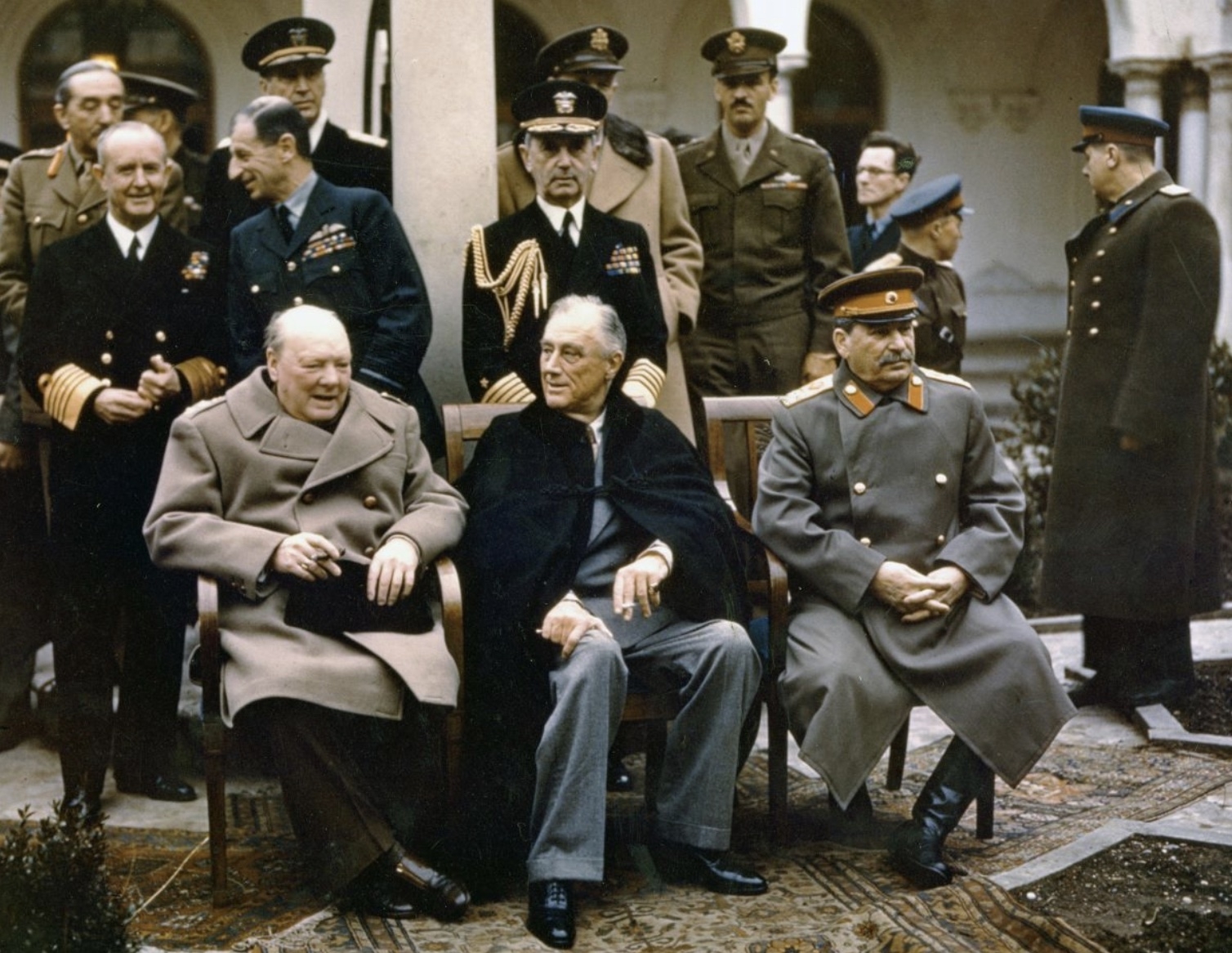
Er, in your extensive researches into World War Two, did you ever happen to come across a photograph of, say, the Yalta summit?
Churchill, FDR, and Stalin at Yalta
Still, if Luxembourgish prime ministers are going through one of their periodic butch phases, I prefer the words of Mr Frieden’s predecessor, Jacques Poos, who a third-of-a-century back, as Yugoslavia was disintegrating, told the Yanks to butt out and declared “The hour of Europe has come!” He was right, kind of: shortly thereafter, Bosnian Serbs began tying Continental peacekeepers to trees.
Mr Frieden, like many other politicians and geopolitical experts, has failed to grasp the essential dynamic of yesterday’s meeting – which is very simple:
Zelenskyyyy needs Trump far more than Trump needs Zelenskyyyy.
Comments Off on Trump and Zelensky in “the most amazing bilateral meeting and press conference of all time”
All The Basics About XENOPHON
MoAn Inc.
Published 7 Nov 2024I actually found this video really tricky considering I want to go into the texts of Xenophon and if I told you everything about the march of the ten thousand then I would have just told you the whole Anabasis?? Which defeats the whole purpose of an introductory video?? So I PROMISE more clarity will come in future videos as Xenophon himself breaks down his journey home from Persia and why they were there in the first place. Therefore, you have ALL OF THAT to look forward to — coming soon!!!
(more…)
Comments Off on All The Basics About XENOPHON
QotD: Arguments around “spontaneous order” and “divine intervention”
It seems to me that this is a bit like the old “irresistible force versus immovable object” paradox. On the one hand, the universe, life, human life, seem impossibly complex to have happened randomly. On the other hand, the universe is actually very large. Perhaps there are enough monkeys banging away at typewriters to produce not just Shakespeare, but the script of every Seinfeld episode.
Esteban, “Evolution, Economies And Spontaneous Order”, Continental Telegraph, 2020-01-22.
Comments Off on QotD: Arguments around “spontaneous order” and “divine intervention”
March 2, 2025
“We’re saying words that we’re told to say. We’re told how to say them. We’re told where to stand. And then we’re telling people how to vote?”
As a natural follow-on to yesterday’s post about Celebrity fatigue, here’s Kat Rosenfield in The Free Press hoping that we can somehow make actors apolitical again:

During the Vietnam War, actress Jane Fonda visited North Vietnam and expressed strong support for the regime’s struggle against the United States and South Vietnam.
If I have to listen to an actor talk about politics, let that actor be Gabriel Basso.
You might know Basso from his breakout role in Netflix’s hit series The Night Agent, in which he stars as an FBI agent who works in a secret basement office beneath the White House. But Basso has another White House connection. In 2020, he played J.D. Vance in the big-screen adaptation of Hillbilly Elegy, which was based on the vice president’s memoir about his childhood in Appalachia — which means we now live in a world where the vice president could be Netflix-and-chilling in the White House, watching the man who once played his own younger self doing espionage in the basement of the building he’s sitting in.
In a recent interview, Basso called his entanglement with Vance’s timeline “kind of weird”, which it is — but what’s weirder is that Basso describes Vance himself as “a cool dude”, as if he’s talking about some guy in his Wednesday night bowling league as opposed to one of the most powerful and polarizing political figures in the United States.
This type of comment is typical for Basso, who doesn’t believe actors should embroil themselves in politics. “We’re saying words that we’re told to say. We’re told how to say them. We’re told where to stand. And then we’re telling people how to vote?” he said on a recent episode of the Great Company podcast. “You should be quiet; you should do your job. You should be a jester, entertain people — then shut the fuck up.”
To hear an actor talk like this is especially remarkable in the middle of awards season, when the great and the good of Hollywood use the red carpet as a pulpit to preach their politics, which are reliably blue. Last Sunday, at the Screen Actors Guild Awards, Jane Fonda used her acceptance speech for the Life Achievement Award to rally the crowd to the right side of history. “Make no mistake, empathy is not weak or woke,” she declared. “And by the way, woke just means you give a damn about other people!”
[…]
The entanglement of Hollywood and Washington only intensified in the final weeks of the 2024 election cycle — which included, among other things, a political ad voiced by Julia Roberts, a Democratic National Committee headlined by Oprah Winfrey, and the Avengers literally assembling to campaign for Kamala Harris. The bitter irony, of course, is that despite the entire Hollywood apparatus coming out in support of Harris, all we got was a Trump landslide and the absolutely dire image of a bunch of our favorite actors wearing “White Dudes for Harris” T-shirts.
It’s enough to make you long for the golden age when it was the norm for actors to, as Basso so artfully put it, “shut the fuck up”.
Comments Off on “We’re saying words that we’re told to say. We’re told how to say them. We’re told where to stand. And then we’re telling people how to vote?”


