Quotulatiousness

June 24, 2011

“Damn! Another cursed Mordecai!”

Filed under: Cancon, Media — Tags: , , , , , , — Nicholas @ 12:02

Barbara Kay takes issue with the token that Montreal has chosen to commemorate Mordecai Richler:

Mordecai Richler is Canada’s biggest claim to literary fame. If he had been born and lived in any other province but Quebec there would have been an outpouring of ideas on how to commemorate his life and achievements: perhaps renaming streets in his honour, building schools bearing his name, or erecting a statue featuring the disheveled genius wryly peering over his pince-nez at a smoked meat sandwich on wry…er, rye.

Instead Montreal’s political mandarins have decided he is getting a gazebo — a crummy little open pavilion at the foot of Mount Royal, with no known connection to the author. A place for people to come in out of the rain. Not quite a public toilet, but close.

That’s like naming the change house at an outdoor skating rink after Margaret Atwood, a pellet dispenser at the zoo after Yann Martel, or a maintenance shed after Margaret Laurence. But then, if Mordecai Richler had been born outside Quebec, maybe he wouldn’t have been inspired to the kind of savage indignation that made him such a household word (and often not in a good way) in his native Montreal.

She provides a rather more appropriate memorial gesture:

Here’s an idea: Montreal is riddled with potholes. The French for “pothole” is “nid-de-poule,” literally a chicken’s nest. How about if the word is officially changed to “mort-de-caille(ou)” which means “death of stone” (well, death of pebble, close enough). Henceforth let all Montreal potholes be called Mordecais. In this way, his name will forever be on every Montrealer’s lips, because Montreal potholes are ubiquitous and eternal, and yet not in a good way – “Damn! Another cursed Mordecai!” I think Richler himself would have appreciated the irony, and approved.

June 15, 2011

Fight that natural urge to (over-) protect your children

Filed under: Health — Tags: , , , — Nicholas @ 12:39

An interesting article by Lori Gottlieb on the perils of over-protective parenting styles:

Dan Kindlon, a child psychologist and lecturer at Harvard, warns against what he calls our “discomfort with discomfort” in his book Too Much of a Good Thing: Raising Children of Character in an Indulgent Age. If kids can’t experience painful feelings, Kindlon told me when I called him not long ago, they won’t develop “psychological immunity.”

“It’s like the way our body’s immune system develops,” he explained. “You have to be exposed to pathogens, or your body won’t know how to respond to an attack. Kids also need exposure to discomfort, failure, and struggle. I know parents who call up the school to complain if their kid doesn’t get to be in the school play or make the cut for the baseball team. I know of one kid who said that he didn’t like another kid in the carpool, so instead of having their child learn to tolerate the other kid, they offered to drive him to school themselves. By the time they’re teenagers, they have no experience with hardship. Civilization is about adapting to less-than-perfect situations, yet parents often have this instantaneous reaction to unpleasantness, which is ‘I can fix this.’”

Wendy Mogel is a clinical psychologist in Los Angeles who, after the publication of her book The Blessing of a Skinned Knee a decade ago, became an adviser to schools all over the country. When I talked to her this spring, she said that over the past few years, college deans have reported receiving growing numbers of incoming freshmen they’ve dubbed “teacups” because they’re so fragile that they break down anytime things don’t go their way. “Well-intentioned parents have been metabolizing their anxiety for them their entire childhoods,” Mogel said of these kids, “so they don’t know how to deal with it when they grow up.”

Oh, and for those of you who regularly utter phrases like “Good job, buddy!” every time your kid manages to do something trivial, you can just knock that right off:

A few months ago, I called up Jean Twenge, a co-author of The Narcissism Epidemic and professor of psychology at San Diego State University, who has written extensively about narcissism and self-esteem. She told me she wasn’t surprised that some of my patients reported having very happy childhoods but felt dissatisfied and lost as adults. When ego-boosting parents exclaim “Great job!” not just the first time a young child puts on his shoes but every single morning he does this, the child learns to feel that everything he does is special. Likewise, if the kid participates in activities where he gets stickers for “good tries,” he never gets negative feedback on his performance. (All failures are reframed as “good tries.”) According to Twenge, indicators of self-esteem have risen consistently since the 1980s among middle-school, high-school, and college students. But, she says, what starts off as healthy self-esteem can quickly morph into an inflated view of oneself—a self-absorption and sense of entitlement that looks a lot like narcissism. In fact, rates of narcissism among college students have increased right along with self-esteem.

Meanwhile, rates of anxiety and depression have also risen in tandem with self-esteem. Why is this? “Narcissists are happy when they’re younger, because they’re the center of the universe,” Twenge explains. “Their parents act like their servants, shuttling them to any activity they choose and catering to their every desire. Parents are constantly telling their children how special and talented they are. This gives them an inflated view of their specialness compared to other human beings. Instead of feeling good about themselves, they feel better than everyone else.”

May 14, 2011

“Fair trade” coffee may make you feel virtuous, but it harms poor coffee producers

Filed under: Africa, Economics — Tags: , — Nicholas @ 10:34

Lots of people are scrupulous about selecting coffee that boasts that it’s “Fair Trade”, implying that other coffee is less ethical and more damaging to third world economies. This may be a dangerous misconception:

Saturday, on World Fair Trade Day, we have something else to feel guilty about. That fair-trade cup of coffee we savour may not only fail to ease the lot of poor farmers, it may actually help to impoverish them, according to a study out recently from Germany’s University of Hohenheim.

The study, which followed hundreds of Nicaraguan coffee farmers over a decade, concluded that farmers producing for the fair-trade market “are more often found below the absolute poverty line than conventional producers.

“Over a period of 10 years, our analysis shows that organic and organic-fair trade farmers have become poorer relative to conventional producers.”

How could an organization devoted to producing better results for poor coffee producers make their situation worse?

For starters, it discriminates against the very poorest of the world’s coffee farmers, most of whom are African, by requiring them to pay high certification fees. These fees — one of the factors that the German study cites as contributing to the farmers’ impoverishment — are especially perverse, given that the majority of Third World farmers are not only too poor to pay the certification fees, they’re also too poor to pay for the fertilizers and the pesticides that would disqualify coffee as certified organic.

Even worse, there’s also imposition of conditions on the farmers which violates local customs:

Most merchants of certified coffees are aware of these contradictions, but most won’t be aware of other problems in the certification business. For Third World farmers to qualify as fair-trade producers, and thus obtain higher prices for their coffee, farmers must join co-operatives. In some Third World societies, farmers readily accept the compromises of communal enterprise. In others, they balk. In patriarchal African societies, for example, the small coffee farm is the family business, its management a source of pride to the male head of the household. Joining a co-operative, and being told when and what and how to plant entails loss of dignity.

The cultural imperialist isn’t dead — he’s merely changed organizations.

April 20, 2011

“British private schools are really good. But they’re the only institutions left in Britain that are really world class”

Filed under: Britain, Bureaucracy, History — Tags: , , — Nicholas @ 07:39

Niall Ferguson tries to find some nice things to say about Britain, as he packs up to head back to Harvard:

The first thing everyone always says about Niall Ferguson is that he’s far too glamorous to be an academic. So the surprise, when we meet, is his miserable little office — a bleak sliver of the London School of Economics, surely nowhere near sumptuous enough for the dashing professor. Lined with rows of empty bookshelves, it looks semi-vacated — but that’s because it sort of is. “I’ll be out of here in July,” Ferguson says quickly, with the air of a man for whom July cannot come soon enough. “This has been great fun, but . . . well, you know . . .”

The historian has been living back in the UK for almost a year, the first time since leaving for the US in 2002, where he now teaches at Harvard. From the outside, it’s looked like quite a successful stay; his Channel 4 series, Civilization, was broadly well-received, and the accompanying book is another dollop of vintage Ferguson history, devoted to the superiority of western civilisation. While here he’s also been advising Michael Gove on the history curriculum in secondary schools, and now that the Tories, of whom he approves, are back in charge of the country, he must have found the political climate more to his tastes. But when I ask him for the single biggest change he’s observed since leaving Britain, he replies with a kind of theatrical despair,

“I think the situation in British universities has gone from being parlous to being catastrophic. When you look at where British universities are going, and where Harvard’s going, you’d have to really love other things about England to take the hit.”

January 19, 2011

Hollywood gets exposed to “the nihilism of the British way”

Filed under: Britain, Humour, USA — Tags: , — Nicholas @ 16:55

Did you watch the Golden Globes awards the other night? I didn’t, but I rather enjoyed watching Ricky Gervais do his introduction (courtesy of YouTube and literally hundreds of contributors). It may be one of the larger gaps between image and reality . . . the way Americans think Brits talk and how they slag one another off:

Anyone from anywhere can be cruel, anyone from anywhere can be witty, but there is something particularly British about cruel wit. John Lennon, with his withering remarks about Ringo Starr (“Not even the best drummer in The Beatles”) and the avant-garde (“French for bullshit”), had it. Writers past (Evelyn Waugh) and present (AA Gill) have it. George Osborne, the chancellor of the exchequer, has it, and gets into political scrapes when he flaunts it.

The anything-goes approach applies as much to everyday conversation as it does to comedy, where the subject of British irreverence has been analysed to death (and where America has plenty of acid-tongued geniuses itself). It feels natural to those of us who grew up with it, but British banter — the playfully barbed conversational style adopted by groups of friends in bars, offices and even classrooms up and down the country — can baffle and perturb foreigners. It is especially jarring when set against the popular image of Britain as a more decorous and civil place than most. Even tamer badinage in this country can, to a foreign ear, sound like enmity. The moment the ice is truly broken between two newly acquainted Britons is when one teases the other about something. Reginald D Hunter, an American comedian who does most of his work over here, says Britain is the only country where people will introduce you to a friend by saying “This is my mate Barry, he’s a bit of a twat.”

America is a land of Regency etiquette in comparison. So much so that it pays any Briton to be a bit more mindful of what he says and how he says it when enjoying the company of Americans (with the exception of fervently Anglophile Americans who, judging by friends of mine who fit that description, are caustic conversationalists). The rules are just different. For example, the c-word, which in Britain has lost much of its toxicity, remains a no-no.

January 12, 2011

“Tiger mother”: Chinese-style parenting

Filed under: China, USA — Tags: , , — Nicholas @ 12:38

If you think typical western parenting styles have not served children well, you might be interested in Amy Chua’s new book:

The Tiger, Chua explains, is “the living symbol of strength and power”, inspiring fear and respect. And as a “Tiger mother” herself, she assumed the absolute right to dictate her children’s activities and demand rigorous academic standards of them at all times, ridiculing them if necessary to spur them on to greater efforts.

Her children were never allowed to attend a sleepover, have a playdate, watch TV or choose their own extracurricular activities. They were also expected to be top in every subject (except gym and drama) and never get anything other than A-grades — because, Chua explains, Chinese parents believe it is their responsibility to ensure their children’s academic achievement above everything else.

Chua argues that western parents. with their emphasis on nurturing their children’s self-esteem and allowing free expression, have set their children up to accept mediocrity. “Western parents are concerned about their children’s psyches. Chinese parents aren’t. They assume strength, not fragility, and as a result they behave very differently,” she says. If their child doesn’t achieve perfect exam results, the Chinese parent assumes it’s because he or she didn’t work hard enough. “That’s why the solution to substandard performance is always to excoriate, punish and shame the child,” Chua says. And it is crucial for a mother to have the “fortitude” to override her children’s preferences, because to enjoy anything you have to be good at it, to be good at it you have to work, and children on their own never wish to work, she adds.

Update: Barbara Kay disagrees with Chua about the need to oppress your children to get them to excel:

This article and the book will spark furious discussion in the media. Coincidentally, in today’s Post, Dan Gardner’s column, “From Haiti to Harvard, culture matters,” bolsters the idea that culture is the single greatest predictor for academic success, and it is well worth reading in tandem with “Why Chinese mothers are superior.” He is right, of course, even though political correctness forbids us to say so, and even though Ms Chua’s extreme methods are unnecessary, as the Jewish experience — high expectations, high sensitivity to children’s psychic needs — proves.

It’s too bad Ms Chua’s extremism will become the focus of interest. The larger issue is worthy of respectful attention. As Gardner notes, the reason Asian students are so wildly disproportionately represented in universities (3% of the population, about 25% on campus) is because they came from homes in which “Chinese mothers” ruled the roost. It isn’t racism to say so.

Update, 23 January: Lawrence Solomon thinks the threat of “Tiger Mothers” is overstated:

The statistics seem to bear her out — Asians disproportionately make it to elite schools in the West — they represent 5% of the U.S. population but 20% of the student body at Ivy League schools, for example. No one can but marvel at the uniformly successful students turned out by the “tenacious practice, practice, practice” and “rote repetition” that she considers “crucial for excellence.”

But such statistics don’t tell the whole story. In truth, Chinese Mothers fare poorly in achieving excellence compared with western mothers, even western mothers burdened by political correctness.

[. . .]

Practice and rote learning have their limits. While imposing single-minded discipline on children will dramatically raise test scores and technical proficiency, and for most children may represent the best strategy for accomplishment and satisfaction, it can come at the cost of curbing the creativity necessary for true excellence. Chinese Mothers make great moms, as evidenced by the unusual cohesiveness of the Chinese family: Chinese kids clearly understand whatever berating they absorb as the tough love intended. Chua is justified in saying western parents are doing their underperforming kids no favours in failing to confront them.

But Western parents retain the edge in producing the next generation of creators — those whose breakthroughs will cure cancer or supplant the Internet. Here, too, Chua may be pointing to the right balance in her personal life, by choosing as her husband and father of her children someone who is anything but single-minded. Jed Rubenfeld, an American Jew determined to avoid a career in academia, waffled as a student, starting with philosophy and psychology at Princeton, switching to acting at Julliard, then moving to law at Harvard before accepting an academic position at Yale, where he is now professor and assistant dean of law.

Update, 2 February: Bryan Caplan (who has an upcoming book, Selfish Reasons to Have More Kids) addresses the downside of the Tiger Mother approach:

No wonder Chua confesses that, “For the first few weeks after Lulu’s decision [to radically reduce her musical practice time], I wandered around the house like person who’d lost their mission, their reason for living.” If I’d lived through thousands of hours of drudgery and cruelty for nothing, I’d be despondent, too.

But hasn’t all the musical practice indelibly shaped Chua’s children’s characters? Highly unlikely. Behavioral genetics finds roughly zero effect of parents on personality. And contrary to teachers’ fantasies about changing their students’ lives, learning is highly specific. Practicing X makes you better at X — and little else. Furthermore, the effects of environmental intervention erode over time — that’s fade-out for you. Chua seems to know this on some level: She favorably quotes a music teacher who says that, “Every day you don’t practice is a day that you’re getting worse.”

But all social science aside, Chua’s own life history raises severe doubts about the character-shaping power of mastering an instrument. Yes, she practiced piano as a child, but not to excellence. And what became of her? She became a Yale professor and best-selling author anyway!

In the most insightful passage in Battle Hymn of the Tiger Mother, cost-benefit analysis finally makes an appearance:

Why torture yourself and your child? What’s the point? If your child doesn’t like something — hates it — what good is forcing her to do it?

But Chua immediately represses her thought crime: “As a Chinese mother I could never give in to that way of thinking.” My response: You can and should give in, because this way of thinking is true. Cost-benefit analysis is not a Western prejudice. “Give up when the costs exceed the benefits” is one of the universally-valid maxims that allows millions of Chinese businesses to survive and thrive. Why shouldn’t Chinese mothers use it too?

January 10, 2011

QotD: Geeks and Hackers defined

Filed under: History, Media, Quotations, Technology — Tags: , , , — Nicholas @ 16:29

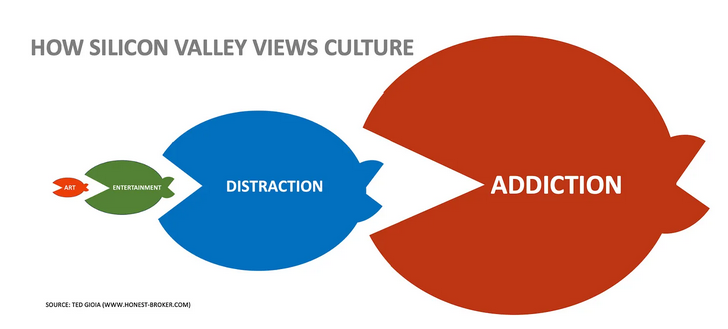
One of the interesting things about being a participant-observer anthropologist, as I am, is that you often develop implicit knowledge that doesn’t become explicit until someone challenges you on it. The seed of this post was on a recent comment thread where I was challenged to specify the difference between a geek and a hacker. And I found that I knew the answer. Geeks are consumers of culture; hackers are producers.

Thus, one doesn’t expect a “gaming geek” or a “computer geek” or a “physics geek” to actually produce games or software or original physics — but a “computer hacker” is expected to produce software, or (less commonly) hardware customizations or homebrewing. I cannot attest to the use of the terms “gaming hacker” or “physics hacker”, but I am as certain as of what I had for breakfast that computer hackers would expect a person so labeled to originate games or physics rather than merely being a connoisseur of such things.

[. . .]

All hackers are, almost by definition, geeks — but the reverse is not true.

Eric S. Raymond, “Geeks, hackers, nerds, and crackers: on language boundaries”, Armed and Dangerous, 2011-01-09

January 1, 2011

QotD: The end of nerd subculture

Filed under: History, Media, Quotations — Tags: , — Nicholas @ 17:14

That was the year the final issue of Watchmen came out, in October. After that, it seemed like everything that was part of my otaku world was out in the open and up for grabs, if only out of context. I wasn’t seeing the hard line between “nerds” and “normals” anymore. It was the last year that a T-shirt or music preference or pastime (Dungeons & Dragons had long since lost its dangerous, Satanic, suicide-inducing street cred) could set you apart from the surface dwellers. Pretty soon, being the only person who was into something didn’t make you outcast; it made you ahead of the curve and someone people were quicker to befriend than shun. Ironically, surface dwellers began repurposing the symbols and phrases and tokens of the erstwhile outcast underground.

Fast-forward to now: Boba Fett’s helmet emblazoned on sleeveless T-shirts worn by gym douches hefting dumbbells. The Glee kids performing the songs from The Rocky Horror Picture Show. And Toad the Wet Sprocket, a band that took its name from a Monty Python riff, joining the permanent soundtrack of a night out at Bennigan’s. Our below-the-topsoil passions have been rudely dug up and displayed in the noonday sun. The Lord of the Rings used to be ours and only ours simply because of the sheer goddamn thickness of the books. Twenty years later, the entire cast and crew would be trooping onstage at the Oscars to collect their statuettes, and replicas of the One Ring would be sold as bling.

The topsoil has been scraped away, forever, in 2010. In fact, it’s been dug up, thrown into the air, and allowed to rain down and coat everyone in a thin gray-brown mist called the Internet. Everyone considers themselves otaku about something — whether it’s the mythology of Lost or the minor intrigues of Top Chef. American Idol inspires — if not in depth, at least in length and passion — the same number of conversations as does The Wire. There are no more hidden thought-palaces — they’re easily accessed websites, or Facebook pages with thousands of fans. And I’m not going to bore you with the step-by-step specifics of how it happened. In the timeline of the upheaval, part of the graph should be interrupted by the words the Internet. And now here we are.

Patton Oswalt, “Wake Up, Geek Culture. Time to Die”, Wired, 2010-12-27

December 16, 2010

Japan tries to restrict adult-oriented manga

Filed under: Economics, Japan, Media — Tags: , , , , — Nicholas @ 09:51

Having solved all other problems, the Japanese government is now attempting to impose stricter controls on the thriving Manga book industry:

A battle has erupted between the normally placid manga community and Tokyo’s conservative governor over a new law that heavily restricts sales in the city of manga comic books with what the ordinance calls “extreme” depictions of sex.

The brouhaha has become so big that even Prime Minister Naoto Kan is attempting to bridge the divide between the industry, producer of one of Japan’s most cherished cultural exports, and Tokyo’s metropolitan government. A group of manga artists and publishers has said it will boycott Tokyo’s massive International Anime Fair in March.

That threat could hobble sales of the country’s beloved comic books. As Japan’s economic star continues to be eclipsed by China, cultural exports remain one of Japan’s few globally robust sectors.

Of course, there’s more to the story than the headlines indicate, as not all manga produced finds markets overseas:

The vast majority of manga in Japan aren’t pornographic, with internationally known titles such as “Dragon Ball,” “Naruto” and “Sailor Moon” attracting global readers of all ages.

But what sets Japan apart from much of the West is that here it is considered socially acceptable to read manga depicting sexually explicit acts. It is common to sit next to a suit-wearing Japanese commuter who is nonchalantly paging through cartoon sex scenes. Pornographic magazines with women dressed as Japanese schoolgirls on the cover are available at convenience stores around Tokyo, without anything obscuring the cover.

The only concession is that such publications are labeled “adult-only” and sealed shut, preventing browsers from peeking inside.

November 8, 2010

QotD: “Melticulturalism”

Filed under: Cancon, Humour, Quotations — Tags: , — Nicholas @ 12:58

So, the majority of Canadians are in favour of a system that seeks to respect and preserve cultural differences, just as long as people from other cultures don’t actually preserve those differences but assimilate into Canadian society. Call it melticulturalism1: You can be as different as you want, just as long as you act like everyone else.

How Canadian can you get?

1 h/t to Tasha Kheiriddin for “melticulturalism”

Kelly McParland, “Canadians overwhelmingly favour melticulturalism”, National Post, 2010-11-08

November 6, 2010

The geeks are not the “elite”

Filed under: Media, USA — Tags: , — Nicholas @ 12:27

Virginia Postrel looks at TV and what it reveals about popular culture:

American culture is experiencing one of those periodic waves of anti-elitism that have roiled and defined the country ever since Andrew Jackson’s day. Intellectuals, symbol manipulators, universities and people who think they’re so damned smart are out. Regular folks are in.

Yet “The Big Bang Theory,” the CBS sitcom featuring Sheldon and his three almost-as-elite geeky friends, is among the most popular shows on TV. Kicking off the network’s now-dominant Thursday-night lineup, it attracts about 15 million viewers a week. Now in its fourth season, it’s the top-rated Thursday-night program among adults 18 to 49 years old and those 25 to 54.

[. . .]

Something more is going on. Surveying the fall TV lineup for Harvard Business Review’s blog, the anthropologist and marketing consultant Grant McCracken suggests a trend behind the show’s success. “Our heroes used to be the people who stole lunch money,” he observes. “Increasingly, they are the people from whom it was stolen. This has got to have something to do with the rise of Silicon Valley and people like Bill Gates and Mark Zuckerberg.”

[. . .]

As anyone who has been abroad knows, American culture exists. But rather than a monolith, it’s best understood as a set of overlapping subcultures. Assume yours is the norm, the “real,” or the best expression of true Americanness and you miss a lot of important aspects of the culture as a whole, making it much less interesting and devaluing a lot of other people’s lives.

Robert Fulford on Dierdre McCloskey’s latest book

Filed under: Economics, History, Media — Tags: , , , , — Nicholas @ 12:19

As a dabbler in economic thought (but not an economist), I’m always interested in new books on different aspects of economics. Robert Fulford has probably prompted me to buy Deirdre McCloskey’s Bourgeois Dignity: Why Economics Can’t Explain the Modern World:

In a time of sharply limited budgets, this gives a special urgency to the ideas of Deirdre McCloskey, an economic historian at the University of Illinois. She thinks she knows how economic growth works.

Why did northwestern Europe begin growing rich in the 17th century, a process that continues to this moment? Why did various countries elsewhere in Europe have similar success, along with countries created by Europeans, including the United States and Canada?

McCloskey sets aside most of the reasons for prosperity that her academic peers identify. Scientific innovation, natural resources, education, Protestant theology, trade agreements — these can be important but they do not explain global patterns. Often, they are present in societies that have failed.

The West’s success, McCloskey believes, turns out to be a question of imagination, attitude and sensibility. It depends on how we talk and write about business — in fact, how people in the West feel about it.

Fulford also points out that McCloskey has had a very unusual life:

It’s not possible to write about McCloskey without noting the most remarkable aspect of her life, which she described eleven years ago in Crossing: A Memoir. In 1995, Donald McCloskey, a 52-year-old professor, married for 30 years, a father of two, realized that his real identity was as a woman. He began a program of hormone treatment, multiple surgeries and electrolysis, emerging as Deirdre.

As a scholar, she noted that this physical change involved a cultural transformation as well. Having been both a man and a woman, she drew up a long list of changes she’s discovered in herself. Here are a few of them. She cries, she likes cooking, she’s more easily startled by loud noises, she listens intently to stories people tell of their lives and craves detail. She can’t remain angry for long. She’s less impatient, drives less aggressively, has more friends. She’s stopped paying attention to cars and sports. And she feels duty-bound to wash the dishes.

October 21, 2010

QotD: Linguistic voids and what they say about that culture

Filed under: Liberty, Quotations, Randomness — Tags: , , — Nicholas @ 16:45

I thought a bit more about how languages differ on how they assign words to concepts and how this affects the thought processes of people who think in those languages. For example, imagine if some language had only one word that meant both “buy” and “steal”, and you had to express the notion of free markets to them. Yet equally absurd examples abound in English that, despite its huge vocabulary, still uses one word “love” to express how newlyweds love each other, a parent loves a child, a Southerner loves good barbeque and a liberal loves Che Guevara, even though all four are utterly different things. Equally oddly, the verb “play” is used for poker, hopscotch, trumpet and Hamlet: maybe this somehow makes sense for native speakers, but in Finnish all four are different words. Another gap in English that I find ever stranger the more I think about it is how you have to say “extended family” since English does not have a separate word for this hugely important concept (at least I have never heard of it). Such gaps reveal a lot about the speakers who develop the language; for example, recall how the Chinese have one word “crisatunity” to mean both crisis and opportunity, Russians have no word for “freedom” and the French lack the word for an “entrepreneur”.

Ilkka, “A word for everything and everything in a word”, The Fourth Checkraise, 2010-10-21

October 3, 2010

Losing my “mass media” awareness

Filed under: Media, Randomness — Tags: , — Nicholas @ 11:05

Elizabeth and I have been working through the DVD set of Castle season 2 over the last week (a couple of episodes per night, then off to our respective other activities). We got to the end of the last disc, watched the bonus features and briefly skimmed through the “sneak peak” offerings. All but one of the featured DVD sets was completely unknown to me (“Is that Sally Field?” “I didn’t know there was a mainstream sword-and-sorcery series” “Have you heard of this one either?”).

I’m going to have to hire an inveterate TV watcher to keep me posted on just the names of the current TV shows . . .

June 11, 2010

QotD: British humour

Filed under: Britain, Humour, Quotations — Tags: — Nicholas @ 12:02

God we’re rude, aren’t we? The British are so rude. We’re obsessed with bums, tits, willies, lavatory humour, vicars, knickers, smells, foreigners, fat tummies, fat slags, Fat Les, fat wrestlers, Benny Hill, Carry On Up The Khyber, Viz, Private Eye, men dressed as laydeez, women dressed as anarchic schoolgirls, sitcoms that offer howling tsunamis of verbal abuse, from The Young Ones to The Thick Of It. We love to see an irate, fictional British hotelier smacking his Spanish waiter around the head. We admire the host of BBC2′s Newsnight when he roasts politicians with scarcely believable belligerence. We quiver when a middle-aged, redheaded quiz-show hostess tells her guests how thick, ugly and badly dressed they are. We lap up radio shows in which grouchily opinionated men insult members of the public who hold views contrary to their own. We celebrate Christmas by buying our loved ones “lavatory books” with titles like Is It Just Me Or Is Everything Complete Shit In Pants?

John Walsh, “Naughty by nature: Why has Britain become so rude?”, The Independent, 2010-06-10

« Newer PostsOlder Posts »
« « What could possibly go wrong?| It’s not really about market share: that’s just keeping score » »

Powered by WordPress