
In short: If you want to know what kind of society you’re going to have, look at labor mobility.
This is not to say that slavery is the only answer. There are lots of ways to absorb excess labor. Ever gone shopping in the Third World? There’s one guy who greets you at the door. Another guy follows you around the store, helpfully suggesting items to buy. A third guy rings up your purchases, which are packed up by a fourth guy, and a fifth guy carries them out (or arranges delivery by a sixth guy). And none of those guys are actually the shopkeeper. They’re all his cousins and whatnot, fresh from the sticks, and all of them are working four jobs with four other uncles at different places in the city.
Nor is it just a Third World thing. Basic College Girls love that Downton Abbey show, so I’d use that to illustrate the point if BCGs were capable of comprehending metaphors. George Orwell wrote eloquently about growing up on the very ragged edge of “respectability” at the turn of the century. He knew all about servants, he said, and the elaborate codes of conduct in dealing with them, even though his family could afford only one part-time helper. Your real toffs, of course, had battalions of servants to do every conceivable job for them. What else is that, old bean, but an elegant solution to labor oversupply?
Note also, since I’m giving you very basic Marxist history here, that we’ve just discovered the foundations of Feminism. Though Karl Marx was — of course — a total asshole to both his wife and his domestic help (of course he had “help”; the tradition of using and abusing servants while bemoaning the plight of the proletariat comes straight from the Master himself), he realized that his theories had a hard time accounting for the very real economic effects of domestic labor. Hence Engels’s The Origin of the Family, Private Property and the State, which proves that even lemon-faced termagants with three degrees and six cats pulling down $100K per year shrieking about Feminism are MOPEs. You can cut the labor supply in half by shackling single gals to the Kinder, Küche, Kirche treadmill.
Severian, “Excess Labor”, Rotten Chestnuts<, 2020-07-28.
May 28, 2023
QotD: Karl Marx and the “excess labour” problem
May 8, 2023
Grrrrrrl Power is the only acceptable mode for new female characters, it seems
Janice Fiamengo on the strictly monotone representation of female characters in recent years:
The trend to make female movie characters tough and abrasive has been proceeding for some time. We can all predict that the new partner in the police procedural, let’s say a petite black woman whose entrance surprises (and thus reveals the bigotry of) the white man she’ll be working with, will turn out to be the biggest badass on the force. She’ll almost certainly save her partner’s life — and unearth a crime-solving detail he’d overlooked — before the first episode is over. At the same time, viewers will be treated to her sneering refusal of the partner’s banter, her steely gaze, and her fearless embrace of outrider status. She’s a woman with wise-cracking disdain for men as a group who takes quick revenge for even the smallest hint of sexism, benevolent or otherwise, from her fellow officers. And she quickly earns not only their respect but also their unwilling awe.
Whether police officers, first responders, detectives, firefighters, FBI — or, for that matter, nurses, ER doctors, politicians, or lawyers — the message is clear: these women are at least as capable and fearsome as any man: tough-minded, smart as a whip, and street-wise. Even in this era of agitation about the trans peril to women’s sports, the fictional females are as physically strong and combat-ready as any male, their fists and kicks aimed with staggering accuracy. Even tiny Lucy Tara on NCIS Hawai’i comes to the rescue of her far-larger male colleagues in impressive physical struggles with suspects.
But physical characteristics, the notable fearlessness and strength, are to some extent less striking than the women’s personalities and demeanor. An entire character transformation has been taking place, as traditionally feminine characteristics have been decisively minimized and masculine bravura brought to the fore. These women are, seemingly without effort, brusque, foul-mouthed, and contemptuous, particularly of male authority — and we’re to love them for it. They’re often beautiful, but they never try to be. With hair pulled back and aggressive booted stride, they are independent, uninterested in male approval, and largely indifferent to men as romantic partners, unless they are shown pursuing their occasionally voracious sexual needs, at which times their approach is direct and unsentimental. After an evening of bronco-riding athleticism, they wake up in a tousled bed with a slight grimace and duck out of the lover’s offer of breakfast. They’re not interested in commitment or any continued intimacy. A call comes in on their cell phone, they pull on their clothes nonchalantly, and walk out of the man’s life. They’ve already forgotten him as they prepare to conquer evil once again.
A popular new Netflix series, The Diplomat, takes these now-standard elements to the next level, profiling an ambitious, sexy, oft-frowning, brilliant, and explosively hot-tempered woman, Kate Wyler, who engages in uncontrolled physical and verbal abuse of her husband without remorse or narrative comeuppance. Though one might expect that a portrait of reckless physical violence by one spouse against another would be evidence at least of a serious character flaw — if not criminality (as it certainly would be if the male spouse were delivering the blows) — it is not at all clear in this case that the character’s actions deserve any condemnation. Her violence is simply the most extreme manifestation of her (rather admirable and plucky) unconventionality in breaking the rules of propriety in order to save the liberal world order.

May 5, 2023
The kinder, gentler US Naval War College
CDR Salamander on a recent symposium at the U.S. Naval War College, showing just how much the American military has adapted itself to the Current Year:

Let’s take a look around the planet with a maritime national security lens, shall we?
- The largest land war in Europe since WWII is raging on the north shore of the Black Sea.
- The People’s Republic of China surpassed the United States of America as the world’s largest navy.
- The Iranians are hijacking oil tankers willy-nilly.
- The Western economy relies on undersea cables & pipelines we have allowed to go undefended and are now the subject of attention by mal-actors on the world stage.
- The Navy is experiencing readiness and recruiting problems not seen since the 1970s.
There’s my top-5 off the top of my head this AM, yours may differ.
It sure seems to differ in Newport.
So, in the last week of April there was a 2-day symposium at the U.S. Naval War College, an opportune time to examine the most critically important challenges in 2023 — hopefully from a maritime perspective — wouldn’t you think?
Any conference, especially a 2-day affair with both on and off campus event locations, sure cost a lot of money and even more stacked manhours to plan, attend, participate, and manage.
We sure want to make sure the juice is worth the squeeze, right?
If you’re a regular here, you know where this is going. I warned everyone about this back in 2017. If you’re a new reader not fully up to speed on the broader portfolio we manage here at CDRSalamander, well, take a red pill and a seat.
Our war colleges are not what you think they are.
With each passing year there is less focus on war, and more on college. At the Naval War College, just getting additional time, money, faculty, and leadership focus on the “naval” portion has become a challenge with all the other ancillary agendas trying to keep pace with the cool kids cross-town at Salve Regina University.
Here’s a perfect example.
The Naval War College (NWC) will host its 9th annual Women, Peace and Security (WPS) Symposium, 26-28 April 2023, in Newport, Rhode Island. This year’s theme is “Women, Peace, and Security in a Fragile World: Perspectives on Warfighting, Crisis Management, and Post-Conflict Transitions“.
Well, let’s go in with an open mind. Perhaps there’s something here. Hope isn’t a plan, but when the Party demands things of you, hope is often all you have.
If you voluntarily attended (I am reliably told that Party cadre informed the proles that attendance was required for staff, at least online), what kind of panel discussions would you be able to listen to? Let’s browse over the agenda.
In totally unrelated news, Brent Ramsey updates the odds on who will be promoted to be the US Navy’s next Chief of Naval Operations:

Admiral Lisa Franchetti, Vice-Chief of Naval Operations, US Navy.
Last September, the Navy promoted and installed a new Vice Chief of Naval Operations. Then Vice Admiral Lisa Franchetti got her 4th star and was appointed to the second-highest position in the Navy. Now after a scant seven months, the betting line going around D.C. is that she will likely be the next CNO based on the identity politics track record of President Biden. When President Biden had an opportunity to appoint to the Supreme Court, before assessing anyone’s qualifications, he announced that a black woman would get that seat, and he followed up on that promise. Would an identity-based selection for the Navy’s top leader be in the best interest of the Navy and the Nation? No, the nation needs and deserves the very best warrior to lead the Navy into our threatened future.
Admiral Franchetti is a journalism graduate of Northwestern University NROTC, a non-STEM degree which itself is unusual, as the Navy strongly favors STEM degrees for officers. She has a Master’s Degree in organizational management from the University of Phoenix, an online university. Her biography does not mention any war college credential. In contrast, her predecessor Admiral William Lescher had multiple commands in combat zones, was a test pilot, had multiple advanced degrees in naval technical fields and his commands won multiple combat zone merit awards. To naval professionals, for someone to have been promoted to the Navy’s highest rank and second highest position based on a NROTC commissioning source with a liberal arts degree, an online masters, no war college or combat zone credentials, would be considered inconceivable. Perhaps her success is based on a particularly spectacular service record?
Admiral Franchetti’s career path reveals sea tours on a tender, oiler, and three destroyers including command of the USS Ross (DDG-71) and command of a destroyer squadron. Her biography does not mention any of her commands received awards while she was in command.
I’m not a betting man, but if I was, I think I’d be putting down a few jellybeans on Admiral Franchetti’s next posting …
April 16, 2023
QotD: Homo electronicus and the permanent caloric surplus
Excess fat cranks up estrogen levels. You don’t need to be House MD to interpret this finding:
In males with increasing obesity there is increased aromatase activity, which irreversibly converts testosterone to estradiol resulting in decreased testosterone and elevated estrogen levels.
Or this one:
A study supports the link between excess weight and higher hormone levels. The study found that estrogen and testosterone levels dropped quite a bit when overweight and obese women lost weight.
This is not to say those swishy subalterns were fat — indeed, they were comically scrawny compared to Postmodern people. But a little goes a long way when it comes to hormones, especially in a world where “intermittent fasting” wasn’t a fad diet, but a way of life. Any one of us would keel over from hunger if we were forced to eat the kind of diet George Orwell described as his public school’s standard fare.
Follow that trend out to the Current Year, when pretty much everyone is grossly obese compared to even the Silent Generation. Heartiste and other “game” bloggers loved pointing out that the average modern woman weighs as much as the average man did in the 1960s. And while I think that’s overblown — we’re also several inches taller, on average, than 1960s people — there’s definitely something to it, especially when you consider how far the bell curve has shifted to the fat end. Not only do people weigh a lot more on average, the people who weigh more than average now weigh a hell of a lot more than heavier-than-average people did back when. See, for example, the ballooning weight of offensive linemen, who are professionally fat — in 2011 a quarterback, Cam Newton, weighed more than the average offensive lineman in the 1960s.
Put the two trends together and you have, on average, a hormone cocktail way, way different than even 50 years ago … and that’s before you add in things like all-but-universal hormonal contraception, lots of which ends up in municipal drinking water.
Severian, “Recent Evolution”, Rotten Chestnuts, 2020-09-28.
April 15, 2023
QotD: When the pick-up artist became “coded right”
Today, the global face of pickup artistry is Andrew Tate: sculpted former kickboxing champion, self-described “misogynist”, and, now, alleged human trafficker. Whatever results from the current allegations, his fall is a defining moment in the cultural history of the now inseparable worlds of the political manosphere and pickup artistry, and provides an opportunity to reflect upon their entangled history.
Pickup artistry burst onto the scene in the 2000s, propelled by the success of Neil Strauss’s best-selling book The Game. More a page-turning potboiler cataloguing the mostly empty lives of pickup artists (PUAs) than a how-to guide (though Strauss wrote one of those too), the methods in the book had been developed through years of research shared on internet forums. The “seduction underground”, as the large online community of people doing this research was called, then became the subject of widespread media attention. Through pickup artistry, the aggressive, formulaic predation of women was normalised as esteem boosting, and men such as those described in Strauss’s The Game could be viewed in a positive light: they had transformed from zero to hero and taken what was rightfully theirs.
The emergence of PUAs generated a swift backlash. The feminist blogs of the mid-to-late 2000s internet, of which publications like Jezebel still survive as living fossils, rushed to pillory them. The attacks weren’t without justification, but the world of PUAs during this period, much like the similarly wild-and-woolly bodybuilding forums, had no obvious political dimension beyond some sort of generic libertarianism. It was only after these initial critiques that it began to be coded as Right-wing by those on the Left. Duly labelled, PUAs and other associated manosphere figures drifted in that direction. MTV’s dating coaches were not part of the political landscape, merely feckless goofballs and low-level conmen capable of entertaining the masses. But their successors would be overtly political actors.
Oliver Bateman, “Why pick-up artists joined the Online Right”, UnHerd, 2023-01-08.
April 12, 2023
“Stunning and brave” or “deliberately constructed misogyny”?
In The Critic, Jean Hatchet points out how well Dylan Mulvaney’s act is working to both maximize Mulvaney’s career and to actively denigrate women:
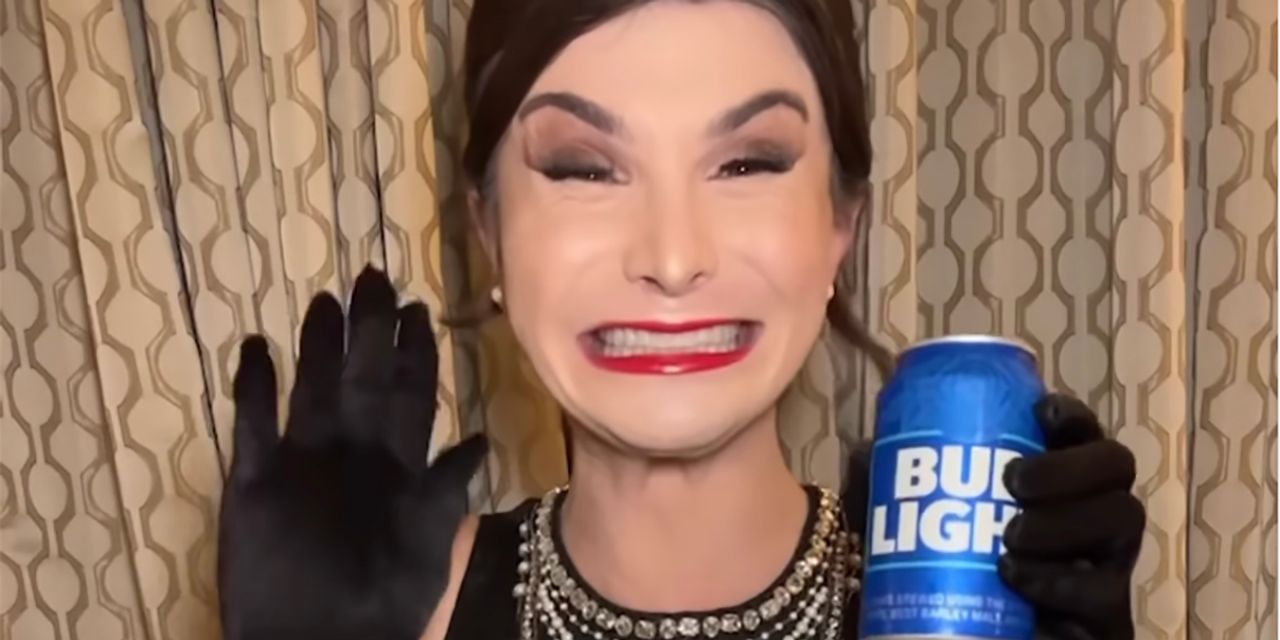
If a man seeks to humiliate a woman he encounters, nothing is easier than reducing her appearance to a mere caricature. Men do this directly in front of the woman they are targeting: lifting their voice to a squeak, exaggerating hand gestures, pushing out pretend breasts, wiggling their bum, pouting and fiddling with their hair. Most of these men confine the taunt to the woman in front of them, and the woman often feels and displays a righteous rage. However, when it comes to Dylan Mulvaney, the Tik Tok user who has become famous for his grotesque parody of women, women are not supposed to react critically. They are seen as cruel or “transphobic” if they express annoyance at being so grossly insulted.
In March 2022 Dylan Mulvaney saw a way to take his barely-concealed disdain for women up a level, with predictable success. After his career as a musical actor had stalled due to the Covid pandemic, with people finding solace daily on Tik Tok, wily Dylan invented a new role that guaranteed his future wealth and success. He announced he was embarking on a journey of “being a girl” and began a series of videos documenting this ludicrous notion.
Shortly before this year-long, very public “transition”, Mulvaney performed a pilot video for his current lucrative act. In it he told the viewer that he “had trouble finding roles” so a friend had invented one for him, a “femme character”. His character wears a pink dress and pearls, white gloves and ankle socks. At this point Mulvaney must have been delighted to glimpse a potential new career path. It was a very savvy move for him to extend and develop this caricature of a 1950s woman. Now, just over a year later, Dylan Mulvaney has highly paid “partnerships” with a number of companies including Budweiser, Kate Spade and — during the past week, to great objection — the Sportwear giant Nike.
In an inflammatory paid partnership video with Nike, an inanely grinning, barefoot Mulvaney wears a Nike sports bra and leggings. He performs a series of ridiculous moves including comedic side stretches, a theatrical run kicking his heels up nonsensically and failed chorus-line high kicks. He almost runs backwards into a hedge at one point and pulls a comedy expression of shock. It all looks ridiculous and slapstick. It mocks women by suggesting they exercise trivially and ineffectively, but smiling throughout.
The media seems unwilling to focus on the actual reasons many women are angry about this. It has focused instead on stating that objections to the sponsorship are because Dylan is trans. This is not why women are outraged. When a man “performs woman” in front of women to such a humiliating degree, when he waggles and jiggles and implies that weakness and silliness are inherent to being a woman who plays sport, women appropriately see this for the deliberately constructed misogyny it is. Ria Chapman, a London PE teacher, told me why she finds this act so irritating and offensive:
Girls are still routinely bullied and mocked for being sporty and or breaking stereotypes, their achievements and ambitions not being celebrated and valued like those of their male peers. For a sports company the size of Nike to use a male performing a parody of what he believes women behave like during sport only adds to the ammunition that boys will use to put girls down.
Utilising female stereotypes is the foundation of Mulvaney’s role. On his “Day 1 of being a girl” video debut, he said:
I’ve already cried three times, written a scathing email I didn’t send, ordered dresses online that I couldn’t afford and when someone asked me how I was, I said “I’m fine” but I wasn’t fine. How did I do, ladies?
All of this encapsulates the stereotype of women as emotionally fragile, frivolous spendthrifts, imprudent around clothes and financially inept. In the stereotype Dylan performs, women routinely suppress our emotions and focus on being polite at all times. It is an archaic depiction of requisite female behaviour which was seared into women’s consciousness over decades in the past. This view of “girlhood” took further decades for feminist women to dismantle. Dylan Mulvaney is building it back up before our eyes and we refuse to stay quiet about it.
Bud Light’s latest brand ambassador, Dylan Mulvaney
QotD: Karen
self-propelled lifestyle accessorieskids while she gets exalted at hot yoga and the nail salon, now that school’s out. Give her a week without Starbucks, I said, locked in her house with Kayden, Brayden, Jayden, and Khaleesi, and she’ll demand we never mention the word “flu” again.In other words, I misunderstood the essence of Karen. Karen is — first, foremost, and always — a victim. I of all people should’ve known better, because I was surrounded by Karens all the time in my personal and professional life. I’ve mentioned this story before, but bear with a quick repeat: At one of my first teaching gigs, at the big directional tech that makes up a lot of “Flyover State”, the department’s women got it into their vapid little heads that they — women — were being systematically excluded from positions of power. The fact that the department chair was a woman, and in fact the whole department, emeritus through first year grad student, was something like 65% female should’ve been their first clue, but nevertheless, they persisted. They got together a blue-ribbon commission, as one does, and studied the shit out of the problem. The much-ballyhooed report revealed …
… that all the positions of authority in the department, every blessed one, was held by a female. At which point, without missing a single fucking beat, they started complaining that being forced to hold all these positions of authority was keeping them from making adequate career progress.
I shit you not.
That’s Karen, my friends.
Severian, “The Civil War That Wasn’t”, Rotten Chestnuts, 2020-09-09.
April 11, 2023
The end of single-sex spaces began in the 1970s, at least for men
Janice Fiamengo points out that the initial loss of single-sex spaces began a long time ago and for what — at the time — seemed sensible and egalitarian reasons:
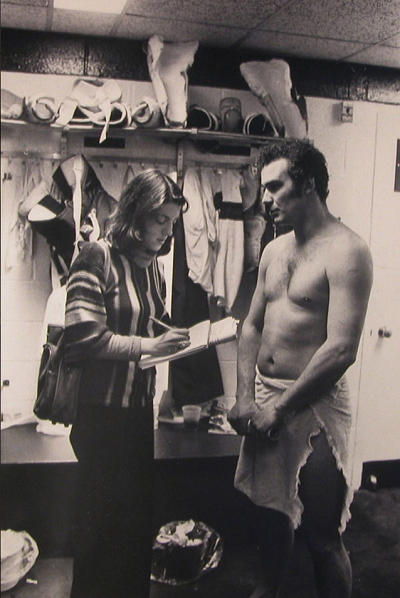
Robin Herman of the New York Times was one of the first two female reporters ever allowed into NHL dressing rooms, starting with the 1975 NHL All-Star Game in Montreal.
There has been a good deal of talk lately about women’s spaces being invaded by biologically male persons identifying as women. Some women’s campaigners claim that the trans phenomenon constitutes an attack on womanhood itself, an attempt to “erase” women and replace them with men who perform womanhood. Some even call it a new form of patriarchy.
But well before women had their single-sex spaces threatened, something similar had already happened to men. Beginning in the 1970s, men’s spaces were usurped, their maleness was denigrated, and policies and laws forced changes in male behavior that turned many workplaces into feminized fiefdoms in which men held their jobs only so long as women allowed them to. The very idea of an exclusively male workspace or club — especially if it was a space for socializing (not so much if it was a sewer, oil field, or shop floor in which men did unpleasant, dangerous work) — came to be seen as dangerous. In light of the recent furor over single-sex spaces for women, it is useful to consider the source of some men’s justifiable apathy and resentment.
At my new academic job in the late 1990s, a woman who had been the first female historian hired into her department used to tell a story she’d had passed on to her from a male colleague. After the decision had been made to hire her, one of the historians said to another somewhat dolefully, “I guess that’s the end of our meetings in the urinal.” The joke ruefully acknowledged, and good-naturedly accepted, the end of their all-male work environment.
Though this woman didn’t have any trouble with her male colleagues, who welcomed her civilly, she told the story with an edge of contempt. Even thoroughly modern men, the story suggested, held a foolish nostalgia for pre-feminist days.
But was it foolish — or did the men recognize something real?
No one thought seriously, then, about the disappearance of men’s single-sex spaces. The idea that men and boys need places where they can be with other men (defended, for example, in Jack Donovan’s The Way of Men) would have been cause, amongst the women I knew, for scornful laughter. In 2018, anti-male assumptions had become so deeply entrenched that the female author of a Guardian article titled “Men-only clubs and menace: how the establishment maintains male power” simply could not believe that any decent man could legitimately seek out male-only company.
Under the circumstances of mixed groups of reporters crowding into team locker rooms after games, it’s rather surprising how few “towel malfunction” incidents have been reported.
March 30, 2023
QotD: Revealed preference in the teenage hellscape of high school
Robert Stacy McCain, “Conflicting Signals”, The Other McCain, 2019-05-23.
March 27, 2023
QotD: Homo electronicus and the problem of instant communications
One obvious consequence of this is that it turns the whole world into a giant hen party. Karen has always been with us, probably with equal prevalence. But as late as the mid-1990s, she’d have to confine her scolding to PTA meetings and places like that. But now everyone has the Internet, and social media’s a thing, and it’s just sitting there, compelling you to use it. Woman’s natural role as the guardian of the tribe’s mores becomes Karen-ism on crack.
Severian, “Recent Evolution”, Rotten Chestnuts, 2020-09-28.
March 14, 2023
“Strangely, my friends have a more negative view of the feminist movement than I do”
Bryan Caplan explains why he chooses to write the books he writes:
Almost by definition, writing controversial books tends to provoke negative emotional reactions. Anger above all. Anger which, in turn, inspires fear. And not without just cause; the sad story of Salman Rushdie sends shivers down the spine of almost any writer. If you write controversial books — or care about someone who does — you should be at least a little afraid of the anger your writing inspires.
[…]
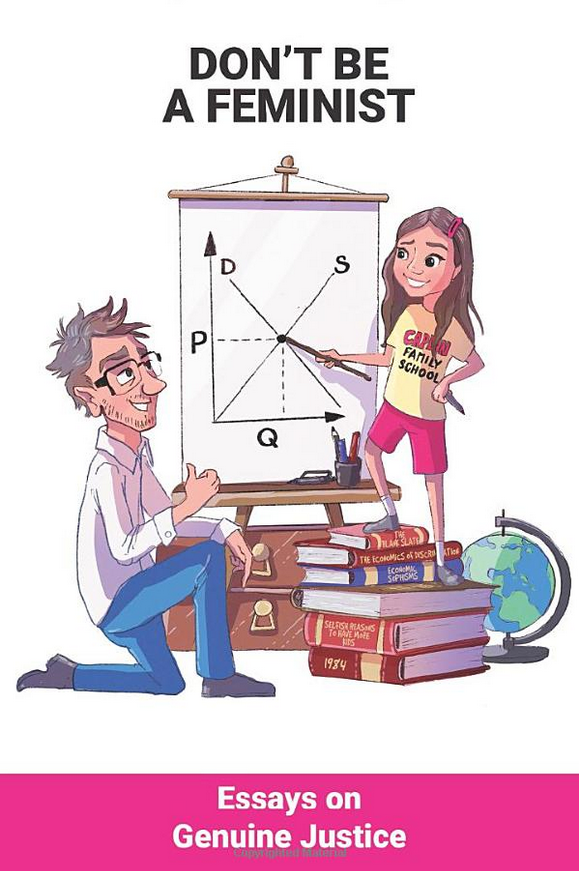
In contrast, when I announced the imminent publication of Don’t Be a Feminist, the fear went through the roof. Several folks warned me of “career suicide”. Others told me that I had no idea what horrors awaited me. Friends staged mini-interventions on my behalf.
The underlying premise, naturally, was that the feminist movement is at once terribly powerful and horribly bad-tempered.
My best guess is that the warnings are overblown. Strangely, my friends have a more negative view of the feminist movement than I do. Whether my guess is right or wrong, though, all this intense, widespread fear really ought to trouble the feminist conscience.
If I said, “Hi” to one of my kids’ friends, and they responded by fleeing in terror, my reaction would be, “Did I do something to scare him?” I would ask my kids, “Why was he so afraid of me?” If such incidents started to repeat, I would be severely troubled. “I thought I came off as a friendly dad, but I guess I’m seen as an ogre.”
The same applies if I were a feminist, and I discovered that critics are literally afraid to criticize feminism. If only a few critics feared feminism, my question would be, “What did we do to scare them?” If I discovered that fear of feminism was widespread, a full soul-search would be in order. “I thought we came off as a friendly movement, but I guess we’re seen as ogres.”
And guess what? Fear of feminism plainly is widespread.
What, then, are feminists doing wrong? Above all, cultivating and expressing vastly too much anger. Sharing your angry feelings is an effective way to dominate the social world, but a terrible way to discover the truth or sincerely convince others. Maybe you don’t mean to scare others; maybe you’re just acting impulsively. Yet either way, the fear feminists inspire is all too real.
Social media, selfies, and depression
In The Free Press, Jonathan Haidt notes the inflection point at which young liberal women started to become depressed at a much higher rate than the rest of the population — a trend that has continued for over a decade:
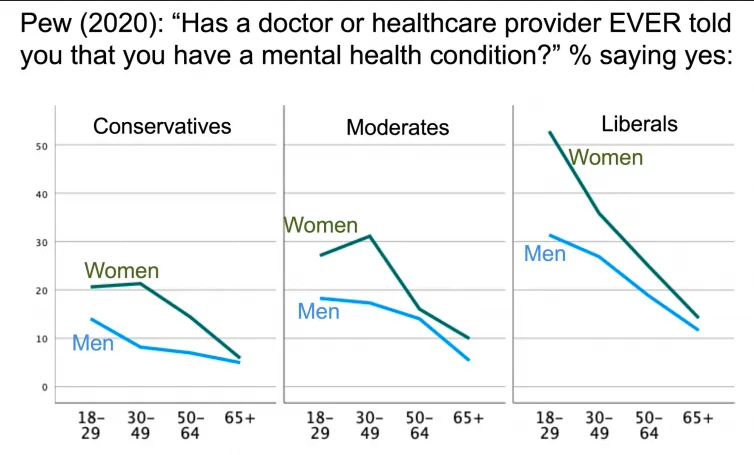
In September 2020, Zach Goldberg, who was then a graduate student at Georgia State University, discovered something interesting in a dataset made public by Pew Research. Pew surveyed about 12,000 people in March 2020, during the first month of the COVID shutdowns. The survey included this item: “Has a doctor or other healthcare provider EVER told you that you have a mental health condition?” Goldberg graphed the percentage of respondents who said “yes” to that item as a function of their self-placement on the liberal-conservative 5-point scale and found that white liberals were much more likely to say yes than white moderates and conservatives. (His analyses for non-white groups generally found small or inconsistent relationships with politics.)
I wrote to Goldberg and asked him to redo it for men and women separately, and for young vs. old separately. He did, and he found that the relationship to politics was much stronger for young (white) women. You can see Goldberg’s graph here, but I find it hard to interpret a three-way interaction using bar charts, so I downloaded the Pew dataset and created line graphs, which make it easier to interpret.
Here’s the same data, showing three main effects: gender (women higher), age (youngest groups higher), and politics (liberals higher). The graphs also show three two-way interactions (young women higher, liberal women higher, young liberals higher). And there’s an important three-way interaction: it is the young liberal women who are highest. They are so high that a majority of them said yes, they had been told that they have a mental health condition.
Data from Pew Research, American Trends Panel Wave 64. The survey was fielded March 19–24, 2020.
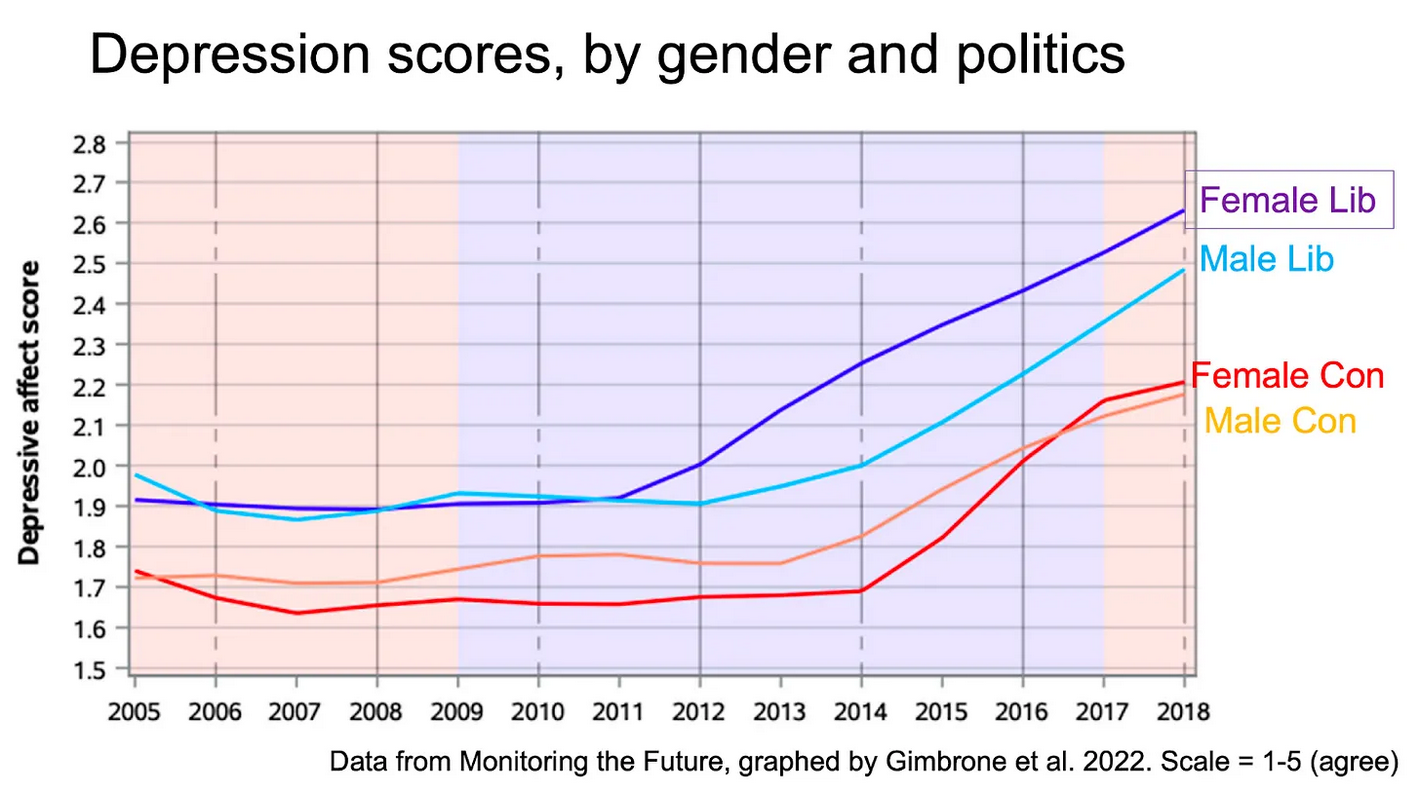
Graphed by Jon Haidt.In recent weeks — since the publication of the CDC’s report on the high and rising rates of depression and anxiety among teens — there has been a lot of attention to a different study that shows the gender-by-politics interaction — Gimbrone, Bates, Prins & Keyes (2022), titled: “The politics of depression: Diverging trends in internalizing symptoms among US adolescents by political beliefs”. Gimbrone et al. examined trends in the Monitoring the Future dataset, which is the only major U.S. survey of adolescents that asks high school students (seniors) to self-identify as liberal or conservative (using a 5-point scale). The survey asks four items about mood/depression. Gimbrone et al. found that prior to 2012 there were no sex differences and only a small difference between liberals and conservatives. But beginning in 2012, the liberal girls began to rise, and they rose the most. The other three groups followed suit, although none rose as much, in absolute terms, as did the liberal girls (who rose .73 points since 2010, on a 5-point scale where the standard deviation is .89).
Data from Monitoring the Future, graphed by Gimbrone et al. (2022). The scale runs from 1 (minimum) to 5 (maximum).
The authors of the study try to explain the fact that liberals rise first and most in terms of the terrible things that conservatives were doing during Obama’s second term, e.g.,
Liberal adolescents may have therefore experienced alienation within a growing conservative political climate such that their mental health suffered in comparison to that of their conservative peers whose hegemonic views were flourishing.
The progressive New York Times columnist Michelle Goldberg took up the question and wrote a superb essay making the argument that teen mental health is not and must not become a partisan issue. She dismissed Gimbrone et al.’s explanation as having a poor fit with their own data:
Barack Obama was re-elected in 2012. In 2013, the Supreme Court extended gay marriage rights. It was hard to draw a direct link between that period’s political events and teenage depression, which in 2012 started an increase that has continued, unabated, until today.
After examining the evidence, including the fact that the same trends happened at the same time in Britain, Canada, and Australia, Goldberg concluded that “Technology, not politics, was what changed in all these countries around 2012. That was the year that Facebook bought Instagram and the word ‘selfie’ entered the popular lexicon.”
February 27, 2023
The instinct to protect
Rob Henderson on the way that women react to men who demonstrate protective instincts toward them:
Human psychology evolved in environments far more violent than even the most dangerous modern U.S. cities. Overall, in the U.S., the average death rates from interpersonal violence are less than 1 in 10,000.
In contrast, in hunter-gatherer societies, 15 percent of deaths were the result of physical violence.
Our violent evolutionary past has shaped our minds. Even peaceable people in developed countries who have never even been in a fight can still readily estimate men’s physical strength from their face, body, and voice. These estimations tightly correlate with men’s actual physical strength.
A 2022 paper (preprint link here) investigated whether people prefer romantic partners who are willing and able to protect them from violence.
Considering the frequency and intensity of violence in the human ancestral environment, affiliating with people who were able to protect you would have been advantageous. The authors of the paper suggest such preferences have shaped human mating psychology.
The authors (Barlev, Arai, Tooby, and Cosmides) explore the question of whether a potential partner’s ability to protect you from violence is valued. It seems obvious that the answer (especially for women) is almost certainly yes.
However, they also explore whether a potential partner’s willingness (independent of ability) is also considered attractive.
When a woman judges a man, does learning that he is willing to protect her from violence make him more attractive, even if he isn’t particularly effective at doing so?
What about when a woman learns that a man is able but unwilling to protect her? Imagine a muscular guy who, upon seeing his date get mugged, just stands there and does nothing, or runs away.
Is he still more attractive than a guy who is unable but willing to protect her? Picture a scrawny guy who, upon seeing his date get mugged, physically tries but is unsuccessful in his attempt to stop the mugger.
The paper explores these questions.
[…]
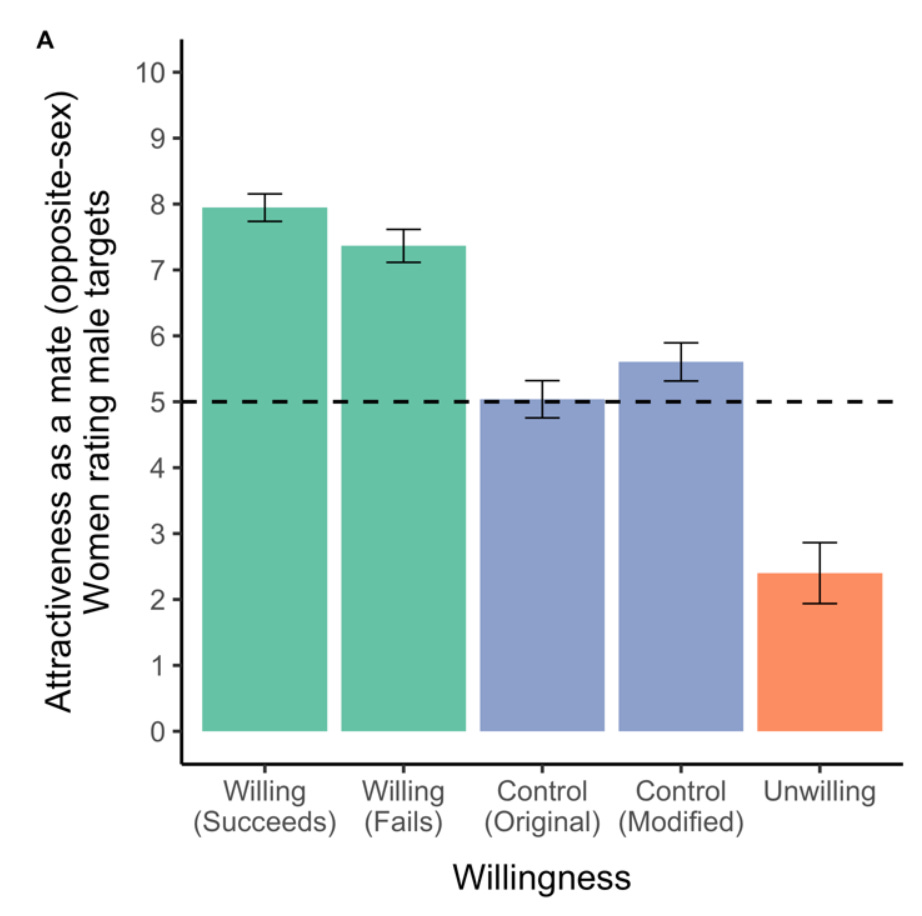
Here you see that women rate male dates (described in this particular version of the study as average in physical strength and average in physical attractiveness) who make no attempt to protect them as a 2 out of 10 in attractiveness. Women rate a man who attempts to protect them but fails as a 7.5 out of 10. And a man who attempts to protect them and succeeds is an 8 out of 10.
So the major bump in attractiveness comes from willingness, rather than ability.
February 21, 2023
“… sub-replacement fertility is probably an inevitable product of female emancipation”
In Ed West’s weekly round-up, he ends the post on this rather grim (from a demographic viewpoint) note:
In The Guardian, Martha Gill on the great vexation of modern life: people can’t have as many children as they’d like.
OK: so it’s about social structures, then? Lack of childcare, unequal parental leave and career penalties for mothers. Not so – or not primarily. In our fecund recent past, remember, career penalties for mothers were even higher. Mothers still suffer a career penalty almost everywhere, but attempting to remove it doesn’t seem to alter their decisions that much. Since 2008, amid unequalled progress in gender equality and some of the most generous parental support schemes on the planet, birthrates in Sweden, Norway and Iceland have fallen precipitously. Nordic countries are, comparatively, parental utopias, yet birthrates tick along slightly above the EU average and still well below the replacement rate.
I agree with her basic premise. Aside from Georgia, no country has successful brought fertility rates above replacement rates, whatever the childcare incentives, because sub-replacement fertility is probably an inevitable product of female emancipation. In particular the issue is that women don’t tend to marry men with lower education and income levels, so the modern system ensures that a large minority of men are simply unmarriagable.
I’m not convinced by Gill’s solution, since outcomes for the children of single parents are way worse on average, and even with huge state support it’s going to be incredibly hard to raise children alone. Even without grandparental support it’s hard with two parents. I also think this problem is inevitably helping the drive towards poly-acceptance. As Rob Henderson wrote earlier this month:
In a deregulated market, power laws dominate. This is true not only in the economic realm, but in the romantic realm as well. At no point in history have all men in a given society been equally desirable. Today, though, the disparity between men is particularly pronounced. And the gap shows no sign of slowing or closing. The polyamorous movement may be a reaction to shifts in sex ratios among attractive individuals. Many individuals who do not identify as poly are likely practicing some version of it, knowingly or otherwise, as the case of West Elm Caleb demonstrated. The majority desirable young males using dating apps almost certainly have at least three women in their rotation, if not more.
As with so many things, post-Christian society is reverting to pre-Christian norms, in this case the norm where a large proportion of men were thrown onto the romantic scrapheap.
February 18, 2023
Nikki Haley’s presidential bid is clearly doomed because … she uses her middle name? Let me read that again.
Jim Treacher (whose name I should now probably put in scare quotes because it’s a nom-de-plume) explains why Nikki Haley is a no-hoper in the next Republican presidential primaries:
As I revealed over a decade ago, “Jim Treacher” isn’t my real name. This is just a message-board pseudonym that got way out of hand, and now I guess I’m stuck with it. My government name is Robert Sean Medlock, but my parents have always called me Sean. I don’t know why they didn’t just name me Sean Robert Medlock, but I was in no position to argue my case at the time because I couldn’t talk yet.
So now, every time I need to fill out paperwork somewhere, I have to explain that I go by my middle name. Doctors, dentists, car repairs, insurance, what have you. The routine is kind of annoying, but at this point I’m used to it.
I’m not deceiving anybody by using my middle name. It’s just my name, man. Lots of people go by their middle name.
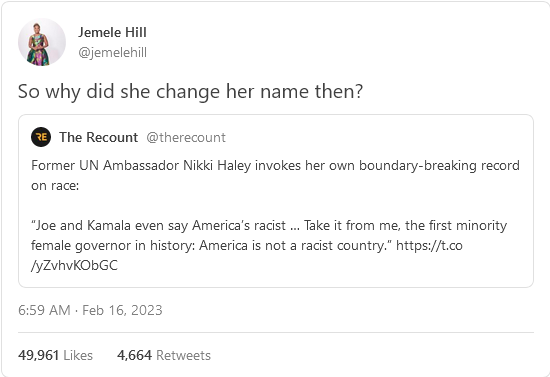
In other news: This week Nikki Haley announced she’s running for president. I don’t know if she has a shot, but the libs sure seem to think so. They’re already attacking her for … going by her middle name.
Check out this idiot:
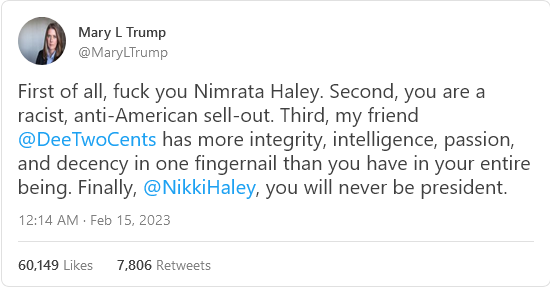
She didn’t. Her birth name was Nimarata Nikki Randhawa. Not “Nimrata”, as it’s commonly misspelled by supposedly sophisticated libs:
My goodness. Guess it runs in the family, huh?
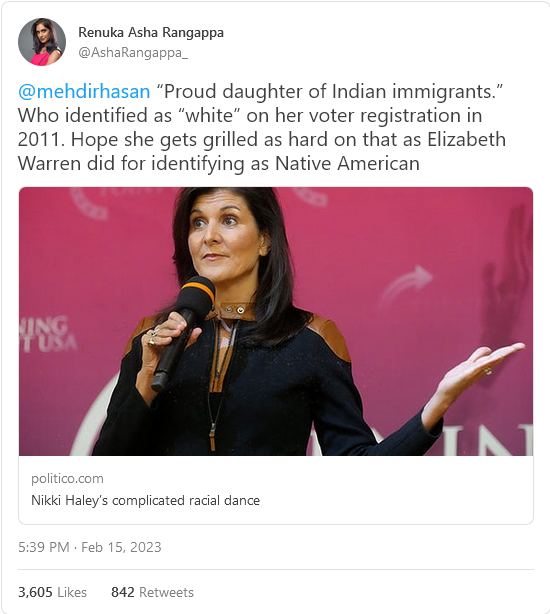
The Randhawa family referred to their daughter as Nikki, which is Punjabi for “little one”. And she changed her last name to Haley when she married a man named Michael Haley.
Y’know, like Hillary Rodham did when she married Bill Clinton.
Here’s another dummy, who of course works for CNN:
Yeah. Wait. What?
And if that scandal wasn’t enough to sink Nikki Haley’s chances utterly, CNN’s Don Lemon helpfully points out that she’s way, way, way past her peak:
Now, you know I’m not one to cry sexism often. Frankly, when I found out a hot college professor of mine had been fired for doing a #MeToo, I was offended for not being involved. I’d gone to office hours, for godsakes. But there is sexism this week we have to call out. Nikki Haley announced she is running for president. She’s a reasonable Republican candidate who is, of course, a long shot against Trump. There are plenty of ways to criticize her politics, but for some reason a bunch of people we are meant to respect tried to say that the real problem is that she’s a woman, that she’s not young, and that she’s Indian.
You may think I’m exaggerating.
Here is Don Lemon on CNN: “Nikki Haley isn’t in her prime. Sorry”, he says, looking to camera, a little smile on his face. “When a woman is considered to be in her prime in 20s and 30s and maybe 40s …” His co-hosts, both women, balk. (“Prime for what?”) But Lemon keeps going. Watch the extremely stressful video here, where he goes on … and on … about how Nikki Haley, who is 51, cannot criticize Biden’s age. Because women peak in their 20s, and she’s long past that.
Or here’s progressive hero Mary Trump, Donald’s niece, who disavowed him and became a star of the intelligentsia. She decided that the best way to insult Nikki Haley this week was by highlighting that she’s Indian, because Nikki is her middle name. Again, this is a real statement Mary Trump released on Twitter: “First of all, fuck you Nimrata Haley.” Sorry, I’m slow: If you’re a white person trying to insult someone who’s not white and you do it by highlighting their race, what’s that called again? I’m sure there’s a Robin DiAngelo chapter on this somewhere.


