
Lindybeige
Published on 17 Jun 2018The command bunker ‘Western Approaches’ is now a museum in Liverpool. I was invited to take a look before it re-opened.
Support me on Patreon: https://www.patreon.com/LindybeigeThe Museum’s website: http://www.liverpoolwarmuseum.co.uk
Many thanks to Richard MacDonald for inviting me and showing me around (you saw him plugging the big fuse in).
Lindybeige: a channel of archaeology, ancient and medieval warfare, rants, swing dance, travelogues, evolution, and whatever else occurs to me to make.
July 8, 2018
Western Approaches – the bunker from which they won the war
Comments Off on Western Approaches – the bunker from which they won the war
July 2, 2018
Mark Steyn on 49th Parallel
His annual Canada Day post this year featured a World War 2 British film about Canada intended for Americans:
The film stars, in order of billing, Leslie Howard, Laurence Olivier, Raymond Massey, Anton Walbrook, Eric Portman “and the music of Ralph Vaughan Williams”, which gets an above-the-title credit – as well it should. Vaughan Williams’ score is an integral part of the picture and, if not especially Canadian (save for a very short evocation of Calixa Lavallée’s “O Canada” right at the beginning), accompanies the country’s physical landscape beautifully, particularly in the opening travelogue, mostly shot by Freddie Young leaning out of a plane with a hand-held camera and edited back in England by David Lean. (Lean and Young, of course, subsequently worked together on Lawrence of Arabia, Doctor Zhivago and Ryan’s Daughter.) And, if you’re thinking that (with one exception) none of these participants seems terribly Canuck, well, if it’s any consolation, the English also get to play all the Nazis, too. The Canadians are largely relegated to small roles and extras – like the real seamen who play the survivors of the Canadian ship torpedoed in the Gulf of St Lawrence at the opening of the picture. “So,” pronounces the German U-boat commander, “the curtain rises on Canada.”
U-37 decides to flee to Hudson’s Bay to evade the RCAF and RCN patrols looking for it. Six Germans are put ashore to scout for supplies. But, even as they set foot on land, they hear the swoop of planes and look back to see Canadian bombers destroying their submarine. In order to lend verisimilitude to the scene, Michael Powell destroyed a real – or real-ish – sub, built for him in Halifax, Nova Scotia. The RCAF gave him two thousand-pound bombs to make it look good, and he put them on “U-37” and was cunning enough to neglect to tell the actors, lest it made them nervous. The sub was then towed to the Strait of Belle Isle between Labrador and Newfoundland to be blown sky high. That was Powell’s only mistake. Notwithstanding that he named the film after Canada’s southern border, the director’s grip on the country’s eastern border was a little hazier. He had forgotten that Newfoundland was not (yet) in Canada but was a British possession in its own right. So HM Customs impounded “U-37” and Powell had to go directly to the Governor to get it back.
Other than that, he and Pressburger didn’t put a foot wrong. The location footage was impressive in its day, and still striking in ours; Pressburger’s script is subtle and humane; and the episodic structure allows for plenty of variety. Following the loss of U-37, the six Germans are now beached in northern Canada and have to figure out a way to get to safe, neutral America. They make their way to a Hudson’s Bay trading post, where the factor (played by the great Scots actor Finlay Currie) is welcoming back an old friend who’s spent the last eleven months hunting in the wilds and so has no idea Canada is at war. Johnny is a French-Canadian trapper played by – who else? – Laurence Olivier. We first meet him in the bath tub singing “Alouette”, and, as often with Olivier, the attention to detail on the accent is so good that it becomes oddly intrusive: “Diss is one big country, but verra few pipple. Ever-wan know ever-body. You can’t make goosestep trew it widdout da police fine out,” he tells the senior German officer (Eric Portman).
The window shot Michael Powell uses to get the Nazis into the factor’s small cabin is cool and clinical and all the more chilling for it. The six Germans enter and announce that they’re now in control. When you’ve just come in off the tundra after eleven months and you want to have a soak in the tub and unwind, the Master Race showing up is a bit of a downer. “Okay, you are German. Why yell about it? I am Canadian,” says the Frenchie. “He is Canadian” – he points to the Scots factor – “and he is Canadian” – and to the smiling eskimo lad: French, English and Inuit all with the same unhyphenated label “Canadian”. That’s a lot simpler than the fractious diversity at Parliament Hill earlier today.
The Nazi lieutenant attempts to beguile his captives with a copy of Mein Kampf, but Trapper Johnny isn’t interested. “What’s the matter with Negroes?” he asks.
“They’re semi-apes,” explains the German. “One step above the Jews.” This is something of a remote concern at a Hudson’s Bay trading post. The Nazis seems as enraged by their prisoners’ geniality as by anything else. As they depart, one tears a portrait of the King and Queen off the wall and carves a swastika into the space.
Pressburger’s plot follows as you’d expect: There are six Germans, and soon there will be five, and then four, three, two… From Hudson’s Bay, they commandeer a seaplane that crashes near a Hutterite community in Manitoba, where a young pre-Mary Poppins Glynis Johns is sweetly trusting of them. They make their way to Indian Day in Banff National Park, for a rather Hitchcockian scene, and thence to a camp in the Rockies, where an arty pacifist (Leslie Howard) is discoursing on Thomas Mann. The tone is set by Olivier’s Frenchie coming in from the bush: He may not be interested in war, and nor is Glynis Johns or Leslie Howard. But war is interested in them. This was the purpose of the film, as the British Ministry of Information saw it: That’s why they wanted it set in Canada, rather than in, say, England, across the Channel from Occupied Europe. These trappers, Hutterites, and pacifists didn’t come looking for trouble. But, even five thousand miles from the fighting, trouble came looking for them – in big, empty, peaceable Canada. And the implicit message to America was: In the end, it will come for you, too. There is no 49th Parallel. Whichever side of it you’re on, it’s the same side.
Comments Off on Mark Steyn on 49th Parallel
June 18, 2018
The Only German Submarine Attack On US Shore in WW1 I OUT OF THE ETHER
The Great War
Published on 16 Jun 2018Paul Hodos’ Book about U-Kreuzer: https://amzn.to/2JzXkIY
After a long time, we are back with our format Out Of The Ether and this week we tell you about the only time Germany directly attacked US mainland with a submarine.
Comments Off on The Only German Submarine Attack On US Shore in WW1 I OUT OF THE ETHER
May 30, 2018
Decisive Weapons S02E04 – U-Boat Killer: The Anti-Submarine Warship
erana19
Published on 25 Jan 20161996-1997 BBC documentary series. Series 2, Episode 4.
Comments Off on Decisive Weapons S02E04 – U-Boat Killer: The Anti-Submarine Warship
May 28, 2018
Naval Operations In The Dardanelles Campaign 1915 I THE GREAT WAR On The Road
The Great War
Published on 25 May 2018In our first episode filmed on the former Gallipoli battlefields, Indy and our guide Can Balcioglu explore the naval campaign that preceded the landings at Gallipoli in early 1915.
Comments Off on Naval Operations In The Dardanelles Campaign 1915 I THE GREAT WAR On The Road
May 15, 2018
French protests over new British submarine in three, two, one…
Gareth Corfield helpfully sums up the reasons for the French to take offence after the Royal Navy chose to name the next Astute-class nuclear submarine HMS Agincourt:
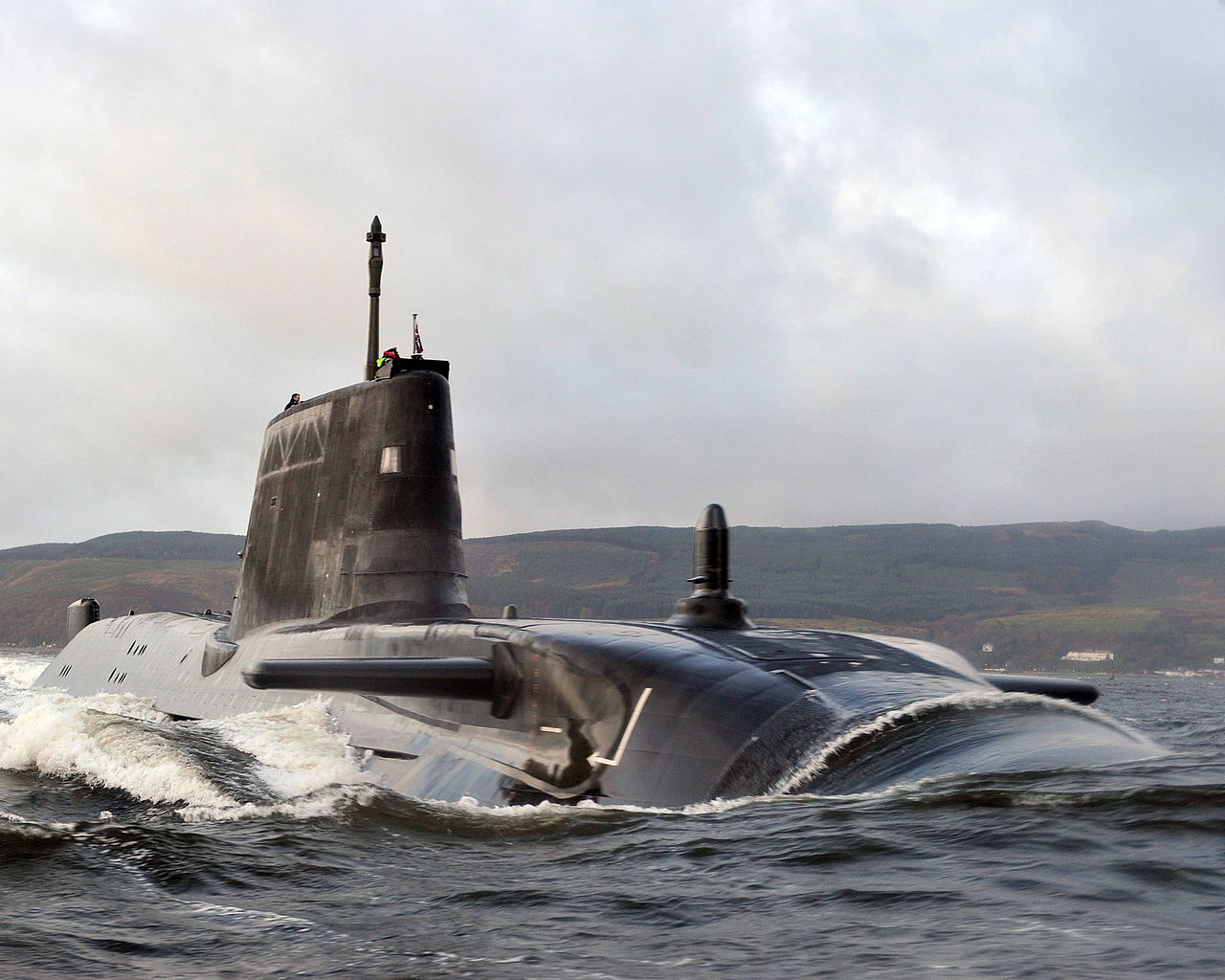
HMS Astute (S119), lead ship of her class, sails up the Clyde estuary into her home port of Faslane, Scotland.
MOD photo, via Wikimedia Commons.
The Royal Navy, always keeping up with the times, has named its newest attack submarine HMS Agincourt, after the 1415 battle where an English army beat French troops led by its nobility.
Agincourt the boat is the seventh and final Astute-class attack sub. The nuclear-powered vessels are used primarily to defend British interests from underwater, including seeing off marauding Russian vessels near British waters and also for sneaky-beaky missions of their own into foreign waters.
The £1.5bn submarine is under construction at BAE Systems’ yard in Barrow-in-Furness, Cumbria. Defence equipment minister Guto Bebb joyously declared: “Today’s announcement includes a £60m contract for Rolls-Royce, supporting over 700 jobs here in Derby as the factory continues to make the reactors that will power our state-of-the-art Dreadnought subs into the 2060s.”
And just to rile up any sensitive French souls, he also gives a thumbnail history of the battle the ship will be named for:
The name Agincourt is mildly controversial, inasmuch as it brings to mind the famous victory of King Henry V over France at a time where the English army, which was blundering around the Pas-de-Calais countryside, was largely thought to be on its last legs and cut off from its chances to retreat back home. In the words of the king’s (fictional, thanks to Shakespeare) eve-of-battle speech, it was “we few, we happy few, we band of brothers” up against the very best France had to offer.
Through “yew bow and cloth yard shaft”, as the chroniclers of the day put it, the English and Welsh longbowmen shot a torrent of arrows into the heavily armoured French knights. The arrows’ steel points penetrated the plate armour of the French nobles and the lightly equipped English then set about the bogged-in Frenchmen, whose weighty suits of armour were totally unsuited to the heavy mud of the battlefield.
In today’s world, where the UK and France are close allies and England has given way to the United Kingdom, naming the submarine Agincourt may be seen by some as a bit of an unintentional snub, bringing to mind Henry V’s slaughter of French prisoners of war and the failed negotiations that preceded the battle over Henry’s disputed claim to the title of King of France.
Comments Off on French protests over new British submarine in three, two, one…
May 11, 2018
The Ostende Raid – Peace of Bucharest I THE GREAT WAR Week 198
The Great War
Published on 10 May 2018Even though the first raid on Ostende and the Raid on Zeebrugge were not entirely successful, the Royal Navy is still determined to block access to the German submarine ports in Belgium. And this week they attack Ostende again. Meanwhile, the Germans are planning their next offensives for late May 1918 even though ten percent of the Western Front army has become a casualty in the offensives this year alone.
Comments Off on The Ostende Raid – Peace of Bucharest I THE GREAT WAR Week 198
April 27, 2018
The First Tank-on-Tank Battle in History – The Zeebrugge Raid I THE GREAT WAR Week 196
The Great War
Published on 26 Apr 2018At Villers-Bretonneux, German and British tanks clash marking the first tank-on-tank battle in history. In the same week, the most successful flying ace of World War 1 is shot down over France: Manfred von Richthofen dies after scoring 80 victories. Meanwhile, the British Navy attempts to eliminate the German U-Boat threat with a daring raid on Zeebrugge and Ostende.
Comments Off on The First Tank-on-Tank Battle in History – The Zeebrugge Raid I THE GREAT WAR Week 196
November 19, 2017
Missing Argentine submarine may have been located (Updated)
The BBC is reporting some hope for the 44 crew members of the Argentine Navy submarine ARA San Juan, which went missing on a routine mission this week:
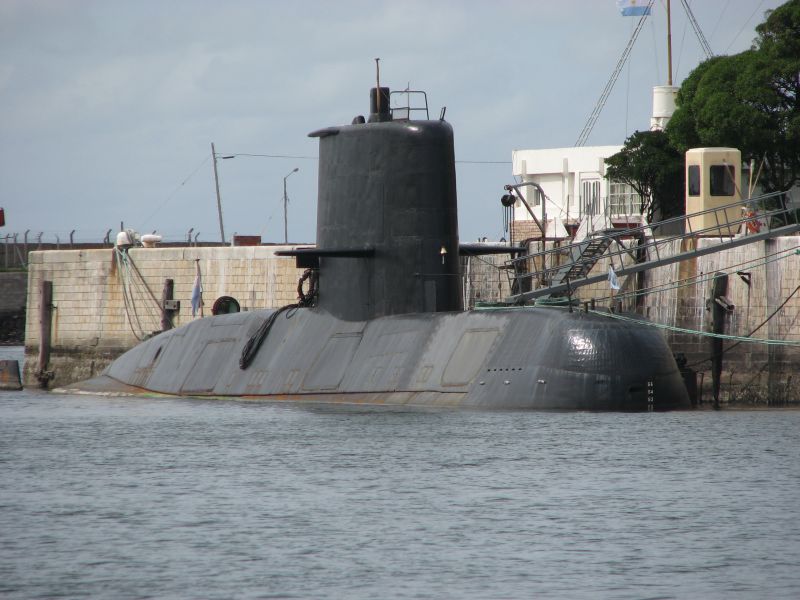
ARA San Juan in an undated photo at her base in Mar del Plata
Photo via Wikimedia.
Signals have been detected that are thought to have come from an Argentine submarine that went missing with 44 crew on board, officials say.
The defence ministry is now trying to trace the location of the seven failed satellite calls received on Saturday.
[…]
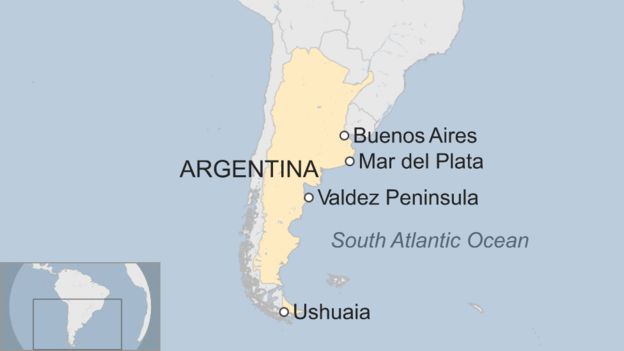
The ARA San Juan was returning from a routine mission to Ushuaia, near the southern-most tip of South America, to its base at Mar del Plata, south of Buenos Aires.
Its last contact with the navy command was on Wednesday morning.
An Argentine destroyer and two corvettes are conducting a search around the area of the sub’s last known position off the south-eastern Valdez peninsula.
But so far there are no clues about its whereabouts.
It is thought that the submarine may have had communication difficulties caused by a power cut.
Navy protocol dictates that a vessel should come to the surface if communication has been lost.
Update, 31 January 2018: Earlier this month, CDR Salamander shared a graphic summarizing the US Office of Naval Intelligence acoustic detection analysis of the ARA San Juan:

[Click to see full size image]
Update, 19 November, 2018: The New York Daily News reports that the remains of the ARA San Juan have definitely been located about 700 miles east of Puerto Madryn at a depth of over 2800 feet.
An Argentine submarine that vanished with 44 crew members aboard was found at the bottom of the South Atlantic Ocean a year and a day after it disappeared, authorities said.
The wreckage of the ARA San Juan was located 2,850 feet deep, and about 700 miles east of the city of Puerto Madryn.
“It appears to be complete, but it obviously imploded,” Argentine naval Capt. Gabriel Attis told reporters, CNN reported, adding the sub’s hull was “totally deformed, collapsed and imploded.”
The [220]-foot vessel vanished off the coast of Argentina on Nov. 15, 2017, as it traveled back to its base in the coastal city of Mar Del Plata.
Comments Off on Missing Argentine submarine may have been located (Updated)
August 25, 2017
Solving the mystery of the fate of H.L. Hunley‘s crew
When the Confederate submarine H.L. Hunley was found, the bodies of the crew were still in their duty positions within the vessel, as if they’d been unaware or unable to do anything to save the situation. Sarah Knapton reports on what is now believed to have killed the crew almost instantaneously:
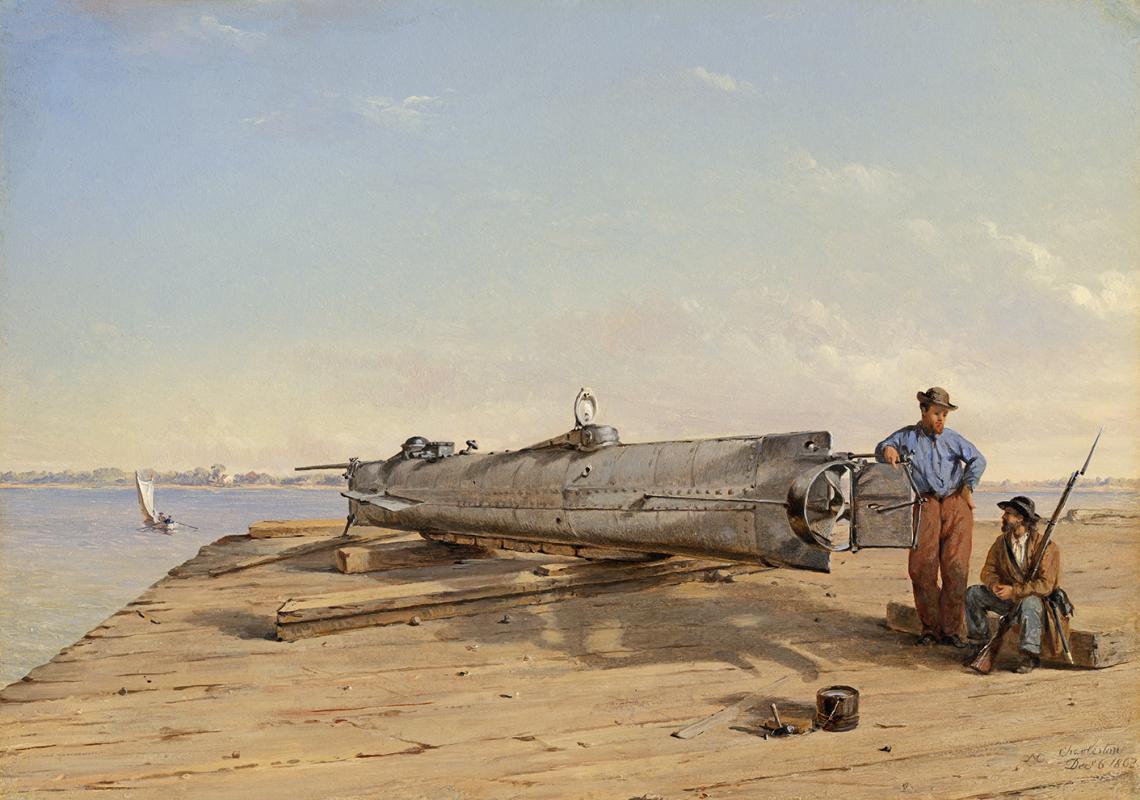
“Submarine Torpedo Boat H.L. Hunley, Dec. 6, 1863″ by Conrad Wise Chapman.
“The inventor of this boat, a man named Hunley, can be seen; also a sentinel. This boat, it was at first thought would be very effective; twice it went out on its mission of destruction, but on both occasions returned with all the crew dead. After this had happened the second time, someone painted on it the word ‘coffin.’ There was just room enough in it for eight men, one in front of the other, with no possibility of anyone sitting straight. The third time it started out, it never came back, nor was anything ever heard from it, but as one of the United States men-of-war in the harbor (USS Housatonic) was sunk at about the same time, the supposition was that they both went to the bottom together. Other objects to be seen in the picture are, Sullivan’s Island, and a Dispatch boat.” – Conrad Wise Chapman, 1898 (via Wikimedia)
The mystery of how the crew of one of the world’s first submarines died has finally been solved – they accidentally killed themselves.
The H.L. Hunley sank on February 17 1864 after torpedoing the USS Housatonic outside Charleston Harbour, South Carolina, during American Civil War.
She was one of the first submarines ever to be used in conflict, and the first to sink a battleship [Housatonic was actually a sloop-of-war, not a battleship].
It was assumed the blast had ruptured the sub, drowning its occupants, but when the Hunley was raised in 2000, salvage experts were amazed to find the eight-man crew poised as if they had been caught completely unawares by the tragedy. All were still sitting in their posts and there was no evidence that they had attempted to flee the foundering vessel.
Now researchers at Duke University believe they have the answer. Three years of experiments on a mini-test sub have shown that the torpedo blast would have created a shockwave great enough to instantly rupture the blood vessels in the lungs and brains of the submariners.
“This is the characteristic trauma of blast victims, they call it ‘blast lung,'” Dr Rachel Lance.
“You have an instant fatality that leaves no marks on the skeletal remains. Unfortunately, the soft tissues that would show us what happened have decomposed in the past hundred years.”
The Hunley‘s torpedo was not a self-propelled bomb, but a copper keg of 135 pounds of gunpowder held ahead and slightly below the Hunley‘s bow on a 16-foot pole called a spar
The sub rammed this spar into the enemy ship’s hull and the bomb exploded. The furthest any of the crew was from the blast was about 42 feet. The shockwave of the blast travelled about 1500 meters per second in water, and 340 m/sec in air, the researchers calculate.
Comments Off on Solving the mystery of the fate of H.L. Hunley‘s crew
July 10, 2017
A Canadian Cold War innovation – “floppy” magnets as submarine detection tools
Steve Weintz on an experimental Canadian submarine detection device that was simple, effective, and too difficult to train with:
Desperate planners sought ways of making Soviet subs easier to hunt. Any technology that could speed up an undersea search was worth considering. “A submarine’s best defense is of course stealth, remaining quiet and undetected in the ocean deep,” Ballantyne notes. “Something that could rob the Soviets of that cloak of silence must have seemed irresistible and, at least initially, a stroke of genius.”
A Canadian scientist figured some kind of sticky undersea noisemaker would make a Soviet sub more detectable. He designed a simple hinged cluster of magnets that could attach to a submarine’s metal hull.
Movement would cause the flopping magnets to bang against the hull like a loose screen door, giving away the sub’s location to anyone listening. The simple devices would take time and effort to remove, thus also impairing the Soviet undersea fleet’s readiness.
At least that was the idea.
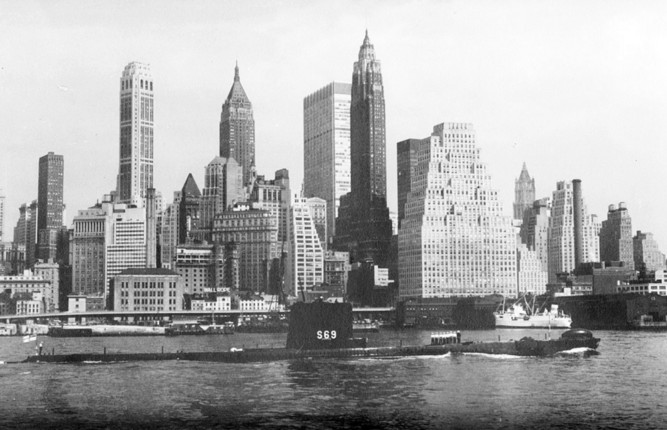
HMS Auriga against the New York City skyline in 1963. U.S. Navy photo.
In late 1962, the British Admiralty dispatched the A-class diesel submarine HMS Auriga to Nova Scotia for joint anti-submarine training with the Canadian navy. The British were helping Canada establish a submarine force, so Royal Navy subs routinely exercised with Canadian vessels.
Auriga had just returned to the submarine base at Faslane, Scotland after a combat patrol as part of the Cuban Missile Crisis. Other subs of the joint Canadian-British Submarine Squadron Six at Halifax had seen action during the crisis.
Did the device work? All too well:
As Auriga surfaced at the end of the exercise, the magnets made their way into holes and slots in the sub’s outer hull designed to let water flow. “They basically slid down the hull,” Ballantyne says of the magnets, “and remained firmly fixed inside the casing, on top of the ballast tanks, in various nooks and crannies.”
The floppy-magnets couldn’t be removed at sea. In fact, they couldn’t be removed at all until the submarine dry-docked back in Halifax weeks later.
In the meantime, one of Her Majesty’s submarines was about as stealthy as a mariachi band. No fighting, no training, no nothing until all those floppy little magnets were dug out of her skin at a cost of time, money and frustration.
The magnets worked on the Soviets with the same maddening results. The crews of several Foxtrots were driven bonkers by the noise and returned to port rather than complete their cruises.
Comments Off on A Canadian Cold War innovation – “floppy” magnets as submarine detection tools
April 25, 2017
German Trade Submarines – Beutepanzer Upgrades – Dan Carlin I OUT OF THE TRENCHES
Published on 24 Apr 2017
Check out Dan Carlin’s Podcast about WW1: http://bit.ly/DanCarlinArmageddon
It’s Chair of Wisdom Time again and this week we talk about German Trade Submarines (Deutschland class), Beutepanzer upgrades and Dan Carlin’s Blueprint for Armageddon series.
Comments Off on German Trade Submarines – Beutepanzer Upgrades – Dan Carlin I OUT OF THE TRENCHES
March 2, 2017
Possible end-game for the British nuclear deterrent
Charles Stross speculates on a few ways that Il Donalduce could trigger the end of Britain’s nuclear-armed ballistic missile submarines:
Working hypothesis #1: Donald Trump is an agent of influence of Moscow. Less alarmingly: Putin’s people have got blackmail material on the current President and this explains his willingness to pursue policies favourable to the Kremlin. Russian foreign policy is no longer ideologically dominated by communism, but focusses on narrow Russian interests as a regional hegemonic power and primary oil and gas exporter.
Clearly, it is not in Russia’s geopolitical interest to allow a small, belligerent neighbor to point strategic nuclear missiles at Moscow. But this neighbor’s nuclear capability has a single point of failure in the shape of the resupply arrangements under the 1958 UK-USA Agreement. Donald Trump has made no bones about his willingness to renegotiate existing treaties in the USA’s favor, and has indicated that he wants to modernise and expand the US strategic nuclear capability. Existing nuclear weapons modernization programs make the first goal pointless (thanks, Obama!) but he might plausibly try to withdraw British access to Trident D-5 in order to justify commissioning four new US Navy SSBNs to carry the same missiles and warheads.
(Yes, this would break the “special relationship” between the USA and the UK for good — but remember, this is Donald Trump we’re talking about: the original diplomatic bull in a china shop who decapitated the state department in his first month in office.)
Trump could present this as delivering on his promise to expand the US nuclear capability, while handing his buddy a gift-wrapped geopolitical easter egg.
Working hypothesis #2: Let us suppose that Donald Trump isn’t a Russian agent of influence. He might still withdraw, or threaten, British access to Trident as a negotiation lever in search of a better trade deal with the UK, when Theresa May or her successor comes cap-in-hand to Washington DC in the wake of Brexit. It’s a clear negative sum game for the British negotiating side — you can have a nuclear deterrent, or a slightly less unpalatable trade deal, but not both.
In this scenario, Trump wouldn’t be following any geopolitical agenda; he’d just be using the British Trident renewal program as a handy stick to beat an opponent with, because Trump doesn’t understand allies: he only understands supporters and enemies.
As for how fast the British Trident force might go away …
Missiles don’t have an indefinite shelf-life: they need regular servicing and maintenance. By abrogating the 1958 agreement, or banning Royal Navy warships from retrieving or delivering UGM-133s from the common stockpile at King’s Bay, POTUS could rely on the currently-loaded missiles becoming unreliable or unsafe to launch within a relatively short period of time — enough for trade negotiations, perhaps, but too short to design and procure even a temporary replacement. It’s unlikely that French M51 missiles could be carried aboard Dreadnought-class SSBNs without major design changes to the submarines, even if they were a politically viable replacement (which, in the wake of Brexit, they might well not be).
Comments Off on Possible end-game for the British nuclear deterrent
March 1, 2017
Yes Prime Minister – Bernard Woolley on defence capabilities
Uploaded on 20 Jul 2010
Comments Off on Yes Prime Minister – Bernard Woolley on defence capabilities
February 11, 2017
Britain’s “silent service” reported to be the “absent service” right now
In The Register, Gareth Corfield relays reports that the Royal Navy has no submarines currently available for sea duty:
None of the Royal Navy’s seven attack submarines are deployed on operations at the moment, according to reports, which potentially threatens the security of Britain’s nuclear deterrent.
The Sun reported this morning that six of the seven boats are in maintenance – except for the seventh, HMS Astute, which is still undergoing sea trials.
Her sister Astute-class boat, HMS Ambush, is still undergoing repairs after ramming a civilian tanker in 2016 while hosting wannabe sub captains undergoing the Perisher submarine command course.
The main uses of attack submarines, as distinct from the four Vanguard-class boats that carry the UK’s Trident nuclear deterrent, are twofold.
As their name suggests, attack submarines can be used to attack the enemy – or, in the modern world’s uneasy peace with Russia, trail their submarines and naval vessels around the high seas, gathering vital intelligence on their sound signatures and electronic emissions for later analysis.
Attack submarines can also be used as escorts for other vessels, using their advanced sensors to sweep the seas for hostile ships such as Russia’s infamous intelligence-gathering trawlers, as well as doing secret squirrel tasks such as dropping off Special Forces in remote shore locations. British attack boats also deploy on intelligence-gathering missions into the seas around Russia and have chased Russian submarines away from Britain’s territorial waters.
Comments Off on Britain’s “silent service” reported to be the “absent service” right now


