Quotulatiousness

April 30, 2023

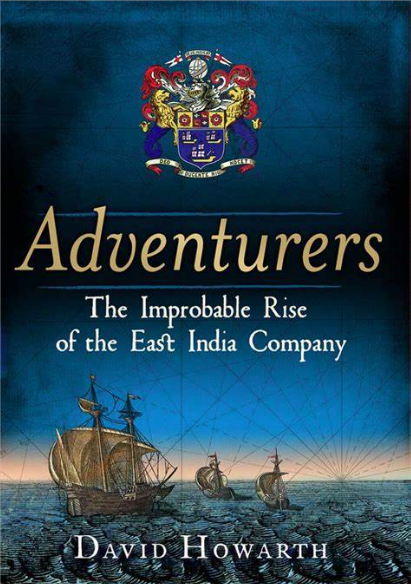
David Howarth’s history of the East India Company

Filed under: Books, Britain, Europe, History, India — Tags: , , , , , , — Nicholas @ 05:00

Robert Lyman reviews David Howarth’s recent work Adventurers: The Improbable Rise of the East India Company:

It is the human detail of the EIC and the ultimate triumph of its trading endeavours despite the best efforts of Portugal, the Dutch Republic and of the vicissitudes of Neptune that holds great fascination for me, and which is the triumph of Howarth’s intimate and intricate portrayal of the EIC in the first century of its existence. His great achievement is both to bring the dusty tomes of the Company back to life, not just to humanise one of the greatest trading ventures of all of human history, but to interpret the early years of the Company (his book spans 1600 to 1688, though most of the narrative is pre-1650) as a peculiarly human rather than an institutional endeavour. Is this important? Yes. Humans have agency; institutions consume or act upon the determining agency of human beings, not the other way around. Too much of modern (post 1880) history is based upon determining the perspective of organisations and movements (as interpreted by later historians, many with their own ideological baggage) rather than of actual, real live people making decisions for themselves in the peculiar and particular context of their lives and times.

The means through which Howarth paints his story is by the decisions, actions and activities of actual people, some influential decision-makers and many others who were not, all of which makes up a remarkably vivid tapestry of human intercourse. Each chapter, for instance, is constructed around a person or group of people. One powerfully tells the story of the men of the Peppercorn, an EIC East Indiaman, as it seeks out the riches of a world on the extreme periphery of the consciousness of most Europeans. The ultimate triumph of European expansion into Asia is not difficult to comprehend. Europe was pursuing an adventure, aggressively, relentlessly and determinedly, to bring the riches of the world back to its own shores. At no time did the Chinese, Japanese, Indians or inhabitants of the Spice Islands return the favour. The energetic persistence of Sir Thomas Roe, for instance, the Company’s ambassador to the Mughal court (1615-1619), is easily compared to the intellectual (and alcoholic) indolence of the Great Mughal with whom Roe was attempting to interact. Roe was there, in India: Europeans were interested in the “East” and with travelling to the other side of the world for purposes of human engagement, adventure, patriotism and, yes, greed and selfish self-interest. The Great Mughal, by contrast, was also driven by greed and self-interest, but he just wasn’t interested in exploring. He certainly wasn’t interested in Europe. He was already, in his view, at the top of the human tree and had no need for either the ideas or the money of the red-haired barbarians who came from across the sea, a sea that incidentally few Mughal emperors had (amazingly) ever even seen. Fascinatingly, the Mughal shared with King James I an abhorrence with “trade”, though James knew he needed grubby merchants like Sir John Lyman [the reviewer’s ancestor] as they gave him coin. It wasn’t just about the merchants: Kings and governments needed the money that the merchants delivered by the bucket load because they couldn’t create it themselves. Howarth astutely observes that the “EIC belonged to the globe of politics as much as it did to the sphere of commerce”. Indeed, something of a symbiosis between the two in Tudor and Stewart England created a sense of nationhood – in the face of the resistance of others, in Europe and further afield – for the first time. The Mughal Empire was ultimately swallowed up as a result of a dynamism by European politicians and merchants working in unison which it never bothered to replicate by undergoing the reverse journey.

And power? No. Howarth is remarkably clear that the primary task of the EIC was to make money, not to accrue territory, create power in foreign territories or aggrandise native populations. The role of the executive arm of the EIC (its ships, sailors and factors) was to make money for its investors, many of whom were the very merchant adventurers in the little ships travelling east over vast oceans. The great game of mercantile expansion took place because those who had most to lose were also sailing the ships, negotiating with foreign emissaries, fighting the Portuguese and the Dutch and placing their lives on the line. Amazingly, in 1570 England had only 58,000 tons of marine tonnage compared with Spain’s 300,000, and was very definitely the minnow in the rush to conquer the seas. The men who built and sailed its boats came from a long way behind, and yet in time were to build a seagoing commercial empire which more than rivalled all its competition. Its early growth was fuelled by the wealth provided by spice rather than slaves and, in contradistinction to what some modern historical moralists are keen to tell us, by a “reluctance to use violence and vigilance to avoid land commitments”. Indeed, unlike that of the Dutch, and despite what one might assume if we were to read the British national anthem back into history, “expansion in England happened with no appeal whatever to national glory”.

The amazing thing about the EIC was just how chaotic and disorganised it was. There was nothing inevitable about its rise as a monolithic mercantile overlord destined for instance, in the due course of time, to rule India. Second guessing history is only possible for historians able to look backwards and identify trends and features, convictions that didn’t exist for those when history was happening trying to make their way through the fog of an uncertain and troublesome future. The EIC proved simply to be better organised than the Portuguese, and not distracted as the Dutch were in their long war against Spain. Luck and serendipity played as much a role on the eventual survival of the EIC as did its ability to raise massive amounts of money from venturers in England (every raise or round of financing was heavily over-subscribed) for its adventures and to recruit adventurers to take its ships to sea. The EIC was phenomenally successful in raising voluntary capital to fund its ventures relative to other European states. By comparison, “although Iberian barns might have looked well built and better stocked, once they were given a good kick the rusted hinges flew off”.

March 28, 2023

Miles Davis – “Concierto de Aranjuez: Adagio”

Filed under: Europe, Media, USA — Tags: , , — Nicholas @ 02:00

Miles Davis
Published 23 Mar 2021

“Concierto de Aranjuez: Adagio” by Miles Davis
(more…)

March 16, 2023

History of the Royal Navy – Wooden Walls (1600-1805)

Filed under: Britain, Europe, France, History, Military — Tags: , , , , — Nicholas @ 02:00

Ryan Doyle
Published 3 Mar 2013
(more…)

February 25, 2023

Rise of Franco – The Spanish Rif War 1921-1926

Filed under: Africa, Europe, France, History, Military — Tags: , , , , , — Nicholas @ 04:00

The Great War
Published 24 Feb 2023

The Rif War between Spain and the Rif Republic gave rise to a young Spanish officer named Francisco Franco — who later would become Spanish dictator. After Spain had almost lost the war against the Rifi people, they got help from France and WW1 hero Philippe Pétain.
(more…)

February 20, 2023

Garate Anitua y Cia “El Tigre” – Winchester 1892 Copy

Filed under: Europe, History, USA, Weapons — Tags: , , , , — Nicholas @ 02:00

Forgotten Weapons
Published 5 Jun 2016

Spain was historically a major center of patent infringement in firearms manufacture because its patent law left open a big loophole: patents were only enforceable if the patent holder actually manufactured their guns in Spain. The major European and American firearms manufacturers were not interested in setting up plants in Spain, and so their patents were not enforced there, leaving Spanish shops and factories legally free to copy them.

One of the more successful copies was the “El Tigre“, a clone of the Winchester 1892 lever action rifle made by Garate Anitua y Cia. Ironically, Garate actually registered their own patent on the design since Winchester hadn’t bothered to, and that patent was enforced, since Garate did make the guns in Spain. Their copy was chambered for the .44-40 Winchester cartridge, known in Spain as the .44 Largo. This made it compatible with many of the revolvers in the country of American, Spanish, and Belgian origin, and thus quite popular with a wide variety of groups. Rural citizen militias and the Guardia Civil both used significant numbers of El Tigre carbines. They were also fairly popular in the United States, as the cost was substantially lower than a true Winchester. Many Hollywood films and shows used them as less expensive prop guns, especially for scenes where guns would be handled roughly.

Despite their competitive cost, the El Tigres were actually quite good guns, and served their owners well.

(more…)

February 8, 2023

The ghastly Thirty Years’ War in Europe

In The Critic, Peter Caddick-Adams outlines the state of Europe four hundred years ago:

A war as long and as complex requires something like this to help keep the narrative somewhat understandable.

Exactly four hundred years ago, a dark shadow was slithering across mainland Europe. It stretched its bleak, cold presence into each hearth and home. Everything it touched turned to ruin. Musket and rapier, smoke and fire, ruled supreme. Nothing was immune. Animals and children starved to death, mothers and adolescent girls were abused and tortured. The lucky ones died, alongside their brothers and fathers, slain in battle. Possessions were looted, crops destroyed, barns and houses burned. There seemed no end to the evil and pestilence. Sixteen generations ago, many believed the end of the world had arrived.

This was not a tale of Middle Earth. The place was central Europe in the early 17th century. In 1618 the future Holy Roman emperor Ferdinand II, a zealous follower of the Jesuits, had attempted to restore the Catholic Church as the only religion in the Empire and exterminate any form of religious dissent. Protestant nobles in Bohemia and Austria rose up in rebellion. The conflict soon widened, fuelled by the political ambitions of adjacent powers. In Europe’s heartland, three denominations fought it out: Roman Catholicism, Lutheranism and Calvinism.

The result was an interwoven tangle of diplomatic plot twists, temporary alliances and coalitions, as princes, bishops and potentates beseeched outside powers to help. The struggle, which lasted for thirty years, boiled down to the Roman Catholic and Habsburg-led Holy Roman Empire, fighting an incongruous array of Protestant towns and statelets, aided by the anti-Catholic powers of Sweden under Gustavus Adolphus, and the United Netherlands. France and Spain also took advantage of the distractions of war to indulge in their own sub-campaigns. Britain took no formal part but was about to become embroiled in her own civil war.

The principal battleground for this collective contest of arms centred on the towns and principalities of what would become Germany, northern Italy, the Netherlands and the Czech Republic. The war devastated many regions on a scale unseen again until 1944–45. For example, at Magdeburg on the River Elbe, 20,000 of 25,000 inhabitants died, with 1,700 of its 1,900 buildings ruined. In Czech Bohemia, 40 per cent of the population perished, with 100 towns and more than a thousand villages laid waste. At Nordlingen in 1634, around 16,000 soldiers were killed in a single day’s battle. The town took three centuries for its population to return to pre-war levels. Refugees from smaller settlements swelled the many walled cities, increasing hunger and spreading disease.

Too diminutive to defend themselves, all states hired mercenaries, of whom a huge number flourished in the era, enticed by the prospect of quick wealth in exchange for proficiency with sword and musket. Employed by every antagonist, but beholden to no one, these armed brigands — regiments would be too grand a term for the uniformed thugs they were — roamed at will. With their pikes and their muskets, they plundered the countryside in search of booty, food and transport. In their wake, they left burning towns, ruined villages, pillaged farms. Lead was stripped from houses and church roofs for ammunition.

Left to right:
The Defenestration of Prague (23 May, 1618), The death of Gustavus Adolphus at Lützen (16 November, 1632), Dutch warships prior to the Battle of the Downs (21 October, 1639), and The Battle of Rocroi (19 May, 1643).
Collage by David Dijkgraaf via Wikimedia Commons.

When in the winter of 1634 Swedish mercenaries were refused food and wine by the inhabitants of Linden, a tiny Bavarian settlement, they raped and looted their way through the village, leaving it uninhabitable. Across Europe, travellers noted the human and animal carcasses that decorated the meadows, streams polluted by the dead and rotting crops, presided over only by ravens and wolves. No respect was shown for the lifeless. Survivors stripped corpses of clothing and valuables; if lucky, the deceased were tossed into unmarked mass graves, since lost to history.

Having triggered the war, Ferdinand predeceased its end. We can never know how many died in Europe’s last major conflagration triggered by religion. Archives perished in the flames, and survivors were not interested in computations. Historians now put the death toll at between 8 and 12 million. Probably 500,000 perished in battle, with the rest, mostly civilians, expiring through starvation and disease. We think these casualties may equate to as much as 20 per cent of mainland Europe’s population and perhaps one-third of those in modern Germany, bringing the Thirty Years’ War a potency similar to the Black Death or either world war. The region did not recover for at least three generations.

Economic activity, land use and ownership altered terminally. When the exhausted powers finally met in October 1648 at Osnabrück and Münster in the German province of Westphalia to end the directionless slaughter, of whom self-serving militias were the only beneficiaries, Europe’s balance of power had shifted tectonically. Fresh rules of conflict and the legitimacy of a new network of 300 sovereign states, independent from a Holy Roman Emperor or a Pope, marked the struggle as a watershed moment, leading to the Enlightenment and an era that disappeared only with Napoleon.

February 1, 2023

Surviving on Leather

Filed under: Americas, Britain, Food, History — Tags: , , , , , , — Nicholas @ 04:00

Tasting History with Max Miller
Published 31 Jan 2023
(more…)

January 14, 2023

Star Megastar: Spain’s Massive 10mm Autopistol

Filed under: Europe, History, USA, Weapons — Tags: , , , , , — Nicholas @ 02:00

Forgotten Weapons
Published 19 Sep 2022

In the late 1980s, the Spanish gun maker Star decided to join the new hot trend of 10mm semiauto pistols. The cartridge was getting a lot of press, and Star saw this as an opportunity to ride the wave and also the get a pistol on the market that would attract IPSC competitors. Unlike some companies adapting existing .45ACP designs to 10mm, Star decided to start from scratch to build a pistol that was massive and durable; able to handle the power of the cartridge without any worries.

Star engineer Eduardo Zamacola (who had previously designed the M38/30/31 series for Star) had the first prototypes ready in 1990, in both 10mm Auto and .45 ACP. The design took cues from the Petter designs of France and SIG, with full-length internal slide rails and a removable modular fire control system. It offered 12 round capacity in .45 and 14 rounds in 10mm.

The pistol was quite massive and heavy (1.4kg / 3.1 lb), and failed to sell well from the start. The 10mm craze flared out rather quickly — it remains a niche cartridge to this day, despite periodic releases of new 10mm pistols (the SIG 320 in 10mm being the most recent). What really killed the Megastar, though, was the 1994 Assault Weapons Ban in the US. This prohibited new magazines holding more than 10 rounds, and the whole point of the bulk of the Megastar was to allow larger double-stack magazines. With those no longer available, there was really not much reason to get a Megastar instead of something like a 1911. In total, just 978 were made in 10mm and 5,424 in .45ACP, with production ending in 1995.
(more…)

December 10, 2022

United States Empire – The Spanish-American War

Filed under: Americas, Asia, Europe, History, Media, Military, USA — Tags: , , , , , , , — Nicholas @ 04:00

The Great War
Published 9 Dec 2022

The Spanish-American War (fought in Cuba and the Philippines) kickstarted US global ambitions and expanded their influence far beyond the borders of the United States. At the same time the war marked the endpoint of the decline of Spain as a global power.
(more…)

November 30, 2022

QotD: The rise of liberalism

Liberalism, in its own turn, came out of the accidents of European reformations, revolts, and revolutions, in an existing polity of hundreds of more or less independent political units, such as the Dutch cities in their Golden Age, or the Kleinstaaterei of German polities even after 1648. The success of the accidents made people bold — not necessarily and logically, but contingently and factually. For example, the Dutch Revolt 1568–1648 imparted the idea of civic autonomy against the hegemon of the time, Spain, and by analogy against other hegemons international and local. For another example, the initial successes of the English Civil War of the 1640s made ordinary people think they could make the world anew. For still another example, the Radical Reformation of Anabaptists, Mennonites, Congregationalists, and later the Quakers and Methodists let people take charge of their own religious lives, and by analogy their economic lives. The tiny group of English Quakers made for Lloyd’s insurance, Barclay’s bank, Cadbury’s chocolate. It was in the religious case not the doctrines of Calvinism as such (not the Protestant ethic and the spirit of capitalism) but a flattened church governance that mattered for inspiriting people.

In sum, as one of the Levellers in the English Civil War of the 1640s, Richard Rumbold, said from the scaffold in 1685, “there was no man born marked of God above another, for none comes into the world with a saddle on his back, neither any booted and spurred to ride him.” It was a shocking thought in a hierarchical society. In 1685 the crowd gathered to see Rumbold hanged surely laughed at such a sentiment. By 1885 it was a solemn cliché.

Dierdre McCloskey, “How Growth Happens: Liberalism, Innovism, and the Great Enrichment (Preliminary version)” [PDF], 2018-11-29.

September 13, 2022

The Greatest Escapes of World War Two – WW2 Special

Filed under: Europe, France, Germany, History, Military, WW2 — Tags: , , , , , — Nicholas @ 04:00

World War Two
Published 12 Sep 2022

This is an intimate story inspired by real events (notably inspired by the story of a member of the Danish resistance and grandmother of Hans von Knut Skovfoged, Head of Development at PortaPlay. A story told not on the front line, but in the intimate setting of a small Danish village.
(more…)

September 2, 2022

QotD: Historical parallels between the British and American empires

… let us compare the US imperial experience to its British model. A whimsical exercise in comparative dates.

England was colonised by the Norman Empire (a tribe that spread across France, Britain, Italy, and the Middle East can be referred to as an empire I believe), in 1066. After some initial fierce resistance, they settled well, integrated with the local economy, and started developing a more advanced economic society.

North America was colonised by the British Empire (and Spanish and French of course), in the sixteenth century. After some initial fierce resistance, they settled well, integrated with the local economy, and started developing a more advanced economic society.

Norman England spent the next few centuries gradually taking out its neighbours. Wales, Ireland, and eventually Scotland (though the fact that the Scottish King James I & VI actually inherited England confuses this concept a bit). The process was fairly violent.

The North American “English” colonies spent the next few centuries taking out their neighbours. Indian tribes, Dutch, Spanish and French colonists, etc. The process was fairly violent.

England fought a number of wars over peripheral areas, particularly the Hundred Years war over claims to lands in France.

The North American colonies enthusiastically joined (if not blatantly incited) the early world wars, with the desire of taking over nearby French and Spanish colonies

The English fought a civil war in the 1640s to 50s over the issue of how to share power between the executive government, the oligarchs, and the commons. It appears that the oligarchs incited the commons (which was not very common in those days anyway). It was extremely bloody, and those on the periphery — particularly the Scots and Irish — came out badly (and with a long term bad taste for their over-mighty neighbour).

The Colonies fought their first civil war over the issue of how to share power between the executive, the oligarchs and the commons in the 1770s to 80s. It is clear that the oligarchs incited the commons (who in the US were still not very common — every male except those Yellow, Red or Black. An improvement? Certainly not considering the theoretical philosophical base of the so-called Revolution!). It was not really so bloody, but those on the periphery — particularly the Indians and slaves (both of which were pro-British), and the Loyalists and Canadians — came out badly. (60-100,000 “citizens” were expelled or forced to flee for being “loyalists”, let alone Indians and ex-slaves). Naturally the Canadians and their new refugee citizens developed a long term bad taste for their over-mighty neighbour — who attempted to attack them at the drop of a hat thereafter.

The British spent the next century and a half accumulating bits of empire — the Dominions, the Crown Colonies, and the Protectorates — in a haphazard fashion. Usually, but not always, troops followed traders and settlers.

The United States spent the next century and a half accumulating bits of empire — conquests from the Indians, purchases from France and Russia, conquests from Mexico and Spain, annexations of places like Hawaii, etc. — in a haphazard fashion. Usually, but not always, troops followed traders and settlers.

Nigel Davies, “The Empires of Britain and the United States – Toying with Historical Analogy”, rethinking history, 2009-01-10.

August 13, 2022

The lure of old wines

Filed under: Europe, France, Wine — Tags: , , — Nicholas @ 03:00

In The Critic, Henry Jeffreys admits his continuing love for mature wines, even past the point most people would consider them drinkable:

For some people wine appreciation is like big game hunting. It’s about ticking off the prizes: Latour, Petrus, Romanee Conti. Whereas for others it’s about chasing unicorns, looking for mythical wines so rare that they are almost impossible to obtain. I don’t have the money for either, but even if I did, I still think I would take the greatest pleasure in opening a strange old bottle and being surprised by how delicious it is.

I’m fortunate in having friends and relatives who think wine is more for keeping than for drinking. When my grandfather died, we inherited all kinds of strange things that he’d been saving including a half bottle of 1937 Army & Navy claret.

I’ve certainly never had the deep pockets to go after any of those tip-top wines, although I used to be able to go to LCBO wine tasting events where there’d occasionally be opportunities to try a few ultra-expensive wines (Petrus, Château Margaux, Nuits-Saint-Georges, Chassagne-Montrachet, Puligny-Montrachet, etc.). If I’m totally honest, in a few of those cases, the bouquet of the wine promised far more than the taste could deliver … I appreciate and enjoy better quality wines, but I don’t taste enough difference between a $50 bottle and a $500 bottle to justify paying the premium.

Oddly certain people get quite upset at lovers of very old wine. On Twitter recently a sommelier wrote “your taste sucks” to someone who expressed an enjoyment of such wines.

The French look at this peculiarly British habit as close to necrophilia. Americans, too, drink vintage port after a couple of years rather than waiting a generation as is customary.

There’s something magical about what decades can do to a wine. Quite austere clarets become heady and exotically-spiced while sweet wines begin to taste dry. I also relish the flavours that some might find less appealing: the tang of vinegar, the cooked taste of caramel and the whiff of sherry in wines that definitely are not sherry.

Maybe my taste sucks too but sometimes I prefer a wine to be old than to be particularly good. You adjust your palate, it’s like having a conversation with an elderly relative who’s a bit deaf but with great stories to tell.

August 10, 2022

Coca de Sant Joan & the Fires of Saint John’s Eve

Filed under: Europe, Food, History, Religion — Tags: , , , , , , — Nicholas @ 02:00

Tasting History with Max Miller
Published 22 Jun 2021
(more…)

July 31, 2022

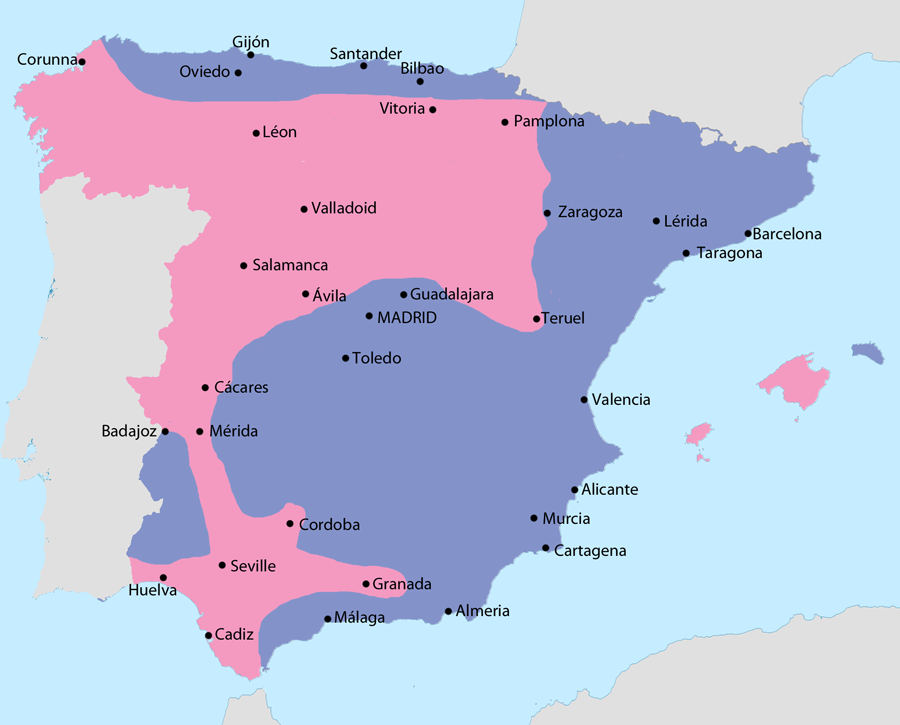
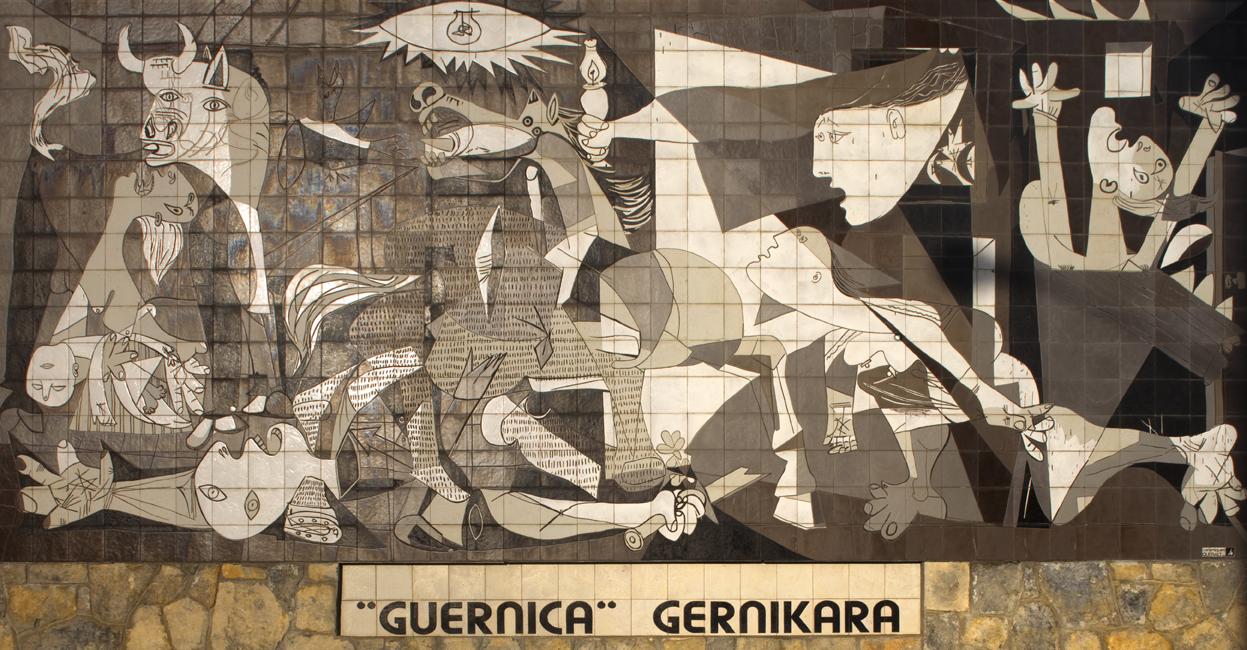
QotD: Intervention and non-intervention in the Spanish Civil War

The outcome of the Spanish war was settled in London, Paris, Rome, Berlin — at any rate not in Spain. After the summer of 1937 those with eyes in their heads realized that the Government could not win the war unless there were some profound change in the international set-up, and in deciding to fight on Negrin and the others may have been partly influenced by the expectation that the world war which actually broke out in 1939 was coming in 1938. The much-publicized disunity on the Government side was not a main cause of defeat. The Government militias were hurriedly raised, ill-armed and unimaginative in their military outlook, but they would have been the same if complete political agreement had existed from the start. At the outbreak of war the average Spanish factory-worker did not even know how to fire a rifle (there had never been universal conscription in Spain), and the traditional pacifism of the Left was a great handicap. The thousands of foreigners who served in Spain made good infantry, but there were very few experts of any kind among them. The Trotskyist thesis that the war could have been won if the revolution had not been sabotaged was probably false. To nationalize factories, demolish churches, and issue revolutionary manifestoes would not have made the armies more efficient. The Fascists won because they were the stronger; they had modern arms and the others hadn’t. No political strategy could offset that.

The most baffling thing in the Spanish war was the behaviour of the great powers. The war was actually won for Franco by the Germans and Italians, whose motives were obvious enough. The motives of France and Britain are less easy to understand. In 1936 it was clear to everyone that if Britain would only help the Spanish Government, even to the extent of a few million pounds’ worth of arms, Franco would collapse and German strategy would be severely dislocated. By that time one did not need to be a clairvoyant to foresee that war between Britain and Germany was coming; one could even foretell within a year or two when it would come. Yet in the most mean, cowardly, hypocritical way the British ruling class did all they could to hand Spain over to Franco and the Nazis. Why? Because they were pro-Fascist, was the obvious answer. Undoubtedly they were, and yet when it came to the final showdown they chose to stand up to Germany. It is still very uncertain what plan they acted on in backing Franco, and they may have had no clear plan at all. Whether the British ruling class are wicked or merely stupid is one of the most difficult questions of our time, and at certain moments a very important question. As to the Russians, their motives in the Spanish war are completely inscrutable. Did they, as the pinks believed, intervene in Spain in order to defend Democracy and thwart the Nazis? Then why did they intervene on such a niggardly scale and finally leave Spain in the lurch? Or did they, as the Catholics maintained, intervene in order to foster revolution in Spain? Then why did they do all in their power to crush the Spanish revolutionary movements, defend private property and hand power to the middle class as against the working class? Or did they, as the Trotskyists suggested, intervene simply in order to prevent a Spanish revolution? Then why not have backed Franco? Indeed, their actions are most easily explained if one assumes that they were acting on several contradictory motives. I believe that in the future we shall come to feel that Stalin’s foreign policy, instead of being so diabolically clever as it is claimed to be, has been merely opportunistic and stupid. But at any rate, the Spanish civil war demonstrated that the Nazis knew what they were doing and their opponents did not. The war was fought at a low technical level and its major strategy was very simple. That side which had arms would win. The Nazis and the Italians gave arms to the Spanish Fascist friends, and the western democracies and the Russians didn’t give arms to those who should have been their friends. So the Spanish Republic perished, having “gained what no republic missed”.

Whether it was right, as all left-wingers in other countries undoubtedly did, to encourage the Spaniards to go on fighting when they could not win is a question hard to answer. I myself think it was right, because I believe that it is better even from the point of view of survival to fight and be conquered than to surrender without fighting. The effects on the grand strategy of the struggle against Fascism cannot be assessed yet. The ragged, weaponless armies of the Republic held out for two and a half years, which was undoubtedly longer than their enemies expected. But whether that dislocated the Fascist timetable, or whether, on the other hand, it merely postponed the major war and gave the Nazis extra time to get their war machine into trim, is still uncertain.

George Orwell, “Looking back on the Spanish War”, New Road, 1943 (republished in England, Your England and Other Essays, 1953).

« Newer PostsOlder Posts »

Powered by WordPress