Lots of revolutionaries have been obsessed with the state of their own souls, but only the Puritans have been worried about it. Skim Walzer1, then compare with Norman Cohn’s The Pursuit of the Millennium, a book I recommend without reservation. The Brethren of the Free Spirit were obsessed with the condition of their souls, too, but, crucially, they were certain that they were the Elect. All pre-Puritan millennial movements were essentially Gnostic — they, the Elect, knew the Truth, and they were the Elect because they knew the Truth. Their job was simply to tell everyone the Truth (and, inevitably, kill everyone who disagreed), and that great truth-telling / cleansing of the sinners would basically force Jesus to come back, thus ending the world.
The Puritans were something new. Translate their elaborate, Latinate prose into the parlance of our times, and they sound exactly like SJWs — at once unbearably self-righteous and cripplingly insecure. They were almost certain that they, personally, were among the Elect … but since the only infallible sign of being Saved was “an irresistible attraction to Puritanism”, they were caught in exactly the same vicious purity spiral as our modern SJWs. Who, truly, can say xzhey are #woke, when there’s always the possibility of someone, somewhere, being #woker? If you want a slightly easier passport to their heads, try Perry Miller’s The New England Mind. It was written in the 1930s, so be prepared — surprisingly little untranslated Latin, since the Puritans wrote mostly for themselves, but still fairly ornate prose.
Put it this way: The Wiki summary of Miller’s life quotes a colleague: “Perry Miller was a great historian of Puritanism but the dark conflicts of the Puritan mind eroded his own mental stability”. He died of alcoholism.
The Puritans’ saving grace, if they had one, is that they were men of the world. They had to be. Guys like Max Weber would say that those two things had a dialectical relationship — Puritanism IS “the Protestant work ethic” IS “capitalism” — but that’s not necessary for present purposes. My point is simply that the Early Modern world could only support a tiny number of professional intellectuals, and the “managerial class” was all but nonexistent. Through Cromwell and his mini-me’s in Salem gave it the old college try, it’s simply impossible to run an Early Modern government Puritan-style.
That’s obviously not the case now. We have a huge (and ever-growing) managerial class, all of whom are the most fervent Puritans. Unlike Cromwell and the boys, though, they can — and, of course, DO — live in perfect isolation from the affairs of the world they’re supposedly managing. Put simply, but not really unfairly, they live on Twitter — their carefully curated list of social media “friends” is, in a very real way, their entire world. Imagine Oliver Cromwell, Zeal-of-the-Land Busy, and Cotton Mather tweeting at each other, all day every day.
Severian, “Friday Mailbag: Civilization, the Video Game”, Rotten Chestnuts, 2021-05-21.
1. Severian may be referring to Michael Walzer’s first book The Revolution of the Saints: A Study in the Origins of Radical Politics (1965) or perhaps Regicide and Revolution (1974). Unfortunately when I saved this, I didn’t note which of Walzer’s works had been referenced earlier in the post and the original is no longer available online. Quotulatiousness regrets the omission.
May 24, 2024
QotD: Our modern Puritans
May 20, 2024
The first post-privacy generation in human history
You may have mixed feelings about the Zoomers — even if you happen to be a Zoomer — but it’s beyond argument that they are the first generation who have grown up in a zero-privacy world:
Zoomers are the first post-privacy generation in human existence. They will never know a world in which they can try to lose themselves without somehow being tracked. Roughly three years ago, I was speaking with the CEO and founder of a commercial digital advertising company from NYC. He told me that their technology was so powerful that they were able to figure out when people were getting up from their couches to go into another room simply via their own digital advertising software.
It’s very tough to wrap our heads around the complete loss of privacy. For me, I have trouble remembering how it was to be out of instantaneous reach via mobile phone. Pre-mass adoption of cell phones, people would effectively be out of reach i.e. disappear for hours at a time, as the only way to contact them was to call them at home (inb4 beepers, as I never had one). We are constantly tracked and monitored, and our personal data is sold by data brokers all over the globe. One customer of personal ad tracking data is the CIA, as Matthew Petti explains:
For years, the U.S. government has bought information on private citizens from commercial data brokers. Now, for the first time ever, American spymasters are admitting that this data is sensitive—but they’re leaving it up to the spy agencies on how to use it.
Last week, Director of National Intelligence (DNI) Avril Haines released a “Policy Framework for Commercially Available Information.” Her office oversees 18 agencies in the “intelligence community“, including the CIA, the FBI, the National Security Agency (NSA), and all military intelligence branches.
In the 2018 case Carpenter v. United States, the Supreme Court ruled that police need a warrant to obtain mobile phone location data from phone companies. (During the case, the Reason Foundation filed an amicus brief against warrantless snooping.) As a workaround, the feds instead started buying data from third-party brokers.
Haines’ new framework claims that “additional clarity” on the government’s policies will help protect Americans’ privacy. Yet the document is vague about the specific limits. It orders the agencies themselves to come up with “safeguards that are tailored to the sensitivity of the information” and write an annual report on how they use this data.
more:
As national security journalist Spencer Ackerman points out in his Forever Wars newsletter, the framework doesn’t require the feds to delete old purchased data. Earlier this year, Sen. Ron Wyden (D–Ore.) called on the NSA to purge all data that it bought without a warrant and without following the Federal Trade Commission’s privacy policies.
“The framework’s absence of clear rules about what commercially available information can and cannot be purchased by the intelligence community reinforces the need for Congress to pass legislation protecting the rights of Americans,” Wyden tells Reason. “The DNI’s framework is nonetheless an important step forward in starting to bring the intelligence community under a set of principles and policies, and in documenting all the various programs so that they can be overseen.”
Case in point:
Wyden has been aggressively pushing for transparency on data purchases over the past few years. In 2021, he uncovered that the Defense Intelligence Agency was buying Americans’ smartphone location data. That same year, he sent a letter to Haines and CIA Director Bill Burns complaining about a secretive CIA data collection program. (In an Orwellian turn, the letter itself was classified until 2022.) This year, Wyden revealed more details on NSA data purchases.
Some of this data is collected and sold directly by the apps. For example, an intelligence company called X-Mode once paid MuslimPro, an app that offers a daily prayer calendar and a compass pointing towards Mecca, to include a few lines of location tracking code. X-Mode then sold the data to U.S. government agencies. MuslimPro claims that it did not intend to sell the data to the government and ended the arrangement after the story broke.
So, yeah … app maker will sell your personal data to a buyer like the CIA.
In other cases, the data is siphoned from advertising markets. Every time a user opens a website with paid advertisements, their location and attributes appear on a real-time bidding (RTB) exchange, a virtual auction where companies buy ad space. Data brokers posing as advertisers scrape the listings for information on users.
“Any government with a halfway decent cyber intelligence program is participating in these RTB exchanges, because it’s such an immensely valuable source of data,” says Byron Tau, author of Means of Control: How the Hidden Alliance of Tech and Government Is Creating a New American Surveillance State.
As a demonstration of how powerful RTB data is, an intelligence contractor used data from the dating app Grindr to track gay government employees from their offices to their homes, Tau reported in his book.
The IRS is in on it too:
Lawyers for the Internal Revenue Service, on the other hand, have argued that users voluntarily handed over the information, so the government is free to use it. Tau points out that users don’t really know how their data is being resold, and even the RTB exchanges themselves aren’t supposed to be used for data scraping.
“A lot of these companies that are collecting data from the global population don’t have a real consumer relationship” with the people they’re spying on, Tau says. “Unless you know how to decompile software and you’re technically savvy, you can’t even make informed choices.”
In an increasingly digitized world, the right to privacy becomes wholly unworkable. Think digital payments by way of credit and debit cards vs. cash.
May 18, 2024
Antisemitism is far from a new problem
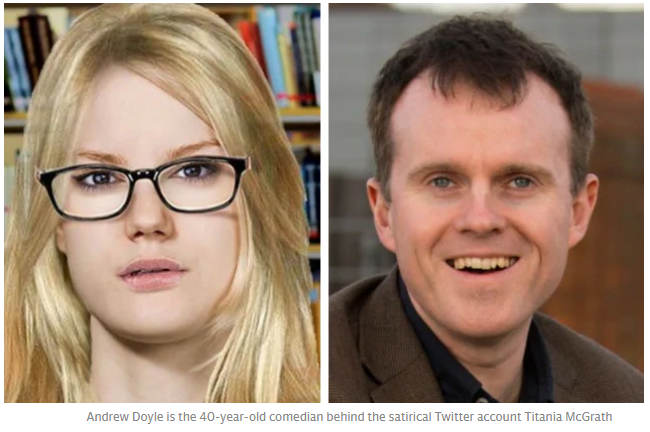
Andrew Doyle on some of the historical relics of antisemitism in European history down to today’s revived fascism of the left:
In his memoir Hitch-22, Christopher Hitchens considered “why it is that anti-Semitism is so tenacious and so protean and so enduring”. Many of us in the west have grown complacent, assuming that the horrors of the Holocaust would prevent this ancient prejudice from re-emerging. But as the conflict between Israel and Hamas escalates, few of us can be in any doubt that antisemitism has once again goose-stepped into the spotlight.
Of course, criticism of the Israeli government and its military strategy is entirely legitimate. So too is our profound concern for the innocents of Gaza and the many thousands of non-combatants who are losing their lives. But there is no denying the explicit anti-Jewish hatred that has accompanied these discussions in certain quarters. Criticise Israel all you like, but don’t try to tell me that Monday night’s daubing of the Shoah memorial in Paris with handprints of red paint was anything other than antisemitic.
Social media has opened our eyes to the prevalence of such sentiments. The other day I posted a link to my Substack piece about the Eurovision Song Contest on that hellsite now known as X. My focus in the article was on the narcissism of the “non-binary” performers, but one feminist activist decided to make it all about Israel. Underneath my post, she added an image of Eden Golan, the Israeli entry to the competition, with bloodstains photoshopped onto her dress. She went on to dismiss the victims of the October 7 pogrom as “silly ravers” and to blame the massacre on the IDF. Whatever else one might say about such views, it is clearly evidence of a complete absence of basic humanity.
This is sadly not uncommon. Recently we have seen protesters openly supporting Hamas, or even praising its acts of barbarism. A new poll has found that 63% of students currently protesting at US universities have at least some sympathy for Hamas. There have been overtly antisemitic statements, and Jews have been harassed on campus. It has been reported that at Columbia University, one protester cried out “We are Hamas” while another shouted at a group of Jewish students: “The 7 October is about to be every fucking day for you. You ready?” These are the very people who have spent the last few years calling anyone who dissents even slightly from their worldview a “fascist”, and yet they are blind to actual fascism when it emerges within their own ranks.
All of this has taken me by surprise, which perhaps reveals the extent of my naivety. Antisemitism is nothing new, and has assumed myriad and outlandish forms over the centuries. Our own country has not been immune; Jews were deported from England in 1290, only to be readmitted in 1656. Before then, only those who had converted to Christianity were allowed to remain; specially, they were able to reside at the Domus Conversorum in London, established by Henry III in 1232. Anti-Jewish sentiments were reignited by a plot to poison Elizabeth I in 1594, which was blamed on her physician Roderigo Lopes, a Portuguese man of Jewish ancestry who was executed for treason. This is the context in which the forced conversion of Shylock at the end of Shakespeare’s The Merchant of Venice ought to be understood.
Unpleasant myths about Jews have abounded throughout history, some of which still linger in Islamic regimes and the darker crannies of the internet where neo-Nazis gather to wallow in their bile. The poisoning of wells by Jews was thought to have initiated the Black Death epidemic in 1348. This notion was still pervasive by the time Christopher Marlowe wrote his play The Jew of Malta in 1589 (consider Barabas’s mass extermination of an entire convent of nuns by means of “a precious powder”, or his boastful claim: “Sometimes I go about and poison wells”).
May 1, 2024
Trudeau appeals to US-based podcasters to help him bring misguided Canadians to their senses
Tristin Hopper outlines Prime Minister Justin Trudeau’s latest attempt to get his message out to the growing number of Canadians who are “misguided” enough to not want him back for another term in office:
Last week, Trudeau was the featured guest on two U.S. podcasts: Vox’s Today, Explained and Freakonomics Radio, where he outlined his plans to bring “fairness” to the Canadian economy and hold the line against what he framed as a populist uprising.
“I’m not worried about innovation and creativity,” he told Vox against claims that his budget would scare away investment. “I’m worried about people being able to pay their rent and eventually buy a home.”
Trudeau also described Canada as being seized by a focus on “individualism that I think is counterproductive to the kind of world we need to build”.
The Vox interview began with an actor doing a faux Canadian accent and pretending to be a kind of Trudeau-esque superhero. The Freakonomics interview introduced Trudeau as “possibly the most polite prime minister in the world; he most definitely stands on guard for thee”. So it’s clear from the outset that the interviewers only have a cursory knowledge of Canada and its contemporary political situation.
As such, Trudeau was able to get away with claims that even the friendliest of Canadian interviewers wouldn’t have tolerated.
Below, a quick summary of how Trudeau his pitching his re-election in the U.S.
He frames opposition to his government as a form of mass hysteria
Both interviews did note at the outset that Trudeau is polling quite poorly and that he faces likely defeat in the next election. As to why this is happening, Trudeau described his citizenry as being in the grip of a worldwide trend towards irrational populism, and expressed his hope that Canadians would ultimately come to their senses.
“In every democracy we’re seeing a rise in populists with easy answers that don’t necessarily hold up to any expert scrutiny. But a big part of populism is ignoring experts and expertise, so it sort of feeds on itself and relies on a lot of misinformation and disinformation,” he told Vox.
While he never mentions Conservative Leader Pierre Poilievre by name, Trudeau says he’s facing opponents who offer naught but “easy shortcuts”, “buzzwords” and “clever TikTok videos”. The Conservatives, he said, are arguing that “everything I’ve done” is “why life is difficult right now.”
“When in actual fact … all those things have made life better in meaningful ways and it would be much worse if we hadn’t done all those things,” he said.
I don’t know why everyone is down on Justin Trudeau. His brilliant economic and environmental plan is working to perfection: Canadians are eating less unhealthy food (because they’re eating less food overall except for what they can shoplift from Loblaws). Businesses are closing down left and right, which significantly reduces our harmful production of CO2, to allow China and India to build more coal power plants. Community-oriented businesses like pawnshops, used clothing stores, needle exchanges, and food banks are booming all across Canada, increasing our community involvement. Poor, uneducated, undocumented immigrants are flooding into the country to take advantage of the free food, free housing, free healthcare, and income subsidies our munificent governments make available to non-citizens. The first post-national country on the planet — which actively discourages out-of-date patriarchal white-supremacist ideas like individual pride and patriotism — continues to follow the wise guidance of the World Economic Forum, whose goal is a much smaller world population devoted to serving the elites hand-and-foot.
April 30, 2024
TikTok for Tots (and Instagram, and Facebook, and Twitter, and …)
Ted Gioia has some rather alarming information on just how many kids are spending a lot of time online from a very early age:
The leader in this movement is TikTok. But the other major platforms (Instagram, Twitter, Facebook, YouTube, etc.) are imitating its fast-paced video reels.
My articles have stirred up discussion and debate—especially about the impact of slot machine-ish social media platforms on youngsters.
So I decided to dig into the available data on children and social media. And it was even worse than I feared.
30% of children ages 5 through 7 are using TikTok — despite the platform’s policy that you can’t sign up until age 13.
The story gets worse. The numbers are rising rapidly — usage among this vulnerable group jumped 5% in just one year.
By the way, almost a quarter of children in this demographic have a smartphone. More than three-quarters use a tablet computer.
These figures come from Ofcom, a UK-based regulatory group. I’ll let you decide how applicable they are to other countries. My hunch is that the situation in the US is even worse, but that’s just an educated guess based on having lived in both countries.
What happened in 2010?
One thing is certain — the mental health of youths in both the US and UK is deteriorating rapidly. There are dozens of ways of measuring the crisis, but they all tell the same tragic story.
Something happened around 2010, and it’s destroying millions of lives. […]
As early as age 11, children are spending more than four hours per day online.
Here’s a comparison of time spent online by age. Even before they reach their teens, youngsters are spending more than four hours per day staring into a screen.
Here’s what a day in the digital life of a typical 9-year-old girl looks like.
I don’t find any of this amusing. But if you’re looking for dark humor, I’ll point to the four minutes spent on the Duolingo language training app at the end of the day. This provides an indicator of the relative role of learning in the digital regimen on the rising generation.
The CDU’s “five-point plan to protect German democracy from … the free and open internet”
German mainstream politicians are struggling to keep extreme right populist anti-democratic voices from being heard by innocent and trusting German voters, so the leader of the CDU in Thuringia has a master plan:
The duel between our leading Thuringian politicians was all but unwatchable, as indeed almost all political debates turn out to be. While [AfD leader Björn] Höcke could’ve acquitted himself better, [CDU leader Mario] Voigt’s performance was flat, uninspired and profoundly banal. Among other things, the man suffers from a peculiar rodentine aspect; he bites his way stiffly through bland preformulated arguments like a squirrel chewing a stale nut or a beaver gnawing through saplings. After the event, the CDU took to the press to declare victory, but polls showed that viewers found Höcke on balance more persuasive, which is of course the real reason that everybody told Voigt to avoid the confrontation. Voigt is intensely democratic and therefore extremely right about everything, but somehow – and this is very awkward to discuss – his being eminently righteous and correct in all things does not manifest in an ability to defeat the very wrong and evil arguments of his opponents. It’s very weird how that works, perhaps somebody should look into it.
Stung by this failure, Voigt has set off to find other means of defending democracy. This week, in the Thüringen state parliament, he gave an amazing speech outlining a five-point plan to protect German democracy from that other great menace, the free and open internet:
So how do we protect democracy in the area of social media? There are five approaches:
Ideally, we should agree to ban bots and to make the use of fake profiles a criminal offence.
There is also the matter of requiring people to use their real names, because freedom of expression should not be hidden behind pseudonyms.
Then there’s the question of whether we should create revocable social media licences for every user, so that dangerous people have no place online.
We need to consider how we can regulate algorithms so that we can revitalise the diversity of opinions in social networks.
And we also have to improve media skills.
For all that Björn Höcke is supposed to be a “populist authoritarian” opposed to representative government, I’ve never heard him say anything this crazy. Voigt, meanwhile, is a leading politician for the officially “democratic” Christian Democratic Union (you know they are democratic because the word is in their name), and he’s actually dreaming of requiring Germans to obtain state-issued licenses for permission to post their thoughts to the internet.
Because Voigt’s regulatory regime would entirely abolish online “freedom of expression”, it is unclear how banning bots and pseudonymity could ever defend it. Generally speaking, for a thing to be defended, it must first exist. Equally curious is Voigt’s belief that any “diversity of opinion” will survive his social media license scheme to benefit from the regulation of social media algorithms.
April 25, 2024
“… good Lord, is [Chrystia Freeland] ever terrible at politics”
In The Line, Matt Gurney recounts Deputy Prime Minister Chrystia Freeland’s terrible response to a topical question from a reporter:
In fairness, noting that Freeland, she of the infamous Disney+ flop, is bad at politics is not an original observation. I confess that. But, still. Yikes! What the hell was that?!
I’m referring to Monday’s unfortunate gaffe. Freeland was in Montreal doing post-budget stuff with the small business minister, and after touring a business, took questions from reporters. Sarah Leavitt from the CBC asked a question related to a particularly vile eruption of overt antisemitism at a protest in Ottawa last weekend. A man leading the crowd in chants said “Our resistance attacks are proof that we are almost free … Oct. 7 is proof that we are almost free. Long live Oct. 7, long live the resistance, long live the intifada, long live every form of resistance.”
Oct. 7, of course, means the Hamas rape-and-murder pogrom of Oct. 7.
By the time Leavitt quizzed Freeland, the comments in Ottawa had already been widely disseminated and, critically, condemned. Among the condemners: Freeland’s boss, Prime Minister Justin Trudeau. He’d commented via Twitter a day before Freeland faced Leavitt’s question. This ought to have been an extremely easy exchange for Freeland.
As it turns out, though, not so much, actually.
In the interests of transparency, let’s simply see in full both what Leavitt asked, and how Freeland replied.
The question was clear enough: “Over the weekend, protesters in Ottawa were heard chanting, among other things, ‘Long live October 7’ and ‘October 7 is proof that we are almost free’. Is this hate speech?”
[…]
Let’s walk through her answer, putting her reply into the discrete points she’s been trained to hit.
Phase One: Ass covering. “I wasn’t in Ottawa over the weekend. And I’m not aware of those specific reports. And so it would be just wrong of me to comment on something that I am not specifically aware of.”
Phase Two: Banal statement that favours no group in particular but mentions the key stakeholders. “What I will say is, today is a time in Canada, when antisemitism and Islamophobia are on the rise. When we have a lot … there are a lot of Canadians who are not feeling safe. In my own riding of University-Rosedale, the JCC, a really important centre for Jewish Canadians but also for all Canadians, has faced a lot of pressure. And I’ve been there to meet with people there. There’s also a mosque in my riding that faced pressure and attacks and I’ve met with the leaders there.”
Phase Three: Attempt to sound like you’re engaging with the actual question, even though you are not. “Hate speech is absolutely not acceptable. Glorifying … I mean, I can’t even say the word because it’s … you shouldn’t. It’s too terrible. And what happened on October 7 was a heinous terrorist attack. People were killed. People were raped. Women, men, children … totally unprovoked attack on civilians. That is not acceptable.”
Phase Four: Pivot back to approved talking points. “Canada recognizes Hamas as a terrorist entity and our government is very, very clear on that. We have also been really clear that there needs to be a ceasefire, that a humanitarian catastrophe is happening right now in Gaza, and Canada and Canadians are there to support the people, the suffering people, there, too.”
This is how the PM answers questions, too. It’s a pattern that, once seen, will never been unseen. The problem for Freeland is that the PM is better at it. He’s smoother and quicker on his feet. His evasive non-answers sound more natural, but have begun to get old in recent years, as foreign journalists are generally better at pointing out than Canadian ones. Freeland has never been comfortable doing talking-point politics, and has always sounded extremely unconvincing when she tries.
April 24, 2024
QotD: The psychological trap for teens in our social media-saturated era
I’ve written a lot on how teenagerhood used to be. In my day, when dinosaurs roamed the earth, it was just given that any one person would “be” many different things over the course of his or her adolescence. I myself was briefly a metalhead, a skater, a jock, a nerd, and a preppie, and I think I’m forgetting a few. And I was far from an outlier. That’s just the way it worked back then, because that’s how you figured out who you really are. There comes a point in every metalhead’s life, for instance, when he realizes that metal kinda sucks. Oh, it’s great for pissing off your parents, but once that’s accomplished, there’s really nowhere else to go with it. So you move on, your scratched Ride the Lightning CD being the only relic of your youthful Metallica phase. And since everyone else is doing the same thing, no one is going to call you out as a hypocrite, lest you come back with “Oh yeah, Jessica, you’re so cool in your cheerleader outfit. Weren’t you a Goth last semester?”
These days, though, your “phases” are all over social media. If you pick one, you’d best be prepared to stick with it permanently. And it can be permanent indeed — ask the kids who decided to “transition” when they were fifteen and are now killing themselves in record numbers, because they weren’t really “transgender”, since that doesn’t actually exist. Given all that, there are only a few “safe” identities for kids to pick, and they’re pretty much all just flavors of SJW. Which is why the #wokeness seems to be coming on so strong. There’s really only one or two “safe” ways to express your “individuality” — you can be an SJW berating other SJWs for insufficient #wokeness in the matter of race, or gender, or perhaps health (vegans and covidians), but that’s about it.
Severian, “Mail Bag / Grab Bag”, Rotten Chestnuts, 2021-06-11.
April 9, 2024
Historical examples of social contagion
Andrew Doyle discusses how social contagions of the past resemble the current gender identity boom among western young people:
… social contagions are especially common among teenage girls, and that there are numerous historical precedents for this. I have written elsewhere about the Salem witch trials of 1692-93, in which a group of girls began seeing demons in the shadows and accusing members of their own community of being in league with the Devil. Then there were the various “dancing plagues” of the middle ages which seemed to impact young women in particular. In 1892, girls at a school in Germany began to involuntarily shake their hands whenever they performed writing exercises. And when I visited Sweden last year, I was told about a local village where, during the medieval period, the girls all inexplicably began to limp.
It’s perfectly clear that the latest social contagion to take hold in the western world is that of girls identifying out of their femaleness, either through claims that they are trans or non-binary. Whereas in 2012, there were only 250 referrals (mostly boys) to the NHS’s Gender Identity Development Service (GIDS), by 2021 the figure had risen to more than 5,000 (mostly female) patients. Gender activists like to claim that this is simply the consequence of more people “coming out” as society becomes more tolerant, and at the same time insist that it has never been a worse time to be trans. Consistency is not their strong suit.
Of course there are no easy answers as to the explosion of this latest fad, but surely the proliferation of social media has something to do with it. Platforms such as TikTok are replete with activists explaining to teenagers that their feelings of confusion are probably evidence that they have been “born in the wrong body”. For pubescent girls who are uncomfortable with their physiological changes, as well as sudden unwanted male sexual attention, the prospect of identifying out of womanhood makes complete sense. These online pedlars have some snake-oil to sell. And while a limping epidemic in a medieval village would be unlikely to spread very far, social contagions cannot be so confined in the digital age.
Much of this is reminiscent of the recovered memory hysteria of the late twentieth-century, when therapist cranks promoted the idea that most victims of sexual abuse had repressed their traumatic memories from childhood. It led to numerous cases of people imagining that they had been abused by parents and other family members, and many lives were ruined as a result. One of the key texts in this movement was The Courage to Heal (1988) by Ellen Bass and Laura Davis, which made the astonishing and unevidenced claim that “if you are unable to remember any specific instances … but still have a feeling that something abusive happened to you, it probably did”.
A common feature of social contagions is that they depend upon the elevation of intuition over material reality. Just as innocent family members were accused of sexual abuse because of “feelings” teased out by unscrupulous therapists, many girls are now being urged by online influencers to trust the evidence of their emotions and accept a misalignment between their body and their gendered soul. We are not talking here about the handful of children who suffer from gender dysphoria, but rather healthy children who have been swept up in a temporary craze.
April 5, 2024
“[T]oo many charlatans of this species have already been allowed to make vast fortunes at the expense of a gullible public”
Colby Cosh on his “emerging love-Haidt relationship” as Jonathan Haidt’s new book is generating a lot of buzz:
If Haidt has special expertise that wouldn’t pertain to any well-educated person, I wonder a little in what precise realm it lies. Read the second sentence of this article again: he’s a psychologist … who teaches ethics … at a business school? Note that he seems to have abandoned a prior career as an evolutionary biology pedlar, and the COVID pandemic wasn’t kind to his influential ideas about political conservatives being specially motivated by disgust and purity. Much of The Anxious Generation is instead devoted to trendy findings from “neuroscience” that it might be too kind to describe as “speculative”. (I’ll say it again until it’s conventional wisdom: a “neuroscientist” is somebody in a newly invented pseudofield who couldn’t get three inches into the previously established “-ology” for “neuro-“.)
These are my overwhelming prejudices against Haidt; and, in spite of all of them, I suspect somebody had to do what he is now doing, which is to make the strongest available case for social media as a historical impactor on social arrangements and child development. Today the economist/podcaster Tyler Cowen has published a delightfully adversarial interview with Haidt that provides a relatively fast way of boning up on the Haidt Crusade. Cowen belongs to my pro-innovation, techno-optimist, libertarian tribe: we both feel positive panic at the prospect of conservative-flavoured state restrictions on media, which are at the heart of the Haidt agenda.
But reading the interview makes me somewhat more pro-Haidt than I would otherwise be (i.e., not one tiny little bit). On a basic level, Cowen doesn’t, by any means, win the impromptu debate by a knockout — even though he is one of the most formidable debaters alive. Haidt has four key reforms he would like to see implemented politically: “No smartphones before high school; no social media before age 16; phone-free schools; far more unsupervised play and childhood independence.”
This is a fairly limited, gentle agenda for school design and other policies, and although I believe Haidt’s talk of “rewiring brains” is mostly ignorable BS, none of his age-limitation rules are incompatible with a free society, and none bear on adults, except in their capacity as teachers and parents.
The “rewiring” talk isn’t BS because it’s necessarily untrue, mind you. Haidt, like Jordan Peterson, is another latter-day Marshall McLuhan — a boundary-defying celebrity intellectual who strategically turns speculation into assertion, and forces us, for better or worse, to re-examine our beliefs. McLuhan preached that new forms of media like movable type or radio do drive neurological change, that they cause genuine warp-speed human evolution — but his attitude, unlike Haidt’s, was that these changes are certain to happen, and that arguing against them was like arguing with the clouds in favour of a sunny day. The children who seem “addicted” to social media are implicitly preparing to live in a world that has social media. They are natives of the future, and we adults are just observers of it.
April 1, 2024
“The loss of capacity for memory or real experience is what makes people susceptible to the work of cartoon pseudo-intellectuals”
Matt Taibbi strongly encourages his readers to exercise their brains, get out of the social media scroll-scroll-scroll trap, and stay sane:
After a self-inflicted wound led to Twitter/X stepping on my personal account, I started to worry over what looked like the removal of multiple lanes from the Information Superhighway. Wikipedia rules tightened. Google search results seemed like the digital equivalent of a magician forcing cards on consumers. In my case, content would often not even reach people who’d registered as social media followers just to receive those alerts.
I was convinced the issue was political. There was clear evidence of damage to the left and right independents from companies like NewsGuard, or the ideologically-driven algorithms behind Google or Amazon ad programs, to deduce the game was rigged to give unearned market advantages to corporate players. The story I couldn’t shake involved video shooter Jon Farina, whose footage was on seemingly every cable channel after J6, but which he himself was barred from monetizing.
Now I think differently. After spending months talking to people in tech, I realize the problem is broader and more unnerving. On top of the political chicanery, sites like Twitter and TikTok don’t want you leaving. They want you scrolling endlessly, so you’ll see ads, ads, and more ads. The scariest speech I heard came from a tech developer describing how TikTok reduced the online experience to a binary mental state: you’re either watching or deciding, Next. That’s it: your brain is just a switch. Forget following links or connecting with other users. Four seconds of cat attacking vet, next, five ticks on Taylor Ferber’s boobs, next, fifteen on the guy who called two Chinese restaurants at once and held the phones up to each other, next, etc.
Generations ago it wasn’t uncommon for educated people to memorize chunks of The Iliad, building up their minds by forcing them to do all the rewarding work associated with real reading: assembling images, keeping track of plot and character structure, juggling themes and challenging ideas even as you carried the story along. Then came mass media. Newspapers shortened attention span, movies arrived and did visual assembly for you, TV mastered mental junk food, MTV replaced story with montages of interesting nonsensical images, then finally the Internet came and made it possible to endlessly follow your own random impulses instead of anyone else’s schedule or plot.
I’m not a believer in “eat your vegetables” media. People who want to reform the press often feel the solution involves convincing people that [they] just should read 6,000-word ProPublica investigations about farm prices instead of visiting porn sites or watching awesome YouTube compilations of crane crashes. It can’t work. The only way is to compete with spirit: make articles interesting or funny enough that audiences will swallow the “important” parts, although even that’s the wrong motive. Rolling Stone taught me that the lad-mag geniuses that company brought in in the nineties, who were convinced Americans wouldn’t read anything longer than 400 words in big type, were wrong. In fact, if you treat people like grownups, they tend to like a challenge, especially if the writer conveys his or her own excitement at discovery. The world is a great and hilarious mystery and if you don’t have confidence you can make the story of it fun, you shouldn’t be in media. But there is one problem.
Inventions like TikTok, which I’m on record saying shouldn’t be banned, are designed to create mentally helpless users, like H addicts. If you stand there scrolling and thinking Next! enough, your head will sooner or later be fully hollowed out. You’ll lose the ability to remember, focus, and decide for yourself. There’s a political benefit in this for leaders, but more importantly there’s a huge commercial boon. The mental jellyfish is more susceptible to advertising (which of course allows firms to charge more) and will show less and less will over time to walk out of the Internet’s various brain-eating chambers.
A cross of Jimmy Page and Akira Kurosawa probably couldn’t invent long-form content to lure away the boobs-and-cat-video addicts these sites are making. The loss of capacity for memory or real experience is what makes people susceptible to the work of cartoon pseudo-intellectuals like Yuval Noah Harari, who seem really to think nothing good or interesting happened until last week. The profound negativity of these WEF-style technocrats about all human experience until now reminds me of Ray Bradbury’s Fahrenheit 451, whose dystopian characters feared books because “They show the pores of the face of life”.
March 31, 2024
“Nobody trusts the technocracy anymore. People suffer from it.”
Ted Gioia is both surprised and pleased that so many people responded to his recent anti-technocatic message:
When I launched The Honest Broker, I had no intention of writing about tech.
My main vocation is in the world of music and culture. My mission in life is championing the arts as a source of enchantment and empowerment in human life.
So why should I care about tech?
But I do know something about the subject. I have a Stanford MBA and spent 25 years at the heart of Silicon Valley. I ran two different tech companies. I’ve pitched to VCs and raised money for startups. I’ve done a successful IPO. I taught myself coding.
I’ve seen the whole kit, and most of the kaboodle too.
I loved it all. I thought Silicon Valley was a source of good things for me — and others.
Until tech started to change. And not for the better.
I never expected that our tech leaders would act in opposition to the creative and humanistic values I held so dearly. But it’s happened — and I’m not the only person who has noticed.
I’ve published several critiques here about the overreaching of dysfunctional technology, and the response has been enormous and heartfelt. The metrics on the articles are eye-opening, but it’s not just the half million views — it’s the emotional response that stands out.
Nobody trusts the technocracy anymore. People suffer from it.
Almost everybody I hear from has some horror story to share. Like me, they loved new tech until recently, and many worked in high positions at tech companies. But then they saw things go bad. They saw upgrades turn into downgrades. They watched as user interfaces morphed into brutal, manipulative command-and-control centers.
Things got worse — and not because something went wrong. The degradation was intentional. It happened because disempowerment and centralized control are profitable, and now drive the business plans.
So search engines got worse — but profits at Alphabet rose. Social media got worse — but profits at Meta grew. (I note that both corporations changed their names, which is usually what malefactors do after committing crimes.)
Scammers and hackers got more tech tools, while users got locked in — because those moves were profitable too.
This is the context for my musings below on the humanities.
I don’t want to summarize it here — I encourage you to read the whole thing. My only preamble is this: the humanities aren’t just something you talk about in a classroom, but are our core tools when the human societies that created and preserved them are under attack.
Like right now.
March 29, 2024
QotD: Pay no attention to the empty suit behind the social media curtain!
These days, there’s no discernible relationship between “content” and “revenue”, because Facebook doesn’t have “revenue”. All it has is a ticker symbol. Much like Enron, whatever physical product Facebook might once have theoretically produced — all those cat pictures — has been totally subsumed into share price fuckery. Yeah yeah, theoretically their “revenue” comes from ads, but as is well known, a) there is not, and never has been, in any industry, a discernible causal relationship between ads and revenue, and b) Facebook lies through its teeth about it anyway. How many times have they been caught now, including in sworn testimony to Congress?
Given all that, why not censor? Why not let your freak flag fly? Just as being innovative actually counts against you in the music biz these days — sure, sure, y’all might be the next Beatles, but we know Taylor Swift’s lab-grown replacement will move fifty million units — so there are considerable drawbacks, in the social media moguls’ minds, to letting just any old schmoe post anything he wants up on their platforms. What if Faceborg’s ad-generation algorithm decides to put a #woke company’s ad on a badthinker’s page? Faceborg’s entire business model rests on getting #woke companies to keep buying ads, since those ad buys are the only thing that keep the stock price up. And since those #woke corporations have made it abundantly clear that they don’t want those people’s business …
Swing it back to the top. Faceborg et al have figured out a surefire way to “make money” by manipulating their stock price. They don’t need a physical product to do it, but what they absolutely must have, the one thing from which all others flow, is “clicks”. Eyeballs. Whatever you want to call it, the whole house of cards is built on the premise that there are actual users out there — real, physical people, who exist in meatspace — who might theoretically buy the advertisers’ products. But … what if there aren’t?
Zuck et al have been pretty good at faking it so far, but as everyone knows, they are faking. For one thing, they keep getting caught. For another, even academics — the dumbest critters in captivity, Commodore 64-level NPCs who can be counted on to swallow the SJW narrative hook line and sinker — keep publishing studies showing that some huge number of all social media accounts, on all platforms, are bogus.
Indeed, you can test it for yourself. I know, I know, FED!!!!, but hear me out: Get a VPN. Sign up for a burner email. Rejigger the VPN, then use the burner email to sign up for Faceborg, Twitter, whatever. Don’t actually post anything; just sign up. It’s 1000 to 1 that even with no activity whatsoever, you’ll still be deluged with friend requests. The algorithms will take care of that, because as we’ve noted, they have to push the illusion that people are using these platforms, that eyeballs are landing on pages, that fingers are clicking on ads. You’ll get a whole list of “suggestions” of which accounts to follow, all of which — surprise surprise — are never more than a click away from some big advertiser.
Severian, “Own Goals”, Rotten Chestnuts, 2021-07-21.
March 20, 2024
This “should be a reality check for the technocracy”
Ted Gioia on the SXSW audience reaction to being presented with full-quill AI enthusiasm that didn’t match the presenters’ expectations at all:
Tech leaders gathered in Austin for the South-by-Southwest conference a few days ago. There they showed a video boasting about the wonders of new AI technology.
And the audience started booing.
At first, just a few people booed. But then more and more — and louder and louder. The more the experts on screen praised the benefits of artificial intelligence, the more hostile the crowd got.
The booing started in response to the comment that “AI is a culture.” And the audience booed louder when the word disrupted was used as a term of praise (as is often the case in the tech world nowadays).
Ah, but the audience booed the loudest at this statement:
I actually think that AI fundamentally makes us more human.
The event was a debacle — the exact opposite of what the promoters anticipated.
And it should be a reality check for the technocracy.
If they were paying attention, they might already have a hunch how much people hate this stuff — not just farmers in Kansas or your granny in Altoona, but hip, progressive attendees at SXSW.
These people literally come to the event to learn about new things, and even they are gagging on this stuff.
It’s more than just fears about runaway AI. Prevailing attitudes about digital tech and innovation are changing rapidly in real time — and not for the better. The users feel used.
Meanwhile the tech leaders caught in some time warp. They think they are like Steve Jobs launching a new Apple product in front of an adoring crowd.
Those days are gone.
Not even Apple is like Apple anymore. A similar backlash happened a few weeks ago, when Apple launched its super-high-tech virtual reality headset. The early response on social media was mockery and ridicule — something Steve Jobs never experienced.
This is the new normal. Not long ago we looked to Silicon Valley as the place where dreams came from, but now it feels more like ground zero for the next dystopian nightmare.
He’s not just a curmudgeonly nay-sayer (that’s more me than him), and has some specific things that are clearly turning a majority of technology users against the very technology that they once eagerly adopted:
They’re doing so many things wrong, I can’t even begin to scratch the surface here. But I’ll list a few warning signs.
You must be suspicious of tech leaders when …
- Their products and services keep getting worse over time.
- Their obvious goal is to manipulate and monetize the users of their tech, instead of serving and empowering them.
- The heaviest users of their tech suffer from depression, anxiety, suicidal impulses, and other negative effects as a result.
- They stop talking about quality, and instead boast incessantly about scalability, disruption, and destruction.
- They hide what their technology really does — resisting all requests for transparency and disclosure.
- They lock you into platforms, forcing you to use new “features” and related apps if you want to access the old ones.
- They force upgrades you don’t like, and downloads you don’t want.
- Their terms of use are filled with outrageous demands and sweeping disclaimers.
- They destroy entire industries not because they offer superior products, but only because as web gatekeepers they have a chokehold on information and customer flow — which they use ruthlessly to kill businesses and siphon off revenues.
Every one of those things is happening right here, right now.
We’re doing the technocracy a favor by calling it to their attention. If they get the message, they can avoid the coming train wreck. They can return to real innovation, with a focus on helping the users they now so ruthlessly exploit.
March 16, 2024
The “TikTok ban” isn’t really about banning TikTok
Matt Taibbi explains why the movement to ban TikTok is so dangerous to Americans’ civil liberties:
As discussed on the new America This Week, passage of the TikTok ban represents a perfect storm of unpleasant political developments, putting congress back fully in line with the national security establishment on speech. After years of public championing of the First Amendment, congressional Republicans have suddenly and dramatically been brought back into the fold. Meanwhile Democrats, who stand to lose a lot from the bill politically — it’s opposed by 73% of TikTok users, precisely the young voters whose defections since October put Joe Biden’s campaign into a tailspin — are spinning passage of the legislation to its base by suggesting it’s not really happening.
“This is not an attempt to ban TikTok, it’s an attempt to make TikTok better,” is how Nancy Pelosi put it. Congress, the theory goes, will force TikTok to divest, some kindly Wall Street consortium will gobble it up (“It’s a great business and I’m going to put together a group to buy TikTok,” Steve Mnuchin told CNBC), and life will go on. All good, right?
Not exactly. The bill passed in the House that’s likely to win the Senate and be swiftly signed into law by the White House’s dynamic Biden hologram is at best tangentially about TikTok.
You’ll find the real issue in the fine print. There, the “technical assistance” the drafters of the bill reportedly received from the White House shines through, Look particularly at the first highlighted portion, and sections (i) and (ii) of (3)B:
As written, any “website, desktop application, mobile application, or augmented or immersive technology application” that is “determined by the President to present a significant threat to the National Security of the United States” is covered.
[…]
As Newsweek reported, the bill was fast-tracked after a secret “intelligence community briefing” of Congress led by the FBI, Department of Justice, and the Office of the Director of National Intelligence (ODNI). The magazine noted that if everything goes as planned, the bill will give Biden the authority to shut down an app used by 150 million Americans just in time for the November elections.
Say you’re a Democrat, however, and that scenario doesn’t worry you. As America This Week co-host Walter Kirn notes, the bill would give a potential future President Donald Trump “unprecedented powers to censor and control the internet“. If that still doesn’t bother you, you’re either not worried about the election, or you’ve been overstating your fear of “dictatorial” Trump.
We have two decades of data showing how national security measures in the 9-11 era evolve. In 2004 the George W. Bush administration defined “enemy combatant” as “an individual who was part of or supporting Taliban or al Qaeda forces, or associated forces that are engaged in hostilities against the United States”. Yet in oral arguments of Rosul et al v Bush later that year, the government conceded an enemy combatant could be a “little old lady in Switzerland” who “wrote a check” to what she thought was an orphanage.