Quotulatiousness

July 17, 2025

Afghan refugees and the British government

Filed under: Asia, Britain, Government — Tags: , , , , , , — Nicholas @ 04:00

On Substack, Fergus Mason explains why the British government got deep into a secretive program to bring thousands of former Afghan soldiers and their families to Britain:
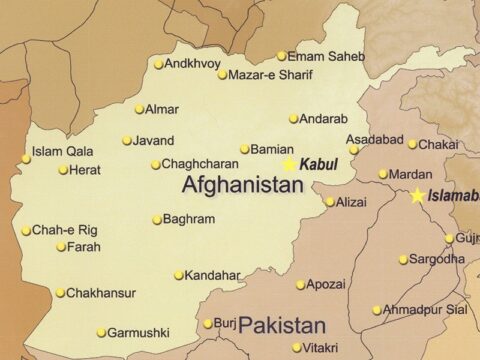
So here’s what we know so far. In February 2022 a Royal Marine officer, working for the Director of Special Forces, sent an email to several Afghans in Britain. These people were involved in the effort to rescue former interpreters and Afghan National Army special forces soldiers who were at risk of reprisals from the Taliban regime, and the Marine wanted to know whether some Afghans who claimed to be ex-special forces really were. The officer intended to attach a filtered list of around a hundred names from an Excel spreadsheet, but inadvertently attached the whole file — which contained around 25,000 names. One of the Afghans he sent the list to immediately passed it on to someone else – this time in Afghanistan. MoD sources are stressing that these were all trusted Afghans, but … well, we’ll get to that shortly.

And then nothing much happened for 18 months. The Taliban didn’t round up and shoot everyone on the list, even though they now claim to have had it since early 2022. But then, in August 2023, an Afghan man — a former soldier who had applied for asylum in Britain, but been rejected — popped up on Facebook. He promptly released part of the spreadsheet, then threatened to post all of it. At this point the government swung into action. First, it pressured Meta, which owns Facebook, to shut down the group the data was posted in and remove the user. Then the Ministry of Defence, under former defence secretary Ben Wallace, applied for a super-injunction to prevent the media from reporting anything about the leak, what the government planned to do about it, or what it was going to cost. It even banned anyone from revealing the existence of the injunction itself. That injunction was granted to Wallace’s successor, Grant Shapps, and the entire story was killed before it became public. The government was already drawing up a plan to bring tens of thousands more Afghans to Britain; the media and Parliament weren’t allowed to mention it; the British people, of course, were not to be allowed to know a thing. The degree of secrecy imposed was truly extraordinary.

And, over the last 18 months or so, the government has quietly been running a huge and very expensive operation to bring those identified as being at risk to Britain. From those listed on the spreadsheet, 23,900 former Afghan soldiers, policemen and intelligence officers were deemed to be in danger because of the leak. So, of course, were their families. How many people does the government plan to bring in under this scheme, in total? Nobody knows. Early estimates, according to court documents, were that 43,000 Afghans would be given asylum in Britain. Yesterday, officials insisted the real total was 6,900; even that dramatically lower number is a big addition to the 24,000 Afghans the government has admitted to bringing in under other, declared schemes. However, horrifyingly, last June three judges — Sir Geoffrey Vos, Lord Justice Singh and Lord Justice Warby — issued a written (but, of course, secret) ruling that up to a hundred thousand people could be at risk if the Taliban got their hands on the list.

Embarrassment for the British government, certainly, both for the initial cock-up and the ridiculous follow-up. It’s going to be expensive to resettle all those refugees and their often quite large families (guesstimates range from £850 million up to £6 billion), but not really a big deal, right? Well, about that …

I’ve already mentioned Afghan culture’s horrific misogyny. This leads to some truly dire attitudes towards women who don’t comply with Afghan society’s draconian rules of female behaviour (which boil down to having no rights and not being allowed to leave the house without a burqa and a male relative). One of the consequences of this is that Afghan men have unleashed a tidal wave of sexual assaults across Europe. At least one migration expert has noted that as well as their frequency, assaults by Afghans are remarkable for their brutality, audacity and often downright stupidity. Austrian political scientist Cheryl Benard wrote:

    Can these men possibly expect that their attempts will be successful? Do they actually think they will be able to rape a woman on the main street of a town in the middle of the day? On a train filled with other passengers? In a frequented public park in the early afternoon? Are they incapable of logical thought — or is that not even their aim? Do they merely want to cause momentary female hysteria and touch some forbidden places of a stranger’s body? Is that so gratifying that it’s worth jeopardizing their future and being hauled off to jail by scornful and disgusted Europeans? What is going on here? And why, why, why the Afghans? According to Austrian police statistics, Syrian refugees cause fewer than 10 percent of sexual assault cases. Afghans, whose numbers are comparable, are responsible for a stunning half of all cases.

    Type two words into Google — Afghane and Vergewaltigung — and a cornucopia of appalling incidents unfolds before you.

Incidentally, to all you lefties who’re undoubtedly sputtering with fury as you read this, don’t even think of writing Benard off as an anti-Afghan racist. Her husband is former US ambassador Zalmay Khalilzad, who is Afghan.

But surely, the “trusted” former Afghani soldiers, police and intelligence officers being brought in are bound to be much better able to adapt to British culture, right? Uh, well …

The government has been very reluctant to release — or even admit it possesses — statistics on the link between nationality and crime, but under pressure from independent MP Rupert Lowe it finally did so in March. This showed that among Afghans in Britain, 59 per 10,000 have been convicted of a sexual offence — 22.18 times higher than British men, at 2.66 per 10,000:
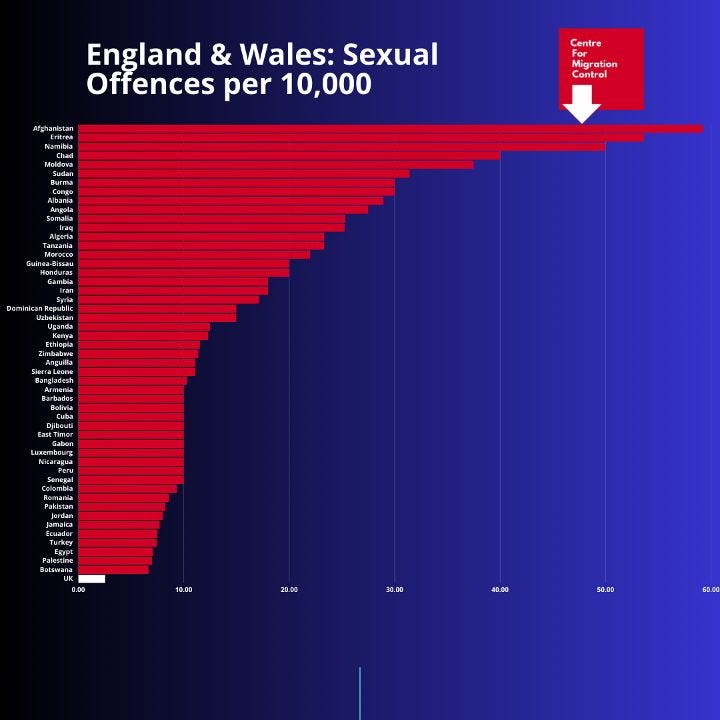
By the way, yes, I know the graph is from the Centre for Migration Control — but the data is from the Ministry of Justice and was obtained by a Freedom of Information request. I’ve checked the graph against the data, and it’s accurate.

[…]
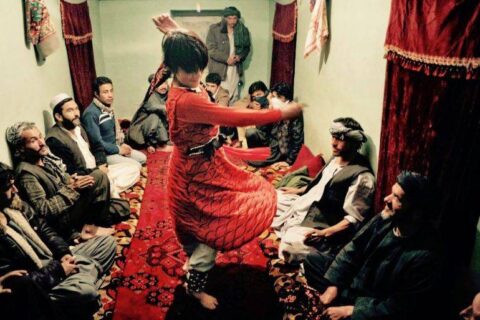
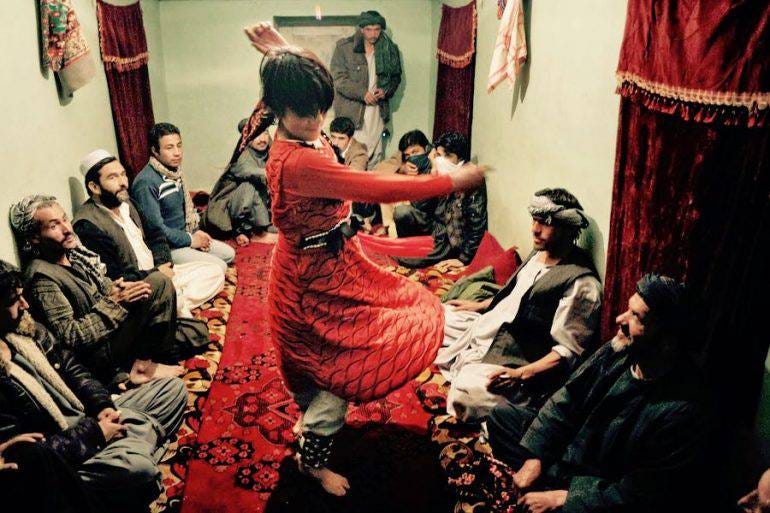
Does this photo of Afghan men watching a young boy dance give you the creeps? It should.

It’s not only women at risk, by the way. Afghan men aren’t averse to raping young boys, either. One of the most revolting aspects of Afghan culture — and that’s saying something — is the tradition of bacha bazi (Dari for “boy play”). Prepubescent boys are forced to dress up as girls then dance for, and “entertain”, men. This strain of paedophilia was common among anti-Taliban warlords and the Afghan security forces, particularly the police. The Taliban claim to be against the practice; their founder, the late Mullah Omar, actually was violently opposed to it. However, many prominent Taliban commanders also enjoy a spot of recreational pederasty.

Of course the obvious answer to this is “But most Afghan men aren’t rapists!” I agree; most of them aren’t. But an alarmingly high percentage of them are, and our governments clearly can’t keep the rapey ones out. The graph and its underlying statistics prove that beyond any possible doubt. And while it’s easy to downplay the statistics by saying it’s still “only” 77 sexual offences committed by Afghans over a two-year period, bear in mind that a) that’s 77 offences that wouldn’t have happened if we hadn’t let any Afghans in and b) this number is only convictions. In Britain just 3.1% of sexual offences reported to the police (around a third of which are rapes) lead to a conviction, which brings the potential number of Afghan suspects up to 2,484. The police estimate that only 10-15% of sexual offences are even reported; that could mean Afghans committed between 16,500 and 25,000 sexual offences across that same two-year period. Afghans would have to be bringing stupendous benefits to this country to make 25,000 sexual offences a worthwhile price to pay; indeed, many (emphatically including me) would argue that it wouldn’t be an acceptable price under any circumstances.

In Spiked, Tim Black on the government’s decision to hide everything for as long as they possibly could … for reasons:

Yet as catastrophic an error as this data leak was, the state has somehow managed to compound it with a series of decisions that made a terrible situation even worse. Successive Conservative and Labour governments effectively mounted a cover-up of both the data breach itself and the response. They slowly undertook a secret evacuation and relocation programme for the Afghans without telling even the Afghans affected about the data breach and the fact their lives were at risk. At the same time, they sought to hide all this from the British public, too, even while thousands of Afghan refugees were quietly being deposited in hotels and in military accommodation across the country. All with no explanation.

It is this de facto cover-up, this attempt on the part of ministers and senior officials to hide state errors and actions from public view, which is the most disturbing aspect of this whole sorry affair. They set about shielding a data breach followed by a costly, large-scale asylum scheme from any form of accountability, criticism or debate. And they did so by exploiting a legal tool that has never been used before by a British government – namely, the superinjunction.

This effective cover-up did not happen immediately. In fact, it wasn’t until early August 2023, a whole 18 months after the data breach took place, that the leak was finally brought to the attention of officials. A support worker responsible for settling Afghans in the UK emailed Luke Pollard, Labour MP for Plymouth, and James Heappey, the then Conservative defence minister, warning them that he’d seen the database circulating online. Days later, journalists also became aware of the leak. It was this that finally prompted the Ministry of Defence and the government to launch a covert mission, codenamed Operation Rubific, to shut down the leak and help Afghans put at risk get to the UK (after being vetted in Pakistan).

It was at this point that the authorities took the unprecedented step of applying for a superinjunction. This legal tool doesn’t only prevent journalists from reporting on the subject of the injunction. It also prevents anyone from acknowledging that the injunction even exists. Ministers argued that this extreme free-speech-defying measure was necessary to prevent the Taliban from becoming aware of the datasheet’s existence. Granted in September 2023, the superinjunction acted like a form of legal dark magic, rendering the data breach and the government response to it invisible. It insulated both from even the possibility of scrutiny.

Members of parliament could have still used their parliamentary privilege to speak up. But since all reporting had been prohibited, MPs found themselves in the same place as the wider public – in the dark. For nearly two years, then, we have all borne blind witness to the state’s conspiracy of silence. Until this week, that is, when defence secretary John Healey decided the superinjunction was no longer necessary.

It wasn’t just the British having issues with Afghan forces, as @InfantryDort recounts on the social media site formerly known as Twitter:

    Among the Wildflowers @deaflibertarian
    Did the high ranks really tell American soldiers to stand down and not interfere when children were being sexually assaulted in the Middle East region?

TLDR, but you need to read it to get what I’m saying. I know it may be hard to understand how American Soldiers could witness horrors in Afghanistan and feel powerless to stop them. But let me try to explain. Fellow veterans, feel free to add on or correct me, because this rot ran deep.

1. We were forged to kill, then reprogrammed to hesitate. The warrior was replaced with a social worker in a helmet. Instead of rehearsing “react to contact,” we sat through PowerPoints on cultural sensitivity. Our edge dulled by doctrine that taught us empathy for the enemy and suspicion of ourselves.
2. We were ordered to practice “courageous restraint”. Sounds noble. It wasn’t. It meant ignoring your instincts. It meant second-guessing every shot, every step. The Army trained us to fight, then punished us for following that training. We were told killing the enemy might make things worse, as if leaving them alive made anything better.
3. Every success was credited to the Afghan army. Every failure pinned on us. We propped up a Potemkin military, full of cowards and thieves, and were ordered to salute the illusion. We whispered truths in smoke pits while speaking lies in briefings.
4. Under certain generals, aggressiveness was punished harshly. They’d clip the wings of the hawks and reward the peacocks. It’s like blaming a wolf for baring its teeth when surrounded by jackals.
5. “Green on Blue” attacks poisoned every partnership. The Taliban infiltrated Afghan ranks so deeply we stopped sleeping. Trust vanished. No one dared provoke them. Not over child rape, not over beatings, not over anything. Every Blue 1 report was a career landmine, so the truth stayed buried.

This was the cocktail we drank every day:
• Restraint over reaction
• Illusion over integrity
• Shame over strength

We were taught to see women as property, not to intervene. To accept children as sexual currency for Afghans, not to interfere. That the blame for every failure lay with us, not the corrupt warlords we empowered.

And was it non-consensual sexual currency? Because the culture was so backwards, we were told villagers would give their kids to powerful Afghans as tribute. And that the kids themselves understood the assignment. How f****d is that? How evil? How diametrically opposed to everything we believe?

And once you’re complicit in enough sin, it gets easier to stay silent. When you’ve spent years maintaining a lie, the truth becomes radioactive. Ripping off the bandage would mean admitting the whole war was infected.

We stood “shonna ba shonna” or shoulder to shoulder with some of the worst people humanity ever produced. And we called it partnership.

That’s how this happened.
A culture of confusion.
A doctrine of deceit.
A war that killed our ability to fight the very evil we were sent to destroy.

There is a silver lining here. History has proven that our suspicions were right. And luckily, many of us are still in uniform or in charge of the DoD apparatus. We will NEVER let this happen again. And I will shout this from the rooftops to make sure that’s the case.

Infantry Dort, X.com, 2025-07-16.

June 5, 2025

German judges seem to be dedicated to ensuring that the government never changes policy, regardless of voter preference

Filed under: Germany, Government, Law, Media, Politics — Tags: , , , , , , — Nicholas @ 05:00

The times I despair of the pathetic Canadian government, I look to Germany where eugyppius helpfully explains that German judges are even more dedicated to thwarting the will of the voters than Canadian judges are (and that’s a major achievement):

“German flag” by fdecomite is licensed under CC BY 2.0 .

At the start of May, CSU Interior Minister Alexander Dobrindt effectively abolished asylum as a path into Germany, empowering federal police to push back all illegal migrants at our national borders.

There ensued a period of messaging chaos, in which Chancellor Friedrich Merz assured our neighbours and the EU that nothing much was happening, while Dobrindt quietly insisted that yes, indeed, he was serious. He gave police orders to step up border checks and to send back all illegal migrants regardless of asylum claims – save for pregnant women, the underage and the sick.

These new borders policies have yet to exercise any significant influence on asylum statistics. It is relatively easy to cross into Germany despite the police spot checks, and we don’t yet know how many asylees are managing to evade them.

The deeper legal issues are much more significant right now. We want to know whether Dobrindt’s intervention is workable in theory, and whether our judges will swallow it. Unfortunately, he is already under siege from asylum advocates on the left and the broader migration industry, who have set and sprung a very telling trap, with the aim of getting courts to overturn even these preliminary and quite meagre interventions.

To understand the issues here, we need a brief legal primer: According to German law (the so-called Asylgesetz), foreigners who enter Germany from “secure” states do not get to claim asylum. They are to be sent straight back to wherever it is they came from. Because Germany is surrounded entirely by secure states, that should really be the end of this insane problem. Alas, this sensible law has been superseded since 1997 first by the Dublin Convention, and later by the Dublin II and now the Dublin III Regulation. The latter forbids the Federal Republic from using her own laws, holding that foreigners entering Germany from secure third states must be welcomed pending a procedure to establish which EU member state is actually responsible for them. Effectively, this means that almost all of these aspiring asylees remain in Germany indefinitely, because deporting people who do not belong here is beyond the meagre capacities of our enormous bureaucracy.

Dobrindt sought to get around Dublin by appealing to Article 72 of the Treaty on the Functioning of the European Union (TFEU), which allows member states to set aside EU regulations when this is necessary to maintain order and security.

Many have eyed this Article 72 strategy for a long time, but nothing is easy, particularly not in countries unduly enamoured of “the rule of law”, which is a lofty euphemism for “the rule of obscure crazy people in robes for whom nobody ever voted and who enjoy lifetime appointments”. These days the government cannot do anything at all except what it was already doing (and sometimes not even that), or unless it is obviously stupid, expensive and inadvisable, because lurking around every corner is a clinically insane judge eager to explain why sensible things are not allowed. In recent years, our extremely learned and far-sighed judiciary has explained why combating climate change is anchored in the German constitution and why basically everybody is entitled to exorbitant social welfare. All that remains for them is to explain why everybody on earth is also entitled to live in Germany and draw benefits from the state, and they will have completed their suicidal triad.

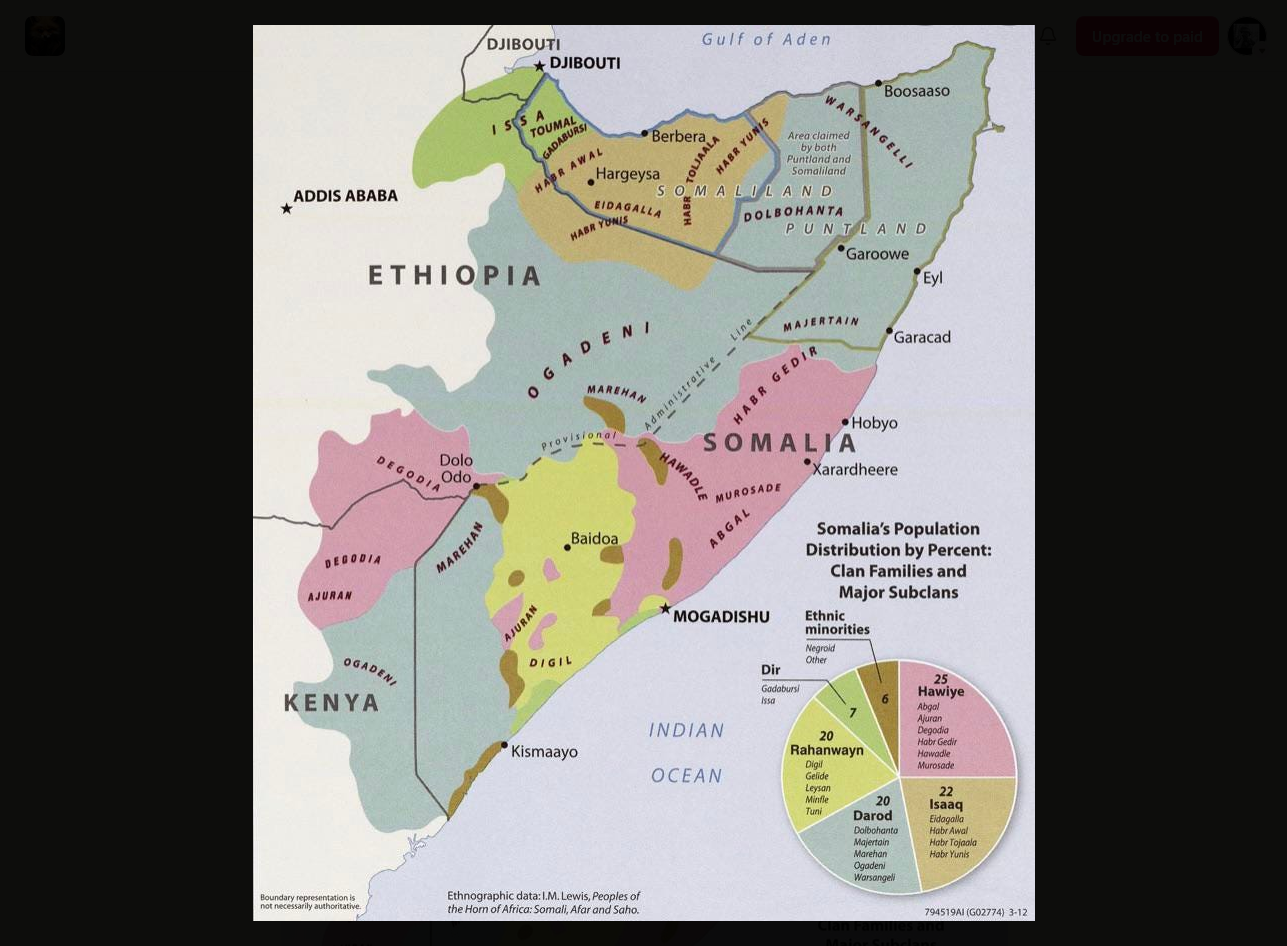
On Monday, 2 June, the Berlin Administrative Court struck the first blow in this direction. Effectively, they called the whole basis for Dobrindt’s new border policy into question, issuing what amounts to a preliminary injunction in the case of three Somalis (two men and one woman) who had crossed from Poland into Germany on 9 May. Federal police intercepted the trio at the train station in Frankfurt an der Oder; they claimed asylum and the police, in line with Dobrindt’s order, sent them back to Poland anyway. Lawyers from the advocacy organisation Pro Asyl then helped them bring suit in Berlin, and the court intervened in their favour. They get to be professional asylees in Germany now.

May 14, 2025

We welcome (almost) all refugees

Mark Steyn notes the odd situation of rabid pro-refugee organizations suddenly finding that there are some refugees they don’t want to come to the United States after all:

We are told, relentlessly, that “diversity is our strength”. But it’s a delicate balance, isn’t it? After Biden’s untold millions of drug mules and sex fiends, just fifty-nine whites from South Africa could completely destroy all the multiculti harmony:

I confess to mixed feelings about those scenes myself. When I was a kid, the Boers had a reputation, unlovely as they might be in certain aspects, as the toughest buggers on the planet. In Britain and Canada, it was not uncommon to hear fellows, depressed at how their own countries were going, talk breezily about emigrating to South Africa. Yet in the end they folded in nothing flat — and the country’s new masters don’t want them and they have to find somewhere to go. Gee, it’s almost like that might be a lesson of more general application in the year ahead.

So it’s interesting to see the American left tiptoe all the way up to making the real purpose of “diversity” explicit: We’re in favour of open borders … except for whites. Rather than sully their hands with fifty-nine Afrikaners, the Episcopal Church has declared it’s willing to forego the moolah from the federal “refugee resettlement” racket. The spousal-abusing MS-13 gangbanger may be the quintessential “Maryland man”, but these white guys never can be.

Watching hoity-toity upper-class whites like NBC’s Andrea Mitchell finger-wagging from the anchor chair about their anti-whiteness is instructive. They assume that they will never have to face the consequences of their virtue-signalling. But the chasm between Eliteworld and Reality yawns wider with every day, and it will one day consume most of the west’s high-status “progressives” too. There are limits to kingly power. That’s the lesson Canute tried to teach his courtiers when he took them to the water’s edge and commanded the tide to lay off his loafers. But King Canute would never have ordered his staff to tell the peasantry to eat crickets on a bed of cockroach coulis. Because that would be too ridiculous.

For that we had to wait until Justin Trudeau, sinking bazillions of dollars into bug farms as part of the masterplan: that’s not just a bug, it’s an indispensable feature. Because at the World Economic Forum all the clever guys decided that, in the interests of saving the world from “climate change”, our rulers had to do to our own farmers what the mob is doing to white South Africans: destroy their farms, kill all the cows and sheep, and ensure that nothing grazes there ever again.

There are few things sadder than a post-developed society. If you walk around South African towns at the end of the day, you will notice in high-rise buildings the absence of lights on the upper floors: the inability to maintain skyscrapers is one of the first signs of a society in decline. It starts at the heights and then sinks to the basement, whether those heights are Boeing or bug farms. If you’re in on the racket, you can still live high off the hog-simulating scorpions … for a while. But the people who make the running in the western world are mad, and their fever dreams are boundless.

May 6, 2025

1949: How the Arab-Israeli War Ended – W2W 27

TimeGhost History
Published 5 May 2025

In early 1949, the Arab-Israeli War finally comes to an uneasy end. After brutal fighting, armistice talks in Rhodes redraw borders with a green pencil line, displacing hundreds of thousands and reshaping the Middle East. Egypt, Jordan, Syria, and Lebanon reluctantly sign ceasefires, leaving core issues — Jerusalem, refugees, and recognition — unresolved. But can forced armistices really bring lasting peace, or is Palestine fated to endless conflict?
(more…)

April 26, 2025

A proposal for cutting the Channel crossing phenomenon

Filed under: Britain, France, Government — Tags: , , , — Nicholas @ 05:00

In The Conservative Woman, David Wright suggests a concrete plan to stem the tide of “refugees” arriving in the south of England from Calais and other French Channel ports:

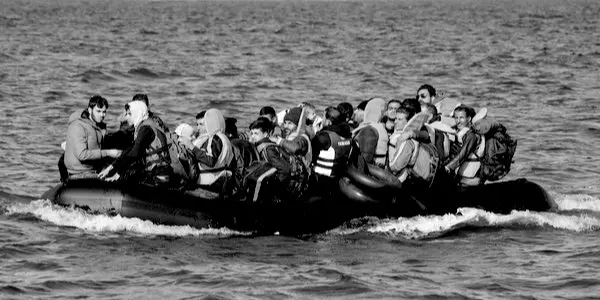
Illegal Channel crossings by rubber dinghies overloaded predominantly with young men have been an increasingly worrying trend for many years yet successive governments have made no serious or workable attempts to do anything about it.

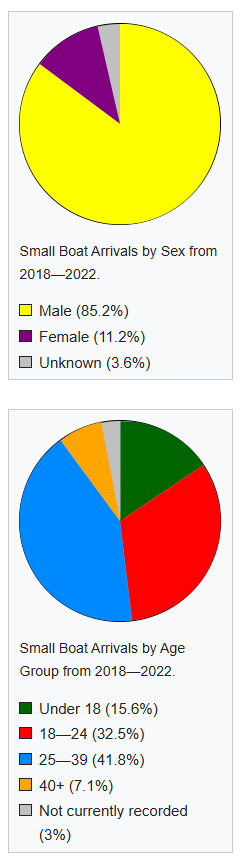
Migrant crossings are up by more than 40 per cent on last year and a record for daily arrivals has been set. A total of 705 migrants in 12 boats crossed the Channel on Tuesday April 15, days after the previous record of 656 was set the previous Saturday. The total number of arrivals in 2025, at 8,888, is 42 per cent higher than at the same point last year and 81 per cent higher than at this stage in 2023. More arrivals were recorded in January to April than in the equivalent four-month period in any year since data on Channel crossings began in 2018.

The French authorities are providing lifejackets to ensure migrants can cross the Channel safely. The jackets are returned to the French once the migrants have been escorted to the mid-point of the Channel and are rescued by the British authorities, so that they can be re-used for future crossings.

We have seen French police on the beach at Calais standing idly by while migrants board dinghies to Dover.

[…]

The boats should be painted grey, a small gun mounted on the foredeck, and manned with recently retired RN personnel. (There would be no shortage of volunteers.) A small support base should be built in Folkestone harbour, initially using Portakabins for rapid start-up, with fuelling facilities, a small workshop, an accommodation block and a canteen. This could be achieved relatively quickly and at a modest cost to the defence budget. These boats would be tasked with patrolling the Dover Strait every day from dawn to dusk, three or four at a time. Drones could also be used to detect dinghies and direct the patrolling boats to them. They would not need to be at sea in weather too rough for small smuggler-boat crossings.

They should be tasked to intercept the smugglers wherever they are in the Channel, approaching our shores, over the mid-way line or just leaving French beaches, and turned back and escorted. On approach to the smugglers’ beach the Border Force vessel should stand off and launch a RIB (rigid inflatable boat) manned by four staff who would escort them until they grounded on the beach. With two of them standing guard with weapons the others, using box cutters, would slash long holes in the rubber dinghies and remove the outboard motors and drop them into the water to render them unserviceable. On completion the RIB should return to its vessel and the vessel withdraw to resume patrol. Input from serving senior naval officers would be needed to provide detailed operating procedures. Once deployed this division would be under the command of a senior serving officer.

Of course, French President Emmanuel Macron would immediately be protesting. But he hasn’t got a leg to stand on. France is a signatory to the Schengen Agreement which requires migrants/asylum seekers to be processed in the first safe country they enter. Not only that but Britain has paid France almost half a billion pounds to stop the migrants arriving at the beaches and boarding dinghies to Dover.

France has not only done nothing but trouser this cash while its navy continues to escort the dinghies into UK waters and hand them off to our Border Force or the RNLI.

April 3, 2025

1947 Newscast: Spies, Aliens, and Collapsing Empires! – W2W 18

Filed under: Britain, Europe, History, India, Middle East — Tags: , , , , , , — Nicholas @ 04:00

TimeGhost History
Published 2 Apr 2025

1947 is a pivotal year: The British Empire crumbles as India and Pakistan gain independence amidst violence and mass migration. Truman launches a Cold War against Soviet communism, while spies infiltrate governments worldwide. Nations sign treaties reshaping Europe; Chuck Yeager breaks the sound barrier, and rumours swirl of aliens crashing at Roswell. Join us for the headlines that reshaped history!
(more…)

November 15, 2024

The Final Solution to the German Question

Filed under: Europe, Germany, History, Russia, WW2 — Tags: , , , , , — Nicholas @ 04:00

World War Two
Published 14 Nov 2024

Millions of Germans continue to be expelled from their homes in Central and Eastern Europe. They run a gauntlet of violence, robbery, and even murder before arriving in the shattered remains of Berlin. By the end of 1945, the Allied Powers have at least agreed that further expulsions must be “orderly and humane”. But isn’t that a contradiction in terms?
(more…)

October 18, 2024

Operation Keelhaul: The Allies’ Final War Crime

Filed under: Britain, History, Military, Russia, USA, WW2 — Tags: , , , , — Nicholas @ 04:00

World War Two
Published 17 Oct 2024

After the war, millions of Soviet citizens are left over in Germany. Some of them are traitors, some are prisoners, some women and children. Stalin wants them back and the Western Allies are happy to help.
(more…)

September 19, 2024

German opinions are changing on the migration question

Filed under: Germany, Media, Politics — Tags: , , , , , — Nicholas @ 04:00

On of our key European commentators is back from a brief internet vacation and reports on recent changes in official German views on mass immigration:

There are other matters too, but before I can get to any of them, I must get this piece on the changing politics of mass migration in Germany off my chest. This is the most important issue facing Europe right now – more important than the folly of the energy transition, more crucial even than the fading memory of pandemic repression.

For nearly ten years, migration has felt like one of the most intractable problems in our entire political system. However crazy the policies, however contradictory and irrational, there was always only the towering mute wall of establishment indifference. It felt like the borders would be open forever, that we would have to sing vapid rainbow hymns to the virtues of diversity and inclusivity for the rest of our lives.

Suddenly, it no longer feels like that. Over the past weeks, a perfect storm of escalating migrant violence and electoral upsets in East Germany have changed the discourse utterly.

The cynical among you will say that none of this matters, that the migrants are still coming, that our borders are still open, and of course that’s true – as far as it goes. But it’s also true that there’s an order of operations here. A lot of things have to happen before we can turn return to a regime of normal border security, and I suspect they have to happen in a specific sequence: 1) Migrationist political parties have to feel electoral pressure and taste defeat at the ballot box first of all. 2) Then, as the establishment realises they are up against the limits of their ability to manipulate public opinion, the discourse around mass migration will have to shift, to deprive opposition parties of Alternative für Deutschland of their political advantage. Specifically, the lunatic oblivious press must begin to question the wisdom of allowing millions of unidentified foreigners to take up residence in our countries. This will then open the way for 3) the judiciary to revise their understanding of asylum policies and begin to interpret our laws in more rational, sustainable ways.

In Thüringen and Saxony, we have already had the electoral defeat of 1), and we will soon have more of it in Brandenburg. As a consequence of 1), we are now seeing some powerful glimmerings of 2). This is very important, because as the press expands the realm of acceptable discourse, a great many heretofore tabu thoughts and opinions are becoming irreversibly and indelibly conceivable.

Ten years ago, diversity was our strength, infinity refugees were our moral obligation and there were no limits to how many asylees we could absorb. Since August, not only Alternative für Deutschland but also that offshoot from the Left Party known as the Bündnis Sahra Wagenknecht, the centre-right Christian Democrats, a substantial centrist faction of the Social Democrats, and many others beyond whatever “the extreme right” is supposed to be, agree that migration is in fact an enormous problem. They also agree that our moral obligations to the world’s poor and disadvantaged are finite, and that there are indeed clear limits to the number of asylees Germany can support. What is more, they are saying all of these things in the open.

August 17, 2024

“The notion of a pre-existing Palestinian state is a modern fabrication that ignores the region’s actual history”

Filed under: History, Middle East, Military — Tags: , , , , , — Nicholas @ 03:00

Debunking some of the common talking points about the Arab-Israeli conflicts down to the present day:

Arab attacks in May and June 1948.
United States Military Academy Atlas, Link.

Before Israel declared independence in 1948, the region now known as Israel, the West Bank and the Gaza Strip was part of the British Mandate for Palestine, which was established by the League of Nations after the fall of the Ottoman Empire in the First World War.

Under Ottoman rule, the area was divided into various administrative districts, with no distinct political entity known as “Palestine”. The concept of a Palestinian national identity emerged in the 20th century, largely in response to the Zionist movement and increased Jewish immigration in the area.

However, there was never a Palestinian state, flag or anthem. The notion of a pre-existing Palestinian state is a modern fabrication that ignores the region’s actual history.

The modern State of Israel’s legitimacy is rooted in international law and global recognition. On Nov. 29, 1947, the United Nations General Assembly passed Resolution 181, known as the “Partition Plan”, proposing two states — one Jewish and one Arab.

The Jewish community accepted the plan, demonstrating a willingness to compromise for peace. However, the Arab states rejected it, refusing to recognize any Jewish state, and instead launched a military assault on Israel following its declaration of independence on May 14, 1948.

Another pervasive myth is the “Nakba” or “catastrophe”, narrative, which claims that Palestinians were forcibly expelled by Israel in 1948. This version omits the critical context that it was the Arab nations that invaded Israel, causing many Arabs to be expelled or flee their homes.

Rather than absorbing the displaced population, the surrounding Arab countries kept them in refugee camps, using them as pawns to pressure Israel. Organizations like UNRWA perpetuated this situation, keeping Palestinians in limbo rather than encouraging their integration into their host countries. This contrasts sharply with how other refugee populations have been handled, where integration and resettlement are the norm.

The land referred to as “Palestine” has always been inherently Jewish. The Jewish people have maintained a continuous presence there for thousands of years, long before Islam or the Arab conquests.

August 8, 2024

The Korean War Week 007 – The Pusan Perimeter – August 6, 1950

Filed under: Asia, Britain, China, History, Military, USA — Tags: , , , , , , , — Nicholas @ 04:00

The Korean War by Indy Neidell
Published Aug 6, 2024

The UN forces are withdrawn this week across the Naktong River into a new defensive zone in the Southeast corner of the Peninsula — the Pusan Perimeter, but already as the week begins they are in great danger from the right hook near the coast by the North Korean 6th Division, that threatens to upend everything, taking Chinju and aiming for Masan. There are also machinations afoot with the Chinese in Taiwan, and the fear that a larger war could erupt if things aren’t handled right concerning the Chinese; it’s a week full of tension.
(more…)

May 18, 2024

The plight of Greek refugees after the Greco-Turkish War

As part of a larger look at population transfers in the Middle East, Ed West briefly explains the tragic situation after the Turkish defeat of the Greek invasion into the former Ottoman homeland in Anatolia:

“Greek dialects of Asia Minor prior to the 1923 population exchange between Greece and Turkey. Evolution of Greek dialects from the late Byzantine Empire through to the early 20th century leading to Demotic in yellow, Pontic in orange, and Cappadocian in green. Green dots indicate Cappadocian Greek speaking villages in 1910.”
Map created by Ivanchay via Wikimedia Commons.

While I understand why people are upset by the Nakba, and by the conditions of Palestinians since 1948, or particular Israeli acts of violence, I find it harder to understand why people frame it as one of colonial settlement. The counter is not so much that Palestine was 2,000 years ago the historic Jewish homeland – which is, to put it mildly, a weak argument – but that the exodus of Arabs from the Holy Land was matched by a similar number of Jews from neighbouring Arab countries. This completely ignored aspect of the story complicates things in a way in which some westerners, well-trained in particular schools of thought, find almost incomprehensible.

The 20th century was a period of mass exodus, most of it non-voluntary. Across the former Austro-Hungarian, Russian and Ottoman empires the growth in national consciousness and the demands for self-determination resulted in enormous and traumatic population transfers, which in Europe reached its climax at the end of the Second World War.

Although the bulk of this was directed at Germans, the aggressors in the conflict, they were not the only victims – huge numbers of Poles were forcibly moved out of the east of the country to be resettled in what had previously been Germany. The entire Polish community in Lwów, as they called it, was moved to Wrocław, formerly Breslau.

Maps of central and eastern Europe in the 19th century would have shown a confusing array of villages speaking a variety of languages and following different religions, many of whom wouldn’t have been aware of themselves as Poles, Romanians, Serbs or whatever. These communities had uneasily co-existed under imperial rulers until the spread of newspapers and telegraph poles began to form a new national consciousness, usually driven by urban intellectuals LARPing in peasant fantasies.

This lack of national consciousness was especially true of the people who came to be known as Turks; the Balkans in the late 19th century had a huge Muslim population, most of whom were subsequently driven out by nationalists of various kinds. Many not only did not see themselves as Turks but didn’t even speak Turkish; their ancestors had simply been Greeks or Bulgarians who had adopted the religion of the ruling power, as many people do. Crete had been one-third Muslim before they were pushed out by Greek nationalists and came to settle in the Ottoman Empire, which is why there is still today a Greek-speaking Muslim town in Syria.

This population transfer went both ways, and when that long-simmering hatred reached its climax after the First World War, the Greeks came off much worse. Half a million “Turks” moved east, but one million Greek speakers were forced to settle in Greece, causing a huge humanitarian crisis at the time, with many dying of disease or hunger.

That population transfer was skewed simply because Atatürk’s army won the Greco-Turkish War, and Britain was too tired to help its traditional allies and have another crack at Johnny Turk, who – as it turned out at Gallipoli – were pretty good at fighting.

The Greeks who settled in their new country were quite distinctive to those already living there. The Pontic Greeks of eastern Anatolia, who had inhabited the region since the early first millennium BC, had a distinct culture and dialect, as did the Cappadocian Greeks. Anthropologically, one might even have seen them as distinctive ethnic groups altogether, yet they had no choice but to resettle in their new homeland and lose their identity and traditions. The largest number settled in Macedonia, where they formed a slight majority of that region, with many also moving to Athens.

The loss of their ancient homelands was a bitter blow to the Greek psyche, perhaps none more so than the permanent loss of the Queen of Cities itself, Constantinople. This great metropolis, despite four and a half centuries of Ottoman rule, still had a Greek majority until the start of the 20th century but would become ethnically cleansed in the decades following, the last exodus occurring in the 1950s with the Istanbul pogroms. Once a mightily cosmopolitan city, Istanbul today is one of the least diverse major centres in Europe, part of a pattern of growing homogeneity that has been repeated across the Middle East.

But the Greek experience is not unique. Imperial Constantinople was also home to a large Jewish community, many of whom had arrived in the Ottoman Empire following persecution in Spain and other western countries. Many spoke Ladino, or Judeo-Spanish, a Latinate language native to Iberia. Like the Greeks and Armenians, the Jews prospered under the Ottomans and became what Amy Chua called a “market-dominant minority”, the groups who often flourish within empires but who become most vulnerable with the rise of nationalism.

And with the growing Turkish national consciousness and the creation of a Turkish republic from 1923, things got worse for them. Turkish nationalists and their allies murdered vast numbers of Armenians, Greeks and Assyrian Christians in the 1910s, and the atmosphere for Jews became increasingly tense too, with more frequent outbursts of communal violence. After the First World War, many began emigrating to Palestine, now under British control and similarly spiralling towards violence caused by demographic instability.

February 29, 2024

Arizona GOP pushes to legalize hunting down suspected illegal immigrants with deadly force! Film at 11!

Filed under: Government, Law, Media, Politics, USA — Tags: , , , , , , , — Nicholas @ 04:00

Chris Bray reports on this utterly abhorrent piece of proposed legislation that will literally condemn any brown person in the state of Arizona to be murdered out of hand by evil red-hatted Trump supporters … or will it?

Republicans in the Arizona legislature have advanced a bill that would allow anyone in the state to just casually gun down any migrant anytime they feel like that filthy brown person might be trespassing. You can trust that this is really happening, because it’s in the news.

Delightfully, Axios reporter April Rubin trained at the New York Times. Here’s how she starts this story:

    Arizona Republicans are advancing a bill that would allow people to legally kill someone accused of attempting to trespass or actively trespassing on their property.

    The big picture: The legislation, which is expected to be vetoed if it reaches the state’s Democratic governor, would legalize the murder of undocumented immigrants, who often have to cross ranches that sit on the state’s border with Mexico.

These monsters, they’re legalizing the murder of undocumented migrants.

So, as always, let’s read the actual bill:

A person in lawful possession of property can threaten deadly force, or potentially use deadly force, in response to an act of criminal trespassing: You can go out on your property with a gun and tell a trespasser to get lost.

But Subsection B is the key to the actual use of deadly force, and journalists aren’t saying anything about it (emphasis added): “A person may use deadly physical force under subsection A only in the defense of himself or third persons as described in sections 13-405 and 13-406,” existing sections of Arizona state law. The bill explicitly references an existing legal standard for the use of deadly force.

February 25, 2024

Who Killed Canadian History?

I was not aware that it has been a full twenty-five years since J.L. Granatstein published his polemical Who Killed Canadian History?:

In that work, Granatstein asserts that the rationale for the history taught in Canadian schools was political, not historical. And sexism and racism were being taught, not history.

In the postmodern era, the priority of vast areas of history teaching and historiography, and Granatstein is far from the only academic who noticed this, transitioned from evidence and facts, to morals and emotions. Western oppression became the source of historiographical obsession. And the practice, which has shaped Western historiography since at least the turn of the twentieth century, of injecting moral judgements adjacent to facts and timelines, became entrenched.

This has happened because important areas of historiography, and historical pedagogy, have been subsumed into social sciences. My 9 and 11 year old children do not have a history class. What they learn about history, which isn’t much, is in a class called “social studies”. My son, who is in grade 6, and who was never previously taught anything about the Holocaust, is learning about Nazis Germany’s persecution of the Jews in the most obscure way. His introduction to the Holocaust included a lesson pertaining to the MS St. Louis, a passenger ship carrying 907 Jewish refugees fleeing Nazi persecution that was refused entry into Canada in 1939.

The ship’s Jewish passengers were safely returned to four European countries, but tragically 254 were later killed in the Holocaust. A terrible outcome. Indeed, one of the rare dark stains on Canada’s otherwise quite exemplary record of offering sanctuary to refugees. But if Canadians at the time had known that refusing entry to the MS St. Louis would result in the cold-blooded murder of 254 innocent people, would they have allowed entry? A question not raised in my son’s class.

As well, what Canadians knew or didn’t know about the genocidal ambitions of the Nazis did not come up in my son’s classroom discussions. Indeed, that would be too complex and nuanced for 12 year old’s. They also did not discuss conditions in Canada at the time that may have played a role in the consequential decision to turn away the MS St. Louis. Nor did they mention the Evian Conference, which occurred the year prior to the MS St. Louis‘ ill-fated arrival to Canada.

The Evian Conference of 1938 was held in the French resort town of Évian-les-Bains. There were 32 participating nations, including Canada, who were “to seek, by international agreement, avenues for an orderly resettlement of (Jewish) refugees from Germany and Austria”. Shockingly, at the close of the talks, none of the nations involved had offered to accept any Jewish refugees.

From the London Spectator (1938):

    If the Conference has not been a complete failure, it has achieved little to boast about, all the States sympathizing and none desiring to admit refugees. Even the United States, as prime mover, offers no more than the quota.

My son did not come away from his class with an impression that Canada was not alone in its reluctance to accept refugees. This, and other such lessons, seem as if they are designed to implant a sense of revulsion over Canada’s past failures, instead of patriotism over its achievements and victories. What a disservice to young Canadian learners.

This cherry-picked event from history, which doesn’t really deal with the Holocaust, but assumes kids will appreciate related events that occurred over the backdrop of the Holocaust, is doubly misleading in that it presents Canada as a racist country hostile to refugees, before establishing that the opposite was (and is) overwhelmingly true throughout the arc of Canadian history up to the present.

It’s not even clear if my son took away from the lesson that Hitler was the far bigger villain, compared to his “racist colonial” country of Canada.

Clearly, Canada eventually let in Jewish people, and people from all ethnicities. We became the world’s first multiculturalism, and our large cities are among the most cosmopolitan and multicultural places in the world. This needs to be established first for young learners of Canada’s story. Clearly established, before one starts teaching the exceptions to the rule. But my son is getting some weird blend of oddities presented as introductory material to larger subjects which hold historical conclusions opposite to the ones the cherry-picked exceptions portray. It only makes sense that these exceptional events are selected deliberately for political, not educational, reasons.

Twenty-five years ago, Granatstein wrote of Canadian schools,

    The material taught stressed the existence of anti-Aboriginal, anti-Metis, and anti-Asian racism, as well as male sexism and discrimination against women, as if these issues were and always had been the primary identifying characteristics of Canada … The history taught is that of the grievers among us, the present-day crusaders against public policy or discrimination. The history omitted is that of the Canadian nation and people.

Who Killed Canadian History? also criticized the teacher-curated practice whereby early exposure to Canadian history is random and discontinuous concerning time periods and individuals, and “without much regard for chronology”. Exactly what I have been experiencing with my kids, decades after Granatstein identified the problem.

October 19, 2023

Why there are no regional refuges available to Gazan civilians

Filed under: History, Middle East — Tags: , , , , , , — Nicholas @ 05:00

Ed West outlines the sad story of Palestinian civilians uprooted from their homes by the many conflicts that have convulsed the region:

Arab attacks in May and June 1948.
United States Military Academy Atlas, Link.

It is generally a good idea for refugees to be housed in neighbouring countries rather than on different continents, for a number of reasons, but we should be wary of casually stating that Arab states should house Gazans. In a difficult region many of these countries have already put themselves under enormous strain through acts of immense generosity, and none more so than Jordan.

[…]

The survival of Jordan’s monarchy has been one of the more surprising outcomes of the past few decades, and experts have repeatedly bet against it. The country has an unusually bad hand in many ways. Situated beside the disputed Holy Land, it lacks the natural resources of neighbouring Saudi Arabia and Iraq, while also being more remote than Lebanon or Syria, which had long been at the heart of Mediterranean trading networks and far more plugged into European markets.

But most of all it has suffered the destabilising effect of refugees. Abdullah is named after his great-grandfather, the first King of Jordan, whose assassination in 1951 forms the opening of Hussein’s autobiography; indeed he calls it “the most profound influence of my life”. He was just 15 years-old when he travelled with his grandfather to Jerusalem to perform Friday prayers, where the monarch was shot dead by a Palestinian. The gunman then fired at Hussein but the bullet struck a medal his grandfather had given him.

Abdullah I had ruled the new kingdom for just five years, and it endured an incredibly bad start with defeat in the 1948 Arab-Israeli war, which led to a surge of refugees. Estimates of exact numbers seem to vary hugely, but in Lion of Jordan, Avi Shlaim writes that 700,000 Palestinians left in 1948, and of these “450,000 ended up in Jordan, which did more than any other Arab state to help them resettle and integrate with the rest of society”.

He wrote: “The refugees in Jordan wanted to preserve their separate Palestinian identity, but this ran counter to Abdullah’s policy of ‘Jordanization’.” He gave them citizenship rights “but the refugees were a great burden on the weak Jordanian economy; it simply did not have the financial resources to cope with a humanitarian tragedy on such a vast scale.” Many ended up in resentful poverty and “the Palestinians thus became an important factor in domestic Jordanian politics”.

Another source suggests that in 1949, “Jordan welcomed approximately 900,000 refugees by amending the country’s 1928 Law of Nationality to grant equal citizenship to Palestinians; the 1954 Law of Jordanian Nationality later extended citizenship to Palestinians who arrived in Jordan after the 1949 addendum.”

After another defeat against Israel in 1967, up to 300,000 displaced Palestinians in the West Bank retained Jordanian citizenship, and today around 40% of the Jordanian population descend from Palestinian refugees, although the figure may be higher (again, they vary hugely). What seems certain is that about 40% of displaced Palestinians and their descendants live in Jordan, with another 10% in Syria (although many of those have since fled to Lebanon).

The Hashemites, unlike some Arab countries, were keen to integrate the newcomers and to avoid them having to endure a permanent refugee existence; that is why three-quarters of Palestinians in Jordan are Jordanian citizens, although Palestinians from Gaza aren’t, that area having been part of Egypt before the Six-Day War.

In contrast Palestinians who fled to Syria were not given citizenship, for all the talk of solidarity, and often remained in refugee camp-cities for decades (many of which were heavily affected by the Syrian war).

In Lebanon it was even worse; there the Palestinians could neither gain citizenship, nor in many cases access things like healthcare, education or work. The situation here was uniquely dangerous, because their arrival tipped the country’s incredibly delicate balance between Christians, Shia, Sunni and Druze; in 1975 the country descended into civil war, a horror that saw a modern example of shibboleths where Christian militiamen would present tomatoes to suspected Palestinians and ask them to pronounce the name.

This refugee surge had a destabilising effect on Jordan. Already in 1958 things were so bad that Hussein hoped to form a tripartite union with Saudi Arabia and Iraq to counter the influence of Gamal Abdel Nasser’s Egypt. Neither neighbour was too keen on the idea, and Saudi prince Abd al-Ilah remarked that “Hussein’s trouble stemmed from the fact that 70 per cent of his subjects were Palestinians with no loyalty to the throne”.

But in 1970, three years after the Six-Day War, it reached a crisis point, with the British ambassador commenting that “the mixture became so volatile that the container exploded”. There now came full civil war in Jordan between the army and the Palestinian fedayeen.

Jordan had become home to the Palestinian Liberation Organisation, but this umbrella group was itself split into different factions, Fatah being the largest and most moderate. They were reluctant to get involved in the internal affairs of other Arab states, but this was not the case with the more extreme Popular Front for the Liberation of Palestine led by Dr George Habash (who, as his name suggests, was a Christian) and the Marxist-Leninist Popular Democratic Front for the Liberation of Palestine (yes, it does get very Life of Brian).

« Newer PostsOlder Posts »

Powered by WordPress