Quotulatiousness

June 22, 2022

Puberty, “white guilt”, and social contagion helps drive huge numbers of teen girls to think they are transgender

Filed under: Education, Health, Media, USA — Tags: , , , , , , , , — Nicholas @ 05:00

Until a few years ago — a blink of the eye in social terms — most individuals who wanted to transition to the other gender were born male. That is no longer the situation in North America, as vast numbers of young teens have been hammered with accusations of “privilege” for being white, while already undergoing the stresses and social disruption of puberty, seem to be deciding in groups that they must have been “assigned the wrong gender” at birth. In City Journal, Leor Sapir tells some of their stories:

Patricia (a pseudonym) is the mother of a teenage girl who in recent years has come to identify as transgender. She lives in California, considers herself progressive, votes Democrat, and leads a group for parents of children with rapid onset gender dysphoria (ROGD) — that is, youth who suddenly experience distress with their bodies and believe that undergoing medical “transition” will make them whole again. When I spoke to her recently, she recounted how her daughter’s at-first-lesbian and then trans identity emerged in response to feelings of shame about being white.

I have since spoken to more than a dozen ROGD parents and parent-group leaders who tell a similar story. Their schools compulsively tell their children how awful it is to be white, how white people enjoy unearned “privilege”, how they benefit from “systems” put in place by and for white people for the sole purpose of oppressing “people of color”. Plagued by guilt, the children — almost all of them girls — rush to the sanctuary of “LGBTQ+” identity. Once there, they are catapulted into hero status. According to Patricia, some teachers at her daughter’s school are more forgiving toward “queer” and “trans” kids who hand in their homework late.

The students, especially the girls, absorb this messaging. They are acutely sensitive to how identity affects their social status and academic fortunes. They want the warmth that comes with queer/trans identity, but above all they don’t want to be thought of as vicious oppressors. Lacking maturity and self-confidence, they fail to put “anti-racist” indoctrination in its proper context. They do not appreciate its ahistorical, anti-intellectual, and anti-humanist foundations, nor are they aware of the incentives leading teachers and administrators to foist it on them. Being white is not something these teenagers can escape, but they can mitigate its social costs by declaring themselves part of an oppressed group.

The wages of whiteness for teenagers are, however, only half of the story. Decades of gay rights activism have taught us that being gay or lesbian is not something one chooses. The mainstream narrative of transgenderism — promoted aggressively in the context of civil rights policymaking — holds that even being transgender is something people have little control over. Gender identity, experts have argued in Title IX lawsuits, is innate, immutable, and “primarily dictated by messages from the brain”. Thus, membership in the “LGBTQ+ community” would seem to be nonvoluntary. One is either “born that way” or not.

[…]

Several of the parents I spoke to told me that their daughters’ friends all identify as non-heterosexual, despite none having ever kissed another teenager or been in a romantic relationship. LGBT identity is, for them, not related to sexual attraction or behavior. As Kate Julian has written in The Atlantic, America is going through a “sex recession”. Whereas in 1991, most teenagers would have had at least one sexual encounter by the time they graduated high school, by 2017 most had had none. The vacuum left by the hollowing out of courting and relationships has been filled, so it would seem, by a new, inward form of “sexuality” in which the sexual side of our nature is purely a private experience. The 1960s sexual-liberation movement has somehow bred asexual atomism.

June 21, 2022

“Maybe black people generally prefer black music because it’s far superior to the standard ‘landfill indie’ that ‘Glasto’ is mired in?”

Filed under: Britain, Media — Tags: , , , — Nicholas @ 03:00

At Spiked, Julie Burchill wonders what happened to Lenny Henry:

“Sign of the times @ Glastonbury Festival” by timparkinson is licensed under CC BY 2.0 .

Spare a thought for Sir Lenworth George Henry, Commander of the Order of the British Empire and knight of the realm. He works without interruption or unemployment at a job he loves (and in his spare time makes television commercials for Premier Inn hotels – megabucks payday ahoy!) and has done so from the age of 16. He is now 63 and, unusually, is becoming more attractive as he ages. He has sailed a trimaran from Plymouth to Antigua, performed on a record alongside Kate Bush and Prince, and escaped from marriage to Dawn French. Whereas some comedians become sad shadows of themselves – capering clowns who are laughed at, not with – in middle age he became a serious actor. His radio documentary, Lenny and Will, sent him “in search of the magic of Shakespeare”, whose plays he has since performed in to great acclaim. Not only is he very rich, he has also helped raise millions of pounds for charity as co-founder of Comic Relief.

But despite all of this wonderful success, Henry has in recent years taken to griping about things which really aren’t worth bothering about. Sir Len, where did it all go wrong? Well, I’d wager that it went wrong when Henry realised that if he identified as happy people might start thinking that he chose showbiz as a way to show off and get handsomely rewarded for it. And where would that leave him in the Victimhood Olympics? Nowhere near the podium.

His latest gripe is about Glastonbury. “It’s interesting to watch Glastonbury and look at the audience and not see any black people there. I’m always surprised by the lack of black and brown faces at festivals. I think, ‘Wow, that’s still very much a dominant culture thing'”, he told the Radio Times this week.

Here’s a thought. Maybe black people generally prefer black music because it’s far superior to the standard “landfill indie” that “Glasto” is mired in? And maybe they’re keener on personal hygiene than a bunch of scruffy, middle-class students roughing it on their gap year before going home to a cushy billet arranged by a friend of their father? You won’t find many white working-class people at festivals, either, for the same reasons.

I speak from personal experience. As a teenage reporter at the New Musical Express I got sent to a festival – Reading – as punishment for one of my many juvenile misdemeanours. The moment my stilettos sunk into the mud, I turned back to the station, thus facing a further trouncing from the editor. Every night, after an evening watching some rubbish punk band, I would go home and dance around the room to the sweet soul licks of the Isley Brothers until the awful white racket was forgotten.

I prefer more foreign things than I do indigenous things – from curry to gospel music – but I’m not some self-loathing idiot who believes that this country was worthless when it was white; if diversity is so great, does that mean that India and China and Africa were uninteresting before the West barged in? And don’t bother trying to make the countryside “more accessible” – I’ve never wanted to go on a ramble in my life. Why should I and my fellow mud-dodging citizens of various ethnic heritage be bussed into the racist countryside from the cities we built and love?

June 19, 2022

Why Hate Speech Laws Backfire

ReasonTV
Published 26 Feb 2022

Here’s a brutal irony about regulating hate speech: Such laws often end up hurting the very people they are supposed to protect.
——————
Follow us on Twitter: https://twitter.com/reason

Reason is the planet’s leading source of news, politics, and culture from a libertarian perspective. Go to reason.com for a point of view you won’t get from legacy media and old left-right opinion magazines.
—————-
That’s one of the central lessons in Jacob Mchangama’s important new book, Free Speech: A History from Socrates to Social Media. Mchangama heads up the Danish think tank Justitia. He’s worried about a proposal that would make hate speech a crime under European Union (EU) law and give bureaucrats in Brussels sweeping powers to prosecute people spewing venom at religious and ethnic minorities, members of the LGBT+ community, women, and others.

Europe’s history with such laws argues against them. In the 1920s, Germany’s Weimar Republic strictly regulated the press and invoked emergency powers to crack down on Nazi speech. It censored and prosecuted the editor of the anti-Semitic Nazi paper Der Stürmer, Julius Streicher, who used his trial as a platform for spreading his views and his imprisonment as a way of turning himself into a martyr and his cause into a crusade. When the Nazis took power in the early ’30s, Mchangama stresses, they expanded existing laws and precedents to shut down dissent and freedom of assembly.

Contemporary scholarship suggests that there can be a “backlash effect” when governments shut down speech, leading otherwise moderate people to embrace fringe beliefs. Mchangama points to a 2017 study published in the European Journal of Political Research that concluded extremism in Western Europe was fueled in part by “extensive public repression of radical right actors and opinions.”

In 1965, the United Kingdom passed a law banning “incitement to racial hatred,” but one of the very first people prosecuted under it was a black Briton who called whites “vicious and nasty people” in a speech. More recently, Mchangama notes that radical feminists in England “have been charged with offending LGBT+ people because they insist there are biological differences between the sexes. In France, ‘an LGBT+ rights organization was fined for calling an opponent of same-sex marriage a ‘homophobe.'”

“Once the principle of free speech is abandoned,” warns Mchangama, “any minority can end up being targeted rather than protected by laws against hatred and offense.”

That’s what happened in Canada in the 1990s after the Supreme Court there ruled that words and images that “degrade” women should be banned. The decision was based in part on the legal theories of feminist author Andrea Dworkin, whose books on why pornography should be banned were briefly seized by Canadian customs agents under the laws she helped to inspire.

First Amendment rights are still popular in the United States, with 91 percent of us in a recent survey agreeing that “protecting free speech is an important part of American democracy.” But 60 percent of us also said that the government should prohibit people from sharing a racist or bigoted idea.

Hearing hateful words and ideas outrages and discomforts most of us, but Mchangama’s history of free speech underscores that state suppression can grant those words and ideas more power and influence. And that the best antidote to hate in a free and open society is not to hide from it but to openly—and persuasively—confront it.

Listen to my Reason Interview podcast with Jacob Mchangama at https://reason.com/podcast/2022/02/16….

Written by Nick Gillespie. Edited by Regan Taylor.

June 12, 2022

“Culture is upstream of politics; and the culture is clearly changing”

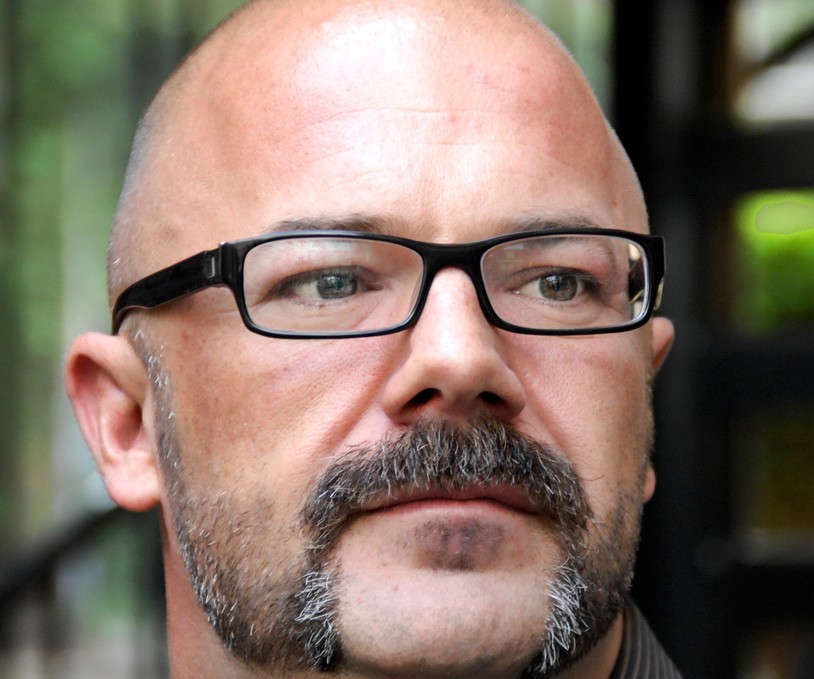
In the free-to-cheapskates segment of Andrew Sullivan’s Weekly Dish, he discusses some of the cultural sea change convulsing American society and how that will inevitably feed into the political situation in an election year:

A building burning in Minneapolis following the death of George Floyd.
Photo by Hungryogrephotos via Wikipedia.

We]re now two years out from what may in retrospect be seen as peak “social justice”. In the summer of 2020, a hefty section of the elite was enthralled with the idea of the police being defunded, demobilized and demonized. Critical theory’s critique of liberal democracy as a mere mask for “white supremacy” everywhere. Countless people were required to read woke tracts — from DiAngelo to Kendi — as part of their employment. Corporate America jumped in, shedding any pretense of political neutrality; mainstream media swiftly adopted the new language and premises of critical theory. The Trump madness, and his attempted sabotage of an election, largely silenced liberals in their clash with the left. They had a more immediate threat. And rightly so.

But now look where we are.

Last year, Eric Adams became mayor of New York City, propelled by minority voters horrified by surging crime and chaos. This past week, DA Chesa Boudin, scion of leftwing terrorists, was ousted by minority voters in San Francisco, after he allowed much of the city to become a chaotic hellhole in pursuit of “racial justice”.

Recent polling suggests a sea-change in attitudes. Pew found that only three percent of African-Americans put “racism/diversity/culture” as the most important issue to them while 17 percent cited “violence/crime”, and 11 percent said “economic issues”. (Among Democrats overall, “49% now view racism as a major problem, down from 67% about a year ago”.) New York City voters now put “crime” ahead of “racial inequality” as their most urgent concern by a huge ratio of 12:1. Polling in San Francisco found that 67 percent of Asian-Americans wanted Boudin gone — a sign that the Democrats’ ascendant coalition of non-whites is now fast-descendant.

Hispanics also appear to be fleeing the left. In the usually Dem-friendly Quinnipiac poll last month, “48% of Hispanic registered voters said they wanted Republicans to take control of the House of Representatives, while just 34% said they wanted Democrats in power. In addition, 49% of Hispanic voters said they wanted the GOP to win the Senate, while 36% said they wanted Democrats to remain in control of the chamber.” Biden’s approval among Hispanics is now 24 percent. I’m not sure what to make of this, but even if it’s half true, it’s an electoral emergency for Democrats.

Some Dem pols have noticed the vast cultural gap between most Latino voters and wealthy white leftists, and adjusted. Democratic Congressman Ritchie Torres last week criticized the use of the absurd term “Latinx” — because denying the sex binary is not exactly integral to a culture where the language itself is divided into masculine and feminine. AOC, of course, demurs.

Elite imposition of the new social justice religion — indoctrinating children in the precepts and premises of critical race and gender theory — has also met ferocious backlash as parents began to absorb what their kids were being taught: that America is a uniquely evil country based forever on white supremacy; that your race is the most important thing about you; that biological sex must be replaced by socially constructed genders of near-infinite number; and that all this needs to be taught in kindergarten. Yes, some of this was politically exploited or hyped by the right. But if you think there is no there there in this concern about schooling, you’re dreaming.

Across the country, school boards are thereby in turmoil, with those supporting less ideological education on the march. On the question of trans rights, there is broad support for inclusion — but most Americans are understandably uncomfortable with pre-pubescent kids having irreversible sex changes, and with trans women competing with women in sports. For which those normies are called “hateful”.

May 31, 2022

A new history of the evil empire. No, not that one. Not that one either. The other evil empire!

Filed under: Africa, Asia, Books, Britain, History, Military — Tags: , , , , , , — Nicholas @ 03:00

In The Critic, Barnaby Crowcroft reviews Caroline Elkins’ new history of the British empire, Legacy of Violence:

Elkins is correct that British decolonisation after the end of the war — if not “white-washed” — has got off lightly among historians, often via a contrast with the dreadful behaviour of the French. We remain far too influenced by the impression that Britain willingly and amicably handed over power (as Harold Macmillan put it) to Asian and African representatives of “agreeable, educated, Liberal, North Oxford society”.

There is a single map in this book which should definitively dispose of such ideas, showing all the colonial conflicts and states of emergency Britain was engaged in around the world after 1945. There are the well-known counterinsurgencies in Palestine, Malaya, Kenya, Cyprus and Aden. Alongside other, less well-known ones, however — British Guiana, Malaysia, Belize, Oman and the New Hebrides — bring us pretty much into the 1980s without a single year of global colonial peace.

In Kenya and Malaya, the British carried out massive coercive interventions in the 1950s, including the forcible resettlement of over a million people into closely monitored “new villages”, which, if they cannot be likened to concentration camps, certainly resemble the kinds of things the French were doing in Algeria. Difficult though it is to believe today, until very recently the British were a “warlike” and patriotic people, and their agents could be ruthless in the pursuit of imperial interest overseas.

Unfortunately, it is not possible to take seriously the more grandiose claims of Legacy of Violence, including Elkins’ presumption to have uncovered the Key to All Mythologies of British imperial wickedness in the form of Liberalism and Racism. The prose is part of the problem. Her introductory statement of the book’s bombastic aims reads more like something written by a professional satirist, than a professional historian.

“To study the British empire,” she writes, “is to unlock memory’s gate using the key of historical enquiry. But once inside, history’s fortress is bewildering … Unlike mythical fire-breathing monsters, however, the creatures inhabiting the annals of Britain’s imperial past are not illusions [but] monstrosities [which] inflicted untold suffering …”

Much of the book is given over to a plodding chronicle of nineteenth- and twentieth-century British history, in which events are construed — and often misconstrued — to give the meanest possible interpretation. British “arch-imperialists” resemble cartoon villains, who wear “Hitleresque moustaches” and “racist coattails” and are awarded MBEs and OBEs according to how much harm they inflict upon colonial subjects. There is even an imaginative reconstruction of British pilots all but laughing as they machine-gun “defenceless women and children”; readers are invited to listen to their “screams of pain”.

To determine whether Britain’s empire was uniquely violent invites the question: compared to what? Niall Ferguson earned opprobrium for suggesting in 2003 that alongside the rival empires which arose to challenge it in the middle of the twentieth century, Britain’s looked pretty attractive.

To her credit, Elkins does not disagree with this. Her treatment of Malaya’s communist insurgency suggests that she is not particularly exercised by violence when it is committed by ideological confrères. The only thing we get in the way of any broader comparison, however, is the notably wishy-washy one implied between the “East and the West”, which she describes as the contrast between “humanity and inhumanity”.

May 26, 2022

Alex Tabarrok reviews The Parent Trap

Filed under: Books, Economics, Education, USA — Tags: , , , , — Nicholas @ 03:00

At Marginal Revolution, Alex Tabarrok looks at Nate G. Hilger’s new book, The Parent Trap:

Hilger argues that the problems of poverty, pathology and inequality that bedevil the United States are not primarily due to poor schools, discrimination, or low incomes per se. The primary cause is parents: parents who are unable to teach their children the skills that are necessary to succeed in the modern world. Since parents can’t teach the necessary skills, Hilger calls for the state to take their place with a dramatic expansion of not just child care but collective parenting.

Let’s unpack some details. Begin with schooling. It’s very common to bemoan the state of schools in the “inner city” or to complain about “local financing” which supposedly guarantees that poor counties will have underfunded schools. All of this, however, is decades out-of-date.

    A hundred years ago there really were massive public-school resource gaps by class and race. These days, however, state and federal spending play a larger role than local property tax revenue and distribute educational resources more progressively … In fact, when we include federal aid, 42 states spent more on poor school districts than on rich school districts in 2012. The same pattern holds between schools within districts

    … The highest spending districts are large urban centers such as New York City, Boston and Baltimore. These cities spend large sums to educate rich and poor children alike. p. 10-11

Hilger is correct. No matter what you saw on The Wire, Baltimore spends more than sixteen thousand dollars per student, among the highest in the nation in large school districts and above average for the nation as a whole. Public schools are quite egalitarian in funding with any bias running towards more funding for poorer districts.

Schools, Hilger writes are “actually the smallest and most equalizing part of a much larger skill-building system.” The real problem, says Hilger, are parents.

But what about discrimination? When it comes to wage discrimination, Hilger is brutally honest:

    If we compare individuals with similar cognitive test scores, Black college graduates earn higher wages than white college graduates. Studies that don’t control for test score differences but examine earnings gaps within specific professions — lawyers, physicians, nurses, engineers, scientists — tend to find Black workers earn zero to 10 percent less than white workers. These gaps could reflect discrimination, unmeasured skill differences, or other factors such as geography. In any case, such gaps are small compared to the 50 percent overall Black-white earnings gap and reinforce the idea that closing skills gaps would go a long way toward closing income gaps.

Hilger argues that racism does play an important role in explaining Black-white wage differentials but it’s the historical racism that made black parents less skilled and less able to pass on skills to their children. In the twentieth century, Asians, Hilger argues, were discriminated against in the United States at least much as Black Americans. But the Asians that came to the United States had high skills while the legacy of slavery meant that Black Americans began with low skills. Asians, therefore, were better able to overcome discrimination. The success of Nigerians and Jamaican immigrants in the United States also speaks to this point. (Long time readers may recall that in 2016 I dubbed Hilger’s paper on Asian Americans and Black Americans the Politically Incorrect Paper of the Year.)

May 8, 2022

QotD: Identity politics in SF

Filed under: Books, Politics, Quotations — Tags: , , , — Nicholas @ 01:00

This story also points out another problematic issue, one that is the focus of the entire collection (or indeed, Jemisin’s entire career): Racial Identity. This issue could probably be the subject of another whole essay, and the fact that I would be excoriated up and down for writing it would be a condemnation of the rigidly politically correct conformist turn SF fandom has taken, and greater society as a whole.

The reason Racial Identity fails in Science Fiction is because there are only a few ways to cover the topic, and they are extremely limited in impact. They’ve been done to death, and there’s virtually no way to breathe new life into them without making them even less authentic.

The first is what you see in this story. Race as an utterly unimportant factor. We are told by the Narrator that it doesn’t matter – that racially specific descriptors are still used but they don’t carry the negative connotations they do (or at least that she claims they do) in our usage. But if the race of the one highlighted character doesn’t matter in a postulated SF world, then guess what, it doesn’t matter at all. The story could be told with a character of any race in that role if it truly did not matter in that world. Race would be mere window dressing. The only use of that character’s race in this story was to bludgeon the reader with accusations of racism while being straw-manned into saying that who she is is somehow shocking.

Even worse, this opens up the author (unless she’s a black woman) to criticisms of tokenism, or ignoring racial issues, or whitewashing over them. Our friend the “Social Worker” could be accused of “Acting White” since her behavior isn’t specifically ethnic. (This unavoidable criticism becomes a straitjacket on the writer.) But addressing that leads to the next sort of problem.

The second way that Racial Identity fails in Science Fiction is a current-day parable set in the future. If your story set a hundred or a thousand years in the future has race relations that haven’t changed a bit from the current day attitudes, then what is the point? Are you saying that they will never improve? Is racial equality a futile dream, destined to be sabotaged forever by society? That’s pretty dismal. But it could be worse …

The third way, rarely seen, is that relations could be even worse. I haven’t yet encountered any in my own reading, but I imagine the result would take the form of stories set in some kind of racial civil war. And even if the author takes the side of the Black Union, the result really isn’t that far from the fever dreams of the readers of The Turner Diaries. Oh, I suppose it might find an audience in the self-loathing white SJWs who hand out Hugos who feel they deserve to see themselves destroyed by proxy, or militant racial separatists on the other side. But are either of these really that large of an audience, and even if they are, do you really want to serve them?

I suppose the fourth is the Inversion tale. But given how the audience for the third way to write these things reacts to an example like Farnham’s Freehold, their desire to read a racial revenge fantasy has to be tempered by the risk of being declared a racist by their fellows.

By the way, you could say the same thing for almost any form of identity politics. And while it’s possible to have these as an element in the worldbuilding of your stories, to make them the centerpiece of your tale simply kneecaps your tale from the outset. There are four ways to do it, but all of them are wrong. Social Justice has made it so, and the only way to get a pass depends on the skin color of the author.

Dr. Mauser, “Message Received”, Shoplifting in the Marketplace of Ideas, 2019-01-30.

May 5, 2022

QotD: Critical Race Theory, the “successor ideology”

Filed under: Media, Politics, Quotations, USA — Tags: , , , , — Nicholas @ 01:00

The reason “critical race theory” is a decent approximation for this new orthodoxy is that it was precisely this exasperation with liberalism’s seeming inability to end racial inequality in a generation that prompted Derrick Bell et al. to come up with the term in the first place, and Kimberlé Crenshaw to subsequently universalize it beyond race to every other possible dimension of human identity (“intersectionality”).

A specter of invisible and unfalsifiable “systems” and “structures” and “internal biases” arrived to hover over the world. Some of this critique was specific and helpful: the legacy of redlining, the depth of the wealth gap. But much was tendentious post-modern theorizing. The popular breakthrough was Ta-Nehisi Coates’ essay on reparations in the Atlantic and his subsequent, gut-wrenching memoir, Between The World And Me. He combined the worldview and vocabulary of CRT with the vivid lived experience of his own biography. He is a beautifully gifted writer, and I am not surprised he had such an emotional impact, even if, in my view, the power of his prose blinded many to the radical implications of the ideology he surrendered to, in what many of his blog readers called his “blue period”.

The movement is much broader than race — as anyone who is dealing with matters of sex and gender will tell you. The best moniker I’ve read to describe this mishmash of postmodern thought and therapy culture ascendant among liberal white elites is Wesley Yang’s coinage: “the successor ideology”. The “structural oppression” is white supremacy, but that can also be expressed more broadly, along Crenshaw lines: to describe a hegemony that is saturated with “anti-Blackness”, misogyny, and transphobia, in a miasma of social “cis-heteronormative patriarchal white supremacy”. And the term “successor ideology” works because it centers the fact that this ideology wishes, first and foremost, to repeal and succeed a liberal society and democracy.

In the successor ideology, there is no escape, no refuge, from the ongoing nightmare of oppression and violence — and you are either fighting this and “on the right side of history”, or you are against it and abetting evil. There is no neutrality. No space for skepticism. No room for debate. No space even for staying silent. (Silence, remember, is violence — perhaps the most profoundly anti-liberal slogan ever invented.)

And that tells you about the will to power behind it. Liberalism leaves you alone. The successor ideology will never let go of you. Liberalism is only concerned with your actions. The successor ideology is concerned with your mind, your psyche, and the deepest recesses of your soul. Liberalism will let you do your job, and let you keep your politics private. S.I. will force you into a struggle session as a condition for employment.

Andrew Sullivan, “What Happened To You?”, The Weekly Dish, 2021-07-09.

May 2, 2022

QotD: Online education

Filed under: Education, Quotations, USA — Tags: , , , , , — Nicholas @ 01:00

The great online-ening of the past year has shown just how useless so much of the modern “economy” is. To take just the most obvious example, ask any teacher how important face-to-face instruction is. If you’d asked them before March, you’d be forgiven for thinking that teaching is some kind of super-skilled, rocket scientist-level job that only years of training and fanatical, monk-like dedication can prepare you for. Post-COVID, and “education” means “log in, look at the Powerpoint, and answer the multiple choice quiz … you know, whenever you feel like it. Or don’t, it’s all good, because following schedules and completing assignments is racist.”

And that’s just college, which now more than ever is exactly what the sententious goobers on the faculty always said it was: A professional football team with a few classrooms attached. They’re memory-holed now, no doubt, but I recall a time over the summer when a few studies on the impact of online “learning” came out. They were worse than even I expected, and I’m cynical enough to give Diogenes wood. Some huge fraction of kids never even bothered logging on. At all. And, of course, they were promoted to the next grade …

Severian, “More Scattered Thoughts”, Rotten Chestnuts, 2020-10-13.

April 2, 2022

Jon Stewart believes that “… the only thing that can possibly explain racial inequality today in America is still ‘white supremacy'”

Filed under: History, Media, Politics, USA — Tags: , , , — Nicholas @ 05:00

Andrew Sullivan recounts his experiences on one of Jon Stewart’s shows:

Jon Stewart at the Montclair Film Festival, 7 May, 2016.
Wikimedia Commons.

… I found out, in fact, that there would be two other guests, and that it would, indeed, be a debate. Surprise! As the show started, I also realized for the first time there was a live studio audience and that the episode was called “The Problem With White People” — a title I’d never have been a party to, if I’d known in advance. (I wouldn’t go on a show called “The Problem With Jews” or “The Problem With Black People” either.) At that point I should have climbed carefully off the stake, tamped down the flames, made a path through the kindling, and walked away.

I protested to the producers that I’d been ambushed. And to be fair, they gave me the option of backing out at the last minute. But I didn’t want to leave them in the lurch, reassured myself that Stewart was a pro, and said I’d go ahead. I just assumed he wouldn’t demonize or curse at a guest; he would moderate; he would entertain counter-arguments; he would defend fair play. After all, this was the man who had lacerated Crossfire for bringing too much heat and not enough light. He believed in sane discourse. He was a liberal, right?

Wrong.

On the race question, Stewart has decided to go way past even Robin DiAngelo, in his passionate anti-whiteness. His opening monologue was intoned at times in a somber tone, as if he were delivering hard truths that only bigots could disagree with. He argued that no one in America had been prepared to have an honest discussion about race — until the “reckoning” of 2020. He also suggested that nothing had been done by whites to support African-Americans from 1619 (yes, he went there) … till now. The most obvious solution — reparations — was, he implied, somehow, absurdly, taboo.

His montage of “black voices” insisted that African-Americans are still granted only conditional citizenship, are still barred from owning property — “we don’t own anything!” — and ended with Sister Souljah — yes! — explaining that the thing that kills black people are not bullets, but white people. This is the same moral avatar who once said: “If black people kill black people every day, why not have a week and kill white people?” Stewart then hailed Angela Davis — a proud Communist, with a particular fondness for East Germany’s suppression of dissent — and warmly thanked her as “Angela”. But Stewart included not a single black voice of disagreement or nuance. He apparently believes that all black people hold the same view. And all white people just refuse to hear it.

Jon Stewart’s insistence that Americans had never robustly debated race before 2020 is also, well, deranged. Americans have been loudly debating it for centuries. There was something called a Civil War over it. His claim that white America has never done anything in defense of black Americans (until BLM showed up, of course) requires him to ignore more than 300,000 white men who gave their lives to defeat the slaveholding Confederacy. It requires Stewart to ignore the countless whites (often Jewish) who risked and gave their lives in the Civil Rights Movement. It requires him to erase the greatest president in American history. This glib dismissal of all white Americans throughout history, even those who risked everything to expand equality, is, when you come to think about it, obscene.

Stewart’s claim that whites never tried to ameliorate black suffering until now requires him to dismiss over $19 trillion of public funds spent in the long War on Poverty, focused especially on black Americans. That’s the equivalent of more than 140 Marshall Plans. As Samuel Kronen has shown, it requires the erasure from history of “the Food Stamp Act of 1964, the Child Nutrition Act of 1966, the Social Security Amendments of 1965, the Elementary and Secondary Education Act of 1965, the Social Security Amendments of 1962, and the Economic Opportunity Act of 1964, and on and on.” To prove his point, Stewart has to pretend LBJ never existed. That’s how utterly lost he now is.

Stewart then used crude metrics of inequality to argue, Kendi-style, without any evidence, that the only thing that can possibly explain racial inequality today in America is still “white supremacy”. Other factors — concentrated poverty, insanely high rates of crime and violence, acute family breakdown, a teen culture that equates success with whiteness, lack of affordable childcare — went either unmentioned or openly mocked as self-evident expressions of bigotry. He then equated formal legal segregation with voluntary residential segregation, as if Jim Crow were still in force. And he straw-manned the countering argument thus: white America believes that African-Americans are “solely responsible for their community’s struggles”.

I don’t know anyone who believes that. I sure don’t. It’s much more complex than that. And it’s that complexity that some of us are insisting on — and that Stewart wants to dismiss out of hand in favor of his own Manichean moral preening. His final peroration ended thus: “America has always prioritized white comfort over black survival.” Note: always. There has been no real progress; white people have never actually listened to a black person; America is irredeemably racist. Those fucking white men, Lincoln and LBJ, never gave a shit.

March 29, 2022

QotD: SJW white guilt

Filed under: Politics, Quotations, USA — Tags: , , , , — Nicholas @ 01:00

If you scratch a Liberal, underneath you find that they are exactly what they hate. In this case, the driving force is what they call White Guilt. The reason they believe that white people are inherently, unchangeably, and institutionally racist is because they see it in themselves, and they therefore believe it is true in everyone else (Hint: It isn’t). But they believe themselves to be better because they acknowledge it, and go through all the rigamarole to make up for it and be a good ally.

In short, reading shit like this is penance for being white. Subjecting themselves to a stream of invective about their failings for being white gives them absolution. It’s kinda like those folks in the BDSM community who seek out a black dominatrix to work out their guilty feelings, and having paid for verbal abuse and a beating, feel that they’ve done their bit for race relations, and for the liberal side of the SF community, Mistress Nora is just the ticket, and they are paying her with sales and awards for all the abuse they can stomach.

Dr. Mauser, “Message Received”, Shoplifting in the Marketplace of Ideas, 2019-01-30.

March 24, 2022

What a bunch of hosers! Take off, eh?

Filed under: Cancon, History, Humour, Media — Tags: , , , , , , — Nicholas @ 03:00

In The Line (which is operating on skeleton staff due to March break), Laura Mitchell considers the existential question of Canadian nationhood: what if we’re just a bunch of hosers?

Bob and Doug MacKenzie’s “Great White North” on SCTV.
Screencapture from YouTube.

Remember Bob and Doug MacKenzie? I’m old enough to have owned a bag featuring this pair, Canada’s quintessential Hosers. But for those of you who might not remember, Bob and Doug were a pair of TV characters played by Canadian comedians Rick Moranis and Dave Thomas, who played up Canada’s silly, self-deprecating sense of humour on SCTV.

[…]

Now, The Canadian Encyclopedia has a definition and an entry to define this particular personality subtype, and it’s not terribly flattering:

    Hoser: is a slang word for a Canadian of limited intelligence and little education.

I profoundly disagree. Hoser is all of us and we are all hosers.

Hidden in the silliness of baby bottle beer chugging and yodelling, there is subtle genius to the premise behind these characters (beyond the genius of the entire concept, of course — Bob and Doug sketches were cheekily and overtly mocking “CanCon” rules by providing government regulators content that was wildly over the top in its stereotypical portrayal of an average Canadian). In this particular sketch, we see just two normal dudes concerned about local matters and asking basic questions. They don’t try to be anything more than they are and they don’t apologize.

In the entry above in the Canadian Encyclopedia, there is much hand wringing over the idea that a hoser has to be white. This obviously stems from the fact Rick Moranis and Dave Thomas are white and the skits are set in rural Ontario in the early ’80s, when Canada was noticeably less diverse. But focusing on race misses the point of the whole thing. Hoserdom isn’t racial, it is a state of mind. To be a Hoser is to accept your place in the world and to be at peace with it.

[…]

The Canada of the 21st century is suffering from an identity crisis — somewhere along the line we stopped feeling inferior and began to fancy ourselves superior. Whether it be our health-care system, immigration policies, perceived influence on global affairs or success of some of our celebrities (looking at you, Celine Dion), we took on a feeling of grandiose majesty we simply don’t deserve. Our current prime minister is the personification of this collective delusion — pretty on the outside but hollow and fake beneath. Canada is alarmingly little more than a two-bit Instagram influencer with a closet full of free designer clothes but no ability to pay the gas bill.

March 17, 2022

If everything is about justice, then nothing is

Filed under: Environment, Media, Politics, USA — Tags: , , , , , , — Nicholas @ 03:00

At Astral Codex Ten, Scott Alexander wonders why everything these days is said to be about “justice”:

Freddie deBoer says we’re a planet of cops. Maybe that’s why justice is eating the world.

Helping the poor becomes economic justice. If they’re minorities, then it’s racial justice, itself a subspecies of social justice. Saving the environment becomes environmental justice, except when it’s about climate change in which case it’s climate justice. Caring about young people is actually about fighting for intergenerational justice. The very laws of space and time are subject to spatial justice and temporal justice.

I can’t find clear evidence on Google Trends that use of these terms is increasing — I just feel like I’ve been hearing them more and more often. Nor can I find a simple story behind why — it’s got to have something to do with Rawls, but I can’t trace any of these back to specific Rawlsian philosophers. Some of it seems to have something to do with Amartya Sen, who I don’t know enough about to have an opinion. But mostly it just seems to be the zeitgeist.

This is mostly a semantic shift — instead of saying “we should help the poor”, you can say “we should pursue economic justice”. But different framings have slightly different implications and connotations, and it’s worth examining what connotations all this justice talk has.

“We should help the poor” mildly suggests a friendly optimistic picture of progress. We are helpers — good people who are nice to others because that’s who we are. And the poor get helped — the world becomes a better place. Sometimes people go further: “We should save the poor” (or the whales, doesn’t matter). That makes us saviors, a rather more impressive title than helpers. And at the end of it, people/whales/whatever are saved — we’re one step closer to saving the world. Extrapolate the line out far enough, and you can dream of utopia.

“We should pursue economic justice” suggests other assumptions. Current economic conditions are unjust. There is some particular way to make them just, or at least closer to just. We have some kind of obligation to pursue it. We are not helpers or saviors, who can pat ourselves on the back and feel heroic for leaving the world better than we found it. We are some weird superposition of criminals and cops, both responsible for breaking the moral law and responsible for restoring it, trying to redress some sort of violation. The end result isn’t utopia, it’s people getting what they deserve.

(cf. Thomas Jefferson: “I tremble for my country when I remember that God is just.”)

What is “climate justice”? Was the Little Ice Age unjust? What if it killed millions? Is it unjust for Mali to have a less pleasant climate than California? What if I said that there’s a really high correlation between temperature and GDP, and Mali’s awful climate is a big part of why it’s so poor? Climate justice couldn’t care less about any of this. Why not? Hard to say. Maybe because there’s no violation and no villain.

March 14, 2022

“Mister, we could use a man like Herbert Hoover Warren Harding again …”

Filed under: Economics, Government, History, USA — Tags: , , , , , , — Nicholas @ 03:00

Kind words for the oft-maligned 29th president of the United States? Daniel J. Mitchell is all over it:

Warren G. Harding, 14 June 1920.
Library of Congress control number 2016828156

Today, we’re going to celebrate the fiscal achievements of Warren Harding.

Most notably, as illustrated by this chart based on OMB data, he presided over a period of remarkable spending discipline.

Harding also launched very big — and very effective — reductions in tax rates.

And his agenda of less government and lower tax rates helped bring about a quick end to a massive economic downturn (unlike the big-government policies of Hoover and Roosevelt, which deepened and lengthened the Great Depression).

In an article for National Review last year, Kyle Smith praised President Harding’s economic stewardship.

    In a moment of national crisis, Warren G. Harding restored the economic health of the United States … America in 1921 was in a state of crisis, reeling from the worst recession in half a century, the most severe deflationary spiral on record … Unemployment, it is now estimated, stood somewhere between 8.7 and 11.7 percent as returning soldiers inflated the size of the working-age population.

    Between 1919 and August of 1921 the Dow Jones average plummeted 47 percent. Harding’s response to this emergency was largely to let the cycle play out … The recession ended in mid-year, and boom times followed. Harding and Congress cut federal spending nearly in half, from 6.5 percent of GDP to 3.5 percent. The top tax rate came down from 73 percent to 25, and the tax base broadened. Unemployment came down to an estimated 2 to 4 percent … Harding was a smashing success in a historically important role as the anti-Wilson: He restored a classically liberal, rights-focused, limited government, and deserves immense credit for the economic boom that kicked off in his first year and continued throughout the rest of the 1920s.

Smith’s article also praises Harding for reversing some of Woodrow Wilson’s most odious policies, such as racial discrimination and imprisoning political opponents (Wilson also had a terrible record on economic issues).

Of course, Harding’s term is much more often remembered for the scandals, and as most modern historians are far more interested in Woodrow Wilson’s bold progressivism they almost always decry Harding and then Coolidge for dismantling a lot of Wilson’s more enthusiastic progressive projects. Even H.L. Mencken — very much not a Wilson fan — found Harding to be not to his taste in turn:

On the question of the logical content of Dr. Harding’s harangue of last Friday, I do not presume to have views … But when it comes to the style of the great man’s discourse, I can speak with … somewhat more competence, for I have earned most of my livelihood for twenty years past by translating the bad English of a multitude of authors into measurably better English. Thus qualified professionally, I rise to pay my small tribute to Dr. Harding. Setting aside a college professor or two and half a dozen dipsomaniacal newspaper reporters, he takes the first place in my Valhalla of literati. That is, he writes the worst English that I have ever encountered. It reminds me of a string of wet sponges; it reminds me of tattered washing on the line; it reminds me of stale bean soup, of college yells, of dogs barking idiotically through endless nights. It is so bad that a sort of grandeur creeps into it. It drags itself out of the dark abysm … of pish, and crawls insanely up to the topmost pinnacle of posh. It is rumble and bumble. It is flap and doodle. It is balder and dash.

March 13, 2022

The Canada Council for the (woke) Arts

Filed under: Bureaucracy, Cancon, Politics — Tags: , , , — Nicholas @ 03:30

In the latest SHuSH newsletter, Kenneth Whyte looks at the origins of the Canada Council for the Arts and compares its original mission to the new direction the crown corporation plans to take:

The Massey Commission (1951), from which all public funding of arts, culture, and scholarly research in Canada derives, and out of which our flagship granting body, the Canada Council for the Arts, was born, knew that it was pushing the nation into perilous terrain. “The dangers inherent” in any system of grants from the central government to arts, letters, and culture was that “the government or its agents would attempt not merely to encourage but to direct” artistic and cultural expression.

The Massey Commission was not the first entity to confront this issue. Much like the Great Canadian Baking Show is a re-staging of the Great British Baking Show, the Massey Commission itself was a knockoff of a UK original (a sad commentary on an initiative intended to define and promote Canada’s unique national identity). The UK effort resulted in the establishment of the British Arts Council, initially chaired by Lord Keynes. Massey quoted him at length on the potential pitfalls of arts funding:

    At last the public exchequer has recognized the support and encouragement of the civilizing arts of life as part of their duty. But we do not intend to socialize this side of social endeavour. Whatever views may be held by the lately warring parties, whom you have been hearing every evening at this hour, about socializing industry, everyone, I fancy, recognizes that the work of the artist in all its aspects is, of its nature, individual and free, undisciplined, unregimented, uncontrolled. The artist walks where the breath of the spirit blows him. He cannot be told his direction; he does not know it himself. But he leads the rest of us into fresh pastures and teaches us to love and to enjoy what we often begin by rejecting, enlarging our sensibility and purifying our instincts. The task of an official body is not to teach or to censor, but to give courage, confidence and opportunity.

The founders of the Canada Council felt so strongly about the dangers of political interests imposing themselves on the arts, using federal money to force artistic and cultural activities in one direction or another, that they built checks and balances into its founding legislation. The Canada Council was made a crown corporation, at arm’s length from political types, and its board members were required to “avoid the promotion of any personal interests” or any other specific interests, whether on behalf of regions or “stakeholder groups”.

I can’t speak to the whole of the Canada Council’s activities, but from what I’ve seen of its annual reports, public statements, and funding practices, the Canada Council has jumped the tracks and is now fully dedicated to teaching, censoring, and directing artistic endeavour.

Here’s Simon Brault, chief executive of the Canada Council, giving an enthusiastic endorsement of the core Trudeau government priorities of Indigenous rights and environmental activism:

    We need to reimagine an arts sector determined to eliminate racism and discrimination in every form, and the legacy of colonialism. We need to reimagine the arts’ rightful place in the conversations that shape our future. And we need to reimagine, through the arts, a greener and more just and equitable world.

Even if you agree with Brault’s priorities, you have to admit that he is not straightforwardly supporting artistic endeavor but pushing the arts-and-culture sector toward the achievement of a socio-political program.

This mission is also explicit in the Canada Council’s new five-year plan, which has surprisingly little to say about lifting artists and arts organizations out of penury, which some might consider a laudable goal after years of financial crisis and pandemic:

Those are the council’s highlights, not mine.

This past week, the politicization of the Canada Council reached new heights when Brault announced that in solidarity with the Ukrainian people he would cease to fund any “activity involving the participation of Russian or Belarusian artists or arts organizations … This includes partnerships, direct and indirect financing of tours, co-productions, participation in festivals or other events held in Russia.”

« Newer PostsOlder Posts »

Powered by WordPress