Quotulatiousness

November 19, 2018

What we know about the sinking of the HNoMS Helge Ingstad near Bergen

Filed under: Europe, Military — Tags: , , , — Nicholas @ 03:00

The Verdigris blog has a very interesting analysis of what seems to have happened leading up to the collision of the Norwegian frigate HNoMS Helge Ingstad and the tanker Sola TS in the restricted waters near Bergen:
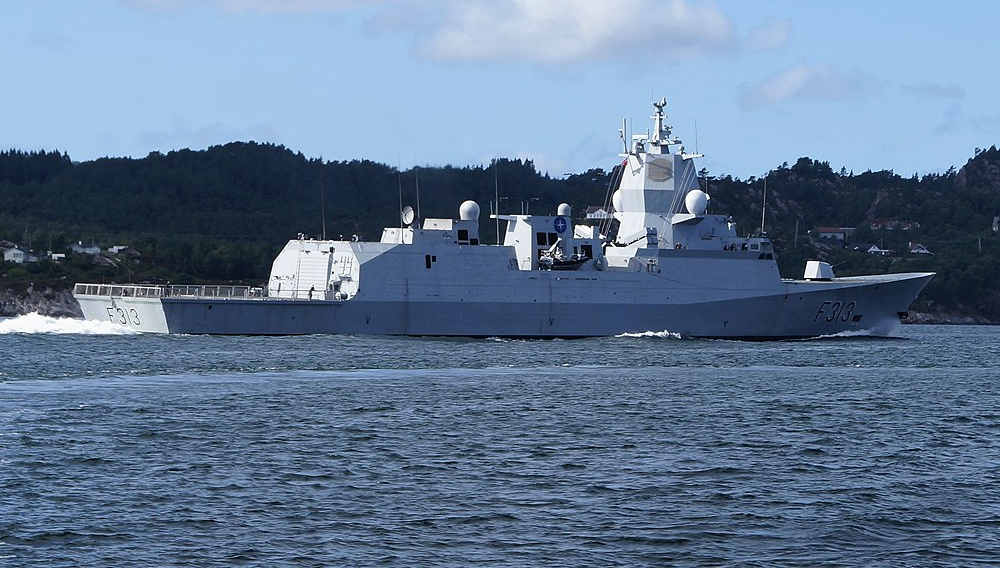
HNoMS Helge Ingstad, a Fridtjof Nansen-class frigate commissioned in 2009.
Photo detail via Wikimedia Commons

The island west of the collision location is Alvoyna in the Oygarden municipality, and the oil terminal at Sture is a busy port that receives large tankers such as the Sola TS which was involved in the collision. Otherwise the islands in this area are relatively sparsely populated with just 4,900 or so inhabitants across the whole municipality. From that we can assume that there would be few lights at night to mark the shoreline, with the exception of the oil terminal which would be brightly lit. The channel is approximately 2 miles wide but is relatively deep, narrowing south of Sture into a channel little over a mile wide.

The collision occurred at approximately 0400 local time on Thursday 8th November 2018. Sunset the previous evening was at approximately 1623; sunrise would not be until 0821. There was no moon; the moon set at around 1718 the previous day and would not rise until 0847. We cannot be certain of the weather conditions which may have restricted visibility. However, there is no evidence of weather or high seas on the radar picture and if visibility was restricted by rain or fog, a ship would be unlikely to be sailing at high speed.

Finally the ships involved. Sola TS is a Maltese flagged oil tanker of 62,000 tonnes. We know she had 23 personnel onboard and after the collision was reported to have little or no damage. Merchant ships are usually well built, especially when carrying petroleum cargoes which if leaked could have devastating environmental consequences; consequently the lack of damage is hardly a surprise. As a result they are sluggish, slow to manoeuvre or accelerate/decelerate. They are not, however, considered to be ‘restricted in their ability to manoeuvre’, a special condition identified in the International Regulations for the Prevention of Collision at Sea – the IRPCS or ‘Rules of the Road’ – this is a condition applied only to vessels which are restricted by their work, such as picking up or laying submarine cables or pipelines, launching or recovering aircraft, carrying out underway replenishment, etc. Sola TS might have been slow to manoeuvre, but she is not exceptional and is unlikely to have carried any special status. Sola TS had a tug, Tenax, in company and might conceivably have been considered to be under tow; however, once again no special status is conferred unless the nature of the tow made it particularly difficult to alter course. The tug is more than likely to have been pacing the tanker, probably not connected and likely a precaution for a fully laden oil tanker in narrow waters.

Helge Ingstad, by contrast, is a Fridtjof Nansen-class air defence frigate of just 5,290 tonnes. Lightly built for speed and manoeuvrability, warships are invariably less robust than merchant ships, but are more tightly compartmented and have more complex damage control arrangements to compensate.
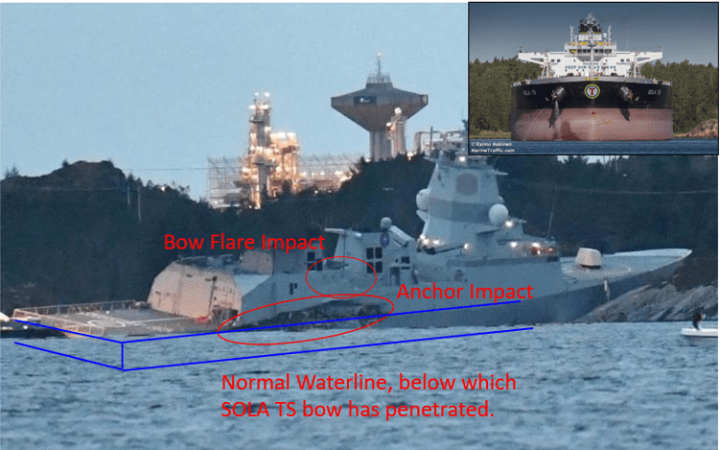
Very quickly after the collision, the Helge Ingstad was run ashore to prevent the ship sinking, but the ship slid down further into the water, despite attempts to keep her close in shore, and eventually slipped down almost completely beneath the waterline:
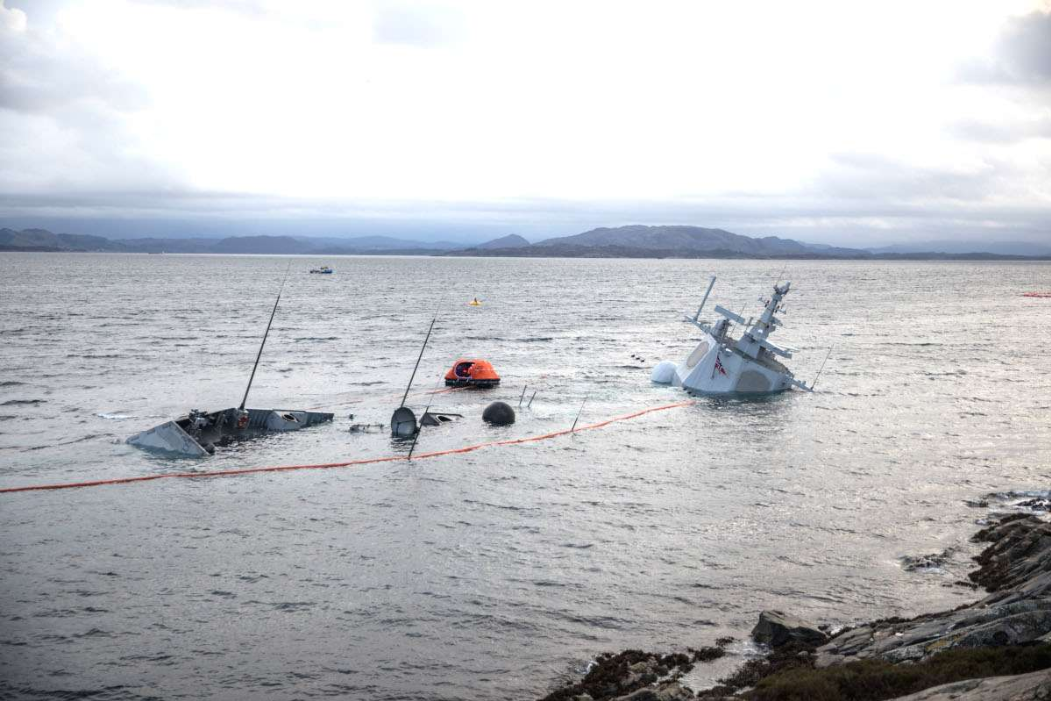
HNoMS Helge Ingstad after grounding, 13 November 2018.
Photo via The Drive.

The consensus among the commenters is that the ship can probably be re-floated, but that the damage to the electronic gear onboard most likely renders her a complete loss:

Regardless of the circumstances, the loss of Helge Ingstad, even temporarily, is a major blow to the Royal Norwegian Navy, which relies on the Fridtjof Nansen-class as its primary surface combatants, especially in a time of increased tensions between Norway and its NATO allies and Russia. The frigate had been on its way back from a massive NATO-led exercise, called Trident Juncture, the largest such drill in decades, when the accident occurred.

If it turns out that Helge Ingstad is a total loss, which seems likely at this point, it could have a significant impact on Norwegian naval operations for years to come. In the meantime, we will continue to follow this story closely and provide any additional updates as they become available.

November 18, 2018

The Mysterious Threat to the Royal Navy – WW2 – 012 17 November 1939

Filed under: Europe, History, Military, Russia, WW2 — Tags: , , , , , , — Nicholas @ 04:00

World War Two
Published on 17 Nov 2018

While the Finns and the Soviets seem to be moving ever closer to war, the Royal Navy is losing ships at a frightening rate to an explosive threat not yet understood.

WW2 day by day, every day is now live on our Instagram account @World_war_two_realtime https://www.instagram.com/world_war_t…

Between 2 Wars: https://www.youtube.com/playlist?list…

Join us on Patreon: https://www.patreon.com/TimeGhostHistory
Or join The TimeGhost Army directly at: https://timeghost.tv

Written and Hosted by: Indy Neidell
Produced and Directed by: Spartacus Olsson and Astrid Deinhard
Executive Producers: Bodo Rittenauer, Astrid Deinhard, Indy Neidell, Spartacus Olsson
Research by: Indy Neidell
Edited by: Wieke Kapteijns and Spartacus Olsson
Community Manager: Joram Appel

Coloring by Spartacus Olsson

Archive by Screenocean/Reuters https://www.screenocean.com
A TimeGhost chronological documentary produced by OnLion Entertainment GmbH

November 16, 2018

The Victors & The Vanquished I THE GREAT WAR Epilogue

Filed under: Europe, Germany, History, Military, WW1 — Tags: , , , — Nicholas @ 04:00

The Great War
Published on 15 Nov 2018

G.J. Meyer: A World Undone

Martin Gilbert: The First World War

Peter Hart: The Great War

David Zabecki: The German Spring Offensives

Alexander Watson: Ring of Steel

Robin Neillands: Western Front Generals

November 12, 2018

German U-Boat Line-Thrower Rifle Conversions

Filed under: Germany, History, Military, Weapons, WW1 — Tags: , , , — Nicholas @ 02:00

Forgotten Weapons
Published on 21 Oct 2018

https://www.forgottenweapons.com/germ…

http://www.patreon.com/ForgottenWeapons

These two Gewehr 98 rifles were converted by the Mauser factory to be used as naval line-throwing rifles. The exact nature of the line and lead projectiles is not clear, but they are clearly original military conversions and came form the Geoffrey Sturgess collection. Entirely new stocks were made for these guns, with a substantially increased length of pull to mitigate the harsh recoil of line throwing. The magazines were blocked with wooden plugs, allowing only one short (blank) round to be held, but allowing that round to be depressed enough to close the rifle’s bolt over it and keep the chamber empty. The barrels were replaced with launch tubes, on 10 inches long with a 2 inch bore and the other 10.5 inches long with a 1.75 inch bore.

Contact:
Forgotten Weapons
PO Box 87647
Tucson, AZ 85754

If you enjoy Forgotten Weapons, check out its sister channel, InRangeTV! http://www.youtube.com/InRangeTVShow

November 11, 2018

In memoriam

Filed under: Britain, History, Military, WW1, WW2 — Tags: , , — Nicholas @ 03:00

A simple recognition of some of our family members who served in the First and Second World Wars:

The Great War

  • A Poppy is to RememberPrivate William Penman, Scots Guards, died 16 May, 1915 at Le Touret, age 25
    (Elizabeth’s great uncle)
  • Private Archibald Turner Mulholland, Argyll & Sutherland Highlanders, mortally wounded 25 September, 1915 at Loos, age 27
    (Elizabeth’s great uncle)
  • Private David Buller, Highland Light Infantry, died 21 October, 1915 at Loos, age 35
    (Elizabeth’s great grandfather)
  • Private Harold Edgar Brand, East Yorkshire Regiment. died 4 June, 1917 at Tournai.
    (My first cousin, three times removed)
  • Private Walter Porteous, Durham Light Infantry, died 4 October, 1917 at Passchendaele, age 18
    (my great uncle)
  • Corporal John Mulholland, Argyll & Sutherland Highlanders, wounded 2 September, 1914 (shortly before the First Battle of the Aisne), wounded again 29 June, 1918, lived through the war.
    (Elizabeth’s great uncle)

The Second World War

  • Flying Officer Richard Porteous, RAF, survived the defeat in Malaya and lived through the war
    (my great uncle)
  • Able Seaman John Penman, RN, served in the Defensively Equipped Merchant fleet on the Murmansk Run (and other convoy routes), lived through the war
    (Elizabeth’s father)
  • Private Archie Black (commissioned after the war and retired as a Major), Gordon Highlanders, captured at Singapore (aged 15) and survived a Japanese POW camp
    (Elizabeth’s uncle)
  • Elizabeth Buller, “Lumberjill” in the Women’s Land Army in Scotland through the war.
    (Elizabeth’s mother)
  • Trooper Leslie Taplan Russon, 3rd Royal Tank Regiment, died at Tobruk, 19 December, 1942 (aged 23).
    A recently discovered relative. Leslie was my father’s first cousin, once removed (and therefore my first cousin, twice removed).

For the curious, the Commonwealth War Graves Commission the Royal British Legion, and the Library and Archives Canada WW1 and WW2 records site provide search engines you can use to look up your family name. The RBL’s Every One Remembered site shows you everyone who died in the Great War in British or Empire service (Canadians, Australians, New Zealanders, South Africans and other Imperial countries). The CWGC site also includes those who died in the Second World War.

In Flanders fields the poppies blow
Between the crosses row on row,
That mark our place; and in the sky
The larks, still bravely singing, fly
Scarce heard amid the guns below.

We are the Dead. Short days ago
We lived, felt dawn, saw sunset glow,
Loved and were loved, and now we lie
In Flanders fields.

Take up our quarrel with the foe:
To you from failing hands we throw
The torch; be yours to hold it high.
If ye break faith with us who die
We shall not sleep, though poppies grow
In Flanders fields.

Lieutenant Colonel John McCrae, MD Canadian Army Medical Corps (1872-1918)

November 9, 2018

Revolution in Germany – Armistice in Austria I THE GREAT WAR Week 224

Filed under: Europe, Germany, History, Military, USA, WW1 — Tags: , , , , , — Nicholas @ 04:00

The Great War
Published on 8 Nov 2018

Unrest within the German Empire is spreading, resentment against the war, the hunger and the elites is turning into revolutionary action and with a mutiny in Kiel the wheels begin to turn quickly. Austria signs an armistice, the Macedonian Front collapses, Romania might enter the war again and the new German political leaders send a delegation through the lines in France. Their goal: An Armistice.

November 8, 2018

What do you do with decommissioned Royal Navy nuclear submarines?

Filed under: Britain, Military — Tags: , , — Nicholas @ 05:00

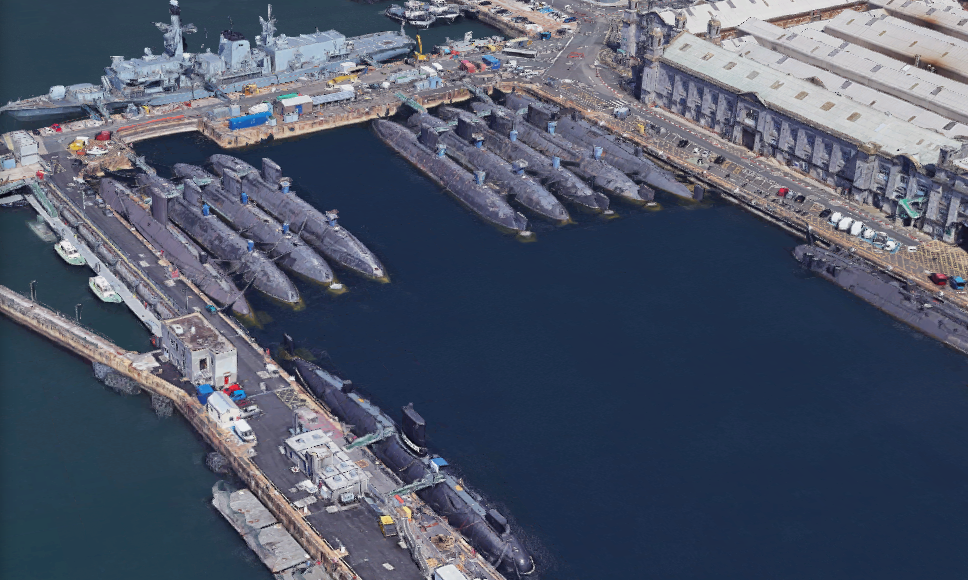
Apparently, based on current MoD practice, you leave them sitting around for decades, until you have more decommissioned boats in storage than the RN has in commission:

Decommissioned Royal Navy nuclear submarines at Devonport.
Screen capture from Google Maps.

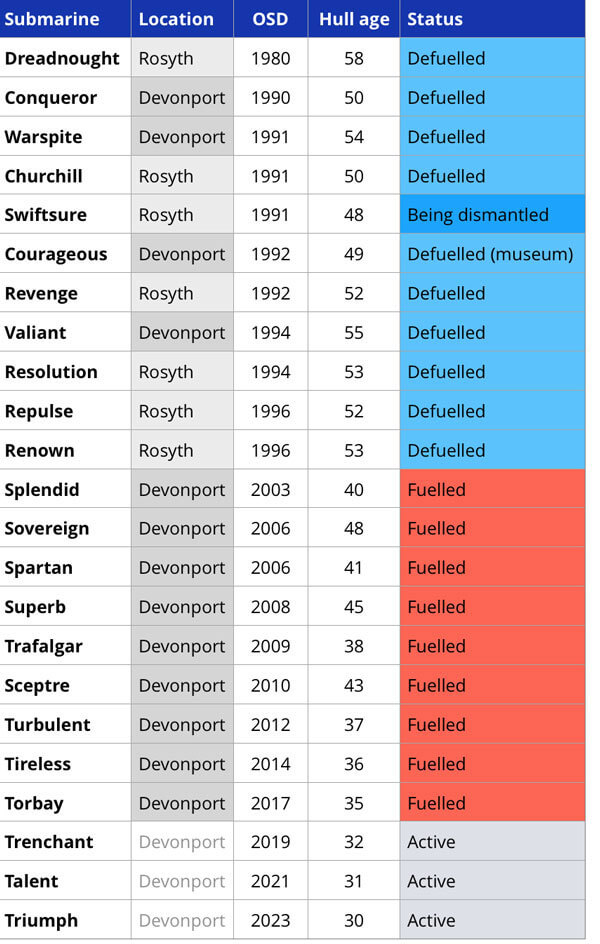
There are currently 20 former Royal Navy nuclear submarines awaiting disposal in Rosyth and Devonport. They do not represent a great hazard but maintaining them safely while they await dismantling is a growing drain on the defence budget. Nuclear submarines are arguably Britain’s most important defence assets but the failure to promptly deal with their legacy has been a national scandal. Although there has been discussion and consultation going back years, only recently has there been action to actually start the disposal process.

Status of Royal Navy submarine disposal in early 2018.
OSD – Out of Service Date. Hull age – years since hull laid down.


Plans for the safe and timely disposal of nuclear submarines should have been drawn up as far back as the 1970s but successive governments have avoided difficult decisions and handed the problem on to their successors. RN submarines were designed so the Reactor Pressure Vessel could be removed from the hull. Other nations cut the entire reactor compartment out of the submarine and transport it to land storage facilities. The US has successfully disposed of over 130 nuclear ships and submarines since the 1980s. The Russians have disposed of over 190 Soviet-era boats (with some international assistance) since the 1990s while France has already disposed of 3 boats from their much smaller numbers.

The first Royal Navy nuclear submarine, HMS Dreadnought decommissioned in 1980, has now been tied up in Rosyth awaiting disposal longer than she was in active service.

As any householder knows, It is sensible practice to dispose of your worn out items before you replace them with new ones.

The capacity to store more boats at Devonport is limited, every further delay adds to cost that will have to come from a defence budget that is much smaller in real terms than when the boats were conceived at the height of the Cold War. Apart from the attraction of deferring costs in the short-term, a major cause of delay has been the selection of a land storage site for the radioactive waste. It has also taken time to develop a method and ready the facilities needed to undertake the dismantling project.

Afloat storage

While awaiting dismantling, decommissioned submarines are stored afloat in a non-tidal basin in the dockyard [as seen in the image at the top of this post]. Classified equipment, stores and flammable materials are removed together with rudders, hydroplanes and propellers while the hull is given treatments to help preserve its life. The 7 submarines in Rosyth have all had their nuclear fuel rods removed but of the 13 in Devonport, 9 are still fuelled. This is because in 2003 the facilities for de-fuelling were deemed no longer safe enough to meet modern regulation standards and the process was halted. Submarines that have not had their fuel rods removed have the reactor primary circuit chemically treated to guarantee it remains inert and additional radiation monitoring equipment is fitted.

More than £16m was spent between 2010-15 just to maintain these old hulks alongside, and costs are rising. Apart from regular monitoring, the hulks need to be hauled out of the basin for occasional dry docking for inspection and repainting to protect the hull from corrosion. All this effort and expense is a drain on precious resources for no direct gain. Responsible care of the growing number of hulls means they pose little risk to the local population, but a tiny risk does remain. This makes some people living nearby uneasy and provides another grievance for those ideologically opposed to nuclear submarines and Trident.

November 6, 2018

Strange History: A Remington Rolling Block From the USS Niagara

Filed under: Americas, Europe, History, Military, USA, Weapons — Tags: , , , , — Nicholas @ 02:00

Forgotten Weapons
Published on 16 Oct 2018

https://www.forgottenweapons.com/stra…

http://www.patreon.com/ForgottenWeapons

The story of the USS Niagara is quite an odd little corner of history. It was a ship built in 1877 and acquired by the US Navy in 1898, fitted out as a water distillery and supply ship. That fitting out was not actually done by the Navy, though, but rather by a group of wealth private citizens in New York, headed by William Randolph Hearst. As an outburst of (allegedly) grassroots support for the US war effort against Spain, these men outfitted and donated the Niagara to the Navy. And the fitted it out like a private yacht, with porcelain china and silver flatware for all the officers and sailors, and much more. The arms and accouterments purchased were all finely stamped or engraved with the name of the ship, including 35 brand new Remington Rolling Block rifles in 7mm Mauser, with “NIAGARA” engraved in bold letters across the top of the receiver.

Once the outfitting was complete and the ship was in Navy service, she sailed down to Cuba, stayed on station for about two months without participating in any action of note, and then sailed back to New York to be decommissioned and sold for scrap. Francis Bannerman was on hand at the scrap auction, and bought most of the small items form the ship (including the rifles). Bannerman’s catalog would list Niagara items until 1927…

Contact:
Forgotten Weapons
PO Box 87647
Tucson, AZ 85754

If you enjoy Forgotten Weapons, check out its sister channel, InRangeTV! http://www.youtube.com/InRangeTVShow

October 31, 2018

Some Criticism of The Infographics Show – Best World War 2 Battleships and Battlecruisers

Filed under: Britain, Germany, History, Japan, Military, USA, WW2 — Tags: , , , — Nicholas @ 02:00

iChaseGaming
Published on 10 Oct 2018

There is something called Wikipedia. You can find it here: https://en.wikipedia.org/wiki/Main_Page

October 27, 2018

HMS Queen Elizabeth to depend on Shock! Horror! Dutch escort!

Filed under: Britain, Europe, Military — Tags: , , , — Nicholas @ 05:00

At the Thin Pinstriped Line, Sir Humphrey explains to “Disgusted of Tunbridge Wells” and all the other would-be Admirals of the Fleet why having a non-RN escort for Britain’s newest aircraft carrier is hardly a bad thing:

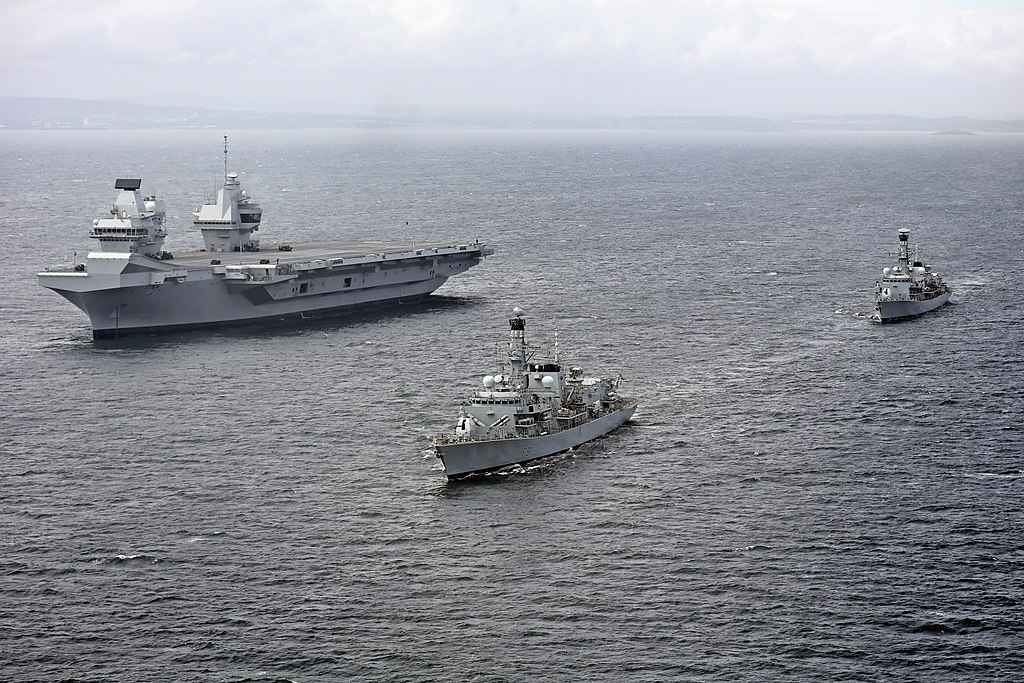
Aerial view of HMS Queen Elizabeth with Type 23 frigates HMS Iron Duke (centre) and HMS Sutherland (right) in June 2017 off the coast of Scotland.
Photo by MOD via Wikimedia Commons.

The United Kingdom has few allies closer than the Netherlands. Both nations are modern, outward looking and instinctively maritime in their view of the world. Long standing NATO partners and with significant experience of working together across the globe, the Netherlands Armed Forces are highly respected as being capable, well equipped and staffed with first rate personnel.

The relationship between the RN and the Royal Netherlands Navy is extremely close, particularly between the Marine Corps and the Submarine Services. It is therefore extremely pleasing to hear that the Netherlands will be deploying a warship to form part of the inaugural ‘Carrier Strike Group’ (CSG) deployments for HMS Queen Elizabeth in 2021 HERE. This is a significant announcement and it has several ramifications that are good news for the Royal Navy.

[…]

There seems to be an exceptionally British trait of moaning at good news. Some people felt that it wasn’t good enough for the RN to be ‘reliant’ on a foreign warship operating as part of the CSG, and that the UK should be going it alone. What utter rot.

It does not mean, despite what some naysayers were desperate to bleat about on social media without any evidence to the contrary, that defence cuts mean the UK is reliant on the Dutch to protect the carrier. The RN has spent a lot of time working out what escorts are needed and ensuring they will be available when necessary as part of the CSG to properly protect the carrier. Any foreign participation is a nice bonus capability to have, not a tacit hint that the RN is short of ships.

The reality of future operations is that the UK is going to operate as part of an international coalition with our friends and allies. Despite the fantasies of some, desperate to see a huge purely British task force sailing around the world looking for a fight and a free trade deal, the fact is that any future military operation is going to be international by design.

Working with allies is critically important but isn’t something you can just do at the drop of a hat. One of the reasons why NATO works so well is because it has spent 70 years investing in common processes, tactics and procedures and exercising them regularly to ensure everyone can work together coherently.

Integrating a Dutch vessel now is vital because it helps build and cement an understanding at operational level of how to work with each other, to learn the capabilities of each other’s ships and how to work them to best effect together. It can also spot unintended issues or problems and help work out how to fix them quickly. This takes time to do, so it is likely that any Dutch vessel assigned in 2021 will have spent a considerable period working up in advance before beginning the deployment proper.

For those who complain that the Royal Navy hasn’t got enough ships to escort the carrier, it is worth reflecting that the Netherlands have a total of 6 frigates. Assuming the normal serviceability rates for escorts apply, then two are likely to be in refit and another in maintenance or training. This leaves just three active vessels at any one time – so in reality, the Netherlands commitment to support the Carrier Strike Group represents them committing a third of their available escort force for a significant amount of time.

October 22, 2018

The Last German E-Boat

Filed under: Britain, Germany, History, Military, USA, WW2 — Tags: , , — Nicholas @ 02:00

Mark Felton Productions
Published on 24 Sep 2018

S-130 is the very last of Germany’s sleek S-Boats, the fast motor torpedo boats known to the British as E-boats, that ravaged shipping around the shores of the UK. Now being restored in Britain, this boat is a rare wartime survivor with an equally fascinating postwar story to match.

Photo credits: British Power Boat Trust, Exercise Tiger Memorial, Barry Lewis, Jim Linwood.

October 21, 2018

The Submarine War – WW2 – 008 October 20 1939

Filed under: Europe, Germany, History, Military, Russia, WW2 — Tags: , , , , , — Nicholas @ 04:00

World War Two
Published on 20 Oct 2018

For the men in the navies of the warring nations in Europe, there was nothing phony about WW2 in October 1939 – mortal danger was immediately under the cold surface at the receiving end of a torpedo or a depth charge…

Join us on Patreon: https://www.patreon.com/TimeGhostHistory
Or join The TimeGhost Army directly at: https://timeghost.tv

Written and Hosted by: Indy Neidell
Produced and Directed by: Spartacus Olsson and Astrid Deinhard
Executive Producers: Bodo Rittenauer, Astrid Deinhard, Indy Neidell, Spartacus Olsson
Research by: Indy Neidell
Edited by: Spartacus Olsson an Ben Ollerenshaw
Trainee editor Sarvesh

Coloring by Spartacus Olsson, Olga Shirnina and Norman Stewart

Olga’s pictures: https://klimbim2014.wordpress.com
Norman’s pictures https://oldtimesincolor.blogspot.com/

Archive by Screenocean/Reuters https://www.screenocean.com

A TimeGhost chronological documentary produced by OnLion Entertainment GmbH

October 9, 2018

The Falklands – MiniWars #1

Filed under: Americas, Britain, History, Military — Tags: , , , , — Nicholas @ 02:00

OverSimplified
Published on 22 Oct 2017

“HEY OVERSIMPLIFIED, WHERE’S WW2?!”
Don’t worry, WW2 is still coming! Here’s a little something in the meantime!

If you would like to see more OverSimplified on a more regular basis, please consider supporting me on Patreon (Patreon rewards coming soon):
https://www.patreon.com/OverSimple

October 5, 2018

Know Your Ship #50 – C and D Class Destroyers – HMS Crescent & Diana, HMCS Fraser & Margaree

Filed under: Britain, Cancon, History, Military, WW2 — Tags: , , — Nicholas @ 02:00

iChaseGaming
Published on 10 Sep 2018

A Know Your Ship episode talking about C & D class destroyers, in particular HMS Crescent and Diana and their later service as part of the Royal Canadian Navy HMCS Fraser and Margaree. Enjoy!

September 26, 2018

The last British carriers before the Queen Elizabeth class

Filed under: Britain, History, Military — Tags: , , , , , , — Nicholas @ 06:00

This is a long, long thread from @EngageStrategy, so I’m putting it below the fold for those who aren’t interested and don’t want to scroll down for hours…

It covers the near-death experience of British carriers in the 1960s (the cancellation of the last fleet carriers), the odd evolution of the “through deck command cruisers” (Invincible, Illustrious, and Ark Royal), the development of the Harrier, and the very near-run thing that was the carriers’ share of combat duty during the Falklands War.

(more…)

« Newer PostsOlder Posts »

Powered by WordPress