
Regardless of T.O., all military bureaucracies consist of a Surprise Party Department, a Practical Joke Department, and a Fairy Godmother Department. The first two process most matters as the third is very small; the Fairy Godmother Department is one elderly female GS-5 clerk usually out on sick leave.
Robert A. Heinlein, Glory Road, 1963.
October 23, 2020
QotD: Every military organization
Comments Off on QotD: Every military organization
October 14, 2020
Wolfpack Killers – U-Boat Tactics – WW2 Special
World War Two
Published 13 Oct 2020German U-Boats were a big threat to Allied shipping across the Atlantic. New inventions and tactics triggered a race to outsmart the opponent, dramatically changing the tides of the Battle of the Atlantic every few months.
Join us on Patreon: https://www.patreon.com/TimeGhostHistory
Or join The TimeGhost Army directly at: https://timeghost.tvFollow WW2 day by day on Instagram @ww2_day_by_day – https://www.instagram.com/ww2_day_by_day
Between 2 Wars: https://www.youtube.com/playlist?list…
Source list: http://bit.ly/WW2sourcesHosted by: Indy Neidell
Written by: Joram Appel
Director: Astrid Deinhard
Producers: Astrid Deinhard and Spartacus Olsson
Executive Producers: Astrid Deinhard, Indy Neidell, Spartacus Olsson, Bodo Rittenauer
Creative Producer: Maria Kyhle
Post-Production Director: Wieke Kapteijns
Research by: Joram Appel
Edited by: Miki Cackowski
Sound design: Marek Kamiński
Map animations: Eastory (https://www.youtube.com/c/eastory)Colorizations by:
https://www.instagram.com/dememorabilia/
Julius Jääskeläinen – https://www.facebook.com/JJcolorization/Sources:
Pugsley, William H./Library and Archives Canada/PA-139273
Bundesarchiv
Narodowe Archiwum Cyfrowe
IWM CH 15219, A 31092, FL 3259
Bletchley Park Trust
from the Noun Project: Cargo Ship by Locad, explosion by Nico TzogalisSoundtrack from the Epidemic Sound:
Johannes Bornlof – “The Inspector 4”
Reynard Seidel – “Deflection”
Johannes Bornlof – “Deviation In Time”
Hakan Eriksson – “Epic Adventure Theme 3”
Johannes Bornlof – “Death And Glory 3”
Phoenix Tail – “At the Front”Archive by Screenocean/Reuters https://www.screenocean.com.
A TimeGhost chronological documentary produced by OnLion Entertainment GmbH.
From the comments:
World War Two
1 day ago
The episode covers some of Otto Kretschmer’s 11 Points of Submarine Warfare. Here’s the full list:1. Efficient lookouts are of prime importance.
2. It is essential not simply to spot the target, but to spot it in good time.
3. Lone ships should be attacked on the surface with gunfire in order to save expensive torpedoes.
4. Survivors should be assisted where possible.
5. Convoys should only be attacked in daylight if it is not feasible to wait for nightfall.
6. Attack at night from the dark side of the convoy, so that the target is silhouetted and the submarine is in shadow.
7. When there is little or no moonlight, attack from the windward side [to avoid a visible white bow-wave when motoring into the wind].
8. Fire one torpedo per target, not fanned salvoes.
9. Fire at close range.
10. Once the attack is launched, do not submerge except in circumstances of dire necessity. Remember that on the surface it is easier for you to spot the enemy than for the enemy to spot you.
11. Dive only for two hours before dawn each day, to rest the crew, sweep with the sound detection equipment, etc.; otherwise, remain on the surface.
Comments Off on Wolfpack Killers – U-Boat Tactics – WW2 Special
October 10, 2020
A century on, Greece and Turkey are back at daggers drawn
John Psaropoulos on the ever-more-heightened tension in the Aegean Sea as Turkey looks to muscle in on Greek-claimed waters in search of natural gas (or a fight):
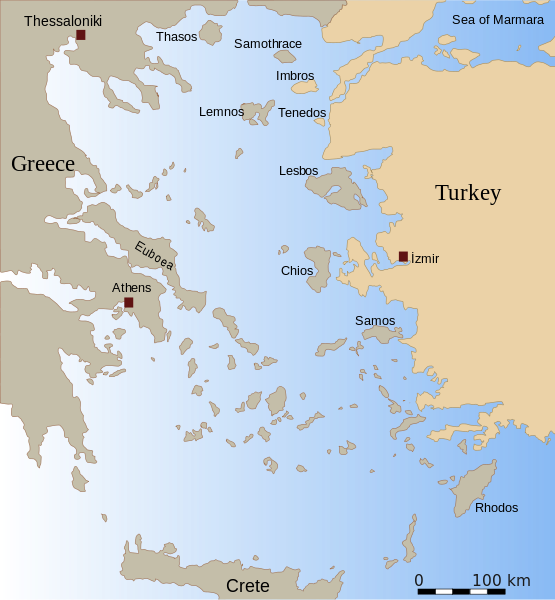
The Aegean Sea
Map via Wikimedia Commons
Last summer, Greece and Turkey came closer to war than they have done since 1974, when Turkey invaded Cyprus. The drama began to unfold on 21 July, when Turkey announced it was sending a seismic survey ship, the Oruc Reis, to look for oil and gas in areas the UN Law of the Sea awards to Greece.
Within hours, the Greek and Turkish navies had deployed throughout the Aegean and east of Crete. They remained so for two months. Greek helicopters pinned down Turkish submarines off the island of Evia. Frigates shadowed each other so closely, that on 12 August two of them collided when a Turkish frigate performed a manoeuvre across the bows of a Greek one. Greek and Turkish F-16s intercepted each other between Crete and Cyprus. Greece came close to invoking the European Union’s mutual defence clause.
On 13 September, Turkey withdrew the Oruc Reis, ostensibly for maintenance, and redeployed its navy. In the coming days, Greece and Turkey are to resume talks abandoned four and a half years ago on carving out their continental shelves – vast swathes of the east Mediterranean where they may exercise exclusive commercial rights to exploit undersea resources.
For now, there is de-escalation, but expectations for the outcome of these talks are low.
“Right now, Turkey doesn’t consider itself an extension of the West. It doesn’t consider that it has commitments and responsibilities towards the West,” says Konstantinos Filis, who directs the Institute of International Relations in Athens. “It believes it is an autonomous power in the region, that it is very potent, and that all its neighbours should respect it. The Turkish leadership doesn’t appear to be prepared for compromises with neighbours it considers inferior.”
The east Mediterranean is where the world’s most significant natural gas discoveries have occurred since the turn of the millennium. Israel and Egypt are now energy independent. Cyprus soon hopes to be. But Greece potentially dwarfs them all.
Seismic explorations it conducted six years ago suggest that Greece has natural gas reserves of 70-90 trillion cubic feet – as much as Israel, Egypt and Cyprus have discovered combined, with a pre-Covid-19 market value of about $200 billion. Assuming gas is viable for the next 25 years, Greece’s reserves, if proven, would cover its energy needs and turn gas into a lucrative export to the European Union. As much as a third of the value of the gas would go to the Greek state in taxes and royalties, allowing it to pay off a fifth of its external debt, now approaching twice its GDP.
This is clearly a future Turkey, with eight times Greece’s population and four times its economy, would rather claim for itself. Legally, it cannot do so. Under the rules of the UN’s Law of the Sea (UNCLOS), the lion’s share of east Mediterranean waters goes to Greece and Cyprus. Recep Tayyip Erdogan, Turkey’s leader for the past 18 years, feels that the Greeks are hemming him in.
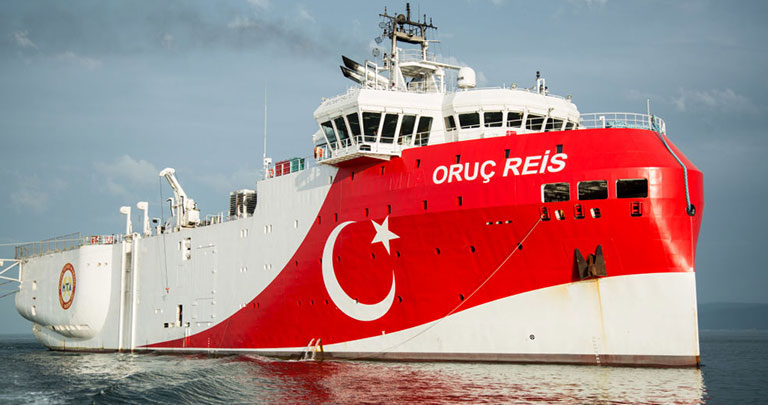
Turkish research vessel MTA Oruç Reis, operated by the General Directorate of Mineral Research and Exploration for shallow water petroleum and natural gas survey work.
Photo from https://balkaneu.com/greece-oruc-reis-within-the-greek-continental-shelf-mitsotakis-contacts-michel-and-stoltenberg/
Comments Off on A century on, Greece and Turkey are back at daggers drawn
September 20, 2020
QotD: The anti-slavery movement
What did Wilberforce “cure”? Two centuries ago, on March 25th 1807, one very persistent British backbencher secured the passage by Parliament of an Act for the Abolition of the Slave Trade throughout His Majesty’s realms and territories. It’s not that no one remembers the disease ever existed, but that we recall it as a kind of freak pandemic — a SARS or bird flu that flares up and whirrs round the world and is then eradicated. The American education system teaches it as such — as a kind of wicked perversion the Atlantic settlers had conjured out of their own ambition.
In reality, it was more like the common cold — a fact of life. The institution predates the word’s etymology, from the Slavs brought from eastern Europe to the glittering metropolis of Rome. It predates by some millennia the earliest laws, such as the Code of Hammurabi in Mesopotamia. The first legally recognized slave in the American colonies was owned by a black man who had himself arrived as an indentured servant. The first slave owners on the North American continent were hunter-gatherers. As Metaxas puts it, “Slavery was as accepted as birth and marriage and death, was so woven into the tapestry of human history that you could barely see its threads, much less pull them out. Everywhere on the globe, for 5,000 years, the idea of human civilization without slavery was unimaginable.”
Mark Steyn, The [Un]documented Mark Steyn, 2014.
Comments Off on QotD: The anti-slavery movement
September 11, 2020
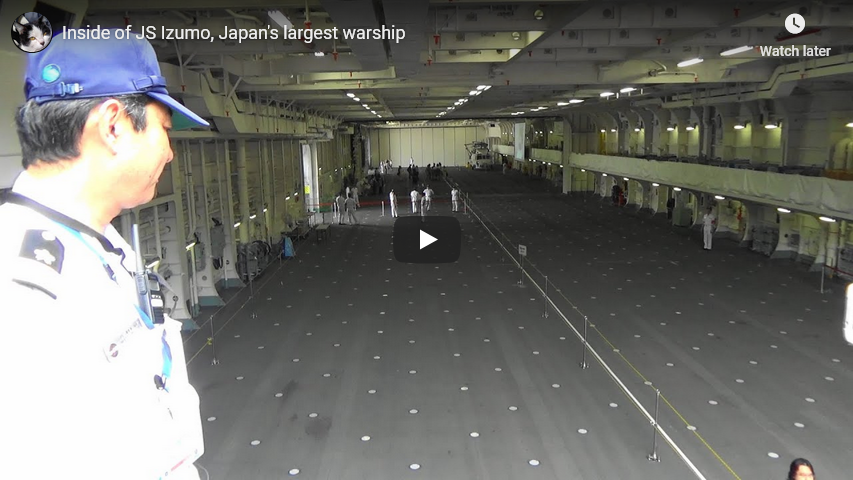
JS Izumo, Japan’s largest warship
AMANO Jun-ichi
Published 12 Jun 2016https://en.wikipedia.org/wiki/JS_Izumo
At open-house of the Japan Maritime Self-Defense Force Yokosuka Naval Base.
On June 11, 2016.#JMSDF #MSDF
From the Wikipedia entry:
JS Izumo (DDH-183) is a helicopter carrier with a planned future conversion into an aircraft carrier. Officially classified as a multi-purpose operation destroyer, she is the lead ship in the Izumo class of the Japan Maritime Self-Defense Force (JMSDF). She is the second warship to be named for Izumo Province, with the previous ship being the armoured cruiser Izumo (1898).
The ruling Liberal Democrat Party announced in May 2018 that it favours converting Izumo to operate fixed-wing aircraft. The conversion was confirmed in December 2018 when Japan announced the change of its defense guidelines. Upon the completion of the process, Izumo will be the first Japanese aircraft carrier since World War II.
Comments Off on JS Izumo, Japan’s largest warship
August 18, 2020
Napoleon’s First Victory: Siege of Toulon 1793
Epic History TV
Published 31 Mar 2018Get Epic History TV early access & voting rights at Patreon: https://www.patreon.com/epichistorytv
With big thanks to HistoryMarche, check out his channel here: https://www.youtube.com/channel/UC8MX…
Find Osprey books on the Napoleonic Wars here:
https://ospreypublishing.com/#EpicHistoryTV #NapoleonicWars #Napoleon
Music from Filmstro https://www.filmstro.com/
Get 20% off an annual license with this exclusive code:EPICHISTORYTV_ANNFrom Osprey Publishing (as an Amazon Associate I earn from qualifying purchases):
Toulon 1793: Napoleon’s first great victory: http://geni.us/vUITM
French Revolutionary Infantry 1789-1802: http://geni.us/RsWkNN
Napoleon’s Guns 1792-1815 (1): Field Artillery: http://geni.us/YWU1HaZ
Napoleon’s Guns 1792-1815 (2): Heavy and Siege Artillery: http://geni.us/SJn9I

Comments Off on Napoleon’s First Victory: Siege of Toulon 1793
August 16, 2020
Surviving the surrender of Japan as allied Prisoners of War
Seventy-five years ago, the war in the Pacific had ended with the surrender of Japanese imperial forces after the atomic bombing attacks at Hiroshima and Nagasaki. The war may have technically ended, but there was still plenty of danger for the surviving POWs in various camps around the Japanese home islands. George MacDonnell was a Canadian soldier who had been captured in the fall of Hong Kong early in the Japanese swathe of conquest that engulfed so many areas. He had been held as a slave labourer at a prison camp in the mountains of northern Honshu in Iwate Prefecture. In Quillette, he tells how his captivity came to an end:
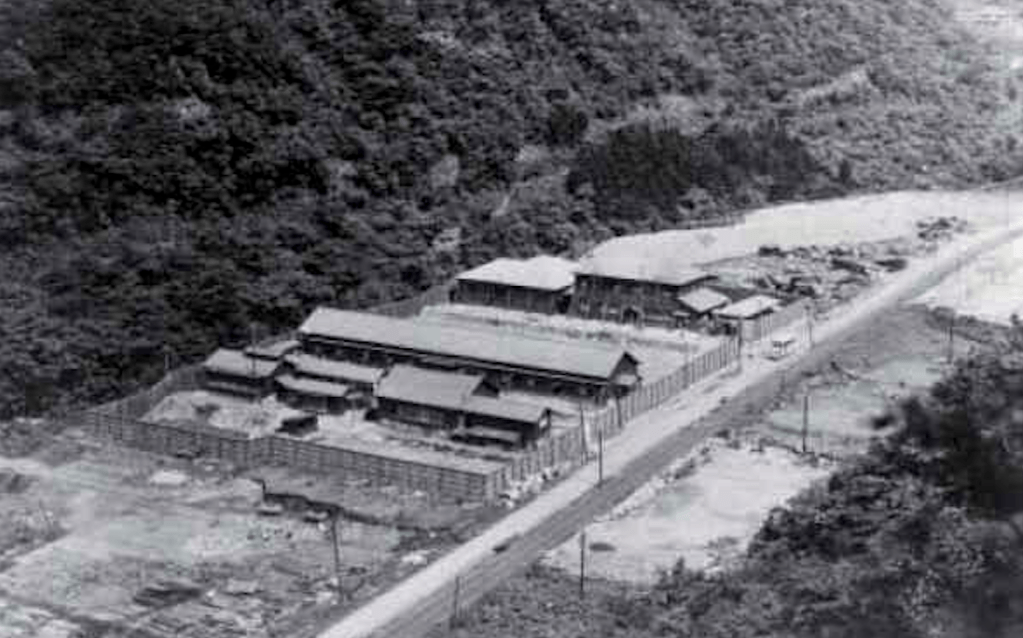
US Navy aerial photo of Ohashi prison camp in 1945.
It was noon on August 15th, 1945. The Japanese Emperor had just announced to his people that his country had surrendered unconditionally to the Allied Powers.
To those of us being held at Ohashi Prison Camp in the mountains of northern Japan, where we’d been prisoners of war performing forced labour at a local iron mine, this meant freedom. But freedom didn’t necessarily equate to safety. The camp’s 395 POWs, about half of them Canadians, were still under the effective control of Japanese troops. And so we began negotiating with them about what would happen next.
Complicating the negotiations was the Japanese military code of Bushido, which required an officer to die fighting or commit suicide (seppuku) rather than accept defeat. We also knew that the camp commander — First Lieutenant Yoshida Zenkichi — had written orders to kill his prisoners “by any means at his disposal” if their rescue seemed imminent. We also knew that we could all easily be deposited in a local mine shaft and then buried under thousands of tons of rock for all eternity without a trace.
We had no way of notifying Allied military commanders (who still hadn’t landed in Japan) as to the location of the camp (about a hundred miles north of Sendai, in a mountainous area near Honshu’s eastern coast), whose existence was then unknown. Because of the devastating American bombing, Japan’s cities had been reduced to rubble, its institutions were in chaos, and millions of Japanese were themselves close to starvation, much like us. The camp itself had food supplies, such as they were, for just three days.
Lieut. Zenkichi seemed angry, and felt humiliated by the surrender. Yet he appeared willing to negotiate our status. And after some stressful hours, we reached an agreement: The Japanese guards would be dismissed from the camp, while a detachment of Kenpeitai (the much feared Military Police) would provide security for Zenkichi, who would confine himself to his office.
To our delight, the local Japanese farmers were friendly, and agreed to give us food in exchange for some of the items we’d managed to loot from the camp’s remaining inventory — though, unfortunately, not enough to feed the camp. Meanwhile, through a secret radio we’d been operating, we learned that the Americans were going to conduct an aerial grid search of Japan’s islands for prison camps. We followed the broadcasted instructions and immediately painted “P.O.W.” in eight-foot-high white letters on the roof of the biggest hut.
Two days later, with all of our food gone, we heard a murmur from the direction of the ocean. The sound turned into the throb of a single-engine airplane flying at about 3,000 feet altitude. Then, suddenly he was above us — a little blue fighter with the white stars of the US Navy painted on its wings and fuselage. But the engine noise began to fade as he went right past us. Please, God, I thought — let him see our camp.
Comments Off on Surviving the surrender of Japan as allied Prisoners of War
August 11, 2020
Napoleon’s greatest foe
Lindybeige
Published 18 Jan 2018Support me on Patreon: https://www.patreon.com/Lindybeige
Possibly I did too much research for this one. Trying to stay on-topic when the subject is so vast and so interesting was not easy, hence the rather long video. I didn’t mean to say quite so much about what an utter £$%&*! Napoleon was, but he was so thoroughly vile that it proved impossible not to include some details about the man who won his promotion in the army by mowing down civilian protesters in the streets of Paris with grapeshot from his artillery batteries. Anyway, here are tales of bravery and virtue, as well as horrendous some of brutality, lies, and death.
Correction: The battle against the Russian fleet is called Svensksund (Swedish sound, as in channel), not Svenksund. I missed out an S in my haste.
Buy the music – the music played at the end of my videos is now available here: https://lindybeige.bandcamp.com/track…
Lindybeige: a channel of archaeology, ancient and medieval warfare, rants, swing dance, travelogues, evolution, and whatever else occurs to me to make.
▼ Follow me…
Twitter: https://twitter.com/Lindybeige I may have some drivel to contribute to the Twittersphere, plus you get notice of uploads.
website: http://www.LloydianAspects.co.uk

Comments Off on Napoleon’s greatest foe
August 9, 2020
MGB 81, the Spitfire of the Seas | World War II gunboat review | Motor Boat & Yachting
Motor Boat & Yachting
Published 16 Jan 2019We have the immense privilege of getting behind the wheel (and guns) of MGB 81, the Spitfire of the seas.
Filmed by Paul Wyeth: http://www.pwpictures.com/
► For the latest reviews, new gear launches and tour news, visit our website here – http://www.mby.com
►Follow us on Twitter here – https://twitter.com/mbytimeinc
Comments Off on MGB 81, the Spitfire of the Seas | World War II gunboat review | Motor Boat & Yachting
July 29, 2020
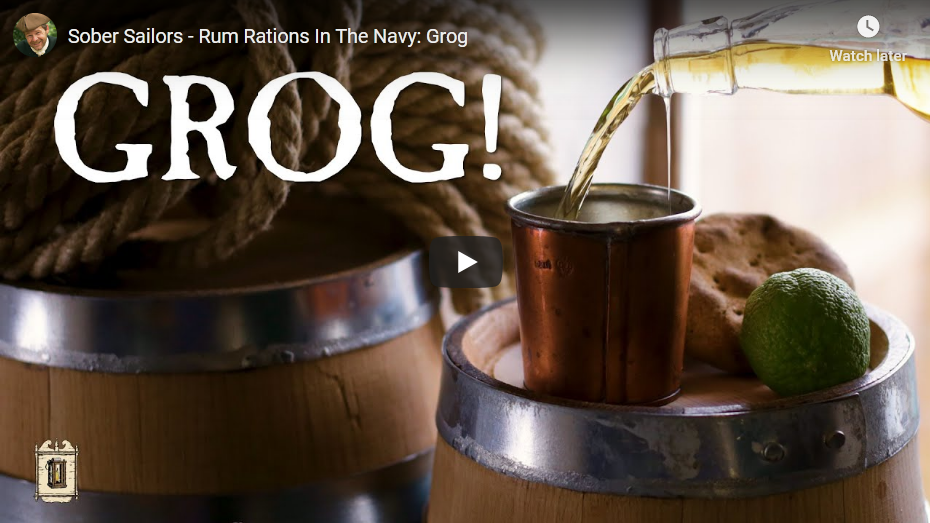
QotD: Grog in the Royal Navy
Actually, we do, at least as a floor: we know the quantity of the Royal Navy’s spirit ration, which until 1823 was based on half a pint of rum (284 millilitres in foreign) per man per day. We also know its minimum strength, since it was tested by trying to ignite gunpowder soaked in it: it had to be over 57% alcohol by volume (“proof strength”) to pass. That’s sixteen units of alcohol – not per week, but per day – or north of a hundred units a week, just for the issued ration before sailors bought any extra from the purser. (No wonder Jack Tar was jolly back in those days!)
But clearly, we would expect a body of men consuming such suicidally destructive quantities of booze to be physical wrecks, raddled by cirrhosis and disease? As Dr James Lind (he of the discovery that citrus fruits were a sovereign remedy for scurvy) put it,
It is an observation, I think, worthy of record that fourteen thousand persons, pent up in ships, should continue, for six or seven months, to enjoy a better state of health upon the watery element, than it can well be imagined so great a number of people would enjoy, on the most healthful spot of ground in the world.
(For context, around this point the Navy won the battle of Quiberon Bay, with twenty ships – who had less than one man sick per ship).
The ration was halved in 1823, and again in 1850, but for a hundred and twenty years until Black Tot Day in 1970, the Navy still issued nearly thirty units of alcohol a week to everyone on the lower deck (junior rates got theirs diluted, seniors got neat rum). Either folk were hardier back then, or Britannia managed to rule the waves and keep her sailors reasonably healthy despite being a pack of hopelessly addicted alcoholics.
Jason Lynch, “How Much Is ‘Too Much’?”, Continental Telegraph, 2018-05-08.
Comments Off on QotD: Grog in the Royal Navy
July 21, 2020
The Destruction of Convoy PQ17: Merchant Ships Left Defenceless
Historigraph
Published 18 Jul 2020For unlimited access to the world’s top documentaries and nonfiction series go to http://go.thoughtleaders.io/166892020… and use the promo code ‘
historigraph‘ to get 30 days free access.Buy Historigraph Posters here! teespring.com/stores/historigraph
Support the channel on Patreon: https://www.patreon.com/historigraph#ConvoyPQ17 #Historigraph #CuriosityStream
► Twitch: https://www.twitch.tv/addaway
► Twitter: https://twitter.com/historigraph
► Instagram: https://www.instagram.com/historigraphMusic:
“Rynos Theme” Kevin MacLeod (incompetech.com)
Licensed under Creative Commons: By Attribution 4.0 License
http://creativecommons.org/licenses/b…The Descent by Kevin MacLeod
Link: https://incompetech.filmmusic.io/song…
License: http://creativecommons.org/licenses/b…Crypto by Kevin MacLeod
Link: https://incompetech.filmmusic.io/song…
License: http://creativecommons.org/licenses/b…
Comments Off on The Destruction of Convoy PQ17: Merchant Ships Left Defenceless
Ship command in the People’s Liberation Army Navy
China has been quickly adding capabilities and hulls to the PLAN, but a relatively recent change to how larger naval ship command is structured may be a throwback to Soviet Union practices:
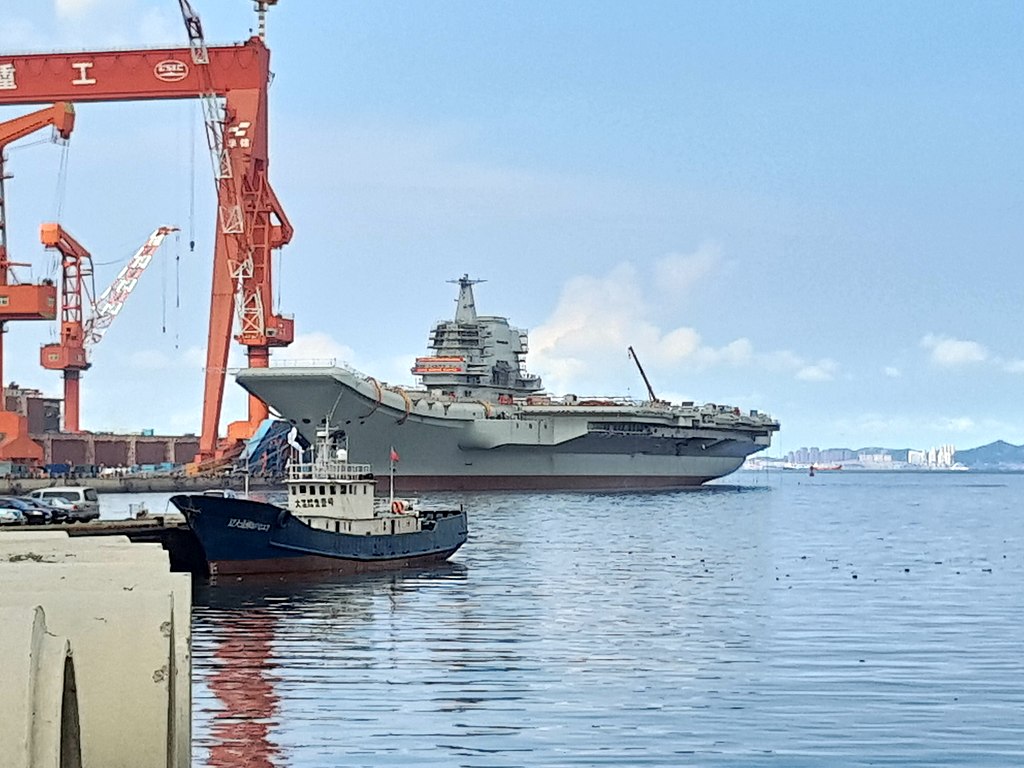
China’s Type 001A aircraft carrier shortly after launch, 17 August 2017.
Photo via Wikimedia Commons
When dealing with Chinese navy or coast guard ships, foreign naval commanders have learned to take into account the dual command structure of Chinese crews. In effect, Chinese warships except for smaller (less than 2,000 tons) ones, have dual commanders and a naval command system that is more premeditated and slower to respond to unexpected conditions.
This comes as a surprise to many Western naval officers. Although the Chinese military has achieved many visible signs of modernizing, like new weapons, equipment, uniforms, tactics and officer training, it is still having problems in several key areas. When it comes to leadership there are problems with the political officers.
The Chinese long ago borrowed the concept of the political officer (“Zampolit“) from the Soviet Union. The political officer represents the Communist Party and has the authority to overrule any order a military commander gives. In reality, the political officer usually acts as a combined morale and special events officer. The political officers are primarily responsible for preventing anything happening in their unit that would embarrass the party. For naval zampolits that meant watching out for signs of mutiny or sailors planning to seek asylum in a foreign port.
Unlike the Russian naval zampolit, the Chinese counterpart, called a political commissar is considered the equal of the regular naval commander and his superior when it comes to a “special mission”, like deliberately harassing foreign warships or opening fire on anyone. The political commissar is the same rank as the ship captain and can overrule the ship commander at any time and in any situation. It was not always that way.
An important change took place in 2018 when naval political commissars were given equal authority with the captain as “mission commander” and is expected to replace the captain if the captain is disabled by injury or sickness. The normal second-in-command (the XO or executive officer) becomes the XO for the political commissar and the captain and third, not second, in command. The practical problem with this is that the captain and XO have spent their entire careers (fifteen or more years) learning how to run a ship and supervise the crew. In contrast, the political commissar learned enough tech stuff to be more annoying. The political commissar was a professional busybody, scold and snitch. The political commissar can end the career of the captain, XO or any other officer by simply making a series of uncomplimentary reports.
The 2018 change was part of a program that began in 2016 throughout the military as the CCP (Chinese Communist Party) sought to improve its control over the military. In the navy that meant the political commissar had the ultimate responsibility for achieving goals assigned to a ship. The captain is not the true commander of the ship in the Western sense. He is there to see that technical details are well taken care of and that would include taking change during very bad weather or some kind of technical (fire, explosion) problem aboard ship. The political commissar is expected to personally undertake particularly dangerous leadership missions, although only those he is qualified to deal with. That means political commissars have led boarding parties in dangerous situations but not entrusted with command during damage control situations.
The full impact of the 2016-18 “reforms” to improve CCP control of the military are still working themselves out in the navy. Western, especially American, captains are being warned that their Chinese counterparts will probably not react as quickly to an emergency or unexpected situation that that should be taken into account, or taken advantage of.
Comments Off on Ship command in the People’s Liberation Army Navy
July 6, 2020
Sober Sailors – Rum Rations In The Navy: Grog
Townsends
Published 24 Feb 2020Visit Our Website! ➧ http://www.townsends.us/ ➧➧
Help support the channel with Patreon ➧ https://www.patreon.com/townsend ➧➧
Instagram ➧ townsends_official
Comments Off on Sober Sailors – Rum Rations In The Navy: Grog
July 4, 2020
Australian defence expansion – “We’re not talking about Canada”
The Australian government has embarked on a ten-year military expansion program that is clearly directed against recent Chinese bullying in the region:
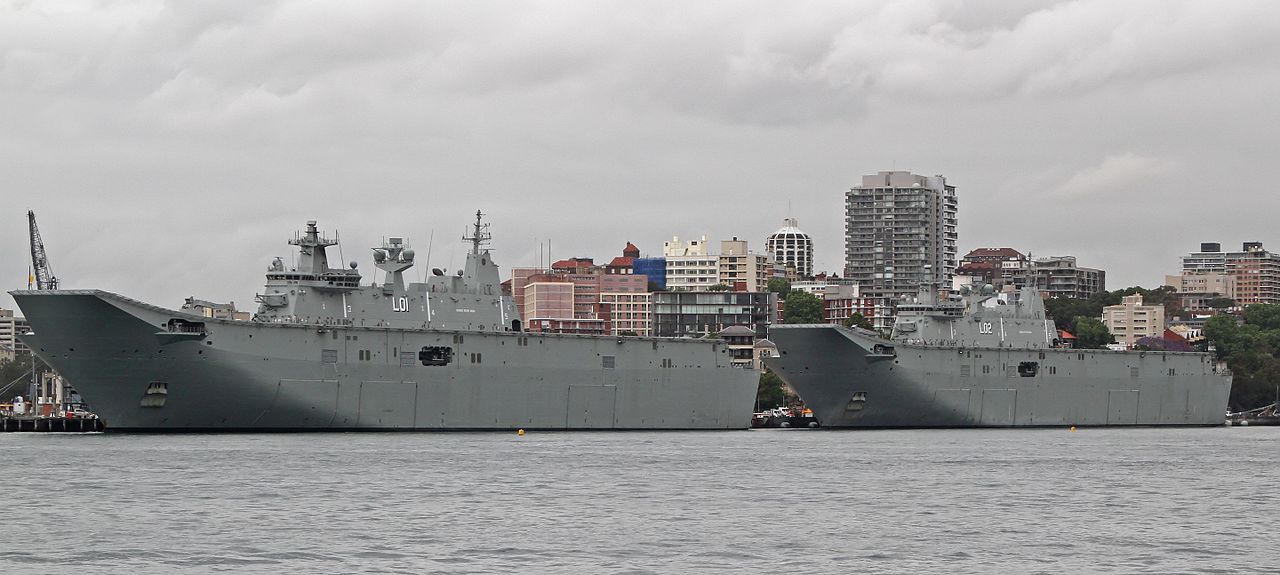
HMAS Adelaide (LHD 01) and HMAS Canberra (LHD 02), based on the Spanish navy’s Juan Carlos I landing helicopter dock built by Navantia, and commissioned in November 2014 (Canberra) and December 2015 (Adelaide).
Photo by Tony Hisgett via Wikimedia Commons.
[Australian PM] Scott Morrison has unveiled a more aggressive defence strategy aimed at countering the rise of China, while warning that Australia faces regional challenges on a scale not seen since World War II.
The strategy increases the focus on the Indo-Pacific region, with the Prime Minister warning that Australia needs to prepare for a post-COVID-19 world that is “poorer, more dangerous and more disorderly”.
Australia will build a larger military that is focused on its immediate backyard, including new long-range anti-ship missiles, signalling a major shift in the nation’s defence strategy.
“We have not seen the conflation of global economic and strategic uncertainty now being experienced here in Australia in our region since the existential threat we faced when the global and regional order collapsed in the 1930s and 1940s,” the Prime Minister warned.
Mr Morrison also announced a commitment to spend $270 billion over the next decade on defence capabilities, including more potent strike weapons, cyber capabilities and a high-tech underwater surveillance system.
Over the four years, the Australian Defence Force (ADF) is expected to grow by 800 people, comprising 650 extra personnel for the Navy, 100 for the Air Force, and 50 for the Army.
According to Defence’s 2019-20 Budget Statement, the ADF was estimated to grow to 60,090 by this year, with 16,272 full-time public service staff.
Its budget was expected to grow to 2 per cent of Australia’s gross domestic product by 2020-21, “equating to approximately $200 billion in Australia’s defence capability over 10 years”, making the new announcement an increase of $70 billion to the department.
In a speech at the Australian Defence Force Academy Mr Morrison argued the Indo-Pacific is the “epicentre” of rising strategic competition and “the risk of miscalculation — and even conflict — is heightening”.
Comments Off on Australian defence expansion – “We’re not talking about Canada”
June 30, 2020
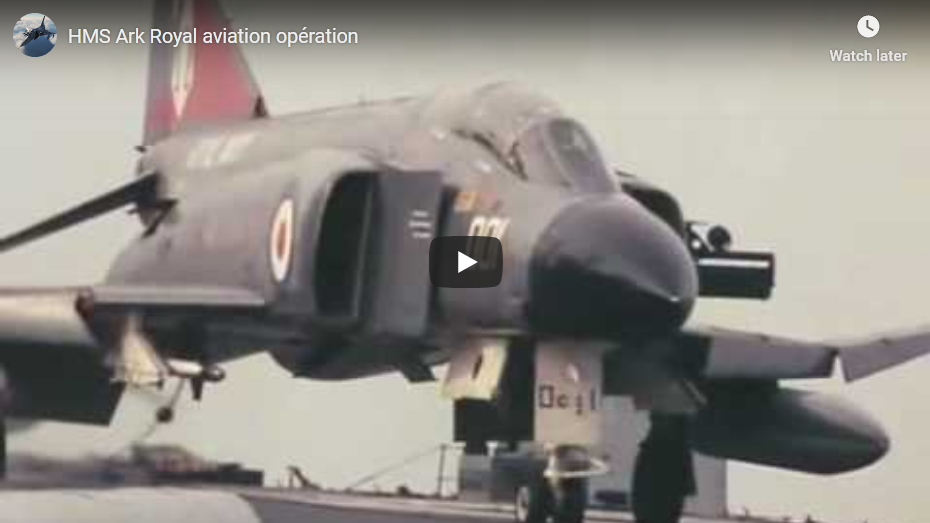
“The Squadrons Are Coming” – HMS Ark Royal aviation operations
Aircraft Games Movies
Published 1 Jul 2010In the Western Approaches, Ark Royal welcomes her air group back aboard, with the occasional hairy approach for newly qualified aviators.
This appears to be footage from episode 3 of Sailor, a BBC television series from 1976 about life aboard HMS Ark Royal.
The Wikipedia entry for HMS Ark Royal (R09) begins:
HMS Ark Royal (R09) was an Audacious-class aircraft carrier of the Royal Navy and, when she was decommissioned in 1979, was the Royal Navy’s last remaining conventional catapult and arrested-landing aircraft carrier. She was the first aircraft carrier to be equipped with angled flight deck at its commissioning; her sister ship, HMS Eagle, was the Royal Navy’s first angle-decked aircraft carrier after modification in 1954. Ark Royal was the only non-United States vessel to operate the McDonnell Douglas Phantom at sea.
[…]
While Ark Royal‘s career spanned 24 years from the time of her commissioning (her name was a household word), she spent as much time in refit; repair and reserve and modernisation as in commissioned service (12 years). It required a lot of effort from her engineers to keep her serviceable between yard periods. Ark Royal had been poorly preserved during its lengthy construction from 1942 to 1955, and much of its machinery was obsolete by its completion, including its dated DC electrics, supplemented later by some AC systems, resulting in a ship which experienced regular defects and mechanical failure. Eagle was a more reliable and well-built ship, and spent far more time at sea than her sister. The scrapping of Ark Royal in 1980, two years after Eagle, marked the end of conventional fixed-wing aircraft operations aboard Royal Navy carriers. She had borne so many innovations, yet her replacement was not equipped with any of these. There was some discussion about preserving her as a museum ship, and some private funds were raised; the MOD would not sanction these efforts.
Comments Off on “The Squadrons Are Coming” – HMS Ark Royal aviation operations


