
Quotulatiousness

January 27, 2014

HSBC now requires “Mother, May I” letters from British customers for large withdrawals

Filed under: Britain, Business — Tags: , — Nicholas @ 09:32

HSBC has irritated some of their British customers with a new requirement for justifying why large cash withdrawals are necessary before authorizing them:

Stephen Cotton went to his local HSBC branch this month to withdraw £7,000 from his instant access savings account to pay back a loan from his mother.

A year before, he had withdrawn a larger sum in cash from HSBC without a problem.

But this time it was different, as he told Money Box: “When we presented them with the withdrawal slip, they declined to give us the money because we could not provide them with a satisfactory explanation for what the money was for. They wanted a letter from the person involved.”

Mr Cotton says the staff refused to tell him how much he could have: “So I wrote out a few slips. I said, ‘Can I have £5,000?’ They said no. I said, ‘Can I have £4,000?’ They said no. And then I wrote one out for £3,000 and they said, ‘OK, we’ll give you that.’ ”

He asked if he could return later that day to withdraw another £3,000, but he was told he could not do the same thing twice in one day.

He wrote to complain to HSBC about the new rules and also that he had not been informed of any change.

The bank said it did not have to tell him. “As this was not a change to the Terms and Conditions of your bank account, we had no need to pre-notify customers of the change,” HSBC wrote.

As you might imagine, this new policy drew strong criticism, so the bank issued the following statement yesterday:

As a responsible bank we must track all financial transactions. Cash presents more risk, and in particular financial crime risk, than other payment methods. It also leaves customers with very little protection if things go wrong. Therefore, we need to monitor particularly closely movements of cash in and out of the banking system. This is why we ask our customers about the purpose of large cash withdrawals when they are unusual and out of keeping with the normal running of their account.

Since last November, in some instances we may have also asked these customers to show us evidence of what the cash is required for. However, it is not mandatory for customers to provide documentary evidence for large cash withdrawals, and on its own, failure to show evidence is not a reason to refuse a withdrawal. We apologise to any customer who has been given incorrect information and inconvenienced.

H/T to BenK for the links.
January 18, 2014

Austrian economics

Filed under: Economics — Tags: , , — Nicholas @ 11:35

Published on 26 Sep 2012

Steve Horwitz, Professor of Economics at St. Lawrence University, explains what Austrian Economics is and what Austrian Economics is not, clearing up some common misconceptions.

This video is based on Steve’s essay by the same name:
http://www.coordinationproblem.org/2010/11/what-austrian-economics-is-and-what-austrian-economics-is-not.html

To learn more about Austrian Economics, visit http://www.fee.org

January 14, 2014

2014 Economic Freedom Rankings

Filed under: Cancon, Economics, Liberty — Tags: , , — Nicholas @ 10:51

The Heritage Foundation has posted their 2014 economic freedom rankings. Here’s a slideshow of the top ten countries by Heritage’s ranking formula:

The United States missed the top ten, coming in at #12. Canada ranked number six:

Canada’s economic freedom score is 80.2, making its economy the 6th freest in the 2014 Index. Its overall score is 0.8 point better than last year, reflecting improvements in investment freedom, the management of government spending, and monetary freedom. Canada continues to be the freest economy in the North America region.

Over the 20-year history of the Index, Canada has advanced its economic freedom score by 10.7 points, the third biggest improvement among developed economies. Substantial score increases in seven of the 10 economic freedoms, including investment freedom, fiscal freedom, and the management of public spending, have enabled Canada to elevate its economic freedom status from “moderately free” 20 years ago to “free” today.

A transparent and stable business climate makes Canada one of the world’s most attractive investment destinations. Openness to global trade and commerce is firmly institutionalized, and the economy has rebounded relatively quickly from the global recession. The financial system has remained stable, and prudent regulations have allowed banks to withstand the global financial turmoil with little disruption.

December 18, 2013

Bank of England switching to plastic from paper

Filed under: Britain — Tags: , , — Nicholas @ 09:41

Following the example of Australia (and more recently, Canada), the Bank of England will be printing bank notes on plastic from 2016 onwards:

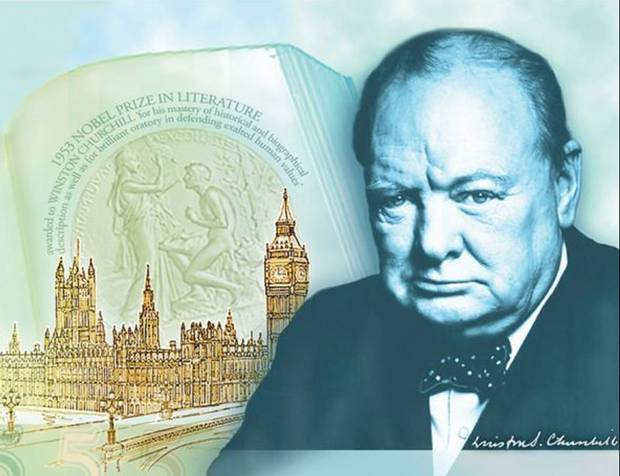
Winston Churchill concept art for 5 pound note

Mark Carney, the governor of the Bank of England, has formally announced that Britain will switch to using plastic banknotes in 2016, ending 320 years of paper money.

After a public consultation in which 87% of the 13,000 respondents backed the new-style currency, the Bank said it would introduce “polymer” notes, as it prefers to call them, in two years’ time, starting with the new £5 note featuring Winston Churchill in 2016 and the Jane Austen £10 a year later.

Speaking at a press conference in the Bank’s Threadneedle Street headquarters, Carney said: “Our polymer notes will combine the best of progress and tradition. They will be more secure from counterfeiting and more resistant to damage while celebrating the history and tradition that is important both to the Bank and the nation as a whole.”

The move follows Carney’s native Canada, where plastic notes are being rolled out, and Australia, where they have been in circulation for more than two decades.

Carney launched a public consultation on polymer banknotes, seen as cleaner and more durable, shortly after arriving at the Bank this summer. However, the Bank’s notes division has been considering plastic money for several years.

I’m still not convinced about the Canadian polymer banknotes: they tend to stick together much more than the paper notes did and they are reportedly susceptible to “fusing” together in high heat.

September 29, 2013

Portland’s tainted $2 bills

Filed under: Business, USA — Tags: , , — Nicholas @ 11:32

Last year there were a large number of red-stained $2 bills circulating in Portland, Oregon. Mary Emily O’Hara investigated the situation:

The manager at the McDonald’s on Northwest Yeon Avenue glanced at the money in the customer’s hand, a $2 bill that looked as if its edges had been dipped in blood. He grew tense, shook his head and turned away.

“Oh, no,” he says. “We’re not allowed to accept those.”

McDonald’s employees had seen the mystery money before — crimson-stained, smeared, always $2 bills — as have food carts, bars, retail stores and other businesses across the Portland area.

The bills have amused some people and alarmed others, who aren’t sure if the stains come from real blood, if the cash is counterfeit, or if the bills were marked by an exploding dye pack during a bank robbery gone wrong.

Thousands of these tainted bills are in circulation around the city, but their source is no longer a mystery: They’re a marketing gimmick for Casa Diablo, a Northwest Portland strip club that is taking U.S. currency and smearing it with blood-red ink.

You’d think defacing the currency would be a problem for the government … and it is:

But the feds have taken a dim view of Zukle’s actions: It’s against federal law to deface U.S. currency with the intent to make it unusable.

WW has learned Zukle and Casa Diablo are now under investigation by the Secret Service. Jon Dalton, resident agent in charge of the Secret Service’s Portland office, tells WW the fact the bills are being rejected show Casa Diablo’s inking of the money violates federal law.

Dalton says his office has told Casa Diablo three times to stop handing out the tainted bills. He also says his office has prepared a cease and desist order and is consulting with federal prosecutors about criminal charges. (WW has also learned the FBI paid the bar a visit in February.)

H/T to Marginal Revolution for the link.

July 4, 2013

“Buenos Aires […] is the headquarters for the central planning bad idea bus”

Filed under: Americas, Economics, Government — Tags: , , , , , — Nicholas @ 08:32

At the Sovereign Man blog, Simon Black discusses Argentina’s sad history of central planning failures:

The more interesting part about Buenos Aires, though, is that this place is the headquarters for the central planning bad idea bus.

Argentina’s President, Cristina Fernandez, continues to tighten her stranglehold over the nation’s economy and society.

This country is so abundant with natural resources, it should be immensely wealthy. And it was. At the turn of the 20th century, Argentina was one of the richest countries in the world.

Yet rather than adopting the market-oriented approaches taken by, say, Colombia and Chile, Argentina is following the model of Venezuela.

Cristina rules by decree here; there is very little legislative power. She may as well start wearing a crown.

Just in the last few years, she’s imposed capital controls. Media controls. Price controls. Export controls.

She’s seized pension funds. She fired a central banker who didn’t bend to her ‘print more money’ directives. She even filed criminal charges against economists who publish credible inflation figures, as opposed to the lies that her government releases.

Inflation here is completely out of control. The government figures say 10%, but the street level is several times that.

[. . .]

Being here in this laboratory of central planning makes a few things abundantly clear:

1) Printing money does not create wealth. If it did, Argentina would be one of the richest places in the world again.

2) All of these policies that are ‘for the benefit of the people’ almost universally and up screwing the people they claim to help.

Printing money creates nasty inflation. If you’re wealthy, it leads to asset bubbles, which can make you even wealthier. If you’re poor, you just get crushed by rising prices. Or worse – shortages (remember the recent Venezuelan toilet paper crisis?)

3) Desperation leads to even more desperation. The worse things get, the tighter government controls become… which makes things even worse. It’s a classic negative feedback loop.

Both the United States and pan-European governments are varying degrees of this model, with only a flimsy layer of international credibility separating them from the regime of Cristina.

So Argentina is really a perfect case study in things to come.

May 31, 2013

Reason.tv: What Game of Thrones teaches about crony capitalism

Filed under: Books, Economics, History, Media — Tags: , , , , — Nicholas @ 00:01

“The game of thrones in general is a game of cronyism because it’s all about forming political alliances, especially with people who can make you better off economically speaking,” says Auburn University Economics Instructor Matthew McCaffrey.

McCaffrey has recently written about the economics involved in the popular Game of Thrones novels by George R.R. Martin as well as the HBO series based on the books. He sat down with ReasonTV’s Tracy Oppenheimer to discuss the various economic concepts that develop alongside the character-driven plot line, such as sin taxes, coin clipping, and the ever-present cost of borrowing.

According to McCaffrey, Martin extensively researches historical economic systems to make “the Realm” as plausible as possible.

“As part of his process he ends up uncovering a lot of historical details that usually get lost in a fantasy book of this kind,” says McCaffrey, “just practical difficulties of running a kingdom, how public finance works, how the game of thrones corrupts the people who play it and how it ends disastrously for the people who don’t play it well.”

May 20, 2013

Counterfeit $100 bills now in circulation, despite all the anti-counterfeiting features

Filed under: Cancon, Technology — Tags: , , , — Nicholas @ 09:44

The new polymer bills were touted as having very hard to counterfeit features, and people apparently believed what they were told — because they haven’t been bothering to check the new bills:

Less than two years ago, the head of the RCMP said Canada’s new polymer bank notes would go a long way in deterring the threat of counterfeiting.

Just last month, the Bank of Canada announced the notes’ sophisticated transparency and holography made them “the most secure bank note series ever issued” by the institution.

Too bad somebody forgot to tell criminals in British Columbia.

Mounties and municipal police in Metro Vancouver are warning the public that several of the fake $100 bills have been detected in the region over the past few weeks.

The fanfare about the security features on the bills, may be part of the problem, said RCMP Sgt. Duncan Pound.

“Because the polymer series’ notes are so secure … there’s almost an overconfidence among retailers and the public in terms of when you sort of see the strip, the polymer looking materials, everybody says ‘oh, this one’s going to be good because you know it’s impossible to counterfeit,'” he said.

“So people don’t actually check it.”

April 24, 2013

More on the currency choices facing an independent Scotland

Filed under: Britain, Economics, Europe — Tags: , , , , , — Nicholas @ 10:49

John Kay works through the short list of options about money that a newly independent Scotland would need to decide about:

Speculation about Scotland’s currency future would begin on the day Scotland voted for independence — or the day on which a poll showed that this result was likely. Scotland would have three main options — the euro, the pound sterling, or its own distinct money.

The euro is the official currency of the EU, and Scotland would in principle be committed to its adoption. But there would be little enthusiasm for that course in either Edinburgh or Brussels, and Scotland — like the UK — would not meet the criteria on debt and deficits for joining the euro. A vague Scottish aspiration to join the single currency at some distant date would probably satisfy everyone.

The sensible outcome would be continued currency union with England — or with the entity that, in deference to Wales and Northern Ireland, participants in the Scottish debate call rUK — rest of UK. Scotland might ask for — and get — a Scottish economist on the Bank of England’s Monetary Policy Committee (not a representative of Scotland — the rules of the committee preclude representative roles). But that would be the extent of Scottish influence on monetary policy.

[. . .]

If I represented the Scottish government in the extensive negotiations required by the creation of an independent state, I would try to secure a monetary union with England, and expect to fail. Given experience in the eurozone, today’s conventional wisdom is that monetary union is feasible only as part of a move towards eventual fiscal union. But desire to break up fiscal union was always a major — perhaps the principal — motive for independence in the first place.

Scotland could continue to use the pound unilaterally, whether the Bank of England liked it or not — as Ecuador uses the dollar and Montenegro the euro. But this is not really an attractive course, and the only countries that have adopted it are those — such as Ecuador and Montenegro — whose monetary histories are so dire that they prefer to entrust their policies to foreigners.

April 23, 2013

Independent Scotland would not be in currency union with the UK

Filed under: Britain, Economics — Tags: , , , — Nicholas @ 09:08

In the Guardian, Patrick Wintour and Severin Carrell cover the latest provocative notion coming out of London, directed at the Scottish separatists:

An independent Scotland would be forced to adopt new currency arrangements that would be a “very deep dive into uncharted waters”, George Osborne has warned. The chancellor said an independent Scotland would be unable to operate with a currency linked to sterling, let alone be able to form a currency union with it.

“The best arrangement is if they stay in the UK,” he said.

Osborne said he thought it “unlikely” the rest of UK would agree to a currency union with Scotland, noticeably hardening his rhetoric against Alex Salmond’s proposal.

Speaking on BBC Radio Scotland, the chancellor said: “Why would it want to risk a currency union? We’ve got a currency union in Europe and it’s called the euro, and look at all the problems that has had trying to co-ordinate the economic policies of different countries.”

Setting out the options, the chancellor said: “I think Scotland could either join the euro, and Alex Salmond is very nervous of saying that, or Scotland can set up its own currency. That is what lots of countries do, but Alex Salmond is again nervous of saying that.

“They can use the pound without our consent, like Panama uses the American dollar, or they can negotiate with the rest of the UK to form a currency zone. But Britain has had poor experience with things like the ERM [exchange rate mechanism], when it has tried to lock or peg its currency together with other currencies. So it is not clear that it would be in the rest of the UK’s interest to enter into a euro-style currency zone with the rest of Scotland.”

April 18, 2013

Reason.tv: Why Bitcoin is Here to Stay

Filed under: Economics, Technology — Tags: , , , — Nicholas @ 10:29

Don’t bet on the decentralized currency Bitcoin as a retirement investment, says Mercatus Center policy analyst Jerry Brito, but go long on it as the payment system of the future. Reason‘s Nick Gillespie talks with Brito, the editor of the new anthology Copyright Unbalanced, about Bitcoin bubbles and why governments are so afraid of this virtual payment system.

April 15, 2013

Tabatha Southey and the “Grapes of Math”

Filed under: Economics, Humour, Liberty, Technology — Tags: , , , , — Nicholas @ 10:14

In the Globe and Mail Tabatha Southey hears the laments of readers “We need a new John Steinbeck for the Great Bitcoin Depression”, and she delivers:

Pa was a simple man, a techno-anarchist by trade, and long after the Bitcoin bust, he stayed on with the mining. “Don’t know nothin’ else,” Ma said, although she once suggested migrant IT work, at least until her own contract was renewed at the hospital where she worked most of her grown days for a pediatric endocrinologist’s wage.

Pa sat on the sofa, the whir of the computer fans all but drowning out the Cato Institute podcast he’d downloaded the night before. He’s there, frozen in my childhood, Pa, mining, mining, mining, with nothing but his iPhone, his laptop and, for a while, my sister’s old Tamagotchi, which he found in the couch cushions while looking for the remote, to amuse him.

Dodging viruses like crop-dusters, Pa is experiencing hard times. He never did come to trust that ol’ anti-virus software. Said it was reporting on him to the Federal Reserve. And always the dust, the dust, the dust, which may have been because Pa never did get round to changing the furnace filters. His time, he said, best spent elsewhere.

Pa, oh, Pa. He never did stop spreading the word of Ron Paul on completely unrelated news items.

April 14, 2013

Competition and co-operation in a free market

Filed under: Business, Economics, Liberty — Tags: , , , , — Nicholas @ 10:15

Sheldon Richman suggests that some people’s objections to free trade and free markets isn’t so much ethical as aesthetic:

Market advocates tend to respect the intellect of their fellow human beings. You can tell by their reliance on philosophical, moral, economic, and historical arguments when trying to persuade others. But what if most people’s aversion to the market isn’t founded in philosophy, morality, economics, or history? What if their objection is aesthetic?

More and more I’ve come to think this is the case, and I believe I witnessed an example recently at a lecture I gave at St. Lawrence University. During the Q&A a woman asked, in all sincerity, why society couldn’t do without money, since so many bad things are associated with it. She also suggested that cooperation is better than market competition. I replied that since money facilitates exchange and exchange is cooperation, it follows that money facilitates cooperation — a lovely thing, indeed. Government, I added, corrupts money.

I also said that competition is what happens when we are free to decide with whom we will cooperate. I don’t know if my response prompted her to rethink her objections to the market, but I am confident her objection was aesthetic. For her, money and competition are ugly. Perhaps I didn’t respond on an aesthetic level; it’s something I have to work on. But I tried, and so must we all when we encounter these sorts of objections.

Like that nice woman, many decent people dislike markets because they find them unattractive. And they associate markets with other things they find unattractive besides money and competition: (rugged, atomistic) individualism, selfishness, and profit. F.A. Hayek noticed this, writing in “Individualism: True and False”, “the belief that individualism approves and encourages human selfishness is one of the main reasons why so many people dislike it.” If that’s the case, philosophical, moral, economic, and historical arguments may fall on deaf ears. The objections must be met on an aesthetic level.

April 12, 2013

The Economist explains how Bitcoins work

Filed under: Economics, Technology — Tags: , , , , — Nicholas @ 09:28

A brief overview of the much-talked-about digital currency:

BITCOIN, the world’s “first decentralised digital currency”, was launched in 2009 by a mysterious person (or persons) known only by the pseudonym Satoshi Nakamoto. It has been in the news this week as the value of an individual Bitcoin, which was just $20 at the beginning of February, hit record highs above $250, before falling abruptly to below $150 on April 11th. What exactly is Bitcoin, and how does it work?

Unlike traditional currencies, which are issued by central banks, Bitcoin has no central monetary authority. Instead it is underpinned by a peer-to-peer computer network made up of its users’ machines, akin to the networks that underpin BitTorrent, a file-sharing system, and Skype, an audio, video and chat service. Bitcoins are mathematically generated as the computers in this network execute difficult number-crunching tasks, a procedure known as Bitcoin “mining”. The mathematics of the Bitcoin system were set up so that it becomes progressively more difficult to “mine” Bitcoins over time, and the total number that can ever be mined is limited to around 21m. There is therefore no way for a central bank to issue a flood of new Bitcoins and devalue those already in circulation.

And a bit more technical detail:

All transactions are secured using public-key encryption, a technique which underpins many online dealings. It works by generating two mathematically related keys in such a way that the encrypting key cannot be used to decrypt a message and vice versa. One of these, the private key, is retained by a single individual. The other key is made public. In the case of Bitcoin transactions, the intended recipient’s public key is used to encode payments, which can then only be retrieved with the help of the associated private key. The payer, meanwhile, uses his own private key to approve any transfers to a recipient’s account.

This provides a degree of security against theft. But it does not prevent an owner of Bitcoins from spending his Bitcoins twice—the virtual analogue of counterfeiting. In a centralised system, this is done by clearing all transactions through a single database. A transaction in which the same user tries to spend the same money a second time (without having first got it back through another transaction) can then be rejected as invalid.

The whole premise of Bitcoin is to do away with a centralised system. But tracking transactions in a sprawling, dispersed network is tricky. Indeed, many software developers long thought it was impossible. It is the problem that plagued earlier attempts to establish virtual currencies; the only way to prevent double spending was to create a central authority. And if that is needed, people might as well stick with the government devil they know.

To get around this problem, Bitcoins do not resemble banknotes with unique serial numbers. There are no virtual banknote files with an immutable digital identity flitting around the system. Instead, there is a list of all transactions approved to date. These transactions come in two varieties. In some, currency is created; in others, nominal amounts of currency are transferred between parties.

April 10, 2013

If there’s a “Bitcoin bubble”, it doesn’t predict long term success or failure for the currency

Filed under: Economics, History, Technology — Tags: , , , , , — Nicholas @ 12:55

In Forbes, Tim Worstall explains that calling the current rise in Bitcoin value a bubble does not actually pass a judgement on whether Bitcoin will be a long term success:

And yes, I’m still of the opinion that Bitcoin is in a bubble. You know the walks like a duck, quacks like a duck idea? If it does those then it’s a duck. And the price changes that we’re seeing in Bitcoin make me and many other observers think that Bitcoin really is in a bubble. Indeed, there’s some nice work here showing that many of the Bitcoins in existence are being hoarded and that in itself is bubble behaviour.

However, do let me make one more thing clear: whether or not Bitcoin is in a bubble or not doesn’t mean that Bitcoin will succeed or not. They are entirely different questions, as different as is your wife Welsh or is your dog female? They really have no connection with each other at all.

Let us take the standard bubble example always used, the Dutch tulipmania. We could use others, the South Sea Bubble, the dot com boom, or we could even use an entirely different set of examples, say the introduction of the automobile. That last being when a new technology arrived without a speculative bubble around it.

The point of the first three, and let’s stick with tulips, is that there really was a quite obvious bubble in the prices of them. Most of the participants in the bubble (as with the other two) knew quite well that it was a bubble too. Prices were way out of line with any sort of “true value”. However, do note this very well: the tulip did indeed go on to become an important part of the Dutch economy. Indeed, it’s still there right now. Vast fields of tulips are grown there every year to supply cut flowers and bulbs for replanting that are shipped all over Europe. It’s actually become so important that other flowers, grown outside Europe, are still marketed through Holland as that’s where all the skill and infrastructure is.

« Newer PostsOlder Posts »

Powered by WordPress


