Quotulatiousness

November 29, 2022

In a dangerous and insecure world, the EU appears to feel that the greatest enemy is on the other side of the Atlantic

Filed under: Europe, France, Germany, Media, Politics, USA — Tags: , , , , — Nicholas @ 05:00

CDR Salamander on how the EU’s movers and shakers (i.e., mostly not democratically elected leaders) seem to have decided that their one true enemy is the United States:
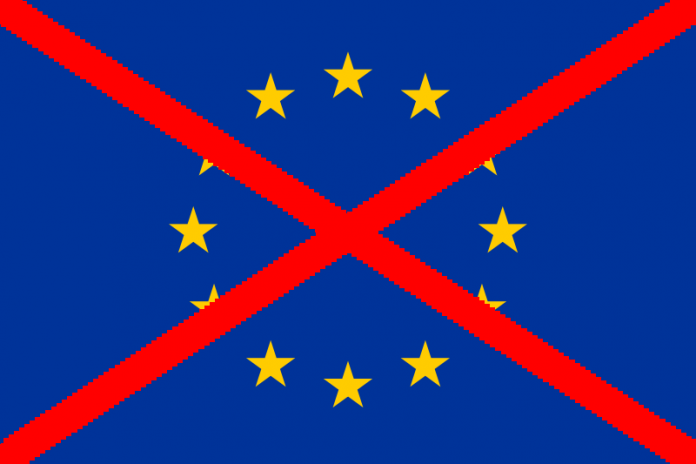
If you are an American who lived on the European Continent, specifically Western Europe, you’re very familiar with an exceptionally sharp strain of anti-Americanism that resides in a significant percentage of their ruling elite – an adult version of the middle school mean girls. Though present in all nations to one degree to another, it is especially acute in Germany and France for slightly different reasons but are all working towards the same goal; degrade American influence in Europe.

The best way for this political and corporate anti-Americanism to find a lever of power is through the the trans-national and anti-democratic modern iteration of the European Union – made even more problematic with the departure of Great Britain who once played a balancing role between the Continental powers as she has for centuries.

Why primarily France and Germany? To start with, this is part of the sibling rivalry between the children of Charlemagne for primacy in Europe that has churned Europe over the last thousand years. The Anglo-Saxons on both sides of the Atlantic kept getting in the way of their return to the struggle.

Their armies under various blood-soaked leaders moved across Iberia to Moscow and back for centuries in order to be THE driver of power in influence on the continent. The European Union, once the “trade association” nose was in the tent, is now seen – fairly – as a mechanism to centralize power so The Smartest People in the Room™ no longer have pesky minor powers and – Buddha forgive – voters getting in their way. Without checks, power only seeks more power for itself. The morphing of the EU is just the latest example.

Not unlike their American counterparts who would like the USA to extract itself from foreign entanglements (NB: as I have written through the years, I am sympathetic/supportive of these efforts), many of the strongest proponents of the EU just want the USA to go home.

The Europeans, while benefiting from the WWII/Cold War leftover presence of the USA, want it to end and the influence that comes with it. If any opportunity to push back against the USA appears, they have their talking points ready to dirty up the reputation and standing of the USA. If that can be done while blaming Eurocrat failures on the USA as well, even better.

You know the Americans, citizens of that mongrel nation whose gene pool is full of religious zealots, failed revolutionaries, slaves, economic refugees, grasping second sons, criminals, and their descendants – spoiled with a continent overflowing with food, water, minerals, forests and open land they don’t even appreciate.

Loud. Fat. Pushy. Americans.

The usual snarled insults cobbled together by smug people who get much of their opinions of the USA by reading The Washington Post or The New York Times. “I know America, I read your newspapers.” That is right after, “I’ve been to America. I spent a week in DC/NYC/Boston/Chicago. I studied a semester at Brown.”

[…]

The smaller European nations don’t trust France and Germany all that much, for good historical reasons. Most of the Europeans in the “new territories” in the east like the USA. They see the Americans as a more reliable guarantee of safety from hostile powers in the East, having a few centuries of experience of the Western European Frankish tribes carving them up for fun and profit – irrespective of local desires. Collectively these nations are not that large in GDP or population – not much more than Italy (for now), but that’s OK. They have the correct geography.

If we shape this relationship correctly, we don’t have to permanently garrison this part of Europe. Poland is already establishing a new paradigm of proper levels of security investment. Once NATO’s eastern front calms down a bit, we can rotate through forces for exercises and training. Perhaps even create some combined training and logistics bases ready to scale up in case of trouble in Mordor. A template we should have put in place in Western Europe decades ago.

Reward positive behavior and let the French and Germans continue their millennium-length struggle – peaceful this time – in the west; keep them frothing in Brussels and Strasbourg while the forward-looking nations try to set up the next thousand years of Western progress in a positive direction.

Perhaps.
June 13, 2022

The idealized EU that British “Remainers” still long for

Filed under: Britain, Europe, Media, Politics — Tags: , , , , — Nicholas @ 05:00

The Brexit debate was at least as much a cultural as it was an economic or political struggle. Many of the people who wanted the UK to remain within the European Union would be instantly comfortable as members of Canada’s Liberal or New Democratic parties, as our “Laurentian elite” are culturally much more attuned to their European elite counterparts than they are to ordinary Canadians. British “Remainers” similarly have much more in common with their Euro counterparts than with ordinary Brits:

For many in the British cultural establishment, Brexit was (and still is) an incomprehensible, foolish rejection of the unqualified benefits of the European Union. The creative industries, according to one noted poll in the lead-up to the 2016 referendum, were 96 per cent in favour of staying in the EU, and many working in the arts and culture have been raging ever since. Britain’s contemporary artists are some of the most outspoken about Britain leaving the EU, to the point that some of them would rather leave Britain. Last week, speaking at an exhibition opening in the Netherlands, famed sculptor Antony Gormley announced that such were his strong feelings over Brexit that he had applied for German citizenship. “I’m embarrassed about Brexit”, he lamented, “it’s a practical disaster, a betrayal of my parents’ and grandparents’ sacrifice to make a Europe that was not going to be divided again”.

[…]

None of our parents and grandparents who experienced the war, and the postwar reconstruction, would have envisioned the EU in its current form. It is a backroom technocracy of elites, making decisions beyond the reach of popular accountability, increasingly hostile to democracy and the aspirations of its millions of citizens. As many of us have always maintained, it’s possible to be for Europe, for fellow Europeans and for European culture – but against the EU.

The “little Englander” slur is one of the more ingrained prejudices of cultured Remainers. It has always been a way of expressing their contempt for those stuck with the consequences of the European project, those people unable or unwilling to shift from their “little”, provincial world and attitudes. These are the people, moreover, who the cultural establishment spent two decades up until the referendum patronising and cajoling. Arts policies and newbuild art galleries imagined that culture would rehabilitate the left-behind provincials of post-industrial Britain. Until, that is, post-industrial Britain voted the “wrong” way. (Gormley, with haughty disdain, has previously described Brexit as “a stupid moment of collective fibrillation” and “a disease”.)

Prominent Remainers profess their love for EU free movement, but studiously look the other way when it comes to its less romantic reality. Its only real achievement has been to facilitate the flow of cheap labour from poorer to richer EU states. This is the dominant economic reality of the free movement of labour, not the individualist idyll of foot-loose, self-determining bohemianism, or the career mobility of the well-paid creative. The latest Home Office figures for applications to the EU settled-status scheme reveal the stark trends in where Europeans, settling in Britain post-Brexit, are from: while the table is headed by poorer Eastern European Romania and Poland, these are followed by Italy, Portugal and Spain – southern Eurozone countries which were battered by the consequences of the EU’s stubborn and heedless imposition of the single currency.

While Remainers crow about insularity and “little Englanders”, it turns out that Britain is actually becoming more cosmopolitan, not less, since Brexit – just not in the way they mean it. Not only are 3.2million European citizens now fully settled and 2.6million “pre-settled” (meaning they’ll be fully settled after five years of residence), but also the British population is becoming more international. Recent ONS figures show that the number of workers not born in the UK has increased as a share of the labour force, from 17 per cent in June 2016 to 19 per cent in March 2022, with the increase made up of non-EU workers.

Update: Added the link to J.J. Charlesworth’s article at Spiked.

May 12, 2022

QotD: De Gaulle and FDR

Filed under: Europe, France, History, Quotations, USA — Tags: , , , — Nicholas @ 01:00

It was more profound than that. France was now too small as well, and that is the reason why de Gaulle’s story is in the end a tragedy. Postwar America simply could not permit France to continue as she had. Washington would not risk another 1939. The former powers of Europe had to be cut down to size and compelled to get on with one another.

De Gaulle’s struggles with Churchill were, by comparison, lovers’ tiffs. Churchill, like most civilized Englishmen, loved France, “that sweet enemy”, as Philip ­Sidney called her. While de Gaulle was cold to veterans of the Resistance, Churchill — when he went to Paris to meet them — was so moved by their bravery that he was in tears for most of the day.

De Gaulle’s quarrel with ­Roosevelt was based on real loathing. Washington’s vision for postwar Europe, in which the old nations would be diminished and homogenized, was directly opposed to de Gaulle’s idea of a French resurrection in glory and might. Washington loved and promoted the idea of a Europe dominated by supranational bodies, and would later use Marshall aid and the CIA to spread the idea of a European union. Jean Monnet, one of the founders of the eventual European superstate, was much more welcome in the U.S.A. than de Gaulle, whom FDR once airily dismissed as “the head of some French committee.” No doubt, this was what Roosevelt wished he was. Nancy Mitford, in her satirical 1951 novel, The Blessing, neatly caricatured this American unifying vision of the new Europe in the figure of the appalling American world-reforming bore, Hector Dexter, who dreamed of seeing a bottle of Coca-Cola on every European table:

    When I say a bottle of Coca-Cola I mean it metaphorically speaking, I mean it as an outward and visible sign of something inward and spiritual. I mean it as if each Coca-Cola bottle contained a djinn, and as if that djinn was our great American civilization ready to spring out of each bottle and cover the whole global universe with its great wide wings.

In May 1962, de Gaulle would oppose to this his assertion that Europe could not be real “without France and her Frenchmen, Germany and her Germans, Italy and her Italians.” He said (a recording of the performance still exists) that Dante, Goethe, and Chateaubriand “belong to Europe,” precisely because they spoke and wrote as Italians, Germans, or Frenchmen. They would not, he jeered, have served Europe much if they had been stateless and had written in some form of ­Esperanto or Volapük.

Peter Hitchens, “A Certain Idea of France”, First Things, 2019-04.

April 21, 2022

EU accuses Le Pen of financial skulduggery, in what I’m sure must be purely co-incidental timing

Filed under: Europe, France, Media, Politics — Tags: , , , , — Nicholas @ 05:00

Theodore Dalrymple on the surprisingly frequent “charges made against anti-EU politician late in election campaign” phenomenon that seems to have become standard practice in France:

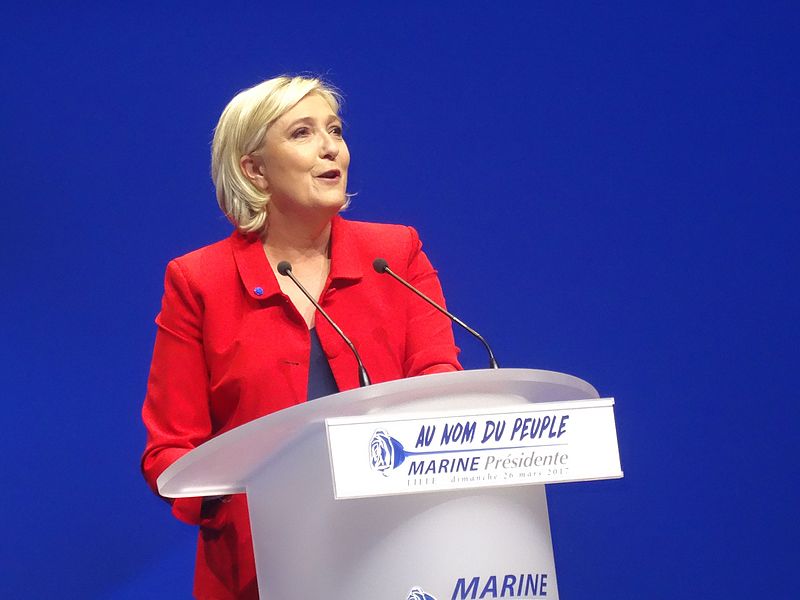
Marine Le Pen speaking in Lille during the 2017 French presidential election
Photo by Jérémy-Günther-Heinz Jähnick via Wikimedia Commons

A disturbing pattern has emerged in French presidential elections: A credible candidate is found almost at the last minute to have committed an illegal act, the revelation of which is intended to spoil or destroy altogether the candidate’s electoral chances.

The latest “victim” of this pattern is Marine Le Pen, who is facing the incumbent president, Emmanuel Macron, in the forthcoming second round of the French presidential election, a repeat of the contest of 2017. The main difference between the two contests is that, this time round, the polls give Le Pen at least some slight chance of victory, while last time Macron gained not only an overwhelming victory, but from the first had also appeared likely to do so. The outcome was never in any kind of doubt, as it is now.

Le Pen is usually described as being of the far right, though in fact her economic ideas are in some respects not very different from those of the candidate of the far left, Jean-Luc Mélanchon, who came not very far behind her in the first round of the election, in which the two candidates who receive the most votes go forward to the second, and decisive, round.

Perhaps economic affinity helps to explain why almost as many voters for the far-left candidate say they will vote for the candidate of the far right as say they will vote for the centrist candidate, Macron. Mélanchon himself has expressed the wish that not a single one of his voters should vote for Le Pen, without, however, having asked them to vote for Macron. He seems, then, to be hoping for a high rate of abstention, which would strengthen his argument that the current French political system is undemocratic and illegitimate, and that the country needs yet another new constitution.

Le Pen has just been accused by the European Union’s antifraud office of malversation of funds, 136,993.99 euros (about $148,000) of the Union’s money to be precise, while she was a member of the European Parliament between 2004 and 2017. For example, she is accused of having claimed 23,100 euros (about $25,000) for the purchase of little objects such as pens and bags to be given out at her political party’s annual conference in 2014, which is not allowed under the rules.

It might be a coincidence that the accusation of something that was allegedly done eight years ago has emerged in the week before the election, but I do not think many people will be found to believe it. After all, Le Pen is decidedly hostile to the European Union, while Macron is almost a religious devotee of it. There are no prizes for guessing, then, which of the two candidates the Union would prefer to win.

April 7, 2022

The EU only cares about democracy as long as the voters make the “correct” choice

Filed under: Europe, Government, Politics — Tags: , , , , — Nicholas @ 05:00

In Spiked, Tom Slater points out the most recent proof that the EU’s principled defence of democracy fades out quickly when the voters don’t vote the way they’re “supposed to”:

Remember the other day when the European Union was pretending to care about sovereignty and democracy? When Russia’s imperialist invasion of Ukraine had supposedly united European elites in their staunch, unflinching belief in a people’s right to determine their own destiny and shape their nation? You’ll be shocked to learn that they didn’t really mean it, at least if their reaction to the Hungarian election is anything to go by.

On Sunday, Viktor Orbán and his ruling Fidesz party won a landslide victory. Already the longest-serving EU leader, Orbán is now heading into a fourth consecutive term, with a two-thirds majority in parliament and an increased mandate. United for Hungary – an opposition coalition stretching from ex-communists to ex-fascists – defied the raised expectations of Euro elites and put in a dreadful showing, capped by gaffe-prone leader Péter Márki-Zay failing to win his own constituency race.

In the election, Orbán presented himself as a doughty defender of Hungarian national identity and interests against a meddlesome European Union and international set. Budapest and Brussels have been locked in a years-long battle over alleged “rule of law” breaches and LGBT rights. The EU is currently withholding €7 billion of coronavirus recovery funds from Hungary as part of a bitter legal standoff. In this, Márki-Zay was an all-too-willing foil, arguing that his government would be a “grand prize” for the EU.

In February, the European Court of Justice rejected a challenge by Hungary and Poland, upholding the legality of withholding funds from member states if they fail to adhere to “core values”. It sent a clear message to the Hungarian electorate in the run-up to the election: reject – or at least humble – this troublesome government or else. Now that Hungarians have politely refused to be pushed around, the European Commission has said it will press ahead with the formal mechanism that will deprive Hungary of the funds indefinitely.

Meanwhile, the European liberal media took a break from piously intoning about the defence of democracy in Ukraine to decry the election result in Hungary. Timothy Garton Ash even linked the ballot-box revolt to the barbarism in Bucha. “The Ukrainian horrors are clearly far worse than the Hungarian miseries, but the two are fatefully connected”, he wrote in the Guardian, accusing Orbán of being a Putin stooge. “Europe should now get tough on both the Russian enemy without and the Hungarian enemy within.” A Guardian editorial similarly called for swift EU action against this pesky central European state.

February 5, 2022

A new biography of Nigel Farage

Filed under: Books, Britain, Media, Politics — Tags: , , , , , — Nicholas @ 03:00

For a man who’s never been elected to Parliament, Nigel Farage has been a major mover-and-shaker in British politics. In the Literary Review, Steve Richards reviews One Party After Another: The Disruptive Life of Nigel Farage by Michael Crick:

Most political figures come and go. Nigel Farage, in contrast, seems always to be around, close to the centre of the political stage. Sometimes he is leading a political party. Occasionally he is setting up a new one. Between such roles he is on television. Currently, the former leader of UKIP and the Brexit Party hosts a nightly show on GB News.

The consequences of Farage’s ubiquity have been seismic, reshaping the UK and the wider political landscape. He sought a referendum on Britain’s membership of the EU and then a hard Brexit, and ultimately got everything he wanted. The Conservative Party’s embrace of a form of English nationalism was partly a response to the threat that Farage posed. The near-silence of the Labour leader, Keir Starmer, on the subject of Brexit is a form of vindication for him. Starmer knows that Brexit is having calamitous consequences but does not dare to say so. No wonder Michael Crick concludes that “it’s hard to think of any other politician in the last 150 years who has had so much impact on British history without being a senior member of one of the major parties at the time”.

Among Crick’s admirable passions is his interest in those individuals or forces that have shaped the major political parties from outside the mainstream. He wrote an important book on Militant, the left-wing group that in the 1980s sought to infiltrate the Labour Party and for a time made life hellish for Michael Foot and Neil Kinnock, the two party leaders during that stormy decade. His biography of Jeffrey Archer, the Conservative MP who became a bestselling author and then a convicted prisoner, was revelatory. Now he has set his sights on Farage, who has never been an MP and yet has been such a prominent figure in recent years.

As Crick always does with his subjects, he has researched meticulously every twist and turn in Farage’s life. He regrets that his investigations were constrained by the pandemic. He need not worry too much. His diligence has enabled him seemingly to have unearthed every internal dispute in UKIP and the Brexit Party, along with the eccentric figures who lined up on different sides in them. The characters that emerge would fit neatly into a Dickens novel. One of the most unsavoury right-wingers to feature in the book is now an avid supporter of the Green Party, lives in Germany and is passionately opposed to Brexit – a novelistic metamorphosis. We are also reintroduced to Farage’s old friend Godfrey Bloom, a UKIP MEP and economics spokesman, who in 2013 famously hit Crick with a party conference brochure as the journalist pursued him down the street after he had made characteristically indiscreet and outrageous remarks in a speech to UKIP members.

This book is full of fights, usually between party members. We see Farage repeatedly falling out with other potential leaders. More prominent members who cannot hide their real views in public have to be admonished. Some flirt with the BNP. Even during the triumphant 2016 referendum campaign, there were two pro-Brexit camps, one led by Farage and the other by Dominic Cummings. Farage and Cummings loathe each other and their campaign groups fought bitterly for pre-eminence. This is the most striking theme of the book. UKIP and the Brexit Party, which Farage set up in 2019 to campaign for a hard Brexit, were utterly dysfunctional most of the time. They make the UK’s main political parties, all going through various existential crises at the moment, seem models of smooth, sophisticated professionalism. The amateurism extended well beyond the eccentric characters near or close to the top. Neither party offered coherent policy programmes beyond opposition to the UK’s membership of the EU.

H/T to Colby Cosh for the link.

December 8, 2021

Pandemic authoritarianism in the EU will be the death of Europe’s liberal traditions

In Spiked, Brendan O’Neill says we’re watching the “death of Europe” driven by the authoritarian instincts of government and EU leaders in thrall of public health officials:

Europe is on a precipice. It has marched, blindly, towards something very much resembling tyranny. Austria will shortly criminalise those who refuse the Covid vaccine. Germany looks set to follow. Ursula von der Leyen, president of the European Commission, is wondering out loud if every member state should do likewise and make offenders of those who reject this form of medication. In Italy you are deprived of your livelihood rather than your liberty if you say no to vaccination: the unvaxxed are not permitted to work. Anywhere. In Greece, everyone over the age of 60 must pay the government 100 euros for every month they remain unvaxxed. As if the Greek government, in cahoots with its masters in Brussels, had not immiserated Greek pensioners enough already.

Police in Rotterdam opened fire on people protesting against Covid restrictions. Three were seriously injured. Austrian cops have wielded batons and shields against the thousands who took to the streets of Vienna to say no to mandatory vaxxing. In Brussels, the black, bureaucratic heart of the EU project, water cannons and tear gas were unleashed upon citizens agitating against vaccine passes. The irony is almost too much: in the European quarter of Brussels, the very part of Europe in which the modern European sensibility was forged by politicians, experts and technocrats, ordinary people make a blow for freedom and the forces of this supposedly liberal new continent beat them down. Rarely has modern Europe’s bluster about “human rights” and “respect” been so savagely exposed.

What is happening in Europe right now is nothing short of terrifying. We are not merely witnessing another round of Covid restrictions. This isn’t just the introduction of another set of emergency measures that some people believe are necessary to stave off the latest Covid wave and the Omicron threat lurking on the horizon. No, we are living through a chilling overhaul of the entire relationship between the state and the individual, with the state empowered to such an extraordinary degree that it can now instruct its citizens on what to inject into their bodies, and the individual so politically emaciated, so denuded of rights, that he no longer even enjoys sovereignty over himself, over that tiny part of the world that is his own body and mind. We are witnessing the violent death of European liberalism and the birth pangs of a new and deeply authoritarian era.

Many seem not to recognise how serious a development mandatory vaccination is. Even those of us who are pro-vaccination, who have been happily vaxxed against Covid-19, should look with nothing less than horror upon the proposal that it should be an offence not to be vaccinated; that a citizen should be fined thousands upon thousands of euros if he refuses this treatment. One of the ideas being discussed in Austria ahead of its mandatory vax law that will be introduced in February is that citizens who refuse vaccination will be summoned to a local court. If they ignore the summons twice they will face a fine of 3,600 euros. If they continue ignoring the state’s demand that they receive medical treatment that they do not want, they’ll be fined 7,200 euros. These are life-ruining fines. There is no talk – yet – of imprisoning people who reject the vaccine, but the Austrian state is making it crystal clear that it will happily wield its power to propel the unvaxxed into destitution.

[…]

This spells the end of freedom as we know it. Bodily autonomy is the foundation stone of self-government, and self-government is the thing that gives freedom meaning. If we do not enjoy sovereignty over our minds and our flesh, then we are not free in any meaningful way. And it won’t just be the minority of people who feel forced to receive the vaccine whose freedom will suffer under this new regime of state power over people’s bloodstreams and muscles and flesh – everyone’s freedom will. The state diktat determining that only those who receive a certain form of medical treatment will get to enjoy freedom will make freedom itself contingent upon doing what the state wants you to. Even the vaxxed will not be truly free people in this world. Rather, we will be the beneficiaries of state favour, the enjoyers of small privileges, in return for our agreeing to receive an injection. We will have a license from on high to go about our daily lives. And we will know that that license could swiftly be revoked if we refuse medical treatment in the future. The redefinition of “freedom”, the making of liberty contingent upon submission to medicine, will throttle the rights of all of us – vaxxed and unvaxxed alike.

What if the refugee flow was crossing the Channel the opposite way?

In The Critic, Joel Rodrigues considers what the media narrative would say if the constant stream of migrants from the EU to Britain was reversed, as all the major media outlets predicted would happen if Brexit went through:

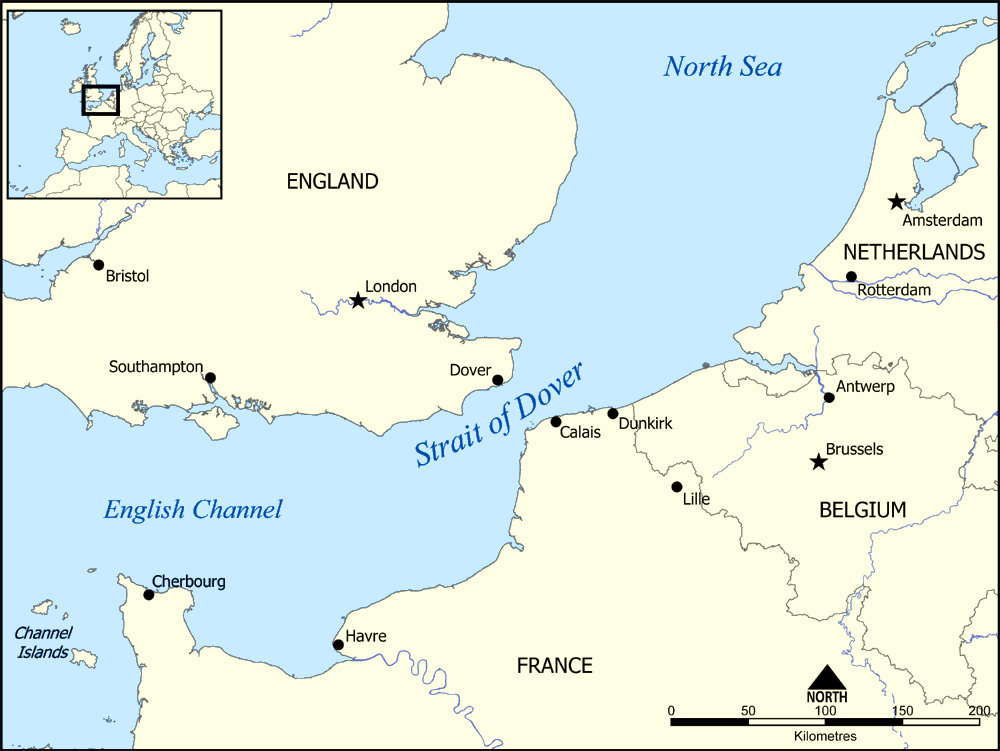
This map shows the location of the Strait of Dover between England and France, and part of the English Channel and the North Sea. It also shows nearby towns such as Dover, Calais, and Dunkirk.
Image created by NormanEinstein via Wikimedia Commons.

Imagine “tent” cities on the Kent coast, similar to “the Jungle” that existed in Calais up until 2016. These camps are the type of camps that the Remain campaign (wrongly) warned would spring up if Britain voted to leave the EU, as part of their Project Fear campaign. The tent cities are full of migrants, hoping to reach the French coast and the “sunlit uplands” of the European Union.

The camps are filthy, riddled with violent crime, and it is here that people traffickers sell spaces on dinghies to cross the channel for thousands of pounds a ticket. The British police and immigration services are aware of undocumented people living in squalor in the camps, but largely do nothing.

Occasionally a camp is cleared to placate the locals, but it quickly springs up somewhere else. The British government make no effort to document, accommodate or process the migrants living in appalling conditions on its territory. Instead, it blames the “pull factor of the EU’s single market”, saying that many of these migrants have family in France and want to live in a French or German speaking society. A junior British minister suggests that the black market economies in the EU are also a pull factor, and that there are a “lack of safe asylum routes” into the EU.

People smugglers continue operating from the British coast, and the migrant camps expand. Dinghies are now launched daily from the UK towards the continent. Police are aware of the launches, but do nothing. The RNLI and Royal Navy escort these flimsy boats until they are in EU waters, despite their not being seaworthy. Thousands succeed in making the crossing.

Then, tragedy strikes when a boat sinks. Statements are released from the British and French governments lamenting the loss of life. Trying to find a solution, Emmanuel Macron writes a letter to Boris Johnson urging increased collaboration, with joint patrols if necessary, to prevent a repeat of the tragedy.

The British government issue a response claiming that the perfectly conciliatory letter is in fact unacceptable, a “threat to British sovereignty”, and that France is uninvited from crisis talks. British media later reports that in a meeting with some of his advisors, Boris Johnson branded Emmanuel Macron as “a clown in charge of a circus”.

Imagine the media commentary and narrative in the UK surrounding such a situation, especially post-Brexit.

“Migrants die fleeing racist, Brexit-ridden, plague island,” says an op-ed in the Guardian. The comments are largely agreed that Boris Johnson is personally responsible for each of their deaths.

“UK condemned as using migrants to destabilise the EU’s single market,” reports the BBC. Parallels are also drawn in The Times between Boris Johnson and Belarus’ Lukashenko. There are mass demonstrations outside Parliament as the crisis worsens.
One can imagine the EU Commission swiftly and publicly denouncing the UK and drawing up sanctions. The Labour party would likely call it a national scandal, and demand resignations, as well as accusing the government of taking a hardline stance as cynical electioneering.

I searched for public domain or Creative Commons images of the English Channel migrant crisis, but came up surprisingly empty, hence the generic map to illustrate this post. I had expected to be inundated with lots of heart-rending images of desperate refugees, but not this time…

November 12, 2021

More on the populist success of Hungary’s Victor Orbán

Filed under: Economics, Europe, History, Politics — Tags: , , , , — Nicholas @ 03:00

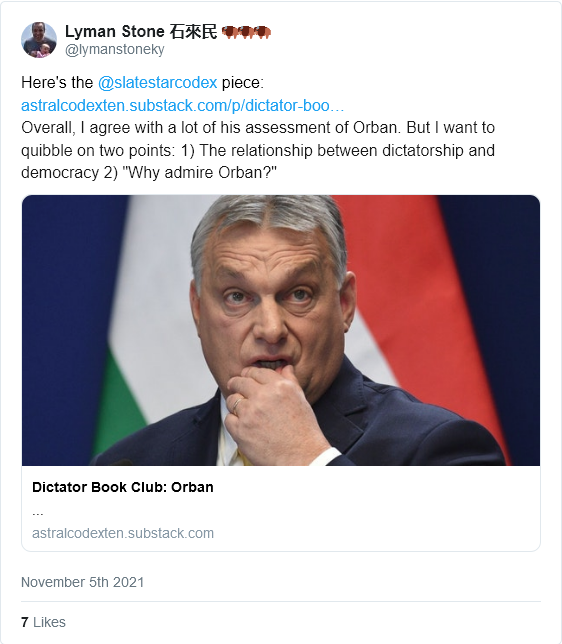
Last week, Scott Alexander looked at a couple of recent biographies of Hungarian politician Victor Orban (linked here). He got some quite interesting responses from his readers, including a long Twitter thread from Lyman Stone, which he’s converted into plain text for ease of reading:

I won’t make you read it all in tweet format. He continues:

1) Dictatorship and democracy. The arguments about Orban cheating in elections might be totally true. I dunno. But that’s sort of irrelevant. Neutral opinion polls nobody disputes show he would have gotten 2/3 under almost any system.

His crude poll share was about 60% before the 2010 election, but given the threshold effects, he’d likely have ended up at a supermajority under almost any system. And as @slatestarcodex [says], a lot of the initiatives that the EU most despises under Orban are initiatives that *everyone agrees* have supermajority public support among Hungarian voters.

Moreover, I agree with @slatestarcodex that if public opinion turned in Hungary, Orban would probably turn on a dime too. The dude loves power. But that should inform our read of what’s going on in Hungary. *Hungarians wanted* a right-nationalist authoritarian leader, *and so they voted for one*, and the electorate has *wanted* recurrent intensifications of that regime. So is it a dictatorship? Or is it a democracy?

This gets at the problem with “democracy” as a concept. Hungary is undeniably Democratic: there is widespread public support for the regime, which is selected by elections, the results of which are a decent approximation of trustworthy and neutral opinion polls. But I think it’s still possibly reasonable to call Orban a dictator. He wields enormous *personal* power, there are few checks on his power, and he uses power to create a *personal* clique of supporters to perpetuate that power and enfeeble the competition.

But this is the point: Democracy and dictatorship aren’t opposites. In fact, they are natural companions! So much so that before the 20th century, “democracy” was often used *literally as a synonym* for “authoritarian and demagogic rule”! Orban is a great example of why the word “democracy” came into ill repute in the past: because it was widely understood that “the people” (often pejoratively “the mob”) will often vote for a strongman to stomp his boot on the face of disliked others. That’s not so much a disagreement with @slatestarcodex as just a comment where I think the modern western liberal mindset obscures understanding the phenomenon of populist leadership.

2) Why admire Orban? Here I think @slatestarcodex misses some important stuff, perhaps because his biographies miss it. Yes, Orban was incompetent in the 90s. So were MOST immediate post-Soviet leaders! And while Orban may have been corrupt, you can compare the personal wealth of the Fidesz clique to the cliques that looted Russia or Ukraine and realize that Hungary got a better class of corrupt leaders than much of eastern Europe. Moreover, Hungary actually had competitive elections with changes of power and leaders who *respected* those results! Maybe they were dirty but, like, it happened! This wasn’t universally true!

So why might Hungarians admire a dissident-cum-parliamentarian who competed for their votes and when defeated responded democratically by adapting to try to win the next election? Because … duh?

But it’s not just that. The big factor that’s absent in all these culturalist accounts of Hungarian politics is … the economy. Hungary went from below-average unemployment rate for its region under Orban 1 to way above-average under the socialists to again below-average under Orban 2.

This is extremely important. A part of Orban’s appeal is that, whether by coincidence or art, he has managed to preside over periods where Hungary’s economic performance was better than a lot of its neighbors, and often fairly obviously so. That is, supporting irredentist nationalism in the form of Orban hasn’t imposed costs on Hungarians: they aren’t like facing sanctions or something or enduring deep economic hardship to stand by their dictator. He’s delivered (comparatively) good times!

So when you have a leader who 1) seems marginally-less-corrupt than regional peers, 2) delivers marginally-better-results than regional peers, and 3) adopts policies that are widely popular … that leader will be popular! Duh!

Update: Fixed broken link.

September 30, 2021

Petrol shortages in the UK

Filed under: Britain, Economics, Media — Tags: , , , , , , , — Nicholas @ 05:00

I’ve seen several reports on the somewhat sudden rash of petrol (gasoline to US/Canadian readers) shortages in Britain, and most of those reports airily pin the blame for the situation on Brexit. To the media, Brexit seems to be an all-purpose explanation for anything that goes wrong (in the same way that previous administrations get the blame for current problems even many years after they left power). Sean Gabb says that despite the frequent glib blaming of Brexit, in this case it is part of the reason:

There is in the United Kingdom a shortage of lorry drivers. This means a dislocation of much economic activity. Because it cannot be delivered, there is no petrol in the filling stations. Because there are not enough drivers, and a shortage of fuel, we may soon have shortages of food in the shops. Christmas this year may not involve its usual material abundance.

These difficulties are wholly an effect of the new political economy that has emerged in England and in many other Western countries since about 1980. An army of managers, of agents, of administrators, of consultants and advisers and trainers, and of other middle class parasites has appropriated a growing share of the national income. This has happened with at least the active connivance of the rich and the powerful. Since, in the short term, the distribution of the national income is a zero-sum game, the necessary result is low and falling real wages for those who actually produce. So long as the productive classes can be kept up by immigration from countries where even lower wages are on offer, the system will remain stable. Because leaving the European Union has reduced the supply of cheap labour, the system is no longer stable in England.

There are two obvious solutions. The first is to rearrange the distribution of income, to make the productive classes more able and more willing to produce. Since this would mean reducing the numbers or incomes or both of the parasite classes, the second is the solution we mostly read about in the newspapers. This is to restore the flow of cheap foreign labour.

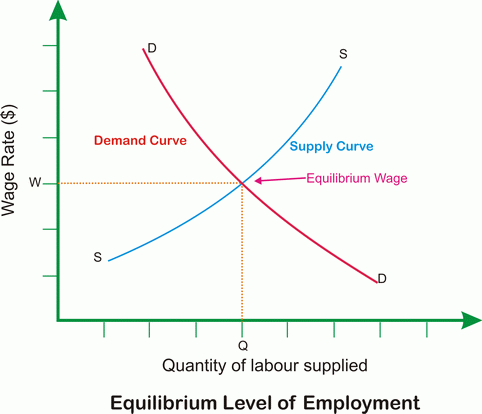
In summary, that is my explanation of what is happening. For those who are interested, I will now explain at greater length. According to the mainstream theory of wages, labour is a commodity. Though workers are human beings, the labour they supply to employers is of the same general nature as machine tools and copper wire and cash registers and whatever else is bought and sold in the markets for producer goods. A wage therefore is a price, and we can illustrate the formation of wage rates with the same supply and demand diagrams as we use for illustrating the formation of prices:

The supply curve slopes upwards because most work is a nuisance. Every hour of labour supplied is an hour that cannot be spent doing something more enjoyable. Beyond a certain level, workers can only be persuaded to supply more labour if more money is offered for each additional hour of labour. As with other producer goods, the shape of the demand curve is determined both by the price of what labour can be used to produce and by the law of diminishing returns.

[…]

Our problem in England is that large areas of economic activity have been rigged. There is an immensely large state sector, paid for by taxes on the productive. Most formally private activity is engrossed by large organisations that are able to be so large either because of limited liability laws or by regulations that only large organisations can obey. The result is that wages are often determined less by market forces than by administrative choice. In this kind of rigged market, we cannot explain the distribution of income as a matter of continual choice between marginal increments of competing inputs until the whole has been distributed. It may be better to look at a modified wages fund theory. A large organisation has a pot of money left over from the sale of whatever its product may be, minus payments to outside suppliers, and minus whatever the directors choose to classify as profit. This is then distributed according to the free choice of the directors, or how hard they can be pushed. Or we can keep the mainstream cross-diagrams, but accept that the demand curve is determined less by marginal productivity than by the overall prejudices of those in charge.

Therefore the growth of a large and unproductive middle class, and the screwing down of all other wages to pay for this. This is not inevitable in rigged markets, but is possible. It has come about since the 1980s for three reasons:

First, the otherwise unemployable products of an expanded higher education sector have used all possible means to get nice jobs for themselves and their friends;

Second, the rich and the powerful have accommodated this because higher wages and greater security for the productive might encourage them to become as assertive as they were before the 1980s;

Third, that these rich and powerful see the parasite classes as a useful transmitter of their own political and moral prejudices.

July 15, 2021

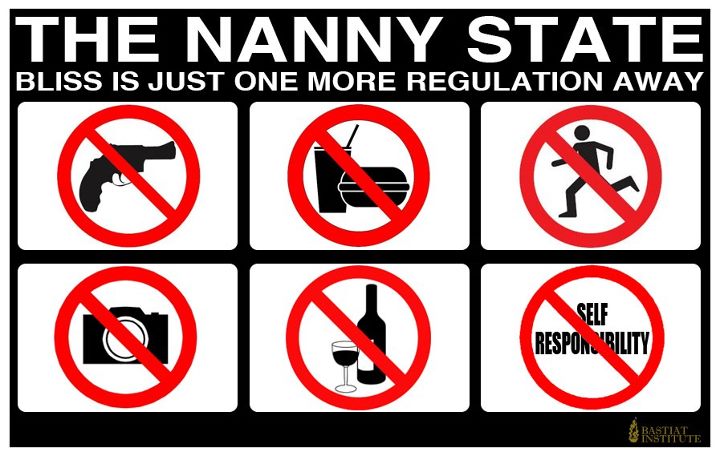
Out: “War is the health of the state”, In: “Pandemic restrictions are the health of the nanny state”

British MP Andrew Lewer on the inability (and determined unwillingness) of western governments at all levels to back away from all the restrictions they’ve been able to impose on their citizens since the start of the Wuhan Coronavirus pandemic:

The list goes on. By the government’s own calculations it [banning advertising for “junk food” on TV] will reduce children’s diets by a meagre five calories a day – the equivalent of a third of a cherry tomato. And watch out for those Government figures. Pardon the pun, but given that they add weight to the arguments of those opposing their intrusiveness into our lives, would anyone be amazed if new and revised figures emerged during the course of detailed legislation? But even if the impact of these proposals was amplified by “the science”, it would still come at too high a cost to individual freedom and liberty.

And this is just the thin end of the wedge. For a moment back in winter, it looked like we had woken up and smelt the full English breakfast. It was reported that the advertisement ban would be discarded, which allowed the free market minded to hope, especially given the disbanding of Public Health England, that this might signal pushback against nanny state intrusion. Alas, no.

The appetite for ill-conceived, unworkable ideas is growing: we have plans to force pubs to disclose the number of calories in every drink they serve, just as they begin to fill their tills after months of lockdown. Plans to end deals like “buy one get one free” on foods high in fat, sugar and salt – a regressive measure that will hit the poorest consumers hardest while doing nothing to reduce our waistlines. Plans for further legislation around nutritional labelling – adding cost, probably not adding clarity.

We left the EU in part as a reaction to over-regulation. I remember well during my time as an MEP how skewed towards large corporations the regulatory regime could be in Brussels. If, having taken the difficult and painful decision to leave the bloc, we fail to roll back the overreach then people will start to ask what the last four years was all about. If freedoms regained are never applied, then what was the point? The food laws will diminish freedoms in everyday life, not just those of the important, but more esoteric and common room kind, that our political elites from time to time do remember to respect.

April 21, 2021

“The error in Western thinking was to view CCP officials as civilised counterparts”

Filed under: China, Economics, Europe, Government, USA — Tags: , , , , , — Nicholas @ 03:00

In Quillette, Aaron Sarin traces the last twenty years of successful diplomacy, industrial espionage, and ever-increasing CCP media influence in China’s relationships with western nations:

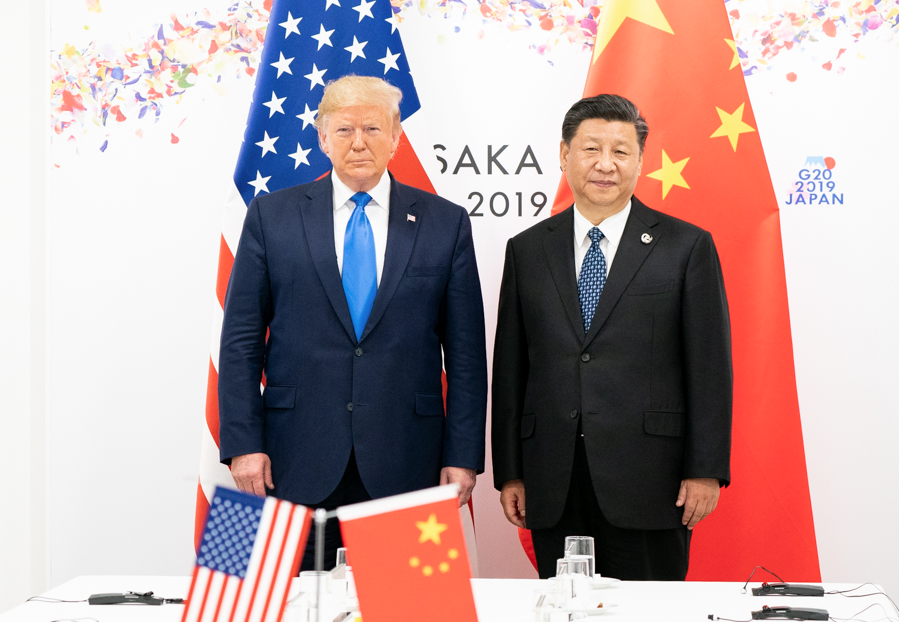
President Donald Trump and PRC President Xi Jinping at the G20 Japan Summit in Osaka, 29 June, 2019.
Cropped from an official White House photo by Shealah Craighead via Wikimedia Commons.

By the end of 2020, China’s relationships with the US and Australia had reached their lowest point in living memory, while Sino-British relations weren’t far behind. Yet the European Commission chose this moment to sign a major new investment treaty with Beijing. The deal appeared to have been rushed to completion just before Joe Biden’s inauguration, as if to avoid the fuss that a new American administration would be sure to make. Indeed, incoming National Security Adviser Jake Sullivan felt sore enough to send a pointed tweet: “The Biden-Harris administration would welcome early consultations with our European partners on our common concerns about China’s economic practices.”

The truth is that Brussels has been drifting further and further from Washington ever since the election of Donald Trump, and there are few signs the winds will change now that Biden has taken office. In 2017, Merkel said that Europe could no longer rely on America. By 2020, it seemed truer to say that Europe would rely on China from now on. Indeed, diplomats like Emmanuel Bonne (Macron’s foreign policy adviser) have been most enthusiastic about “France’s readiness to step up strategic communication with China.” In his gushing deference, Bonne can sometimes sound like a man with a gun to his head: “France respects China’s sovereignty, appreciates the sensitivity of Hong Kong-related issues, and has no intention of interfering in Hong Kong affairs.” There are times when the language of neutrality reveals with painful clarity that a side has been chosen.

Brussels officials talk of “strategic autonomy,” of course. They hope to carve out a path to self-sufficiency while at the same time enjoying mutually beneficial relationships with partners like Beijing. The problem is that mutually beneficial relationships are not possible with predators. As successive American administrations have found, those who maintain close connections with the Communist Party will eventually suffer large-scale intellectual property theft and the loss of millions of manufacturing jobs.

Brussels can hardly expect that Beijing will respect this new agreement. Recall the various promises that were made regarding Hong Kong: all of them were broken. Party officials may have signed a legal document recognising the city’s special administrative status, but this was purely for show. In 2017, having apparently now ascended to a position above the law, they declared that the document had “no practical significance.” Remember how Barack Obama was given firm assurance that Beijing would never militarize the South China Sea? There were handshakes and smiles all round, and then Beijing proceeded to militarize the South China Sea.

Indeed, some of the commitments included as part of the new deal echo those made 20 years ago, when China first joined the World Trade Organisation. It was agreed in 2001 that prices in every sector would be determined by market forces; that state-owned enterprises would begin operating free of state influence; that international norms regarding intellectual property would be respected; and so on. After two decades, we can see that the Communist Party has kept not one of its promises.

The error in Western thinking was to view CCP officials as civilised counterparts. We failed to see that we were dealing with a pack of thugs and grifters — men for whom the rule of law is neither reality nor ideal, but façade. This lesson has now been learned in some quarters, but clearly not in the upper echelons of the European Union. This new investment deal even includes a reference to “commitments on forced labour,” which is little short of an insult when we consider the hundreds of thousands of Uyghurs who have been made to toil all day till dusk in the cotton fields of Xinjiang. The truth is that the EU has been fooled. There will be no “win-win situation.” Not when dealing with the Communist Party, which has always viewed geopolitics as a zero-sum game. In the words of Bilahari Kausikan, once Singapore’s top diplomat, “only the irredeemably corrupt or the terminally naïve take seriously Beijing’s rhetoric about a ‘community of common destiny.'”

February 18, 2021

QotD: The “European Project”

Filed under: Europe, Government, Quotations — Tags: , , , — Nicholas @ 01:00

Whatever else the European project was meant to be, it was never meant to be very democratic. Its deus ex machina, Jean Monnet, was quite clear abut this: the plebe was neither intelligent or informed enough to decide its own fate, at least as regards high politics. It would be dishonest to say that such thoughts never run through the heads of the more intelligent sector of the population in respect of the less intelligent; you have only to walk down the street to see that the voice of the people is hardly that of God. How many people, for example, know what the interest rate should be (assuming, that is, that there is a correct answer), or even what factors should be taken into account when assessing it? But few highly intelligent people would put their night thoughts into practice, and simply say, “We should rule because we are the most intelligent and know best.”

Theodore Dalrymple, “European Empire, Fractured”, Law & Liberty, 2020-11-10.

February 12, 2021

QotD: Repartee

Filed under: France, Humour — Tags: , , , — Nicholas @ 01:00

Clever banter can only be called “repartee” if it’s from the Repartée region of France. Otherwise it’s just sparkling wit.

Daniel Hannan, Twitter, 2020-11-06.

January 17, 2021

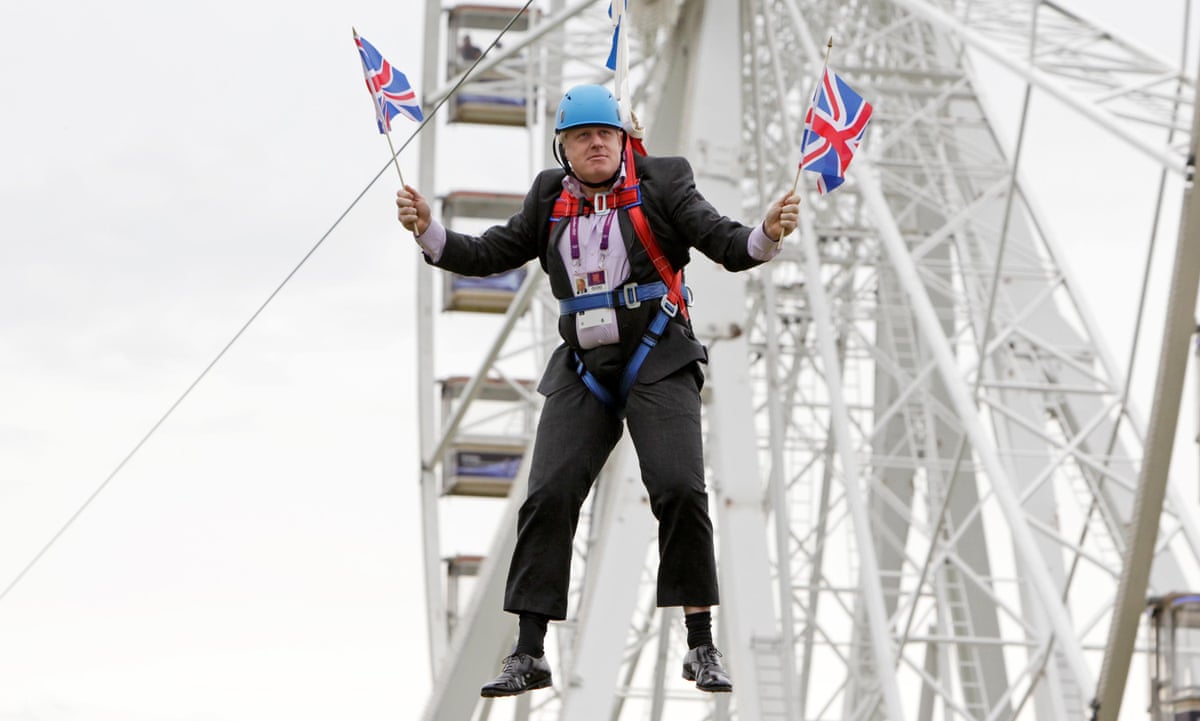
Hector Drummond on Boris “Cane-Toad” Johnson

Filed under: Australia, Britain, Environment, Government, History — Tags: , , , , — Nicholas @ 05:00

As a teaser to attract new subscribers to his Patron and SubscribeStar pages, Hector Drummond shared this piece on the ecological disaster of Australia’s 1930s cane-toad importation and the similar political disaster of Boris Johnson in Britain:

In the 1930s Queensland farmers were facing trouble with large numbers of cane beetles eating the sugar crops that were an important part of the state’s economy. So the Bureau of Sugar Experiment Stations came up with a cunning plan. They would import some cane toads (a native of middle and south America), because cane toads ate cane beetles. This was sure to solve the problem in a trice. One-hundred and two cane toads were duly imported into the state, from Hawaii as it happened, to do the job.

Unfortunately this soon became a classic case of the cure being worse than the disease. In fact it wasn’t any cure at all because the cane toads didn’t bother much with the cane beetles, and instead ate everything else they could wrap their tongues around. The other thing they did was multiply at an explosive rate. These days there are estimated to be 200 million cane toads in Australia, mainly in Queensland, and they cause havoc with the native fauna, not least because they have nasty poison-producing glands on the back of their head which the native animals have no naturally-evolved defence against. Curious pet dogs who mess about with a toad can die.

In 2019 Britain was facing its own crisis. It had become obvious to half the country that Theresa May’s Conservative government was deliberately trying to prevent Brexit from happening. As the other parties were even worse, the only hope for a real Brexit to take place was if a new pro-Brexit leadership in the Conservative party could be installed. After a titanic struggle, this finally happened, and Alexander “Boris” Johnson became the new leader, with Michael Gove and advisor Dominic Cummings at his side.

Unfortunately Johnson has proven to be Britain’s own version of the cane toad, a cure that is vastly worse than the disease. Johnson, at least, proved to be more able than his Australian counterpart at doing the job that was required of him. Whereas the Australian toad was about as interested in cane beetles as Olly Robbins was in getting the UK out of the EU, Johnson at least gave us a middling type of Brexit which, as fudged as it was, was at least far better than anything any of his fellow MPs could have got.

But in terms of being worse than the disease, Cane-Toad Johnson has proven to be far, far more destructive than the cane toad ever was. The cane toad, after all, is merely an ecological pest, whereas Johnson has proved to be a dangerous menace to the country’s liberty, prosperity and health. The poison from his glands has leached into our very life. We have become like domestic dogs who have been forced to lick them every day.

« Newer PostsOlder Posts »

Powered by WordPress