Quotulatiousness

August 4, 2025

The EU still dominates in one key area – over-regulation

At the Foundation for Economic Education, Cláudia Ascensão Nunes identifies the one area that the EU has carved out a unique niche for itself … and it’s global in scope:

EU regulations delenda est

In a world where global power is measured by military strength, technological innovation, or cultural influence, it is striking that the European Union, without housing major tech giants or centers of disruptive innovation, has turned bureaucracy into a tool of global power. It shapes the behavior of global companies, including American big tech firms, which adapt their products to comply with European norms. This phenomenon is known as the “Brussels Effect” and has positioned the EU as the world’s regulatory superpower, fueling growing tensions, particularly with the United States following the re-election of Donald Trump.

The European market comprises 450 million consumers with significant purchasing power, making it an essential destination for global companies. However, access to this attractive market comes with detailed regulations based on the precautionary principle, ostensibly prioritizing consumer and environmental protection, and enforced by an efficient bureaucracy capable of implementing and enforcing rules with precision. This combination encourages companies to align their global operations with European standards, as maintaining different product versions for each region is costly and complex. In practice, this exports European standards worldwide.

American big tech companies such as Apple, Google, and Meta exemplify the impact of the “Brussels Effect,” as they face the requirements of legislations like the Digital Markets Act (DMA) and the Digital Services Act (DSA). These laws have forced companies to overhaul their business models, often at high cost and with significant implications. The DMA, for instance, forced Apple to allow alternative app stores and third-party payment systems on iOS, leading the company to announce, in 2024, global changes to its app policy affecting users even outside Europe, with cost estimates in the billions of dollars to restructure its infrastructure and address revenue losses from the App Store.

Google, under the same regulation, was required to offer alternatives to its search engine on Android and to unbundle services such as YouTube, impacting its global strategy and requiring significant investments in new operating systems and interfaces. The company faced potential fines of up to 10% of its global revenue for non-compliance.

Meanwhile, Meta, under the DSA, was required to invest billions in content moderation systems, a serious imposition that openly seeks to control freedom of expression on a global scale. Operational costs increased by around 20%, according to market analysts. These costly adjustments are ultimately coercive due to the weight of the European market, demonstrating how Brussels shapes corporate behavior on a global scale.

These successive impositions and forced adaptations illustrate precisely Friedrich Hayek’s warning about the dangers of central planning. By replacing spontaneous order with top-down, uniform rules imposed by a technocratic authority, the capacity for local adaptation and respect for market complexity is lost. In this scenario, the European Union increasingly takes on the features of a regulatory Leviathan, a body concentrating disproportionate power in the hands of bureaucrats far removed from citizens, reducing freedom of choice and stifling innovation.

August 2, 2025

“[T]he United States is an imperial power … it does not give foreign nations free rides and unearned favours”

Filed under: Economics, Europe, Media, Politics, USA — Tags: , , , , , , — Nicholas @ 04:00

On Substack, eugyppius discusses the European situation in a time of seemingly random and capricious tariffs from the Trump administration:

Europe in 1899, when the continent contained multiple world powers, before the rise of non-European power.

Whenever I talk about things like tariffs, Trump supporters appear in my comments to tell me that Europe has gotten a free ride for long enough and that it is time we learned to pay our way. I find it a little frustrating to read this, because in Europe it does not feel like we are getting a free ride at all. In fact it seems like the opposite: The most common complaint on the populist German right is that our political class refuses to represent our interests and will not stop carrying water for the Americans.

I recognise that I’ll never be able to put this right, but it’s worth trying, because it is important to understand the world as it is. The truth is that the United States is an imperial power. Generally speaking, it does not give foreign nations free rides and it does not hand out unearned favours. There is however a lot of confusion here, because hardly anybody bothers to describe honestly the geopolitical strategy pursued by the United States or the nature of the American empire. Western liberalism cannot conceptualise imperial politics, and while empire generally benefits political elites on both sides of the Atlantic, it is not necessarily or always in the interests of ordinary Americans or ordinary Europeans, which is yet another reason not to talk about it.

The Americans and the British before them expended enormous effort to preempt the emergence of a dominant power on the European Continent that might challenge their successive naval empires. They fought two world wars to stop Germany from becoming just such a power. This great struggle ended in 1945 with Western Europe as a fully subjugated imperial province. Since then, the Americans have coordinated the NATO alliance and guaranteed the security of European countries not out of charity, but because Europe is their provincial possession. As a rule, they have not wanted Europe to assume full responsibility for its own defence, because a world in which America no longer guarantees the security of Europe is a world in which Europe is no longer an American province. It’s that simple.

To fend off the Soviets, the Americans nevertheless rebuilt and rearmed the nations of Western Europe. Everyone involved in this project had to come up with a way to allow the Germans to become a dominant economic power again, without displacing the United States or provoking the hostilities of wary postwar neighbours like France. One solution here was the European Union, which promoted economic interdependency as a counterweight to nationalist concerns. Another solution came at the cultural level, where Germany sought to allay European anxieties over possible Teutonic aggression by developing a national cult of historical guilt for World War II, which steadily blossomed into a full-blown civic religion. This exercise in self-effacement has grown more and not less extreme over time, in part as a response to nervousness about the consequences of German reunification. Many voices on the right like to portray Germans as victims of an externally imposed guilt regime, but the truth is that we did most of this to ourselves. The German left in particular has profited from and encouraged this mindset from the beginning.

German political self-effacement had one unexpected feature, in that it proved to be contagious. Within a generation of 1945, many of the victorious allied powers were striving to develop their own historical guilt cults after the German example, in each case centred around a national original sin like slavery or colonialism. Just as the German political class found it expedient to foreground collective European concerns at the expense of a more narrowly construed German nationalism, so did the broader West develop an overarching obsession with global issues and the plight of the developing world. This has caused the proliferation of a lot of silly people in our political culture, a lot of profoundly stupid organisations, and at least two cancerous ideological systems in the form of climatism and migrationism. We have had a nearly incalculable gift in the form of 80 years of peace, which may yet be offset by the equally incalculable costs of the lunacies this peace has encouraged.

July 29, 2025

EU Commission President Ursula von der Leyen triumphantly announces EU capitulation to Trump’s demands

Filed under: Bureaucracy, Economics, Government, Media, Politics, USA — Tags: , , , , — Nicholas @ 05:00

The EU and the United States are finalizing negotiations on bilateral trade issues that basically give Trump everything he wanted with very little in return for the EU’s concessions. It’s almost as if Trump has some kind of experience in negotiating lopsided agreements, isn’t it? I guess von der Leyen didn’t get Mark Carney’s memo on the importance of keeping your eLbOwS uP:

EU Commission President Ursula von der Leyen “[learning] in real time that weakness and submission do not in fact invite conciliation”

Donald Trump has shown up the European Union. He’s revealed that the world’s largest single market is a paper tiger to be kicked around, with basically no leverage or strength to resist American demands.

All of these supposedly fierce backroom tariff negotiations have yielded an incredibly one-sided deal – really an unparalleled embarrassment. As announced yesterday, the EU promises to invest $600 billion in the U.S. economy and to make $750 billion worth of “strategic purchases” of oil, gas and the like over the next three years. We also promise to buy a bunch of American military equipment. In return for giving the Americans $1.35 trillion, we earn the privilege of a 15% baseline tariff on all of our exports to America and we drop our own tariffs to zero. At least we don’t have to pay the 30% tariffs Trump threatened!

[…]

While von der Leyen was trying weakly to put a happy face on her total failure, Trump gave her what we might call a softer Zelensky treatment. He twisted the knife in the wound, calling out the idiocy of EU wind energy in an extended soliloquy that will surely keep the fact-checkers and the regime deboonkers up late for weeks to come. I transcribe his remarks in full, because the whole moment was wonderful:

    And the other thing I say to Europe, we will not allow a windmill to be built in the United States. They’re killing us. They’re killing the beauty of our scenery, our valleys, our beautiful plains. And I’m not talking about airplanes. I’m talking about beautiful plains, the beautiful areas in the United States. And you look up and you see windmills all over the place. It’s a horrible thing. It’s the most expensive form of energy. It’s no good.

    They’re made in China, almost all of them. When they start to rust and rot in eight years, you can’t really turn them off. You can’t bury them. They won’t let you bury the propellers, you know, the props, because they’re a certain type of fiber that doesn’t go well with the land. That’s what they say. The environmentalists say you can’t bury them because the fiber doesn’t go well with the land. In other words, if you bury it, it will harm our soil.

    The whole thing is a con job. It’s very expensive. And in all fairness, Germany tried it and, wind doesn’t work. You need subsidy for wind and energy should not need subsidy. With energy, you make money. You don’t lose money.

    But more important than that is it ruins the landscape. It kills the birds. They’re noisy. You know, you have a certain place in the Massachusetts area that over the last 20 years had one or two whales wash ashore and over the last short period of time they had 18, okay, because it’s driving them loco, it’s driving them crazy. Now, windmills will not come, it’s not going to happen in the United States, and it’s a very expensive …

    I would love to see, I mean, today I’m playing the best course I think in the world, Turnberry, even though I own it, it’s probably the best course in the world, right? And I look over the horizon and I see nine windmills. It’s like right at the end of the 18. I said, “Isn’t that a shame? What a shame.” You have the same thing all over, all over Europe in particular. You have windmills all over the place.

    Some of the countries prohibit it. But, people ought to know that these windmills are very destructive. They’re environmentally unsound. Just the exact opposite. Because the environmentalists, they’re not really environmentalists, they’re political hacks. These are people that, they almost want to harm the country. But you look at these beautiful landscapes all over all, over the the world. Many countries have gotten smart. They will not allow it. They will not. It’s the worst form of energy, the most expensive form of energy. But, windmills should not be allowed. Okay?

All the while von der Leyen had to sit there, absolutely frozen except for a curiously accelerated rate of blinking, as she learned in real time that weakness and submission do not in fact invite conciliation.

In Spiked, Jacob Reynolds agrees that the deal is a humiliation for the European Union:

So this is the famous “trade superpower”. After months of tough talk, European Commission president Ursula von der Leyen announced a trade deal with Donald Trump this week which is nothing short of total capitulation. The Commission has accepted a 15 per cent baseline US tariff on most EU goods, agreed to purchase $750 billion worth of American gas and procure billions more of US military kit. What did Queen Ursula get in return? Nothing.

“VDL”, as she is known in the Brussels Bubble, tried desperately to spin this as a win. Sitting anxiously next to Trump in Scotland last weekend, she recited impressive-sounding numbers – such as the EU and US’s combined 800million consumers and the EU’s $1.7 trillion trade volume – like a nervous student. Trump cut through the spin by greeting the deal as fantastic for US cars and agriculture. He didn’t need to say much else – indeed, it was clear for all to see that there was only one winner in this deal.

For decades, even critics of the EU had to concede that whatever its many economic and democratic shortcomings, it still possessed enormous leverage when it came to trade. At the very least, it was more than capable of defending EU interests in trade deals. Evidently, this is no longer the case. When even the hapless government of Keir Starmer can negotiate a better trade deal with Trump, the problems with the EU should be clear to see. (Tariffs on most UK goods are just 10 per cent.)

Even the most ardent Europhiles have found it hard to put a positive spin on the deal. Manfred Weber, leader of the European People’s Party (a coalition of Europe’s legacy centre-right parties) described it as “damage control” and better than not reaching a deal at all. Guy Verhofstadt, former prime minister of Belgium and usually the most maniacal of EU fanboys, slammed the deal as not only “badly negotiated”, but also “scandalous” and a “disaster”, with “not one concession from the American side”. Member states, from Ireland to France, have been similarly unenthusiastic. Yet the brutal truth is that the deal reflects how America views the EU – as strategically weak and politically empty.

Trump has taught the EU a harsh lesson in statecraft. The EU has long relied on its neighbours for energy production. It has long underinvested in defence. And now it throttles its biggest industries with green dogma. This left it with little leverage for the negotiations with the US.

Of course, after Mark Carney being elected on a highly dubious platform of being “the right person to deal with Trump”, this is almost inevitable at this stage:

April 1, 2025

Marine Le Pen

Filed under: France, Law, Media, Politics — Tags: , , , , — Nicholas @ 03:00

Yet another right-of-centre European political leader has been taken out of the political arena. It’s starting to be a pattern, as the centre-left and the far left occupy a lot of the positions of power within the EU and are quite willing to use any tools at their disposal to remove actual or perceived threats to their stranglehold on the levers of power:

Marine Le Pen speaking in Lille during the 2017 French presidential election
Photo by Jérémy-Günther-Heinz Jähnick via Wikimedia Commons

Democracy is a sick joke, as the prosecution of Trump in America, Bolsonaro in Brazil, Imran Khan in Pakistan, Salvini in Italy, Georgescu in Romania, and now Le Pen in France, has displayed, unambiguously, to the whole world, if the world were capable of noticing, or thought. Each of these candidates stands accused of being a “populist” — i.e. likely to win an election, unless they had already won. Marine Le Pen is being put in prison, where the Democrats tried to put Trump (for up to 300 years on twisted and absurd charges), using the United States’ corrupt progressive judicial system. The specific charge brought against Le Pen was that she embezzled from the European bureaucracy. As all mainstream European politicians are constantly and obviously guilty of this, it was a convenient charge.

The parrot gallery is all singing that she is “far right”, this morning.

I am not your political reporter, and will not take the extravagant amount of space required to explain the detailed particulars of each case, when all are essentially simple. Democracy is a viciously corrupt system, in which the powers-that-be in each electoral district do what they think is necessary to maintain their dictatorship. Power is the only thing they care about, because with power, money can be appropriated. Truth is something they all despise. This has been my own experience, both here and abroad; and one must be a fool (though a “holy fool” perhaps) to stand up to a political establishment, for it will own even the opposition parties. (Find out what commands all-party agreement.)

I haven’t been following this story at all, and I have no idea whether the French court’s decision is fair or just, but it certainly is very convenient for those opposed to Le Pen and her party:

The French judicial system delivered a gut punch to the democratic process that ought to make any observer of history wince. Marine Le Pen, the firebrand leader of the National Rally (RN), has been convicted of embezzling European Parliament funds and barred from running for public office for five years — effective immediately. This ruling ensures she cannot contest the 2027 presidential election, a race she was poised to dominate with poll numbers hovering between 34-37%. The sentence — four years in prison (two suspended, two with an electronic bracelet) and a €100,000 fine — reads less like justice and more like a calculated assassination of a political movement. The French government and its courts have crossed a Rubicon, and the echoes of history suggest this won’t end quietly.

Let’s be clear: this isn’t about whether Le Pen is a saint. The charges stem from a scheme between 2004 and 2016, where she and 24 RN associates allegedly misused EU funds meant for parliamentary assistants to pay party staffers in France. The court claims €4 million was siphoned off, a serious accusation if proven beyond doubt. Le Pen denies it, calling it a “witch hunt” — language that resonates with anyone who’s watched populist leaders tangle with entrenched elites. But the real scandal isn’t the money; it’s the timing and the punishment. An immediate five-year ban, enforced even as she appeals, reeks of a system desperate to kneecap its most formidable opponent. This isn’t justice — it’s a power play, and the French state has a long, ugly history of bending the law to protect its own.

Rewind to 1793, when the French Revolution’s Committee of Public Safety turned the guillotine into a political tool. Robespierre and his ilk didn’t just execute aristocrats; they silenced dissenters under the guise of protecting the republic. Fast forward to the Third Republic in 1894, and you’ve got the Dreyfus Affair — Captain Alfred Dreyfus, a Jewish officer, falsely convicted of treason on flimsy evidence because the establishment wanted a scapegoat. The courts bowed to political pressure then, just as they seem to now. Le Pen’s conviction fits this pattern: a popular figure, reviled by the elite, taken out not by the ballot box but by judicial fiat. The presiding judge, Bénédicte de Perthuis, justified the immediate ban by citing “democratic public unrest” if a convicted embezzler were elected. But isn’t the greater unrest sparked by denying voters their choice?

eugyppius provides more information on the case against Le Pen:

Le Pen was convicted alongside eight other members of the Rassemblement national/Front national, and twelve parliamentary aides. She did not personally embezzle funds or enrich herself from EU coffers. Rather, prosecutors accuse her of directing aides to undertake work for her party while they were receiving salaries from the European Parliament. They claim this happened between 2004 and 2016, and that Le Pen and her associates misappropriated over four million Euros in this way. While nobody doubts the substance of the accusations, what Le Pen did was far from unusual and the sentence just seems ridiculous to me. Many European parliamentary representatives have used staff paid from parliamentary budgets for party projects – including Franziska Brantner, the present co-chair of German Green Party. Until recently this was a common practice, and even now the distinction between party and parliamentary work is not always easy to maintain, and both routinely and deliberately blurred.

Le Pen is a complex political figure, and she has not always been an unvarnished force for good. Her campaign to normalise the Rassemblement National (known as “dédiabolisation“, or “de-demonisation) came at devastating cost to Alternative für Deutschland during last year’s European elections. In service of casting the Rassemblement National as something less than “far right”, Le Pen and her party attacked the AfD for their rhetoric surrounding “remigration” and even seized upon Maximilian Krah’s inept remarks about the Waffen-SS to kick the entire AfD delegation out of the Identity and Democracy faction of the European Parliament.

In the wake of these fireworks, some German commentators have suggested that the AfD undertake a de-demonisation campaign of their own, for example by distancing themselves from nationalist AfD politicians like Björn Höcke. Le Pen’s fate shows that programmes of optical moderation and attempts to claim the political centre provide no salvation. The European political establishment only claims to be worried about “the extreme right”; their true anxieties attach to their hold on power, and nothing else.

Le Pen’s sentence confirms an ominous anti-democratic tactic emerging across Europe, namely attacks on the passive suffrage of opposition politicians. At the start of this month, the Central Election Bureau of Romania withdrew Călin Georgescu’s right to run for office there, months after Georgescu emerged as the frontrunner in the first round of the presidential elections and the Romanian Constitutional Court annulled the vote. In Germany, schemes to attack passive suffrage have also been gaining ground, with the CDU and SPD openly planning to use this measure against anyone convicted more than once of the broad and ill-defined speech offence of “incitement”.

This is very bad, and I fear it is a symptom of something much worse.

March 9, 2025

Europe’s leaders start talking about rearmament

Filed under: Europe, Government, Military, Russia — Tags: , , , , , — Nicholas @ 05:00

Yet another side-effect of the Trumpening has been a shift in attitude among European leaders on the issue of self-defence and military spending. eugyppius points out that the flashy new media campaign to drum up support for the new position has “borrowed” its design from an unfortunate donor:

For three years we have had war in Ukraine, masterminded on the NATO side by senile warmonger-in-chief Joe Biden. This war included bizarre moments, like direct attacks on German energy infrastructure, and also escalatory brinksmanship, as when Biden authorised long-range missile strikes within Russian territory, and the Russians responded with a not-so-subtle threat of nuclear retaliation. Throughout all of this madness, the Europeans slept, sparing hardly a single thought for their defence. Now that Donald Trump hopes to end the war in Ukraine, however, Continental political leaders are losing their minds. War: not scary at all. Peace: an existential threat.

The first way our leaders hope to dispel the disturbing spectre of peace, is via Ursula von der Leyen’s “ReArm Europe” initiative, which will permit member states to take on billions in debt to fund their rearmament. In this way, the clueless histrionic Brussels juggernaut hopes (in the words of Polish Prime Minister Donald Tusk) to “join and win the arms race” with Russia, even if (in the words of the Neue Zürcher Zeitung – h/t the incomparable Roger Köppel) we must “avoid for the moment a confrontation with the new Washington”. Becoming a global superpower with a view towards confronting the hated Americans is all about spending and time, you don’t need strategy or a plan or anything like that.

Those of you wondering whether it might be a better idea to rearm first and then set about alienating our powerful geopolitical partners simply lack the Eurotardian vision. These are such serious people, that in the space of a few days they spun up this remarkable logo for their spending programme …

… which obviously portrays the EU member states smearing yellow warpaint on themselves and in no way evokes the most notorious obscene internet image of all time. Nations just do stuff, but the Eurotards cannot even take a shit without bizarre hamfisted branding campaigns.

As I said, these are deeply serious people, and they also speak very seriously, in declarative sentences that don’t mean anything. In a publicity statement, von der Leyen said that these are “extraordinary times” which are a “watershed moment” for Europe and also a “watershed moment for the Ukraine”. Such extraordinary watersheds require “special measures,” such as “peace through strength” and “defence” through “investment”. Top EU diplomat and leading Estonian crazy person Kaja Kallas for her part noted that “We have initiative on the table” and that she’s “looking forward to seeing Europe show unity and resolve”. Perhaps there will also be money in the ReArm Europe programme to outfit Brussels with an arsenal of thesauruses so we do not have to hear the same words all the time.

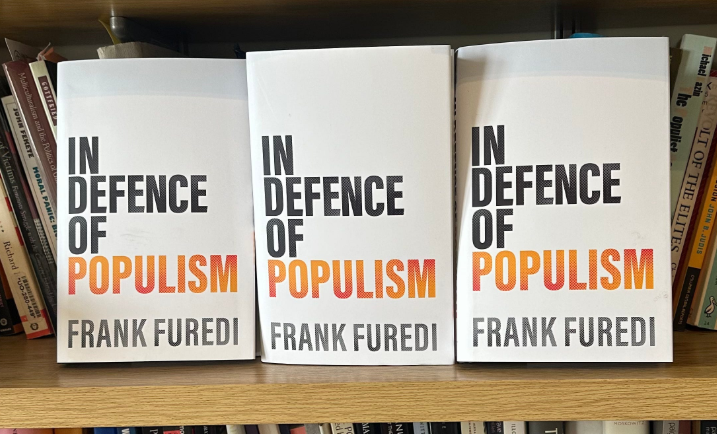
At Roots & Wings, Frank Furedi says that “Europe Has Just Become A More Dangerous Place” thanks to the shift to “military Keynsianism” where future economic growth is mortgaged to current military spending:

Net Zero image from Jo Nova

Of course, it is still early days, and wise counsel may well prevail over Europe’s jingoistic shift towards a war economy. The justification for opting for military Keynesianism is the supposed threat posed by Russia to European security and the necessity for defending the integrity of Ukraine. However, it is evident to all that even if all the billions earmarked for the defense of Europe are invested wisely it will have little bearing on developments on the battlefields of Ukraine. Converting Germany’s ailing automobile industry to produce military hardware will take years as will the process of transforming Western Europe’s existing security resources into a credible military force.

Just remember that Germany’s railway infrastructure is currently in too poor a state to transfer tanks and other military hardware across the country. Years of obsessing with Net Zero Green ideology have taken their toll on Germany’s once formidable economy.

It is an open secret that Europe has seriously neglected its defence infrastructure. It is also the case that initiatives led by the EU and other European institutions are implemented at a painfully slow pace. The failure of the EU to offer an effective Europe wide response to the Covid pandemic crisis exposed the sorry state of this institutions capacity to deal with an emergency. The EU is good at regulating but not at getting things done. The EU’s regulatory institutions are more interested in regulating than in implementing a complex plan designed to rearm the continent.

Nor is the problem of transforming European defense into a credible force simply an matter to do with military hardware. European armies – Britain and France included – are poorly prepared for a war. The nations of the EU have become estranged from the kind of patriotic values necessary to support a real military engagement with Russia. Keir Starmer’s “coalition of the willing” raises the question of “willing to do what?”. At a time when neither France nor Britain can secure their borders to prevent mass illegal migration their willingness to be willing will be truly tested.

Macron and his colleagues may well be good at acting the role of would-be Napoleon Bonapartes. But these windbags are not in a position seriously affect the outcome of the war in Ukraine. As matters stand only the United States has the resources and the military-technological capacity to significantly influence the outcome of this war.

While all the tough talk emanating from the Brussels Bubble has a distinct performative dimension it is important to take seriously the dangers of unleashing an explosive dynamic that has the potential of quickly escalating and getting out of control. As we head towards a world of increased protectionism and economic conflict there is a danger that European rearmament could inadvertently lead to an arms race. History shows that such a development inevitably has unpredictable consequences.

What’s really concerning about the decision taken by the European Council is not simply its “spend, spend” strategy or its wager on the economic benefits of the arms industry. What is really worrying is that Europe’s leading military hawks lack clarity about the continent’s future direction of travel. Afflicted by the disease of geopolitical illiteracy the leaders of Europe have failed to address the issue of how they can navigate a world where the three dominant powers – America, China, Russia – have a disproportionately strong influence on geopolitical matters.

March 2, 2025

The end of the Ukraine narrative

Filed under: Media, Politics, USA — Tags: , , , , , , — Nicholas @ 03:00

On the social media platform formerly known as Twitter, “Captain Benjamin” outlines the last several years of progressive narrative that may have been totally derailed in the Oval Office the other day:

Zelenskyy walked into the Oval Office wearing an outfit that was reminiscent of the uniforms from Star Trek, he was escorted out a few hours later and the entire liberal consensus that has been the guiding narrative of the West for the last three years was a smoking hot mess, as if struck by several Photon Torpedoes from the Starship Enterprise itself.

It’s forgotten now but the Ukraine War was how the Liberal consensus moved on at breakneck pace from the Covid hysteria without ever having to explain why we had hidden from a cold for the previous two years and spent untold billions doing so.

I still remember being in a newsagent and the woman behind the desk told me that Covid was over and Ukraine was the new thing now, that was how quickly it happened, one mass consensus narrative seamlessly replaced another and the show went on.

Until today when show came off the tracks crashed into the buffers and a million Liberal talking heads exploded in unison as the entire narrative which had served as this strange outlet for their repressed jingoistic and nationalist desires was destroyed.

To me there was always something about the Ukraine War that didn’t pass the sniff test, whether it was Hunter Biden’s links to energy companies there, the way in which valid criticisms of the NATO expansion were shouted down, the mysterious blowing up of the Nordstream pipeline that was never explained.

Or the feverish want to protect Ukraine’s borders while European elites operated an unpopular open borders policy themselves, the billions being funnelled in, the tales of Ukrainians buying up yachts and sports cars.

But most clearly fact that the entire Uniparty Party and the chattering classes were in absolute lockstep about what needed to be down and any disagreement or attempt to question the narrative had you dismissed as a traitor or Putinist.

It was all very reminiscent of the groupthink that had swept the world two years previous during Covid, another unquestionable narrative, with the Uniparty in lockstep and anyone who dared to question it smeared as an anti-vaxxer.

I didn’t support Covid as the narrative had more holes than Swiss cheese and the Ukraine narrative has similarly porous texture, but to see the narrative explode so spectacularly was as much as a shock to me as it was to Zelenskyy who found himself in a hole and just kept digging.

At one-point he shocking seeming to delivered a veiled threat to Trump himself: “During war, everybody has problems, even you, but you have a nice ocean and don’t feel now, but you will feel it in the future.”

A comment that really sent the meeting side-ways, as Trump swiftly told Zelenskyy not to tell him what he should feel, leading to the arguments that scuppered the signing of a deal.

And the essence is that Trump wanted to make a deal, he’d been bragging about it to Starmer the day before, he was going to get a great deal, recoup American loses with rare-earth minerals and the EU could save-face by guarding the American mines as a peace keeping force.

It also meant that America wasn’t getting sucked into a Vietnam in the snow.

Trump doesn’t want to be a war-time President, especially a war he doesn’t think is necessary or good for business, Trump wants to usher in an AI Golden Age, send rockets to Mars, and American living standards to the moon; a 21st Century tycoon economy.

He wants peace for Ukraine and Russia as he knows that thousands are senselessly dying every week, and knows his presidency and the country cannot cope with hundreds of Americans coming home in body bags every month.

And so he wanted to make a deal with Zelenskyy, make a deal with Russia, and America gets paid, it’s a crude outcome but its aligned with reality.

But Zelenskyy doesn’t want that, he wants America men and weapons to win the war and make Russia to pay, while the EU have gassed him up to believe this possible because the EU are clinging to this war as a chance to project the veneer of power that they cannot possibly muster domestically due [to] Populist parties eroding their authority at home.

However, as Trump asked Keir to much nervous laughter, can you take on Russia alone?

America knows without them the EU cannot continue this charade, but more than that the Americans are disgusted with the EU, they view them as a drunk Uncle that has run out of goodwill.

How they are suppressing the free-speech of their citizens, failing to protect their own borders, yet grandstanding off the back of the US defence budget?

These are the questions being asked Stateside about the since Trump took office.

While the America people are questioning why are billions of tax dollars being poured into Ukraine as America goes deeper into debt.

Trump wanted to close the chapter with a deal, Zelenskyy wanted to continue a war he cannot win, and as Zelenskyy realised he wasn’t going to drag America deeper into this war he lost control, and in doing so forgot he wasn’t dealing with the Bidens and petulantly disrespected his new would-be patrons, triggering the mother of all blowbacks in the process.

Trump made it clear that what Zelenskyy was asking for was for America to risk World War 3, and Vance made it clear that everyone knew that Zelenskyy was a creature of the old regime, even highlighting how Zelenskyy campaigned against Trump in Ohio, while Trump reiterated that without the America Zelenskyy holds no cards for future negotiations with Russia.

This dose of reality was too much for Zelenskyy and also for the EU who tweeted up a storm in the aftermath pledging to ‘stand’ with Ukraine, only Starmer staying conspicuously silent.

This wasn’t simply a change of policy direction this was the public evisceration of the sacred cow of the waning Liberal Order by the ascendant Populist Insurgency.

Ukraine has functioned as the binding narrative, and in the Oval Office it faced Total Liberal Death, the fragile myth of the rules based international order being violated by Russia Man Bad and being saved by the Liberal Democratic Alliance Good, no further thinking necessary, had functioned as a very effective distraction from the utter failure that Liberalism had turned into domestically while allowing our elites to cos-play as war heroes on the world stage.

This narrative has now been utterly destroyed.

What comes next is still unknown but what we can clearly see is that the Populist Pax Americana will be a very different beast from the Liberal Pax Americana.

As always my friends, thank you for reading I know this is a very polarising issue, so if resonates please like, share and follow, if not please feel free to point out the flaws in my thinking in the comments.

January 1, 2025

The EU emulates King Canute

Filed under: Bureaucracy, Business, Europe, Technology — Tags: , , — Nicholas @ 05:00

The headline is a bit misleading, as Canute’s failed attempt to control the tides was intended to refute courtiers’ exaggerations about his royal powers. The EU, on the other hand, is determined to impose stasis on a very dynamic and changing field:

The European Union will have the continent-wide standard for the buggy whip real soon now. That’s the logical conclusion to draw from that recent announcement about USB-C.

For those who’ve not been following along at home the European Commission is very proud of itself. They’ve managed to pass a law mandating that USB-C (don’t worry, it’s a shape of cable) be the only flavour of connector now allowed within the EU. This has caused the less intellectual of our own rulers — St Stella for example — to just quiver, gasp, with excitement. This is proof of the ability of the collective bureaucracy to really stick one to The Man or something. A vast victory over Big Cable it seems.

Well, yes. Those with a little history to their name will know that the EU has been trying to do this for some time now. So much time that they’d originally intended to make Micro-USB the Europe-spanning insistence but it took them so long to make their rules that USB-C had already superseded it.

At which point we might draw a couple of conclusions. Even, suggest an insistence or two. That first insistence would be that a time of rapid technological change is really not quite le moment juste to be insisting upon only the one way of doing things. Because change, d’ye see? No, this is important for we know, absolutely, that there’re people out there just itching to insist upon the one connector for electric vehicles. Who would, in the name of a vapid uniformity, insist upon freezing technology at its current state rather than allow it to develop.

We could, should, also go on to insist that such a legal insistence on the only form allowed means that technological development cannot happen any more. For, in order to advance or even just change it will be necessary to change that law, that definition.

Legal changes in the European Union are not easy. Of course, the Parliament cannot do it — they are not allowed to even propose law changes, let alone enact them. It is necessary first to convince the European Commission of the need for a change. That means convincing the bureaucracy of course. Once that’s done it must pass the Council of Ministers, which is all the national governments. Parliament is then allowed to say yes. Then, and only then, would it be possible to put the new technology — say, a new cable — on the market.

But the only method we’ve got of testing whether a new cable is better is by putting it on the market. That is — no, really — the only process by which we find out whether consumers desire this new cable with all its delights, at the price that suppliers are willing to make it. But in the European system they cannot undertake the basic usefulness test until they’ve convinced a continent full of politicians that the new is in fact necessary and compulsory.

December 18, 2024

QotD: Western shaming – the grass is always greener overseas

Filed under: China, Economics, History, Japan, Media, Quotations, Russia, USA — Tags: , , , — Nicholas @ 01:00

In the late 1950s, many elites in the United States bought the Soviet Union line that the march of global communism would “bury” the West. Then, as Soviet power eroded in the 1980s, Japan Inc. and its ascendant model of state-sponsored industry became the preferred alternative to Western-style democratic capitalism.

Once Japan’s economy ossified, the new utopia of the 1990s was supposedly the emerging European Union. Americans were supposed to be awed that the euro gained ground on the dollar. Europe’s borderless democratic socialism and its “soft power” were declared preferable to the reactionary U.S.

By 2015, the EU was a mess, so China was preordained as the inevitable global superpower. American intellectuals pointed to its high-speed rail transportation, solar industries and gleaming airports, in contrast to the hollowed-out and grubby American heartland.

Now the curtain has been pulled back on the interior rot of the Chinese Communist Party, its gulag-like re-education camps, its systematic mercantile cheating, its Orwellian surveillance apparatus, its serial public health crises and its primitive hinterland infrastructure.

After the calcification of the Soviet Union, Japan Inc., the EU and the Chinese superpower, no one quite knows which alternative will next supposedly bury America.

Victor Davis Hanson, “The Cult of Western Shaming”, Townhall.com, 2020-01-29.

December 10, 2024

Countering the “Managerial Revolution”

Tim Worstall discusses the rise of the managerial class — described in 1941’s Managerial Revolution by James Burnham — and how detrimental to individual enterprises and the wider economy managerialism has been:

This, rather joyously, explains a lot about the modern world. We could go back to the mid-1980s and the bloke who ran the ‘baccy company written up in Barbarians at the Gates. In which he, as CEO, had a fleet of private planes, the company paid for his 11 country club memberships and so on. His salary was decent, sure, but the corporation rented him all the trappings of a Gatsbyesque — and successful — capitalist. Until the actual capitalists — the barbarians — turned up at those gates and started demanding shareholder returns.

Or we can think of the bureaucratic classes in the UK in more recent decades. Moving effortlessly between this NGO, that quasi-governmental body and a little light sitting on the right government inquiry. All at £1500 a day and a damn good pension to follow.

Or, you know, adapt the base idea to taste. There really is a bureaucratic and managerial class that gains the incomes and power of the capitalists of the past without having to do anything quite so grubby as either risk their own money or, actually, do anything. They, umm, administer, and the entire class is wholly and absolutely convinced that everything must be administered and they’re the right people to be doing that.

You know, basically David Cameron. Met him once, when he was just down from uni. At a political meeting – drinkies for the Tory activists in a particular council ward, possibly a little wider than that. Hated him on sight which I agree has saved me much time over the decades. And I was right too. There is nothing to Cameroonism other than that the right sort of people should be administering — the managerial revolution.

Sure, sure, we used to have the aristocracy which assumed the same thing but we did used to insist that they could chop someone’s head off first — show they had the capability. Also, they didn’t complain nor demand a pension when we did that to them if they lost office.

But the bit that really strikes me. France — and thereby the European Union — seems to me to be where this Managerial Revolution has gone furthest. Get through the right training (the “enarques“) and you’re the right guy to be a Minister, run a political party, manage the oil company, sort out the railways etc. You don’t have to succeed or fail at any of them, you’re one of the gilded class that runs the place. Because, you know, everything needs to be run and one of this class should do so.

The divergence or even active conflict of interests between the owners and the non-owning managers is part of the larger Principal-Agent Problem.

October 24, 2024

It’s called “piercing the corporate veil” and it’s a terrible idea

Filed under: Business, Europe, Government, Media, Politics, Technology — Tags: , , , , , — Nicholas @ 04:00

Tim Worstall explains why the EU’s latest brain fart is not just a bad idea in its own right, but a truly horrific precedent for the future:

Elon Musk at the 2015 Tesla Motors annual meeting.
Photo by Steve Jurvetson via Wikimedia Commons.

… But now, this, now this is even more important than that. We can deal with free speech by the judicious use of lampposts. This is worse:

    The European Union has warned X that it may calculate fines against the social-media platform by including revenue from Elon Musk’s other businesses, including Space Exploration Technologies Corp. and Neuralink Corp., an approach that would significantly increase the potential penalties for violating content moderation rules.

    Under the EU’s Digital Services Act, the bloc can slap online platforms with fines of as much as 6% of their yearly global revenue for failing to tackle illegal content and disinformation or follow transparency rules.

In English law that’s known as “piercing the corporate veil”. It’s also something we don’t do. Because that corporate veil is the very thing, the only thing, that makes large scale economic activity possible.

It has actually been said — and not just by me — that the invention of the limited company is the third grand invention of all time. Agriculture, the scientific method, the limited company.

Before the limited co everything was done through partnerships. Every individual involved in the ownership of something was liable for all of the debts of that thing. Which, when you’ve got 5 or 10 blokes trading isn’t that bad an incentive upon them to be honest.

Now think of large scale activity. We want a blast furnace — plenty of folk say Britain should have one after all. £3 to £5 billion these days. OK. No one’s got that much. So, we need to mobilise the savings of many thousands of people to go build it. But without limited liability that means all of those thousands are liable for all the debts — off into the future — of that blast furnace.

“Invest £500 in the new, new British Steel. And if we fuck up then in 10 years’ time they’ll come and take your house.”

Err, yes.

Large scale economic activity depends upon being able to separate the debts of one specific activity from the general economic life of all its backers. If this is not true then no one will invest in large scale economic activity. Therefore we won’t have large scale economic activity. Which would, you know, be bad.

August 23, 2024

The EU’s bureaucratic aristocrats agree “Spaceship Man Bad!”

Filed under: Bureaucracy, Europe, Media, Politics — Tags: , , , , — Nicholas @ 03:00

As eugyppius explains, the “Eurocrats are having a very big sad” and Spaceship Man Bad isn’t deferring to their autocratic whims:

The Brussels Eurocrats around Emmanuel Macron are having a big sad about Twitter right now. They fear the platform fuels “the amplification of hateful content” and “disinformation”, which are multisyllabic ways of saying that there is too much unapproved and uncurated discourse on the site. You cannot just have people taking to their keyboards to type, like and retweet whatever they want. You especially cannot have that in Europe, where we suffer under the immensely liberal and democratic Digital Services Act, which mandates all manner of social media censorship to protect traditional European freedoms, like freedom of expression.

Twitter is a useful website; I use it to try out ideas and also for news-gathering purposes. As much as I’ve benefitted from the platform, however, I find the establishment derangement surrounding it to be extremely bizarre. There is little chance that Elon Musk’s relaxed moderation regime will lead to fascism, and still less chance that heavy censorship there will do anything about tHe ExtREmE RiGhT. The real reason that Twitter bothers establishment pundits and politicians, is its inherently confrontational nature. Our smug and self-satisfied oligarchs don’t like getting dragged and dunked on by the rabble. They want to tweet their lunacies without anonymous anime-themed accounts showing them up for the fools that they are, and they are very, extremely, fulminously enraged that Musk won’t do anything to improve their user experience.

One of these dissatisfied users is Thierry Breton, the Macron-appointed Commissioner for the Internal Market of the European Union. As everybody knows, on 12 August, Breton posted a letter to Musk ahead of Musk’s Twitter discussion with Donald Trump, to remind the American entrepreneur of his obligations to censor content. Breton has long been a thorn in the side of his EU colleagues, who regard him as a shallow self-promoter, and his game rapidly backfired. The next day, the EU Commission clarified that “The timing and the wording of the letter were neither co-ordinated nor agreed with the president nor with the [commissioners].” The American House Judiciary Committee then added to Breton’s humiliation by condemning his “threats” and his “attempt to intimidate individuals or entities engaged in political speech in the United States”. Musk also had some choice words for the EU Commissioner:

The Macronistes don’t care that they are wildly unpopular and that everybody hates them. They just don’t want to hear about it. They could simply delete their Twitter accounts, but people would still be saying mean things about them on the internet somewhere. They’d have to lie awake in bed at night, staring at the ceiling and stewing about it. Better by far would be to delete Twitter itself, or at least to block access to the platform across all 27 EU member states.

August 14, 2024

All the news the legacy media chooses to share

Mark Steyn grudgingly pays a bit of attention to US politics, or more accurately, the parts of US politics that the legacy media wants Americans to know:

Donald Trump, surrounded by Secret Service agents, raises his fist after an attempt on his life during a campaign speech in Butler, PA on 13 July, 2024. One spectator was killed and two others were reported to be in critical condition. The shooter was killed by Pennsylvania State Troopers, according to reports in the succeeding hours.

In one party, the presidential candidate came within maybe an eighth-of-an-inch of having his head blown off on live TV.

In the other party, the presidential candidate was more successfully dispatched — and the millions of primary votes he’d supposedly received simply nullified.

Either of these would be extraordinary events in any other country. And yet, under the smooth narrative management of the American press, they were mere spasms of momentary discombobulation before the normal somnolent service was resumed. “Democracy Dies in Darkness”, The Washington Post informs its readers every morning. In fact, under the court eunuchs of the US media, democracy dies in broad daylight.

First, the Pennsylvania assassination attempt was memory-holed — in an industrial-strength illustration of Orwell’s brilliant coinage: any day now there will be some poll showing thirty-seven per cent of registered voters are entirely unaware that a would-be killer hit Trump in the ear. And this despite the fact that every few hours there are — oh, what’s the word they use in nations with a real press? — newsworthy revelations about all that the Secret Service did to facilitate the operation, to scrub the evidence afterwards, and to lie to Congress about both.

At this stage, they might as well remake In the Line of Fire with Clint lying on the roof next to the goofball lining up his shot and helpfully suggesting, “Think you might be maybe a half-centimeter off there, sonny …” (On the other hand, if you’re looking for some guys to break into a Massachusetts hair salon to use the toilet for two hours and then leave the joint unlocked for the rest of the weekend, this is the federal agency for you.)

In the American media, a tree can fall in the forest in front of twenty million people — and it still doesn’t make a sound.

On the other hand, we have … wossname, you know, the stiff who was nose-diving off the steps to Air Force One just twenty minutes ago. In the entirety of last week the so-called “President of the United States” had only one bit of state business to perform — a Monday telephone call with the King of Jordan. Her late Majesty Queen Elizabeth II had a heavier workload the day before she died at ninety-six. But the same people who’ve spent the last three-and-a-half years insisting that Joe Biden was the chief executive of the United States can no longer be bothered with the elaborate pretence: the show supposedly has five months to run, but they’ve struck the set and sent the crew home, and left the star sitting slack-jawed and drooling in his Chinese Barcalounger in the dark on an empty stage. Joe’s sole residual presence in the news cycle is when Nancy Pelosi goes on TV and breezily claims to be the one who had him whacked (although the party’s other “senior powerbrokers” are reported to be mildly irked by her braggadocio: they assert that, as in Murder on the Re-Orient Express, everybody did it).

So who is running the United States? If the presidency is so important it’s worth holding a two-year contest to decide who gets to occupy it, why isn’t who’s exercising those powers right now of any interest?

Well, that’s been memory-holed, too. America’s uniquely unique “peaceful transfer of power” has begun six months early, that’s all.

So, on the one side, 24/7 coverage of the candidate being indicted, sued, tried, convicted and (coming soon!) banged up in Rikers Island will continue … but it doesn’t leave any resources to investigate him getting shot in the head on live TV.

And, on the other side, a candidate with not a single primary vote to her name has been imposed on the party by who knows who … but it would be grossly disrespectful to the majesty of her office (President-Designate) to expect her to sit down for a puffball interview with George Stephanopoulos. (“Do you think all these GOP demands that you be able to answer questions on your platform and if you know where it’s being kept are because many Republican men are still uncomfortable with the idea of a strong black Montreal schoolgirl running for president?”)

But it’s not just the regime-aligned mainstream media who want to control what you get to see and hear — the European Union seems to think it can dictate to American social media companies what they’re allowed to share:

“The European Union’s digital enforcer wrote an open letter to tech mogul Elon Musk on Monday ahead of a planned interview with former United States President Donald Trump to remind him of the EU’s rules on promoting hate speech,” reports Politico.

“As the relevant content is accessible to EU users and being amplified also in our jurisdiction, we cannot exclude potential spillovers in the EU,” wrote Digital Commissioner Thierry Breton on X. “With great audience comes greater responsibility.”

Meanwhile, The Guardian reports that Bruce Daisley, Twitter’s former vice-president for Europe, the Middle East and Africa, has said Musk should face “personal sanctions” — which are “much more effective on executives than the risk of corporate fines” — and even, possibly, an “arrest warrant” if he “continue[s] stirring up unrest” on the platform.

“The question we are presented with is whether we’re willing to allow a billionaire oligarch to camp off the UK coastline and take potshots at our society,” says Daisley. “The idea that a boycott — whether by high-profile users or advertisers — should be our only sanction is clearly not meaningful.” (All Musk has done, for the record, is criticize British Prime Minister Keir Starmer for his handling of riots over immigration, calling him a “hypocrite” and “two-tier Keir“.)

June 11, 2024

EUquake 2024

Filed under: Europe, France, Germany, Italy, Media, Politics — Tags: , , , , , — Nicholas @ 04:00

Although the European elites have managed to move as much as they can out of the reach of democratic institutions, they still have to allow the illusion that the few things ordinary people can vote for still kinda, sorta matter. Ordinary people seem to have noticed this:

“I cannot act as if nothing has happened”, said a weary, dejected Emmanuel Macron, in an unplanned address to his nation last night. The French president, bruised by an unprecedented showing for the right-wing populist National Rally (RN) on Sunday’s European Parliament elections, immediately dissolved the French parliament and announced snap legislative elections. The first round will take place in just three weeks’ time.

When Macron was elected president in 2017, he promised the French people that they will “no longer have a single reason to vote for the extremes”. Pro-EU centrists hailed his apparent defeat of nationalist, populist forces. Seven years later, RN is on course to achieve its best-ever result in an EU election. Marine Le Pen’s party is projected to win double the vote share of the president’s liberal, centrist Renaissance group. Clearly, the French feel that they have more reasons than ever to revolt against the mainstream.

The French are not alone in this. The hard-right Alternative for Germany (AfD), despite two of its leading MEP candidates being dogged by major scandals, came second behind the centre-right CDU. Crucially, it beat all three of the parties in Germany’s governing coalition. The Social Democrats (SPD), led by chancellor Olaf Scholz, suffered its worst result of any nationwide election since the 1940s. According to one pollster, around a million people who supported the left-leaning parties in the “traffic light” coalition have since defected to the AfD. Pressure is now mounting on Scholz to call his own snap election. In Italy, meanwhile, Giorgia Meloni and her Brothers of Italy topped the European polls, exceeding the vote share that swept her into power in 2022’s national elections. Populist, right-wing and hard-right parties, therefore, came in first or second place in all three of the major EU nations.

Even Belgium, at the epicentre of the EU empire, has been struck by the populist earthquake. Prime minister Alexander de Croo announced his resignation last night as his party was beaten to below 10 per cent in Sunday’s federal parliamentary elections and to around five per cent in the European elections – squeezed by Flemish separatist parties. Hard-right parties also came first in Austria and second in the Netherlands.

While Macron has been forced to react to the scale of his defeat, acknowledging euphemistically that these elections were “not a good result for the parties that defend Europe”, others in the Brussels oligarchy have tried to bury their heads in the sand. On Sunday evening, European Commission president Ursula von der Leyen declared – delusionally – that “the centre is holding”.

She is right in one, very narrow, sense. The centre-left Progressive Alliance of Socialists and Democrats (S&D), the centre-right European People’s Party (EPP) and the liberal Renew group have likely gained enough seats between them for business as usual to resume in the European Parliament. The two groupings to their right – the European Conservatives and Reformists (ECR) and Identity and Democracy (ID) – have not made enough gains, even when combined, to start throwing their weight around in Brussels. Von der Leyen’s own position as Commission president is likely secure, not least because her EPP is the single largest grouping in parliament. The new populist MEPs will likely be shut out of key decisions, including the vetting of new EU commissioners. The EU has never allowed the democratic wishes of the public to intrude on its affairs before, so it is unlikely to start now.

But Brussels cannot hide from reality forever. These elections clearly show that the EU and its boosters are failing to contain the public’s anger. European elites have pulled every trick in the book to try to put the brakes on the populist surge, seemingly to little avail.

How bad was the rejection of the kakistocrats in France? This bad:

March 28, 2024

Why European farmers are revolting

Filed under: Bureaucracy, Economics, Environment, Europe, Government, Liberty, Politics — Tags: , , , , — Nicholas @ 04:00

spiked
Published Mar 27, 2024

Europe’s farmers are rising up – and the elites are terrified. From the Netherlands to Germany to Ireland, farmers are taking to the streets, parking their tractors on the establishment’s lawn, spraying buildings with manure and bringing life to a standstill. The reason? Because unhinged green regulations, dreamt up by European Union bureaucrats, are immiserating them. In this spiked video polemic, Fraser Myers explores the roots of the farmers’ revolt across the continent – and explains why it must succeed. Watch, share and let us know what you think in the comments.

Support spiked:
https://www.spiked-online.com/support/
Sign up to spiked‘s newsletters: https://www.spiked-online.com/newslet…
Check out spiked‘s shop: https://www.spiked-online.com/shop/

February 26, 2024

The Freedom Convoy’s European echoes

Filed under: Bureaucracy, Economics, Europe, Food, Government, Media, Politics — Tags: , , , , , — Nicholas @ 03:00

Niccolo Soldo on the widespread protests against the EU and various national governments’ intrusive and anti-human attempts to restrict or destroy European farmers in pursuit of their climate change agenda:

I wish there was a way to measure the gulf between ruling elites and the people that they lord over. Don’t Political Scientists have such a methodology already on hand? I don’t know.

What I do know is that this gulf is very palpable on both sides of The Pond, and that this gulf shows no signs of narrowing any time soon. Whether the issue is migration, crime, COVID-19, etc., it seems that the views of the people are simply ignored by those who can and do ignore them, and proceed to make policy that suits their own interests and the interests of their allies and class.

Judging by American media reporting, you would most likely not be aware that massive farmers’ protests are rocking the European continent as we speak. From Portugal to Poland, farmers are protesting the EU’s drive to push policies like “Net Zero” in order to “combat Climate Change” … policies that would severely impact the livelihoods of our food producers. These proposed changes are entirely top-down, indicative of just how divorced the Brussels elites are from the daily lives of the people whose lives they wish to upend with a stroke the pen. “Oppose us? You must be far right … probably a Nazi too.”

    The “far-right” political libel against hard-pressed farmers is really a sign of how far the EU elites have lost touch with the reality of life for the peoples of Europe. We should ignore the slurs, and get behind the fighting farmers.

    The protests by angry farmers have spread across the European Union, with mighty convoys of tractors blockading roads and cities from Romania to Rome, from Portugal to Poland, from Bulgaria to Brussels and beyond.

    There might be some national variations in the farmers’ specific demands. But what unites them all is opposition to the way that the EU elites are subordinating agricultural policy to their Green agenda and Net Zero obsession, leading to more hardship for farmers and higher food prices for other Europeans.

    As tractor convoys blockaded German cities in January, farmers’ association president Joachim Rukwied spelt out that they were protesting not just against the government’s proposed cuts in fuel subsidies, but against an EU-wide system where “agricultural policy is being made from an unworldly, urban bubble and against farming families and rural areas”.

    This week in Poland, 62-year-old protesting farmer Janusz Bialoskorski told the media that, “They’re talking about climate protection. But why should it be done at farmers’ expense?” Farmers, he pointed out, are not responsible for industrial pollution, and “nor do we fly to Davos on our jets”.

Pitchfork Populism. The fact that the elites in Brussels have invited this in a year when elections for the EU’s Parliament are scheduled to occur indicates just how out of touch they really are.

    These farmers are now in the front line of a wider populist revolt, against those elitists who DO fly in their private jets to the World Economic Forum in luxurious Davos, Switzerland, where they lecture the rest of us about how to save the planet by sacrificing our living standards.

    Their protests expose the yawning gap between the high-minded talk of the Brussels Green oligarchy, and the grim reality of what those Net Zero policies mean for normal people in the muddy fields of Flanders or on the supermarket shelves of Florence.

If you can’t shut them up, call them “far right”:

    Last weekend, UK Observer newspaper (Sunday sister of the liberal Guardian), the most pro-EU voice in the British media, worried aloud about how the European farmers’ cause “has been enthusiastically adopted by a resurgent populist far-right”.

    Similar fears have repeatedly been expressed in the Brussels-backing news media this year: “Brussels struggles to placate farmers as far-right stokes protests,” and “EU farmers egged on by the far-right” (Financial Times); “How the far-right aims to ride farmers’ outrage to power in Europe” (Politico); “Far-right harvests farmers’ anger across Europe” (France 24) etc., etc.

    The EU establishment and its media pals are so out of touch with the reality of people’s lives that they apparently imagine Europe’s naïve farmers are protesting only because they have been “egged on” or “stoked up” by “far-right” agitators. The idea that these farmers might be entirely reasonable, hard-working people who are simply at the end of their collective tether with EU bureaucracy seems beyond the comprehension of those bureaucrats and their media mouthpieces.

“A Silent War on Farming”:

    As the title of a recent report by the think-tank MCC Brussels puts it, Europe’s agricultural communities are facing nothing less than a “Silent War on Farming,” waged from Brussels.

    For decades, EU agricultural policy was about the efficient, cheap, and safe production of food to feed the peoples of Europe and ensure that the continent never suffered famine again. Now, that policy has instead been captured by Green ideology, which demands that farmers use less land and less intensive methods to produce lower emissions. In sum, that must mean less farming—and less food being produced.

    Farmers are bearing the brunt of the ideologically-driven regulations imposed by the EU, with falling incomes and the closure of family farms. The rest of Europe faces a scarcity-driven surge in prices—with shortages being met by food imports from countries with far higher emissions than the EU’s hi-tech farming sector.

    For many Europeans now supporting the farmers, however, this is about even more than the price of food on their table. Farming and rural communities are at the heart of traditional European ideas of community and self-image. People who live far from the countryside can now identify with farmers who are resisting the same sort of threat to their way of life that they see posed by, for example, EU policies on mass migration.

All Brussels seems to be able to do these days is pass laws to micromanage the lives of Europeans, while increasing the contempt that these same people have for them.

« Newer PostsOlder Posts »

Powered by WordPress