Quotulatiousness

June 29, 2019

Canada’s inability to deal with Chinese hard ball tactics

Filed under: Business, Cancon, China, Law, USA — Tags: , , , — Nicholas @ 05:00

The Canadian government complied with a request from the United States government to detain a Chinese national for possible extradition to the US. But this was no ordinary Chinese citizen: it was Meng Wanzhou, the Chief Financial Officer for Huawei, a very big and very well-connected Chinese conglomerate. Ms. Wanzhou is not just a high-ranking executive, but also the daughter of the founder of the company. The Chinese government is more than miffed at Canada’s legal presumption and has been piling on the means of persuasion to get Canada’s notoriously pliable government to just pretend this never happened and to let Ms. Wanzhou proceed on her way. Under normal circumstances, this might well happen, but the US government is now under the control of a man who reputedly makes our Prime Minister lose control of his bladder, so we can’t just be seen to knuckle under to the bullying of the Bad Orange Man, nor can we be seen to knuckle under to the bullying of the PRC, leaving poor Justin Trudeau looking weak and powerless (and, to be fair, he is weak and powerless).

Andrew Coyne suggests that the best way to help a couple of poor Canadians who have been caught up in the inter-governmental shenanigans is to stop talking about some sort of “deal”:
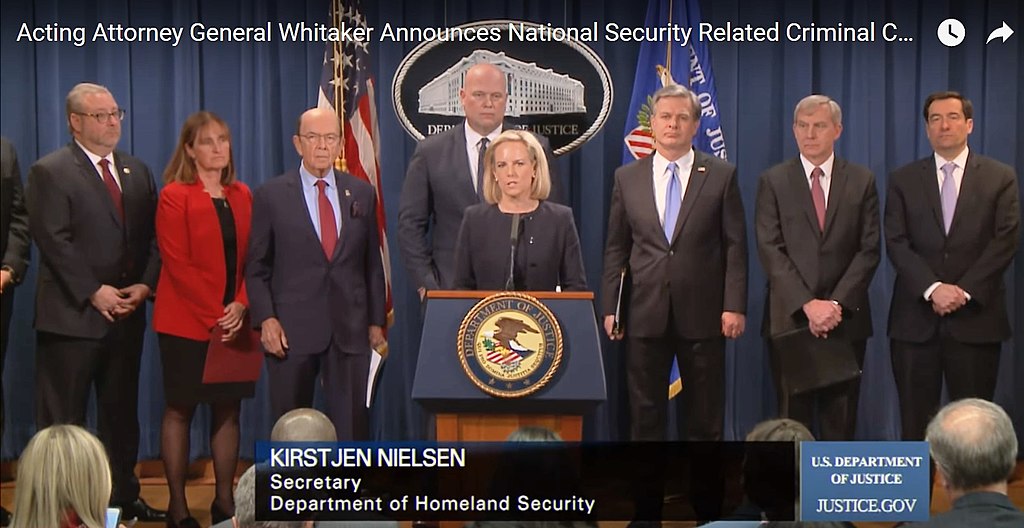
U.S. Department of Justice among others announced 23 criminal charges (Financial Fraud, Money Laundering, Conspiracy to Defraud the United States, Theft of Trade Secret Technology and Sanctions Violations, etc.) against Huawei & its CFO Wanzhou Meng
Image via Wikimedia Commons.

I don’t doubt that behind the scenes government officials are doing everything they can, or think they are. But the pressure to bring the Canadians home is surely less for the conspicuous failure of other Canadians to give a damn.

Indeed, what is striking throughout this standoff is that most of the pressure has come from the other side. It is China, not Canada, that has used trade as a weapon, blocking imports of Canadian meat and canola. It was the Chinese air force that buzzed a Canadian warship in the East China Sea.

It is the departing Chinese ambassador to Canada who has launched one incendiary attack after another on this country, while Canada’s now-former ambassador to China was floating trial balloons about getting the Americans to drop the charges against Meng. It is China’s leaders who refuse to meet ours.

And yet for all of China’s lawlessness, for all its bestial mistreatment of our citizens and baseless attacks on our interests, the most common response in this country is not to demand that China repair its relationship with Canada, but to ask how Canada can mollify China.

June 22, 2019

The African Continental Free Trade Area (AfCFTA)

Filed under: Africa, Business, Economics, Government, USA — Tags: , , , — Nicholas @ 05:00

Alexander Hammond explains why a free trade deal among many African nations is good news for the United States and other non-African nations:

2018 map showing the African countries involved in the African Continental Free Trade Agreement.
Dark green indicates ratification, medium green are countries that signed in March 2018, and light green are countries that signed in July 2018 but did not ratify the agreement immediately.
Map by Themightyquill at Wikimedia Commons.

The poorest continent in the world is about to lend a hand to the United States. Last week, Africa implemented the world’s largest free-trade area, and that’s great news for American foreign policy. Back in December, U.S. National Security Advisor John Bolton unveiled a plan for the Trump administration’s titled the “Africa Strategy.”

The plan is simple — the United States will give less aid to Africa, instead prioritizing enhancing America’s “economic ties with the region.” Now that many African nations have unified under a single market, trading with the continent will become far easier — and a trade deal between the United States and Africa would help out everyone involved.

Streamlining Trade

The African Continental Free Trade Area (AfCFTA) trade deal officially came into force on May 30, a month after it reached the twenty-two-nation threshold needed to do so. Now, tariffs on 90 percent of the goods traded among AfCFTA member states will be removed — a move that, according to the UN, will boost intra-African trade by 52 percent in only a few years.

Given the United States’ new plans for the continent, the AfCFTA’s member states aren’t the only economies that will reap the benefits of an African single market.

A key component of the Trump administration’s Africa Strategy is to advance “U.S. trade and commercial ties” with Africa by creating “modern comprehensive trade agreements.” A single African market will be a far simpler trade partner for America. Now, only one set of trade deals will need to be negotiated with the AfCFTA — as opposed to fifty-five intricately-crafted trade deals with each small African economy. The U.S. Trade Representative has even released a report noting how time-consuming and costly it is to negotiate trade deals with each African nation. Because trade deals are long and expensive processes, creating a solitary trade deal with the AfCFTA will keep more money in the U.S. government’s purse.

June 15, 2019

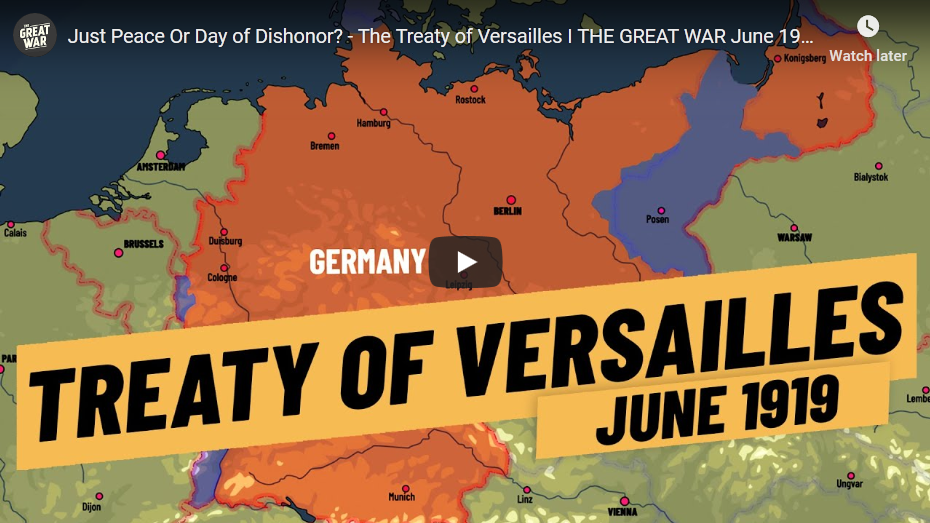
Just Peace Or Day of Dishonor? – The Treaty of Versailles I THE GREAT WAR June 1919

Filed under: Britain, Europe, France, Germany, History, Military, USA, WW1 — Tags: , , , — Nicholas @ 04:00

The Great War
Published on 14 Jun 2019

Support us on Patreon and get an actual WW1 postcard signed by the team: http://patreon.com/thegreatwar

The Treaty of Versailles was the first of the big peace treaties after the armistice of 1918. In just six months the allied powers had – without talking to the defeated powers – negotiated a new world order while trying to make sure Germany would pay reparations to rebuild. The German delegation was only informed about the peace terms a few weeks before signing the Treaty and they were shocked about the terms. In May 1919 they even considered not signing the contract at all.

» SUPPORT THE CHANNEL
Patreon: https://www.patreon.com/thegreatwar
Merchandise: https://shop.spreadshirt.de/thegreatwar/

» SOURCES
Gerwarth, Robert. The Vanquished. Why the First World War Failed to End, 1917-1923 (Penguin, 2017).

Leonhard, Jörn. Der überforderte Frieden. Versailles und die Welt 1918-1923 (CH Beck, 2018)

Macmillan, Margaret. The Peacemakers: Six Months that Changed the World (London: John Murray, 2001).

Sharp, Alan. The Versailles Settlement. Peacemaking after the First World War, 1919-1923 (Basingstoke: Palgrave MacMillan, 2008).

Stevenson, David. 1914-1918 (London: Penguin, 2012).
Winter, Jay and Antoine Prost. The Great War in History (Cambridge: Cambridge University Press, 2008).

Hobsbawm, Eric. Age of Extremes. The Short Twentieth Century 1914-1991 (Abacus, 1994).
http://www.ataa.org/reference/iacom.pdf

http://germanhistorydocs.ghi-dc.org/p… quoting:
Philipp Scheidemann, “Gegen die Annahme des Versailler Vertrages 12. Mai 1919”, Politische Reden III, herausgegeben von Peter Wende. Deutscher Klassiker Verlag:Frankfurt am Main, 1994, S.254-62

»CREDITS
Presented by: Jesse Alexander
Written by: Jesse Alexander
Director: Toni Steller & Florian Wittig
Director of Photography: Toni Steller
Sound: Toni Steller Editing: Toni Steller
Mixing, Mastering & Sound Design: http://above-zero.com
Motion Design: Christian Graef – GRAEFX
Maps: Daniel Kogosov (https://www.patreon.com/Zalezsky)
Research by: Jesse Alexander
Fact checking: Florian Wittig

Channel Design: Alexander Clark
Original Logo: David van Stephold

A Mediakraft Networks Original Channel

Contains licensed material by getty images
All rights reserved – Real Time History GmbH 2019

May 25, 2019

India’s “Modi generation”

Filed under: China, Economics, India, Politics — Tags: , , , — Nicholas @ 05:00

Mihir Swarup Sharma discusses the demographic, political, and social impact of India’s most influential generation:

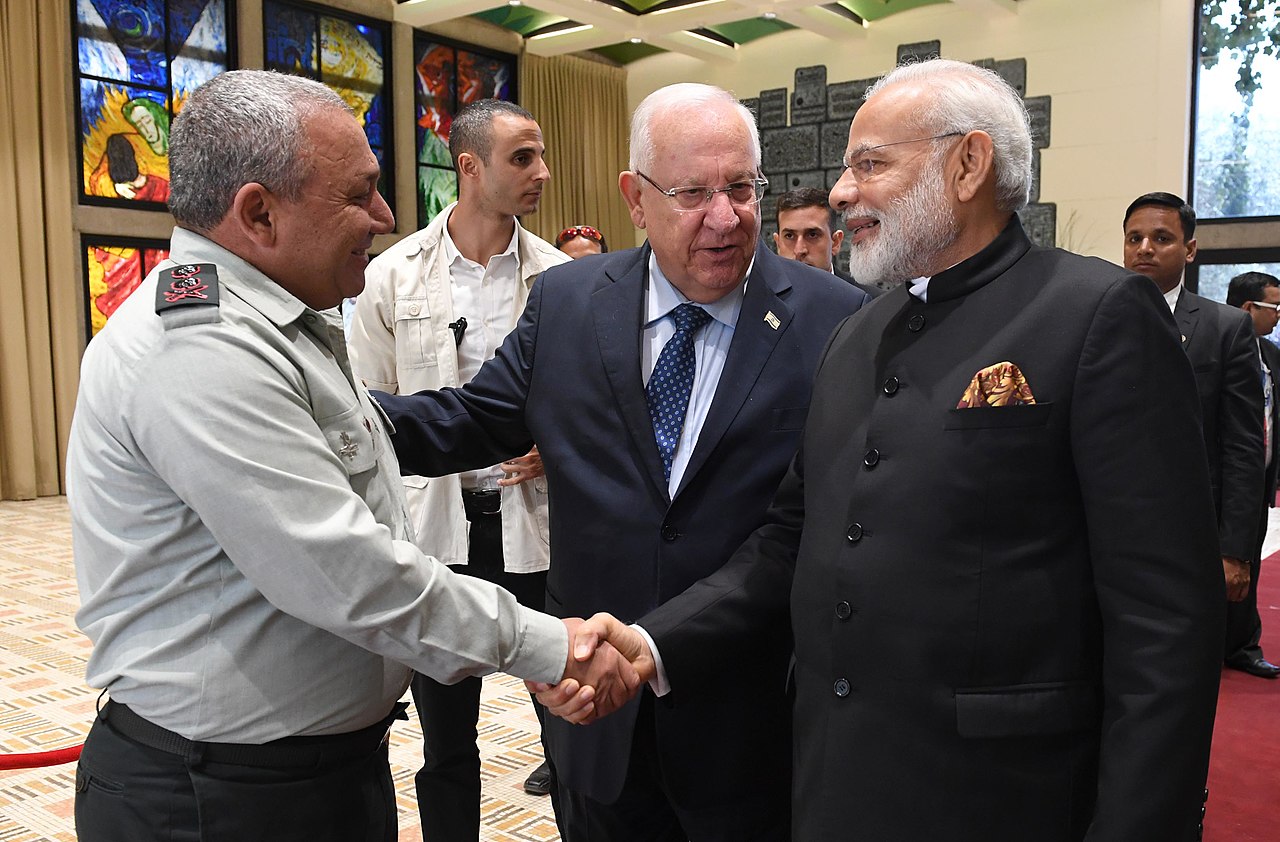
Israeli President Reuven Rivlin and IDF Chief of General Staff Gadi Eizenkot meet with Indian Prime Minister Narendra Modi, in Jerusalem, July 5, 2017.
Photo by Mark Neyman / GPO via Wikimedia Commons.

The Modi generation, which is and will be India’s most influential ever, will reshape this country the way that other demographic bulges — think of the US’ Baby Boomers — have done so elsewhere. Their India will be substantively different, in terms of domestic and global politics, than that which has come before.

What might this India look like? First, it will be impatient. Young people are less willing to wait for national glory. In the People’s Republic of China, the rule for the country, set by Deng Xiaoping, was to “bide your time and hide your strength”. Xi Jinping’s China, where the agenda is being set to appease a generation of young single men, has abandoned Deng’s maxim. This will be even more true for India, which is after all a democracy that must respond to the most powerful voting bloc in its history. It will be impatient about economics as well. Young Indians expect a better life soon. Today they are willing to give Modi some more time to achieve it. But, in the years to come, that patience will run out.

Second, it will be aggressive. India can no longer “hide its strength”. That was the lesson we must take from the political salience in this election of Balakot, of the promise by the ruling party to enter their houses and kill India’s enemies. A national machismo is the natural consequence of a bulge of young, unemployed and unemployable men. India is perhaps less able to sustain this aggressiveness than, say, China. But the times in which India would be able to absorb terrorist attacks, for example, without a major pushback have passed.

Third, it will be a risk-taker. Young people have a belief in their own invincibility, and Indian policy will be forced to reflect this. Others might argue demonetisation was a foolish mistake; but what matters to many voters is that Modi took a risk, and according to them in a good cause. The Balakot air strike on Pakistan may not have achieved a fundamental strategic transformation of the India-Pakistan relationship (though some experts disagree) but it played well politically because it was not just a demonstration of strength as a nation, but an example of a tolerance to risk. In this sense, the notion of Indian leadership has become one of risk-taking; Manmohan Singh was pilloried for caution and “silence”, Modi is considered an epochal leader because he takes risks.

May 15, 2019

Mussolini and D’Annunzio On The Rise – Allies in Crisis Over Italy I THE GREAT WAR April 1919

Filed under: Europe, History, Italy, Military — Tags: , , , , , — Nicholas @ 04:00

The Great War
Published on 14 May 2019

» SUPPORT THE CHANNEL
Patreon: https://www.patreon.com/thegreatwar
Merchandise: https://shop.spreadshirt.de/thegreatwar/

Italy joined World War 1 in 1915 after it had been promised territorial gains in the Treaty of London. Now that the Central Powers had been defeated, the Italian government and the Italians themselves expected that their contribution would be honored at the Paris Peace Conference. But France, Great Britain and the US had other plans and so the Italian government was caught between the new realities at Paris and the nationalists at home.

» SOURCES
Gerwarth, Robert. The Vanquished. Why the First World War Failed to End, 1917-1923 (Penguin, 2017).

Leonhard, Jörn. Der überforderte Frieden. Versailles und die Welt 1918-1923 (CH Beck, 2018)

Macmillan, Margaret. The Peacemakers: Six Months that Changed the World (London: John Murray, 2001).

Report: Disorders Inquiry Committee 1919-1920 (Calcutta: Superintendent of Government Printing, India: 1920)

Sullivan, “Vittoria Mutilata” in 1914-1918 online. International Encyclopedia of the First World War https://encyclopedia.1914-1918-online…

Thompson, Mark. The White War: Life and Death on the Italian Front 1915-1919 (London: Faber, 2008).

» SOCIAL MEDIA
Twitter: https://twitter.com/WW1_Series
Reddit: https://reddit.com/r/TheGreatWarChannel

»CREDITS
Presented by: Jesse Alexander
Written by: Jesse Alexander
Director: Toni Steller & Florian Wittig
Director of Photography: Toni Steller
Sound: Toni Steller
Editing: Toni Steller
Mixing, Mastering & Sound Design: http://above-zero.com
Motion Design: Christian Graef – GRAEFX
Maps: Daniel Kogosov (https://www.patreon.com/Zalezsky)
Research by: Jesse Alexander
Fact checking: Florian Wittig

Channel Design: Alexander Clark
Original Logo: David van Stephold

A Mediakraft Networks Original Channel

Contains licensed material by getty images
All rights reserved – Real Time History GmbH 2019

May 7, 2019

The Suez Crisis reconsidered

Filed under: Books, Britain, France, History, Military, USA — Tags: , , , , , — Nicholas @ 05:00

Jordan Chandler Hirsch reviews a new book on what is now a somewhat forgotten international crisis that shook the Atlantic alliance, Philip Zelikow’s Suez Deconstructed:

Zelikow encourages readers to assess Suez by examining three kinds of judgments made by the statesmen during the crisis: value judgments (“What do we care about?”), reality judgments (“What is really going on?”), and action judgments (“What can we do about it?”). Asking these questions, Zelikow argues, is the best means of evaluating the protagonists. Through this structure, Suez Deconstructed hopes to provide “a personal sense, even a checklist, of matters to consider” when confronting questions of statecraft.

The book begins this task by describing the world of 1956. The Cold War’s impermeable borders had not yet solidified, and the superpowers sought the favor of the so-called Third World. Among non-aligned nations, Cold War ideology mattered less than anti-colonialism. In the Middle East, its champion was Egyptian President Gamal Abdel Nasser, who wielded influence by exploiting several festering regional disputes. He rhetorically — and, the French suspected, materially — supported the Algerian revolt against French rule. He competed with Iraq, Egypt’s pro-British and anti-communist rival. He threatened to destroy the State of Israel. And through Egypt ran the Suez Canal, which Europe depended on for oil.

Egypt’s conflict with Israel precipitated the Suez crisis. In September 1955, Nasser struck a stunning and mammoth arms deal with the Soviet Union. The infusion of weaponry threatened Israel’s strategic superiority, undermined Iraq, and vaulted the Soviet Union into the Middle East. From that point forward, Zelikow argues, the question for all the countries in the crisis (aside from Egypt, of course) became “What to do next about Nasser?”

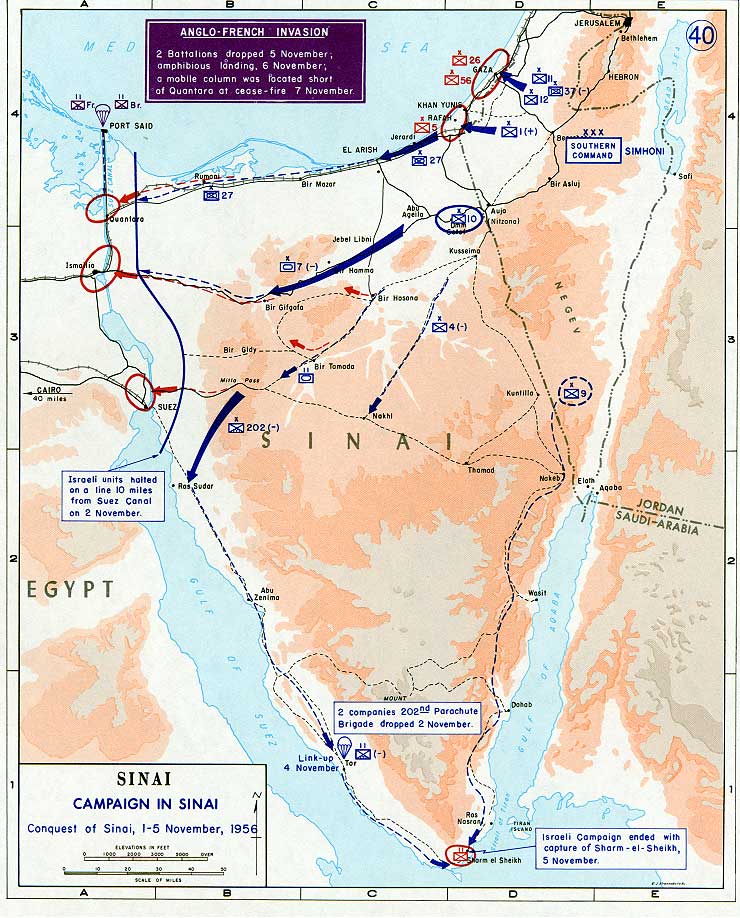
Israel responded with dread, while, Britain, France, and the United States alternated between confrontation and conciliation. Eventually, the United States abandoned Nasser, but he doubled down by nationalizing the Suez Canal. This was too much for France. Hoping to unseat Nasser to halt Egyptian aid to Algeria, it concocted a plan with Israel and, eventually, Britain for Israel to invade Egypt and for British and French troops to seize the Canal Zone on the pretense of separating Israeli and Egyptian forces. The attack began just before the upcoming U.S. presidential election and alongside a revolution in Hungary that triggered a Soviet invasion. The book highlights the Eisenhower administration’s anger at the tripartite plot. Despite having turned on Nasser, Eisenhower seethed at not having been told about the assault, bitterly opposed it, and threatened to ruin the British and French economies by withholding oil shipments.

Throughout, Suez Deconstructed disorients. As the story crisscrosses from terror raids into Israel to covert summits in French villas, from Turtle Bay to the Suez Canal, names and places, thoughts and actions blur. Venerable policymakers scramble to comprehend the latest maneuvers as they struggle with the weight of history: Was Suez another Munich? Could Britain and France still project power abroad? Would a young Israel survive?

If you’re not familiar with the Suez Crisis and want more than just the Wikipedia article for background, here’s the coverage of the military side of things from the British perspective (Operation Musketeer) from Naval History Homepage.

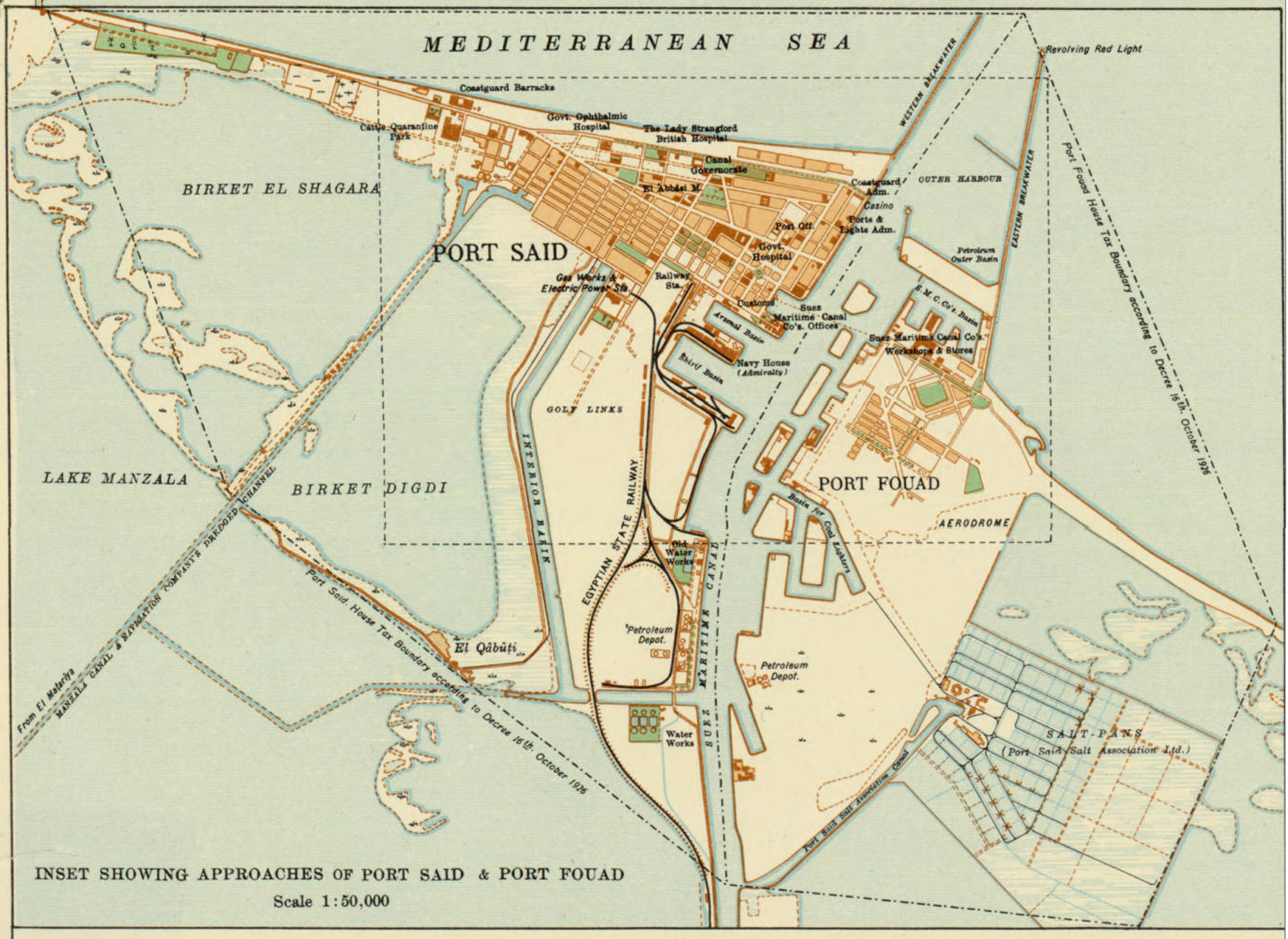
A detailed map of Port Said in 1936 (American Geographical Society Library). Changes by 1956 are not known.
Map via Naval History Homepage.

May 5, 2019

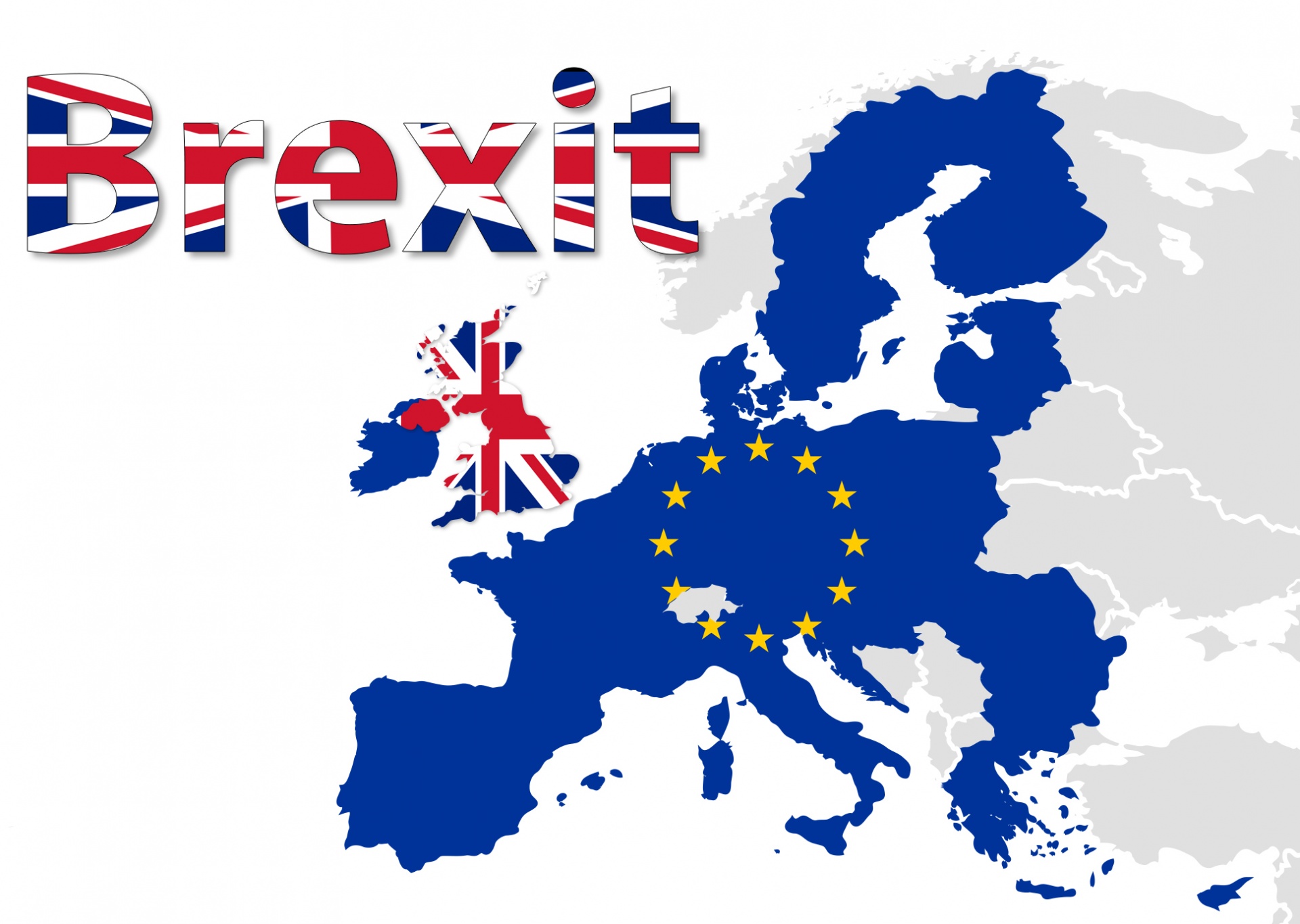
Theresa May’s awful “Withdrawal” Agreement

Filed under: Britain, Europe, Government, Law — Tags: , , , , — Nicholas @ 03:00

Hector Drummond relays a Spectator article that lists 40 problems with Prime Minister May’s agreement with the EU:

Just in case readers don’t have the time to go through the lengthly document themselves, Steerpike has compiled a list of the top 40 horrors lurking in the small print of Theresa May’s Brexit deal.

[…]

In summary: The supposed “transition period” could last indefinitely or, more specifically, to an undefined date sometime this century (“up to 31 December 20XX”, Art. 132). So while this Agreement covers what the government is calling Brexit, what we in fact get is: “transition” + extension indefinitely (by however many years we are willing to pay for) + all of those extra years from the “plus 8 years” articles.

Should it end within two years, as May hopes, the UK will still be signed up to clauses keeping us under certain rules (like VAT and ECJ supervision) for a further eight years. Some clauses have, quite literally, a “lifetime” duration (Art.39). If the UK defaults on transition, we go in to the backstop with the Customs Union and, realistically, the single market. We can only leave the transition positively with a deal. But we sign away the money. So the EU has no need to give us a deal, and certainly no incentive to make the one they offered “better” than the backstop. The European Court of Justice remains sovereign, as repeatedly stipulated. Perhaps most damagingly of all, we agree to sign away the rights we would have, under international law, to unilaterally walk away. Again, what follows relates (in most part) for the “transition” period. But the language is consistent with the E.U. imagining that this will be the final deal.

The top 40 horrors:

  1. From the offset, we should note that this is an EU text, not a UK or international text. This has one source. The Brexit agreement is written in Brussels.
  2. May says her deal means the UK leaves the EU next March. The Withdrawal Agreement makes a mockery of this. “All references to Member States and competent authorities of Member States…shall be read as including the United Kingdom.” (Art 6). Not quite what most people understand by Brexit. It goes on to spell out that the UK will be in the EU but without any MEPs, a commissioner or ECJ judges. We are effectively a Member State, but we are excused – or, more accurately, excluded – from attending summits. (Article 7)
  3. The European Court of Justice is decreed to be our highest court, governing the entire Agreement – Art. 4. stipulates that both citizens and resident companies can use it. Art 4.2 orders our courts to recognise this. “If the European Commission considers that the United Kingdom has failed to fulfil an obligation under the Treaties or under Part Four of this Agreement before the end of the transition period, the European Commission may, within 4 years after the end of the transition period, bring the matter before the Court of Justice of the European Union”. (Art. 87)
  4. The jurisdiction of the ECJ will last until eight years after the end of the transition period. (Article 158).
  5. The UK will still be bound by any future changes to EU law in which it will have no say, not to mention having to comply with current law. (Article 6(2))

And on for another 35 awful items.

April 14, 2019

British diplomatic blunders in history – German unification

Filed under: Britain, Europe, Germany, History — Tags: , , , , , — Nicholas @ 05:00

An interesting article in Vox, suggesting that the gradual unification of all the German principalities, electorates, duchies, counties, bishoprics, free cities, and miscellaneous other semi-independent bits and bobs of the Holy Roman Empire was not inevitable and that — absent British blundering after the Napoleonic wars — it would have produced a very different 20th century:

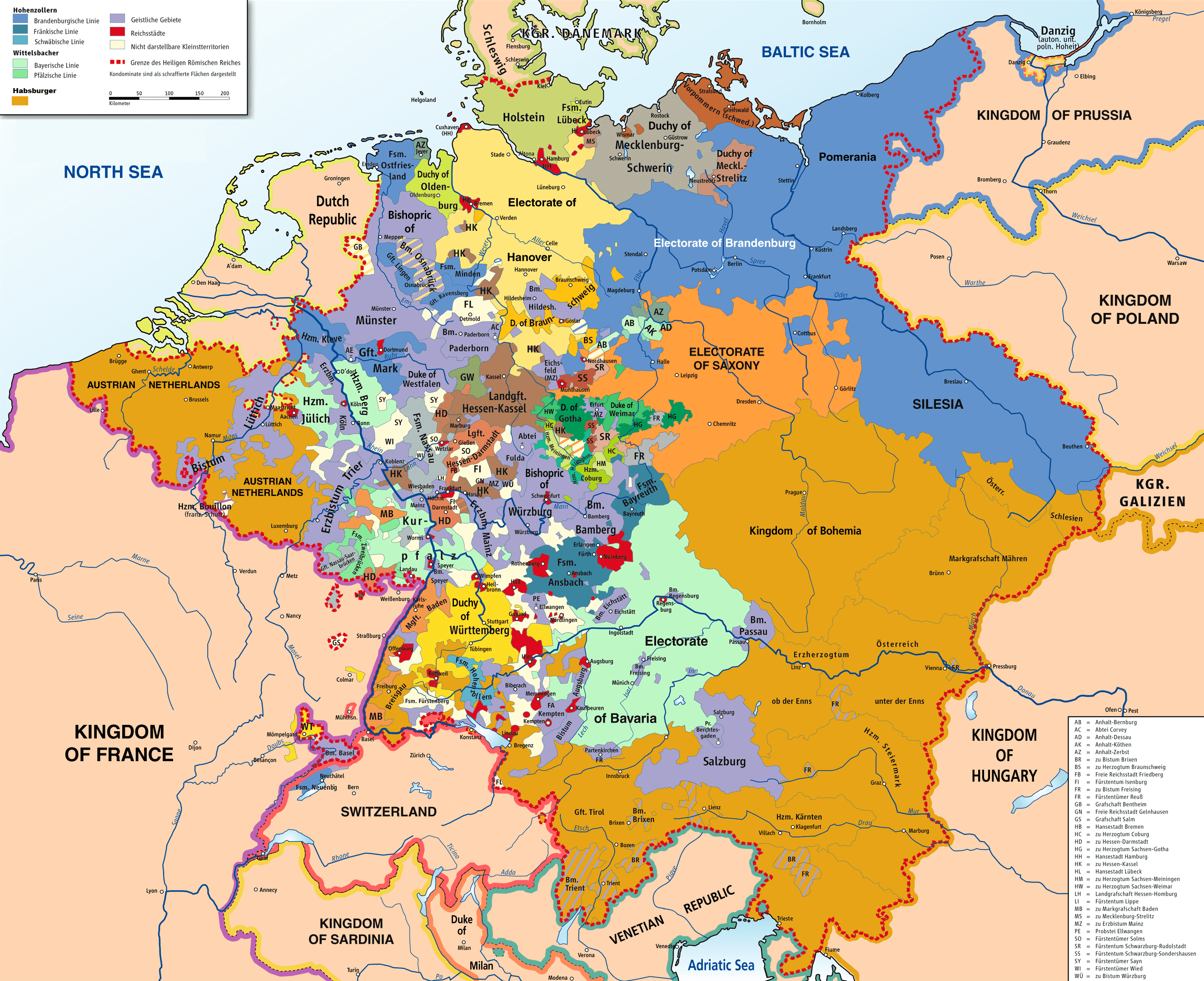
The Holy Roman Empire in 1789, before Napoleon “rationalized” hundreds of smaller entities into the Confederation of the Rhine.
Image from Wikimedia Commons.

The boundaries of states are the heart of many recent debates, be it the European refugee crisis, the Transatlantic Trade and Investment Partnership (TTIP), or Brexit (Snower and Langhammer 2019). After decades of stability, today we are again seeing heated discussions about the shape and extent of political borders. Clearly, borders are neither naturally given nor random. In Europe and elsewhere, the current state borders have been formed and changed over centuries, sometimes peacefully, often in bloody wars. In Huning and Wolf (2019), we look at the formation of the German nation state led by Prussia and trace it back to a change in borders decided at the Congress of Vienna in 1814/15.

In a nutshell, we have two findings:

  • First, the geographic position of a state can be a crucial factor for institutional change and development.
  • Second, the formation of the German Zollverein in 1834 under Prussian leadership was a truly European story, involving Britain, the Russian Empire, and the Belgian revolution of 1830/31. We show in particular that the Zollverein formed as an unintended consequence of Britain’s intervention in 1814/15 to push back Russian influence over Europe.

In theory, why would the geographic position of a state relative to that of other states matter? Intuitively, it should matter as long as the costs of trade and factor flows depend on their routes. If a large share of my trade has to pass the territory of one or several neighbours, my trade and trade policy will depend on the trade policy of my neighbours. Moreover, if tariffs are levied not only on imports but also on transit trade, as was general practice until the Barcelona Statute of 1921 (Uprety 2006), policymakers face the problem of multiple marginalisation, which is well known from the literature on supply chains. In our work, we provide a simple theoretical framework (in partial equilibrium) to show how the location of a revenue maximising state planner will affect its ability to set tariffs. Some states can increase their tariff revenue at the expense of their hinterland. Next, we show that a customs union can be beneficial for a group of states exactly because it solves the problem of multiple marginalisation.

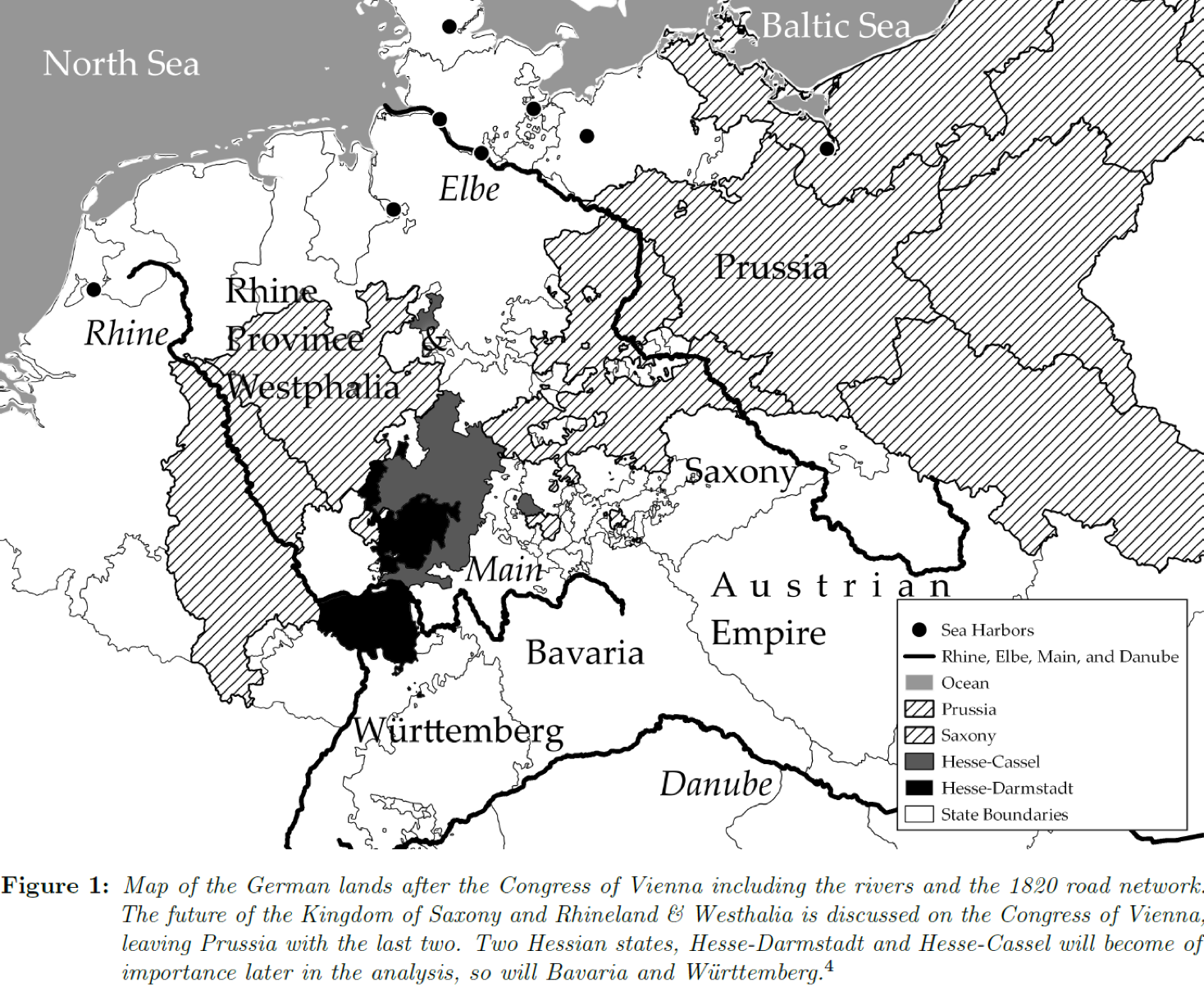
A major challenge to testing our idea empirically is that a state’s political boundaries (and hence its location) do not change very often, and if they do, the change is unlikely to be unrelated to trade or factor flows. However, the formation of the German Zollverein in 1834 can be considered as a quasi-experiment. Let us briefly revisit this historical episode. At the end of the Napoleonic wars of 1792-1814/15, only Russia and the UK were left as major military powers. Habsburg, Prussia, and the defeated France attempted to consolidate their positions at the expense of the many smaller states that had just about survived the wars, notably the former allies of Napoleon such as Saxony and Poland. Overall, the negotiations at the Congress of Vienna in 1814 were dominated by military-strategic considerations between the two great powers. Russia wanted to expand westwards, Prussia was desperate to annex the populous Kingdom of Saxony, which bordered Prussia in the south and would create a large and coherent territory. To this end, Prussia was willing to give up not only her Polish territories to Russia, but also her positions and claims on the Rhineland (Müller 1986). This met stiff resistance from Britain, joined by Habsburg and France, which feared a new Russian hegemony on the continent – the ‘Polish Saxon question’. After weeks of diplomatic struggle, the outcome was a division of Saxony, another division of Poland and Prussia being established as the “warden of the German gate against France” (Clapham 1921: 98). Figure 1 shows the result of these negotiations.

H/T to Continental Telegraph for the link.

March 23, 2019

“[T]he Withdrawal Agreement … resembles the surrender terms that might be offered to a vanquished enemy”

Filed under: Britain, Europe, Government — Tags: , , — Nicholas @ 05:00

Alex Noble isn’t a fan of the surrender document Withdrawal Agreement:

Let’s be clear – The Withdrawal Agreement is poorly-named.

It does not involve withdrawing from the EU in any meaningful sense, but instead commits us to Remaining within the EU and strips the UK of any future self-determination. It removes from the UK control of any future departure from the EU, and places it in the hands of those who reside in the building in Brussels with the statute of Europa outside – a woman riding a bull, keen students of the Book of Revelation may notice.

To this extent, the Withdrawal Agreement is actually a treaty for staying in the EU – it resembles quite closely the surrender terms that might be offered to a vanquished enemy, or the document that might be initially given to a small country wishing to join the EU.

Like say, Scotland.

One wonders if the EU wrote it in the run-up to the independence vote of 2014, threw it on a shelf when the Scots voted to stay in the UK, and then Angela Merkel simply tossed it across the desk at her puppet Theresa May at their meeting the day before it was announced at Chequers?

If the EU was a lending institution, this would not be a lengthy mortgage offered at a very low fixed rate, to a woman of considerable status, means and integrity (as might be expected of a deal offered to the fifth-largest economy in the world, the second-largest in Europe and the EU’s biggest customer), but is instead deeply punitive, almost insulting, perhaps comparable to a payday loan.

The Withdrawal Agreement is actually The Wonga Agreement.

And this is to be expected of course, because while Britain leaving the EU would be a disaster, Britain leaving the EU and thriving would mean the end of the generational attempt at reviving communism at the heart of Europe – many other countries (and the richer ones at that) would all suddenly be demanding the same terms and the EUSSR would fracture irreparably.

And at that point, all the ex-communists currently gorging at the trough in Brussels would have to accept the death of their dream.

If Britain left and thrived.

So the EUSSR can only survive Britain’s departure if it is made into a disaster for the UK.

Which meant they simply could not offer us a good deal, even if they had wanted to.

March 17, 2019

The Soviets Finish a Costly Winter War – WW2 – 029 – March 16 1940

Filed under: Europe, History, Military, Russia, WW2 — Tags: , , , , , , — Nicholas @ 04:00

World War Two
Published on 16 Mar 2019

The Winter War is over. The Allies tried to stall the Finns for as long as possible to justify their invasion of Norway, but the Finns have had it and don’t trust the British and French to come to their aid. This week, the Finns sign a peace agreement with the Soviet in Moscow.

Join us on Patreon: https://www.patreon.com/TimeGhostHistory
Or join The TimeGhost Army directly at: https://timeghost.tv

Follow WW2 day by day on Instagram @World_war_two_realtime https://www.instagram.com/world_war_t…
Between 2 Wars: https://www.youtube.com/playlist?list…
Source list: http://bit.ly/WW2sources

Written and Hosted by: Indy Neidell
Produced and Directed by: Spartacus Olsson and Astrid Deinhard
Executive Producers: Bodo Rittenauer, Astrid Deinhard, Indy Neidell, Spartacus Olsson
Creative Producer: Joram Appel
Research by: Indy Neidell
Edited by: Iryna Dulka
Map animations: Eastory

Photos of the Winter War are mostly from the Finnish Wartime Photograph Archive (SA-Kuva).

Eastory’s channel: https://www.youtube.com/channel/UCEly…
Archive by Screenocean/Reuters https://www.screenocean.com

A TimeGhost chronological documentary produced by OnLion Entertainment GmbH.

March 10, 2019

Finnish Winter is Almost Over – WW2 – 028 – March 9 1940

Filed under: China, Europe, History, Japan, Military, Russia, WW2 — Tags: , , , , , , — Nicholas @ 04:00

World War Two
Published on 9 Mar 2019

The French promise to send troops to aid Finland, though the majority is planned to go to Norway or Sweden. In return, the Finns postpone their peace talks with the Soviets. It is at that moment that the Finns realise that the French are playing tricks and the Soviets are not to be messed with. It’s deal or no deal, and they need to decide quick.

Thumbnail depicts an unnamed Red Army PoW towards the end of the Winter War – colorisation by Jared Enos

Join us on Patreon: https://www.patreon.com/TimeGhostHistory
Or join The TimeGhost Army directly at: https://timeghost.tv

Follow WW2 day by day on Instagram @World_war_two_realtime https://www.instagram.com/world_war_t…
Between 2 Wars: https://www.youtube.com/playlist?list…
Source list: http://bit.ly/WW2sources

Written and Hosted by: Indy Neidell
Produced and Directed by: Spartacus Olsson and Astrid Deinhard
Executive Producers: Bodo Rittenauer, Astrid Deinhard, Indy Neidell, Spartacus Olsson
Creative Producer: Joram Appel
Research by: Indy Neidell
Edited by: Iryna Dulka
Map animations: Eastory

Thumbnail and portrait colorizations by Norman Stewart.

Photos of the Winter War are mostly from the Finnish Wartime Photograph Archive (SA-Kuva).

Eastory’s channel: https://www.youtube.com/channel/UCEly…
Archive by Screenocean/Reuters https://www.screenocean.com

A TimeGhost chronological documentary produced by OnLion Entertainment GmbH.

From the comments:

World War Two
2 days ago
It doesn’t look too good for the Finns this week. Peace talks are more and more becoming their only way out of this war. The Soviets are looking to gain as much leverage to benefit their position in the talks. Meanwhile, the Finnish try to do the same, and focus their defence on diplomatic key points instead of long term defensive strategies.

Note that we have launched our first episode of the War Against Humanity this week, in which we will discuss the war crimes committed by all sides. The first episode covers the first six months of the war up until March 5 1940, the day on which Joseph Stalin and Beria order the Katyn Massacre. You can find that episode right here: https://www.youtube.com/watch?v=gd5YhhNcC44&

March 7, 2019

History Summarized: Thebes’ Greatest Accomplishment Ever

Overly Sarcastic Productions
Published on 25 May 2017

This story, this ludicrous, insane story, is near and dear to my heart. It also conveniently explains what went on in the century between the Peloponnesian War and Philip II conquering Greece — this story is pretty much it. Speaking of, I hope to cover all that Macedonian shenaniganery at ~some point~

PATREON: www.patreon.com/user?u=4664797

Find us on Twitter @OSPYouTube!

March 2, 2019

Post WW1 Violence Theory – Paris Peace Conference I BEYOND THE GREAT WAR

The Great War
Published on 28 Feb 2019

In our first episode of our new format BEYOND THE GREAT WAR Jesse answers two questions. The first one is in regards to the Brutalization Theory that tries to explain the level of violence during and after the First World War. In our second question, we talk about the start of the Paris Peace Conference 100 years ago.

» SUPPORT THE CHANNEL
Patreon: https://www.patreon.com/thegreatwar
Merchandise: https://shop.spreadshirt.de/thegreatwar/

» SOURCES
Audoin-Rouzeau, Stéphane and Annette Becker. 14-18, retrouver la guerre (Npp : Gallimard, 2000).

Depechin, Annie. “La conférence de la paix,” in Stéphane Audoin-Rouzeau and Jean-Jacques Becker, eds. Encyclopédie de la Grande guerre 1914-1918 (Paris : Bayard, 2013): 935-948.

Gerwarth, Robert. “The Continuum of Violence,” in Jay Winter, ed. The Cambridge History of the First World War, vol. 2: The State (Cambridge: Cambridge University Press, 2014): 638-662.

Gerwarth, Robert. The Vanquished. Why the First World War Failed to End, 1917-1923 (Penguin, 2017).

Konrad, Helmut. “Drafting the Peace,” in Jay Winter, ed. The Cambridge History of the First World War, vol. 2: The State (Cambridge: Cambridge University Press, 2014): 606-637.

Mosse, George. Gefallen für das Vaterland. Nationales Heldentum und namenloses Sterben (Stuttgart: Klett-Cotta, 1993). English version: Fallen Soldiers. Reshaping the Memory of the World Wars (New York: Oxford UP, 1990).

Prost, Antoine. “Les limites à la brutalisation : tuer sur le front occidental, 1914-1918,” Vingtième Siècle. Revue d’histoire (2004/1 no 81) : 5-20. Accessed at https://www.cairn.info/revue-vingtiem…

Sharp, Alan. “The Paris Peace Conference and its Consequences,” in in 1914-1918 online. International Encyclopedia of the First World War. https://encyclopedia.1914-1918-online…

»CREDITS

Presented by: Jesse Alexander
Written by: Jesse Alexander
Director: Toni Steller & Florian Wittig
Director of Photography: Toni Steller
Sound: Toni Steller Editing: Toni Steller
Mixing, Mastering & Sound Design: http://above-zero.com
Motion Design: Christian Graef – GRAEFX
Maps: Daniel Kogosov (http://patreon.com/Zalesky)
Research by: Jesse Alexander
Fact checking: Florian Wittig
Channel Design: Alexander Clark
Original Logo: David van Stephold

A Mediakraft Networks Original Channel

Contains licenced material by getty images
All rights reserved – Real Time History GmbH i.Gr. 2019

From the comments:

The Great War
1 day ago

ICYM the special message at the end of the video: THANK YOU FOR 1 MILLION SUBSCRIBERS! And we also hope you like our new format BEYOND THE GREAT WAR. It will also replace what used to be special episodes and biographies. Just ask us a question about a person, event or country and we will see that we answer it in the same depth that our special episodes had. Simple as that.

January 21, 2019

Sun Yat-sen – A Bombing in Wuchang – Extra History – #4

Filed under: China, History, Japan, Military — Tags: , , , , — Nicholas @ 04:00

Extra Credits
Published on 19 Jan 2019

Another group of revolutionaries in China, the Wuchang Uprising, accidentally kicked off their own plans earlier than expected, which lead to Sun starting an international diplomatic mission and then being appointed the head of the new republic. But Yuan Shikai, the current Prime Minister, had plans of his own…

Join us on Patreon! http://bit.ly/EHPatreon

December 30, 2018

QotD: The national honour

Filed under: Government, History, Quotations, USA — Tags: , , , — Nicholas @ 01:00

The Greek historian Thucydides argued that countries go to war for three reasons: honor, fear and interest. He put honor first, and yet that is probably the least appreciated aspect of foreign policy today. Historian Donald Kagan, in his essay “Honor, Interest, Nation-State,” recounts how since antiquity, nations have put honor ahead of interest. “For the last 2,500 years, at least, states have usually conducted their affairs and have often gone to war for reasons that would not pass the test of ‘vital national interests’ posed by modern students of politics.”

“On countless occasions,” he continues, “states have acted to defend or foster a collection of beliefs and feelings that ran counter to their practical interests and have placed their security at risk, persisting in their course even when the costs were high and the danger was evident.”

Americans instinctively understand this when our own honor is at stake. The rallying cry during the Barbary Wars, “Millions for defense, but not one cent for tribute,” has almost become part of the national creed. I am no fan of Karl Marx, but he was surely right when he observed that “shame is a kind of anger turned in on itself. And if a whole nation were to feel ashamed it would be like a lion recoiling in order to spring.”

Both the first and second world wars cannot be properly understood without taking the role national honor plays in foreign affairs. Similarly, Vladimir Putin’s constant testing of the West only makes sense when you take into account the despot’s core conviction that the fall of the Soviet Union was a blow to Russian prestige and honor.

Jonah Goldberg, “Humiliating Mexico Over Border Wall Would Be a Big Mistake”, TownHall.com, 2017-01-27.

« Newer PostsOlder Posts »

Powered by WordPress