Quotulatiousness

February 17, 2020

Justin Trudeau and the UN Security Council

Filed under: Cancon, Government, Politics — Tags: , , , — Nicholas @ 05:00

Although I’m much less a fan of the United Nations than Ted Campbell is, I agree that Prime Minister Trudeau’s grip-and-grin-and-bribe world tour in support of Canada’s bid for a temporary seat on the UN Security Council is probably doomed to failure:

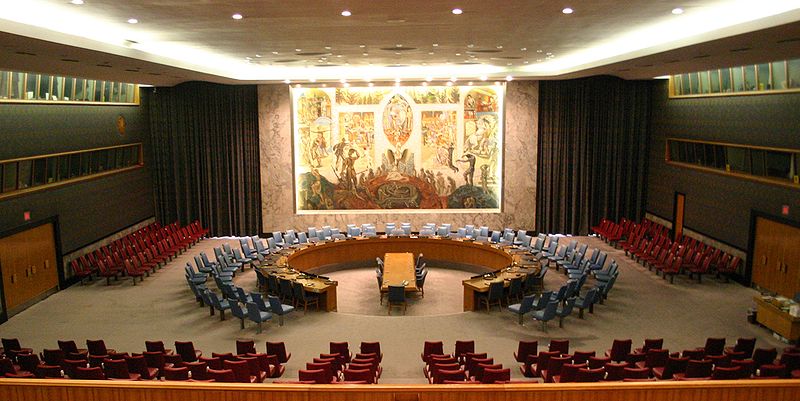
The United Nations Security Council Chamber in New York, also known as the Norwegian Room.
Photo by Patrick Gruban via Wikimedia Commons.

He has seemed oblivious to the fact that he’s bragging about Canada’s “human rights” and “equality” to politicians who are happy to have laws that criminalize homosexual behaviour and that he’s willing to enter a “partnership” in Africa’s oils and gas sectors even as his cabinet tries to shut down Western Canada’s energy industries and as his own country is in a political and economic crisis over pipelines. And then he bowed and scraped to the foreign minister of the mass-murdering Iranian regime, only a month after it shot down a civilian airliner, killing 57 Canadians.

This is all in pursuit of the ambitions of a few Laurential Elite insiders who are still campaigning against Stephen Harper. They remember that Prime Minister Harper’s government’s bid for a UNSC seat was rejected (2010) largely because Canada was perceived to be too close to Israel and because Prime Minister Harper was perceived to be too different from superstar US President Barack Obama, and not serious enough about climate change. Team Trudeau is hell-bent on proving that it is “better” than Team Harper by winning that seat (the other contestants are Ireland and Norway).

My guess is that Canada will fail again because the few hundred million dollars in bribes aid it has promised to spread around Africa is not going to make much of a dent in the anti-Canada campaign that I suspect China is waging to continue to punish us for the Meng affair, amongst other things. China is, I believe, using Canada as a bit of a whipping boy to send a message to the rest of the world about the benefits and costs of dealing with China … on its terms.

In fact, I rather hope Canada loses. Not because I enjoy seeing my country rejected. Not even because I would enjoy seeing Justin Trudeau humiliated, but I admit that would be nice. I think that losing the bid for the worthless, second class Security Councils seat might persuade our diplomats that we need to rethink our role in the UN.

The United Nations is a marvellous idea and it’s an important institution. But it is also a deeply troubled organization. It is corrupt. It is badly managed. It is poorly led. It is badly organized. It is in dire need of reform.

The bad leadership and poor organization begin at the Security Council.

February 6, 2020

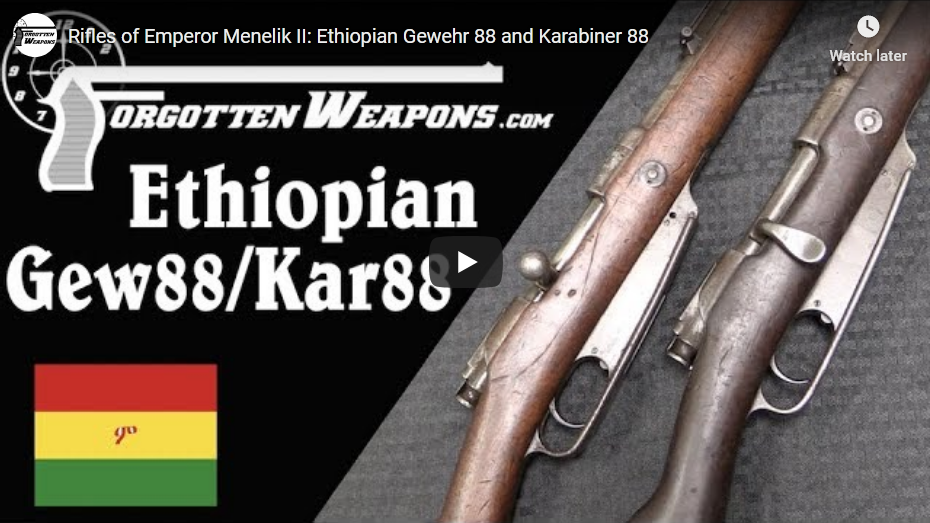
Rifles of Emperor Menelik II: Ethiopian Gewehr 88 and Karabiner 88

Filed under: Africa, Europe, History, Italy, Military, Weapons — Tags: , , , , , — Nicholas @ 04:00

Forgotten Weapons
Published 5 Feb 2020

http://www.patreon.com/ForgottenWeapons

https://www.floatplane.com/channel/Fo…

Cool Forgotten Weapons merch! http://shop.bbtv.com/collections/forg…

In 1889, Emperor Menelik II ascended to power in Ethiopia, and would rule for 20 years, moving Ethiopia (aka Abyssinia) forward into the modern age. He brought railways, sewer systems, telegraph lines, and other modern amenities to the country, particularly the capital of Addis Ababa. In addition, Menelik II was a very capable logistician and military strategist, and decisively defeated an Italian colonial invasion at the Battle of Adwa in 1896. This victory was made possible by Ethiopian acquisition of modern arms of many types. Early support came from Orthodox Russia in the form of Berdan rifles, but other arms would flow into the country as well, including Gewehr 88 and Karabiner 88 rifles and carbines. These two are marked in Amharic as Menelik’s property, and are a part of what allowed Ethiopia to be the only major African nation not colonized by Europe.

Thanks to InterOrdnance for giving me access to these rifles to bring to you!

Contact:
Forgotten Weapons
6281 N. Oracle #36270
Tucson, AZ 85740

February 3, 2020

Yet another attempted settlement of the Arab-Israeli conflict that will go nowhere

Filed under: History, Middle East, Politics, Religion, USA — Tags: , , , , , — Nicholas @ 03:00

Ted Campbell on the recent peace plan proposed by US president Donald Trump:

On the subject of the Trump Mideast Peace Plan, I agree with both The Economist which says, “as a blueprint for a two-state solution it was dead on arrival,” and with the Globe and Mail‘s Mark MacKinnon who writes that “President Donald Trump’s Middle East peace plan … aims to resolve the Israeli-Palestinian conflict almost completely on Israel’s terms [and, while] Mr. Trump’s allegiances came as no surprise [to the Palestinian leaders, but] some of [their] bitterness was reserved for the leaders of Arab states that Palestinians see as quietly going along with the designs of the U.S. President and Israeli Prime Minister Benjamin Netanyahu.”

I think that is because President Trump, and much of the world, has lost patience with the Palestinians who still demand a right of return that, if ever seriously considered by anyone, would destroy Israel. Only Iran really wants that.

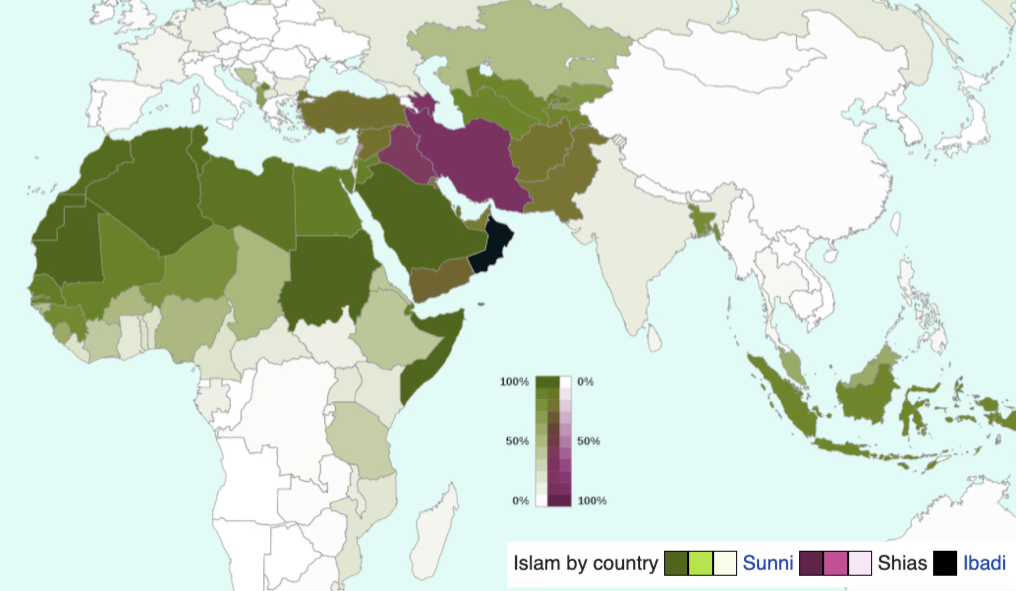
The strategic situation in the region, indeed in the entire Islamic Crescent which stretches from Mauritania and Morocco on the Atlantic coast of West Africa to Indonesia in East Asia, has changed in the past 70 years. There is no longer a unified Muslim “world” that opposes the very existence of a Jewish state in the Middle East. Indeed, a few Arab and Islamic states have correct, even friendly relations with Israel and others trade with the Jewish state (without having diplomatic relations) to their mutual advantage. The current problems in the region are centred on a power struggle between the Shia Islamic community, centred in Iran and the larger but socially and politically fragmented Sunni Islamic community …

… the differences are more than just religious. Iran, backed by China and Russia, and Saudi Arabia, backed by the USA, are engaged in something close to a real shooting war while Egypt and Turkey egg them both on. All four have some claim to dominance in the region and none is a real “friend” to any of the others and none gives a damn about Palestine or the Palestinian people.

[…]

President Trump has done a big political favour for Benjamin Netanyahu … but, ultimately it is probably pointless, and he and his successor and her (or his) successor, too, will likely still be seized with this issue in 2025 and 2030 and beyond.

Eventually, a solution will be found … it will, I suspect, involve Israel ceding a bit of territory to a new Palestinians state and, perhaps, establishing some sort of controlled, limited access corridor from the West Bank, possibly across the Northern Negev Desert. More importantly, it will involve Israel and Jordan, working in tandem, helping the new state to grow and prosper and live in peace with its neighbours. It’s a dream, of course, but it’s better, better for everyone, than is another war.

January 24, 2020

From a Canadian perspective, “NORAD … is more important than NATO”

Filed under: Americas, Cancon, History, Military, Space, USA — Tags: , , , , , , — Nicholas @ 05:00

The American government has once again expressed a strong desire to update the 1957 North American Air Defence Commmand arrangement between the US and Canada for defence of the North American continent. It’s a Cold War relic to some (particularly some in the Prime Minister’s Office and cabinet), but it has a very real value to Canada, as Ted Campbell explains:

In 1957 Canada and the USA agreed to create the North American Air Defense Command. It is a “combined” command, American and Canadian people, civilian and military, work together, in combined headquarters, to conduct an active aerospace defence effort over the continent we share. Americans and Canadians work side-by-side managing the airspace, detecting intruders and identifying and intercepting them and so on.

NORAD, I would argue, is more important than NATO.

First, it is about defending our own homeland.

Second, it is about defending the US strategic deterrent, which has, arguably, done more to keep global peace than all the efforts of the United Nations, combined.

NORAD modernization and expansion should be at the top of Canada’s defence policy agenda. Specifically:

  • First, billions of dollars, likely tens of billions of dollars are going to be needed to upgrade the surveillance and warning system. We need new radars, terrestrial and space-based, and upgraded control systems to do the job properly;
  • Second, Canada needs to buy enough (85+ is just the very barest of bare minimums) of the right new fighter jet; and
  • Third, Canada needs to join the American ballistic missile defence system.

I believe that this issue: the shared defence of our, shared, continent and, therefore, the defence of the American heartland and of America’s strategic deterrent is a key, perhaps even the key element in our most important foreign relationship. […] The knowledge that Canada is doing a full and fair share of defending our shared continent, of defending America, is not lost on admirals and generals, diplomats and senior civil servants, representatives and senators in the US Congress, pundits and political leaders in waiting in the think-tanks and senior staff in the White House, even if Donald J Trump is not impressed … IF we are doing a full and fair share.

Right now, we are not.

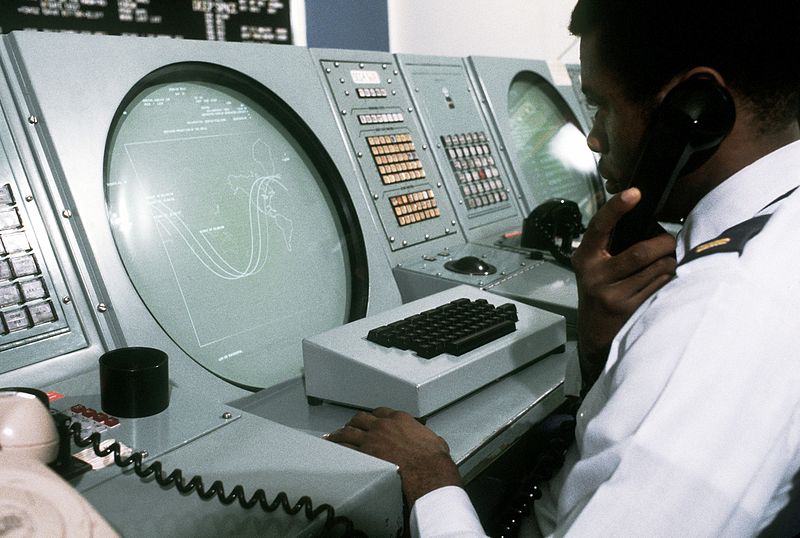
An orbital analyst tracks the Kosmos 1402 spy satellite in orbit in the Space Defense Operations Computation Center, North American Aerospace Defense Command (NORAD) on 18 February, 1983.
NORAD photo by Master Sergeant Hiyashi via Wikimedia Commons.

January 23, 2020

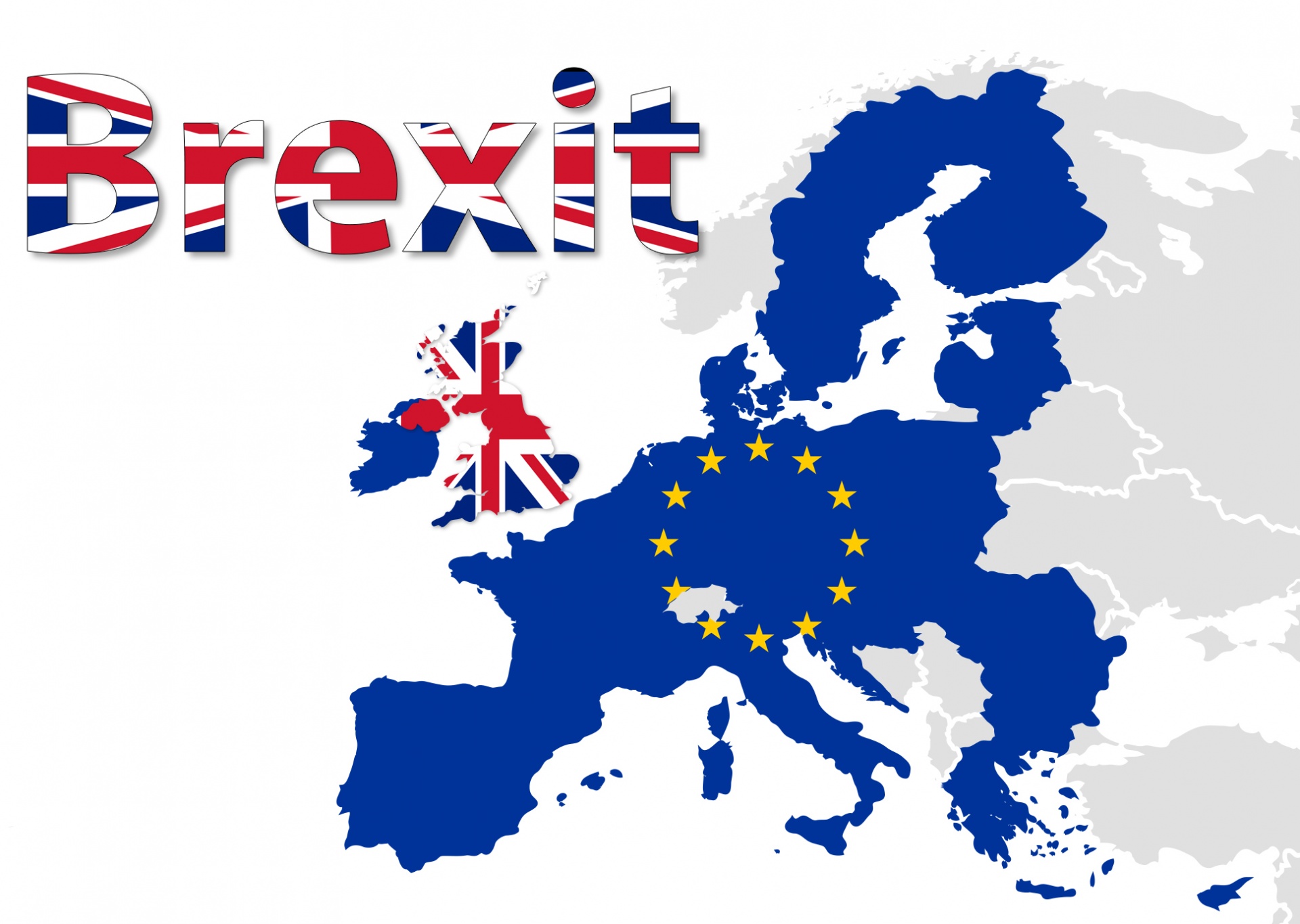
The EU apparently fears a “Singapore on the Thames”

Filed under: Britain, Bureaucracy, Business, Economics, Europe — Tags: , , , , , — Nicholas @ 03:00

In the Continental Telegraph, Tim Worstall explains why the EU negotiators are reportedly offering a much worse trade deal to the United Kingdom than they’ve already agreed with Canada, Japan, and other trading partners:

Take, for example, this idea of Singapore on Thames. It’s trivially easy to rally the peeps against one or other relaxation of regulation. Chlorine washed chicken for example. But what about lifting the entire burden? Singapore is, after all, about 50% richer than Britain on a per capita basis. The correct question therefore is would you like a 50% pay raise at the price of shooting all the bureaucrats? Given the manner in which the bureaucrats don’t want the question even asked we have a reasonable enough guide that the answer would be yes.

Which is why the terms on offer to a Britain which could do the SonT thing are so terrible. Because of SonT succeeded it would be a death blow to the entire idea of how Europe is regulated. Lille, Leipzig and Livorno will all put up with interfering bureaucracy because that’s just the way the world is. But if Les Rosbifs become richer by half again simply by that bonfire of the regulations then the auto da fes will light up all over Europe.

So, yes, of course the EU is offering shit trade terms. They can’t allow an independent and free Britain to succeed. That we will anyway is what will bring that freedom and liberty to the continent – once again. For as so often it will be us that saves Europe from itself.

January 9, 2020

The “Ostrich” school of Canadian foreign policy

Filed under: Cancon, Government, Politics — Tags: , , , , — Nicholas @ 03:00

Ted Campbell on what former Canadian diplomat David Mulroney calls the “Ostrich” school:

John Ibitson, writing in the Globe and Mail, suggests that Justin Trudeau might want to try what former diplomat, national strategic planner in the Privy Council Office, and commentator David Mulroney refers to (on social media) as …
… “the ‘Ostrich’ school of Canadian foreign policy.” It has, he says, two pillars:

    First, “Canada has no interests/allies“; and

    Second, “The best way to deal with bad regimes, bad people is to pretend they’re nice.”

Mr Ibbitson himself says that it may be impossible to work “with European and Asian allies, including Japan, to forge a coherent response that provokes neither the Americans nor the Iranians.”

The situation in the Middle East is, as I have explained several times, hideously complex. President Trump may have made it worse … although it’s hard for me to see how any added complications really matter all that much. The socio-cultural and religious hatreds that bedevil the region are likely beyond making “worse.”

In fact, there may be an argument that a nice, all-out, albeit contained, Middle East war might be useful. Perhaps the Iranians and Saudis and Iraqis and Syrians and Yemenis and so on need to sort one another out in the way that tends to produce lasting results: on a bloody battlefield … it worked for Europe, more than once, in 1648, in 1815 and again in 1945.

John Ibbitson says that “Iran’s rage over the U.S. assassination of Qassem Soleimani risks dragging Canada and the rest of the Western alliance into a new confrontation in the Middle East, courtesy of Donald Trump … [that true, as far as it goes, and he adds] … Most Canadians would want no part of such a conflict, especially since the U.S. President might simply be seeking to distract attention from his impending impeachment trial in the Senate … [and that, the first part about Canadians wanting no part of any conflict, is also true, but President Trump’s motives are irrelvant]. The fact is that he has ignored many Iranian provocations while he attempts, vainly, in my opinion, to disengage America from the wider world. The attack on a US embassy seems to have crossed a “red line.”

[…]

But, John Ibbitson says, “Mr. Trump’s high stakes gamble – that killing one of the most senior figures in the Iranian regime will deter rather than provoke further acts of aggression from Iran – could lead to some kind of asymmetrical war, with the U.S. military attacking Iranian targets, and Iran responding through militias and proxies in Iraq and possibly in North America and Europe … [true enough, and he asks] … What would Mr. Trump expect from Canada in such a conflict?” That’s the key question.

My guesstimate is that President Trump will ask little or nothing, militarily, because his military chiefs of staff will not even have mentioned Canada when they proffer lists of nations that might help or hinder US efforts. Canada is not on any of their lists of countries that matter. Diplomatically, however, I think we do matter to the USA and I would not be surprised if the phone lines have been busy all weekend as US officials tell (rather than ask) Canadian officials to get our government “onside” with the USA. The Americans hold ALL the high cards in the game of power.

I’m sure that Prime Minister Trudeau will follow John Ibbitson’s advice and adopt the “Ostrich” strategy … head buried in the sand, pretending that Canada has neither interests nor allies and pretending that evil people are good.

Perhaps co-incidentally with the “revenge” Iranian missile attacks on Iraqi airbases known to have US troops in the area, a Ukraine International Airlines Boeing 737-800 passenger jet crashed shortly after take-off from Tehran airport. Officially, the Iranian authorities are saying it was due to catastrophic mechanical breakdown, but they have refused to hand over the aircraft’s “black box” flight recorders for analysis. All of the 176 passengers and crew died in the crash, including 63 Canadians. It has been suggested by many that the timing was not a co-incidence and that the plane was likely hit by an Iranian surface-to-air missile due to the heightened state of tension in Iranian airspace during and after the missile launches against Iraq. Colby Cosh has more:
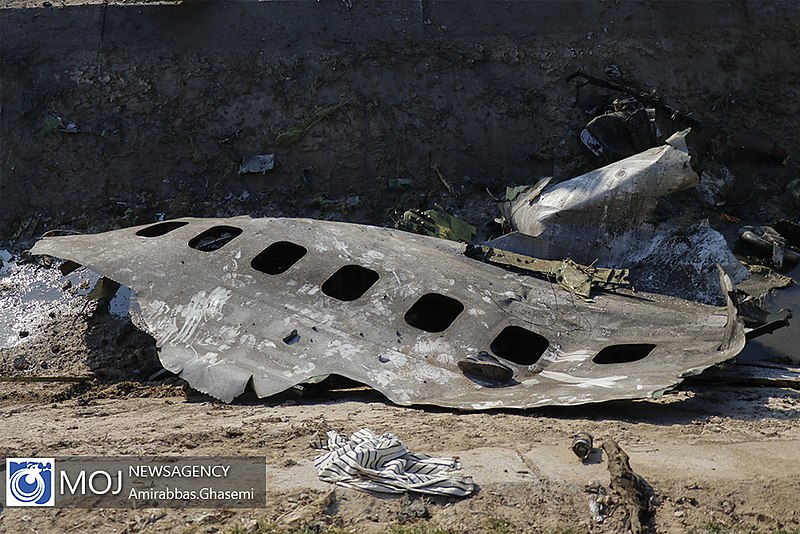
Some of the wreckage of Ukraine International flight 752 near Tehran, Iran.
Photo from MOJ Newsagency via Wikimedia Commons.

I am writing these words at a strange moment Wednesday morning. The president of the United States has just been on television, reassuring the American public that the crisis inspired by the assassination of Iranian general Qassem Soleimani has reached a satisfactory equilibrium. Iran made a demonstrative show of force against U.S. installations in the Middle East that killed nobody. Honour has been satisfied. Relief, among American observers, is general.

Meanwhile, Canada is mourning the deaths of dozens of its citizens in a passenger jet crash on Iranian soil. Perhaps it is a terrible coincidence. Stranger things have happened. But if you are old enough to remember the shooting down of Iran Air Flight 655 by the U.S. Navy missile cruiser USS Vincennes in 1988, you are old enough to doubt it.

The Vincennes incident is part of the historical litany that has made news consumers innately distrustful of the first draft of history. The ship was in the Persian Gulf, which at the time was swarming with Iranian gunboats trying to squeeze off the supply of arms to its enemy Iraq. The U.S. Navy had rushed to the area to keep one of the world’s economic arteries open to neutrals. But this had foreseeable consequences — plenty of confusing penny-ante firefights, and some notable accidents, including a puzzling Iraqi attack with air-launched Exocet missiles on an American frigate, USS Stark.

January 8, 2020

Trump versus Iran (and significant parts of the US and western media)

Filed under: Middle East, Military, USA — Tags: , , , , — Nicholas @ 03:00

Kurt Schlicter‘s take on the way President Trump has been breaking recent US habits in their dealings with Iran:

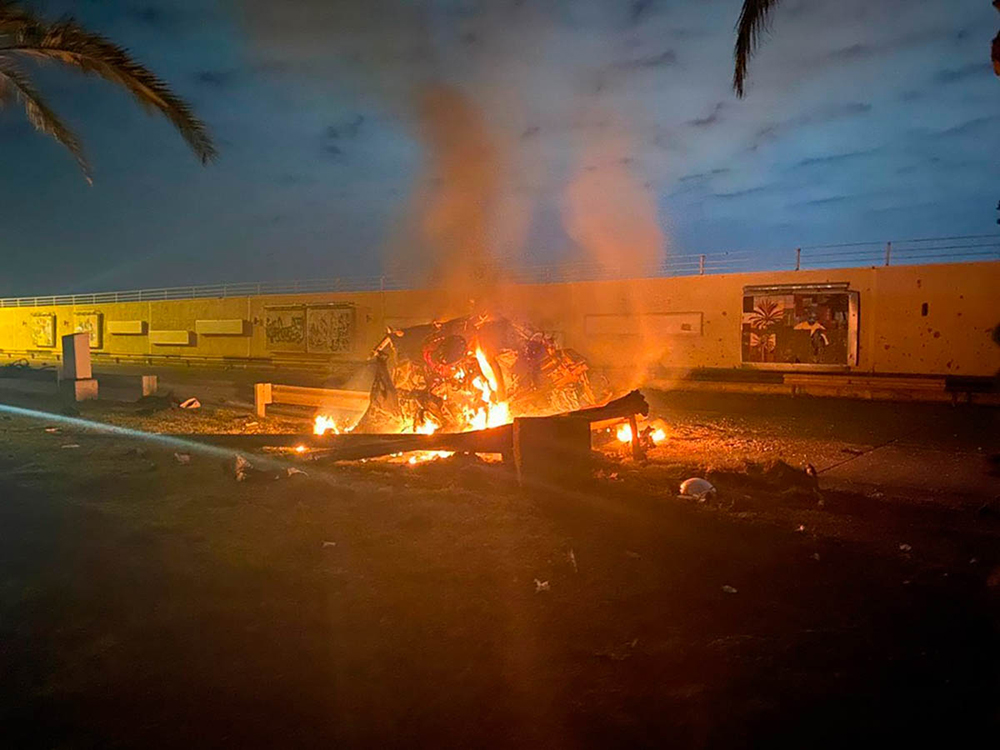
A burning vehicle at Baghdad International Airport following an American airstrike, early Friday, Jan. 3, 2020. The Pentagon said Thursday that the U.S. military has killed Gen. Qassem Soleimani, the head of Iran’s elite Quds Force, at the direction of President Donald Trump.
Photo from the Iraqi Prime Minister’s Press Office via Wikimedia Commons.

The Iranians had been getting uppity for a while, but then their punks killed an American contractor in a rocket attack on a U.S. base – and let’s not get distracted about whether we should still be there. They killed an American. We are there, and you don’t get a pass on murdering U.S. citizens because we may or may not have a good reason for them still being there. You get dead.

See, for too long we were asking the wrong question when tinpot dictators dared hurt Americans. We asked, “What would a gender-fluid Oppression Studies major at Yale do?” As I have observed before, the correct question is “WWJC do?” – “What would Julius Caesar do?

Trump ordered hard hits at five Shiite militia weapon sites, and not with any warnings either. They got one of ours, we got about two dozen of theirs. Like the old joke about 1,000 lawyers at the bottom of the sea, that’s a good start.

The Iranians, whose Islamic Revolutionary Guard Corps is the ultimate source of most of the Shiite terror in the world, decided to respond in what they thought was a clever way: send a few thousand of their camo-clad dummies to attack the embassy and hope and pray a bunch of them got mowed down on camera. In the meantime, wave a lot of banners, burn some stuff, and pound on the reinforced glass for the press’s benefit.

But apparently, no one told the “mourners,” as the austere scholars at the endlessly useless New York Times dubbed the members of Islamic Antifa, that they were supposed to get smoked. They went home with the embassy unseized. Getting martyred en masse is not that much fun when you’re just one sucker out of dozens – heck, they may run of virgins.

See, Trump made it clear he was not playing. There would be no Benghazi II: Bagdad Boogaloo on his watch, and he acted well before 13 hours ran on the clock. Rejecting the elite’s preferred model of craven submission to every Third World cretin with a grievance and a camera, the Trump administration flew some Apache gunships over the crowd of unwashed morons, kicking off some flares, and generally sending the unequivocal message that if those SOBs had a problem, the AH-64s had a 30mm solution.

And then the administration sent in 100 Marines, about a company, on Ospreys as a quick reaction force and alerted the ready brigade at Ft. Bragg to start shutting 82nd Airborne Division paratroopers into theater.

Whatever the opposite of “stand down” is, Trump ordered that.

December 21, 2019

The Treaty of Versailles And The Economic Consequences Of The Peace I THE GREAT WAR 1919

Filed under: Books, Economics, Germany, History, USA, WW1 — Tags: , , , , , , — Nicholas @ 06:00

The Great War
Published 19 Dec 2019

Help The Great War and keep it free for everyone: https://patreon.com/thegreatwar

John Maynard Keynes was an economist and part of the Paris Peace Conference in 1919. He had high hopes for a new post-war order but when he realized what Georges Clemenceau, David Lloyd-George and Woodrow Wilson were planning, he resigned from the conference. And then wrote a book about it: The Economic Consequences of the Peace became a bestseller and is one of the best known critiques of the Versailles Treaty.

» SUPPORT THE CHANNEL
Patreon: https://www.patreon.com/thegreatwar
Merchandise: https://shop.spreadshirt.de/thegreatwar/

» SOURCES
Demps, Lorenz and Materna, Ingo (eds.). Geschichte Berlins von den Anfängen bis 1945. Berlin, 1987.
Eichengreen, Barry. Golden Fetters. The Gold Standard and the Great Depression 1919-1939. New York 1995.
Horn. Britain, France and the Financing of the First World War, 2002.
Hudson, Michael. Trade, Development, and Foreign Debt: Volume 2. Pluto Press, London, 1992.
Hudson, Michael. Superimperialism: The Origins and Fundamentals of U.S. World Dominance. Pluto Press, London 2003.
Keynes, John Maynard. The Economic Consequences of the Peace. Harcourt, Brace and Howe, New York, 1919.
Kinzer, Stephen. The True Flag: Theodore Roosevelt, Mark Twain, and the Birth of American Empire. St. Martin’s Griffin, 2018
Shirer, The Rise and Fall of the Third Reich. 1960.
Skidelsky, Robert. John Maynard Keynes, 1883-1946: Economist, Philosopher, Statesman. Penguin Books, New York, New York, 2003.
Skidelsky, Robert. John Maynard Keynes Volume I — Hopes Betrayed. Penguin Books, New York, 1983.

»CREDITS
Presented by: Jesse Alexander
Written by: Mark Newton
Director: Toni Steller & Florian Wittig
Director of Photography: Toni Steller
Sound: Toni Steller
Editing: Toni Steller
Mixing, Mastering & Sound Design: http://above-zero.com
Maps: Daniel Kogosov (https://www.patreon.com/Zalezsky)
Research by: Jesse Alexander
Fact checking: Florian Wittig

Channel Design: Alexander Clark
Original Logo: David van Stephold

A Mediakraft Networks Original Channel

Contains licensed material by getty images
All rights reserved – Real Time History GmbH 2019

December 11, 2019

Franco-Prussian War | Animated History

Filed under: France, Germany, History, Military — Tags: , , , , , , — Nicholas @ 02:00

The Armchair Historian
Published 4 Feb 2018

What was the Franco Prussian War?

Our Website: https://www.thearmchairhistorian.com/

Our Twitter:
@ArmchairHist

Our Discord:
https://discord.gg/Ppb2cUd

Sources:
https://www.britannica.com/event/Fran…
http://francoprussianwar.com/
http://history-world.org/franco_pruss…
http://www.newworldencyclopedia.org/e…
https://www.warhistoryonline.com/hist…
http://geacron.com/home-en/?v=m&lang=…

Music: Music: Antonio Salieri: “Twenty six variations on La Folia de Spagna

December 6, 2019

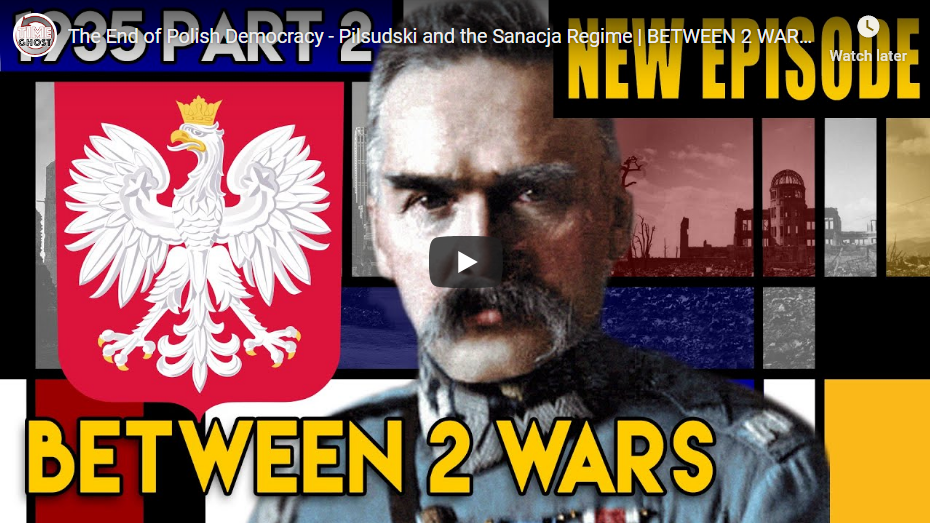
The End of Polish Democracy – Pilsudski and the Sanacja Regime | BETWEEN 2 WARS | 1935 Part 2 of 4

Filed under: Europe, Germany, History — Tags: , , , , , — Nicholas @ 06:00

TimeGhost History
Published 5 Dec 2019

The Second Polish Republic emerged victorious from the Polish-Soviet War in 1921. But the shine of independence is quickly rubbing off as the new state finds itself burdened with sever economic, political, and social problems. There is one man who sees it as his destiny to save his ailing nation. That man is Józef Piłsudski. But will his undemocratic Sanacja regime be able to solve Poland’s problems?

Join us on Patreon: https://www.patreon.com/TimeGhostHistory

Hosted by: Indy Neidell
Written by: Francis van Berkel
Directed by: Spartacus Olsson and Astrid Deinhard
Executive Producers: Bodo Rittenauer, Astrid Deinhard, Indy Neidell, Spartacus Olsson
Creative Producer: Joram Appel
Post-Production Director: Wieke Kapteijns
Research by: Francis van Berkel
Edited by: Daniel Weiss
Sound design: Marek Kaminski

Colorization:
– Julius Jääskeläinen – https://www.facebook.com/JJcolorization/

Sources:

A TimeGhost chronological documentary produced by OnLion Entertainment GmbH.

From the comments:

TimeGhost History
2 hours ago (edited)
YouTube has age-restricted our Blitz Spirit WW2 video and has REMOVED our Between Two Wars episode on the Holodomor (1932-02). We received a warning, which means that next time this happens we will be banned from publishing content for one week. They state that our “content was removed due to a violation of our Community Guidelines,” on account of publishing “violent of graphic content”, explaining that “Violent or gory content intended to shock or disgust viewers, or content encouraging others to commit violent acts, is not allowed on YouTube.”

Needless to say, we are shocked and disgusted by this action and legitimisation and are currently exploring our options. Meanwhile, this shows how much our independence depends on our Patreon supporters. Without them, we would have been long gone. So please consider supporting our effort and help us spread vital knowledge about our world’s history, albeit hard to swallow or confronting. Don’t let YouTube decide what will be a part of our public memory! You can support us on https://patreon.com/timeghosthistory or https://timeghost.tv.
Cheers,
Joram

December 3, 2019

Canada and China

Filed under: Cancon, China, Economics, Politics — Tags: , , , , — Nicholas @ 05:00

Ted Campbell discusses Canadian foreign policies — or perhaps more accurately Canada’s lack of policies — on China:

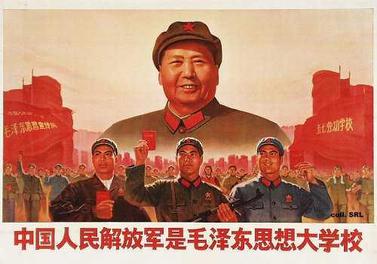
“The Chinese People’s Liberation Army is the great school of Mao Zedong Thought”, 1969.
A poster from the Cultural Revolution, featuring an image of Chairman Mao, published by the government of the People’s Republic of China.
Image via Wikimedia Commons.

There were many things that history might find regrettable about the Mulroney years but I doubt that it will fault him for having a principled and coherent foreign policy.

That all changed with Jean Chrétien, who was almost a neo-mercantilist, and for whom principle could never stand in the way of profit.

In the modern (Chrétien-Martin-Harper-Trudeau) era, Conservatives have been, broadly, anti-China, sometimes for reasons that are less than coherent or principled, and Liberals have been too prepared to “go along to get along” with China. This is because both parties reflect the incoherent views of the whole country. But political leaders shouldn’t (mustn’t) just reflect the views of their voters ~ that sort of populism is nonsensical ~ they must, as Edmund Burke said, bring his or her “unbiased opinion … mature judgment … [and] … enlightened conscience” to bear on each issue. But I’m afraid that too many (most?) modern Canadian political tacticians hold all those things in scant regard.

In the 2020s Canadians must listen to a few clear voices who will tell them that China is a competitor in many “markets” including in the marketplace of ideas, ideals, institutions and values. The current Chinese leadership is overtly hostile to Weterm liberal-democratic values and is not unwilling to punish any country with which it disagrees. It is protectionist, relatively rich and growing in military, political and economic power, but, still, somewhat cautious, and Xi Jinping’s China seems to be able to separate its own short-term political interests from its firm, long term, strategic goals. China, as Kevin Rudd reminded us just a few days agois contemptuous of weakness and prevarication,” which explains why it is so obviously contemptuous of Justin Trudeau’s Canadian government.

It is a fact that the Sino-Canadian relationship is “unbalanced:” China is a great power, Canada is not; China is an autocracy, Canada is a democracy; and so on but, as Kevin Rudd said (link just above) “China too has net strengths and weaknesses of which … [our] … strategists should be aware in framing our own strategy … [and we] … should be equally aware of our own strengths, weaknesses and vulnerabilities.” Canadian strategists need to educate Canadians about China so that a solid, informed majority will want a coherent and principled policy ~ one that puts our national vital interests first […]

Our policy towards China needs to be just one part of a coherent, principled foreign policy which Canadians understand and, broadly, support, and that, in turn, needs to be part of a Canadian grand strategy that aims to secure a place, as Paul Martin suggested, “of pride and influence in the world” ~ that, of course, was a place we enjoyed under St Laurent, Diefenbaker and Pearson, all of whom were acutely aware of the many and varied (and very divergent) views about Canada in the world that existed then and persist today in Canada’s many and varied communities.

December 2, 2019

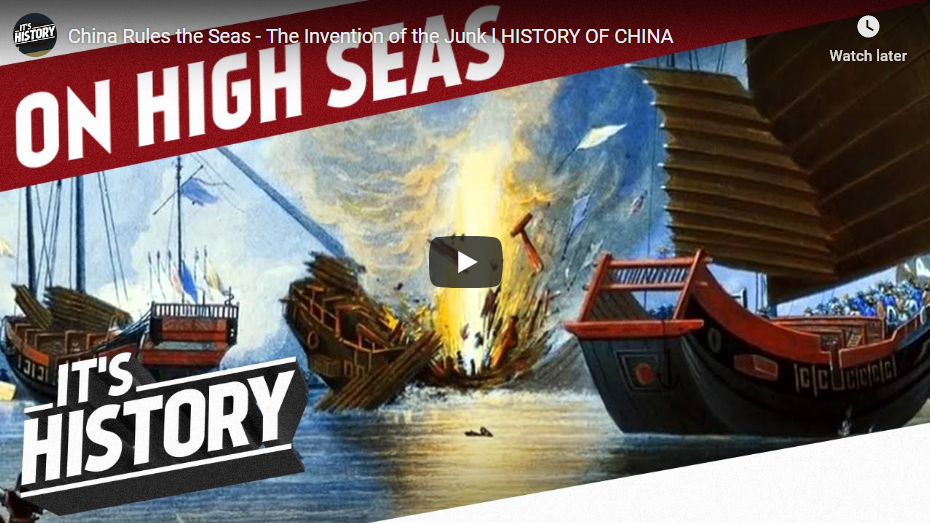
China Rules the Seas – The Invention of the Junk l HISTORY OF CHINA

Filed under: China, History, Japan, Military, Technology — Tags: , , , , — Nicholas @ 02:00

IT’S HISTORY
Published 19 Aug 2015

Imperial China was a great seafaring nation. With the invention of the junks — massive, nearly unsinkable ships — it is safe to say that by the 14th century China had the best sea vessels in the world. The invention of the compass made navigation trustworthy as never before and Admiral Zheng He’s treasure fleet eagerly explored the Seven Seas. The first Chinese navy also depended on the mighty junk for their fighting tactics. But not all emperors were convinced of seafare and so the Chinese maritime power ended somewhat abruptly, giving the rest of the world time to catch up. Learn all about China on the water on IT’S HISTORY.

» The Complete PLAYLIST: http://bit.ly/HistoryOfChina

» SOURCES
Videos: British Pathé (https://www.youtube.com/user/britishp…)
Pictures: mainly Picture Alliance
Content:
“Hadingham, Evan (2001): Ancient Chinese Explorers: http://www.pbs.org/wgbh/nova/ancient/…
Needham, Joseph (1986): Science and Civilization in China, Volume 4, Physics and Physical Technology, Part 3, Civil Engineering and Nautics. Taipei”

» ABOUT US
IT’S HISTORY is a ride through history – Join us discovering the world’s most important eras in IN TIME, BIOGRAPHIES of the GREATEST MINDS and the most important INVENTIONS.

» CREDITS
Presented by: Guy Kiddey
Script by: Martin Haldenmair
Translated by: Guy Kiddey
Directed by: Daniel Czepelczauer
Director of Photography: Markus Kretzschmar
Music: Markus Kretzschmar
Sound Design: Bojan Novic
Editing: Markus Kretzschmar

A Mediakraft Networks original channel
Based on a concept by Florian Wittig and Daniel Czepelczauer
Executive Producers: Astrid Deinhard-Olsson, Spartacus Olsson
Head of Production: Michael Wendt
Producer: Daniel Czepelczauer
Social Media Manager: Laura Pagan and Florian Wittig

Contains material licensed from British Pathé
All rights reserved – © Mediakraft Networks GmbH, 2015

November 17, 2019

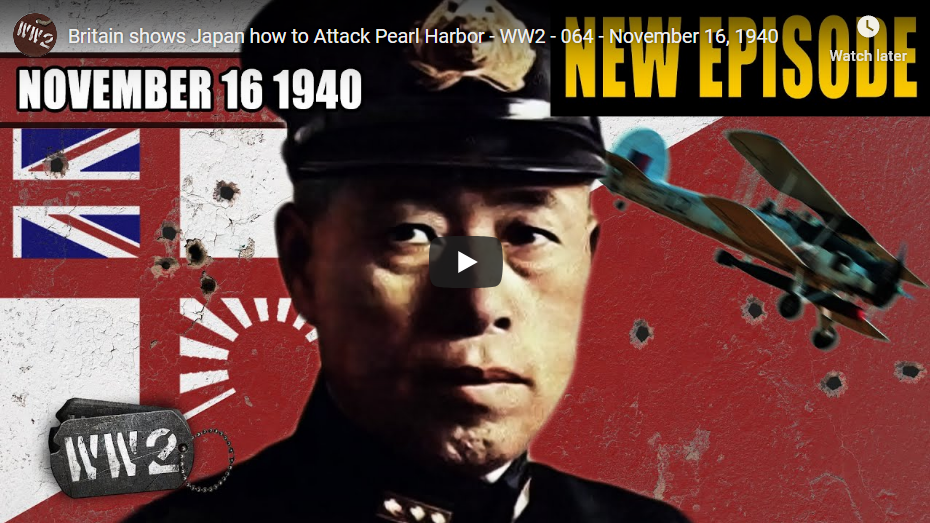
Britain shows Japan how to Attack Pearl Harbor – WW2 – 064 – November 16, 1940

Filed under: Britain, Europe, Greece, History, Italy, Japan, Military, Russia, WW2 — Tags: , , , , — Nicholas @ 04:00

World War Two
Published 16 Nov 2019

Japan has two wins this week, and one might turn out to be very consequential for the rest of the war. In the meantime, the British RAF fights the Luftwaffe and Italy struggles in their offensive against Greece.

Join us on Patreon: https://www.patreon.com/TimeGhostHistory
Or join The TimeGhost Army directly at: https://timeghost.tv

Follow WW2 day by day on Instagram @World_war_two_realtime https://www.instagram.com/world_war_t…
Join our Discord Server: https://discord.gg/D6D2aYN.
Between 2 Wars: https://www.youtube.com/playlist?list…
Source list: http://bit.ly/WW2sources

Written and Hosted by: Indy Neidell
Produced and Directed by: Spartacus Olsson and Astrid Deinhard
Executive Producers: Bodo Rittenauer, Astrid Deinhard, Indy Neidell, Spartacus Olsson
Creative Producer: Joram Appel
Post-Production Director: Wieke Kapteijns
Research by: Indy Neidell
Edited by: Iryna Dulka
Map animations: Eastory

Colorisations by: Julius Jääskeläinen, https://www.facebook.com/JJcolorization/

Eastory’s channel: https://www.youtube.com/channel/UCEly…
Archive by Screenocean/Reuters https://www.screenocean.com.

Sources:
– Narodowe Archiwum Cyfrowe
– IWM: CM 164, C 1244
– Destroyed house icon by Gan Khoon Lay, people icon by Gregor Cresnar from the Noun Project

A TimeGhost chronological documentary produced by OnLion Entertainment GmbH.

From the comments:

World War Two
2 days ago
Do you want more World War Two in realtime? We have a great Instagram page, where we make a daily post about what happened in the war on that day. This might be something completely different from what’s covered in these videos, or might add some more details. You can follow it by searching @world_war_two_realtime or by clicking here: https://www.instagram.com/world_war_two_realtime/. See you there!
Cheers, Joram

November 15, 2019

“In a functioning system, the head of the government sets foreign policy and the diplomats enact it. So naturally there’s not a chance of that in Washington”

Filed under: Bureaucracy, Government, Politics, Russia, USA — Tags: , , , — Nicholas @ 03:00

Mark Steyn on the foggiest of Foggy Bottom diplomatic bafflegab on the first day of the :

Yesterday I caught a bit of the impeachment theatre en route to a lunchtime speaking engagement. To be honest, if they’d come round and performed it live in my hotel room, I’d still have fled. If universally respected eminent lifelong career foreign-service bigshots Bill Taylor and George Kent are Adam Schiff’s star witnesses, their chief purpose seems to be to get Democrats pining for the charisma of Bill de Blasio and the self-effacement of John Kerry.

In a functioning system, the head of the government sets foreign policy and the diplomats enact it. So naturally there’s not a chance of that in Washington. When Taylor and Kent whine that there seemed to be a “shadow foreign policy”, the shadow is theirs; they spent a day testifying that everything had been going ticketty-boo for decades just as they’d always done things – and then Trump came along and took a different view. Oh, my! Anyone would think that, as Barack Obama once proposed, “elections have consequences”.

First up was George Kent, the “Deputy Assistant Secretary of State for Eastern Europe and the Caucasus”. He warmed up the crowd with some extensive biographical material about the “nearly sixty years” of George Kents (I believe he’s George III or some such) who have “chosen” to endow America with the blessings of their “public service”. It didn’t help that he wore a bow tie. Eventually he stopped talking about himself and started talking about Ukraine:

    Our strategic aim for the entirety of my foreign service career is not possible without a Ukraine whole, free, and at peace, including Crimea and Donbas, territories currently occupied by Russia.

Crimea is, of course, familiar to anyone who’s read “The Charge of the Light Brigade”:

    Theirs not to reason why
    Theirs but to do or die…

Or, in the case of low-level diplomats who’ve never had a single conversation with the President, theirs not to reason why, theirs but to do or tender their resignations after first ensuring that their pensions won’t be affected. Instead:

    Into the valley of the SCIF
    Rode the six hundred hearsay witnesses…

As I said, any Tom, Dick or Harry can bandy Crimea, but it takes a career striped-pants Foggy Bottom public servant to toss in “Donbas” with gay abandon. It would have been interesting to see whether Adam Schiff or anyone else in the room could have found Donbas on a map. The odds of pinning the tail on the Donbas blindfolded are better. It’s bordered to the north, east and south-east by Russia, so it’s akin to the Russian foreign ministry regarding northern Mexico as a vital national-security interest of Moscow’s.

In fact, northern Mexico is a vital national-security interest of America’s, but, under the mass wankerization of public policy, Perma-Beltway cares more about the borders of Ukraine than it does about the borders of the United States.

October 25, 2019

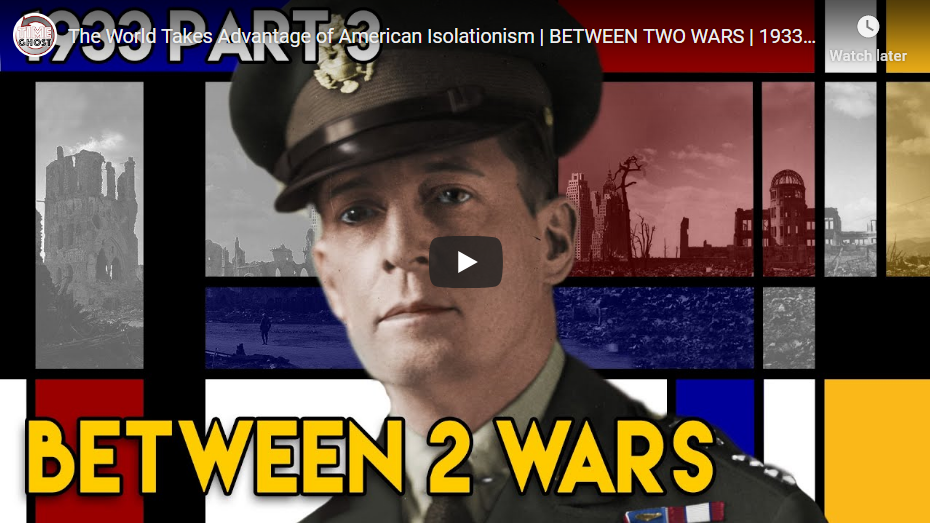
The World Takes Advantage of American Isolationism | BETWEEN TWO WARS | 1933 part 3 of 3

Filed under: History, Japan, Military, Pacific, USA — Tags: , , , , , , — Nicholas @ 04:00

TimeGhost History
Published 24 Oct 2019

America is very unprepared for rising tensions in the Pacific and in Europe. US President Franklin Roosevelt tries his best to re-arm the American Army and Navy, but the isolationist opposition is a fierce obstacle.

Join us on Patreon: https://www.patreon.com/TimeGhostHistory

Subscribe to our World War Two series: https://www.youtube.com/c/worldwartwo…

Hosted by: Indy Neidell
Written by: Joram Appel
Directed by: Spartacus Olsson and Astrid Deinhard
Executive Producers: Bodo Rittenauer, Astrid Deinhard, Indy Neidell, Spartacus Olsson
Creative Producer: Joram Appel
Post-Production Director: Wieke Kapteijns
Research by: Rune Vaever Hartvig, Sietse Kenter and Joram Appel
Edited by: Daniel Weiss
Sound design: Marek Kaminski

Picture colorizations by: Norman Stewart, Julius Jääskeläinen, Daniel Weiss and Joram Appel

A TimeGhost chronological documentary produced by OnLion Entertainment GmbH.

From the comments:

TimeGhost History
1 day ago (edited)
This episode is very much about the global ramifications of the US’s foreign policy. American inaction and isolationism left room for other nations to develop imperialist ambitions. There are of course a lot of other factors that influenced the rise of expansionist and militarist governments in Europe and East-Asia, many of which are explained in our other Between Two Wars episodes. In no way does this video have any connection to current-day events or our opinion on them. This is what happened, our future episodes will be about what followed. We’re historians and that’s all we want to do here.
Cheers,
Joram

« Newer PostsOlder Posts »

Powered by WordPress